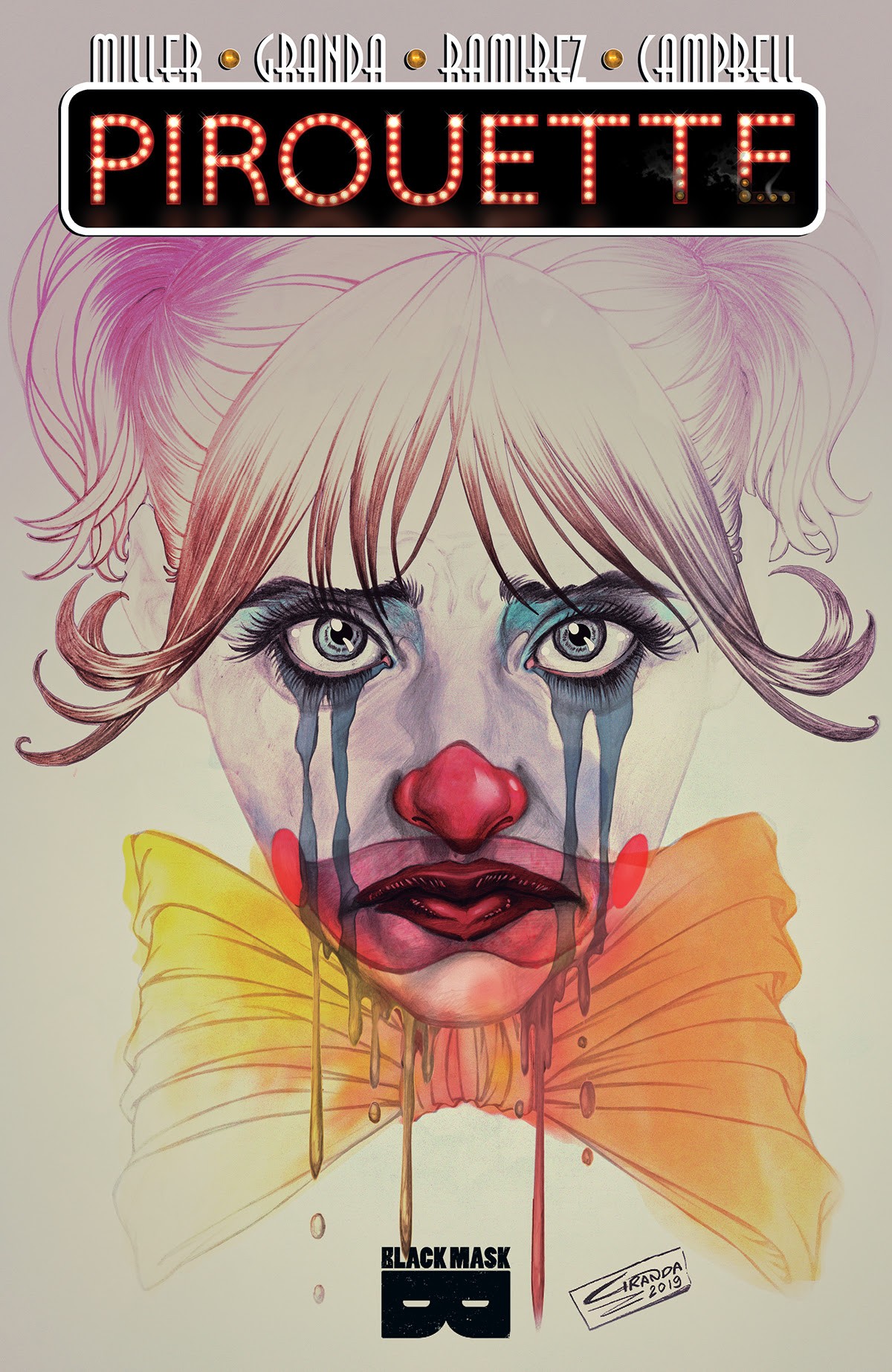
 The circus is the Greatest Show On Earth, unless you’re the attraction. Raised from infancy by duplicitous clowns who entertain by day and menace by night, Pirouette dreams of washing the paint from her face and escaping to a better life far away from her cruel adoptive circus family… because when the spotlights dim and the crowd disperses, the clown princess’ big-top dreams give way to a nightmarish world of monsters with painted smiles.
Black Mask Studios has been on a role with three new series launched in the past two weeks as the company launches its phase two of comics. Out this week is Pirouette from writer Mark L. Miller and artist Carlos Granda, and while it might seem like a horror tale in a circus, you’ll quickly realize there’s much more below all the make-up.
We got a chance to talk to Miller about the new series and some of its deeper themes.
Graphic Policy: Where did the idea for Pirouette come from?
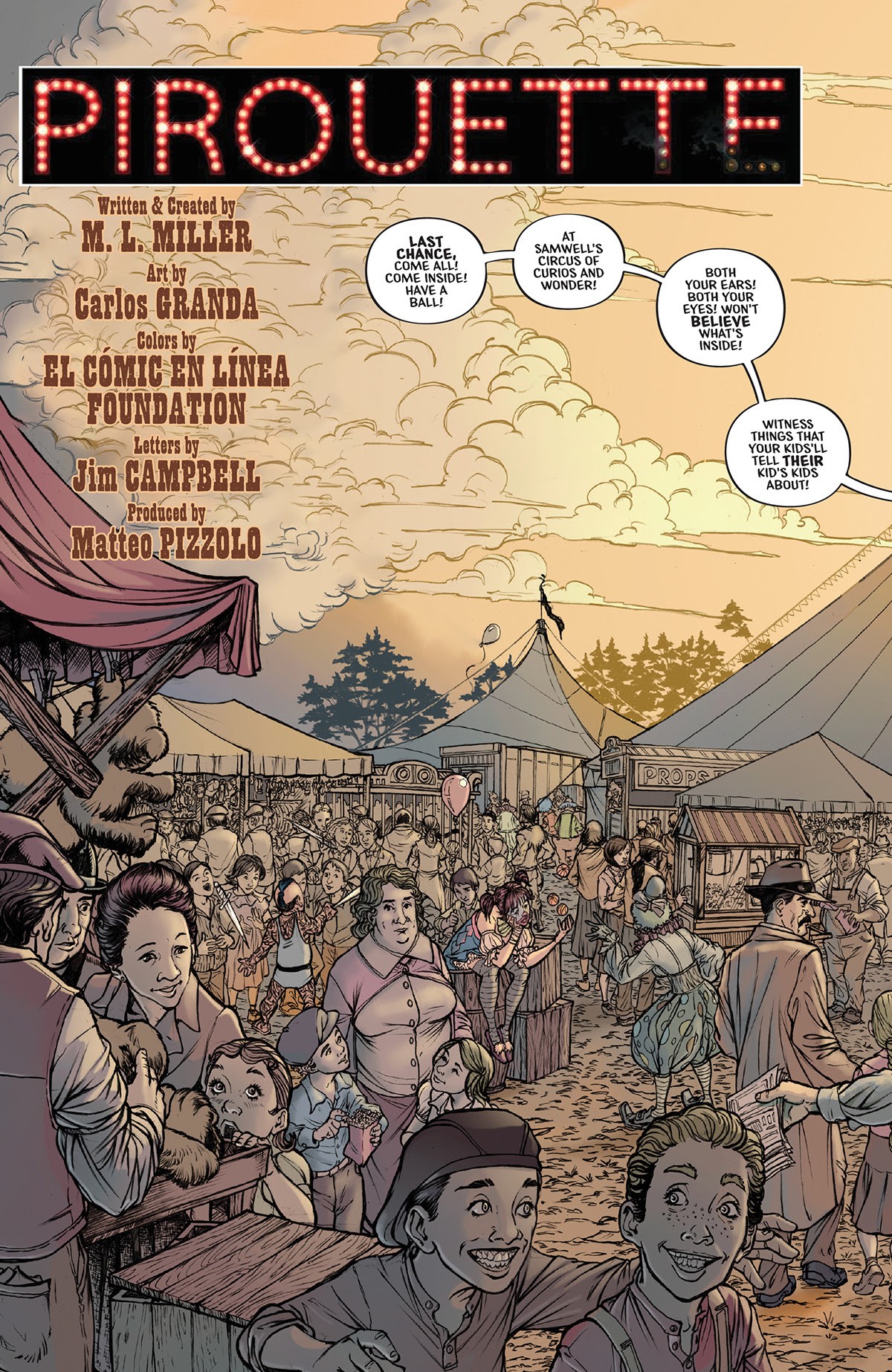
Mark L. Miller: Pirouette comes from my love of circuses and sideshows that go back all the way to my childhood. It was one of the best memories of my life as it was filled with so many strange and amazing things. I really wanted to capture that feel for the book, as if it is some kind of alien place that is so different from the towns the circus tours through. As I was tooling around with ideas to work with artist Carlos Granda on, I mentioned I had an idea about a young clown who wanted to something more than circus life and Granda loved it, so we ran with it. And over the last year we worked hard to develop the whole circus world that you see in the first issue.
GP: When it comes to circuses, stories often have to deal with people running away, and joining one, this seems like it’s the reverse of that.
MLM: Yeah, one of the things I try to do with any property is try to come up with—especially one in such a specific genre, is to go against convention. I didn’t want to tell a typical story. I wanted to highlight the circus itself as both a way of life and its own sort of microcosm that had its own hierarchy and social class levels. I wanted to show the behind the spectacle and bright lights and loud colors, there are real people. And while it is a place where it seems like anything can happen, sometimes bad things can happen there too. It’s fun building a place filled with so many possibilities and tossing a character into that environment.
GP: This also comes at the same time that the television show American Horror Story will take place at a circus and freak show. What is it about that setting that has story tellers keeping come back to it?
MLM: I don’t want to disparage any of the modern circuses, but I think the circuses of the past are a place of complete mystery and there’s a draw to that. It’s a place that lured in many weird and eccentric characters from all across the world and then jammed all of those characters together and sent them on the road across America. That’s some great potential for a lot of story right there. Starting on with Pirouette, I didn’t know that American Horror Story was going to go the Freak Show route. It’s some kind of weird coincidence that the first issue of Pirouette and the premiere of the TV show is happening on the same date.
GP: Why do you think that setting also opens itself up to a horror tale so easily?
MLM: Again, it’s that mystery and wonder that goes hand in hand with the circus. When you go to a circus, it’s a place where you are constantly wondering if what is happening in front of you is real or not. “You won’t believe your eyes!” to quote the sideshow barker. It prompts one to ask questions and plays with the great unknown and that’s what horror is all about too. What’s in that dark closet in the bedroom or the shadowy space between the bed and the floor? So I think circus and horror go together so well since both make the mind wonder; the circus to the dream-like kind of wonder and horror to the darker nightmarish flip side.
GP: How did Carlos Granda come on to the series?
MLM: I met Carlos while working on The Jungle Book a few years ago. He was so amazing that I kept tabs on him and we pinged back and forth on Facebook and email. I was pittering around with a few ideas and thought his style would match the circus theme perfectly, so we reconnected last year at the New York Comic Con and that’s where we started to get the ball rolling with Pirouette. First was the design of the character, which we took a lot of time with. Then on to the rest of the circus.
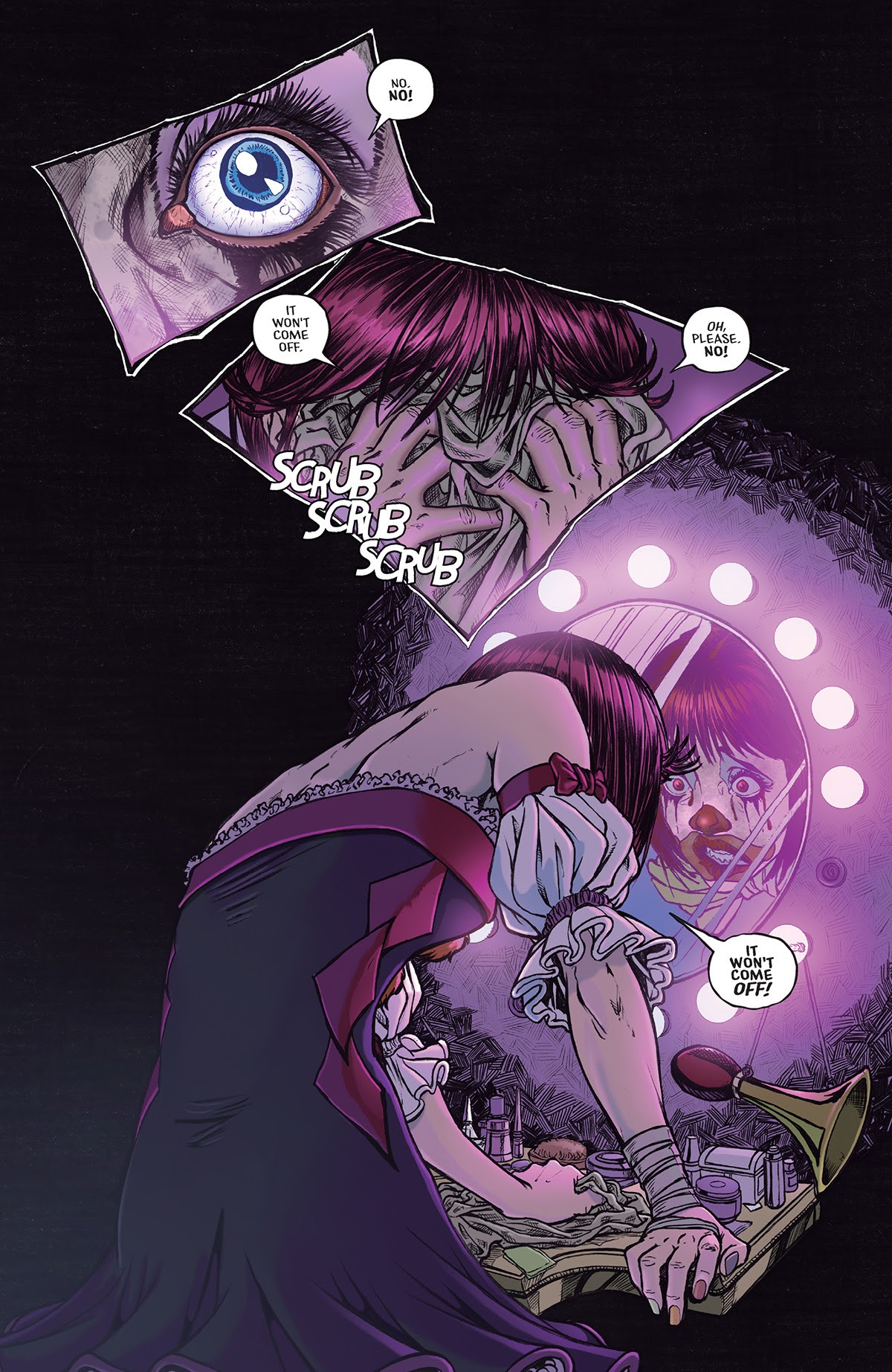
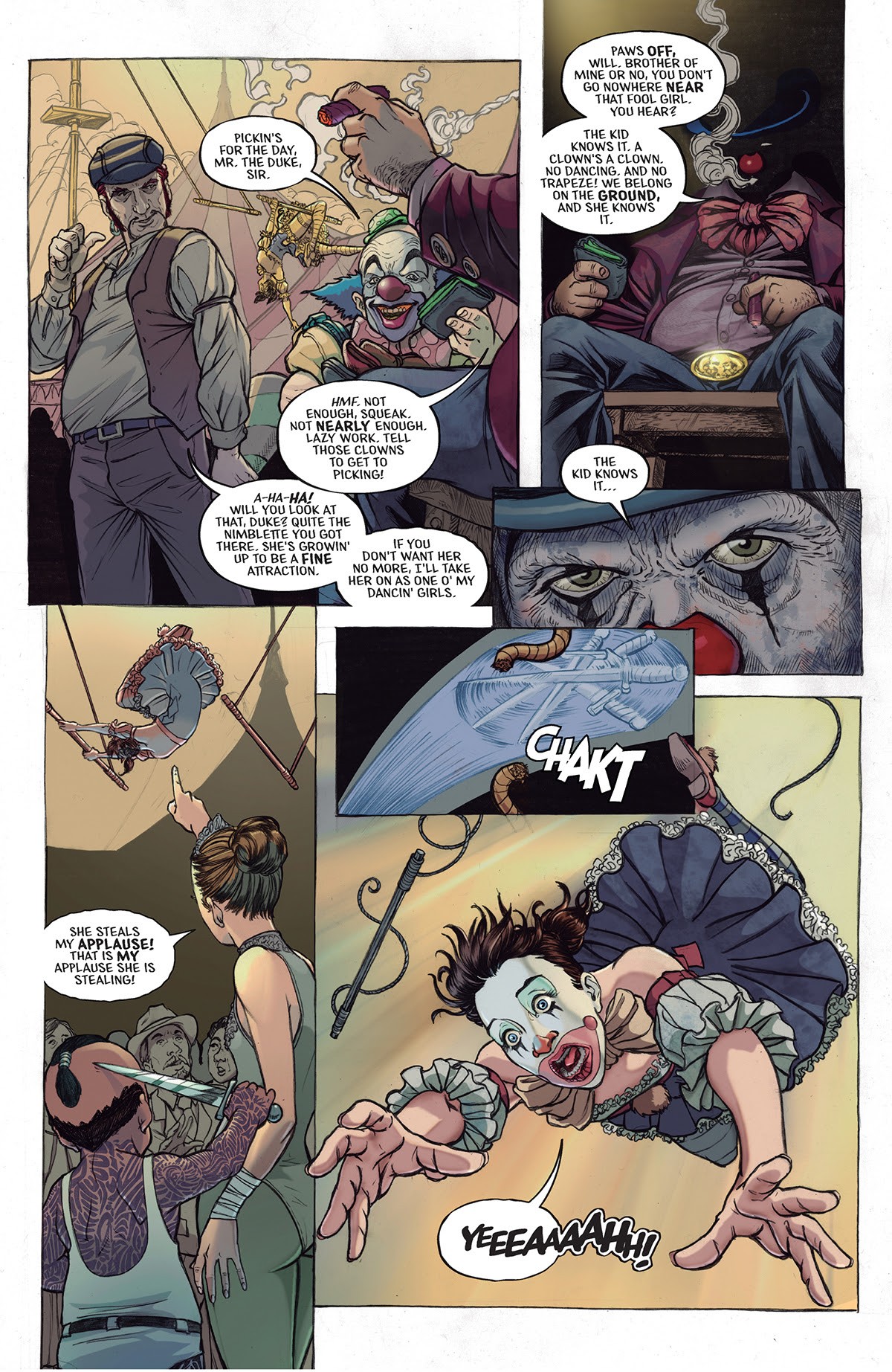
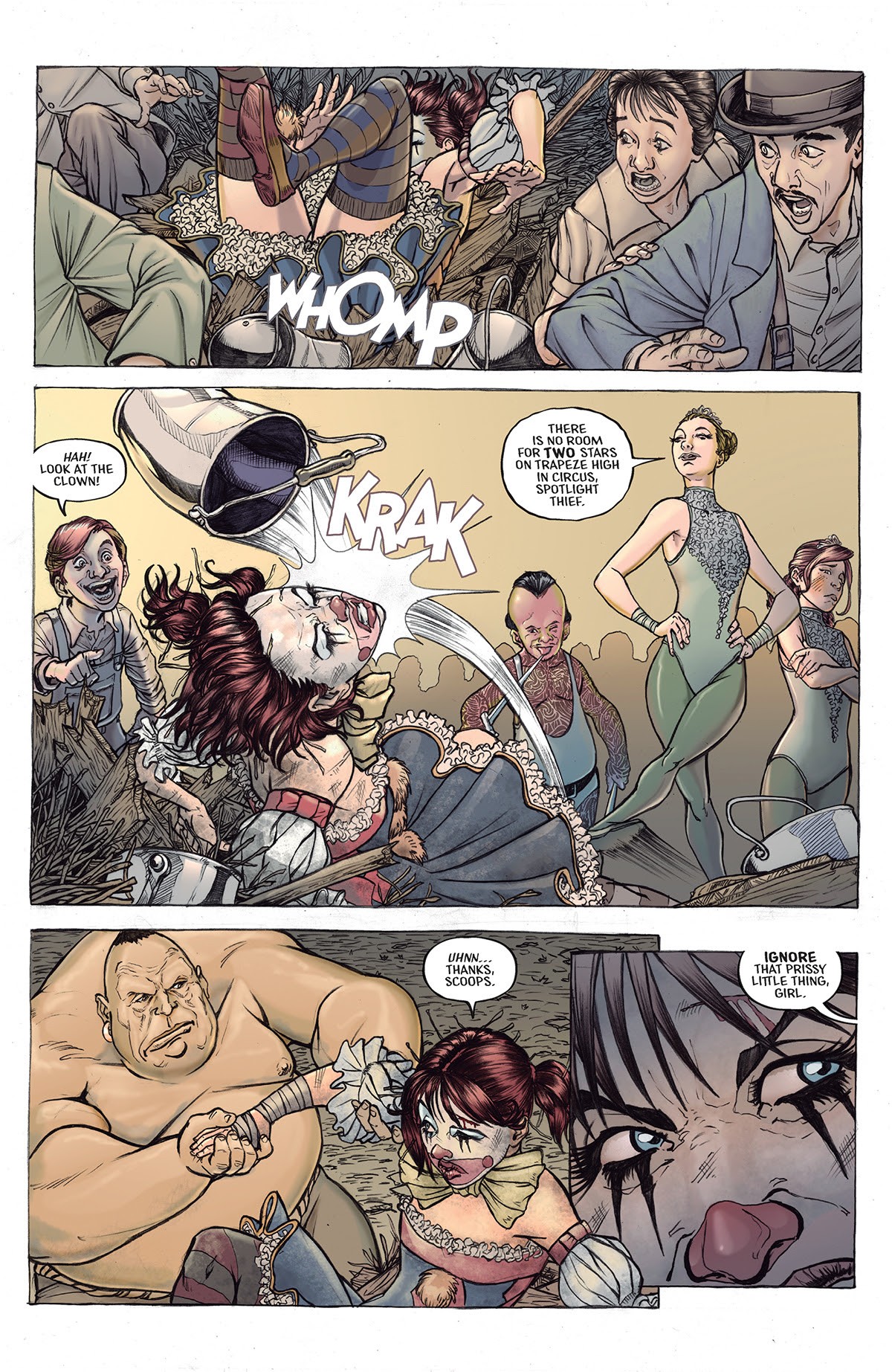
GP: When it comes to the art, there’s a lot of double page spreads and interesting panel layout. It all adds to the crazy whirlwind that is a circus. Whose decision was it to go with that visually?
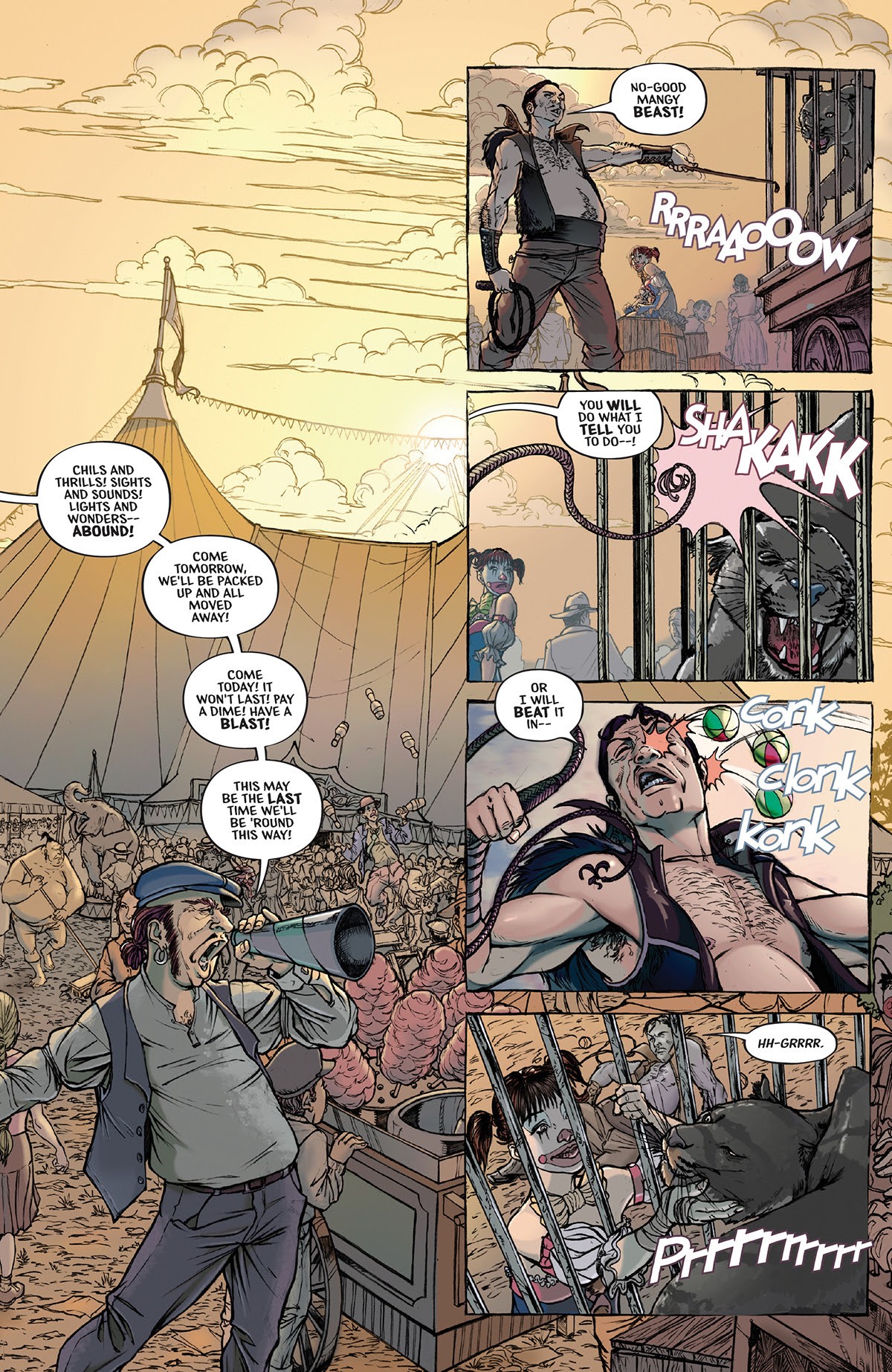
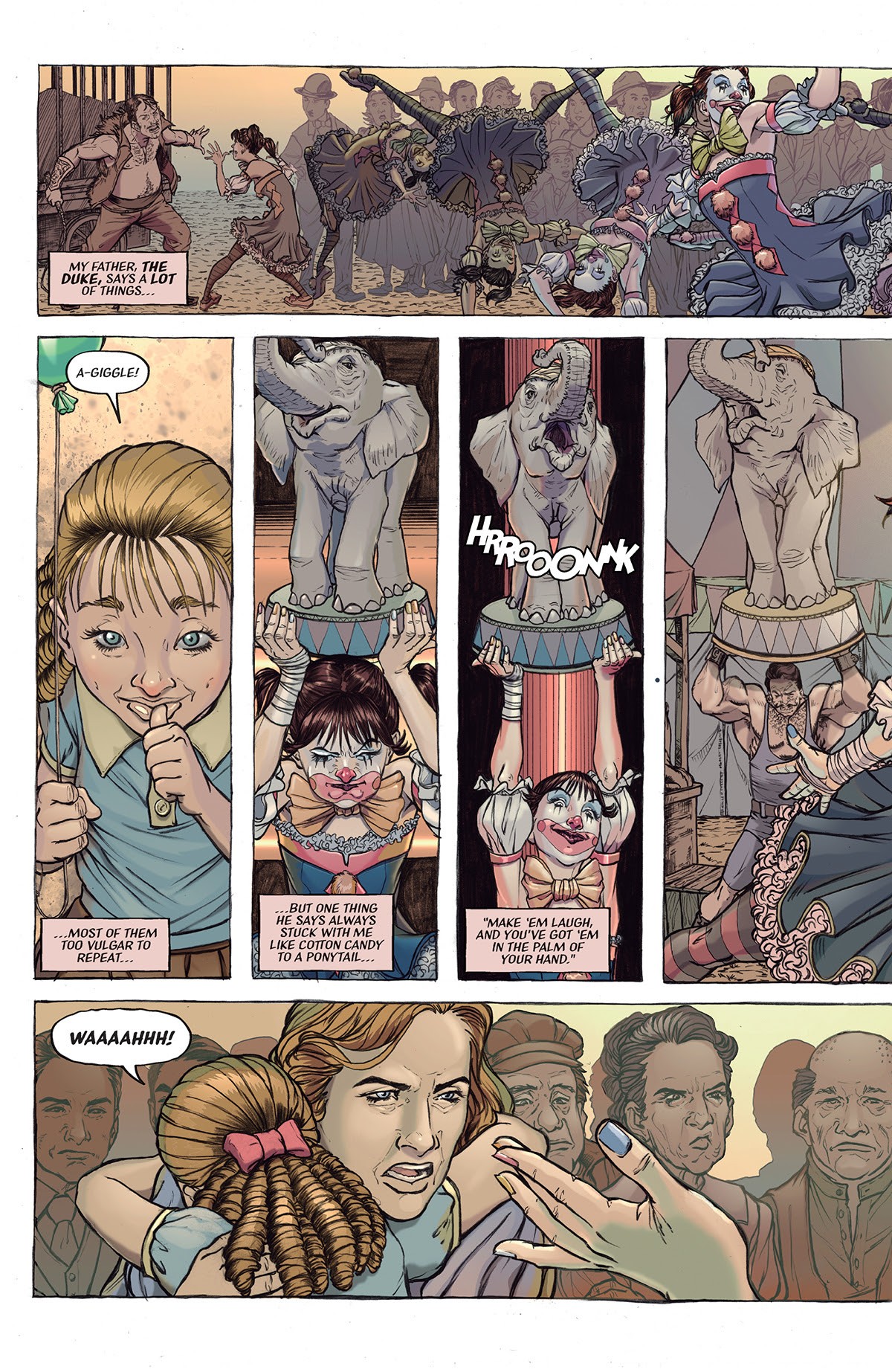
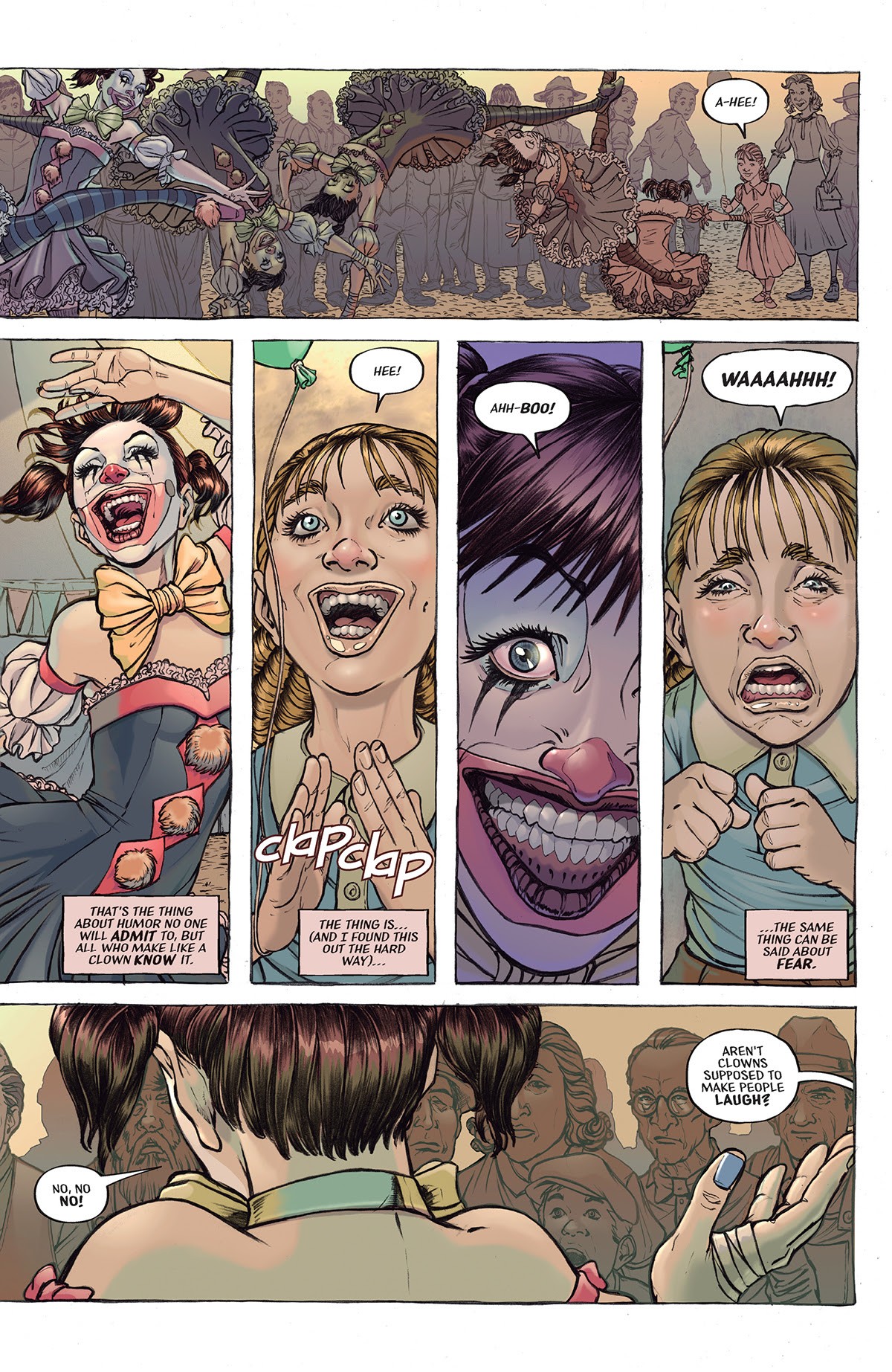
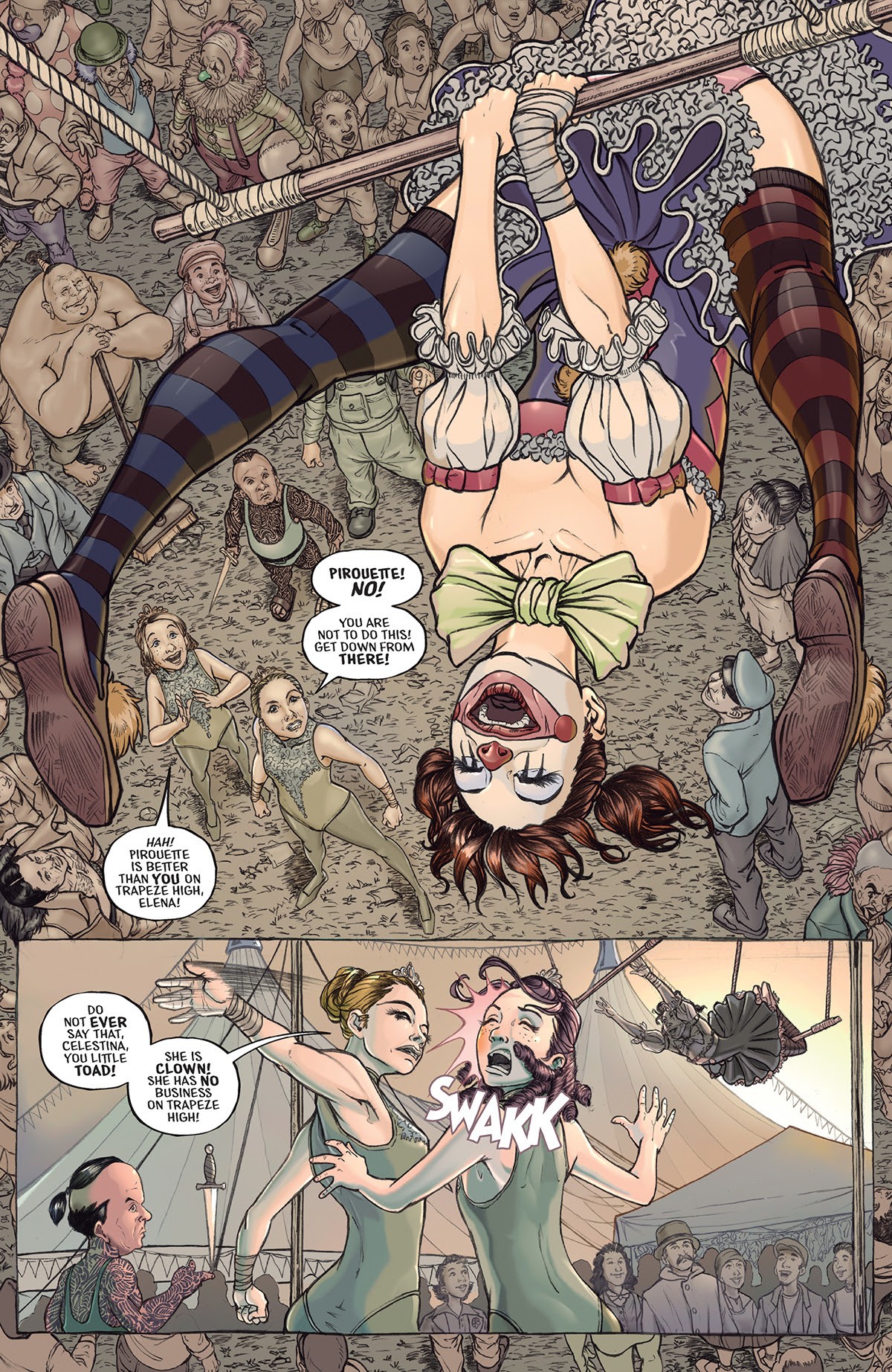
MLM: That was me writing to Carlos’ strengths. Knowing how detailed Carlos could go with his imagery, I knew he wouldn’t be intimidated by a detailed description of tons of things going on at once. That’s what the circus is all about. Clowns over here, tigers over there, people twirling on the trapeze above. It’s that immersion into the circus that I wanted to capture and knew Carlos could do. Again, since we worked together before and already had a good rapport, there was less “gettin’ to know you” time that I’ve found in some other books I’ve worked on. It made the writing process all the easier for me, knowing that Granda would be able to get what I’m talking about right from page one.
GP: There’s also a massive amount of people crammed in to some pages, and even when there’s only a few, the situation is still claustrophobic. Was some of that in the script or was that just natural art decisions?
MLM: We always talked about how the book was going to be filled with all of this excitement and detail, which meant a lot of detail, was necessary. But there are also some nicely done scenes of intimacy where it’s only Pirouette in the panel and Carlos just nails it there too. It was just Carlos doing what he does best, which is draw just about anything with an amazing sense of detail, emotion, and depth.
GP: The coloring also stands out, especially with the clown makeup. What was the thought into that detail?
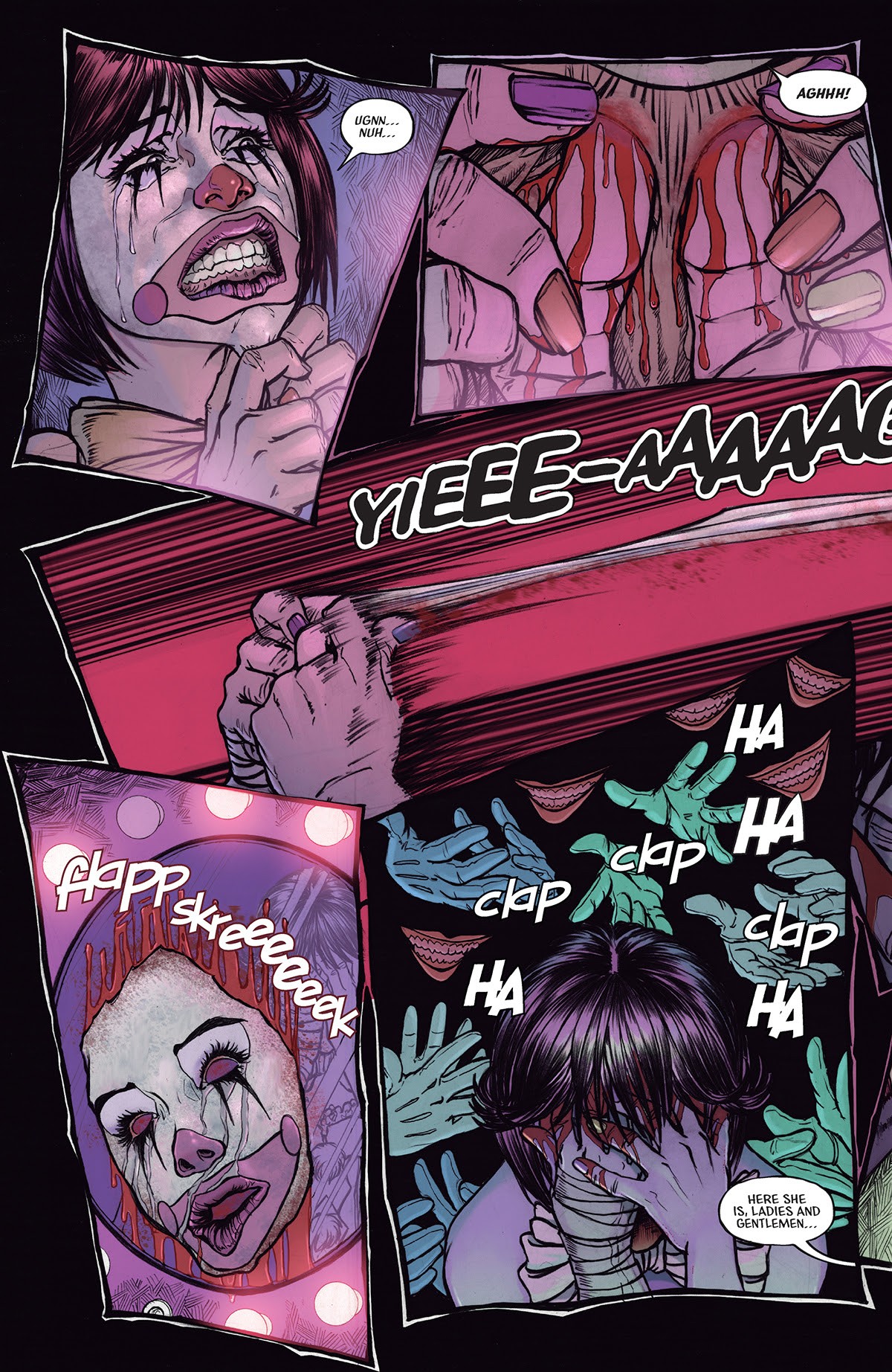
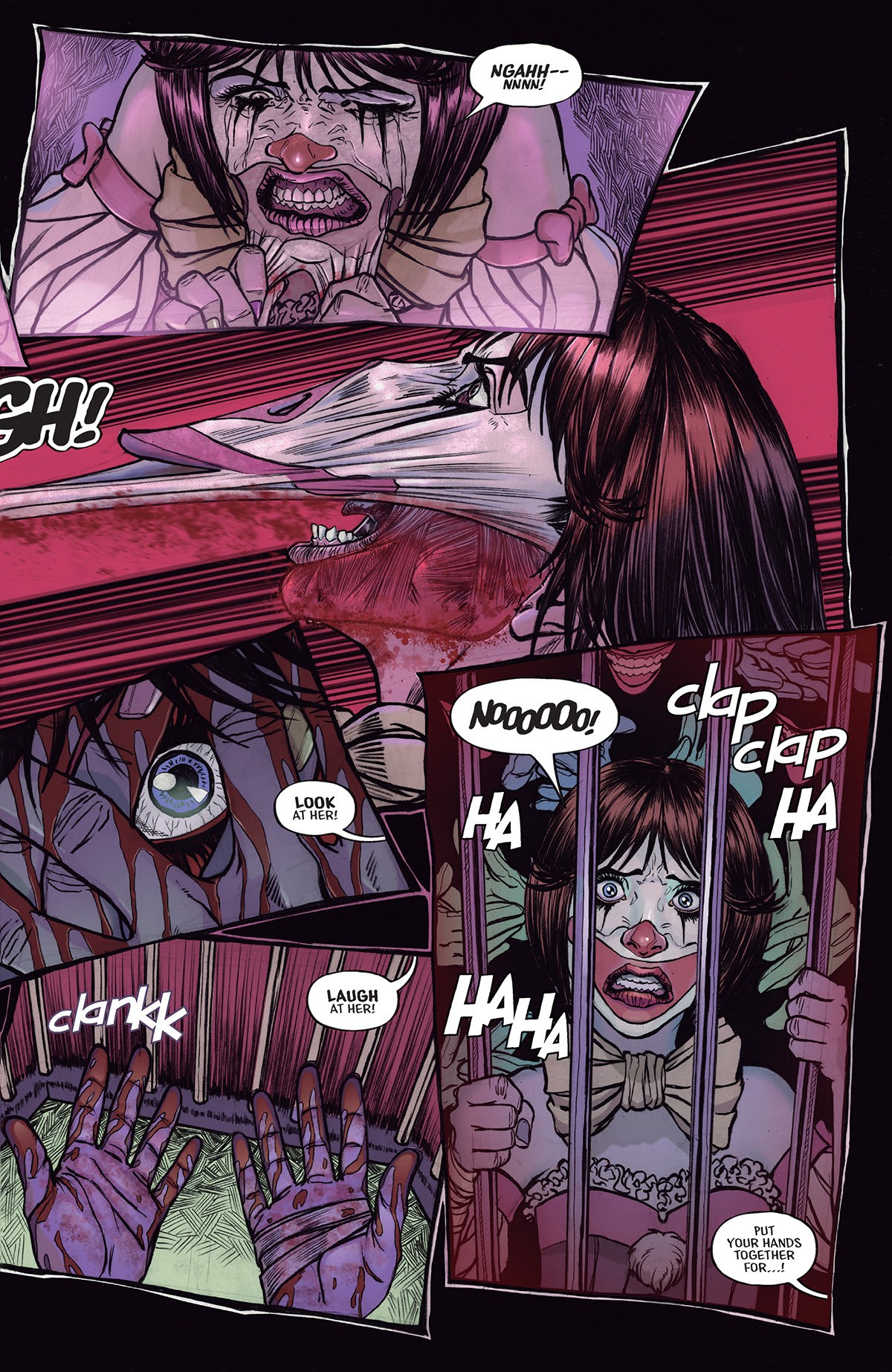
MLM: The clown makeup in Pirouette was crucial as clowns are no strangers to comics. The only directions I gave Carlos was that we didn’t want anyone looking like the Joker, Harley Quinn, or Spawn’s The Violator. So Carlos just went nuts with the makeup and I sent him a lot of references of old clown photos. Some of them are terrifying. There are a lot of emails back and forth between Carlos and myself that contains tons and tons of scary clown pictures. It would horrify some folks, but we both seem to love the circus so much, it didn’t bother us.
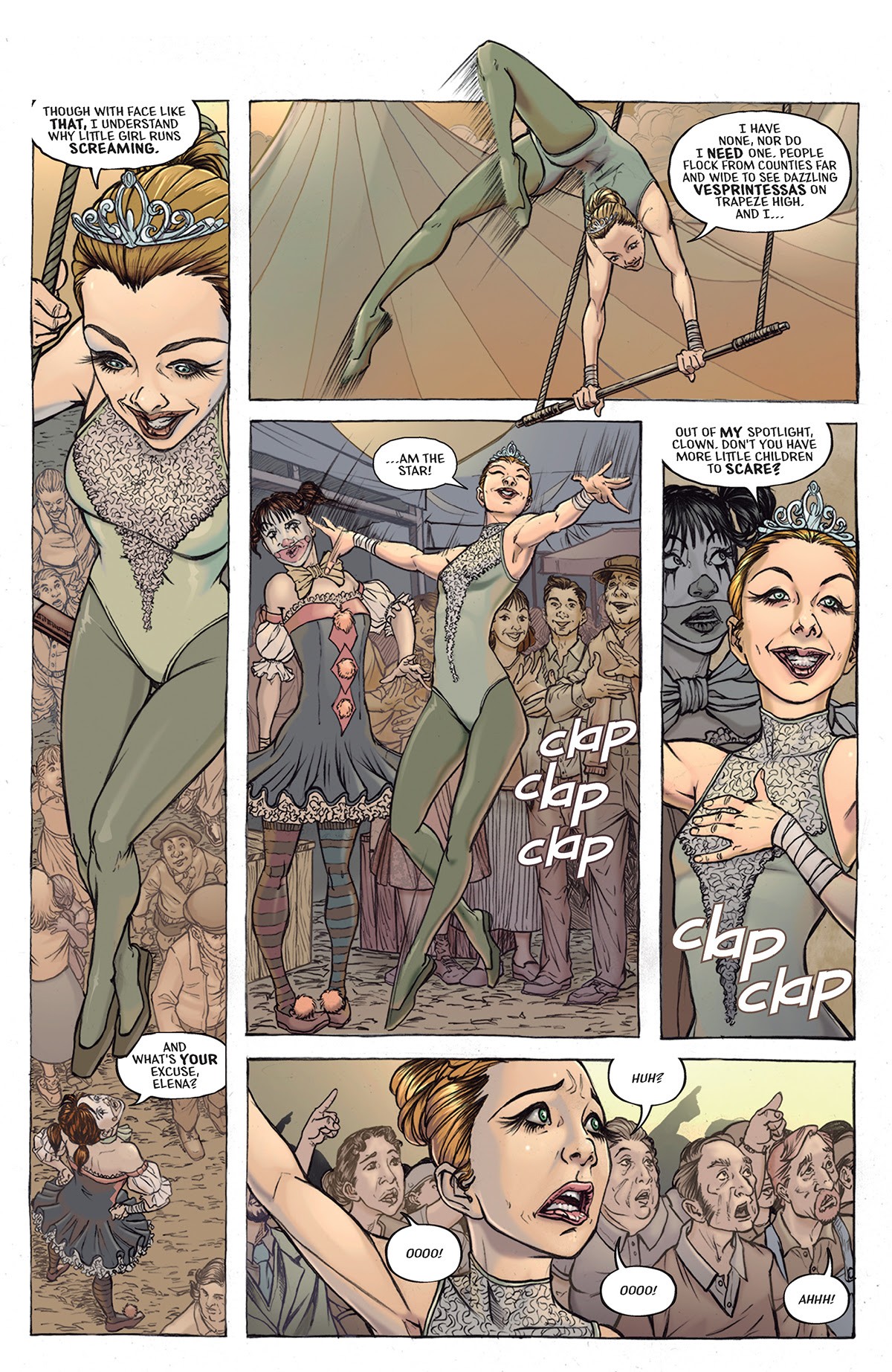
GP: The story has glimpses of a class system, between the audience and performers, the clowns, and acrobats, the folks who clean, and more. Was this something you wanted to address in the story?
MLM: Definitely. I wanted the circus to be a metaphor of the class system we all see in life. There are those who think certain people can only be this way or that way—that someone of this type cannot do this job or achieve this level of status. We want to think we are in a day and age when this doesn’t exist, but we all live in the real world and know that’s not the case. And sometimes we find ourselves in a place where we ask ourselves “Is this all there is?” Pirouette is that spirit in us that keeps on trying and doesn’t give up despite the fact that it may be a shitty situation you find yourself in. It’s a tough and hard journey, but it’s worth fighting for. The circus is just a fantastic backdrop for that type of struggle.
GP: What else can we expect from you?
MLM: Hopefully, more Pirouette! And if you like Pirouette, be sure to tell others about it as this really is a book that will live or die by word of mouth. Tweet it, FaceBlog it, scream it from the highest mountain and from every comic book store! This is a four issue series at the moment, but Carlos and I have tons more Pirouette tales to tell, so it really is up to you!




 As a fan of comics ever since I can remember, I can recall when certain heroes were never adequate. Every major hero in comics has undergone some personal crisis where they cannot do their job anymore. Instead, they recoil and become embedded in their problems. The most memorable one in my mind, is Tony Starks Iron Man. His crisis which was only alluded to in the comics but was far more illustrative in the comics was the arc, “Demon In the Bottle”.


