Tag Archives: jack kirby

Underrated: Books On The History Of Comics.

This is a column that focuses on something or some things from the comic book sphere of influence that may not get the credit and recognition it deserves. Whether that’s a list of comic book movies, ongoing comics, or a set of stories featuring a certain character. The columns may take the form of a bullet pointed list, or a slightly longer thinkpiece – there’s really no formula for this other than whether the things being covered are Underrated in some way. This week:  Books On The History Of Comics.


Last week we looked at why comic book history was Underrated. This week, we’ll look at some books that, should you be interested, will help shed some light on the stories behind the stories.

Marvel Comics: The Untold Story by Sean Howe was published in 2012. Howe decided to write the book because the stories comic creators told in fanzine interview always seemed different from the official narrative. Starting with the comics published during the golden age, and the characters created by Jack Kirby, Joe Simon and Stan Lee, the book follows the publisher’s story to the new millennium up until the creation of the Marvel Cinematic Universe with upwards of 150 interviews conducted by the author.  GQ’s Joshua Rivera described the book as “one of the most comprehensive and well-researched accounts” of Marvel.

Bill The Boy Wonder written by Marc Tyler Nobleman with art by Ty Templeton. Presented as a childrens book, Bill The Boy Wonder tells the untold tale of Batman’s creation. By shining a light on who Bill Finger was, Nobleman’s extensive research led to Finger finally getting a byline credit whenever Batman appears. The book’s presentation is designed to allow as many people, of any age, to learn about Bill Finger – and it works.

Superheroes!: Capes, Cowls, and the Creation of Comic Book Culture by Laurence Maslon and Michael Kantor.  Assembled as a companion piece to the three part PBS documentary series Superheroes, this volume chronicles the effect of superheroes on American culture through the various mediums they appear in, and conversely the effect of America culture on superheroes. Featuring more than 500 full-color comic book panels, covers, sketches, photographs of both essential and rare artwork, Superheroes is an in-depth look at this powerful presence in pop culture.

Super Boys: The Amazing Adventures of Jerry Siegel and Joe Shuster – the Creators of Superman by Brad Ricca. Published in time for the 75th anniversary of the Man of Steel, comes the first comprehensive literary biography of Joe Shuster and Jerry Siegel, the co-creators of Superman.  Brad Ricca’s Super Boys is the first ever full biography about Superman’s creators, and with more than ten years of research he made some interesting discoveries; the book reveals the first stories and pictures ever published by the Siegel and Shuster, where the first Superman story really came from, the template for Superman’s costume, and more than will be listed in this blurb. 

The Art of the Simon and Kirby Studio by Joe Simon, Mark Evanier, Joe Simon and Jack Kirby. At nearly four hundred pages, this historical look at the art produced by the Simon and Kirby studio is a must for any fan of either artist. The reproduced comics allow you to actually see the corrections done to the artwork such as drawings over areas of white-out, the faint lines used as reference for writing the text, portions of the panels being pasted over with bigger pieces of paper with bigger corrected drawings, the yellowing clear tape… The look into the creative process of these men is captivating.

Teenage Mutant Ninja Turtles: The Ultimate Visual History by Andrew Farago. Detailing the story of the Teenage Mutant Ninja Turtles from their humble beginnings in black-and-white comics to where they stand now as four of the most recognizable in animation and comics, this book features interviews with the characters creators and other key figures in the Turtle’s ascendancy. With reproduction artifacts from the Turtle’s history, including their debut, this hardcover book is worth looking into for any fan of the pizza loving teenagers.


This is by no means a definitive list of books to look up, but merely a selection to get you started, and there are obviously many, many more great books out there to delve into; far more than I have listed here (you’ll find a few purely from Amazon’s suggested list after looking these up). But that doesn’t mean we should stop learning about the medium’s history, eh?


Next week’s Underrated will look at some other aspect of the comic book world.

Around the Tubes

The weekend is almost here! What geeky things will you all be doing? Sound off in the comments below. While you wait for work to end and the weekend begin, here’s some comic news and reviews from around the web.

CBR – The Mystery of the Missing Jack Kirby Demon Word Balloon! – Interesting. Didn’t know about this.

How to Love Comics – Black Panther Reading Order Guide – For those that want to know.

ComicBook – ‘Marvel’s Daredevil’ Season 3 Adds Joanne Whalley To Cast – Nice.


Reviews

CBR – Abbott #1

CBR – Legion #1

Comics Bulletin – Postal #25

ICv2 – Tales From the Crypt: The Stalking Dead

Titan to Publish Lost Jack Kirby and Gil Kane Prisoner Comic

Titan Comics has announced two new projects based on The Prisoner, licensed by ITV Studios Global Entertainment, to coincide with the 50th anniversary of the surreal 1960’s cult TV classic in 2018: an oversized artist edition of a lost comic book classic by comic book legends Jack Kirby and Gil Kane; as well as a brand-new comic series set in the world of The Prisoner by celebrated writer Peter Milligan and artist Colin Lorimer.

First shown on Canadian and UK TV screens in 1967, The Prisoner was co-created, written, directed and starred Patrick McGoohan. Titan’s new unmissable comic collections and comic series are set to coincide with the 50th Anniversary of the first US transmission in 1968.

In July, Titan Comics will publish an art-sized, hardcover collection of Jack Kirby, Gil Kane and Steve Englehart’s long-lost, previously unpublished The Prisoner comic strips based on the cult classic.

This special oversized collectors edition will contain the entire 17 page Jack Kirby strip, the first six pages of which were inked and lettered by Mike Royer, as well as 18 pages of pencils drawn by legendary comic artist Gil Kane.

In addition to reprinting these rare pages, this collection also features unmissable bonus archive material including facsimiles of the original script as written by Steve Englehart.

The Prisoner: Jack Kirby And Gil Kane Art Edition (ISBN: 97817858662878) is just one part of Titan Comics’ exciting plans for The Prisoner’s 50th Anniversary year –alongside a brand-new comic series based on the cult favorite TV series, written by Peter Milligan with art by Colin Lorimer.

Titan Comics’ new series transports readers back to the mysterious village where everyone is a number, and features six amazing covers, including Mike and Laura Allred, Jack Kirby, a Patrick McGoohan photo cover and more to be revealed.

Review: Inhumans: Beware the Inhumans

It’s Tuesday which means it’s new comic book day at book stores! This week we’ve got the Inhumans!

Inhumans: Beware the Inhumans collects Marvel Super-Heroes (1967) #15, Incredible Hulk Annual #1, Fantastic Four (1961) #81-83 and #99, Avengers (1963) #95 and #105, Amazing Adventures (1970) #1-10, and Not Brand Echh #12 by Stan Lee, Jack Kirby, Roy Thomas, Gerry Conway, Gary Friedrich, Archie Goodwin, Arnold Drake, Neal Adams, Gene Colan, Mike Sekowsky, Marie Severin, John Romita, and Tom Sutton.

Get your copy. To find a comic shop near you, visit http://www.comicshoplocator.com or call 1-888-comicbook or digitally and online with the links below.

Amazon/Kindle/comiXology or TFAW

Marvel provided Graphic Policy with FREE copies for review
This post contains affiliate links, which means that if you click on one of the product links and make a purchase, we’ll receive a percentage of the sale. Graphic Policy does purchase items from this site. Making purchases through these links helps support the site.

Captain America Reaches #700 in April

This spring, “Out of Time” will culminate with the release of Captain America’s milestone 700th issue, concluding the arc in an oversized story from creators Mark Waid and Chris Samnee!

Frozen in time, awakened in a decimated future and once again a man out of his era, there is only one way for Steve Rogers to restore order and rebuild civilization—and that’s to rule it as King Captain America!

The issue also features Mark Waid delivering an untold tale from Captain America’s past, featuring the classic artwork of Jack Kirby!

Don’t miss the conclusion of an arc that has seen some of Steve Rogers’ most epic adventures in Captain America #700, on sale this spring!

Captain America #700 features a cover by Samnee and variants by Jim Lee and Jim Steranko and comes to shelves April 4, 2018.

Preview: Fighting American #4

FIGHTING AMERICAN #4

Writer: Gordon Rennie
Artists: Duke Mighten,​ PC De La Fuente​​
​Cover A: Francisco Rodriguez, De La Fuente
Cover B: Jack Kirby
Publisher: Titan Comics
FC -​ ​$3.99 – On sale: ​January 10, 2018

END OF ARC 1!

Direct continuation of Simon and Kirby’s classic series! Fighting American returns! Written by Gordon Rennie with artwork by Duke Mighten! When the 1950s heroes find themselves trapped in the modern world, how will they handle what society has become, and what dangers will they face? With modern-day villains to contend with, enemies from their past pursuing them, and a whole new world to come to terms with, what daring adventures could Fighting American and Speed-Boy find themselves in now?

Logan’s Favorite Comics of 2017

In 2017, I found it increasingly difficult to keep up with all the new comics releases because of personal stuff etc.. There was also the sheer hatred and bigotry of some comic book fans, who foamed at the mouth every time a character that wasn’t a straight white male starred in their own book or if female characters weren’t drawn in an early 90s Image male gaze-y way. Creators and companies weren’t exempt from this either from Howard Chaykin’s transphobia and Islamophobia in his low selling Image book Divided States of Hysteria to the revelation that new Marvel Editor-in-Chief C.B. Cebulski lied about writing comics under the Japanese pseudonym Akira Yoshida for years and suffered little to no consequences for it.

However, there was a lot to love about the comic books of 2017, and I found solace, entertainment, and inspiration in many books from (becoming) old favorites about godly pop stars and dark knights to intriguing new titles about all girl fight clubs and young people experimented on by the government.


  1. Batman #14-37 (DC)

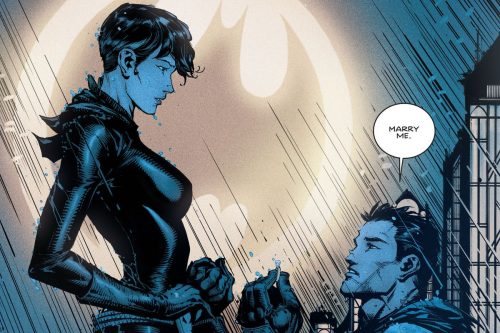
In 2017, writer Tom King and a crack team of artists including David Finch, Clay Mann, Mitch Gerads, Mikel Janin, Joelle Jones, and Jordie Bellaire explored almost every nook and cranny of the Dark Knight’s world in their work on Batman. Sure, there were epic arcs featuring one on one battles with Bane, a yearlong gang war with the Joker and Riddler, and a little family reunion in the “Button” crossover. But what Batman resonate as a comic book was the standalone and two part stories from King and Gerads showing the sweetness of the relationship between Batman and Catwoman to the emotional tale of Kite Man (Hell yes). King has a real knack for telling O. Henry-esque stories of ideas that humanize iconic characters none more so than “Superfriends” where Batman and Superman go on a double date with Catwoman and Lois Lane. An artistic highlight of the book was Joelle Jones’ beautiful, savage, and a little bit sexy depiction of Batman and Catwoman fighting for their love against the most evil of exes.

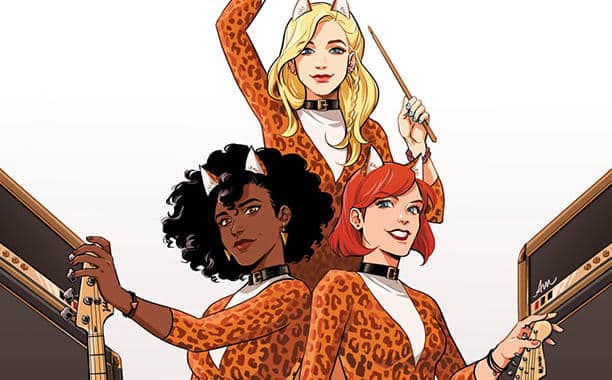
  1. Josie and the Pussycats #4-9 (Archie)

Josie and the Pussycats is a gorgeous, funny book that ended much too soon although it is nice to see artist Audrey Mok working on the main Archie title. Writers Cameron DeOrdio and Marguerite Bennett craft the rare Archie book that looks at both romantic and platonic relationships from the POV of young adults, not teenagers. They, artist Mok, and colorist Kelly Fitzpatrick imbue the title with a Saturday Morning cartoon zaniness, including high speed boat and motorcycle chases, kidnappings, and jokes about the polar bears from The Golden Compass. Yes, DeOrdio and Bennett overload all kinds of pop culture references and allusions in Josie, but it adds to the book’s energetic feel along with Mok’s fantastic fashion designs and Fitzpatrick’s bold colors. Josie and the Pussycats has some real heart to it with characters having all kinds of intense conversations about love, friendship, and fame between the over-the-top setpieces.

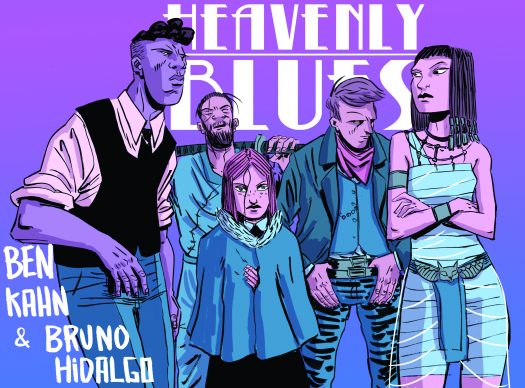
  1. Heavenly Blues #1-4 (Scout)

Writer Ben Kahn and artist Bruno Hidalgo’s Heavenly Blues blends the cosmology and philosophical and theological themes of Vertigo classics like Sandman and Lucifer with a quick and dirty heist thriller as a band of criminals, including a Great Depression Era thief, a girl who was sentenced to burn during the Salem Witch Trials, and a bisexual cowboy team up to break into heaven and steal something you may have heard of. Witty writing from Kahn and rhythmic art from Hidalgo that flows from the building of the Great Pyramids to the Old West and even an angel lounging in sweatpants keeps the story on its toes with flashback to each thief’s past life create an emotional connection to them. This is the perfect comic for folks who like to think about the nature of evil or the possibility of an afterlife while also watching Oceans 11 or Logan Lucky with a whiskey on the rocks.


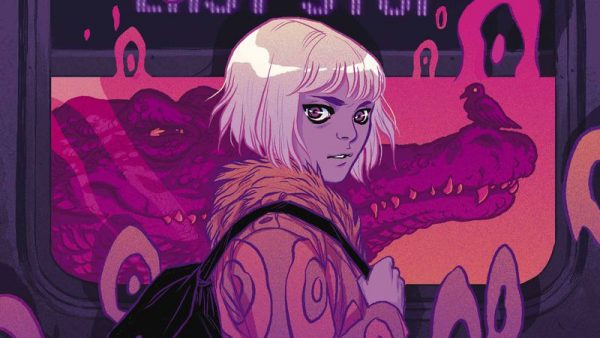
  1. Shade the Changing Girl #4-12 (DC/Young Animal)

The crown jewel of DC’s Young Animal imprint, Shade: The Changing Girl is a beautiful, meditative look at identity and humanity from the perspective of a bird alien Metan girl named Loma Shade, who has possessed the body of teenage girl bully. Cecil Castellucci, Marley Zarcone, and Kelly Fitzpatrick’s story really took off when Shade decides to hit the road first for Gotham and eventually to meet her idol, Honey Rich, the aging star of a 1950s sitcom that was popular all over the galaxy. Zarcone’s artwork is extremely fluid and complements Shade’s reaction to the influx of stimulus all around her that is humanity as she begins to understand concepts like nostalgia and of course the big ones: life and death. Shade the Changing Girl is more poem than sci-fi thriller/mindbender, and Castellucci’s poetic captions, Zarcone’s sincere facial expressions, and Fitzpatrick’s, well, groovy colors bypass the critical part of the brain and go straight for the emotional center. It is an empathetic study into how humans communicate and navigate this complex world from a visitor from an equally as complex society so hence conflict.

  1. Generation Gone #1-5 (Image)

Comics’ enfant terrible Ales Kot makes his triumphant return with Generation Gone, which is one of his most accessible works that still takes shots at the kyriarchy and patriarchy through the lens of the “superhero” origin story. Artist Andre Araujo and colorist Chris O’Halloran provide equal parts majestic, disgusting, and triumphant wide screen visuals throughout the series from bodies being stripped down to bone, muscles, and organs to flying in the sunset. The way that the three main kids Elena, Baldwin, and Nick is a little bit of techno-organic body horror like Scanners filtered through 2017. Kot avoids typical superhero team up tropes and has them constantly at each other’s throats that all really boils down to toxic masculinity, especially Nick, who is like Max Landis with a healing factor. Generation Gone is an epic and visceral story with all kinds of carnage and big explosions that is ably balanced by Ales Kot’s nuanced characterization. There’s some decent world building, but it takes a backseat to Elena, Baldwin, and Nick’s journey and squabbles along the way.

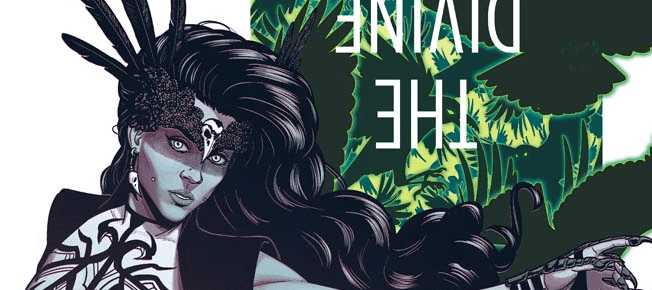
  1. The Wicked + the Divine #25-33, 455 AD, Christmas Special (Image)

In its fourth year (Or “Imperial Phase”) as a title, Kieron Gillen, Jamie McKelvie, and Matthew Wilson’s The Wicked + the Divine became both more self-indulgent and introspective before the ending the year with more emotional destruction and much needed side dish of pure fanservice. The main focus is on the relationships of the Pantheon from Dionysus’ truly soulful friendship with Baphomet (They spend most of an issue talking in the dark, and it’s lovely.) to the intense connection between Persephone and Sakhmet and the older brother/little sister Baal and Minerva that takes a big turn for the disquieting. Even though McKelvie’s figures and fashion decisions are still flawless as usual, WicDiv uncovers every metaphorical wrinkle or mole on the Pantheon members by the time “Imperial Phase” ends in a truly soul crushing manner like the slow build in “In the Air Tonight” before the epic drums. And after it’s over, Gillen and a host of talented guest artists deliver a comic that is sexy, thoughtful, and filled to the brim of feels showing what the Pantheon were like when they were young and less dead. The Kris Anka and Jen Bartel Baal/Inanna short is most definitely the hottest thing I read in 2017.


  1. Kim and Kim: Love is A Battlefield #1-4 (Black Mask)

Shifting the focus from Kim Q to Kim D in this fantastic sequel to the Eisner nominated miniseries Kim and Kim, Mags Visaggio, Eva Cabrera, and Claudia Aguirre confidently tell the story of a woman trying to get over an ex that she really cared for, but wasn’t good for her. There are also mech suits, space battles, basses being used as a blunt instrument, and all kinds of space bounty hunter shenanigans. The rift and reunion between the Fighting Kim’s is super relatable as who hasn’t been disappointed in a friend for returning to the same, not cool ex over and over again. However, Visaggio gives the Kim’s great growth as friends and in their chosen career as bounty hunters by the time the miniseries wraps. On the visual front, Eva Cabrera can choreograph the hell out of a fight scene, and there is still plenty of pink from Claudia Aguirre. Kim and Kim: Love is a Battlefield is a smorgasbord of quips, fun sci-fi worldbuilding, and real friend talk and improves on its already pretty awesome predecessor.


  1. Mister Miracle #1-5 (DC)

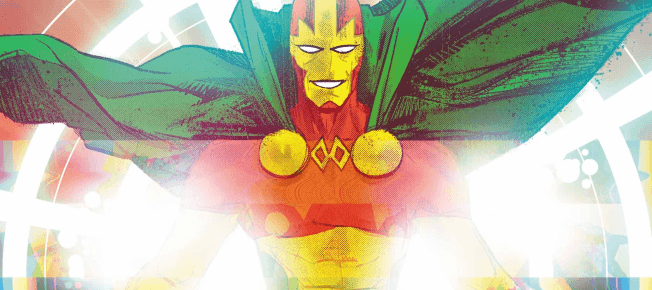
Jack Kirby would have turned 100 in 2017, and there was arguably no better tribute to his imaginative work as an artist and writer than Tom King and Mitch Gerads’ Mister Miracle comic. I know I’m double dipping with King comics on the list, but he’s just that good. In his art, Gerads teaches the old dog of the nine panel grid some new tricks and uses it for everything from a tender love scene between Mister Miracle and Big Barda to him getting repeatedly beaten by his older brother Orion, who plays an antagonistic role in the series. The bar-like grid of the comic book he stars in is the one prison Mister Miracle can’t escape from. (Wow, that got meta.) Gerads uses a trippy, almost television fuzz effect to show Scott’s tattered psyche as he faces death with his escape artistry, goes to war against Apokolips, and is sentenced to execution. King’s gift of writing both the mundane and utterly cosmic comes in handy in Mister Miracle whose most memorable scenes are Scott and Barda cuddling and joking around, not the big battle scenes. Again, he and Mitch Gerads find the human and the epic, which is definitely something the King would be proud of. (Big Barda was patterned off his beloved wife Roz.)

  1. Giant Days #22-33, 2017 Special (BOOM!)

Although the facial expressions that Max Sarin and Liz Fleming draw are truly outrageous at times, Giant Days is a fairly naturally plotted comic with the friendships, relationships, and life statuses of Esther, Susan, and Daisy ebbing and flowing like normal university students. They begin the year as BFFs for life, but start to drift apart towards the end of the year as Susan and Daisy’s relationships with McGraw and Ingrid move onto the next level. Esther is kind of stuck in the lurch as her penchant for drama bombs starts to backfire. Giant Days nails the constantly evolving fluid thingamajig that is relationships as a young adult.  As an added bonus, we also get to see how the girls act and feel differently around their family versus friends as Susan’s way too big and complicated family makes quite the impression. And, of course, Giant Days is very funny, and John Allison, Max Sarin, and Liz Fleming mine the comedy out of everything from the deliciousness of home cooking, the grossness of nerd dorm food concoctions, and even a video game wedding. (Poor Dean.)

  1. Heavy Vinyl #1-4 (BOOM!)

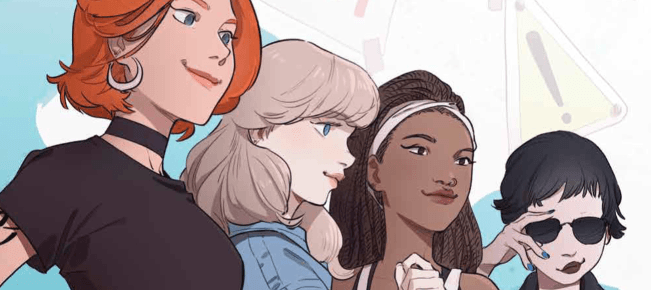
Reading Carly Usdin, Nina Vakeuva, Irene Flores, and Rebecca Palty’s Heavy Vinyl is like the comic book equivalent of relaxing in a hot tub, but the hot tub is either cupcakes or adorable Corgi puppies. (Take your pick.) It’s about a teenage girl named Chris in 1998, who has just gotten her dream job at a record store and her first big crush on Maggie, her co-worker, who is drawn like a shoujo manga protagonist. But then she’s inducted into a top secret vigilante fight club and has to rescue the frontwoman of her favorite band. It’s high concept and slice of life just like Vakueva’s art is comedic, beautiful, and a little badass. Carly Usdin does a good job in just four issues of giving each member of the fight club their own distinct personalities and relationships while doubling down on the cuteness and awkwardness of Chris and Maggie’s budding romance. But what makes Heavy Vinyl  the best comic of 2017 is its belief in the power of women and music to change the world…

The Fighting American Returns With a Jerry Ordway Cover!

Titan Comics has announced a brand-new creative team, and a fresh new adventure for Fighting American: The Ties That Bind #1, coming in March 2018.

Fighting American first appeared in 1954, created by the minds behind Captain America Joe Simon and Jack Kirby. In their original Fighting American series, Simon and Kirby introduced readers to Nelson Flagg who took part in an experimental US Military procedure that saw his mind transferred into the enhanced and revitalized body of his dead brother, Johnny Flagg, to become America’s first and only super hero, Fighting American.

Titan Comics’ direct continuation of the original series takes place 63 years later, with Fighting American and his sidekick Speedboy marooned in the 21st Century. Fighting American: The Ties That Bind will see the original Fighting American faced with new and classic enemies, and some old Flagg family secrets are revealed that could break our heroes’ All-American spirit!

Written by returning series writer Gordon Rennie with art by new series illustrator Andie Tong, Fighting American: The Ties That Bind will debut with a stunning cover by the iconic Superman comic book artist, Jerry Ordway! The comic also features covers with art by Jack Kirby, and Andie Tong.

Fighting American: The Ties That Bind #1 will go on sale in comic book stores on March 2018. This exciting new series will be available to order from the January 2018 Edition of Diamond PREVIEWS Catalogue.

Preview: Fighting American #2

Fighting American #2

Writer: Gordon Rennie
Artist: Duke Mighten
Cover A: Mark Buckingham
Cover B: Art Baltazar
Cover C: Duke Mighten
Cover D: Jack Kirby
FC – 32pp – $3.99 – On sale: November ​8

The Cold War superhero returns – originally launched in 1954 by the creators of Captain America, Joe Simon and Jack Kirby! Join Fighting American and Speedboy as they navigate the dangers and wonders of the modern world.

Movie Review: Thor: Ragnarok

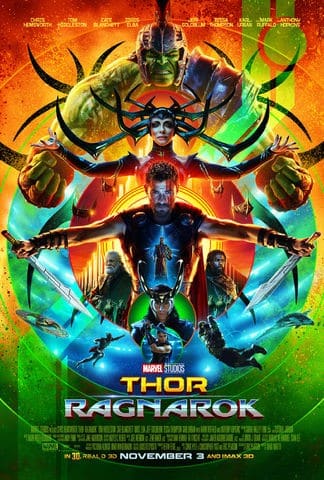
Thor_Ragnarok_SDCC_PosterThor’s outings in the Marvel Cinematic Universe have been. . . uneven at best, to put it kindly. Indeed, Thor: The Dark World remains the unequivocal nadir of the MCU’s otherwise good track record. But given that and Avengers: Age of Ultron also being less than stellar — the last two times we saw our Asgardian hero — you might come in to this film with zero expectations.

Prepare to be blown away by one of the best movies in the MCU and certainly Thor’s best film appearance to date. 

Chris Hemsworth reprises his role as the Norse God of Thunder. Reunited with his presumed-dead brother Loki (Tom Hiddleston), they track down their missing father Odin (Anthony Hopkins), who reveals a deep family secret — an older sister, Hela (Cate Blanchett), the goddess of death who has her sights set on the Asgardian throne.

Various misadventures find Thor reunited with fellow Avenger The Hulk / Bruce Banner (Mark Ruffalo), against whom he is pitted in gladiatorial combat reminiscent of the storyline in Planet Hulk. They must escape back to Asgard to take on Hela with the help of a recalcitrant Valkyrie (Tessa Thompson) who is probably the best part of the movie and given some of the most fun action pieces and one of the best character arcs of any person in the film.

But don’t be fooled into thinking most of this is a Planet Hulk movie. Its roots go far deeper than the relatively recent storyline. But if you take one part Planet Hulk, plus equal amounts Jack Kirby and Walt Simonson classic Thor, that’s the comics cocktail from which this springs.

The ringmaster for this particular circus is director Taika Waititi, who delivers something truly unexpected: a different kind of Marvel movie. One of the most common complaints against the MCU is how similar / unoriginal / mass produced they feel. Thor: Ragnarok defies that claim with its humor, characters, visuals, and soundtrack.

This movie is funny. Of course, that should be of no surprise to those who know Waititi for his time working on Flight of the Conchords or his previous films What We Do in the Shadows and Hunt for the Wilderpeople. It’s a very specific humor which is undeniably Kiwi in its politeness, awkwardness, and wry sense of irony — and wholly different from Joss Whedon’s or James Gunn’s much broader humor in The Avengers or Guardians of the Galaxy films.

Waititi also brings along some familiar faces to those who know his other films, including Rachel House, who plays a lackey of Jeff Goldblum‘s The Grandmaster in Ragnarok, is very similar to the character she played in Wilderpeople. And Waititi himself shows up (as he is wont to do in his own films) as Korg, a rock-person gladiator who ends up with some of the funniest lines in the film.

Waititi’s work has always been good before, but he’s never been given this big of a canvas to paint on. Wilderpeople especially felt like they spent the majority of the movie’s budget on a climactic, over-the-top car chase full of explosions that would make Michael Bay blush. With the ability to really cut loose — and decades of Kirby and Simonson art to draw from — Waititi gives us some of the most astounding visuals of the MCU so far.

While not quite as mind-blowing as last year’s Doctor Strange, the visuals Waititi seems to be trying to give us a late 70’s/early 80’s psychedelic trip of a sci-fi movie, complete with a soundtrack by Devo’s Mark Mothersbaugh — heavy on the Devo and John Carpenter synth vibe. Oh, and a heaping helping of Led Zeppelin’s Immigrant Song in case you couldn’t get enough of it from the trailer. Waititi also borrows (steals?) visually from fellow Marvel director Sam Raimi in fun and unexpected ways and includes perhaps the most interesting nod to Willy Wonka and the Chocolate Factory ever.

But a film always comes down to its characters and its themes. And this is where Thor: Ragnarok perhaps shines above many of its other MCU peers. Every character in this film goes on a journey. Their stories, interactions, and dialogue are incredibly well-woven together. Everything has a purpose and eventual payoff. It sits alongside its peer Logan this year for being so well-crafted from a storytelling perspective. One tiny complaint is that it gets a little too bogged down in its own exposition in the middle. It could stand to lose five or seven minutes, but not much more.

And at the end you ask yourself, “So what?”

One of the great joys of being able to analyze movies is to ask these questions. Is this just a cashgrab to get butts in seats, buy popcorn, and sell merchandising? There’s something unique in here, which requires going into very minor spoiler territory. Skip the next 5 paragraphs if you don’t want to know any more.

[Begin Minor Spoilers]

The title Thor: Ragnarok is instructive. Ragnarok — the Norse apocalypse — is the destruction of the world, and in the case of the film and the comics, of Asgard. But it often signifies a form of creative destruction or nihilism necessary for a new chapter.

Hela comes to Thor and Loki replacing their ideas of what Asgard was — a beautiful civilization that loves peace — with the true history that she once rode with Odin making war on the 9 Realms to capture their treasure and slay millions of innocents. Odin cast her out when he decided to switch brands from bloodthirsty warmonger to benevolent father-king, but he kept the gold and trinkets that made him powerful. But after a lifetime, Odin passes onto Thor the wisdom that Asgard is not a place– it’s people. You could just as easily insert for “Asgard” there the names America, Britain, Spain . . . New Zealand.

And so here we are in 2017. Maybe we’re looking at the world with fresh eyes, that the advances of “the West” are built on a bloody history of colonialism, slavery, and other forms of oppression. Perhaps we’re now seeing the chickens of our nationalism, jingoism, sexism, and quest for economic hegemony coming home to roost in the the rise of forces and ideals we long thought dead or outmoded. Perhaps Ragnarok — some creative nihilism — is what we need to wipe the vestiges of former power away to be replaced by a more pure, benevolent rule of law.

Or maybe it’s just a story about two brothers, one of whom has a magic hammer, and it gets smashed by their mean old sister, so they have to recruit a giant green monster to help beat her up. Could be that, too.

ONE OTHER THING (Is it a spoiler to reveal what isn’t in a movie?) If you’ve got your hopes up to see the final infinity stone, just tamp those expectations down. You do get a couple glances at the Tesseract (aka the Space Stone), but we already knew about that one anyway, right? Right. Just enjoy the movie without worrying about it moving that particular storyline forward.

But, of course, make sure you stay through the credits, because. . . well, you know the drill.

[End Spoilers]

It’s likely unfair to castigate the MCU for having movies that feel like they came off an assembly line. While it may have been true previously (again, looking at you, Thor: The Dark World and Avengers: Age of Ultron), it’s worth noting how unique the Marvel Phase 3 films have been:

Captain America: Civil War is a philosophical political thriller and ethical Rorschach test with action set-pieces. (I still don’t trust anyone who is totally Team Iron Man)
Doctor Strange is a psychedelic mystic Hero’s Journey where the real enemy is ego.
Guardians of the Galaxy Vol. 2 is a family drama where a reluctant patriarch has to lose the last vestiges of his mother and father to become the father he needs to be — and where a raccoon cries at the end as he wonders whether or not there is a god.
Spider-Man: Homecoming is a John Hughes movie with superheroes.
Black Panther looks to be the most unique Marvel movie of all.

There is a theme running through all of these: the act of creative destruction. In all of these films, our characters have to give up something they love or thought defined them in order to take the next step in their hero’s journey.

Further, family looms large in Cap: Civil War, Guardians 2, and Spider-Man. Family is at the core of Thor: Ragnarok, as it’s essentially sibling rivalry writ large with intergalactic consequences. It’s almost like. . . they actually plan these things out and are trying to say something more broadly about the human condition.

Kudos, Marvel. And Kudos (or whatever the New Zealand equivalent) to Taika Waititi. You have created something unique that blends together some of the best parts of the history of the character of Thor, given us astounding visuals, great music, jokes to make us laugh, action to thrill us, and even some nuggets to ponder.

You’ve given us a film finally worthy of the God of Thunder. Go see this on the biggest, brightest screen you possibly can. And then hug your family and friends. Because even in an apocalypse, home is not just a place– it’s people.

4.5 out of 5 stars

« Older Entries Recent Entries »