Fans of Irish writer/director/songwriter John Carney (Once, Begin Again, Sing Street) can rejoice again in having another strong entry in the filmmaker’s oeuvre. Flora and Son delivers that sweet spot that Carney is king of, successfully blending music and melodrama in a way that, pardon the pun, hits all the right notes in that perfect blend of happy/sad. But this time Carney stretches himself a bit by delving into dance and hip hop, which also alludes to a generational divide: youth who previously picked up guitars are now more likely to be making beats on a Macbook. While the film builds slowly and doesn’t quite have the showstoppers some of Carney’s previous works have, it sticks the landing so hard with its finale that it just leaves you feeling everything in a wide array of emotions.
Our protagonist is Flora (Eve Hewson), a single working-class Dublin mom to Max (Orén Kinlan), whom she had as a teenager. Estranged from Max’s dad, Ian (Jack Reynor), Flora is struggling to keep Max out of jail and connect with him. Finding a beat up guitar in a dumpster, she fixes it up and offers it to him as a gift, which he rejects, but she stubbornly decides instead to try to learn how to play it herself. She connects with Jeff (Joseph Gordon Levitt) a Los-Angeles-based guitar tutor online and there’s some immediate sparks. Flora crosses a few inappropriate lines, but undaunted, Flora continues to learn, even collaborating with Jeff on a song as they grow closer to one another.
At the same time, she’s trying to be there for Max, eventually discovering he’s also making music on his laptop. While his is more beats and hip hop, they begin collaborating, with her even helping shoot a rap music video. It’s beautiful to see Flora try and fail to connect with people, over and over. She’s a mess, but we’re always rooting for her.
Flora and Son ends up being a really beautiful tribute to family, to music, and to the messiness of life. While it’s not as immediately striking as Carney’s previous films, it’s still right in the pocket of what he’s known for. Carney again writes many of the songs, and is joined by the always adept Gary Clark, Jr. Joseph Gordon-Leavitt also delivers a wonderful supporting performance that is vulnerable, aloof, and charming in equal parts.
There are a few downsides, as the film certainly earns its R rating with language and a decent amount of sexual content. No nudity, but still a decent amount of talk that would be uncomfortable to watch with a lot of younger viewers. Speaking of talk, more than any of Carney’s previous films, this movie leans in heavily to its Irish brogue. One argument to watch this at home on Apple TV+ would be that you can turn on subtitles, which may be a necessity. The most unrealistic thing in the entire film is despite major portions of the film taking place over Skype between Flora and Jeff, he never once asks her, “What? What did you say?” Flora’s accent is thicker than the head on a Guinness. It’s also equally as amazing.
Flora and Son gets a hybrid release both in a handful of theaters and on Apple TV+ on Friday, September 29. Apple’s release plan mirrors its similar film, CODA, in 2021, and the similarities could not be more striking. It’s worth noting CODA ended up nabbing numerous Oscar nominations, and wins for Best Picture and Supporting Actor. Given Gordon-Levitt’s performance, don’t be surprised to see him in the mix come awards season. And Carney himself is an early favorite for Original Screenplay. Given the Academy’s ranked-choice voting system, if there is a pitched battle for Best Picture between Oppenheimer, Barbie, The Color Purple, etc, if Flora and Son can be everyone’s second or third choice (the way CODA was), it could be a surprise winner.
Whether streaming or in a theater, treat yourself to Flora and Son as soon as possible.
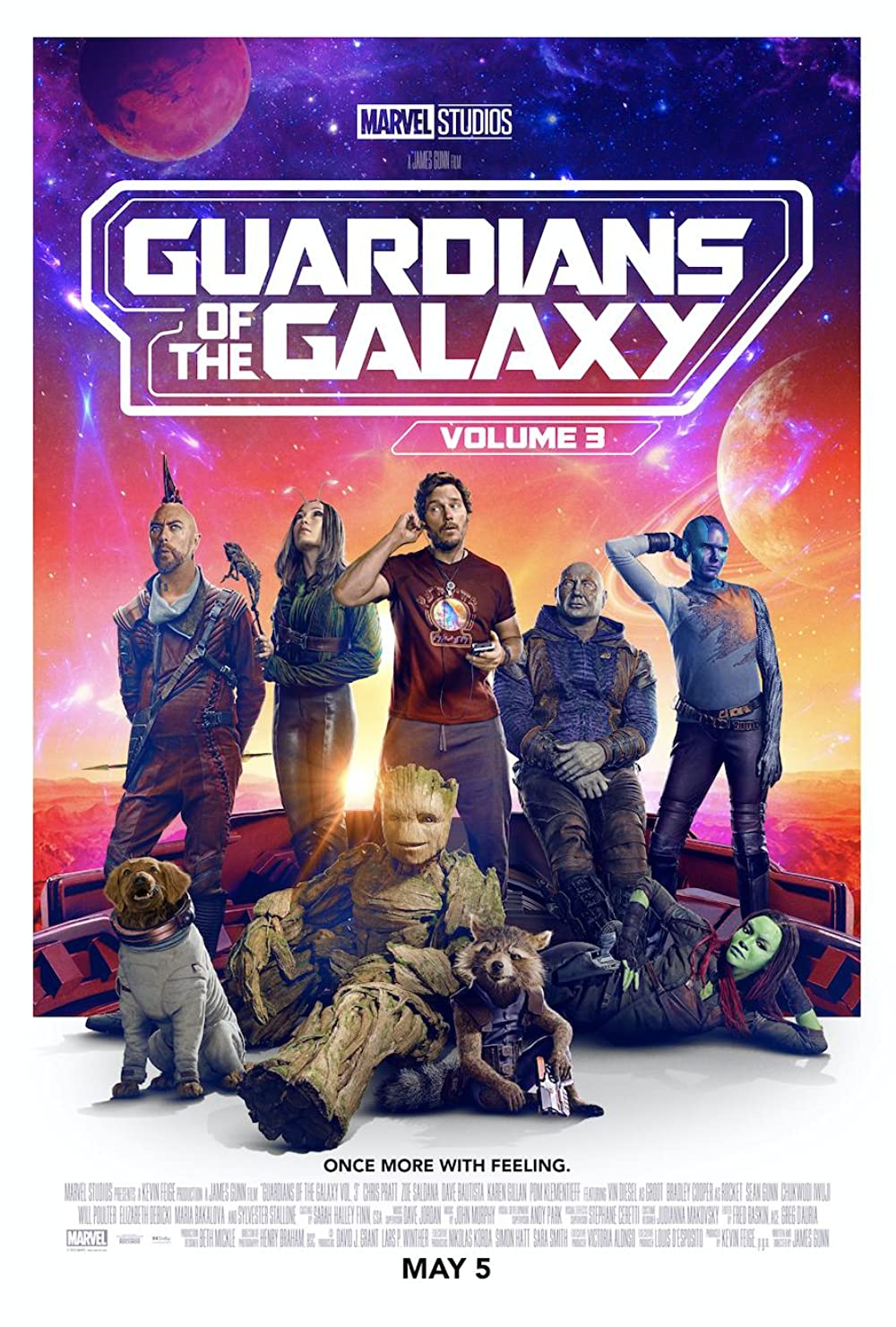
Let’s be real: it feels like the once-mighty MCU now really needs a hit. Phase 4 has been, to be kind, uneven. And so, can James Gunn bring some magic back before heading off to DC? Yes. Good news, true believers! Guardians of the Galaxy, Volume 3 is a good movie! You will laugh, you will cry (believe me, you will CRY), you will believe a living talking tree can fly? Ok, well, maybe not that far, but it is a solid movie.
That being said, it is missing some of the magic of previous outings. But it does deliver a satisfying end to the trilogy of films focused on our special band of a-holes. Rocket builds stuff. Drax and Mantis banter. Groot takes new forms. Star-lord is… just sort of there (which is good if you, like many, are at the end of your tolerance for Chris Pratt). But returning supporting characters also get some great work, like Kraglin and Cosmo. Cosmo is a very good dog. Cosmo is maybe the best dog. Good dog, Cosmo.
Our story involves Rocket’s origins and his ties to new villain The High Evolutionary (Chukwudi Iwuji), who is desperately searching for Rocket, deploying every resource at his disposal. This includes returning baddies The Sovereign and their new experiment teased in the after-credits of Guardians of the Galaxy, Volume 2: Adam Warlock (Will Poulter). Some comic book nerds are going to be very upset at Adam Warlock’s portrayal in this film as it is incredibly divorced from its comics lore. Just sit tight and wait to the end and what this portends for the future of the character, and forgive the film for needing a Big Bad who is actually a match for our Guardians of the Galaxy.
After an initial fight with Warlock leaves Rocket mortally wounded, Peter and the rest of Guardians have to undertake a desperate heist to save their friend. And through this we learn about Rocket’s origins and his previous life with other experiments of the High Evolutionary Lylla, Teefs, and Floor. And this is the section of the movie that will make you cry and should probably come with a content warning.
Guardians of the Galaxy is a series that has massive kid-appeal. Your kid loves Rocket and Groot, right? Well, this film contains scenes of implied animal torture and experimentation that is incredibly upsetting both for children and adults. While the intent is obviously to create pathos, it is maybe the most disturbing thing so far in the relatively anodyne MCU.
The High Evolutionary is also abusive: the way he speaks to Rocket and treats him is steeped in patterns any kid who grew up in a verbally and emotionally abusive home will immediately recognize. Again, this might be traumatic for people, so go in eyes open and maybe have a therapy session scheduled soon after, just in case.
And while the film focuses a lot on Rocket, its greatest strength is in providing something for every other single team member to do. Everyone gets a true superhero moment, and even better, several team-up moments where we see our gang of misfits fighting together. A hallway battle late in the third act is a symphony of teamwork and gonzo filmmaking only James Gunn could deliver.
Explosions? Yes. Guts and bodily fluids of various colors spraying everywhere? (It’s ok MPAA, they’re aliens and creatures, get it?) You know it! Laser blasts, punches, kicks, impalements, bisections, Groot showing what he can do with his various forms? Oh, HELLS yes.
And, again, everyone gets a hero moment. Mantis has a particularly fun one late in the film that I will simply call her Paul Atreides moment. But it is that same sort of heroic epic moment usually only given to single protagonists, and every. single. member. of the team gets one. It’s obvious James Gunn is leaving everything out on the field in his likely final entry into the MCU, and the last cinematic outing for this particular team of the Guardians of the Galaxy.
The themes from past films of found family continue to shine through. There’s also a strong potential queer/trans allegory in a lot of this, as The High Evolutionary obsesses over “his creations” needing to be “perfect” in his eyes. (Again, the abuse shown and implied here.) But as Rocket and his fellow experiments choose their own names and do things beyond his designs, they are further abused and rejected.
There is also a story of liberation here that comes at a time when basic human rights, from reproductive freedom to state governments bullying trans kids (and even legislators), are increasingly under attack. Guardians of the Galaxy continues to be a series for those of us who are misfits, but have a strength — when we fight together — that rivals any Avengers lineup.
It’s nowhere close to a perfect film. But it earns a space as one of my favorite films of Phase 4. And its message comes at a time when we couldn’t possibly need it more.
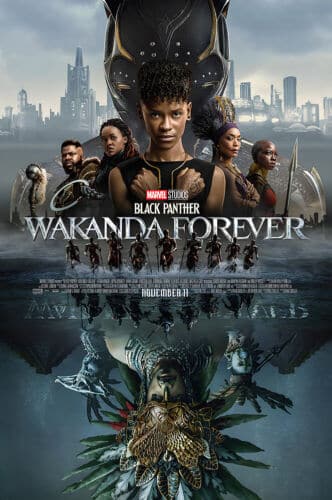
Black Panther: Wakanda Forever presents a mirror image of two warring nations and how they are reflected in each other
Wakanda Forever! This is cry we’ve been making ever since Ryan Coogler’s Black Panther hit in February of 2018, smashing box office records and changing the cultural zeitgeist. This is a worthy sequel, even if it doesn’t fully live up to the first film (what movie could?!?) Dedicated to “Our Friend Chadwick Boseman,” the film deals with his loss and absence by literally becoming about his loss and absence. Can we go on? How do we find the strength? How do we deal with the legacy and expectations? And how do we step out of that very large shadow that he cast to make our own way– to continue the legacy in a way that honors him and honors what he fought for?
Perhaps the smartest thing this Black Panther movie does is make it not about being the Black Panther. With no heart-shaped herb, Wakanda has lost its protector. So each person closest to T’Challa has to find their own way. So this is Queen Ramonda’s story. This is Shuri’s story. This is Okoye’s story. This is Nakia’s story. This is M’Baku’s story. It is a true ensemble effort — despite trying (somewhat unsuccessfully) to unify around Shuri’s journey.
The first major problem with this approach is exactly that. It’s trying to push Shuri’s story. No slight to Letitia Wright, but given the talent of the rest of the cast, it is hard for her to shine the brightest. Given Boseman’s absence, it is really unfair to ask her to have that same sort of unifying presence. Luckily, the film takes that theme and runs with it. Misgivings about Letitia Wright’s ability to anchor a blockbuster? Meet the theme of misgivings about Shuri’s ability to lead her nation in T’Challa’s absence. Smart move. And while Wright may be the least compelling in the major cast, the performances by others shine even brighter.
Angela Bassett, for example, is the best. Nominate her for an Oscar for this role. I’m totally serious. She is absolutely amazing. The nuance and depth she brings to this role is formidable and probably the best acting we’ve seen by any person in the history of the MCU. She is a sovereign trying desperately to hold her country together, to hold her family together, while she deals with the depths of grief of losing another loved one. She is pitch perfect, and she delivers another stunning performance, reminding another of her children, “Show them who you are.”
Playing off of her in one pivotal scene is Danai Guirra, who gives a career best performance as Okoye. She goes on a journey in this movie, and her performance is amazing. In a particularly meaningful and emotionally fraught scene between Okoye and Queen Ramonda, the way Guirra and Bassett play off each other is a master class of the acting craft.
Equally as strong is Lupita Nyong’o as Nakia. She has some of the most pivotal and emotional scenes in the film. No spoilers, but she is holding on to some secrets with her grief. A scene where she describes why she couldn’t come to T’Challa’s funeral is so heartbreaking. And it illuminates one of the main themes of the film of how we each process grief and tragedy differently.
Not to be outdone is her Us costar Winston Duke, who provides a lot of the jokes needed to cut through the sadness, but also adds some wisdom to the film’s dialogue. Who would have predicted that a character as problematic in origin and story (and nickname) in the comics as M’Baku would become so pivotal?
The best thing about this film is that each of these characters grows and has their own individual arc and resolution to it, all of which play to the film’s larger themes. The downside is that this causes the film to be a bit overstuffed as it is really trying to tell 8 different stories at once. Wait, 8, you say? But you only mentioned 5. And who are the others?
Well, Riri Williams, for one. She is everything we could have hoped for, and also gets to play the sort of macguffin of the movie in the same way America Chavez got to in Doctor Strange and the Multiverse of Madness. We also get returning champ CIA Agent Everett Ross, once again played affably by the charming Martin Freeman. And oh boy, does he have some backstory that leads to an extended guest appearance by an increasingly important MCU character.
Oh, and speaking of unexpected cameos… don’t let anybody spoil this for you. And don’t spoil it for anyone else. You’ll know what I mean when it happens. And it’s the best scene of the entire movie.
And then we finally have Black Panther: Wakanda Forever‘s villain. Ok, so he’s not actually a villain. Antagonist? Anti-hero? None of those labels really seem to fit the first appearance of Namor in the MCU. He is absolutely something else, and Tenoch Huerta is a gift.
The original Black Panther‘s villain — Eric Killmonger — was so epic he’s hard to top. This movie doesn’t try to. It instead presents someone who in another film would be considered the hero. Like Killmonger, he has a moral justification and a point. But unlike Killmonger, Namor is not unnecessarily brutal nor particularly angry. He is simply a mirror image of the Black Panthers of the past.
Remember the poster? Let’s look at it again. This image — Wakanda and its warriors mirrored underwater — is the best encapsulation of the spirit of this movie.
And while he does rain down vengeance on a 16th century conquistador plantation that had brutally enslaved his kinsmen, he is completely justified in these actions and merely doing what must be done to protect his people– not unlike how Dora Millaje in an opening scene take down soldiers who would try to steal vibranium.
In this version, director Ryan Coogler smartly changed Namor’s city from Atlantis to Talokan. Instead of a Greco-Roman design associated with the myth of the lost city as written about in Plato and Herodotus, instead the city is based on Mayan and other Meso-American Indigenous cities that existed prior to the arrival of conquistadors. It is beautiful and it is brilliant. If Wakanda is Afro-futurism– a “what-if” of if Europe hadn’t pillaged Africa’s culture and resources through colonization– then Talokan is the same sort of Indigenous Meso-American culture… but under the sea! Somebody get James Cameron on the phone and tell him he and Avatar 2 are officially on notice.
So if Namor and Talokan aren’t the villains, who are? The colonizers. The people and countries who want vibranium for themselves. Wakanda and Talokan find themselves fighting merely about how far they should go to protect their secrets from the outsiders. And one of the only shames of this film is in a movie where the villains are the white people, we see two beautiful civilizations — one African, one Meso-American — pitted against each other. Yikes.
Despite that, Tenoch Huerta is amazing in this film. He is charming, but can also be harsh and strident. We’re going to want more Namor in future MCU films, and this potentially sets up for that. He also name-checks a few ideas and concepts that will certainly be a giant tease for a lot of Marvel fans.
So doesn’t that sound like a lot? It is. And despite its 2 hour 40 minute runtime, it actually feels shorter. But it’s still a lot. It’s overstuffed, to be sure, like one of those giant burritos that only exist to see if you can eat it on a dare. But what it’s stuffed with is pretty tasty.
Black Panther: Wakanda Forever will be a lasting, fitting tribute to Chadwick Boseman. There were moments in our screening where everything went silent. Moments of reverence like this are usually reserved for church or other spiritual practices. Instead, we get the now-familiar page-flip Marvel graphic exclusively of clips of Boseman as T’Challa. And there are moments in this film that will make you cry. And while it may not fly to the heights of its previous installment, it sits head and shoulders above every other film in the MCU’s Phase 4.
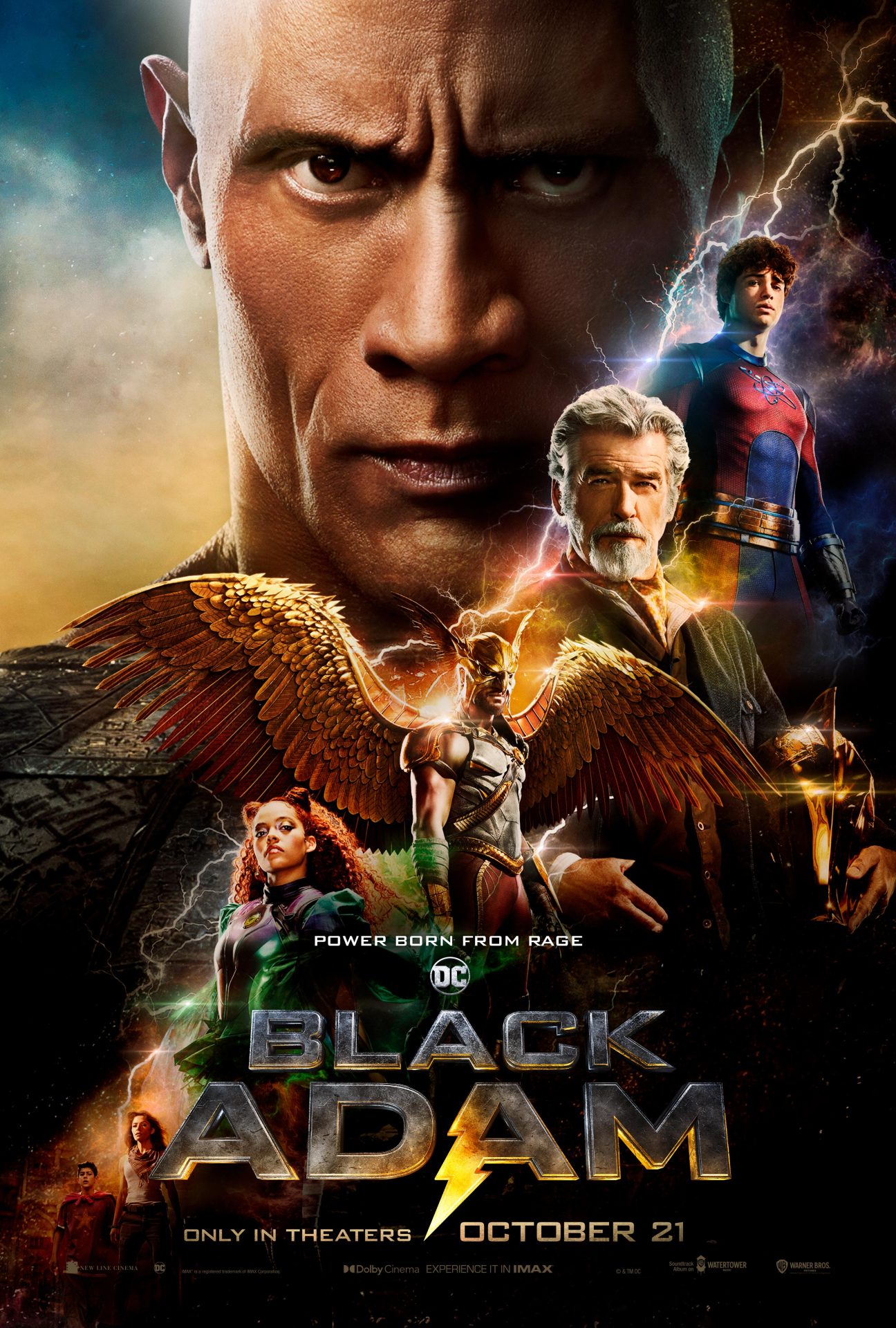
Black Adam is a pretty good film. Despite some pacing and script issues, its cast are immeasurably charming and the action sequences are a lot of fun. So don’t necessarily believe The Discourse™️ online or a low Rotten Tomatoes score. But, as the song goes, if you don’t expect too much from [it], you might not be let down.
Because there are a good 30-35 minutes of Black Adam that absolutely rule. They are fun, kinetic, and everything you want not only in a great superhero movie, but just a great movie overall. Dwayne Johnson is in full blown heel mode as the titular Black Adam/Teth-Adam. Like the best heels, he has the audience eating out of his hand as they simultaneously boo and cheer for him. He delivers some of the funniest lines in the film with perfect deadpan humor, channeling action-comedy greats of the past like Arnold Schwarzenegger in T2. This is, in so many ways, the apotheosis of what The Rock has always been meant to do on screen. He is Black Adam. Black Adam is him. It’s perfect.
We’re also treated to iconic members of the JSA like Hawkman and Doctor Fate. Aldous Hodge and Pierce Brosnan, respectively, are similarly perfect in these roles.
However, here come some of the problems the film comes up against almost immediately: it’s not clear exactly who this movie is for. Because it seems to gloss over a lot of introduction and just assumes audiences know who these characters are. Because everyone knows Carter Hall is Hawkman and his backstory, right? Right?
And yet, without a definitive telling of their backstory, they seem completely divorced from their rich backstories and (convoluted) history in comics. There are things fans will nitpick as being way out of line. And yet for casual audiences all we know about Carter Hall is. . . he’s a rich guy who turns into a bird person? They try to make him more of a cool, less-brooding Bruce Wayne instead of, well, Carter Hall. Dr Fate. . . puts on a helmet and can see the future sometimes? The only saving grace is how fun it is to watch Hodge and Brosnan. Ditto for The Rock.
And then the putative bad guys of the film are Intergang. But yet they’re not really related the Intergang from the comics or any other DC villains, so they may as well have just been called Blackwater/Xe/Academi/Constellis. They’re just some evil, faceless mercenary group. But also America? But also not America.
So, this movie doesn’t exactly serve people who haven’t read the comics. And it doesn’t really serve the fans. So, who is it for exactly?
There’s a tiny middle ground of casual fans who vaguely remember Carter Hall from Justice League cartoons or an appearance on the CW shows. Apparently them? That’s who the movie is for?
A Brief Pit Stop for Spoilers
[The following contains minor plot spoilers, a music spoiler, and one spoiler of a sight gag in the movie. If you want to go in completely spoiler-free, please skip to the very end to see my final score]
And then there’s the script. Ugh. It feels like it wasn’t so much written as assembled in a darkened room by people filling out Mad Libs and pasting them together. Then studio noted to death. “This needs a joke here. Can Atom Smasher walk in holding a bucket of chicken in this scene? He’s hungry! It’s funny!”
The movie also starts with an extended flashback to ancient Kahndaq with voice-over narration to explain everything to the audience– the laziest of bad script-writing tropes. They may as well have started from the Act I climax action scene and paused mid-explosion, “Yup, that’s me. I bet you wonder how I got here. . .”
But then here’s the problem: you don’t get any Black Adam in your Black Adam movie for a full 15-20 minutes. And when he does show up, the film seems more self satisfied in it needle drop of The Rolling Stones “Paint It Black” than on the utterly epic (and really effing cool!) action scene they’ve created of Black Adam just brutally murdering enemy soldiers. I wanted to applaud but it really felt like gilding a lily and could have been achieved with a more subtle use of music.
The film’s framing device also seems odd. We spend a lot of time trying to make a family from Kandaq our main audience surrogate POV characters. The mom, Adrianna Tomaz, is an archeologist (natch) and the teenage son Amon just loves DC comics and skateboarding. It has very hard “How do you do, fellow kids?” energy.
They also set up a ridiculous macguffin around vibraniumunobtaniumeternium which just strains all credulity. In a movie where Hawkman also already name-checks Nth metal, it feels so crazy for them to bring in another, lesser known magic metal. And this eternium isn’t even really DC comics eternium. It’s just Dollar Store vibranium/unobtanium: magic metal that makes future tech possible. It really feels a lot like a studio note from WB execs “They loved that vibranium in Black Panther. Can Black Adam have vibranium in it?”
And then you have a really weak villain: Ishmael Gregor, who everyone finds out later is actually in charge of Intergang? But also we, the audience, know he’s bad from pretty early on. So we’re ahead of the rest of the characters but also we don’t have ANY insight into his motivations or backstory until well into the final act.
All of this just makes me feel bad for Black Adam. It’s not its fault that it came out of a studio seemingly so adrift creatively that it feels like they’re 2 weeks away from burning down the movie studio for the insurance money. There’s some really great stuff in the film. If not for terrible advice from terrible executives, this could have been another repeat performance from this year’s The Batman. By comparison, it felt much more like it was cut from whole cloth with a single creative vision. Black Adam feels studio-noted to death.
Missed Opportunities
I am about to break two of my cardinal rules of film criticism:
1- Never judge a film for what it could have been, instead try to judge it against what it was trying to do.
2- Thou shalt not pit Marvel versus DC
So, I’m really, really sorry. But there is just so much wasted potential. So many of the film’s problems — the pacing, the framing device, the voice over, the non-backstory on Carter Hall — could have been alleviated with just a few changes. And? They could really make the film say something.
One of the first changes would be to re-center the backstory of the film and its characters on the comics’ origins. One of the things Marvel does well is translating that backstory and history into its distilled essence that is palatable for both fans and new audiences. And part of this is simplifying and streamlining concepts like Intergang and eternium. This also potentially allows for Carter Hall and Dr. Fate to have some personal stakes in the story, tying in past lives where perhaps they knew Teth-Adam, visited Kahndaq, and it was tied to Nth metal.
You also have to fix the kid, Amon. Ditch the skateboard, and then give him more to do than be John Connor in T2 trying to teach the killer robot funny things to say. Streamline some of the mom, Adrianna’s, part by giving her more of the film’s social conscience. One of the things that made Black Panther so successful was how its antagonist and side characters all illuminated some conflicts that had implications for real world issues. Black Adam tries to do that, but it’s very obvious any actual rough edges were sanded down by the studio so it feels both heavy handed and also not hard hitting at the same time– a rare feat. Just have a point, and make it. Subtly.
Subtlety is something Black Adam seems utterly incapable of doing, though. That’s ok. Its bombast and spectacle are what makes the film work in the parts where it does work. It just would have been nice if it felt a little more thoughtful.
Final thoughts on Black Adam
Ultimately, Black Adam‘s villains aren’t Ishamel, or even Intergang or Amanda Waller. The villains here are Warner Brothers studio execs who have absolutely no f@#$ing clue what to do with DC comics. This movie will elicit nerd rage from ultra fans and head scratches from general audiences.
But what it does well, it does extremely well. It is just plain fun to watch The Rock be a bad boy and tear a bunch of stuff up. Hodges and Brosnan try their best to be the heroes of this story but the clunky script slows them down. But for the half hour or so where it’s just action sequences and spectacle, it’s pretty great.
Every naysayer is going to be eating a lot of bat, er… crow, as director Matt Reeves delivers in The Batman not only one of the best films among the Caped Crusader’s silver screen appearances, but most importantly, simply a great film.
This outing is unlike every other iteration of Batman we’ve ever had, unlike anything we’ve seen in the broader attempt at a DC Comics extended cinematic universe, and also so true to the essence of what makes the character work. Robert Pattinson delivers a hit to the solar plexus of a complex character, and, surprising for many Batman or other comic book movies, the character actually has an arc and growth. He’s matched in Zoe Kravitz‘s stunning portrayal of Selina Kyle as well as Paul Dano‘s scene-chewing madness as The Riddler, the latter of whom really elevates this material. But most importantly, the film feels poignant, delivering a message that fits the zeitgeist we find ourselves in.
This should be no surprise to those who are familiar with Reeves’ work with the Planet of the Apes franchise. His attention to character and theme are perfect for Batman. And while fans may find a lot of similarities between Reeves’ film and the Christopher Nolan Batman trilogy, this manages to be very much its own thing. In fact, really the only similarity is that both directors are committed to elevating the material and focusing on character. This Batman is really the first time we see “The World’s Greatest Detective” actually do detective work as he tries to unravel the mystery of what The Riddler wants. The Batman actually owes more to films like The French Connection, Chinatown, and David Fincher’sZodiacand Se7en than most of the other Batman films. In fact, the Batman property this film most resembles is the Bruce Timm directed Batman: The Animated Series and the cinematic releaseThe Mask of the Phantasm. But darker. And also? Longer. This movie is LONG, and it is slowly paced. If that is a problem for you, you may not enjoy this. But if you like the slowest of burns, this pays off.
The central mystery of the film? (No spoilers) The Riddler keeps murdering some of Gotham’s top officials, leaving behind cryptic clues for The Batman and threatening to spill everyone’s secrets. The Gotham PD are none too excited when the masked vigilante shows up at crime scenes, summoned by Detective Jim Gordon (Jeffrey Wright) to help unravel the mystery. The two make a really good police partnership, again echoing the best parts of detective movies past. But Batman soon finds the case leads to Gotham’s underground including Oswald Cobblepot aka the Penguin (Colin Farrell) and his boss Carmine Falcone (John Turturro). And when Selina Kyle and Batman’s investigations into the same people cross paths, they form a temporary and untrusting partnership.
What happens next? Everything you think it does. And it is glorious.
When there is finally a moment when the Batmobile shows up and revs its jet engine, it is primal how happy it can make you feel down deep inside. And what follows is one hell of a car chase, some bits of which we’ve already had spoiled in the trailers. But needless to say, it’s amazing.
It’s also wet. This movie’s rain and water budget must have been huge. Gotham is apparently more like Seattle in this iteration, with constant rain and darkness. It’s an effective mood, especially punctuated by Nirvana’s brooding “Something in the Way” which gets dropped multiple times and is given multiple motifs in the score.
The acting is superb, the dialogue crisp, the puzzles and riddles fun, and the mystery is worth solving. Along the way, we also delve deep into Bruce Wayne’s family and his psyche. We plumb the depths of what he is really doing and why, and the film asks if that’s really the best way to go about creating the change he wants to see in the world. It’s incredibly reflective, and what makes it so poignant is it feels like it probes each one of us as well. Are the things you think you’re laboring for really aligning with your values and desires? Or is a lot of it a smokescreen and bull$#!t? In this, it feels very 2022: a time when we all need to take a look around at our mental health, our values, and our institutions and decide what changes need to be made in an increasingly untenable status quo.
There are also tiny threads that it feels like Reeves is weaving in to make some specific statements. For his second film in a row, he pits his heroes against a disaster in its third act that is natural in origin, but manmade/triggered in what feels like an homage to the crisis we face against climate change. But really, the actual threat comes from people who have been marginalized by society, slipped through whatever safety nets we’ve tried to create, and then radicalized and armed. In it, the citizens of Gotham must face their own demons, confront their own trauma, just as the other main characters do as well. Again, very 2022.
Just as Dano’s Riddler wants to make Gotham face its lies about its history, institutions and elites, so too must we unmask the truth about our own complex history and face a reckoning on issues of race, genocide, patriarchy, and all other forms of oppression that have been woven into our narrative from the beginning.
One of the things that makes this film so effective is that Bruce/Batman goes on a journey in this film. One of the joys of film is with its limited runtime you have precious little time to help your characters grow, so it becomes a part of the artistry of film writing and directing to efficiently move things from A to B to C. One of the problems with films based on comic books is that these characters are as much archetypes as anything else, so they’re not supposed to change. So it’s incredible that Reeves is able to make Bruce Wayne engage in a lot of self-reflection about his own trauma, how he is reacting to it, and how healthy that truly is both for himself and for Gotham. “I am Vengeance” is the Batman mantra that strikes fear into the hearts of Gotham’s underworld. But are there limits on what avenging his dead parents can do?
Or? This is just a movie about a rich guy in body armor who drives a really cool car. You decide. Either way, you will enjoy this.
Prepare yourselves for The Batman. Prepare for its extremely long runtime. Prepare to reassess everything you though you knew about Robert Pattinson. Prepare to be humming Nirvana’s “Something in the Way” for a week after. Prepare for the truth about The Batman.
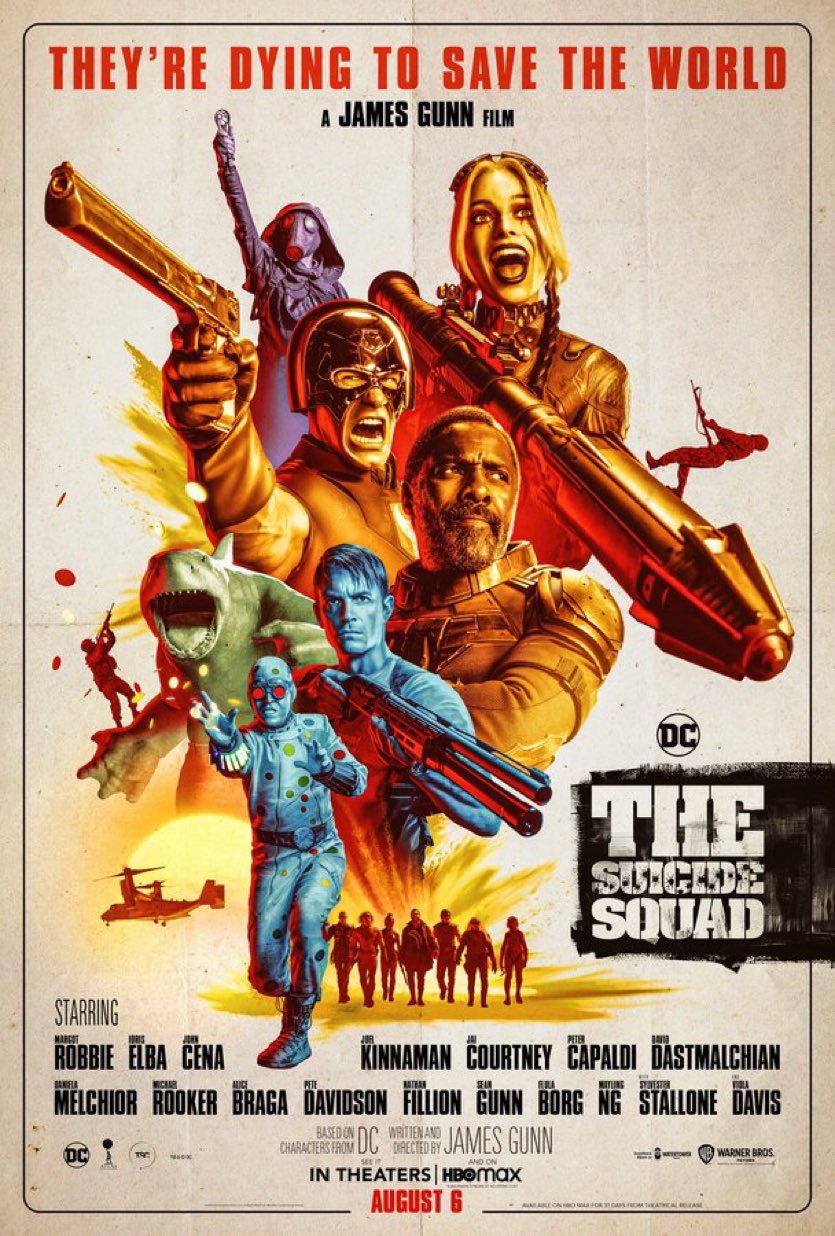
The Suicide Squadis one of the best movies of 2021, one of the best comic book movies of the last several years, and one of the best movies based on DC Comics of the last decade of their attempted construction of a shared movie universe. Director James Gunn is in his best form, tongue planted firmly in cheek, serving up ridiculous violence layered with humor and pathos. It’s clear that this is where DC should be going with its films: finding hungry filmmakers with a specific take on their properties, and then letting them go wild.
Although really I’m not convinced James Gunn wrote and directed this, or much moreso that “James Gunn” is not actually three kids in a trenchcoat. This movie is ridiculous, violent, and hilarious in all the right ways. It also proves the adage that we shouldn’t be remaking good movies, we should be remaking bad movies (like David Ayers’ Suicide Sqaud) and taking good elements from them.
Because those do exist. Margot Robbie as Harley Quinn continues to be amazing, playing incredibly well in this ensemble even with her own specific character arc. And Viola Davis as Amanda Waller is everything we want her to be and more. A scene between her and Idris Elba is a master class by two actors bringing all of the gravitas possible to set the personal stakes for this silly violent comic book movie that is The Suicide Squad.
Gunn also embraces the silliness of the premise. With a team of truly expendable anti-heroes, how do you make us care about each of these people, set up their stakes, and then let us laugh at so many ridiculous deaths. But this is the magic of James Gunn: he makes us care about Ratcatcher. And not just Ratcatcher, but technically Ratcatcher 2. And Polka Dot Man. And he makes their silly powers something not to underestimate.
But the film also smartly anchors us around Idris Elba‘s Bloodsport and John Cena‘s Peacemaker, whose chemistry is great and whose competition over who is better using very similar power sets is quite enjoyable. And a truly spot-on performance by Sylvester Stallone as King Shark is absolutely everything we want it to be.
While The Suicide Squad is 90% ham and cheese and blood and gore, there’s also a surprising amount of pathos. Between this and Guardians of the Galaxy 2, I have to wonder if Gunn doesn’t have some unresolved daddy issues. Or? It’s just an easy way to motivate characters. But so much of this is about intergenerational trauma. It’s also stealth feminist and puts a diverse cast of characters at the forefront. The women of this movie kick all sorts of ass, but are also flawed where they need to be. It’s refreshing because it’s usually not something we get in our movies, much less our comic book movies.
The Suicide Squad as a movie is just bonkers. It’s not even worth trying to explain the plot, because that’s not what’s important or impressive here. Here’s what is worth watching this movie for. Harley Quinn’s spree of violence set to “I’m Just a Gigolo”. A fight scene with large sections shot from the perspective of the reflection of Peacemaker’s helmet. So. many. character deaths. Caring about Polka Dot Man and Ratcatcher 2. King Shark being hilarious.
And yes, stay though the credits. There’s a final scene that sets up the John Cena Peacemaker series coming exclusively to HBO Max.
And that’s my ultimate recommendation: as much fun as this would be to go see on a giant screen with an audience and popcorn (and it’s probably the most theater-experience-y movie that has come out so far), the Delta variant of COVID is nothing to mess with. Watching this on HBO Max is going to be perfectly adequate for most people. Or? Make sure if you are going to a theater to go to one that is mostly empty, wear a mask, wash your hands, etc, etc. You don’t want to become a part of the Suicide Squad by catching a potentially deadly disease.
But go watch this movie. Enjoy it. While the squeamish should not check this out, those who enjoy the ridiculous and violent will find this a perfect summer treat.
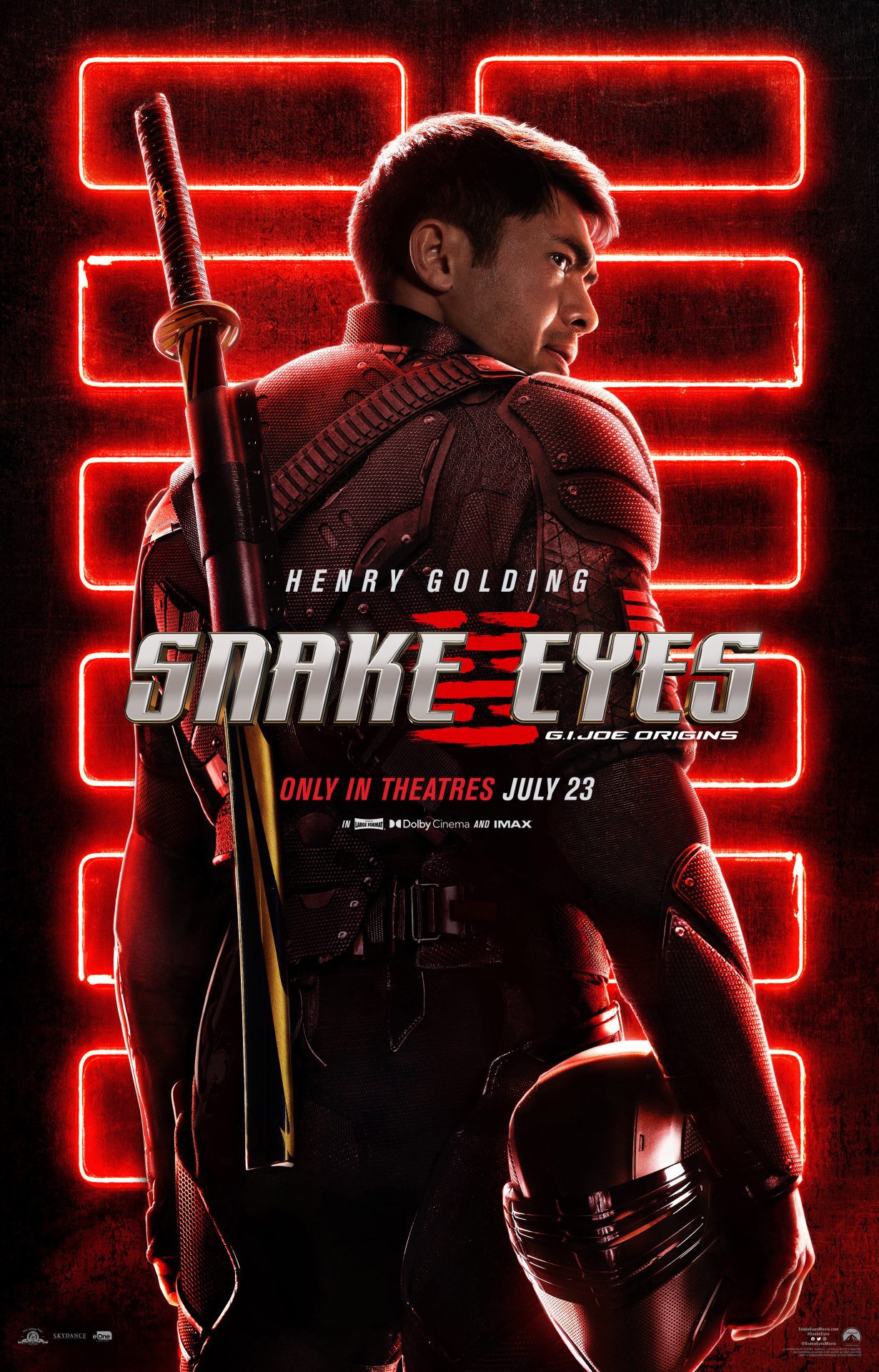
You know who the coolest GI Joe action figure always was? Snake Eyes. You know who was pretty cool in those otherwise terrible GI Joe movies from a decade ago? Snake Eyes. So it makes a lot of sense to reboot the franchise and include at the center the oh-so-hot-right-now Henry Golding as your black-clad ninja, right?
Yes, but then you need to deliver a better movie rather than one centered around the least interesting character in the entire film. You know who’s a badass in this movie? Storm Shadow. Scarlett. The Baroness. Multiple other members of the Arashikage clan. You know who wasn’t? Snake Eyes.
This movie could’ve been really cool. But ultimately it serves as a better origin story for Storm Shadow than it does for Snake Eyes, who is just sort of there. The film doesn’t give us a lot of reason to root for him and like the slowest fighter ever, it telegraphs its every move, making it a cliched “curse your inevitable but sudden betrayal!’ vibe. No lie: my 13 yr old son whispered to me 10 minutes into the movie “He’s going to be the bad guy, right?” When your target adolescent audience is that far ahead of the movie and its main characters, you’ve officially dumbed it down too far.
The story is pretty simple: Snake Eyes was orphaned at a young age and has spent his entire life fighting on the streets and seeking revenge against the man who killed his father. When a powerful member of the Japanese mafia hires him with promises to deliver his father’s murderer, Snake is ordered to befriend a young man named Tommy, heir to the leadership of the Arashikage, a legendary clan of ninja. They take in Snake Eyes and train him, ultimately leading to him having to make a choice to betray them to seek the path of vengeance or to choose the path of honor and his new clan and family. And also COBRA and GI Joe sort of show up and have interest in how all of this plays out, too.
All of this might be cool if done just a little more deftly. And here the problem lies with both the script and direction. Director Robert Schwentke, responsible for the R.I.P.D. film and a couple of the Divergent series sequels, faces the same problems he did in those films: the directing is competent but lackluster. Utterly devoid of voice or any personal statement or connection, it’s hard to emotionally connect with the film, even with such a slam dunk toyetic premise as “Action figure ninjas!” This may also be due to screenwriters Evan Spiliotopoulos, Joe Shrapnel, Anna Waterhouse, and the no doubt 8-12 other members of the script by committee who demanded certain elements be included in the movie to satisfy the desires of Hasbro or other studio executives. Shrapnel and Waterhouse have collaborated on other good projects in the past, including the 1936 Olympics Jesse Owens story Race and the recent Seberg, and it’s hopeful that they’re being tapped to write an Untitled GI Joe sequel as it’s likely the good things in this movie (and there are many good things). But the dullness seems very familiar for Spiliotopoulos’s work, which mostly includes uninspired Disney straight to video sequels and the recent live-action Beauty and the Beast (talk about uninspiring).
All of this sounds very negative towards this film, and perhaps we shouldn’t be so hard on it. At the end of the day, it’s a serviceable action movie and has a few actually really cool moments. This isn’t surprising, since the supporting cast is full of martial arts veterans. I just wish they got to do more. And I wish I didn’t have to wait until 90 minutes into the film to really get to something that felt cool.
And to be very clear, this is the best GI Joe movie that has been made. That is an extremely low bar since the first two are ridiculous disasters. But here’s the weird thing: those movies at least left a huge impression on me. It was a bad impression, no doubt, but an impression nonetheless. I couldn’t tell you the villain’s name from this movie. But I do remember the bat$#!^ insane performances by Joey Gordon Leavitt and Christopher Eccleston as Cobra Commander and Destro. And I remember the second movie, where they had the audacity to literally kill off 90% of the characters from the first movie in the first 10 minutes so we could start fresh with The Rock and Channing Tatum. Bad movies. But I’m still thinking about them. In two weeks I will likely have forgotten Snake Eyes even came out.
Which is a shame. Snake Eyes as a character deserves better than this. Henry Golding deserves a better role written for him. Andrew Koji, who gives the breakout performance here as Tommy/Storm Shadow, deserves better. I only hope they do all of them justice in whatever sequel will come. Let’s hope it feels at least a little more personal and interesting than this did.
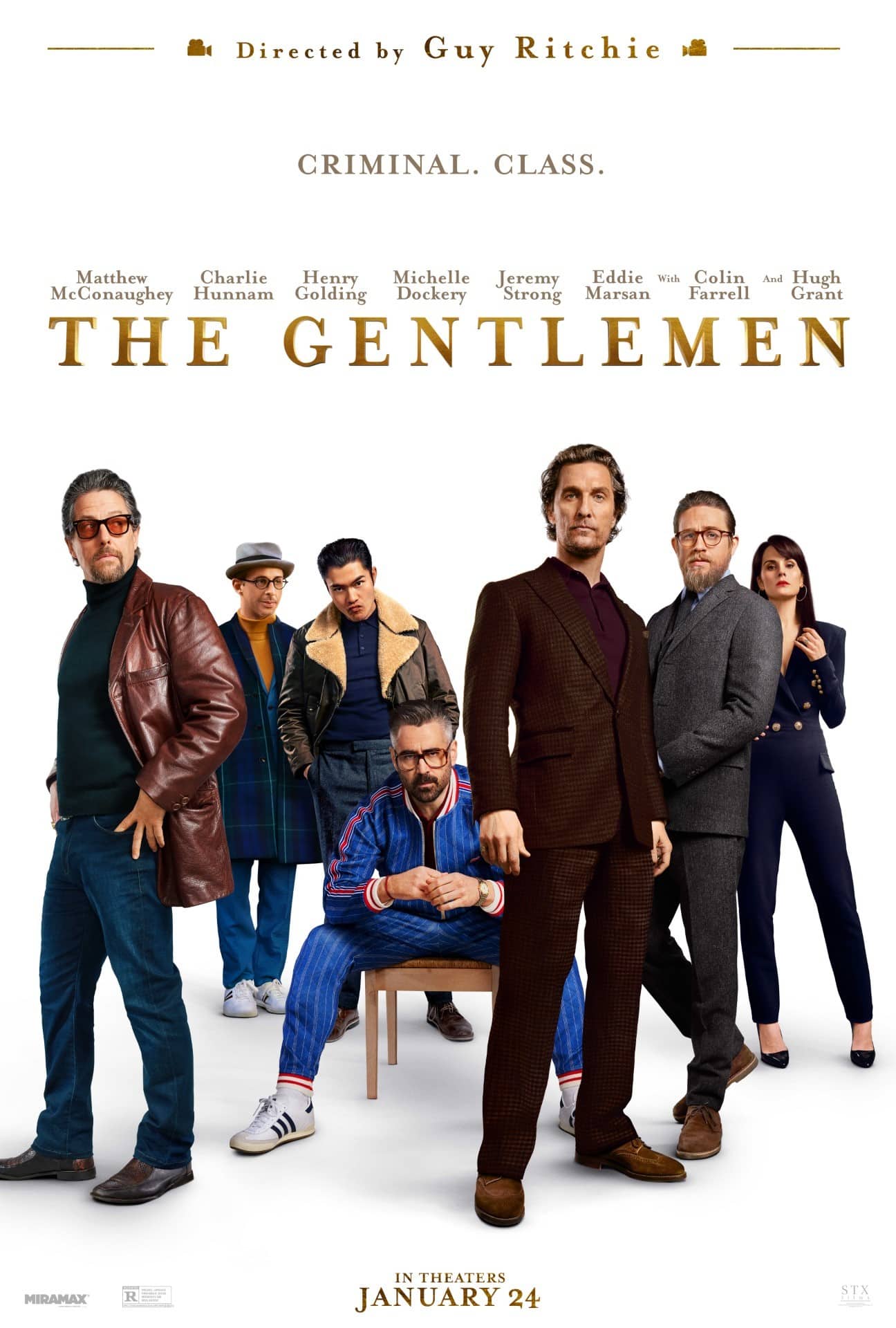
Somehow in the last decade, noted British scumbum auteur Guy Ritchie pivoted from gritty, street-level crime dramas with accents so heavy you need to turn the subtitles on to being one of the most bankable journeymen who brought us the Robert Downey Jr. Sherlock Holmes movies, The Man from U.N.C.L.E. and last year’s Aladdin remake. But with The Gentlemen, he goes back to the same well that brought us Snatch and Rock n Rolla. Ritchie’s fans will be very happy, as you can’t imagine two films more diametrically opposed than this and Aladdin.
Our story centers around American-born Mickey Pearson (Matthew McConaughey) who parlays his Rhodes Scholarship into an empire of dealing marijuana to Britain’s hoi polloi. But as he reaches middle age and considers getting out of the business, selling to fellow American Matthew (Jeremy Strong) but is beset by competition from rival Chinese syndicates, who mostly control the heroin and cocaine trade, led by up and coming lieutenant Dry Eyes (Henry Golding) and also ends up crossing an MMA-training street gang trained by “Coach” (Colin Farrell) who like to post videos of their crimes on Youtube cut into their rap videos. Seriously. It’s very Guy Ritchie.
Perhaps the most Guy Ritchie thing about it is that the entire film is framed as a conversation where glorified paparazzo Fletcher (Hugh Grant) is trying to shake down Ray (Charlie Hunnam), who is Mickey’s majordomo in this weed empire. Fletcher lays out the story of the film as… a spec screenplay– it’s a movie in the movie! How Ritchie and Grant managed to not to die from exhaustion from incessantly winking at the audience will perhaps never be explained. It’s cute, and it would be unforgivable if it wasn’t so fun. Grant continues his recent run of amazing supporting performances and he’s so effortlessly charming as he runs through his schtick– and spends most of the movie flirting with Charlie Hunnam. There’s an ad campaign to be built just around a bearded Hunnam and all the ways Hugh Grant flirts with him. It’s a nice stretch for Ritchie, who also punctuates this a lot of his other trademark moves.
It’s also very Guy Ritchie in the fact that his schtick which may have worked two decades ago now sticks out as, at best, problematic, and, at worst, racist. Yes, Henry Golding is a bad guy– all of these guys are bad guys– and so it’s expected that they’re going to do bad things. But that doesn’t absolve the film of Orientalist tropes that otherize and homogenize people of Asian origin, such as the fact that the Malaysian Golding is referred to over and over as a “Chinaman.” Please, dude– even The Big Lebowski knew that term was inappropriate two decades ago. One of the characters is even named “Phuc.” Get it? It’s so subtle, let me explain it to you the way the film does over and over in the hope that the joke will become funnier. Hint: it doesn’t. And a scene where Coach calls one of his students “a black cunt” and then explains to him that it’s a term of endearment doesn’t remove some of the racial stigmas. Sigh. Double sigh for the weird anti-Semitic tropes and gay stereotypes layered on Jeremy Strong’s character.
But we don’t come to Guy Ritchie expecting him to be politically correct. He is what he is, and these are the films that he makes. I firmly believe in the philosophy of judging a movie by what it is and what it’s trying to be rather than what it’s not and never could have been. There’s no way to make Guy Ritchie make a movie that conforms to these expectations, the same way I expect Sam Mendes to make exactly the movie he made with 1917.
What IS unfortunate is that Ritchie walks away from a few concepts in the film that needed to be explored more. He is by no means a feminist, so it’s not surprising that his film doesn’t pass the Bechdel test when. . . *checks notes* no, wait. . . it does? An early scene where Rosalind (Michelle Dockery), Mickey’s wife, pulls up to her personal place of business– an all-female car repair shop that seemingly caters to posh British women with high-end sports cars– gets run over so quickly in order to continue to the main storyline and I just wanted to pause the movie right there and live in it.
Stop drilling– you struck oil. I want more Dockery, more sports cars, now, please. That scene was so vivacious and fun and I want an entire movie about it.
Ultimately, the film is what it is: it’s fun, it’s violent, it’s pure Guy Ritchie. And that means you take the good with the bad. But for anyone who is a fan of Ritchie’s schtick and has wanted the old Guy Ritchie back, you’re in for a treat. All others? Your mileage may vary.
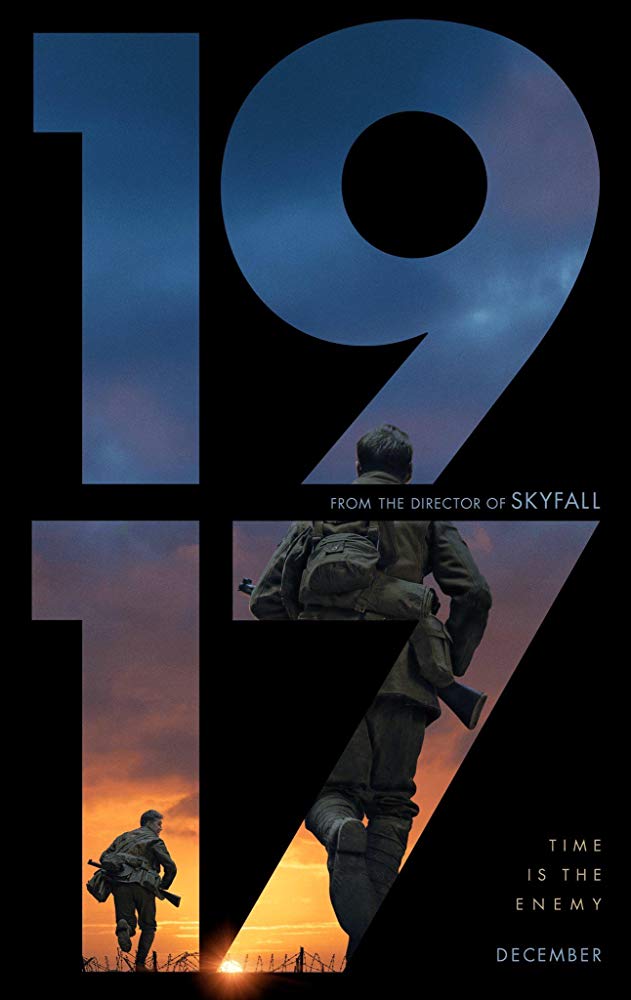
1917 definitely has a very specific energy, and that is tension built on top of tension on top of tension. But like a meal whose flavor profile is just based on one flavor, the final effect feels a little flat, even if it’s so technically stunning. Director Sam Mendes has always been an arresting visual director, from his award-winning work on American Beauty two decades ago to the comic-adapted Road to Perdition to (the best Bond film) Skyfall. And here he’s aided by (one of the greatest living cinematographers) Roger Deakins (who also teamed with Mendes on Skyfall) and editor Lee Smith, who help him achieve the illusion of a single, uninterrupted shot for the entire length of this gorgeous and arresting movie. The film’s strength and weakness are that the gimmick works incredibly effectively. But the story and characters take a backseat to the narrative and technical constraints, which somewhat hamstrings a technically amazing film.
Said story and characters are simple enough: in the waning days of World War I in the trenches of the Western Front, two English doughboys are dispatched to warn a battalion to call off an attack scheduled for dawn. To make the matter more personal, one of the infantrymen’s brother serves in that battalion, so they’re not only saving the war effort, but a family member. The camera follows the action in what appears to be one interrupted take (although it’s fairly clear where they used specific transitions to hide their cuts) and the results are intense.
Much like in Hitchcock’s classic film Rope, (and used in a somewhat more gimmicky way in Birdman) the lack of cuts helps elevate the dramatic tension. You never quite notice how much we depend on a simple cut to alleviate that anxiety that simply comes from letting a take run long. Especially in our quick-cut, quick edit world, we are simply not used to a filmmaker using a single shot for an extended period of time and it becomes incredibly unnerving. The way the camera moves, and what it chooses to linger on (including disturbing images of the horrors of war) also double and triple down on the dramatic tension.
The downside is that our characters and actors take a backseat to all of this, as a veritable who’s who of acclaimed British actors show up all too briefly. Colin Firth and Benedict Cumberbatch bookend the film as British generals in their strongest stiff upper lip personas, and along the way we also run across Andrew Scott (Hot Priest sighting!) and Mark Strong. But where the film actually works best is in some of its quieter moments, such as encountering a young French mother trying to protect her infant while under siege/occupation by German forces.
1917 surely deserves the awards nominations and attention it has been receiving. As a technical achievement, it is breathtaking. But, then again, so is Avengers: Endgame. And in a year where we’re once again discussing the overwhelming whiteness and maleness of awards nominees, it’s hard to not take a second look at 1917 for what it is: a technical masterpiece which puts all of the talents of Roger Deakins and Mendes on full display, but which is choosing to tell a very traditional story centered around the heroics of white men. I had similar problems with Dunkirk. (However, it should be noted that Mendes does take time to at least cameo the contributions of non-white British soldiers) But this is very clearly a passion project and one where Mendes is cashing in a lot of favors to make the movie he wants to make. And it’s time to stop for one moment and think about exactly what kind of film comes out of that process and why, and how that compares to the barriers faced by some of 2019’s other top films and filmmakers. And is there a reason why Sam Mendes might get a Best Director nomination but Lulu Wang won’t? Which, again, isn’t a reason why Mendes shouldn’t be nominated. But maybe Todd Phillips shouldn’t?
All of that is to say that you should most certainly see 1917 and revel in its technical prowess, but also interrogate it a little. If not one of 2019’s absolutely best films, it’s one of its most technically audacious and certainly deserving of the awards hype it’s getting. My personal recommendations would be to not only watch this but then also delve back into Deakins’ back catalog, from his work with the Coen Brothers to Dennis Villanueve, to understand how much visual sauce he’s able to bring to most films.
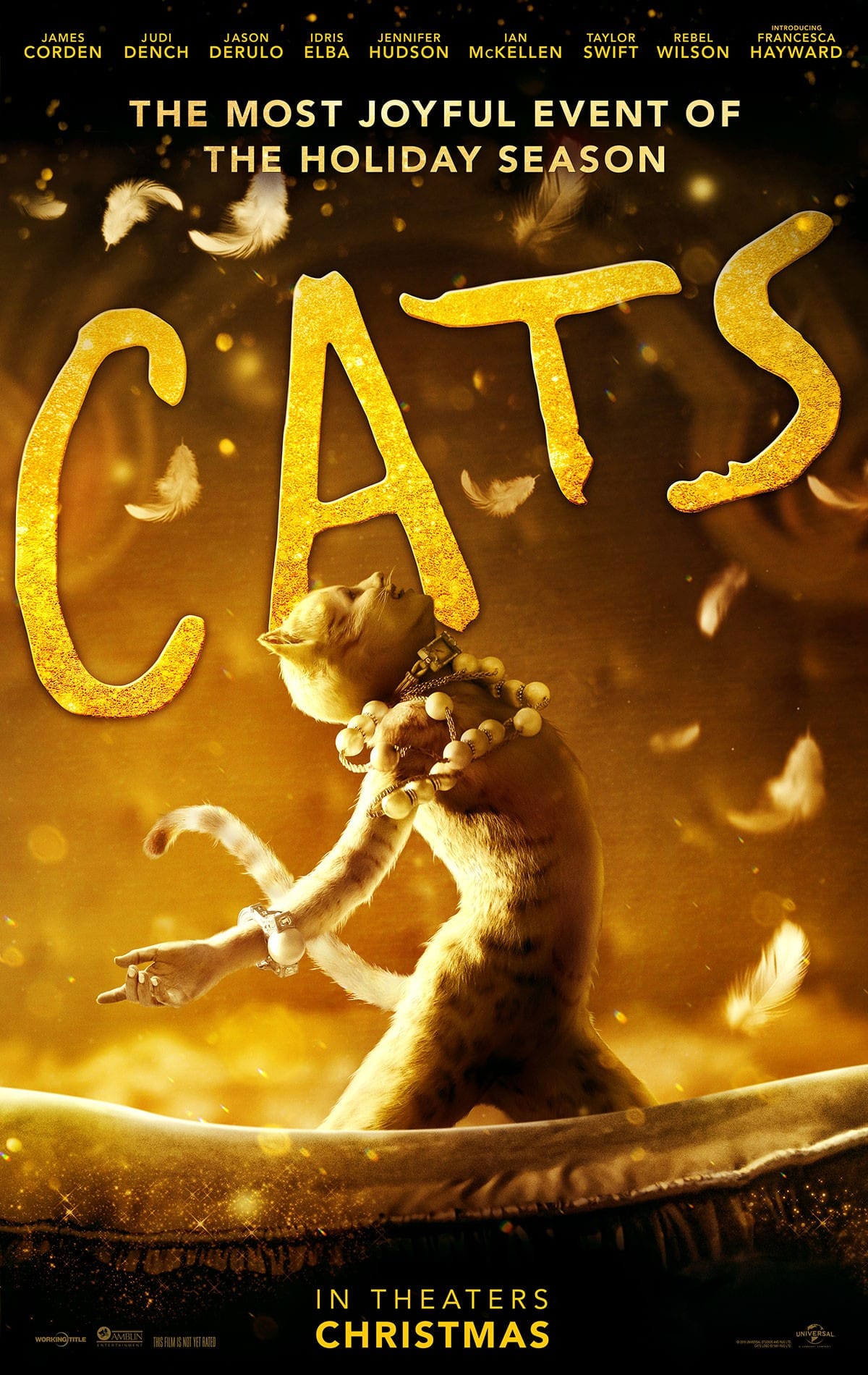
Look, Cats was always going to be a disaster. There’s simply no way you could take the Andrew Lloyd Webber musical and turn it into a coherent film because Cats is and always has been nonsensical garbage dolled up with amazing costumes, dancing, and setpieces. Notice I didn’t say music, because Cats has exactly one great song, “Memory,” and the rest is more ridiculous garbage.
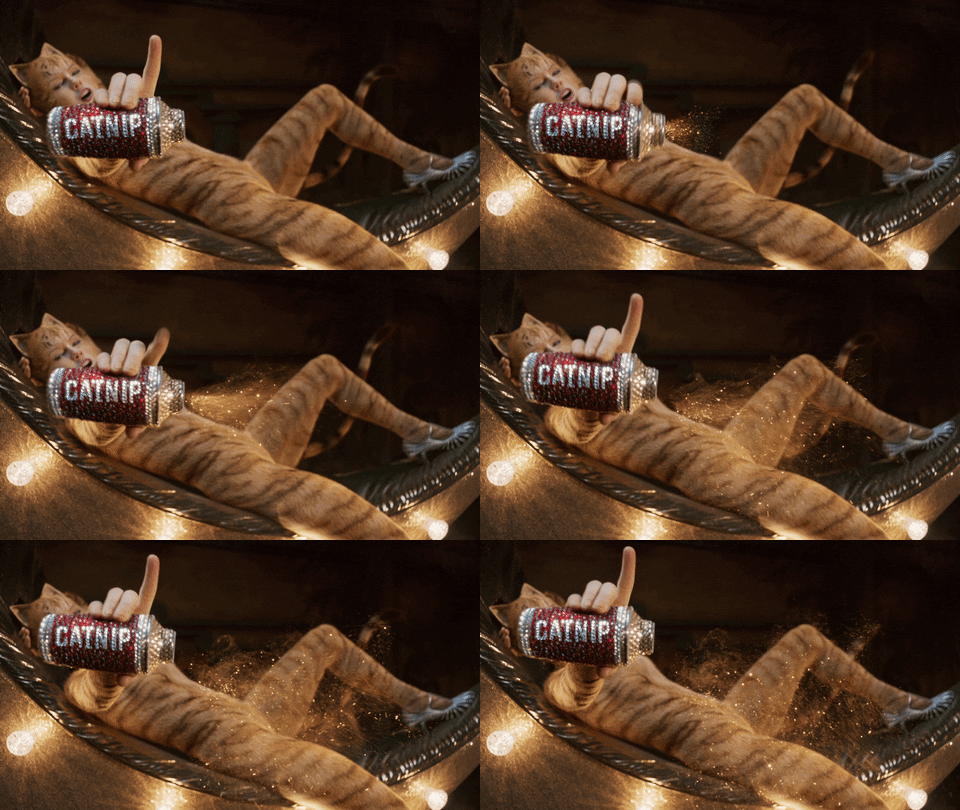
Imagine the amount of cocaine that was ingested in the writing, conception, production design and staging of Cats beginning with TS Elliot’s poetry to the 1981 musical to every production of the musical since then to this film. Every bit of celluloid screams “WE ARE ON DRUGS” up to and including the way the cats’ CGI animated ears and tails WON’T STOP MOVING. Yes, cats can and do move like that, but apparently “Jellicle” cats can and do EVERY 2 SECONDS.
One way the film does improve on the play is its attempts to actually convey some sort of plot: every year on a special night, our band of jellicle cats meet and their matriarch (played by Maggie Smith) chooses one to go up to kitty cat heaven and be reborn. So the cats put on a series of elaborate song and dance numbers to compete for that honor, like you do. Except one of the bad cats (played by Idris Elba) is trying to rig the competition in his favor by kidnapping other top kitties. It is not a plot-forward movie.
Instead, you basically get a dozen little vignettes each devoted to introducing one cat or another and there’s singing and dancing. Ok, the dancing is pretty great. Francesca Hayward plays Victoria, our audience surrogate cat, who is new to the junkyard and this band of jellicles, so we learn through her eyes. She is an amazing dancer. There is no way to oversell how great she is. It’s just such a shame she isn’t in a better film, especially one that doesn’t weirdly sexualize her so much.
What do I mean by weirdly sexualize? Well, you come away from the film with a weird feeling like. . . maybe director Tom Hooper has a cat fetish? If you are a cat furry and love the Cats musical, then this movie is 100% for you. Everyone else? Ehhhhhh. . .
Is it so bad it’s good? Like a cult classic sort of way, like a sneak in some edibles and enjoy it way? No. It zooms past so bad it’s good territory that it’s so bad it’s bad again. I pity anyone who goes to this movie high on drugs. It’s going to be a bad trip.
This film has such an amazing cast and they are all wasted here. I have no idea what Idris Elba is doing in this movie. I have no idea what Judi Dench is doing in this movie. I have no idea what Ian McKellan is doing in this movie. I have no idea what Jennifer Hudson is doing in this movie. Ok, I sort of know what James Corden, Jason Derullo, and Rebel Wilson are doing in this movie and that is hamming it up as much as possible. I have no idea what Taylor Swift is doing in this movie.
And speaking of Taylor, she has a new song she co-wrote with Andrew Lloyd Webber and it is exactly the unholy abomination a combination of those two would be. Meanwhile, Jennifer Hudson seems determined to make “Memory” hers as much as possible, full-on ugly-crying under the weight of all that makeup and CGI as if to say, “Remember when Anne Hathaway ugly-cried in Les Mes and you all ate it up? Well here’s THIS.” When she finally lets loose and belts as hard as she can, it’s actually pretty good for a few seconds. But it can in no way redeem the rest of this thoroughly inexplicable movie.
Cats will have a fanbase. There will be people who love this. I’m glad they’ll find what they like. And I will say this for it: between this and Star Wars: The Rise of Skywalker, one of these two movies took a big audacious swing. And there’s something to be said for that. Yes, it’s still a giant festering garbage fire, but at least they were thinking big enough to ask, “What if Cats, but with CGI ear and tail twitching and more like humans and sexier?”