Category Archives: Spotlight

Kickstarter Attacks Adult Comics While Updating its Rules

Kickstarter

There’s been an attack on art in recent years by rightwing puritan reactionaries who won’t stop until everything is hetero, white, Christian, and bland. That has been in the form of book bans as well as attacks on credit card companies and payment processors.

In 2025, an “anti-porn lobby” got payment processors to censor thousands of video games and digital platforms Steam and Itch to remove video games from their stores. In their reporting on the topic, CBC has the payment processor Stripe stating:

We do not support adult content.

While PayPal stated they take action on anything “that violates the law, our policies, or the policies of our partner banks and card networks.”

Which brings us to Kickstarter, the popular crowdfunding platform/storefront which has updated its “rules” and in doing so, banned Adult Content. It is believed to be due to Kickstarter using Stripe as its payment processor as the reason for the change.

According to artist and writer Mike Wolfer, Kickstarter began emailing creators in March 2026 to inform them that “Stripe will conduct its own review” of any projects featuring “adult/NSFW content.” It could then choose to shut down any projects while they’re “live, or even after” they’ve been successfully funded. 

What Changed?

On May 9, Kickstarter’s “rules” read as follows:

We welcome and support projects from a variety of categories: Art, Comics, Crafts, Dance, Design, Fashion, Film & Video, Food, Games, Journalism, Music, Photography, Publishing, Technology, and Theater. Here are five rules every Kickstarter project must follow.

Projects must create something to share with others.Kickstarter can be used to create all sorts of things: art and gadgets, events and spaces, ideas and experiences. But every project needs a plan for creating something and sharing it with the world. At some point, the creator should be able to say: “It’s finished. Here’s what we created. Enjoy!”

Projects and backer statistics must be honest and clearly presented.Our community is built on trust and communication. Projects can’t mislead people or misrepresent facts. Creators should be candid about what they plan to accomplish and how they plan to do it. When a project involves manufacturing and distributing something complex, like a gadget, we require projects to show backers a prototype of what they’re making, and we prohibit the use of misleading imagery. Creators should not misrepresent or artificially inflate the number of backers or amounts pledged to their projects.

  • Prototype demonstration should reflect a product’s current state and should not include any CGI or special effects to demonstrate functionality that does not yet exist. If a project requires software and hardware integration, creators are required to show that functionality and any dependency clearly, or disclose that it has not yet been developed.

  • Misleading imagery includes photorealistic renderings and heavily edited or manipulated images or videos that could give backers a false impression of a product’s current stage of development.

  • Projects developing artificial intelligence (AI) technology or including AI-generated content are allowed in some situations, so long as the creator is transparent about how it will be used and they are contributing creativity to the project. Additional context on our rules about the use and development of AI can be found on our Creator Questions page.

  • Updates should be communicated to backers at regular intervals to honestly communicate the progress of the work.
Additional context on our rules requiring prototypes and prohibiting misleading imagery can be found here. Further guidance on crafting an honest and clearly presented project can be found here. Additional context on presenting facts about backers can be found here.

Projects can’t fundraise for charity.

While nonprofits are welcome to launch projects on Kickstarter, projects can’t promise to raise funds to donate to a charity or cause. Funds raised on Kickstarter must go towards facilitating the project outlined by the creator on the project page.

Projects can’t offer equity.

Investment is not permitted on Kickstarter. Projects can’t offer incentives like equity, revenue sharing, or investment opportunities.

Projects can’t involve prohibited items.

We do not allow any of these things.

These rules don’t cover every possible use of Kickstarter, but they explain our purpose and perspective. Final decisions regarding which projects are appropriate for Kickstarter are based on these rules and made at our discretion.

But, on May 12, those rules were updated to include AI, Charity, Mature Content, and Hate and Violence.

We welcome and support projects from a variety of categories: Art, Comics, Crafts, Dance, Design, Fashion, Film & Video, Food, Games, Journalism, Music, Photography, Publishing, Technology, and Theater. Here are some requirements that every Kickstarter project must follow.

Projects must create something new to share with others.

Kickstarter can be used to create all sorts of things, but every project needs a plan for creating something and sharing it with the world.

  • All rewards must be new and unique.
  • All rewards must have been produced or designed by the project or one of its collaborators.
  • As long as there is human creativity and human involvement, the use of AI is permitted.

Information must be honest and clearly presented.

Our community is built on trust and communication. Projects can’t mislead people or misrepresent facts.

  • Projects should be clearly and fully presented at the time of submission. Making substantial edits or additions that change the core of a project after submission may result in the project being canceled.

  • Projects must solely contain materials that the creator has rights to using. Stealing content or using it without permission is illegal and may lead to intellectual property disputes.
D&T Projects
  • Prototype demonstration should reflect a product’s current state and should not include any CGI or special effects to demonstrate functionality that does not yet exist. If a project requires software and hardware integration, creators are required to show that functionality and any dependency clearly, or disclose that it has not yet been developed.
App Projects

  • Projects developing apps or software must fit into an existing category and must be based on original, creative thinking. Like Design and Technology projects, a prototype must be demonstrated.

Creators and Collaborators

By using Kickstarter, you agree to, in addition to our Terms of Use and our Privacy Policy:

Be honest and transparent. Creators should be candid about what they plan to accomplish and how they plan to do it.

  • Creators and their Collaborators should not misrepresent or artificially inflate the number of backers or amounts pledged to their projects.
  • Creators and their Collaborators must add personal information that accurately reflects their own identity and, when applicable, accurate information for their business.
  • Where a project is being launched on behalf of a business or other legal entity, entity information must be disclosed and presented clearly to users.
  • Creators and their Collaborators must not use Kickstarter as a method to funnel engagement to external websites or platforms.

Be engaged and committed.

  • Creators and their Collaborators are expected to regularly update their projects and respond to messages in a timely manner.
  • Creators and their Collaborators are expected to put a genuine effort into fully completing their projects. If failure occurs, creators should be proactive about communicating this to backers.
  • Creators and their Collaborators should try to resolve issues directly with the backers. Kickstarter may be able to assist in certain situations however we are generally unable to mediate disagreements
  • Creators and their Collaborators are asked to engage with any and all outreach from Kickstarter teams.

Be respectful.

  • Creators and their Collaborators, along with all our users, are asked to treat others with respect and kindness, even when disagreements arise.
  • Creators and their Collaborators should not spam or distribute any unsolicited communications.
  • Creators and their Collaborators should protect backer information.

Rules

These Rules cover content that has limitations or content that is prohibited on our site. These Rules reflect our values and seek to protect the safety and well-being of our community.

Projects are also subject to our partner’s Rules and Restrictions.

AI Use

Creators must be transparent about how AI is used.

Excessive AI use in projects, occurring when projects have little to no human thought or human involvement in the creation and/or execution of the goal, is prohibited. Creators should clearly explain how AI is being used in the project and should refer to Kickstarter’s Support pages on AI guidance for additional information.

Charity

A portion, up to 10%, of campaign funds may be donated to charity provided this is disclosed at the time of submission. Creators may also donate Reward items.

Mature Content

Kickstarter is committed to providing a space for creative expression, while also ensuring that content is appropriate for a diverse audience. Kickstarter is not a venue for adult-only or sexually explicit content and such content is prohibited.

We do not allow:

  • Any project specifically stating it or the rewards being offered are being created for sexual pleasure.
  • Any project that distributes or enables distribution of pornographic content.
  • Any project that seeks funding for receiving or providing sexual services or spaces that offer sexual services.
  • Any project that promotes, glorifies, or praises sexual or abusive content or language that is coercive, degrading, humiliating, or otherwise sexually exploitative or abusive. For example: derogatory terminology (“slut”, “whore”, “MILF/DILF”, etc.) and explicitly violent (rape fantasy, etc.)
  • Illegal content (bestiality, incest, etc.)
  • Child Sexual Exploitation and Abuse Material. Kickstarter takes the protection of children and vulnerable populations very seriously. We prohibit any and all sexual content and nudity of actual, or inferred, minors and vulnerable persons. If we detect or are alerted to sexually explicit content involving underage persons, we will report it to the National Center for Missing & Exploited Children (NCMEC or other equivalent law enforcement or designated reporting body, as required by applicable law).
  • Photographs, photo-realistic depictions, printed models, sculpture, and illustrations of:
    • Sex acts or implied sex acts, inclusive of masturbation.
    • Nudity inclusive of female nipples/areolas, genitalia, anuses, gluteal cleft (buttocks).
    • Implied nudity where the subject is wearing lingerie, fetish wear, or clothing that is see-through or very tight and shows human genitalia, the anus, or the nipple/areola of female breasts.
  • Sexual wellness products that:
    • Are explicitly designed for sexual stimulation through insertion or penetration, or are intended to have body parts inserted into them.
    • Are marketed or presented primarily for sexual gratification in a manner that creates heightened safety or moderation concerns.
  • Dating or meet up type websites, applications and other software.

We do allow:

  • Romance/”spicy” literature, including comic books
  • Sexual wellness products that are not designed for insertion or penetration and are not marketed primarily for sexual gratification. Examples may include lubricants, nipple jewelry, and other intimate items such as bras and underwear.
  • Any photographs or illustrations containing:
    • Revealing photographs in a non-sexual setting. Examples of this are: a model in swimwear or an actor in their boxers getting ready for work.
    • Intimate acts that are not explicitly sex acts. Examples of this are: two people kissing, two people cuddling, etc.
    • Nudity (breasts, genitalia, anuses, gluteal cleft/buttocks) found in projects that are portrayed in a non-sexualized, scientific, educational, or documentary style where the focus is not on genitalia or reproductive organs.

Kickstarter may still restrict content that is presented in a sexualized, exploitative, or otherwise harmful manner, even if it falls within an otherwise permitted category.

Anti-evasion / anti-circumvention

Creators may not evade any of these rules through cropped, blurred, obscured, misleadingly labeled, or otherwise disguised content.

Hate and Violence

Kickstarter does not tolerate discrimination, bigotry, intimidation, exploitation, or intolerance towards marginalized groups. We do not support projects that promote, glorify, incite, or threaten violence or other illegal acts.This includes hateful content, incitement, violent threats, glorification of violence, extremist content, and symbols, slogans, or terms that are associated with hateful rhetoric or violent ideologies.Kickstarter may evaluate context on a case-by-case basis where such content appears in documentary, educational, historical, journalistic, or anti-hate uses.

Reporting

Users and rights holders may report violations of these Rules through Kickstarter reporting channels which can be found here.

Enforcement

Kickstarter may reject, remove, hide, cancel, suspend, or otherwise restrict projects and/or accounts that violate this policy, and may take additional action where required by law or where necessary to protect users.

Prohibited Items/Applications

  • Cryptocurrencies and NFTs
  • Service Providers: Projects cannot be centered around establishing and providing services (travel agent services, life coaching, food delivery, etc.)
  • Marketplaces: Physical or virtual spaces where the primary purpose is to sell or re-sell items.
  • AI companions (with and without a physical component, such as a robot) that:
    • Offer romantic or sexual companionship
    • Primarily advertise to children or parents/guardians of children
  • Items claiming to diagnose, cure, treat, or prevent a serious illness or condition, inclusive of sexual dysfunction.
  • Items claiming to prevent a serious injury or death.
  • Contests, raffles, or gambling games.
  • Energy food and drinks, not inclusive of products where the primary ingredient is coffee beans or herbal tea.
  • Alcohol
  • Equity
  • Live animals, fish, or birds.
  • Human or animal body parts or fluids.
  • Spaces for human or animal fighting or gambling.
  • Drugs and related paraphernalia. This is inclusive of nicotine, tobacco, kava, psychedelics, and cannabis.
  • Weapons and replicas of weapons designed or presented in such a manner that implies the ability to harm a person or an animal. This is also inclusive of weapon accessories.
    • Knives without a clearly defined, non-violent purpose. This is inclusive of all knives that have automatic (switchblade), gravity, and ballistic components and knives that are disguised.

That’s a massive update that makes some things clearer and outright changes some policies. This 180 is being seen by many within the comic industry as a broadside against adult comics and possibly LGBT comics which had made themselves a popular category on the crowdfunding site. What’s listed under “Mature Content” is rather vague overall and up for interpretation that may not be consistent and likely will discriminate.

In 2015, the platform reincorporated as a “Benefit Corporation,” a for-profit entity that is “obligated to consider the impact of their decisions on society, not only shareholders. Radically, positive impact on society becomes part of a Benefit Corporation’s legally defined goals.” It’s hard to not see this change as a direct attack on its Benefit Corporation status and the company’s stated goals.

Kickstarter killed its stats page some time in January 2026, but the most recent archive in January 21, 2026 of them had these stats:

  • Launched Projects: 33,730
  • Total Dollars: $332,720,000
  • Successful Dollars: $320,550,000
  • Unsuccessful Dollars: $11,040,000
  • Live Dollars: $1,130,000
  • Live Projects: 184
  • Success Rate: 68.85%
  • Successfully Funded Projects: 23,097
  • Less than $1,000 Raised: 2,562
  • $1000 to $9,999 Raised: 14,430
  • $10,000 to $19,999 Raised: 2,978
  • $20,000 to $99,999 Raised: 2,701
  • $100,000 to $999,999 Raised: 416
  • $1,000,000 Raised: 10

As you can see, that’s not a small number and there’s over 23,000 projects that might have never come to fruition without Kickstarter.

There’s currently 260 projects that are live on the platform and 35,143 in the comic category currently, an increase of about 1,400 projects since January, over 300 new projects a month.

So, What Can the Comic Industry Do?

The comic industry as a whole is rife with saying one thing and doing absolutely nothing to actually back up their beliefs. But, it, the creators, publishers, and fans, do have power to either help change Kickstarter’s policies, force Kickstarter to find a new payment processing partner, or add in new steps to allow “adult content” on the site.

  1. Contact Kickstarter showing your anger at the change by sending them a message on social media or through their support.
  2. Creators need to stop using Kickstarter to fund their projects even if they’re not adult in a sign of solidarity.
  3. Publishers need to stop using Kickstarter to fund their projects even if they’re not adult in a sign of solidarity.
  4. Consumers need to stop supporting projects on Kickstarter and pressure creators and publishers to use alternative platforms.

Kickstarter will change its policies if its revenue is impacted and it’s clear this is the reason. Comics is often cited as one of the most successful categories on the platform and they will notice if activity vastly drops.

There are other platforms, other options, for crowdfunding beyond Kickstarter. All of them have their own good and bad aspects, none are perfect. But, to keep supporting and giving money to a platform that is squarely at odds with the industry is full of folly.

Kickstarter’s policy change has shown again that technology and the profit driven corporations behind them are not friends of creators or consumers. This should be yet another wake up call to build independence and self-reliance so creators and publishers can walk away and still succeed. It’s our jobs as fans and consumers to help them do exactly that without the need to support our adversaries.

FCC Commissioner Anna M. Gomez sides with Disney in its Battle with the FCC Over Censorship

In late April, the FCC again went on the offensive against Disney and ABC over comments made by Jimmy Kimmel on his late night show. The FCC has ordered its eight owned-and-operated stations to renew their broadcast licenses ahead of schedule. That’s not currently due to at least 2028. It’s another attack by this current administration against free speech and an attempt to further mold the media to be friendly to not just President Trump and his administration but to Republicans and the right as a whole (as if they could be any more).

While there has been some support, a big one has come from FCC Commissioner Anna Gomez, the panel’s lone Democrat. Gomez believes the goal of the FCC under Chairman Brendan Carr is to pressure networks into self-censorship. Disney already has settled with Donald Trump, paying $15 million in a defamation lawsuit that was launched in 2024.

What Disney and ABC are facing is not a series of coincidental regulatory actions but a sustained, coordinated campaign of censorship and control, carried out through the weaponization of the FCC’s authority as a federal regulator and aimed at pressuring a free and independent press and all media into submission,” Commissioner Gomez wrote.

Gomez sent a letter, which you can read below, to Disney Chief Executive Officer Josh D’Amaro on Monday describing her opinion of what’s going on and the pressure campaign against Disney and others.

The letter traces the censorship campaign from its origins in the settlement of a baseless defamation lawsuit brought against ABC, through a series of investigations into ABC’s debate moderation, diversity programs, and The View, and culminating in an unprecedented early license renewal order against all eight ABC-owned stations, which Commissioner Gomez has called the most egregious First Amendment assault this FCC has taken to date. Gomez is calling on Disney to fight the attempted censorship by the FCC.

Gomez goes further calling out a “stark double standard” at the heart of the FCC’s enforcement posture as well as raising serious questions about the FCC’s conduct in other investigations.

Gomez also has concerns over the FCC’s investigation into Disney’s diversity, equity, and inclusion programs, noting that the agency’s own rules on this topic are limited to recruitment outreach and say nothing about internal corporate policies.

Federal Communications Commission
Washington, DC 20554

OFFICE OF
COMMISSIONER GOMEZ

May 11, 2026
Mr. Josh D’Amaro
Chief Executive Officer
The Walt Disney Company
RE: This Administration’s Campaign of Censorship and Control Against Disney and ABC

Dear Mr. D’Amaro,

I am writing because The Walt Disney Company has once again been made a target by this FCC, and the record of its actions against your company demands a clear accounting.

What Disney and ABC are facing is not a series of coincidental regulatory actions but a sustained, coordinated campaign of censorship and control, carried out through the weaponization of the FCC’s authority as a federal regulator and aimed at pressuring a free and independent press and all media into submission.

You are not the first target of this campaign, and you will not be the last. But Disney’s experience is, by now, the most documented, and it is worth laying it out plainly.

This Administration’s campaign against Disney and ABC began in earnest when ABC agreed to pay $15 million to settle a baseless defamation lawsuit brought by the incoming President of the United States. Whatever the legal calculations behind that decision, its effect was immediate and unmistakable. It told this Administration that pressure works. It told every other company watching that capitulation was an option. And it opened the door to every action that has followed.

That settlement did not buy you peace. It only bought you time. Disney’s experience since then has made one thing undeniable for any company facing the same pressure. You cannot buy this Administration’s favor. For the right price, you can only borrow it. And the price always goes up.

Since that settlement, the FCC has pursued your company on multiple fronts, none of which reflect legitimate regulatory enforcement.

In late 2024, a politically motivated outside organization filed a complaint with the FCC alleging that ABC violated the FCC’s news distortion policy in its coverage of the presidential campaign, specifically the presidential debate ABC journalists moderated. Agency staff reviewed that complaint and dismissed it in January 2025, finding it contrary to the First Amendment and that it failed to even assert a set of facts that, if true, would violate FCC rules. See, Preserving the First Amendment, GN Docket No. 25-11, released January 16, 2025.
(https://docs.fcc.gov/public/attachments/DOC-408880A1.pdf)

This FCC revived it anyway, for reasons that have nothing to do with the merits and everything to do with politics. It is unclear to what degree this FCC has even seriously pursued that complaint, and I suspect there will be no end in sight for that investigation because the process is the punishment and keeping it open serves that goal.

Then, in March 2025, the FCC opened an investigation into Disney and ABC’s diversity, equity, and inclusion programs, directing the Enforcement Bureau to demand a full accounting of your company’s diversity policies and practices. The FCC’s broadcaster equal employment opportunity (EEO) rule is limited to requiring broadcasters to conduct broad, inclusive recruitment outreach. 47 C.F.R. § 73.2080.

This narrowly tailored rule resulted from significant and hard fought litigation over years that addressed both the scope of the Commission’s authority and the substantial intrinsic dangers that arise from the Commission using its licensing authority to enforce its views of the “correct” racial or gender balance in employment practices, dangers this FCC’s current course of action exemplifies precisely. As the D.C. Circuit stated when vacating the FCC’s prior EEO rule as unconstitutional, “the FCC is not the Equal Employment Opportunity Commission . . . and a license renewal proceeding is not a Title VII suit” because the agency’s authority is limited by its statutory remit. Lutheran Church-Missouri Synod v. FCC, 141 F.3d, 344, 354 (D.C. Cir. 1998) (citing Bilingual Bicultural Coalition on Mass Media, Inc. v. FCC, 595 F.2d 621, 628 (D.C. Cir. 1978)) (“The only possible statutory justification for the Commission to regulate workplace discrimination would be its obligation to safeguard ‘the public interest,’ and the Supreme Court has held that an agency may pass antidiscrimination measures under its public interest authority only insofar as discrimination relates to the agency’s specific statutory charge.”). See also, Title VII of the Civil Rights Act of 1964, 42 U.S.C. §§ 2000e–2000e1.
And in its subsequent decision vacating the Commission’s revision of its EEO rule, the court went further and described the inherent coercive danger of investigations on alleged discrimination by licensing agencies such as the FCC. MD/DC/DE Broadcasters Ass’n v. FCC, 236 F.3d 13, 19 (D.C. Cir. 2001) (Investigation by the licensing authority is a powerful threat, almost guaranteed to induce the desired conduct. [See Chamber of Commerce v. Department of Labor, 174 F.3d 206, 210 (D.C. Cir. 1999)] (noting that agency “is intentionally using the leverage it has by virtue solely of its power to inspect. The Directive is therefore the practical equivalent of a rule that obliges an employer to comply or suffer the consequences; the voluntary form of the rule is but a veil for the threat it obscures”)).

The FCC’s attempt to usurp control over internal corporate decision-making through its limited authority requires reaching for legal power that the statute, agency rules, and the applicable case law simply do not provide. Courts have repeatedly and decisively determined that actions such as the FCC’s current investigation are unconstitutional. Despite the extraordinary overreach this investigation represents, it is my understanding that Disney has engaged with the agency in good faith and timely responded to the Commission’s Letter of Inquiry and Supplemental Letter of Inquiry by producing over 11,000 pages of responsive documents to date. See, KTRK Television, Inc. and American Broadcasting Companies, Inc, Petition for Declaratory Ruling Under Section 315(a) of the Communications Act of 1934, as Amended, at page 4, fn. 17, filed May 7, 2026 (KTRK Petition). (https://www.fcc.gov/ecfs/document/10507899614175/1)

Last year, this Administration tasked the FCC to escalate its campaign against ABC by targeting Jimmy Kimmel. The goal was clear: use regulatory pressure to force his removal from the air and send a message to every other broadcaster about the cost of critical coverage. Under that pressure, Disney pulled Kimmel off the air. But the public outcry from local communities across the country and democracy watchers around the world was immediate, broad, and impossible to ignore. Viewers and community voices from across the political spectrum and every corner of our great nation, including small towns, large cities and everything in between, made themselves heard, and that pressure forced Disney’s hand to have Kimmel reinstated.

What that moment revealed is something with which this Administration has never fully reckoned. When the government tries to dictate what people can watch and who is allowed to speak, the American public will fiercely defend their First Amendment rights, the most fundamental freedom we have in this country.

Earlier this year, the FCC opened yet another investigation into ABC, this time targeting The View over an alleged equal opportunities violation stemming from an appearance by a political candidate. To facilitate these investigations, this FCC’s Media Bureau issued new interpretive guidance on the equal opportunities rule that upended decades of settled agency precedent, rewriting the rules of the road specifically to create new exposure for broadcasters it wanted to target. See, FCC’s Media Bureau Provides Guidance on Political Equal Opportunities Requirement for Broadcast Television Stations, DA 26-68 (January 16, 2026) (Media Bureau PN).

The pattern by now is familiar: a complaint is filed, an investigation is opened with maximum visibility, and the process itself becomes the pressure.

This Commission has repeated that same pattern across multiple companies it regulates. These investigations are often announced with much fanfare, pursued selectively against perceived critics of this Administration, and most are destined never to be brought to any enforcement conclusion that could face judicial review. That is because the threat is the point. As sitting Supreme Court Justice Neil Gorsuch recently reminded us by invoking Justice Thurgood Marshall: “The value of a sword of Damocles is that it hangs, not that it drops.” First Choice Women’s Res. Ctrs., Inc. v. Davenport, 598 U.S. _ (April 26, 2026), No. 24-781.

And the double standard could not be more glaring. This FCC has trained its enforcement apparatus on ABC while staying conspicuously silent about other broadcasters operating under the exact same rules, in the same markets, that aired interviews with political candidates without filing notices and received no inquiry, no letter, and no investigation whatsoever. See, KTRK Petition at pp. 37-38.

Meanwhile, in what appears to be a form of entrapment, the Commission selectively pressured ABC affiliates in Texas to file late equal opportunities notices while offering them amnesty for doing so, then used the resulting inconsistency that the Commission helped create as evidence against your station, which received no such offer. The facts as described by Disney, if true, are disturbing. In 2002 the FCC’s Media Bureau issued a declaratory ruling that The View is a bona fide news interview program exempt from the equal opportunities provision. See, KTRK Petition at pp. 27-28. This January the FCC’s Media Bureau issued a Public Notice creating confusion over longstanding guidance on how the bona fide news exemption from the Commission’s equal opportunities rule should be applied and included an invitation for shows to file petitions to obtain clarity. See Media Bureau PN at p 4. The Commission appears to have followed this up with actions that helped create the facts on which it relied as a basis for its investigation of KTRK Television (KTRK), the Disney owned and operated ABC broadcast station in Houston Texas. Specifically, it is alleged that on February 11, 2026, following James Talerico’s February 2, 2026, appearance on The View, the FCC sent a Letter of Inquiry to KTRK asking whether it took the position that The View qualified as a bona fide news interview program and had placed a record of James Talerico’s appearance in its political file. See, KTRK Petition at pp. 2-4. KTRK timely responded that The View qualifies as a bona fide news interview program and it had not placed such a record in its political file. Id. The Commission then issued a Supplemental Letter of Inquiry (SLOI) on March 26, 2026, based, at least in part, on the assertion that KTRK’s position was contradicted by the positions taken by 19 of ABC’s affiliated stations in Texas, as they all had placed such records in their political files. Id. The SLOI allegedly failed to note, however, that those filings were made more than two weeks after the appearance at issue and in response to the FCC’s direction that making such filings would protect them from an enforcement action. Id. See also, FCC public inspection files (https://publicfiles.fcc.gov/ ) to view publicly filed records of James Talerico’s February 2, 2026 appearance on The View by ABC Texas affiliates (e.g., WFAA (Dallas–Fort Worth) filed 2/20/2026; KTXS-TV (Abilene/Sweetwater) filed 2/20/2026 and KVII-TV (Amarillo) filed 2/20/2026).

If true, that is a government agency abusing its authority to punish speech it dislikes while protecting speech it favors.

In what is now the most egregious assault on the First Amendment this FCC has taken to date, the agency has directed Disney’s eight ABC-owned local television stations to file for early license renewal, a mechanism that has not been invoked in more than half a century. Some of these licenses were not set to come up for renewal for nearly five years. Using the licenses of individual local stations as leverage against a parent company is an extraordinary and dangerous misapplication of this agency’s authority. The FCC licenses local broadcast stations, not national networks, and every action taken against these stations is, in truth, an action taken against local communities and against press freedom.

Ultimately, this effort to punish and intimidate your company will not succeed. The FCC’s internal process will be lengthy, and should it produce an outcome unfavorable to your stations, Disney will have every right to challenge that outcome in federal court, a process that could take years. Throughout all of it, Disney’s stations keep their licenses.

Disney has been here before. When the state of Florida came after the company with the full weight of its government, Disney fought back and won. The same resolve that carried that fight can carry you in this one. The First Amendment does not belong to this Administration to grant or withhold. It belongs to the public, to the press, and to every broadcaster willing to defend it.

Your stations serve real communities, and the audiences who depend on ABC extend far beyond those eight licenses. Your journalists do work that matters to millions of Americans across the country, and the viewers who rose up to defend Jimmy Kimmel are the same viewers who will stand up again if this FCC follows through with its threat. I am encouraged to see that Disney is choosing courage over capitulation. The fight ahead may not be easy, but the law, the facts, and the public are on your side. This is a fight worth having, and one that I am confident you will win.

I am committed to using every tool available to me as a Commissioner to shine a light on what this FCC is doing to curtail press freedom and to hold this process to account at every step.

Sincerely,

Anna M. Gomez
Commissioner
Federal Communications Commission

eBay Slaps Down GameStop’s Acquisition Pitch

GameStop

It looks like the acquisition of eBay by GameStop isn’t going to be easy. Last week, GameStop and its CEO Ryan Cohen put out an offer to purchase eBay in a $55.5 billion deal that was 50% cash and 50% common stock. Since then, we’ve had all sorts of drama including a disaster CNBC interview and an eBay account suspension.

Now, the Board of Directors of eBay have rejected the “unsolicited, non-binding acquisition proposal” calling it “neither credible nor attractive.”

Dear Mr. Cohen,

The Board, with the support of its independent advisors, has thoroughly reviewed your proposal and has determined to reject it.

We have concluded that your proposal is neither credible nor attractive. We have taken into account such factors as 1) eBay’s standalone prospects, 2) the uncertainty regarding your financing proposal, 3) the impact of your proposal on eBay’s long-term growth and profitability, 4) the leverage, operational risks, and leadership structure of a combined entity, 5) the resulting implications of these factors on valuation, and 6) GameStop’s governance and executive incentives.

eBay is a strong, resilient business that has delivered meaningful results over the past several years. We have sharpened our strategic focus, strengthened execution, enhanced our marketplace and seller experience, and consistently returned capital to shareholders. With its differentiated global marketplace and a clear strategy, eBay’s Board is confident that the company, under its current management team, is well-positioned to continue to drive sustainable growth, execute with discipline, and deliver long-term value for our shareholders.

Our team remains focused on executing our strategy and driving our business forward in the best interests of the company, our shareholders, our employees, and millions of buyers and sellers around the world.

Sincerely,

/s/ Paul S. Pressler

Paul S. Pressler
Chairman of the Board of Directors, eBay

We’ll see if that’s the end to this rather bizarre plan, or if Cohen will go Veruca Salt/David Ellison and press harder until he gets what he wants.

Disney, Warner Bros., Universal and Midjourney Discovery Dispute Kicked to Late May

In February, a plan was hashed out between Disney, Warner Bros.,Universal, and Midjourney over discovery when it comes to their possible trial. In March a dispute was brought up by the various parties over discovery and the numerous parties need the judge to hash things out.

While a conference was take place on March 12, it now looks like that has been moved until March 22. From a filing released today:

The parties have requested an informal discovery conference with Magistrate Judge A. Joel Richlin. Counsel for each party has submitted their respective positions and the issue will be adjudicated in accordance with the Magistrate Judge’s procedure.

Date/Time: May 22, 2026 at 09:00 AM

In June 2025, studios started to sue Midjourney. In multiple lawsuits, they claimed the AI platform was a “bottomless pit of plagiarism.” In November, Disney, Universal, and Warner Bros. consolidated their two cases into one. Their cases were similar and made similar claims against the tech company.

This case impacts the comics community as both Marvel (via Disney) and DC Comics (via Warner Bros.) are part of the plaintiffs and specifically mentioned in filings.

We haven’t see what the dispute is but will update this article with more details or a full report when a decision is made.

Below is the original dispute document as well as the latest filing:

Loading Viewer…

Loading Viewer…

Loading Viewer…

GameStop’s attempt to buy eBay Gets Weirder with Account Bans and Dissing It’s Own Company

GameStop

We earlier reported that GameStop has made moves to take over eBay. The rather odd plan features a bill of at least $55.5 billion in a cash and stock deal. Keep in mind, GameStop’s market value is $12 billion while eBay’s is $46 billion. Beyond that, and the rather odd interviews, not great details in how it’d actually work, the drama has gotten stranger and stranger.

GameStop CEO Ryan Cohen leaned into the “meme” nature of the franchise, launching a stunt to raise funds to take over eBay by… selling items on eBay. That move included signs, mugs, carpeting, and other rare items. But, 10 hours after Cohen announced the plan, the account was suspended by eBay.

Cohen was suspended due to “activity that we believe was putting the eBay community at risk.” Like GameStop’s stock had previously experienced, and Cohen thinks is a good thing, the stunt was picked up likely by the Meme stock devotees that previously drove up the stock price. In 2020, traders sent GameStop’s stock up more than 1,700% in weeks. But, for all the silliness, Cohen brought austerity to the company, closing stores and laying off about 4,500 employees since he became CEO in 2023. The market cap for the company increased to about $12 billion from $1.3 billion in 2021.

A pair of socks that was listed were at about $14,188 before the account was suspended. But, that did include a signed copy of the offer letter to eBay’s board. Cohen’s account went over eBay’s limit for posting items totally over $50,000 a month which gave Cohen a warning.

The account is currently live though with 36 items totaling around $157,000 in sales so far with about 4 days to go. You can get a GameStop Mug for the steal of a price of $3,151 or GameStop Mousepad for $1,525 with current bids. Once again eBay isn’t so much about actual value of things, but perceived value and at times, getting in as part of the trolling. Modern collecting summed up with one experience.

If the eBay auction to take over eBay doesn’t work, Cohen is also going a different route, going all David Ellison/Veruca Salt in that he really wants it.

Cohen spoke to Business Insider‘s Sarah E. Needleman and stated that one bit of motivation in his wanting eBay is that he’s just lost interest in his current job.

I did not want to be the CEO of GameStop. I want to be the CEO of eBay. I’m passionate about eBay. I believe in eBay’s business. I wasn’t passionate about GameStop. That’s the difference.

I know if I was a board or stock holder in a company, I’d feel perfectly comfortable that the CEO states they’ve lost passion about the company they currently lead.

Much like Salt and her wanting the Golden Goose, and Ellison and his wanting of Warner Bros. Discovery, Cohen has taken the lesson as don’t give up:

I’m going to continue doing whatever I need to do in order to buy the business. I’m going to make myself CEO of both.

Cohen’s interview doubles down in his plan to extract more profit from eBay by cutting fat but also attacks the company’s leadership saying they’re “milking it” and it’s “simply a paycheck for them,” as well as calling them too comfortable and undisciplined under its current leadership.

Wizards of the Coast releases Statement Regarding Unionization Effort and Hires Anti-Union Law Firm

UWOTC

Wizards of the Coast has responded to unionization efforts by the Magic: The Gathering – Arena team. The proposed union had asked WotC to recognize the union by today, May Day, in a symbolic support of workers.

On Wednesday, members of the union posted WotC’s response:

We have received the filing and are reviewing it carefully. Our employees are the lifeblood of what makes us great, and we are committed to fostering a workplace where every person feels heard, valued, and supported. We believe we have a strong connection with everyone at Wizards of the Coast and that direct relationship with our employees is essential to how we work together to capture the imagination of our fans and players, inspiring a lifetime love of our games. We appreciate hearing about the needs and interests of our employees through this filing and will respond through the appropriate process.

Wizards of the Coast has the ability to recognize the union or the move to unionize will be put to a vote.

WotC also responded by hiring legal counsel from Fisher & Phillips LLP, a law firm known for its work in labor relations and, specifically, for helping companies remain union-free workplaces. The NLRB case file, dated April 27, shows WotC has hired Alex Desrosiers and Jack O`Connor as legal representatives.

In their announcement, the union has said they are negotiating for:

  • Layoff Protections: Employees currently live in fear of suddenly losing their jobs, with no warning and through no fault of their own.
  • Remote Work Protections: Leadership is instituting a mandatory RTO, forcing numerous remote employees to return to a physical office or be forced to resign. This painful choice is splitting our employees between their homes, communities, and the jobs they love.
  • Generative AI Protections: Pressure has ramped up from leadership to adopt LLMs and Gen AI tools in various aspects of our work. WOTC lacks a robust AI policy, leaving opportunities for abuse and communicating a level of disrespect for artists and other creatives.
  • Sustainable Workload: Employees’ experiences with “crunch” (intense, mandatory unpaid overtime) to meet deadlines vary widely by team and project, with some teams crunching on a regular basis just to get planned work out the door.

They are asking individuals to sign a letter to show their support for the union.

Valiant launching an App?

Valiant Logo

Valiant has had a rough couple of years. Once a popular publisher, the company has switched leadership and direction and in June 2023 it was announced that Alien Books would be handling the imprint. Since then, the releases have been sporadic and not captured readers like the line has done in the past and not without controversy. Alien Books too is figuring things out and signed a publishing deal with IDW in March 2025.

This year, Alien Books launched a Kickstarter for an omnibus of classic Harbinger comics, raising $104,622 from 901 backers. But, when it comes to publishing and releases for stores, things have been rather quiet with the last preview we ran for All-New Harbinger #5 in March.

Alien Books has also been part of the fight over consigned goods and Diamond, which has impacted numerous publishers.

This evening, we received the below email with a from email address as hello@valiantapp.io and a Valiant logo at the top.

You know who we are. We know you’re the first ones. The real OGs.

You’re the insiders.

Aric of Dacia is 1,600 years from home in living alien armor and pretending he’s fine. Bloodshot is running on nanite blood and borrowed memories. And Punk Mambo is in a Louisiana swamp arguing with the ghost of Sid Vicious about which voodoo magic will cause the most chaos.

They’ve been quiet for a minute, but I think you know what that means. Something big is coming. And when they show up it’s the real deal.

This is not for everybody. This is for the insiders who get it.

No one here is stuck in board meetings and earnings calls, and maybe the world feels like a dumpster fire right now, so screw it let’s break free. Join the crew and raise the pirate flag.

You in?

BE FIRST →

-The Valiant Team

(Still in the bunker. Send snacks.)

The email is clearly for a soon to be launching app focused on Valiant.

But…

When it comes to information in the contact the email address is listed for valiant.com which then forwards to trackforce.com and the phone number is 555-123-4567, clearly fake.

What we do know:

So, expect a new Valiant digital platform doing who knows what launching at some point… You can sign up to be notified when it launches.

Demo-Graphics: Tabletop Game Edition – April sees a bit of a decrease as Facebook users gain

Demo-Graphics has generally focused on the demographics of comic fans but occasionally we have also reported on other fandoms and communities. In August 2025, we kicked off a new regular look at those interested in tabletop games. That includes board games, roleplaying games, and card games. Why? The question still remains… who are the fans of tabletop games?

What is Demo-Graphics?

Each month I dive into data from Facebook looking at the various demographics it can tell us about comic, and now tabletop game, fans. This isn’t hard numbers, purchasers, or “Wednesday warriors,” but best used to show trends in the industry and the potential of the market out there.

How does it work?

We use key terms, “likes”, that users have indicated and have come up with our own set to measure each month. There’s over 50 terms used (and no I won’t release them). We stick to specific terms for the industry such as “board games” and “collectible card games” as well as publishers and leave out broad terms.

Other things to know…

This data is important in that it shows who the potential audience could be. These are not purchasers, these are people who have shown an affinity for tabletop games, are potential purchasers, and those with a clear interest.

Also, with this being online/technology, due to laws and restrictions, those under the age of 13 are underrepresented.

The data that is presented as a wide range. I’ve taken the average of the range. So, if it’s presented as somewhere between 500 and 1,000 people, the number would be 750.

So, let’s kick off the first entry with the big question…

Facebook “Tabletop Gamer” Population: Around 78.45 million in the United States

The Facebook population increased by about 2.15 million over the month but the tabletop community dropped by about 550,000. The comic fans also saw a drop, though one that was far more dramatic.

Gender

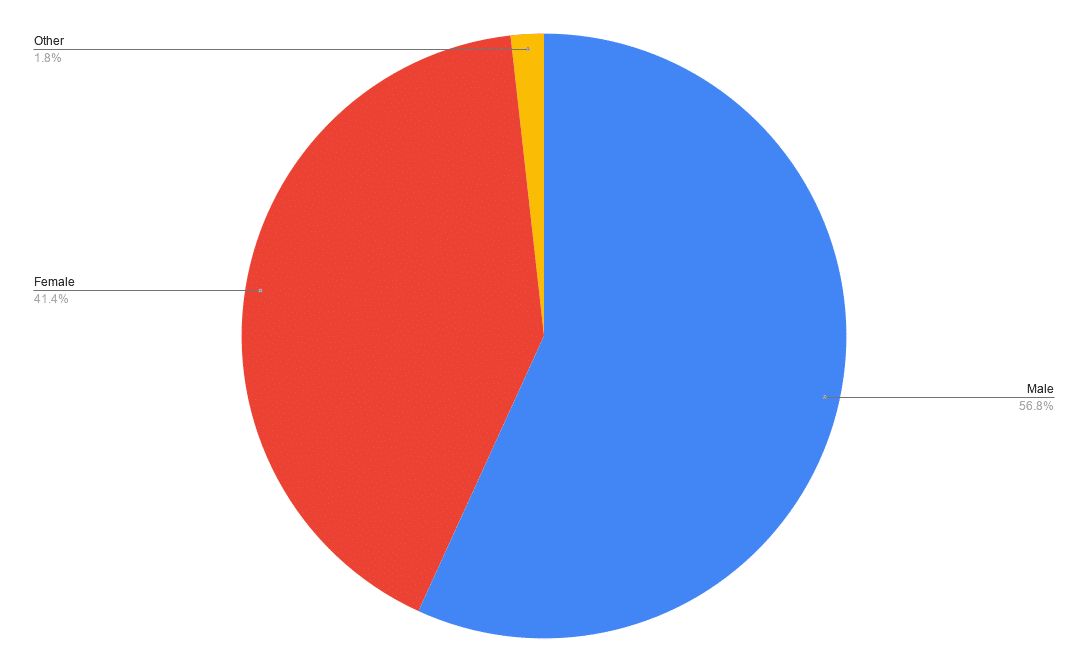
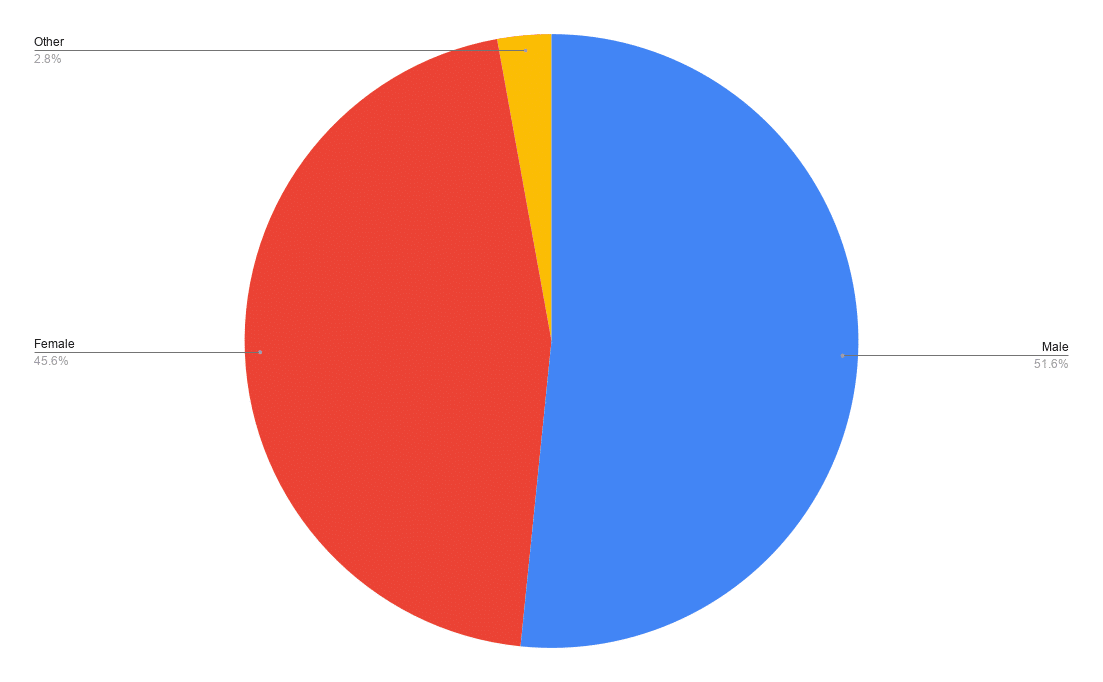
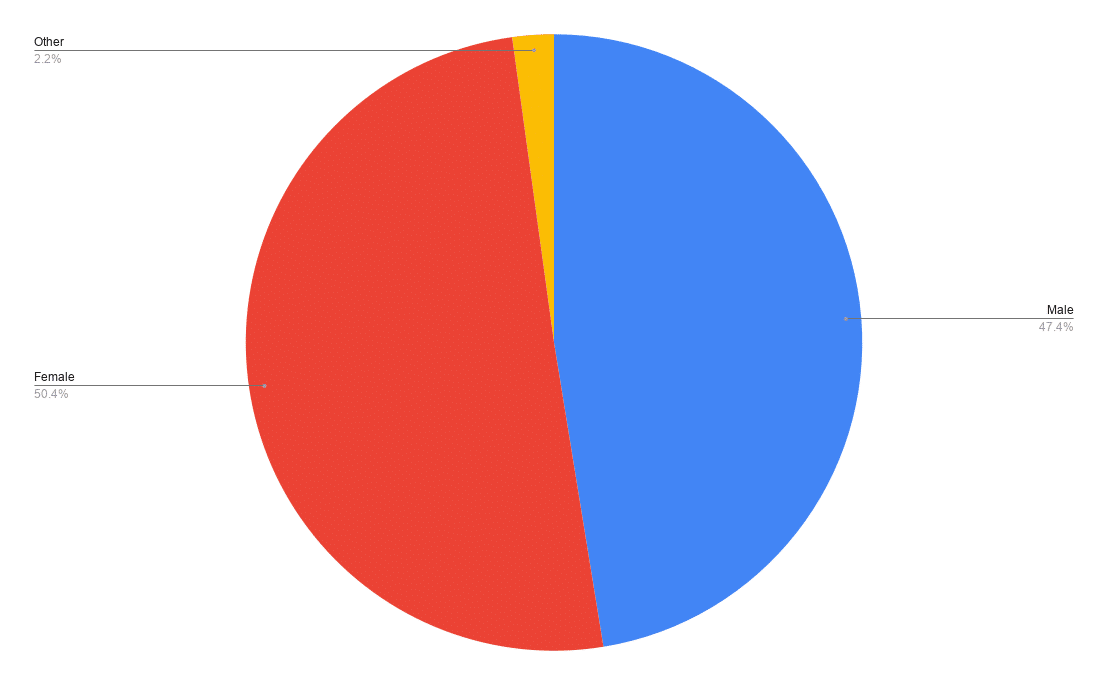
Men remained the majority increasing slightly to 50.16%, up from the previous month’s 50%. Women saw their percentage increase slightly o 47.99%, up from the previous month’s 47.78%. Both of those gains come from “other,” those whose gender are unknown and not reported, which dipped to 1.85% from 2.22% in March. There were drops in the population across the board with men down 150,000, women down 100,000, and “other” down 300,000.

Gender breakdown for tabletop games in April 2026

Age

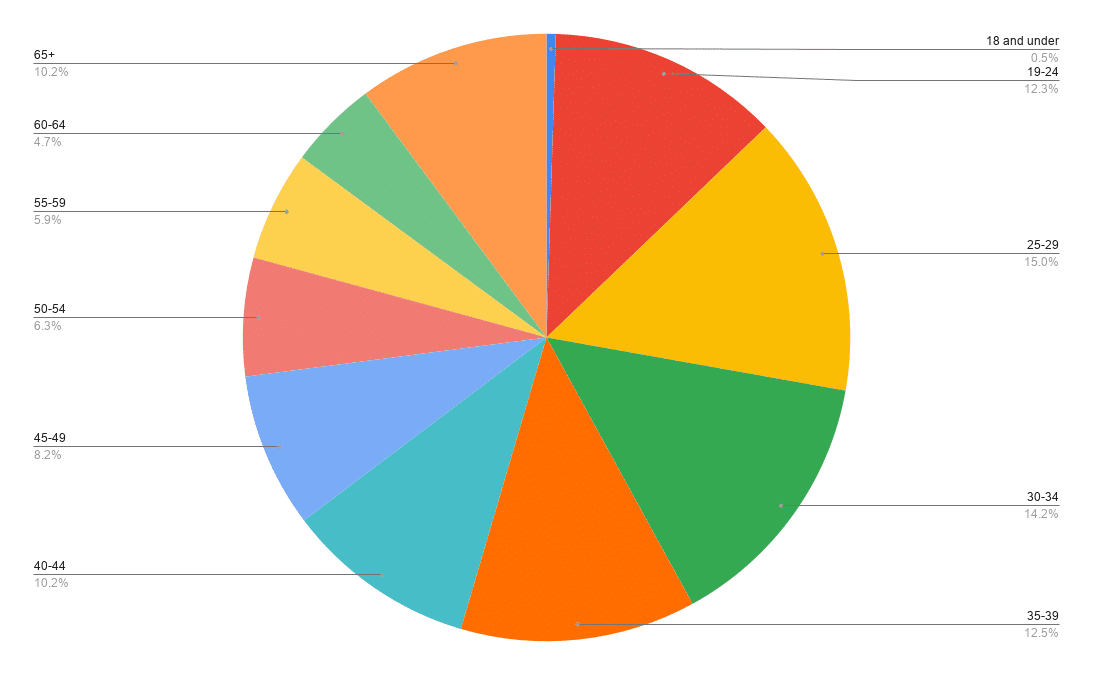
When it comes to percentages, the age groupings shifted very little. There’s some slight changes in tenths of a percent but no wild swings. All of the groupings either remained the same or dropped from the previous month.

Age breakdown for tabletop games in April 2026

Relationship Status

All relationship statuses either remained the same or dropped a bit from the previous month. Both “in a relationship” and “unspecified” decreased by 100,000 each.

Facebook tabletop relationship status April 2026

More Stats!

For Education we’re tracking individuals who have at least a college degree. 20.8 million individuals, 26.51% of the population have at least a college degree. That’s a decrease in the number of individuals and percentage from the previous month which was 21 million and 26.58%. In 2022, 37.7% of the American population had at least a college degree.

13.7 million fans, 17.46%, are parents! That’s an decrease of 100,000 individuals and 0.01 percentage points.

And finally, what’s the crossover with fans of board games and video games? 48.1 million, 61.31% of board game fans also enjoy comics. 47.8 million, 60.93% also enjoy video games. Combined, 66.6 million like board games or video games and 28.55 million enjoy board games and video games. Get your licensing engines revving!

Demo-Graphics: Comic Fans Dip While Facebook Overall Grows

Demo-Graphics is back! Demo-Graphics was relaunched in 2025 because the question still remains… who are comic fans?

What is Demo-Graphics?

Each month I dive into data from Facebook looking at the various demographics it can tell us about comic fans. This isn’t hard numbers, purchasers, or “Wednesday warriors,” but best used to show trends in the industry and the potential of the market out there. This has shown the shift towards women being a major force in readers and a shift to the younger demographic.

How does it work?

We use key terms, “likes”, that users have indicated and have come up with our own set to measure each month. There’s over 50 terms used (and no I won’t release them). We stick to specific terms for the industry such as “comics” and “graphic novels” and “one-shots” as well as publishers and leave out broad terms like specific characters or stories. Just because someone likes Batman doesn’t mean they like comics.

Other things to know…

This data is important in that it shows who the potential comic audience could be. These are not purchasers, these are people who have shown an affinity for comics, are potential purchasers, and those with a clear interest.

Also, with this being online/technology, due to laws and restrictions, those under the age of 13 are underrepresented.

Since the last time this feature was run, Facebook has made adjustments as to what it can report so some data is no longer available and we’ve also added in new data that hasn’t been reported before, and it now presents the data as a wide range. I’ve taken the average of the range. So, if it’s presented as somewhere between 500 and 1,000 people, the number would be 750.

So, let’s kick off the latest entry with the big question…

Facebook “Comic Fan” Population: Around 81.6 million in the United States

After last month’s adjustment, comic fans decreased this month by about 2 million individuals. But, overall, Facebook gained around 2.15 million individuals. Men decreased by 1.35 million while women decreased by 800,000. The population that doesn’t list either gender increased by about 150,000.

Gender

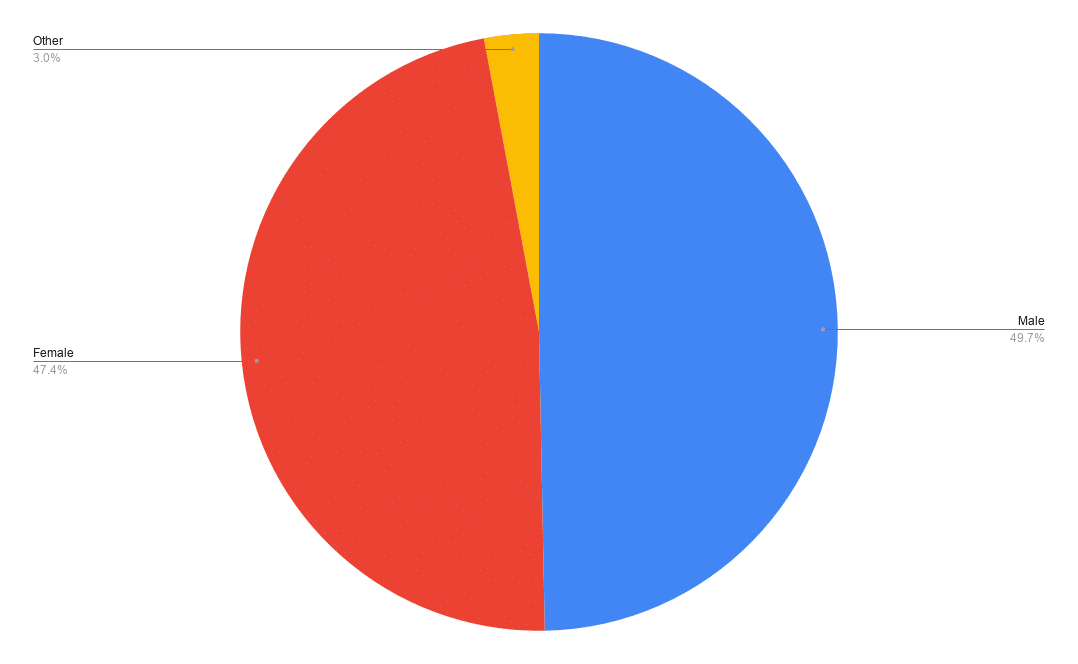
Women remained a majority of the population but now over half of fans. Last month they accounted for 49.9% of the population but now are 50.12%. Men decreased as a percentage from last month’s 48.6% to 48.1%. Those who don’t report themselves as “male” or “female” account for 1.78, up from 1.6%.

Facebook Comic Gender April 2026

Age

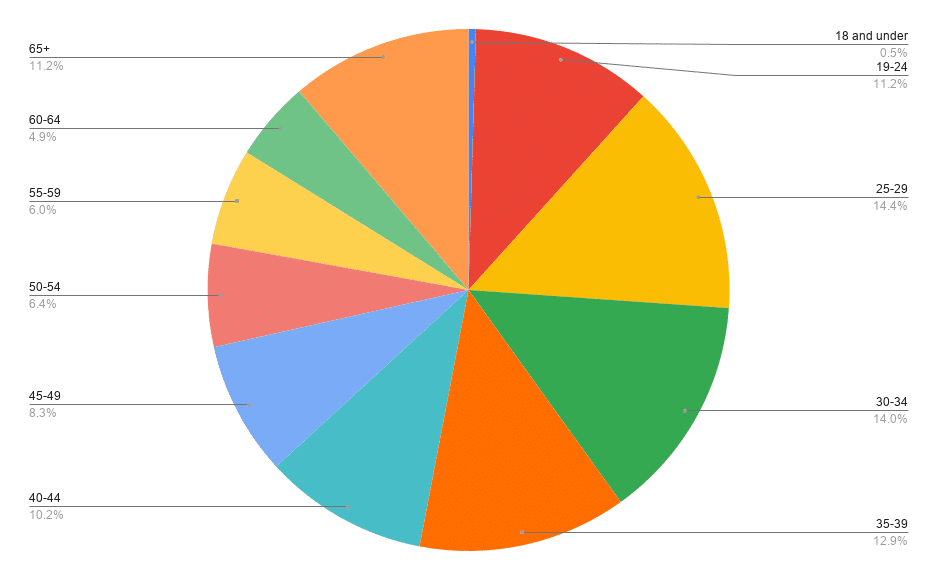
The biggest issue with all of this reporting is the limitation of those under the age of 13 using the system. With new laws limiting the use of social media by children, it’ll be interesting to see if this shifts at all. But, compared to the previous month, the percentages have changed very little with a few going up or down a tenth of a percent.

Facebook Comic Age April 2026

Relationship Status

Compared to the previous goofed stats, the percentages for this month remains pretty steady interestingly. Like “ages” above, they have all shifted up or down a tenth of a percent with no major swings.

Facebook Comic Relationship Status April 2026

New Stats!

Education: 21.8 million have a college degree or higher. About 36.4% of Americans have a bachelor degree or better while about 26.72% of comic fans do.

Parents: 13.9 million (17.03%)

Board Game Fans: 51.5 million (63.11%)
Video Game Fans:
47.1 million (57.72%)
Board Game and Video Game Fans:
31.15 million (38.17%)
Board Game or Video Game Fans:
67.05 million (82.17%)

Book Review: A SHORT STAY IN HELL guarantees existential horror

a short stay in hell

Our versions of the afterlife are predicated on our personal hopes and fears. This is why we tend to populate Hell with sadistic demons and brutal monsters surrounded by fire and brimstone, and Heaven with angels handing out mojitos in a permanent paradisiacal retreat. Religion informs a lot of this spiritual visualization, providing guidelines to secure a spot in the more pleasant of the two options.

In A Short Stay in Hell (2009), author Steven L. Peck, explores this idea by pouring a bucket of cold water on our ideations of what comes after death. It hits hard, going lengths to prove that being left alone with yourself is perhaps the worst form of torture imaginable. It’s so terrible a fate that you’ll wish for a demon with a pitchfork if only to keep you company.

The book follows a Mormon man called Soran. He’s died and made it to an impossibly large library that contains every book that can ever be written in its stacks. He first meets a devil that tells him that he followed the wrong religion while on Earth, thus earning him a stay in Hell. He’s informed that the one true religion is Zoroastrianism, which focuses on ethical dualism in the struggle between Good and Evil.

This Hell is not eternal, though. The devil tells Soran that if he finds the book that tells the story of his life, he can escape. It’s just a matter of hunting it down in the terrifyingly massive library, where years of searching might only cover a tiny section of a floor, with thousands upon thousands of other levels to go. To make matters worse, most of the books are made up of gibberish. Finding a coherent sentence in one of them becomes an event.

A Short Stay in Hell was inspired by Jorge Luis Bórges’s story “The Library of Babel,” which centers on a library that contains every book that could possibly be written with an ordering of 25 basic characters. Peck runs with this concept and turns into a short but intense bout of existential horror in which salvation is cruelly teased but never sold as a certainty.

Soren is not the only person roaming the library. Peck is quick to establish that there are other people there also spending cosmic amounts of time in search of their books. It stands to reason, then, that Soren will meet some of them along the way. Lovers come, build relationships that last multiple decades, and then leave never to be seen again; frustrated souls unleash unspeakable violence on the people they come across; and strange cults rise and fall with no lasting effects. The only constant is the library, and it remains indifferent to the things that happen in it.

As such, Peck uses this version of Hell to flip the script on time. Whereas time is often thought of as a preciously limited resource in life, in death it becomes a burden. Too much of it slowly chips away at meaning. It erodes spontaneity and excitement, dulling the edges of purpose and giving way to a superior form of punishment: boredom.

The language on display here points to Peck’s background in poetry and evolutionary biology in magnificent ways. There’s an observational quality to the language that allows for complex worldbuilding. And yet, the book is accessible despite challenging the reader with profound questions about faith, love, damnation, and memory.

Peck wants his readers to get lost in each page, demanding a lot of imagination from them. But he doesn’t merely want them to paint a series of visuals that account for the characters and their surroundings. Instead, he develops a world filled with mathematical and philosophical improbabilities for readers to try and make sense of. It works to produce one of the most intellectually rewarding experiences in modern literature.

A Short Stay in Hell, like its interpretation of the titular realm, is a unique read with considerable staying power. It plants ideas, breaks them apart, and then asks the reader to put them together. In a way, it’s an interrogation of the things we categorize as essential to our sense of self. You’ll simply wish you could spend more time on this journey into the philosophy of Hell.

« Older Entries