Author Archives: Logan Dalton

Mini Reviews: Ultimate Universe Finale #1, Swamp Thing 1989 #3, Summer of Supergirl Special #1, Exploit #4

Summer of Supergirl Special #1

Sometimes, the staff at Graphic Policy read more comics than we’re able to get reviewed. When that happens you’ll see a weekly feature compiling reviews of the comics, or graphic novels, we just didn’t get a chance to write a full one for.

These are Graphic Policy’s Mini Reviews and Recommendations.

Logan

Ultimate Universe Finale #1 (Marvel) – I wasn’t a fan of the timey wimey BS that was Ultimate Endgame #5, but Ultimate Universe Finale #1 is a better conclusion to Earth-6160 as well as bittersweet glance of what could have been. Jonathan Hickman and Marco Checchetto give Peter Parker a taste of his own medicine when May starts becoming a superhero capturing the domestic dynamic that made Ultimate Spider-Man refreshing. Bryan Hill and Stefano Caselli turn in a powerful coda to T’challa’s heroic journey and widely focus on his relationship with Storm. The Peach Momoko Ultimate X-Men and Deniz Camp Ultimates stories are the most tantalizing offering an exciting new status quo and a new Big Bad for Earth-6160. Finally, Chris Condon and Alessandro Capuccio’s is just a simple birthday hangout between Logan and Victor after issues and issues of violence. It feels like the conclusion this series deserved instead of chasing Magik through mazes. All in all, this comic reminded me of the good ol’ days of the Ultimate Universe, and maybe editorial will catch a hint and bring it back in a more comprehensive way than Ultimate Impact Reborn. Overall: 8 Verdict: Buy

Swamp Thing 1989 #3 (DC/Black Label) – The DC Universe-spanning tapestry that Rick Veitch and Tom Mandrake are weaving comes into clearer view in Swamp Thing 1989 #3. It’s a truly a cosmic gumbo featuring cameos from John Constantine, Nergal, Darkseid, Anthro, and more all invested in Swamp Thing’s narrative of birth and rebirth, life and death. And then you’ve got Arcane doing the opposite number, and giving Mandrake and colorist Tristh Mulvihill an opportunity to indulge in their grisly child. But the heart of the story continues to be Swamp Thing’s battle to be with Abby and their unborn child, and that’s what keeps me coming back to each installment. Even after he’s factory reset by the Source, this is his first and last thought, and he’ll try to make it back to his loved ones. Overall: 8.9 Verdict: Buy

Summer of Supergirl Special #1 (DC) – Just in time for her new movie, the Summer of Supergirl Special #1 is a delightful entry into the world of the Last Daughter of Krypton for fans old and new. The lead story from Sophie Campbell and Belen Ortega pits Supergirl against Lobo with a side of Krypto and the fittingly named Dawg. Opening with a court case, this story is freaking hilarious and also heartwarming as Lobo and his daughter Crush adjust to life in Midvale. (The mac n cheese sandwiches help a lot.) The modern Supergirl feels like a mix of rebel and wholesome, and Campbell gets that which is why she is the current writer and sometimes artist on the ongoing title. This story made me want to catch up on the Supergirl and Lobo comics while acting as a full meal in its own right. Next up is a Mary Marvel/Supergirl backup from Gail Simone and Emma Kubert where they fight a power-negating robot, but mostly bond as fellow adoptees and young female superheroes who are often in the shadow of their male counterparts. Kubert’s art fuses old school superhero art with contemporary techniques and brings some big feelings. The final story is for all the continuity cops out there courtesy of who else but Mark Waid and the chameleon-like Cian Tormey, who does a Supergirl Eras tour slicker than the billionaire with the big record sales and even bigger carbon footprint. The story is a recontextualizing of 60+ years of sometimes insane stories into a sales pitch for why Supergirl is awesome and should have her own movie and comic. And the Crisis on Infinite Earths and Woman of Tomorrow callbacks are pure beauty. Overall: 8.4 Verdict: Buy

Exploit #4 (Mad Cave) – The ripped from the headlines/anti-billionaire/agitprop thriller series wraps up with a stylish, trollish extended heist issue from Tim Leong, Laura Hudson, and Emiliana Pinna. Pinna and colorist Rebecca Good make everything smooth and sleek thanks to the foundation of characterization laid in previous issues. It’s cathartic watching tech bros get their comeuppance, and the ending is pretty sweet/full circle with just a touch of bitterness to set up a potential sequel. Exploit is both a love letter to good tech journalism and a suspenseful story with badass queer leads. It’s the perfect way to wrap up Pride Month. Overall: 8.1 Verdict: Buy

Justice League: Dream Girls #4 shows both the triumphant and sad sides of queer identity

Justice League: Dream Girls #4

Jadzia Axelrod, Nicole Maines, Stein & Brandt, Rosi Kampe, Triona Farrell, and Dearbhla Kelly wrap up their beautiful, action-packed, and soul-searing Pride Month event in Justice League: Dream Girls #4. Most of this issue is set in the Kampe-drawn dream dimension, where Galaxy fights to save her BFF Dreamer from the clutches of the Key, who is very close to having infinite knowledge that will transform him from that one villain you vaguely remember getting knocked out by a boxing glove arrow in Grant Morrison’s JLA run to an A-list baddie. It cements the bond between Galaxy and Dreamer while setting them on two quite different, yet valid heroic paths. Axelrod and Maines give both heroines full arcs while leaving room for either them or other creators to play in the sandbox. In addition to wrapping up the weekly crossover event, JL: Dream Girls #4 features a powerful, personal black and white autobiographical comic from the legendary Klaus Janson about growing up as a gay, immigrant cartoonist in the 1960s and 1970s.

To start, it’s been such a pleasure to follow JL: Dream Girls each week and see transgender superheroes written by transgender comics creators get to be front and center in a big summer crossover with such a buffet of different art styles and a huge cast of characters, LGBTQ+ otherwise. (Batman is a trans ally, y’all!) And it wouldn’t be a summer crossover with some badass fisticuffs, and JL: Dream Girls #4 doesn’t disappoint. There’s a surreal action-horror vibe to Rosi Kampe and Kelly’s visuals, with interesting panel layouts as Galaxy flies around and tries to get Dreamer to literally wake up and not be married to the Key. For example, while Dreamer is under the Key’s thrall, the gutters are black, but when she gets her act together, they’re different colors or non-existent. Kampe’s line art and Dearbhla Kelly’s colors go from something light and almost trance-like to solid and punchy as the story progresses. As someone who has put on a variety of identities throughout the series, it’s so empowering to see Dreamer finally be herself in JL: Dream Girls #4’s climax.

After the big fight, JL: Dream Girls #4 has an extended epilogue that’s drawn by Stein & Brandt and colored by Farrell, who have done an excellent job on the Watchtower sequences throughout the series, giving this large cast of characters their own unique personalities, sometimes with a single eye movement or head tilt. (I live for Jon Kent’s eyes lighting up and wanting to play DnD even though Damian Wayne says it’s for nerds.) The use of “Bwahahaha” all but confirms, but they’re worthy successors to the superhero sitcom era of J.M. DeMatteis, Keith Giffen, and Kevin Maguire’s Justice League. The highlight of this part of the story is a conversation between Batman and Dreamer, where he tells her that if someone is uncomfortable with her being simply present in a space, that’s their problem. It brings the superhero/queerness/trans metaphor full circle and means a lot because it’s DC’s biggest seller saying those words. Jadzia Axelrod and Nicole Maines have done a wonderful job telling a story that is both a sci-fi/superhero epic with psychological dimensions that also works as a personal tale of two very different transgender women coming to terms with who they are. It was in the previous issue, but Coagula and Dreamer talking about being transgender lesbians is an all-time great moment in superhero comics. Finally, Galaxy and Dreamer are just awesome friends, and I hope they have many more adventures either as part of the Justice League or together. (DC editorial, we need a JLQ ongoing.)

After the colorful triumphs of the lead story, the black and white backup story from Janson entirely switches tone, and I appreciate the reader’s advisory between them. He gives a stark portrayal of what it was like to be a gay man in the 60s and 70s, with bullying, slurs, and not having heroes like Galaxy and Dreamer to look up to. However, young Klaus finds hope through superhero comics, which are the only part of the story done in color and give him an escape as he struggles to fit in with the oppressive society around him. Another place of escape for him is one of the first Pride parades that happened after Stonewall, and it’s cool to see the LGBTQ+ culture of the era, like when Klaus shows another young man his art portfolio after getting an early assignment at DC Comics. There’s also a shift in Klaus Janson’s art style as he grows in confidence in himself as an artist and gay man, before culminating in that iconic style that defined Batman and Daredevil for generations of heroes. And, personally, I love that a queer person like myself is partially responsible for those dark stories that were important to me growing up and still are to this day. I appreciate that Mr. Janson was able to share something so personal in such a beautiful way and that DC continues to publish autobiographical stories by LGBTQ+ creators.

Justice League: Dream Girls #4 shows both the triumphant and sad sides of queer identity through its punching and friendship-filled lead story and its sobering, yet hopeful backup story. It’s the perfect comic to read during the last week of Pride Month.

Story: Jadzia Axelrod, Nicole Maines, Klaus Janson
Art: Stein & Brandt, Rosi Kampe, Klaus Janson 
Colors: Triona Farrell, Dearbhla Kelly
Letters: Jodie Troutman, Frank Cvetkovic, Lucas Gattoni
Story: 9.0 Art: 9.5 Overall: 9.3 Recommendation: Buy

DC Comics provided Graphic Policy with a FREE copy for review


Purchase: Zeus ComicsKindle

Mini Reviews: If Destruction Be Our Lot #2, Justice League: Dream Girls #3, Absolute Green Arrow #2, Concrete: Stars Over Sand #1

Cover of the comic 'Concrete: Stars Over Sand' by Paul Chadwick, featuring a stone-like figure standing on a sandy landscape, looking down at his hands with a cosmic background.

Sometimes, the staff at Graphic Policy read more comics than we’re able to get reviewed. When that happens you’ll see a weekly feature compiling reviews of the comics, or graphic novels, we just didn’t get a chance to write a full one for.

These are Graphic Policy’s Mini Reviews and Recommendations.

Logan

If Destruction Be Our Lot #2 (Image) – Detained for having “issues” with their programming and potentially spotting a human, Abraham Lincoln and Speed go through quite the series of pitfalls, explosions, and torture bots in If Destruction Be Our Lot #2 from the Rosenbergs, Andy MacDonald, and Francesco Segala. IDBOL #2 exposes the dark underbelly of this robots only world and has big Toy Story 3 energy. Through witty banter and thrilling chase sequences, the Rosenbergs and MacDonald cement the bond between Lincoln and Speed with an assist from an old friend, Skinny. Lincoln is hilarious, but there’s a deep sadness to this protagonist too like when he says he doesn’t remember after his assassination. Even though the cast is (currently) just robots, IDBOL #2 continues to be a shining example of pro-human sci-fi. Overall: 8 Verdict: Buy

Justice League: Dream Girls #3 (DC) – Dreamer’s struggle with the Key gets mighty personal, and Galaxy practices self-advocacy big time in the penultimate installment of Justice League Dream Girls. Nicole Maines, Jadzia Axelrod, and Stein & Brandt use the majority of the comic to show Galaxy reach her breaking point pleading for why she should be on the Justice League. Most of her “mistakes” involve aliens and mind control, but this ends up being for a metaphor for how transgender women have to be absolutely perfect at whatever endeavor they’re a part of or they’re cast aside. The interaction between Galaxy and the 1st transgender superhero Coagula is an utterly iconic mentoring and banter moment and truly empowers Galaxy to speak up for herself and Dreamer. It’s also a lovely homage to Coagula’s co-creator, the late Rachel Pollack. It’s also so damn relatable that Galaxy is overwhelmed by all the screens around her: a true superhero vulnerability for 2026. The Dreamer scenes drawn by Jan Bazaldua and Rosi Kampe are less homage and more a vision of a cozy slice of life existence with both artists straddling the line between beauty and horror. Also, Stein & Brandt should seriously be the regular artists on Justice League with their knack for group shots with feeling. The backup this time is an adorable Harley and Ivy story from G. Willow Wilson and Maria Llovet that understands both the chaos and tender love of their romance. Overall: 9.1 Verdict: Buy

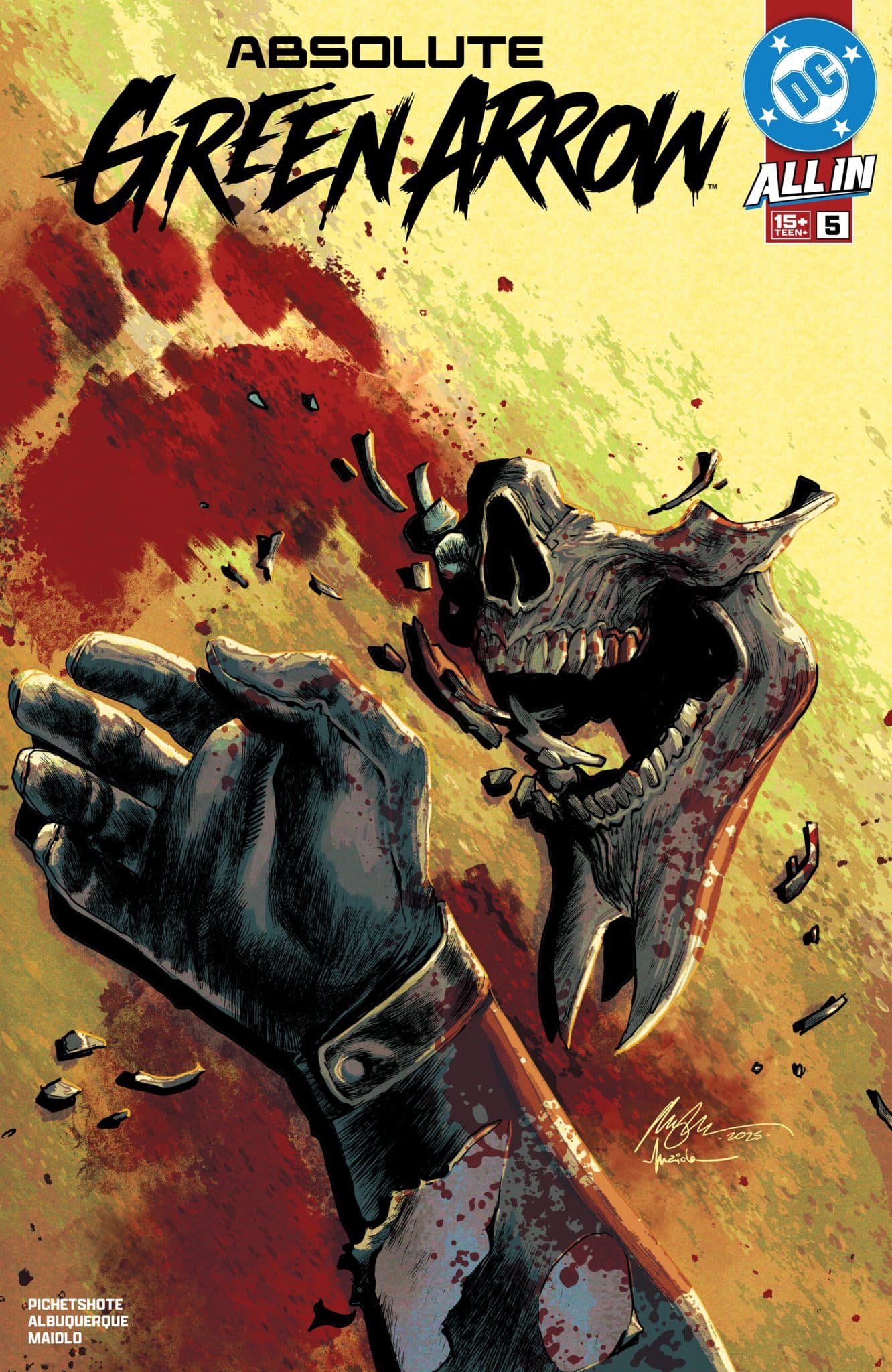
Absolute Green Arrow #2 (DC) – Working for evil billionaire Hector Hammond, Dinah Lance and Malcolm Merlyn continue to look into the Green Arrow Killer. This is while Pornsak Pichetshote, Rafael Albuquerque, and Marcelo Maiolo put new spins on classic GA supporting characters and turn in some of the best social commentary in superhero comics. One of the suspects is Mia Dearden, who opens up when Dinah spars with her in some gritty Albuquerque grids. Each punch landed and line of dialogue shows how hard it is to not be caught up with evil corporations and billionaires. Absolute Green Arrow #2 digs into the moral dilemmas and psychological trauma Dinah faces through killer layouts from Rafael Albuquerque and powerful colors from Maiolo. An unhinged, line crossing third act only ups the ante for the series. Overall: 9.5 Verdict: Buy

Concrete: Stars Over Sand #1 (Dark Horse) – This was the first Concrete comic I’ve ever read, and at times, I definitely felt like I came into a movie that was already halfway over with a web of relationships, backstories, and themes already baked in. But, then, I basked in Paul Chadwick’s immersive visuals of Concrete and his friends enjoying the Great Sand Dunes National Park before trouble strikes. This is such a thoughtful and meditative comic that when the pace picks up towards the end, it’s jarring and truly frightening like a tidal wave on a peaceful beach. But definitely count me as a new believer in this indie comics icon and in Paul Chadwick’s poetic writing and naturalistic art. Overall: 8.5 Verdict: Buy

Mini Reviews: Godzilla’s Odyssey #1, Justice League: Dream Girls #2, Skate Ali #1, Jay & Silent Bob: Jays of Future Past #1

Justice League Dream Girls #2

Sometimes, the staff at Graphic Policy read more comics than we’re able to get reviewed. When that happens you’ll see a weekly feature compiling reviews of the comics, or graphic novels, we just didn’t get a chance to write a full one for.

These are Graphic Policy’s Mini Reviews and Recommendations.

Logan

Jay & Silent Bob: Jays of Future Past #1 (Marvel) – Stoners and superheroes collide in the cheesy, yet charming Jay & Silent Bob: Jays of Future Past #1 from Kevin Smith, Giuseppe Camuncoli, Cam Smith, Roberto Poggi, Erick Arciniega, and Marco Menyz. Not all the jokes land, but you can really tell that Smith is like a kid with all the toys in the box having his creations interact with all the Marvel hitters and ending up in one hell of a battle against Dr. Doom and a host of other baddies. The ending is especially sweet building off the honest emotions of Clerks 3 with a Marvel/New Jersey twist. There are so many iconic moments for Marvel/View Askewniverse fans (That’s a big Venn Diagram), and Camuncoli brings a blockbuster sheen to the art without being afraid to get funny. Kevin Smith has truly been killing it with these intercompany crossovers recently. Overall: 8.2 Verdict: Buy

Skate Ali #1 (Dark Horse) Sam Humphries and Natacha Bustos tell a timely tale of finding community in an age of isolation and authoritarianism in Skate Ali #1. In post-apocalyptic L.A., skating is illegal, but it’s the only thing that keeps protagonist Ali happy and sane. Bustos’ art and colors capture the joy Ali has from riding her board as well as the pitfalls and more surreal elements when she runs into the Warriors-like skate clans. Skate Ali #1 is all about the feeling of giving a shit about something while the world crumbles and is a heightened version of finding joy in subculture while not neglecting the cliqueishness of these space. Also, Ali’s dad made my cry and her nurse’s advice to her after her big skating accident cracked me up. Overall: 8 Verdict: Buy

Justice League: Dream Girls #2 (DC)JL Dream Girls #2 is another exciting and vulnerable chapter of this Pride Month event penned by Dreamer and Galaxy creators Nicole Maines and Jadzia Axelrod with art from Brandt and Stein, Vincent Cecil, Dan Jurgens and Norm Rapmund, Stephen Sadowski, and Joe Quinones. Dreamer and Galaxy continue their tour through alternate realities while their friends try to support them, and the Justice League and GL Corps passes judgment on them. Brandt & Stein’s skill with facial expressions work well for the interpersonal conflict of the frame story, and the guest artists shine on homages to the Hard Travelin’ Heroes eras of Green Lantern and Green Arrow, an Old West riff, and Dreamer and Galaxy playing the roles of John Constantine and Zatanna. But underneath these flourishes, JL: Dream Girls #2 boils down to Dreamer fighting a hard fight against herself and having issues even letting her friends in. Maines and Axelrod explore both her identity as a trans woman and a superhero and refreshingly don’t give any easy answers while creating some new conflict for Galaxy in the “real world”. Also, JL: Dream Girls #2 features a kind of holodeck story starring Jo Mullein where Steven Underwood, Morgan Hampton, and comics legend Alitha Martinez use ballroom culture and Spike Lee-influenced ring constructs to show her struggling with memories of “the one who got away”. This internal conflict is compounded by all the different Lantern Corps members staying on Oa, but you don’t need to be current on the GL books to get something out of this memorable character study. Overall: 9.1 Verdict: Buy

Godzilla’s Odyssey #1 (IDW) – In Godzilla’s Odyssey #1, Frank Tieri and Ilias Kyriazis re-cast the titular monster as an agent of Zeus helping Odysseus return home from Ithaca. The comic is a speed-adaptation of the epic poem with Kaiju standing in for various monsters from the myths. There’s a lot of emphasis on the gods making an Odysseus his plaything, and Kyriazis’ designs for them are excellent from muscular Zeus to sensible Athena and angry Poseidon, who ends up being the butt of many jokes. I would honestly read a whole book of Greek myths drawn by Ilias Kyriazis. The comic hits most of the highlights of the poem, but it feels truncated in places. But, hey, there’s no place like home. Godzilla is a more malevolent figure in the Tom Scioli backup in which Robin Hood and the Sheriff of Nottingham join forces to fight him. The art is creative, but the story runs out of steam in the end. However, the lead story is a wonderful primer for the upcoming Odyssey film although I’m sure the Greek gods and Godzilla himself will have much less screen time. Overall: 8.4 Verdict: Buy

Mini Reviews: X-Men ‘97 Season 2 #1, Justice League: Dream Girls #1, The Deadman #1

Justice League: Dream Girls A DC Pride Event #1

Sometimes, the staff at Graphic Policy read more comics than we’re able to get reviewed. When that happens you’ll see a weekly feature compiling reviews of the comics, or graphic novels, we just didn’t get a chance to write a full one for.

These are Graphic Policy’s Mini Reviews and Recommendations.

Logan

X-Men ‘97 Season 2 #1 (Marvel)Steve Foxe and Salva Espin’s tie-in comic is tasty snack to hold you over until X-Men ‘97 returns. With the X-Men scattered to different time periods, there’s a void in the mutant world, and X-Factor, Akkaba cultists, the Brotherhood, and young mutants like Jubilee and Sunspot are trying to fill it. This feels like reading a random X-issue from the mid-90s in the best way. The best parts are definitely Jubilee and Sunspot making pop culture quips and dealing with discrimination while trying to help fellow mutants. Most of the main cast isn’t in this because they’re “dead”, but Season 2 #1 has a big villain on deck especially for a tie-in book. Overall: 7.5 Verdict: Read

Justice League: Dream Girls #1 (DC) – Dreamer and Galaxy fight their way through some visually interesting dream worlds in this Pride Month treated scripted by their co-creators, Nicole Maines and Jadzia Axelrod. The art team is spectacular too with Nicola Scott drawing a vision of Dreamer as Wonder Woman, J. bone channeling Batman: The Animated Series for a Gotham library caper, and the expressive Brandt & Stein handling the real world. (I love how they draw Star Sapphire’s eye roll.) JL Dream Girls #1 is a buffet of queerness, strong characterization, and superhero/sci-fi lore. And for dessert, there’s a Greg Rucka and Claire Roe backup story where Batwoman falls for an anti-data center activist. Poor Kate is always unlucky in love, but at least there’s Claire Roe’s muscular visuals. Overall: 8.7 Verdict: Buy

The Deadman #1 (DC) – In The Deadman #1, W. Maxwell Prince, Martin Morazzo, and Chris O’Halloran both streamline and make Boston Brand an infinitely more interesting character with plenty of gallows humor and and a warm hug of humanity. This comic captures folks at their most vulnerable moments: right before their passing, and Deadman acts as a kind of wisecracking midwife to make sure their souls’ get to the other side. But souls can be used to gain power as well, which sets up the series’ central conflict. Deadman’s foe is Bryan Johnson, but if he had an unquenchable appetite for old Hellblazer comics and didn’t get the point of the first issue of Sandman. The Deadman #1 is a refreshingly original spin on a great B-list character, and the Prince and Morazzo ouevre continues to be an insta-buy for me. Overall: 8.4 Verdict: Buy

Mini Reviews: Escape #7, Exploit #3, Did You Hear About Mimi Green #1, Swamp Thing 1989 #2

Exploit #3

Sometimes, the staff at Graphic Policy read more comics than we’re able to get reviewed. When that happens you’ll see a weekly feature compiling reviews of the comics, or graphic novels, we just didn’t get a chance to write a full one for.

These are Graphic Policy’s Mini Reviews and Recommendations.

Logan

Escape #7 (Image) – Shaw makes his attack on the enemy Titan weapon in the fireworks-filled Escape #7. Daniel Acuna visually captures the horrors of a fire fight while Rick Remender‘s captions expose all of Shaw’s fears and doubts as he undertakes what is essentially a suicide mission. This could easily be the final issue of the series, but Escape isn’t just interested in the dog faction winning the war, but also how they treat the folks that have been oppressed by the bats. The use of anthropomorphic animals allows Remender and Acuna to go under the surface of the “last good war” and look at the real pain and trauma that it caused as this series continues. Overall: 8.6 Verdict: Buy

Exploit #3 (Mad Cave)Exploit #3 is quite the twisty techno-thriller ride from Tim Leong, Laura Hudson, and Emiliana Pinna. Leong and Hudson uncover some cards about the assassination of Saxon and the identities of Dade and Mr. Ipsum while still keeping the story grounded in the romantic relationship between Kirby and Lenox that reaches a rough spot as they’re both fugitives from both the government and tech bros. There’s one chase sequence from Pinna and colorist Rebecca Good that is particularly exciting using a map-like double page spread and inset panels. Exploit #3 plunges right into the morally grey area, and I’ve never been more excited to read the next issue. Overall: 8.9 Verdict: Buy

Did You Hear About Mimi Green #1 (Dark Horse)Connor Goldsmith and Josh Cornillon take aim at cancel culture, wellness culture, and vitality with a heavy helping of body horror in Did You Hear About Mimi Green #1. Seriously, this comic is like if David Cronenberg directed Hacks. Cornillon’s visuals are capital “d” disgusting, but there’s a dreamy quality to his work as well, especially when Mimi thinks about her old lover. All in all, this is a unique and engaging debut from Goldsmith and Josh Cornillon that knows likable characters are overrated. Overall: 8.4 Verdict: Buy

Swamp Thing 1989 #2 (DC) – It’s such a blessing to get the proper conclusion to Rick Veitch’s Swamp Thing run, and this installment is even timier and wimeyer than the previous issue’s Biblical beauty. Swamp Thing continues to be flung back in the depths of time, and it’s looking more and more hopeless that he’ll be reunited with Abby. Veitch and artist Tom Mandrake continue the Jesus parallels by having Abby giving birth to their daughter in a stable in Houma while Swamp Thing’s journey gets more cosmic and trippy. This issue also has guest stars galore like John Constantine, Jim Corrigan, Anthro, and the heroic Shining Knight as well as a more nefarious figure to fill the void in the Green. Swamp Thing 1989 #2 lacks the tragic beauty of the Camelot and crucifixion issues, but does capture the bonkers creative of the late 1980s era while not abandoning the all-important Swamp Thing/Abby relationship. Overall: 8.1 Verdict: Buy

Wiccan and Hulkling: Raid of Ultron #1 uses the utterly insane family background of Teddy Altman and Billy Kaplan to tell some heartstrings pulling stories

Wiccan and Hulkling: Raid of Ultron #1

Even if they’re open and welcoming towards your gender and sexual identity, family gatherings can be difficult even during the best times. Especially if “grandpa” is a killer robot, and hubby is descended from two warring extraterrestrial races. Wiccan and Hulkling: Raid of Ultron #1 uses the utterly insane family background of Teddy Altman and Billy Kaplan to tell some heartstrings pulling stories about family and romantic relationships that happen to feature magic, robots, and lots and lots of punching. Wiccan solo series writer Wyatt Kennedy and artist Stephen Byrne handle the frame story “Family Matters” that introduces the comic’s kooky cast of characters at Wiccan and Hulkling’s anniversary party. They set up the conflict and seal it with a kiss, integrating seamlessly into the three short stories.

After the Ultrons attack, each of the party guests and hosts is thrown into portals that are different short stories written and drawn by a talented group of LGBTQ+ comics creators. Up first is Wiccan and Speed are trapped in Billy and Teddy’s favorite wind-down, sadly-on-hiatus reality TV show in “Mixed Signals” by Tegan Quin, Luciano Vecchio, and Brittany Peer. The stressful setting allows Wiccan to talk about the issues in his marriage with Speed and the ever-present Ultron, who has hacked Billy’s smart watch because, of course, he would. This story satirizes “smart” and optimization culture, where we can have physical items and feedback about mental health at the press of a button, but we’re not open about how we’re feeling. Quin writes zippy banter for Wiccan and Speed, definitely leaning into the gentle sibling ribbing, and Vecchio and Peer go big, loud, and high tech with their line art and colors. The comfort TV show setting makes everything a little bit more surreal, but there’s plenty of blasting, punching, and of course, speed lines. “Mixed Signals” gets this comic started off right with a shot of adrenaline and a chaser of reflection.

The sibling relationship through-line continues in “En Garde” by Zoe Tunnell and Rachael Stott, which features a duel between Hulkling, Phyla-Vell, and Ultron, plus a lot of relationship talk with a telepathic assist from Phyla’s partner, Moondragon. The contrast between Ultron being in their own little world and taunting the heroes while Billy and Phyla have a serious conversation about communication and complacency in relationships is the height of comedy. While slashing, flipping, and flying, this story’s protagonists burn through some important topics like being at different life stages than one’s friends or giving your partner space while still speaking about your needs. There’s also some great sibling bonding between Hulkling and Phyla-Vell as they seamlessly hack and slash their way through this story. Stott brings a real muscularity to her figure work that makes the combat feel like a real battle and not just cartoons jumping and blasting. It pairs nicely with Tunnell’s humorous and honest script. (I need a follow-up story where Wiccan and Hulkling and Phyla-Vell and Moondragon go to brunch.)

Vision and his daughter Viv star in the third Raid of Ultron short story, the cheekily named “Machine Learning,” where they face off against Ultron and his daughter Ultronica, who is basically robot Cher Horowitz. Josh Trujillo, Bradley Clayton, and Fabi Marques shift the dynamic from sibling to father/daughter. The emotional heart of this story is the difficulty of knowing when to introduce your parent to your partner, as Viv feels a little awkward bringing her new girlfriend to Wiccan and Hulkling’s party. This heartfelt emotion is counterbalanced by the hilarity of their opponents, who are pop culture tropes of father/daughter interactions turned up to eleven. Also, the Sanctum Sanctorum makes for a visually interesting environment and creates a natural contrast between science and magic. Vision and Viv definitely aren’t on their home turf. However, it’s nice to have yet another story in this comic that’s both introspective and action-packed. Marques’ bright, brash color palette truly ties everything together and gives both the fighting and conversations a heightened feel.

Wiccan and Hulkling: Raid of Ultron uses the superhero soap opera backdrop of the Marvel Universe to tell fiercely queer stories with big action and even bigger feelings. Also, as an added bonus and fitting the family theme of the comic, there’s an interview with Tegan and Sara discussing their sibling dynamic, relationship, and history with comic books, making this book a delight for both fans of LGBTQ+ comics creators and musicians.

Story: Wyatt Kennedy, Zoe Tunnell, Tegan Quin, Josh Trujillo
Art: Stephen Byrne, Rachael Stott, Luciano Vecchio, Bradley Clayton 
Colors: Brittany Peer, Fabi Marques Letters: Ariana Maher
Story: 8.6 Art: 8.8 Overall: 8.7 Recommendation: Buy

Marvel Comics provided Graphic Policy with a FREE copy for review


Purchase: Zeus ComicsKindle

Florida Hippopotamus Cocaine Massacre #4 delivers a rip roaring, line snorting conclusion

Florida Hippopotamus Cocaine Massacre #4

Florida Hippopotamus Cocaine Massacre (FHCM from here on out.) comes to a rip roaring, line snorting conclusion in its fourth issue. Seriously, I could read 44+ more Fred Kennedy penned, James Edward Clark drawn, and Becka Kinzie colored issues of the adventures of the Laser Drug Force fighting various random illegal substance-connected enemies, but I’ll settle for one hilarious, basically hour long animated length animated yarn for now. FHCM #4 channels night soap operas, violent 80s action schlock, Saturday morning cartoons, and just a touch of war cinema (Think Hawkeye, not Private Ryan.) to craft an epic conclusion. Kennedy and Clark throw everything but the kitchen sink at this story, and it all sticks.

Whereas the previous issues of FHCM had things like backstories, political intrigue, and even a look into the inner workings of Walt Disney World’s coked and disco ducked up theme park cousin, this comic is predominantly action with a slight twist that wouldn’t be out of place in a Steven Seagal film with an eco-friendly Ted Turner/Jane Fonda-approved twist. There are so many chases, even more gunplay, and one-liners galore. For such a silly series, Fred Kennedy gives each cast member their own sense of humor and voice from Miquel’s old school action hero charm to Agent Nebraska’s G.I. Jane crash-outs (Her origin issue is my favorite of the series.) and the cheesy earnestness of Bea, who stands up for worker rights and the Jungle Cruise style puns even while all her co-workers are senselessly gunned down around her.

And, then, there’s the literal Big Bad, Mr. Discau, who is a corpulent stand-in for every Global South dictator that the United States has propped up over the past century with plenty of Donald Trump and Walt Disney too. All he cares is making money off cocaine and controlled substances, but he’s also a disco diva who wants to make a show out of it while his bikini-clad minions are more straight to the point, Baywatch outfits aside. He openly confesses his wrongdoings in front of God, the strung-out-on-cocaine hippopotamuses, and the U.S. government, but old fashioned revenge is what takes him down. It’s so cathartic to see him get perforated after being an annoying piece of shit for four straight issues even though his amusement park and evil plans are comedy gold, especially when contrasted with Bea just trying to do her job and pay rent. Kennedy wisely winds down the evulz and monologuing and gives an epic showdown worthy of this book’s reputation.

Clark and Kinzie’s work on the visual aspects of FHCM truly make it great. Her day-glo palette and his over-the-top art style make this book a proper fever dream like some weird show on a channel that you rarely watch at 2 AM and can never find again. (This is also what makes the First Lady Laser VHS framing narrative work so well too.) There’s so much big hair, big punches, buckets of blood, sound effects, speed lines, and every cartoonist’s trick thrown into the mix in the service of telling the origin of a task force that makes ICE and the DEA look like pathetic losers. Sorry, none of y’all have hair and swagger like Miquel or karate kick action like the real Midwest princess (With apologies to Chappell Roan.) Agent Nebraska. I think classic action figure ads (Thank you Ronald Reagan and deregulation.) are also a major element of FHCM’s DNA crafting outlandish scenarios no reasonable suburb dwelling child could dream up. (It was a sad day when I learned that unfortunately the Buzz Lightyear toy couldn’t fly and didn’t include matches or explosives.) However, after their crazy antics, First Lady Laser puts them back in the toy box for some more adventures and propaganda just like the blurry photographs of the actual toys the hyperactive commercials were selling.

Florida Hippopotamus Cocaine Massacre is a bat shit crazy story that could only exist in the world of creator-owned comics. Fred Kennedy, James Edward Clark, and Becka Kinzie turn the script, art, colors, and letters up to eleven and tell a story that lives up to its incredibly memorable name, premise, and cover art. It’s the rare grindhouse movie that actually lives up to the sordid pleasures promised by its poster and is freaking hilarious too. Now, pretty please, I need a “Hippo Harder”, “Cocaine 2: Electric Boogaloo”, or a sequel with a much more clever title.

Story: Fred Kennedy Art/Letters: James Edward Clark Colors: Becka Kinzie
Story: 9.2 Art: 8.8 Overall: 9.0 Recommendation: Buy

Mad Cave Studios provided Graphic Policy with a FREE copy for review


Purchase: Zeus ComicsKindle

Mini Reviews: Reborn: Ultimate Impact #1, Of the Earth #1, Odin #1, Sirens Love Hurts #4, Umbrella Academy Plan B #4, Absolute Green Arrow #1

Absolute Green Arrow #1

Sometimes, the staff at Graphic Policy read more comics than we’re able to get reviewed. When that happens you’ll see a weekly feature compiling reviews of the comics, or graphic novels, we just didn’t get a chance to write a full one for.

These are Graphic Policy’s Mini Reviews and Recommendations.

Logan

Reborn: Ultimate Impact #1 (Marvel) Chris Condon and Stefano Caselli try their darndest (The Spot always looks cool visually), but Reborn: Ultimate Impact #1 can’t beat the clunkiness of a cash-in on the new Ultimate Universe’s success. Honestly, the pieced together name of the title is the perfect metaphor for the first issue itself which throws together Earth-6160 death cultists, Miles Morales and the origin boxes, and a new crop of heroes. It’s lots of plates spinning of a first issue, and most of the characters except for Jersey City’s new “Wonder Man” seem pretty generic, but maybe they’ll grow on us. There just isn’t throughline between the Annihilus stuff and the new heroes except for they have to have someone to punch eventually. Sadly, the once promising Ultimate U ended pretty abruptly (Deniz Camp and company continue to do good work on Ultimates though.), and this is more of the same. Overall: 6.1 Verdict: Pass

Of the Earth #1 (Image)Of the Earth #1 is pure, pitch black Texas crude atmospheric horror noir from Chris Condon, newcomer Andrew Ehrich, Charlie Adlard, and Pip Martin. Condon and Ehrich use in-universe books and oil company memos to give the comic a true crime vibe while Adlard and Martin lay on the creepy visuals while giving this first chapter a slow burn. Protagonist Tabby is beyond a fish out of water in the aptly named Solitude, Texas where she’s trying to reconnect with family after some time. An extended scene with a dead dog, rental car, and a Duel-esque pickup truck shows that she’s a little too nice and compassionate for this neck of the woods and hints at the horrors to come while being a study of suspense in miniature. I’m here for fossil fuel cryptids, and this unique genre hybrid of a comic centered around a resource that starts wars. Overall: 8.0 Verdict: Buy

Odin #1 (Image) Marguerite Bennett, James Tynion, Letizia Cadonici, and Jordie Bellaire draw on the real life evil of white supremacy to create a horrifying, psychedelic comic. What starts as undercover journalist Adela infiltrating a Gen Z Nazi/Odinist group goes so wrong as the severe nine panel grids and analytic captions become something more primal and darkly poetic. Let’s just say that crazy stuff happens in the back half of this comic. I love how Cadonici and Bellaire depict the bleak barren nature of the camp site before upending with big red swatches and a loose drawing style. Adela has literally bitten off more than she can chew, and I’m invested in this twisted rabbit hole although the subject matter hits very close to home. Overall: 8.1 Verdict: Buy

Sirens Love Hurts #4 (DC/Black Label)Tini Howard, Babs Tarr, and Miquel Muerto stick the landing in this feminomenon of a series. It’s so cool to see how Poison Ivy, Harley Quinn, Black Canary, and Catwoman’s relationship has progressed through the four issues of Sirens Love Hurts culminating in one hell of a beat ’em up against the freaky Big Bad, Horoscope. Howard and Tarr tie up the romantic subplots nicely too with some real talk between Batman and Catwoman and Harley and Ivy. (I love how she writes Batman!) And, of course, the fits are fierce, and the colors from Muerto are immaculate. I could read so many more adventures with this group of friends and creative team lineup. Overall: 9.8 Verdict: Buy

Umbrella Academy Plan B #4 (Dark Horse) – After a bit of a hiatus, Umbrella Academy Plan B is starting to round into zany shape. Gerard Way and Gabriel Ba introduce some mysterious new characters like Jennifer while also fleshing out some old trieds and trues like Klaus, Allison, and Five. The book works when it’s about a dysfunctional family or resisting fascism not so much when it’s about parallel timelines and random one-off supporting characters. There’s even a plot point stripped straight from volume 2. However, Ba and Dave Stewart continue to make this book like gorgeously bonkers, and Way has his moments too like Allison reflecting on her life in the supervillain prison Hotel Oblivion. Overall: 7.5 Verdict: Read

Absolute Green Arrow #1 (DC) – Luigi Mangione meets Jason Voorhees in Pornsak Pichetshote, Rafael Albuquerque, and Marcelo Maiolo’s riveting, all-too-timely take on Green Arrow. Absolute Green Arrow #1 picks up after the events of Absolute Evil with Hector Hammond hiring Dinah Lance and Malcolm Merlyn to investigate the murders of former business partners Oliver Queen and Jubal Slade. Slade is a rapist and pedophile too, and Queen was trying to do the right thing so it complicates Dinah’s relationship to her job. Pichetshote makes her very sympathetic: someone who hates the rich, but takes gigs from them to help cover her father’s healthcare. She’s the perfect entry point to this dark world that’s enhanced by the grit and power of Albuquerque and Maiolo’s visuals. This is the kind of superhero comic I need in 2026 and yet another strong launch for the Absolute line. Overall: 10 Verdict: Buy

Mini Reviews: Tales of the Green Lantern Corps: Guy Gardner #1, Civil War Unmasked #1, DC x Sonic: The Metal Legion #1, If Destruction Be Our Lot #1

Tales of the Green Lantern Corps: Guy Gardner #1

Sometimes, the staff at Graphic Policy read more comics than we’re able to get reviewed. When that happens you’ll see a weekly feature compiling reviews of the comics, or graphic novels, we just didn’t get a chance to write a full one for.

These are Graphic Policy’s Mini Reviews and Recommendations.

Logan

Tales of the Green Lantern Corps: Guy Gardner #1 (DC) – This is a really fun one-shot about the GL Corps’ best/worst member from Gerry Duggan, Matteo Lolli, Laura Braga, and Vasco Georgiev. It’s also a bit of a Fight Club riff and a call to action for men to check on each other’s mental health. In addition to this, it’s just a damn fine space mystery featuring the buddy cop team of Gardner and John Stewart with jabs at AI and the surveillance state. I feel like this template might be better for the HBO Lanterns than whatever “grounded” take they’re doing. Duggan definitely portrays Guy Gardner in a three dimensional, but this comic is fun too. So many gorillas! Overall: 8.2 Verdict: Buy

Civil War Unmasked #1 (Marvel)Christos Gage and Edgar Salazar add depth to Tony Stark’s decision to support the Superhuman Registration Act in Civil War Unmasked #1. The action centers around Stark trying to recruit the X-Men to the pro-reg side and then going on a time travel adventure with Bishop. It’s an utter fascist hellscape and legitimately on the table if the SHRA fails. The action is just okay even though Salazar draws some slick battle suits, but the moral and philosophical underpinnings make this one worth checking out. Also, it made me sympathize with Tony Stark more. Overall: 7.5 Verdict: Read

DC x Sonic: The Metal Legion #1 (DC)Ian Flynn and Adam Bryce Thomas run it back in the very fun DC x Sonic sequel The Metal Legion. I love how they build on the relationships from the previous crossover with Silver jawing with Guy Gardner, Shadow picking up detective skills from Batman and Robin, and Amy slaying with the Amazons to name a few. Also, Thomas’ anime influences make this comic even more adorable especially when Supergirl visits Sonic’s world. It looks like this is gonna be a classic good vs evil, Saturday morning cartoon throwdown with no less emphasis on multiversal mumbo jumbo. Overall: 8.2 Verdict: Buy

If Destruction Be Our Lot #1 (Image) – AI Abraham Lincoln is the character find of 2026 in Matthew Rosenberg, Mark Elijah Rosenberg, and Andy MacDonald’s If Destruction Be Our Lot #1. IDBOL #1 offers up a slightly understated and at times humorous vision of a world without humanity where if you screw up, you get eaten by a bigger robot. There’s lots of musings about one’s purpose in life, but also exciting chase scenes featuring visual flourishes from MacDonald and Francesco Segala. Let’s just driving a futuristic bus is very difficult for someone who last drew breath in 1865. Overall: 8.7 Verdict: Buy

« Older Entries