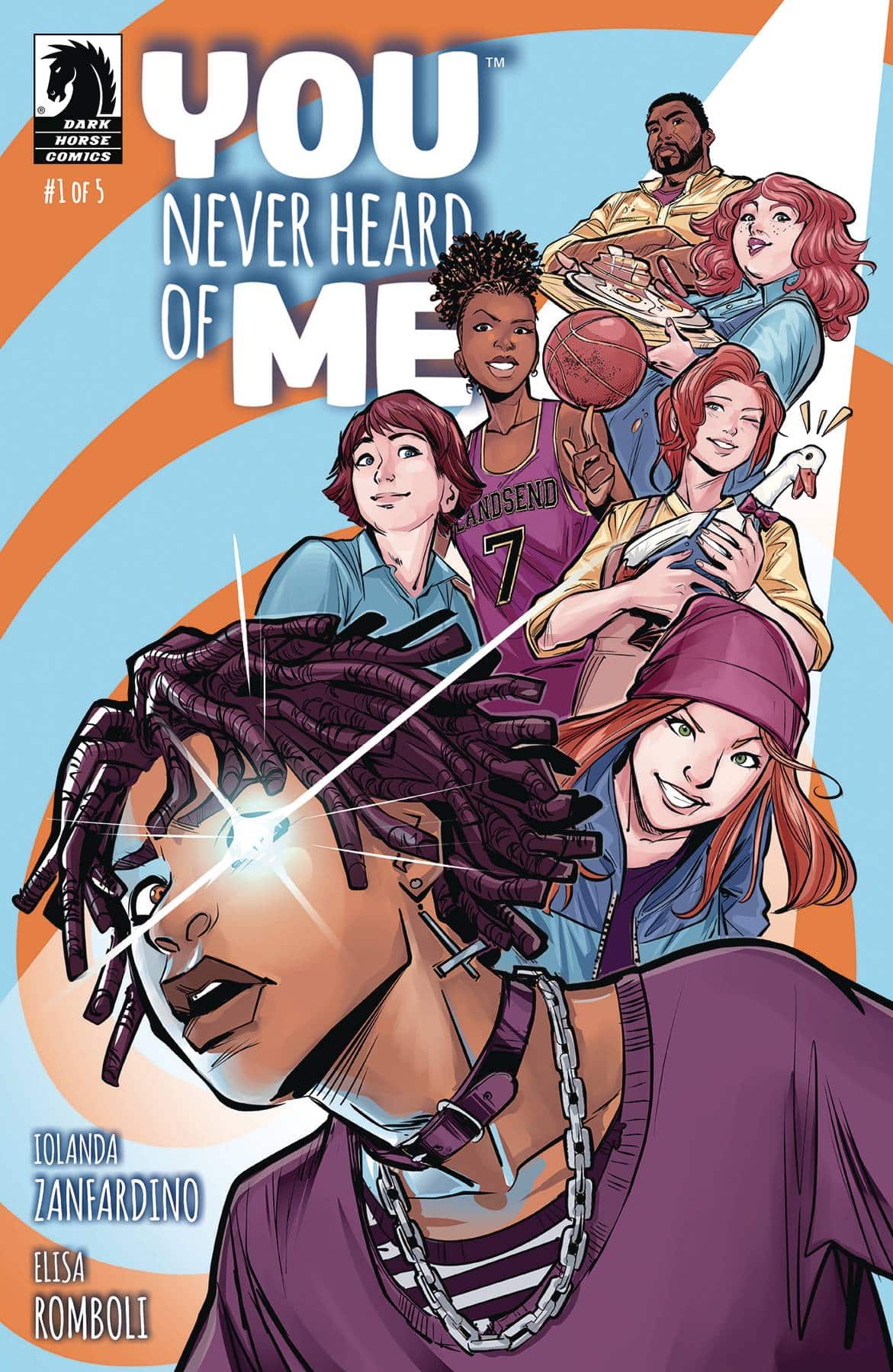
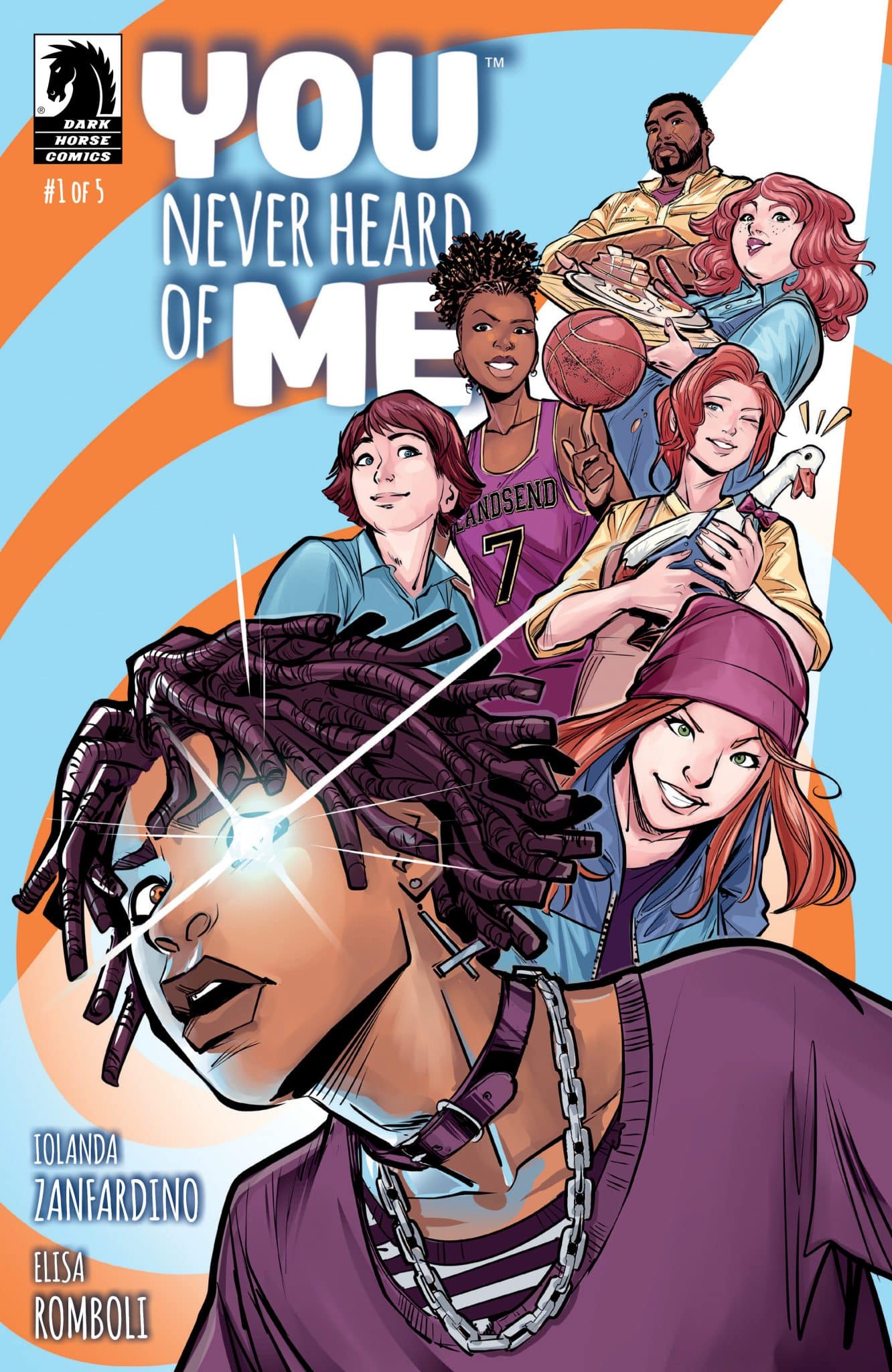
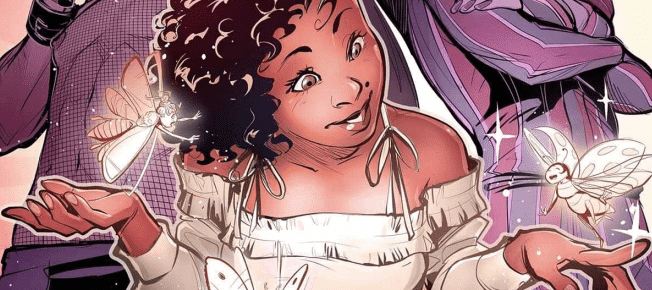
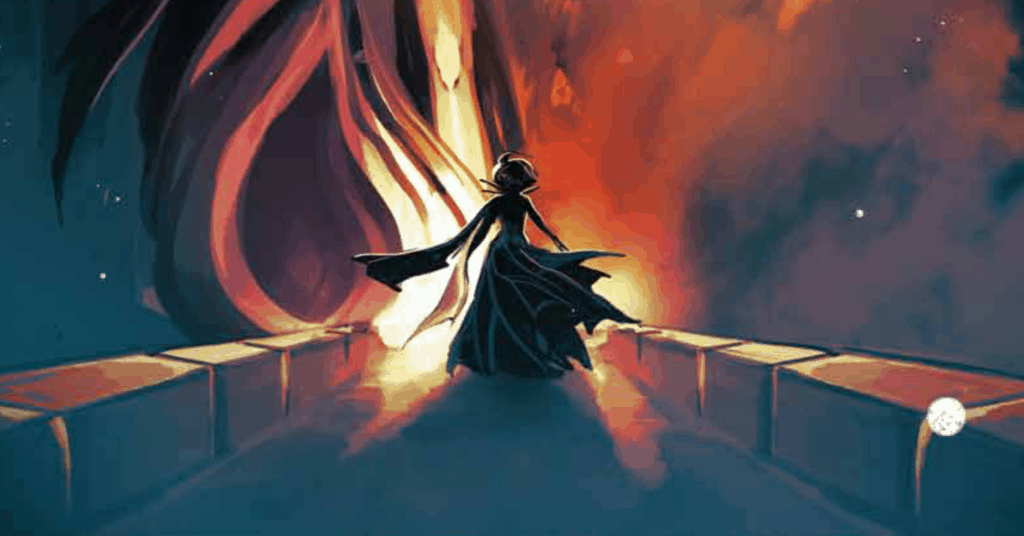
You Never Heard of Me is a high concept, yet easy to connect to comic from Iolanda Zanfardino and Elisa Romboli. In the book, a teenager named William inherits the ability to see both the best and worst moments of someone’s life from his grandmother. This might seem like a powerful gift, but was also a curse leading to William’s family moving around from place to place to avoid people who wished to exploit his grandmother or do her harm. You Never Heard of Me #1 establishes the premises series as well as the dynamic between William, his family, his (non-existent) friends, and spends quite a lot of time showing the effects of this ability on both William and his grandmother to create an emotional bond between reader and characters.
Even before he gets his abilities, William is an easy character to relate to with his opposite of “main character energy”. He’s thoughtful and empathetic, if a little lazy as he doesn’t takes his studies or extracurriculars seriously like his older sister and instead spends his time vibing at the beach, listening to music, and trying to cope with how chaotic his life is. Having to go to a new school every year (Or even less time than that.) has taken a toll on William so, of course, he just wants to soak up the sun at the beach or escape behind his headphones while bullying and drama happens at his high school.
Iolanda Zanfardino and Elisa Romboli don’t make his character a slacker per se with dialogue about him passing tests and showing interest in psychology as well as showing support for his father who think he’s a failure at life because he has spent his entire life as a a car mechanic. In his words, William just wants to “go with the flow”, which is why getting foresight abilities is so jarring and changes his pretty chill life in an instant. He’s not the nerd who gets great powers or the theater kid in a melodrama, but just a nice, quiet kid with good fashion sense and taste in music that happens to know the happiest and saddest moments of everyone he comes into contact with.
One element of You Never Heard of Me that I love is that Zanfardino and Romboli show the foresight powers visually instead of verbally beginning with a double page spread showing William’s grandmother’s relationship with her abilities. Romboli and Zanfardino uses pinks, red, oranges, and yellows to reveal the instability of her family’s life, and they also use visual shorthand like Game of Life car pieces to show how William’s mother chose to leave the family. This storytelling choice establishes important information about the main cast of characters and the comic’s themes without being bogged down in text. In fact, the blasts of color from the book’s creators create an initial emotional response that is broken down or intensified by Romboli’s line art, especially in the scene where William first discovers his abilities. There’s a real intimacy to experience someone’s best and worst actual or potential moments, and it’s a real burden to be bombarded with your peers’ psyches stripped bare while you’re still trying to grow up and find yourself like William.
You Never Heard of Me is for all the sensitive, quiet kids who had more active roles in life, their family, or workplace thrust upon them by a society that treasures being outgoing and charismatic above all. Iolanda Zanfardino and Elisa Romboli craft a story of teenage kid dealing with a loss in his family and trying to keep his head above water while also getting extranormal abilities bestowed upon him. But this isn’t a gift he can punch, fly, or optic beam his way out of, and William’s psyche and capacity for empathy and connection are on trial and the driving force of this comic as he must choose whether to use his powers actively, passively, or somewhere in between.
You Never Heard of Me is a high concept, yet easy to connect to comic from Iolanda Zanfardino and Elisa Romboli. In the book, a teenager named William inherits the ability to see both the best and worst moments of someone’s life from his grandmother. This might seem like a powerful gift, but was also a curse leading to William’s family moving around from place to place to avoid people who wished to exploit his grandmother or do her harm. You Never Heard of Me #1 establishes the premises series as well as the dynamic between William, his family, his (non-existent) friends, and spends quite a lot of time showing the effects of this ability on both William and his grandmother to create an emotional bond between reader and characters.
Even before he gets his abilities, William is an easy character to relate to with his opposite of “main character energy”. He’s thoughtful and empathetic, if a little lazy as he doesn’t takes his studies or extracurriculars seriously like his older sister and instead spends his time vibing at the beach, listening to music, and trying to cope with how chaotic his life is. Having to go to a new school every year (Or even less time than that.) has taken a toll on William so, of course, he just wants to soak up the sun at the beach or escape behind his headphones while bullying and drama happens at his high school.
Iolanda Zanfardino and Elisa Romboli don’t make his character a slacker per se with dialogue about him passing tests and showing interest in psychology as well as showing support for his father who think he’s a failure at life because he has spent his entire life as a a car mechanic. In his words, William just wants to “go with the flow”, which is why getting foresight abilities is so jarring and changes his pretty chill life in an instant. He’s not the nerd who gets great powers or the theater kid in a melodrama, but just a nice, quiet kid with good fashion sense and taste in music that happens to know the happiest and saddest moments of everyone he comes into contact with.
One element of You Never Heard of Me that I love is that Zanfardino and Romboli show the foresight powers visually instead of verbally beginning with a double page spread showing William’s grandmother’s relationship with her abilities. Romboli and Zanfardino uses pinks, red, oranges, and yellows to reveal the instability of her family’s life, and they also use visual shorthand like Game of Life car pieces to show how William’s mother chose to leave the family. This storytelling choice establishes important information about the main cast of characters and the comic’s themes without being bogged down in text. In fact, the blasts of color from the book’s creators create an initial emotional response that is broken down or intensified by Romboli’s line art, especially in the scene where William first discovers his abilities. There’s a real intimacy to experience someone’s best and worst actual or potential moments, and it’s a real burden to be bombarded with your peers’ psyches stripped bare while you’re still trying to grow up and find yourself like William.
You Never Heard of Me is for all the sensitive, quiet kids who had more active roles in life, their family, or workplace thrust upon them by a society that treasures being outgoing and charismatic above all. Iolanda Zanfardino and Elisa Romboli craft a story of teenage kid dealing with a loss in his family and trying to keep his head above water while also getting extranormal abilities bestowed upon him. But this isn’t a gift he can punch, fly, or optic beam his way out of, and William’s psyche and capacity for empathy and connection are on trial and the driving force of this comic as he must choose whether to use his powers actively, passively, or somewhere in between.
Iolanda Zanfardino and Elisa Romboli, the duo behind A Thing Called Truth, Alice in Leatherland, and The Least We Can Do are bringing their brand of iconic romance, comedy, and magic to Dark Horse Comics with You Never Heard of Me, a new comic series set to debut in November 2024. Romboli provides the cover and interior art and colors, with Zanfardino providing the story and letters for this five-issue series. Together they weave a story of family for one boy with the inherited magical gift of foresight, and the struggle to find one’s place in the world.
For Will, the ability to touch someone and see both the best and the worst moments of their life, be they past or future, means the ability to try to change things for the better. Such power can feel like a curse, especially if you’re a teenage seer who thinks he has enough problems already! Intimate knowledge of people’s darkest secrets, fears, and aspirations can be just as overwhelming as the choices and possibilities to make a difference. When every choice matters, how do you bear the weight of problems far older than you?
Join Zanfardino and Romboli in a story for fans of feel-good, character-driven, slice-of-life-style coming-of-age stories when You Never Heard of Me #1 (of 5) arrives at your local comic shop on November 20, 2024.
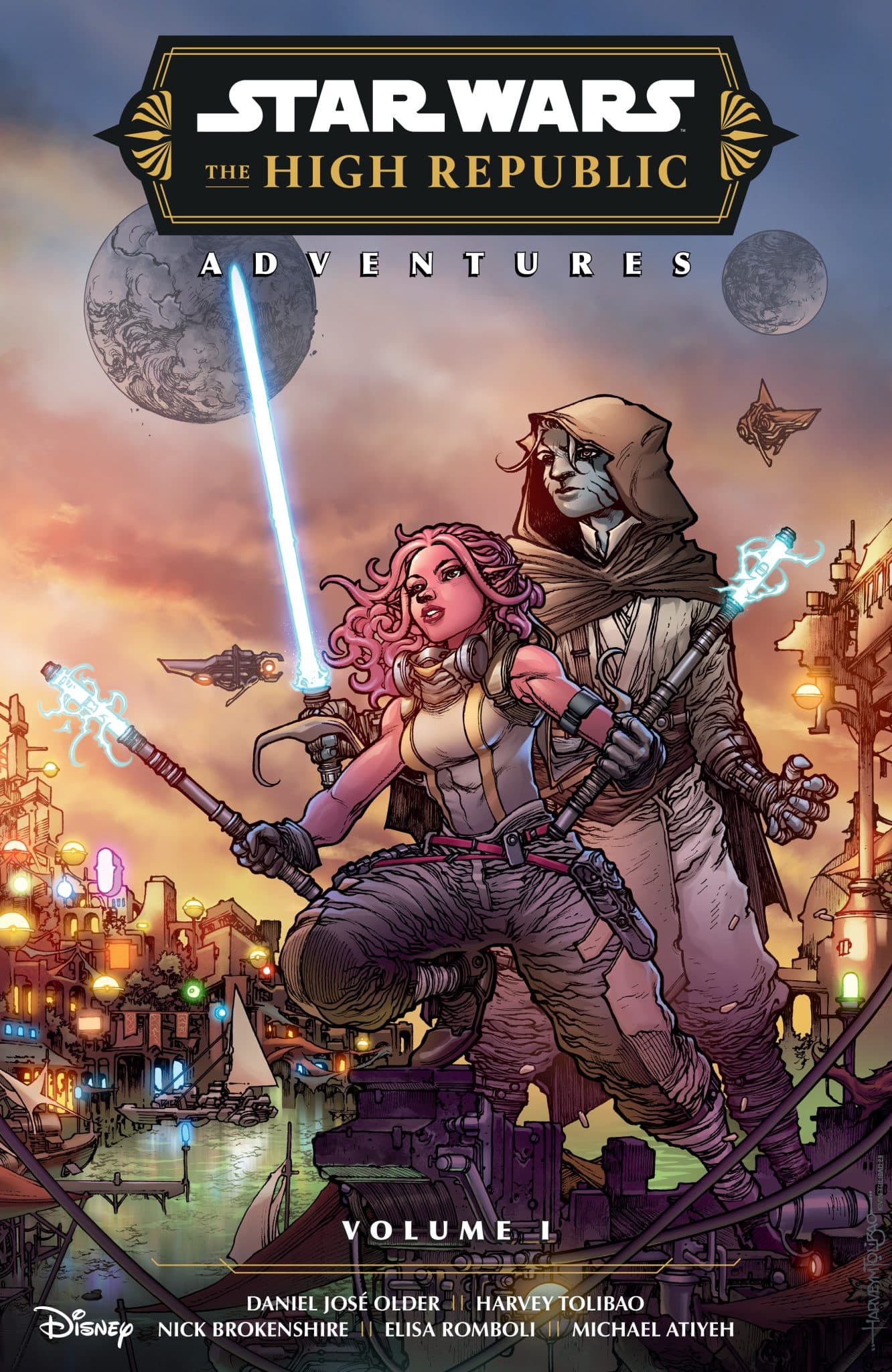
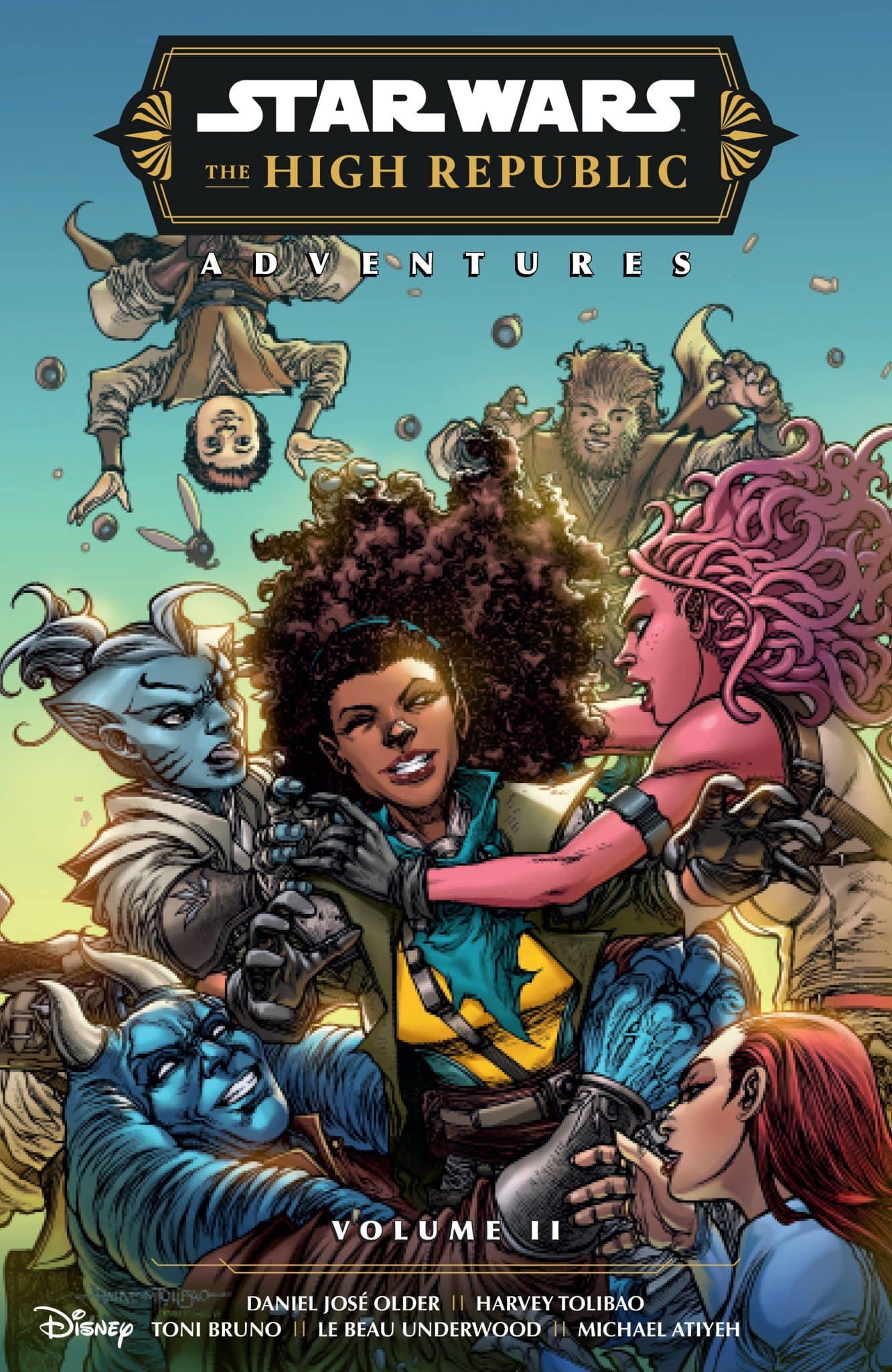
Dark Horse Books and Lucasfilm Publishing present the latest adventures from a galaxy far, far away in Star Wars: The High Republic Adventures Phase IIIVolumes 1 and 2, both available for pre-order now wherever comics and books are sold. The first volume will arrive this August, and Volume 2 will follow in January 2025.
Hope burns bright for the survivors of the fall of Starlight Beacon, but the lurking presence of the dangerous band of marauders known as the Nihil grows ever closer. These two volumes are written by New York Times bestselling author Daniel José Older, one of the original story architects of the High Republic, and illustrated by Harvey Tolibao, Nick Brokenshire, Elisa Romboli, and Toni Bruno (Volume 2), colored by Michael Atiyeh, and lettered by Comicraft. Cover art for both volumes is by Harvey and Kevin Tolibao.
Hundreds of years before the Skywalker Saga, brave and wise Jedi were at their height in the era of The High Republic! The final phase of this groundbreaking story starts here, as the forces of light and life battle against the villainous Nihil.
In Star Wars: The High Republic Adventures Phase III Volume 1, it’s been one year since the destruction of Starlight Beacon. Since then, Zeen Mrala, Jedi Knight Qort, and their allies have been picking up the pieces, searching for their friends amidst the wreckage. Meanwhile, the marauders known as the Nihil have advanced further into Republic space, leaving destruction in their wake. But hope is rekindled when Zeen finds new evidence of survivors scattered throughout the galaxy. Who else escaped the fall of Starlight Beacon, and where have they been during these past months? Follow Zeen and her friends as they uncover the answers to these questions, rebuild their team, and head into battle for light and life!
Continuing in Star Wars: The High Republic Adventures Phase III Volume 2, Zeen Mrala has rescued the love of her life and saved her Jedi friends from certain doom. But their reunion is bittersweet. As the Stormwall threatens to engulf the planet Eriadu, Zeen, Lula Talisola, and their allies must prepare for another, much larger fight with the Nihil. The fate of the entire Republic is on the line!
TheStar Wars: The High Republic Adventures Phase III Volume 1 and 2 paperback volumes contain 112 pages each (6.625 x 10.1875”). Volume 1 will be available in bookstores August 27, 2024 and in comic shops August 28, 2024. It is available for pre-order now on Amazon, Barnes and Noble, TFAW and at your local comic shop and bookstore, and will retail for $19.99.
Volume 2 will be available on January 21, 2025 in bookstores and January 22, 2025 in comic shops for $19.99. Links for pre-order will be available June 19, 2024 and can be found here on Amazon, Barnes and Noble and TFAW.com.
Backer Beware: Crowdfunding projects are not guaranteed to be delivered and/or delivered when promised. We always recommend to do your research before backing.
A new comics anthology curated by the creators of Calexit aims to celebrate the Hollywood Labor Movement’s massive success and also support workers impacted by the dual Strikes as the WGA closes its historic new deal with the studios. General Strike: Calexit and Other Tales of Fighting the Good Fight is a collection of new stories dedicated to the struggle for economic equality is written by WGA members, and publisher Black Mask Studios is matching the writers fees with donations to the Entertainment Community Fund.
With official pre-orders opening today, General Strike is hosted by a brand new comic book heroine (labor organizing badass Gen. Strike) and features stories by a roster of WGA-writers including writer/producer/WGA NBCU Lot Coordinator Judalina Neira, Rodney Barnes, Tamara Becher, Daniel Dominguez, Charley Feldman, Grant Morrison, and Brian Michael Bendis. The project is being run by WGA-member writer and publisher Matteo Pizzolo.
General Strike is an anthology comic of genre stories about characters fighting the good fight against injustice, linked by the theme of confronting economic inequality. All of the stories are written by striking guild members. In addition to paying Marvel/DC-level writers’ rates, Black Mask is also matching the writers’ rates with donations to the Entertainment Community Fund, and the creators retain ownership of the IP to their stories and characters.
Comics’ newest superhero Gen. Strike, a bubblegum-chewing labor organizer, comes to life in a set of covers by comic book artists Tyler Boss, Iolanda Zanfardino, Ben Templesmith, Ramon Villalobos, Creees Lee, Elisa Romboli, Amancay Nahuelpan, and Darick Robertson.
Artists illustrating the General Strike stories include Antonio Fuso, Jamal Igle, Butch Mapa, Tyler Jenkins, and Josh Hood.
General Strike: Calexit and Other Tales of Fighting the Good Fight is available for pre-order now on Kickstarter.
Comic fan’s favorite queer rom-com roadtrip is back for volume two in 2023! A Thing Called Truth Vol.2: Drive Home reunites writer Iolanda Zanfardino and artist Elisa Romboli to conclude the raucous love story of Magdalene and Dorian that debuted as a 5 issue miniseries from Image Comics in 2021. The new story arc will be offered as a complete graphic novel through Kickstarter. You can support the campaign now!
Fans can fund the campaign by pledging towards both PDF and physical copies of Volume two as well as items such as door knockers, art prints, signed original book art, and even a cameo in the book. The campaign also includes the opportunity to add copies of Volume one to the pledge for fans who need to catch up. Specially priced retailer tiers will be available for comic and book shops to be able to carry this book in person.
What happened with the medical advancement Dr. Magdalene “Mag” Träumer was working on before it was stripped away from her by her unscrupulous former employer? Will her estranged husband’s search for her lead to complications with the law? Will Dorian Wildfang’s Quixote-like quest to fulfill her brother’s posthumous wishes come to pass?
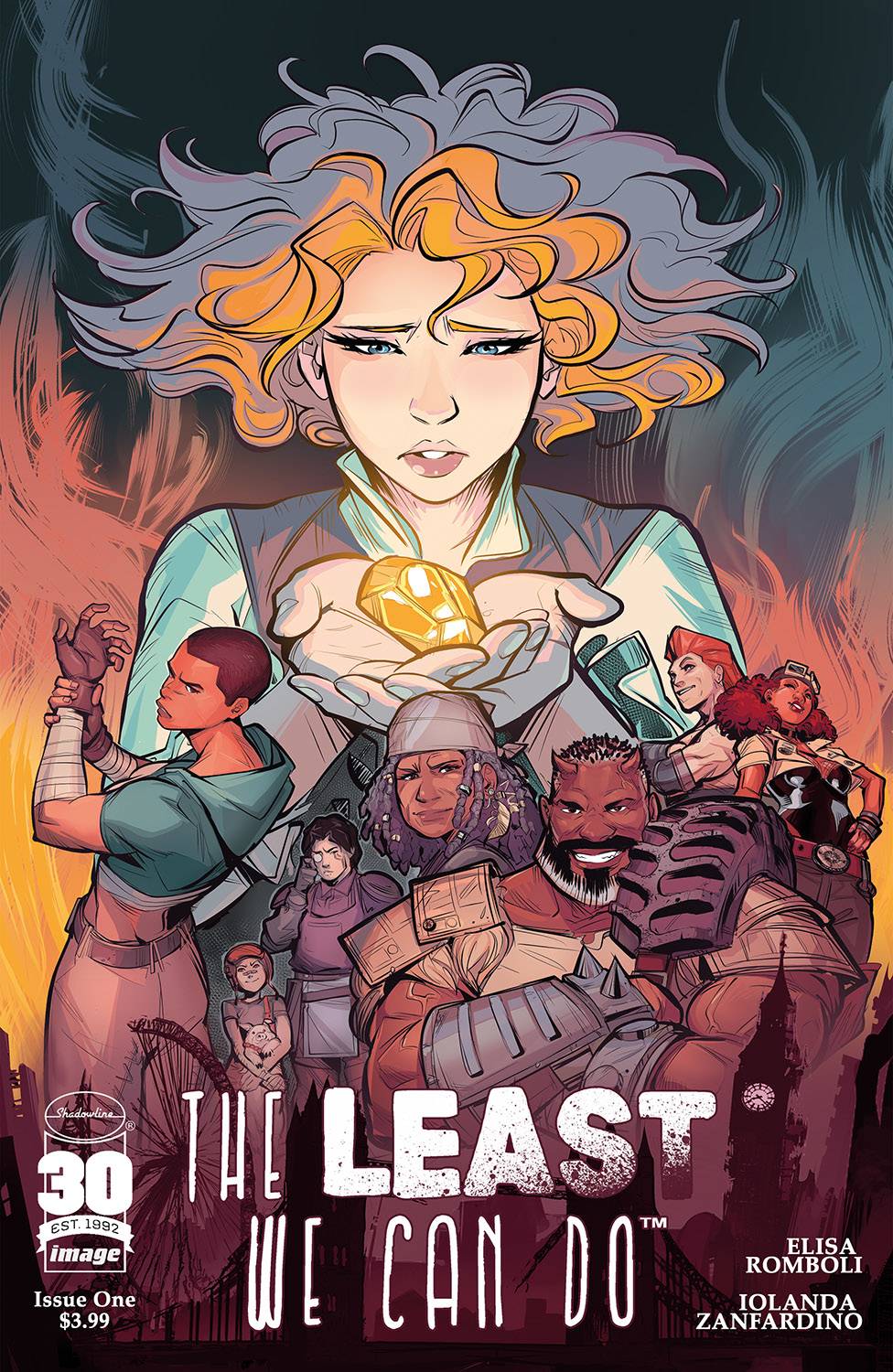
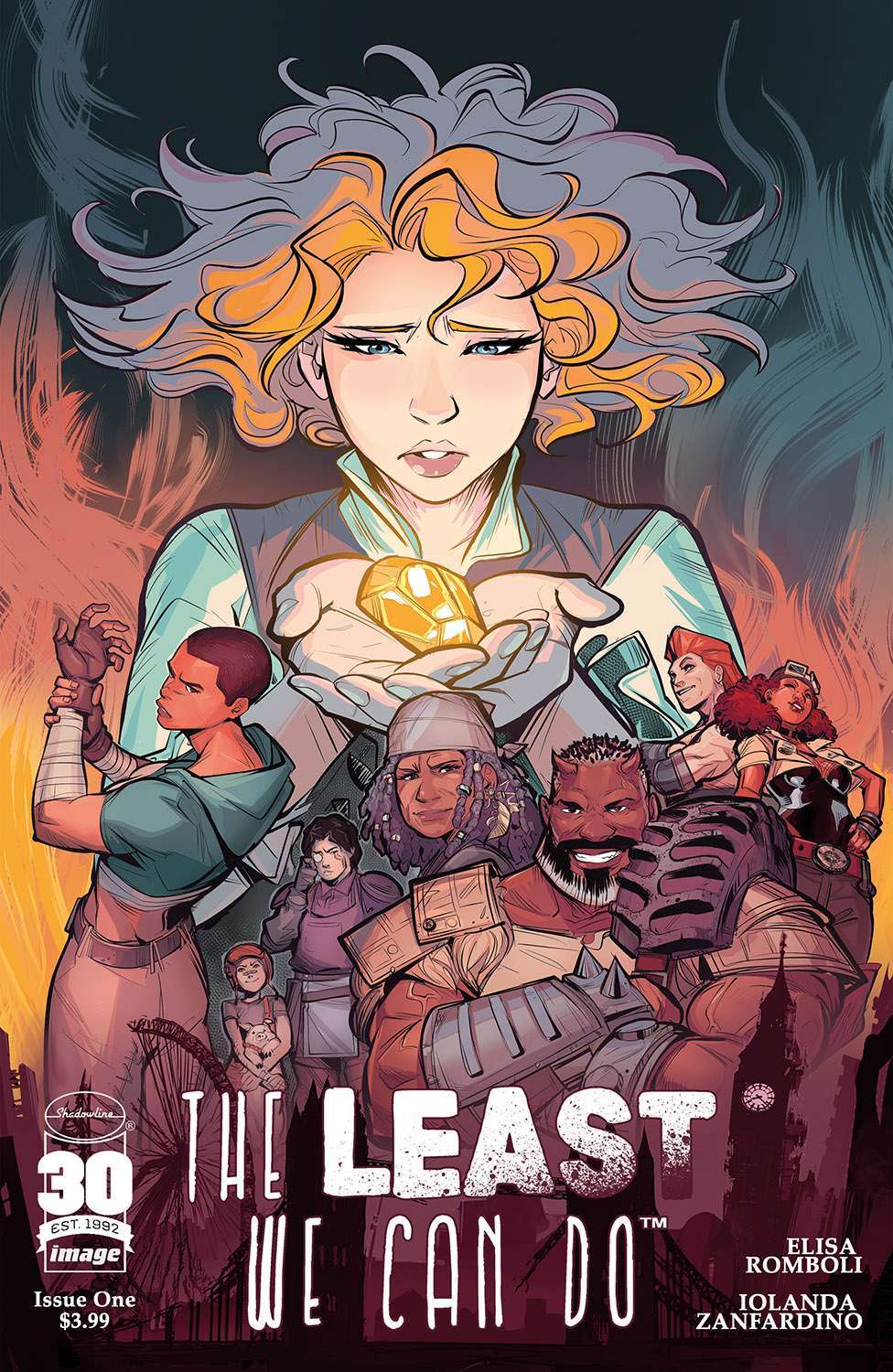
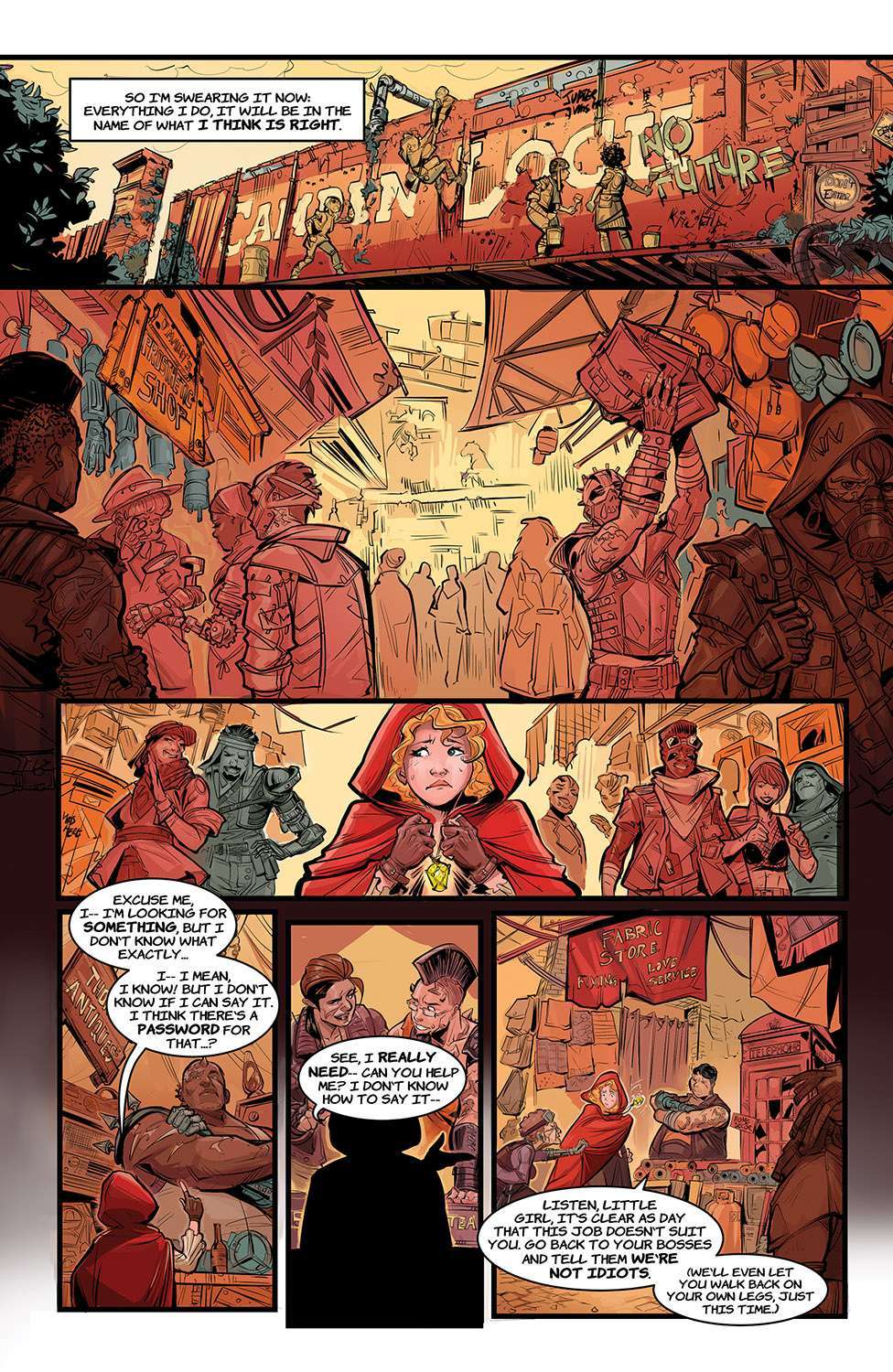
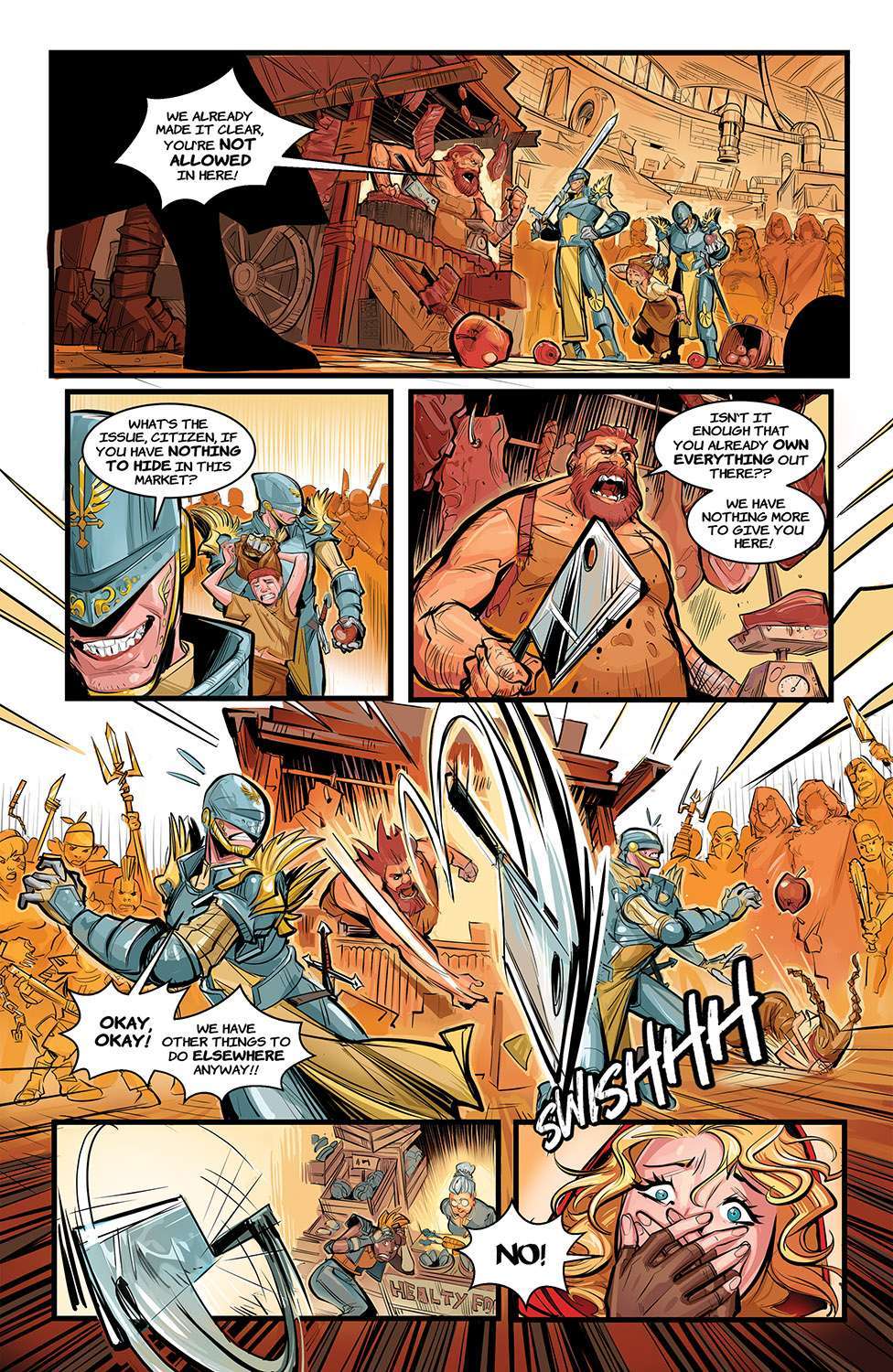
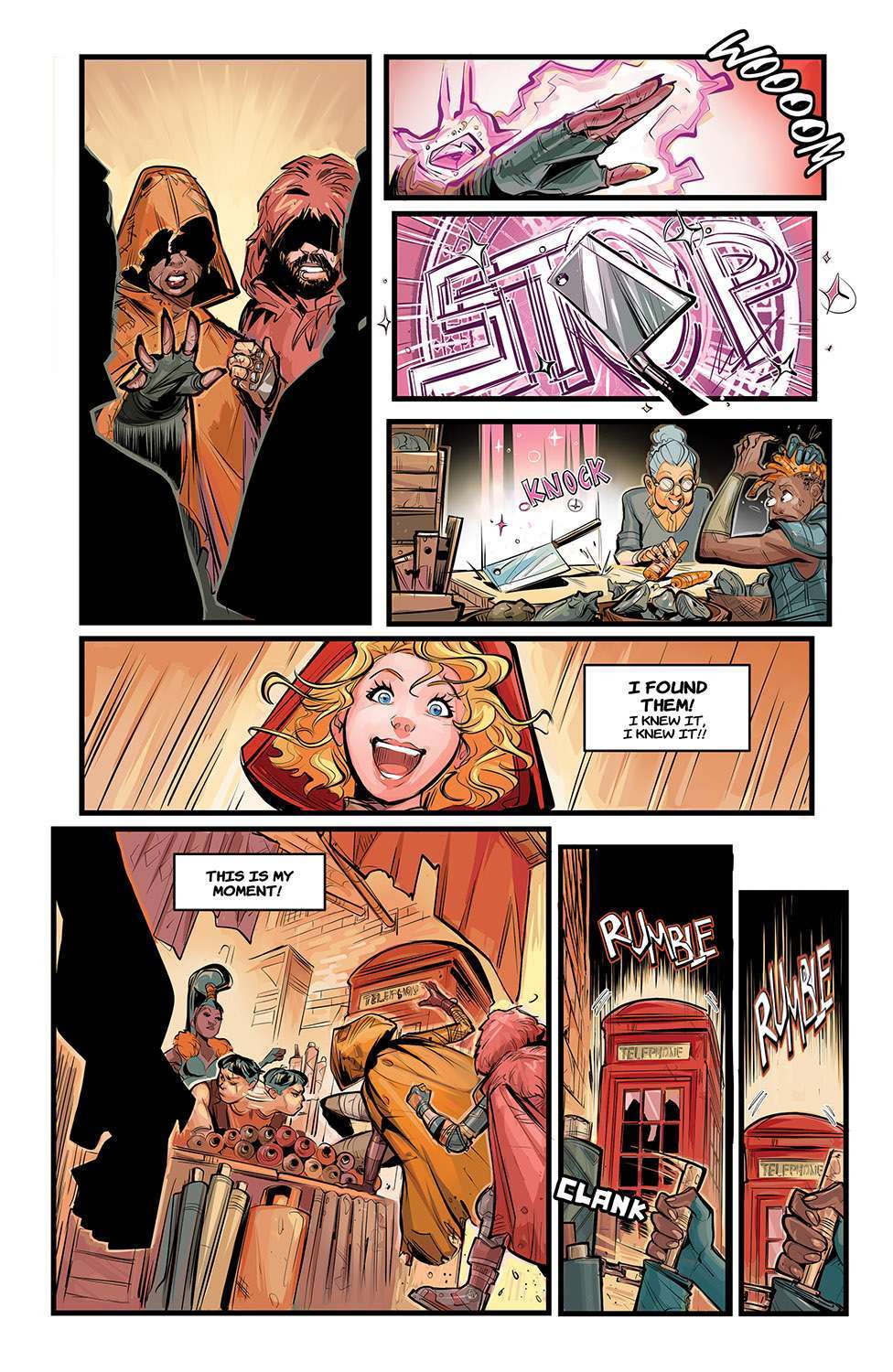
In their new comic The Least We Can Do, writer Iolanda Zanfardino and artist Elisa Romboli posit a world that’s a little bit dystopian, a little bit fantasy, and offers glimpses at a better world. The series follows “brainiac” protagonist Uriel as she wanders around a war-ravaged London looking for items that give off a special kind of energy called Medium not just for war, but to make the kind of world that she wants to live in. At the beginning she serves the status quo, but that definitely seems to change as the issue progresses.
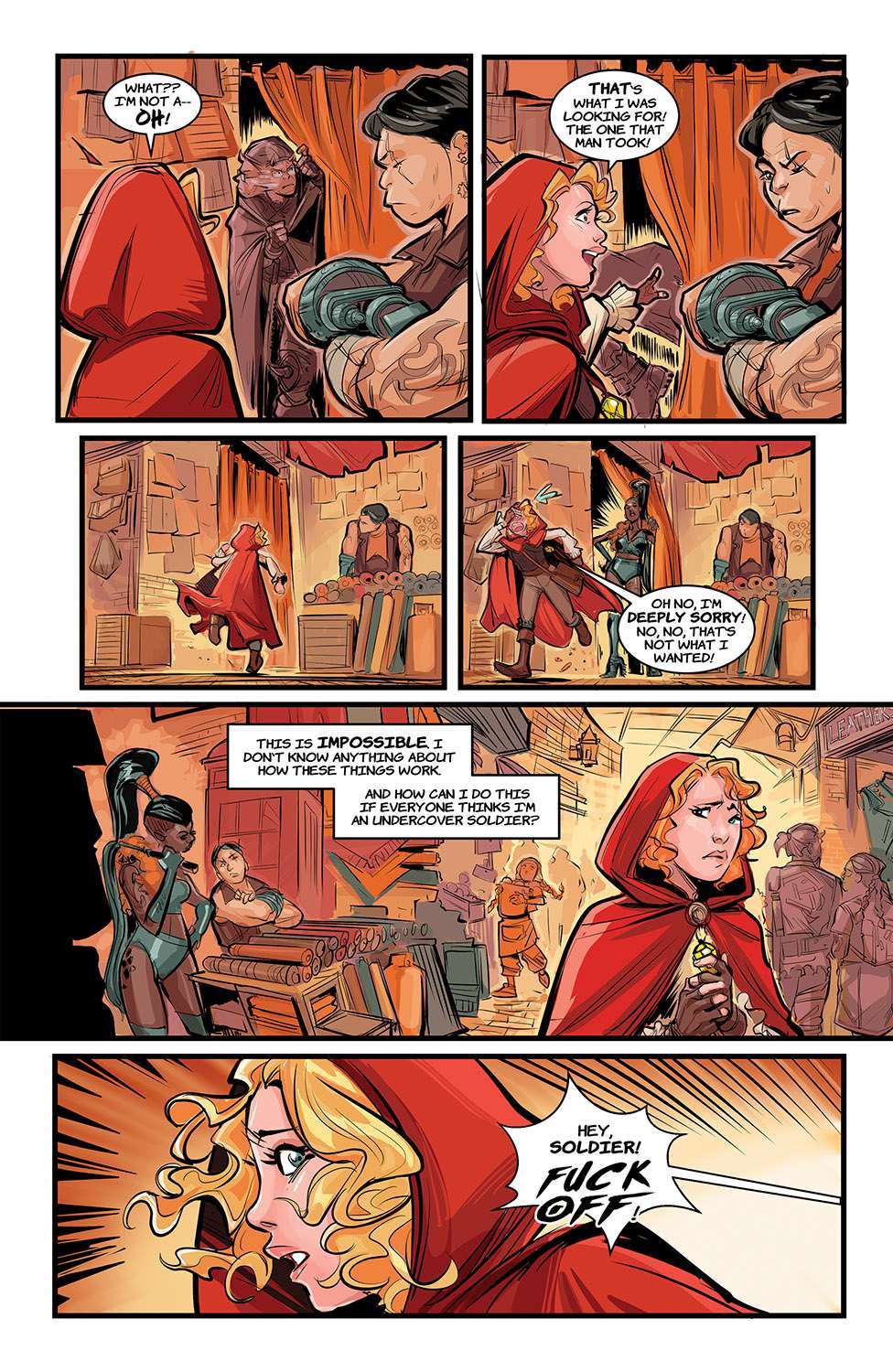
The first thing that drew me to The Least Can We Do #1 is the enthusiasm in Romboli’s artwork, especially when Uriel is involved. Seeing a character that is grounded in being ethical and gaining knowledge to help her fellow humans is a breath of fresh air. Compared to the soldiers that harrass her new allies and are covered in armor like a medieval knight witha more futuristic color palette, Uriel represents openness and optimism. She might be introduced on the first page wearing a hood, but it can’t hold her back for long even though she has to sneak around to find Medium initially.
Although a bunch of other characters of various shapes, sizes, and gender expresssions/identities appear, Zanfardino and Elisa Romboli zero in on Uriel in this first issue and use a well-placed flashback to show readers how she ticks. They place the scene towards the end of the issue once there’s a better sense of her personality, and this makes it resonate on a more emotional level. In a world filled with violence, soldiers, and exploitation, Uriel just wants to read, learn, and improve her surroundings, which is quite noble and makes her an endearing protagonist and POV character.
Another strength of The Least We Can Do #1 is the book’s general aesthetic. Romboli combines a ruined, five minutes in to the future London with something straight out of your favorite fantasy RPG finding a happy medium between fantasy and sci-fi. The magic, medieval-style weaponry, and cozy libraries provide a kind of metaphorical cushion between the story and real world issues like censorship of library/school books and the military industrial complex. Plus Uriel discovering this hidden world of medium users and queer coded characters captures the thrill of finding folks that you can really be yourself around. (But with more colorful explosions.)
The Least We Can Do #1 has colorful visuals (Elisa Romboli’s use of side effects are a real treat.), energetic pacing until the end of the issue, and the cherry on top is that it features a protagonist that is driven by morals and her intellect in a violent, dystopian world. If you like unique, socially conscious takes on the fantasy genre, beefy resistance fighters, or shelves and shelves of books, then this comic is one to check out.
In their new comic The Least We Can Do, writer Iolanda Zanfardino and artist Elisa Romboli posit a world that’s a little bit dystopian, a little bit fantasy, and offers glimpses at a better world. The series follows “brainiac” protagonist Uriel as she wanders around a war-ravaged London looking for items that give off a special kind of energy called Medium not just for war, but to make the kind of world that she wants to live in. At the beginning she serves the status quo, but that definitely seems to change as the issue progresses.
The first thing that drew me to The Least Can We Do #1 is the enthusiasm in Romboli’s artwork, especially when Uriel is involved. Seeing a character that is grounded in being ethical and gaining knowledge to help her fellow humans is a breath of fresh air. Compared to the soldiers that harrass her new allies and are covered in armor like a medieval knight witha more futuristic color palette, Uriel represents openness and optimism. She might be introduced on the first page wearing a hood, but it can’t hold her back for long even though she has to sneak around to find Medium initially.
Although a bunch of other characters of various shapes, sizes, and gender expresssions/identities appear, Zanfardino and Elisa Romboli zero in on Uriel in this first issue and use a well-placed flashback to show readers how she ticks. They place the scene towards the end of the issue once there’s a better sense of her personality, and this makes it resonate on a more emotional level. In a world filled with violence, soldiers, and exploitation, Uriel just wants to read, learn, and improve her surroundings, which is quite noble and makes her an endearing protagonist and POV character.
Another strength of The Least We Can Do #1 is the book’s general aesthetic. Romboli combines a ruined, five minutes in to the future London with something straight out of your favorite fantasy RPG finding a happy medium between fantasy and sci-fi. The magic, medieval-style weaponry, and cozy libraries provide a kind of metaphorical cushion between the story and real world issues like censorship of library/school books and the military industrial complex. Plus Uriel discovering this hidden world of medium users and queer coded characters captures the thrill of finding folks that you can really be yourself around. (But with more colorful explosions.)
The Least We Can Do #1 has colorful visuals (Elisa Romboli’s use of side effects are a real treat.), energetic pacing until the end of the issue, and the cherry on top is that it features a protagonist that is driven by morals and her intellect in a violent, dystopian world. If you like unique, socially conscious takes on the fantasy genre, beefy resistance fighters, or shelves and shelves of books, then this comic is one to check out.
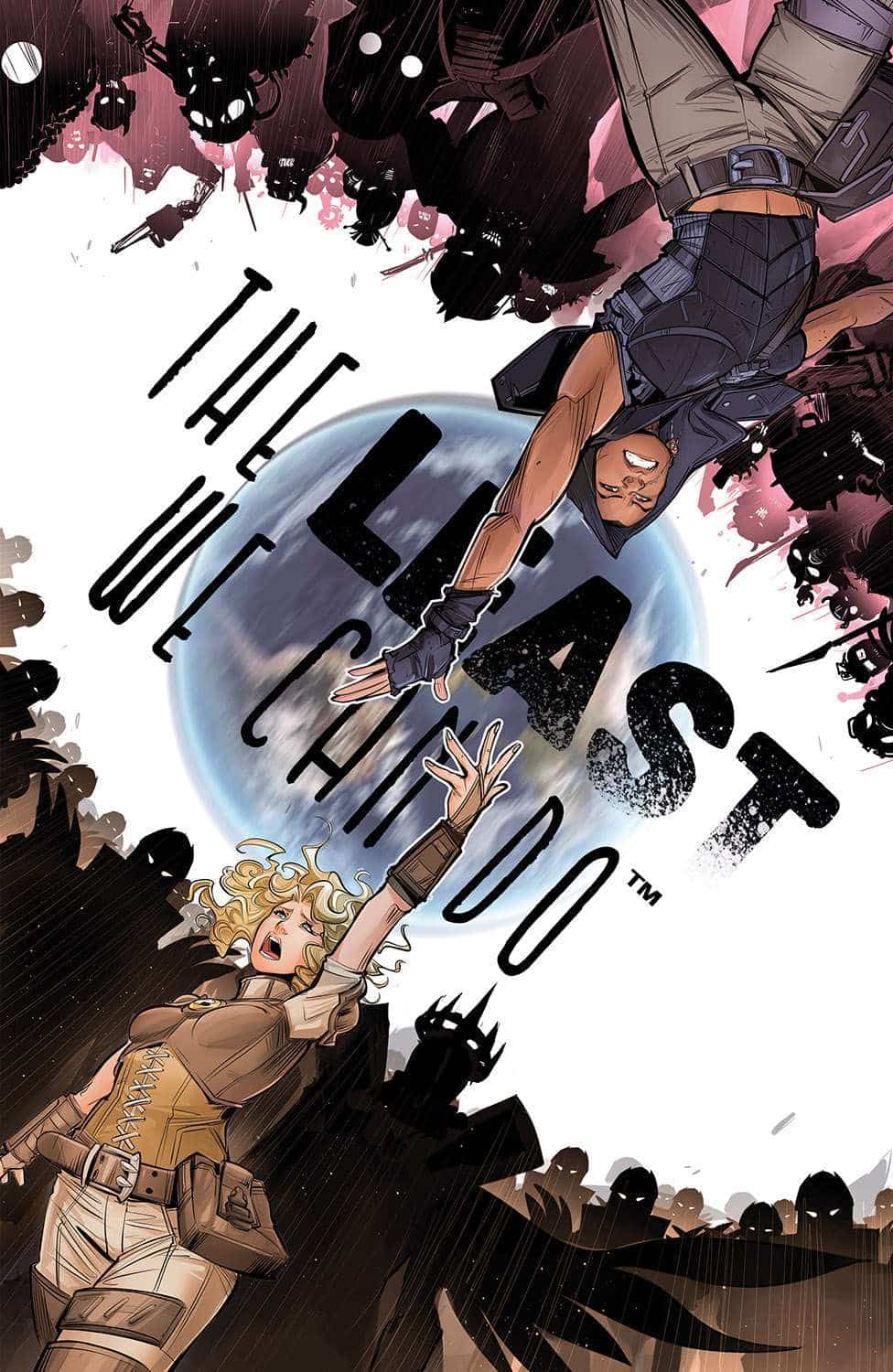
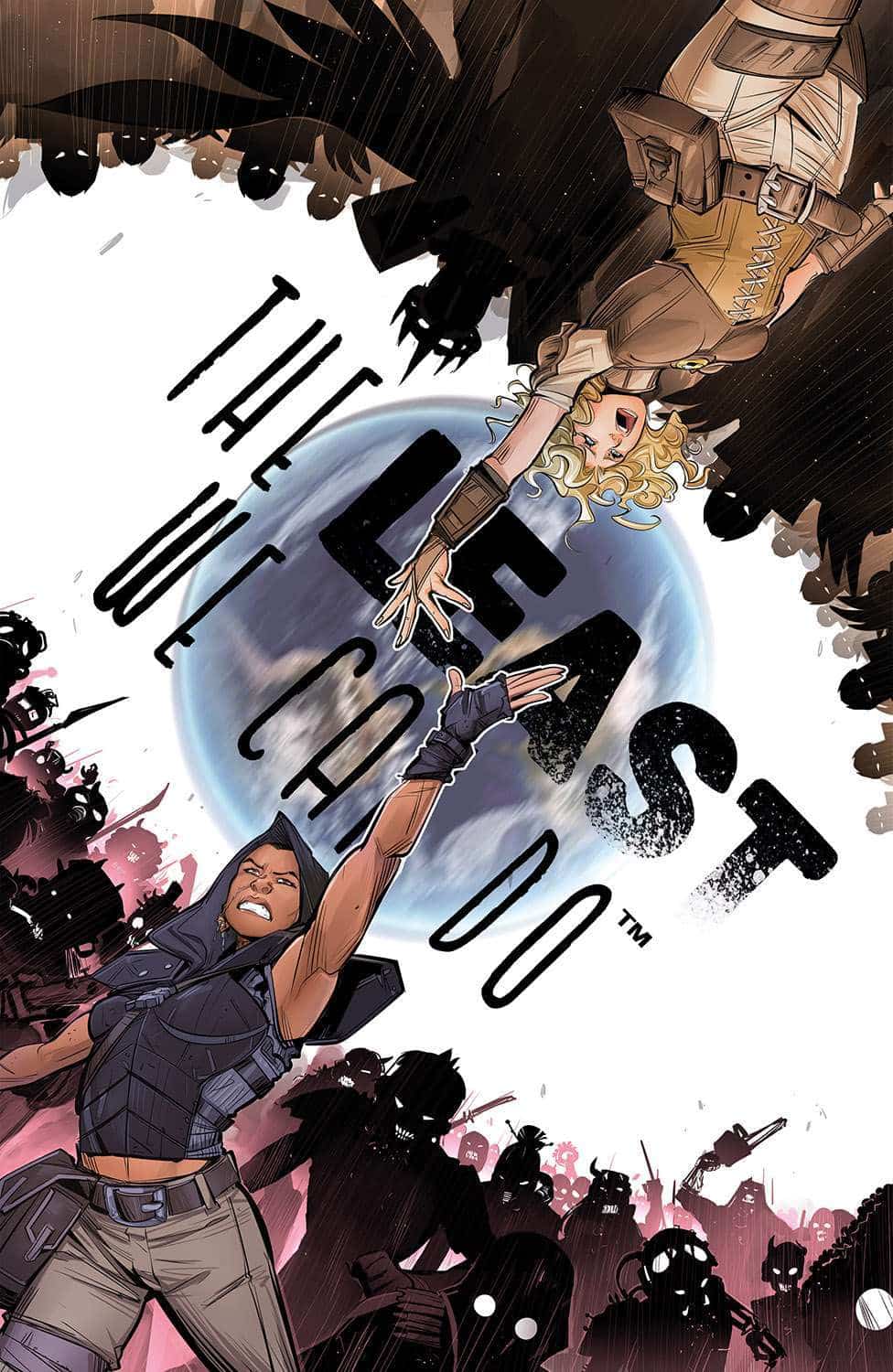
Fan-favorite creative duo Iolanda Zanfardino and Elisa Romboli reteam for an all-new fantasy series in The Least We Can Do. This ongoing series will launch from Image Comics and Shadowline in September.
Mysterious magical power arises from a world nearly destroyed by war. A young woman fights for her ideas of revolution and to build a new society from the debris. Realizing that she can’t do it alone, she has to prove her worth to the Eclipse Rebels to join them against the dreadful Eden Army.
A story of discovering what is right and what love means in a military-occupied and socially oppressed United Kingdom.
The Least We Can Do #1 will be available at comic book shops on Wednesday, September 14:
The Least We Can Do #1 Cover A Romboli – Diamond Code JUL220067
The Least We Can Do #1 Cover B Romboli – Diamond Code JUL220068
The Least We Can Do #1 Cover C Romboli – Diamond Code JUL220069
The Least We Can Do #1 Cover D Blank Cover – Diamond Code JUL220070
Even though it was a shitty year overall, I found some great comics to enjoy in 2021, both old and new. Beginning with its “Future State” event, DC easily shot up to become my favorite mainstream publisher thanks to its renewed focus on different visual styles instead of a Jim Lee-esque art style and its emphasis on LGBTQ+ characters even after Pride Month. Vault and Image continued to be the homes of both my favorite creators and SF stories, and AWA, Dark Horse and even Black Mask and Archie had titles that surprised me even if they didn’t make the cut on this list. Finally, continuing a trend that I jumped on in 2020, I continued to read or revisit classic comics (Both old and new) in 2021, like Copra, Invincible, The Umbrella Academy, Alan Moore’s Swamp Thing, Wonder Woman: True Amazon, The Invisibles, Peter Milligan and Mike Allred’s X-Force, Hawkeye, and Black Bolt among others.
So, without further ado, here are my ten favorite comics of 2021
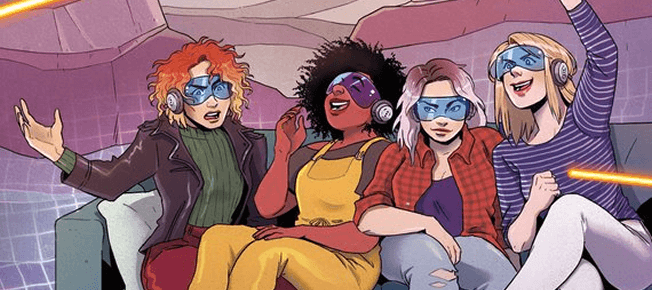
Alice in Leatherland is a wholesome, sexy, and hyper-stylized slice of life romance comic from the creative team of Iolanda Zanfardino and Elisa Romboli. The book is about Alice, a children’s book writer, who leaves her small town for San Francisco when her girlfriend cheats on her and captures the fear and adrenaline of taking a big step in your life. The series explores sex and love through an expansive cast of LGBTQ+ characters that I wanted to spend more than five issues with. Romboli uses fairy tale style visuals as a metaphor to examine Alice’s feelings and self-growth throughout the series, and she excels at depicting both the hilarious and erotic. Alice in Leatherland is an emotional, funny read with well-developed queer characters and made me immediately add Zanfardino and Elisa Romboli to the list of creators I’ll read anything by.
The Autumnalby Daniel Kraus, Chris Shehan, and Jason Wordie was the most unsettling comic I read in 2021. The book follows Kat Somerville and her daughter Sybil as they leave Chicago for the town of Comfort Notch, New Hampshire. However, this town isn’t a rural oasis, but incredibly creepy. Kraus’ script unravels the foundation of blood that the town is built on while Shehan and Wordie create tension with the fall of the leaf or a crackle of a branch. I also love how fleshed out Kat is as she deals with being an outsider in what turns out to be an unfriendly space with her parenting style and approach to life being critiqued by her neighbors. Finally, The Autumnal is the finest of slow burns beginning with NIMBY/Karen-like behavior and then going full-on death cult. It’s a must read for anyone who has lived or experienced a place where time seems to stand still, or who thinks a NextDoor app post could be the basis of a good horror story.
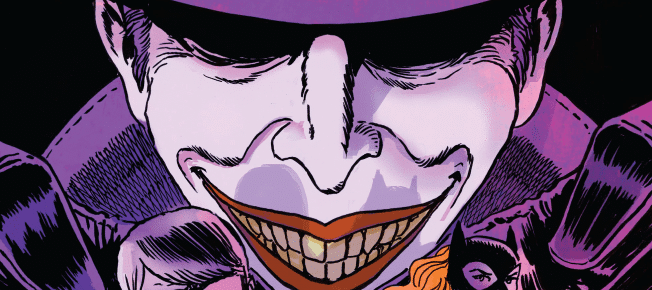
Contrary to its title, James Tynion, Guillem March, Steffano Rafaele, Arif Prianto, and others’ TheJokerisn’t a comic looking at the Clown Prince of Crime’s inner psyche, but is a globe-trotting P.I. type story featuring Jim Gordon trying to capture the Joker for some folks that looks shadier and shadier as the story progresses. Tynion and (predominantly) March show the effect Joker has had on Gordon’s life and his family while also showing him discover himself outside the bounds of Gotham and its police department. As the series progresses, TheJoker shows the impact that Batman and his rogue’s gallery have had on the rest of the world, and the ways governments, intelligence agencies, and more nefarious organizations deal with threats of their ilk. Along with a crime novel set in present time, James Tynion, Matthew Rosenberg, and the virtuosic Francesco Francavilla created several flashback comics showing the development of Jim Gordon’s relationship with the Joker over the years, and how it effected his family life and career almost acting as a “Year One” for Gordon as Francavilla’s art style shifts based on the era the story is set in. Plus most issues of Joker feature colorful backup stories with Harper Row trying to bring Joker’s newest ally Punchline to justice in and out of prison from Tynion, Sam Johns, Sweeney Boo, Rosi Kampe, and others.
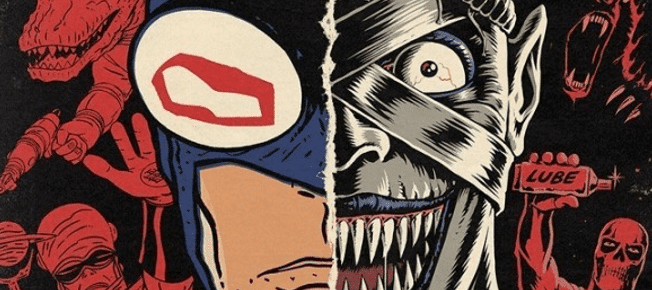
Kane and Able is a dual-cartoonist anthology featuring work by British cartoonists Shaky Kane and Krent Able. Kane’s stories flow together in a Jack Kirby-meets-David Lynch kind of way blurring the lines between fiction and metafiction, reality and unreality while also acting as an opportunity for him to draw cool things like dinosaurs, space women, aliens, the King of Comics, and even himself. Able’s stories have more of a grindhouse, body horror quality to him as a chainsaw-wielding Bear Fur battles a boom box wielding cockroach woman, who flesh bonds everyone in a listless, major city. Both creators have delightful, distinctive styles and put their own spin on genres like sci-fi, exploitation, and superhero. Kane and Able is free-flowing, clever, and most of all, fun and is tailor made for the larger page format of treasury editions.
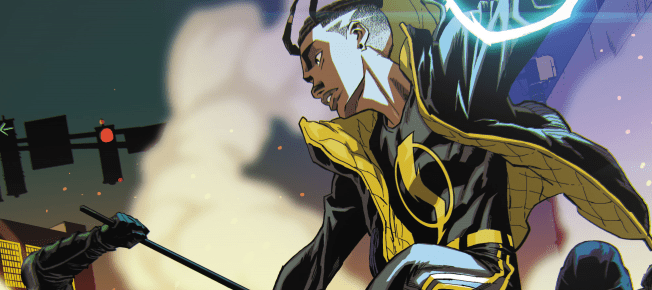
As far as pure visuals go, Static Season One by Vita Ayala, Nikolas Draper-Ivey, and ChrisCross was easily one of the best looking books on the stands in 2021. This was in addition to reinventing the iconic Black superhero through the lens of contemporary social movements, like Black Lives Matter and protests against police brutality in summer of 2020. Static Season One doesn’t merely pay homage to the classic Milestone series, but brings it into 2021 with fight sequences straight out of the best shonen manga and a three dimensional supporting cast that holistically explore the Black experience in the United States while also being a coming of age and superhero origin tale. Draper-Ivey’s character designs are sleek as hell, and his high energy approach to color palette adds intensity to fight and chase scenes. I’m excited to see what the talented creative duo of Ayala and Nikolas Draper-Ivey bring to Static’s journey as Season One wraps up and Season Two (hopefully) begins in 2022.
5. Renegade Rule (Dark Horse)
Renegade Rule is an original graphic novel from Ben Kahn, Rachel Silverstein, and Sam Beck that is a perfect fusion of a sports manga and a queer romance story set in the world of competitive video games. Even if you’re like me and have only attempted to play Overwatch a single time, Renegade Rule and its world are quite accessible via things like hypercompetitiveness, sexual tension, and breathtaking fight choreography. The in-game sequences are almost like musical numbers and use shooting, sniping, and various acrobatics to make characters’ unspoken thoughts real. Renegade Rule is like if your favorite sports movie and romantic comedy had a gay baby who loved kicking ass at video games, and I pumped my fist every time the Manhattan Mist overcame adversity or overwhelming odds and smiled when certain characters ended up with each other…
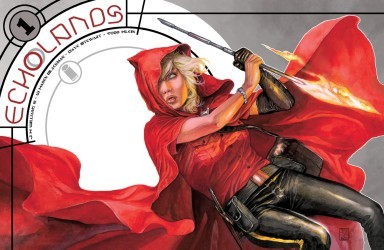
After a four year absence from interior art, co-writer/artist J.H. Williams III didn’t mess around with Echolands, a love letter to both genre fiction and double page spreads. Done in collaboration with co-writer Haden Blackman and colorist Dave Stewart, Echolands is an epic fantasy quest loaded up with all kinds of genres and art styles leaking off the page and was one of the most immersive comics I read in 2021. It has a sprawling cast and world, but Blackman and Williams know when to slow down and dig into Hope Redhood and her allies and antagonists’ motivations and when to drop in a multi-page underwater or underground chase sequence. With its unique landscape layouts and all the details in J.H. Williams and Stewart’s visuals, Echolands is definitely a book worth picking up in physical format and has backmatter that both humorously and seriously adds to the worldbuilding.
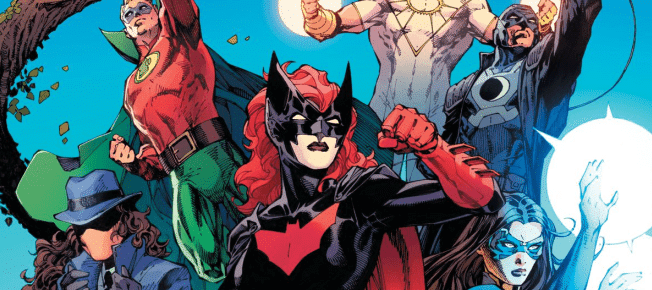
In honor of Pride Month, DC Comics put some of its most talented LGBTQ+ creators on its most iconic LGBTQ+ characters in a super-sized celebration of overcoming adversity, being yourself, and loving whoever you want to love. DC Pride covered a spectrum of sexual and gender identities from a fast-paced date night story featuring the non-binary Flash, Jess Chambers, to James Tynion and Trung Le Nguyen’s fairy tale influenced story of Batwoman’s younger days and even the first appearance of transgender superhero Dreamer (From the Supergirl TV show) in the comics. Depending on the character or creative team, the different stories could be adventurous and flirtatious, heartfelt and emotional, or a bit of both. This book shows that superhero comics have come a long way since the stereotypes of the 1980s and 1990s, but there’s still room for improvement as many of the characters featured in this anthology are relegated to backup stories or are supporting cast members of cisgender, heterosexual heroes.
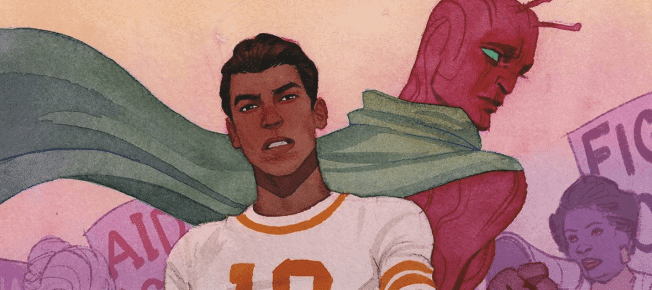
Barbalien: Red Planet is a masterfully crafted, queer rage infused superhero/sci-fi comic from Jeff Lemire, Tate Brombal, Gabriel Walta, and Jordie Bellaire. It understands subtext is for cowards and draws parallels between Barbalien coming out as gay and a Martian with his new friend/potential lover Miguel, who is a Latino activist fighting for the US government to do something about the AIDS crisis in the 1980s. Barbalien: Red Planet pays homage to the Black and Latinx activists who fought for queer liberation and is also an emotionally honest character study for Barbalien, who is easily my favorite character in the Black Hammer universe. Lemire, Brombal, and Walta use the superhero and sword and planet genres to explore the conflict between queer folks and power structures as Barbalien struggles with trying to fit into Spiral City as a white cop or being his true, gay Martian self. And to get personal for a second, Barbalien: Red Planet inspired me to speak out against my city’s Pride organization’s open support of police even though it led to me resigning as chairperson of my work’s LGBTQ+ employee affinity group. It’s both a damn good superhero book and a story that had a huge impact on my life in 2020-2021.
My favorite comic of 2021 was Die by Kieron Gillen and Stephanie Hans that wrapped up with the mother of all quest arcs. But beyond having cool fantasy landscapes and wrapping up each party member’s arc, Die nailed the importance of stories, whether games, comics, films, prose, TV shows etc., to change how we view and interact with the world in both a heightened and realistic manner. Most of the realism came in Die #20 where the main characters escape the world of the game into our reality with the COVID-19 pandemic in full swing and have emotional reunions with loved ones or just hang out by themselves. However, the final arc of Die also is full of existential nightmares courtesy of Hans’ visuals as well as awakenings and self-realization, especially in Die #19 where Ash comes out as non-binary and discusses how games and fiction shaped their identity. The final issues of Die is a double-edged look at the power of narrative and games to shape us done in both glorious and surprisingly intimate fashion, and I felt I really knew Ash, Matt, Angela, Isabelle, Matt, Chuck, and Sol in the end.
Honorable Mentions: Casual Fling (AWA), Nightwing (DC), Made in Korea (Image), Barbaric (Vault), Superman and the Authority (DC), Catwoman: Lonely City (DC/Black Label)