In 2017, I found it increasingly difficult to keep up with all the new comics releases because of personal stuff etc.. There was also the sheer hatred and bigotry of some comic book fans, who foamed at the mouth every time a character that wasn’t a straight white male starred in their own book or if female characters weren’t drawn in an early 90s Image male gaze-y way. Creators and companies weren’t exempt from this either from Howard Chaykin’s transphobia and Islamophobia in his low selling Image book Divided States of Hysteria to the revelation that new Marvel Editor-in-Chief C.B. Cebulski lied about writing comics under the Japanese pseudonym Akira Yoshida for years and suffered little to no consequences for it.
However, there was a lot to love about the comic books of 2017, and I found solace, entertainment, and inspiration in many books from (becoming) old favorites about godly pop stars and dark knights to intriguing new titles about all girl fight clubs and young people experimented on by the government.
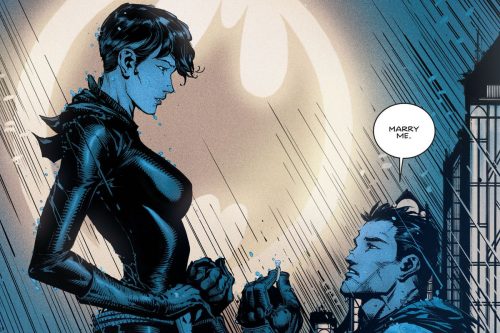
- Batman #14-37 (DC)
In 2017, writer Tom King and a crack team of artists including David Finch, Clay Mann, Mitch Gerads, Mikel Janin, Joelle Jones, and Jordie Bellaire explored almost every nook and cranny of the Dark Knight’s world in their work on Batman. Sure, there were epic arcs featuring one on one battles with Bane, a yearlong gang war with the Joker and Riddler, and a little family reunion in the “Button” crossover. But what Batman resonate as a comic book was the standalone and two part stories from King and Gerads showing the sweetness of the relationship between Batman and Catwoman to the emotional tale of Kite Man (Hell yes). King has a real knack for telling O. Henry-esque stories of ideas that humanize iconic characters none more so than “Superfriends” where Batman and Superman go on a double date with Catwoman and Lois Lane. An artistic highlight of the book was Joelle Jones’ beautiful, savage, and a little bit sexy depiction of Batman and Catwoman fighting for their love against the most evil of exes.
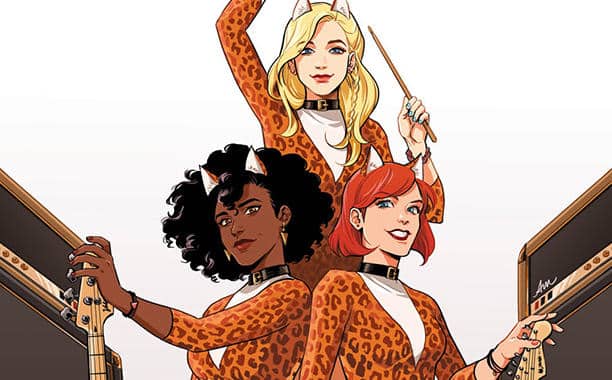
- Josie and the Pussycats #4-9 (Archie)
Josie and the Pussycats is a gorgeous, funny book that ended much too soon although it is nice to see artist Audrey Mok working on the main Archie title. Writers Cameron DeOrdio and Marguerite Bennett craft the rare Archie book that looks at both romantic and platonic relationships from the POV of young adults, not teenagers. They, artist Mok, and colorist Kelly Fitzpatrick imbue the title with a Saturday Morning cartoon zaniness, including high speed boat and motorcycle chases, kidnappings, and jokes about the polar bears from The Golden Compass. Yes, DeOrdio and Bennett overload all kinds of pop culture references and allusions in Josie, but it adds to the book’s energetic feel along with Mok’s fantastic fashion designs and Fitzpatrick’s bold colors. Josie and the Pussycats has some real heart to it with characters having all kinds of intense conversations about love, friendship, and fame between the over-the-top setpieces.
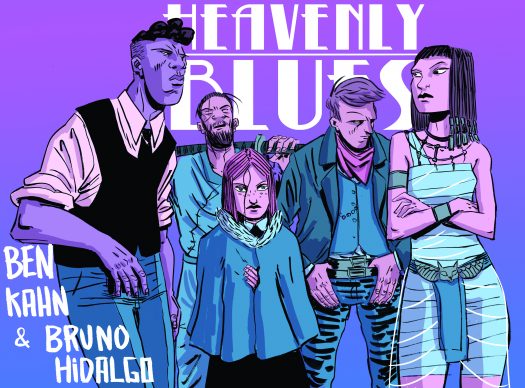
- Heavenly Blues #1-4 (Scout)
Writer Ben Kahn and artist Bruno Hidalgo’s Heavenly Blues blends the cosmology and philosophical and theological themes of Vertigo classics like Sandman and Lucifer with a quick and dirty heist thriller as a band of criminals, including a Great Depression Era thief, a girl who was sentenced to burn during the Salem Witch Trials, and a bisexual cowboy team up to break into heaven and steal something you may have heard of. Witty writing from Kahn and rhythmic art from Hidalgo that flows from the building of the Great Pyramids to the Old West and even an angel lounging in sweatpants keeps the story on its toes with flashback to each thief’s past life create an emotional connection to them. This is the perfect comic for folks who like to think about the nature of evil or the possibility of an afterlife while also watching Oceans 11 or Logan Lucky with a whiskey on the rocks.
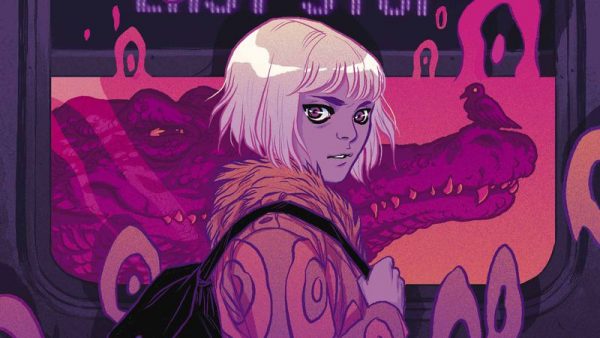
- Shade the Changing Girl #4-12 (DC/Young Animal)
The crown jewel of DC’s Young Animal imprint, Shade: The Changing Girl is a beautiful, meditative look at identity and humanity from the perspective of a bird alien Metan girl named Loma Shade, who has possessed the body of teenage girl bully. Cecil Castellucci, Marley Zarcone, and Kelly Fitzpatrick’s story really took off when Shade decides to hit the road first for Gotham and eventually to meet her idol, Honey Rich, the aging star of a 1950s sitcom that was popular all over the galaxy. Zarcone’s artwork is extremely fluid and complements Shade’s reaction to the influx of stimulus all around her that is humanity as she begins to understand concepts like nostalgia and of course the big ones: life and death. Shade the Changing Girl is more poem than sci-fi thriller/mindbender, and Castellucci’s poetic captions, Zarcone’s sincere facial expressions, and Fitzpatrick’s, well, groovy colors bypass the critical part of the brain and go straight for the emotional center. It is an empathetic study into how humans communicate and navigate this complex world from a visitor from an equally as complex society so hence conflict.

- Generation Gone #1-5 (Image)
Comics’ enfant terrible Ales Kot makes his triumphant return with Generation Gone, which is one of his most accessible works that still takes shots at the kyriarchy and patriarchy through the lens of the “superhero” origin story. Artist Andre Araujo and colorist Chris O’Halloran provide equal parts majestic, disgusting, and triumphant wide screen visuals throughout the series from bodies being stripped down to bone, muscles, and organs to flying in the sunset. The way that the three main kids Elena, Baldwin, and Nick is a little bit of techno-organic body horror like Scanners filtered through 2017. Kot avoids typical superhero team up tropes and has them constantly at each other’s throats that all really boils down to toxic masculinity, especially Nick, who is like Max Landis with a healing factor. Generation Gone is an epic and visceral story with all kinds of carnage and big explosions that is ably balanced by Ales Kot’s nuanced characterization. There’s some decent world building, but it takes a backseat to Elena, Baldwin, and Nick’s journey and squabbles along the way.
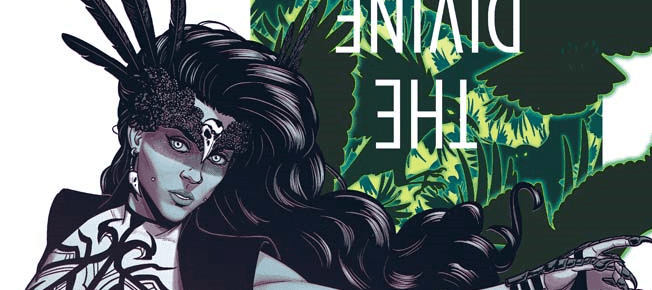
- The Wicked + the Divine #25-33, 455 AD, Christmas Special (Image)
In its fourth year (Or “Imperial Phase”) as a title, Kieron Gillen, Jamie McKelvie, and Matthew Wilson’s The Wicked + the Divine became both more self-indulgent and introspective before the ending the year with more emotional destruction and much needed side dish of pure fanservice. The main focus is on the relationships of the Pantheon from Dionysus’ truly soulful friendship with Baphomet (They spend most of an issue talking in the dark, and it’s lovely.) to the intense connection between Persephone and Sakhmet and the older brother/little sister Baal and Minerva that takes a big turn for the disquieting. Even though McKelvie’s figures and fashion decisions are still flawless as usual, WicDiv uncovers every metaphorical wrinkle or mole on the Pantheon members by the time “Imperial Phase” ends in a truly soul crushing manner like the slow build in “In the Air Tonight” before the epic drums. And after it’s over, Gillen and a host of talented guest artists deliver a comic that is sexy, thoughtful, and filled to the brim of feels showing what the Pantheon were like when they were young and less dead. The Kris Anka and Jen Bartel Baal/Inanna short is most definitely the hottest thing I read in 2017.
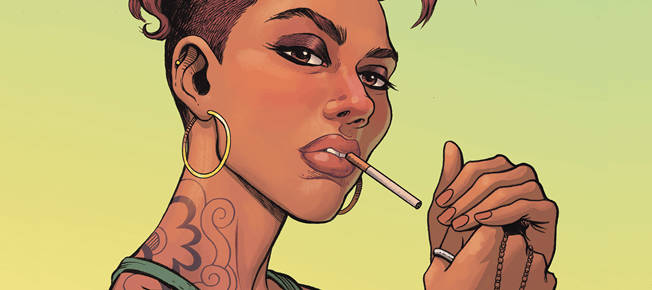
- Kim and Kim: Love is A Battlefield #1-4 (Black Mask)
Shifting the focus from Kim Q to Kim D in this fantastic sequel to the Eisner nominated miniseries Kim and Kim, Mags Visaggio, Eva Cabrera, and Claudia Aguirre confidently tell the story of a woman trying to get over an ex that she really cared for, but wasn’t good for her. There are also mech suits, space battles, basses being used as a blunt instrument, and all kinds of space bounty hunter shenanigans. The rift and reunion between the Fighting Kim’s is super relatable as who hasn’t been disappointed in a friend for returning to the same, not cool ex over and over again. However, Visaggio gives the Kim’s great growth as friends and in their chosen career as bounty hunters by the time the miniseries wraps. On the visual front, Eva Cabrera can choreograph the hell out of a fight scene, and there is still plenty of pink from Claudia Aguirre. Kim and Kim: Love is a Battlefield is a smorgasbord of quips, fun sci-fi worldbuilding, and real friend talk and improves on its already pretty awesome predecessor.
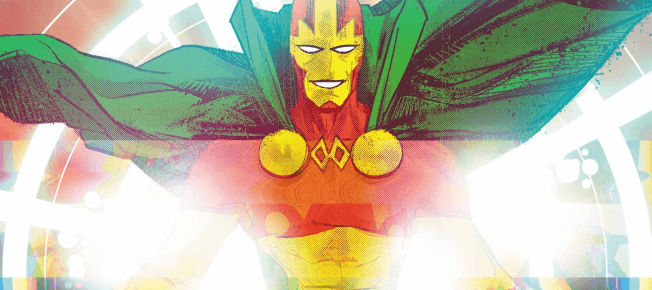
- Mister Miracle #1-5 (DC)
Jack Kirby would have turned 100 in 2017, and there was arguably no better tribute to his imaginative work as an artist and writer than Tom King and Mitch Gerads’ Mister Miracle comic. I know I’m double dipping with King comics on the list, but he’s just that good. In his art, Gerads teaches the old dog of the nine panel grid some new tricks and uses it for everything from a tender love scene between Mister Miracle and Big Barda to him getting repeatedly beaten by his older brother Orion, who plays an antagonistic role in the series. The bar-like grid of the comic book he stars in is the one prison Mister Miracle can’t escape from. (Wow, that got meta.) Gerads uses a trippy, almost television fuzz effect to show Scott’s tattered psyche as he faces death with his escape artistry, goes to war against Apokolips, and is sentenced to execution. King’s gift of writing both the mundane and utterly cosmic comes in handy in Mister Miracle whose most memorable scenes are Scott and Barda cuddling and joking around, not the big battle scenes. Again, he and Mitch Gerads find the human and the epic, which is definitely something the King would be proud of. (Big Barda was patterned off his beloved wife Roz.)

- Giant Days #22-33, 2017 Special (BOOM!)
Although the facial expressions that Max Sarin and Liz Fleming draw are truly outrageous at times, Giant Days is a fairly naturally plotted comic with the friendships, relationships, and life statuses of Esther, Susan, and Daisy ebbing and flowing like normal university students. They begin the year as BFFs for life, but start to drift apart towards the end of the year as Susan and Daisy’s relationships with McGraw and Ingrid move onto the next level. Esther is kind of stuck in the lurch as her penchant for drama bombs starts to backfire. Giant Days nails the constantly evolving fluid thingamajig that is relationships as a young adult. As an added bonus, we also get to see how the girls act and feel differently around their family versus friends as Susan’s way too big and complicated family makes quite the impression. And, of course, Giant Days is very funny, and John Allison, Max Sarin, and Liz Fleming mine the comedy out of everything from the deliciousness of home cooking, the grossness of nerd dorm food concoctions, and even a video game wedding. (Poor Dean.)
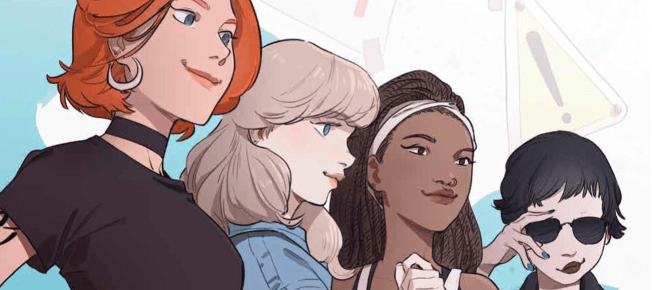
- Heavy Vinyl #1-4 (BOOM!)
Reading Carly Usdin, Nina Vakeuva, Irene Flores, and Rebecca Palty’s Heavy Vinyl is like the comic book equivalent of relaxing in a hot tub, but the hot tub is either cupcakes or adorable Corgi puppies. (Take your pick.) It’s about a teenage girl named Chris in 1998, who has just gotten her dream job at a record store and her first big crush on Maggie, her co-worker, who is drawn like a shoujo manga protagonist. But then she’s inducted into a top secret vigilante fight club and has to rescue the frontwoman of her favorite band. It’s high concept and slice of life just like Vakueva’s art is comedic, beautiful, and a little badass. Carly Usdin does a good job in just four issues of giving each member of the fight club their own distinct personalities and relationships while doubling down on the cuteness and awkwardness of Chris and Maggie’s budding romance. But what makes Heavy Vinyl the best comic of 2017 is its belief in the power of women and music to change the world…

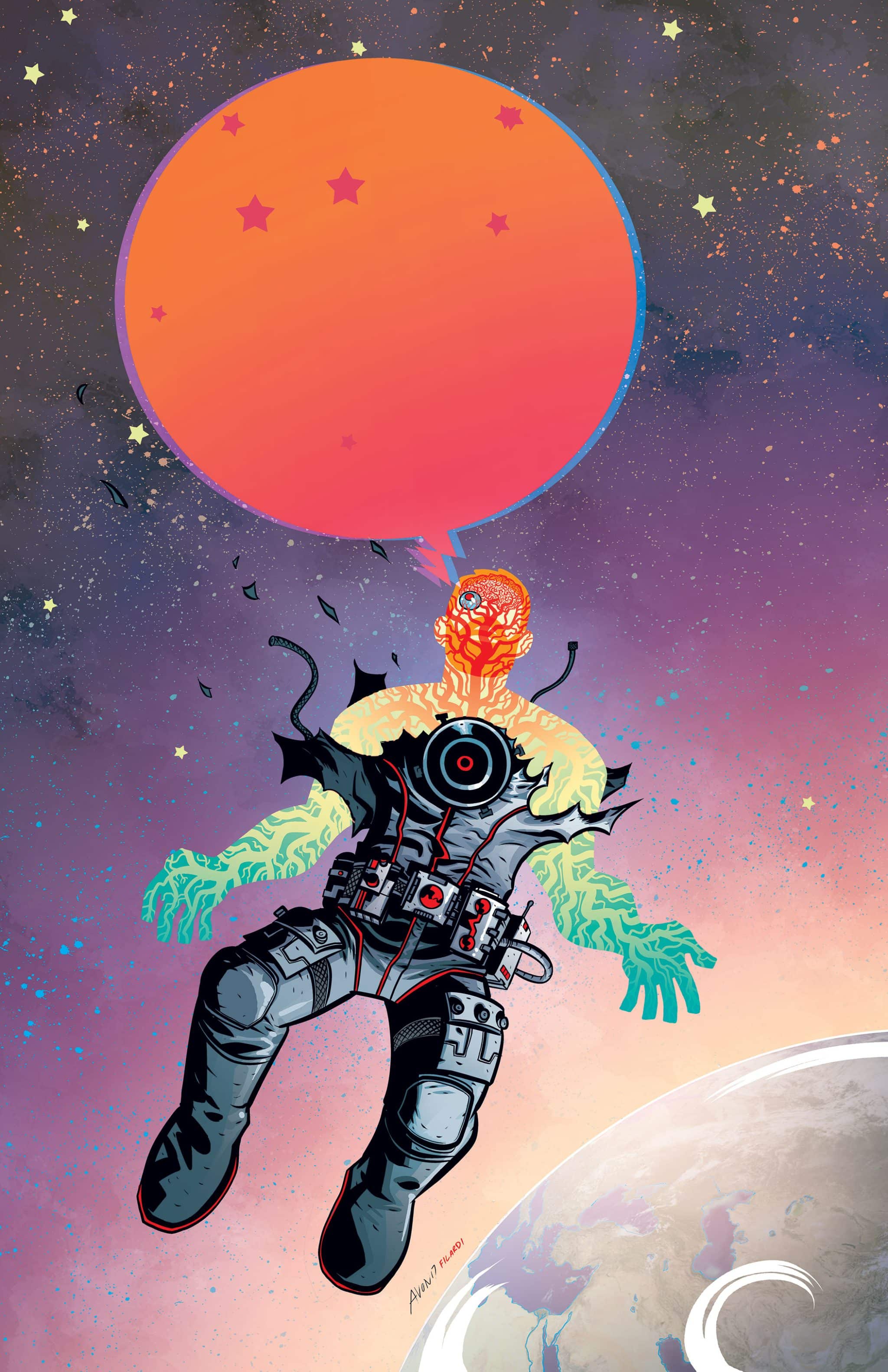
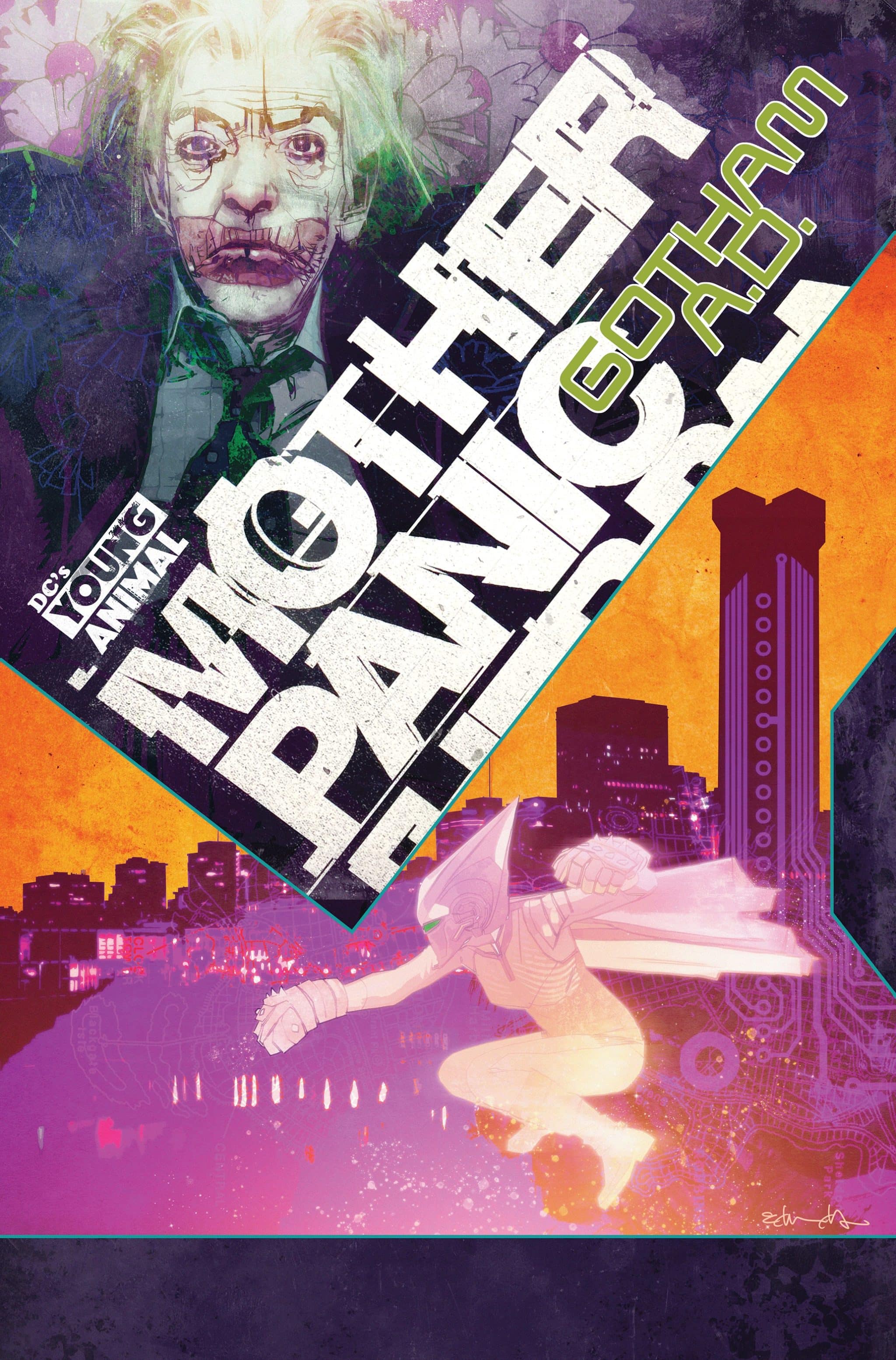

 Issue one variant cover by Marley Zarcone. The Ballad of Sang is slated for release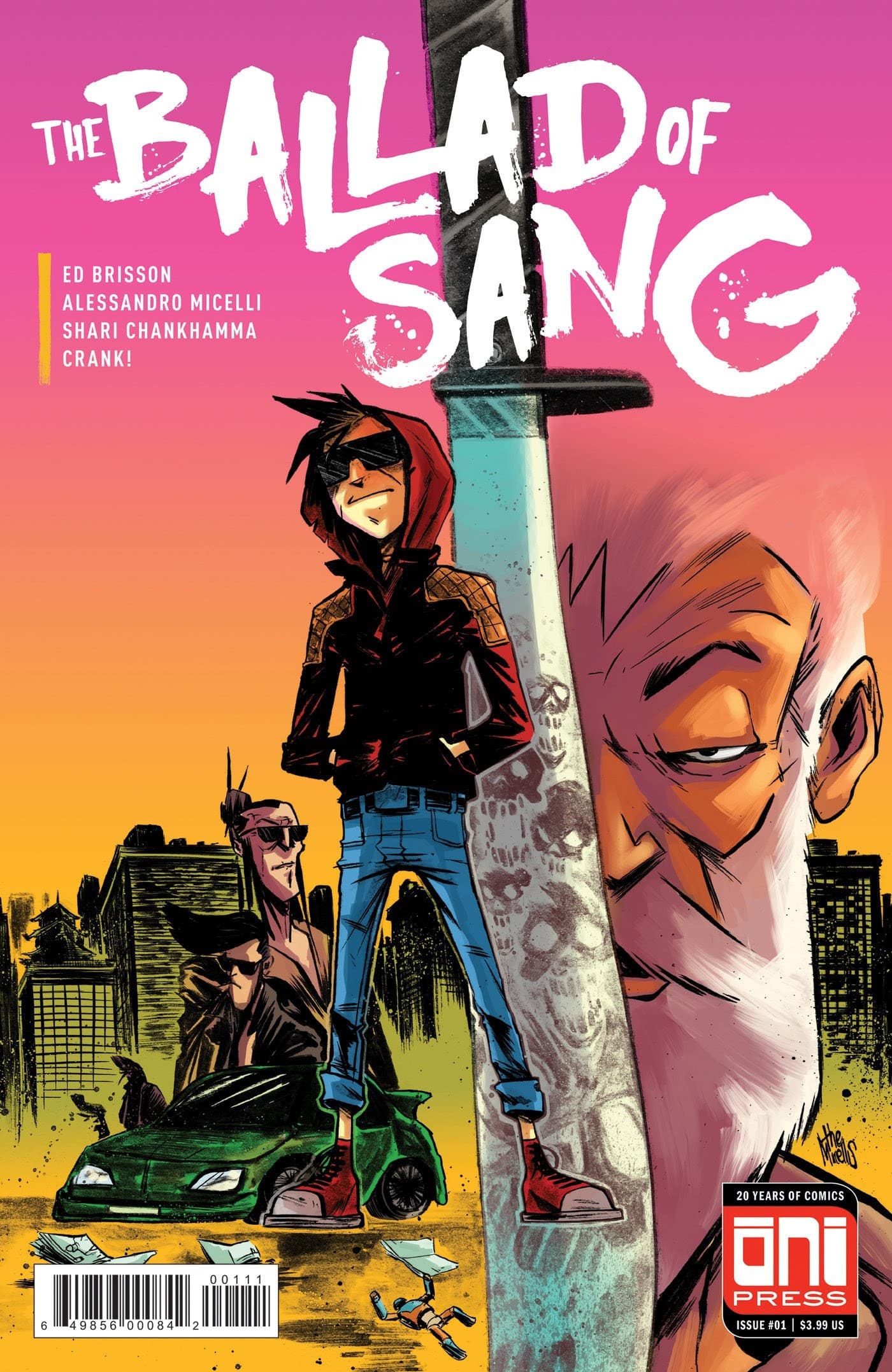

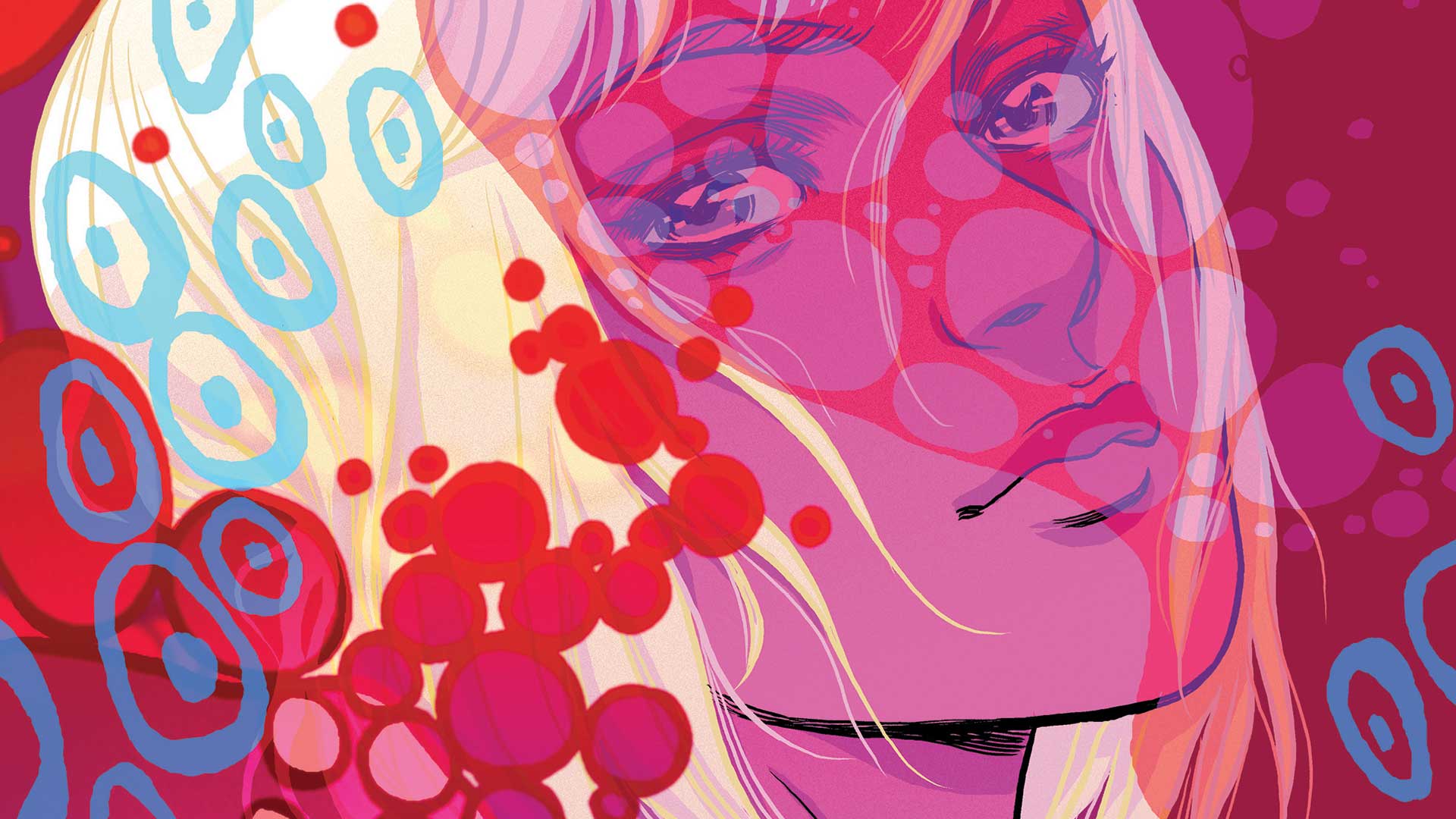
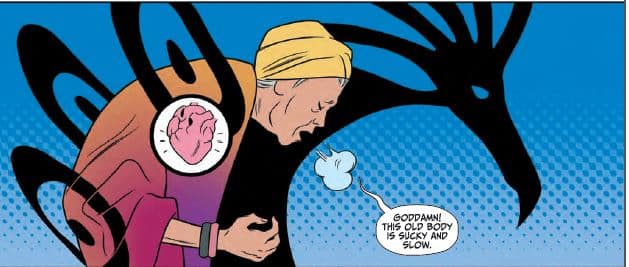
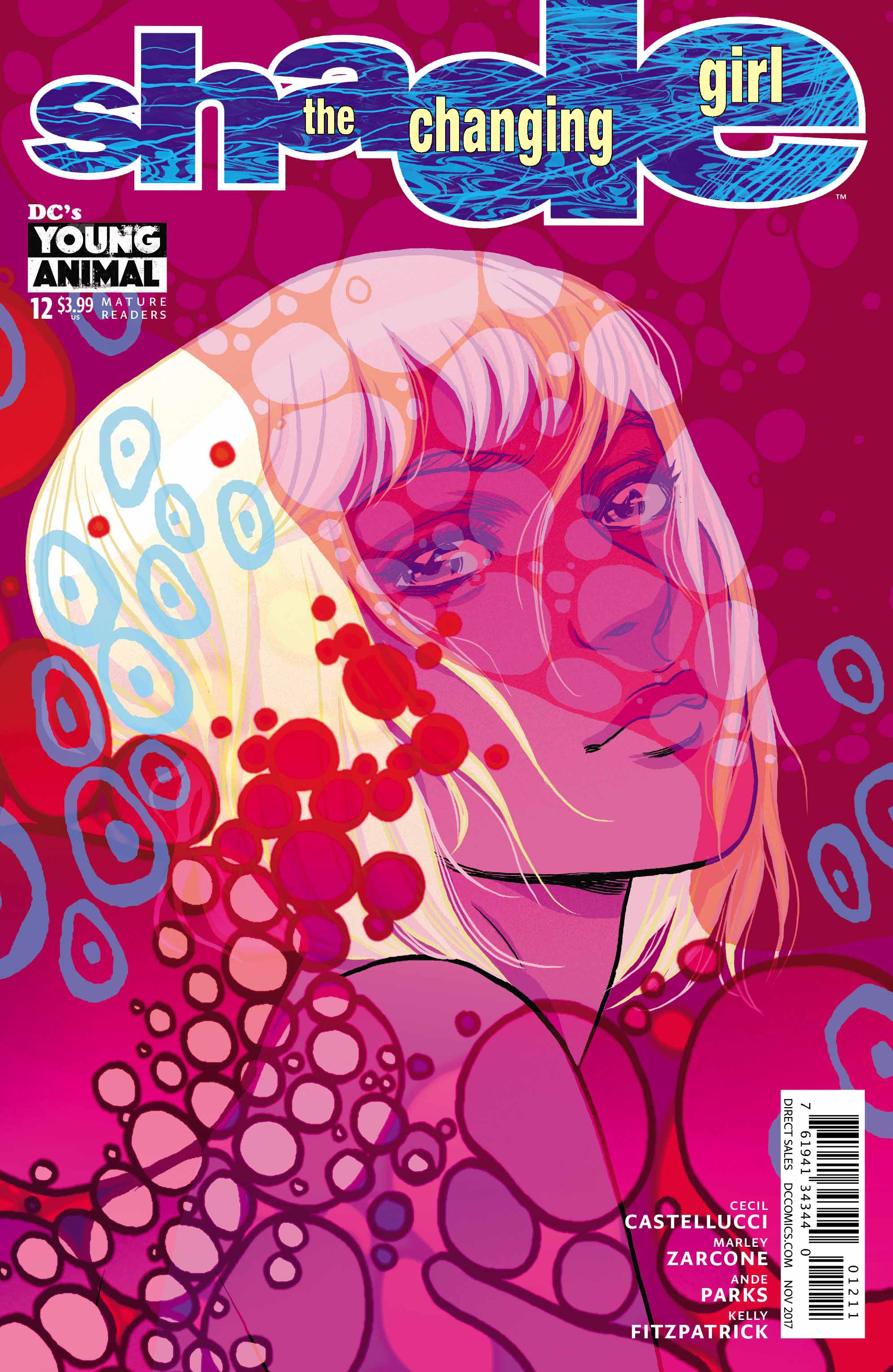

 Loma Shade hits Hollywood, or mostly a rest home for old actors and actresses in Shade the Changing Girl #11, and finally meets her idol, Honey Rich, who is ready to die. However, Shade grabs Honey just before she reaches the afterlife, and they switch bodies. For most of the issue, Shade is in Honey’s body, and Honey is in Shade’s body. It’s a little bit of a mind screw from writer Cecil Castellucci, artists Marley Zarcone and Ande Parks, and colorist Kelly Fitzpatrick. The plot veers from poetic meditations to soap opera, but Zarcone and Fitzpatrick’s visuals and the bits of Rac Shade poetry keeps the story beautiful. Who doesn’t love a comic book that has a cut out paper doll double page spread?
 The body swapping, location hopping story of Shade of the Changing Girl #11 is tied together in a sort of sunny way by Kelly Fitzpatrick’s use of yellows and golds from the stars above Hollywood on the first page to the life Shade. breathes into Honey. It kind of climaxes with the sixteen suns that shine about Honey’s rest home and alert River and the Metans to Shade’s location. Throughout the book, it reoccurs in the background when a life altering decision is about to happen like when River asks Teacup to go to L.A. with him to find Shade, or Mellu reveals his true motivation for wanting the M-Vest and becomes slightly sympathetic. The colors that Fitzpatrick chooses throughout Shade #11 are like notes on a keyboard with the rainbow, M-vest induced bursts acting like glorious chords during memorable parts of the story.
