 As the start of our Kickstarter coverage, I kicked off the year by interviewing Tyler James, who is a publisher at ComixTribe and host of the ComixLaunch podcast. As a successful project manager on Kickstarter, he graciously shared some of his knowledge on the makings of strong Kickstarter campaigns.
Graphic Policy: First, can you give us a little bit of background on how you first got involved in Kickstarter Projects? Were you skeptical at first or did you dive right in?
Tyler James: When I look back, I sat on the sidelines. I didn’t launch my first campaign until mid-2012 and it seems like it had already been here forever. But if you think about it, Kickstarter would only be in like, first grade if it was a human. It really was a game-changer in a lot of ways. I remember the first four projects I backed didn’t get funded, so it wasn’t until early 2012 that I started following projects that were doing really well.
I originally had a misconception or a mindset issue that really held me back with Kickstarter because I was looking at Kickstarter as a non-renewable resource. Like, you got your one Kickstarter card that you could play, and so I was like, “I’ve got to wait for the perfect project to launch Kickstarter” because I thought, “maybe you get one shot to go to the well on that.”
What I didn’t realize was that whether Kickstarter was a finite resource or a renewable resource depends on how well you run your campaign. If you run a kickass campaign, you’re going to excite the fans you already have, you’re going to draw new fans, and if you treat them well and treat your backers well, they’re going to be asking you when the next campaign is.
 I studied the platform for about a year, year and a half and sat on the sidelines for a while before actually pulling the trigger. When I launched, I launched with a pretty cool anthology project and it did great. It was our first hardcover project that we did, and we shot for an $8,500 goal and raised $26,000 which was, at the time more than I had made in the previous four years of making comics.
It really ignited the growth of ComixTribe from there. That first Kickstarter really did kickstart things not only on Kickstarter, but for ComixTribe. It helped us get off the ground and put us on the map. I look at the growth and the things we’ve been able to do since and a lot of that goes to the initial success we had on Kickstarter.
GP: So, how many projects have you had on Kickstarter so far?
TJ: I’ve managed nine projects between me and my collaborators, and that’s across a couple of different Kickstarter profiles. I’ve managed my projects, I’ve worked with Joe Mulvey, who is a ComixTribe creator for his Scam Ultimate Collection hardcover and John Lees on his Standard hardcover. That’s one of the things we at ComixTribe realized. We can put out hardcover collections that are as good or better than any publisher on the planet can do, but the only way we can do that is with the support on Kickstarter.
The Diamond model for those oversize hardcovers, for what get ordered in the shop, that would never happen. The awesome thing about a platform like Kickstarter is that we can actually compete with the support of our small but dedicated fanbase and then make really great books. Kickstarter has enabled us to make awesome products, which is cool.
I also, working with Jason Ciaramella and Greg Murphy, started a new brand for children’s books that adults actually want to read, and that became the C is for Cthulhu brand. That’s the first book we did, and so I’ve managed three projects with that and I think those have done over $100,000 in funding just for the Cthulhu stuff.
All in all, I’ve managed nine projects that have raised over $220,000 with the support of 5,000+ backers. It’s been a lot of experience.
GP: It sure sounds like it! And now you’re holding Kickstarter workshops and challenges. Since the most recent one just ended, can you talk a little bit about the 6 Day Kickstarter Challenge?
TJ: Certainly. So in the middle of 2015, I launched a podcast called ComixLaunch. With ComixTribe, since the very beginning, we’ve always been doing two things. Sort of putting out our own books, under the ComixTribe label, and sharing what we know and what we were learning in the process, from going to complete unknowns to building a small press from the ground up. We earned a lot of goodwill doing that and a lot of our articles have been shared across–we’ve gone back and forth with Graphic Policy several times and had good relations with the folks over there.
As I was sort of paying attention and as I was continuing with Kickstarter and looking at the ComixTribe stats, the questions that were coming up the most and the articles that were getting the most traffic and uptake, the things I was hearing most about and the questions I was getting most at conventions and in emails were all around Kickstarter. I’d found a couple of kickstarter podcasts that I really liked that I got a ton of value on and good ideas from and one of my favorites stopped putting out new podcast episodes.
I’d started getting the podcast bug myself and was listening to a bunch of podcasts and in early 2015 and I thought, “you know what, there’s a need for this, there’s a need for a show that will go really deep and focus on mindset strategies and tactics for crowdfunding,” specifically for comics and graphic novels, but so many of the principles can be applied to any genre.
The idea was that being that focused and niche, it’s not going to be a blockbuster podcast, but there will be some creators out there who absolutely need it. That was what I launched ComixLaunch with.
In mid 2015, a little less than half of all comics projects got funded on kickstarter when we launched the podcast. I know how much ink, sweat and tears goes into launching, and dreams, creative aspirations and emotions go into launching a Kickstarter. The fact that it’s such a coin flip for creators was gutting to me, and that’s why I launched the podcast initially.
The podcast has been running weekly since we launched, which has been really great and it’s been a tremendous experience for me. As we’ve continued, to see and say, alright, how can we continue to add value and give creators a nudge? One cool thing, statistically, since I know Graphic Policy loves statistics, when I started tracking the comics success rate on Kickstarter, it was 49.95 percent, and since comixlaunch launched,t he overall kickstarter success rate has gone down 2.5 percent and comics have gone up 2.2 percent, so comics are trending in the right direction.
Obviously, ComixLaunch can’t take all or most of the credit for that and the creators out there and the community are pretty special when it comes to Kickstarter, but I think we’re helping. Our reviews and the feedback we get from creators are making an impact, but I think we can continue to do better. One of the things I found, because I try to survey and talk to my audience all the time, one thing that’s a little disheartening or points to the challenges, 70 percent of my audience haven’t launched projects on Kickstarter. There are a lot of reasons for that–creative inertia is one of them, you’ve got to get moving to keep moving and once you’re stuck, it’s hard to get unstuck.
I think a lot of creators don’t know what they don’t know, and so the challenge is the idea of “let’s try to do it at the beginning of the year, let’s get creators moving and if they’re already planning their Kickstarter, let’s make them better, and if they’re just getting started, let’s get them started on a good footing.” That was the big idea behind the challenge. Let’s spend six days, and each day there will be a lesson and a challenge activity associated with it.
This is something I could have done myself and put together the challenge and the lessons, between ComixLaunch and last year, when I decided to put together a full course called the ComixLaunch Course, which is basically a step-by-step system. Now that i’ve done nine projects I don’t recreate the wheel every time, I actually have a set system that i put in place to plan and launch and execute and fulfill my Kickstarters. So in January of last year I did a pilot program and took eight creators under my wing and taught them the strategies and tactics and systems that I use, and had a lot of success.
That was the pilot version of the ComixLaunch course, so I could have taken some of those lessons and done the challenges myself, but I thought it would be more fun and more of an event to reach out to some of my past ComixLaunch guests and people that have had success on the Kickstarter platform and who have the heart of a teach and like sharing what they know with other creators. I reached out to five other creators and asked them if they want to participate in the challenge and everybody said yes, so I taught day one and then I had five other creators–Dirk Manning of Nightmare World, Ryan K. Lindsay, Russell Nohelty of Wannabe Press, the folks from KrakenPrint, and Madeleine Holly-Rosing who’s the author of Kickstarter for the Independent Creator.
A great collection of guest instructors, and I’d set an initial goal of getting about a hundred creators and a stretch goal of about 250, and last I checked we had about 270 that actually registered for the challenge. It was definitely a big success and something that went from idea to “hey, this is a real thing that’s happening” in about two and a half weeks.
GP: With that success, do you think you’ll be holding future Kickstarter challenges?
TJ: Yeah. Right now I’m still sort of in–this is a big experiment, right?–so I’m getting some lessons learned and feedback from creators. Over the next week, we’re going to leave the challenge open, all the activities and lessons and challenges and resources were housed within a private Facebook group so people could register and get in. We’re going to keep it open for a couple of weeks, so if somebody hears about it and wants to hop in, it’s still open and they can go to comixlaunch.com/challenge and they will get started on day one and can do it on their own time.
I’ll be getting feedback and seeing what people liked, what can be improved and doing some debriefs and we’ll likely run it again. By and large I think it was a big success–a lot of work, because it was the first time doing it, and it’s kind of par for the course–whatever you think something’s going to take to get done, plan on it taking ten times as much work to get done. That’s a lesson most Kickstarter creators will find out, so be careful of those great ideas. But it’s been a great experience.
It’s great because there’s a range of teaching styles and approaches from creators, and different creators resonated more, some less, but it was a good cross-section. I’ll probably survey the challenge group and get some feedback and suggestions going forward, but it’s something I plan on holding again.
Right now, for the next couple of days enrollment is open and will soon close for the next section of the ComixLaunch Course. I’ve got a new batch of creators I’ll be working with starting in the next couple of days and we’re going to be working together to plan and execute and launch their Kickstarter projects using my system. A bunch of the creators in the challenge will be upgrading to the ComixLaunch Course and working with me.
I think the great thing is that everyone who participated in the challenge got something out of it and I know I did, as well. One of the things I think is very important, especially in the winter when conventions are fewer and farther between, is keeping that community going. Within the challenge group, people were signing up for each other’s emails, sharing their Facebook pages and backing each other’s Kickstarters for the folks who have Kickstarters going right now. So much of a successful career is having a network, and anytime i can help facilitate connecting creators with other creators doing cool stuff is definitely a valid and worthwhile use of my time.
GP: Why do you think–I’m sure part of it is because ComixLaunch has given creators a resource on how to build up their Kickstarter skills and whatnot–but what else do you think has been a factor in the growth of comics project success rates on Kickstarter?
TJ: I think there’s a few things going on. I think comics creators, probably more than a lot of categories, set more attainable goals. You look at the success rate for tech projects and it’s something like, sub-20 percent. I think it’s like 18 percent, and a lot of that is because just to get those things off the ground, they need forty thousand, eighty thousand dollars, just to make a prototype.
With comics, most of us are used to putting some skin in the game, rolling up our sleeves, doing it for the love and really, a lot of the time, comics creators are just going to Kickstarter with help printing and maybe some colors, or to recoup some of that stuff. We’re not always going to Kickstarter and saying, “We need to raise ten, twenty, fifty thousand dollars,” especially if we don’t have a big audience. I also think, more so than most industries, there’s a lot of mutual support–creators supporting other creators. I feel like we do have a good community where people are more likely to share what other people are doing, and I think that’s a good thing.
There’s a lot of negativity that you’ll see if you’re on quote-unquote Comics Twitter, but I feel like you get so much of what you focus on.
Every year, if you look at any year-end recap, “what do you want to see in comics?” article, diversity in comics is a thing. If you look at Kickstarter right now, you’ll get all the diversity in comics you could ever want. And you’ll also see a lot of creators sharing each other’s stuff.
I think we have a community that, by and large, a lot of good information gets shared. I don’t know that it’s all that cutthroat. I hope that over time, the message of ComixLaunch is that Kickstarter is not a zero-sum game, and that my success on the platform does not mean your success is less likely. That was a big thing behind the Six Day Challenge. One of my most recent podcasts was about your mission, your impact, and your legacy.
I sort of threw down the gauntlet and said, “The goal for ComixLaunch and everything we do going forward is to make comics the category that has the highest success rate on Kickstarter.” To do that, that means better projects and better prepared creators. I don’t think every project deserves to fund on the Kickstarter platform if the project is not well thought out–Kickstarter should never be looked at as an ATM or a given, but there’s no reason that only 5 out of 10 need to fund. Why not 6 out of 10? 7 out of 10? So a big part of the ComixLaunch challenge was how can we best impact that? Right now comics is the third highest category on Kickstarter, but we can do better.
I have some other things I’ll be putting out over the next year. I have a book on Kickstarter page design that will be coming out later next year, which is another thing I can add to the mix and help make better projects and get more funded and help make an impact.
GP: You kind of touched on something I was going to ask you about as well, which was are there things that crowdfunding allows authors and artists to do that they wouldn’t get to do otherwise?
TJ: Oh yeah, definitely. There are so many creators out there on Kickstarter that have been able to have tremendous impact. You look at some of the stuff that Spike Trotman does; I don’t know that there’s many quote-unquote big or standard publishers that would jump at what she puts out, but there’s definitely a big audience that she has built for herself, and Kickstarter allows her to go directly to that audience and do it in a way that really magnifies the audience she does have and allows her to put out great books and great projects. There’s so many examples of that–just about everybody is an example of that.
A creator that I work with that was a creator in the pilot version of the ComixLaunch course is a guy named Joshua James, and he’s a very talented artist who has been working for other people’s projects forever but has always been pushing his own creator-owned stuff to the side. What Kickstarter allows him to do is not just get his book out there, but he was able to get it funded, his first project, and carve out a little bit of time for himself to do his own project. That’s exciting, too.
It’s been talked about, but Kickstarter does invert the funnel where it puts funds directly into the creators’ control first, where in the publishing model creators are often the last to get funds. It always seems a little bit backwards, though having done the publisher side as well, I know why that is, especially when you’re talking smaller books, smaller projects, and smaller print runs.
GP: And I would think it allows each member of the audience to ensure they get something out of the Kickstarter as well, instead of going to a store and finding that the first, second, and third printing of something is sold out.
TJ: The ability to have your favorite author know that you backed him or that you bought his book, that wasn’t possible really prior to Kickstarter in a lot of cases, right? You buy a book off a shelf and no one knows that, but here you have a direct connection to some of your favorite creators and support them directly. A lot of creators get super creative with rewards–from original art, to original stories, to getting your name or message in a book. There’s so much cool stuff you can do with Kickstarter.
There’s a quote by a guy named Jeff Walker, who’s a master of launches and has been doing it for years that’s like, “If you can turn your marketing into an event, you’re going to transform your results” and that’s really what Kickstarter does. Kickstarter campaigns, when done well, they’re events, and events get people fired up, and when people are fired up, good things happen.
GP: It’s nice that it also gives people a way to directly support creators instead of other publishing models, which don’t necessarily do that.
TJ: And you get that direct, instant feedback, too. I go in and back a book for ten dollars and immediately see that I just made him ten dollars closer to his goal. And even those little psychological triggers all contribute to the special sauce that is Kickstarter. It’s pretty amazing.
GP: What would you say is your best single piece of advice for someone looking to launch a Kickstarter?
TJ: Well, besides listening to ComixLaunch, my best piece of advice would be to go to comixlaunch.com/session050 and listen to ComixLaunch Episode 50, because I asked that same question to fifty creators, and so fifty successful Kickstarter creators shared their number one tip.
My Number One Tip A would be to do that and my Number One Tip B would be that you don’t have to launch alone. You should be rallying a support team, because one of the things in surveying and talking to so many creators about their kickstarter process was that for veteran Kickstarters, one of the things that just kept coming up and coming up was the emotional rollercoaster that is running a Kickstarter campaign and the loneliness of running a Kickstarter campaign.
It might sound a little weird but in every Kickstarter campaign there’s the high of launching and the high of finishing, if you’re successful. But in every campaign, and it’s happened to me for every single campaign, there’s a low in the middle. I call it the “dead zone” where you’re not sure if you’re ever going to get another backer or you might, in some cases, backers drop off and your totals go down, and it’s an emotional thing to go through as a creator. You really do feel like your work is out on display and there’s a judgment thing.
That’s why so much of what I try to do with ComixLaunch is try to make it feel like there’s such a community, to make it feel like when somebody who’s a ComixLaunch listener is launching, they’re not launching alone and they’ve got people rooting for them. That’s really where the value came in with the ComixLaunch course. In the first version we had eight creators, and we’ll probably have a lot more in the next one we’ve got going on in this next January version, but those are all creators who are rooting for this person. They’ve watched this person build their campaign alongside your campaign and it’s impossible not to root for them and share strategies and provide real-time feedback.
People that want to work with me in the course, that’s great, but if not, find somebody else that’s launching or working on a Kickstarter and buddy up, be an accountability partner. I tell most people, if you can think of the time in your life when you were in the best shape, you probably had a coach or a workout partner or a team that you were working out with. Same goes for doing something that’s a big event like a Kickstarter. You want to team up, put together your Justice League, and don’t launch alone if you don’t have to.
GP: And on the flip side of that, what do you think is the biggest mistake you see people make when they launch a campaign?
TJ: There’s a reason it’s called “crowdfunding” and that’s because the crowd is always going to come before the funding. Seth Godin, who is one of my favorite authors, says that Kickstarter looks like a shortcut, but it’s not, it’s simply a profit maximizer. It’s a maximizer of the audience you already have, and so if you don’t have an audience, your first job, before you start trying to film a video, or craft a great Kickstarter page or dream up rewards, is you have to build that audience.
I have a workshop I do–a free workshop–called Ready for Launch, which is basically how to get a Kickstarter funded even if you don’t have a big social media following. I’ll be doing a few more of those this year–comixlaunch.com/ready is where people can sign up for that. Basically, your job number one is to energize and excite a crowd before your project. Too many creators make the mistake of going away and working in their basement in solitude for weeks, months, years, and then they launch to crickets. That can be completely avoidable but you can’t work in the dark and you need to build and audience. The good news is, there are strategies that we talk about that help you do that.
GP: Yeah. Like, Beyonce can just drop an album because she’s Beyonce, but that doesn’t just work for everybody…
TJ: Yeah. Everybody’s going to talk about that. So many creators, I think, don’t want to market themselves and they don’t want to market their work and they want their work to speak for itself but the problem is, your work will never speak for itself if nobody’s reading it. More often than not, people aren’t going to read your work until they know, trust, respect you.
That’s one of the challenges inside the challenge by Dirk Manning that was very well received, and it was all about building a more professional brand for you as a creator and one that’s going to help sustain you and support you. Dirk has had more than $100,000 worth of projects on Kickstarter over the past few years, and it’s a testament to the personal brand that he’s built. Somebody that built most of that without the support of giant publishers and it’s great to see.
GP: Last question for you: Do you think there are any downsides to Kickstarter?
TJ: Here’s the downside of Kickstarter: Creators don’t have a beyond Kickstarter strategy. Kickstarter works so darn well, but the reality is, you can only run so many Kickstarters, and if Kickstarter becomes your sole channel and you only run one or maybe two Kickstarters a year, what are you doing the other ten months to build a brand, to make sales, to grow an audience, to energize your audience? That’s definitely something a lot of creators struggle with. Kickstarter does work so awesomely but you need to have a beyond Kickstarter strategy as well. Because Kickstarter can work so well, I think it can make creators a little bit lazy about some of the other stuff like building an audience year round and finding ways to sell products and books.
That’s one downside. There’s lots of little nits I have about the Kickstarter platform, but one of the questions I ask all of my guests on the podcast is, if the powers that be at Kickstarter were listening, what’s one thing you would improve about the platform? So we’ve got a whole laundry list of things–better management for add-ons, better ability to see in real time what the actual profitability is of your campaign outside of the gaudy funding number because that funding number looks great, but 20-30 percent is already allocated toward shipping and isn’t available to spend. There are little things here and there, but by and large I think that Kickstarter keeps getting better and better. I think Kickstarter Live will really get going in 2017, it’ll basically let anyone turn their own Kickstarter page into a live telethon, which I think some savvy creators are really going to run with, and I’m excited to get my hooks on it.
Another thing I think Kickstarter is doing–and my most recent podcast was on this–I think Kickstarter sort of realized one of the problems they are having is the perception of a Kickstarter project is this huge, gigantic undertaking, and for some creators, they’re ready for that, but a lot of creators aren’t.
I think Kickstarter is realizing, oh crap, we’ve got a lot of creators who have logged on, hit “Start Project” and then never started it. I’m willing to bet that for every project that’s launched, there are four or five projects sitting not launched, and many of those–most of those–never get launched. I think Kickstarter has noticed those, because this month they’ve started a Make 100 initiative, where they’re basically encouraging creators to launch a project where they’re going to make a hundred of something.
A hundred isn’t a huge number, most people can do a hundred of something and everybody knows a hundred people, but it’s not a small number either. If you sell a hundred books at a convention, you had a great convention. What that tells me is that Kickstarter is trying to make it so that people understand that hey, you don’t have to make $50,000 or $100,000 to make it worth your time.
That’s a trend I think we might see a little bit more, with Kickstarter encouraging people to get off the fence and maybe not go for a huge project, just tone them down a little bit.
GP: That’s a good way to get your feet without having to go all in on something, because it is daunting. I took a class where we had to make a fake Kickstarter and it was so much work! I don’t know if people realize how much goes into it.
TJ: One of the things I concluded the challenge with was I put together a Kickstarter self-assessment. You can go to comixlaunch.com/assessment and take this, but basically what the assessment is, is it asks you 16 questions and asks you to rate yourself on 16 different elements of running a Kickstarter. I was just crunching some numbers–we’ve had over 100 people take the assessment now–and I asked people to identify themselves as “never launched a Kickstarter” and “have launched a Kickstarter.”
What’s kind of interesting is when you average out everybody’s overall Kickstarter self-assessment score, the people who have launched a Kickstarter and the people who haven’t, I don’t know what you would think, but I would think that the people who’ve launched, their scores on things like “how prepared are you to make a Kickstarter video?” and “do you think you’d survive the Kickstarter dead zone?” or “how confident are you that you could make a page that would be compelling?”–I would think the scores for people who have launched would be higher than people who have never launched. But actually, they were within .1 percent of each other, with creators who have never launched a Kickstarter rating themselves higher in confidence than people who have.
That actually doesn’t surprise me too much, once I think about it, because you don’t know what you don’t’ know. Something similar like that happened–I asked the same question to people that I’ve worked with and asked them to rate themselves on skill. And people with no comic book credits to their names tend to rate themselves 3-4 points higher in skill than people with actual books with big name publishers. You don’t know what you don’t know. I just thought that stat was a little interesting.
GP: Thank you so much for taking the time to speak to us!

 Wednesdays are new comic book day! Each week hundreds of comics are released, and that can be pretty daunting to go over and choose what to buy. That’s where we come in!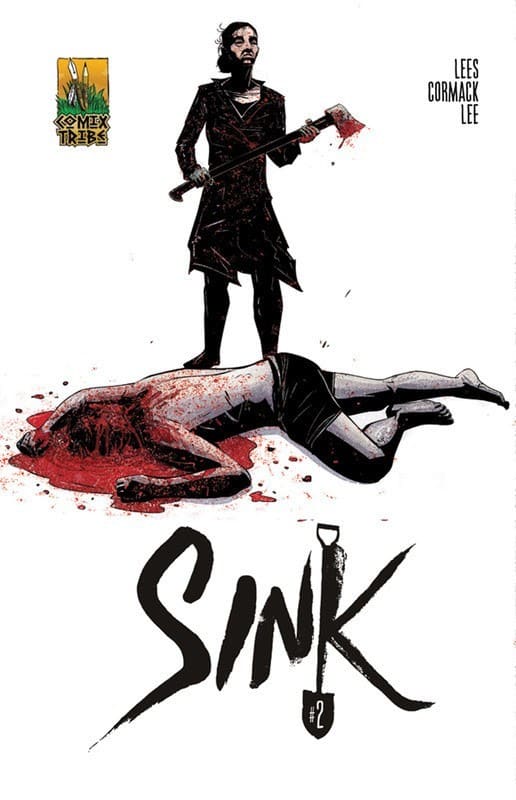
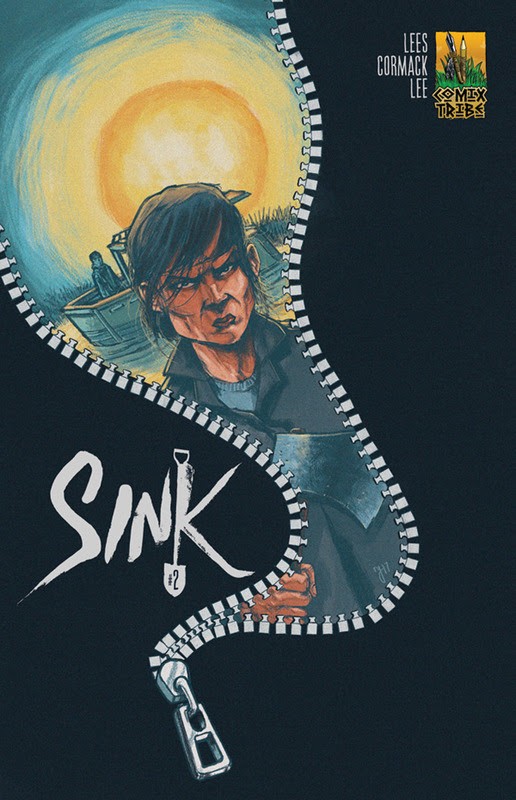
 According to the press release, Sink will be a series of standalone offbeat crime stories all linked by the location; that of Sinkhill, a forgotten East End district of a warped funhouse mirror vision of Glasgow, Scotland. Sinkhill is a hive of crooks, deviants and killers, and ordinary folk unfortunate enough to live among them.


 While many are discussing the spiral death of the comic industry excuses as to the cause seem to vary depending on the position the person is in. Store owners often blame publishers for putting out too much, not marketing enough, incorrect pricing, lackluster product, a broken preordering system, and more. Indie creators focus on an antiquated distribution system, a market too focused on a few publishers, fans unwilling to take a chance. Fans blame stores for not reading their minds and ordering what they want, publishers for the product, creators who fight with fans.


 Batman Rebirth #1 (DC) I wasn’t expecting this. I honestly figured that this would be a cheap cash-in at best, but there was a pretty cool story here that I genuinely enjoyed. I’ve been moving away from DC for the past few years (Snyder’s Batman aside) because of the overly grim, complex and interwoven stories. This gives me hope for King’s run on Batman going forward. Which I suppose is the point, eh? Overall: 8.5 Recommendation: Read.
 Red Virgin & the Vision of Utopia (Dark Horse) – A graphic novel about the revolutionary feminist Louise Michel. This isn’t someone I know, and clearly should. So, to be able to learn more about her and her fight against oppression is very timely and entertaining. This is a great start to learn about Michel, and when you’re done, you’ll want to go out and find out more about this interesting bit of history. The narrative flows smoothly and is never boring and the art is solid throughout, fitting the setting quite well. Overall Rating: 8.3 Recommendation: Read
 Recommendation: Buy
 Casanova: Acedia #5 (Image)** I have to admit it, after last issue’s spotlight on the man who would be Emil Boutique, I was ready for much, much more of him and much less of Casanova Quinn and company. As a writer myself, I recognize that special moment when a character sneaks up out of the cracks and takes over, and I also recognize the moment when you try to deny it and use what you know in your heart is now your former protagonist to try to beat him back down. Sometimes, as in this issue, you try to do it with – literally – the weight of all the writing that has come before. This is ultimately futile. I do look forward to the confrontation, though. Overall: 7. Recommend: Buy
 Deadly Class #21 (Image)**: Rick Remender and Wes Craig’s gonzo “Die For Me” story arc reaches its epic conclusion, and while it’s cliched as all get-go to say “nothing’s gonna be the same after this,” it’s absolutely true as one “Holy Shit!” moment follows another, eventually culminating in the biggest “Holy Shit!” moment of all. An expanded color palette makes the artwork “pop” even more than usual, and the only knock this book has against it is its continued reliance on one-note cipher female characters (the “good-hearted girl,” the “cold-hearted bitch,” etc.) That’s becoming a larger and larger concern as time goes by, but the pacing is so breakneck that you don’t have much time to stop and think about it until the issue is over, to be honest. Overall: 8 Recommendation: Buy