Review: Batman: One Bad Day – Catwoman #1
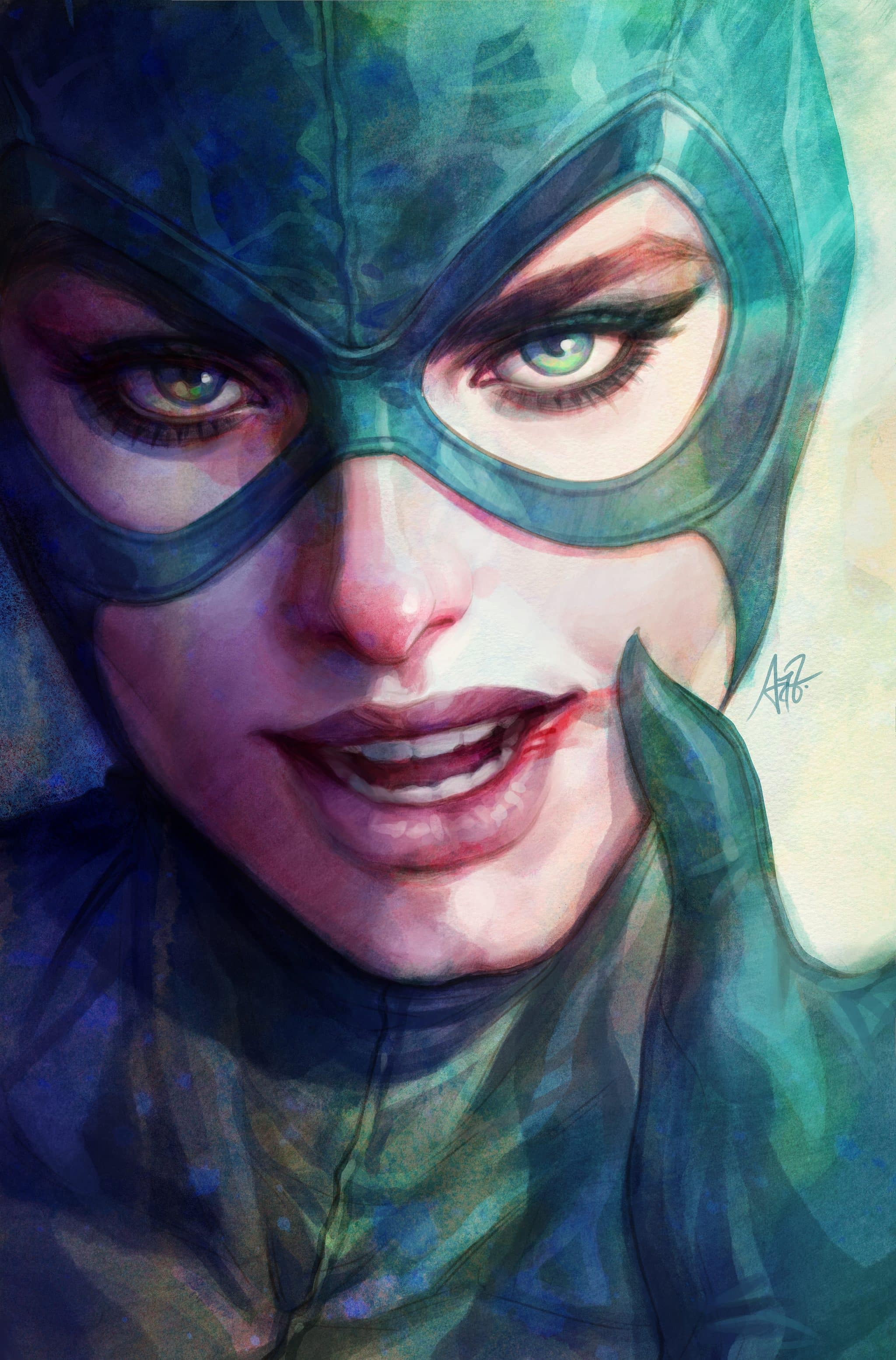
Writer G. Willow Wilson and artist Jamie McKelvie turn in a socially conscious and emotionally compelling Selina Kyle tale in Batman: One Bad Day – Catwoman. Instead of making the plot about a diamond heist gone wrong, Wilson and McKelvie dig into a day when Selina’s sense of justice wasn’t vindicated and an impactful moment in her life ended up being a lie. Plus she just ended up getting her ass kicked. However, before that, there’s a thrilling theft and plenty of beautifully choreographed action as Catwoman tries to steal back her mother’s brooch that a pawn broker said was a forgery, but it actually isn’t and is up for auction to Gotham’s wealthiest, including Bruce Wayne.
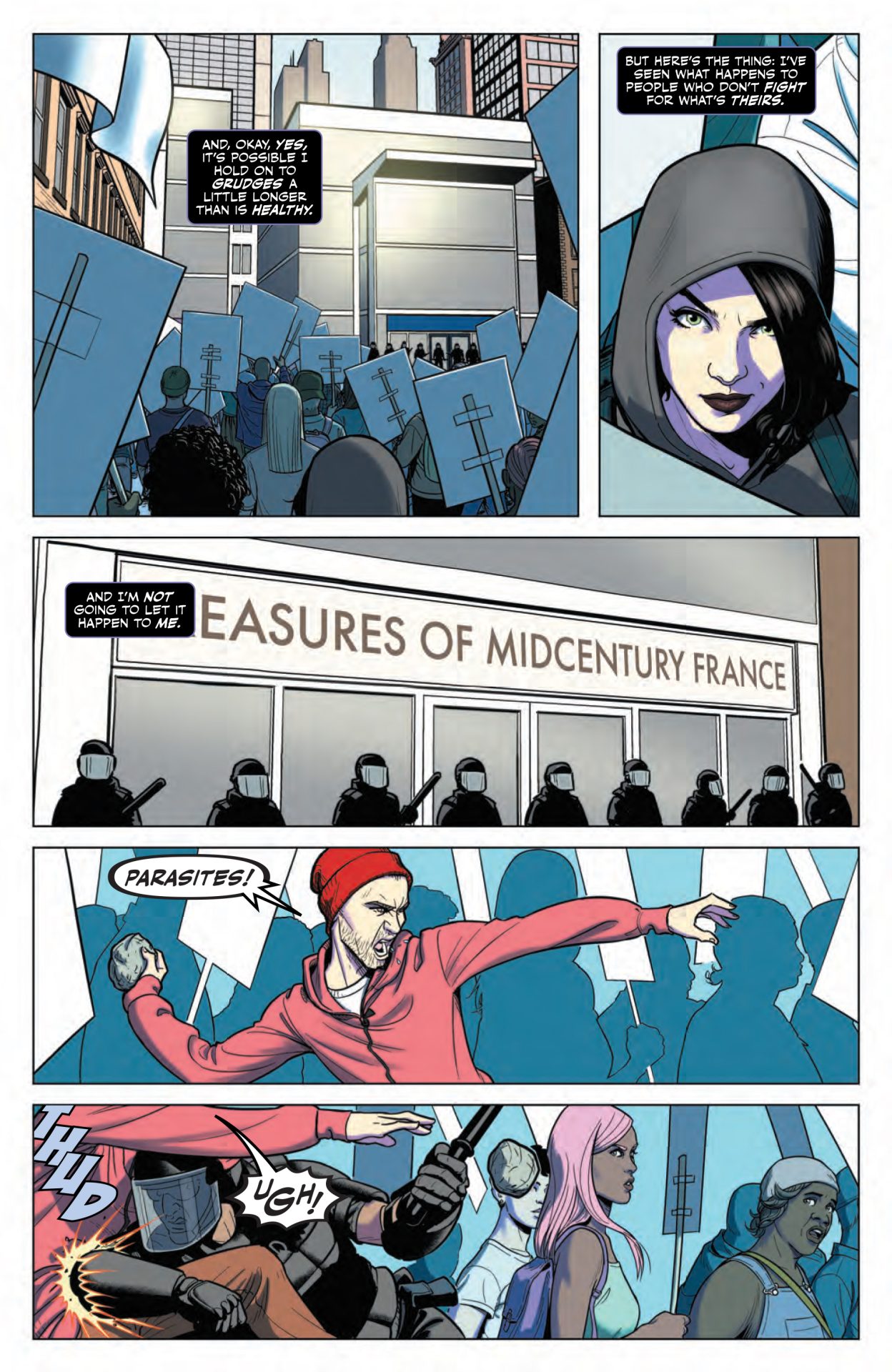
Even though One Bad Day – Catwoman is a quite personal story with a flashback to Selina’s childhood immediately kickstarting the emotional engine of the whole affair, G. Willow Wilson’s script connects the story to the always relevant themes of income inequality and resisting fascism. The initial caper starts in the middle of a protest, and although she’s on the clock, Selina gets into it with a cop for a couple panels. McKelvie’s art shows the disgust on her face for how people in power act, both inside and outside the auction house, but instead of standing out waving a sign, she takes direct action to get her life and possessions back by stealing the brooch before it can be sold for big money to some rich folks who recently read a news article about it symbolizing the liberation of France from the Nazis. Inequality between the have’s and have not’s also comes up in a conversation between Catwoman and Batman where she gently teases the Dark Knight for still believing in the justice system although working class people continue to get screwed over. It’s leftism versus liberalism, but with animal-themed fetish wear.
The whole narrative of One Bad Day – Catwoman explores agency and powerlessness in various ways beginning with the aforementioned tear-filled flashback of young Selina watching her mom get ripped off by the pawn shop owner. In the heist sequence, Selina acts out whatever role is needed to get the brooch from badass antihero and stealthy cat burglar to well-dressed socialite and clumsy caterer. These different personas give Jamie McKelvie an opportunity to play with body language and costuming. He and Wilson also show Selina at her most vulnerable when curator Vivian Page tells the story of her mother’s brooch back to her, and the intensity of the facial expressions matched with the matter of fact tone of Page’s dialogue creates a real emotional reaction and a chink in Catwoman’s armor that might come back to bite her. McKelvie is just damn good at drawing heart-rending faces.
And these emotions come from her sister Maggie, who makes only a brief on-panel appearance in the present day, but acts as a kind of everywoman figure and a contrast to Selina. Instead of stealing jewels, beating up security guards, and flirting with billionaires, Maggie works at a supermarket and is honestly unimpressed with Selina calling out of the blue about getting their mother’s brooch back because it didn’t help them as kids. Jamie McKelvie uses bigger panels for Selina and smaller for Maggie to show Selina basically barging into Maggie’s life instead of being respectful of her schedule and the path she’s chosen. The varying panel sizes also show the distance that’s grown between them, and this is enhanced by G. Willow Wilson’s deadpan, sarcastic dialogue for Maggie that is relatable to anyone who’s worked grocery or retail. Like many of us today, Maggie is wary about any kind of quick money or big gestures, and with what ends up happening in the story, Selina could have used some of that skepticism. All in all, Maggie’s presence ends up being the heart of One Bad Day: Catwoman driving Selina’s actions throughout the one-shot.
In Batman: One Bad Day – Catwoman, G. Willow Wilson and Jamie McKelvie debut an immovable object to Selina’s unstoppable force and provides a soul-searing character study of everyone’s favorite feline-themed, leftist superhero. Wilson’s captions get into her worldview while McKelvie’s visuals show off her swagger, heart for justice, and even weaknesses with a nice blend of grid and spread layouts. The book is a nice entry point for fans of Catwoman in other media (Especially Zoe Kravitz’s performance in The Batman) or for seasoned comics readers who want a little characterization to go with the leather outfits, acrobatic fight scenes, and jewel nabbing shenanigans.
Story: G. Willow Wilson Art: Jamie McKelvie Letters: Clayton Cowles
Story: 8.8 Art: 9.4 Overall: 9.1 Recommendation: Buy
Purchase: TFAW – Zeus Comics – Amazon
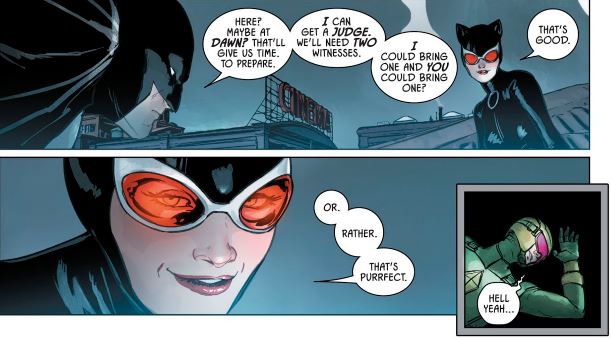
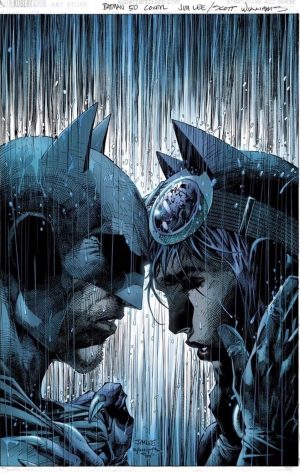 If you thought that Batman and Catwoman were going to have a happy wedding with the usual supervillain attack to keep things interesting, then you’re pretty naive. On that confrontational, Batman #50 is a climactic moment in Tom King’s run on Batman, and Mikel Janin and June Chung are onboard as well to show all the romance, heartbreak, and kicking Kite-Man on the face. But the real highlight of this issue is the unleashing of some of the best living Batman and Catwoman artists to tell the love story of Bat and Cat all framed in love letters to each other. Beginning with the great Jose Luis Garcia-Lopez showing them swaddled together in a loving embrace and concluding in a pure negative space, movie poster style page from upcoming Batman artist Lee weeks, this is a wonderful encapsulation of Batman and Catwoman’s relationship done in Tom King’s signature tone poem way.
 It feels like Joëlle Jones has taken on a lot to make issue #1 of the “Catwoman Copycats” arc happen and all of her work pays off. Jones manages to cram a lot of information into the 24 page inaugural issue and I can’t wait to see where the story goes. There’s not a wasted word or panel and every element Jones uses propells the story forward and made me want to know more.


