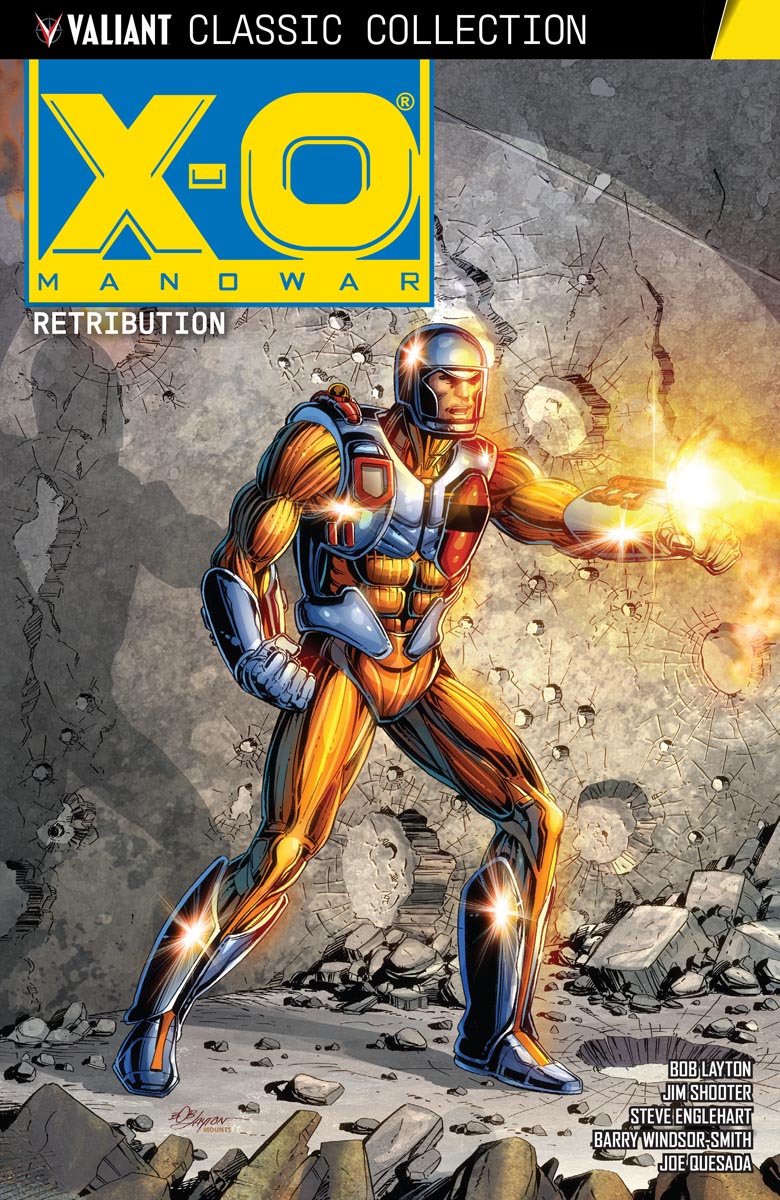
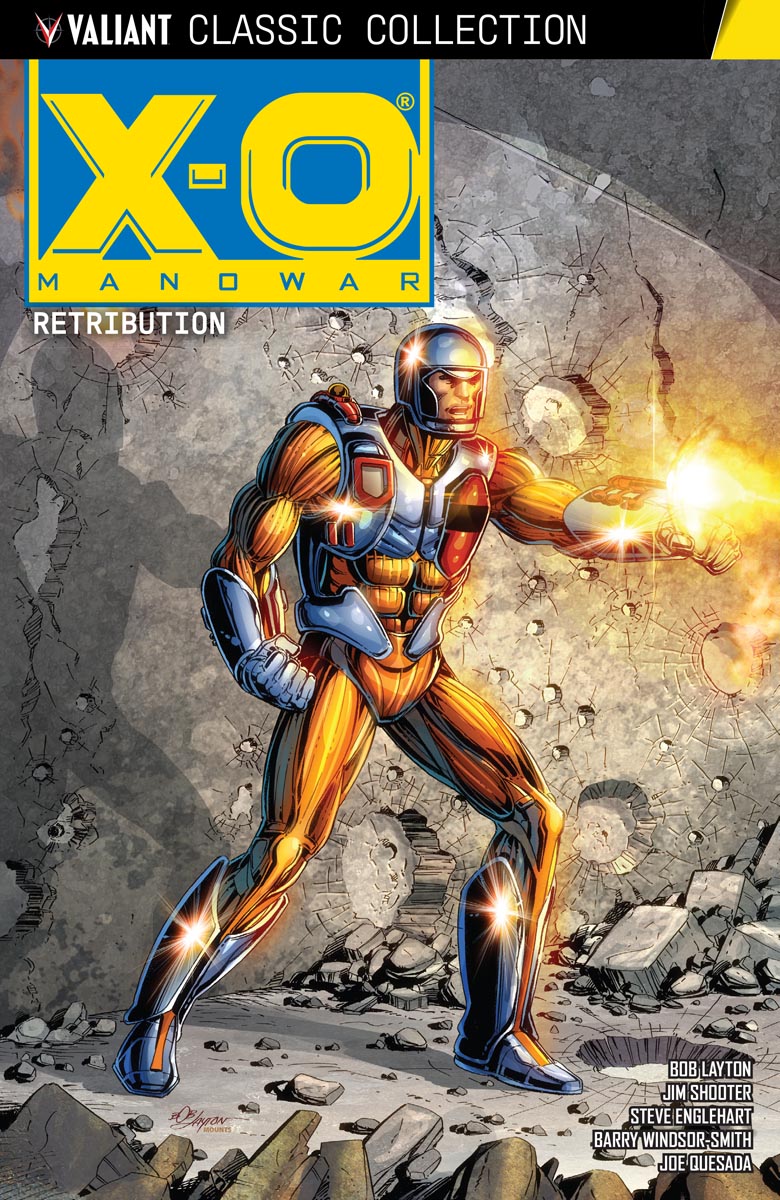
Experience the epic adventure that started it all for Valiant Entertainment’s flagship character in Valiant Classic Collections X-O Manowar: Retribution.
Witness the epic origin story of Aric of Dacia, aka X-O Manowar, originally published back in the ’90s in this digital mega-sized collection featuring 284 action-packed pages from the earliest days of the Valiant Universe. X-O Manowar: Retribution is out now and available to purchase on ComiXology, Amazon Kindle, and Google Play.
THE MOST PRIMITIVE MAN, THE MOST POWERFUL WEAPON
Abducted from his own time by the predatory Spider Aliens and displaced to the present day, Aric of Dacia will make war on his one-time captors and any who stand with them. Armed with a sentient suit of battle armor and savagery born in an age of war, he will become the hero this new age demands. Tyrants from beyond time and space, superpowered corporate raiders, and corrupt government power brokers… all will quake in fear where X-O Manowar dares to tread.
Featuring groundbreaking work from comic-book legends Jim Shooter (Secret Wars), Bob Layton (Iron Man), Barry Windsor-Smith (Weapon X), Joe Quesada (Daredevil), Steve Englehart (Detective Comics) and many more, the complete adventures of Valiant’s original armored hero begin here in the first Valiant Classic Collection of the series Graphic Policy calls “a must read“!
Collecting X-O MANOWAR (1992) #0–9, and X-O DATABASE #1.
There’s six new digital comics available now on comiXology from Marvel and Harlequin. Revisit some classic stories or enjoy some romance manga now. Check them out now or the individual issues below.
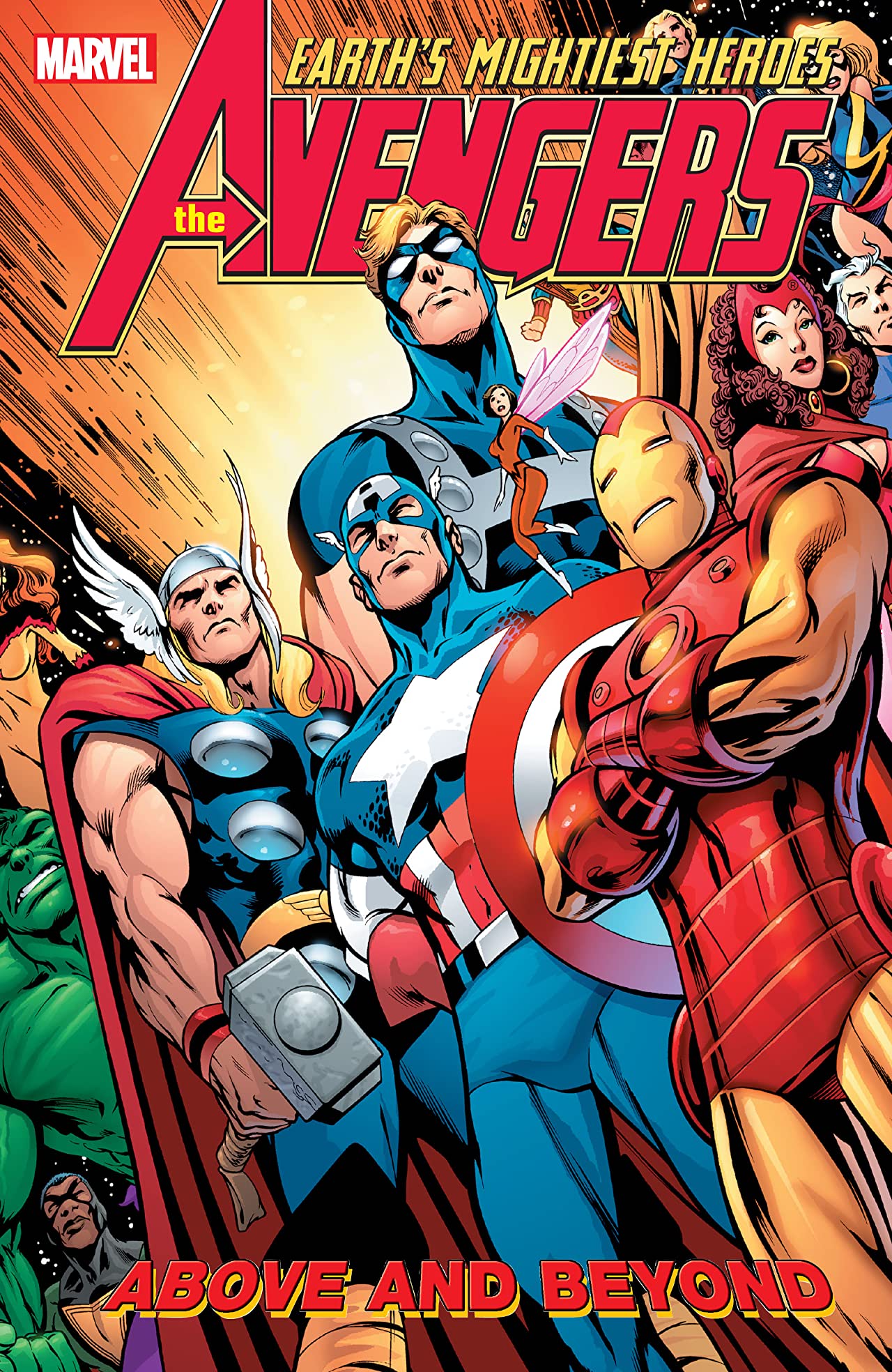
Avengers: Above And Beyond
Written by Kurt Busiek, Steve Englehart, Roger Stern, Roy Thomas Art by Ian Churchill, Alan Davis, Steve Epting, Tom Grummett, Klaus Janson, John Paul Leon, Jorge Lucas, John McCrea, Pat Olliffe, Ivan Reis, Paul Smith, Jim Starlin Cover by Alan Davis Purchase
Collects Avengers (1998) #36-40, #56 and Annual 2001; and Avengers: The Ultron Imperative.
The Avengers learn what too much of a bad thing can be when they face a city of robots and a village of Hulks! And in other international news, Blood Wraith has a BIG problem with Ultron’s extermination of Slorenia! Meanwhile, Silverclaw shines and Triathlon triumphs in Kurt Busiek’s penultimate Avengers saga! Featuring the villainy of Ultron, Diablo and Kang the Conqueror.
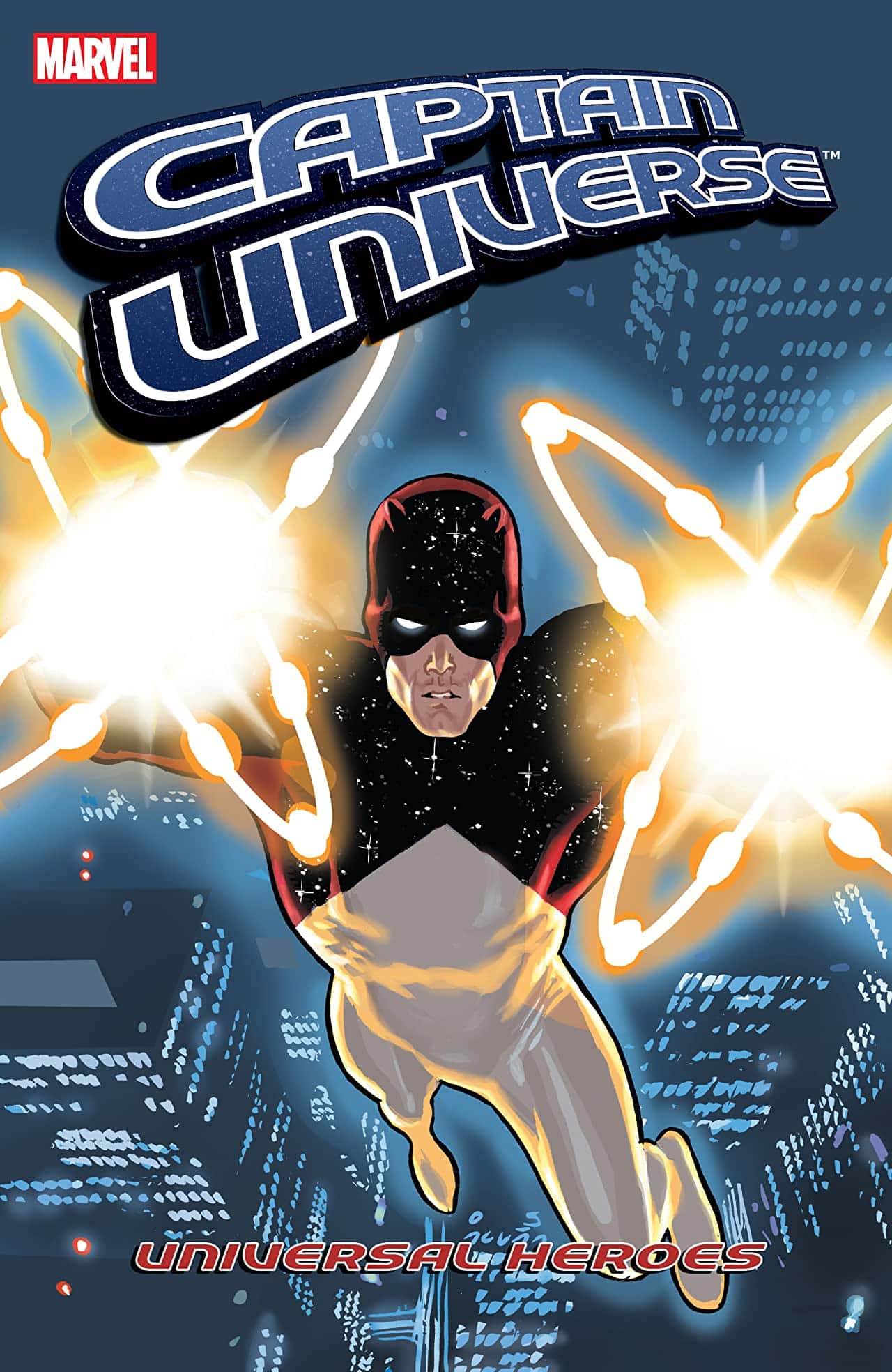
Captain Universe: Universal Heroes
Written by Jay Faerber, Craig Kyle, Jeff Parker, Christopher Yost Art by Carlos Magno, Francis Portela, James Raiz, Paulo Siqueira Cover by Daniel Acuna Purchase
Collects Captain Universe: Daredevil, Increcible Hulk, Invisible Woman, Silver Surfer, X-23 and material from Amazing Fantasy (2005) #13-14.
Captain Universe is known as the name for the recipient of the mysterious Uni-Power, a special kind of energy that endows an individual with superhuman powers during a time of crisis. How it has determined its hosts in the past remains a mystery. Now, the unraveling of one of the greatest enigmas in the universe begins as the Uni-Power must possess a handful of Marvel heroes-Hulk, Daredevil, X-23, Invisible Woman and Silver Surfer-to save itself form an enemy hell bent on its destruction!
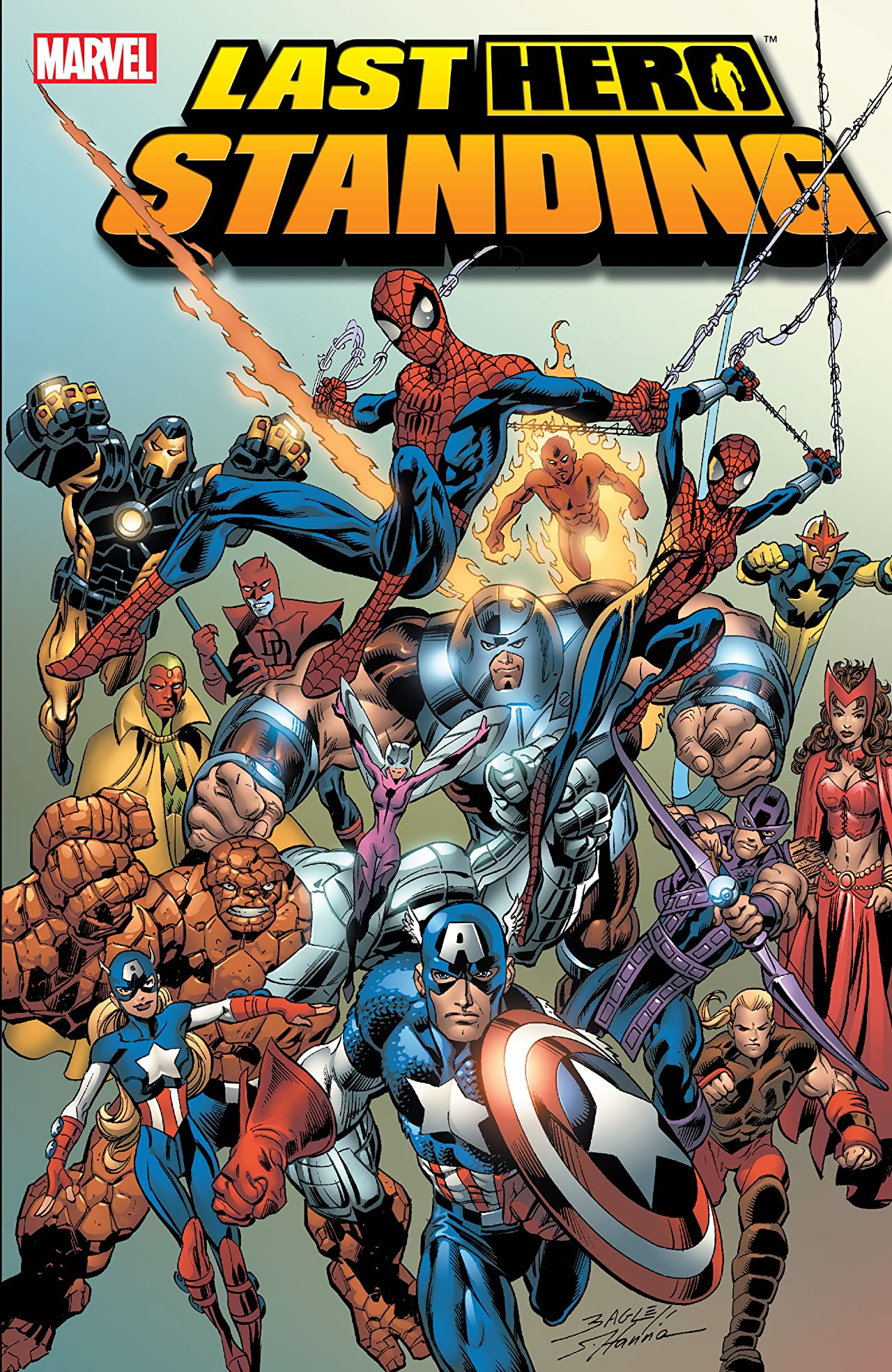
Last Hero Standing
Written by Tom DeFalco Art by Pat Olliffe Cover by Mark Bagley Purchase
Collects Last Hero Standing #1-5.
The great heroes of the Marvel Universe are vanishing without a trace! What has happened to Spider-Man, the Thing, the Scarlet Witch, Captain America and the rest of the MU’s heavy hitters? Spider-Girl, the Fantastic Five and A-Next must join forces with today’s superstars to uncover the answer – and the trail leads to a major Avengers villain! Does the presence of the Watcher signify the end of this age of heroes?
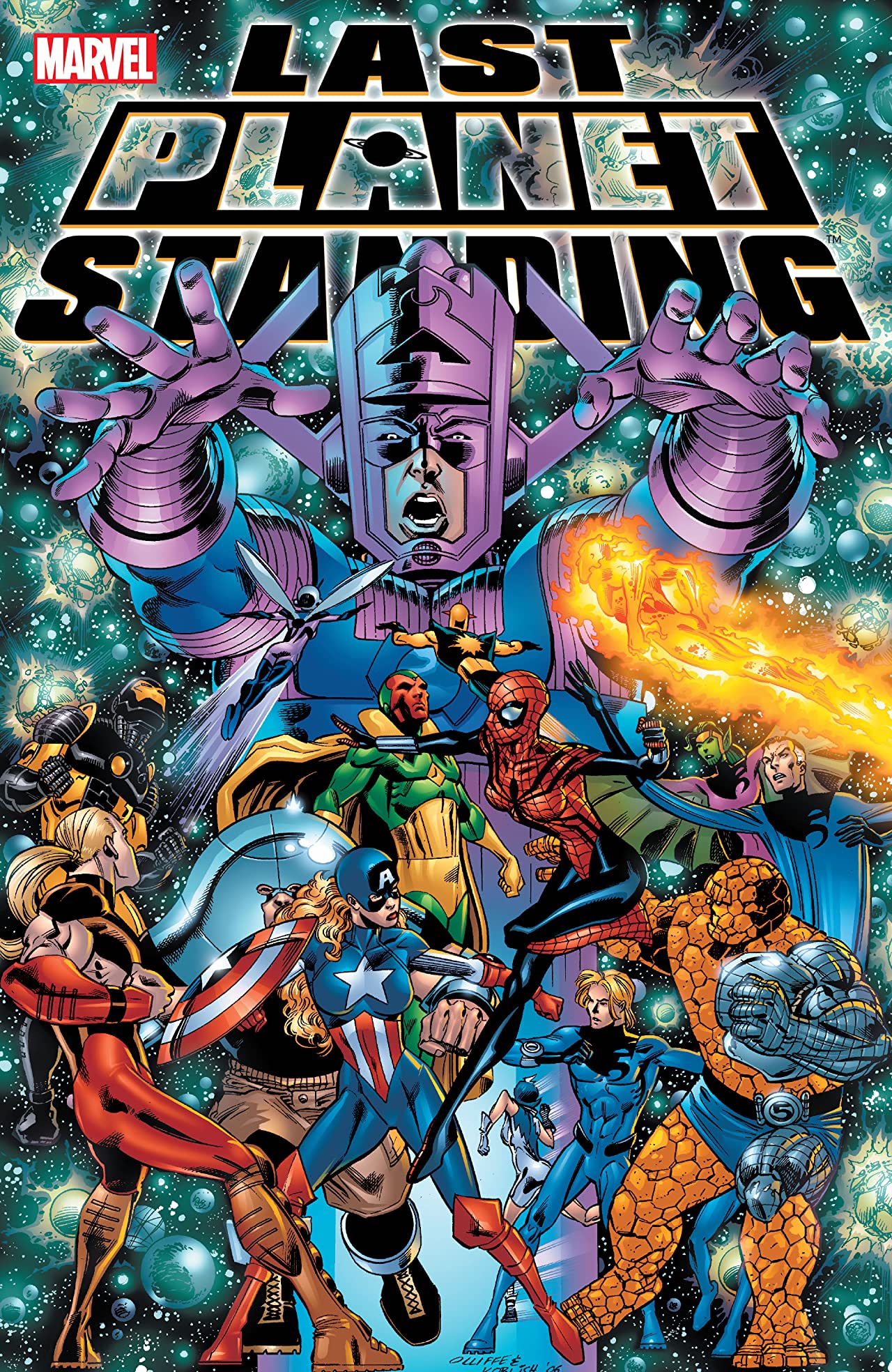
Last Planet Standing
Written by Tom DeFalco Art by Pat Olliffe Cover by Pat Olliffe Purchase
Collects Last Planet Standing #1-5.
At last! The long awaited sequel to last year’s surprise hit, the sold-out Last Hero Standing, which Ray Tate of Silver Bullet Comics called “a comic book mini-series that’s worth buying!” For centuries beyond reckoning, Galactus has consumed entire worlds to satiate his never-ending quest for sustenance, but now he has a new plan – one that may threaten the very existence of the entire Universe! Featuring Thor, the Warriors Three, the Avengers, Spider-Girl, the Fantastic Five and the Shi’ar Imperial Guard!
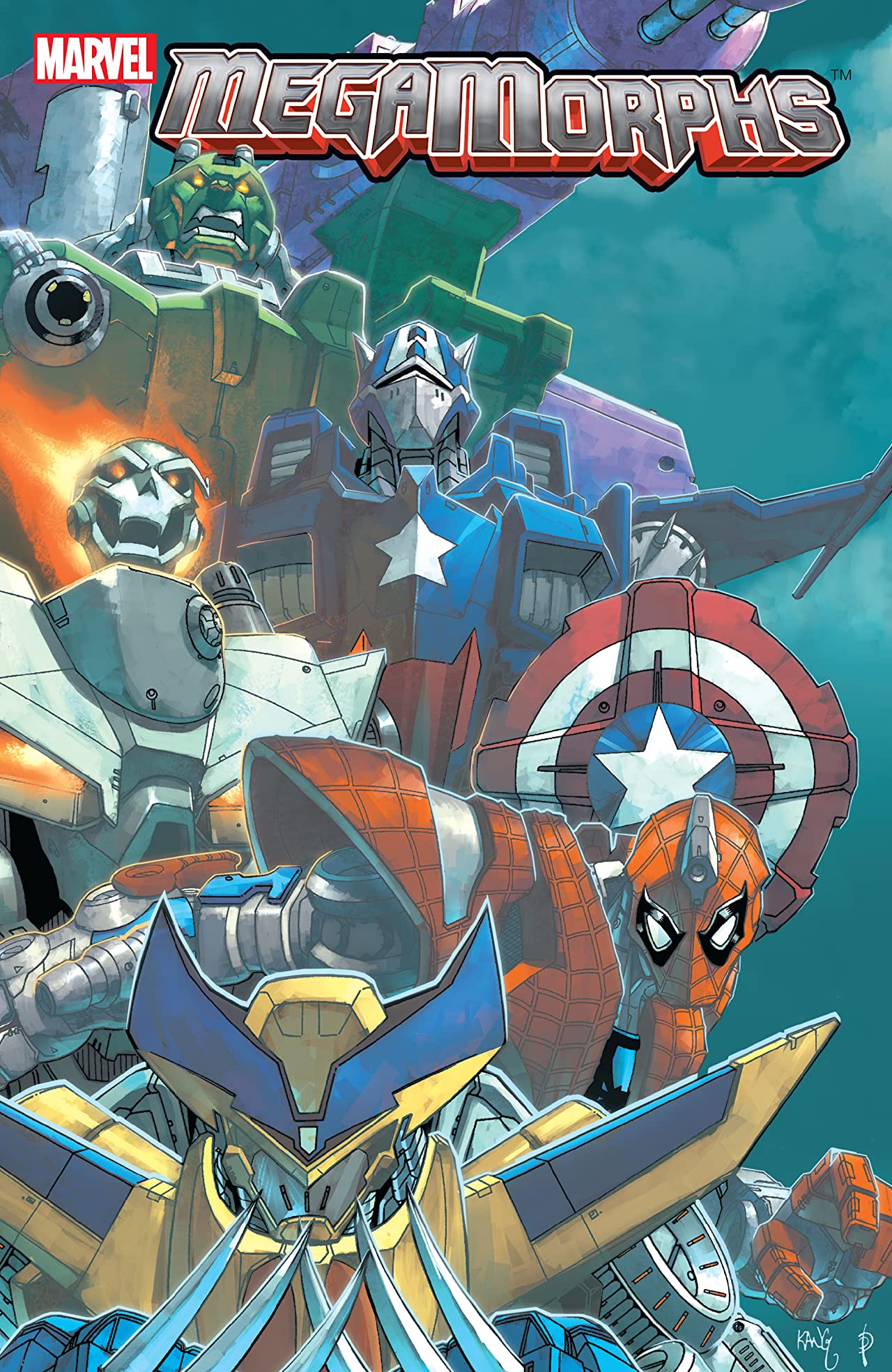
Mega Morphs
Written by Sean McKeever Art by Lou Kang Cover by Lou Kang Purchase
Collects Mega Morphs #1-4.
Some dangers are too big for even the Marvel Super Heroes; that’s when they activate Tony Stark’s newest inventions: the Mega Morphs! Super-powerful, high-tech transforming robots piloted by the unlikely team of NEW AVENGERS’ Spider-Man, Captain America and Wolverine — along with Ghost Rider and the Hulk?! Join fan-favorite writer Sean McKeever and superstar-on-the-rise Lou Kang for furious fighting featuring Marvel’s heaviest heroes in giant-robot action!
The Tycoon’s Marriage Bid/The Fifth Day of Christmas
Written by Betty Neels, Patricia Thayer Art by Kuremi Hazama Purchase
When Ellie’s delivery truck crashes, she is surprised that a handsome businessman offers to help her out. Normally, she is happy to reject any man’s advances, choosing to focus on developing her family’s wine brand instead. But something about this man enchants her. After he helps her, she expects to never see him again. That is, until he shows up later on her property, offering to buy out her family’s precious vineyard!
This site contains affiliate links, which means that if you click on one of the product links and make a purchase, we’ll receive a percentage of the sale. Graphic Policy does purchase items from these sites. Making purchases through these links helps support the site.
Experience the epic stories that started it all. Valiant Entertainment is releasing Valiant Classic Collections, a brand-new line of digital mega-sized collections that feature the earliest tales from the Valiant Universe and its iconic characters.
Up first are two action-packed stories from 1992: Archer & Armstrong: Revival and X-O Manowar: Retribution. In addition to collecting the complete storylines that spanned a year of publishing, these collections also feature bonus content like process artwork and in-depth looks into the creation of these fan-favorite characters. See below for more details.
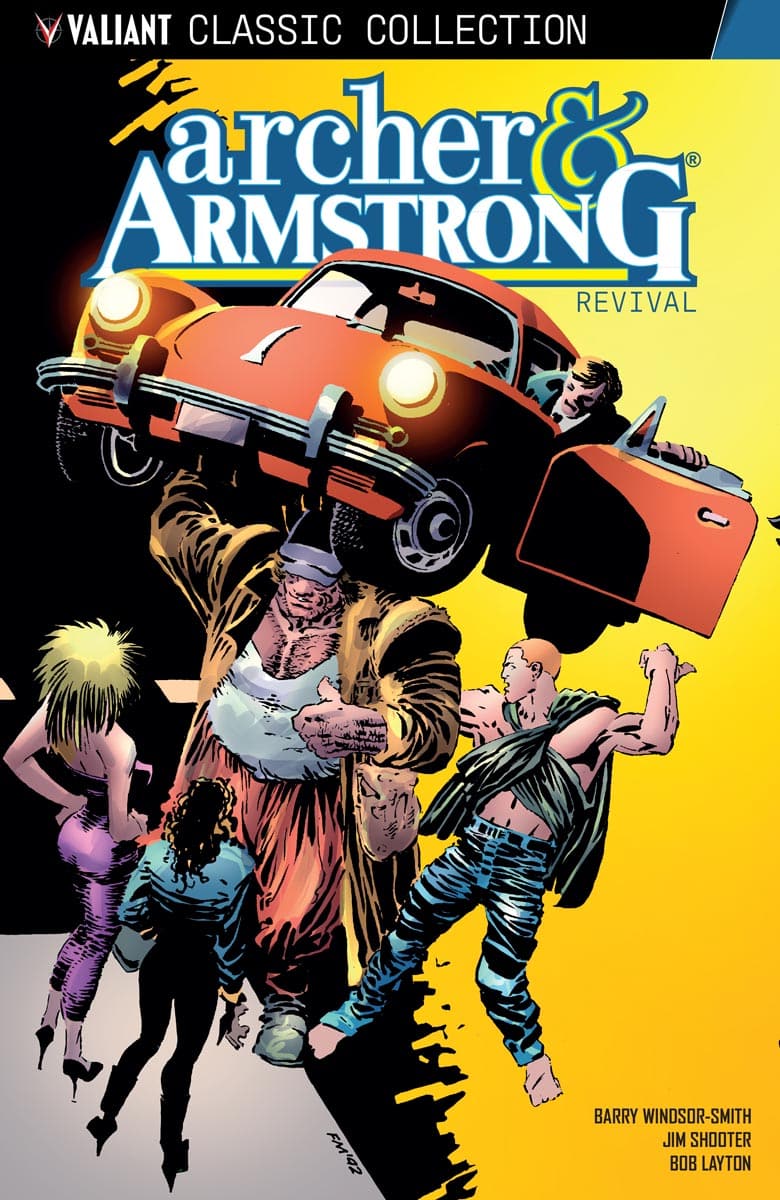
ARCHER & ARMSTRONG: REVIVAL
SQUARE PEGS IN A ROUND WORLD
Archer is the world’s greatest hand-to-hand fighter, an expert marksman, and a seeker of truth and righteousness. Armstrong is an immortal warrior who has reluctantly brawled his way from pre-history to modern times only to realize that the best way to face life’s many challenges is to grab a drink. But Armstrong counts as his worst day the one when Archer turned up and decided that they were partners – a team chosen by fate to save the world!
From the minds of legendary creators Barry Windsor-Smith (Weapon X), Jim Shooter (Secret Wars), Bob Layton (Iron Man), and more comes the first Valiant Classic Collection of the groundbreaking series!
Abducted from his own time by the predatory Spider Aliens and displaced to the present day, Aric of Dacia will make war on his one-time captors and any who stand with them. Armed with a sentient suit of battle armor and savagery born in an age of war, he will become the hero this new age demands. Tyrants from beyond time and space, superpowered corporate raiders, and corrupt government power brokers… all will quake in fear where X-O Manowar dares to tread.
Featuring groundbreaking work from comic-book legends Jim Shooter (Secret Wars), Bob Layton (Iron Man), Barry Windsor-Smith (Weapon X), Joe Quesada (Daredevil), Steve Englehart (Detective Comics) and many more, the complete adventures of Valiant’s original armored hero begin here in the first Valiant Classic Collection of the series Graphic Policy calls “a must read“!
Collecting X-O MANOWAR (1992) #0–9, and X-O DATABASE #1
X-O MANOWAR: RETRIBUTION will release on December 9th, 2020, and is currently available to pre-order on ComiXology, Amazon Kindle, and Google Play.
When we last left our heroes, Captain America and the Falcon had returned to New York City after liberating a Caribbean island from Nazis and once again foiling the Red Skull’s Cosmic Cube machinations. Upon their return in #120, the question became what the status quo would be for the new partnership in their new environment.
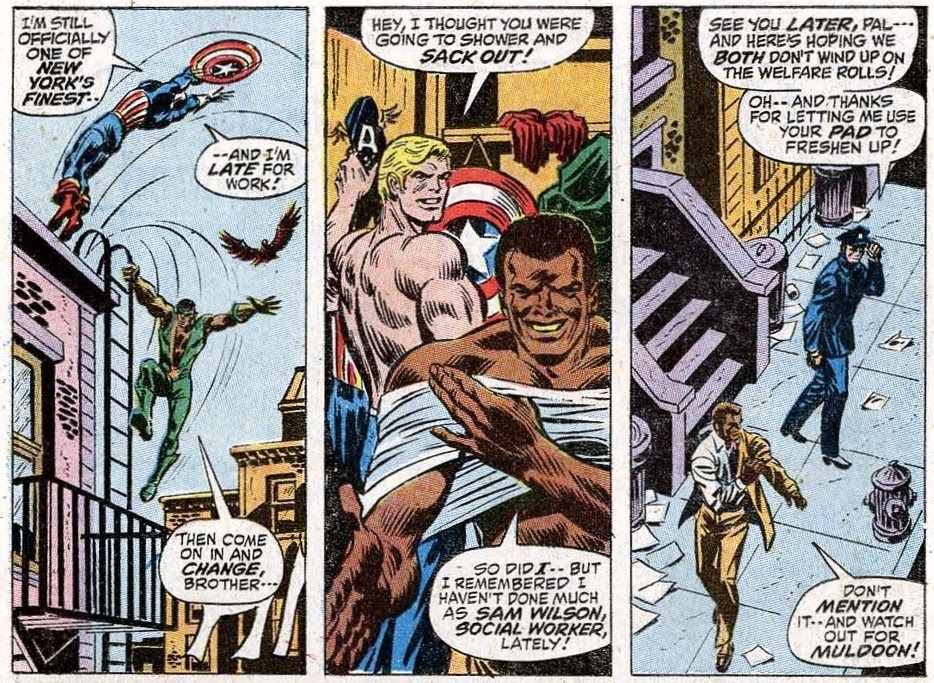
(Pictured: two bros just broing around, casually shirtless. It’s not like they do this all the time or anything.)
The new status quo would take a few issues to show up, but starting with #139, for almost two years – two years which saw Captain America and the Falcon handed off from Stan Lee[1] to Steve Englehart (by way of Gary Friedrich and Gerry Conway)[2] – Cap writers went back to one of the oldest scenarios in comics.
By night, Captain America and the Falcon would patrol New York City as vigilante superheroes. By day, they would adopt civilian identities that spoke to their ideas of civic engagement: Sam Wilson returned to his job as a social worker, Steve Rogers took up a new job as a cop. Both worked the Harlem beat.[3]
To people who haven’t read classic Captain America from the 1970s, that factoid might seem outlandish on its own. But the details of how the saga actually unfolded are so baroque that they demand an in-depth exploration.
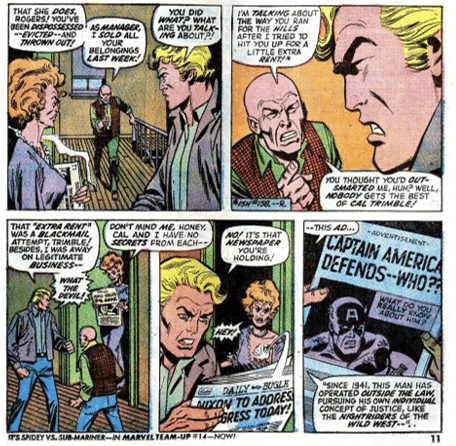
Rather that starting with an action sequence (as one might expect from a superhero story) or intrigue in the halls of power (as one might expect from a 70s paranoid thriller), Captain America’s struggle with Richard Nixon begins with a slice of life interlude inCaptain America and the Falcon #166[1]:
In the midst of everyday class struggle, Steve Rogers notices a full page advertisement – on the back page of the Daily Bugle, no less! – attacking Captain America as a lawless vigilante, seeking to raise doubts in the minds of the Daily Bugle’s urban working-class audience (given the Bugle’s status as a stand-in for the New York Post and the New York Daily News) as to whether Cap defends them. Steve Englehart and Sal Buscema hint at the ads’ ultimate author through the Daily Bugle’s front-page headline on a presidential address from Nixon, positioning him as Cap’s opposite number both in the media and in morality.
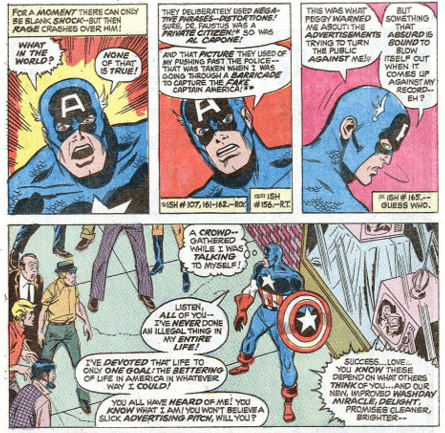
Starting the story off this way is an interesting choice for a genre generally dependent on punching to advance the plot, as Cap can’t really hit back at a foe which is incorporeal, insidious, and above all immaterial. What’s at threat isn’t Cap’s person but his reputation, and more broadly Cap’s vital connection to the American public. We see this much clearer in Captain America and the Falcon #169, where Englehart and Buscema give us a full-page example of the propaganda campaign being waged against our hero:
This television commercial makes the political allegory clear: here, the Committee to Regain America’s Principles (CRAP) is an obvious stand-in for the Committee for the Re-Election of the President (which everyone in 1974 knew better as CREEP). More than just Nixon’s re-election campaign, CREEP was the crucial financial link between the Watergate burglars and the White House through which Nixon not only paid the legal fees for the men arrested in the break-in but used campaign funds to attempt to bribe them into not testifying about the White House’s involvement.
The style of this attack ad – which positions Captain America as a dangerous vigilante acting against “recognized legal agencies” like SHIELD, subtly suggests that Captain America’s Nazi punching (note that the “private citizen” shown being attacked by Cap is actually HYDRA psychologist Doctor Faust) should be condemned, raises ominous questions about whether the super soldier serum has driven Captain America mad (shades of faux-populist attacks on “elitist” experts, from anti-vax to Brexit there), and once again raises the question of whether Cap fights for the “law and order” America of the “silent majority” or the America of the student movement and the counter-culture – would also have been familiar to readers in 1974. Only two years earlier, many of them had seen on their television a deluge of attack ads created or funded by CREEP against George McGovern’s campaign[2], as a part of a deliberate strategy of “positive polarization”:
While this liberal critique of political advertising might seem like an odd choice for an antagonist in a superhero story, this isn’t the first time that Captain America has run afoul of the advertising industry. In issue #157, Cap had already clashed with the ad executive turned snake-branded supervillain Viper and his Serpent Squad (later re-branded as the Serpent Society and later as Serpent Solutions), who’ll get name-checked later in this storyline.
Moreover, this focus on the media, advertising, and public relations was a common preoccupation of Marvel creators in the 70s and 80s, whether we’re talking about Steve Gerber’s run on Howard the Duck, Jim Shooter and Ann Nocenti’s take on Hollywood phonies in Dazzler, Ann Nocenti’s Longshot miniseries, or Louise Simonson’s run on X-Factor. This common thread wasn’t because Marvel creators were huge fans of the Frankfurt School, but rather because comics writers and artists were working in the broader media industry (Marvel Comics was located on Madison Avenue, after all) and were writing from their personal experience.
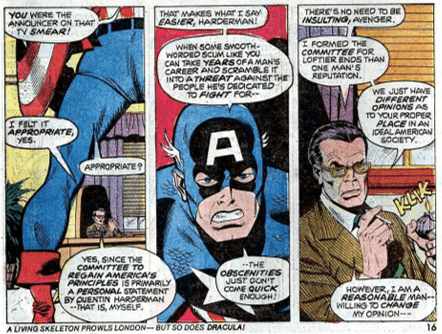
The media angle is particularly appropriate for this storyline, because there were deep connections between the advertising industry and the Watergate scandal. We see this more clearly when Cap goes to confront the bryl-creamed man behind CRAP’s ad campaign:
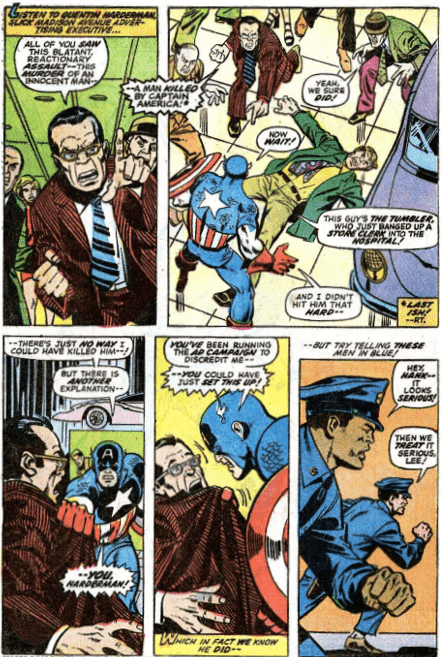
Quentin Harderman would have been instantly recognized by a 1974 audience as a stand-in for H.R Haldeman, “the President’s son-of-a-bitch.” An ad man at J. Walter Thompson for 20 years, Haldeman had managed Nixon’s failed gubernatorial campaign in 1962 and became Nixon’s Chief of Staff in 1969. Known to history more as the man who Nixon turned to threaten the CIA into pressuring the FBI to drop the Watergate break-in and the other man in the missing 18 ½ minutes of Nixon’s Oval Office tapes, Haldeman had previously been known for bringing Madison Avenue techniques to the White House, organizing tightly scripted public events, establishing the Office of Communications to coordinate messaging, and installing his fellow J. Walter Thompson alumni Ronald Ziegler as Nixon’s Press Secretary.
Not exactly Jon Hamm, is he?
After this tense
confrontation, Harderman and CRAP set the next phase of their conspiracy into
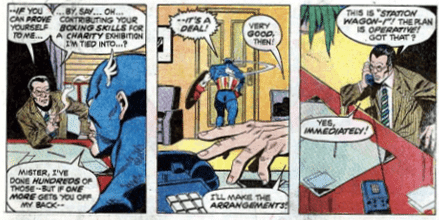
motion by luring Captain America into participating in a charity boxing match
where his opponent turns out to be the Tumbler, a petty supervillain whose
robberies Cap had foiled. When Cap pursues the Tumbler, an assassin hiding in
the rafters (shades of the second shooter on the grassy knoll) makes it look
like Cap has murdered the Tumbler:
While the Watergate scandal never quite made it to the level of assassinations, both CREEP and Nixon’s “plumbers” were known for using false-flag operations as part of a broader campaign of “ratfucking.” Originating in the fraternity politics of USC where Donald Segretti (future mentor of Lee Atwater and Karl Rove) and the future “mad men” Ronald Ziegler and H.R Haldeman got their start. “Ratfucking” started as a combination of opposition research, ballot-stuffing, and “dirty tricks” aimed at discrediting opponents. As was gradually revealed during the Watergate investigations, CREEP and the U.S Attorney General John Mitchell spent hundreds of thousands of dollars in a campaign to disrupt the 1972 presidential campaign – this included “false flag” operations where Republican operatives like then-20-year-old Roger Stone would steal stationary from the campaigns of Senator Edmund Muskie, Senator Hubert Humphrey, and others in order to create forged letters attacking other Democrats or people of French-Canadian descent.
Similar to his
real-world counterpart, Harderman’s objective isn’t to use the legal system
against Cap – after all, an autopsy would raise unwelcome questions about the
real cause of death – but to discredit him in the court of public opinion. In a
truly baroque complication to an already complicated master plan, Hardeman
organizes a “false flag” jailbreak and deliberately avoids killing Cap when he
gets the chance (something else he shares with other supervillains).
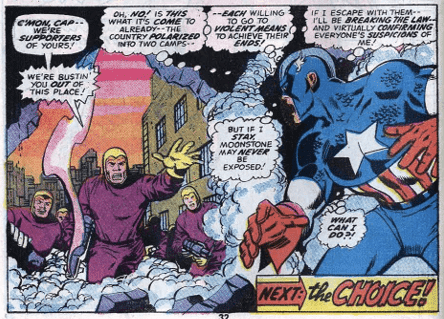
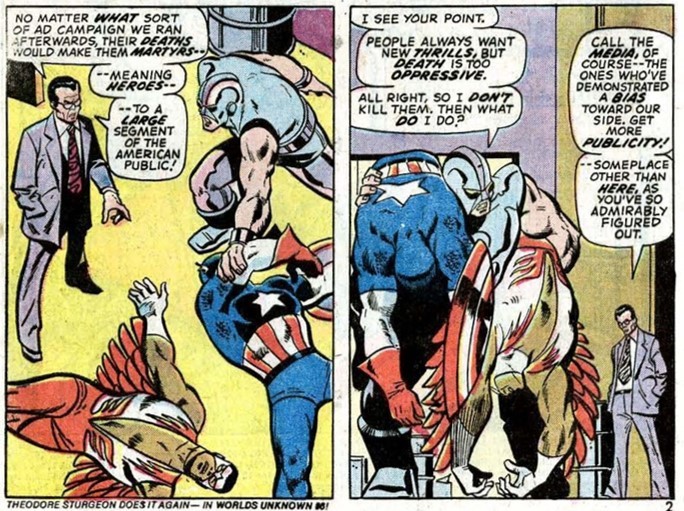
As the bottom two panels emphasize, the point of all of this is to produce images – both of Captain America as a fugitive criminal and Moonstone as the hero bringing him to justice – that can shift public opinion in CRAP’s favor. (We also see Englehart elaborating on his media critique by pointing to both the prurient-yet-prudish audience and the passive news media who let themselves get worked by the Nixon Administration.) It’s also a good opportunity for some costumed fisticuffs in a storyline that is heavy on the talking and light on the usual super-heroic fare:
As antagonists go, Moonstone is almost painfully generic – the costume lacks any visual distinction, the light blue/purple/yellow color scheme doesn’t exactly pop, and the helmet takes away any distinctive facial features without adding anything to compensate – but deliberately so. It’s visual evidence (along with the fact that the reader has already seen Moonstone shoot the Tumbler on behalf of Harderman) that the man who intends to “replace” Captain America is a fraud, an uninspired phony cooked up by Madison Avenue hacks who lacks the deeper ideological commitments that Cap clings to even in his lowest moment.
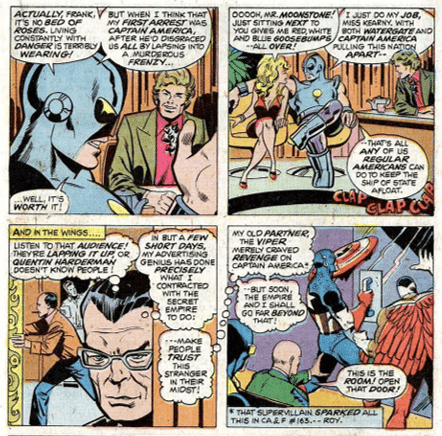
The purpose behind Harderman’s build-up of Moonstone in the public eye becomes clearer when the pseudo-hero makes an appearance on television (which I’m almost certain is meant to be NBC’s Today Show, then hosted by Frank McGee, although it could well be a pastiche):
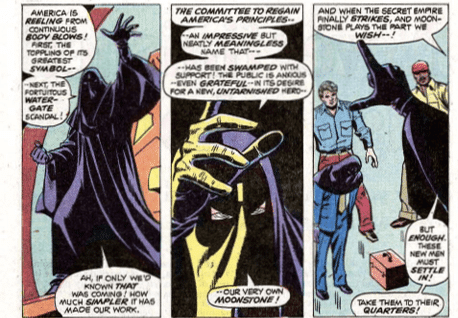
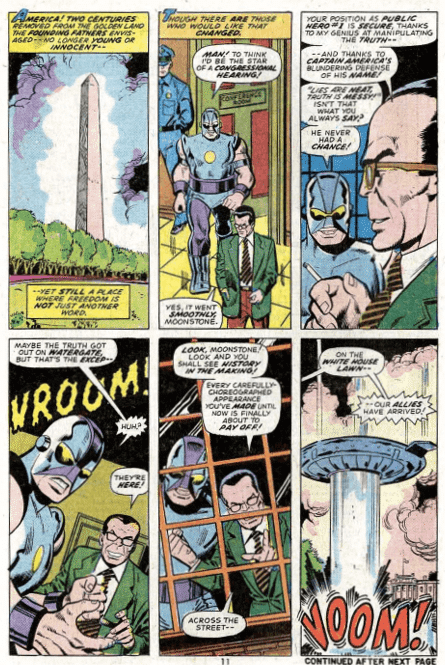
This is where Englehart moves from mere allegory to direct political commentary, directly commenting on the Watergate scandal.[3] What this page suggests is that, in Earth-616, Nixon tried to distract the country from the unfolding Watergate scandal through engineering the downfall of Captain America, in the hopes that political whataboutism would tar his opponents or at the very least that Captain America would be unable to speak out about the crisis at the heart of government. In this broader conspiracy, Harderman engineered Moonstone as “the stranger in the midst” who would replace Cap in the imagination of a public desperation to find something to believe in – and at this pivotal moment get “regular Americans” to focus on the conservative goal of “keep[ing] the ship of state afloat,” rather than getting to the bottom of political corruption.
Here we see Englehart and Buscema’s media critique at its sharpest, seeing the media as a passive, spin-regurgitating machine easily manipulated by political operative like Hardeman, and the audience as eagerly “lapping” up vapid celebrity gossip and mild titillation rather than paying attention to the real issues facing America.
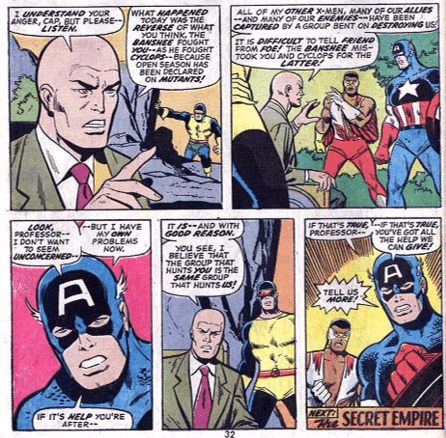
Now that the Watergate issue has been brought to the fore, we get to the part of all of the best Captain America stories where Steve Rogers learns to connect his own struggles to broader issues of systemic injustice. And this being the Marvel Universe, the minority group bearing the brunt of repression from Nixon’s campaign and Administration is everyone’s favorite metaphorical minority:
A year before Chris Claremont’s run on the X-Men begins, we see an interesting extension of the mutant metaphor – not just “hated and feared,” mutants are being hunted like animals, not merely by prejudiced mobs but by a corrupt establishment. Indeed, the very language used by Professor X has some interesting connotations within the broader Nixon allegory: the term “open season” was used to describe a series of police shootings of Black Panther Party members which culminated in the shooting of Fred Hampton and Mark Clark in December of 1969.
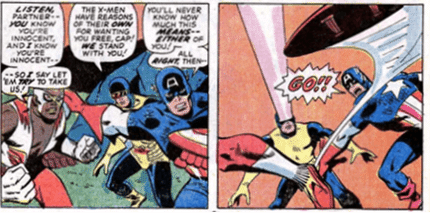
Beyond a mere cameo, Professor X’s intervention is crucial for getting Captain America to see that “the group that hunts you is the same group that hunts us” – the foundational element of solidarity. Moreover, Professor X’s more direct experience with persecution means that he can provide critical context linking Harderman and CRAP to the real enemy, the vast conspiracy at the heart of everything:
While hardly a perfect person – Cap is understandably preoccupied by the being-framed-for-murder thing – this does demonstrate why Steve Rogers is a good ally. Not because he’s perfectly informed or fully enlightened (after all, he does start from a position of asking “how are your problems connected with mine”) but because when he’s confronted with new information or new perspectives, he doesn’t react defensively but rather instantly takes it on board and then acts in solidarity:
As someone who hasn’t exactly been thrilled by how Captain America’s been characterized in crossovers with the X-books from Avengers vs. X-Men up through last month’s Uncanny X-Men #11, I’d like to point out this scene specifically to Marvel’s writers and editors who might think that Cap’s position would be the reflexive defense of the status quo. We already know which side Steve Rogers will come down on in a conflict between mutants and the state, even if it comes down to blows with Nick Fury and SHIELD, because he made that decision forty years ago. Nor is Steve the type to sleep on pressing issues of social injustice – if anything, his instincts are to act in a decidedly militant fashion. (Not that he’d always make the right decision, but rather that his “sins” would be of the “warm-hearted” rather than “cold-blooded” variety, to borrow a phrase from FDR.)
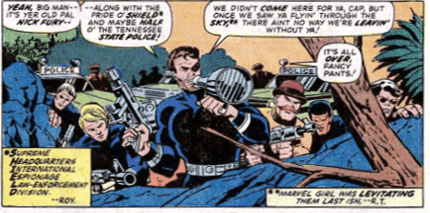
After coming to
blows with SHIELD, Cap and the X-Men succeed into breaking into the Secret
Empire’s base and learn that this “silent, subtle, and sinister war” against
mutants has been launched for the purposes of literally weaponizing prejudice:
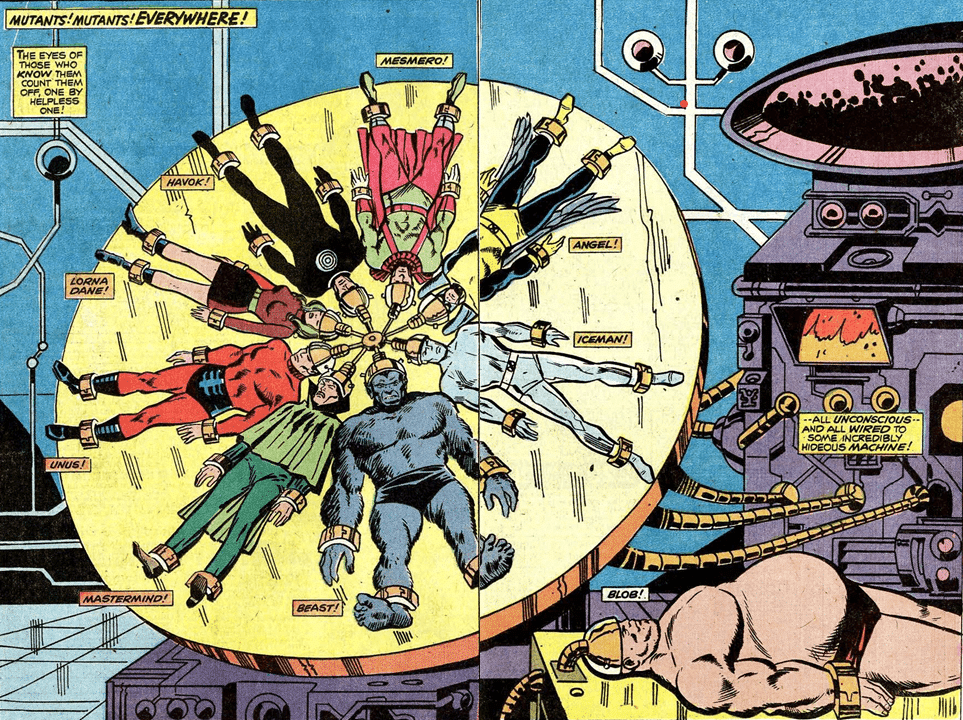
Operating on the (sadly, probably
accurate) assumption that no one will miss mutants, the Secret Empire has been
abducting heroes and villains alike to power their doomsday devices, treating
mutant bodies as nothing more than living batteries for their engines of war.
All of which brings us to the question: what is the Secret Empire, and what do they want? As Cap learns shortly before he goes undercover to infiltrate the Secret Empire, he learns that they “like AIM, were originally an arm of HYDRA” who “broke away from the big boys, to try to conquer the world on their own.” This is a particularly significant association, because contrary to what Nick Spencer might argue, HYDRA is an inherently Nazi organization.
Add on to that
already foreboding backstory the particular iconography and rhetoric of the
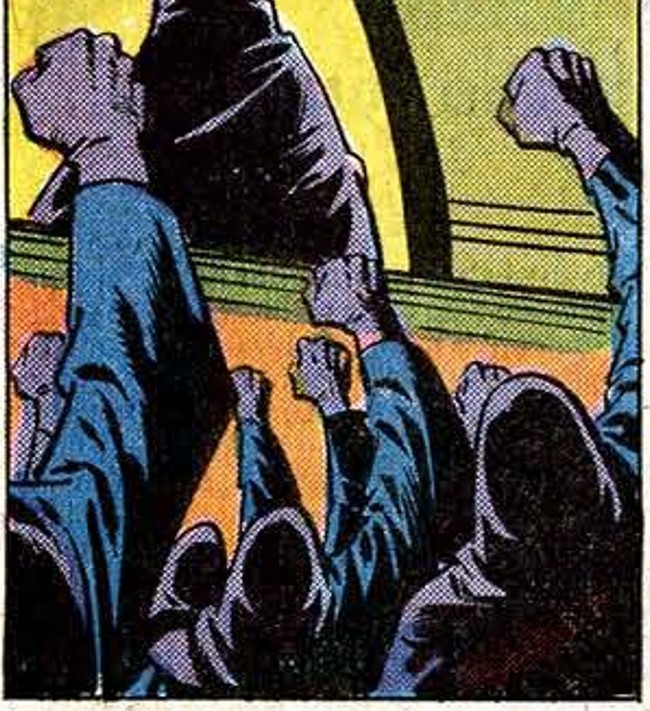
Secret Empire, a group of white dudes who like to dress up in purple hoods and
robes, stand in orderly ranks and throw one arm up into the air in the
direction of their leader, and plot the overthrow of the United States:
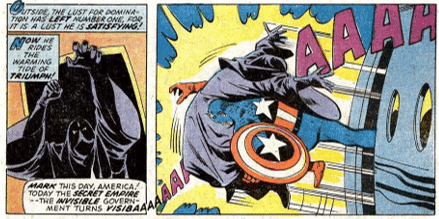
The symbolism might mix and match a bit between Nazism and the Klan – with just a soupçon from the Prisoner in the way that they all go around with numbers on the front of their hoods which they use in place of names when addressing one another – but the overall political direction fairly straightforward. Englehart puts even more of a point on things when he has the leader of the Secret Empire refer to his organization as the “invisible government,” paralleling the Klan’s self-appointed title of the “invisible empire.” As allegory goes, this is hardly subtle, but I don’t think Englehart and Buscema are trying for subtlety; rather, they’re grabbing up the most charged imagery of the worst enemies of America from without and within and hurling it in Richard Nixon’s face.
Beyond being
totalitarian anti-mutant bigots who want to take over the world, the Secret
Empire have a broader plan which ties into what we know about the
Harderman/CRAP conspiracy already:
As it turns out, the Secret Empire’s
plan turns out to hinge on that peculiar neuralgia of the 1970s which Jimmy
Carter so fatefully termed “malaise.” In part reacting to an unforeseen
revelation of a real crisis – the Watergate break-in – and in part
manufacturing a false crisis – the framing of Captain America – the Secret
Empire is deliberately attacking America’s ideals and its faith in its of own
institutions. In such a state of division and despair, the Secret Empire seeks
to use the public’s “desire for a new, untarnished hero” to legitimize a fascist
coup.
Because this is
still a superhero comic, however, said coup takes the form not of a military
junta but rather a mutant-powered flying saucer:
Fortunately for the
survival of American democracy and unfortunately for the Secret Empire, Cap’s
infiltration of their secret base allows him to first thwart their doomsday
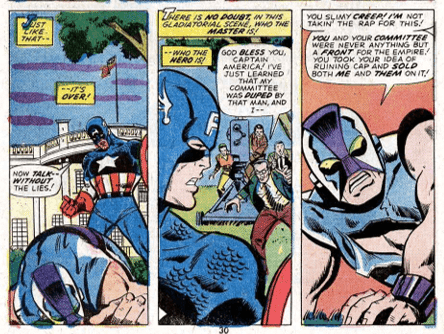
device and then pummel Moonstone into turning state’s evidence against CRAP and
the Secret Empire both:
The result is a kind of liberal
fantasy of how the Watergate scandal should
have ended:
Like something out of Aaron Sorkin’s fantasies, the news media does its job and beams the unvarnished truth straight into America’s living room. And unlike the deeply conflicted outcome of the actual Watergate scandal, which saw relatively light sentences and the political rehabilitation of many of the Watergate conspirators, here the whole of the Secret Empire – notably including the “sanitation squad bombers,” a pretty clear reference to the White House “plumbers” – are brought to justice. This time, the long hand of the law reaches all the way into the Oval Office:
While Buscema never shows us Number One’s face – possibly for libel reasons? – Englehart’s portrayal of Nixon’s character is worth commenting on. In some ways, I think Englehart has a surprisingly canny angle (given the comic book nonsense he surrounds it with), describing Nixon as a man who could never be satisfied (after all, Nixon did his level best to steal an election he was always going to win handily), as a man who refused to accept the constraints of legality (hence the creation of the enemy’s list as a way to use the government against his domestic critics, hence the creation of the “plumbers” to pull “dirty tricks” that the CIA and FBI wouldn’t). And while it never came anywhere close to a coup in real life, there was a moment when Nixon was ordered to hand over the tapes where it could have come down to a conflict between the U.S Marshals Service executing a warrant and the U.S Secret Service obeying the orders of the president to block what he considered to be a violation of executive privilege. Finally, Englehart’s use of a poker metaphor as Nixon chooses to commit suicide rather than stand trial (speaking of something that would change America forever) even evokes Nixon’s skill at the game which made him enough money as a Navy ensign in WWII to finance his first red-baiting campaign for Congress.
Despite this complete triumph over the forces of reaction, though, Englehart realizes that Steve Rogers’ idealism has been strained to the breaking point. Thus, rather than exhilarating in his restored reputation or basking in the adulation of the American people, like many of the American people in the 1970s, Steve Rogers has to take his motorcycle and go in search of the American people once again as Nomad…but that’s a subject for a future edition of A People’s History of the Marvel Universe.
[1] An issue that otherwise focuses on a rather problematic Yellow Peril villain bringing mummies to life in the Museum of Natural History, but I digress.
[2] Incidentally, Roger Ailes of Fox News infamy got his start putting together Nixon campaign ads in 1968…
[3] Which at the time that Captain America and the Falcon #174 went to print in June of 1974 was in a highly delicate state, with the House Judiciary Committee beginning impeachment prosecutions against Nixon but before the Supreme Court ruled that Nixon had to hand over the tapes which would already bring him down. As late as June of 1974, Nixon’s approval and disapproval ratings remained tied, and support for removing Nixon remained below a majority and had actually slightly declined over the spring.
The classic story, The Death of Captain Marvel, is back in an all-new printing! This trade collects Marvel Super-heroes (1967) #12-13, Captain Marvel (1968) #1 and #34, Marvel Spotlight (1979) #1-2, and Marvel Graphic Novel #1: The Death of Captain Marvel by Stan Lee, Roy Thomas, Jim Starlin, Steve Englehart, Doug Moench, Gene Colan, and Pat Broderick.
Get your copy in comic shops now and in book stores January 15th! To find a comic shop near you, visit http://www.comicshoplocator.com or call 1-888-comicbook or digitally and online with the links below.
Marvel provided Graphic Policy with FREE copies for review This post contains affiliate links, which means that if you click on one of the product links and make a purchase, we’ll receive a percentage of the sale. Graphic Policy does purchase items from this site. Making purchases through these links helps support the site
Titan Comics has announced two new projects based on The Prisoner, licensed by ITV Studios Global Entertainment,to coincide with the 50th anniversary of the surreal 1960’s cult TV classic in 2018: an oversized artist edition of a lost comic book classic by comic book legends Jack Kirby and Gil Kane; as well as a brand-new comic series set in the world of The Prisoner by celebrated writer Peter Milligan and artist Colin Lorimer.
First shown on Canadian and UK TV screens in 1967, The Prisoner was co-created, written, directed and starred Patrick McGoohan. Titan’s new unmissable comic collections and comic series are set to coincide with the 50th Anniversary of the first US transmission in 1968.
In July, Titan Comics will publish an art-sized, hardcover collection of Jack Kirby, Gil Kane and Steve Englehart’s long-lost, previously unpublished The Prisoner comic strips based on the cult classic.
This special oversized collectors edition will contain the entire 17 page Jack Kirby strip, the first six pages of which were inked and lettered by Mike Royer, as well as 18 pages of pencils drawn by legendary comic artist Gil Kane.
In addition to reprinting these rare pages, this collection also features unmissable bonus archive material including facsimiles of the original script as written by Steve Englehart.
The Prisoner: Jack Kirby And Gil Kane Art Edition (ISBN: 97817858662878) is just one part of Titan Comics’ exciting plans for The Prisoner’s 50th Anniversary year –alongside a brand-new comic series based on the cult favorite TV series, written by Peter Milligan with art by Colin Lorimer.
Titan Comics’ new series transports readers back to the mysterious village where everyone is a number, and features six amazing covers, including Mike and Laura Allred, Jack Kirby, a Patrick McGoohan photo cover and more to be revealed.
September 2-4, 2016 sees the return of the Baltimore Comic-Con to the Inner Harbor’s Baltimore Convention Center. Hero Initiative will be at the Baltimore Comic-Con, and is happy to bring classic writer Steve Englehart, best known as one of the original writers of Dr. Strange, which is being adapted as a major motion picture in a few months, to the con. Tickets for the show are available now!
Steve Englehart began his career as an art assistant to Neal Adams before shifting over to try his hand as a writer. Initially doing uncredited work at Marvel for Gary Friedrich on titles like Sgt. Fury and his Howling Commandos, Iron Man, and Incredible Hulk, his abilities were recognized and his writing career began in earnest with an issue of Monsters on the Prowl. His first run on a title was in Amazing Adventures featuring the X-Men’s Beast in the spotlight.
He went on to become writer on runs of Defenders, Avengers, Doctor Strange, and Captain America, including memorable storylines like “The Avengers/Defenders War”, “The Celestial Madonna”, and “The Serpent Crown”. He also created Shang-Chi, Master of Kung Fu, Nomad (initially as an alter-ego for Captain America), and he also provided the retcon to explain the 1950s Captain America and Bucky characters as separate individuals from Steve Rogers and Bucky Barnes.
After leaving Marvel Comics, Englehart landed at DC Comics, writing Justice League, and Detective Comics (collected as Batman: Strange Apparitions in trade paperback), which relaunched Batman as a noir hero and firmly establishing Joker as a homicidal maniac. He would later write Green Lantern Corps, Batman: Dark Detective, and the Millenium crossover series.
Englehart would return to Marvel, working on such titles as West Coast Avengers, Fantastic Four, Silver Surfer, and Vision and the Scarlet Witch. He is also a co-founder of Malibu’s Ultraverse (later acquired by Marvel), writing The Strangers and The Night Man (which later became a syndicated television series).
In addition to his comics work, Englehart has worked as a novelist and animation writer during his career.
Steve will be at the Hero Initiative booth all weekend. Look for him there.
writer: Archie Goodwin, T. Casey Brennan, Steve Englehart, Josep Toutain, Mike Butterworth, Bill DuBay, Rich Margopoulos
artist: Jose Gonzalez
cover: Jose Gonzalez
FC • 152 pages • $150.00 • Mature
Celebrate the extraordinary work of Jose Gonzalez, an unparalleled master of horror illustration, with this gorgeous hardcover collection, presenting for the first time actual storyboard artwork spanning his years as the preeminent Vampirella artist! Eleven captivating and creepy tales appear in their entirety, stories ranging over ten years from Vampirella Magazine #15 (January 1972) to issue #112 (March 1983). Scanned in high-resolution color and printed at original size, Jose Gonzalez’s Vampirella Art Edition preserves every detail of the artist’s meticulous skill and hard work, a true treasure for longtime Vampi fans.
* Vampirella #15: “The Resurrection of Papa Voudou”, written by Archie Goodwin
* Vampirella #16: “…And Be a Bride of Chaos”, written by Archie Goodwin
* Vampirella #19: “Shadow Of Dracula”, written by T Casey Brennan
* Vampirella #21: “Slithers in the Sand”, written by Steve Englehart
* Vampirella #23: “The Blood Queen of Bayou Parish”, written by Steve Englehart
* Vampirella #27: “Return Trip?”, written by Josep Toutain
* Vampirella #28: “Curse of the MacDaemons”, written by Mike Butterworth
* Vampirella #37: “She Who Waits”, written by Archie Goodwin
* Vampirella #61: “An Eye for an Eye”, written by Bill DuBay
* Vampirella #108: “Spawn of the Star Beast 6”, written by Rich Margopoulos
* Vampirella #112: “The Walker of Worlds”, written by Rich Margopoulos
Bruce Jones, Len Wein, Steve Englehart, Bill DuBay, Gerry Boudreau, Nicola Cuti, Cary Bates (w)
Jose Gonzalez, Esteban Maroto, Leo Duranona, Russ Heath, Enrich, Bob Larkin (a)
Penalva (c)
FC • 400+ pages • $49.99 • Mature
More exciting horror and science fiction tales are collected in this eleventh volume of Vampirella Archives. These classic Warren-era storylines showcase Vampirella’s acting career as she meets supernatural menaces both on-screen and off, plus tales of ghosts, dragons, zombies, yetis, and all matter of unearthly danger. Collecting Vampirella Magazine #72-79, featuring the work of Jose Gonzalez, Esteban Maroto, Bruce Jones, Len Wein, and many more. Includes a wealth of bonus materials from a bygone era, including the “Feary Tales” feature on urban legends, the monthly “Scarlet Letters” column, “Vampi’s Vault” of creator biographies and literary reviews, and intact vintage advertisements.







 September 2-4, 2016

