Tag Archives: obituary

Legendary Artist John Romita Sr. has passed away

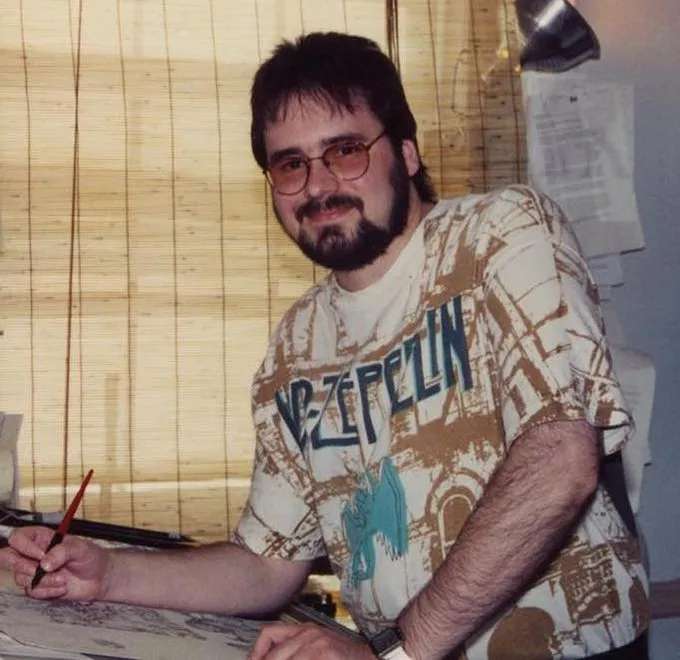
Announced by his son late last night, John Romita Sr., the legendary comic artist has passed away at 93. Romita is considered one of the greats and helped co-create characters such as Wolverine, the Punisher, and Mary Jane Watson.

John Romita Jr., a comic artist as well, stated on Twitter:

I say this with a heavy heart, My father passed away peacefully in his sleep. He is a legend in the art world and it would be my honor to follow in his footsteps. Please keep your thoughts and condolences here out of respect for my family.
He was the greatest man I ever met.

Romita Sr. graduated from the Manhattan School of Industrial Art in 1947, served in the U.S. Army, and began working in comics by the age of 19.

Romita might be best known for his five-year run on The Amazing Spider-Man that began in 1961 taking over for Steve Ditko. The run introduced characters such as Mary Jane Watson and Kingpin. It was during Romita’s run that Spider-Man became the “face” of Marvel.

Romita became Marvel’s unofficial art director in 1972 and the role was formalized the next year. He helped design characters such as Luke Cage, the Punisher, and Wolverine. He served as the art director for more than two decades while still working on various comics.

Romita left Marvel in 1996 and went into semi-retirement. He still worked on projects featuring Spider-Man, Superman, and more.

Through his career, he worked on numerous comics for DC and Marvel and on series such as The Amazing Spider-Man, Daredevil, Fantastic Four, Battle, Girls’ Love Stories, Young Romance, and more.

Romita is survived by his wife Virginia as well as his sons John Romita Jr. and Victor.

In Memoriam: Dina Norlund (1995 – 2023)

Dina Norlund

This week sees the release of The Snowcat Prince by Dina Norlund and published by Oni Press. Norlund was taken at an early age, and passed away last week after a long battle with cancer according to the publisher Egmont. Norlund debuted in 2020 with Snøkatprinsen and went on to earn praise for her work.

Oni released the following statement:

It is with great sadness that we share the passing of beloved Norwegian author and illustrator Dina Norlund, creator of The Snowcat Prince, after a long illness. The Oni family sends heartfelt condolences to Dina’s family and loved ones. With works including WildSproutGreylegs, and Fern & The Moon Rabbit, Dina was an immensely talented storyteller and an inspiration for aspiring artists around the world who turned to her YouTube channel for drawing tutorials and encouragement. Our hope is to continue to celebrate Dina’s legacy through her work.

“Dina was an incredibly talented artist and storyteller,” editor Grace Scheipeter said. “She was such a joy and inspiration to work with, and her passing is a heartbreaking loss. I know her work will continue to inspire young artists, authors, and readers the same way it will inspire me for years to come.”

Oni Press will be donating a portion of the proceeds from the sales of The Snowcat Prince to the Norwegian children’s organization Sykehusklovnene in Dina’s honor.

Our thoughts are with her family, friends, and fans.

Joe Sinnott Has Passed Away at Age 93

Comic creator Joe Sinnott‘s family has announced the legendary artist passed away earlier today at the age of 93.

Sinnott worked primarily as an inker and is most known for a long stint on The Fantastic Four for Marvel working with Jack Kirby and more. Stan Lee called him Marvel’s “most in-demand inker.”

After serving in the Navy during World War II, Sinnott went to the Cartoonists and Illustrators School on the GI Bill.

His first professional job was the backup feature “Trudi” in Mopsy #12 by St. John Publications in 1950. From there he went on to work with Tom Gill as his assistant on Gill’s freelance comics work working on backgrounds and incidentals.

In 1951, he met with Stan Lee and began to work for Atlas Comics. It’s unknown his exact first story there but it might have been in Apache Kid #8 or Kent Black of the Secret Service #3. He’d go on to work on numerous titles for the publisher throughout the decade and was eventually laid off in the company’s implosion in the late 50s.

Before returning to Atlas, he did commercial art such as billboards and record covers and ghosted for DC Comics artists and more.

He would eventually return to Atlas and then Marvel working on titles such as Journey Into Mystery, The Fantastic Four, Strange Tales, Tales to Astonish, Captain America, and more.

He also spent time with Charlton, American Comics Group, and Dell Comics penciling and fully drawing comics.

Sinnott retired in 1992 from comics and instead focused on inking The Amazing Spider-Man Sunday strip which he did until March 2019 at the age of 92.

Winner of numerous Inkpot, Inkwell, and an Eisner Hall of Fame Award, he’s truly one of the greats and leaves a legacy that spans over 4 decades.

Legendary Comic Creator Denny O’Neil Has Passed Away at Age 81

DENNY O'NEIL

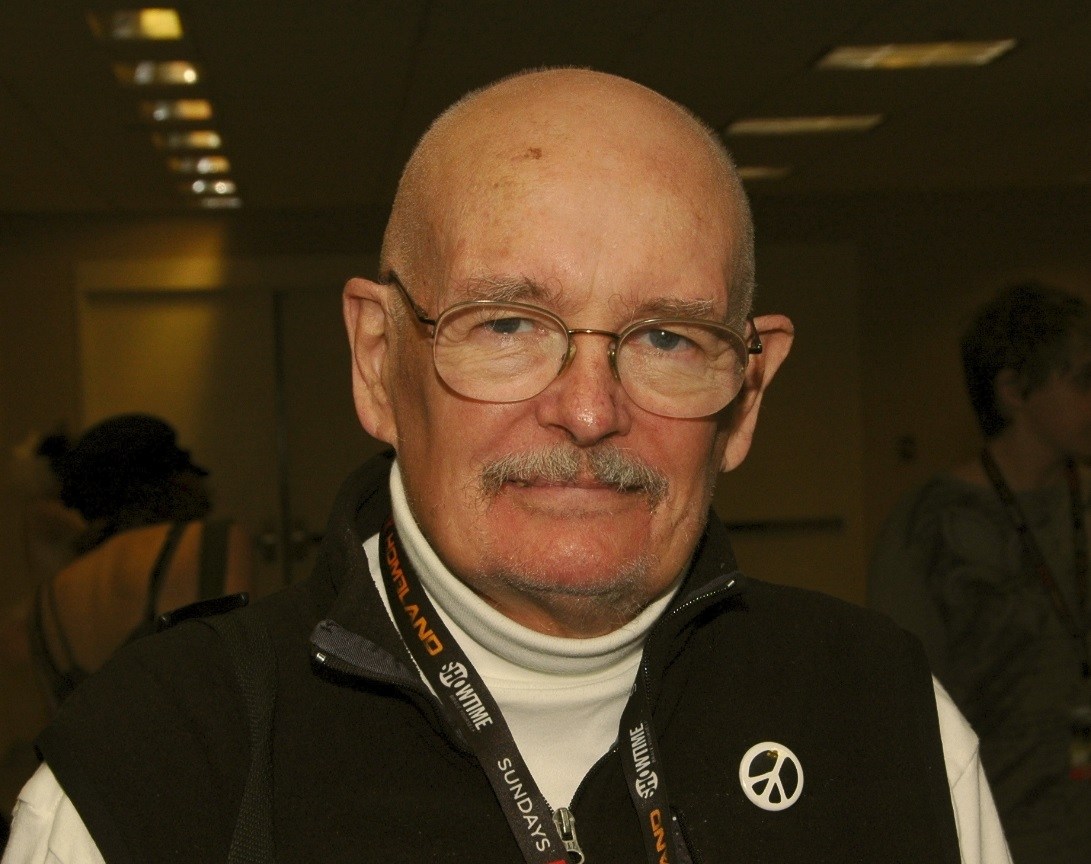
Dennis J. “Denny” O’Neil has passed away from natural causes at the age of 81. The legendary creator passed on the night of June 11.

Born in 1939, O’Neil was a comic writer and editor who worked on some of the biggest titles and, along with Neal Adams and editor Julius Schwartz, helped guide Batman from his campiness to the character we know today.

O’Neil began his career at Marvel Comics after Roy Thomas left for DC. Thomas suggested O’Neil take Marvel’s writer’s test which lead to him being hired and working on Doctor Strange, Strange Tales, Daredevil, and more. He and Neal Adams revived Professor X in X-Men #65.

From there, O’Neil went to work for Charlton Comics using the pseudonym Sergius O’Shaugnessy.

But it was his work at DC Comics that many know him. Joining the company in 1968 he went on to work with characters such as The Creeper, Wonder Woman, and Justice League of America. He depowered Wonder Woman setting her off into a world of international intrigue, something that didn’t sit well with longtime fans. He redefined Green Arrow, stripping him of his wealth and making him a more grounded urban hero. Working along with Neal Adams, the two recreated the character into the socially focused left-wing character we know today. This was the hailed period when Green Arrow’s ward Speedy was revealed to be addicted to heroin.

Along with Adams and Schwartz his work on Batman might define his career. During their 1970s run, the trio moved the character back to his darker roots, getting away from the campiness of the 1960s television show. That shift is felt today and O’Neil helped create such characters as Ra’s al Ghul, Talia al Ghul, Leslie Thompkins, Azrael, and Richard Dragon. He also oversaw the death of Jason Todd and revitalized the Joker and Two-Face.

Along with Neil Adams, O’Neil co-wrote the famous Superman vs. Muhammad Ali in 1978.

Denny had numerous stints and both DC and Marvel editing Frank Miller’s run on Daredevil. According to Bob Budiansky, O’Neil came up with the name for the Transformer Optimus Prime.

O’Neil’s work reverberates today with the creation of characters or interpretations of characters that define how they’re depicted now. From Batman to Superman, Green Lantern to Green Arrow, Wonder Woman to the Justice League of America, Spider-Man to Daredevil, the Hulk to Iron Man, he was and is one of the greats.

Juan Giménez Has Passed Due to COVID-19

JUAN GIMENEZ

Argentinian artist Juan Giménez has passed away due to COVID-19 complications. He was 76.

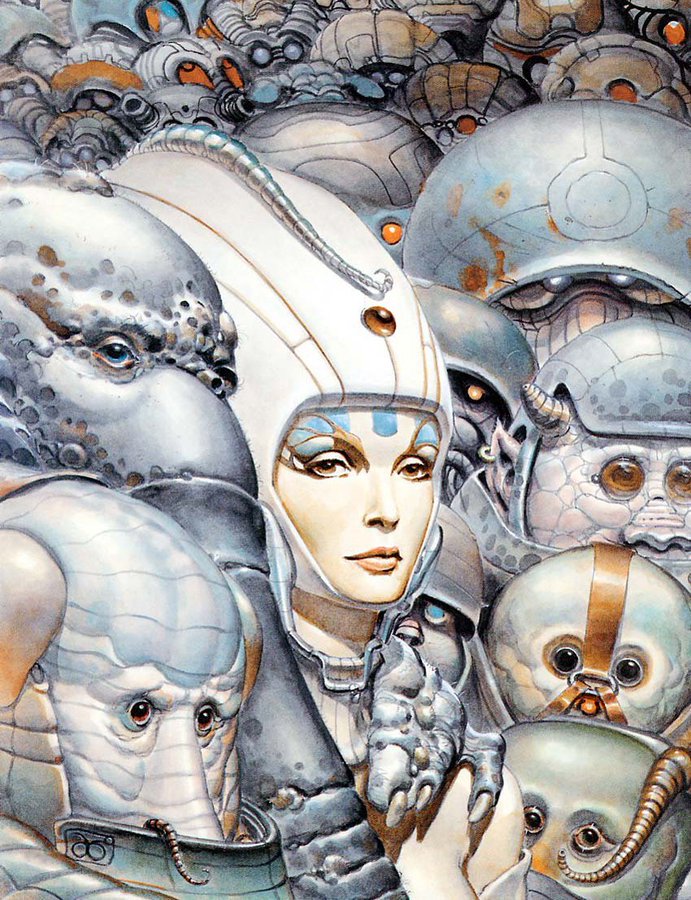
Giménez’s work is iconic and he is best known for the art of Metabarons. He studied art in Barcelona, Spain, eventually moving to Spain. His work was mainly in French, Italian, and Spanish comics with his breakout being Leo Roa. He eventually teamed with Alejandro Jorodowsky for The Metabarons in the 90s which is currently being released in English through Humanoids. He also worked in illustration, storyboards, and concept art for video games and movies. He was the art director for a segment of the Heavy Metal animated film.

His art style is very European with a breathtaking blend of science fiction and fantasy. His detailed work catapulted him to international acclaim and recognition.

Harlan Ellison: A Memorial

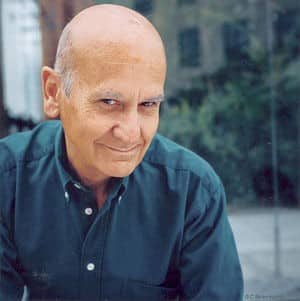
Harlan Ellison died in his sleep. Not a bad way to shuffle off this mortal coil as these things go but I am reasonably confident that he would have preferred some form of corporeal immortality to what dreams may come. I never got to meet the man but he wrote with his heart on his sleeve so I feel like I know him and that, I think, was responsible for most of his appeal. Neil Gaiman once wrote that “writers are liars” but Harlan Ellison was the exception that proves the rule: he was, in his art at least, completely and brutally honest.

I think that maybe this is one reason that he took such umbrage at being identified as a “science-fiction writer”. There’s a certain sense that science-fiction (and fantasy, horror, and comics for that matter) don’t mean anything because they aren’t about real things. This is true to a certain extent. Most of what passes for popular fiction in both its prose and graphic form is hollow, a bronze titan with feet of clay ready to collapse under the weight of its own conceits. Ellison’s fiction, both fantastic and otherwise, was as solid as Mount Everest and (hopefully) just as enduring.

Ellison’s work is special because he combined several traits that are rarely found in a single individual. The first of these is a childlike lust for life that became truly poignant when combined with an adult’s sense that mortality is essentially unfair.  Read a story like “Jefty Is Five” or “Grail” and you’ll see what I mean. 

Ellison was also full of rage, not merely angry but burning with a pure, righteous fury at humanity’s cowardice, cruelty and stupidity. There are some who would characterize him as a misanthrope but I’ve always thought that Ellison was a true humanist who was constantly frustrated by the fact that far too many people are content to waste their small span of years as bigots, dupes and trolls. Some would argue that he hated the internet but I think that he was just annoyed that a small fraction of humanity took the greatest invention for human mass communication since the printing press and turned it into a cesspool where monsters bred unchallenged behind their pseudonyms and avatars. This is the Ellison you’ll see in “’Repent, Harlequin!’ Said the Ticktockman” (my personal favorite), and “I Have No Mouth, and I Must Scream.”

Of course none of that would matter without a fine eye for details and character. Ellison’s people seem to be shards of himself, refracted onto paper through his typewriter in black, white, and a thousand shades of gray in between. And funny too. Only Twain was funnier when Ellison was trying. Read “Prince Myshkin, and Hold the Relish” and “Paladin of the Lost Hour” and you’ll see what I mean.

Ellison was prolific as few writers of his quality are. Among modern writers only Stephen King can compete with Harlan Ellison in term of both the quantity and quality of words produced and even he falls far short on both counts. Ellison wrote almost everything, in almost every genre, and almost every media. The stories I’ve mentioned above barely scratch the surface of Ellison’s genius. All are collected in Harlan 101: Encountering Ellison along with many other classics and this is just the surface of an ice burg big enough to drown a dozen Titanics. 

Harlan Ellison died in his sleep but read and share his work and it will live on so long as humanity dares to dream.

Scott Eric Kaufman: He helped us see and understand things. Rest in Power.

scott-eric-kaufmanThe brilliant Scott Eric Kaufman died on Monday and fandoms are in mourning for him.

Scott was a regular guest on Graphic Policy Radio with good reason: he was incredibly insightful about things others missed. Scott was a Professor of Visual Rhetoric. That means he analyzed how images communicate ideas. He also was a journalist and editor at Salon. He was a humorist– the human medium/autobiographer of two hilariously grouchy old-man cats. He was a lot of other things that made him entirely singular in our world.

Scott wasn’t just a friend of the show. He was also a friend. Our last conversation was me talking about some of the challenges I was facing and our discussion was remarkably frank and honest and dare I say it, healing for me.

We’d never met in person. But he was my friend. Other than going on each other’s podcasts the bulk of our communication was on Facebook. And on Facebook Scott was an entire human being. He was fearlessly emotional and honest. I’d like to think that means I knew him. And in a world where expressing pain, frustration or any negative feelings is seen as a sign of weakness, Scott challenged us to be more human and vulnerable online. It’s why our friendship felt real. I think we need to challenge ourselves to be as REAL as Scott always was.

I’m too sad to make his signature “So Jump Off that Building, Your the Goddamn Batman” memes but damnit, someone should.

Here is a quintessential SEK essay at Salon: Anatomy of An Iconic Image: How this photograph of a protester in Baton Rouge could come to symbolize a movement

Listen to his Graphic Policy Radio podcast appearances (you can find these all on iTunes too)

Jonesing for Jessica (Jessica Jones Episode 4)

Daredevil Season 2

Captain America: The Winter Soldier

Agent Carter Season 1

And of course his own podcast: The best Game of Thrones podcast: The Lawyers Guns and Money Game of Thrones podcast.

But now for his writing…

One of my major frustrations with so much comics criticism is that so called critics don’t ever analyze the art. They talk about characters, story arcs — everything but how the panels are used. Scott always talked about the panels because he was an expert at visual medium.

Watching Watchmen: How unfilmable novels become unwatchable films. (seriously, this is the Watchmen take you have not read anywhere else and need to)

At least explain why John Romita Jr. is one of the top 50 comic book artists

The Dark Knight Returns and The Zack Snyder School of Literal Filmmaking

Organized chaos: Behind every cherished moment at a Comic Con is a team of individuals desperate to please

“I did indeed f*ck up”: How an online campaign against a transphobic comic completely changed the tenor of the debate

But always, always on the Zack Snyder and how awful Randian fanboys are ruining superhero movies.

Ayn Rand’s warped superheroes: Of course Zack Snyder’s vision of “greatness” owes everything to “The Fountainhead”

You can find most of his writing at http://acephalous.typepad.com/ and a compendium of his work on visual rhetoric through 2013

A person is not just their writing. But I’m sure you will find something in this that speaks to you. After you read his writing about it you will enjoy the comic or show you love with new eyes.

You can help his family pay for his final medical expenses here (in other countries we don’t do this. Scott would probably want me to point that out).

Rest in Power, Scott.

Caliber Comics on the passing of founder and CEO Gary Reed

This morning it was announced that Caliber Comics founder and CEO Gary Reed has passed away unexpectedly. The news shook many and resulted in an outpouring of thoughts and memories of those who knew him.

Caliber Comics has now released a statement as well:

It is with deep sadness that Caliber Comics announces the passing of its Founder and CEO Gary Reed. Gary had been a publishing and guiding presence in the comic industry for over 25 years. Having owned a series of comic shops, starting up one of the first major comic-cons, King Con, in the Detroit area, establishing his own publishing company, Caliber Comics in late 80s, Gary also wrote numerous critically acclaimed comic and short stories. Just some of the names that had their early starts at Caliber included Brian Bendis, Guy Davis, David Mack, Vince Locke, James O’Barr, Patrick Zircher, Jim Calafiore, Ed Brubaker, Mike Carey, and Michael Gaydos.

“When Gary and I decided to re-establish Caliber Comics two years we had a long term plan to make the company once again a beacon for independent creator owned titles and help launch the careers of up and coming writers and artists where we could.  And Caliber Comics will continue to move forward with its publishing and multi-media endeavors as we execute this vision.  My deepest thoughts and prayers go out to Jennifer and their three daughters at this time.” Comment Eric Reichert, Vice President.

Our thoughts are with the friends and family of Gary Reed.

Death by Batman Uppercut

death_by_batmanAn obituary in the The Ledger in the Tampa Bay area had an interesting obituary recently. Stephan Merrill was listed as passing away due to an “uppercut from Batman” on February 12.

That’s not a typo according to his fiancée Stephanie Vella who said the deceased would have been “honored” to have died that way.

Merrill’s death was sudden, and there was no initial cause of death. When it came time to write the obituary, the family still didn’t know the cause. The newspaper’s policy is that a cause of death must be listed. A joke was made which got the family to laugh, and they decided to go with that reason.

At first the newspaper didn’t want to publish it, but after an explanation from the family, the newspaper allowed it.

Merrill was a comic book fan, so to honor him, his friends and family wore superhero shirts, and the celebration included Captain America’s shield made from flowers, and a quote from The Avengers.

(via ABC Action News)

« Older Entries Recent Entries »