
What if…? Runaways scratches that nostalgic itch
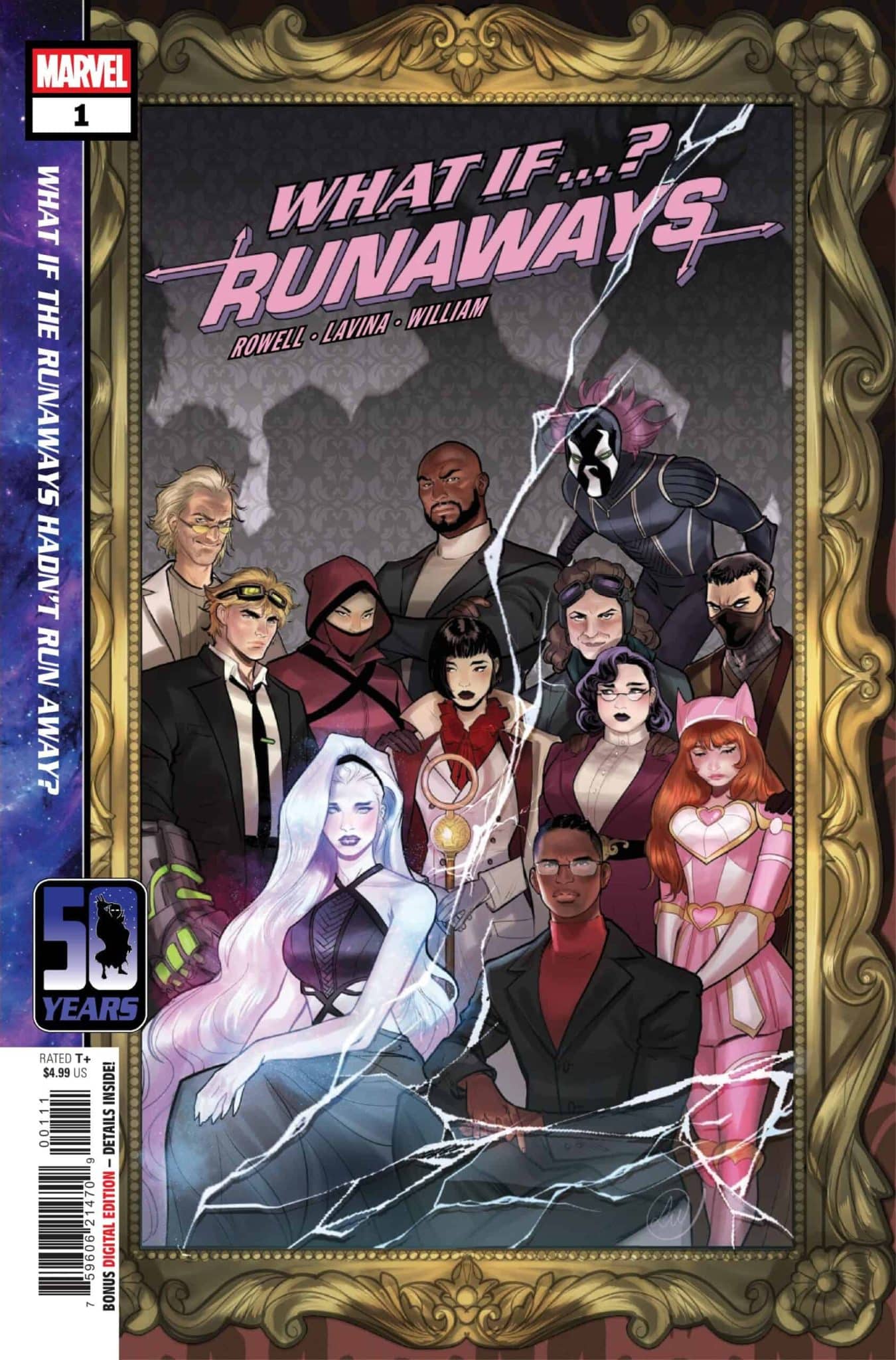
Marvel’s What If? turns 50 this year, and the publisher has been exploring paths less trodden from fan favorite characters and teams. This week we’ve got the Runaways, who breathed new life into the teen superhero genre when they were created by Brian K. Vaughan and Adrian Alphona back in 2003 and even had a three season television show of uneven quality on Hulu. In What If…? Runaways, the Runaways’ most recent scribe Rainbow Rowell, artist Zulema Scotto Lavina, colorist Frank William, and letterer Travis Lanham (Who nails the series’ iconic and at the time groundbreaking upper/lowercase style except when he doesn’t capitalize proper names.) cook up a world where the Runaways become the Young Pride. However, the pull of heroism is never far away, which is kind of a cop out for the “what if” concept, but also true to the heart of the characters and ends up being a metaphor for deconstructing your parents’ beliefs. (I hope no one’s parents believed in universal genocide with the exception of you and their five closest couple friends’ kids.)
Rowell and Lavina begin the twist almost immediately with Alex Wilder being his scheming self, and the group instantly being welcomed by their parents with open arms after they stumble upon a Pride meeting. Because she is much younger than the other team members, Molly Hayes is a special case, and What If: Runaways treats her delicately as her teammates and parents gaslight her into thinking that she’s the colorful superhero Princess Powerful. Her innocence makes Molly the heart and conscience of the team, who genuinely need her because of her powerhouse mutant powers that are demonstrated in the Young Pride’s one and only mission.
This mission is easily the best part of What If: Runaways and features its biggest twist, which is because Victor Mancha never found friendship with the Runaways, he became the powerful robot assassin Victorious, who killed Captain America, and now is being used as an asset by the Pride to keep the Avengers off their tails while they kill even more people to satisfy the Gibborim. His wholesome, Doombot-befriending nature is light years away, and Zulema Scotto Levina and William draw a memorable page of Victorious wordlessly murdering his guards without remorse or conscience. Seeing his malevolence is also a turning point for the Young Pride, who realize that despite the promises of fame, power, and money, ruling a world bereft of humanity isn’t going to be a good time.
Rainbow Rowell plays it both ways with the nature versus nurture debate in What If: Runaways with the Nico, Karolina, Gert, Chase, and especially Molly always being moral, heroic rebels deep down inside (Alex is a different story.) while Victor can’t go against his Ultron-born programming. This approach makes for a better story and more nuance, especially with Alex not adopting a heroic role and being more pragmatic evil than nihilistic evil. Framing the Victorious prison break as a test is also kind of cop out too because Alex is the most amoral of the bunch giving the team a morality test. However, it’s in line with him playing the leader role, which extends to the team’s outfits aka the finest business chic/evil. Nico especially rocks the three piece suit, and it gives her a corporate heavy metal vibe when she uses the Staff of One in the story. The two years of training with their parents definitely made the once and future Runaways more confident of themselves than in the original comic, and it would be interesting to see how it would work out fighting against them and interactions with others heroes and villains. (Seriously, Chase Stein is stealthy, subtle, and still a creep, but he has more moves that blowing up things with his tech fists.) Or if that wouldn’t move the needle, bringing Alex Wilder as a pragmatic antagonist instead of a reluctant hero would be interesting too, especially in our age of moral compromises and profits above people.
What If…? Runaways scratches the nostalgia itch for one of the first Marvel series I read (Shout out to the public library for having them in digest format!) even if Rowell and Levina don’t provide any real answers on the nature vs nurture debate. Evil Victor Mancha is a scary antagonist, and even if the comic doesn’t plunge its protagonists into too much real evil, it captures the persistence and universality of all children eventually opposing their parents and then trying to figure out what they’re actually fighting for.
Story: Rainbow Rowell Art: Zulema Scotto Lavina
Colors: Frank William Letters: Travis Lanham
Story: 8.0 Art: 7.0 Overall: 7.5 Recommendation: Read
Marvel Comics provided Graphic Policy with a FREE copy for review
Purchase: Zeus Comics – Kindle
Discover more from Graphic Policy
Subscribe to get the latest posts sent to your email.
