Tag Archives: paul levitz

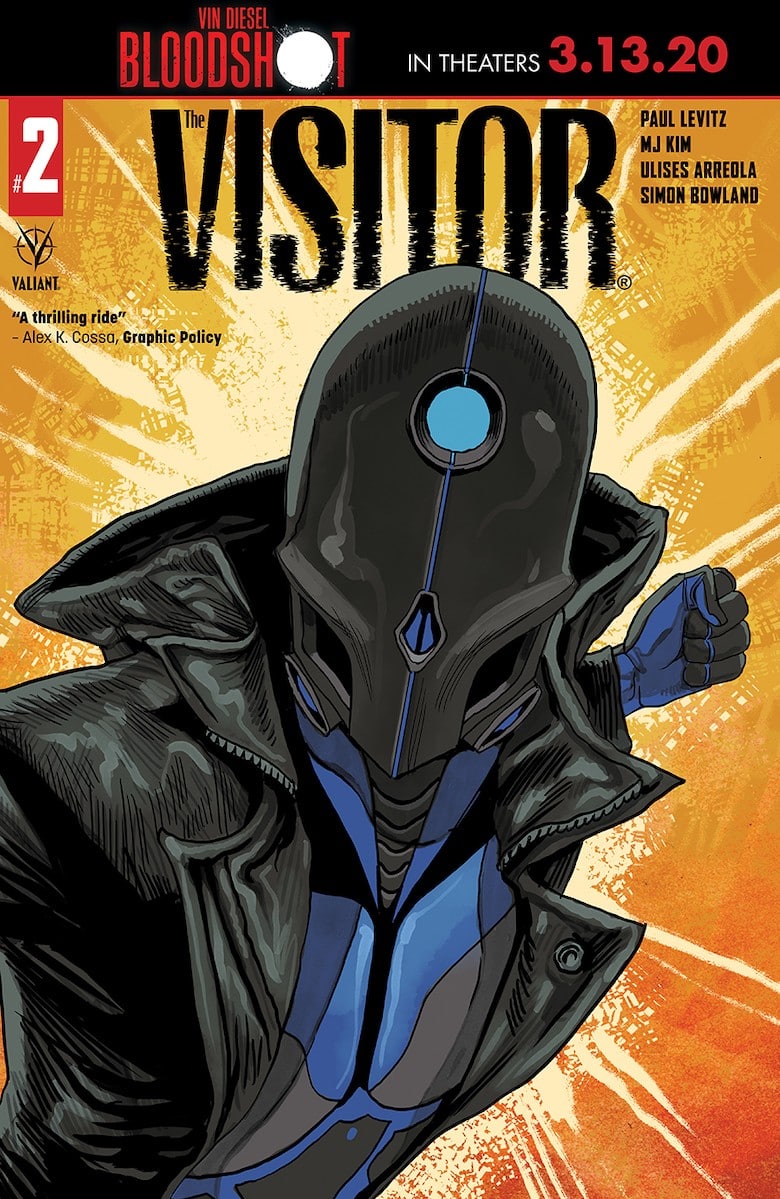
Preview: The Visitor #2 (of 6)

THE VISITOR #2 (of 6)

Written by PAUL LEVITZ
Art by MJ KIM
Colors by ULISES ARREOLA
Letters by SIMON BOWLAND
Cover A by AMILCAR PINNA
Cover B by JON DAVIS-HUNT
Cover C by BECCA CAREY
Preorder Edition Cover by JEREMY HAUN
On sale JANUARY 22 | 32 pages, full color | $3.99 US | T+

Chaos strikes the Big Apple as The Visitor targets a group of revolutionary international scientists!

THE VISITOR #2 (of 6)

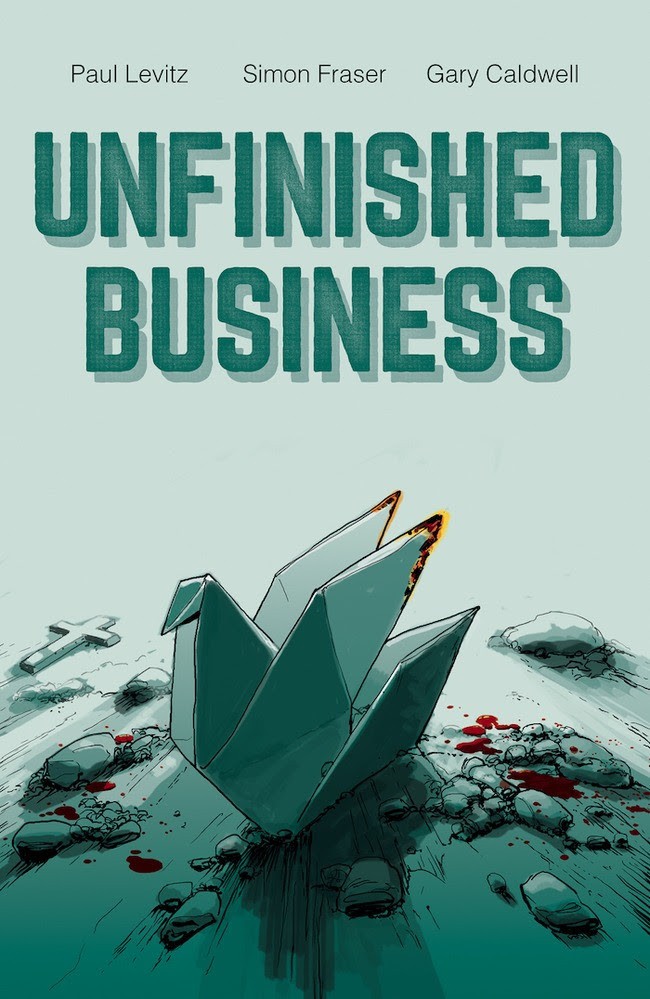
Paul Levitz and Simon Fraser Explore Life After Death in Unfinished Business

From comics legend, New York Times Best-Selling Graphic Books writer and Eisner Award Hall of Fame inductee Paul Levitz and artist Simon Fraser comes Unfinished Business, a tantalizing original graphic novel of dark mystery and magical realism that examines the relationship between science and society through the lenses of multiple religions.

A priest, a minister and a rabbi walk into a bar . . . a would-be lead-in to an amusing anecdote were it not for the three being dead. But this is no zombie apocalypse. The clerics have a bit of unfinished business tied to their demise that heaven needs them to address, if they can. But what is the reward for unraveling the riddle of their deaths—is it life, afterlife, or oblivion? Maybe they can ask the smiling bartender, who just might be…?

Unfinished Business goes on sale in comic shops June 10, 2020, and in bookstores on June 23, 2020.

Unfinished Business

Review: The Visitor #1

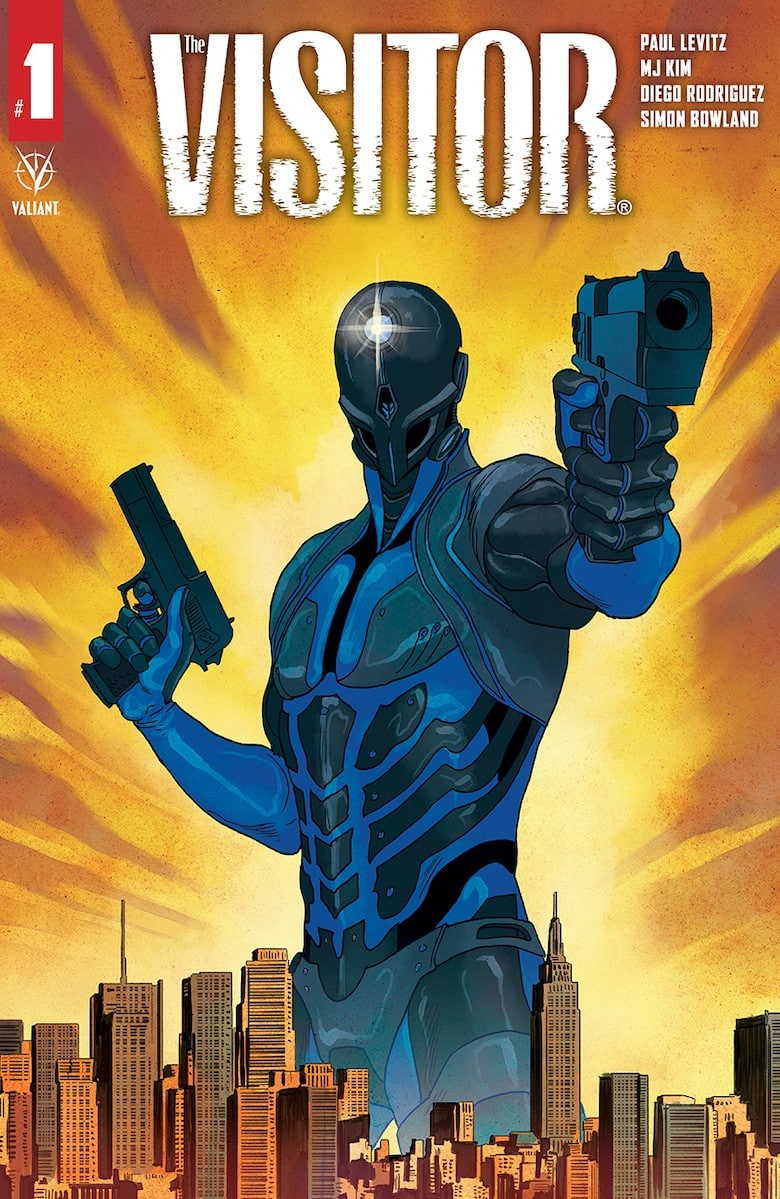
The Visitor #1

Unstoppable. Untraceable. Unkillable. This is how he changes the world…
Who is the Visitor? Why are the leaders of the world terrified of him? And will they live long enough to find out? It all kicks off in The Visitor #1.

It’s ironic in some ways, but I’ve just started trying to track down the original Visitor series published in the late 90’s, long before Valiant relaunched its universe in 2012. That Visitor, who obviously shares a name with this one and little else (that we’ve been told, anyway) was an alien from the far reaches of space who was trying to help Make Things Better on Earth. Although his identity was revealed eventually, on the off chance that the same beat will be revisited here. I think it’s unlikely, but that doesn’t mean it couldn’t happen. If you really want to know, you’re reading this on a device with Google…

The Visitor #1 barely features the title character, showing him primarily in shadows or a hooded trench coat, instead it focuses on a group of scientists with dubious motivations as they try to deploy and/or test a new technology that may or may not improve the lives of the general populace.

Paul Levitz deliberately leaves the Visitor a mystery in his own book, giving him precious little screen time as the story unfolds. It’s an interesting choice to focus less on the title character and more on those whose lives he’s disrupting, but it certainly sets the stage for the moment that we’re able to glean some more information about the character – who he is and what his motivations are – that will hopefully start coming out next issue.

If nothing else, it’s already got me hooked.

Speaking of hooks, MJ Kim‘s artwork is on point in this comic. New York is always a fun city for comics, and the skyscrapers in the background are lovingly rendered. Kim’s panel layout suits this story wonderfully, and combined with the coloring work of Diego Rodriguez, well then you’ve got a brilliant looking book with some fantastic story pacing.

You don’t need to be super familiar with the original Visitor (actually, you don’t even need to know there was an original Visitor), or even the start of what promises to be a thrilling ride.

Story: Paul Levitz Art: MJ Kim
Color: Diego Rodriguez Letterer: Simon Bowland
Story: 8.9 Art: 9.1 Overall: 9.2 Recommendation: Buy

Valiant provided Graphic Policy with a FREE copy for review

Preview: The Visitor #1 (of 6)

THE VISITOR #1 (of 6)

Written by PAUL LEVITZ
Art by MJ KIM
Colors by DIEGO RODRIGUEZ
Letters by SIMON BOWLAND
Cover A by AMILCAR PINNA
Cover B by RAÚL ALLÉN
Cover C by MICHAEL WALSH
Preorder Edition Cover by KENNETH ROCAFORT
Blank Cover Also Available
On sale DECEMBER 18 | 32 pages, full color | $3.99 US | T+

Unstoppable. Untraceable. Unkillable. This is how he changes the world…
Who is the Visitor? Why are the leaders of the world terrified of him? And will they live long enough to find out?

THE VISITOR #1 (of 6)

The Visitor arrives in the Valiant Universe this December courtesy of Paul Levitz and MJ Kim

Who is the Visitor and why are the leaders of the world terrified of him? This December, industry icon and Eisner Hall of Famer Paul Levitz and Russ Manning Award-nominated artist MJ Kim unleash The Visitor from Valiant Entertainment!

The Visitor #1 (of 5), the first chapter of the jaw-dropping limited series, goes on sale December 18th, 2019, featuring colors by Diego Rodriguez, letters by Simon Bowland, and covers by Amilcar PinnaRaùl AllénMichael Walsh, and Kenneth Rocafort.

The Visitor

Super-Articulate: Let’s Have the Legion

I want to circle back to something that I discussed in a video a few weeks ago, and that’s the idea of “unfinished teams” when it comes to toy lines. It’s a phenomenon that plagues a lot of collectors, and not just line completists. Often, fans of a particular team begin buying figures based on that group, only to see the figures stop without the basic, core team ever being finished. Sometimes, a line even gets several figures in before screeching to a halt; then, false hope comes when another line picks up the baton, only for that to fold, too. Today, I want to talk specifically about one of the most popular and, simultaneously, misunderstood teams of all time, and how they’re ripe for figure rehabilitation. I’m talking, of course, about the Legion of Super-Heroes.

Created by Otto Binder and Al Plastino in 1958, the Legion became one of the most popular and longest-running DC Comics teams of all time. The group was in some form of continuous publication from 1958 through 2013; they first appeared as teen allies of Superboy from the future, and grew into a sprawling team whose membership came from more than two dozen planets. The Legion occupied Adventure Comics for several years before bouncing around as a back-up feature at the beginning of the ’70s; finding a home in the Superboy series, they eventually received co-billing by 1973 and completely evicted Superboy in 1980.

Legion of Super-Heroes

In the early ’80s, the team’s popularity was white-hot with the team of writer Paul Levitz and artist Keith Giffen; their “Great Darkness Saga” in 1982 is considered an all-time classic. They were so big that a second book was launched in 1984; Legion of Super-Heroes was sold only in comic shops, while Tales from the Legion of Super-Heroes was sold everywhere. After a year, Tales started reprinting the direct market title, but proved popular enough to run three more years. The 1984 LSH ran until 1989, when the book got a new number 1 and a story that picked up five years later. Known to some as the “Five Year Gap” Legion, the new series told challenging stories about an occupied Earth and the Legion fighting to free it.

In 1994, the old Legion was pushed aside for a new Legion in Zero Hour. The young Legion was fairly popular, but that continuity only lasted 10 years before a completely new one came in. Referred to as the “Threeboot,” this new angle only stuck around for five years. In 2007, the original Legion returned in the JLA/JSA “Lightning Saga” crossover. Every version of the Legion got to play together in the Final Crisis tie-in Legion of Three Worlds. When the “New 52” settled in in 2011, the Legion again had two books, but these were gone by 2013. Since then, there have only been teases and hints that the Legion was coming back, most recently in Doomsday Clock.

The core concept of the Legion (“teen heroes from the future!”) is pretty durable, and has proven pretty adaptable to other media. The Legion have appeared in episodes of Superman: The Animated Series, Justice League Unlimited, Smallville, The Flash, and Supergirl. Beginning in 2006, they had their own animated series for two seasons. The Legion has also popped up in direct-to-DVD films like JLA Adventures: Trapped in Time, Lego DC Comics Super-Heroes: Justice League – Cosmic Clash, and this year’s Justice League vs. The Fatal Five.

For all this, the Legion have had a relatively finite showing in action figure form. There’s been a lot of representation in HeroClix, and a handful of figures (Brainiac-5, Lightning Lad, Cosmic Boy, and Saturn Girl) made it in the DC Animated line offered online. In the DC Direct days, just over a dozen Legionnaires were made, along with villain Mordru; the Legion members were Lightning Lad, Cosmic Boy, Saturn Girl, Brainiac-5, Star Boy, Chameleon Boy, Invisible Kid (Lyle Norg), Ultra Boy, Mon-El, Timber Wolf, Colossal Boy, Sun Boy, and Ferro Lad, as well as Superboy and Supergirl. These were well-made figures, but a consistent complaint was that the figures were made in their 1960s costumes, when their later 70s and 80s looks were by far the most popular versions of the characters.

Those looks were reflected in the online exclusive boxed set that DC Universe Classics offered through Mattel’s MattyCollector in 2011; that epic 12-figure boxed set included Lightning Lad, Cosmic Boy, Saturn Girl, Matter-Eater Lad (YES.), Wildfire, Karate Kid, Superboy, Brainiac-5, Chameleon Boy, Ultra Boy, Timber Wolf, a super-sized Colossal Boy, and sidekick Proty. A figure of Star Boy/Starman Thom Kallor was also available that same year as an orderable figure through Matty’s Club Infinite Earths subscription series. Legion villain Validus made it into production as the Collect-n-Connect figure in one wave. DC Universe Classics was gone at retail by 2012, and the subs dried up by 2014. The DC Multiverse line became Mattel’s DC offering in 2016, but aside from the arguable inclusion of various Supergirl figures, no Legion members have hit shelves since.

So what have we learned, Charlie Brown? When McFarlane Toys takes over the line in 2020, it’s high time for some Legion. For one thing, outside of Saturn Girl and Supergirl, there have been ZERO other women produced as figures. And this is for a team with a huge number of female characters. Dawnstar would likely be the most popular, given her unique appearance, but fans have waited a long time for mainstays like Phantom Girl, Shadow Lass, White Witch, Duo Damsel, Sensor Girl, and many more. Likewise, we’ve been left hanging for years on visually interesting characters like Blok, Gates, and Tellus.

When the McFarlane line starts, it’s very likely that we’ll start with new versions of the big three and others right away. Such has always been the way of new DC lines. But I’d really like to see McFarlane embrace the idea of scale equilibrium and create some complementary, long-requested figures to make up the balance of those assortments. There are plenty of gaps in the JLA, the JSA, the Titans, the Outsiders, and more, but for a team that’s been around since the late 1950s, there needs to be some more respect given to the LSH. Long Live the Legion, kids.

Jim Steranko Joins Comic Luminaries at the 2018 Baltimore Comic-Con

Baltimore’s Inner Harbor comes to life this September 28-30 as the Baltimore Comic-Con returns to the Baltimore Convention Center. Tickets are now on sale. The Baltimore Comic-Con has announced the return of Jim Steranko to the Baltimore Comic-Con! Jim is joined by comic luminaries Joe Giella, Paul Levitz, and Hero Initiative guest Denny O’Neil.

Jim Steranko has cut a ferocious path through the entertainment arts, with a dozen successful careers to his credit: author, magician, illustrator, escape artist, historian. He is cited as one of the prime architects of Marvel Comics and the co-creator of Nick Fury, Agent of S.H.I.E.L.D. He also wrote and drew Captain America, The Hulk, Superman, and The X-Men (for which he designed the classic title logo); generated more than 150 original storytelling devices and techniques that changed the direction of the comics medium; and evolved a devoted cult of followers who have nicknamed him The Innovator. Wizard magazine credits Steranko as the 5th Most Influential Artist in the history of the form. He has painted a multitude of movie posters, record albums, and book covers; and in 1975, created Red Tide, the First Modern Graphic Novel. As the editor-publisher of the international newsstand entertainment magazine Prevue, he conducted hundreds of superstar interviews and penned more than three million words. He numbers among his friends and associates writers Mickey Spillane, Arthur C. Clarke, and Ray Bradbury; the animation giants Ralph Bakshi and Shamus Culhane; and directors Federico Fellini, John Huston, and Orson Welles. As a musician, he gigged with Bill Haley in the early days of rock ‘n’ roll; as a pop-culture icon, he has appeared at more than 350 international events and exhibited his work worldwide, including at the Smithsonian Institute in Washington, DC and the Louvre in Paris; his two volumes of The History of Comics have sold more than 100,000 copies each; as an escape artist, his death-defying performances inspired the character Mister Miracle and, according to Pulitzer Prize-winning novelist Michael Chabon, he was the man upon which the protagonist of The Amazing Adventures of Kavalier & Klay was based; and more-photographer, ad agency art director, sideshow fire-eater, male model, typographer, designer…the list goes on. As a filmmaker, he collaborated with Steven Spielberg, George Lucas – for whom he created the look of Indiana Jones – and Francis Ford Coppola on some of their most popular films. He served as Creative Consultant for the History Channel’s two-hour documentary Comic-Book Superheroes-Unmasked; shook up Twitter with his innovative TNT technique (visit his live Sunday-night sessions by typing in iamsteranko); and is currently prepping An Evening with Steranko for theatrical venues across the country.

His recent Captain America covers topped Marvel sales charts; the IDW SHIELD Artist’s Edition sold out before publication (and won an Eisner Award); and the 2017 Overstreet Price Guide – with his Batman cover – had record-breaking sales. His covers on the record-setting Action 1000 and Captain America 700 have polled as fan favorites. Over the past several decades, he has amassed more than 100 highly-commercial Intellectual Properties, his Theatre of Concepts, which range from children’s interactive-learning entertainments to high-action adult digital gaming, from science fiction to superheroes. His vision is to shape, structure, and synthesize character-driven projects with state-of- the-art technology for the World of Tomorrow. And he’s still the best-dressed man in comics.

Joe Giella returns to the Baltimore Comic-Con for a rare appearance. The oldest living artist to have worked on Batman, this Golden and Silver Age creator worked at Timely, Marvel, and DC Comics as a penciller and inker. In addition to working on the comic, Giella provided pencils and inks on the Batman syndicated strip, as well as the syndicated Flash Gordon, The Phamtom, Mary Worth, and Sherlock Holmes comic strips. The United States Postal Service honored Giella by using two of his pieces of art for their 2006 “DC Super Heroes” collection of postage stamps. He has been honored with an Ink Pot Award, as well as being presented with the Hero Initiative Lifetime Achievement award at the 2016 Harvey Awards ceremony.

Paul Levitz has been a mainstay at DC Comics since 1972, serving as a writer, editor, and President (2002 – 2009) over the tenure of his career. His name is synonymous with the Legion of Super-Heroes, which he wrote from 1977-1979 and 1981-1989, and he created such notable characters as the Stalker, the Earth-2 Huntress, and Lucien the Librarian. Levitz has since returned to writing the Legion of Super-Heroes for the New 52, as well as the Earth-2 centric book, World’s Finest. After ending his career as DC Comics employee, Levitz moved onto the next phase of his career, accepting a Board of Directors position with BOOM! Studios. He has recently contributed Brooklyn Blood to Dark Horse Presents from Dark Horse Comics and guest edited and contributed an essay to DC’s Action Comics #1000.

A board member of Hero Initiative, retired writer and editor Denny O’Neil spent much of his career making an indelible mark at Marvel Comics and DC Comics. Initially brought on as a writer at Marvel, he had a hand in writing or scripting diverse titles including Strange Tales, X-Men, Millie the Model, and Rawhide Kid. After a year at Charlton Comics, he followed editor Dick Giordano to DC Comics, where he assumed writing duties for Beware the Creeper, Wonder Woman, Justice League of America, Green Lantern/Green Arrow, and, perhaps most notably, Batman. On that title, he embraced the dark roots of the character, creating and defining the tone for numerous characters from the series. He returned to Marvel in the 1980s, assuming writing chores on Amazing Spider-Man, Daredevil, and Iron Man where he once again created numerous recurring characters in the respective titles’ mythos. He also served as an editor during his Marvel stint on numerous titles and runs before returning as Batman Group editor at DC, where he also wrote The Question, Batman: Legends of the Dark Knight, and Batman: Sword of Azrael.

Review: Action Comics #1000

Celebrate 1000 issues of Action Comics with an all-star lineup of top talent as they pay tribute to the comic that started it all! From today’s explosive action to a previously unpublished tale illustrated by the legendary Curt Swan to the Man of Tomorrow’s future-this very special, oversized issue presents the best of the best in Superman stories!

Action Comics #1000 feels like an end, a beginning, and a celebration of a landmark moment, one thousand issues and almost 80 years of Superman. The issue is full of some top notch talent with numerous stories of varied style and quality. All of it though is entertaining in some way.

The issue opens up with writer Dan Jurgens‘ finale to his latest run with “From the City That Has Everything.” It’s clear from his latest run (and all his Superman material) that he loves the character and this story which features art by Jurgens, ink by Norm Rapmund, color from Hi-Fi and letters by Rob Leigh, is that recognition as Metropolis honors the Man of Steel. It’s a cheesy story but one that is so in a way that a speech from someone honoring someone else might be. Touching and a fine way for Jurgens to wrap up his run.

The second story is a really cool one that weaves a story out of what is essentially pin-ups. It’s a great way to include such a thing in a comic without it just being images. I hope we see more of this and the art is from a who’s who of creators. It involves Superman going through time and gives a way for artists to take advantage to take us readers through Superman’s history, some of his key moments, and different artistic styles we’ve seen. It’s an utterly brilliant story and presentation and a highlight of the celebration.

Marv Wolfman and Curt Swan team up for “An Enemy Within” which feels like a bit of a retro story in both pacing and art. While not bad it’s an interesting reminder of how much storytelling has changed over the years. I don’t want to give too much away but the story has some nice twists involving a hostage situation.

“The Game” sees Superman and Lex Luthor match wits in a game of chess. Paul Levitz and Neal Adams team up for the story and it’s interesting and one you can probably debate about the deeper meaning. It’d be nice to see this story in a longer form as there’s a lot to work but with just a few pages we don’t get a lot of depth, just fun twists that feel like they’re from the 80s and an homage to an Adams classic moment.

Geoff Johns, Richard Donner, and Olivier Coipel come together for “The Car” which has a criminal recounting how his car was destroyed by a mysterious flying man. The art is fantastic and I think some of my favorite work by Coipel who seems to be channeling Frank Quitely. It’s such a simple story but one that really digs into what makes Superman super.

“The Fifth Season” sees Scott Snyder and Rafael Albuquerque come together as Superman and Lex Luthor come together in Smallvill. It’s an interesting story that again explores the relationship of the two characters. Particularly it focuses on Luthor being oblivious to the good that Superman does that he doesn’t acknowledge or is even aware of. It’s another story that can be debated as far as its deeper meaning and themes.

“Of Tomorrow” is Tom King, Clay Mann, Jordie Bellaire, and John Workman having Superman revisit Earth one last time before it’s consumed by the sun. It’s a reminder of the loss of the character and a deeply touching entry.

Louise Simonson and Jerry Ordway come together for “Five Minutes” which reminds us that Superman has a few jobs, hero and reporter (as well as husband and father). It’s a fun story that plays on the speed of the character and that how he can some times mess up one job due to the other. A funny ending that gave me a chuckle.

“Actionland!” has Paul Dini and José Luis García-Lopez focus on our favorite imp who has it out for Superman. It’s the odd story of the bunch with the focus on the villain but is a reminder that like Superman, some of them have infinite power that they hold back due to… something.

Writer Brad Meltzer and artist John Cassaday honor Christopher Reeve with “Faster Than a Speeding Bullet” that has Superman racing to prevent a gun going off and killing a woman. It’s a fantastic story and I had no idea how it’d resolve. Again though, it’s a reminder of some of the things that makes Superman great and boils the character down to his goodness and how he inspires and is inspired.

“The Truth” is Brian Michael Bendis‘ DC debut with art by Jim Lee and what is supposed to lead into the miniseries The Man of Steel which kicks off Bendis’ run. Out of all of the stories, this is the low point of the issue honestly. Maybe it’s the hype but there’s a new baddie who’s out to kill Kryptonians and while Metropolis is getting destroy two civilians are focused on Superman’s underwear? It’s very Bendis and while funny, especially with Lee on art, it doesn’t quite work and honestly lowered my excitement for what he has coming.

There’s a lot packed in here and something for everyone. No matter the era of your enjoyment there’s a story that fits it and this is really a comic that has an amazing amount of talent. It’s truly a celebration of such an iconic character and for the celebration alone it’s a purchase. At times, comics like this are a let down, but this is the exception with every story entertaining in some way and a few that shine. It’s the rare oversized celebration comic that lives up to the occasion.

Story: Dan Jurgens, Peter J. Tomasi, Marv Wolfman, Paul Levitz, Neal Adams, Geoff Johns, Richard Donner, Scott Snyder, Tom King, Louise Simonson, Paul Dini, Brad Meltzer, Brian Michael Bendis
Art: Dan Jurgens, Patrick Gleason, Curt Swan, Neal Adams, Olivier Coipel, Rafael Albuquerque, Clay Mann, Jerry Ordway, José Luis García-Lopez, John Cassaday, Jim Lee
Ink: Norm Rapmund, Butch Guice, Kurt Schaffenberger, Kevin Nowlan, Scott Williams
Color: Hi-Fi, Alejandro Sanchez, Dave McGaig, Jordie Bellaire, Trish Mulvihill, Laura Martin, Alex Sinclair
Letters: Rob Leigh, Tom Napolitano, Dave Sharpe, Nick Napolitano, John Workman, Carlos M. Mangual, Josh Reed, Chris Euopoulos, Cory Petit
Story: 8.5 Art: 8.5 Overall: 8.5 Recommendation: Buy

DC Comics provided Graphic Policy with a FREE copy for review

Dan Jurgens and Paul Levitz Discuss the Enduring Legacy of Superman

Before Awesome Con, held in Washington DC March 30th-April 1st, the Library of Congress held a discussion with two comic industry legends, Dan Jurgens and Paul Levitz to discuss Superman who turns 80 years old this year. He debuted in Action Comics #1 which was released in May 1938 and a cover date of June 1938.

Levitz has held numerous roles within the comic industry including writer, editor, and executive and was the President of DC Comics from 2002-2009 and worked for the company for over 35 years in various roles.

Dan Jurgens is both an artist and writer who has taken on Superman numerous times, including the famous death, and wraps up his current run with the character in this week’s momentous Action Comics #1000 passing the torch to the next generation of creators in a way.

Before their panel discussion, I got a chance to sit down with the two of them to talk about their fondest memories of the character and what makes Superman so super to survive 80 years.

Graphic Policy: We’re here celebrating the 80th birthday of Superman. What’s your earliest memory of Superman?

Dan Jurgens: I always had that consciousness of Superman. My earliest solid memory was walking into a drug store, which at that point just had your general magazine stand, which had comics on the bottom wrack and buying at that time Superman #189 for 12 cents. That was my first comic book I ever bought. So that was my first solid memory of Superman. I knew who he was but that was my first tangible experience.

Paul Levitz: It’s amazing how you remember the physicality of buying comics.

DJ: Oh yeah.

PL: I think we all did in out generation. I think I probably experienced the George Reeves television show before the physical comics. The first time I had my own Superman comic was Action Comics #300 which my babysitter gave me to shut me up when I was five years old. It had a subscription ad, a dollar for a year of Action Comics. So I conned my parents into sending for a subscription and I had that subscription for a couple of years after that.

GP: Both of you have worked on this iconic character. How does it feel to have worked on a globally recognized character that means so much to so many people?

DJ: I think we’re reminded often at how iconic Superman is. The reality is as a writer or artist when you work on it, it’s a pretty solitary experience. It’s always somewhat alarming to see how you can do something that goes from the privacy of your office or studio and your privacy of your drawing board to become a national or even an international story. And that’s only because Superman is so iconic. And we get reminded of that quite often.

PL: You feel like you’re being made a custodian of something that’s precious to you and precious to other people. There’s a lot of characters you can writer where it’s a character. It’s a story. You can screw up their life some interesting fashion. You can change them in some fashion. Someone out there will care. But, they’re mostly going to care in a good way because they’re going to be curious, going to be interested, going to be excited by what you do. When you’re working with something like Superman that has survived so long, you know you don’t want to be the one to screw it up. You know what it meant to you and you want to hand it on to whatever is going to follow you hopefully in better shape than you got it and hopefully more successful than you got it.

GP: Is there extra pressure working with this particular character?

PL: Yes.

DJ: Yes.

PL: Yes.

DJ: Yes.

DJ: I know when I started on Superman it was as an artist and that was just fine and I could handle that. When the call came in from the editor at the time, a guy named Mike Carlin, he said “would you like to write a couple of issues?” I said “sure, no problem.” I hung up the phone and said “ok, now what have I stepped in?” I’ve never had that with any other character but there’s something about Superman that’s special in that way.

PL: I mean it’s the level of responsibility. Years ago we did a series of tv commercials with an animated Superman and a live Jerry Seinfeld for American Express. I remember sitting there and arguing with Jerry about a line for one of them that I wasn’t willing to approve. I’m arguing about Jerry Seinfeld about something. Jerry’s basically saying, “I know what’s funny.” And I have to say, “it’s my job to know if Superman would say that or not.” And, I was pulling on my collar the whole time. He loved Superman and was trying to be faithful but it just didn’t sound exactly Superman. You just feel that weight on you that you have to get it right.

GP: For each of you, who is the character to you? If you had to boiled him down to his essence, what would that be?

PL: He’s a guy who could have chosen anything but chose to do the right thing always. We’re all flawed, it’s part of being human. We do stupid stuff. We do stupid stuff in our professional lives. We do stupid stuff in our personal lives. We do things we look back on and think can I get a do-over on that day? And, here’s someone who’s really had the ability to make every choice in a way that could have been self-serving and very consistently chosen to do the right thing. That’s a very critical part of the essence of the character.

DJ: I agree with everything Paul said of course. I’ve written many lines in the comics where people speculate on what Superman’s life is like. They say, “he lives on a secret island with an incredible mansion” or something like that or all sorts of crazy ideas because it would not occur to most people that Superman puts on a pair of glasses, has a job, and goes to work and lives among them. I tried to actually to address a little bit of this in Action #1000. There’s a famous Superman story called “For a Man Who Has Everything.” The title of my story is “From the City That Has Everything” and it’s basically Metropolis saying thank you to Superman. How do you thank Superman? There’s nothing you can really do?

PL: *laughter*

DJ: What are you going to do? Buy him a car? Give him a vacation? I mean it really is that. In part of that story they talk about “we don’t know what sacrifices you’ve made on our behalf, but we know it must be substantial.” So, I think that’s something we try to portray. Even in Metropolis they understand that there’s this sense of moral integrity that is there and the selflessness that even though he doesn’t come out and say it people can understand.

GP: When the character started he was so different than he is today. When he began he was fighting slumlords and crooked politicians and today he’s fighting Brainiac and Lex Luthor. He’s changed over the 80 years a lot. What is it about the character that has made him enduring to last 80 years and survive such change?

PL: I start with the triangle. I think the Clark/Lois/Superman relationship was really the soul of the character that gave it birth. We all have our Clark Kent side. Whether we’re male or female. We have moments where we wish someone would see us, see the real us, what’s great about us, at least decent about us. Instead of focusing in on what’s not so great about us, focusing in on our insecurities. Jerry (Siegel) really captured that brilliantly. That’s been a very powerful engine that has made that character endure. Yes, that relationship has changed over the years, but that central triangle is really a pivotal piece of it.

DJ: I think there’s a couple of things. I think one reason he’s been so accepted is that he doesn’t wear a mask. It’s interesting. If we go back to the time, so many characters wore a mask. You look at Batman who in some ways is the polar opposite, and a lot of people recognize that, but here’s Superman and he’s so open. He’s so open because he doesn’t wear a mask backs up that idea of inspiration and hope and moral integrity. Whenever you see the Justice League assemble there’s two characters that aren’t masked and that’s Superman and Wonder Woman. There’s something about that, I think, is some sort of visual clue that’s laid out there that I’m there for you. I think he radiates that. When written well that comes through and that always endures.

GP: For both of you, is there one Superman moment that really sticks out to you? Maybe it’s something you’ve worked on or just something in general about the character?

PL: It’s experiential. If I had to pick a single moment it’s standing on the street watching Christopher Reeve pluck the cat burglar off the side of the building when I was a young man and they were shooting in New York. We were allowed to go and gawk at what was going on. I made no useful contribution to the first Superman movie. I was way too junior. But, to just be part of that was such an astounding experience.

DJ: I think when I was kid I read a story in reprint form, and Paul you can help me out here with the issue number, but it was called “Superman’s Return to Krypton.”

PL: Mhmm. I don’t remember the issue number.

DJ: At that time it was called a “three part novel from what I recall.” That meant the issue wasn’t broken up into a bunch of different stories. But that was the first time I saw, I remember being exposed to the idea that Superman had some sort of loss in his life. It’s basically the story about Superman getting back to Krypton and seeing the life he could have had and what his parents were like. When I read that I remembered thinking, and I was a little bit older because I read it in reprint form, but thinking that there is loss there. That’s kind of knowing someone personally. We see everyone on the outside and think their lives are great and then we get to know them and see that’s not the case. I saw that with Superman and that’s always stuck with me.

GP: Thank you so much for taking the time to chat.

Library of Awesome: Paul Levitz, Dan Jurgens, and DC Comics at the Library of Congress. Watch the video!

The Library of Congress celebrates the 1000th issue of seminal DC comic book series Action Comics, a commemoration of 80 years of Superman, with a live interview featuring DC legends. Former publisher and president of DC, Paul Levitz and famed DC writer and artist Dan Jurgens, known for his work on the Superman series and the pop culture phenomenon “The Death of Superman,” discuss the history of superhero comics, the writers and artists who create comics and the legacy of DC’s iconic Superman character.

« Older Entries Recent Entries »