Check out this year’s speech below.
I’d like to talk about the future, but first, we’re going to do some time travel, back to a time when there was no Internet, no Twitter, no Facebook, no Instagram. A time when there were no comic book stores.
No one here was in this business in the 1950s, but by all accounts, it was a bleak time for comics. Our industry was barely two decades old, yet it was on the brink of collapse.
Political posturing had rendered one of comics’ most vital creative forces – EC Comics – all but mute. Crime and horror comics had been neutered by the Comics Code and for all intents and purposes were dead – shot by their own gun. Comics bowed to outside pressure and erected a self-regulating ratings system that all but outlawed any type of content that might appeal to older readers. Comics were for kids, after all, but even superheroes, so popular during the Second World War, were a faltering concern.
Martin Goodman’s comic book imprint, then known as Atlas, was making due selling monster comics, but by the early ’60s, things were looking grim. You have to look into the darkness to see the light, though, and it was in those dark times that comics found renewed hope.
Maybe something was in the air back then, because the same time that gave us The Beatles and Bob Dylan gave us what we now know as the Marvel Universe.
The Fantastic Four. Spider-Man. The Incredible Hulk. The Avengers.
Stan Lee, Jack Kirby, Steve Ditko, and all the amazing artists that worked alongside them inspired a generation of readers with their work and in doing so, turned Marvel Comics into a towering monolith amid a teetering industry. DC Comics, already well-known for Superman, Batman, and the Justice League was reinvigorated as well, and without much exaggeration, it can be said that superheroes saved comics.
But fast forward to the 1970s.
Comics boomed for a decade, but as the ‘60s receded into memory, so too did the excitement that had grown around comics. Jack Kirby left Marvel for DC. Superheroes began to struggle against the constraints of the Comics Code. Underground comics and black and white magazines like National Lampoon and Warren’s Creepy, Eerie, and Vampirella highlighted the restlessness of a medium eager to grow.
But the newsstands that had long served as comics’ primary sales outlet began their long goodbye, with inexpensively priced comic books first to go as every and all attempt was made to increase profits whilst consolidating space.
Writers and artists entering the industry then were routinely assured the business was on its last legs. Comics were doomed.
All comics were returnable then, and returned they were, in droves. Often, comics didn’t even make it out of the warehouse, resulting in regional scarcity that heightened the value of comics on the growing collector’s market.
In the interest of time, I’m going to gloss over some facts here, but it was at that point Phil Seuling began laying the foundation for the Direct Market.
It didn’t happen overnight. It took years for small used bookstores and head shops to gradually evolve into bonafide comic book stores, but by the end of the ‘70s, there was a system in place and the market as we know it today was in its infancy.
Comics prospered as a result, and it wasn’t just the usual suspects like Marvel and DC.
The undergrounds matured into independent comics, and we got Cerebus and Elfquest.
We got Love & Rockets, American Flagg, and Nexus. First Comics. Pacific Comics. Eclipse. Kitchen Sink. That old master, Will Eisner, unleashed a steady stream of graphic novels that challenged the perception of what comics could and should be, and from the late ‘70s through the 1980s and beyond, comics exploded with creativity.
But fast forward again, this time to the mid-‘90s.
Comics had gained a bit of respect at this point.
Thanks to the talents of Alan Moore, Frank Miller, Art Spiegelman, Garth Ennis, the Hernandez Brothers, and Neil Gaiman, the world was starting to pay attention. Comics weren’t just kids stuff.
But there were problems, too. Black and white indie comics boomed – then crashed – and in doing so, underscored a penchant for short-sighted greed that has ebbed and flowed in our marketplace for decades.
And it definitely flowed in the 1990s.
Just as it seemed that comics were bound for the kind of cultural legitimacy that eluded the art form when mature content was foolishly abandoned with the sudden death of EC Comics in the ‘50s, the market gave in to its most craven impulses. The unprecedented level of creativity that ushered in one of comics’ most prosperous periods gave way to gimmicks.
There were more comic book stores than ever, and there were more comics, too.
Too many comics, with too many covers.
Variant covers. Foil covers. Hologram covers. Embossed covers. Die-cut covers. Gatefold covers. Glow in the dark covers.
Comics were polybagged, comics were commoditized, and comics were hoarded as speculation ran rampant.
Comics were shipped late, and sometimes not at all, as publishers of all breeds galloped ever onward, with little regard for their readers and next to no respect for retailers.
Heroes died, and heroes were reborn. Titles were canceled, and titles were relaunched and renumbered.
The market expanded.
And then it collapsed.
Stores went out of business.
A textbook example of both short-term thinking and extreme hubris resulted in an almost lethal blow to the Direct Market’s distribution system, effectively leaving only Diamond Comics Distributors standing.
More stores went under, with the number of Direct Market retail accounts plummeting to a small fraction of a total that once topped 10,000 – losses that, to date, are far from being recovered.
Marvel filed for bankruptcy.
That was less than 20 years ago, but let’s fast forward again, to the earliest part of this century.
Thanks to Joe Quesada, and Bill Jemas, Marvel Comics was on its feet again. Thanks to the careful oversight of Paul Levitz and Bob Wayne, DC tied together past and present successes alike to build an impressive and sustainable backlist program that in many ways remains the industry standard.
And thanks to the creative vision of as varied a bunch as Craig Thompson, Marjane Satrapi, Warren Ellis, Mark Millar, Brian Michael Bendis, Grant Morrison, Brian Azzarello, Daniel Clowes, Chris Ware, and once again, Alan Moore, Neil Gaiman, and Frank Miller, as well as a growing influx of Manga titles too numerous to list, the comics industry found its spine.
For the first time since the days of the newsstands, it embraced a broad, general audience in a true sense, and comics flourished again.
Things didn’t get better immediately, but the market stabilized, and then the market began to grow. Better still, it began to grow in new and different ways.
New voices sounded the call for new audiences:
Jeff Smith. Brian K. Vaughan. Gail Simone. Jill Thompson. Bryan Lee O’Malley. Alison Bechdel. Robert Kirkman. Jeff Kinney.
As the types of content comics offered expanded, the entire appearance of the market changed.
And here we are today.
Where once comics were summarily dismissed as light entertainment for adolescent boys, there are now comics for everyone by everyone.
In many ways, there has never been a better time to read comics, but as the story goes, “It was the best of times, it was the worst of times.”
A colleague of mine recently said, “I’ve literally never liked working in comics less.”
He is not alone.
Over the past few months, and increasingly since the beginning of this year, I have heard similar comments from all corners of this industry. Writers. Artists. Retailers. People are worried about the future.
Again.
Not because we’re floundering creatively.
You can’t lament the creative health of a marketplace filled with talent like Jillian & Mariko Tamaki, Raina Telgemeier, Jeff Lemire, Nate Powell, Kieron Gillen & Jamie McKelvie, Jason Aaron, Marjorie Liu, Julia Wertz, Ron Wimberly, Matt Fraction, Ed Piskor, Fiona Staples, Kelly Sue DeConnick, Scott Snyder, Rick Remender, Erika Moen, Ming Doyle, and the many, many, many other creators who have made modern comics the vibrant experience it is today.
No, people are worried because we are once again falling victim to our worst instincts. We are letting short-term thinking dictate our future plans. We are letting greed guide our way.
Here’s another dog-eared quote:
“Those who fail to learn from history are doomed to repeat it.”
We’ve outlived the Comics Code, we’ve outlived the newsstands, we’ve grown up – but for all the lessons we’ve learned along the way, we somehow still can’t bring ourselves to think responsibly about the future.
We worry too much about what we don’t have instead of focusing on what we’ve got, and we keep marketing the fear of missing out as excitement.
So we’ve gone back to gimmicks, to variant covers and relaunches and reboots and more of the same old stunts disguised as events, when really all our readers want are good stories.
We’re giving them great jumping on points over and over again, but it’s becoming so commonplace our audience instead sees them as opportunities to cut and run. We are misinterpreting sales spikes for long-term success, and worst of all, we are spending so much time looking at how to keep going that we’ve lost sight of where we were heading in the first place.
And when I say “we,” I speak not just of publishers, or of retailers, but creators as well.
We are, sadly, all at fault.
But happily, we are all in this together.
So here’s the good news:
It doesn’t have to be this way.
We come to ComicsPRO each year, and to Diamond’s Retailer Summits, to exchange ideas about how to make the market better. Publishers come here for feedback from their retailer partners, and retailers attend to learn from one another. More recently, creators have been welcomed to engage in the discussion, as well they should – they’re as much a part of our industry’s infrastructure as anyone else, arguably the most vital part.
We all want advice on how to make the comics industry the best it can possibly be, so I hope what I have to say next is taken in that spirit.
We need to stop.
If you – if any of us – are putting short-term needs ahead of long-term thinking: Stop.
Stop stunting your own growth by doing things the way they’ve always been done.
Stop being so beholden to the past – to past victories, past mistakes.
Stop revelling in nostalgia for a time long gone by. Creatively, the golden age of comics is now – let’s save our nostalgia for today.
If you are a retailer ordering more copies of a comic than you can sell simply to qualify for a variant incentive: Stop.
Variants don’t build a lasting readership on the books you’re trying to sell. At best, they pay short-term dividends; at worst, they deprive fans of something that is limited in nature. All comics should be for everyone. Not just collectors. Not just whoever has the most cash on hand.
By the same token, if you are a publisher trying to force your comics into the marketplace with exclusive variants retailers can only order by irresponsibly increasing their orders: Stop.
You’re getting a short-term sales boost at best, and you don’t benefit from stacks of unsold books cluttering up the stands or being shoved into dollar boxes.
And really, what do any of us gain by spamming LootCrate customers with copies of a book that will be selling a fraction of its first issue total when #2 ships, other than market share? We’ve all played that game, and without a clear marketing plan for how to convert those blind box copies to real sales, to real readers, it gets us nowhere. Stop.
Likewise, if you are a publisher putting out too many comics: Stop.
It’s a crowded marketplace.
It’s getting more crowded by the week. We’ve all put out books we felt deserved a better response than they received, good books — great books, even — and they are getting lost. I’ve seen it. You’ve seen it. None of us are immune to this, so just stop.
And start giving more consideration to what the market really needs. Look at what’s out there, what niche is already being filled.
I’ve been turning down zombie pitches for years, but now, I’m turning down sci-fi pitches. I’m turning down horror pitches. Crime pitches. Anything we already have in abundance. Unless there’s something truly remarkable about those kinds of comics, the market is filled with them already. There are other seams to work. Now is the time to start digging deeper.
If you are a creator – a writer, an artist, both – the legends of yesteryear have done their work. For decades now, we’ve all been standing on the shoulders of giants. It’s time to stop. Let them have their rest. Now is the time to create new characters, to explore new worlds, to tell new stories. Our industry – our medium – has a long and magnificent history, but the past isn’t going anywhere. The future is an open road.
Look at the success of Jessica Jones and The Walking Dead. Look at Mark Millar and Dave Gibbons’s Kingsmen. Or Phoebe Gloeckner’s Diary of a Teenage Girl. All ideas from this century that inspire genuine excitement.
The whole reason the entertainment industry is currently so besotted with comics is because we have traditionally been a wellspring of new creativity. Stop acting like interchangeable brand managers and create.
And if you are a publisher trying to shore up your numbers by releasing more than one issue of a single title a month: Stop.
It’s makes it next to impossible for retailers to accurately track sales, it puts undue pressure on even your most loyal fans, and it deprives writers and artists of the ability to do their best work. In fact, it all but robs artists of the ability to establish the kind of multi-issue runs that define long and illustrious careers.
It’s up to you – the retailers – to be more vocal about how these practices affect them. Idle grumbling will change nothing – and there is no actual benefit to suffering in silence. Start saying when enough is enough.
It’s also time for retailers, no matter how new you are to running a store or how long you’ve been at this, to start taking a closer look at the wide variety of comics on the market today. It is unconscionable for any store owner to say they are too busy to read comics. We are all busy. Every day, all day. It’s part of the job.
When creators ask me what kind of comics we’re looking for, I tell them to do whatever they are burning to do, because if they’re passionate about their work, it will show. We are all part of the same eco-system, and the same applies to you. It’s sales 101. If you know your product, you’re going to have more success selling it.
Want proof? The Valkyries.
There’s a not a publisher in this room that hasn’t benefited from the hard-working support of The Valkyries, of women all over the country enthusiastically handselling comics and graphic novels they read and love.
Start reading comics. You’ll sell more of them.
The same goes for publishers. Read your own comics.
I read as many of our books as I can. Sometimes I don’t like what I read. Sometimes the pitch is better than the finished product. You can’t win ‘em all, but you learn something by reading what you publish, even if it’s what mistakes to avoid in the future.
We all make mistakes, but the biggest problem we have right now, something too many of us suffer from right now in 2016, is unbridled self-interest. For better or worse, though, we are all inexorably linked in a market that is almost completely unique – creators, publishers, retailers, distributors.
The Direct Market was a brilliant idea that saved comics from near extinction, but today it is virtually the last bastion of independent, owner-operated entertainment retailing. Over the years, the Direct Market has provided a birthing place for unprecedented creativity, creativity that today is making comics such a powerful force in the broader culture. We absolutely want to find new ways to reach readers – through bookstores, through digital distribution – but for all its quirks, the Direct Market should always be a safe haven that we can all depend on, not a strip mine. And if we want it to carry on into the future, then we should all stop taking it for granted.
A few parting thoughts for everyone here.
Firstly: You can have no greater ally than someone willing to tell you you’re doing something wrong, someone willing to say, “No,” when everyone else is saying “yes,” wisdom be damned. Honesty is the only true currency, and right now, it’s something this industry needs more than ever, because if we can’t be honest with each other — with ourselves — about where we are and where we’re going, the mistakes of the past will bear down on us with a tonnage so staggering we may never rise again.
Secondly: If what you’re getting from all this is a condemnation of what you are doing, if you somehow think that by offering advice on how to build a better, more sustainable industry means I want your company or your book or your store to fail, I promise you that is not the case.
It’s not easy to get up in front of people time and again to call attention to longstanding problems, but I do it because I care deeply. This is my 24th year in this business, and there’s one reason and one reason alone that I’ve stuck around this long: I love comics.
I would hope everyone here feels the same, and that whatever differences we may have, we share a mutual love for the work we create and a fervent desire for our industry to succeed. Regardless what you may think of me, in my heart of hearts, I am only saying what I truly believe needs to be said, and I guarantee you, it’s nothing I don’t say to my own reflection in the mirror.
We all have our successes – we all make mistakes – but we can all do better.
There is a whole wide world outside these doors, and everything we create or sell can appeal to just as many people as we can reach. I want all of us to thrive and to succeed, not just today, but far into the future.
And finally, somebody sent me a wonderful David Bowie quote that I have personally found incredibly inspirational over the past few weeks:
“If you feel safe in the area that you’re working in, you’re not working in the right area. Always go a little further into the water than you feel you’re capable of being in; go a little bit out of your depth. And when you don’t feel that your feet are quite touching the bottom, you’re just about in the right place to do something exciting.”
We can all learn from that, not just because they’re wise words, but because exciting is in our DNA.
We’ve overcome hardship before, and we’ve been through numerous changes and come out stronger on the other side. My greatest hope is that instead of gritting our teeth and looking at the year ahead as a painful period of transition, we greet the challenges before us, not as obstacles, but as a new opportunity.

 Nowhere Men #8 is the second issue of the new arc since the series returned in January following a two year hiatus. Eric Stephenson doesn’t waste any time in this issue, forcing the scientists (and the reader) to think about the moral consequences of a secret spaceship crashing and spreading a disease that could kill millions.
 ComicsPro took place this week and saw the gathering of numerous store owners and publishers. There, publisher’s visions of what’s to come over the next year are presented as well as their general thoughts on the state of the industry.
 Nowhere Men


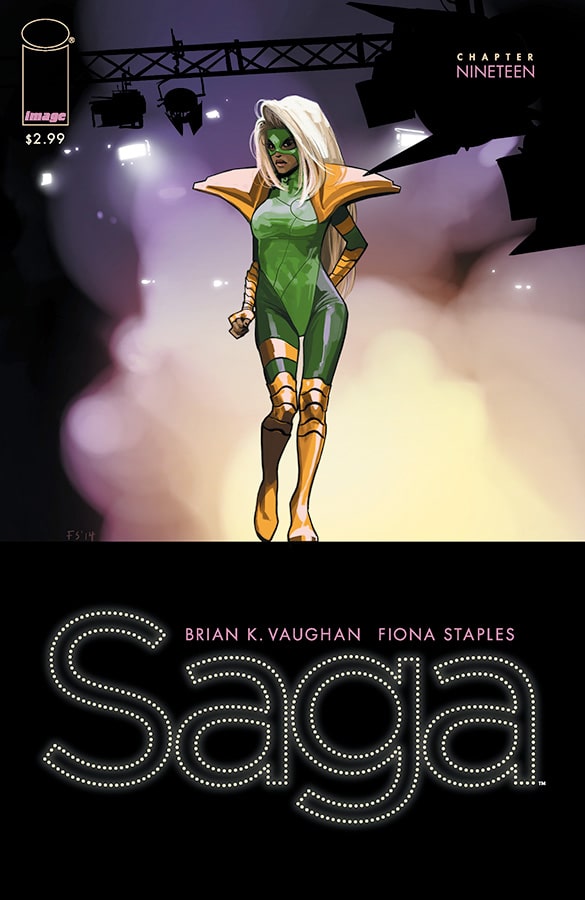

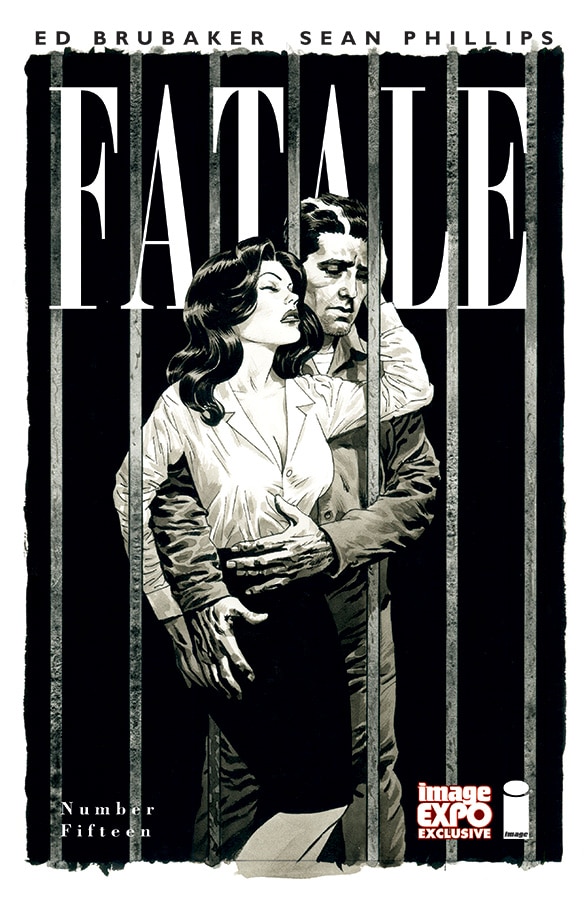
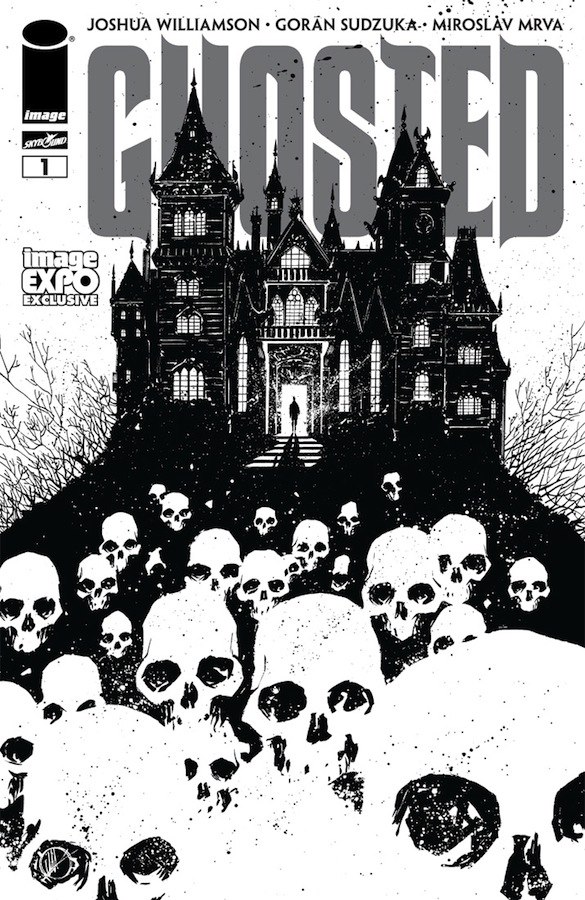
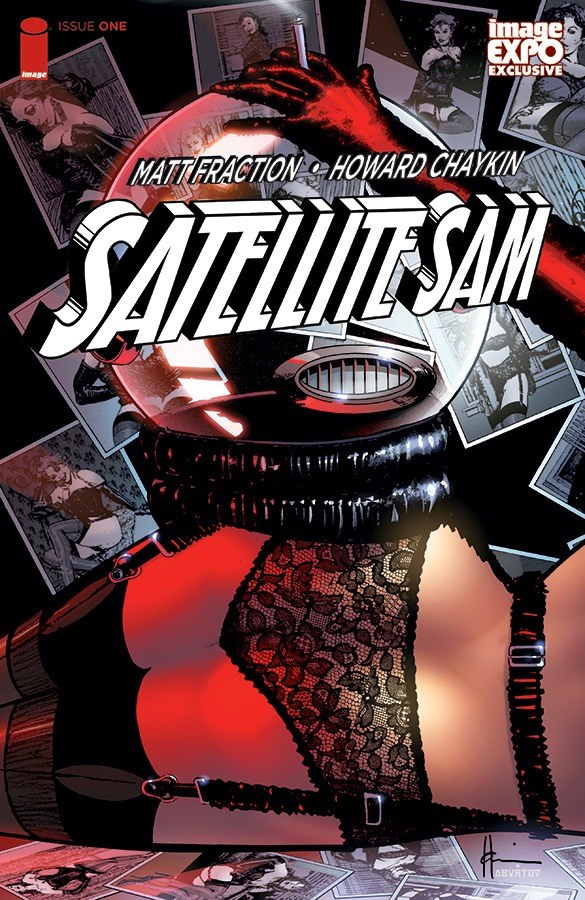
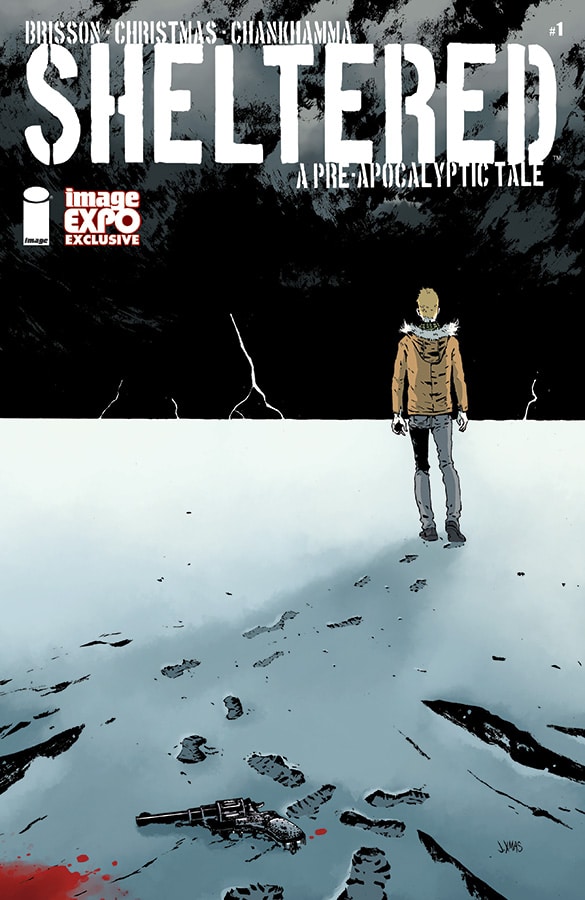
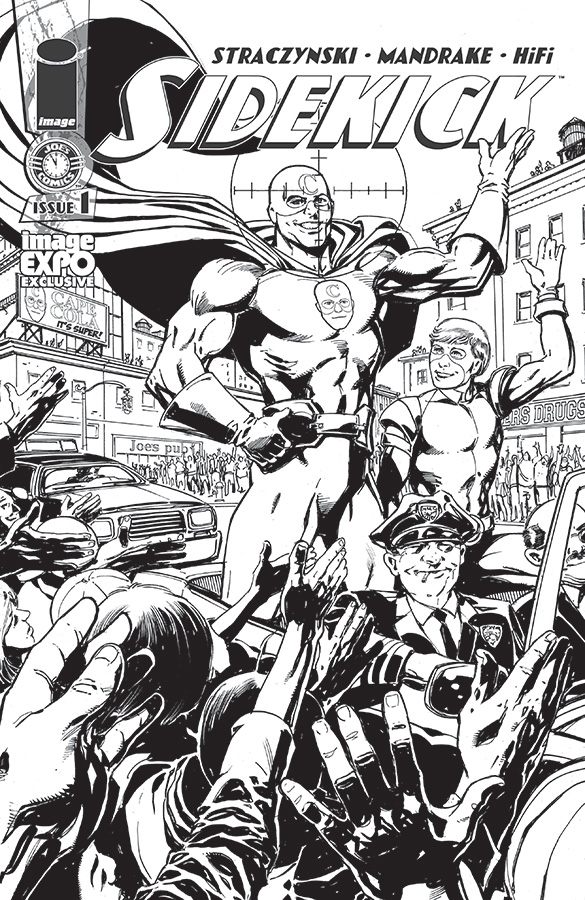
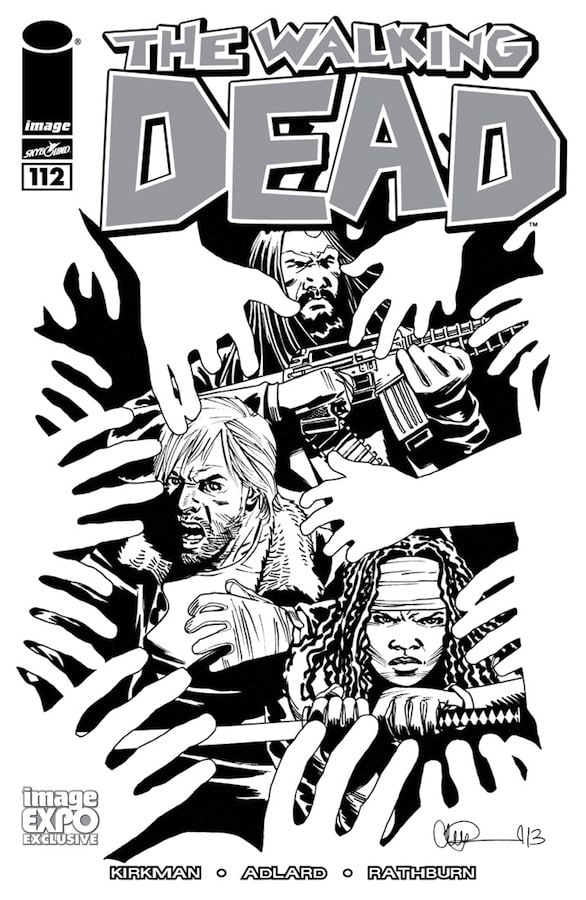
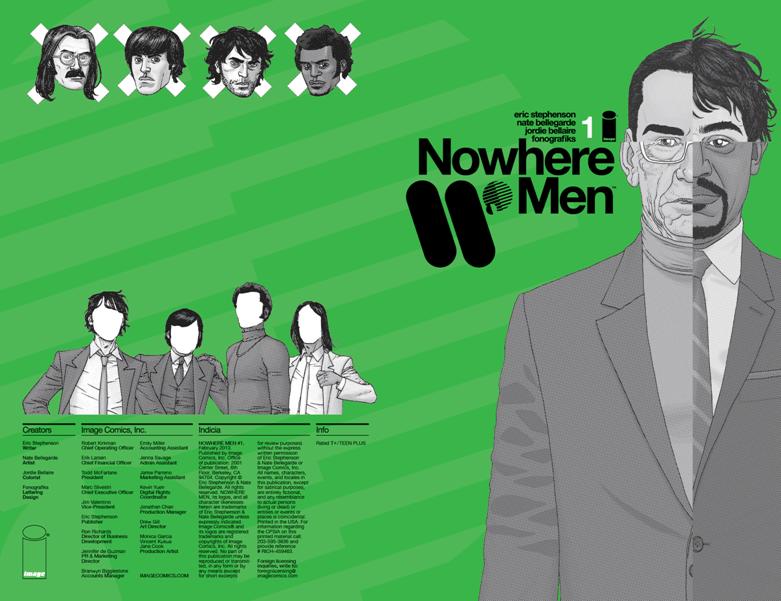
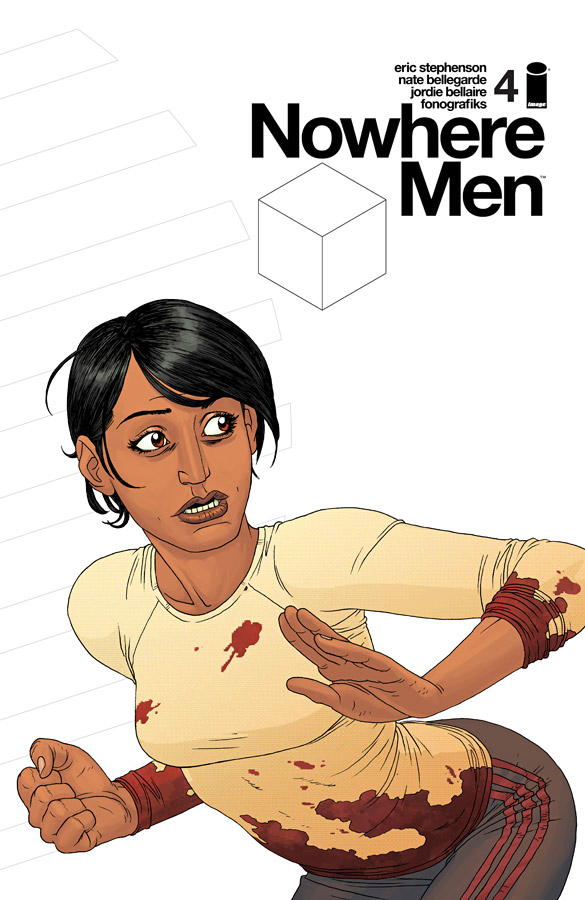 Nowhere Men #4 by Eric Stephenson and Nate Bellegarde has sold out the same day as it was in stores, March 13, even after a stellar increase in initial sales of 34% over issue #3. The new printing will be in stores on April 10 and can be pre-ordered now, Diamond Comics code: FEB138044.