Tag Archives: a.c. medina

New York Comic Con 2017: A.C. Medina & Fernando Pinto Talk Their New Series Monarchs
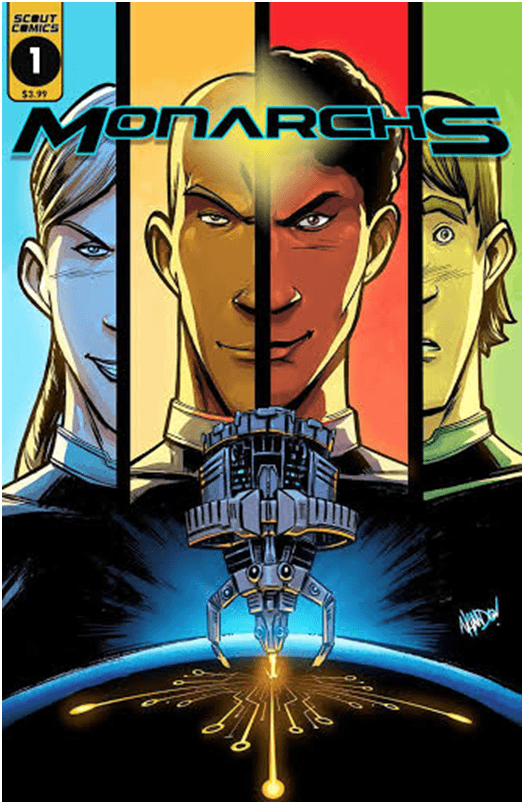
Four geniuses untouched by society descend upon Vida, a euphoric planet of endless resources with a sentient race of beings dependent on strict guidance from their leaders. However, a simple scientific experiment becomes an epic story of war, discovery, and the battle to become… a MONARCH.

Announced at New York Comic Con 2017, Monarchs is a brand new comic series from writer A.C. Medina, artist Fernando Pinto, and being published by Scout Comics.

We got a chance to talk to A.C. and Fernando about the series which debuts in 2018.

Graphic Policy: Tell us about the series. I saw the promo image at Baltimore Comic Con, but what’s the premise?

A.C. Medina: Monarchs is about four young geniuses who are sent to planet VIDA, with the task of figuring out the best form of leadership. VIDA has every resource imaginable, if you can think it, VIDA has it. Be that plants that produce actual fire embers or even electricity in the form of rocks in the mountains. The best resource found on VIDA however is its ‘Senties’, an enhanced sentient race of beings, who our leads create at their leisure,  and are broken down into five basic categories who can only do what their leaders tell them to do. With this in mind our four leads duke it out on planet Vida taking what should be theoretically a simple experiment and turning into an life long battle for supremacy.

Fernando Pinto: So like a lot of stuff to draw. But, you know, fun -cries-

GP: Where did the concept come from? Was this something you two worked on together to come up with?

FP: Alan came to me with a couple of pitches for ideas he had that he thought I would be a good fit for after seeing my work online. We settled on this for the first project to do together after I told him I really dug the world building aspect Monarchs had. I’ve been complementing it with my ideas on the graphic side but the start of it is all Alan.

ACM: The idea came from gaming mostly, I enjoy story telling in all formats and have been lucky enough to grow up with games where story matters just as it does in top selling novels. I always make sure I start with a just of an idea before finding a collaborator who fits it. When I found Fernando’s website I knew I wanted to work with him instanly so I fired off a few e-mails with some blurbs (baby ideas) for him to choose. He chose Monarchs, and from there we just ran with it. I’ll run ideas by him and he’ll tell me if I’ve finally lost it or have something worthwhile, a bunch of late night Facebook messages and e-mails and next to you know, we had a story.

GP: You said the story is influenced by RTS games. How so? Any in particular? Did that also influence the art at all?

ACM: No one particular game but just the genre over all, or better yet, a specific moment that happens towards the end of any RTS game. It’s when you know you got the game in the bag or that you’re fucked. All the moves and choices you’ve made have reached their end game and now it’s time to sit back and watch the results. This can be oddly beautiful if you’re winning or rage inducing sadness if you’ve lost. In either outcome you see the effects of power. When you win that power is kind of addicting, you revel in it. In Monarchs we highlight this feeling and jack it up into some epic sic-fi. Leadership has become a game to most when it really shouldn’t be, this is what we want to explore.

FP: I’m not the biggest gamer but my art in general I feel has a lot of game influence ’cause I love game art to death. Specially the Capcom and Square Enix stuff from the 90’s. Th energy those characters and designs have has always been an inspiration. So I’m sure there’s a bunch of stuff in there from that.

GP: So tell me a bit about the characters of the comic. Who will we find within and when it came to their look and design, how was that split between you two?

FP: Alan gave me all the freedom in the world when it came to designing the world and characters. It’s been a pleasure to work on this book. He just lets me do my thing and comments on what he thinks works or makes small notes about anything that he thinks might work better. Though if I’m being honest most of his comments are “This is awesome!” which makes me feel very warm and fuzzy inside.

ACM: Our cast contains three ‘archetypes’ of leadership and one wild card, our cover might give away who the wild card is…or does it? We wanted to play with the usual tropes of a leader and genius. We have Hakim, he’s more of the usual go-to sci-fi genius where as Shaunda and Brigitte are both very different, especially when you compare them with what Sci-Fi has told us about geniuses and leaders, Ozzy most of all. I always say my stories involve outlandish scenarios with real people in the middle of it all, Monarchs exemplifies that I feel. You’re witnessing  four high level scientists who have never had real family, who in fact, have removed themselves completely from the idea of family act like, well, family. All while trying to complete an almost impossible task in the name of progress.

GP: How long have you two been working on this series and what was the process like between you two coming up with the characters and world?

ACM: Since June… We think, it was hot outside, and we’ve been rolling ever since. It’s always a pleasure when you land a creative team that just gets it right off the bat, Fernando and I have yet to really disagree on anything which has been nice. I try to make sure the creative environment in my projects has a real team effort, sand box feel to it. With Fernando it’s been nothing less of pleasure, he slam dunks my alley oops and really brings them to life. Every so often we meet on Skype to iron out specific details and goals and I’m constantly annoying him with texts, be that of our project or just some gifs. Triona Farrell, our colorist, has brought so much to the table as well, her colors are just awesome every time, its like getting two sets of present each time this team puts in new work. We ask everyone on the team what they like, what they don’t like and make sure everyone has their say. Micah Myers our letterer who I always compare to having a shut out closer in your bullpen, he always packages it all together.

FP: Yeah, June is when we started. Alan contacted me online around April and, as it goes with most Catfish scenarios, we stroke up a (working) relationship. I’m actually a 67 year old woman from the Ukraine. Sorry you had to find out this way, dude

After I turn in my pages, Triona and Micah make them look waaaaaay better than they actually are. Those dudes are awesome

GP: I want to focus on the world and character building a bit. It’s clearly a team process but what was that like? Was there multiple iterations? How did you come up with the specific characters and their looks?

ACM: When coming up with characters I take what I like most from people and what I hate the most from people, and make some crazy love childs in between. With the world aspect, its about the same, for instance nature plays a big part into our story. On Vida you can find anything, from your more traditional resource to your very non-traditional resource. For me its the part of Sci-Fi many people seem to forget, it can be fun! We have plants that can turn into fire depending on how you use them, we have massive castle on a beach (we’ll let you guess what it’s made out of) that serves an actual powerful fortress, basically, we had fun  creating our world. Our characters have faces you don’t often see associated with their roles in most stories. In our story there are four empires, these four have very different ways of running things and we wanted them to look the part. Plus we also really wanted to have space samurais fight space marines, did we mention we have those? We do. They’re pretty awesome.

FP: Alan is really open to ideas and concepts. Once I get the descriptions I’ll throw a couple sketches his way and we’ll take it from there. I usually get a visual in my head and go from that. Seems we seem to be in the same page design wise with Alan, it’s been a really smooth ride.

GP: “Our characters have faces you don’t often see associated with their roles in most stories.” I take it you mean gender or their race? How do you decide on stuff like that as a creator?

FP: I think it comes to representation. I love comics and movies but a lot of times there’s a lot missing culture wise of the types of characters that star in commercial stories. Both of us being Latinos and the story is about the building of a new civilization. I think we’re trying to do our part to broaden that without being preachy about it.

GP: Does their ethnicity impact the character at all? And I should add how did that impact the look?

ACM: Yeah that’s one way to describe it but for me it’s more about what they represent. Our leads originally were born in different parts of the world before being brought together at a very young age. None of them have lived with culture or a society, our characters have been trained since birth to be leaders everything they know about culture and society, they’ve been taught. For me as a writer my job is to represent their backgrounds in a natural, and fluid way. I like my characters to make their mark and for that I like to mix things up, I by no means am trying to prove something more than I’m just trying to tell a good story.

A character’s ethnicity should always be considered in the creative process but it all depends on what the story is asking for. Our characters are archetypes in humanity’s way of leading. They can be anyone from anywhere, it just happens that Hakim is man of color as Shaunda is a woman of color, but that’s not why they exist, they both play a much bigger role than that. This will be my third project in and one thing you can see from my work is I have characters from all different parts of life and different looks but I always stress I am just telling stories. I want my storytelling to be as natural as possible and for that reason they reflect the world I’ve lived in. I’ve grown up in the tri-state area my whole life with a Dominican mother who’s been working in American business since Reagan, she’s the only hero I have and a constant source of inspiration. It’s the upbringing I try to reflect in my work, it just happens to be that for some it can be a shock.

GP: When it comes to this world, how much of it is mapped out? Is there some guide book somewhere?

ACM: Maybe for a trade we’ll go all inside the cover of a Lord of the Rings book with a map, maybe a for table top as well? Fernando is already hating where this is all going. That said, story wise Vida’s geography plays a huge role, without spoiling too much the natural challenges of Vida itself present a much bigger problem to our leaders than they originally thought it would. It makes for some exciting pages to say the least and again, nature is a big component of our story.

FP: As for the mapping, it all loves in Alan’s brain, I got a general Idea of where it is all going but I get surprised every time I get a script from this kid. He’s good at keeping me on my toes. After I’m done, Triona makes it all look lush and alive with her magic color powers.

GP: Interesting on the nature aspect. Have you come up with the ecosystem and “rules” of this world?

ACM: Our leaders learned everything they needed to know about Vida from their Ever-guide, at the end of each issue we’ll ‘pages’ from the Ever-guide for our readers to enjoy. There you’ll learn how the Senties are made, how Vida exists, and a bunch of other cool stuff. We took inspiration from game design on how our tech looks and works, the world building on this book has been a blast.

FP: As for the eco system, let’s just say that progress does not come without its price. We won’t go all “Mother” on you but there’s some pretty earth shattering stuff coming as the series progresses. Both my arm and tablet will be very tired after all this.

GP: This sounds very cool. Can’t wait to read it!
New York Comic Con 2017: Scout Comics Announces Four New Titles

As New York Comic Con 2017 kicks off today, Scout Comics has announced four new series that will make their debut in 2018. Cyber Spectre #0 is available this weekend at Scout’s New York Comic-Con booth, #950.

MONARCHS

Four geniuses untouched by society descend upon Vida, a euphoric planet of endless resources with a sentient race of beings dependent on strict guidance from their leaders. However, a simple scientific experiment becomes an epic story of war, discovery, and the battle to become… a MONARCH.

Created by A.C. Medina & Fernando Pinto
Written by A.C. Medina
Art by Fernando Pinto

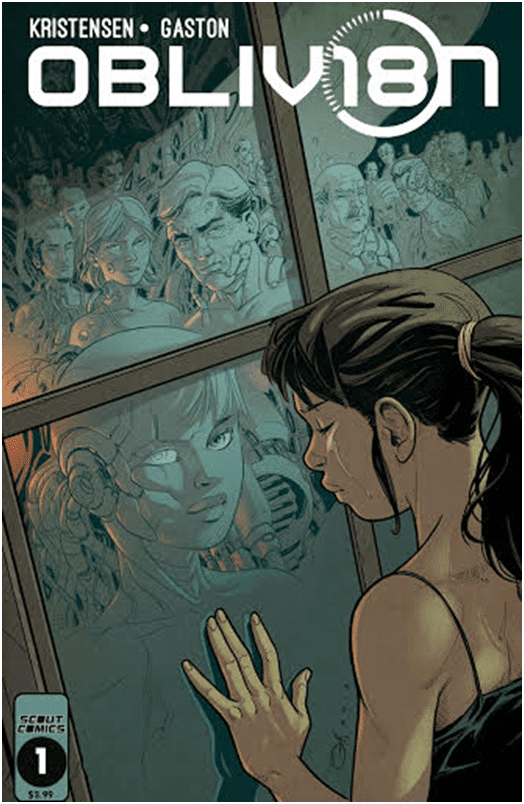
OBLIV18N

A phenomenon they call “The Oblivion” has caused a huge percentage of the population – seemingly anyone with authority – to vanish without a trace.

As the world quickly falls apart, strange alien creatures and technology begin to appear, threatening the already hysterical populace.

When rumor spreads that a blind ten-year old boy has visions that connect him to the people who’ve vanished, the remaining population wants to either anoint him as a savior, or crucify him.

At its heart OBLIV18N is a rite-of-passage in the ultimate jungle, exploring: savagery vs. civility, independence vs. family, survival vs. ethics, violence vs. diplomacy.

Created by Ken Kristensen (Netflix’s THE PUNISHER) with art by Francesco Gaston (HULK, JUDGE DREDD).

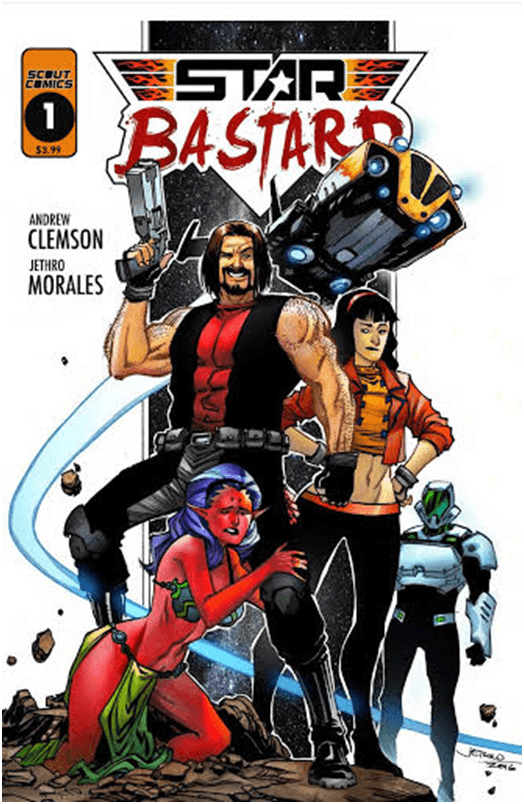
STAR BASTARD

Star Bastard follows a long-suffering crew led by the Galaxy’s most obnoxious jerk as they hunt a mysterious figure across the stars. Clumsily searching for answers to the mystery of their captain’s past, they leave a trail of pissed off aliens, dead bodies and unpaid bar tabs in their wake.

Think GUARDIANS OF THE GALAXY meets DEADPOOL.

Think EASTBOUND AND DOWN… in SPAAAAAAAAAACE!

Think the comic industry’s next R-rated hit.

Created by Andrew Clemson
Art by Jethro Morales

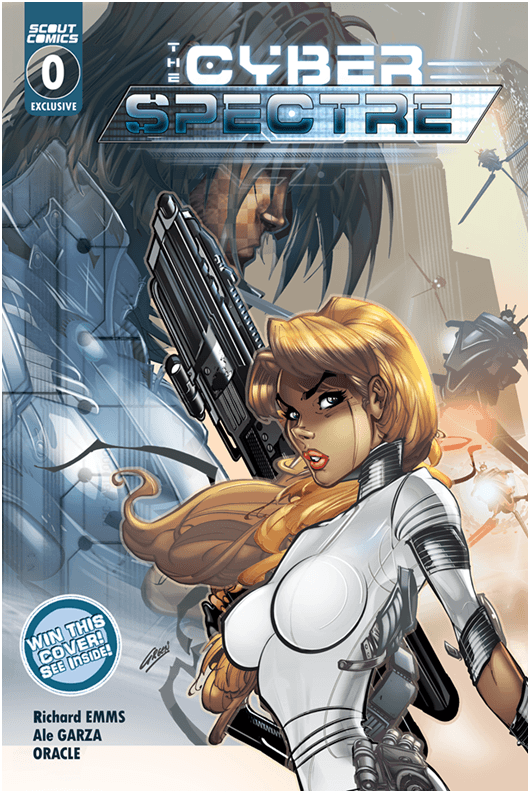
CYBER SPECTRE

In a world run by super-computers and where the judicial system is purely digital, there is no human error, just a singular artificial intelligence that calculates the outcome of every possible crime. From murder to drug deals, the computer determines the fate of all humanity. But there’s a crime that seems to have slipped through the cracks  – Who or what is the Cyber Spectre?

Created and written by Richard Emms with art by Ale Garza.

Madison’s Favorite Comics of 2016

Last year I prioritized cutting back on cape books and diversifying the publishers and stories that I read. Though many of the comics I read weren’t published in 2016 (especially ones I read during Women’s History Month) I still found it hard to narrow down the list of ongoing series I particularly loved throughout the year.

Here are ten comics I couldn’t put down in 2016:

goldie vance #1 featured

10. Goldie Vance by Hope Larson and Brittney Williams

This is a series I would have loved as a child. Goldie is the perfect mix of Nancy Drew and Eloise (of Plaza fame). Goldie Vance is great for a younger audience but doesn’t shy away from emotionally complex stories. Goldie and her friends are well-rounded characters with a wide range of interests who readers–young and not-young alike–will be able to relate to.

elasticator #1 featured

9. Elasticator by Alan C. Medina and Kevin Shah

Elasticator is the kind of smart, political superhero comic I wish was more prevalent. The writing is fresh and interesting and Shah’s art is lively and animated with great colors from Ross A. Campbell.

Snotgirl

8. Snotgirl by Bryan Lee O’Malley and Leslie Hung

Lottie Person is just about as far away from Scott Pilgrim as you could get, though they do, at times, share a similar self-absorption. Snotgirl quickly became one of my favorite series of the year, because while not many people can say they’re successful fashion bloggers, they can likely relate to Lottie’s personal problems. Leslie Hung and Mickey Quinn provide gorgeous, vibrant visuals and the best wardrobe in comics, to boot.

welcome back 1 featured

7. We(l)come Back by Christopher Sebela and Claire Roe

Reincarnation? Check. Assassins? Check. Shadowy organizations? Check. A+ fashion choices? Check. Reincarnated assassins in love running from other assassins who are trying to assassinate them? …Also check. What more can you want from a story?

shutter #18 featured

6. Shutter by Joe Keatinge and Leila del Duca

Shutter is one of Image’s most underrated titles. The story follows Kate Kristopher, the daughter of legendary explorer Chris Kristopher, and her discovery of some little-known family history. The comic is consistently interesting not only because of its plot, but because del Duca and colorist Owen Gieni are constantly experimenting with narrative structure and using different techniques to influence how the story is read.

clean room 1 featured

5. Clean Room by Gail Simone and Jon Davis-Hunt

Clean Room is a creepy psychological horror comic about journalist Chloe Pierce’s investigation of self-help master Astrid Mueller, who Pierce suspects is more cult leader than anything else. Or is she? Mueller is a fascinating character, and the unknowable question of which side she’s actually on only adds to the story’s suspense.

the-wicked-the-divine-24-featured

4. The Wicked + The Divine by Kieron Gillen and Jamie McKelvie

What if you could be a god, but you’d die within two years? Consistently equal parts entertaining and heartbreaking with consistently incredible art and color from Jamie McKelvie and Matt Wilson. You’ve probably heard of this one.

mockingbirdyas

3. Mockingbird by Chelsea Cain, Kate Niemczyk, Sean Parsons, and Ibrahim Moustafa

One of the few superhero comics I read this year, Mockingbird was one of my absolute favorites. Cain writes Bobbi Morse as confident and smart, and the result was a fun mystery thriller with gorgeous art. The series also featured some of my favorite colors and covers this year, by Rachelle Rosenberg and Joelle Jones.

By the time I write my 2017 list, I might be over Mockingbird’s cancellation.

bitch planet 2 b

2. Bitch Planet by Kelly Sue DeConnick and Val DeLandro

2016 was light on Bitch Planet–only four issues were released throughout the year–but continued to provide insightful and relevant commentary in what turned out to be a period of rapid change in the real-life political landscape.

monstress-7-featured

1. Monstress by Marjorie Liu and Sana Takeda

Monstress started strong in 2015 and only got better. The main character, Maika, is a teenage girl living with a monster inside, something she learns to live with and use to her advantage as the plot develops. Monstress is full of unrepentant female characters set in a stunningly rendered fantasy world.

Review: Elasticator #6

screen-shot-2017-01-02-at-10-56-54-amMikey Mazzagatti’s story comes to an end with the latest issue of A.C. Medina and Kevin Shah’s Elasticator. The previous chapters chronicled the rise of Brother V and his drug empire–and the life-changing effects they had on Mikey.

Despite its limited run, Elasticator has pulled off a thought-provoking story over the course of six issues. Superheroes have always been a political entity, and by focusing on some of the people who were most affected by the 2008 recession. Elasticator takes the reaction to the recession to some improbable extremes (superpower-giving drugs, for example), but all events are underscored by a focus on humanity.

Issue six jumps right into the fray. The fight for Brooklyn’s fate was set up throughout the previous issues, and Medina and Shah waste no time in diving into the conflict. As with previous issues, Elasticator distances itself from other superhero comics by pausing on those affected by the events as they unfold.

The pacing of the story has always been quick, but moments where residents of an apartment building band together to save a small child slow the frenetic pace just enough that the story isn’t a wild rush to the finish. The timing of Elasticator has always been narratively jumpy, but the story is bookended by scenes that mirror the introductory issue, bringing everything full circle.

The effect is a cool storytelling trick. Mikey has visibly and emotionally changed between his first appearance and his last even though very little time has passed while he told his story. The ending is complex and somewhat unexpected. Without getting too spoilery, the ending is ambiguous and multifaceted, forcing readers not just to think about the outcomes, but how events influence people in different ways.

Shah’s art and Ross A. Campbell’s coloring are, as they have been, perfectly geared to the story at hand. The fights have dramatic flair (pages 6-8 are tons of fun to read) but the quiet moments don’t lose any of the lovely vibrancy present throughout the comic. Shah’s style is expressive and lively, perfect for the tone and pacing of the story.

Elasticator–though not for all audiences–is a fun comic that packs a punch, and with a team that works as well as this one, we can hopefully look forward to future comics.

Story: A.C. Medina Art: Kevin Shah
Story: 9.5 Art: 9.5 Overall: 9.5 Recommendation: Buy

Graphic Policy was provided with a FREE copy for review

Scout Comics Announces Four New Series at New York Comic Con

Kicking off Saturday at New York Comic Con, Scout Comics announced four brand new series coming to shelves in 2017.

WELCOME TO PARADISE

Written by A.C. Medina
Illustrated by Morgan Sawyer
Colored by Ross A. Campbell
Lettered by Micah Myers

Filled with deadly drag races for sport, routine mass killings called “the cleanings”, and where the common house is the size of a closet. Meet Manny, a fun loving, chop shop delivery boy, on the run and in possession of what may be humanity’s last hope. The only problem is Manny’s world is a bunker the size of California and just about everyone in it wants him dead.

welcome-to-paradise

INFERNOCT

Written by Mina Elwell
Illustrated by Eli Powell
Colored by Tristan Elwell
Lettered by Rob Jones

As Sam attempts to discover the real reason the people of her town are being destroyed, she becomes aware of mind-redning creatures that feed off the sanity of their victims. It’s up to her to do something about it… if she can only keep her grip on reality.

infernoct

LITTLE GUARDIANS

Written by Ed Cho
Illustrated by Lee Cherolis

Little Guardians tells the story of two young people switched at birth and now unknowingly living each other’s lives. Subira was supposed to be the next Guardian of Yowza Village, but she was born a girl. Instead she lives a quiet life working at The Item Shop never knowing what should have been. Idem trains to be the next Guardian and tries his best to be the warrior he was never meant to be. How will the next generation survive the choices made for them as strange incidents start plaguing the village and demon attacks appear to be on the rise?

little-guardians

MINDBENDER

Written by James Pruett
Illustrated by Federico De Luca

Alex was only 7 when he first awakened the power that left him comatose for nearly 16 years, an evolutionary power lying dormant in all mankind, bubbling within the unconscious mind waiting and yearning to be unleashed. Finally, a young child was able to touch this untapped force and the results were catastrophic. Those that would use his ability have been awaiting Alex’s awakening. Now, that wait has ended, and the world will soon learn the true potential of mankind. But will Alex be a vanguard for the world or will he be responsible for its annihilation?

mindbender

Baltimore Comic Con 2016: Chatting Elasticator with writer A.C. Medina

Meet Mikey Mazzagatti, better known as Elasticator. The comic series is the best superhero you probably don’t know about, but should.

Mixing vicious action with a touch of the real world that we can relate to the fun series is a favorite of ours.

We got to chat with writer A.C. Medina at Baltimore Comic Con about the series as we await the sixth and final issue.

Review: Elasticator #5

Screen Shot 2016-08-30 at 7.59.23 PMAlthough A.C. Medina and Kevin Shah’s Elasticator is a superhero story, humanity has always been central to the characters and their motivation.

The release of Elasticator #5 marks the penultimate issue. Though the series was originally slated for eight issues, Elasticator’s Facebook page shared a post explaining that the series would end with six issues rather than eight. With that being said, the action comes to a head in #5. Mikey makes amends with some characters whose lives have gone on while he trained to fight.

Elasticator has always been, in large part, about the economic downturn that hit the United States in 2008. It is a major point of the series and, seemingly, a catalyst for the things to come. The series does a great job of exploring the ways in which Brooklyn’s various socioeconomic groups were affected. Brooklyn was hit particularly hard during the recession, with neighborhoods with high populations of people of color faced staggering rates of unemployment.

It’s this perfect storm of factors that cause a man like Brother V to gain power. In Mikey’s world of mind and body bending drugs, Elasticator explores a number of hypothetical outcomes. The rise of Brother V is a logical (if not very, very extreme) response to the recession.

With Elasticator #5, the focus shifts from the politics to the action. As the second-to-last issue, readers are set up for an all-out brawl that will decide Brooklyn’s fate.

As always, the art is spectacular and well-suited to the action-packed nature of the story. Even in a fight, the characters remain expressive and each has a visibly distinct style of fighting. The creative panel layout keeps the story flowing through character interactions and altercations alike.The fights can get slightly muddled at times, but are overall enjoyable and fun to read. Mikey is a character you can’t help but root for, and though his life experiences are drastically different than anything probably all readers will experience, he’s a relatable character. In part this is due to the expressions and body language Shah has given him. Ross A. Campbell’s coloring is a wonderful addition to the series. The colors are bright but always tonally appropriate for the story. Each scene comes alive in vivid brilliance, with art and colors working in tandem.

With elements that work so well together, Elasticator will be dearly missed after it ends with the next issue.

Story: A.C. Medina Art: Kevin Shah
Story: 9.4 Art: 9.0 Overall: 9.2 Recommendation: Buy

Scout Comics provided Graphic Policy with FREE copy for review.

Review: Elasticator #4

Screen Shot 2016-06-28 at 5.34.36 PMThough writer A.C. Medina and artist Kevin Shah have largely avoided the usual superhero tropes thus far, it’s pretty impossible to have a superhero story without the main character going through a little bit of hell first.

A little bit of hell is exactly what’s headed Mikey’s way in Elasticator #4. In a departure from previous issues, the cover looks like something straight out of Mad Max: Fury Road. The previous issue ended with Mikey’s fate hanging in the balance after taking a serious beating. Regardless of whether the intent was to draw a subtle comparison to Mad Max, the effect is something of a haunting reminder: The only people in control are the ones at the top of the food chain.

As always, humanity is placed first and foremost in the story, pitted against the cold and unforgiving politics that run Mikey’s Brooklyn. Elasticator #4 fills in a lot of the gaps of the story so far, rounding out details of Mikey’s past and keeping the reader updated on what Mikey’s mom is going through during his absence. The emphasis on characters outside of the superpowered Mikey reinforces the sheer humanity of the story. Brooklyn is Mikey’s home, but it belongs to others. What happens to Mikey happens to others, and what happens to Mikey has consequences on others. The overall effect of this special emphasis is like watching a slingshot stretch as the tension in the story builds. Sooner or later, it’s inevitable that something’s going to give.

Shah’s art still brings the series balance. The panel layout helps the story maintain its fast pace with innovative designs that create movement to match the action in the story, and coupled with the bright colors and expressive characters, it’s a great mix. The unique and non-static panels give the series a more intimate feel by subtly highlighting movement and elements of the environment within each frame.

Elasticator is the perfect comic for geeks interested in, well, geeky things and politics. While this issue focuses less on the politics than its predecessors, no hero would be complete without an origin story and Elasticator, as usual, delivers.

Story: A.C. Medina Art: Kevin Shah
Story: 10.0 Art: 10.0 Overall: 10.0 Recommendation: Buy

Scout Comics provided Graphic Policy with a FREE copy for review

Review: Elasticator #3

stl003075In this issue: the moment we’ve all been waiting for. A.C. Medina and Kevin Shah’s Elasticator hasn’t left readers wanting for action so far, and Elasticator #3 doesn’t disappoint.

The series began with the arrest of Mikey Mazzagatti and has since centered on the events leading up to the arrest, including the complex politics of Brooklyn and a rampant drug problem. With necessary introductions covered in issues #1 and #2, the bones of the story are shaping up into a formidable beast. Elasticator #3 provides some extremely satisfying answers to some of the overarching questions of the series without losing the same smart storytelling that has been a defining characteristic of the story so far. Fans will finally get Mikey’s superhero origin story and discover more about Tiggy and the combination of drugs and political machinations that got both of them in trouble in the first place.

In three issues, Medina and Shah have created the kind of comic that many superhero stories could take notes from. Both the setting and characters are richly developed, with compelling motivations that propel the plot. The focus on real life issues and creating very human characters elevates Elasticator beyond a run-of-the-mill superhero story, and the attention given to developing background characters ensures the story remains, at a base level, very much about humanity.

As with the previous issues, Shah’s art is a highlight. The characters are dynamic and stylized, which keeps the story from feeling too heavy even as it explores topics like drugs, violence, and political corruption. The character designs are diverse and unique, with expressive faces and body language that highlight the constant motion on each page. Ross A. Campbell has brought some incredible colors into this issue, bringing a wonderful vibrancy to already lively characters. Mikey’s warm, rich palette gets a moment in the spotlight toward the end of the comic that also serves to emphasize the contrast and burgeoning conflict between him and Brother V’s forces. The art has always been a standout, but it also seems to get better each issue.

The Elasticator team has created a book with depth, great characters, and themes that get more compelling with each chapter. As the intrigue heightens, Elasticator is a comic that deserves its spot on your pull list.

Story: A.C. Medina Art: Kevin Shah
Story: 9.5 Art: 10.0 Overall: 9.75 Recommendation: Buy

Scout Comics provided Graphic Policy with a FREE copy for review.

Review: Elasticator #2

stl000603Though most hero comics feature grown men running around in potentially embarrassing outfits, many are at the core about humanity. Writer A.C. Medina carries the theme of humanity in Elasticator, a story in which title character is a superhero with a focus greater than himself.

Like the previous issue, Elasticator snaps back and forth between time periods, catching readers up on what happened between Mikey’s move to Brooklyn and his arrest. The last few pages advance the present-day plot, further exploring the control Brother V is gaining over Brooklyn.

In our interview with Medina, he spoke about how Brooklyn isn’t only the backdrop for the events of the story, it’s a character who’s part of the story. This is further emphasized in Elasticator #2, where just as much time is devoted to giving context to the complex socioeconomic systems that exist in Brooklyn as is given to introducing and developing human characters. It’s a smart and ambitious story, and now that the initial exposition is out of the way, readers get to dig right into the corporate and political corruption at the heart of it all.

In further exploring the motivations behind Mikey’s actions and his relationship with Tiggy, the reader is given context for the social and economic conditions that brought about the current situation. The story is climbing closer to a crescendo where Mikey’s narrative will intersect with real-time events, though what happens between now and then is anyone’s guess. The action throughout the story is unpredictable, but the pacing of both the dialogue and action is good.

Kevin Shah’s art is beautifully fluid. His style lends itself to the large amount of movement present in the story and it complements Mikey’s narrative. The expressive movement and faces and vivid color palette keep the story visually interesting while also preventing it from becoming too grim and dark. It’s fun to look at, which helps make the story fun to read.

Elasticator’s second issue was another strong effort. The narrative does get a little confusing when navigating time in the story, but the story builds intrigue throughout the issue. It’s well worth reading for the fast-paced dialogue and action.

Story: A.C. Medina Art: Kevin Shah
Story: 7.5 Art: 9.0 Overall: 8.3 Recommendation: Read

« Older Entries Recent Entries »