Category Archives: Gender

Review: She Makes Comics

she-makes-comicsAs a literary critic and cultural historian with both feminist and queer-ally persuasions, I am often frustrated by the type of historical revisionism that provides the history of a marginalized group by telling their story as adjunct or incidental to “mainstream” or “normative” history. Such scholarship marginalizes the narratives of oppressed groups in the very attempt to recover their histories.

I was thankfully relieved, then, to enjoy the hour-plus-long documentary She Makes Comics, directed by Marisa Stotter and made by Sequart Organization in association with Respect! Films. This documentary does what very little of comics scholarship (and journalism) has been able to achieve: it narrates the story of women comics creators, editors, and readers through dozens of personal interviews (see a list of interviewees below), incorporating them as central to the history of the comics industry while highlighting individual creators’ push toward greater inclusion and respectability in a medium largely controlled by men.

She Makes Comics begins with an opening montage of interviews in which creators Kelly Sue DeConnick, Chondra Echert, Wendy Pini, Gail Simone, and others speak to the importance of the comics medium for female creators and readers. Particularly powerful is DeConnick’s declaration that “representation in comics is absolutely vital,” followed by the injunction that “we need to celebrate the women who work in comics and who have always worked in comics, and we need to go back and find their stories and bring them to the fore” (00:55-01:07). DeConnick bring an absolute necessity to the project of reclaiming the history of women in comics.

DeConnick’s spirited call drives Stotter’s She Makes Comics as it traverses the editorial bull-pens, creator biographies, convention floors, retail spaces, and four-color universes that make up the world(s) of comics. The documentary begins by establishing the medium’s long history of female readership in comics strips of the late 19th century and the early 20th century, pointing at the same time to the generous number of female comics strip creators, including Jackie Ormes and Nell Brinkley. Trina Robbins reminds us that “nobody at that time thought, ‘Oh how unusual! She draws comics!'” Despite the comparative preponderance of women in comics in the early 20th century, a cultural moment that abounded in strong women heroes and adventurers (and with a 55% female readership!), the “comics crusade” of the early 1950s began by Frederic Wertham resulted in the Comics Code Authority. The CCA significantly reduced the type and quality of comics produced, and the documentary makes the very brief argument that the “sanitization” of comics led to a boom in the masculinity-celebrating superhero genre and a subsequent decline in female readership.

The documentary then tracks the work of Ramona Fradon at DC and of Marie Severin at Marvel in the 1960s, transitioning rather quickly to the misogynist, cliquey underground comix scene of the 1960s and 1970s, where creators such as Trina Robbins and Joyce Farmer carved out a feminist space for comics. As Robbins recalls, “if you wanted to do underground comix [with the male creators] you had to do comics in which women were raped and tortured. You know, horrible things!” But in the pages of feminist comix and zines creators were allowed the freedom to depict women from women’s point of view—points of view that occasionally had legal repercussions.

The remainder of She Makes Comics focuses heavily on the history of women creators in comics from the mid-1970s to the present, owing both to the interviewees’ considerable experiences in the period following the late 1970s and to the growing visibility of female readers and creators. Particular highlights include the description of early comic book conventions and the fan scene, which Paul Levitz describes as 90/10 men/women. Creators and fans like Jill Thompson and Wendy Pini bring their personal fan and creator experiences to bear on this unique moment in comics fandom history. Wendy Pini’s entrance into fandom via her (in)famous Red Sonja cosplaying is historicized and linked directly to her entrance into the comics industry as writer and, later, creator of Elfquest. For those with an interest in cosplay, Pini’s Sonja is marked as the beginning of an opening up of convention competitions to women, and the documentary subsequently details the critical importance of cosplay to fandom, to female fans, and to creators.

The documentary also gives considerable attention to Chris Claremont’s run on Uncanny X-Men, uniquely noting the considerable influence of Louise Simonson and Ann Nocenti as Claremont’s editors on one of the most famous runs in comic book history. Interviews by female fans, creators, editors, and retailers highlight the importance that Claremont’s X-Men saga had to marginalized groups, with a number of interviewees describing the “mutant metaphor” as particularizable to women’s experiences in geek culture.

The documentary also gives attention to particular auteurs such as Kelly Sue DeConnick and Gail Simone, as well as the editor Karen Berger, who founded DC’s Vertigo imprint at a fairly young age in the early 1990s. She Makes Comics points especially to the rise of the independent comics scene in the 1990s and its boom in the contemporary moment, especially in the form of Image’s new-found success, as a meter for the rising prominence of women comics creators and a female (but also queer and non-white) comics readership. Anyone who reads Image comics regularly knows that its creators do not shy away from feminist themes even while Wonder Women is avowedly “not feminist.”

She Makes Comics ultimately signifies that a change in the comics industry has occurred, albeit slowly, in favor of greater inclusion and representation of women and other oppressed minorities. Despite this, the documentary comes dangerously close to assuming that all the good that needs doing, has been done, asserting a stance that suggests a triumphant growth of women in comics (or as readers) as a victory over patriarchy. While I do agree that strides have been made, as my articles on Wonder Woman and Neko Case show, I don’t think we can ever be complacent. She Makes Comics reifies “women” as a singular, almost non-intersectional category and in doing so creates a narrative of emerging possibilities for that monolithic category without discussing the many and complex factors that continue to challenge, harangue, and complicate both women’s participation in comics and women’s representation. There is, in fairness, a brief moment in which Marjorie Liu speaks about using her position to empower women of color, though its importance is overshadowed by its anecdotal treatment.

She Makes Comics has very few shortcomings and is ultimately a treasure trove of information that is otherwise spread across thousands of online or print media articles, books, and interviews. Marissa Stotter and her crew, in collaborations with a riot (isn’t that what mainstream media calls a gathering of political dissenters?) of talented creators and fans, have made a unique contribution to the history of women in comics. I challenge academics and journalist, myself included, to heed Kelly Sue DeConnick’s introductory injunction with a critical eye to the politics of representation. If we could get a few books about gender politics in comics that aren’t solely about masculinity, that’d be a start.

Interviewees listed in the order that I happened to write them down (after I realized it would be good to write them all down): Marjorie Liu, Nancy GoldsteinTrina Robbins, Ramona Fradon, Janelle Asselin, Heidi MacDonald, Paul Levitz, Michelle Nolan, Alan Kistler, Karen Green, Ann Nocenti, Chris Claremont, Colleen Doran, Joyce Farmer, Wendy Pini, Jackie Estrada, Jill Thompson, Lauren Bergman, Team Unicorn, Chondra Echert, Jill Pantozzi, Kelly Sue DeConnick, Gail Simone, Colleen Coover, Holly Interlandi, Blair Butler, Louise Simonson, Jenna Busch, Amy Dallen, G. Willow Wilson, Tiffany Smith, Jenette Kahn, Shelly Bond, Karen Berger, Joan of Dark, Brea Grant, Joan Hilty, Lea Hernandez, Christina Blanch, Liz Schiller (former Friends of Lulu Board of Directors member), Andrea Tsurumi, Miss Lasko-Gross, Molly Ostertag, Hope Larson, Amy Chu, Nancy Collins, Ariel Schrag, Raina Telgemeier, Miriam Katin, Felicia Henderson, Carla Speed McNeil, Shannon Watters, Jennifer Cruté, Nicole Perlman, Kate Leth, Portlyn Polston (owner of Brave New World Comics), Autumn Glading (employee of Brave New World Comics), and Zoe Chevat.

You can purchase She Makes Comics on Sequart’s website for as low as $9.99. If you ask me, it’s a fantastic deal.

Sequart Organization provided Graphic Policy with a free copy for review.

The Supernatural Lesbian Kiss Power Grab

kissThe reign of bad girls in comics never really happened, even if comics have always been a little bit rooted in the concept of the bad girl.  One can argue that comics have some of their origins in the seedy “Tijuana Bibles” from the period before comics became an accepted mainstream medium.  At the very least though, there are the foundations for the bad girl idea in comics which goes back as far as at least Vampirella in the 1960s.  This was seen as a niche interest by many for a long time, an outsider in a medium dominated by superpowered individuals, but the niche did finally almost make it to mainstream in the 1990s with the rise of bad girl art in comics and bad girl characters.  This era saw the introduction of a number of characters that rose to fame though mostly also as quickly disappeared into the background.

With the rise of the independents in recent years, some of them came to specialize in material that was in the public domain or whose rights could be easily obtained.  Dynamite in particular could be noted for its recycling and retooling of material from other times and places, and it is in this way that through various avenues that it acquired Vampirella and a handful of other bad girls characters from the 1990s including Purgatori and Lady Demon.  While the characters are rooted in the supernatural, being either part-demon or part-vampire, or a combination of both, they are nonetheless presented as heroines, or at the very least anti-heroes.

supkissThis background provides them with at least something else as well, if not necessarily by the stories that born them then at least by association, and that is an overtly sexual nature.  Of course to be considered bad girl art, the characters would have to be inherently sexualized in one way or another, which mostly revolves around them wearing not a lot of clothes.  One of the same representations of female sexuality, especially in the era of “Girls Gone Wild” is a representation of women in same-sex relationships, specifically instantaneous manifestation thereof.  Thus for characters that is inherently sexual it might not be surprising that of the three Dynamite bad girls in question, that two of them in the past year have had the immediate impulse to lock lips with other female characters.

The depiction of homosexuals in culture is one which has been an evolving trend towards respectability, where even normal behaviour becomes stereotypical in one way or another, but the depiction of these bad girls in the midst of “Girls Gone Wild” moments is even weirder and worse.  The problem with the depiction is that it goes a long way past just run-of-the-mill gratuity, and goes some place else.  In both cases the characters (Vampirella and Purgatori) were not kissing out of passion but rather to draw power from characters that were their foes, as short lived as they were on panel.  There is no real precedent showing that vampires or the demonic have to suck powers out of people in such a way, and furthermore, I have never seen or heard of such a transfer of power between two male characters.  It thus superimposes the image of a lesbian encounter on another action where there is in fact no need.  No worth was given to either the character or the story and the image is one which is out of place by a sizable margin.

The role of these bad girls in the modern medium seems to be one that is somewhat out of place and still not entirely on solid ground.  While there have been moments of pure exploitation in the titles, there have also been times when the characters have been portrayed at least as well as any other female character in comics.  If the bad girls are going to have a chance at sticking around though, it might be time that they give up on gratuitous thrills and stick to solid character development and storytelling.

Wonder Woman, A God Among Men But A Homebound Daughter

dessa01Wonder Woman is a relatively unique character at DC Comics.  While DC is known for its characters that are more godly than the street level fighters or geniuses at Marvel, Wonder Woman is the character who is in fact the most closely associated with gods, so much so that she has been presented as both the Goddess of Truth and the God of War at various stages in her publication history.  Equally the story lines associated with Wonder Woman have been somewhat consistent over the years, at least in the themes of the stories that are told.  While there is of course a good selection of superhero fun, there is an interesting and often ignored theme to the character, that of being bound in a sense to tradition and her home.  Throughout the silver age and modern age the stories have crept up now and then where Wonder Woman is pressured, usually after the death of her mother, to return to Themyscira (which would have been called Paradise Island in the silver age) to rule the Amazons.

dessa02While this is a natural outgrowth of her role in various worlds and having her commitments all over the place, it is equally a departure from the same models of other characters.  As a member of the so-called trinity of heroes at DC Comics, she exhibits different qualities from her other two counterparts, Superman and Batman. Admittedly her position in the trinity is firmly in third place, and at many times in the history of the publishing related to the character she has been not even the third most popular character among the lineup of DC heroes.  Her role there might be disputable, but she has earned in different respects.  The Flash and Green Lantern, who might have passed her for popularity at one time or another, have still not managed to be regularly published since the Second World War.  It also makes the comparisons for the character easier with the other two.

dessa03In relation to the specific theme of this storyline, there is little in common with either Batman or Superman.  Batman doesn’t spend time with Alfred, hearing the latter complain about how he should stop crimefighting and focus on running Wayne Enterprises.  So too does Superman not have to worry about Ma or Pa Kent calling him to tell him that his time for crimefighting has to come to an end because the farm needs his attention.  Of the three therefore, it is only Wonder Woman that is forced to focus on her past as much as her future.

Is it because of her gender?  An initial appraisal might point to yes.  After the Amazons are female and traditional, and mostly seem to want Wonder Woman to stay at home and not get mixed up in the bigger world, a common enough warning of parents to their daughters.  It would seem on closer inspection though, that it is more of a case of sloppy story telling, that in place of an engaging story, that Wonder Woman can spend one or two issues squabbling with her sisters, and that once resolved that she doesn’t have to worry about those that want to hold her back to her other duties.  If either of these explanations holds truth then it does the character a disservice.  The present run from the Finches includes this almost immediately out of the gate, and it was equally a part of Azzarello’s run before (and pretty much every other writer’s run.)  If the new creative team does want to go some place new, which is incidentally also the goal of the new 52 relaunch, then it would help then to know the publication history of the character, and what has worked and what hasn’t since the beginning.  Either way, it is time that readers got to finally read about DC’s greatest heroine without worrying about when she is getting called home.

Interview: Giuseppe Cafaro Discusses the Kiani Redesign

00b_FAK3-01-CMYKcrop[1]In early November Aspen Comics made the announcement they were changing up the look of their heroine Kiani when Fathom: Kiani Volume 4 #1 arrives February 11th. Alex Konat, Giuseppe Cafaro, and Wes Hatman were tasked with updating Kiani’s look and the title’s overall design.

In the announcement Aspen cited the growing female audience, and the evolution of their fanbase, an honest and frank admission that I wish we saw more of.

Yesterday, we talked with Aspen Editor in Chief and writer of Fathom: Kiani, Vince Hernandez. Today, we bring you part two of the discussion, as we got a chance to send some questions to artist Giuseppe Cafaro about some of what went into the redesign and the latest trend of new costumes for characters.

Graphic Policy: So the big news is you’re redesigning Kiani for her comic’s next volume out in February. When did you find out about the change, and get tasked with the redesign?

Giuseppe Cafaro: So, yes, there’s a great project behind the new Kiani volume that started during the end of this summer. Vince told me about the idea to bring Kiani on a new cinematic view and I loved that new way from the beginning.

00b_FAK4-02-CMYKcrop_1GP: How were Alex Konat and Wes Hartman involved?

GC: The whole “Fathom crew” was involved in this redesign. Alex drew the outfit for the first issue (that you can see also on his covers) and I’m drawing the concept outfit for the other issues. Wes is always one of the most important members of this project – he gives life to our ideas and pencils.

GP: What were the things you thought about when coming up with the new look?

GC: I was excited! Kiani is one of my favorite comic book characters since I started to read Fathom, and I’m so happy to have the possibility to work on these books and work on her redesign.

GP: Did you put thought into the utility and practicality of the outfit when coming up with the new design?

GC: Sure. There’s will be different environments and villains in this new story and her new design will be connected with what she needs to be the “bad-ass heroine” we know.

KIANI-V4-01c-Garbowska-2x3_1GP: What was the approval process like? How many versions were there?

GC: About the first outfit, we started from the design of Kiani: Dawn of War, beautifully drawn by Talent Caldwell. About the second design, I did 3 different versions and Vince approved one of those, but I think I’ll still do some little changes, with his supervision, on that new design.

GP: What are some of the character designs in comics that really stand out to you?

GC: I don’t like the classic “hero-suit” too much. I love a lot of the classic Image characters (Spawn, Witchblade) but I think that my favorite costume design is the Batman from “Batman: Noel” drawn by Lee Bermejo.

GP: With many of this year’s redesigns of characters practicality of the costume seem to be a priority. Why do you think this has become more of a focus of the artists today?

GC: I think that all redesigns actually come from generational change, not only in comics but also in movies and TV series. Sure, there are a lot of people who doesn’t like redesigns, but I think that it’s important to give new looks to our “heroes”.

GP: What comic projects do you have coming up?

GC: I’m working on Kiani interiors right now; I’ll draw all 4 books of this volume, as I did for the last volume. As for the future, I hope to continue to collaborate with Aspen Comics. It’s so fun and intense for me.


Interview: Vince Hernandez Discusses Aspen, Kiani, and the Changing Comic Readership

00b_FAK4-02-CMYKcrop_1In early November Aspen Comics made the announcement they were changing up the look of their heroine Kiani when Fathom: Kiani Volume 4 #1 arrives February 11th. Alex Konat, Giuseppe Cafaro, and Wes Hatman were tasked with updating Kiani’s look and the title’s overall design.

What was even more amazing was the honesty and transparency as to why this design change and update was happening:

And as our company and fan base continue to evolve, a new generation of readers will be introduced to this wonderful character, including a much larger female audience. We wanted to honor that spirit of progress by updating the look and feel of the series with an exciting new design.

In a year of major changes in the diversity of comic characters, this was the latest example that 2014 could be called “the year of the woman” in the comic industry.

We got a chance to throw some questions at the writer of Fathom: Kiani, Vince Hernandez, not just about the new direction, but also the changing demographics of comic readers and fans.

We have even more images of Kiani, and tomorrow come back for Part II, where we talk with artist Giuseppe Cafaro about the actual design process.

00b_FAK3-01-CMYKcrop[1]Graphic Policy: So the big news is you’re redesigning Kiani for her comic’s next volume out in February. How did you all come to the decision for the redesign?

Vince Hernandez: That’s correct, we’ll be ushering in a new look for the series both through the narrative and the visual aspect of the title. Like most ideas we have, this was derived from one of our production meetings, while discussing the new direction of Fathom: Kiani, and what we were looking to achieve with the final product. We’ve tried really hard to establish a library of titles that will appeal to the growing number of comic book readers, and that includes a large female audience. With this fourth volume of Fathom: Kiani, we tried to be mindful of this new audience while also staying true to the character and her rich history. This included a natural evolution to the character’s appearance that fits more with where she is in her journey. It’s all very organic to the story when you read it. I hope readers will agree.

GP: How many people were involved in the redesign process?

VH: Everything we do here at Aspen is a collaborative process, so everyone’s opinion matters. Usually, that starts in our production meetings and carries over into the individual discussions I have with the creative team, and all along the way I try to gather everyone’s opinions. For Fathom: Kiani, it’s like clockwork because Giuseppe Cafaro, Wes Hartman and Josh Reed know exactly what to do, since we’ve worked together on this title for quite some time.

GP: Were there any mandates as far as the redesign?

VH: No mandates, just to stay true to the character and the story, and our original discussions about the visual look of the series which includes covers, solicitation ads, and the approach to marketing the book for a wider audience.

KIANI-V4-01c-Garbowska-2x3_1GP: In the release announcing this you mention how the Aspen Comics fan base has evolved, and the much larger female audience. How closely does Aspen follow that? Do you have a good idea of what your readership “looks like”?

VH: I think so, although we’re always pleasantly surprised to meet new readers. The comic industry is growing larger and with that comes new readers and fans looking to enjoy our books. With the advent of more conventions and social networking, it’s a very fun time to be a comic book creator, as we can interact with our fan base directly. We try to stay current with that approach and evolve as our fan base does. One thing many people wrongly perceive about Aspen is that we have a mostly male fan base, because they see our female heroines on the covers and assume we’re something we’re not. We actually have a very strong and loyal female audience that we adore, and we’re very open to hearing our fans’ opinions. We’re here to entertain first and foremost, and with that comes a responsibility to be open to criticism.

GP: How do you feel the comic readership has changed over the years as far as habits and demographics?

VH: I think the comic readership has become much more attuned to challenging the status quo in terms of voting with their wallets, but I definitely wouldn’t mind even more change in that department. Right now there’s such a great influx of female readers and more of a focus on increasing diversity in the industry, but there’s still a large majority of readers that dismiss anything not by the Big Two. Those buying habits are hard to change, but thankfully I think it’s trending in the other direction now.

GP: This year’s big story for comics is diversity with numerous publishers headlining a lot more minorities in comics, and outright changing gender or race of characters. What do you see as the driving force behind that?

VH: I’d love to say that I think it’s all organic to the story and not part of a larger initiative to appeal to a demographic that has been under-served, but I wouldn’t be completely honest. But, then at the end of the day, anything that helps to add more diversity to the industry I can’t see as a bad thing–as long as it’s handled with respect and care for the story and/or characters.

GP: Do you think those changes are editorially driven? Number crunching/marketing driven? A combination?

VH: A combination, and I think it’s foolish to think that marketing doesn’t play a part in these decisions. Oftentimes, we as fans can get so caught up in the comics we love that we forget that publishers have to run as a business, first and foremost. Understanding market trends and areas of growth potential are essential to any good business model in the long term. Finding new readership is the best way to feed that growth, and publishers have to search out those new readers in these ways.

GP: Do you think the rise of self-publishing, Kickstarter, web comics, the explosion of indie books has helped pushed for greater diversity in the rest of the industry?

VH: Absolutely, and the benefit to that added diversity is that it puts the larger publishers in a position to not rest on their heels, which is a win for the overall quality of the work produced in comics. Being a published comic book creator doesn’t have the same value that it did a decade ago, now that anybody can publish their own work with enough determination. It makes for a more competitive playing field, and more options for fans to choose from.

GP: We publish monthly demographic studies of folks who “like” comics on Facebook. Do comic publishers consider that sort of thing when deciding what to publish and who an audience for a comic might be?

VH: You know, at this moment the correlation between a “like” on Facebook and a sale at the retail level to me hasn’t presented itself yet, but I think there are plenty of conclusions you can draw from the statistical data on Facebook. I think this is much more pronounced at the creator level, as I’ve seen some creators really build a solid revenue stream for their work due to their strong social media presence. As a publisher, we usually have to make our decisions much earlier, as we plan our production schedule far in advance. Once it hits social media we already anticipate a certain level of awareness for the property or title.

GP: Can we expect any other shake-ups like this for 2015 for Aspen?

VH: Well, the great thing about Aspen is that we’re free to really shake things up all the time, so I think Aspen fans can expect many more surprises in 2015, as we have some really fun new projects on the horizon!

Animals in the Hair – Finding Female Strength in Unconventional Places

wolfmoon - cov altThis past week in comics there was an interesting coincidence and anomaly.  On two separate comic book covers there was the image of a woman whose hair came alive and took the form of animal.  On the cover of Inhuman #9, Medusa’s hair comes alive and forms snakes, and on the cover of Wolf Moon, an unidentified character’s hair comes alive and forms a wolf.  In both cases it is the female character alone on the cover that is the focus of the artwork.  While in both pictures, the association is an obvious one – snakes for Medusa, and a wolf for a werewolf – there is more to be read into this than what first meets the eye.

As a visual representation and as an artistic motif, the use of animal associations is nothing new.  Through the association with animals, humans have for millennia defined themselves as a species other than what we are.  This is a common theme in literature, art, and even shows up in colloquial language (“sly as a fox” “eating like a pig”).  Through the association with a certain animal, a human derives some of their traits, while equally animals can derive the traits of humans in the same process.  Lions aren’t really the kings of the jungle, they are more like one of many apex predators of the savannah, but the combination with so many royal emblems and insignia since at least the Mesopotamian era give both monarch and beast similar traits, and gives the animals a human title where there is none.  Through the use of either allegory or association, subjects of artwork use animals to depict what we respect and fear about these beasts.

inhumanWhat is interesting here is not the use of the animals, but rather the use of the hair.  As a society and culture, hair is most associated with women as it forms an important aspect of their beauty.  In this case though, this aspect of the beauty is being replaced by something else, a symbol of strength and power.  In the field of comics which is often criticized for its poor representation of women and of female beauty, this is an interesting and almost unnoticed coincidence from this past week, as female hair, which is usually just a representation of female beauty, in this way becomes a representation of female strength.  While it is worth remembering that the medium as a whole has some ground to make up in terms of female physical standards, it is also worth noting that there are those in the field that use what they have in unconventional ways and that was the case this week with these two unintentionally related covers.

Matchett’s Musings: Here Come The Girls Part 2

Here Come the Girls Part 2: Female creators
Time check everybody! Yes this is indeed 2014. We’re one year away from the day Marty McFly went to the future. Despite the absence of hover boards and flying cars there is one thing in modern times that puzzles me to no end.

There are still woman who are paid less than men for doing the same job. There is no acceptable reason for this. Gender equality is an issue that crosses over many industries and the business of creating comics is no exception. Some of you may wonder why a man wants to discuss this issue. I mean, it doesn’t affect me, right? Well that is wrong. It affects all of us because we could be robbed of awesome stories from very talented people just because of their gender and there is nothing I love more than awesome stories.

At nearly every comics company, both large and small there has been a historical dominance of men both in writing and artistic contributions. Behind the scenes, there has been a bit more of a balance with editorial staff but only in the last 10-20 years or so. Before that time, comics were created, driven and marketed by men.

Last week I talked about how female characters are portrayed and treated by the industry plus the fact that they almost always play second fiddle to their male counterparts. This also seems to be the case for the ‘story behind the stories’. In recent years we have seen an influx of female creators and once again, on the surface it might appear that things are changing. In particular, there are now a number of female artists who get relatively high profile gigs, and some are of the most talented and respected people in comics today. We have the likes of Sara Pichelli, Amanda Connor, Rebekah Isaacs, Nicola Scott and many others. All are great talents who do fantastic work on their respective properties.

Yet they remain significantly outnumbered by male artists working in the industry. You might think that the immediate and obvious problem could be a lack of female artists but I know that is simply not the case. Over the past number of years Image has put out an anthology comprised of entirely female creators and GrayHaven Comics have published three. Having seen nearly every volume of the Gathering that GrayHaven has produced in its five year history, I can say with confidence that each of the All Women’s anthologies are extremely high quality and feature amazing stories by a full cast of female creators.

In my own comics career I’ve worked frequently with female artists and am very proud to share my ‘Sparks’ property with one of the finest female artists in comics today, Kell Smith. It is clear that the talent is out there and like all of us wanting to make an impact in the industry, they are hungry to accomplish more.
Unfortunately, there doesn’t seem to be much change where writers are concerned. It is true that at the recent New York Comicon, Marvel announced a number of female creators on new titles, but they were all featuring female leads. I’ve even heard from a number of sources that DC comics may have a policy that they only want female writers to pitch to books with female leads.

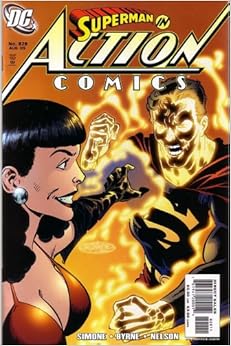
Why? I’m not sure. If there was a similar policy regarding male writers only writing male characters we would have been robbed of such great runs like Rucka’s Wonder Woman, Alias, the current Wonder Woman book and even the long running fan favorite Spider-Girl. There are a number of incredibly talented female writers in the industry right now and if men can write female led titles, shouldn’t they be granted a chance to write a male-led title at the top of the publishing line? More often than not, even when women write a male-led book it is not a main title or else is a title that features a group of men and women. As I try to think of a female writer that has a really high profile gig on a male-led title the only one I could recall was Gail Simone’s brief run on Action Comics back in 2005 and 2006.

Arguably, Gail Simone is the biggest female name in comics writing at the moment. She has had a long career at DC comics, redefining the Birds Of Prey, the Secret Six and many other fan favorites but she has only had one stint on a top tier male-led title which despite a lot of critical acclaim lasted only eight issues. Is there anyone out there that wouldn’t jump at the chance to read Gail’s work on a title like Amazing Spider-Man or Superman or the Avengers?

There are more female writers out there who deserve higher prominence. Some you’ve heard of, and sadly, many that you haven’t. If the companies perhaps think the market wouldn’t accept a female writer on a main title then perhaps they should look at the success of Harry Potter or the Hunger Games. Talent is talent and I think we deserve to read the stories that could be told if the current gender imbalance was even a little different.

As I said last week, things are changing – but very slowly. If there’s a talented group of comic creators being ignored then the industry is essentially trying to make quality comics with one hand behind its back.

I’m not sure about you, but I’d love to see what comics could become with both arms in full use.

Next: Gathering Stories

Many thanks to Mary Sheridan, a super talented female creator in her own right for helping me put this together!

Got any comments, suggestions or questions? Let me know! Also follow me on Twitter @glenn_matchett


Matchett’s Musings: Here Come the Girls Part 1

Here Come the Girls Part 1: Female characters

Good day folks, after a brief hiatus courtesy of a wonderful honeymoon I’m back with more of my thoughts.  For the first few articles I talked a little about launching my own comic and some thoughts from behind the comic creator curtain.  Today I wanted to take a break talk about some issues in the comic industry that are getting a lot of attention.

There are things I feel should be said that aren’t and if no one else is saying them I might as well do it.

Something that has been a major issue in comics for nearly as long as they’ve been around is gender and the balance between female characters vs. male characters and female creators vs. male creators.   Both are subjects that come up time and time again and I’d like talk about both, starting with female characters and how they are perceived/treated in the past, present and future.

Okay, hands up who can tell me who the character above is?  Don’t rush all at once now.  That’s right its Wonder Woman who is not only one of DC’s earliest characters (she was created way back in 1941) but is presented as one of their biggest.  Indeed it could be argued that Wonder Woman is one of the most recognizable fictional characters ever.

Show an image of the character to most people in the world and would at least be able to identify her as Wonder Woman.  This is because she is presented as one of DC’s ‘trinity’ alongside Batman and Superman.  She has featured in TV shows, cartoons and a lot of merchandising.  She’s also been a fairly regular member of the Justice League even at times when Batman and Superman weren’t.

The reason I talk about her now is that despite the fact she is so recognizable and she is represented by DC as a major character, her past often has her playing second fiddle to her main counterparts.  Despite being DC’s third most recognizable character, Wonder Woman has never quite had the same exposure in comics as Batman and Superman.

Almost since their creation, Batman and Superman have had at least two titles each per month and often, a lot more.  Usually Wonder Woman has one book that is her own, a title that in the past has had minimal sales success.  This is not for lack of trying on DC’s part. The company has tried everything from big name creators to relaunching to even having mainstream novelists take over writing duties to raise sales.  To date, every attempt has ultimately met with the same minimal success.

Even today, the Wonder Woman title is coming to the end of a creative run that has not only been critically acclaimed but commercially successful compared to past years.  Whether this will continue after the current team leaves is uncertain but the most recent issue’s sales numbers was available were from July 2014, when the title ranked 77, selling 37,431.

The third most recognizable character DC has to offer and she was outperformed by 76 other books that included the likes of Moon Knight and Archie.  I’m not here just to talk about Wonder Woman but I feel that she is the best way of illustrating my overall point.

No matter how well known they are it seems that female characters are almost treated as secondary to male leads.

This isn’t to say that there aren’t books out there that feature female leads that sell very well because there are lots of those.  However these books generally feature said leads as part of an ensemble cast.  Books like Justice League, Saga, Avenger’s, X-Men and Walking Dead all feature great female characters.  They are however associated with the overall brand rather than the main stars.  Even Wonder Woman’s own book is outsold by one where she is mentioned in the cover but gets second billing next to the books co-star Superman.

Currently the highest selling book that stars a female lead and presents itself as such is DC’s Harley Quinn which in August 2014 (leaving out September due to DC’s wacky 3D variants) number 7 on the chart and sold 71,522 copies on its most recent issue.  This meant that the female fan favorite outsold most of Batman’s books, Wolverine, Deadpool and the Guardians of the Galaxy among many others.

Harley Quinn has been a character that has always played against the odds and won.  A very good friend of mine and talented creator in his own right, Ray Goldfield once said ‘For every Harley Quinn you get 1000 Poochie’s.’  I agree that a female character with adoring fans like Harley is especially rare   The fact that her book is performing so fell on such a consistent basis is a surprise to many.

However, the next female led title is Batgirl which is a whopping fifty-three places below Harley’s Top Ten book at number Sixty, selling 34,590.  Below her is where we find Ms. Marvel at sixty-six and so on and so forth.  In-between are the books that feature female characters primarily as part of an ensemble cast.

For as long as I’ve been reading comics I’ve been hearing the same thing and I’m sure you have heard it too, ‘There should be more female characters in comics!’  Well there are many that feature in a variety of books but there doesn’t seem to be a lot of support for them.

To their credit both Marvel and DC have made quite the effort to have more female led title’s in recent years.  Along with Harley Quinn we’ve also had books like Black Widow, Ms. Marvel, She-Hulk, Spider-Woman and more.  At the New York Comic Con it seemed that Marvel was intent on announcing a treasure trove of new female-led books because people are asking for them.  They’re even giving obscure characters like Squirrel Girl and new characters like Spider-Gwen/Silk their own titles to meet a demand that people insist is there and that the figures achieved by Harley Quinn would indicate.

Yet with the demand not supported by sales, Marvel has already announced the cancellation of She-Hulk after twelve issues and it could be a similar story for Captain Marvel/Black Widow (although either or both could be relaunched).

Title’s that have a female lead are certainly headline grabbers and do get a good bit of buzz initially.  It seems like a bit of an event when a new female book is announced…almost a novelty.  I think that’s what I find most strange about how female characters are often marketed.  No one would bat an eye if a character like say…Cyborg got his own book but if Thor gets a gender switch it’s time to stop the presses.

I have been fortunate enough to be complimented many times on my handling of female characters in Sparks and Living With Death.  Both books were created with female leads in mind and almost in every interview I’ve been asked ‘How do you write women well?’  I suppose the answer to this is the same reason that I’m writing this article.  I love female characters because I love characters period.  Some of my favorite characters just happen to be women, just like some of my favorite characters happen to be males.

Writer of Game Of Thrones (among many other things) George R.R Martin once said something I really liked when asked how he can embody characters like Daenery’s and Ayra with such life and power.  He simply said ‘I’ve always thought of women as people’.

I think that says it all.  To me we will truly have achieved equal standing for male and female characters when it isn’t talked about anymore.  There will be no headlines about Thor being a women or that Captain Marvel is getting her own movie.  It will just be considered part of the norm and that’s what I want to see., a comic market where female characters are treated the same as male characters.  It will no longer be a big deal that Marvel, DC, Image or anyone has a book with a female lead; it’ll simply be them launching a book like any other.  No one raises an eyebrow when Batman gets a new book but if Wonder Woman got a secondary title there would probably be national headlines.  That is not how it could, or should be.

In closing, yes things are changing.  There are now more female led titles than in the past but it has taken us nearly Seventy years to get to the point where these books are given a chance .  I don’t want to wait another Seventy for comics to take the next step.

Next:  Female creators

Many thanks to Mary Sheridan for helping me put this together!

Got any comments, suggestions or questions? Let me know! Also follow me on Twitter @glenn_matchett


Fear of a Black Kid Flash. Not so Much a Female One.

wally westAn interesting thing happened last week when in the Teen Titans version of Futures End that a new Kid Flash was introduced in the wake of the company-wide crossover.  Or more accurately another new Kid Flash was introduced. Earlier this year some fans were upset at the long-awaited return of Wally West to the DC universe, the problem that they were upset that the character was black. While this was not too much different from some other reactions – such as the reveal that the Earth 2 Alan Scott is gay – it is interesting especially after this new female Kid Flash was released to little fanfare or reaction. No one at all seemed to complain about this new character, seemingly also taking over the role of Wally West, though the incursion was potentially just as comprehensive. After all the character is never named and could have just as likely been named Walda or Wallis as any other name (thus allowing a nickname of Wally.)

Although they are based off of general consensus and are generally pretty silly, the so-called rules of the internet cover this topic to a degree, specifically rule 63 which states that for every male character that a female version of this character also exists.  While not absolutely true, it is often the case at least with the most popular characters. Some are direct rip-offs, though very rarely does a character assume the actual identity of the character, though the new female Thor is potentially going to change this. The female characters generally are presented in one of two ways. Either they are a female character that is modified into the costume of a male hero, as in the case of Stephanie Brown in the costume of Robin or May Parker in Spider-Man’s costume, or with separate characters in obviously feminine costumes as in the case with Supergirl and Batgirl.  In these cases though the character is separate and not taking over for the main role. While this in itself could be interpreted as a statement of gender, it is still worth noting that each character has their own self and their own past.

kflashThis being the case it would seem that the problem with the case of Wally West is not that directly of skin colour but that of identity. Wally West was an established character for many, and to change something as deep as skin color for many readers meant a fundamental change for the readers. Is this fair though?  If indeed the female character had been named either Wallis or Walda (I know these are more obscure names) would that have been so easily forgiven?

Before answering that it is maybe relevant to have a look at some of the major black characters from the history of comics. A lot of the major black characters came from a time when being black was a big part of their identity, especially with the introduction of these characters in the silver age.  In the case of Black Panther or Black Lightning, there was no question about their skin color as it was right in their names. While this did not hold true in every character (such as with Falcon or War Machine) it was still a notable part of their identity. In the comic book setting where the suffix “–man” is the expected commonality, it was necessary for a time to distinguish between skin color and gender. Black Lightning is perhaps one of the worst cases of this, as for a time his true identity as a black man is hidden behind his hero facade of being a jive-talking street character. He was not allowed to be educated as a hero, instead he was forced into racial stereotypes. Still those stereotypes existed, and they were even there with other characters. If Black Panther were called White Panther instead, the main association with the color to the character would not be skin color.  Instead, someone would expect that the character has some kind of powers related to the word “white.”

There exists a lot of other names in comics to distinguish one version from another. One major example is the previously mentioned example of –girl which is used almost exclusively for female versions of male characters (with the exception of the Legion of Super Heroes characters as well as Wonder Girl), but in terms of the Flash there was already a descriptor for this difference – “Kid”.

As the character gained more depth though, he was no longer associated with his own name and instead that of another, Wally. He became a real hero in the way that real heroes do, that by association by their non-hero names is almost as evident as with their superhero names. In this way it is not possible to have a character named Batman that is not Bruce or a Superman that is not Clark. The question is though, is whether skin color and gender are so tied to those identities. It would seem as though the answer in both cases is yes, except the more so for skin color. Not all fans, but some fans are willing to make fewer exceptions for a black version of a character than for a female version, and perhaps some of this is tied to identity but some is not.

A distinguishing factor here is the previously mentioned aspect of power. Even Supergirl, who is as much Kryptonian as Superman, is never said to be able to match him in power, despite their powers having nothing to do with their specific gender physiology. Equally Stephanie Brown, for the short time that she took over as Robin was never seen as his equal, even being regarded by Batman as an unnecessary risk to be allowed to act in the role. It is thus the case that female characters rarely break the gender role/stereotype of the female gender, but it is not the case with a black character. Black versions of the white characters are usually just as strong and able at superheroics, and this is likely also part of the outrage over the characters. That in some ways the girls will never compete truly for the title, but that the black men can, and this is the true danger with a black version of a favorite character. A black character makes the original white character replaceable, while a female character only makes a lesser powerful version of that main character. In the first case fans will often reject the change, but in the second case it is more acceptable.

In light of all the commentary about the medium in recent months, be it over the black Wally West or over the comments about the new direction for Wonder Woman, it is important to note that certain aspects of the medium and their fans are still stuck with some outdated thinking.

Baltimore Comic Con 2014: Comics by the Numbers Panel

Over this past year, the comic landscape has changed as diversity has spread across the comic pages, as well as behind the scenes with the creators making them. Though a stereotype persists of the “comic reader,” the characters are reflecting the real diverse audience. At this past weekend’s Baltimore Comic Con 2014, The Beat‘s Heidi MacDonald and I discussed the comic audience, where we presented hard data (and the comics history of it) showing that comic readership is more diverse than ever and there’s more going on than grabbing headlines when decisions are made.

Thank you all who came out to watch and asked some great questions.

Below you can see the slide shows that were presented, so you can follow along!

« Older Entries Recent Entries »