
Godzilla returns in Gojira Minus One and he looks postwar angry
Godzilla has been on a rampage as of late, from Gareth Edwards‘s 2014 reboot to 2021’s Godzilla vs. Kong. In between those films we got the best Godzilla of the current era with Shin Gojira (2016), directed by Hideaki Anno and Shinji Higuchi, a movie that paved the way for other Shin entries such as Shin Ultraman and Shin Kamen Rider (though supposedly not to be taken as part of a shared universe).
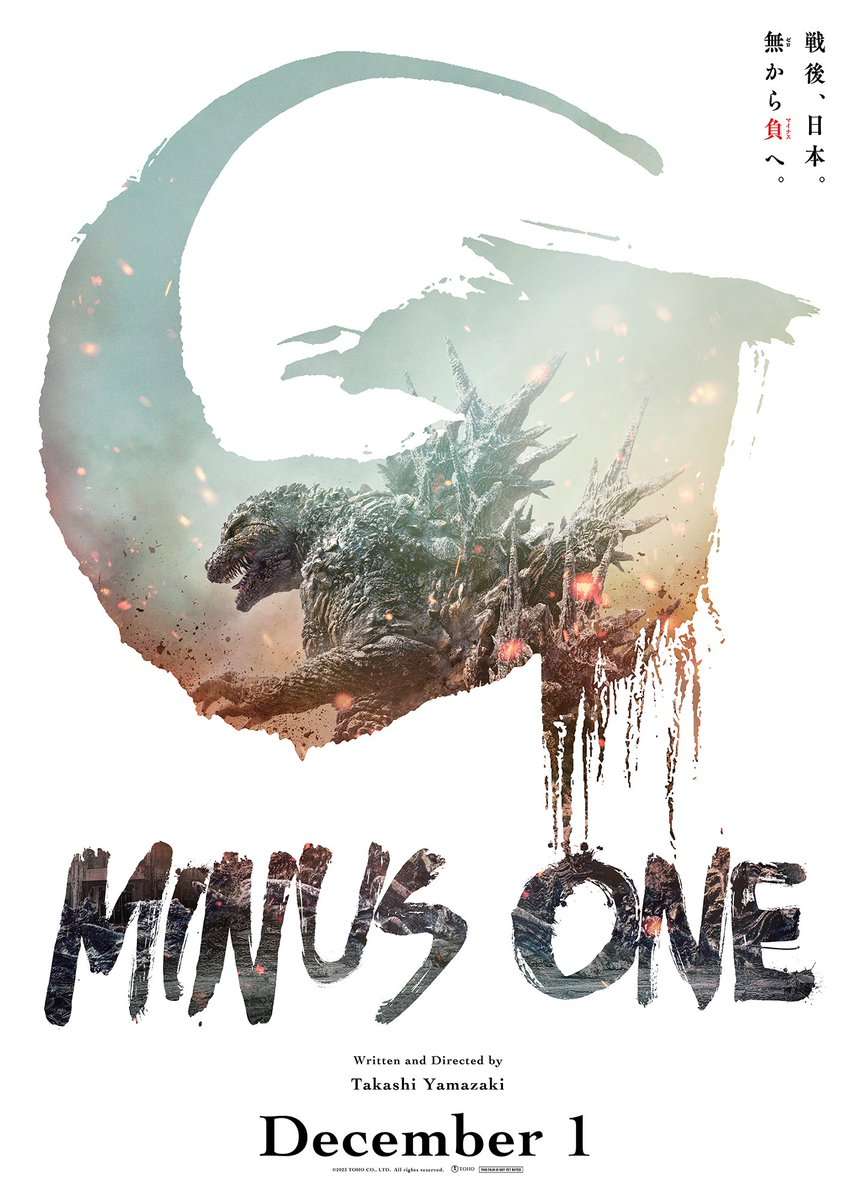
This year, Godzilla rises again with the recently announced Gojira Minus One, a return to the giant monster of the 1954 original that decimates cities with colossal anger while carrying the metaphor of nuclear threat in every roar.
Toho International released a teaser trailer of the new production that confirms as much. From what brief look shows, the story goes back to a post-World War II Japan that’s struggling with the destruction wrought by the allies during the last year of the conflict. Godzilla’s arrival plunges the country into the minus, a cruel position in which devastation takes another pass over an already devastated land.
The bits of Godzilla we get in the final seconds of the teaser show a creature consumed by ruthless aggression, as if intent on passing judgment on the country and how it managed to sink to the place it found itself in after it unconditionally surrendered to the allies.
It’ll be interesting to see what director Takashi Yamazaki (Lupin III: The First) has in store for Godzilla in terms of metaphors. The original movie turned the iconic kaiju into a representation of atomic trauma, spawning from the nuclear bombings of Hiroshima and Nagasaki in 1945 to end the war. The aftermath of the two infamous attacks brought about a period of absolute confusion, especially as the effects of radiation started becoming physically noticeable in those close to the affected areas. Godzilla is an expression of that, a monster that communicates fear a newly minted nuclear world.

With war still a global concern, both in the effects of current conflicts (Ukraine) and the possibility of future world wars, Godzilla is a potent enough symbol to carry messages on its spiky and hulking body. In fact, Godzilla has proven quite adept in embodying different metaphors at different points in time.
The aforementioned Shin Godzilla does an exceptional job at poking fun at the ridiculousness and total dysfunction of bureaucracies in the face of national crises. Anno and Higuchi turn Godzilla into a natural disaster that could have been more quickly and effectively solved had the government not been tangled up by committees with overlapping powers that clash against one another rather than facilitate solutions.
Edwards’s 2014 take turned the kaiju into a warning against the continued use of nuclear power in the present, using imagery and discourse surrounding the radioactive disaster at the Fukushima nuclear plant as a result of the 2011 Tōhoku earthquake and tsunami. The crisis resulted in critical disruptions to the plant’s operations and led to explosions and radiation leaks that led to the evacuation of some 110,000 residents from the areas surrounding Fukushima.
Edwards’s Godzilla spoke to the severity of that kind of catastrophe, and it made sure the message landed with a force, though the movie didn’t exactly live up to expectations given certain creative decisions that didn’t give the titular kaiju more of a chance to shine. If the teaser is any indication, Minus One won’t be having that problem.

Gojira Minus One, the 30th entry in Toho’s giant monster franchise, has a November 3rd, 2023 release date on its sights for Japanese audiences and a December 1st, 2023 date for American audiences. If you want to give the entire franchise a look, Pluto TV is currently streaming a 24/7 Godzilla channel dedicated to the creature’s many encounters with Japan and the other monsters his presence has attracted throughout his storied career. It’s a good time to be a Godzilla fan, and the new film looks to be terrifyingly special.