Tag Archives: horror

Movie Review: PASSENGER doesn’t need to reinvent the wheel to be entertaining

Reviews have gone down a strange road as of late. Something is either a seismic genre-shifting piece of art or a complete waste of time that should be shunned for making us interact with it.

In the past few years alone, horror has been reinvented or redefined a few dozen times. Shelby Oaks became the scariest movie of the 21st century (it’s not, but it can be scary), Talk to Me changed the way we make movies about haunted objects (it didn’t), and Longlegs became an instant crime horror classic (okay, this one’s deserved).

Somehow, we’ve lost the middle. Sometimes, all we need is a well-made vampire movie or haunted house story that plays the greatest hits just right.

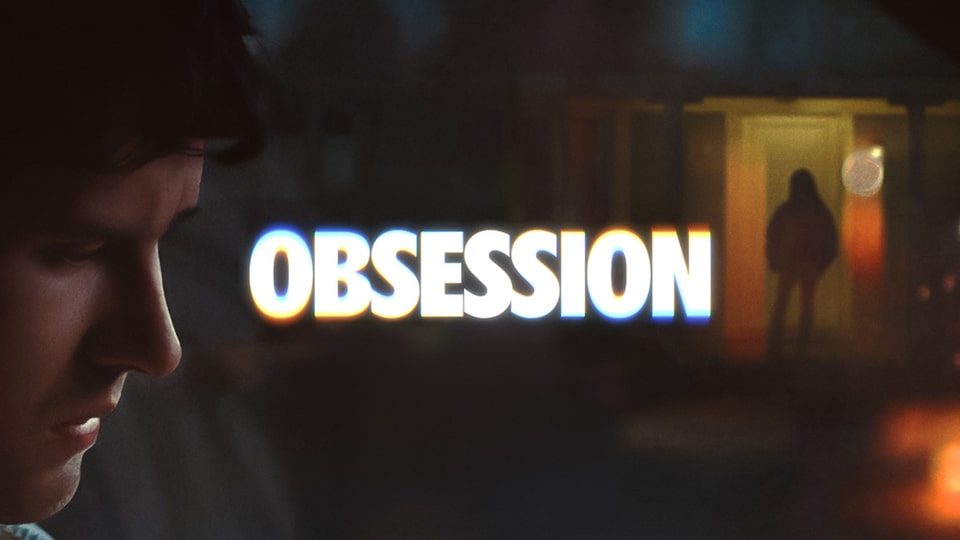
PASSENGER

This is the spot where André Øvredal’s Passenger comfortably sits in. It’s a movie that manages to do something that’s already hard to pull off: entertain. A scary demon, reliable pacing, and a strong finale is all it needed to achieve that.

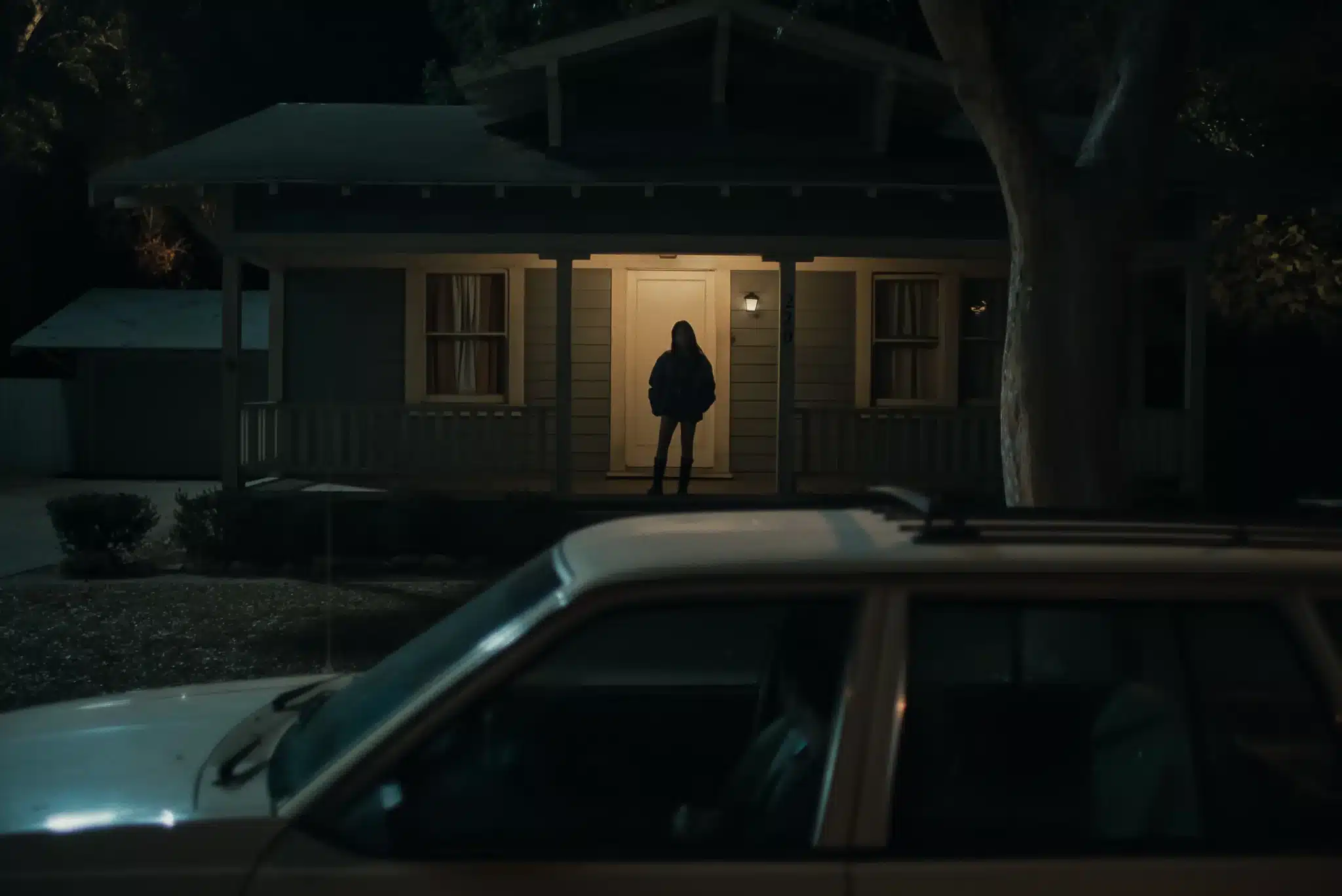
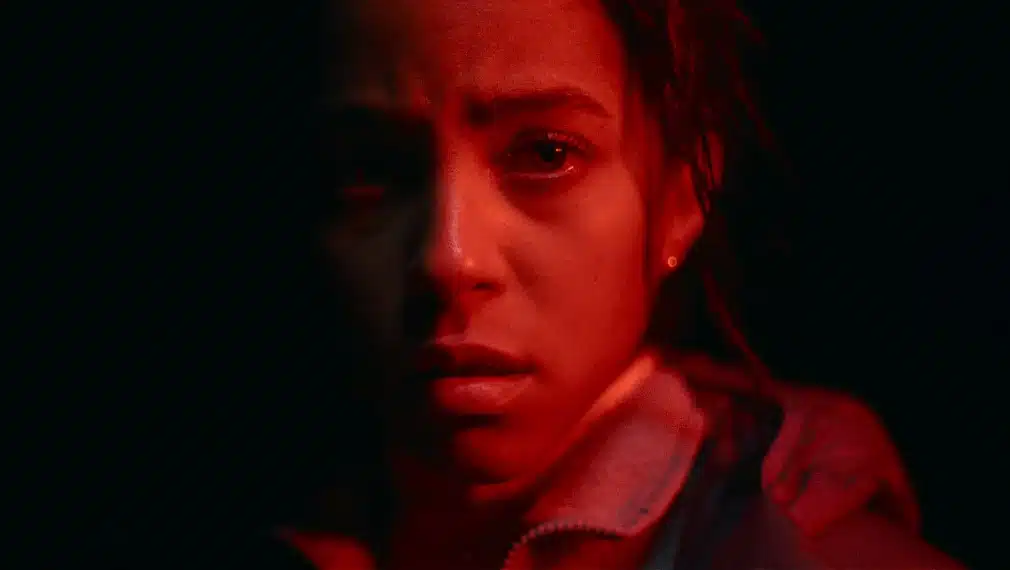
Passenger follows Maddie (Lou Llobell) and Tyler (Jacob Scipio), a couple that decide to give up life in Brooklyn for a life on the road. They get an RV, turn it into their new home, and drive. Along the way, they come across a gruesome car crash. Maddie sees three strange long scratches on the car they came upon.

Shortly after, Maddie starts suspecting that something decided to hitch a ride with them when they stopped at the scene. Things quickly escalate from there as the demonic entity ramps up the violence the longer the ride gets, as if it were enjoying it.

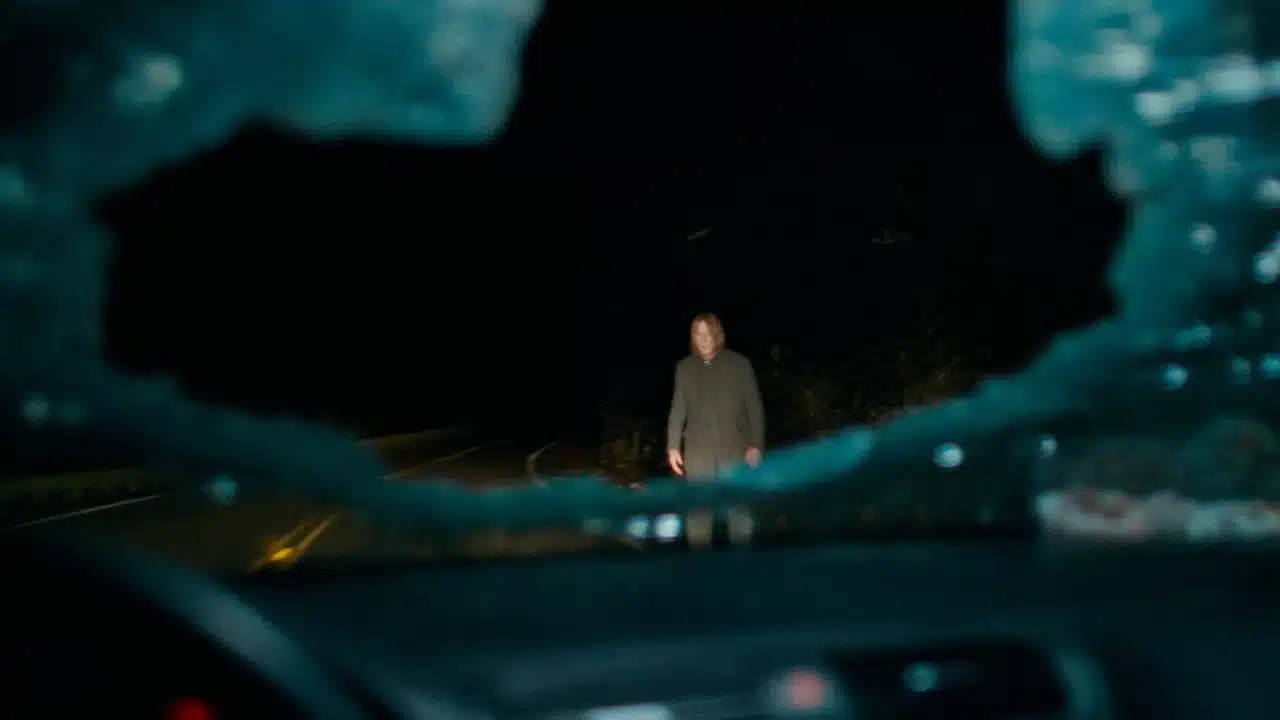
The movie has a great demon in the form of the Passenger (played by Joseph Lopez). It’s an unholy thing that is not afraid to lean into blasphemy. Its design is simple and more terrifying because of it. He’s basically a corpse dressed as a priest with longish grey hair and a gruesome face. A broken smile hangs over his face most of the time, revealing the absolute pleasure he gets from haunting his victims.

PASSENGER

If fans obsess over the Passenger aggressively enough, it has the potential to be the kind of monster franchises are built on. It possesses a strong silhouette and a classically-inclined sense of terror, the kind that made B-list monsters such as the Street Schizo from Prince of Darkness (played by Alice Cooper) and the Scarecrow from the 1981 TV movie Dark Night of the Scarecrow so beloved by fans.

Every time the Passenger is around, torturing Maddie and Tyler, the movie’s great. Øvredal proves to be highly skilled at producing a terrifying image, and he’s not afraid to get creative with jump scares. There’s a scene involving a movie projector that leads to one of the creepiest horror images I’ve seen in a while.

Those who’ve seen Øvredal’s previous films, namely The Autopsy of Jane Doe and The Last Voyage of The Demeter, already know he’s one of the most visually fascinating directors working in the genre today. Passenger further cements that, driving up anticipation for whichever project he decides to settle on next.

Unfortunately, the movie does stumble in the script department. Screenwriters Zachary Donohue and T.W. Burgess forgot to make Maddie and Tyler interesting enough to really care for them that much up to the point where the bad stuff starts happening. Commitment issues are shoehorned in along with religious themes that never fully blossom.

PASSENGER

The biggest letdown is the wasted potential of the RV culture/life on the road component of the story. Maddie and Tyler jump from RV campsite to RV campsite on their journey, giving viewers a look at what that type of lifestyle entails. This is where Maddie meets a woman that sheds some light on the thing that hitched a ride with them. She’s played well enough by Melissa Leo, but she’s mostly a vehicle for exposition.

There are also some key bits of hobo history attached to the mystery behind the Passenger that could’ve really shined had they been given the time to influence the couple’s attempts at getting rid of their demonic backseat rider.

In a sense, the bones of a truly great horror movie were there. Sadly, they got lost in the movie’s insistence on sticking too close to traditional conventions. Maybe it’s time we put other types of characters in leading spots. Passenger would’ve been better served by more inquisitive characters that were eager to dive deeper into the demon’s legends of the road.

Complaints aside, Passenger still manages to ramp up the horror at the right moments to guarantee entertainment. The demon is a true highlight that could end up in a sequel or as a collectible action figure in shops everywhere in the near future. The movie might not mark a watershed moment in horror, but it doesn’t have to. Scaring people into keeping a closer eye on the road at night for fear of picking up an unwanted guest is more than enough.

Movie Review: Play Along with The Lost Man in EXIT 8

Video game adaptations, by definition, wrest control away from players. To an extent, they ask them to watch the same story they already played through but with less direct input. Gone is the anxiety of making a big jump to finish a level. Gone is the tension of inadvertently walking into a boss fight with limited ammunition. Simply put, video game adaptations turn players into spectators.

Genki Kawamura’s Exit 8, an adaptation of the walking simulator/puzzle horror game hit of the same name (developed and published by Kotake Create), finds success by leaning into the spectator aspect of the experience to foster interaction. Rather than turning the story into a 90-minute long cutscene, it opts for a quiet and spaciously-framed affair that audiences can still participate in by spotting important details along with the characters.

EXIT 8

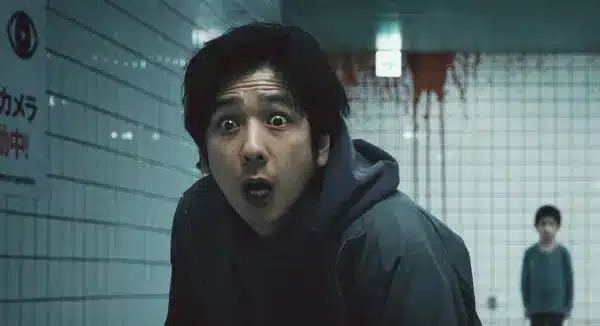
Like the game, Exit 8 takes place in a looping passageway in the Japanese metro system. While the game doesn’t define or describe a specific character per se, the movie follows a man (played by Kazunari Ninomiya) who learns his ex-girlfriend is pregnant just as he’s getting off the train. While attempting to exit the subway station, he suddenly finds himself in a loop of corridors. There, he sees a sign with a set of rules printed on it that must be followed to escape this punishing liminal space.

To reach the real exit, the man must search for anomalies in the repeating passageways eight times in a row before he’s allowed to leave. Failure to identify these anomalies, or lack thereof, results in a reset that sends the man back to level 0 (the first run-through). If a poster or a door is in the wrong position, walk back to the rules poster to progress. If nothing’s changed, complete the loop.

The man meets a walking man and a kid that might or might not be lost in the loop as well. Whether they’re anomalies or not depends on the cues and hints the movie dishes out at key moments.

This is where director Kawamura finds an opening to make sure some of Exit 8’s gameplay elements make it into the movie. A lot of this relies on the observational aspects of the source material. Posters, signs, doors, and other important details are few but crucial to progression, so it’s easy to start looking for anomalies as an audience member while the man attempts to make it through all the stages. If the character misses out on anything you caught, an incredible sense of anxiety creeps in. You want to scream at the screen to point out the differences before it’s too late.

EXIT 8

Kawamura is smart to go for wide-shots here. We’re given a great big look at everything that could be hiding or pointing to a clue, and the movie does well to stick to the open and strikingly bright dimensions of the corridors that make up the loop. Nothing’s ever really obscured, which means the horror resides in what’s seen rather than what’s unseen. As a video game movie, it does what no other film of its kind ever truly manages to pull off: it lets people play the game from their vantage point, if only to an extent.

The only thing that undercuts the terror of the liminal subway loop is the movie’s insistence on hammering a message on indecisiveness, which hinges on the news of the pregnancy that hovers over the main character. It tries too hard to turn the loop into a metaphor for anxiety regarding big life decisions, detracting from the mystery.

What made the situation so unsettling was its random nature. That it simply forced someone to play a game about noticing strange alterations in a self-repeating space should’ve been enough. The message is just too blunt, and it compromises the creepiness factor. In fact, it takes away the bit of control it had afforded audiences so well beforehand up to that point.

EXIT 8

Exit 8 should be commended for adapting a video game while still giving audiences the chance to feel like active players in it. Its ending betrays some of the good work done up till then, but it doesn’t diminish its accomplishments entirely. If anything, it’ll make you want to pick up a controller and look for anomalies yourself in the original game. Hell, it might even make you look for anomalies in actual subway stations as well.

Book Review: A SHORT STAY IN HELL guarantees existential horror

a short stay in hell

Our versions of the afterlife are predicated on our personal hopes and fears. This is why we tend to populate Hell with sadistic demons and brutal monsters surrounded by fire and brimstone, and Heaven with angels handing out mojitos in a permanent paradisiacal retreat. Religion informs a lot of this spiritual visualization, providing guidelines to secure a spot in the more pleasant of the two options.

In A Short Stay in Hell (2009), author Steven L. Peck, explores this idea by pouring a bucket of cold water on our ideations of what comes after death. It hits hard, going lengths to prove that being left alone with yourself is perhaps the worst form of torture imaginable. It’s so terrible a fate that you’ll wish for a demon with a pitchfork if only to keep you company.

The book follows a Mormon man called Soran. He’s died and made it to an impossibly large library that contains every book that can ever be written in its stacks. He first meets a devil that tells him that he followed the wrong religion while on Earth, thus earning him a stay in Hell. He’s informed that the one true religion is Zoroastrianism, which focuses on ethical dualism in the struggle between Good and Evil.

This Hell is not eternal, though. The devil tells Soran that if he finds the book that tells the story of his life, he can escape. It’s just a matter of hunting it down in the terrifyingly massive library, where years of searching might only cover a tiny section of a floor, with thousands upon thousands of other levels to go. To make matters worse, most of the books are made up of gibberish. Finding a coherent sentence in one of them becomes an event.

A Short Stay in Hell was inspired by Jorge Luis Bórges’s story “The Library of Babel,” which centers on a library that contains every book that could possibly be written with an ordering of 25 basic characters. Peck runs with this concept and turns into a short but intense bout of existential horror in which salvation is cruelly teased but never sold as a certainty.

Soren is not the only person roaming the library. Peck is quick to establish that there are other people there also spending cosmic amounts of time in search of their books. It stands to reason, then, that Soren will meet some of them along the way. Lovers come, build relationships that last multiple decades, and then leave never to be seen again; frustrated souls unleash unspeakable violence on the people they come across; and strange cults rise and fall with no lasting effects. The only constant is the library, and it remains indifferent to the things that happen in it.

As such, Peck uses this version of Hell to flip the script on time. Whereas time is often thought of as a preciously limited resource in life, in death it becomes a burden. Too much of it slowly chips away at meaning. It erodes spontaneity and excitement, dulling the edges of purpose and giving way to a superior form of punishment: boredom.

The language on display here points to Peck’s background in poetry and evolutionary biology in magnificent ways. There’s an observational quality to the language that allows for complex worldbuilding. And yet, the book is accessible despite challenging the reader with profound questions about faith, love, damnation, and memory.

Peck wants his readers to get lost in each page, demanding a lot of imagination from them. But he doesn’t merely want them to paint a series of visuals that account for the characters and their surroundings. Instead, he develops a world filled with mathematical and philosophical improbabilities for readers to try and make sense of. It works to produce one of the most intellectually rewarding experiences in modern literature.

A Short Stay in Hell, like its interpretation of the titular realm, is a unique read with considerable staying power. It plants ideas, breaks them apart, and then asks the reader to put them together. In a way, it’s an interrogation of the things we categorize as essential to our sense of self. You’ll simply wish you could spend more time on this journey into the philosophy of Hell.

Movie Review: Lee Cronin’s The Mummy copies and pastes a familiar curse

Whenever the name of a director is made part of a movie’s official title, it’s only fair to expect the presentation of a unique vision. The name signals the creation of something only they can make, something that sets them apart from the rest. Lee Cronin has earned that distinction rather quickly, with only three feature films in the bag (plus a handful of short films and some TV work thrown in for good measure). Evil Dead Rise (2023) was the movie that turned him into a name, and it’s now attached to the title of the latest attempt at reviving a classic Universal monster: The Mummy.

Lee Cronin’s The Mummy is a strange film, more in terms of concept than in actual content. It seeks to reinterpret the Egyptian creature in radical fashion, and it does. It changes everything, from the way the bandages work to the purpose of mummification. Unfortunately, it borrows too heavily from other horror classics to come off as original. Ultimately, the movie suffers too much for it, making for something way less original than the title suggests.

Lee Cronin’s The Mummy

The story follows TV reporter Charlie Cannon (Jack Reynor) and his family while he’s on assignment in Egypt. One day, a strange woman lures his daughter Katie (Natalie Grace) away from their home. Detective Dalia Zaki (May Calamawy) is brought in to investigate Katie’s disappearance, a woman that hopes to specialize in missing persons cases.

Katie is found eight years later, inside an ancient sarcophagus. She should be dead, but she isn’t. She’s malnourished, disfigured, and near catatonic. Charlie takes her home to Albuquerque, New Mexico, where he hopes the warmth afforded by family can help her heal and recover. But something’s inside Katie, and it’s eager to spread its evil as cruelly as possible.

Cronin should be applauded for approaching The Mummy with a mind to push certain established ideas to their limit. There are no corpses wrapped up in white wraps shambling around in this one, no killer scarabs or locust swarms. The story swaps labyrinthian pyramids and quicksand for a two-story house in a New Mexican desert. Things are more intimate as a result, more focused on family rather than on the spread of an ancient evil possessed by an insatiable hunger.

The problem lies in Cronin’s decision to use the building blocks of long-established, highly recognizable films in the process of crafting his own. It’s done to the point of compromising his own attempts at innovation. To watch Lee Cronin’s The Mummy is to watch a combination of The Exorcist, Se7en, and Cronin’s own Evil Dead Rise. Of the three, though, Evil Dead is the most obvious, most notably in terms of Katie’s look and behavior.

Lee Cronin’s The Mummy

In Evil Dead Rise, Cronin presents the Deadites (the possessed humans affected by the Necronomicon’s incantations) as decaying bags of flesh with a penchant for self-mutilation. They’re gleefully evil, happy to be spreading death and mayhem. They’re disturbingly raunchy, too, as they taunt and mock the living with grotesqueries that are meant to drive them mad.

The possessed Katie in The Mummy is essentially a Deadite. She moves, talks, and taunts her family in almost the same way as the possessed in Evil Dead. A few pages are taken from The Exorcist’s own possessed girl, Regan MacNeil (Linda Blair), especially during scenes when Katie is on her bed, staring blankly at the people around her before snapping with a bite to the forearm or a headbutt. The gist of it is, a combination of very obvious influences doesn’t always lead to something original.

Se7en comes in during a particular scene in Egypt involving a violent run-in with a key suspect and a box. This one’s not as blatant as it is in Katie’s case, but the nudge is more like a push here too. Detective Zaki gets a chance to shine in this sequence, but then she’s just asked to homage a scene from another movie more with little space afforded for originality.

It also bears mentioning that there was a more interesting movie in Zaki’s story. Turning The Mummy into a dark and gritty detective story could’ve led to some interesting places, complete with an opportunity to perhaps explore other aspects of Egypt that get sidelined way too often in these kinds of films.

Lee Cronin’s The Mummy

While Lee Cronin’s The Mummy has some intense horror sequences and some interesting characters at its core, it’s more of a Frankenstein’s Monster of a movie. It’s multiple parts, all done better elsewhere, grafted together under the guise of a new interpretation. That said, if you watch the movie as strictly a new Evil Dead entry, you should be fine.

American Mythology Announces All-New Fright Night Comic Book Series Based on the Classic Horror Film

Fright Night

American Mythology Productions has announced an all-new line of comic books based on the beloved 1985 vampire classic, Fright Night, created and directed by Tom Holland. The first title in the series will be a prestige mini-series debuting this July, with an ongoing monthly series planned for later in the year.

This new launch serves as a direct follow-up to American Mythology’s hit five-issue series, Fright Night: Senior Year, which continued the story of Charley Brewster and expanded the film’s legacy for a new generation of fans. Fright Night: Senior Year is currently available as both a trade paperback and deluxe hardcover graphic novel and can be purchased at comic shops nationwide or directly through the American Mythology webstore.

The upcoming mini-series is written by renowned horror author James Kuhoric, best known for his acclaimed work on Freddy Vs Jason Vs Ash and numerous cult horror properties, alongside writer G.O. Parsons, who penned the hit film Willy’s Wonderland starring Nicolas Cage.

Set in the darkly seductive world of suburban vampires, the new series expands the universe of Fright Night, revisiting familiar faces while introducing terrifying new threats lurking just beyond the picket fences.

The July-launching mini-series will serve as the foundation for a larger ongoing Fright Night comic book universe, with American Mythology Productions planning additional story arcs and expansions later this year.

You Can’t Escape Plague House in Michael W. Conrad and Dave Chisholm’s Haunted and Haunting Horror Story. Read the first issue!

Plague House

HOUSES AREN’T THE ONLY THINGS THAT ARE HAUNTED… Oni Press invites readers into a haunted house unlike any other in Plague House. The softcover trade edition of the deep and disturbing excursion into 21st century horror from Eisner-award winning writer Michael W. Conrad and 2024 Ringo Award winner Dave Chisholm arrives in shops this January. Ahead of this horrifying housewarming, Oni Press has released a free look at the entire first chapter of the otherworldly series.

Thirteen years ago, Orin McCabe was a family man living a privileged life in the California suburbs. Today, he’s condemned to death row for murdering his entire family in an unexpected fit of hammer-wielding brutality. In the aftermath of his heinous crime, it’s fallen to a trio of eclectic, but dedicated, ghost hunters—Jacob, the holy man; Holland, the skeptic; and their leader, Del, a true believer in the occult and worlds beyond—to surveil the abandoned McCabe home in search of proof for the existence of the undead . . . and whatever supernatural source may have possibly fueled McCabe’s inhuman massacre. But this ill-matched and uneasy squad of investigators is about to discover something much more terrifying than any ordinary spirit. . . . Something much more pernicious, much more contagious, that if not contained, could take full advantage of America’s unquenchable appetite for violence and deliver a plague of blood unto us all . . .

Collecting issues #1–4 of the mind-bending ghost story, Plague House will plunge readers into a twisting tale of horror that’s as blood-soaked as the ground you stand on this January 20th.

Loading Viewer…

St. Malo Reclaims the Untold History of the First Filipino Settlement in North America

Writer Jay B. Kalagayan and illustrator Feriowind have announced St. Malo: First Filipinos in North America, a visceral blend of historical fiction and primal horror. Published by Creative Mussel, the 40-page graphic comic book is set to debut on January 12, 2026 with a preview at Fan Expo New Orleans. You can check out a timeline of Filipino History while you wait to get your hands on the comic.

Long before the American Revolution, a hidden community thrived in the Louisiana swamps. These were the first residents of St. Malo—Filipino sailors who escaped servitude aboard Spanish galleons to find a hard-won freedom in the New World. But in this retelling, the sanctuary of the bayou is corrupted by dark superstitions and vengeful spirits carried across the Pacific. What began as a quest for liberty becomes a fight for survival against “dark things” hunting for blood.

To bring the murky depths of the Louisiana swamps to life, Kalagayan collaborated with Feriowind, an illustrator known for their work on IDW’s Godzilla Rivals and Netflix anime projects like Exception. Feriowind breathes life into the era with a style influenced by shonen battle manga and a deep love for creature design.

St. Malo: First Filipinos in North America was supported through an Inspire Artist grant with ArtsWave. ArtsWave is the Cincinnati region’s primary arts funding organization, supporting a wide range of arts organizations, artists, and projects.

St. Malo: First Filipinos in North America

Crownsville #1 Explores Real Horrors of the Past and Delivers a Tense Debut

Founded at the turn of the 20th century outside of Annapolis, Maryland, the Crownsville Hospital was a notoriously segregated, all-Black psychiatric institute. After decades of overcrowding and neglect—alongside darker, more-persistent rumors of patient abuse and illegal medical experiments—it was finally closed. Today, it stands condemned—a crumbling testament to a legacy of all-too-real terror inflicted on a marginalized and vulnerable community. But even as a ruin of its former self, Crownsville still casts a long shadow. . . . When an unexplained death inside the abandoned hospital is ruled a suicide, Annapolis police detective Mike Simms and journalist Paul Blairare are compelled to dig deeper, only to discover the reality of the horrors that once took place there . . . and the powerful connection they share to the anguished spirits of the dead that are still locked within its walls. Crownsville #1 is a tense debut mixing history with horror to deliver a debut that mines the past to face the future.

Story: Rodney Barnes
Art: Elia Bonetti
Letterer: Marshall Dillon

Get your copy now! To find a comic shop near you, visit http://www.comicshoplocator.com or call 1-888-comicbook or digitally and online with the links below.

Zeus Comics
Kindle


This post contains affiliate links, which means that if you click on one of the product links and make a purchase, we’ll receive a percentage of the sale. Graphic Policy does purchase items from this site. Making purchases through these links helps support the site

Feral #17 goes in an unexpected direction in an issue packed with tension and horror

THE BATTLE FOR PET CITY BEGINS!
Elsie and Lucky lead their crew against Mother Helena and her strange felines with the winner taking control of the pet superstore. The only problem is, what was once a safe haven is now filled with rabid BAD KIND!

Story: Tony Fleecs
Art: Trish Forstner, Tone Rodriguez
Color: Brad Simpson

Get your copy now! To find a comic shop near you, visit http://www.comicshoplocator.com or call 1-888-comicbook or digitally and online with the links below.

Zeus Comics
Kindle


This post contains affiliate links, which means that if you click on one of the product links and make a purchase, we’ll receive a percentage of the sale. Graphic Policy does purchase items from this site. Making purchases through these links helps support the site

Preview: The Slasher’s Apprentice

The Slasher’s Apprentice

(W) Justin Richards (A) Val Halvorson (C) Rebecca Nalty (L) Buddy Beaudoin

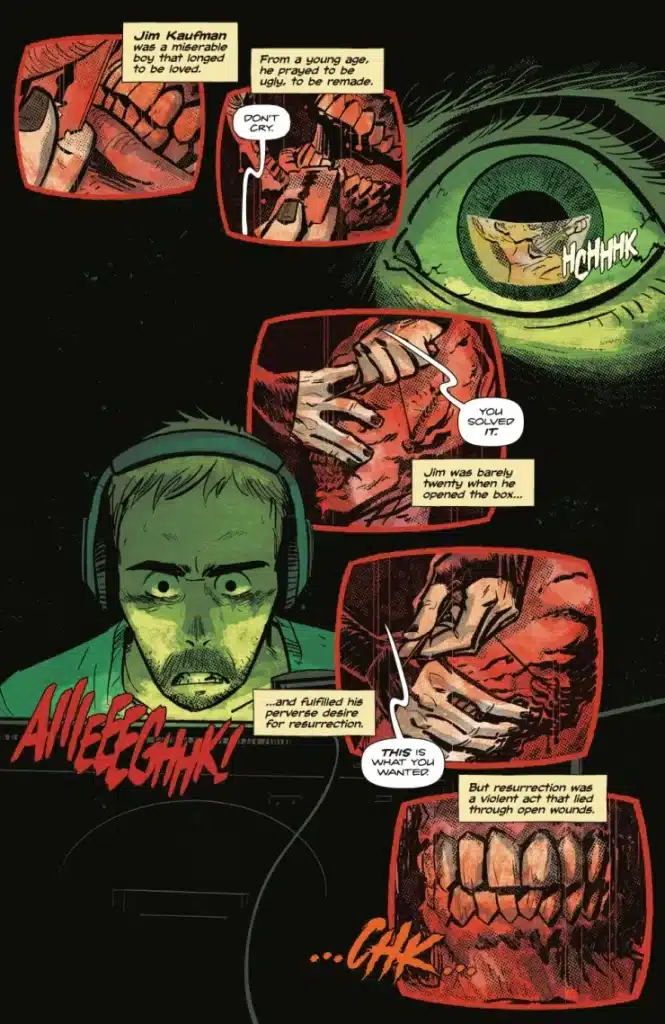
Riley, a horror-obsessed podcaster with a slasher villain fixation, is seeking a new career path: Helping her favorite legendary slasher, The Hopton Valley Killer, regain their long-lost notoriety while learning the ropes herself.

The Slasher's Apprentice
« Older Entries