Tag Archives: michael chiklis

Fantastic Flops: Fantastic Four: Rise of the Silver Surfer is an undercooked mockery of some epic source material
Fantastic Four: Rise of the Silver Surfer

Even though the Fantastic Four comics kickstarted the creation of the Marvel Universe, their film adaptations have been critically maligned. In the “Fantastic Flops” series, I’m going back and re-evaluating the four previous Fantastic Four films and seeing if they’re a “Flop”, “Bop”, or “In-Between”.

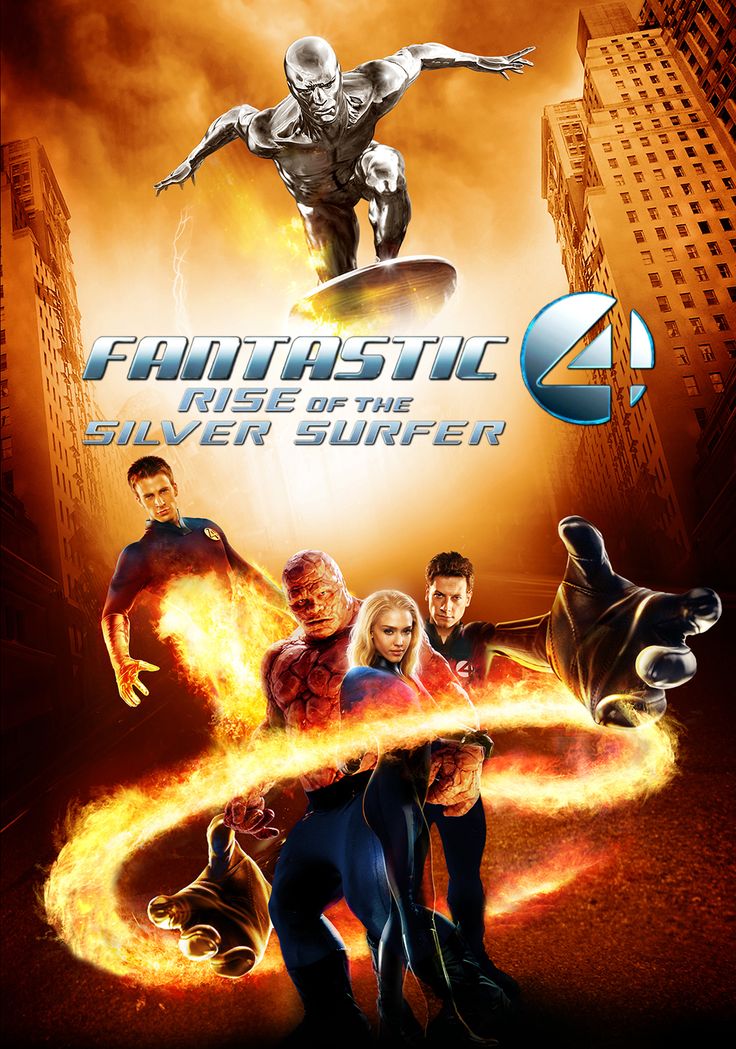
Fantastic Four (2005) did okay at the box office so 20th Century Fox decided to run it back with director Tim Story, co-writer Mark Frost, and the whole cast from the first film, including Julian McMahon as Dr. Doom and Kerry Washington as Alicia Masters. Frost is joined by Simpsons and My Super Ex-Girlfriend writer Don Payne and John Turman, who worked on Ang Lee’s Hulk. In the second and final film in this franchise, they attempt to adapt the iconic Stan Lee and Jack Kirby stories “The Wedding of Sue and Reed” and “The Galactus Trilogy” while also being influenced by the more recently published Ultimate Galactus Trilogy by Warren Ellis and various artists. This latter comic is why Galactus is a mute, amorphous cloud and not the godlike being he’s depicted as in the 616 Marvel Universe. Throw in a subplot where Johnny Storm (Chris Evans) becomes the Super-Skrull plus an appearance of future Herald of Galactus/Nova Frankie Raye (An unamused Beau Garrett), and it seems like Fantastic Four: Rise of the Silver Surfer took some big swings across the board, especially for a movie with a 90 minute run time. However, it’s all strikeouts except for a few funny moments, a cool design for the Silver Surfer (Motion capture by Doug Jones ; voice by Laurence Fishburne), and Ioan Gruffudd finding his backbone in a badass monologue directed at General Hager (Andre Braugher in a thankless role) and taken almost word for word from Ellis’ Ultimate Extinction where Mr. Fantastic uses it to call out Nick Fury.

The initial setup of Fantastic Four: Rise of the Silver Surfer does have some merit. Reed Richards and Sue Storm (Jessica Alba) want to get married, but the world is about to end so they don’t live happily ever after. However, their relationship is built on “Men are from Mars, women are from Venus” stereotypes as all the “will they, won’t they” tension from the first film is gone, and they’re the default couple in this one. In addition to the weakness of this key romance, the characters’ individual motivations are wonky, and their arcs are non-existent. Of course, Johnny Storm wants to be a rich, famous celebrity, and Reed Richards wants to do science, which consists of him fiddling with things that look like Game Boys and Xbox controllers and staring at screens. (We’re one year away from Iron Man, and science looking cool again.) However, Sue Storm just wants to be a trad wife even though she was a genetics researcher in the previous film and shows skills as a mediator and leader in being the first person on Earth to actually have a conversation with the Silver Surfer. There’s also Ben Grimm (Michael Chiklis) who is in a stable relationship with Alicia, and his monstrous nature is played for laughs. He also doesn’t get a lot to do in the action sequences with Human Torch (Thanks to special molecular shifting abilities given to him by the Silver Surfer.) and Invisible Woman running point in that department, and Silver Surfer handling the final fight by himself. It’s an unfortunate waste of a solid performer.

Fantastic Four: Rise of the Silver Surfer

Another character whose appearance in Fantastic Four: Rise of the Silver Surfer is even more unnecessary is Victor Von Doom. There are a couple, hastily edited sequences of him in the shadows tracking the Silver Surfer and then getting his face healed after being zapped by the Herald of Galactus. And, then, Frost, Payne, and Turman take a page out of fellow Fox superhero sequel X2‘s playbook by having the Fantastic Four team up with their worst enemy against an even bigger threat. However, X2 succeeds because Magneto is a sympathetic figure with a genuine friendship with Professor X. The Fantastic Four films hinted at a friendship/rivalry between Reed Richards and Victor Von Doom, but these are just two guys who hate each other and stare at computer screens while Doom gets in the U.S. military’s good graces enough to test the power cosmic and fly around on a surfboard pointlessly extending the run time of the movie. Unlike both the original and Ultimate Universe Galactus trilogies, there’s no plan for taking on the Destroyer of Worlds other than having the Silver Surfer fly at him and sacrifice himself. (Of course, he gets better because studios have been trying to get a Silver Surfer film greenlit since Terminator 2 figured out the cool silver CGI effects.) They’re bullshitting so much that there’s no time for Richards and/or Von Doom to demonstrate their genius beyond a too little, too late appearance of the Fantasticar. Dr. Doom is mainly a boring distraction in the film, and we know even less about Latveria and his connection to them.

Fantastic Four: The Rise of the Silver Surfer is a moronic reflection of both the family dramedy and cosmic sides of the Fantastic Four comics. Tim Story and the screenwriters go for broad punchlines instead of fun character-driven humor even though there are some fun moments like Mr. Fantastic and the Thing cutting it up on the dance floor, or Raye roasting the Human Torch. On the cosmic side, Silver Surfer and Galactus feel like plot elements in a Roland Emmerich film not Biblical, Kirby Krackle larger than life figures although there’s a fluidity to Jones’ mo-cap performance and a majesty to Fishburne’s voice acting. Also, this might be a side effect of 17 years of the Marvel Cinematic Universe, but its world feels hollow and lacks a sense of wonder. Evans and Chiklis definitely had potential in the roles of Human Torch and the Thing, but were ruined by obvious punchlines and plot developments as well as one dimensional villains. Both Fantastic Four films suffer from Story, the screenwriters, and editors William Hoy and Peter S. Elliott not letting scenes breathe and letting us have a chance to know and love these characters. It really needed more scenes like Johnny Storm and Ben Grimm throwing darts (and accidentally burning the dart board) while talking about how they feel about the end of the world.

However, for all the movie’s failings, that John Ottman theme for the Fantastic Four films is pretty epic though!

Verdict: Flop
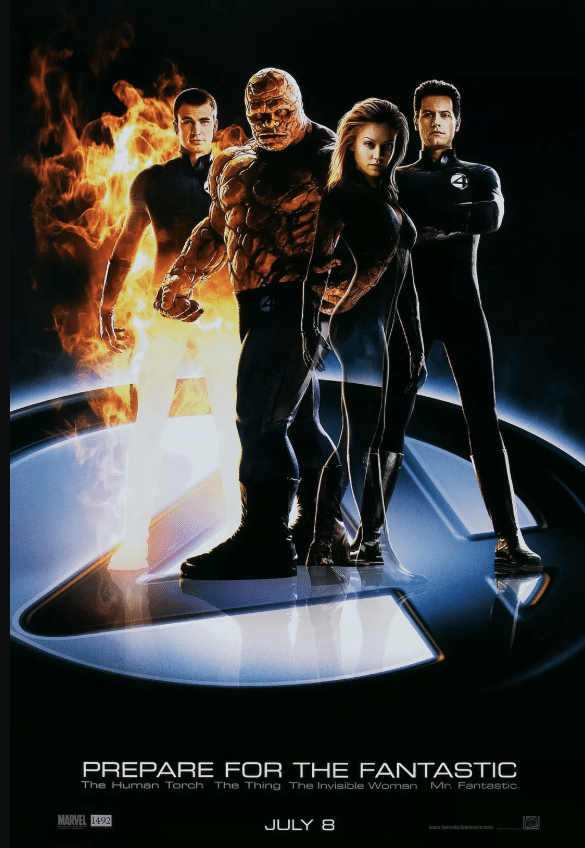
Fantastic Flops: Fantastic Four (2005) think it’s too cool for school, but it’s actually kinda lame

Even though the Fantastic Four comics kickstarted the creation of the Marvel Universe, their film adaptations have been critically maligned. In the “Fantastic Flops” series, I’m going back and re-evaluating the four previous Fantastic Four films and seeing if they’re a “Flop”, “Bop”, or “In-Between”.

Fantastic Four

11 years after the first Fantastic Four film was unceremoniously rushed out, 20th Century Fox put out the first proper theatrical film starring Marvel’s first family. Featuring a $100 million budget, a screenplay co-written by Twin Peaks’ Mark Frost and a cast of young, up and coming actors (Chris Evans as Johnny Storm, Jessica Alba as Sue Storm) and steady supporting actors/TV veterans (Ioan Gruffudd as Reed Richards, Michael Chiklis as Ben Grimm, Julian McMahon as Victor Von Doom), Fantastic Four hoped to bring these classic heroes into the new millennium. However, the end product is a film that is ashamed of being a superhero movie and cribs and scenes from the contemporary Sam Raimi Spider-Man and Bryan Singer’s X-Men film while lacking the former’s heart and the latter’s social conscience.

My main takeaway from rewatching the 2005 Fantastic Four film is its derivative nature. Like in Spider-Man, there’s a big superhero action scene on a bridge, but it’s just going through the motions and bringing the team together instead of creating tension in a heroic journey. Explosions, super powers, and special effects just happen willy nilly, and it doesn’t add to the four leads’ character arcs at all. Also, I hate to say this, but McMahon’s Dr. Doom is a defanged, Xerox of a Xerox of Willem Dafoe’s Green Goblin. The scenes where he takes out the board members who denied his IPOs lack the menace and freak factor of similar scenes in Spider-Man. McMahon’s best moments as Von Doom are when he’s looking at his increasingly scarred visage showcasing his vanity, and this is all thrown by the wayside when he puts on the sadly not-so-iconic Dr. Doom mask. Also, Julian McMahon uses a basic, robotic voice for Dr. Doom that makes him seem like a cheesy villain of the week and not the Fantastic Four’s arch-nemesis. Unlike Chiklis, who imbues his performance as The Thing with a gravelly physicality and vocal performance, McMahon loses his edge right before the big superhero/supervillain showdown.

Turning Victor Von Doom into a tech mogul instead of the magic wielding monarch of Latveria really homogenizes the character even though the Doom/Sue Storm/Reed Richards love triangle is a quick, immediate source of conflict. Fantastic Four could be a film about an immigrant trying to assimilate into the United States by being the ultimate capitalist, but Von Doom’s Romani heritage is absent while Latveria only acts as a punchline and a hook for a sequel. Unlike the 1994 Fantastic Four film, the Richards/Von Doom relationship is quickly dashed out through dialogue so director Tim Story can go back to showing off the film’s CGI budget by having Mr. Fantastic turn into a surrealist painting or having lots of “cool” heads up displays as Richards looks for a cure for his and his friends’ conditions. The Von Doom doing corporate espionage on Reed Richards angle definitely plays up his portrayal as a slimy capitalist, but at no time, I felt like Richards was one of the smartest men of the room. Honestly, he reminded me more of early 2000s/married Peter Parker than Mr. Fantastic, but sans quips. Gruffudd doesn’t even get to do a British accent to make the science speak sound better.

Fantastic Four

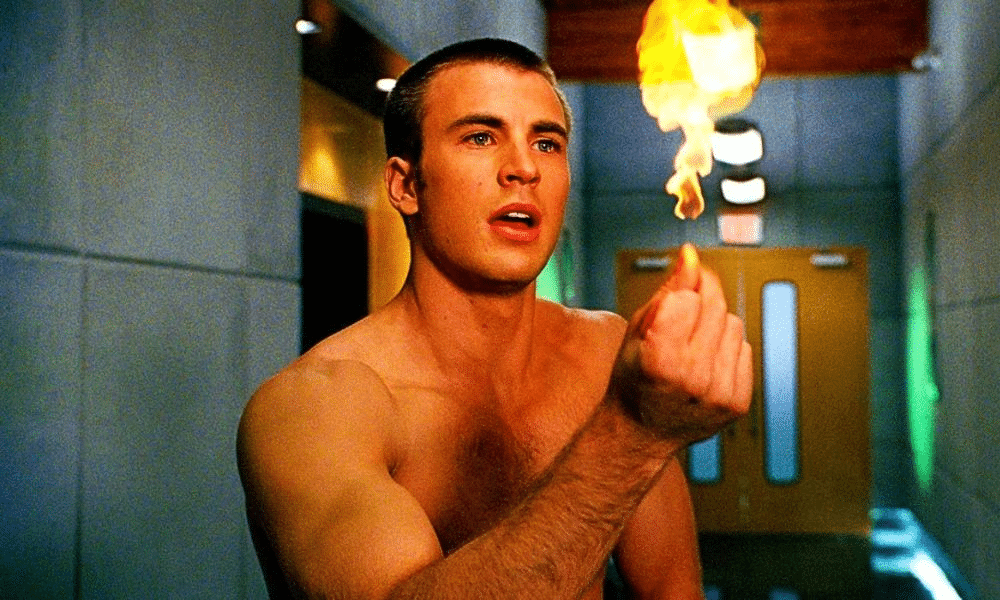
The main positives of Fantastic Four are Evans and Michael Chiklis’ performances as Johnny Storm and Ben Grimm. Even before he gains the ability to burst into flames, Chris Evan oozes charisma and nails the role of douchebag heartthrob. He objectifies women, but does it with a smile and a sense of humor, especially when he’s pranking Grimm. Director Story and writers Frost and Michael France wisely tap into the early-2000s extreme sports zeitgeist with Storm’s character featuring two genuinely fun snowboarding and BMX sequences to show him struggling with his powers before he gains control while still being a show-off towards the end of the film. The nu metal/G-Unit soundtrack and product placement overload date the film while also making it wistfully nostalgic. But what isn’t dated is Chiklis bringing an everyman charm to the role of the Thing as he nails both the sadness of the role as well as Ben Grimm’s sense of humor. He earns the “It’s clobbering time.” moment, and early scenes show a real friendship between him and Richards until the movie designs to drop it for the chemistry-averse Reed/Sue romance. (Also, Grimm would never trust Von Doom even if he bought him a heaping plate of pancakes.

In Fantastic Four, Tim Story, Mark Frost, and France don’t know whether they want the film to be a dysfunctional family drama, straight up superhero film, unlikely heroes sci-fi film, or a glorification of early 2000s celebrity culture. The film feels like a patchwork of scenes and tones before wrapping up with a decent action sequence and a coda that is an homage to Johnny Storm making the Fantastic Four sign in the Stan Lee and Jack Kirby comics as well as a very rushed-seeming proposal from Reed to Sue right as they show a little actual chemistry. But it’s too little too late, and I wish we had more scenes of the team spending time together instead of rushing after each other or being isolated in different rooms. (After they save the day, the Ben Grimm cure plot/superpowers being treated as a disease is conveniently pushed aside and sent back over to the X-Men franchise.)

Looking back, I think the reason I liked this movie as a pre-teen were the aforementioned X-Games tie-ins, onslaught of So-Be product placement, and the attractiveness of Chris Evans and Jessica Alba.

Will the appearance of heavy hitters like Galactus and the Silver Surfer in the sequel improve the film or make it even more annoying, you’ll find out on next week’s “Fantastic Flops” covering this film’s 2007 sequel Fantastic Four: Rise of the Silver Surfer. (Hey, I can do pre-credits stingers too.)

Verdict: Flop

TV Review: Winning Time S1E2 “Is That All There Is?”

Is That All There Is?

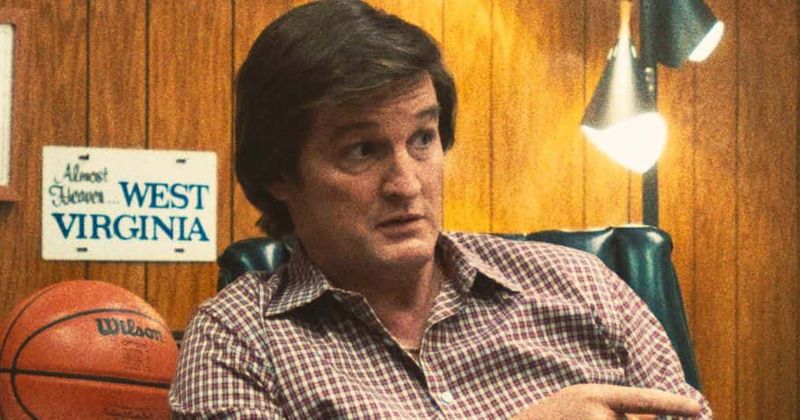
Jerry West’s memoir is titled My Charmed, Tormented Life, and from the outside, it doesn’t make sense that a man who is literally the logo of the NBA, one of its greatest players, and also found success as an executive discovering two of the greatest players of my life time (Kobe Bryant, Stephen Curry) would describe his life that way. But basketball was an escape for him from a tough life in rural West Virginia until it wasn’t. The second episode, “Is That All There Is?“, of Winning Time: The Rise of the Lakers Dynasty delves into West’s (Jason Clarke) love and loathing for the game of basketball, and how it controlled everything in his life, including his mental health and his relationship with his wife Karen (Lola Kirke). Scenes with West bookend the Jonah Hill-directed episode, but writers Rodney Barnes and Max Borenstein continue to dig into Magic Johnson’s (Quincy Isaiah) relationship with his family and on-and-off again girlfriend Cookie Kelly (Tamera Tomakili) as well as the business side of the Lakers with Jerry Buss (John C. Reilly) facing off against Boston Celtics general manager Red Auerbach (Michael Chiklis) and trying to succeed at this business side of things.

The pre-credits sequence of “Is That All There Is” is basically a short film of Jerry West’s life as he bounces the basketball to drown out the sounds of his father abusing his mother as well as the grief over his brother’s death in the Korean War. Hill and editor Hank Corwin dissolve from the snows of West Virginia to confetti in Los Angeles when West won his only championship as a player in 1972. Until Buss tells him that he can play Johnson at power forward, this is the only time he smiles in the episode. The raucous environment of the Forum leads to Jerry West drinking alone at a bar that’s hosting a wake for a guy he doesn’t know, and he ends up having a one night stand with the attendees with confetti still in his air from the championship celebration. (Yes, Jerry West fucks in this episode.)

Basically, like the lyrics of the song and the episode of the title, West is unhappy with his life despite his great successes. He doesn’t like coaching the Lakers as evidenced by his antagonistic encounters with Norm Nixon (DeVaughn Nixon) in flashbacks, and general manager Bill Sharman (Brett Cullen) has a good point when he says that Buss giving him free reign to sign players will also hinder him from making excuses why the Lakers keep losing. In contrast with Jerry Buss and Magic Johnson, he doesn’t seem to be having a good time, has no effect on laconic star player Kareem-Abdul-Jabbar (An imposing Solomon Hughes) even after passionately monologuing about how he’ll get a power forward to help him out in the post so maybe it’s time for him to get off this train.

Is That All There Is?

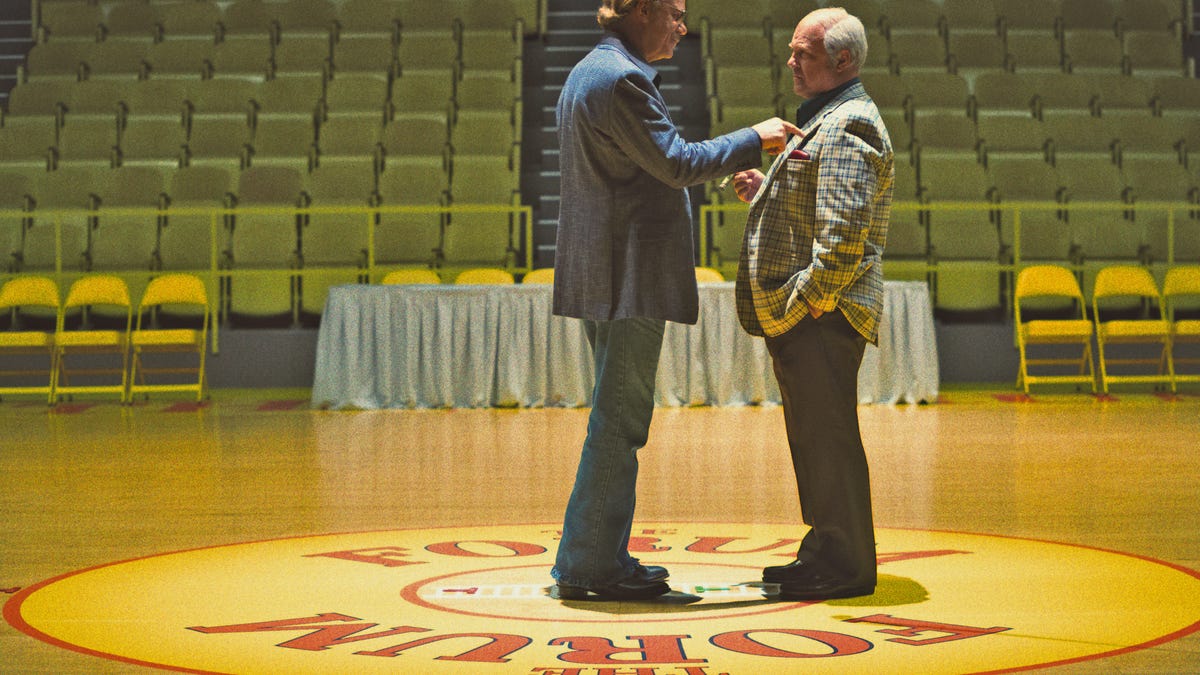
I love the parallels that Barnes and Borenstein draw between Jerry West and Red Auerbach throughout the episode. Auerbach isn’t in the episode a lot, but Chiklis steals every scene with a puff of smoke beginning with a freeze frame, black and white introduction with future NBA commissioner David Stern calling him the pope. Buss and Auerbach are on two planes of reality with the Celtics GM not falling for the Lakers new owner’s offers of a night out and beautiful women even if they do end up sharing a brief dinner. Red Auerbach brings out a darker, less playful side of Jerry Buss with John C. Reilly taking the sunglasses off and saying that he will eat Auerbach’s heart on the Forum floor. It definitely feels like a kid putting on his father’s clothes, especially with all the behind the scenes financial shenanigans like Buss’ mom/accountant Jessie (Sally Field) saying that the Lakers are a money pit or his business associate Frank Mariani stealing the past ten years of records so no nonsense Claire Rothman (Gaby Hoffmann) can put together a budget for next year. With talks of big concerts at the Forum or the Lakers being one piece away from a championship, there’s a slight bit of hope in the air, but they could also go bankrupt like Rothman’s last job in Philadelphia.

The love triangle between Magic Johnson, Cookie Kelly, and Brian, a devout church goer and shoe store manager seems contrived while setting up Johnson’s reputation as a womanizer and showing that he’s not a nice guy as he utterly humiliates Brian on a Lansing playground. Isaiah continues to be a believable Johnson on and off the court as he dazzles with his passing and moves and charms everyone at the fish fry. Except for his mother, Christine (LisaGay Hamilton), who is not amused by his gift of a hot tub even though Johnson knows she’s wanted it for years by her reactions to the commercial during her soap operas. She smiles and talks about the gift in an animated way when she’s with her friends, but is all business around her son. Her husband Earvin Sr. (Rob Morgan) finds a middle ground when he basically tells her that Magic is grown up and has to find his own way in L.A., and that his free spirit came from her, who used to play point guard and dance before she joined the Seventh Day Adventist Church. By spending an entire episode showing Magic Johnson’s life and relationships in his hometown, Rodney Barnes and Max Borenstein ground him as a character and show that there is an entire town (Ok, maybe not Brian.) rooting for him even as Jerry West plots to minimize role from what Jerry Buss promised.

Jonah Hill cuts down on the sugar rush fourth wall breaking in “Is That All There Is?” and uses more natural storytelling techniques to show the current state of the NBA, the Lakers, and this episode’s key players. Jerry West cowering in a dark room in his underwear or sitting alone at a bar tells more about his mental state than talking to the camera or motormouth voiceovers. This episode also sets up Red Auerbach and the Boston Celtics as the key antagonists in the series with the racial implications of them having a white star player in Larry Bird showing up during the owners meeting. But the real conflict in Winning Time is internal with Jerry West butting heads with Jerry Buss, Bill Sharman, and as implied from his interactions with Nixon and Abdul-Jabbar, the players too so he decides to leave as coach right before the season. Him undercutting Buss’ big speech with a glance and a resignation letter creates a sense of uncertainty for future episodes, and boy, am I looking forward to Adrien Brody’s Pat Riley in upcoming weeks. All in all, Winning Time continues to strike a good balance between individual character arcs and the drama of running an NBA franchise in an era when golf, tennis, and bowling were more popular sports.

IDW Entertainment to Develop and Produce Michael Chiklis’s Pantheon

Michael Chiklis has joined forces with IDW Entertainment to develop and produce his comic series Pantheon as a new scripted live-action television series. IDW Entertainment will fund the development of the project and will be co-produced with Circle of Confusion.

While the story of Pantheon is under wraps, it involves Greek Gods returning to the present day.

Slated as direct to series, Pantheon will boast Chiklis, Ted Adams and David Ozer of IDW Entertainment, and David Alpert and Rick Jacobs of Circle of Confusion as Executive Producers. Co-created by award-winning actor Chiklis, it was originally released as a 5-issue comic book series by IDW Publishing.

Michael Chiklis is an actor, director and television producer. He is best known for his roles as LAPD Detective Vic Mackey on the FX police drama The Shield, and The Thing in the Fantastic Four film series. In the last year, he was an Executive Producer and starred in the CBS Crime drama Vegas, and also produced the independent feature, Pawn, an ensemble thriller with Forest Whittaker, Ray Liotta, and Common.

IDW Publishing Exclusives and Events for San Diego Comic-Con 2010

Official Press Release

IDW Publishing Exclusives and Events for
San Diego Comic-Con 2010

Top creators, hot exclusives, engaging panels

Booth #2643

[Rocketeer Artists Edition cover]San Diego, CA (July 17, 2010) – In the company’s first San Diego Comic Con appearance as a premier publisher, IDW Publishing will offer an exciting and diverse array of creator signings, exclusives and panels. For complete and up to date information, please visit IDWPublishing.com/SDCC.

Throughout the convention, IDW’s booth #2643 will host such headlining creators as Michael Chiklis (Pantheon), Berkeley Breathed (Bloom County), Joe R. Lansdale, Peter S. Beagle (The Last Unicorn), Scott Morse, Steve Niles, and the creative teams for True Blood, Star Trek, TRANSFORMERS, G.I. JOE and more. Visit IDWPublishing.com/SDCC for a full schedule.

Exclusive items available only from IDW run the gamit from a David Messina wrap around cover for True Blood #1 to a special 100th Anniversary Krazy & Ignatz “Tiger Tea” mug, and include The Rocketeer Artist Edition, Doctor Who #13 photo cover, Joe R. Lansdale’s new novella, “Dread Island,” signed Locke & Key Ghost keys, to name a few. Visit IDWPublishing.com/SDCC for a complete list.

Take a break from the show floor to participate in IDW’s insightful panels featuring discussions with a bevy of talented creators. On Thursday, IDW’s chief creative officer Chris Ryall moderates a panel on transforming film properties into comics, with David Tischman, Max Allan Collins, Mike Johnson, Peter David, Tony Lee and Scott Tipton (4-5 pm, Room 9).

On Friday, IDW editors Andy Schmidt and Denton Tipton treat fans to an in-depth look at what’s coming for TRANSFORMERS, G.I. JOE and Dungeons & Dragons (12 noon-1 pm, Room 8). Also on Friday, Comic-Con International hosts guest Berkeley Breathed for a spotlight panel (1-2 pm, Room 6A).

On Saturday, learn about what IDW has in store for 2011 from Chris Ryall, Scott Dunbier, Brian Lynch and a special guest (12 noon-1 pm, Room 8); hear Alex Irvine, Jonathan Maberry, Mario Acevedo, Nancy Collins, [Bloom County Volume One cover]Peter David and Steve Niles discuss working in comics (2:30-3:30 pm, Room 5AB); and learn about how experience as military service members influences the comics work of Acevedo, Larry Hama, Billy Tucci, and Tom Waltz (5-6 pm, Room 5AB).

On Sunday, round out the convention experience with a panel about the future of digital comics, moderated by Macworld Senior Editor Jason Snell, with IDW’s Director of ePublishing, Jeff Webber, Jeff Smith, iVerse’s Michael Murphy, Sony’s Adriana Eyzaguirre, and creators J. Scott Campbell and Jeff Smith.

For a complete listing of IDW Publishing’s San Diego Comic Con events and exclusives, please visit IDWPublishing.com/SDCC.

Visit IDWPublishing.com to learn more about the company and its top-selling books.

About IDW Publishing
IDW is an award-winning publisher of comic books, graphic novels and trade paperbacks, based in San Diego, California. Renowned for its diverse catalog of licensed and independent titles, IDW publishes some of the most successful and popular titles in the industry, including: Hasbro’s The Transformers and G.I. JOE, Paramount’s Star Trek; Fox’s Angel; the BBC’s Doctor Who; and comics and trade collections based on novels by worldwide bestselling author, James Patterson. IDW is also home to the Library of American Comics imprint, which publishes classic comic reprints; Yoe! Books, a partnership with Yoe! Studios; and is the print publisher for EA Comics and ComicMix.

IDW’s original horror series, 30 Days of Night, was launched as a major motion picture in October 2007 by Sony Pictures and was the #1 film in its first week of release. More information about the company can be found at IDWPublishing.com.

Pantheon Arrives in April

Official Press Release

First comic series by award-winning actor Michael Chiklis debuts at WonderCon

San Diego, CA (February 8, 2009) – IDW Publishing and award-winning actor and WonderCon special guest Michael Chiklis are pleased to announce that the comic book series, Pantheon, will launch in April at WonderCon, one of the country’s leading comics and pop culture conventions, held April 2nd through the 4th. Created by Chiklis, Anny Simon Beck, and acclaimed comics writer, Marc Andreyko, Pantheon is a dark and stylized story of ancient Greek gods returning to a ravaged, chaotic near-future Earth, where they battle for the fate of mankind.

“As a kid, Greek Gods were very real to me, so the chance to bring my childhood heroes and villains to life in the modern world is irresistible,” said Chiklis, a third generation Greek-American. “Besides, I couldn’t say no to Zeus. . . no one in the family would ever talk to me again.”

The five-issue series pits Zeus’s fellow gods against the Titans in an epic battle of good versus evil, and father versus son. Breaking the golden rule of Greek mythology – to never reveal themselves – the gods Zeus, Aphrodite, Pandora, Cronus, Prometheus and Jason return to their timeless battles, as Armageddon nears.

Working closely with Chiklis, Beck and Andreyko will be rising star artist, Stephen Molnar, while the Sharp Brothers provide striking covers for the series. Launching at WonderCon, IDW, Chiklis, and Andreyko will host a signing as well as a panel for Pantheon at San Francisco’s Moscone Center. Stay tuned to IDWPublishing.com for exact times and locations.

Pantheon #1 (of 5; $3.99, 32 page color) will be available in stores in April. Diamond order code FEB10 0961.

Visit IDWPublishing.com to learn more about the company and its top-selling books.

About IDW Publishing
IDW is an award-winning publisher of comic books, graphic novels and trade paperbacks, based in San Diego, California. Renown for its diverse catalog of licensed and independent titles, IDW publishes some of the most successful and popular titles in the industry, including: Hasbro’s The Transformers and G.I. JOE, Paramount’s Star Trek; Fox’s Angel; the BBC’s Doctor Who; and television’s #1 prime time series CBS’ CSI: Crime Scene Investigation. IDW is also home to the Library of American Comics imprint, which publishes classic comic reprints; Yoe! Books, a partnership with Yoe! Studios; and is the print publisher for ComicMix.

IDW’s original horror series, 30 Days of Night, was launched as a major motion picture in October 2007 by Sony Pictures and was the #1 film in its first week of release. More information about the company can be found at IDWPublishing.com.