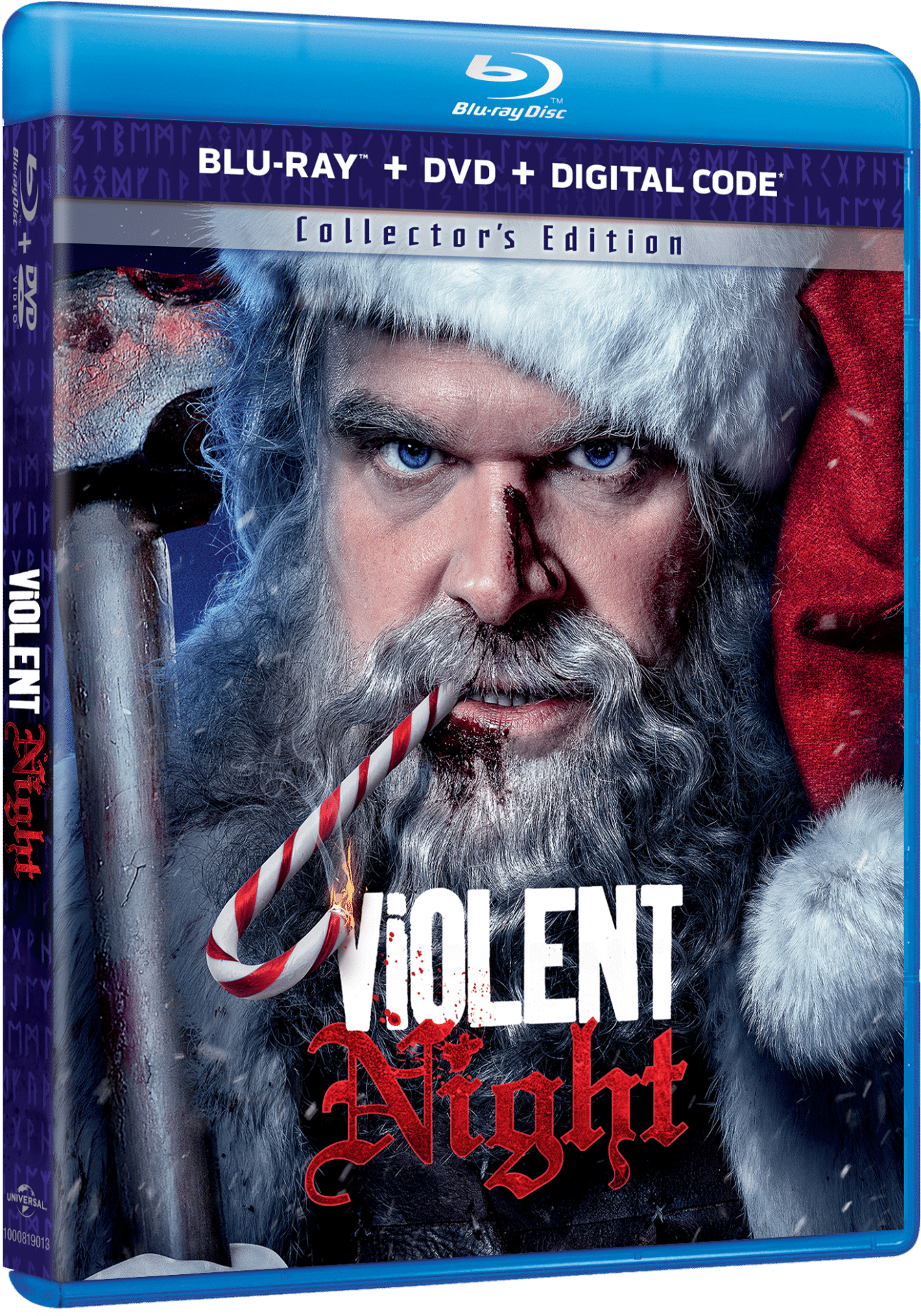
From the producers of Nobody and John Wick comes Violent Night, available to own with bonus features on Digital January 20, 2023 and on Blu-ray and DVD on January 24, 2023 from Universal Pictures Home Entertainment. The collector’s edition includes over half an hour of never-before-seen bonus content including deleted and extended scenes, a feature commentary, and behind-the-scenes featurettes delivering more of the movie for your Christmas collection.
When a team of mercenaries breaks into a wealthy family compound taking everyone inside hostage, they are not prepared for a surprise combatant: Santa Claus. David Harbour stars as St. Nick in theholiday romp, delivering some serious season’s beatings to save the family and the spirit of Christmas.
Directed by Tommy Wirkola, Violent Night also stars Emmy winner John Leguizamo, Edi Patterson, Cam Gigandet, Alex Hassell, Alexis Louder, and Beverly D’Angelo.
With the purchase of Violent Night on disc or Digital, fans are eligible to earn points towards digital movies via the Universal All-Access Rewards program. Members can redeem their points for digital movies, swag and more!
EXCLUSIVE BONUS FEATURES ON BLU-RAYTM, DVD & DIGITAL:
Deleted and Extended Scenes
Family Arrives at the Mansion
Jason and Linda in Bedroom
Krampus Sees Trudy’s Radio
Santa on the Roof
Walk to the Manger
Family Resolution
Bad Dad
Cast Call Back
Extended Scenes
Quarrelin’ Kringle – Cast and crew relay why David Harbour is the perfect brawler for this combative rendition of Santa.
Santa’s Helpers: The Making Of VIOLENT NIGHT– Tommy Wirkola and David Leitch have reunited for another madcap, violent fairytale with heart in VIOLENT NIGHT. This making-of will celebrate their spirited reunion as well as the other little helpers.
Deck the Halls with Brawls – Go behind the action as we go blow for blow with the new villains of Christmas.
Feature Commentary with Director Tommy Wirkola, Producer Guy Danella, Writer Pat Casey and Writer Josh Miller
The Baltimore Comic-Con returns to the Inner Harbor’s Baltimore Convention Center on October 28-30, 2022 for its 23rd year. The Baltimore Comic-Con has announced the addition of media guest John Leguizamo. Tickets for admission and VIP experiences are now available online!
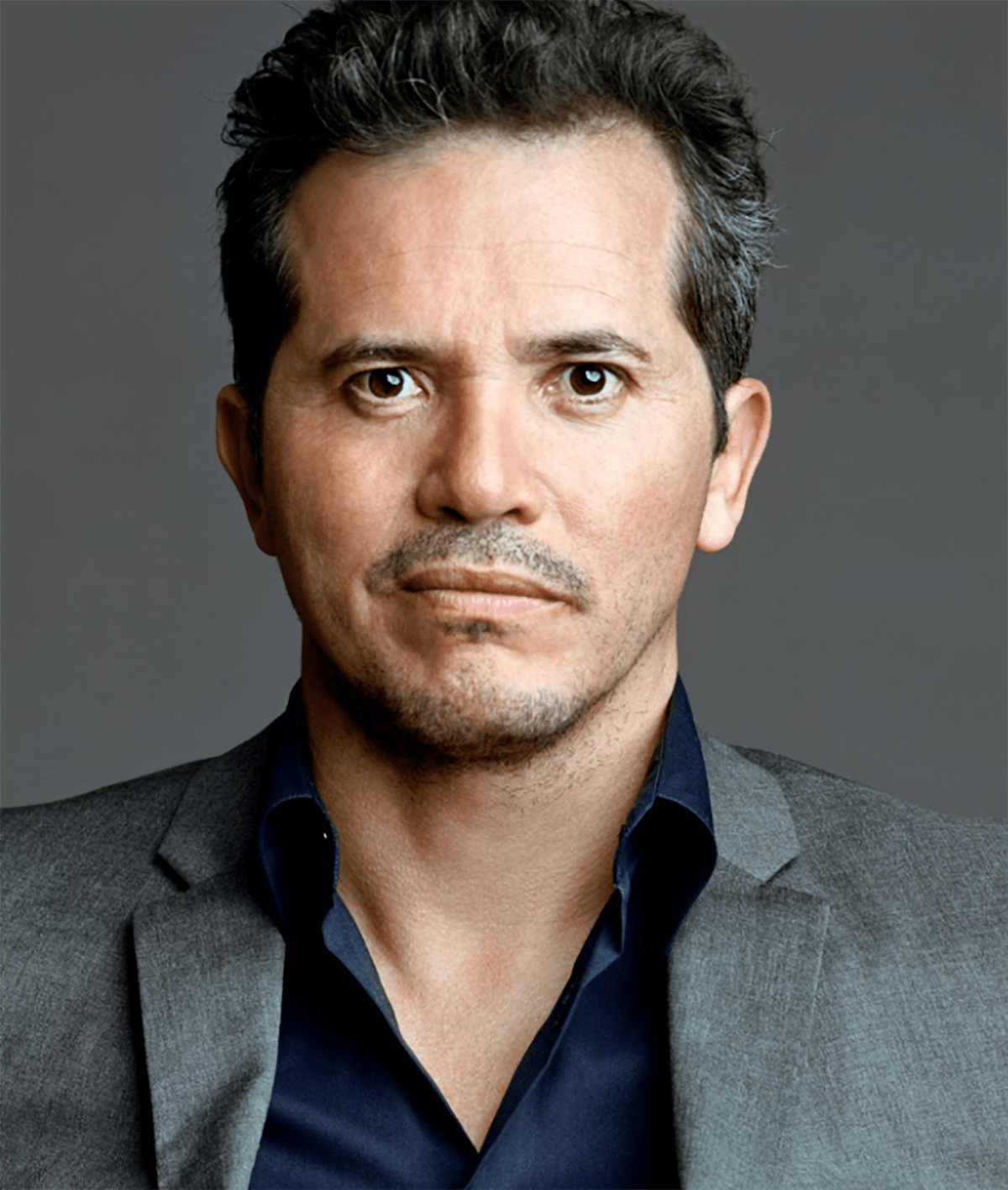
John Leguizamo is a multi-faceted performer and Emmy Award-winning actor who has appeared in over 100 films, with a career that defies categorization. He has also been nominated for multiple Emmys and Golden Globes. John has performed in movies, television, and on stage, and has also produced and directed movies and documentaries. He has shown incredible versatility as an actor, with starring roles in Carlito’s Way, Romeo and Juliet, Moulin Rouge!, and the amazing John Wick franchise, and has also appeared on the Broadway stage in a series of one-man shows including Freak, Mambo Mouth, Ghetto Klown, and Latin History for Morons. However, John might be best known to comics fans for his appearances as Luigi in Super Mario Bros. and as the Violator (Clown) in Spawn. His voice over work includes Sid the Sloth in the Ice Age franchise, the Riddler in Batman: The Audio Adventures, Gor Koresh on The Mandalorian, and playing a character in Encanto that we can’t talk about (shhh…it’s BRUNO). John has also starred in many television series, including Miami Vice, House of Buggin’, ER, Bloodline, and Waco.
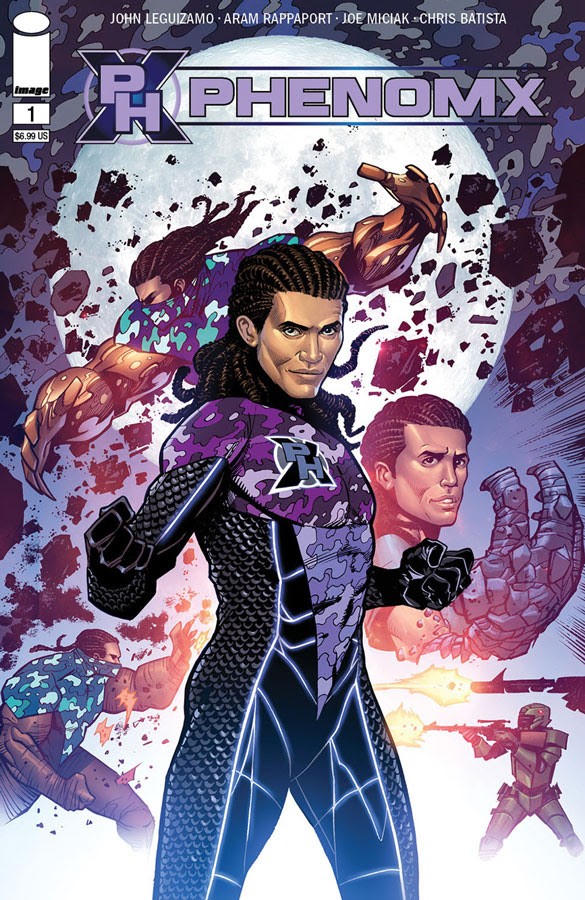
In addition to his film and television work, John is also a published author. His memoir, Pimps, Hos, Playa Hatas, and All the Rest of my Hollywood Friends, was released in 2006, and his first graphic novel, Ghetto Klown, was published in 2015 by Abrams ComicArts and was nominated for an Eisner Award. Recently, he teamed up with Image Comics to create PhenomX, a new Latin superhero. Upcoming projects include the TV series The Power, the movie Violent Night, and the musical Kiss my Aztec. This is John Leguizamo’s first time at Baltimore Comic-Con.
The highly anticipated creation, PhenomX is heading to comic shops this Novemberfrom acclaimed actor, John Leguizamo. The first issue is an extra-length comic featuring cover art by Spawn creator Todd McFarlane.
McFarlane and Leguizamo first met on the set of the 1997 Spawn movie, where Leguizamo delivered a memorable performance as Spawn’s arch-enemy, The Clown. In 2018, the two creators re-connected at New York Comic Con and made the decision to put their heads together.
PhenomX centers around the character, Max Gomez, who was wrongfully imprisoned and is desperate to regain his freedom. Max agrees to become a subject in an underground government experiment.
When the trial gives him phenomenal shape-shifting abilities, Gomez learns his new “freedom” requires surviving a superpowered war fought on the streets of NYC.
Fans have been anticipating Leguizamo’s Latin superhero since a crowdfunding campaign was announced in 2019 for his creator-owned project PhenomX. The all-Latino creative team launching Leguizamo’s new hero includesartist Edgardo Miranda-Rodriguez—author of the comic series La Boriqueña—as well as cover art by Jim Muñiz, José Marzán, Jr., and Juan Fernández.
PhenomX #1 will be available at comic book shops and digital platforms, including Amazon, Kindle, Apple Books, comiXology, and Google Play on Wednesday, November 3 (SRP $6.99):
PhenomX #1 Cover A by Muñiz – Diamond Code SEP210031
PhenomX #1 Cover B by McFarlane – Diamond Code SEP210032
This review contains spoilers for The Mandalorian Season 2, Episode 1 “Chapter 9: The Marshal”
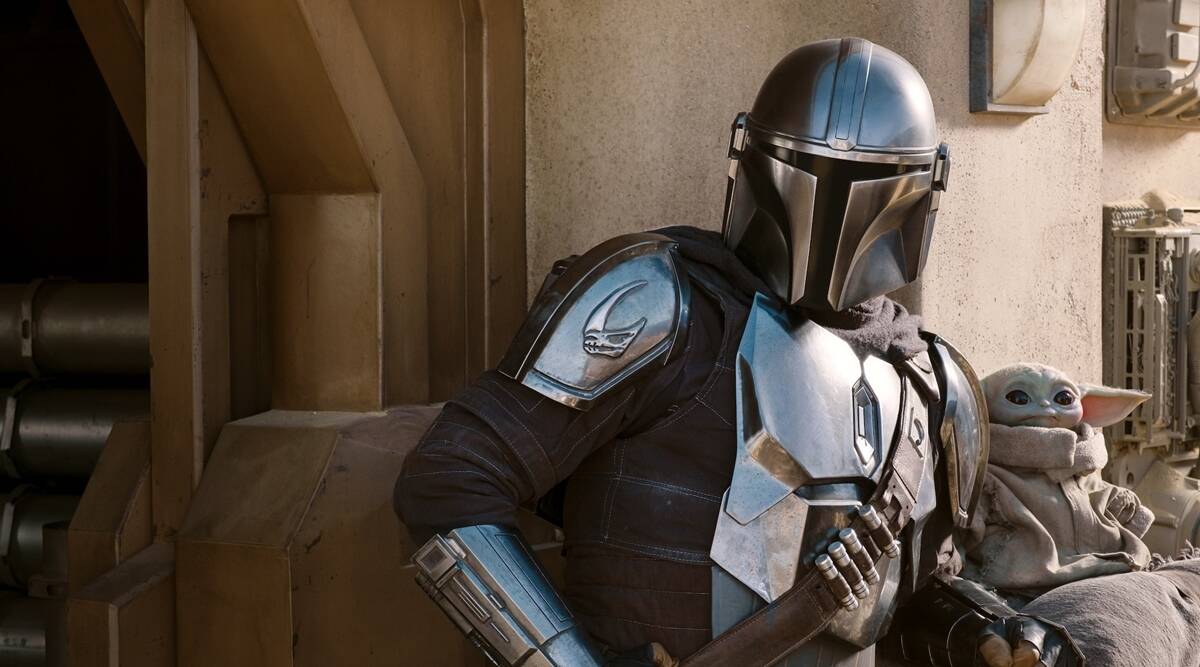
It’s becoming an old adage that television in the 2010s (And now, the 2020s, I guess) has abandoned the art of the single episode and instead wants to be a 10-hour movie. (Or 13 in the case of the Marvel Netflix shows.) However, The Mandalorian bucked that trend and became a kind of Have – Gun Will Travel meets Lone Wolf and Cub wrapped up in a shiny cinematic package with talented guest stars, directors that some would consider to be auteurs, and of course, having a connection to the immersive world of Star Wars without the ol’ Skywalker. Each episode is a Western mini-movie with just enough serialization to get audiences to tune in next week. Or keep subscribing to the streaming service. And “The Marshal” is no exception.
Before getting into the episode’s main plot, writer/director/show creator Jon Favreaucrafts a bit of a cold open to remind viewers that Mando (Pedro Pascal) is a laconic badass, a man of honor especially where his beskar armor is concerned, and desperately cares for The Child aka Baby Yoda. (Even though he takes him to some not very child-friendly places, a Gamorrean deathmatch isn’t Chuck E. Cheese.) The sequence also establishes Season 2’s overarching plot, which is that Mando is looking for The Child’s people, and to find them, he needs to find more of his people, the Mandalorians. This is why he’s at the aforementioned deathmatch even though Mando isn’t a gambling man.
However, his contact, the Cyclopean alien Gor Koresh (John Leguizamo) sees more value in his armor than in his paltry excuse for a fighter, and we get to see some of Mando’s new toys he picked up last season in action. Pedro Pascal brings great physicality to this sequence, and Emmy Award winning cinematographer Greig Fraser shoots the fight like a boxing match while adding some levity when The Child slowly closes his cradle when he realizes his daddy is going to cause some carnage. Ludwig Goransson’s score really helps the opening scene build starting with percussion, then guitars, and finally into the show’s iconic theme music as Koresh gets his comeuppance courtesy of some critters hinted at in an earlier dark and gritty tracking shot, and Mando is off to good ol’ Tattooine to find another Mandalorian.
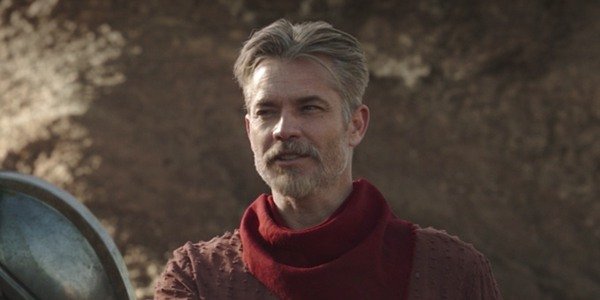
After an adrenaline-filled, almost neo-noir opening sequence, Favreau is back in Western mode as Mando and The Child visit the nearly abandoned Tatooine mining town of Mos Pelgo, which Peli Motto (Amy Sedaris) treats as the neglected sibling of the more famous Mos Eisley and Mos Espa in an adorable guest scene. Sedaris brings a dose of comic relief and acts as Favreau’s commentary on rabid fandom surrounding The Child as she offers to buy him or his future offspring. She’s a bit of sunshine before they arrive in the bleak ghost town of Mos Pelgo, and Favreau introduces a fairly basic theme of working together despite one’s differences as a gun slinger duel between Mando and Marshal Cobb Vanth (An incredibly well-cast Timothy Olyphant) over his Jawa-bought Mandalorian armor turns into a Jaws with sand as a Krayt dragon (Whose call Obi Wan used to scare off the Tusken Raiders in A New Hope) slithers through town. This sets up the main plot of this episode of The Mandalorian, which is that Mando, Cobb, the townspeople of Mos Pelgo, and the local Tusken Raiders must join forces to kill the Krayt dragon once and for all.
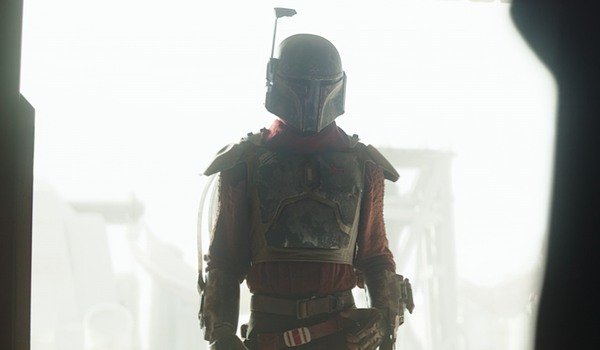
Also, there’s a kicker about Cobb’s armor: it belonged to Boba Fett. He’s not a Mandalorian and obviously knows nothing about The Way as he immediately takes off his helmet upon meeting Mando as Olyphant exudes casual contempt. Jon Favreau’s script and direction of “The Marshal” is richly intertextual without being mere fanservice. He uses familiar touchstones to play with audience’s preconceptions, and where George Lucas saw stereotypes or archetypes, he does something a little more nuanced. In a flashback scene, Favreau shows that the destruction of the Second Death Star didn’t have a positive effect on every planet in the galaxy and led to the Mining Collective taking over Mos Pelgo until Marshal Cobb uses some random crystals that he finds to purchase Fett’s armor and shoot and guided homing missile his way back to a semblance of law and order. The scene of Cobb breathlessly crawling through the desert makes him a sympathetic figure that transcends his initial “gunslinger of the week” trappings, which would frankly be a waste of Olyphant’s talents.
Even better is Jon Favreau’s reclamation of the Tusken Raiders, who had been relegated to something to avoid or even slaughter in Lucas’ films. (Notice how Anakin’s actions towards them in Attack of the Clones were justified until he killed women and children.) He uses them as a (Let’s be honest: a bit on the nose) sci-fi metaphor for indigenous people in “The Marshal” with Cobb refusing to drink their “smelly” water in a scene where Mando is trying to set up an alliance and use their knowledge of the Krayt dragon to take it down. Olyphant does a good job playing the uncomfortable colonizer as Mando effortlessly communicates via low tones, hand signals, and the occasional loud utterance while Cobb and later the townspeople feel awkward and even react in anger when a Tusken raider fumbles an explosive charge. The agreement that Mos Pelgo and the Tuskens make also acts as a commentary on Western countries’ preemptive strikes as in exchange for the Krayt dragon’s blood and carcass, the Tuskens won’t attack Mos Pelgo unless they are attacked first. This has happened in the past as evidenced by a one-liner about Cobb not drinking their water even though he and his miners had stolen it in previously.
Along with using Star Wars lore to make sociopolitical commentary, “The Marshal” is also a damn fun monster movie. Favreau parcels out just enough exposition to make Mando, the Tuskens, and Cobb’s plan easy to follow and then shoots it all to hell to keep things interesting. He goes the Steven Spielberg route and saves the big money shot of the monster for the end of the episode using the effects of its actions like the sand shifting and windmills aggressively blowing as well as stories of its exploits (It ate the Sarlacc and is living in its lair!) to build tension. And it lives up to the hype with some wonderful creature design that matches its sandstorm introduction. Also, Mando and Cobb get to fly around on jetpacks to fight it, which is damn cool, and there’s another Boba Fett related Easter Egg that is integral to how they best the creature.
The way that Mando takes down the Krayt dragon also adds to his character as he’s willing to improvise and come up with non-orthodox solutions in stressful situations and is willing to take chances and sacrifice himself for those around him. Even though its the first episode of a season in a show named after him, Pedro Pascal really sells the fact that he might die and makes sure that The Child is well taken care of before he literally goes into the belly of the beast. Although, he doesn’t play an active role in the plot, The Child continues to humanize and soften Mando even in the most high-stress situations.
Some heavy-handedness aside, “The Marshal” is a fun and smart return for The Mandalorian as Jon Favreau and company use the world and mythos of Star Wars to tell a genre-bending story that comments on the role of indigenous people in both science fiction and Western stories. It’s also a hell of a shoot ’em up with cinematic action and a memorable, nuanced guest performance from Timothy Olyphant, who parts as friends with Mando, and I hope makes a return to a series as a gun-slinging lawman that learns to be a little less species-ist. And the final scene is truly a jaw dropper…
Growing up In Queens, New York, is a one of a kind experience. The thing is, I did not realize how good I had it until I left home and joined the military. Growing up in my neighborhood got me ready for dealing with people from all walks of life, different parts of the world, and to different languages.
During my time serving, it felt if my fellow soldiers weren’t from major metropolises they had never seen anyone of color. Ever. This became even more apparent when we would visit different countries and I watched as many of the people I came with had never heard certain languages or ate certain foods. Much of what we saw during my time serving, I had experienced right there in Queens years before. As the immortal Rakim Allah once said “its not where you from, its where you at.” It calls for the individual to take their experience where they’re from and apply it to where they are going. In John Leguizamo’s Ghetto Klown, another resident son of Queens sheds light on his journey for all to see.
We meet John through his parents and their struggle as immigrants, working their hands to the bone, trying do better for him. As he grows up, he soon finds out he has a knack for comedy, one that would get him a reputation in the neighborhood and school. Soon he catches the eye of one drama teacher, one that would introduce him to the plays of Arthur Miller and Sam Shepherd. He eventually goes to school for acting and works under the tutelage of the great Lee Strassburg. As he gained notice, he was cast in his first film Casualties Of War, one that would prove he was good, but h did not find his voice as of yet. It was not until he wrote Mambo Mouth, his first play, which caught the eyes of his heroes, Miller, and Shepherd, but also made Hollywood take another look at him. He books his next movie and one of my personal favorites, Carlito’s Way, one which he has more than a tenuous relationship with Al Pacino. He eventually books another film, To Wong Foo, Thanks for Everything, which he starred alongside the late great Patrick Swayze and the underrated Wesley Snipes, which garnered him a Golden Globes nomination, and gave him enough influence to write Buggin, his second play. Eventually, he would marry his longtime on again off again girlfriend, Teeny, and have a son and a daughter. By book’s end, he eventually realizes he cannot run away form who he is, an actor, a husband, a father a son, a grandson, and a native New Yorker.
Overall, an excellent memoir that reveals much about the man behind the public personality that is John Leguizamo. The story by Leguizamo, is raw, emotional, funny, and brimming with hope at times. The art by Beyale and Cassano is simply beautiful. Altogether, a graphic novel that proves to part therapy and part memoir.
Story: John Leguizamo Art: Shamus Beyale and Christa Cassano Story: 9.5 Art: 9.4 Overall: 9.6 Recommendation: Buy

 Growing up In Queens, New York, is a one of a kind experience. The thing is, I did not realize how good I had it until I left home and joined the military. Growing up in my neighborhood got me ready for dealing with people from all walks of life, different parts of the world, and to different languages.