Tag Archives: denis villeneuve

Exclusive Preview: Hydrogenese by Caza from Metal Hurlant

Humanoids‘ relaunch of the iconic Metal Hurlant has just a few days left on Kickstarter and we have another exclusive, this time a preview of “Hydrogenese” by Caza!

50 years after the debut of Metal Hurlant in France, the iconic and genre defining publication is returning to English, with a bigger and bolder iteration than ever before: as a quarterly anthology published by Humanoids. Each volume of Metal Hurlant will be a massive 272+ page literary experience.

In 1974, filmmaker, writer, mime, and poet Alejandro Jodorowsky was working in Paris on a film adaptation of Frank Herbert’s novel Dune, with the assistance of the internationally acclaimed artist Mœbius on concept art and storyboards, alongside talents such as H.R. Giger and Dan O’Bannon. At the same time, Mœbius—along with fellow rebellious bande dessinée creators Jean-Pierre Dionnet and Philippe Druillet—wanted to push the boundaries of the  comics medium to tell mature, cerebral, and often titillating stories that embraced a punk attitude. Metal Hurlant was their brainchild, a cutting edge comics anthology published under their newly-founded publishing house Les Humanoïdes Associés (Humanoids).

See what Alejandro Jodorowsky and Hans Zimmer have to say about the return of Metal Hurlant.

Highlights from the first year of Metal Hurlant include all-new, sophisticated, and electrifying genre stories by visionary graphic storytellers and international superstars, including: 

  • “Clean and Clear” by writer Brian Michael Bendis and artist Jacob Edgar
  • “In Every Dream Home a Heartache” by writer Matt Fraction and artist Afif Khaled
  • “The Rite” by cartoonist Elie Huault 
  • “Peppermint Wendy” by cartoonist Miran Kim
  • “Retrograde” by writer Karla Pacheco and artist Sagar Fornies
  • “Soldiers of Light” by cartoonist Simon Roy
  • “The Laws of Physics” by cartoonist Matthew Sheean
  • “Hot Ground” by cartoonists Shofela “Shof” & Shobo Coker
  • “Red Planet Tomatoes” by cartoonist James Stokoe
  • “A New Dawn” by writer Jake Thomas and artist Jorg de Vos
  • “Nightmare Motel” by cartoonist Elene Usdin
  • “The Naked King” by writer Fabien Vehlmann and artist Lionel “Alfred” Papagalli
  • “Alter” by writer Mark Waid and artist Jean-Michel Ponzio

The first year of Metal Hurlant will also showcase archival material from Metal Hurlant’s original run in France, including stories that have never been published before in English or stories that have been out-of-print for decades, including:

  • Rare short stories from Mœbius, including “Absoluten Calfeutrail” and “La Retour” (The Return)
  • Content from original Metal Hurlant founders Philippe Druillet and Jean-Pierre Dionnet
  • Robert Crumb’s iconic comic about Philip K. Dick
  • Stories by CazaNicole ClavelouxMichio Hisauchi, Angus McKieJean-Claude MézièresChantal Montellier, and Trina Robbins

Each issue of the magazine will have covers by international superstar artists, including MœbiusPeach Momoko, Enki Bilal, and Jean-Michel Nicollet. The magazine will be packed with premier editorial features by independent journalists, such as cultural commentaries, personal essays, and interviews with top talents from across the arts including Ted ChiangWilliam Gibson, Alan Moore, and Denis Villeneuve

Metal Hurlant is set to launch with a Spring 2025 issue, 50 years after its French premiere issue in January 1975. Metal Hurlant will be available through newsstands,  comic book shops, and bookstores, by subscription, and via the Kickstarter campaign. Backers to the crowdfunding campaign can choose Kickstarter exclusive rewards like:

  • “Arzach” by Mœbius, the seminal, silent story, presented in a stunning hardcover format, featuring a cutout slipcase for the 50th Anniversary French Edition that has never before been available in the US
  • A two-sided Mœbius posterzine for people who subscribe for one year, featuring, on side one, a cover illustration by Mœbius for Metal Hurlant n°6 (March 1976) and, on side two, Mœbius’ short story, “Major Fatal”, which will not be published in the magazine itself
  • A two-sided posterzine for people who subscribe for two years or to the hardcover tier, featuring, on side one, a cover illustration by Mœbius and Druillet for Metal Hurlant n°57bis (November 1980) and, on side two, Mœbius’ & Druillet short story, “Approaching the Centauri,” which will not be published in the magazine itself
  • Metal Hurlant cover portfolio of 8 prints of iconic, vintage covers by Philippe Druillet, Mœbius, Caza, François Schuiten, Jean-Claude Mézières, and more, presented in a pocket portfolio
  • A Roulette-style signature add-on, offering ONE portfolio print signature from Jodorowsky, Nicollet, Dionnet, OR Caza
  • An All-Star Signature Tier featuring all four portfolio signatures from Jodorowsky, Nicollet, Dionnet, and Caza 

Check out the exclusive preview below and then make sure to back Metal Hurlant before time runs out!

Exclusive: Metal Hurlant returns from Humanoids and we have an exclusive excerpt from Caza!

50 years after the debut of Metal Hurlant in France, the iconic and genre defining publication is returning to English, with a bigger and bolder iteration than ever before: as a quarterly anthology published by Humanoids. Each volume of Metal Hurlant will be a massive 272+ page literary experience. The ambitious venture will be funded via Kickstarter and will be released as part of the internationally renowned publisher’s ongoing 50th Anniversary celebrations.

In 1974, filmmaker, writer, mime, and poet Alejandro Jodorowsky was working in Paris on a film adaptation of Frank Herbert’s novel Dune, with the assistance of the internationally acclaimed artist Mœbius on concept art and storyboards, alongside talents such as H.R. Giger and Dan O’Bannon. At the same time, Mœbius—along with fellow rebellious bande dessinée creators Jean-Pierre Dionnet and Philippe Druillet—wanted to push the boundaries of the comics medium to tell mature, cerebral, and often titillating stories that embraced a punk attitude. Metal Hurlant was their brainchild, a cutting edge comics anthology published under their newly-founded publishing house Les Humanoïdes Associés (Humanoids).

Highlights from the first year of Metal Hurlant include all-new, sophisticated, and electrifying genre stories by visionary graphic storytellers and international superstars, including: 

  • “Clean and Clear” by writer Brian Michael Bendis and artist Jacob Edgar
  • “In Every Dream Home a Heartache” by writer Matt Fraction and artist Afif Khaled
  • “The Rite” by cartoonist Elie Huault 
  • “Peppermint Wendy” by cartoonist Miran Kim
  • “Retrograde” by writer Karla Pacheco and artist Sagar Fornies
  • “Soldiers of Light” by cartoonist Simon Roy
  • “The Laws of Physics” by cartoonist Matthew Sheean
  • “Hot Ground” by cartoonists Shofela “Shof” & Shobo Coker
  • “Red Planet Tomatoes” by cartoonist James Stokoe
  • “A New Dawn” by writer Jake Thomas and artist Jorg de Vos
  • “Nightmare Motel” by cartoonist Elene Usdin
  • “The Naked King” by writer Fabien Vehlmann and artist Lionel “Alfred” Papagalli
  • “Alter” by writer Mark Waid and artist Jean-Michel Ponzio

The first year of Metal Hurlant will also showcase archival material from Metal Hurlant’s original run in France, including stories that have never been published before in English or stories that have been out-of-print for decades, including:

  • Rare short stories from Mœbius, including “Absoluten Calfeutrail” and “La Retour” (The Return)
  • Content from original Metal Hurlant founders Philippe Druillet and Jean-Pierre Dionnet
  • Robert Crumb’s iconic comic about Philip K. Dick
  • Stories by CazaNicole ClavelouxMichio Hisauchi, Angus McKieJean-Claude MézièresChantal Montellier, and Trina Robbins

Each issue of the magazine will have covers by international superstar artists, including MœbiusPeach Momoko, Enki Bilal, and Jean-Michel Nicollet. The magazine will be packed with premier editorial features by independent journalists, such as cultural commentaries, personal essays, and interviews with top talents from across the arts including Ted ChiangWilliam Gibson, Alan Moore, and Denis Villeneuve

Metal Hurlant is set to launch with a Spring 2025 issue, 50 years after its French premiere issue in January 1975. Metal Hurlant will be available through newsstands, comic book shops, and bookstores, by subscription, and via the Kickstarter campaign. Backers to the crowdfunding campaign can choose Kickstarter exclusive rewards like:

  • “Arzach” by Mœbius, the seminal, silent story, presented in a stunning hardcover format, featuring a cutout slipcase for the 50th Anniversary French Edition that has never before been available in the US
  • A two-sided Mœbius posterzine for people who subscribe for one year, featuring, on side one, a cover illustration by Mœbius for Metal Hurlant n°6 (March 1976) and, on side two, Mœbius’ short story, “Major Fatal”, which will not be published in the magazine itself
  • A two-sided posterzine for people who subscribe for two years or to the hardcover tier, featuring, on side one, a cover illustration by Mœbius and Druillet for Metal Hurlant n°57bis (November 1980) and, on side two, Mœbius’ & Druillet short story, “Approaching the Centauri,” which will not be published in the magazine itself
  • Metal Hurlant cover portfolio of 8 prints of iconic, vintage covers by Philippe Druillet, Mœbius, Caza, François Schuiten, Jean-Claude Mézières, and more, presented in a pocket portfolio
  • A Roulette-style signature add-on, offering ONE portfolio print signature from Jodorowsky, Nicollet, Dionnet, OR Caza
  • An All-Star Signature Tier featuring all four portfolio signatures from Jodorowsky, Nicollet, Dionnet, and Caza 

Before it’s launch, we have an exclusive preview from “Bird of Dust” by Caza. Check it out below and make sure to not miss Metal Hurlant‘s return! And check out covers from Enki Bilal, Mœbius, Peach Momoko, and Jean-Michel Nicollet!

Movie Review: Blade Runner 2049 is a Masterpiece

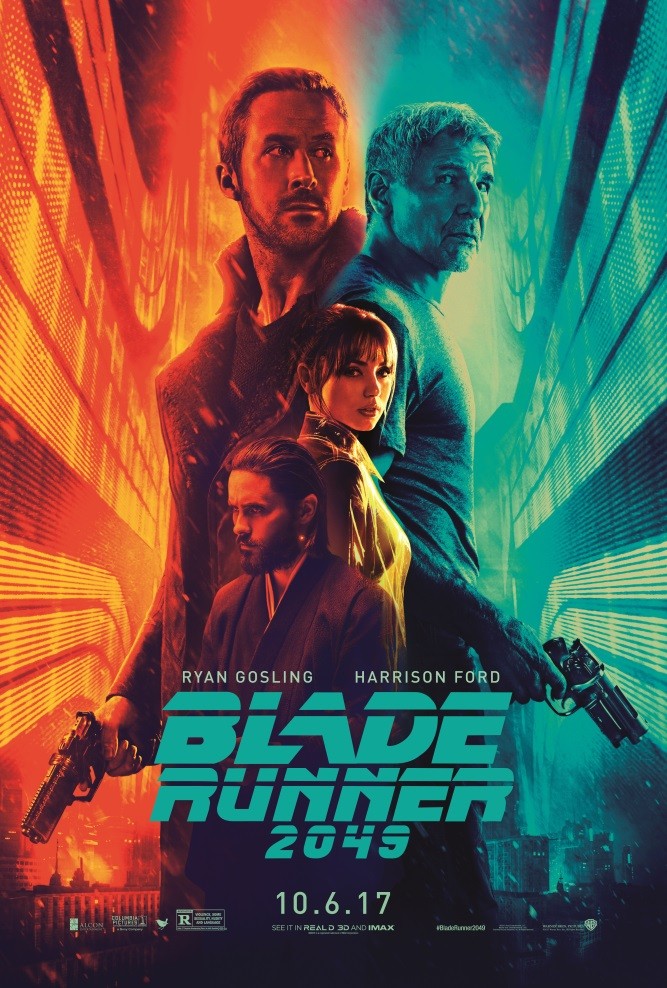
Blade Runner 2049Blade Runner 2049 is a masterpiece and 2017’s best film.

And beyond that I’m not going to tell you anything more about its plot, characters, or anything else you’d expect from a movie review. Don’t let anyone tell you too much about it apart from what you’ve seen in the trailers, as this is a film that deserves to be experienced without much else in the way of explanation.

And, for the love of all that is holy, after you’ve seen it—don’t spoil it for your friends. Just tell them to go see it, too. And go see it with them. And then spend hours afterwards obsessively discussing everything about it.

Suffice it to say it is a continuation of the story from 1982’s Blade Runner set decades in the future in 2049. Ryan Gosling works for the LAPD hunting down and “retiring” rogue replicants, the same job Harrison Ford’s Deckard had in the original. And he uncovers something that threatens to turn their entire world upside down.

Despite his prominent placement in the trailers, don’t expect this to be a Ford / Gosling buddy cop movie. It’s not. Ford doesn’t show up until later, with even less screen time than his turn in 2015’s Star Wars: The Force Awakens. However, his role is vital, and answers lingering questions definitively (though not overtly) that fans have often asked about Deckard.

Director Denis Villeneuve cements himself here as one of, if not the outright, best directors working today. (Public Service Announcement: impress your friends by pronouncing his name correctly. Remember that he is French Canadian, so his first name sounds  more like “Deni”—think like what John Snow calls Daenerys but with an e instead of an a. And his last name is “Vill-neve.” Say it like the beginning of “villain” and “nerve” but without the r.)

Villeneuve pulls incredible performances out of his actors. He understands exactly the world and mythos he’s playing in (arguably better than Ridley Scott?) He understands pacing and tension better than anyone else working today- if you saw Sicario, Prisoners, or Arrival, those were all just the warm up act.

And on top of all of that he has the most incredibly keen eye for visuals. He brings to life the world of this dystopian wasteland in 2049, and does it all in beautiful darkness and light. Again, his play with the darkest darks and hiding things, and his beautiful eye for how different wavelengths of light bring different feelings to the scene shows a master at work.

Just know that there are some amazingly beautiful things here. Giant skyscraper-sized women advertise companionship. A fight in a derelict casino takes place between Ford and Gosling while a glitching hologram Elvis and dancers perform in the background. Ana de Armas and Mackenzie Davis meld/merge into one person.

And then there’s Jared Leto. His turn as the head of the giant corporation producing replicants has an air of a techno-Jesus Zillionaire PsychoDoucheBro. If you hate Leto, you’re going to hate him more—and be glad Villeneuve keeps him shrouded in shadow for much of the movie. If you like his performances, you’re going to hate him, too.

But the real stars of the film are the women. Apparently, the dystopia of Blade Runner is only slightly less misogynistic than the dystopia of The Handmaid’s Tale. Mackenzie Davis (Halt and Catch Fire) is Mariette—and we should likely take that name more literally as marionette—echoing exotic dancer Zhora from the original. As a newer model replicant, she cannot disobey orders and engages in sex work: she is stripped of agency and therefore the ability to consent. So every sexual encounter is therefore rape.

Ana de Armis is even more stunning, for reasons I won’t go into, because spoilers. But her place as Gosling’s girlfriend Joi make you question the nature of love. . .  and then by the end you get the rug ripped out from under you and recognize just how awful this existence is.

Leto’s henchwomen “Luv” (even the name is cringe-y for how women are treated) is also amazing, with a performance from Sylvia Hoeks that rivals any recent femme fatale. She displays a singular focus reminiscent of a Terminator and a glee in carrying out her orders.  But still, all of them are robbed of any real choice in their circumstances.

And then there’s Robin Wright – who is having a spectacular year – as Gosling’s boss and apparently the only woman in all of Los Angeles with any sort of moral agency of her own in this universe. She’s perfect, and this is the kind of role someone gets nominated for Best Supporting Actress for (but really they’re also nominating her for Wonder Woman, but can’t say they’re doing that.)

And it’s within these performances of all of these actors in top form and their various character arcs that we illuminate incredibly deep themes and questions about the nature of existence. Many of these were covered in the original Blade Runner as well, which is why this works so well as a true sequel.

What makes someone human? What purpose do memories and dreams serve? Can artificial intelligences love? Do they feel?

But this film also treads astonishing new ground. It provides a stunning critique of humanity that some might call Marxist—we’ve always depended on forms of slavery, so why not replicants? But, amazingly, we find out that even in a world with robot slaves (let’s be real, that’s what they are), we find there are still sweatshops and child labor. To what extent is everything built on the exploitation of labor? (see? Marxism.) The film reveals, but never answers. And that’s part of what makes it so impressive.

To fully understand what this movie is without revealing too much about it, I have found the best way to discuss it is by saying exactly what it is not. And perhaps the best way to discuss that is to compare it to two other spectacular failures of 2017: Ghost in the Shell and mother!

Ghost in the Shell felt the need to explain everything and dumb things down for the audience. mother!  was too pretentious and ponderous to have any meaning at all, always showing off how smart and deep it was rather than actually getting around to any real point. Blade Runner 2049 splits the difference between these two. It expects a lot from the audience, in much the same way Arrival did last year. But its themes and meanings are clear and reach a logical conclusion, while still leaving room for vigorous discussion and debate. But unlike Arrival and perhaps more like Sicario, it offers a basic narrative that even someone not wanting to watch serious science fiction could enjoy as a basic neo-noir drama with occasional fights and explosions.

Ghost in the Shell and mother! completely missed the mark on their source material (if you include the Christian Bible as source material for Aronofsky’s mess of a film) and seemed almost designed to peeve the target audience who might otherwise like what you would have to say based on their fandom. And at least in the case of mother!, one needed to be familiar with biblical stories and themes to understand what was happening. For Blade Runner 2049, fans of the original film or the Phillip K. Dick story it’s based on will be rewarded. But perhaps even more remarkably, there is zero barrier for entry. You don’t need to know these to understand or enjoy the film. Even better, Blade Runner 2049 nails its biblical allusions, while mother! shows a sophist’s view with all the understanding of the Bible of the most smug atheist subreddit known to man.

And finally, Ghost in the Shell and mother! made questionable choices when it came to whitewashing the main character and treatment of its female main character respectively. While some have tried to play this off as “commentary” (Well, that’s how it is, isn’t it?), their apologism rings hollow. Villeneuve’s previous work on his last two films shows he knows exactly what he’s doing with his female leads. While he can take the hit as the central storyline is still about men and conflict between men while women are robbed of their equality and humanity, I believe the social commentary comes down to Leto and Wright and their performances.

Leto’s Tech Jesus DoucheBro is obsessed with creation of life, and specifically procreation. [Minor spoiler] At one point he even takes a new”born” female replicant and stabs her in the abdomen where her uterus would be, pointing out the “flaws” in his creations—they can’t make babies.  Here he is at the pinnacle of technology, able to create life, of a sort, if you believe “I think, therefore I am,” but he still demeans women and sees them as nothing more than receptacles for procreation. And empty wombs must mean some sort of failure on his part. . . again, you can see why I said this was only slightly better than The Handmaid’s Tale in its misogyny.

And then there’s Wright. She’s the only woman with any agency in the film. She’s also [minor spoiler] one of only two actual women we meet in this world. So if the women in this universe are treated awfully, it’s because they’ve all been commoditized and replaced with replicants.  The other woman character in a late Act 2 speech talks about “the price of freedom,” when her version of freedom is actually complete isolation from all other people.

And in seeing that women are not free in this future, we also see that no one is free. That’s what makes this a dystopian nightmare. Are self-aware replicants actually more human than human? Are the slaves of society really its masters? Is this where we’re going as a species?

And. . . some of those questions might be more fully explored in a future film. Because, oh yeah, there’s definitely an opening for a sequel here.

This is one of the deepest and most satisfying films of the year. It’s also challenging and multi-faceted. It’s beautiful to watch and shows that even the most sacred of cows can be milked for more material.

We didn’t think we needed a Blade Runner sequel. But Villeneuve delivers here something spectacular: a sequel to a classic that perhaps is even better than the original.

5 out of 5 stars.
