Tag Archives: bingo love

Bingo Love Gets a Jackpot Edition

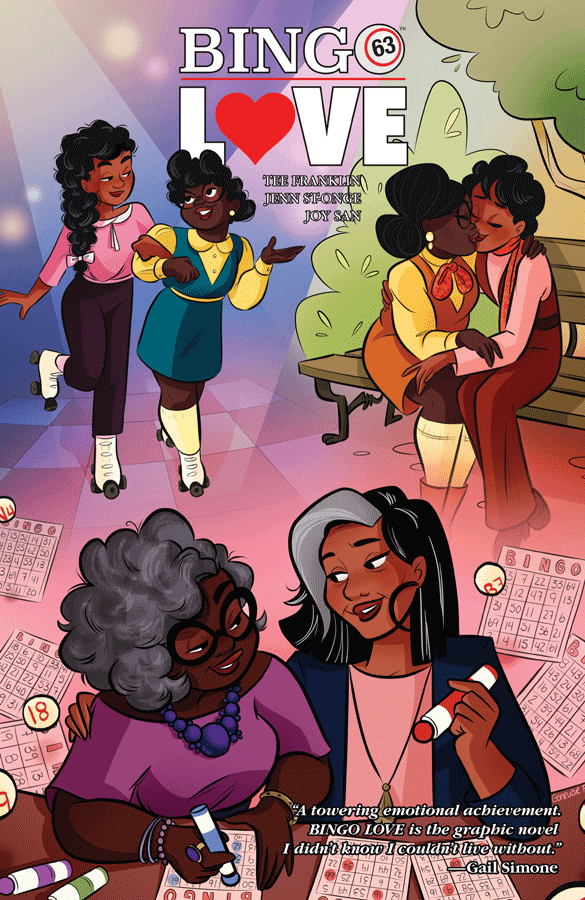
This November you’ll get to experience Bingo Love again with the Bingo Love, Vol. 1: Jackpot Edition in trade paperback and hardcover from Image Comics. This new edition features two new stories previously only available to Kickstarter backers, Bingo Love: Secrets by Shawn Pryor and Paulina Ganucheau and Bingo Love: Honeymoon by Marguerite Bennett and Beverly Johnson. This edition will also feature three more short stories about Hazel and Mari… including a peek inside of Bingo Love, Vol. 2: Dear Diary.

Bingo Love, Vol. 1: Jackpot Edition will feature cover artwork by Paulina Ganucheau and will contain over 50 pages of bonus material, including stories from Marguerite Bennett and newcomer Beverly Johnson, Shawn Pryor and Paulina Ganucheau and Gail Simone, with illustrations from Sara Alfageeh and Ariela Kristantina. Plus a sneak peek of Bingo Love, Vol. 2: Dear Diary, with an afterword from Gabby Rivera.

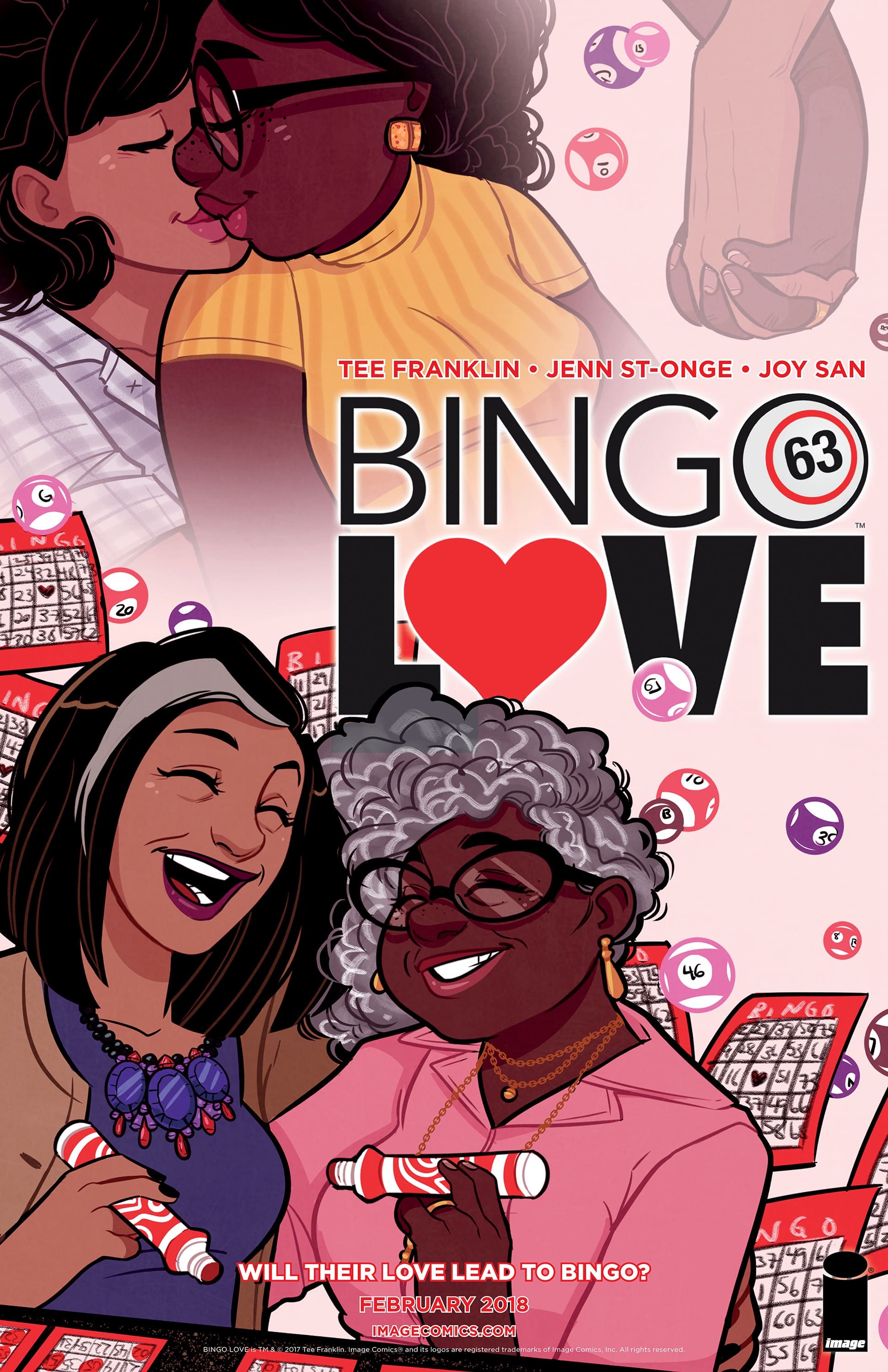
Bingo Love is an original graphic novel created and written by Tee Franklin, with art by Jenn St-Onge, and colors by Joy San and follows the love story of two Queer, Black women and the love between them that spans decades.

When Hazel Johnson and Mari McCray met at church bingo in 1963, it was love at first sight. Forced apart by their families and society, Hazel and Mari both married young men and had families. Decades later, now in their mid-’60s, Hazel and Mari reunite again at a church bingo hall. Realizing their love for each other is still alive, what these grandmothers do next takes absolute strength and courage.

Bingo Love explores the complications of coming out at an older age and how that decision affects their families’ lives.

Bingo Love, Vol. 1: Jackpot Edition (ISBN: 978-1534309838) will be available in comic book stores on Wednesday, November 7th and in bookstores on Tuesday, November 13th.

Bingo Love Heads Back to Print for a Third Time

Bingo Love—the original graphic novel created and written by Tee Franklin, with art by Jenn St-Onge, colors by Joy San, and cover art by Genevieve FT—is being rushed back to print yet again by Image Comics to keep up with the momentum of the breakout hit.

Since its release on Valentine’s Day, the LGBTQ romance has flown off shelves—garnering critical acclaim and viral attention across social media.

Bingo Love is a story about two Queer, Black women and the love between them that spans decades. It explores the complications of coming out at an older age and how that decision affects their families lives.

Hazel Johnson and Mari McCray are two young, Black girls who meet at church bingo in 1963 and eventually fall in love…but in this time period, their love was not accepted. Hazel and Mari are broken up by their families’ “shame” and go on to marry and have families of their own. Almost 50 years later—in the fever pitch of church bingo—Mari and Hazel are reunited and rediscover the love they have for each other, even though they both are still married.

Bingo Love, 3rd printing (Diamond Code DEC170648, ISBN: 978-1-5343-0750-6) and will be available on Wednesday, April 25th.

Around the Tubes

It was new comic book day yesterday! What’d you all get? What’d you enjoy? What’d you dislike? Sound off in the comments below. While you decide on that, here’s some comic news and reviews from around the web.

The Comichron – Marvel has top advance reordered comic, hardcover, softcover; Black Panther climbs chart – For those that enjoy the horse race.

ComicBook – Chadwick Boseman Paid For A ‘Black Panther’ Screening For Underprivileged Youth – So fantastic to see this happening all over.

IGN – Unfinished TMNT Comic Is Finally Getting an Ending – Cool this is happening.


Reviews

Comic Book – Aquaman #33

Comics Bulletin – Bingo Love

Comic Book – Descender #27

Comic Book – Doctor Strange: Damnation #1

Newsarama – Punk is Not Dead #1

Sequart – Zegas

Review: Bingo Love

IMG_3389.jpg

If you read my reviews regularly, you might notice that I have a certain preference for the type of comics I read. Usually, my choices are dark stories involving serious themes ranging from trauma to war. Because of these preferences, I mostly read horror, dark fantasy, or crime dramas. Despite this preference, I have explored other genres, such as slice-of-life with Slang Pictorial. There is one genre that I have rarely explored, romance. The only one I’ve read so far is Stejpan Sejic’s wonderful lesbian BDSM romcom Sunstone. I think the lack of recognition for romance’s legitimacy are bad misconceptions, mostly societal. Literary elites tend to look down on romance as frivolous and poorly written. But why? Any genre can be either good or bad based on the story’s quality. Romance is a chance to explore love and bonding in ways other genres can’t when it’s simply a subplot to the larger narrative. Also, what’s wrong with reading something that makes you happy? Why not escape into a fictional story about two people finding true love, adoring each other, and having a fantastic adventure of joy?

Which brings us to today’s review of Bingo Love by Tee Franklin, Jen St. Onge, Joy Sann, Cardinal Rae, and Gisele Lagace. I didn’t know what to expect since this was my first black queer romance, but I’m happy to say it turned out to be a beautiful, albeit short, reading experience.

Hazel Johnson and Mari McCray are a queer couple that first met when they were teenagers during the 1960s. They fell in love but were separated by bigoted family members, then forced into unhappy marriages with men. Over 50 years later, they reunite at a bingo tournament, the same kind of tournament they first met in. They realize this is fate bringing them back together, but first they must come out to their families and deal with the fallout. Only true love can guide them to eternal happiness.

If you love the description of the story, buckle up! You’re going to love it even more after I’m done talking about it.
IMG_3390.jpg

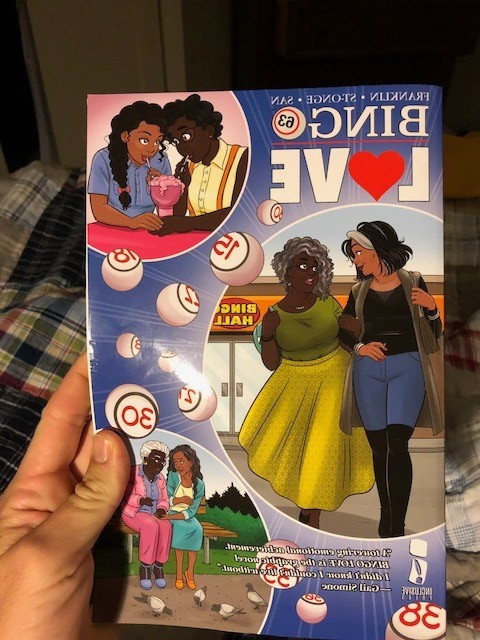
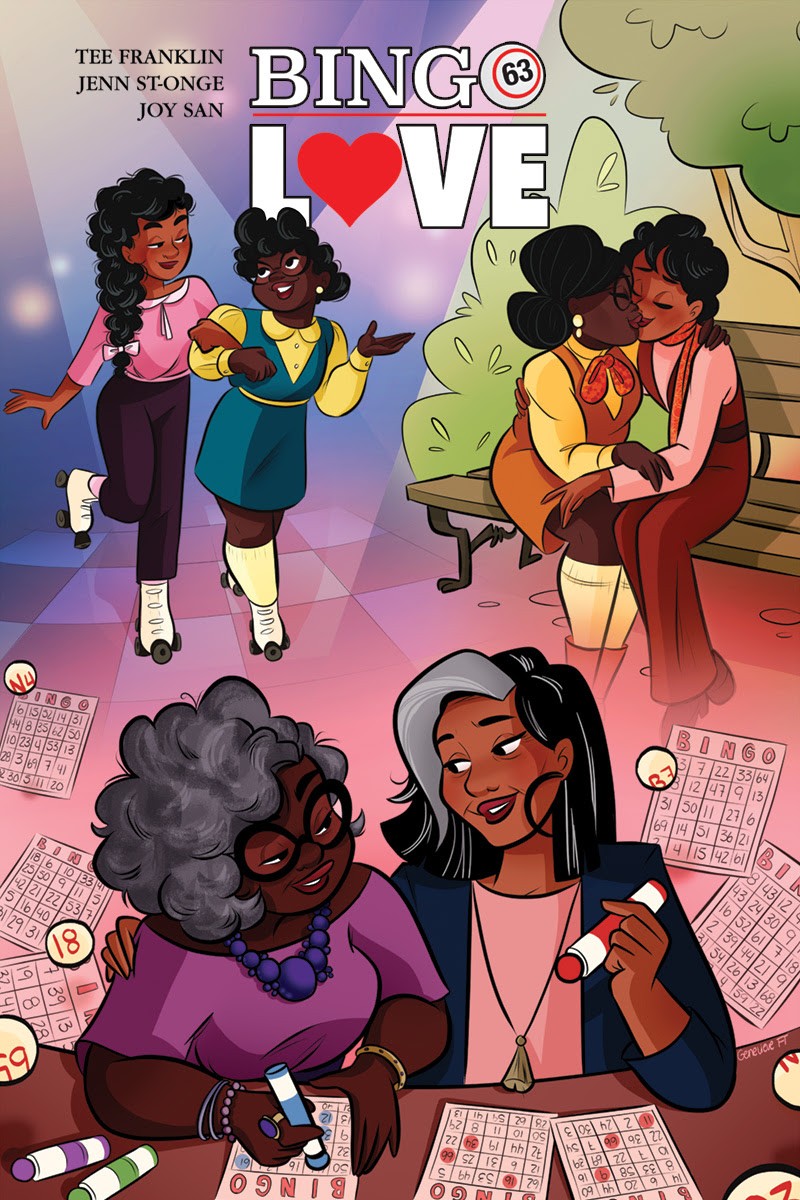
The cover by Gisele Lagace is not as flashy as other comic covers I have seen, but it succeeds in a task way more important, which is advertising the contents of the story. We have three images of the couple, Mari and Hazel, together in different stages of their lives: teens, old age, and advanced old age. We see them together, embracing, looking at each other like they’re the whole world. Bingo balls fall all around, the title of the book in the upper left-hand corner. We know by looking at this cover that this is a romantic story spanning different stages of two women’s lives. We know somehow bingo is going to play into this. Most importantly, the positive feelings the cover inspires attracts the reader to the title. It’s perfect.


The first thing to grab my attention was the interior art. Jenn St. Onge’s character designs are diverse with unique hairstyles, body types, and facial structures. Readers might notice a good number of characters with similarities, but that’s largely because of the fact the majority are family members. Actually, it’s refreshing to have an artist know that family members are going to look similar to each other, particularly how children are a combination of their parents with features from both even if they resemble one parent more than the other. I love that people in Bingo Love have wrinkles, stretch marks, folds of fat and muscle, sagging breasts from age and breastfeeding, and other such tiny details. It adds a level of, if not realism, relatability to a style that’s otherwise cartoony.

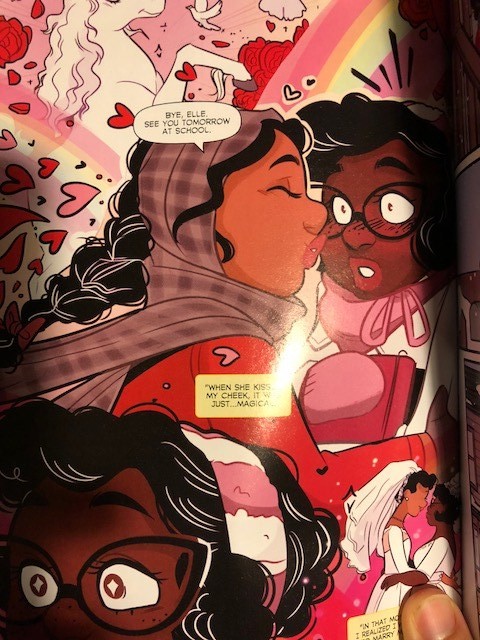
Joy San’s coloring is fleshes out the art. She not only gives characters their unique skin tones, she renders the entire comic with an unnatural brightness. This is not a negative criticism but a compliment because this type of coloring heightens the emotions of the book to surreal, dream-like qualities. It’s like escaping into a fantasy realm of intense love. This is no more apparent than in splash pages. Many of them are used during the most intense moments of romance, such as here:
IMG_3391.jpg

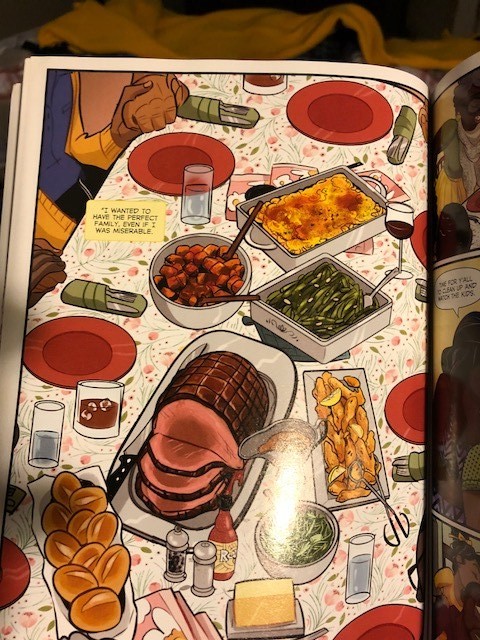
The coloring and character expressions are both fantastic and relatable, capturing the intense joy one feels when in these moments. It truly feels like a fairy tale come true. This includes scenes of family spending time with each other, grandparents hugging their grandchildren, siblings socializing with each other and their in-laws. My favorite is this splash page of a dinner table:

If I weren’t a vegetarian, I would’ve immediately cooked up this exact meal after looking at the image.

All this said, I found that the most romantic moments were quieter scenes, gradual multi-panel sequences showing the build up to an embrace or kiss. The reason is that the quietness allows emotion to linger, to slowly, like a wave, grow with each splash. This is much more intense than the payoff. It operates on the polar opposite, yet same line, that marks great horror.

The mastermind behind the story is Tee Franklin who delivers a story that is both relatable and unique. She starts off by establishing the two main characters so well. Hazel Johnson is plus-sized and shy, but also very passionate about the people she cares about. Mari McCray is more extroverted, a Californian tomboy that loves new experiences and very upfront about her feelings. We see their relationship in three parts: Youth, Old Age, and Advanced Old Age. The most recognizable is Youth. It starts off with the recognizable trope of Meet Cute, in which a future couple meets for the first time. The setting is a bingo tournament both girls accompany their grandmothers to, hence how bingo plays such a significant role in the story. Next time the girls meet, it’s in school, and after what can be considered an unofficial first date, they become friends throughout middle and high school.


Watching Hazel and Mari’s teen romance uses many tropes and story beats from romance that I have taken for granted over the years. There is the aforementioned meet cute moment, the first date, walking each other home from school, the first kiss, etc. I hadn’t realized how enjoyable these tropes are, the good feelings that they give you. If we must justify them on a more intellectual level, they dramatize the core of positive human bonding: meeting people, talking to them publicly or privately, and understanding them through a combination of small talk and personal anecdote. The result is an organic relationship that develops through mutual adoration. The mark of true love is being able to listen to your partner with the same attention about a new favorite album as you would a serious revelation of personal issues.
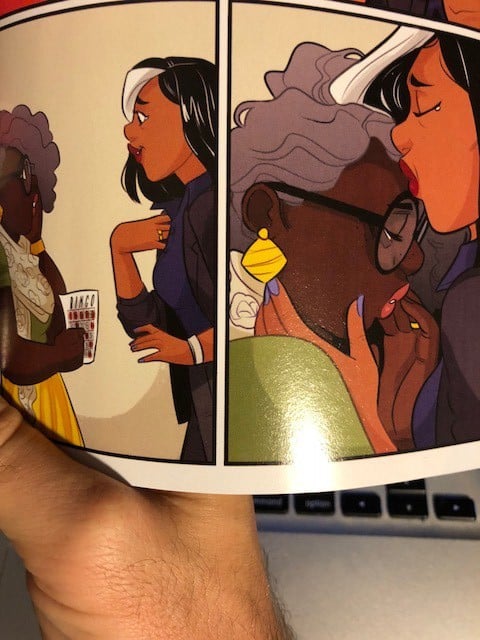
IMG_3392.jpg

Old Age does the reunion trope seen sometimes when a couple has been distant for a number of years. It’s fresh here because it is Hazel and Mari as senior citizens and not 20-30 somethings like most of the time. Along with reconnecting, they also deal with the fact they are both married women with families. Intense emotions and buried tensions surface as Hazel and Mari navigate to their eventual happy ending. Then there is Advanced Old Age in which the couple must face the reality of mortality (No spoilers). It was a truly engaging reading experience. Advanced Old Age comes after the conflict of Old Age is resolved. Hazel, Mari, and their families have adjusted to their new lives. This is the “honeymoon”, the moment the couple gets to be together and go on fantastic journeys. They get to live out their dreams once the shackles are broken. Their love is powerful even at the end. Oh, and of course, bingo is how they reunite. Bingo doesn’t serve much else than a setting for the two distinct romantic catalysts (love at first sight and reunion), but it works. Also, it legitimizes an activity often looked down upon, much like romance stories.

What made reading Bingo Love also enriching is that it is told from fresh perspectives, specifically black and queer. I can’t remember the last time since I read August Wilson where black people were allowed to interact with each other as actual humans, in churches and at home, sitting around and talking. They are allowed the same complexity and emotional range often reserved for slice-of-life stories populated solely by white people. And Bingo Love is slice-of-life as much as it is romance. It’s not just the love of romantic couples but that of families with all the baggage it comes with.

Without giving away too much, Hazel’s family find out about her relationship with Mari. They take it hard, especially Hazel’s husband James. He yells at her, they fight, and years of tension gets worse. I give Tee Franklin credit in that no one comes off as truly a bad guy. Everyone has their reasons for the way they’re reacting to the situation. Although some of it is confusing, such as with James. He gets portrayed as a loving husband and provider, but Hazel is uninterested in sex except for the times they have a child. Later it is revealed that James only ever had sex with Hazel when he wanted children. That means James was the one in the wrong all this time, but at the beginning the refusal of sex seemed more like Hazel not wanting to it because she didn’t love him, not that she was made to only when he wanted children. We do learn that James had a secret that fueled his need to find validation in having children. I won’t give away what it is, but it’s not that hard to figure out. There is a separate story online that tells his side of the story. I haven’t read it yet, but I’m eager to.

As I analyzed this conflict, I slowly realized the real culprit: a two-headed hydra of homophobia and patriarchy. The earliest hint is an occurrence that seems to happen often, a homophobe that is a hypocrite. They will go on about how much homosexuality is a sin while having their own misconduct that’s worse. It’s just a small part though. The larger societal context is not only how homophobia keeps Hazel and Mari from being happy together, but how it forces them into restrictive woman roles. They must be married to men, they must have children, must sacrifice their happiness for that of their families. Hazel becomes a housewife, even though she dreams of being a fashion designer. Mari becomes a lawyer, but many of the burdens typically dump on women remain. There is a sublime tie between queerphobia and misogyny, one that I do not believe I am knowledgeable enough to go into detail. The fact Bingo Love is able to tackle this issue while still remaining a positive story is a great feat.

I almost forgot, but there are scenes of Hazel participating in serious mental self care, something not often represented except going to support groups or therapy. There is a therapy scene, but it is very meaningful in affirming Hazel’s love for Mari. After that, there is a scene where Hazel helps one of her grandchildren braid their hair, and it brings her so much joy she is able to relax again after a fit of anxiety. It is referred to as self care, demonstrating how it comes in many forms.

My only gripe with the story is that it is so short. I wasn’t expecting Anna Karenina. This is young adult fiction after all. Brevity is key. But I do wish there were multiple volumes of the story. There were so many angles I wanted to see expanded upon. And while I have praised the characterizations of Hazel, Mari, and James, every other character is extremely minor. I wished there as much to Hazel’s children explored as much as her. We do not even get to know the names of Mari’s children or meet her husband. I wish there was more to her side of the story. Take note I bring this criticism up because of how I wanted more after reading. I could have read this title for the next 20 years and never been bored once!

The only other criticisms I have are 1) sometimes the coloring wasn’t done all the way, leaving empty spaces of white. 2) The otherwise effective narration and inner monologue captions by Cardinal Rae were confusing to tell apart at times. Although the former is all capitalized, the caption boxes are both colored yellow. It’s easy to mistake the two.

Bingo Love is a treasure of diversity, love, and joy. It brings fresh, underrepresented faces to romance and comics as a whole. Despite how short it is, one will find themselves lost in the lives of the characters, in the nuances of their personalities and journeys. With the poppy, dreamy art, the fantasy is complete. I urge everyone to pick up a copy of Bingo Love. Support these creators so they can make more comics, whatever it is they do next. Support black voices, queer voices, and love. Most of all, enjoy yourselves. This story will make you happy. We can all use happiness and love in our lives. Whatever helps people get through the day, make someone realize their worth as a person. No matter your ethnicity, gender, sexuality, physical presence/ability, mental health, etc., we all deserve love. Bingo Love affirms that right.

Bingo Love is out on Valentine’s Day, February 14, 2018 via Image Comics.

Story: Tee Franklin Art: Jenn St. Onge Colors: Joy San
Letters: Cardinal Rae 
Cover: Gisele Lagace
Story: 9.0 Art: 9.0 Overall: 9.0 Recommendation: Buy

(Note: My copy is a pre-order version from before the book’s deal with Image Comics).
Advance Review: Bingo Love

IMG_3389.jpg

If you read my reviews regularly, you might notice that I have a certain preference for the type of comics I read. Usually, my choices are dark stories involving serious themes ranging from trauma to war. Because of these preferences, I mostly read horror, dark fantasy, or crime dramas. Despite this preference, I have explored other genres, such as slice-of-life with Slang Pictorial. There is one genre that I have rarely explored, romance. The only one I’ve read so far is Stejpan Sejic’s wonderful lesbian BDSM romcom Sunstone. I think the lack of recognition for romance’s legitimacy are bad misconceptions, mostly societal. Literary elites tend to look down on romance as frivolous and poorly written. But why? Any genre can be either good or bad based on the story’s quality. Romance is a chance to explore love and bonding in ways other genres can’t when it’s simply a subplot to the larger narrative. Also, what’s wrong with reading something that makes you happy? Why not escape into a fictional story about two people finding true love, adoring each other, and having a fantastic adventure of joy?

Which brings us to today’s review of Bingo Love by Tee Franklin, Jen St. Onge, Joy Sann, Cardinal Rae, and Gisele Lagace. I didn’t know what to expect since this was my first black queer romance, but I’m happy to say it turned out to be a beautiful, albeit short, reading experience.

Hazel Johnson and Mari McCray are a queer couple that first met when they were teenagers during the 1960s. They fell in love but were separated by bigoted family members, then forced into unhappy marriages with men. Over 50 years later, they reunite at a bingo tournament, the same kind of tournament they first met in. They realize this is fate bringing them back together, but first they must come out to their families and deal with the fallout. Only true love can guide them to eternal happiness.

If you love the description of the story, buckle up! You’re going to love it even more after I’m done talking about it.

IMG_3390.jpg

The cover by Gisele Lagace is not as flashy as other comic covers I have seen, but it succeeds in a task way more important, which is advertising the contents of the story. We have three images of the couple, Mari and Hazel, together in different stages of their lives: teens, old age, and advanced old age. We see them together, embracing, looking at each other like they’re the whole world. Bingo balls fall all around, the title of the book in the upper left-hand corner. We know by looking at this cover that this is a romantic story spanning different stages of two women’s lives. We know somehow bingo is going to play into this. Most importantly, the positive feelings the cover inspires attracts the reader to the title. It’s perfect.

The first thing to grab my attention was the interior art. Jenn St. Onge’s character designs are diverse with unique hairstyles, body types, and facial structures. Readers might notice a good number of characters with similarities, but that’s largely because of the fact the majority are family members. Actually, it’s refreshing to have an artist know that family members are going to look similar to each other, particularly how children are a combination of their parents with features from both even if they resemble one parent more than the other. I love that people in Bingo Love have wrinkles, stretch marks, folds of fat and muscle, sagging breasts from age and breastfeeding, and other such tiny details. It adds a level of, if not realism, relatability to a style that’s otherwise cartoony.

Joy San’s coloring is fleshes out the art. She not only gives characters their unique skin tones, she renders the entire comic with an unnatural brightness. This is not a negative criticism but a compliment because this type of coloring heightens the emotions of the book to surreal, dream-like qualities. It’s like escaping into a fantasy realm of intense love. This is no more apparent than in splash pages. Many of them are used during the most intense moments of romance, such as here:

IMG_3391.jpg

The coloring and character expressions are both fantastic and relatable, capturing the intense joy one feels when in these moments. It truly feels like a fairy tale come true. This includes scenes of family spending time with each other, grandparents hugging their grandchildren, siblings socializing with each other and their in-laws. My favorite is this splash page of a dinner table:

If I weren’t a vegetarian, I would’ve immediately cooked up this exact meal after looking at the image.

All this said, I found that the most romantic moments were quieter scenes, gradual multi-panel sequences showing the build up to an embrace or kiss. The reason is that the quietness allows emotion to linger, to slowly, like a wave, grow with each splash. This is much more intense than the payoff. It operates on the polar opposite, yet same line, that marks great horror.

The mastermind behind the story is Tee Franklin who delivers a story that is both relatable and unique. She starts off by establishing the two main characters so well. Hazel Johnson is plus-sized and shy, but also very passionate about the people she cares about. Mari McCray is more extroverted, a Californian tomboy that loves new experiences and very upfront about her feelings. We see their relationship in three parts: Youth, Old Age, and Advanced Old Age. The most recognizable is Youth. It starts off with the recognizable trope of Meet Cute, in which a future couple meets for the first time. The setting is a bingo tournament both girls accompany their grandmothers to, hence how bingo plays such a significant role in the story. Next time the girls meet, it’s in school, and after what can be considered an unofficial first date, they become friends throughout middle and high school.

Watching Hazel and Mari’s teen romance uses many tropes and story beats from romance that I have taken for granted over the years. There is the aforementioned meet cute moment, the first date, walking each other home from school, the first kiss, etc. I hadn’t realized how enjoyable these tropes are, the good feelings that they give you. If we must justify them on a more intellectual level, they dramatize the core of positive human bonding: meeting people, talking to them publicly or privately, and understanding them through a combination of small talk and personal anecdote. The result is an organic relationship that develops through mutual adoration. The mark of true love is being able to listen to your partner with the same attention about a new favorite album as you would a serious revelation of personal issues.

IMG_3392.jpg

Old Age does the reunion trope seen sometimes when a couple has been distant for a number of years. It’s fresh here because it is Hazel and Mari as senior citizens and not 20-30 somethings like most of the time. Along with reconnecting, they also deal with the fact they are both married women with families. Intense emotions and buried tensions surface as Hazel and Mari navigate to their eventual happy ending. Then there is Advanced Old Age in which the couple must face the reality of mortality (No spoilers). It was a truly engaging reading experience. Advanced Old Age comes after the conflict of Old Age is resolved. Hazel, Mari, and their families have adjusted to their new lives. This is the “honeymoon”, the moment the couple gets to be together and go on fantastic journeys. They get to live out their dreams once the shackles are broken. Their love is powerful even at the end. Oh, and of course, bingo is how they reunite. Bingo doesn’t serve much else than a setting for the two distinct romantic catalysts (love at first sight and reunion), but it works. Also, it legitimizes an activity often looked down upon, much like romance stories.

What made reading Bingo Love also enriching is that it is told from fresh perspectives, specifically black and queer. I can’t remember the last time since I read August Wilson where black people were allowed to interact with each other as actual humans, in churches and at home, sitting around and talking. They are allowed the same complexity and emotional range often reserved for slice-of-life stories populated solely by white people. And Bingo Love is slice-of-life as much as it is romance. It’s not just the love of romantic couples but that of families with all the baggage it comes with.

Without giving away too much, Hazel’s family find out about her relationship with Mari. They take it hard, especially Hazel’s husband James. He yells at her, they fight, and years of tension gets worse. I give Tee Franklin credit in that no one comes off as truly a bad guy. Everyone has their reasons for the way they’re reacting to the situation. Although some of it is confusing, such as with James. He gets portrayed as a loving husband and provider, but Hazel is uninterested in sex except for the times they have a child. Later it is revealed that James only ever had sex with Hazel when he wanted children. That means James was the one in the wrong all this time, but at the beginning the refusal of sex seemed more like Hazel not wanting to it because she didn’t love him, not that she was made to only when he wanted children. We do learn that James had a secret that fueled his need to find validation in having children. I won’t give away what it is, but it’s not that hard to figure out. There is a separate story online that tells his side of the story. I haven’t read it yet, but I’m eager to.

As I analyzed this conflict, I slowly realized the real culprit: a two-headed hydra of homophobia and patriarchy. The earliest hint is an occurrence that seems to happen often, a homophobe that is a hypocrite. They will go on about how much homosexuality is a sin while having their own misconduct that’s worse. It’s just a small part though. The larger societal context is not only how homophobia keeps Hazel and Mari from being happy together, but how it forces them into restrictive woman roles. They must be married to men, they must have children, must sacrifice their happiness for that of their families. Hazel becomes a housewife, even though she dreams of being a fashion designer. Mari becomes a lawyer, but many of the burdens typically dump on women remain. There is a sublime tie between queerphobia and misogyny, one that I do not believe I am knowledgeable enough to go into detail. The fact Bingo Love is able to tackle this issue while still remaining a positive story is a great feat.

I almost forgot, but there are scenes of Hazel participating in serious mental self care, something not often represented except going to support groups or therapy. There is a therapy scene, but it is very meaningful in affirming Hazel’s love for Mari. After that, there is a scene where Hazel helps one of her grandchildren braid their hair, and it brings her so much joy she is able to relax again after a fit of anxiety. It is referred to as self care, demonstrating how it comes in many forms.

My only gripe with the story is that it is so short. I wasn’t expecting Anna Karenina. This is young adult fiction after all. Brevity is key. But I do wish there were multiple volumes of the story. There were so many angles I wanted to see expanded upon. And while I have praised the characterizations of Hazel, Mari, and James, every other character is extremely minor. I wished there as much to Hazel’s children explored as much as her. We do not even get to know the names of Mari’s children or meet her husband. I wish there was more to her side of the story. Take note I bring this criticism up because of how I wanted more after reading. I could have read this title for the next 20 years and never been bored once!

The only other criticisms I have are 1) sometimes the coloring wasn’t done all the way, leaving empty spaces of white. 2) The otherwise effective narration and inner monologue captions by Cardinal Rae were confusing to tell apart at times. Although the former is all capitalized, the caption boxes are both colored yellow. It’s easy to mistake the two.

Bingo Love is a treasure of diversity, love, and joy. It brings fresh, underrepresented faces to romance and comics as a whole. Despite how short it is, one will find themselves lost in the lives of the characters, in the nuances of their personalities and journeys. With the poppy, dreamy art, the fantasy is complete. I urge everyone to pick up a copy of Bingo Love. Support these creators so they can make more comics, whatever it is they do next. Support black voices, queer voices, and love. Most of all, enjoy yourselves. This story will make you happy. We can all use happiness and love in our lives. Whatever helps people get through the day, make someone realize their worth as a person. No matter your ethnicity, gender, sexuality, physical presence/ability, mental health, etc., we all deserve love. Bingo Love affirms that right.

Bingo Love is out on Valentine’s Day, February 14, 2018 via Image Comics.

Story: Tee Franklin Art: Jenn St. Onge Colors: Joy San
Letters: Cardinal Rae 
Cover: Gisele Lagace
Story: 9.0 Art: 9.0 Overall: 9.0 Recommendation: Buy

(Note: My copy is a pre-order version from before the book’s deal with Image Comics).

Around the Tubes

The weekend is coming up and lets face it, we’re all just counting down the days until Black Panther. While you wait for that, here’s some comic news and reviews from around the web in our morning roundup.
The Onion – Man Prefers Comic Books That Don’t Insert Politics Into Stories About Government-Engineered Agents Of War – Nailed it.

Kotaku – After 27 Years, Manga Akagi Ends Today – That’s a hell of a run!

The Beat – Help Wanted: Humanoids Inc. Is Hiring! – Looking for a job in comics?

RollingOut – Urbanime founder Chris Walker creates ‘Relic,’ merges hip-hop and comic books – Sounds really interesting.

Bustle – ‘Speak’ By Laurie Halse Anderson Will Be A Graphic Novel & The Author Is Seeking RAINN Donations To Celebrate – An important piece of work.


Reviews

Comic Attack – Bingo Love

ICv2 – Bizarre Romance

Comic Book – JLA/Doom Patrol Special #1

Newsarama – JLA/Doom Patrol Special #1

IGN – JLA/Doom Patrol Special #1

Bingo Love Gets a 2nd Printing Before First Hits the Shelf

Bingo Love—the original graphic novel created and written by Tee Franklin, with art by Jenn St-Onge, colors by Joy San, and cover art by Genevieve FT—is being rushed back to print by Image Comics to keep up with overwhelming support from fans and retailers.

Bingo Love is a story about two Queer, Black women and the love between them that spans decades. It explores the complications of coming out at an older age and how that decision affects their families’ lives.

Hazel Johnson and Mari McCray are two young, Black girls who meet at church bingo in 1963 and eventually fall in love…but in this time period, their love was not accepted. Hazel and Mari are broken up by their families’ “shame” and go on to marry and have families of their own. Almost 50 years later—in the fever pitch of church bingo—Mari and Hazel are reunited and rediscover the love they have for each other, even though they both are still married.

Bingo Love, 2nd printing (Diamond Code DEC170648, ISBN: 978-1-5343-0750-6) and will be available on Wednesday, March 14th. Bingo Love‘s first printing will be available February 14th.

Around the Tubes

It’s new comic book day tomorrow! What are you interested in? What do you plan on getting? Sound off in the comments below! While you decide on that, here’s some comic news and reviews from around the web in our morning roundup.

The Wrap – Vin Diesel in Talks to Star in Sony’s ‘Bloodshot’ Movie – This could be huge for the comic publisher.

CBLDF – Mike Allred Creates 2018 CBLDF Member Art! – Go! Get a membership!

CBR – Deadpool 2 Will Not Replace TJ Miller As Weasel – Remember this when the film comes out.


Reviews

AIPT! – Bingo Love

The Beat – The Legend of Pinky Book 1

ICv2 – Sparks!

Around the Tubes

It’s a new week of awesomeness. The Last Jedi opens up this week and we’ll have our review when the embargo lifts this Tuesday! We can’t wait to see it and if it lives up to the hype! While you (and we) wait, here’s some comic news and reviews from around the web in our morning roundup.
Engadget – Marvel comics arrive in Hoopla’s public library app – Nice!

Daily Herald – Graphic Novels foster literacy – Yes they do.

The Robesonian – UNCP professor’s show picked up by The North Carolina Channel – Very cool to see this.

The Buffalo News – Valuable comic book collection swiped from former state senator – That sucks. If anyone has info that can help catch the thief…

Kotaku – Marvel vs. Capcom Tournament With Special Rules Lets Pro Mess With Opponent’s Controls – Well that’s an interesting way to play.

Kotaku – This Weekend’s Marvel vs. Capcom Trophy Is A Light-Up Infinity Gauntlet – Want!

The Beat – Meg Lemke takes over as Graphic Novels Review Editor at Publishers Weekly – Congrats!

The Beat – Mel Caylo leaves Boom! – Boooo! We love Mel!!!!


Reviews

Talking Comics – Batman #36

Comicosity – Bingo Love

Bam Smak Pow – Jem and the Holograms: Dimensions #1

Talking Comics – Paradiso #1

Bam Smack Pow – Teenage Mutant Ninja Turtles #77

New York Comic Con 2017: Image Comics to Publish Original Graphic Novel, Bingo Love

Image Comics has announced they will publish Bingo Love, an original graphic novel created and written by Tee Franklin, with art by Jenn St-Onge, and colors by Joy San.

Bingo Love is about two Queer, Black women and the love between them that spans decades. Their story also explores the complications of coming out at an older age, and how that decision affects their families lives. Bingo Love will hit stores just in time for Valentine’s Day, February 2018.

Hazel Johnson and Mari McCray are two young, Black girls who meet at church bingo in 1963 and eventually fall in love…but in this time period, their love was not accepted. Hazel and Mari are broken up by their families’ “shame” and go on to marry and have families of their own. Almost fifty years later—in the fever pitch of church bingo—Mari and Hazel are reunited and rediscover the love they have for each other, even though they both are still married.

Franklin won the 2017 Queer Press Grant for Bingo Love and has raised almost $60k for this graphic novella via Kickstarter.

« Older Entries