Review: Sex Criminals #14

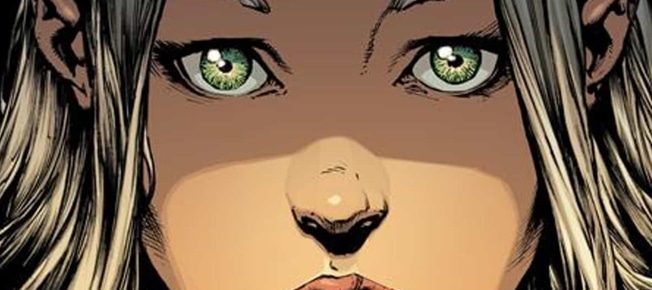
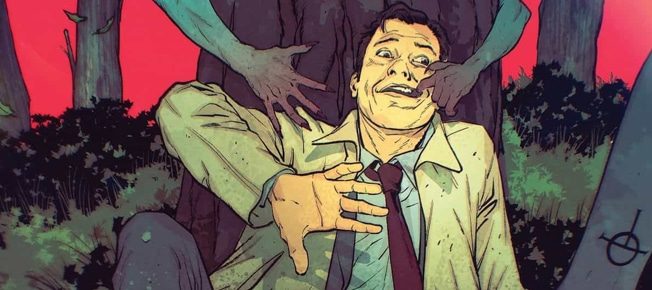
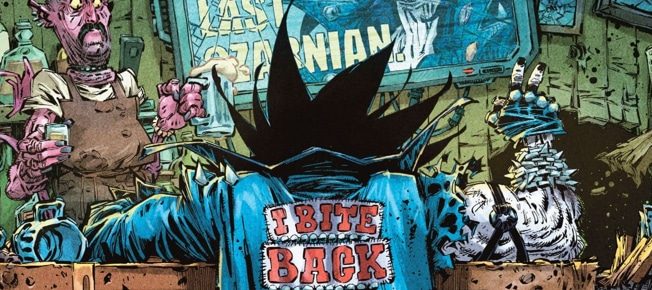
SexCriminals_14-1Sex Criminals has always been one of those books that needs to be read a couple of times after purchasing. Usually to catch all the weird visual jokes that get placed in the backgrounds of panels. For the fourteenth issue subtitled “Ladies Please,” it’s to understand just how the disjointed nature of this issue works to its advantage.

The issue is mostly about Suzie and Myrtle. Myrtle is still having sex with Jon’s therapist to get information about him while Suzie and Jon start work at their new and crappy jobs. Jon is working as Ana’s research assistant while Suzie has started work in a new library. One day while sending dirty texts to Jon, Suzie makes some crass comments about Ana’s previous life as a porn star, which leads to a confrontation in The Quiet between the two of them.

Well, in the actual timeline of the story. In the timeline of the comic, we’re actually greeted with a fourth wall break as Matt Fraction struggles to write the scene and ends up calling Chip Zdarsky, asking for help.

From the sounds of it, a lot of this dialogue between the creators is taken directly from conversations the two had about the scene as it was originally planned to play out, with Suzie being judge-y of Ana, but Fraction has reservations of how this comes across. How it all ties back to how insidious and judgmental our culture is in regards to amount of sexual partners and sex workers, but how Ana isn’t exactly in the right either to act as if Suzie’s intentions with the library aren’t genuine. It’s complicated, clumsy, and it’s a bit revealing to see Fraction and Zdarsky hash it out like this.

On first pass, the scene is jarring in the middle of the story, especially after it jumps back into the story as a whole. Hysterical, especially with Chip drawing himself like a cokehead high on his own rising star simultaneously, but jarring. However, on a second read, after seeing how out of it Suzie has become, the outright statement of theme from our creators actually ties back into the story kind of brilliantly. It shows the kind of vulnerability that the series has been known for, especially in an issue where two of the characters are finding themselves in places they’re not sure they want to be in. The theme of the arc may be about “who gets to decide who’s a monster and who isn’t,” but a lot of this issue seems to be about being at a crossroads as well. Suzie isn’t into robbing banks with Jon anymore. Rach doesn’t know what to do about her relationship with Robert. Myrtle might be getting something else out of her relationship with Jon’s therapist. Matt can’t figure out how to write a scene. It all ties together in a strange sort of fashion.

Plus, the decision to “full-on Chuck Jones” the entire conversation and to play up the Zdarsky character super hard may be one of the funniest things this book has done.

If you’re having a hard time with the latest Sex Criminals at first pass, give it another read and see how it all ties together. What comes across as disjointed at first actually has a strange sort of clearness once the thread that ties it all together becomes clear. This book has always been about vulnerability and to see it upfront and hysterically done is kind of amazing.

Story: Matt Fraction Art: Chip Zdarsky
Story: 7.5 Art: 9.5 Overall: 8.5 Recommendation: Buy

Image Comics provided Graphic Policy with a FREE copy for review

Review: Godzilla in Hell TPB

3071489Growing up I used to consume everything pop culture as if they were going out of style. I remember coming home after school, to watch Black Belt Theatre, where I would find out about the different types of Kung-Fu and we decried the Japanese as evil, to the Chinese, thanks to Bruce Lee’s Fists of Fury. I remember my opinion changing once I started to watch samurai movies and Kaiju movies. Especially Kaiju movies, the one where Godzilla battled every monster imagined.

At first, when I did watch the movies I wondered why the Japanese military couldn’t defeat any of the kaiju as they wreaked havoc throughout the cities knocking down buildings at will, and with humans narrowly escaping death. Then the movies has us rooting for Godzilla to defeat the other kaiju and it would not belong before they started to make the movies seem more like a franchise then standalone movies.AS I dare anyone to remember the silly but fun movie, Son of Godzilla. Eventually they would pit him against King Kong, which where the movies really got interesting.

IDW has decidedly wanted to continue Godzilla’s adventures in a way that he had not been tested before. The Kaiju has entered the Underworld, as he faces his own “game of death’, in Hell. He reacts to each challenge much like how he did in the movies. By story’s end, you have a battle tested kaiju , one who has faced a 1,000 battles, and one whose victory was earned.

Overall, an interesting story, which could have been pedestrian in lesser hands, but comes off much like Milton’sParadise Lost, but with Kaiju. The story by James Stokoe, delivers in spades, a killer story. The art by the various illustrators, makes each issue collected a true treat. Altogether, a fun story, that should not be underestimated, as simple smash and grab, but definitely is on the level Vaughn’s Pride of Babylon.

Story: James Stokoe Art: Bob Eggleton, Buster Moody, Ibrahim Moustafa, Dave Wachter
Story: 9.4 Art: 9.2 Overall: 9.6 Recommendation: Buy

IDW Publishing provided Graphic Policy with a FREE copy for review

Writer Tom King, Artists Clay Mann and John Timms Go Exclusive with DC

DC Entertainment announced today the signing of writer Tom King and fan favorite artists Clay Mann and John Timms to exclusive deals to produce their comic book work solely for the DC Comics and Vertigo imprints.

Tom King has quickly become a fan favorite writer, making a mark with his edgy, dramatic work on Omega Men, Grayson (with co-writer Tim Seeley), Robin War and Vertigo’s Sheriff of Babylon. The former CIA intelligence operative now calls DC his exclusive home, and will play a major role in the new REBIRTH initiative scheduled for June.

In addition to signing King, DC also brought two rising star artists – Clay Mann and John Timms – into their ranks of top talent.  After producing spectacular covers on such titles as Batgirl and Batman Eternal, artist Clay Mann made his blockbuster interior art debut on Poison Ivy: Cycle of Life and Death written by Amy Chu, propelling issue #1 into its second printing. Breakout artist John Timms now also calls DC his new home after creating incredible cover and interior art for Harley Quinn, Harley Quinn Valentine’s Day Special and Harley Quinn’s Little Black Book.

King, Mann and Timms will be joining an already impressive roster of DC-exclusive talent, including writer/artist Bryan Hitch, writer Peter Tomasi and artist Tony Daniel.

Review: Bitch Planet #7

STK696468Bitch Planet returned from its break this week and from the first page, disposability seems to be the name of the game for the Fathers in this arc titled “President Bitch.” If you ever doubted how much this book hurts with its more true to life aspects, the first page is a security guard allowing an AI to open fire on three young black children trying to make a shortcut because they “look sketchy.”

With the Fathers making the decision to keep Meiko’s death a secret from her father, much of the issue revolves around the beginning work on the Megaton stadium with Makoto arriving to supervise the building and the NCs being the one to start digging. The divide between the NCs and the men in charge becomes apparent, with the men being greeted with warm towels and tea versus the cattle call of women prisoners opened the very first issue back in December 2014. As our omnipresent security guards point out though, the “power of man is fickle as hell” since this stadium and the guests in charge of the creation comes at the expense of other much needed repairs to the ACO. Coming from a city that is a year out from opening a new football stadium, I find myself in agreeance with the two for the first time.

Even in death, Meiko’s influence on the the ACO is still felt. Instead of dealing with him directly, the wardens assign a Model program to be Makoto’s aide, which makes the inevibility of him discovering Meiko’s death even worse. On the flipside of this, the wardens decide that instead of charging the man responsible for Meiko’s death, Whitney will take the blame and be charged for her death as well as any other charges involving guard injuries in the incident. It really is a stark reminder that even when a woman seems to benefit directly from the patriarchy, she is just as easily on the chopping block for it when the time comes. As much as Whitney has worked against the NCs up until this point, it is impossible to take joy in her fall from power when it is made clear that she is the scapegoat for the irresponsibility of the guards.

The most powerful scene in this issue though happens between Kam and Penny though. Kelly Sue Deconnick has always had a knack for more quiet scenes where a lot is said without saying too much at all. In it, Penny sits in the shower, feeling guilty for Meiko’s death and wishing that she would wash away into the drain. Kam takes a seat beside her, reminding her that there really wasn’t much she could do and that sometimes “strong ain’t strong enough.” The essay from Angelica Jade Bastién in the backmatter elaborates more on what this scene is going for, but in the pages itself, it’s a gorgeous piece of synchronicity between story and art, where so much can be said in two panels of handholding.

Speaking of art, this is the second issue where Kelly Fitzpatrick is on colors. Her style is a bit more shaded and toned down that previous colorist Cris Peter, but it works. The story’s tone has taken a bit of a turn since Meiko’s death, so the slightly saturated hue works well for the book. Don’t worry, the sense of over the top color is still there. The orange in the Megaton site and the stormclouds in Whitney’s room are particularly well done in this regard.

With the start of a new arc, Bitch Planet is showing no signs of slowing down any time soon. Even in an issue setting up the building blocks for the rest of the arc, it still feels like a gut punch as the fallout from Meiko’s death takes center stage. I would hope that it doesn’t take anyone else in the process, but that would be tempting fate just a bit too much in a book where the ones in charge of the world it exists in see lives as disposable when they don’t fit into the neat boxes prescribed for existence.

Correction: A previous version of this review stated that this was Kelly Fitzpatrick’s first issue when it was her second.

Story: Kelly Sue Deconnick Art: Valentine Delandro and Kelly Fitzpatrick
Story: 9.0 Art: 9.5 Overall: 9.25 Recommendation: Buy

Image Comics provided Graphic Policy with a FREE copy for review

Review: All-New Inhumans #2

All-New-Inhumans-2One of the things that I enjoy about the current Inhuman status quo is how their story explores the space of hybrid citizenship and competing cultural heritage. I touched on this a bit earlier in a review of a previous Inhuman title.  While this is element shared with the mutant people to some extent in the Marvel Universe it seems to be emphasized a bit more strongly now with the Inhumans. They are a geneocracy afterall and everything about them hinges on family and heritage. All New-Inhumans #2 answers the questions of what’s to be done when rogue regime acts suspiciously in the wake of global terrigenesis. Crystal and her roving team are tasked with a diplomatic mission to the Republic of Sin Cong (our obvious Marvel U stand in for North Korea).

The mission centers on a the Commissar of Sin Cong’s curious report that no instances of terrigenesis have taken place on the nation’s soil. This admission is curious due to the global range of the T-Cloud  and has piqued the suspicion of both the Inhuman Royal family and S.H.I.E.L.D.  The Commissar’s report , seems to echo similar real world statements that persecuted minorities such has LGBTQ individuals do not  exist in certain nations with dubious human rights records. This parallel was not lost on me. Agent Daisy Johnson AKA Quake sends the team off with cautious blessing, letting Crystal know that as her inhuman Liaison to shield she was the deciding vote on a split decision on whether Crystal’s team would be sanctioned for their mission. Quake’s presence makes sense given her status as an Inhuman, and as a SHIELD agent she makes for a strategic asset. Additionally this may signal some future connections with the newly relaunched Agents of SHIELD title, and I always like to see  such inter-title ties like this. Quake’s position is interesting. As an inhuman, she shares a vested interest in the well being of her people, but as an agent of SHIELD she’ll be accountable and may be the chosen vehicle of sanction if things go south with this mission. That kind of conflict makes for rich story telling and a strong parallel for Inhumans of other nationalities who may find themselves in similar dilemmas of heritage. I’m sure we’ll see more of the latter soon enough

I am really starting to admire the Inhumans on this team. This title is rich with international  intrigue and shows the necessity of reconnaissance and espionage, in the age of international gesture and possible mass atrocities. I have always marveled how the skill-sets of the Inhuman power set are appropriately paired to their given missions. Crystals mission has both a diplomatic and espionage compliment and the team she chose for the latter were very smart.

Crystal’s overall diplomacy is worthy of mention. There was a series of panels where she appeals to the Commissar’s grossly inflated ego in order to alleviate a politically sensitive incident which maintains the cover of the diplomatic team. I must commend Soule’s consistent representation of Crystal’s character, she has always proven her political prowess to equal or possibly superior to that of her Sister, Queen Medusa She is very keen on the nuances of appearance, and has incredible foresight. I strongly suggest a reading of the War of Kings  event where she was dubbed the Kree’s “People’s Princess” due to these traits.  (Please read that volume if you have not done so already!)

The issue ends with disturbing revelation of possible crimes against humanity or Inhumanity as it were. This adds a very interesting wrinkle to the Marvel Universe, as the concept has been introduced (or lightly touched) in varying degrees and multiple incidents/contexts. I think the term Genocide was explicitly mentioned in the first issue of this title. This alone requires its own exploration and comparison  I have always enjoyed the exploits of the Inhumans and I am  very much hooked and anticipating what unfolds next. How various governments and nation react to Terrigenesis, is such a deep and winding mandate. I cannot wait to see where this all goes in the future.

I had a really nostalgic feeling while viewing the art, and was awestruck by the range of emotion  captured in the character’s faces. Upon further reflection I realized this nostalgia was due to Casseli’s work on the Secret Warriors title featuring Nick Fury and his black ops super hero team.  Both of these titles share strong espionage elements, and in my opinion made Casseli a smart choice this title

Final Thoughts

This issue made me ponder the post Dark Reign Mighty Avengers volume and the story of the redacted inhuman king “unspoken”. This story introduced the Xerogen crystals, which could pose a strategic weapon for either the Inhumans or non-inhuman community going forward.

Story: Charles Soule & James Asmus Art: Stefano Caselli
Story 10 Art 10 Overall 10 Recommendation: Buy

A People’s History of the Marvel Universe, Week 4: The X-Men Fight Stagflation

Face front, true believers!

As is no surprise to anyone who read Week 2’s issue, Claremont X-Men is a huge touchstone for me, one of the few comics runs I re-read annually. However, it took a while for Claremont’s X-Men to feel like X-Men. Issues #94 and #95 focus on Count Nefaria, who’s really more an Avengers villain than a X-Men villain.[1] Issue #96 gives us the demonic N’Garai, and while I love the Cthulhu references, it feels a bit like Claremont borrowed them from a Doctor Strange spec script.

Where it really starts to feel like X-Men is issue #98 (April 1976), where the Sentinels return and ruin the X-Men’s Christmas in order to abduct them to Stephen Lang’s space base. To begin with, the Sentinels are one of the only explicitly and specifically anti-mutant threats that the original X-Men fought, so a lot of the mutant metaphor is grounded in those wonderful purple and pink Kirby robots. And Claremont sharpens the analysis by having these genocidal robots be built by a racist lunatic working within the U.S military (which is something that the U.S Army-aficionado Stan Lee wouldn’t have allowed back in the day), giving added emphasis to the “world that hates and fears them” part of the X-Men’s story that was largely lacking in the original 93 issues:

Second, the Sentinel attack sets up the disastrous space shuttle landing that turned Jean Grey into the Phoenix, the first example of Chris Claremont’s epic long-form storytelling that will define the X-Men for 18 years.

But the other reason that this issue stuck with me is that, far more than anything in the original X-Men’s run, this issue made the X-Men feel like a part of New York City. The issue opens with the X-Men at the ice-skating rink at Rockefeller Center on Christmas Eve, which is a little touristy, but before the sentinels attack on page X, we get to see the X-Men out on the town:

And critically, the town is there for more than window-dressing. A lot of ink has been spilled in the years since Fantastic Four #1 about how Marvel’s decision to have their comics be located in New York City made it a more realistic shared universe, how it reflected a generation of post-WWII second generation immigrant/“white ethnic” artists and writers, and so on.

In this panel, however, we can also see that it also created a keyhole through which real-world politics could enter. Claremont’s word balloons set the scene of New York as a place grappling with “default and layoffs and garbage and politicians who couldn’t care less” – referring to New York City’s fiscal crisis that brought the city to the brink of bankruptcy in 1975 and led to the layoffs of tens of thousands of city workers, an eleven-day garbage strike that took place in December of 1975 and led to “70,000 tons of trash, most of it lining mid-Manhattan curbs in piles as high as six feet,” and Mayor Abe Beame, the hapless and hated mayor whose one term included both the 1975 fiscal crisis and the 1977 blackout and who was the model for the hated mayor who can’t set foot outdoors without getting booed in The Taking of Pelham 123.

These are the worries that the X-Men are trying to put out of their minds with a night on the town, and by extension it implies that one of the real daily annoyances that New Yorkers had to deal with in the 1970s – along with the 1973-1975 recession, the oil crisis, and skyrocketing inflation – was Sentinel attacks in Midtown. In fact, we know that these were real problems for New Yorkers because Issue #98 shows us that Jack Kirby and Stan Lee exist within their own Marvel universe and have run into the X-Men[2]:

In turn, it also suggests that the same real-world problems facing the X-Men are also some of the problems facing Marvel Comics in the 1970s. And indeed, if you’ve read Sean Howe’s excellent Marvel Comics: The Inside Story, you know that one of the big 70s issues that affected Marvel was 70’s inflation. Comic books, after all, were bought primarily by young people without a lot of disposable income who might respond to 1975’s 9% inflation rate by cutting back on non-essentials. Hence, the cover of X-Men #98 prominently displayed that this issue would still cost only 25ȼ (or $1.05 in 2015 dollars, which is a steal, compared to $3.99 an issue today).

However, even Mighty Marvel couldn’t resist the forces of stagflation forever. By October of 1976, when Jean Grey emerged from the waters of Jamaica Bay as “now and forever – the Phoenix,” an issue of X-Men was up to 30ȼ an issue; and when Jean Grey was buried in October of 1980, the regular price went up to 50ȼ an issue, double what it had been four years ago. To try to hang onto their readers, Marvel enlisted the Incredible Hulk to sell subscriptions that came with discounts:

No wonder then, that Chris Claremont started coming up with some unusual solutions to New York City’s economic policy woes:


[1] On the other hand, you have to give Nefaria credit for his commitment to supervillainy for supervillainy’s sake: he’s an Italian aristocrat whose last name means evil and who joined the Mafia seemingly for the lolz, the opera cape, monocle, cane, and tuxedo combo is kind of charmingly vaudevillian, his ludicrously over-the-top plans to encase Washington D.C in a crystal dome or capture Cheynne Mountain always boil down to rather modest ransom demands, and his Ani-Men are totally random.

[2] To get even deeper into the meta rabbit hole, there are various issues of X-Men that show Kitty Pryde reading Marvel’s Star Wars comics, which makes me wonder whether in the Marvel Universe, there are X-Men comics labelled as non-fiction.

Fashion Spotlight: I Choo Choo Choose You, The Dark Merc Returns, Eighties Quinn

Ript Apparel has three new designs! I Choo Choo Choose You, The Dark Merc Returns, and Eighties Quinn, by Raffiti, saqman, TraceyGurney, are on sale today only! Get them before they’re gone!

I Choo Choo Choose You

31208-detail-56be01c122865_1024x1024

The Dark Merc Returns

31224-detail-56be01e6da174_1024x1024

Eighties Quinn

31226-detail-56be0217103b0_1024x1024


This post contains affiliate links, which means that if you click on one of the product links and make a purchase, we’ll receive a percentage of the sale. Graphic Policy does purchase items from this site. Making purchases through these links helps support the site.

Brian Wood and Danijel Zezelj Discuss Starve

Starve06-coverStarve by writer Brian Wood and artists Danijel Zezelj and Dave Stewart takes us to the future where the rich are richer, celebrity television chef’s rule, and while people starve food excess is flaunted on television.

Now Starve is back for a second season! Chef Gavin Cruikshank shifts his focus from the soundstage to the streets, addressing real world themes of food scarcity and class warfare. Smart, subversive, and darkly comic, it’s a cult classic.

I got a chance to chat with Brian and Danijel about the series and what we can expect for this second volume.

Graphic Policy: Brian, how did Starve and the character of Chef Gavin Cruikshank come about?

Brian Wood: I had written a pitch and a first issue outline for Starve a long time ago, for another publisher, and for a whole lot of boring reasons it never got made until now, the right stars just never aligned until this opportunity with Danijel and Dave came up (for which I am forever grateful). But as far as I can recall I was looking to start a new book with the usual following criteria: something I can do research on and enjoy, something that seems like no one else is doing in comics, and with a main character that I, and my readers, can find some primal way to relate to. Primal meaning a universal human emotion.

Once it was time to take that ancient pitch and update it for production, a lot of the environmental themes present were ones I already used in The Massive. Which, I think, made Starve stronger because it allowed me to focus more on Gavin’s family drama and his relationship with his daughter and his craft, and less so on the dystopian elements.

GP: Danijel, how did you get involved with the series?

DZ: Brian and I wanted to create an original series for a long time, Brian sent me few ideas and I really liked the story about a rebel chef and an excessive reality show. It was a good platform for bringing in some issues both Brian and I are interested in; social inequality, the impact of reality television or internet, food as a fetish, celebrities and corporate entertainment industry.

GP: The first volume of the series seemed to be making a lot of statements, especially about celebrity when it comes to the food industry, our fetishizing of food, and how we have all of these programs showing excess when it comes to food while so many are starving and lack basic needs. What was the first volume to you?

BW: It was all of that, sure. The idea of irresponsible consumption, which is something we all are guilty of to some degree, and I live each day of my life aware that the food choices I make are not so great for the planet. The world of Starve is this hugely exaggerated world to be sure, but the core idea is present: there are people, usually the well-off, who have the luxury of doing what they want, eating what they want, and only being as responsible as they want… and basking in all of that. Flaunting it.

The celebrity aspect is important to me as well, because while I am not a chef, I am in a creative industry that has some modicum of celebrity around it, and I can relate to certain aspects of Gavin’s life… the expectations, the pressures, the feelings of fleeing, and so on. I watch a lot of food TV, from the more highbrow shows to the trashy ones, and on whole I think they’ve raised awareness of food in a way that on balance is positive.

GP: In the second volume, you’ve said you’re focusing more on a socio-political angle on food. What are some of the things you’re touching upon?

BW: In the first volume, Gavin was mostly on a soundstage cooking food for this privileged audience and trying to please them. Sure, his ultimate goal is subversion, but he’s trying to win, and even winning on his own terms still means pleasing the judges. At some point early in the second volume he gets this bad feeling that the system may be coopting him all over again. That he’s starting to enjoy winning a little too much, and that he’s not actually moving in the direction of real change.

So, to use our marketing tagline, he moves from the soundstage to the streets, and looks for actual ways to improve the lives of the people who need it, people who live below the poverty line, who exists in urban “food deserts”, who’s best option to feed their families is shitty fast food. He realizes its probably pointless to try and force a change in the 1%, and that its far better to try and help empower the 99%.

And of course, hijinks ensue.

GP: Do either of you have experience in the food industry?

BW: I have zero experience. I do like to eat, though! I have a peculiar relationship with food, as it relates to my fitness. I live every day so keenly aware of what I’m eating from a nutritional viewpoint – this much grass fed protein, this much fat but the right kind of fat, carbs-to-fiber ratio, and so on. It can get to be a little much, but I can’t stop.

DZ: Years ago I worked in a couple of restaurants in London, at the bottom of kitchen hierarchy. I was young and I didn’t mind the pressure and intensity of the environment. Restaurant kitchen is a tense and competitive place, crowded, loud and overheated, in every sense.

GP: What type of research do you do when it comes to the food itself? When it comes to the recipes or the look of the ingredients, how accurate do you try to make it?

BW: I honestly mostly wing it. Earlier I said Starve was a chance to do research, and I enjoy doing research, but this? I could spend years and not be any sort of authority. So what I write I try to make sure its correct, but I’m not staking my reputation on it (like I did with my Northlanders book) and I don’t want it to get in the way of the narrative. But the actual recipes? They are real, and they work and probably taste pretty good.

GP: Danijel, when it comes to some of the techniques they might use in the preparation of the food, are you trying to be accurate in the images on the page?

DZ: I’m trying to be as accurate as possible, most of my research is based on videos I found on the internet, and also on my limited cooking experience. There is a ton of references on the web for any imaginable cooking technique, cooking tools, recipes, etc.

GP: In my experience in the food industry, especially with chefs, I find a lot of their personal lives are pure chaos (and many self-destructive in some way like Gavin), yet there’s so much control in their kitchens and their creations. That seems to be part of the core of the series and Gavin. Where do you think that dichotomy comes from, and how’d you come about focusing on that?

BW: I think its some sort of delayed adolescence, to be honest. So much time and energy and attention is poured into the craft, it not only takes time away from having a well-rounded, mature life, it seems to justify childlike behavior. Blowing off steam, hanging out, drinking, not sleeping, being a clown. Putting off the next stage of life. Gavin is a classic example: a 50yo man who, despite being incredibly accomplished at his craft, lives like a college student. Not even a student, like a frat boy. You can see how little responsibility he’s taken in his family life.

And you know, lots of creative industries are like that. Comics is like that. Remaining man-children is, by and large, an expectation. It reveals itself in negative ways like binge-drinking at conventions, and in harmless ways like filling your house with collectible toys. I’m not judging, necessarily, since I’ve been there myself. But having been there and now not being there, I have a perspective that allows me to write someone like Gavin.

GP: Over the past few years you’ve seen a shift in Celebrity Chef’s going from just promoting themselves and their food, and more seem to have some cause or “movement” they’re a part of. Is that part of the fuel for your second volume?

BW: It’s not, no. Not by design, anyway. I can recognize some movements in food, like ‘farm to table’ to name one everyone’s heard of, but what Gavin does in this second volume is really an attempt to move away from the celebrity chef culture and into something purely practical. So it works out.

GP: How long is this arc going for and how far down the road do you have plans for the series?

BW: This second arc takes us to #10, and as is usual in comics, sales will dictate.

GP: What else do you two have on tap for this year that you can tell us about?

BW: Right now I’m working in The Massive: Ninth Wave, and Aliens: Defiance, as well as Rome West for the digital publisher Stela. I’m also really excited to see Northlanders return to print this year in the form of three big fat omnibus editions.

DZ: My focus is still on a last episode of Starve. I’m also working on a short animation movie Chaperon Rouge (Red Riding Hood) which I hope to complete in next 4 months. And there is a couple of additional projects: a graphic novel about Franz Kafka in New York, and another original 4 issue series.

Around the Tubes

Power_Man_and_Iron_Fist_1_CoverIt was new comic book day yesterday! What’d everyone get? What did you find exciting? What were duds? Sound off in the comments below!

Around the Tubes

Ad Week – Youssef Daoudi to Create a Thelonious Monk Graphic Novel – Well that’s interesting.

The Beat – The Deadpool Movie Isn’t Faithful To The Comics, And I Approve – Do you think it is?

BBC – Did the Maya create the first “comics”? – This is really interesting.

The Beat – Commentary: BATMAN: The Uncomfortable Conversation – Bryan Hill is always someone to see what he has to say.

Panels – 12 Black Comic Artists You Should Know – Some great suggestions.


Around the Tubes Reviews

Comic Vine – Avengers Standoff: Welcome to Pleasant Hill #1

Newsarama – Avengers Standoff: Welcome to Pleasant Hill #1

Talking Comics – Bill & Ted Go to Hell #1

Comic Vine – Bill & Ted Go to Hell #1

The Beat – Midnighter Vol. 1

CBR – Power Man & Iron Fist #1

Talking Comics – Sex Criminals #14

Comic Attack – Shaft: Imitation of Life #1

Comic Vine – Star Wars #16

Comic Vine – Superman: American Alien #4

Talking Comics – Will Eisner’s The Spirit: The New Adventures

Unboxing: Nerd Block Classic’s February 2016 Box

Nerd Block Classic‘s January 2016 release has arrived and here’s what you can find inside. The theme for this month is “Deadpool Takeover” with some Deadpool, Batman, Mario Bros, and even some Star Trek!

What’s inside? Check out the video to find out!

You can get your own Nerd Block and get set for next month!

This post contains affiliate links, which means that if you click on one of the product links and make a purchase, we’ll receive a percentage of the sale. Graphic Policy does purchase items from this site. Making purchases through these links helps support the site.

« Older Entries Recent Entries »