Author Archives: Logan Dalton

C2E2 2019: Interview with Punk Mambo Writer Cullen Bunn

Cullen Bunn is one of the most prolific comic book writers of the past decade. He has worked on Dark Horse’s Eisner nominated horror comic Harrow County, The Sixth Gun for Oni Press, comics like Sinestro and Earth 2 World’s End for DC, and worked extensively on titles starring Deadpool, the X-Men, and Venom for Marvel. Now, he turns his attention to Valiant where he will be writing the first solo series for Victoria Greaves-Trott aka Punk Mambo, a British voodoo priestess created by Peter Milligan and Roberto de la Torre as a supporting character in their relaunch of Shadowman.

Due to sickness, I wasn’t able to chat with Bunn in person at C2E2 about Punk Mambo, but was able to interview him via email.

Graphic Policy: Punk Mambo has had a lot of guest appearances in Valiant books since 2013, but apart from a one-shot, she’s never had a series of her own.  Why is now the perfect time for her to have one, and how will the solo series explore her character?

Cullen Bunn: Valiant is launching several new titles, offering readers something fresh and exciting with new characters and new settings and new adventures. Punk Mambo is a character a lot of readers might be unfamiliar with. She is a great gateway to Valiant’s supernatural world. I’m hoping this new initiative will bring in readers unfamiliar with the character, and maybe even unfamiliar with Valiant as a whole. I’ve talked to many people, who know little or nothing about Punk Mambo, but who are interested in finding out more now that there is a spotlight on her!

GP: Punk Mambo is one of several new #1’s for Valiant. How will you make this series accessible to new readers?

CB: I have written this series in such a way that you need not know anything about this character in order to enjoy the book. In a lot of ways, I’m treating this like her first appearance. Yes, if you are familiar with the character, you’ll get something different out of the book than if it is your first encounter with Punk, but first time readers will not be lost at all. Punk narrates this book so she brings the reader right along with her. And she’s encountering new threats, new enemies, and new allies; most of whom are appearing for the first time in this book.

GP: Punk Mambo is set in Haiti instead of New Orleans or London. What does this new setting bring to the series?

CB: I have written a lot about New Orleans of late, and I love the city as a setting for this kind of story, but I thought it would be fun to bring Punk Mambo to an area where we haven’t seen her. That gives us fertile ground to tell a new tale and keep the characters (and the readers) on their toes. This is a corner of the Valiant Universe we haven’t really seen, and it fits so perfectly with Punk’s ties to voodoo.

Or it doesn’t.

Part of what I wanted to do here is show that Punk Mambo doesn’t really fit into the typical voodoo paradigms. We get to play her against aspects of traditional voodoo culture, and I love that sort of thing. 
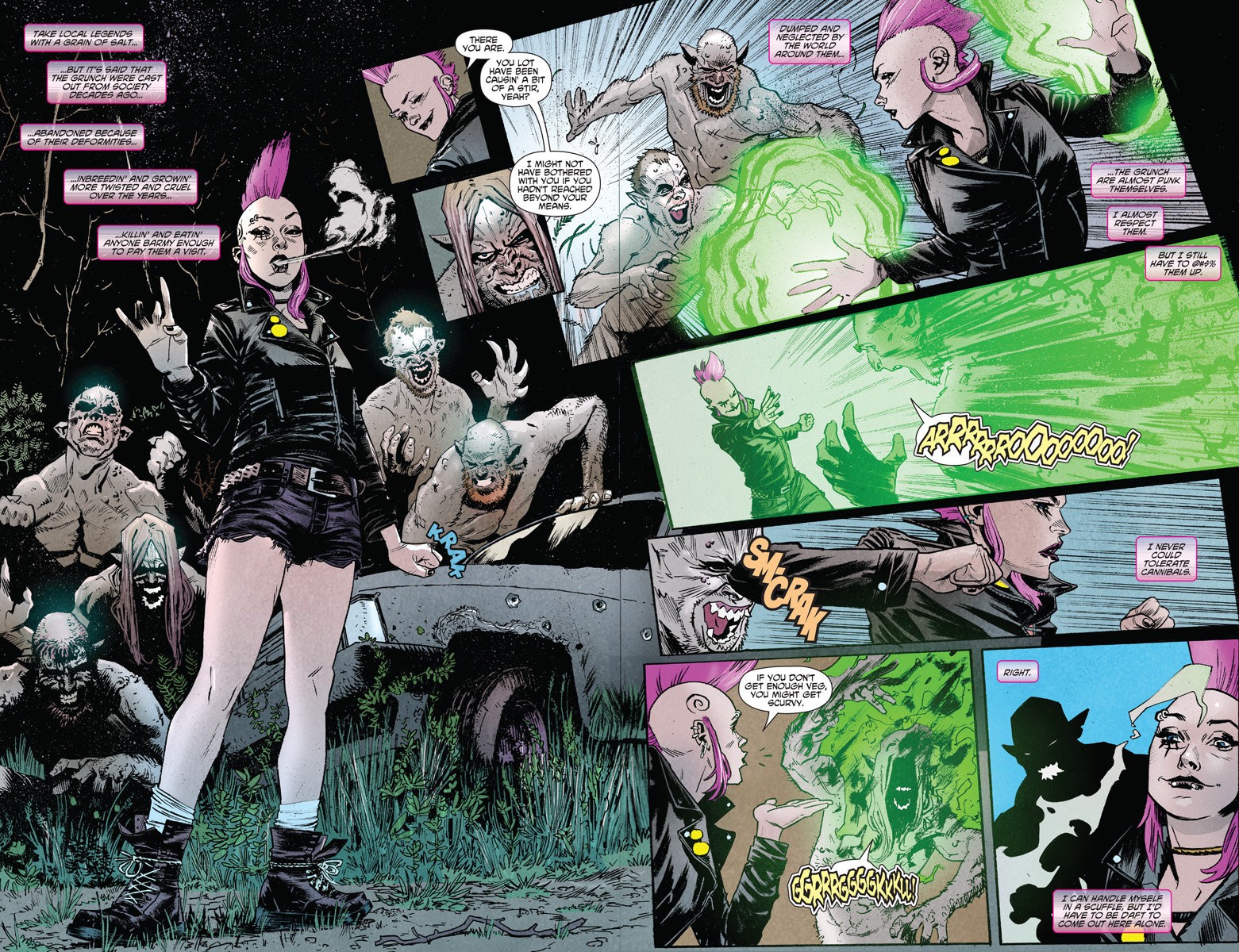
GP: How did you write to Adam Gorham’s specific strengths as an artist in Punk Mambo?

CB: Punk Mambo needed to feel action-packed and fun and a little dirty. Adam manages to bring that aesthetic to every panel of every page. The action is kinetic and frenzied. The horror beats are scary as Hell. I’m so lucky to be working with him on this book. 

GP: Even though it’s technically a superhero universe, Valiant has always had a strong supernatural corner. What will you add to that corner in Punk Mambo?

CB: With this story, I want to establish Punk Mambo as a kind of roaming paranormal investigator. Only, she doesn’t just investigate paranormal threats. She kicks their teeth in. I also wanted to expand the “pantheon” of voodoo spirits and gods. Finally, I’m introducing a couple of new villains to the Valiant Universe. These villains will be firmly rooted in the supernatural.

GP: Punk Mambo has an interesting relationship between her and her various Loas. How will you develop these relationships in her own series?

CB: The relationship with the Loa—and with voodoo as a whole—will be a key part of this series. You’ll see both sides of this… partnership. Punk Mambo has been using the Loa for some time now, and she never really stops to consider how the Loa feel about that. 

GP: You have a strong background in horror comics, and Punk Mambo seems to have some horror elements. What are some tricks you use as a writer to make a comic frightening and/or unsettling?

CB: It’s important in a horror comic to make the reader worry about the characters. There are real threats facing Punk Mambo, and if I’ve done my job, you’ll care about her and worry if she’ll survive or not. In a book like this, no one is safe so don’t assume that having a character’s name in the title means that character will make it to the end.

GP: A lot of your recent works (Dark Ark, Blossoms 666, Punk Mambo) have touched on religious elements or rituals. What do you find fascinating about faith and belief, and why do you continue to incorporate them in your stories?

CB: I’ve always been fascinated by faith and by ceremony and by the rules associated with religion. All these different characters allow me to approach those things from different angles, to pull at the frayed edges from different directions, and to explore my own questions without really smashing the reader over the head with them. My hope is that readers will come away with their own questions and their own answers. With Punk Mambo, I really wanted to look into the rules of faith and how someone who doesn’t follow any rules might still be faithful.

Punk Mambo #1 is set to be released on April 24.

Follow Cullen Bunn on Twitter.

C2E2 2019: Interview with Writer Ryan Cady

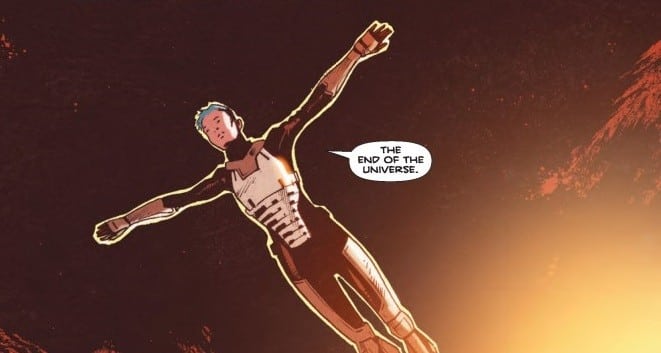
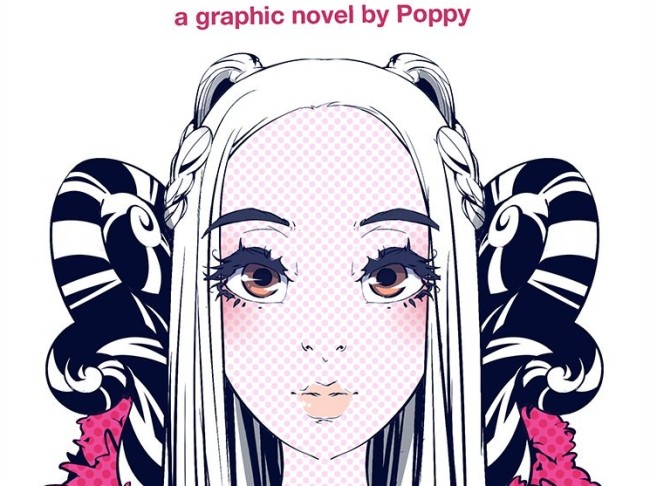
On Sunday at C2E2, I had the opportunity to talk with writer Ryan Cady about his work on the Image/Top Cow sci-fi series Infinite Dark with artist Andrea Mutti as well as his upcoming Z2 graphic novel, Genesis 1 about Internet music star Poppy that he is co-writing with Poppy and Titanic Sinclair. Previously, Cady has done work for Marvel (Old Man Logan), DC (New Talent Showcase), Lion Forge (Rolled and Told), and Archie (Big Moose) as well as co-writing the Magdalena relaunch for Top Cow with Tini Howard.

Graphic Policy: You were a part of the DC Talent Development Workshop. How did that impact your work on Infinite Dark?

Ryan Cady: I developed Infinite Dark before the workshop and started scripting halfway through the workshop. When I started Infinite Dark, it was much more isolated story, and Scott Snyder, in the workshop, was good about getting us to examine higher stakes. From the beginning, Infinite Dark was going to be an end of the universe/last people on Earth story.

The initial pitch was more inward, character focused and weird Grant Morrison-y stuff. Not that’s a bad thing. I love that stuff and could do it well. After working with Scott and the DC projects in the class and focusing on the balance between character and action, I really decided to start ramping things up. And, obviously, something like [the workshop] makes you a better writer. It’s 10 weeks of doing scripts, getting them reviewed by not just Scott Snyder, but a bunch of really talented peers and examining your own work really critically. It forces you to think “What do I suck at? How do I need to get better?”

GP: From the first page of Infinite Dark, it’s all about staring into the abyss. How do you get into the zone to write about characters who gaze into literal nothingness?

RC: When I was really developing Infinite Dark in earnest, I was in the midst of a really bad depression. I kind of had the basic ideas there, but when I sat down to write the project, I was really miserable. At that point, it felt like a bleak work. (This was before the DC Workshop.)

When it came time to script, I focused a lot on staring into [nothingness] and overcoming it and survival as a virtue. In the script, I tried to tiptoe between those two. About how coming out of this I feel stronger and what it means to survive the worst year of your life versus diving back into those feelings a little bit if I wanna get grim. Sometimes, to write the darkest parts of the book, I have to dive back into those bad, weird feelings because it’s my first creator owned story.

GP: Infinite Dark has a big monster in the book called the Entity that I really enjoyed. What was your inspiration for them?

RC: In the very original pitch for the book, the Entity was something that claims to be God. I’m not an atheist, but I really thought the “No, fuck you, God” idea would be a cool take. God, in the original pitch, was like “I seem like a monster, but it’s because I need to create a new universe, and you guys are getting in the way.” [The protagonist] Deva was going to shoot God. That was the very Grant Morrison part of it. God was going to be like “I made you guys. You’re the best thing I ever made, but I’m making a new thing.” And Deva was gonna be like “No, you made us to survive.” and shoot God.

That was early days. It’s changed a lot since then. The initial idea was always the shadows. A thing you can’t understand, not even a Lovecraftian thing from beyond, but something that doesn’t interact with physics like we do.

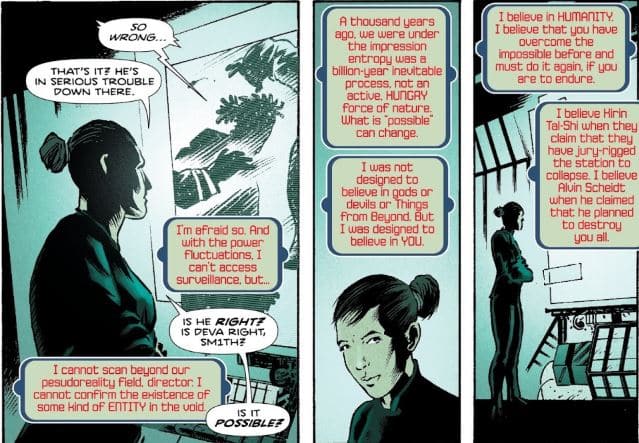
GP: My favorite character in Infinite Dark was Smith, the A.I. I love him so much. In a lot of these kind of sci-fi stories, the A.I. is always evil. Why did you decide to make Smith more of a humanist and an ally to humanity?

RC: Thank you for that reading. I’m always antsy if it’s going to make it in or not. I play with [the humanism] a lot in the next volume without spoiling anything. Because that’s such a trope, I believe we as people are always like “The next thing is going to usurp us.” It’s tied into the whole killing God thing. This thing we made is going to hate us for a reason, maybe, because we think we’re putting our worst selves in it.

But my whole thing with Smith is that I don’t know if I believe in that trope. [Some] people (Granted a lot of people who work in tech and in Silicon Valley are awful and scary technocrats.) make stuff earnestly with the idea you would make a life with the idea of “This is designed to love all the good things about humanity.” Smith’s creators are like “We believe in all these things.” I wanted to emphasize that and double play on “The A.I. is so evil.”, but not at all.

My favorite thing that I’ve written for the whole series is Smith’s speech in issue 3. I’m glad people liked it, and it landed. When I wrote this, I turned to my girlfriend and said, “I never say this, but I’m really proud of what I wrote here.” This is great, but the rest of the issue sucks.

GP: Yeah, that speech is awesome. Lots of text, but it’s definitely one of things I’ll remember about Infinite Dark.

So, the antagonists of Infinite Dark are the technolinguists. How did you come up with this cool, sci-fi concept?

RC: The idea came up because I’m not good with computers. Also, it makes sense if you’re setting a story fifty years from now to extrapolate what we have. Infinite Dark takes place 10,000 years from now so computing is going to be something that’s so fundamentally different. There’s the idea of people who can interact with this future’s version of code on an informational language level. Linguistically, they interact with computers.

I made them bad guys because really early on, there was a notion that the Entity could interact with them because the techno-language they speak is similar to the fundamental building blocks of reality. You know that theory that the universe is just a VR simulation? In Infinite Dark, they have simulations they go into sometimes, and we wanted to play with that. If we end up having more issues then these eight, I might go into that even deeper.

GP: Yeah, I Googled “technolinguists”, and I guess they’re not a thing yet.

RC: They’re antagonists, but they might not be bad guys.

GP: Your book’s definitely in a moral grey area.

RC: I like to play with that when I can. Except Smith. He’s just good.

GP: Could you tease the upcoming arc of Infinite Dark?

RC: The next volume of four issues starts in April, and without spoiling anything if you haven’t read the first volume, weeks have passed in issue five. But it’s not gonna feel like “Bam, bam, things are happening again.” It’s a lot of aftermath and cleanup stuff. But, also, oops, an act of saving everybody doesn’t necessarily save everybody. There’s still so many things that can go horribly wrong.

It’s very character conflict focused. All these people have survived the end of the universe twice, and yet, that alone is not enough to have them cooperate and get along because we have such fundamentally different ideas about what it means to do the right thing. How do these people faced with impossible choices, who have survived so much, reconcile that? I talk a lot philosophically in the book about survival being a virtue, but this arc is about what the next “good is. If we survive, how do we move past that.

GP: Like the whole “survive and thrive” Pinterest board idea.

RC: Yeah, we’ve reached “survive” on our Pinterest board. How do we “thrive” without it becoming worse or inequality or dooming ourselves again?

GP: I had a couple questions about the Poppy graphic novel Genesis 1. With these musician graphic novel projects, I’m really curious about how much input Poppy had on the graphic novel and what that collaborative process was like. She has all those YouTube followers.

RC: I’ve never met Poppy because she’s a robot, probably. I’m sure she’s very nice and only has our best interests at heart. And her church is not a cult. I’ve been given absolute freedom, and I speak in total earnestness. This is 100% me and mine. I’m nobody’s mouthpiece. This is my version of her story, and I believe it 100% and am not part of a cult.

GP: A lot of Poppy’s ideas are about how she’s beyond humanity and is very post-human. Why is her origin story being told in an older medium like comics?

RC: Even though it’s an older medium, comics is still really dynamic. It’s not limited to what you can get across on one side in a YouTube video. It’s not limited by time. I talked to an editor who brilliantly said, “In comics more than any medium, you can do a good job of controlling the flow of time.”

Also, there’s a weird element of apocrypha to it. Is this Poppy’s origin story? It’s this comic, and we play on this in the story. If this is really Poppy’s gospel and her origin, why would it be in this graphic novel? Why would it be told in this way, and how would that be obtained? Is the story true? Is the story stolen? It’s about to get too religious in here. We’re playing a lot with a sense of time and futurism, and how that blends with the occult and weird hacker people.

Infinite Dark #5 is set to be released on April 10, 2019 from Image/Top Cow Comics. Genesis One will be released in summer 2019 from Z2 Comics.

Follow Ryan Cady on Twitter.

Messages from Midgard #1

Welcome to Messages from Midgard #1, the weekly “War of the Realms” column where I will break down every core issue and tie-in of Marvel’s blockbuster summer event. As a fan of both the superhero and fantasy genres (I was into Lord of the Rings almost a decade before I picked up my first comic.), I’m cautiously excited for this event. I mean, Punisher shooting Elves in one of those classic, sketchy New York City warehouse is pretty epic, and that’s only one of many things that happen in War of the Realms #1.

A couple reasons I’m intrigued by “War of the Realms” and wanted to this column is, first, I think that it flows organically out of Jason Aaron‘s seven year Thor story starring both Odinson and Jane Foster and surviving numerous new #1’s, additional adjectives, minis, and events. It was first mentioned way back in 2013’s heavy metal meditation on godhood that was Thor, God of Thunder. To be honest, I thought Malekith showing up was just a forced tie-in to the underwhelming Thor: The Dark World film, but Aaron definitely proved me wrong. In his work on Thor, he has crafted tremendous arcs for characters like Odin, Loki, Freyja, Volstagg, and even baddies like Laufey, Cul Borson, and the corrupt Roxxon CEO Dario Agger. And these get to be played out loud on Marvel’s biggest stage.

The other reason is that I’ve sat out the last couple Marvel events. I didn’t read anything connected to “Infinity Wars” or “Spidergeddon” and was only hate reading the main Secret Empire series in the end. (I have checked out some of the X-Men stuff like Extermination and “Age of X-Man“.) The break was nice, but I kind of want to give them another stab and checking out one connected to one of the better superhero runs of the 2010s could prove to be a good move.

In the future, most columns won’t have a 300 word introduction, but will have a one paragraph headline followed by analysis of each issue of War of the Realms and its tie-ins plus if you should buy, read, or pass each one. It will close with my general opinion of the event and tie-in’s so far and end on my favorite panel of the week. (I might even answer reader questions.) Without further ado, let the “War” begin!

War of the Realms #1

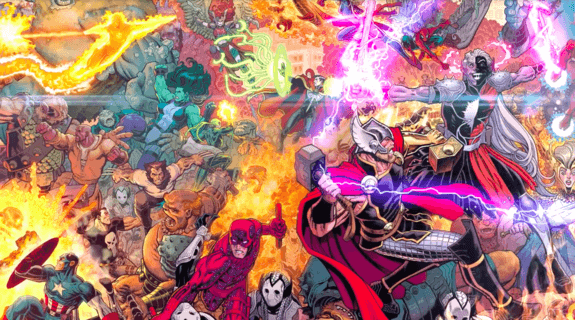
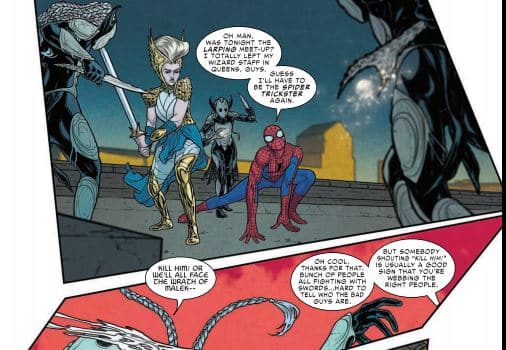
Don’t take out that second mortgage or pack a lunch instead of buying one today, War of the Realms #1 is the only “War of the Realms” related material out this week from Marvel. Writer Jason Aaron, artist Russell Dauterman, and colorist Matthew Wilson give the comic and series the full fantasy novel treatment with a double page spread map of the Ten Realms with Midgard in the center. There is a lot of exposition about previous events in the War of the Realms that have been told in different Thor comics, but I’m not super bad about because it’s the first issue. Also, Aaron tries to offset it with humor like Spider-Man swinging around in the Bronx and running into Freyja fighting off Dark Elf assassins on a brownstone roof top.

Aaron and Dauterman also hit some strong character beats in War of the Realms #1 beyond Malekith and his Dark Cabal attack Midgard and various superheroes. The first character that appears in this comic is Odin, who because of his unwillingness to change and estranged relationship with his wife and sons, has led him to sit in a ruined Asgard. He’s sad, alone, and a perfect target to be Julius Caesar’d by some Dark Elf assassins. This is just the first issue so he will probably come back, but even though he got help for his alcoholism in a previous issue of Thor and bonded with Robbie Reyes’ Ghost Rider in a previous issue of Avengers, it was too late. His failures have a cost, namely, death. Dauterman serves up some fantastic panel compositions for his last moments that look like a gleaming dagger before an overhead shot of the stabbing assassins. Wilson uses golden colors before muting them as Odin meets his end.

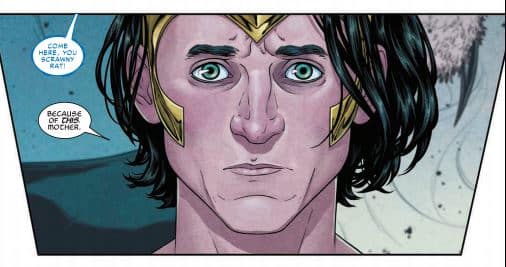
Another character that is written reasonably well in War of the Realms #1 is Loki whose motivation as far as I can tell is that he wants bring on the end of the all realms, not some Dark Elf played by Christopher Eccleston in heavy makeup. He understands Malekith’s plan to take out and isolate the big Asgardian players (Odin, Thor, Freyja) and even protects Freyja by cutting off his father, Laufey’s, hand. But then he gets taken off the board via cannibalism. This is definitely a fake-out for the Father of Lies, and hopefully, Aaron has a big plan up his sleeve a la Kieron Gillen in Journey into Mystery and not just a generic wild card he can use to spice up plots. In Loki’s “final” moments, Dauterman does an extreme close-up of his face to show his vulnerability around his biological father and beloved, adopted mother. His ability to tease out these moments and beats visually as well as draw epic battle sequences are why he is such a good fit for this book.

The rest of War of the Realms #1 is really just a slugfest starring the cast of Thor, the cast of Avengers, Spider-Man, Daredevil, Punisher, Wolverine, and Dr. Strange. Aaron uses quips to get down to the essence of each player and then turns them loose with Spider-Man playing the role of long time Marvel fan, who is new this whole of “War of the Realms” thing. He and the various Asgardians have a whole mismatched comedy vibe going, and Spidey as well as Aaron’s gift for humor keeps the story from being action figures moving around or overly melodramatic.

It’s nice to have the first issue of an event actually have an action set piece and not just focus on aftermath or talking heads, and Russell Dauterman’s art has an easy to follow, Mike Allred quality to it. Captain America’s shield has motion lines, and the double page spreads are more than just pin-ups. Even if War of the Realms is just a generic sub-fantasy creatures for aliens-invasion storyline, the book will be worth checking for his nuanced figure work, layouts, and Matthew Wilson’s colors alone that all come together in the final page that seems to be an homage to an underrated scene in Avengers Infinity War.

War of the Realms #1 doesn’t have any shocking, cliffhanger endings, but Jason Aaron does solid work with Loki, Thor, Odin, and Freyja’s arcs to show that this a family epic that happens to an epic epic now. Russell Dauterman and Matthew Wilson create interesting layouts and compositions even in the crowd scenes as Dauterman becomes the heir of George Perez in this way. It’s fun to go back and pore over different panels and find fun details like a Dark Elf killing a civilian with a Howard the Duck standee although it’s easy to find the focus of each panel in the early go-round.

The amount of exposition might piss off some of the Jason Aaron reading faithful, but fun battle scenes that don’t drown out all the character beats makes War of the Realms #1 a solid start to the event. I actually want to see what Loki is up to in Thor and see Punisher, Wolverine, and Daredevil’s interactions with various fantasy genre beings in War Scrolls. There are some real Hellboy: The Golden Army and Fellowship of the Ring prologue vibes, and it’s worth reading. Overall Verdict: Buy

Panel of the Week

In an issue full of loud action, it's the small panel of Cap knocking out yet another loud mouth totalitarian that has an impact. (Jason Aaron, Russell Dauterman, Matthew Wilson in War of the Realms #1
In an issue full of loud action, it’s the small panel of Cap knocking out yet another loud mouth totalitarian that has an impact. (Jason Aaron, Russell Dauterman, Matthew Wilson in War of the Realms #1)

Review: Broad City S5E10 “Broad City”

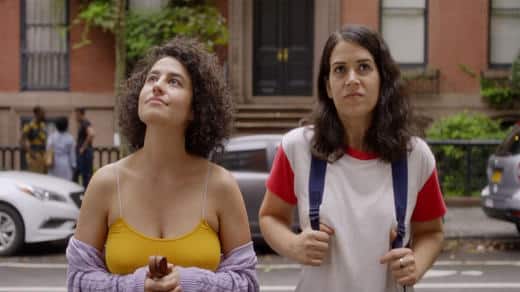
Just as Abbi and Ilana are proud of the women they’ve become over five season of Broad City, I am proud of the show that Broad City has become. The series finale “Broad City” has fantastic bits of slapdash comedy from writer/creator/actors Abbi Jacobson and Ilana Glazer, but it has two truly powerful emotional moments that act as endpoints to Abbi and Ilana’s arcs before dovetailing to a thematically resonant ending from director Lucia Aniello. It’s sad that there will be no more Abbi/Ilana adventures (Unless they bust out the characters for beer/Super Bowl ads down the road.), but Jacobson and Glazer should be applauded for ending their sitcom on an emotional high and at its peak.

With Abbi and Ilana’s adventures as well as the overall plots of Broad City, the actual adventure was never the draw. It was just Abbi and Ilana having a good time with each other and bringing wackiness, surrealism, and friendship to every moment. This spirit is embodied in “Broad City”‘s shenanigans, including a futile quest for a bacon egg and cheese bagel that turns into a futile quest to carry a $10,000 toilet via skateboard across the Brooklyn Bridge. The fact that they get tasty food or a high tech toilet doesn’t matter, it’s that they get to try to use baby talk to get breakfast at the bodega at 11 or share a look of a disgust at Cornell sweatshirt wearing tourists in line for a bagel in Manhattan. They simply enjoy each other’s company and seeing the world through the other’s lens.

Also, combined with leaving each other, Abbi and Ilana have ended up bringing out the best in each other throughout Broad City and especially in this final season. Ilana has decided to channel her ability to connect with almost anyone to go to grad school and become a therapist while Abbi has decided to swing for the fences, stop cleaning pubes or being a caterer, and taking the next step with her art by joining a fellowship in Boulder.

They couldn’t have taken these next steps without each other although Abbi did have to leave New York to achieve her dream. But, honestly, Ilana gets that and shows it by basically kicking out everyone from Abbi’s going away party and sharing one last moment on the rooftop of Abbi’s apartment. Bevers is there too, dressed quite dapper, and gives her the great gift of labeled tupperware, which is an amazing callback to when he was introduced by eating Abbi’s cheese.

He, Jaime, and Lincoln all get to say their goodbyes. And Trey (Paul W. Downs) gets the most extra farewell as he completely misreads the room, shoots his shot, and proposes to Abbi like they’re concluding a three season romantic arc. The whole roof party scene (Other than to get one last great Ilana outfit.) is a great parody of ending party sequences in films and TV shows because most of the people there are random people from Abbi’s building than Ilana got to “fill out the party”. Because this episode is really the Abbi and Ilana show.

Jacobson, Glazer, and Aniello center “Broad City” around the difficulty of saying “Good bye” to a friend who is moving away, and this has been the through line of the back half of Broad City Season 5. Thankfully, Aniello doesn’t go all Peter Jackson and have multiple cuts to black and “endings”, but Abbi and Ilana have three farewells and one post-separation FaceTime call done in the split screen style that was a signature of a lot of their cold opens.

One goodbye is very romantic and set at the Brooklyn Bridge where they write their names while the other is low key and involves a note on a sleeping Ilana’s nose. The final one is just a super intense conversation about how Abbi and Ilana feel about each other and includes some “F” bombs dropped at a cab driver for one last moment of fierce synergy against the patriarchy. Their last conversations are both heartfelt and wacky; there are riffs on the apocalypse and survivalism as well as well wishes and love. And, honestly, that’s how it should be.

The final scene in “Broad City” is a master class in creating a universal experience in film and television from Lucia Aniello. She opens with an overhead shot of two friends leaving the subway, which has been the trademark way Abbi and Ilana get around New York. Then, Ilana Glazer and Abbi Jacobson sprinkle in bits of banter from character who we’ll never know about crazy times in New York City. Finally, Aniello goes from closeup to overhead of pairs of people walking through New York presenting the thesis that any duo of friends helping each other laugh, live, and grow is their own Abbi and Ilana.

“Broad City” definitely made me tear up and was a real showcase of maturity and character development using the buddy sitcom format. Abbi Jacobson and Ilana Glazer have created two characters that I genuinely care about and helped me laugh through some hard times, and I’ll definitely miss Abbi and Ilana in animated or live action form. But it’s nice to see a show go out as arguably the best show to ever air on Comedy Central than wear out its welcome with recycled plots and gimmicks.

“Four and three and two and one…”

Overall: 9.9

C2E2 2019: Interview with Cecil Castellucci

Cecil Castellucci

Cecil Castellucci is a talented novelist, comic book writer, and musician, who won a Joe Shuster Award for her work on 2007’s The Plain Janes. Recently, she has written the comics Shade the Changing Girl and Shade the Changing Woman for DC Comics’ Young Animal imprint. At C2E2, I had the opportunity to chat with Castellucci at the DC Comics booth about her new series, Female Furies, that brings the Me Too Movement to Jack Kirby’s Fourth World.

Graphic Policy: I’m a big fan of your Young Animal work, like Shade the Changing Girl and Shade the Changing Woman. Why should fans of Shade check out Female Furies?

Cecil Castellucci: With Shade, I was looking at what [Steve] Ditko did and what [Peter] Milligan did, and I was trying to honor and echo some of things they did. But then me and Marley [Zarcone] would stake our own claim to that universe. I feel like with Female Furies, I’m looking at Kirby and his magnificent work and looking at the Female Furies and trying to put it through a different lens.

Shade the Changing Girl is dealing with a lot of the things that original Shade did and Milligan’s Shade did, but where Milligan explored a lot of darkness and cruelty, I staked a claim to heart. It complements it. I feel the same way with Female Furies. I think that Tom King did an amazing job with Mister Miracle, and it’s just got a tenderness to it. It’s very domestic drama and asked, “What does it mean to be a man? What does it mean to be a father?” Those are wonderful things. I’m taking those same characters. Just like he took one lens on it that was different than Kirby, I’m taking a completely different lens from the same characters and showing a different point of view. One thing I love about these characters is that they’re so flexible and can withstand being put through their paces in a different way.

GP: Speaking of these characters, I came into Female Furies expecting for it to focus on Big Barda because she’s a popular, big name character. But you decided to focus on Aurelie. Why did you decide to do that?

CC: One thing I knew going in was that I was going to do the Me Too movement on Apokolips. And a feminist awakening on Apokolips. When I read the whole Fourth World omnibus, it really struck me how women and the Furies were talked about. They’re on the side all the time. They never really go to battle. They’re on the fringes. They’re badasses, but they’re on the side.

So, I wanted to bring their story forward. But, also, the way in those original texts that their bodies are talked about and the way that Granny Goodness is in charge of the children when she’s an equal too. I wanted to look at that and focus on that. When I read Kirby’s Mister Miracle, I discovered the character of Aurelie, who is Barda’s inciting incident. She is Barda’s origin story. When I read that issue, I was like “This is a way in to tell this story” because it’s part of the original thing, but it’s expanding who Aurelie is and how she got to Himon’s place. And the dancing. I really tried to stitch that in.

GP: Why is the Fourth World such a good setting about gender inequality in the world?

CC: I want to go back and say that even though I’m focusing on Aurelie, I still think that my Female Furies is the story of Granny and Big Barda. It’s just the way we’re gonna get there.

First of all, I think that the Fourth World is operatic. It is enormous with highs and lows and drama and betrayal. And Apokolips is also a hell planet. So, when you’re talking about really hard things with bad guys, you can go harsher than what you would do if it was reality or Earth based and dial up the tension of the horribleness of systemic misogyny, of sexual harassment and abuse in that way.

I think that it made it a great landscape to explore the current issues. Sometimes, it’s hard for us when we’re living in a moment in time to look at that moment in time. When it’s in outer space on hell planet, I don’t want to say it’s easier because it’s not. But it is.

GP: Yes, Female Furies is a tough read.

CC: It’s tough to write too.

GP: In Female Furies #2, you had this big character beat where Big Barda is a victim blamer. Why did you decide to make her a victim blamer?

CC: Because I think what happens sometimes is that it’s so impossible for people to believe that something has happened. I think that it’s human tendency to keep the status quo because if you actually awaken to what’s really happening, too many things have to change, and it’s very difficult. Your whole world has to change. Not just society, but your whole personal world.

I think it’s easier for people, and Barda falls victim to that because it’s quite common. You look at women who are raped or domestically abused, or men. They’re usually blamed for what happened. It’s a cycle. I wanted to mirror that to make us look at ourselves, and how we deal with people when they’re telling us the truth. That’s why there’s that thing, “Believe women.” When someone tells you something has happened, it costs them so much to speak. We still have that lesson to learn over and over.

GP: Especially in issue 2, the visuals of the sexual assaults are very explicit. How do you do these kind of scenes without being overly gratuitous like some previous comics put out about this topic?

CC: I have to give a shout out to Adriana Melo. I think that Adriana does such an amazing job of handling those brutal moments with a tenderness and a care toward what’s happening to the characters. I think a lot of that has to do with our collaboration and her masterful way of doing that. I think that’s one of the hard things. Nothing that I or Adriana put in there is gratuitous. I’m not doing it willy nilly. It’s not to be titillating in any way. It’s to talk about harsh circumstances.

Also, they’re all terrible people. They’re villains. Even the people being abused are terrible people. It’s tough to write. It’s not an easy thing.

GP: Granny Goodness is the first protagonist you focus on in Female Furies. In previous stories, she’s been this caricature of evil like when Ed Asner voiced her in the DC cartoons. How do you make her sympathetic?

CC: The Female Furies have always been a part of Kirby’s Fourth World, and they’ve been on the fringe or on the side. You know that they’re all complex. When you take a sliver of the story, and you say, “I’m gonna tell this story of an awakening.” Then, you have more time to explore of how people got there.

I think that you can’t have someone like Granny Goodness without knowing that she came from somewhere. The way that she is is because she learned she had to be like that. I was really interested in figuring out how to crack that. Who is she, and how did she become such a terrible person?

GP: Your take on Darkseid is so unique. I’m used to him being a total nihilist. How do you make him go from being all about “Anti-Life” to a sexual assaulting CEO?

CC: First of all, I think that a lot of men in power express their power in many different ways, and to me, that seemed very natural. It also seemed to me that he would have a very particular relationship with Granny because she is the only woman. I think that he know that she’s probably just as powerful if not more powerful than he is. He needs to keep her under his thumb.

I looked to the history of man and womankind and sort of plucked from there. I think it’s obvious that Darkseid would have those kind of power moves.

GP: It reminds me a lot of Zeus in Greek mythology.

CC: Absolutely. You wouldn’t be like “Zeus doesn’t do it”. He did it a million ways. That’s also how he kept power. I think that Darkseid is a very smart man, and he knows how to manipulate people.


Female Furies #3 goes on sale, April 3, 2019.

Follow Cecil Castellucci on Twitter

C2E2 2019: Interview with Daniel Kibblesmith

Daniel Kibblesmith is a true dual threat, who has written for The Late Show with Stephen Colbert and The Onion News Network as well as comics like Marvel’s Lockjaw and Valiant’s Quantum and Woody. He also has a hilarious Twitter account. At C2E2, I had the opportunity to chat with him about the connections between comics and comedy, his work on Black Panther vs. Deadpool, and his upcoming picture book, Princess Dinosaur.


Graphic Policy: Is it harder to be funnier in comics or prose, and why?

Daniel Kibblesmith: I think it’s harder to be funny in comics because everything has to serve the story and the characters, and in most mainstream cases, the action. So, when you’re funny in comics, I think it has to either have information in it that moves the story forward, or it has to be an icing on the cake. If you’re writing capital “C” comedy, then the comedy is the end that you’re trying to get to.

In narrative stories, it’s one of the tools in the toolbox. I think with superheroes it works really well. It’s one of the reasons the Marvel movies are so popular. They do a great job using humor to explain things and to break tension and to make exposition a little more interesting. So, it’s always a bigger, more diverse project when I have to write something that’s a story instead of writing a humor column, or in the case of Twitter, a million bad jokes.

GP: Do you find parallels between writing for a famous comedian like Stephen Colbert and writing stories in a big, shared universe like Marvel or Valiant?

DK: I think that, at the end of the day, you’re a collaborator with a person or a brand that people have an emotional relationship with so the audience is expecting a certain thing from that person or those characters. You want to make sure that you know their voice inside and out, and that you can deliver what the job requires. In a weird way, I think it can be similar at times. But the subject matter is so different so who can really say?

GP: Let’s talk Black Panther vs. Deadpool. I know Deadpool has these team-up books that pop up every now and then. Was there already a “Versus” story set up, or did you pitch it?

DK: My editors, Wil Moss and Sarah Brunstad, brought the project to me. We had just finished Loki and had a really good time. They were looking for another project to put me on, and in 2018, given how many “Deadpool Vs” titles there were, it seemed weird there wasn’t a Black Panther one. So, it seemed like a project we could get everyone to buy into very quickly from both a behind the scenes and audience perspective.

It was really easy to get excited about this. It was always going to be Black Panther vs. Deadpool. I think the other big decision we made was giving Black Panther top billing because, one, we could make jokes about it, and Deadpool always gets top billing in these. Which I guess we made jokes about it. I think Hawkeye got top billing in one of these though.

GP: That was my favorite “Versus” series.

DK: I really liked the Hawkeye one. I really liked the Gambit one. I read all of them coming into this. For “research”. Because it was Saturday. I had a blast reading all of them, and everyone’s take on Deadpool is slightly different. I loved seeing all the interpretations. I think people think he can be very one note, but if you look into all the different writers, there’s a lot of variation there.

GP: One thing that I found interesting about Black Panther vs. Deadpool was that you decided to focus on T’challa more as a scientist than a superhero. Why did you decide to do that?

DK: It wasn’t really a decision. To me, that’s the character. I grew up reading Silver Age comics from my dad’s collection, and T’challa’s first appearance is when he sends a fake out siginal to the Fantastic Four, hands them their asses with his traps, and he defeats them as a scientist and as a king. I love Black Panther as a superhero. But I think that the Black Panther superhero adventures I really like are when he’s doing stuff in Wakanda that’s either pertaining to being a king or a deposed king, or he’s in Manhattan. Then, he’s much more of a conventional superhero.

But, to me [the scientist] is Black Panther. He’s as much Reed Richards as he is a Daredevil type.

GP: So, Black Panther vs. Deadpool was actually a serious story about curing death. How do you balance the fourth wall breaking jokes with the heavy stuff like death, mortality, and legacy?

DK: People have asked me that a lot, but if you read the [Jonathan] Hickman stuff that I’m a big fan of, Black Panther is King of the Dead. And Deadpool has “dead” in his name. These are two characters who are obsessed with mortality and legacy and indestructibility. Deadpool literally, and Black Panther needing the project the image of being more than a person.

I think all good comedy has an emotional core where the stakes are very real. Whether that’s as dark or sad as I took it or just something human you can relate to. But [both Deadpool and Black Panther] needed to be coming from a real emotional place. And it’s a “versus” title where they’re both protagonists so they both had to 100% know they were in the right even if Deadpool’s version of “in the right” comes with a healthy layer of denial.

GP: Deadpool has been written so many ways. Some write him as a kind of hero, and some as completely amoral. Do you think that he can ever be consistently written as a hero and change, or is he completely set in his ways?

DK: So, my book is about two men. One who is resistant to change. One is desperately pursuing it and is terrible at it. You can guess who’s who. My point of view is that the whole underlying philosophy of superhero comics is that they’re all on a very slow path to change. It might take 75 years.

Because the whole point of serialized storytelling and making sure you stay true to the characters, hitting the beats fans want, and doing it cyclically is that there all protagonists in a story on a journey. They’re looking to change. Or solve some unsolvable problem. Or repair the damage from their childhood.

I definitely believe that Deadpool could be a full-on hero, but it’ll take a minute because of the things people like about him is that he’s relatably flawed. I don’t think Deadpool will ever be Black Panther, but I think he might be a better Deadpool.

GP: I had a lot of fun reading the interplay between Black Panther and Deadpool in this comic. What do you like most about writing “mismatched” heroes?

DK: I realized that I had just finished doing Quantum and Woody. I just realized I had done another odd couple story where one of them was really straight laced and by the book while the other was this criminal wild card. It didn’t even occur to me until I was deep into the Black Panther vs. Deadpool scripts.

I think what’s fun about these characters in particular is that we all know them so well. When you pick up Black Panther vs. Deadpool, you know what it’s like for them to be in a room together. So, as their writer, I got to put them in the room together, and let would naturally happen happen and allow the conversation that I assume would happen to unfold.

I liked getting to bounce them off each other, and getting to test their limits a little bit like getting T’challa to bend a little bit and crack a joke here and there. He’s kind of softened to Deadpool a little bit. Then, the same with Deadpool to express some real melancholy and uncertainty and let his vulnerability show.

GP: I was definitely getting some Gerry Duggan vibes from the way you wrote him.

DK: I’m a huge fan of all of Duggan’s Deadpool. I read so much of it even before I got this gig. What I wanted to is synthesize what I liked by other writers. That’s the fun of writing characters that came before you.

GP: That are icons.

DK: The fun of writing icons is that you get to come in and be like “
I know what Black Panther would do if he had this problem because he’s the Black Panther.

GP: I had one last question about your upcoming picture book, Princess Dinosaur. What are some of the challenges of doing a picture book versus a story for adults or even an all ages comic?

DK: I would say in some ways that a picture book is easier because it’s not necessarily sequential storytelling. There’s less directing. But the artist of our two picture books, Princess Dinosaur and Santa’s Husband, is my friend Ashley Quach, who is just a master illustrator. She does this incredible cartooning in watercolor, and she has done a lot of comics. I think that she and I speak the same language about what we’re going for, and how we’re able to tell jokes with body language and facial expression.

The biggest difference is probably the audience. Princess Dinosaur is aimed at toddlers. So, you want everything to be boiled down to its simplest, most archetypal ideas. But, in a weird way, that’s not that different from comics with these big characters that embody their themes. People who are representative of who their characters are on the inside.

In some ways, it’s really similar because you’re writing these iconic character whether they’re capital “I” iconic because they’re created by Stan Lee and Jack Kirby, or they’re instantly recognizable, self-contained archetypes.

Follow Daniel Kibblesmith on Twitter.
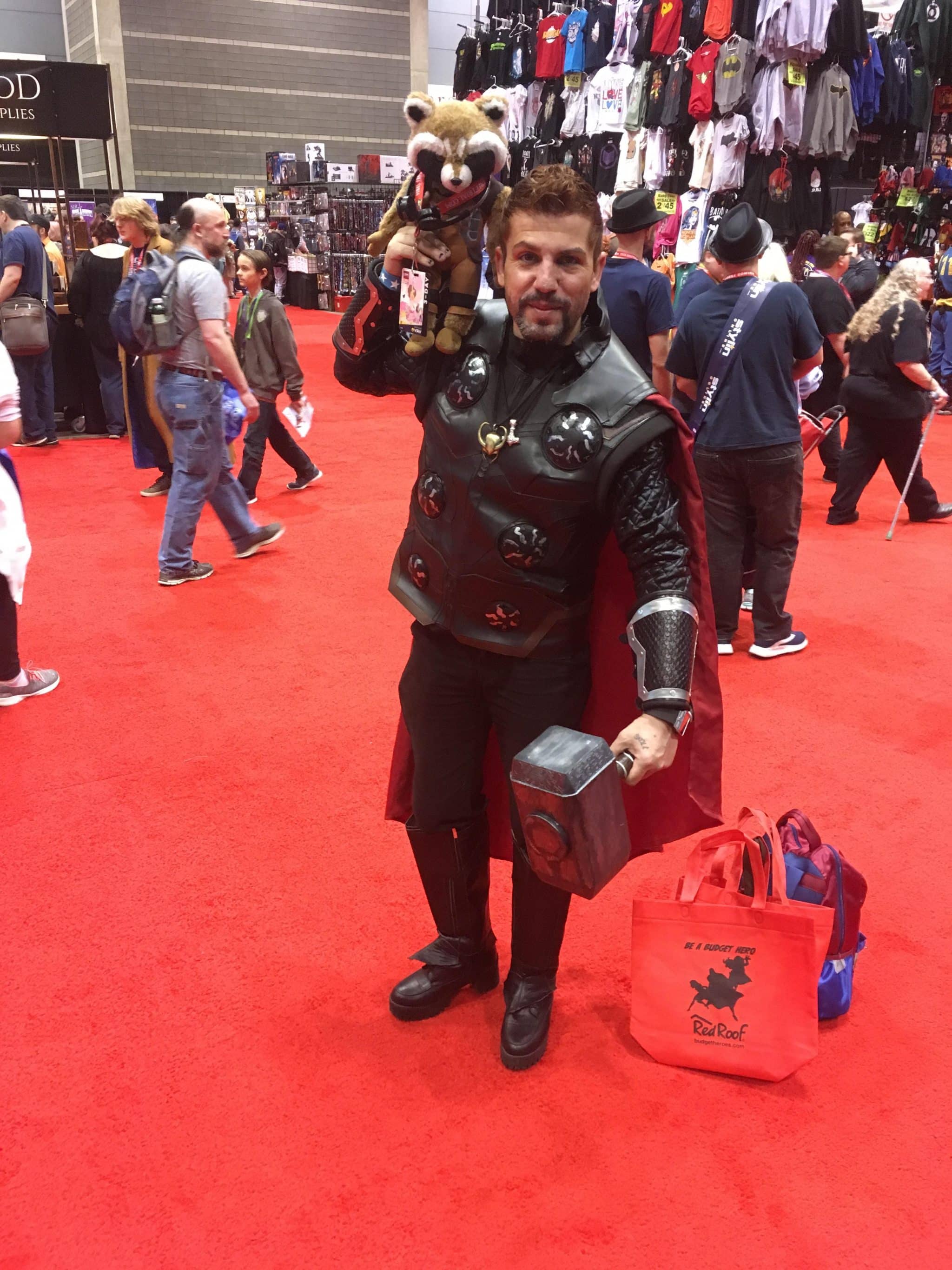
C2E2 2019: The Cosplayers and Clueless Panel

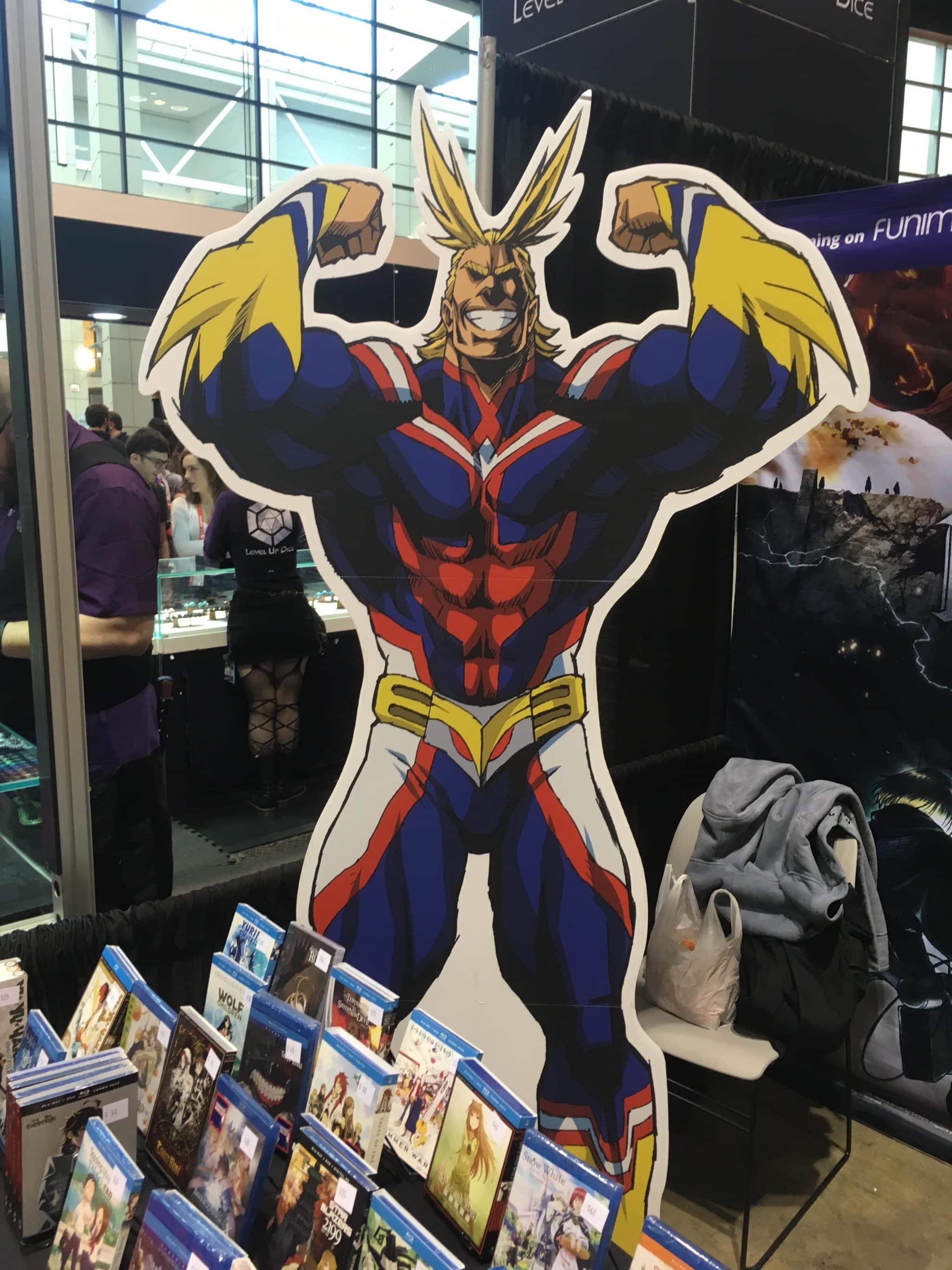
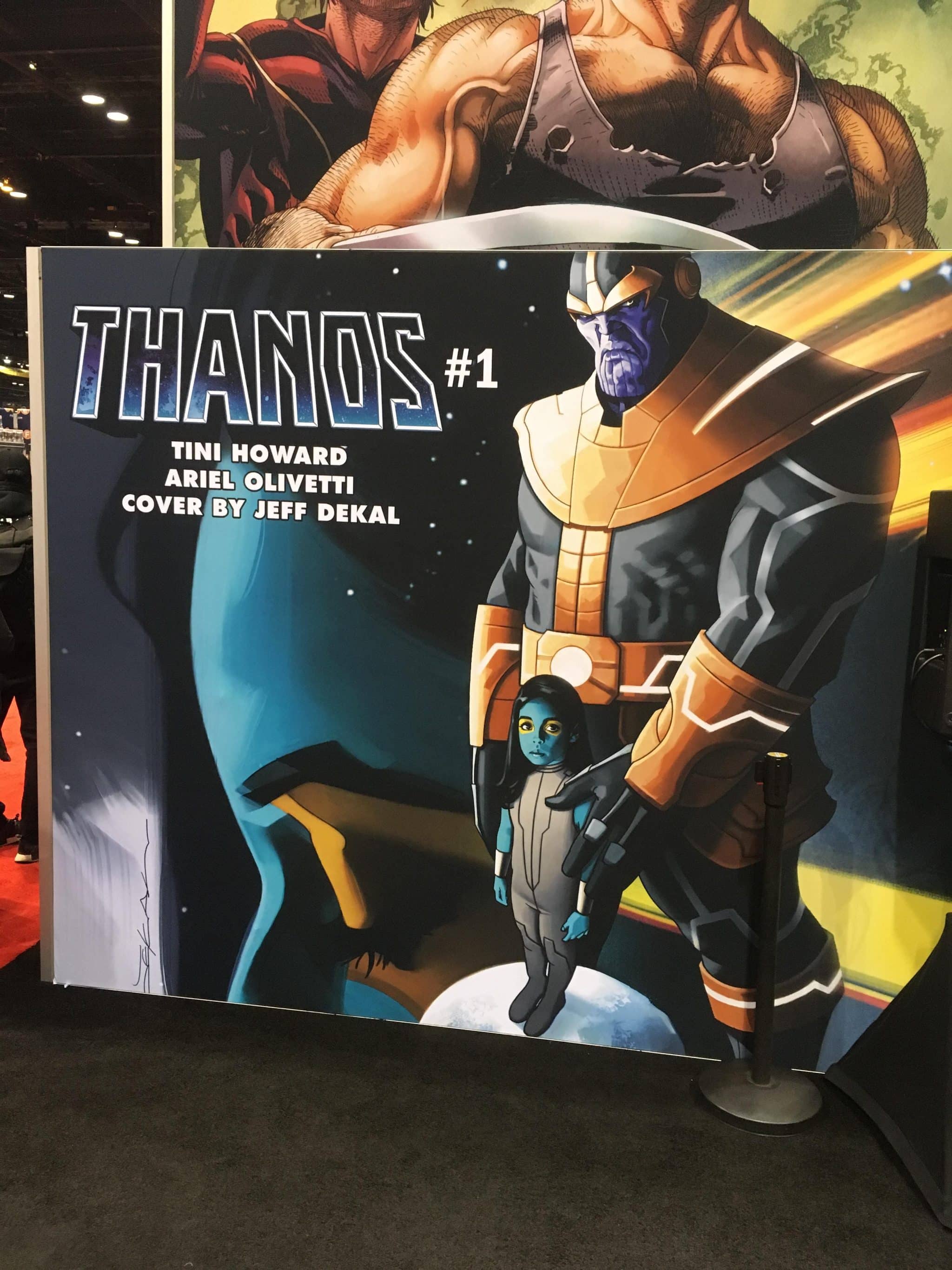
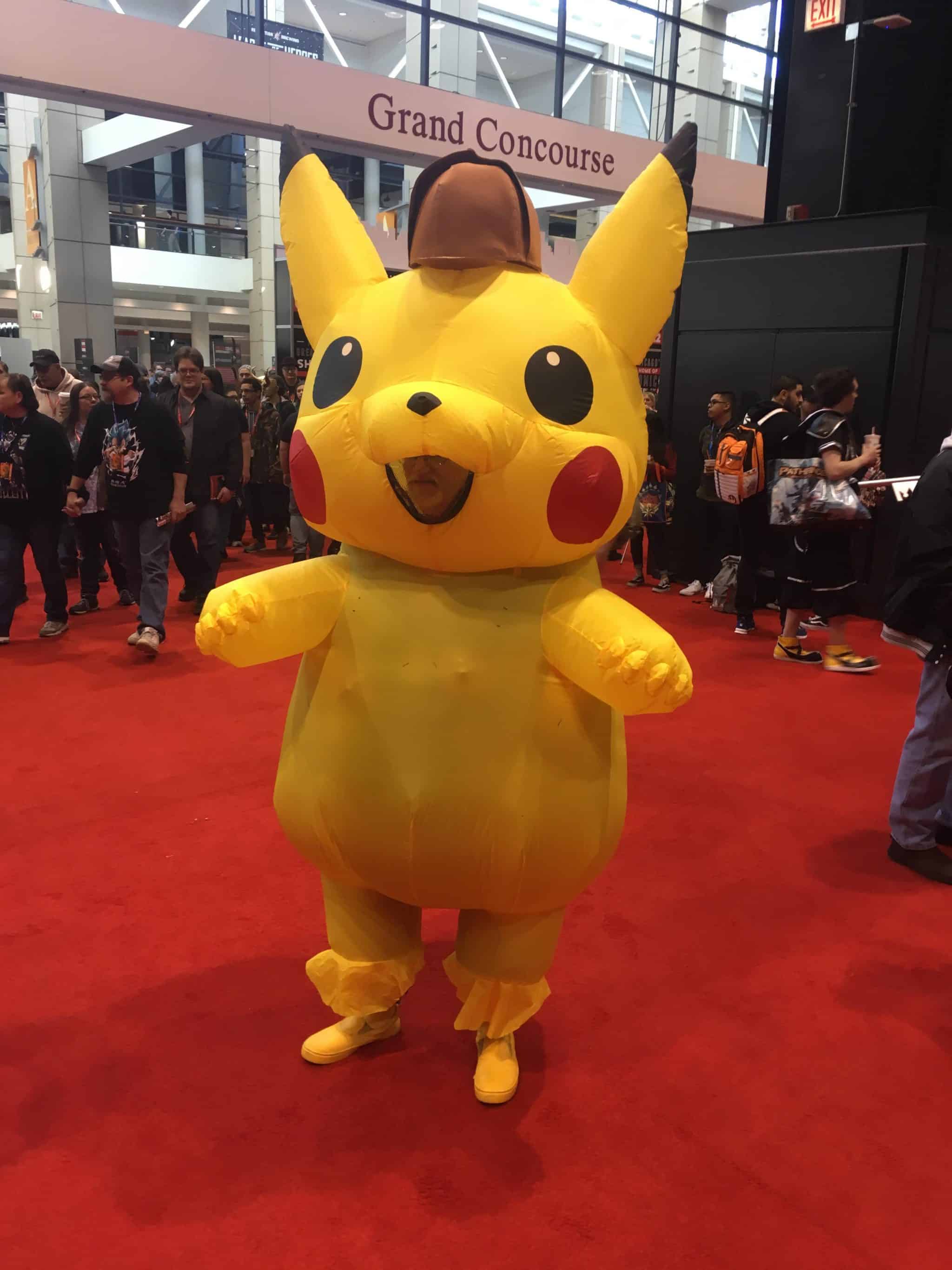
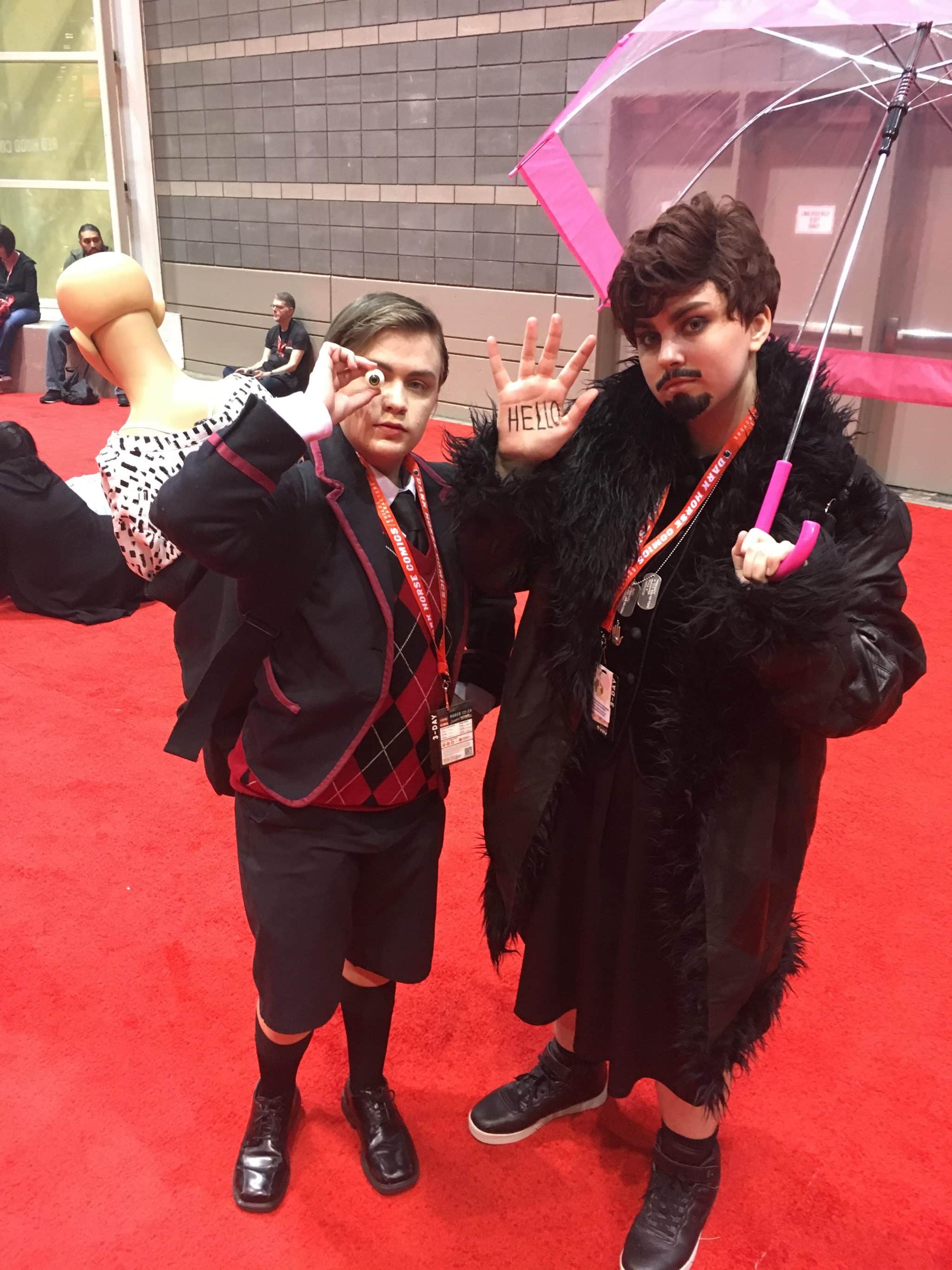
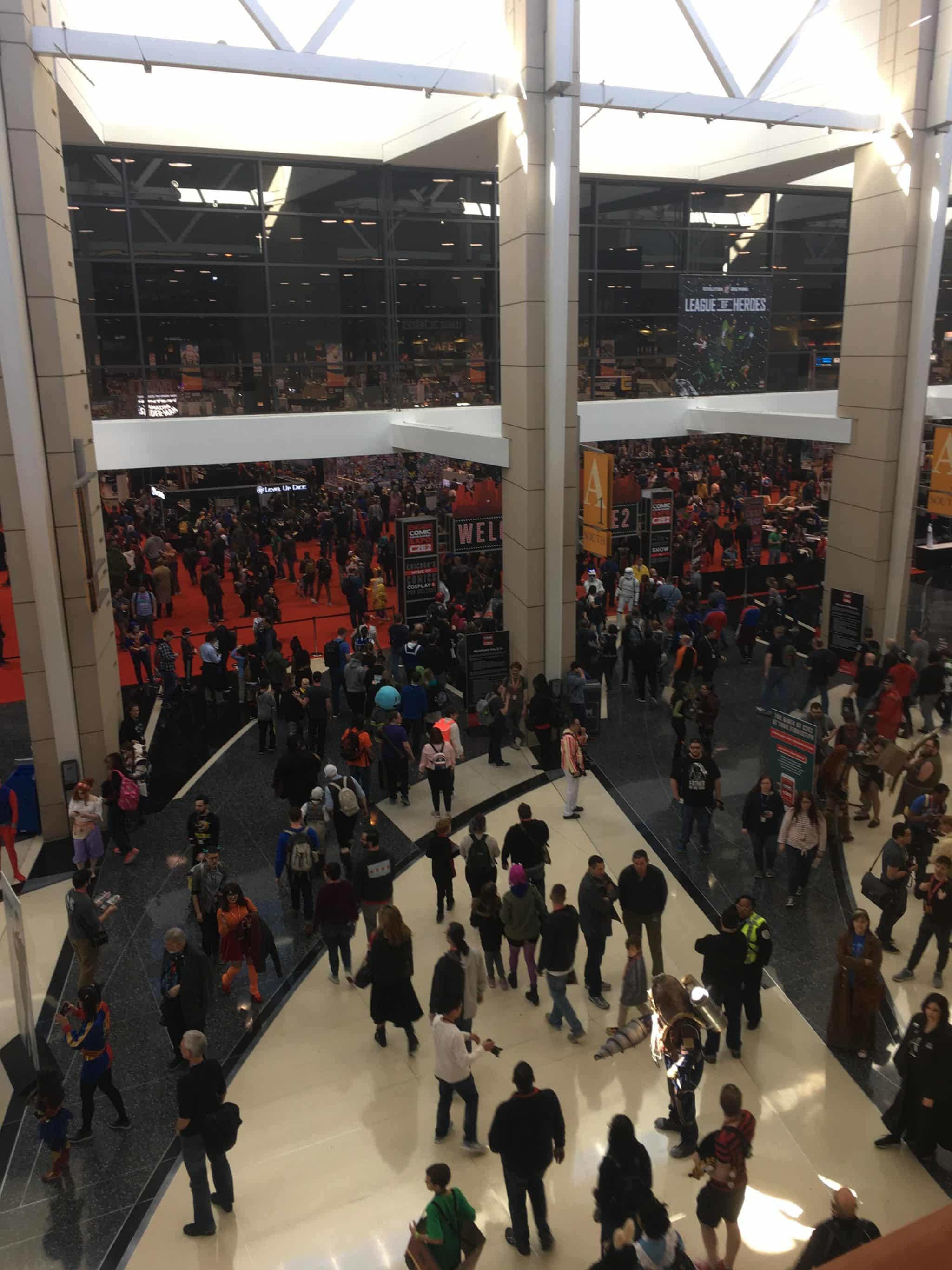
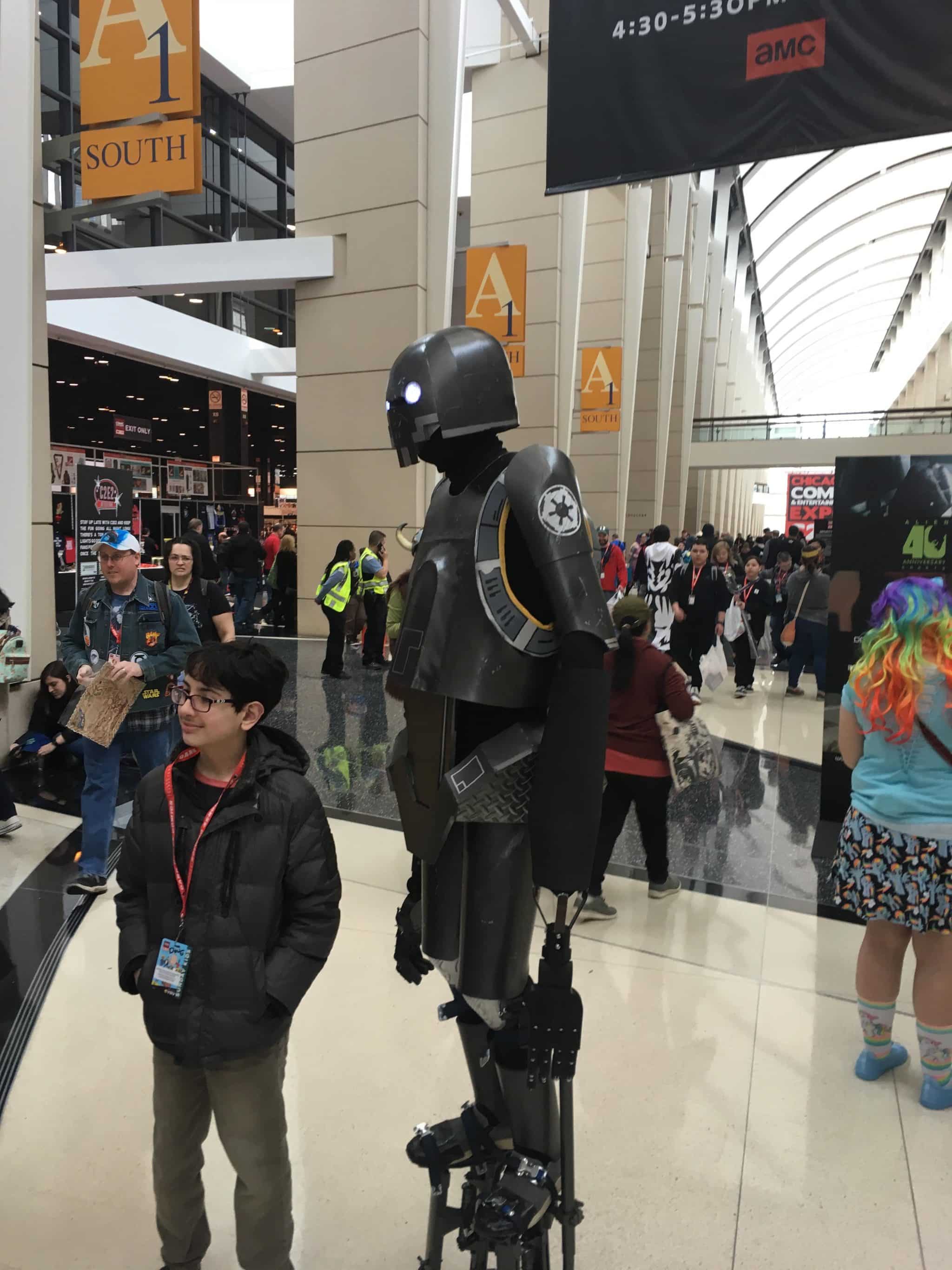
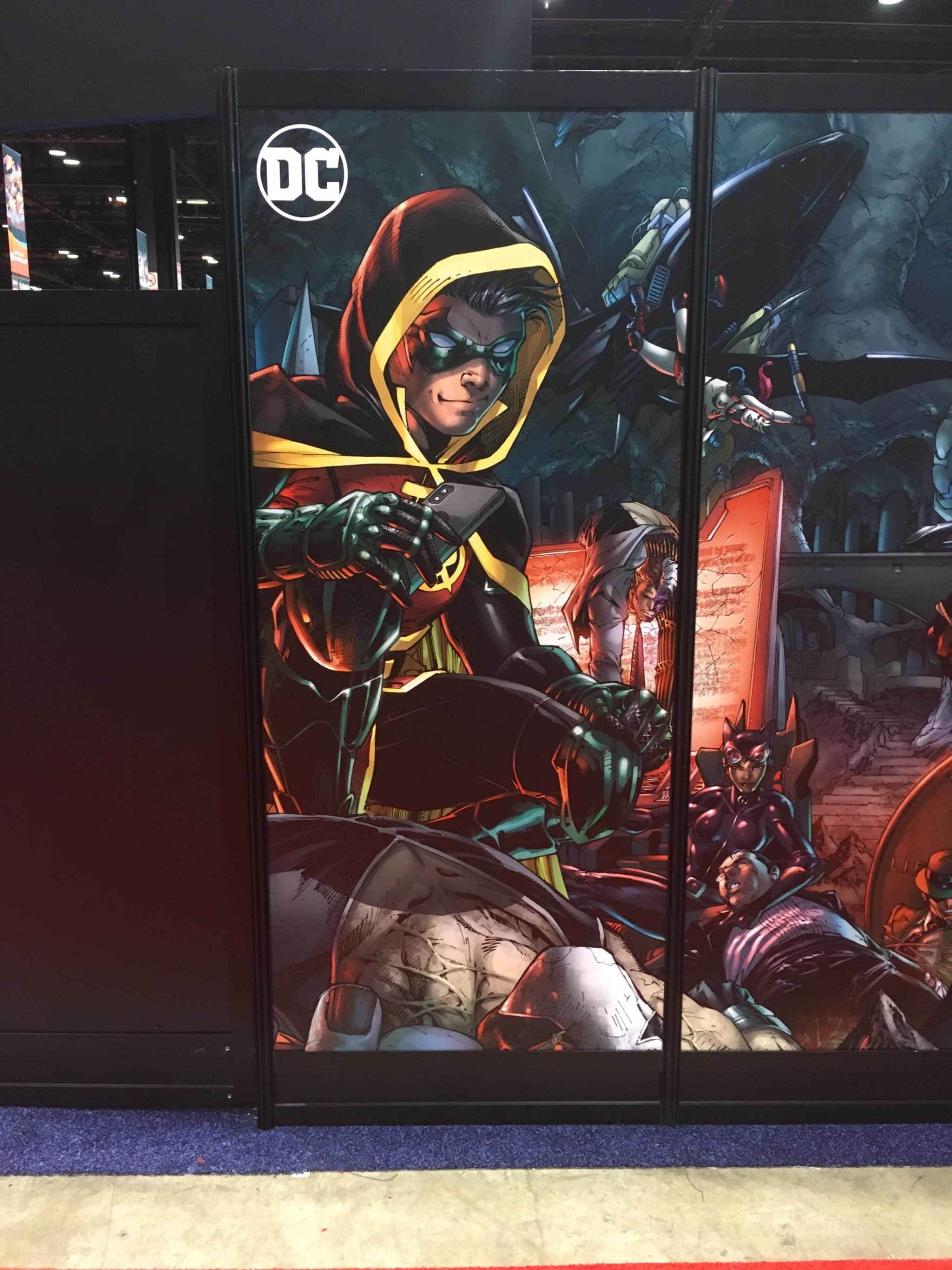
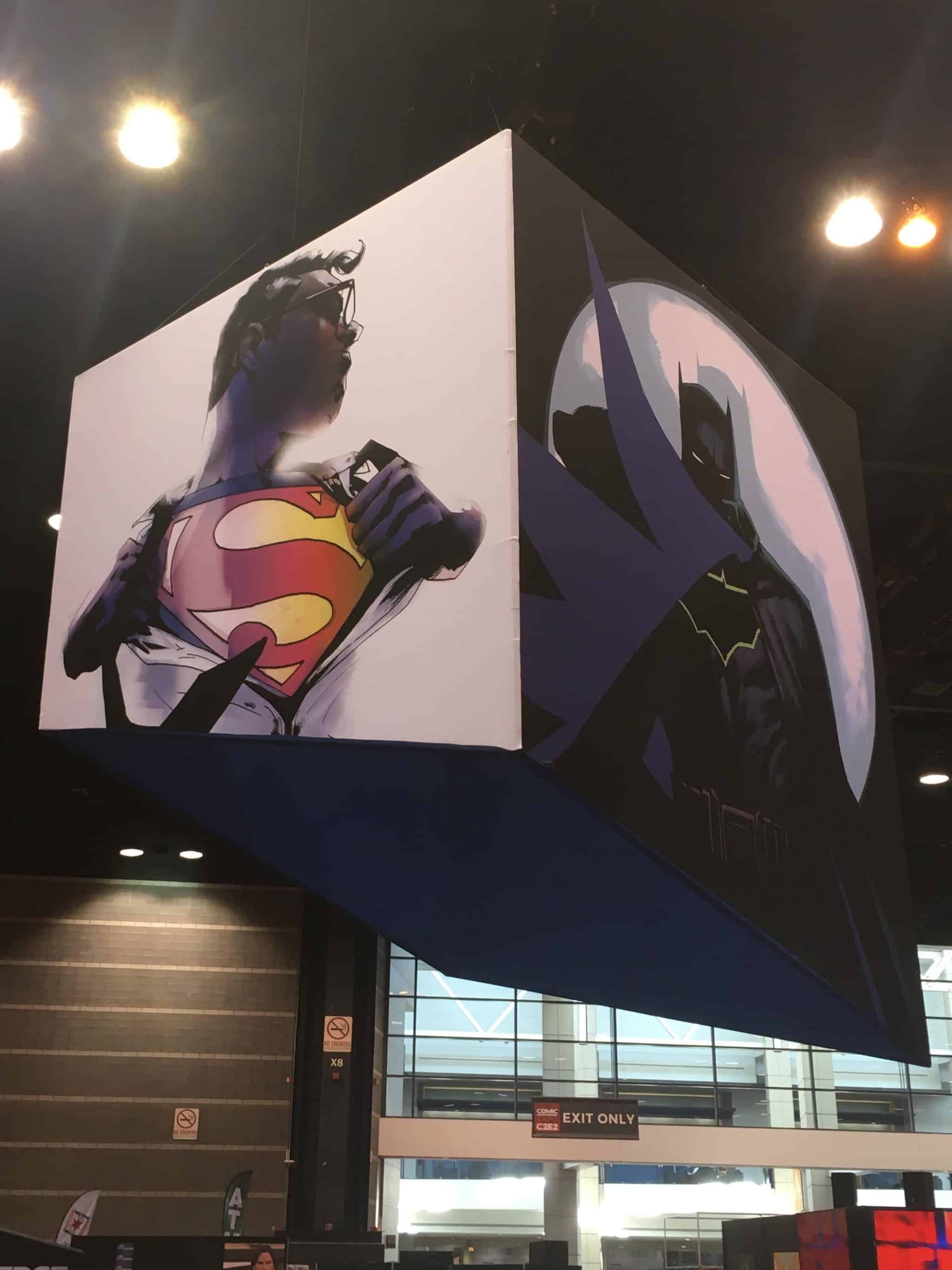
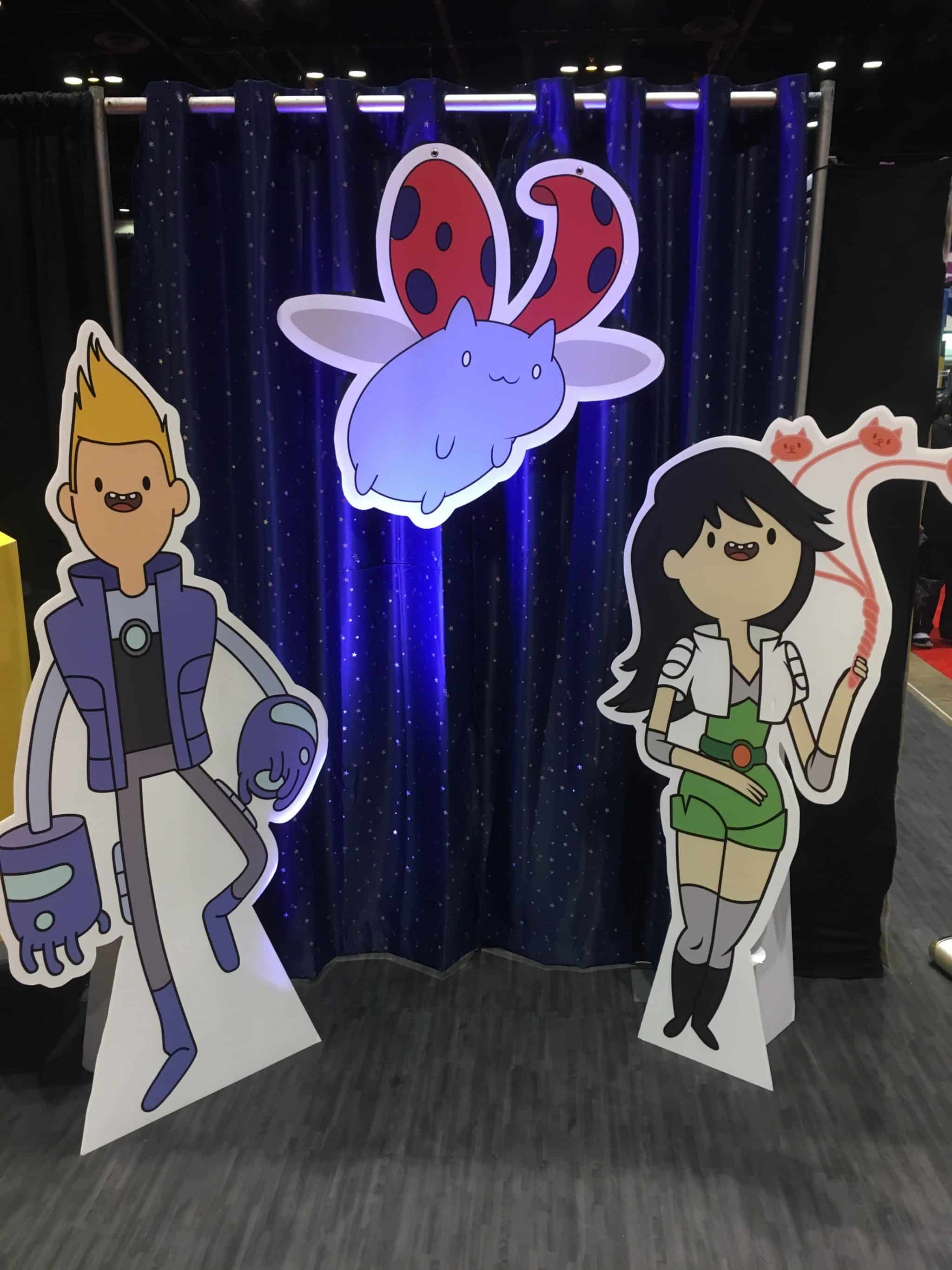
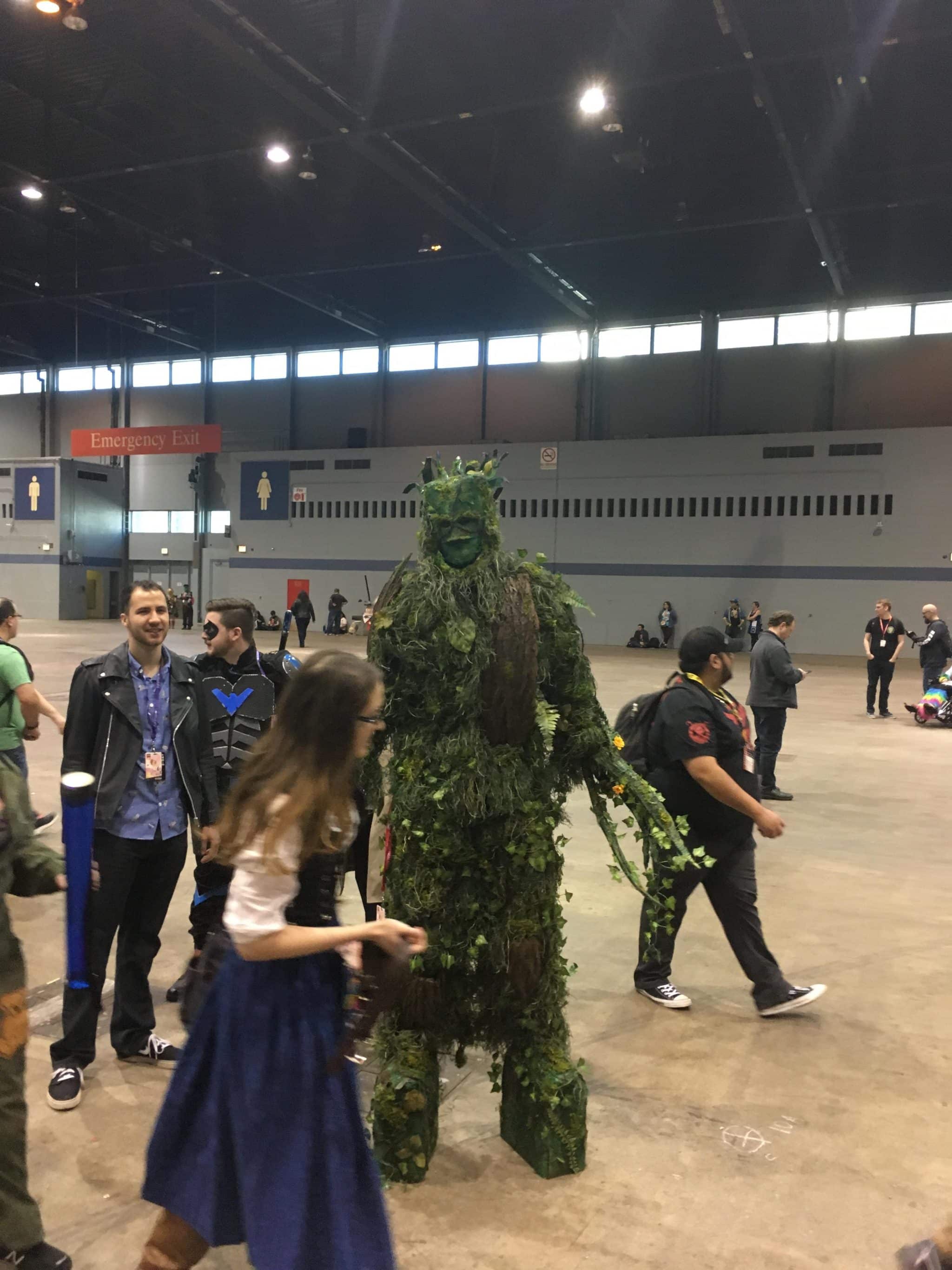
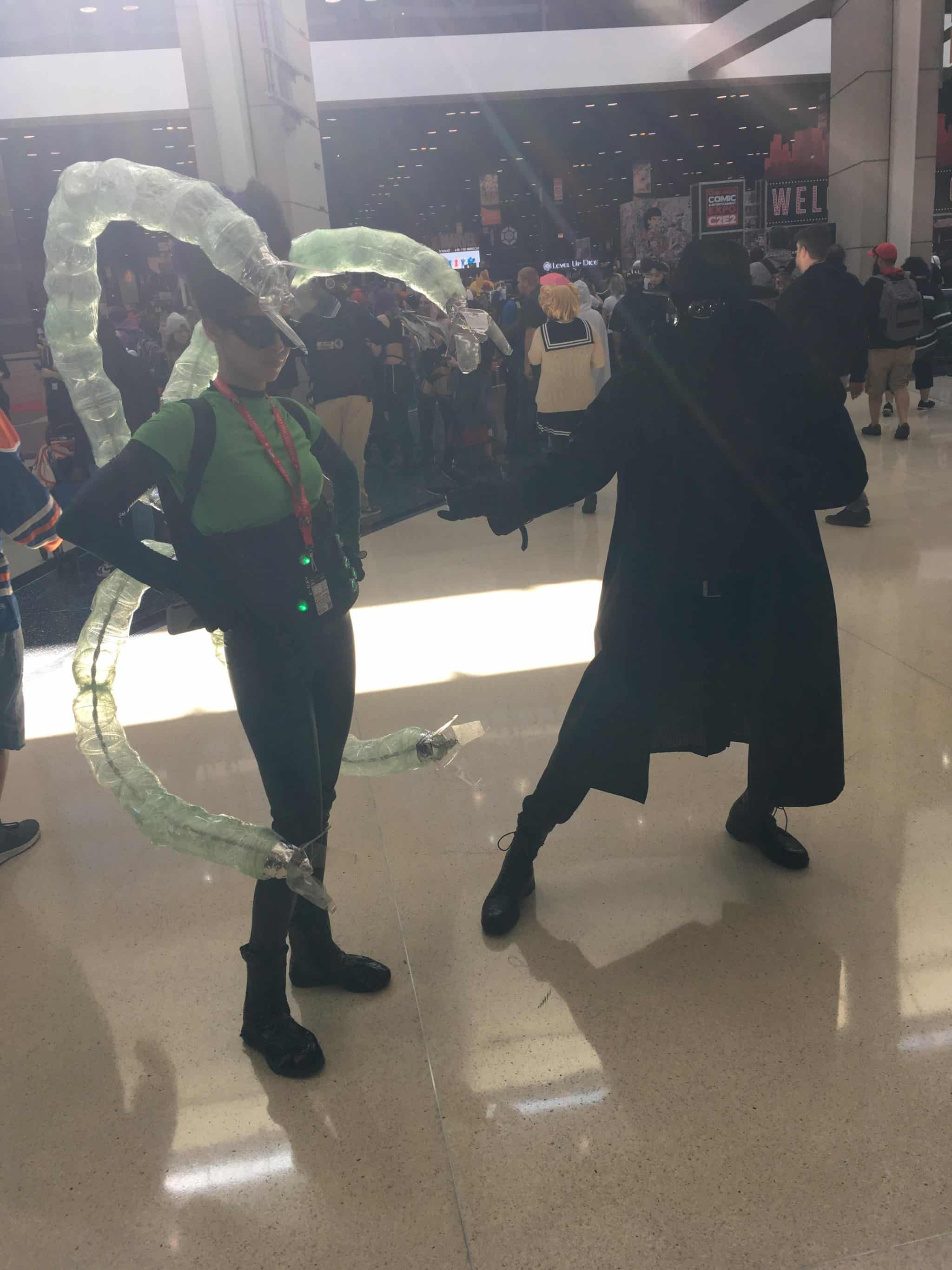
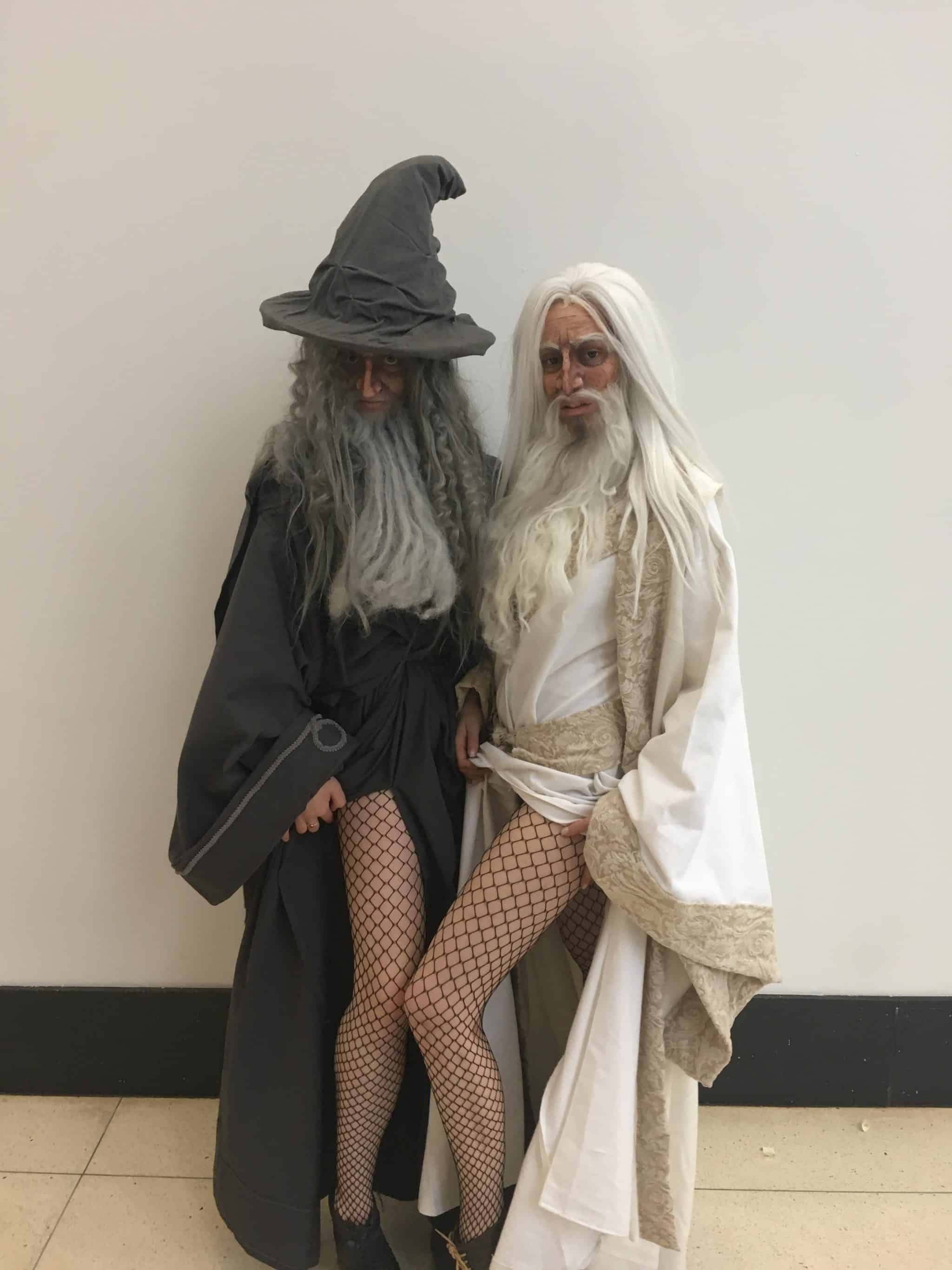
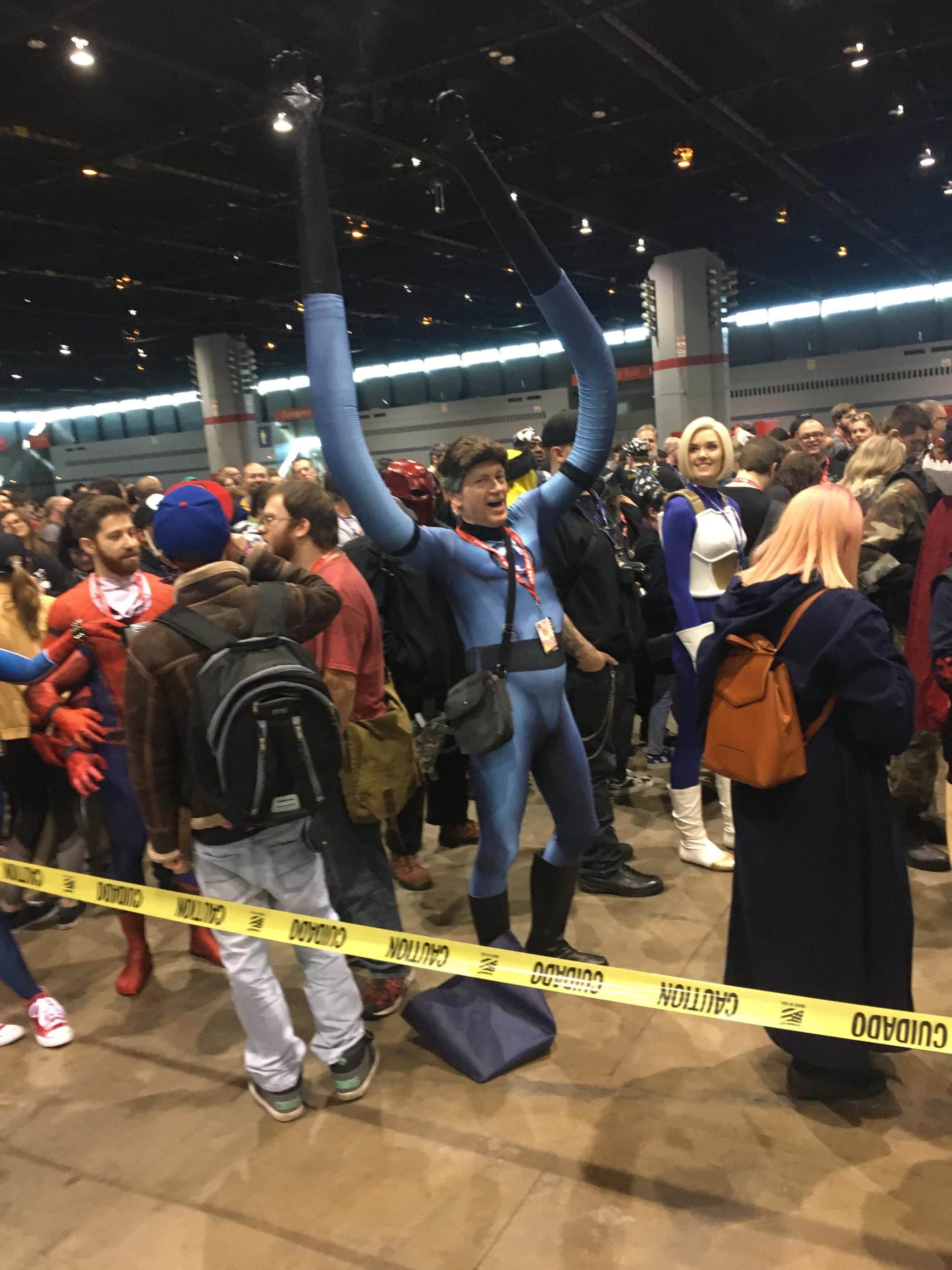
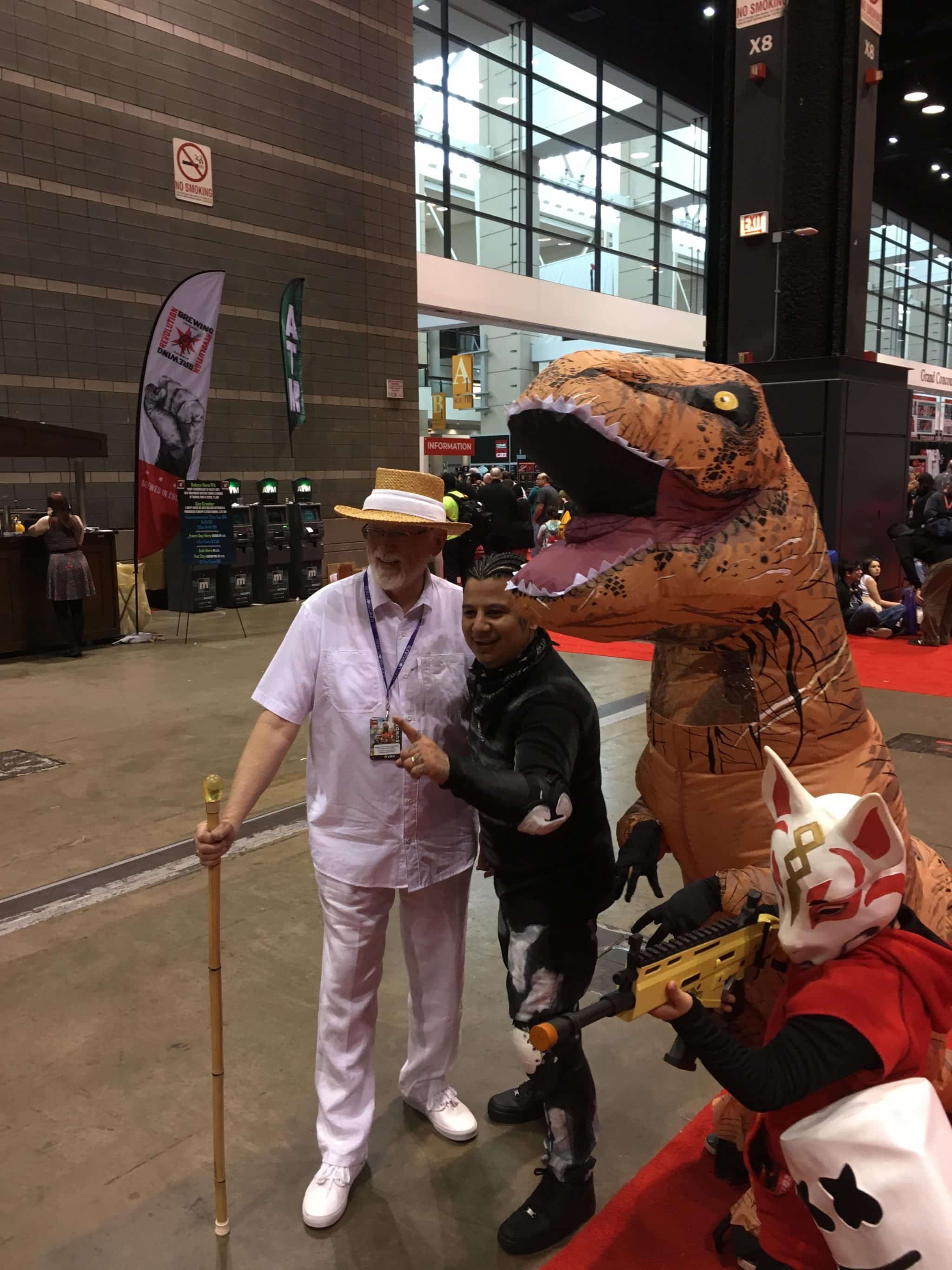
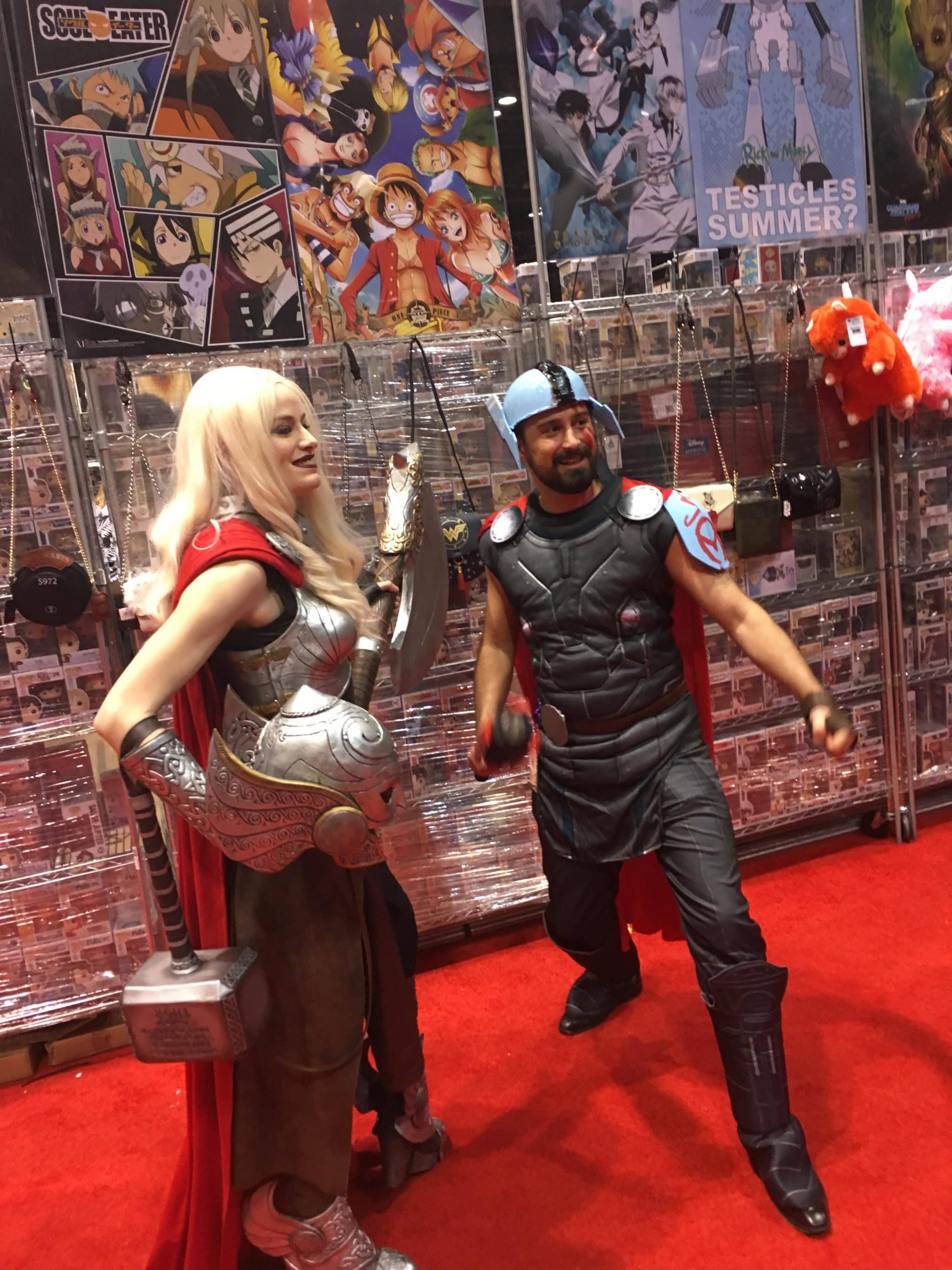
When I entered C2E2 (early for once) on Satuday, I was greeted by a dancing Mr. Fantastic and a Swamp Thing chilling out with a John Constantine (Sadly no Alan Moore.) and knew that 2019 would be yet another great year for cosplay at this convention. The Academy Award winning Spider-Man: Into the Spider-Verse seemed to have a huge influence on this year’s cosplayers with lots of dads aka Peter B. Parkers, Miles Moraleses, Spider-Gwens, and Spider-Man Noirs walking around. Without further ado, here are some the cosplayers and cool booths from C2E2 this year.

At C2E2, I also had the opportunity to attend the Clueless reunion panel that featured a capacity crowd and appearances by Breckin Meyer (Travis), Donald Faison (Murray), Alicia Silverstone (Cher Horowitz herself), and Paul Rudd (Josh), who made a big entrance and bragged about having all the spoilers to Avengers: Endgame. Here are some pictures from this panel. It was a showcase for Meyer’s wit and hijinks as he got down on one knee and proposed to Faison, Rudd’s enthusiasm as he geeked out about Tim and Eric and Depeche Mode, and an opportunity for Silverstone to relive how much work she put into being in almost every scene of Clueless and her appreciation for Emma, the Jane Austen novel that inspired it.

Review: Broad City S5E9 Along Came Molly

Broad City’s penultimate episode “Along Came Molly” is a fantastic tribute to the show’s first season courtesy of writer Eliot Glazer and director Abbi Jacobson. Sure, the Lil Wayne concert is a little on the nose, but the Craiglist references are a clever as hell callback to when Broad City showed it was weird, hilarious, and here to stay in the pilot “What A Wonderful World” where Abbi and Ilana make money by cleaning a diaper wearing Fred Armisen’s apartment. The Easter Eggs are definitely fast and furious in this episode, and the wacky hijinks are turned to eleven as Abbi and Ilana do molly for the first time. However, the drug acts like a kind of truth serum that illuminates their relationships as well as unlocking their twerking and extended Die Hard tribute abilities.

“Along Came Molly” starts off its exploration of Broad City past and present in its cold open. Abbi and Ilana are crossing off “bucket list” items that Abbi wants to do before leaving New York that are mostly touristy things like the Staten Island Ferry and placing a rose on John Lennon’s grave in Central Park. Jacobson doesn’t go full Manhattan with her directing, but she definitely captures some stylish, if cliche vistas. However, this tender homage to touristy places in New York is undercut by Ilana rattling off bad things that have happened in these places like the wrongful conviction of the Central Park Five and New York itself being bought for $24 from its indigenous inhabitants. These quips from Ilana show that Broad City has turned into a socially conscious and self-aware show in its last two seasons while still retaining his wacky sense of humor.

“Along Came Molly” also acts as an extended farewell to Bevers, the mooching, disgusting boyfriend of Abbi’s never seen on camera roommate, Melanie. He was the worst part of the show in Season One, but John Gemberling channeled more of his adorable with hidden depths side in later seasons to make him a solid supporting character even if he’s no Jaime or Lincoln. And he’s a real comedy MVP in this episode coordinating Abbi’s furniture sale and then dropping the bombshell that he and Ilana have kissed and also have a special high five. He gets to be in the final shot of the episode as Jacobson sets up a reveal of Melanie, but it’s really a delectable character beat that shows that Bevers’ defining character trait has been being too much.

While Broad City Season 5 has been all about growing up and change with Ilana going to grad school and Abbi finally pursuing her artistic dream in Boulder, Colorado, “Along Came Molly” lets the girls regress a little bit. It also is an opportunity for Jacobson and Glazer to turn in some energetic, physical comedic performances. This is all the result of taking Molly (from Craiglist) after they are kicked out of the aforementioned Lil Wayne concert because they’re tickets are fake (And from Craigslist.) This leads to them having their own fun like crawling around in a ventilation shaft with a lighter that is both super tense and plain random and refreshingly free of any surprise Bruce Willis cameos.

The result of the drugs isn’t some big animated sequence like Season 4’s “Mushrooms”, but Ilana and Abbi realizing they’re codependent, or Li’l Codies. (Bingo Bronson does make his triumphant return down the road.) They have been helpful to each other some regards (Like Abbi realizing she has a great ass), but also have been holding each other back a little bit. Like the whole not really having any friends other than each other part. Jacobson and Glazer’s acting is both vulnerable and emphatic in this scene, and Jacobson does a fantastic job cutting a back alley dance sequence to “A Milli” and bringing us back to 2007.

Abbi and Ilana have grown a lot as characters in Broad City Season 5, but hey, they can still have a good time as evidenced in “Along Came Molly”. The penultimate episode of the series is a love letter to the more irresponsible days of 2014 and Season 1. On a more personal note, it brought me back to a dorm room five years ago when I discovered Broad City because I was too lazy to change the channel after Workaholics was over and fell in love with these funny and relatable as hell girls, Ilana Wexler and Abbi Abrams and then their actor/writers/creators Ilana Glazer and Abbi Jacobson.

Overall Verdict: 9.7

Six Awesome Things Happening at C2E2 2019

On March 22 to March 24, 2019, Chicago Comics and Entertainment Expo (C2E2) celebrates its tenth anniversary in style. This is going to be my fourth year at C2E2, and one thing that I love about the show is its merging of different strains of pop culture into a fun experience. For example, you can get an autograph from the ageless actor/Ant-Man Paul Rudd, then hurry over to Artist’s Alley and meet a comics legend like Chris Claremont or George Perez or your favorite webcomic artist, and then wrap up things up with a beer at the Revolution tent. Whether you’re into comics, cosplay, films, TV shows, or all kinds of gaming, C2E2 really has it all.

Here are six fun things to do at C2E2 during the three days of the show at McCormick Place.

6. Try Out Some Escape Rooms (Friday-Sunday)

Unfortunately, there’s no “Escape from Being Crushed by Quarter Bins with Unsold, Polybagged Copies of Death of Superman”, but C2E2 does offer two fun Escape Room experiences if you want to get away from the hustle, bustle, and lines of the con and solve some puzzles in a mindbending environment. There are two Escape Rooms at C2E2: one is “Detention: Escape from the Cursed High School”, and the other is “Secret Aboard Starship Atraeus”. Each room has multiple endings, a 45 minute time limit, and mysterious elements like ghostly spirits and potential freaky aliens. Spots are filling up so book your escape room ASAP!

5. C2E2 Cinema (Friday-Saturday)

Sponsored by The Logan Theatre, C2E2 Cinema offers free movie screenings for anyone with a convention badge on both Friday and Saturday night. Friday’s movies are Teenage Mutant Ninja Turtles (1990) and the timeless classic Princess Bride followed by Wayne’s World and Fritz Lang’s Metropolis. As if that wasn’t enough, Saturday’s movie is Clueless, and there’s also a 1990s themed pre-party with a costume contest. You can go from dropping the big bucks on Alicia Silverstone, Paul Rudd, Breckin Meyer, and Donald Faison’s autographs and attending their Saturday reunion panel to watching them in their heyday on the big screen.

Image result for clueless movie

4. Clueless Reunion Panel (Saturday)

Clueless is one of the greatest Jane Austen adaptations of all time and really encapsulated the various looks and attitudes of the mid-1990s. (Full disclosure: I watched it on my 21st birthday intoxicated with a British grocery store cake in my lap.) Alicia Silverstone, Paul Rudd, Breckin Meyer, and Donald Faison are all attending C2E2, and if you can’t get their autograph, this panel is opportunity to soak in some 90s nostalgia and not harass Mr. Rudd with questions about Avengers: Endgame. Also, this panel is secretly a partial reunion of the late, great boy band DuJour fromJosie and the Pussycats.

3. Marvel Next Big Thing Panel (Saturday)

So, some rumors/house ads have been going on around that Jonathan Hickman is making his triumphant return to Marvel Comics for his first new series after 2015’s Secret Wars. Hickman is a master of the long form epic/event with his work on titles like Secret Warriors, Fantastic Four, and New Avengers, and I’m excited to learn what his next saga will be. (I hope Leonardo da Vinci is involved.) You can find out more information about his work and fellow writer, Jason Aaron (Thor) at Marvel’s Next Big Thing panel. Marvel’s Editor-in-Chief C.B. Cebulski will also be there so you know they mean business, and there will be some announcements about the House of Ideas’ summer slate of books.

2. AMC’s NOS4A2 Screening (Saturday)

Some of the best TV shows of all time, like Breaking Bad, Mad Men, and the criminally underrated Halt and Catch Fire, have aired on AMC, and the supernatural horror drama NOS4A2 might be their next big hit. It’s based on a novel by Joe Hill and is about an artist named Vic McQueen (Ashleigh Cummings), who has the power to track a mysterious immortal named Charlie Manx (Zachary Quinto). Manx is up to no good and feeds on children whose souls he places in a messed up world called Christmasland, where every day is Christmas. Fans at C2E2 will have the opportunity to see the first episode of NOS4A2 early before it airs on AMC on April 30.

HOLLYWOOD, CA – JANUARY 30: (L-R) Marv Wolfman, Carrie Bernans, George Perez and guest arrive for Excelsior! A Celebration of The Amazing, Fantastic, Incredible and Uncanny Life Of Stan Lee at TCL Chinese Theatre on January 30, 2019 in Hollywood, California. (Photo by Gabriel Olsen/Getty Images)

1. Marv Wolfman and George Perez: In Conversation (Sunday)

George Perez recently announced a well-earned retirement from creating comics and attending most conventions (Except DragonCon and FetishCon). So, C2E2 is one of the last opportunities that fans have to meet the artist of New Teen Titans, Avengers, and Crisis on Infinite Earths, not to mention once the nicest people in comics. This panel with long time collaborator, Marv Wolfman, who was also responsible for co-creating Blade and Bullseye, should be interesting to attend as two legends reflect on their legacy and swap war stories of 40+ years in the comics industry.

Review: Broad City S5E8 Sleep No More

One’s early and late twenties (And let’s throw 30 in there for good measure.) is a time of great change. But this change can be difficult, and this difficulty and the emotions that follow are the core theme of the Broad City episode “Sleep No More”. The episode gets its name from Sleep No More, an immersive theatre experience in New York where you walk around a film noir type space in an old building and see a silent version of Shakespeare’s Macbeth.

The eerie setting of the theatre is a fantastic backdrop for director Lucia Aniello to do some atmospheric filmmaking while chronicling Abbi telling Ilana that she’s moving to Boulder, Colorado to do an art residency. “Sleep No More” is penned by Ilana Glazer, and she gets to put Ilana and Abbi through the paces of awkward comedy, melodrama, earnest drama, and utter farce that is the Abbi/Ilana breakup.

“Sleep No More” also addresses the enduring pop culture trend of TV sitcoms wearing out their welcome and resorting to tricks, like weird new characters or playing off the same dynamic over and over again until the ratings get too low and cancellation happens. (Or doesn’t in the case of The Simpsons.) Abbi and Ilana are fun characters, and many fans of Broad City would love to watch them to go on hilarious, random, and sometimes surreal adventures in New York. And this is what the character of Ilana wants to do, and you can tell by the puppy dog look that Glazer puts on every time that Abbi mentions a possibility of staying.

However, human beings are not never aging yellow people. They change, grow, and want to find fulfillment, which is something Abbi isn’t finding in New York right now. Between Ilana’s destruction of Sleep No More props, Abbi gives her reasons for moving that include not having to clean human pubic hair (Shout out to Soulstice!) or dispose smelly leftover food from catering gigs and just focus on art. And Ilana can visit her via a very complicated, two layover flight or FaceTime her. However, in the moment, she doesn’t get this.
In “Sleep No More”, Glazer gets to act pure rage and showcase the darkest parts of her character that are used kept down beneath “Yas queens”, flashy outfits, and performative wokeness. She isn’t reasonable when Abbi talks about going to Boulder, but goes absolutely apeshit and can’t fathom a world where she’s without Abbi. And, on the other side, Abbi tells her that she’s her only friend so she has to go through a brave new world as well.

Lucia Aniello and Glazer get to mine a vein of deep sadness after Sleep No More happens as Ilana gives Abbi a handshake before she leaves for her apartment and finds out her new roommate has new Great Danes named Jay-Z and Beyonce. It’s sadness all around, but the actual ending of the episode is hilarious and a great callback to Ilana and Abbi’s bathroom FaceTimes throughout the series. Maybe, things will be okay for them over the next two episodes of the city, but their lives will be very different.

You can almost feel Glazer and Jacobson coming to terms with ending their hit sitcom that started out as a scrappy webseries and became a pop culture phenomenon through this episode. They have bright futures as actors, comedians, writers, directors, Jacobson as a visual artist, and as talented human beings, but “Sleep No More” gives viewers a sad reminder that all good things, including iconic comedic pairings running through New York, must come to an end or end up doing nuanced, dramatic performances like on this episode. And, honestly, it’s for the best in a world where thousands flocks to arenas to watch KISS lip sync their greatest hits to name one particularly pathetic example off the top of my head.

Overall Verdict: 9.0

« Older Entries Recent Entries »