Author Archives: Logan Dalton

Messages from Midgard #6: Cute Baby Laussa

The “War of the Realms” takes a break this week from the main heroes and blockbuster trappings to tell smaller, quirky stories that are varying degrees of fun. The McElroys bring the road trip banter in War of the Realms: Journey into Mystery #2, and Andre Araujo gets to take a break from advanced technology and gory fight scenes to be a humor cartoonist. War of the Realms: New Agents of Atlas #1 is one of the first tie-ins to remember that this event has a global scope, and Greg Pak and Gang Hyuk-Lim introduce Marvel’s first Filipina hero, Wave, although the story comes apart at the seams sometimes. I tip my hat to Pak and Lim for introducing more Asian heroes to the main Marvel Universe, and hopefully we get to hear for them after three issues. And Unbeatable Squirrel Girl continues to be a sweet cinnamon roll of a comic that I hope Marvel never cancels. (Thank you Scholastic book club marketing!)
War of the Realms: Journey into Mystery #2

With the boring team assembling part out of the way, the McElroys, Andre Araujo, and colorist Chris O’Halloran are free to write and draw road trip hijinks after a quick prelude showing why Ares is working for Sindr and after Thor’s baby sister, Laussa. The McElroys settle into writing this truly odd assortment of characters in Journey into Mystery #2, and honestly, I could read a whole ongoing series of them traipsing through the Marvel Universe and arguing about personal space, the fact that no one on the team can drive except Kate Bishop (Kudos to Miles Morales for doing driver’s ed next semester though.), and Thori being fierce.

The McElroys and Araujo don’t force a fight with Ares just yet and have the team stop at “Bide-A-Wee” trailer park because, again, no one except Kate Bishop can drive. Araujo draws the denizens of the trailer park in a stiff manner like they’re pretending to be human. This makes sense because they are actually Skrulls. (Of course, the McElroys use this fact to get in some licks at Secret Invasion.) And, then, there’s the requisite action scene that Araujo and O’Halloran make fun with some creative shapeshifting and pink arrows for Kate. However, the sequence is resolved in a very un-War of the Realms way. But what do you expect from a creative team that made changing a dirty diaper both hilarious and suspenseful.

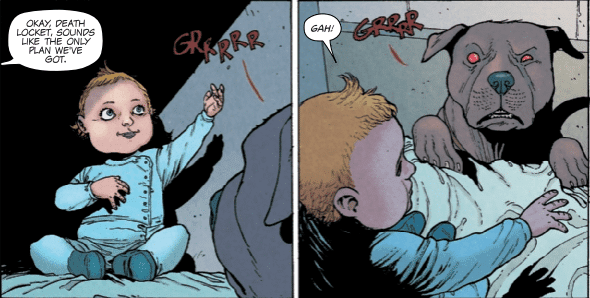
If we had to fight a War of the Realms to get this fun buddy road trip story from the McElroys and Andre Araujo, it will have been worth it. This comic definitely feels like it was written by a bunch of guys who have probably been in enclosed spaces with each other for a long time whether that’s childhood road trips or doing live podcast shows for rabid fans. Throw in a sense of wonder, humor, and love for cute babies interacting with Helhounds, and Journey into Mystery #2 an overall verdict of Buy.
War of the Realms: New Agents of Atlas #1

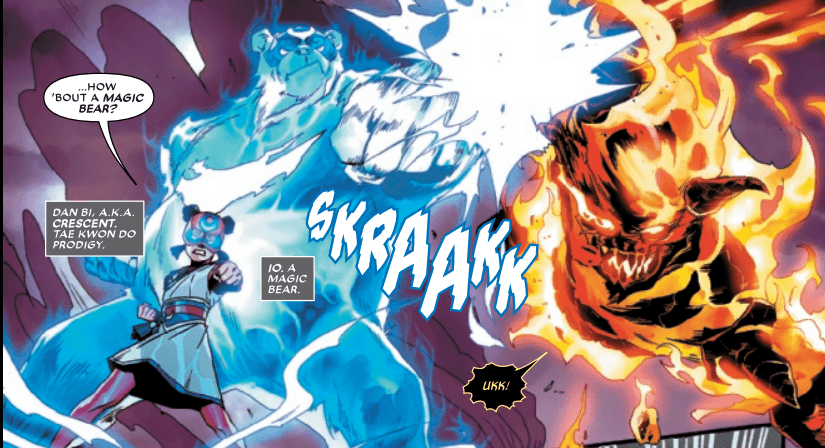
Through his elevation of Amadeus Cho to the Hulk and especially a four issue arc of Totally Awesome Hulk where Cho teams up with other Asian-American superheroes, Greg Pak has used his clout as a writer to push for more Asian and Asian-American superheroes in Marvel Comics. He and artist Gang Hyuk Lim turn that up to eleven in War of the Realms: New Agents of Atlas #1, which features appearances from Marvel’s first Filipina hero Wave, the Chinese hero Aero, and Korean heroes Crescent and Io and Luna Snow, who were popular in the Marvel Future Fight mobile game and make their first comic appearance here. It’s cool to see these characters and their unique abilities get the spotlight, but Pak struggles to juggle such a large ensemble cast in one issue. Lim’s art is also fairly pedestrian even though there are pops of color from Federico Blee like when Crescent sics his magic bear Io on some Fire Goblins.

In New Agents of Atlas #1’s back matter, Pak says that he wanted to use the book to explore the “diversity within diversity” having Asian and Asian-American from different countries and backgrounds interact while defending the continent from Sindr and Fire Goblins. And he pulls this off in one fantastic scene where Jimmy Woo, the leader of Agents of Atlas, asks Amadeus Cho, Kamala Khan, Silk, and Shang Chi what kind of pear he’s holding. Depending on their background, they say it’s a Korean, Chinese, or Japanese pear because Kamala has only seen that kind of pear at the Japanese grocery.

However, the lesson is that the kind of pear doesn’t matter, and Woo says that the important thing is that they work together as a team. They proceed to not do this with Kamala and Amadeus constantly bickering about some Champions business, which leads to their plane crashing outside Seoul and a fight against the Korean superheroes, not Sindr’s forces. Pak and Lim nail Amadeus Cho’s egotism as he flexes his muscles and showboats throughout the comic and impetuously launches himself into battle without regard for his teammates. However, the scene where the newly minted Agents of Atlas fight the Korean superheroes is very rushed as White Fox immediately assumes that Amadeus Cho is bad because he had a Hulk incident a while back. It’s a good illustration of the pointless drama that gets in the way of teamwork, but with an emphasis on the “pointless” part.

Luna Snow, who Silk fangirls over because she’s a hero and a K-Pop star, Crescent and Io, and a cool surprise character have visually distinct abilities, but Gang Hyuk Lim is too married to the Marvel house style to really let them shine. This is a book that could have used the stylized touch of a Takeshi Miyazawa, who collaborate with Greg Pak on his creator owned comic Mech Cadet Yu, or David Lafuente. With its introduction of new heroes and soapy team dynamic, New Agents of Atlas has tantalizing potential even if this first issue doesn’t completely deliver so it earns the Overall Verdict of Read.
Unbeatable Squirrel Girl #44

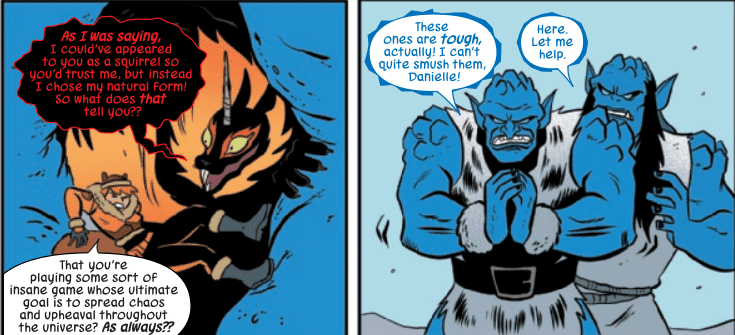
Arguably, the best “War of the Realms” tie-in continues as writer Ryan North, artist Derek Charm, and colorist Rico Renzi have Squirrel Girl team up with Ratatoskr, the Norse squirrel god of chaos against Frost Giants and then frighten the citizens of rural Alberta. North and Charm do a good job laying out Ratatoskr’s motivation as she sees that Malekith ruling all ten realms would lead to conformity and boredom, which is the opposite of chaos. So, she’s fighting Frost Giants although in a flashback, she did give a thumbs up to Mangog, the destroyer of Asgard. Unbeatable Squirrel Girl #44 is really an exercise in ethics as Ratatoskr tries to cross lines, but Squirrel Girl holds her back and tries to keep everything even kneeled. However, this backfires.

Like every issue in this series, Unbeatable Squirrel Girl #44 is a dense comic filled with jokes, extended riffs, footnote jokes, and kick-ass fight scenes. What could have been just a simple fight between Squirrel Girl and two Frost Giants ends up with Ratatoskr giving an update on what she has been up to over the past 30 issues or so while imprisoned in Asgard as well as some jokes about how Frost Giants see humans as action figures and superhumans as rare ones. They’re still looking for the rare action figures with kung fu grips though.

Once the Giants go down, North and Charm go into full fish out of water mode with Ratatoskr, who is trying to blend in with the locals, but ends up as a femme fatale in rural Canada and does not pass for human. She has great fashion sense, and North and Charm get to sneak in jokes about video game palette swaps, Sailor Moon, and draw a squirrel ear wearing Spider-Man costume while she picks her look. Also, in her interactions with the regular folks of Alberta, she chooses the chaotic option over the safe one and ends up getting in random guys’ faces. This scene also illustrates the classic principles that humans hate and fear what they don’t understand as the Albertans turn on Squirrel Girl and Ratatoskr, once they realize that “they’re not from around here”.

Ryan North, Derek Charm, and Rico Renzi seem to be having a hell of time combining Squirrel Girl’s morality and empathy with Ratatoskr’s penchant for chaos and manipulation. It’s an instant source of drama and mischief and gives Charm the chance to draw “resting evil face”. Also, for its dedication to fun, good comedy, complex baddies, adorable art, and expressive, flat colors, Unbeatable Squirrel Girl #44 gets an overall verdict of Buy.


Although the quality of this week’s three comics does fluctuate, Journey into Mystery, New Agents of Atlas, and Unbeatable Squirrel Girl use the backdrop of “War of the Realms” not as a crutch, but as a freedom to tell road trip, Asian superhero team-up, and odd couple stories. Frost Giants are coming through portals so why not bring back the entertaining villain Ratatoskr from a few years back to mess with Squirrel Girl and use her divine abilities to troll mere mortals. A book like New Agents of Atlas could use its own series to build up the new characters, but Journey into Mystery and Unbeatable Squirrel Girl uses the events of “War of the Realms” as jumping on points for comedic misadventures. This week is a breath of fresh air after all the melodrama, gore, and Frank Castleness of previous “War of the Realms” tie-ins.

Panel of the Week
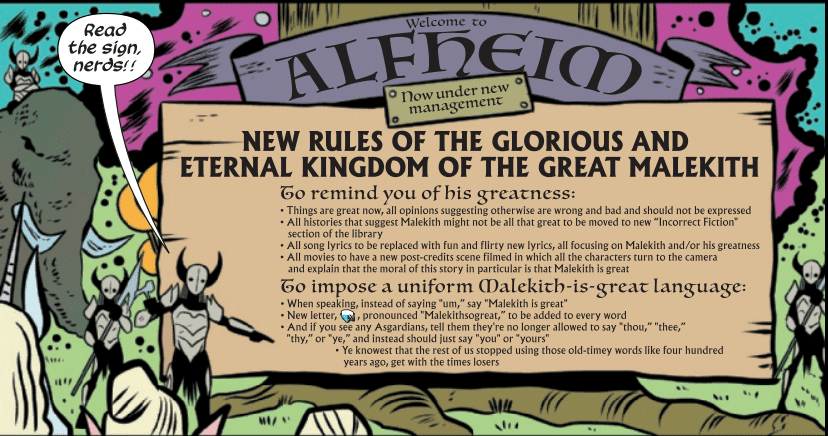
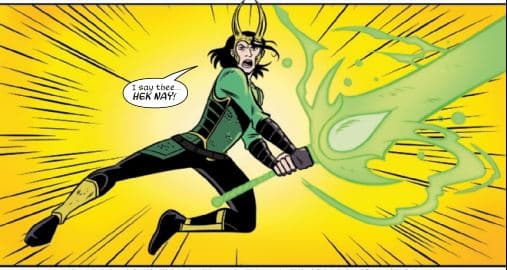
I don’t know what beef Malekith has with Shakespearean English. (Art by Derek Charm and Rico Renzi from Unbeatable Squirrel Girl #44.)

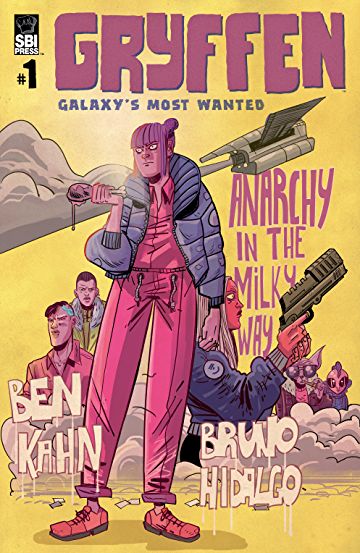
Review: Gryffen: Galaxy’s Most Wanted #1

Gryffen: Galaxy's Most Wanted #1

Ben Kahn, Bruno Hidalgo, and coloring assistant James Penafiel are back with some yummy, fun, and ultraviolent sci-fi as Captain Lyla Gryffen busts out of the prison hold of genocidal space fascists with the help of Elf and resistance fighter Telika and scientific genius/fuck buddy Elliot Dao. It’s space pulp adventures retrofitted for our era of hypercapitalism and white supremacy like Rick and Morty if it had a social conscience filled with equal takedowns of oppressive systems and shit blowing up.

The first page narration sets Lyla Gryffen as some legendary figure, and Kahn and Hidalgo ensure they live up to the legend by making Gryffen #1 all about cleverly breaking out of prisons and laying out their ideals about the world via quippy, eminently quotable dialogue about Bourbons, Bonapartes, the Industrial Revolution, and green Jello. Even though Gryffen is an action adventure narrative, it’s all about finding away to disrupt hegemonic systems instead of just the usual rebel alliance/blow up the small moon sized space station nonsense. Lyla wants to create a world where Admiral Thrawn, clones of the Emperor, and/or Yuuzhan Vong couldn’t rise to power after the second death Star through the power of science. But, also, violence.

Speaking of violence, Bruno Hidalgo’s art hits fever pitch when Lyla is kicking ass up and down the prison with Ben Kahn supplying them with one-liners about a no killing policy. Hidalgo and James Penafiel uses a red color palette to add intensity to the prison riot sequence, and Hidalgo’s uses big poses to draw attention to each action beat. The use of some old school motion lines are great for Lyla’s quick dodges and jabs and also builds up to a mad scientist’s wet dream of conclusion that oddly made me want to revisit the Halo franchise.

Other than the action with a side of political satire and emphatic artwork, Gryffen is a fun comic because of the interactions and chemistry between the three crew members, Lyla, Telika, and Dao. It’s a hotbox of cynicism meets idealism plus the fierce sexual attraction between Telika and Dao. Plus they love science a lot and think it’s the solution to everything, which leads to ingenious solutions, but also has bad side effects like the death cult that Dao influenced back in the day. The ideological clashes and riffing between Lyla, Telika, and Dao keeps the story going between fights, escapes, and chase sequences, and I look forward to learning more about cool scientists and seeing Lyla roast more 21st century Earth politicians.

Gryffen #1 is a sci-fi comic that is both immensely entertaining and sociopolitically relevant. Lyla Gryffen has plenty of attitude, and it seems like Ben Kahn is having the time of their life writing them. Throw in Bruno Hidalgo’s in-your-face colors and pulpy, gory artwork, and this is the summer punk rock sci-fi spectacular that you wish Hollywood had the balls to make.

Story: Ben Kahn Art: Bruno Hidalgo
Color Assists: James Penafiel Letters: Sal Cipriano
Story: 9.5 Art: 9.0 Overall: 9.3 Recommendation: Buy

Starburn Industries Press provided Graphic Policy with a FREE copy for review

Messages from Midgard #5: Cyclops Was Right

Halfway through the “War of the Realms“, and it looks like this is gonna be an event where the tie-ins were more memorable than the core story. War of the Realms #3 dropped this week, and it’s a treat to see Russell Dauterman draw, basically, the entire Marvel Universe including the Fantastic Four and Captain America’s cute little snow jacket for adventuring in Jotunheim. But, it’s just trailers for better, more interesting comics like Bryan Hill and Leinil Yu’s very longwindedly named War of the Realms Strikeforce: Dark Elf Realm #1 and Champions #5 where Jim Zub and Juanan Ramirez once and for all prove that, indeed, Cyclops was right. (But Ramirez’s trolls look like Skrulls, oops.)

War of the Realms #3

After two straight issues of various Marvel superheroes fighting various fantasy creatures, we get yet another issue of Marvel superheroes fighting various fantasy creatures. Sights that Jason Aaron, Russell Dauterman, and Matthew Wilson subject us to include Daredevil tripping balls and flirting with being an agnostic while having the power of the god of fear, Luke Cage riding a flying horse, Punisher wanting to blow up Ghost Rider’s car, and of course, Thor covered in blue Frost Giant blood. And there are jokes; so many jokes. However, with the exception of the Thor becoming a berserker part and a Venom plot point, the comic feels like a trailer for other comics, namely, the Strikeforce series of one-shots.

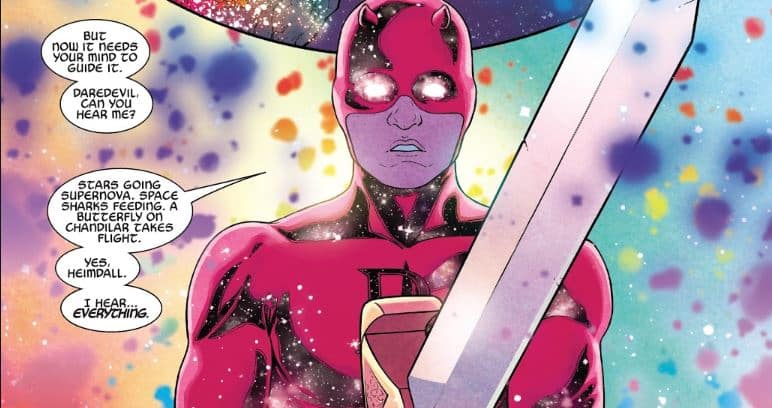
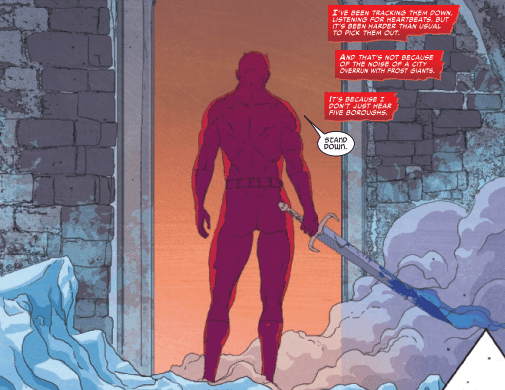
Jason Aaron did a fantastic job writing Daredevil in War Scrolls #1, and I was excited to see how he set up the Man without Fear’s transformation. Boy, was I disappointed. Heimdall makes a quip about about creeping on Daredevil while he was on Earth, there’s another joke about Catholicism, and then Daredevil is the God of Fear and defender of the BiFrost. The page where he gains godhood is very trippy with a Dippin’ Dots color palette from Wilson though even if his role is basically Asgardian Scotty from Star Trek until the BiFrost has to be destroyed for plot reasons.

This past weekend, Avengers Endgame showed that spectacular action could be combined with both continuity fun and character arcs. However, War of the Realms #3 is mostly just the spectacular action part with Aaron and Dauterman just moving pieces on the board. Sure, the comic looks cool, and there are some actually funny jokes (Spider-Man’s line about fighting with a shield). But it’s all fights and no substance or emotional tether even with Freya, who is written much better in the Dark Elf Realm one-shot. I also have some little quibbles with it like Captain America and Spider-Man being cool with animal cruelty, and Aaron’s portrayal of Venom not fitting in with Cullen Bunn and Iban Coello’s story for him. War of the Realms #3 is just a skeleton to be filled in with “meat” from its tie-ins so it gets the Overall Verdict of Pass.

War of the Realms Strikeforce: Dark Elf Realm #1

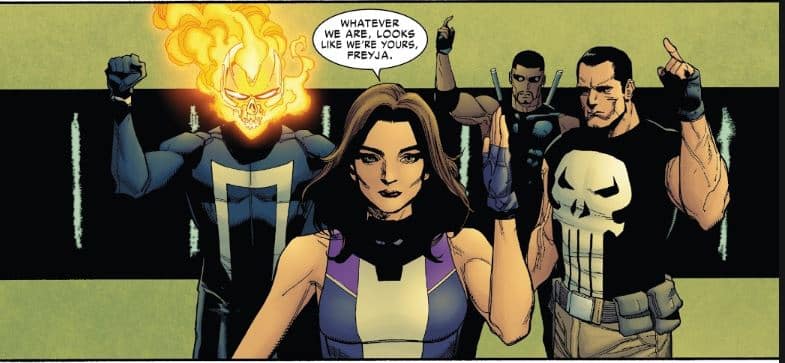
I thought this was going to be yet another Punisher fights Elves shoot ’em up fest. I was happy to be proven wrong as Bryan Hill proves the old Brian Bendis saying that conversations can be fight scenes, and Leinil Yu, Gerry Alanguilan, and Matt Hollingsworth bring grit and shadow to the art of War of the Realms Strikeforce: Dark Elf Realm #1. Basically, this shows how Freyja recruited Punisher, Hulk, Ghost Rider, and Blade to destroy and then defend the Black Bifrost adding context, depth, and resolution to the fight in War of the Realms #3. Along the way, Hill and Yu create some parallels between these heroes (and one not quite hero) and the Black Bifrost itself as they and Freyja embrace their shadow selves to get the job done.

In the space of a single one-shot, Bryan Hill, Leinil Yu, Gerry Alanguilan, and Matt Hollingsworth create some fantastic chemistry between the Punisher and Freyja. Freyja is afraid that she has to dip into the dark, sorcerous side of herself to defeat Malekith so she enlists a man who has been consumed by darkness and revenge to help her. Yu goes very stylized with Frank’s first appearance and in other scenes shrouding him in shadow as he has come to terms that he’s a monster fighting monsters.

This insight extends to the characterization of Jennifer Walters, Ghost Rider, and Blade as they fight their worst fears in powerful one page sequences that involves Jen punching Bruce’s Hulk in the heart, Ghost Rider headbutting Johnny Blaze while he tries to do a Penance Stare, and Blade fighting his older self, a vampire king. Yu uses close ups to give each final blow maximum effect and establishes that even though three of these characters are Avengers, they’re not afraid to act like a black ops team on this mission. But maybe Freyja isn’t ready, which is Frank comes in and talks about how they’re at war and must do everything to get victory.

Bryan Hill makes multiple cases for why he should take over a Punisher or Blade ongoing comic, or even a dark series set in Asgard as that realm (As shown in Aaron and Fraction’s Thor work and the Thor Ragnarok film.) was built on violence and war. He, Yu, Alanguilan, and Hollingsworth serve up dark, fascinating visions of characters (Except for Freyja.)who have been treated like jokes or action figures in the core War of the Realms series so Dark Elf Realm #1 earns an overall verdict of Buy.

Champions #5

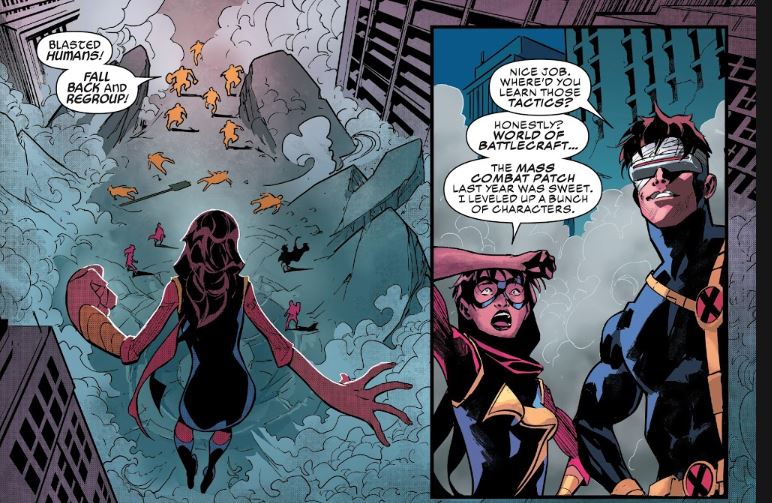
Jim Zub and Juanan Ramirez finally give Cyclops the respect he deserves in Champions #5 where he takes a break from the X-Men to defend New York with his younger self’s old superhero team, the Champions. Along the way, Miles Morales and Kamala Khan deal with the guilt of letting someone die on his watch and seeing friends and teammates drift away respectively. It’s an issue that is part introspective and part cartoon-y art from Ramirez as Cyclops and Kamala showcase their tactical skills and fight trolls of the non-Internet variety.

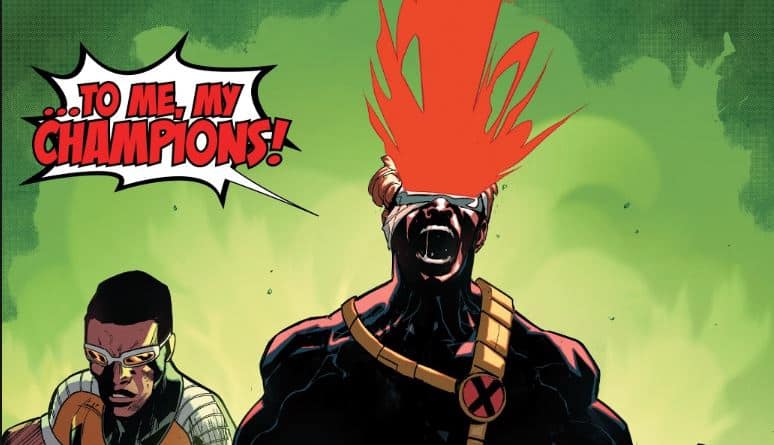
Through Kamala’s narration and with the help of Ramirez’s kinetic fight choreography and confident poses, Jim Zub shows that Cyclops isn’t just a stoic stiff or mutant terrorist, but a great leader, who is cool under pressure. Also, with the tension of the Champions and their shifting and expanding lineup, Kamala needed a hug and a reassurance from an old friend. Zub and Ramirez also use the return of Cyclops to have him interact with Dust, who decided to not rejoin the X-Men because their predilection for violence wasn’t in line with her Islamic beliefs. For example, after a badass sequence where she uses her sand manipulation powers to choke out some trolls, Dust prays and tries to come to grips if her violent actions were necessary for the situation. Also, correct me if I’m wrong, but I think that this lineup of the Champions is the first time that two Muslim women have been on a superhero team.

Under Jim Zub’s shepherding, the Champions series has been a template for a modern team of young superheroes with its diverse lineup of characters, social conscience, fun team-up action, and plots that come out of the team’s interpersonal relationships. Yeah, the series is a bit soapy at times, but Champions #5 ably juggles a big lineup of characters while getting in the action beats and doing some soul searching with Miles and Kamala. On top of that, Zub’s work on Avengers No Surrender and No Road Home has served him well in using big events and continuity to tell compelling stories like understanding that the X-Men are in New York at the same time as the Champions and using it to put a little respect on Cyclops’ name. For that, Champions #5 easily gets an Overall Verdict of Buy.


Unless Jason Aaron and Russell Dauterman make some second half adjustments, War of the Realms might go down as that event where different Marvel superheroes had cool fantasy inflected designed and had some big battles, but it was mostly empty calories of story. Aaron does hit on some small beats like Jane Foster growing into her role of All-Mother and leading the Asgardians into battle despite having no powers and Thor’s violence addiction. The event has also been an okay frame for more perceptive intriguing stories featuring characters Freyja, Frank Castle, Kamala Khan, Blade, Dust, and surprise surprise, Cyclops!

Panel of the Week

Nothing more refreshing than Cyclops leading a team of superheroes into battle. Plus I love how Juanan Ramirez draws his classic costume. From Champions #5, Art by Ramirez and Marco Menyz.

Review: The Wicked + the Divine #43

Writer Kieron Gillen alluded to this on Twitter, but there is very much an Avengers Endgame feeling of one last adventure before calling an era of generation, or at least this reviewer, shaping storytelling quits to WicDiv #43. The remaining Pantheon members and a de-divinitied Laura confront Minerva/Ananke, and Gillen, artist Jamie McKelvie, and colorist Matthew Wilson lay out the real source of their powers and the origin of 12 teenagers in a more resonant flashback than anything in “Mothering Invention”. There are lots of big ideas on the board in this issue like mortality, belief, and storytelling, and belief leading to physical powers and general coolness gives this issue a real Grant Morrison vibe in a similar way to WicDiv #1 quoting Invisibles #1.

But, before characters get confessional about their status as gods in anti-Pantheon transformation sequence, Gillen, McKelvie, and Wilson whip together a big action scene. And Laura’s perceptive narration shows that it’s meant to illustrate the emptiness of such scenes and scuffles even though McKelvie and Wilson outdo themselves with giant Tara punching a Valkyrie and various streams of energy and poses. It’s a single page, gets the point across, and leads to another great Dionysus character beat as he uses his second chance at life for good and to free the fans/Valkyries from Minerva’s control. We get some infrared colors from Wilson and a burst of flame, and yeah, no one wants to have anything to do with mind control machine using, strangely young looking immortals.

WicDiv #43 is all about stripping down, breaking up, and breaking free, and none of these things in a romantic context. But, first, there must be a narrative or ritual to be liberated from like an underlying mechanism or a plot in a story to get meta. (And Gillen does.) We see the first “Kllk” as Ananke and her sister create fire, and then their powers get more complex with the creation of the ideas of godhood and its manifestations starting with green tendrils. Ananke plays on each Pantheon’s flaws and pride to end in their deaths and sacrifice as evidenced in the main series and the historical specials.

It’s primal storytelling from Gillen, McKelvie, and Wilson with flat colors and fantastic character acting to go with the dark, tendril-y panel borders that represent the mind meld between Minerva and Persephone. The flashback (Which functions better than a wall of exposition)gives the characters of WicDiv a peek behind the curtain and their own powers. They have to interrogate why they want to be gods, and this is the powerful last act of the comic before a devilish cliffhanger.

And this interrogation leads to liberation beginning with the aforementioned Valkyrie/fan flight. Owing to their gentler, more symbiotic relationship, Gillen and McKelvie have Urdr wrap up her time with the other Norns with a kiss and a promise that they’ll live. These plot beats are a prelude to the Pantheon members following Laura’s lead in the previous issue and renouncing their godhood in rhythmic, almost liturgical six panel grids from McKelvie. They realize that they were pawns in a millennia long story and now seek to erase themselves from the narrative in a positive way.

But WicDiv #43 isn’t the final or even the penultimate issue of the series so it’s not that easy, and the final page is dynamic and a reminder of with whom and why I fell in love with the series five years ago as I took a leap of faith and signed up for that John Milton elective class.

Story: Kieron Gillen Art: Jamie McKelvie Colors: Matthew Wilson
Story: 9.6 Art: 9.5 Overall: 9.5 Recommendation: Buy

Image Comics provided Graphic Policy with a FREE copy for review

Messages from Midgard #4- Symbiotes and Superman Analogues

It’s an all tie-in week in “War of the Realms” country after last week’s utter victory for Malekith’s forces and the slaughter (Fridging?) of the Valkyries. Jason Aaron keeps right on going with his sneaky good Avengers run and provides insight into the very jingoistic and almost copyright infringing Squadron Supreme of America as they kick Frost Giant ass from Pennsylvania Avenue to Erie, PA. He uses the events of “War of the Realms” to set up a very good future antagonist for his comic and gets to write one hell of a “Superman” scene. Over in Venom #13, Cullen Bunn and Iban Coello pinch hit for Donny Cates and Ryan Stegman and do a damn find job as a symbiote-less Eddie Brock tries to find safety for him and his son Dylan as Dark Elves and War Witches attack San Francisco. It’s The Last of Us with a heavy metal twist. This week’s final book is War of the Realms: Uncanny X-Men #1, which is the definition of unnecessary tie-in although Matthew Rosenberg gets kudos for remembering Dani Moonstar’s Valkyrie connection.

Avengers #18

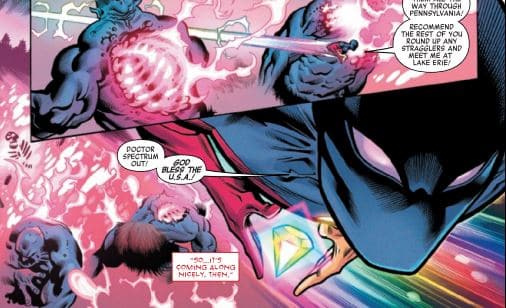
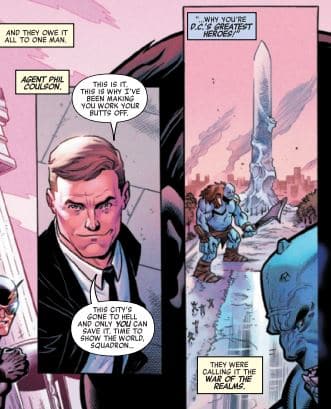
In a story cheekily titled “Crisis on Ten Realms”, Avengers #18 is Jason Aaron’s riff on DC Comics characters and critique on nationalism with art from Ed McGuinness (Who drew a fair number of DC books in the early 2000s), Mark Morales, and Justin Ponsor. The Squadron Supreme of America have been set up in the background of Aaron’s Avengers run as Thunderbolt Ross, Phil Coulson, and the American establishment have been a little wary of an Avengers team led by a foreign monarch, Black Panther. However, this is the first time that Hyperion, Nighthawk, Power Princess, The Blur and Spectrum have been featured and fleshed out. And, boy, do they love the United States.

Using “War of the Realms” as a metaphorical background for the United States’ constant foreign interventionism in the 21st century, Aaron and McGuinness channel The Authority a little bit as the Squadron Supreme of America is literally programmed to defend the United States and nowhere else in the most violent of ways. They don’t get to chase and pursue the Frost Giants into Canada, but are relocated to fight in the “battleground state” of Ohio in another winking bit of political humor. Even if the use of DC Comics character archetypes is a little heavy handed, Aaron adds layers to the “War of the Realms” events by showing the historical connection between foreign wars and nationalism. He also gets to roast Batman’s mommy issues big time through the character of Nighthawk, who is the paranoid congressman from Washington D.C. in this incarnation.

The Squadron Supreme of America will make great villains for the more diverse Avengers in future storylines even if Aaron handwaves their motivations into a literal “devil made me do it” situation. (Probably to appease the Coulson fans.) Avengers #18 fleshes them out and shows their rise in connection to “War of the Realms” while crafting a superhero team that Roxx, er, Fox News set would like. For its satirical value and longterm planning, Aaron’s fantastic writing of Superman analogue Hyperion, and Ed McGuinness and Mark Morales’ depictions of bloody violence that contrasts with the more peaceful ways of the Avengers, Avengers #18 earns an overall verdict of Buy.

Venom #13

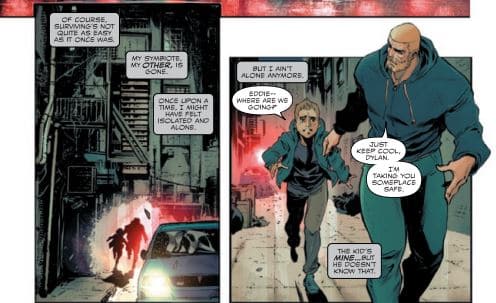
Compared to Avengers #18’s big action, big ideas, and comments on geopolitics and the superhero genre, Venom #13 is more intimate. Especially in the early going when Eddie Brock has to get him and his son, Dylan (Who thinks he’s Eddie’s little brother.) to safety without the use of his symbiote that “broke up” with him in the previous issue of Venom. But, then, it gets loud and violent like your typical Venom comic with some great moments of mayhem like Venom beheading a troll with a flick of his tongue courtesy of artist Iban Coello.

With series creators Donny Cates and Ryan Stegman working on the upcoming “Absolute Carnage” storyline, writer Cullen Bunn, the aforementioned artist Coello, and colorist Andres Mossa team up to tell a three part Venom story set during the events of “War of the Realms”. But the event is just a backdrop for more internal conflict between Venom’s (anti)heroic side and his monstrous one. Bunn’s narration sets this up long before Eddie Brock accepts the War Witches’ gifts and gets a spiky, runic new Venom look and then promptly eats her hand. He is supposedly the protector of innocents, but in this case, he just wants to kill everyone and the “War of the Realms” is like an all you can eat buffet of elves, trolls, and other beings.

The final pages where Coello and Mossa let Venom cut loose are entertaining, but they and Bunn’s most memorable work is when Eddie and Dylan are sneaking around San Francisco in the mode of a good stealth video game. Eddie fighting three Dark Elves with no powers and breaking one of their necks to rescue Dylan shows how much he cares for his son, but then he gives into temptation and the heavy metal symbiote of the first arc of Venom is reborn. Because of its strong internal conflict, powerful action and character interaction cartooning from Iban Coello, and black and blue Andres Mossa color palette, Venom #13 gets an Overall Verdict of Buy and is worth checking out if you like what Cates and Stegman were doing on Venom and aren’t keeping tabs on “War of the Realms”.

War of the Realms: Uncanny X-Men #1

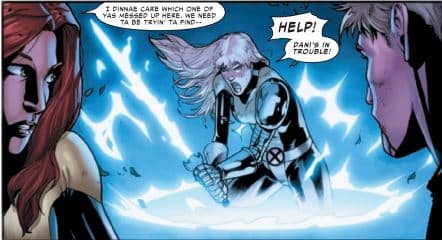
Disclaimer time. Unfortunately, I haven’t been keeping up with the current run on Uncanny X-Men even though I’m a huge fan of Matthew Rosenberg’s work on various Black Mask titles as well as Phoenix Resurrection, Kingpin and Secret Warriors. Also, it’s damn cool that Cyclops is back, and Rosenberg has his and the other X-characters’ voices down like Havok, Hope Summers, Multiple Man, and especially Dani Moonstar in War of the Realms: Uncanny X-Men #1. However, artist Pere Perez’s fight choreography is underwhelming, and the story lacks any kind of momentum with the current X-Men lineup running around New York and fighting various “War of the Realms” beasties after the events of War of the Realms #2 left NYC with no defenders or really any people.

Rosenberg and Perez try to build the story around Dani Moonstar’s connection to the Valkyries, but there is a lot of in-fighting, occasional funny banter, and more fights and running until we see her mourning over her dead sisters. It’s filler and not particularly well-drawn filler as Perez’s attempt at a big splash of the X-Men fighting Frost Giants and Dark Elves isn’t well balanced and is a lot of figures splayed over two pages. The plot is driven by various X-Men disappearing and running after each other plus the conflict between the main team and their “prisoners” Hope Summers and Banshee, which I guess is established in the core series.

It’s cool to see Marvel (Due to the post-Disney/Fox merger) integrate the X-Men into their linewide events with the presence of Wolverine in the core War of the Realms book and the Uncanny X-Men in this tie-in miniseries. However, the haphazard execution, subpar visuals, and the lack of an emotional hook until the final page earn War of the Realms: Uncanny X-Men #1 the overall verdict of Pass.

I definitely find the core metaphor of the X-Men more interesting than the Avengers and have never found Venom compelling until Donny Cates and Ryan Stegman’s run. However, Avengers #18 and Venom #13 were solid macro and micro, respectively, tie-ins to “War of the Realms” while War of the Realms: Uncanny X-Men #1 was the weakest one yet. The world has turned upside down, or maybe it shows with the right combination of creators or compelling story, any character can be cool and relevant.

Panel of the Week

Someone made a “DC Comics/Washington DC” joke in an actual comic, and I’m proud (Avengers #18, Art by Ed McGuinness, Mark Morales, Justin Ponsor

Messages from Midgard #3: Daredevil Rules, Punisher Drools

Wait, I thought this was an Asgard-centric event? Even though the bad guys are all elves, trolls, giants, and evil minotaur CEOs, the predominantly Big Apple-centric setting of War of the Realms #1 and #2 allows for some of Marvel’s street level vigilante to shine (Daredevil) or fall flat on their faces (Punisher). This week’s issue of War of the Realms and its tie-ins were the true definition of a mixed bag. War of the Realms #2 continued and wrapped up the big New York battle from the previous issue before spending a lot of its page count setting up various upcoming tie-ins in a pretty way from artist Russell Dauterman and colorist Matthew Wilson. Plot-wise, there’s one small surprise, and we’re finally up to the events described in last week’s Unbeatable Squirrel Girl tie-in. Speaking of tie-ins, they run the gamut from the instant classic that is Thor #12 to the should have been a one-shot and the first true stinker of “War of the Realms” that is War of the Realms: Punisher #1. In the middle is War of the Realms: War Scrolls #1, which tells some entertaining side-stories about Daredevil, the Warriors Three, and Wolverine (Confession: I don’t know how he’s back from the dead.) and squanders a cult book creator reunion.

War of the Realms #2

Feeling a little nostalgic for the 1980s, writer Jason Aaron titles this story “Midgard Massacre” in homage to the “Mutant Massacre” crossover where Morlocks were killed by Reavers, and characters like Daredevil, Thor, and the Power Pack showed up in X-books. A bunch of seemingly mismatched characters show up in War of the Realms #2, but Aaron, Russell Dauterman, and Matthew Wilson’s story lacks the emotional resonance of the previous Massacre until the final page. Plus Aaron and Dauterman wring out some great moments for Jane Foster and Freya beneath the fighting/strategic retreats. Jane gets to ride Valkyrie’s horse, Aragorn, fight with a sword, and is hinted to want to become Thor again even though it would mean the return of her cancer.

So, a big pitched battle in New York between superheroes and various fantasy creatures is an objectively cool idea and a reason why I decided to do this weekly column. However, it really starts to drag in War of the Realms #2 even with gorgeous Dauterman/Wilson tapestry pages to show the Valkyries entering the battle with a heavily wounded Odin to turn the tide Wagner style. Aaron tries to do the whole Battle of Hoth, “good guys get their butts kicked and retreat to another area” plot maneuver and succeeds in getting all the heroes from point A to point B, but stumbles in the execution. They don’t lose because they’re overwhelmed by sheer numbers, but because Dr. Strange’s teleport spell malfunctioned, which is a weak plot device featuring a tangential character. We don’t even see the costs of his spells like in Bendis and Hickman’s Avengers runs.

The big plot development other than a death for a character, who is already in a grey area between life and death and is about to be swapped out with her more popular movie version, is Malekith and his forces taking over Midgard. This is told to us with word balloons instead of on-panel, or in the tie-ins, which mainly take place in New York. There’s no heroic last stand, or emotional connection, but Aaron rushes off to characters setting up the next issue or tie-in’s plot in expository dialogue with the occasional fish out of water joke like Luke Cage’s eye roll when he talks about fighting trolls in Harlem. War of the Realms #2 feels like a giant action figure battle with a slight touch of emotional resonance every time Jane Foster brandishes her sword, or when Freyja decides to lead the rescue mission to get Thor in Jotunheim. It barely gets the overall verdict of Read because of a harrowing final page, Russell Dauterman and Matthew Wilson’s art, and because it has the seeds of potential to be a great Freyja and/or superhero buddy team-up book.

Thor #12

For better or worse, the modern character of Loki will always be defined by the way Tom Hiddleston portrayed him in the MCU films and the way Kieron Gillen wrote him in Journey into Mystery and Young Avengers doing clever plotting, world-building, and crafting a character that desperately wants to change, but can’t. These stories were often in the middle of event tie-ins, and Jason Aaron and Mike Del Mundo join this tradition in Thor #12, which is Journey into Mystery meets A Christmas Carol. Loki is being eaten by his own father, Laufey the Frost Giant, and wants to just die when he’s visited by his past, present-ish (Kid Loki), and future self aka Loki the NecroGod. Aaron has established the past and future selves in various flashback and flashforward stories in Thor so he can get straight to the character study part.

Thor #12 is full of “a-ha” moments beginning when Loki realizes that he basically created the villain Malekith when he orchestrated a war between the Dark Elves and trolls, and young Malekith was subjected to the trauma of constantly burning the corpses of his people into a mass grave. He and his past sins are responsible for the War of the Realms, and Del Mundo nails this moment of recognition with great facial expression work for an artist who is mostly known for his layouts and Heavy Metal approach to superhero stories. He uses a varying color palette as Loki goes from the fires of Svartalfheim to the cold of Jotunheim and finally ooey gooey stained glass of the end of all things. This issue is easily my favorite work of his since Elektra.

But Thor #12 is more than great art. Jason Aaron offers a pinpoint look into how Loki is just a man who has been lying to himself all his life about who he is and the consequences of his actions beginning with one about how his magic tutor, Eldred, would have died in a dungeon any way. This lie led to others and became Loki’s character and story that he is fated to follow even though fate, er, the Norns are off the table in Aaron’s Thor run. This self-deception coupled with a death wish persists until the end of time, or currently, in some kind of hellscape caused by being eaten by his own father. Even if you’ve sworn off “War of the Realms”, Thor #12’s overall verdict is a Read because of Mike Del Mundo’s triple threat of art styles and Jason Aaron’s razor sharp characterization of Loki that is conversation with Gillen’s work while also breaking fantastic new ground.

War of the Realms: War Scrolls #1

One of my favorite pleasures from event comics are the anthology miniseries that tell either serial or one-shot stories about fan favorite D-list characters or give up and coming creators a chance to play in a shared universe sandbox. War of the Realms: War Scrolls #1 has a good amount of this with Josh Trujillo (Dodge City) and Ricardo Lopez-Ortiz (Kingpin) doing a combo Warriors Three and Cloak and Dagger story while Ram V (Paradiso) and Cafu (Imperium) tell the story of an Asian-American teenager’s experience with Wolverine. Chip Zdarsky, Joe Quinones, and Rico Renzi’s return to Howard the Duck is well-drawn, if underwhelming and sophomoric. This is made up for by an intelligent, wonderful Daredevil by Jason Aaron and drawn by Andrea Sorrentino in a looser style with colors by Matthew Wilson that should have gotten its own mini and is the multi part serial of the bunch.

Jason Aaron’s Thor: The God of Thunder (Especially the “God Butcher” arc.) was as much theodicy as Viking metal space opera, and his work on the various Asgardians have touched on big questions, like faith, belief, fate, and higher powers, from a predominantly skeptical point of view. So, it’s very intriguing to see him write Marvel’s man of faith, Daredevil, who is shocked when he meets Thor and his heartbeat is steady when talking about being a god.

Plus the flashback is a chance for Sorrentino to kick it Silver Age style, Ben-Day dots and all. The present narrative features Daredevil playing the role of street level hero, protecting his neighborhood from otherworldly threats, and then getting an Asgardian upgrade that will be described in an upcoming issue of War of the Realms. It’s nice to see one of Marvel’s consistently best written and drawn heroes play a key role in an event comic, and Kingpin’s role in the story makes my mouth water. There’s also the aforementioned Andrea Sorrentino style switch up that isn’t at the cost of making his work less iconic beginning with a little Frost Giant dismemberment.

Speaking of cartooning, Trujillo, Lopez-Ortiz, and colorist Felipe Sobreiro go for lower stakes, but don’t skimp on the fun in their Warriors Three story where Hogun, Fandral, and Hildegarde have to drag an indisposed Volstagg to the Sanctum Sanctorum. There’s action, derring do, Shakespearean English type banter, and slapstick humor with a side of horror as they meet up with Cloak and Dagger and protect the ordinary citizens of New York on the way to their destination. Ram V and Cafu’s Wolverine story is in a similar vein as teens named Jae and Chris rush through the streets of New York to make it to the Sanctum Sanctorum and watch Logan’s six along the way. Cafu’s renderings are a little stiff, but Ram V truly believes in the inspirational power of superheroes even ones that are rough around the edges. His banter between Wolverine and Punisher is also deadpan funny too, which makes it all the more sad that Chip Zdarsky and Joe Quinones return to Howard the Duck isn’t witty, satirical, and filled with sight gags, but one long pee joke. However, War Scrolls #1’s overall verdict is still Read, and I’m very excited to see what Jason Aaron and Andrea Sorrentino do with Daredevil and Kingpin.

War of the Realms: Punisher #1

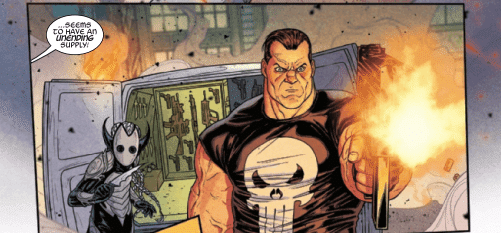
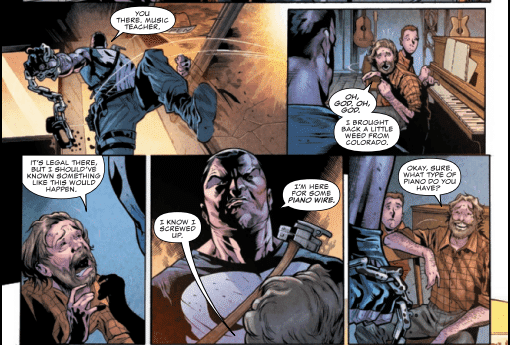
On the surface, I thought that War of the Realms: Punisher #1 and “War of the Realms” was just an excuse for Frank Castle to kill things with no moral dilemmas, and unfortunately, I was right. Writer Gerry Duggan, and capital “G” gritty artists Marcelo Ferreira and Roberto Poggi along with solid colorist Rachelle Rosenberg make the Punisher a heroic figure compared to the dark elves and fire trolls he fights and the prisoners he recruits as allies to escort patients from a hospital in Manhattan through the Lincoln Tunnel into New Jersey. Old Uncle Frank will ignore your weed stash in return for some piano wire, not take revenge on a Frost Giant to get a man out of a burning car, and even shoot a criminal in the head to show what happens if you don’t help him escort some “innocent” patients to Jersey.

The Punisher shooting elves and trolls while helping people get from New York to New Jersey with hardened criminals as allies would make a decent action-oriented one-shot. Like a high fantasy version of The Raid, but with a vigilante, not a cop. However, War of the Realms: The Punisher #1 spends almost its entire page time on Frank Castle hero worship and mowing down purely evil creatures and only sets up its premise at the very end saving the tunnel action bits for the upcoming two issues.

War of the Realms: The Punisher #1’s is drawn in a superhero house style with thicker and darker inks from Roberto Poggi and flashes of powerful colors from Rachelle Rosenberg like when a car becomes almost entirely flame. It’s the comic book equivalent of Eli Roth’s footloose and conscience free Death Wish remake with extra trolls, giants, and elves and no pesky moral grey areas. It’s no surprise that its overall verdict is Pass.

Two issues in, and Jason Aaron, Russell Dauterman, and Matthew Wilson are still in pure action figure geek mode matching up a plethora of superheroes against fantasy races established in their work on Thor’s solo title. There are still compelling stories between the fights, obvious tie-in setups, and off panel plot developments like Aaron and Mike Del Mundo’s captivating standalone Loki story in Thor #12, Aaron and Andrea Sorrentino’s intriguing Daredevil/Kingpin serial, and Josh Trujillo and Ricardo Lopez-Ortiz’s Warriors Three short. But there are also stinkers like War of the Realms: Punisher, an ill-fated Chip Zdarsky and Joe Quinones Howard the Duck reunion, and hopefully not the core War of the Realms miniseries. But, hey, at least, we have a few more issues of Sorrentino drawing Daredevil.

Panel of the Week

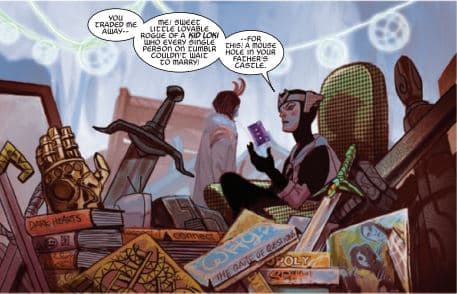
Logan circa 2013 feels personally attacked by this panel. In all seriousness, Jason Aaron writes a great Loki (Thor #12, Art by Mike Del Mundo.)

Messages from Midgard #2: Frog Thor Feelings

The “War of the Realms” settles into its second week with a trio of tie-ins that seem utterly unrelated: War of the Realms: Journey into Mystery #1, Asgardians of the Galaxy #8, and Unbeatable Squirrel Girl #43. However, the first two comics are a shining example of how difficult doing ensemble casts are, and the third is a proof that Unbeatable Squirrel Girl is a beautiful gift even when it’s an event tie-in. It even moves “War of the Realms'” narrative forward by showing how Malekith and his allies divvied up the different continents of the Earth. Stereotypically, the Frost Giants got Canada.

War of the Realms: Journey into Mystery #1

The McElroys (Father Clint and sons Justin, Travis, and Griffin, but those names aren’t in the comic.) are big time podcasters known for their work on the advice show My Brother, My Brother and Me and the Dungeon and Dragons show The Adventure Zone, which I’ve listened to a couple episodes of and was a best-selling graphic novel for First Second. At first, I thought they were comic neophytes, but apparently, Clint McElroy worked on licensed comics like Universal Soldier and Green Hornet in the early 1990s. They team up with artist Andre Araujo and colorist Chris O’Halloran to tell the buddy road trip story of Balder teaming up with Miles Morales, Kate Bishop, Thori, Becca aka Deathlok 2.0, Sebastian Druid, and Wonder Man to protect Thor’s baby sister, Laussa.

Journey into Mystery #1 has a fun premise that is only a little bit related to the main “War of the Realms” narrative and pokes fun at continuity changes as well as certain character being “off limits” because of events. See, Balder wanted Peter Parker, Clint Barton, Dr. Strange, and the original Deathlok, but he ended up with the legacy versions. The McElroys and Araujo introduce the cast in a typical flash forward, flash back, flash forward, and big cliffhanger fashion. Each road trip member gets a humorous origin and is then thrown into the fray by the Norn, Skuld. The level of funny varies from Matt Fraction/Kieron Gillen cover band while writing Kate Bishop and Thori respectively to the genuinely clever situation of having Miles rescue Times Square cosplayers and a teen Deathlok making a fake graduation party with Life Model Decoys to feel less alone and more human.

The story should have hit its stride in its third part when the team is assembled and being chased in a truck by Sindr, the daughter of Surtr, and her fire troll/demon/generic being army. Araujo cuts to the right moments in the chase to build tension and gets to do real storytelling instead of just the funny faces of the flashback. However, The McElroys kind of lose track of their team in the chaos with Miles and Dr. Druid especially suffering. They do manage to write around Wonder Man’s superhero story sapping pacifism to give him a great moment. Journey into Mystery has its clever moments, but in chemistry terms, it’s more of a heterogenous mixture than an a homogenous one so, for now, it gets an Overall Verdict of Read.

Asgardians of the Galaxy #8

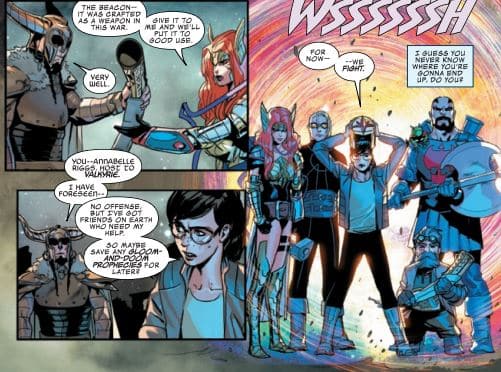
Even though 75% of its run has either been a tie-in to “Infinity Wars” or “War of the Realms”, Cullen Bunn, Matteo Lolli, and Federico Blee’s space faring, Asgard-connected team book has been one of Marvel’s hidden gems. It’s the spiritual successor of Bunn’s Fearless Defenders or even Dan Abnett and Andy Lanning’s run on Guardians of the Galaxy. The current team lineup is Angela, Valkyrie who sometimes swaps places with archaeologist Annabelle Riggs, Skurge the Executioner, Thunderstrike (The son of the one from the late 80s and 90s), Throg aka Frog Thor, and the dwarf Urzuul. They’re protecting a beacon that summons an army of undead gods, but Heimdall divests them of this and sends them to fight for Earth in the War of the Realms.

While Journey into Mystery gets to have its own plot, Asgardians of the Galaxy #8 takes place during the big battle for New York in War of the Realms #1. So, there’s not much plot once the book gets earthbound, and Lolli and Blee end up riffing off Russell Dauterman’s double page spreads, and well, they’re not Dauterman with a long lead time. But, even though, he’s stuck in the constraints of the event’s plot, Cullen Bunn has a one great trick up his sleeve: characterization.

Unlike Journey into Mystery where many characters are lost in the shuffle or are catchphrase shouters, Bunn gives each member of the Asgardians of the Galaxy at least one small showcase moment. Executioner and Punisher get to compare guns, and Black Panther compliments Urzuul’s weapon craftsmanship. (Wow, that came out wrong.) Cap tells Thunderstrike that his dad was a great hero, and Angela gets to be very angry at the Angels of Heven for siding with Malekith. However, the characters who come across the best are Throg and Annabelle Riggs/Valkyrie.

Throg made his first appearance way back in Walter Simonson’s run on Thor and was an ordinary Central Park frog named Puddlegulp, who was worthy to lift a sliver of Mjolnir and become the Frog of Thunder. Bunn and Lolli give him a moment of great tragedy when he returns to Central Park and sees all his old frog friends being burned up. He feels a lot of guilt for adventuring in space instead of protecting his people and gets a great action sequence that also riffs on Jason Aaron’s concept of Thor Odinson being unworthy.

But Annabelle is the center of Bunn and Lolli’s narrative in Asgardians of the Galaxy #8 as she continues to struggle with her Nova powers and the magic that Kid Loki gave her in the last arc. They keep shorting out, and she subs out with Valkyrie. Or does she. In a big moment, Annabelle rides Valkyrie’s flying horse to look for her girlfriend Ren in the middle of the carnage. They share a beautiful reunion before being literally ripped apart by the plot of War of the Realms. Bunn does a great job writing the only non-powered character and gives her a strong romantic and heroic arc despite this issue being an event tie-in. The emotional moments with her and Throg plus great individual action moments with the rest of the team makes Asgardians of the Galaxy #8 worth an overall verdict of Read.

Unbeatable Squirrel Girl #43

The final “War of the Realms” tie-in and the unlikeliest even though Squirrel Girl has connections with Thor, Loki, and the Norse squirrel god Ratatoskr is Unbeatable Squirrel Girl #43 from Ryan North, Derek Charm, and Rico Renzi. This used to be one of my favorite Marvel titles, but then I fell behind. However, North’s ability to couch exposition in jokes and Tony Stark/Squirrel Girl Twitter thread recaps caught me, the lapsed reader, up to speed as well as anyone who didn’t pick up War of the Realms #1. Basically, the event is an excuse for Loki to send Squirrel Girl on a mission to take out a secret Frost Giant base in Canada, and there’s lots of mysteries to be unbundled from this, including Loki’s alignment, which North hides in ambiguous and purposefully misleading dialogue.

Unbeatable Squirrel Girl #43 is cute, funny, and the only one of these three comics to have a complete plot while having joke, riffs, clever action sequences, and some sweet interactions between Doreen and her parents, who live in Canada and sadly got rid of her Arctic variant costume. Derek Charm is one of my favorite current artists and is really the full package, including animated facial expressions, gesture cartooning, clever layouts, and above all, humor that is helped by North’s great footnote jokes. (His inspiration for the fight between Squirrel Girl and the Frost Giant made me cackle.) He even nails the mandatory superhero group shot splash page that should instantly get him a slot drawing the X-Men, Avengers, or Justice League. Renzi’s colors, especially for the Frost Giants, really pop and have an attitude to them. And his shadowy work with the Ratatoskr gives him the right level of menace.

North, Charm, and Renzi are a clever bunch of creators, and a linewide crossover offers them more opportunities to roast mainstream heroes, like Iron Man and Captain America while giving Doreen a new adventure and new bad guys plus family time. It’s not every day you get a comic that makes a running gag of the Asgardian spelling of “Hek”, but today is this day. For this, a physics defying Frost Giant battle, a joke about Jim Davis’ Silver Surfer/Galactus short story in Unbeatable Squirrel Girl #26, and Loki’s unlikely friendship with Nancy Whitehead, Unbeatable Squirrel Girl #43 gets an Overall Verdict of Buy.

The real heroes of this week’s “War of the Realms” tie-in were a hero that eats nuts, kicks butts, and tries to reason with her enemies before punching them and a heroic frog that despite his unworthiness still fights to avenge the people he loves. Also, writing a cast of ensemble characters in the middle of a summer crossover is like trying to walk and chew bubblegum. Jokes and emotional character arcs help smooth things over though.


Panel of the Week

The end result of messing with Throg from Asgardians of the Galaxy #8. (Art by Matteo Lolli and Federico Blee)

I want to make this column more interactive. Email me questions at ldalton626@gmail.com or tweet me at MidnighterBae, and I will answer them in an upcoming installment of Messages from Midgard.

Review: Die #5

Die #5

The ending of the first arc of Kieron Gillen and Stephanie Hans’ Die is loud, flashy, and creates a completely new premise for the series while still riffing on RPGs and never growing up. It starts as the third act of a high concept fantasy film before turning into some fourth wall breaking The Lego Movie meets Chronicles of Narnia metafiction, yet darker and then goes full hog horror.

In Die #5, the main party of Ash, Chuck, Matt, Angela, and Isabelle have to defeat Sol, the Grandmaster so they can go home to their homes and lives in the “real world” because the game only ends when whole party unanimously wants it to end. But it isn’t that easy. Some characters, like “The Fool” Chuck and divorced school teacher Isabelle, actually enjoy traveling a multi genre encompassing fantasy landscape that in this issue alone is a little cyberpunk, a little Wizard of Oz, and has a Dungeons and Dragons approach to divinity. And, then, there’s the whole dark ending part that establishes the new stakes and antagonists for the series. Gillen and Hans really fuck with whatever fantasy genre/RPG tropes expectations you had for the series.

As Die goes from a hazy flashback to the “real world” to Glass Town, Eternal Prussia, and various fantasy landscapes, Stephanie Hans’ gift for color palette and creating an immersive fantasy setting is on full display. Statues, temples, gods, dark corridors, a bit of old school hacking, and yes, dragons are all in her repertoire, and the way each character uses their class abilities is quite distinct too like the red flash whenever Ash does dictator things. It’s a world that you could definitely imagine a straight, dark fantasy series with touches of cyberpunk taking place in, which makes Gillen and Hans’ rejection of the premise so radical.

Hans’ work has real emotion too from the smiles and soft yellows of young Dominic Ash and Sol as they play with a cool Lego castle in the opening flashback to after various pyrotechnics, Ash and Sol throw down in the world of Die. Their relationship is the beating heart of the series so far, and even though Sol is a total asshole, who ripped his friends from their mostly happy lives to play a game, it hurts when they fight and converse in the issue’s final moments. With black narrative captions from Clayton Cowles, Ash steels herself to take out Sol and go home, but her internal conflict is the complete opposite of her confident “team leader” style dialogue. Her actions in this issue definitely have messed Ash up as a character as the series progresses.

In Die #5, Kieron Gillen and Stephanie Hans create an intriguing fantasy world and RPG system and then topple it, both visually and in the plot. They take the premise of never leaving Narnia and dial up the darkness and horror that is baked into that idea. Also, having middle aged people in a fantasy RPG setting makes for some interesting characterization although this issue is predominantly action-driven.

One last thing, you should definitely check out the essay Gillen pens at the end of the comic. For reasons.

Story: Kieron Gillen Art: Stephanie Hans Letters: Clayton Cowles
Story: 8.5 Art: 9.0 Overall: 8.8 Recommendation: Buy

Image Comics provided Graphic Policy with a FREE copy for review

C2E2 2019: Interview with Punk Mambo Writer Cullen Bunn

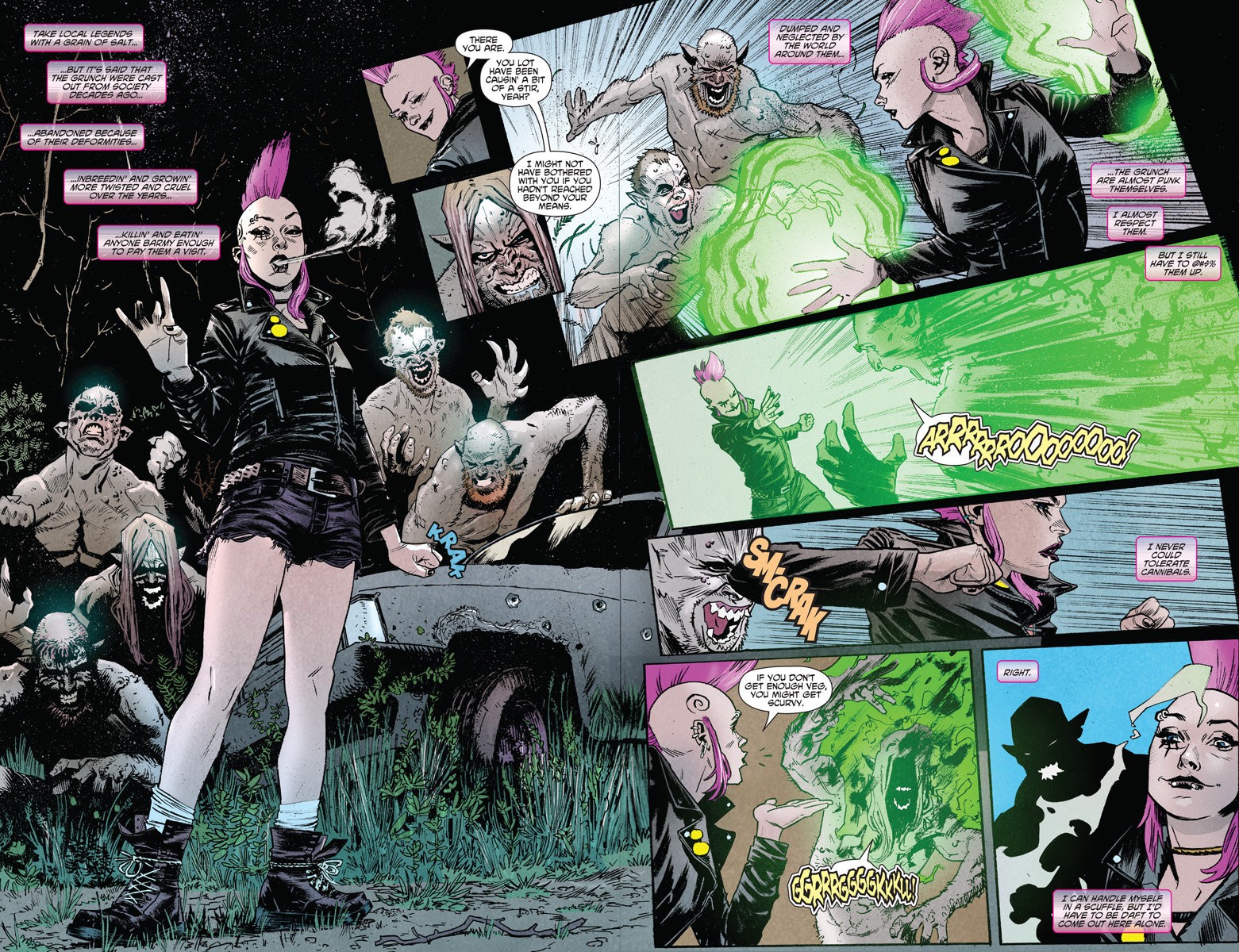
Cullen Bunn is one of the most prolific comic book writers of the past decade. He has worked on Dark Horse’s Eisner nominated horror comic Harrow County, The Sixth Gun for Oni Press, comics like Sinestro and Earth 2 World’s End for DC, and worked extensively on titles starring Deadpool, the X-Men, and Venom for Marvel. Now, he turns his attention to Valiant where he will be writing the first solo series for Victoria Greaves-Trott aka Punk Mambo, a British voodoo priestess created by Peter Milligan and Roberto de la Torre as a supporting character in their relaunch of Shadowman.

Due to sickness, I wasn’t able to chat with Bunn in person at C2E2 about Punk Mambo, but was able to interview him via email.

Graphic Policy: Punk Mambo has had a lot of guest appearances in Valiant books since 2013, but apart from a one-shot, she’s never had a series of her own.  Why is now the perfect time for her to have one, and how will the solo series explore her character?

Cullen Bunn: Valiant is launching several new titles, offering readers something fresh and exciting with new characters and new settings and new adventures. Punk Mambo is a character a lot of readers might be unfamiliar with. She is a great gateway to Valiant’s supernatural world. I’m hoping this new initiative will bring in readers unfamiliar with the character, and maybe even unfamiliar with Valiant as a whole. I’ve talked to many people, who know little or nothing about Punk Mambo, but who are interested in finding out more now that there is a spotlight on her!

GP: Punk Mambo is one of several new #1’s for Valiant. How will you make this series accessible to new readers?

CB: I have written this series in such a way that you need not know anything about this character in order to enjoy the book. In a lot of ways, I’m treating this like her first appearance. Yes, if you are familiar with the character, you’ll get something different out of the book than if it is your first encounter with Punk, but first time readers will not be lost at all. Punk narrates this book so she brings the reader right along with her. And she’s encountering new threats, new enemies, and new allies; most of whom are appearing for the first time in this book.

GP: Punk Mambo is set in Haiti instead of New Orleans or London. What does this new setting bring to the series?

CB: I have written a lot about New Orleans of late, and I love the city as a setting for this kind of story, but I thought it would be fun to bring Punk Mambo to an area where we haven’t seen her. That gives us fertile ground to tell a new tale and keep the characters (and the readers) on their toes. This is a corner of the Valiant Universe we haven’t really seen, and it fits so perfectly with Punk’s ties to voodoo.

Or it doesn’t.

Part of what I wanted to do here is show that Punk Mambo doesn’t really fit into the typical voodoo paradigms. We get to play her against aspects of traditional voodoo culture, and I love that sort of thing. 

GP: How did you write to Adam Gorham’s specific strengths as an artist in Punk Mambo?

CB: Punk Mambo needed to feel action-packed and fun and a little dirty. Adam manages to bring that aesthetic to every panel of every page. The action is kinetic and frenzied. The horror beats are scary as Hell. I’m so lucky to be working with him on this book. 

GP: Even though it’s technically a superhero universe, Valiant has always had a strong supernatural corner. What will you add to that corner in Punk Mambo?

CB: With this story, I want to establish Punk Mambo as a kind of roaming paranormal investigator. Only, she doesn’t just investigate paranormal threats. She kicks their teeth in. I also wanted to expand the “pantheon” of voodoo spirits and gods. Finally, I’m introducing a couple of new villains to the Valiant Universe. These villains will be firmly rooted in the supernatural.

GP: Punk Mambo has an interesting relationship between her and her various Loas. How will you develop these relationships in her own series?

CB: The relationship with the Loa—and with voodoo as a whole—will be a key part of this series. You’ll see both sides of this… partnership. Punk Mambo has been using the Loa for some time now, and she never really stops to consider how the Loa feel about that. 

GP: You have a strong background in horror comics, and Punk Mambo seems to have some horror elements. What are some tricks you use as a writer to make a comic frightening and/or unsettling?

CB: It’s important in a horror comic to make the reader worry about the characters. There are real threats facing Punk Mambo, and if I’ve done my job, you’ll care about her and worry if she’ll survive or not. In a book like this, no one is safe so don’t assume that having a character’s name in the title means that character will make it to the end.

GP: A lot of your recent works (Dark Ark, Blossoms 666, Punk Mambo) have touched on religious elements or rituals. What do you find fascinating about faith and belief, and why do you continue to incorporate them in your stories?

CB: I’ve always been fascinated by faith and by ceremony and by the rules associated with religion. All these different characters allow me to approach those things from different angles, to pull at the frayed edges from different directions, and to explore my own questions without really smashing the reader over the head with them. My hope is that readers will come away with their own questions and their own answers. With Punk Mambo, I really wanted to look into the rules of faith and how someone who doesn’t follow any rules might still be faithful.

Punk Mambo #1 is set to be released on April 24.

Follow Cullen Bunn on Twitter.

C2E2 2019: Interview with Writer Ryan Cady

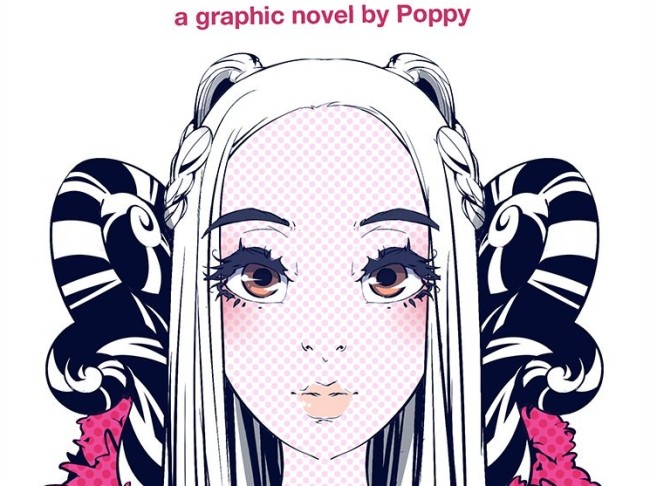
On Sunday at C2E2, I had the opportunity to talk with writer Ryan Cady about his work on the Image/Top Cow sci-fi series Infinite Dark with artist Andrea Mutti as well as his upcoming Z2 graphic novel, Genesis 1 about Internet music star Poppy that he is co-writing with Poppy and Titanic Sinclair. Previously, Cady has done work for Marvel (Old Man Logan), DC (New Talent Showcase), Lion Forge (Rolled and Told), and Archie (Big Moose) as well as co-writing the Magdalena relaunch for Top Cow with Tini Howard.

Graphic Policy: You were a part of the DC Talent Development Workshop. How did that impact your work on Infinite Dark?

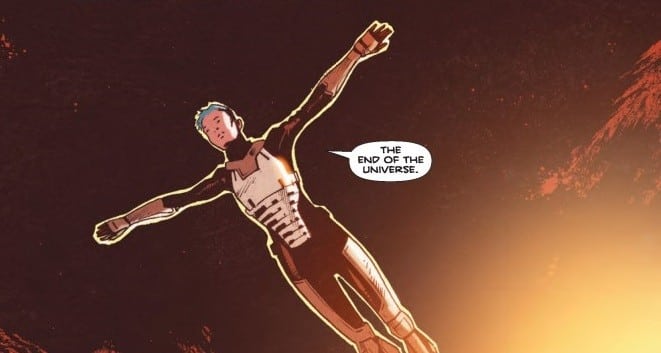
Ryan Cady: I developed Infinite Dark before the workshop and started scripting halfway through the workshop. When I started Infinite Dark, it was much more isolated story, and Scott Snyder, in the workshop, was good about getting us to examine higher stakes. From the beginning, Infinite Dark was going to be an end of the universe/last people on Earth story.

The initial pitch was more inward, character focused and weird Grant Morrison-y stuff. Not that’s a bad thing. I love that stuff and could do it well. After working with Scott and the DC projects in the class and focusing on the balance between character and action, I really decided to start ramping things up. And, obviously, something like [the workshop] makes you a better writer. It’s 10 weeks of doing scripts, getting them reviewed by not just Scott Snyder, but a bunch of really talented peers and examining your own work really critically. It forces you to think “What do I suck at? How do I need to get better?”

GP: From the first page of Infinite Dark, it’s all about staring into the abyss. How do you get into the zone to write about characters who gaze into literal nothingness?

RC: When I was really developing Infinite Dark in earnest, I was in the midst of a really bad depression. I kind of had the basic ideas there, but when I sat down to write the project, I was really miserable. At that point, it felt like a bleak work. (This was before the DC Workshop.)

When it came time to script, I focused a lot on staring into [nothingness] and overcoming it and survival as a virtue. In the script, I tried to tiptoe between those two. About how coming out of this I feel stronger and what it means to survive the worst year of your life versus diving back into those feelings a little bit if I wanna get grim. Sometimes, to write the darkest parts of the book, I have to dive back into those bad, weird feelings because it’s my first creator owned story.

GP: Infinite Dark has a big monster in the book called the Entity that I really enjoyed. What was your inspiration for them?

RC: In the very original pitch for the book, the Entity was something that claims to be God. I’m not an atheist, but I really thought the “No, fuck you, God” idea would be a cool take. God, in the original pitch, was like “I seem like a monster, but it’s because I need to create a new universe, and you guys are getting in the way.” [The protagonist] Deva was going to shoot God. That was the very Grant Morrison part of it. God was going to be like “I made you guys. You’re the best thing I ever made, but I’m making a new thing.” And Deva was gonna be like “No, you made us to survive.” and shoot God.

That was early days. It’s changed a lot since then. The initial idea was always the shadows. A thing you can’t understand, not even a Lovecraftian thing from beyond, but something that doesn’t interact with physics like we do.

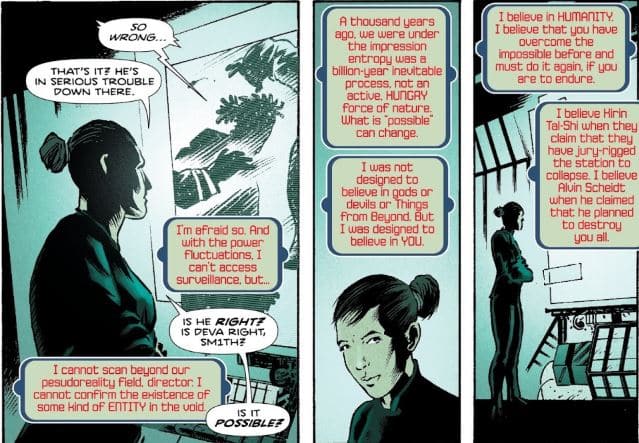
GP: My favorite character in Infinite Dark was Smith, the A.I. I love him so much. In a lot of these kind of sci-fi stories, the A.I. is always evil. Why did you decide to make Smith more of a humanist and an ally to humanity?

RC: Thank you for that reading. I’m always antsy if it’s going to make it in or not. I play with [the humanism] a lot in the next volume without spoiling anything. Because that’s such a trope, I believe we as people are always like “The next thing is going to usurp us.” It’s tied into the whole killing God thing. This thing we made is going to hate us for a reason, maybe, because we think we’re putting our worst selves in it.

But my whole thing with Smith is that I don’t know if I believe in that trope. [Some] people (Granted a lot of people who work in tech and in Silicon Valley are awful and scary technocrats.) make stuff earnestly with the idea you would make a life with the idea of “This is designed to love all the good things about humanity.” Smith’s creators are like “We believe in all these things.” I wanted to emphasize that and double play on “The A.I. is so evil.”, but not at all.

My favorite thing that I’ve written for the whole series is Smith’s speech in issue 3. I’m glad people liked it, and it landed. When I wrote this, I turned to my girlfriend and said, “I never say this, but I’m really proud of what I wrote here.” This is great, but the rest of the issue sucks.

GP: Yeah, that speech is awesome. Lots of text, but it’s definitely one of things I’ll remember about Infinite Dark.

So, the antagonists of Infinite Dark are the technolinguists. How did you come up with this cool, sci-fi concept?

RC: The idea came up because I’m not good with computers. Also, it makes sense if you’re setting a story fifty years from now to extrapolate what we have. Infinite Dark takes place 10,000 years from now so computing is going to be something that’s so fundamentally different. There’s the idea of people who can interact with this future’s version of code on an informational language level. Linguistically, they interact with computers.

I made them bad guys because really early on, there was a notion that the Entity could interact with them because the techno-language they speak is similar to the fundamental building blocks of reality. You know that theory that the universe is just a VR simulation? In Infinite Dark, they have simulations they go into sometimes, and we wanted to play with that. If we end up having more issues then these eight, I might go into that even deeper.

GP: Yeah, I Googled “technolinguists”, and I guess they’re not a thing yet.

RC: They’re antagonists, but they might not be bad guys.

GP: Your book’s definitely in a moral grey area.

RC: I like to play with that when I can. Except Smith. He’s just good.

GP: Could you tease the upcoming arc of Infinite Dark?

RC: The next volume of four issues starts in April, and without spoiling anything if you haven’t read the first volume, weeks have passed in issue five. But it’s not gonna feel like “Bam, bam, things are happening again.” It’s a lot of aftermath and cleanup stuff. But, also, oops, an act of saving everybody doesn’t necessarily save everybody. There’s still so many things that can go horribly wrong.

It’s very character conflict focused. All these people have survived the end of the universe twice, and yet, that alone is not enough to have them cooperate and get along because we have such fundamentally different ideas about what it means to do the right thing. How do these people faced with impossible choices, who have survived so much, reconcile that? I talk a lot philosophically in the book about survival being a virtue, but this arc is about what the next “good is. If we survive, how do we move past that.

GP: Like the whole “survive and thrive” Pinterest board idea.

RC: Yeah, we’ve reached “survive” on our Pinterest board. How do we “thrive” without it becoming worse or inequality or dooming ourselves again?

GP: I had a couple questions about the Poppy graphic novel Genesis 1. With these musician graphic novel projects, I’m really curious about how much input Poppy had on the graphic novel and what that collaborative process was like. She has all those YouTube followers.

RC: I’ve never met Poppy because she’s a robot, probably. I’m sure she’s very nice and only has our best interests at heart. And her church is not a cult. I’ve been given absolute freedom, and I speak in total earnestness. This is 100% me and mine. I’m nobody’s mouthpiece. This is my version of her story, and I believe it 100% and am not part of a cult.

GP: A lot of Poppy’s ideas are about how she’s beyond humanity and is very post-human. Why is her origin story being told in an older medium like comics?

RC: Even though it’s an older medium, comics is still really dynamic. It’s not limited to what you can get across on one side in a YouTube video. It’s not limited by time. I talked to an editor who brilliantly said, “In comics more than any medium, you can do a good job of controlling the flow of time.”

Also, there’s a weird element of apocrypha to it. Is this Poppy’s origin story? It’s this comic, and we play on this in the story. If this is really Poppy’s gospel and her origin, why would it be in this graphic novel? Why would it be told in this way, and how would that be obtained? Is the story true? Is the story stolen? It’s about to get too religious in here. We’re playing a lot with a sense of time and futurism, and how that blends with the occult and weird hacker people.

Infinite Dark #5 is set to be released on April 10, 2019 from Image/Top Cow Comics. Genesis One will be released in summer 2019 from Z2 Comics.

Follow Ryan Cady on Twitter.

« Older Entries Recent Entries »