This is a column that focuses on something or some things from the comic book sphere of influence that may not get the credit and recognition it deserves. Whether that’s a list of comic book movies, ongoing comics, or a set of stories featuring a certain character. The columns may take the form of a bullet pointed list, or a slightly longer thinkpiece – there’s really no formula for this other than whether the things being covered are Underrated in some way. This week: Creators Of Yesteryear I.
This week I wanted to take a step away from sales numbers, movies, and comics (for the most part), and instead look at some of the creators who had a huge hand in shaping the industry as we know it today. These are names that, hopefully, you already know, but to the average non-comics fan these names may be met with a bit of a shrug or a blank face. The word underrated isn’t a strong enough word for the recognition that these creators should receive from the wider world, but that’s the name of this column… so there we go.
Before I start, one disclaimer: this is in no way shape or form a complete list, hence the Roman numeral at the end of the title. There will be multiple parts to this list in the future in unscheduled installments. Do not expect extensive biographies here, this is just enough to (hopefully) encourage you to do a bit of extra reading yourself.
Shall we get to it?
Joe Simon and Jack Kirby
Jack Kirby
I bet you weren’t expecting to see this name here, were you? Jack Kirby is one of the more famous names within the comic book industry, and his contributions to the medium we know and love are legendary. His influence can be felt in just about every issue, so why have I included him on this list? Because if you ask the general public who created the X-Men they’d only answer one name, and Jack Kirby deserves to be as revered, if not more so, than Stan Lee.
Joe Simon You’ve heard of Captain America, right? Who hasn’t, really. Well as I’m sure you know he’s the product of Simon and Kirby. The team also created the romance comics genre, and contributed killer runs on some of Marvel and DC’s biggest comics during the middle of the last century. Joe Simon’s comics resume may not be as extensive as his frequent collaborator, but Simon is also the founder of Sick a Mad magazine competitor. He also worked
One of the rare photos of Bill Finger
extensively in advertising, serving as the art director for Burstein, Phillips and Newman from 1964 to 1967. There’s an excellent coffee table book featuring the work of the Simon Kirby Studio that I can’t recommend highly enough to you.
Bill Finger
I swear to the gods if you don’t know who this man is, and what he’s done, then I will happily sit down and tell you all about it – but not here. Suffice it to say Bill Finger gave the world almost everything we know about Batman… and only recently received credit for his work in co-creating Batman. There’s a fantastic documentary on Hulu if you’re interested in learning more about this man.
Steve Ditko So who created Spider-Man? Not just Stan Lee. Steve Ditko is the co-creator of Marvel’s most bankable star, but there’s a good chance your non comics people wouldn’t know that. The artist also created or co-created a good number of other characters for Marvel and DC including Doctor Strange, The Question, the Creeper, and a revamp of Blue Beetle. Ditko has famously refused almost all interview requests since the 60’s, allowing his work to speak for itself. His Wikipedia entry is full of interesting tidbits.
Jerry Robinson
The co-creator of Robin and the Joker (Bill Finger was the other half of the writer/artist duo), Jerry Robinson, along with Neal Adams, was also instrumental in the fight for creators rights in the 70’s, but his proudest body of work wasn’t in a traditional comic, accoding to an interview with the Daily Telegraph: “I did 32 years of political cartoons, one every day for six days a week. That body of work is the one I’m proudest of. While my time on Batman was important and exciting and notable considering the characters that came out of it, it was really just the start of my life.”
Like I said above, there is no way that this is an inclusive list. This is merely a column that will hopefully get you, dear reader, talking about thee creators to non comics people.
In the meantime, I’ll see you next week.
All images were found via Google search and snipped from the image results.
Last time, I talked about the “protean” nature of the “mutant metaphor,” its roots in science-fiction of the time, and how at least initially there was relatively little mention of mutant identity and anti-mutant prejudice.
Speaking of which, one of the curious things about the original run of X-Men, especially from the “mutant metaphor” angle, is that their mission to “protect a world that hates and fears them” means that the X-Men spent a lot more time fighting “evil mutants” (more on this next week) than defending mutants against those who “hate and fear them.” However, the major exception to this rule in the Lee/Kirby era, the one place where the X-Men confronted anti-mutant prejudice head-on, was the Sentinels:
Even when it was discussed, the “mutant metaphor” tended to be mostly back-material in the original run of X-Men. Issue #14 was an exception, where the metaphor took center stage: the issue opens with a startling revelation, as the existence of mutants shifts from urban legend and occasional siting to public knowledge as Bolivar Trask outs all of homo superior:
There’s a lot to unpack here: first, I find it curious that an anthropologist (as opposed to a geneticist or a demographer or what have you) is making this announcement, and curiouser still that an anthropologist somehow developed the advanced expertise in mechanical engineering and robotics necessary to build the Sentinels. (A clear case of the Omnidisciplinary Scientist there…) Second, as I discussed last week, the allusions here to the Cold War are much stronger than to the Civil Rights Movement – Trask namechecks “cold wars, hot wars, atom bombs and the like” (more on this next week), rather than “states’ rights, outside agitators, forced integration, etc.” Even more so than last week, the emphasis is on the mutant as Fifth Columnist – there is a resonance here between Trask’s seemingly unsupported claims that “mutants walk among us” and Joe McCarthy’s dramatic but numerally vague claims about Communist infiltration of the U.S government. The headlines that blare “Mutant Menace” could equally read “Red Menace,” suggesting a critique of a mass media more interested in shock and sensation than careful investigative reporting. Third, Trask introduces a new theme when it comes to the “mutant metaphor” – the idea of an inevitable unavoidable conflict between mutants and humans – which will continue throughout the original appearances of the Sentinels and will be continued in the Claremont run. The now famous invocation of Neanderthal and Homo Sapiens, in all its archaeological anthropological inaccuracy, has yet to appear, but you can see some of the origins of the idea here.
No matter how you analyze it,Trask’s press conference accomplishes something pretty unusual in Marvel Comics history – it gets Professor Xavier to actually engage in mutant rights politics. As I’ll discuss more next week, one of the problems with the version of the “mutant metaphor” that sees Professor X. as a Martin Luther King Jr. is that Professor X doesn’t spend that much time doing social movement work – preferring instead to train teenage mutants to act as a paramilitary force that engages in an oddly liberal version of the anarchist practice of propaganda of the deed. But here, Bolivar Trask’s call to smash the “mutant menace” drives him to action:
To begin with, given the many well-founded critiques of Silver Age Xavier’s character, it is interesting that Trask’s press conference strikes an instant nerve – clearly Charles has been waiting for the day that mutants are out for some time, and for all that he may disagree with Magneto about the possibility of human-mutant coexistence, it’s interesting that he expects this revelation to lead to a “witch hunt for mutants” and the “wheels of persecution” beginning to grind, without his intervention. And speaking of the sci-fi roots of the “mutant metaphor,” the page to our left really makes this clear with the “artist’s interpretation” of Trask’s remarks. Big-headed widows-peaked aliens wielding the whip over human slaves, being carried through futuristic cities in palanquins, and re-enacting the gladiatorial combat of the Roman Coliseum – this dystopia owes far more to Buck Rogers, Flash Gordon, and John Carter of Mars than it does the racist paranoid imaginary of the 1950s and 1960s.
However, it is the theory of politics here that I am primarily interested in, because Xavier here is depicted as practicing politics in an extremely establishment fashion. Rather than engaging in public protest, direct action, or a media campaign, Xavier’s understanding of politics begins and ends with a “public televised debate” between two academics. And indeed, in both appearance and his debating style, Professor X resembles nothing so much as the arid intellectualism of Adlai Stephenson-era liberalism. Acting (somehow) as the “spokesman for America’s intellectual community,” Xavier’s argument is pitched less on terms of human rights or moral calls or the Constitution than a general statement about the dangers of “ignorance” and “unreasoning fear.” (There might be a link here to Gunnar Myrdal’s famous description of American racism as a mental pathology, but it’s a stretch.)
On the other hand, it’s hard to make a judgement about depiction vs. endorsement – Lee and Kirby show American families at home and the American public on the street outside the storefront window reacting unfavorably – questioning whether Xavier is a mutant, dismissing the “egg-headed old stuffed-shirt,” angrily resentful that one of their children might be a mutant or that they might be ignorant. (It is interesting, however, that they can’t make up their minds as to whether he’s a “communist” or a “right-winger”- possibly a sign that Lee and Kirby were trying to straddle political divides there.)
By contrast, Trask is all emotion and ad-hominem attack, especially in his McCarthyesque (if true) insinuation that “perhaps the professor has an ulterior motive for his defense of mutants.” On a far more important point, Trask has no intent of having the issue be decided by the political system – well before the debate, Trask has clearly decided that “whether I win or lose this debate does not matter,” because he’s going to use his robots to squish his opponent. Thus, the Sentinels:
In classic sci-fi fashion, Trask’s robotic creations turn on their creator the first time they are used, because you don’t mess with the Frankenstein formula. And so, the threat of mutant superiority is trumped by the rise of the machine: as with other stories of the robot uprising, the Sentinels’ rebellion is founded in the fact that their superior robotic intelligence makes them more suited to be the master than the slave; at the same time, in deference to their programming, the Sentinels justify their future overlordship over humanity by arguing that in order to protect humanity they must rule humanity. And in one last nod to the original, Trask remains useful to his creations only because they need his mastery of reproduction to propagate their species.
What elevates the Sentinels beyond mere sci-fi pastiche, however, is their visual aesthetic. Without a doubt the most recognizably Kirbyesque element of the X-Men Universe, there is something about the design that makes it instantly iconic in a genre not lacking for giant robots. The red-and-purple (later changed to pink-and-purple) onesie and boots and gloves aren’t particularly memorable on their own – the secret is in the stocky, short-limbed proportions that make them look like action figures come to (malevolent) life, their increasing scale (first generation Sentinels stand at 10 feet tall, making humans seem like children; later generations will start at 20 feet tall and only get bigger from there) and of course Kirby’s enduring obsession with the Olmec head that arguably reached its peak with Master Mold:
There is something genuinely uncanny about the frozen, disapproving visage of Master Mold, which towers above the Mark I Sentinels even as they tower above Bolivar Trask, assuming both the pose and position of some dark Olympian god, even as it demands the secrets of life while threatening death.
Another unusual element of the Sentinels is that they are a threat the X-Men themselves could not directly defeat – while the X-Men successfully penetrate the secret base of the Sentinels and manage to escape once captured, they never manage to come to blows with the Master Mold himself. And part of the reason why is that, following the conventions of science-fiction, Trask has to sacrifice himself to destroy Master Mold and prevent the Sentinels from propagating.
However, the Sentinels can never be destroyed forever – sooner or later, they will return to threaten mutantkind. In issue #57, less than 10 issues away from the series’ decline into reprints, the Sentinels return, and so do the themes and allusions of the original:
Here, the parallels to McCarthyism which had previously been more of a matter of tone than content all of the sudden become text, with Judge Chalmers’ Federal Council on Mutant Activities being an obvious play on the House Committee on Un-American Activities. Which I suppose makes Larry Trask, the younger, flashier, and more emotional assistant to Judge Chalmers, the Roy Cohn stand-in. The manila folders of evidence that Trask slams down on the table similarly resemble the leaked FBI reports that were key to the careers of both Senator McCarthy and HUAC.
On the other hand, Trask brings a starkly personal edge to his political argument that doesn’t particularly fit the metaphor – rather the allusion is more to the feud and the vendetta and their eternal cycles of retribution. Similarly, Larry Trask’s description of the mutant threat bears little resemblance to the idea of the mutant as the unknown Other – the mutant threat he sees is out in the open and more active than hypothethical, and so he gives it a new term:
The term “mutant war,” reminiscent of predictions of “race war” in the racist paranoid imagination, suggests a very different direction for the mutant metaphor, one that will be built on later to imagine mutant future dystopias that will almost always revolve around the presence of the Sentinels – more on this in a future People’s History of the Marvel Universe issue where I’ll discuss “Days of Future Past” and how Chris Claremont invented the Terminator franchise.
Also in this second outing, we see a renewed focus on the way that media shapes political debate – or if I’m being cynical, the way that the media allows comic books to present politics through a simplified image rather than trying to depict the complicated process of political organization. Hence the use of talking heads:
For those of you born after 1970 (which includes me), these two individuals are Chett Huntley and David Brinkley, who chaired the Huntley-Brinkley Report as NBC’s answer to Walter Cronkite between 1956 and 1970. This rare example of real-life figures making an appearance in X-Men comics is intended to give verisimilitude to the political news, which shows the meaning of the Sentinels shifting.
As already suggested by the Federal part of Chalmers’ Council on Mutant Activities, where the Mark I Sentinels were the rogue creations of an individual mad scientist, the Mark II Sentinels are hunting down mutants on behalf of the U.S government. This represents an entirely new paradigm for the X-universe, and foreshadows the X-Men’s outlaw status in Claremont’s run. Whereas in 1963 Professor Xavier could work comfortably with the FBI (more on this in a future issue), by 1969 the reading public was perhaps more willing to consider that the government might employ genocidal robots to hunt down American citizens for “the indescribable sin of being…a mutant,” in what Huntley and Brinkley describe as a “familiar” reaction to the “mutant problem.” Given the more overt comparison to the Holocaust, I’m not surprised to learn that then-Marvel-intern Chris Claremont offered story advice on these issues.
At the same time, we also see a rare departure for the X-Comics when Huntley and Brinkley explain that “Americans begin to question the wisdom – even the constitutionality – of this modern witch hunt.” We’ve seen anti-mutant prejudice described before, but we haven’t yet seen it be described as an explicitly political controversy, with the issue being raised of whether the U.S Constitution (presumably the 14th Amendment’s guarantee of equal protection and due process) protects mutant citizens against the state. Given that we almost never see mutants being discussed in political terms in the Lee/Kirby era, let alone in such similar terms to the Civil Rights Movement, this feels much more like the Claremont era’s discussion of the Mutant Registration Act (another topic for a future issue) than anything else from the original run.
Unfortunately for my purposes, as soon as we get this soupçon of politics, the whole thing veers back into sci-fi, albeit more reminiscent of high-concept shows like the Twilight Zone or Roddenberry’s Star Trek. Once again, the moment that the Sentinels are used, they rebel against their masters. It really makes you wonder why people keep building them. (Incidentally, this is one aspect of these characters that I wish had been used more in later years, especially in Morrison’s run, the aftermath of M-Day, and so forth). Here, the ironic twist is that mutant-hating Larry Trask is himself a mutant:
As morals go, it’s a bit on the nose – a little bit closer to The Scary Door than Twilight Zone. On the other hand, it’s not like the idea that a rabid ideologue secretly is what they most despise, their passion reflecting both intense denial and projection, is at odds with realism.
And it has one other advantage – with Larry Trask sidelined, there’s no Trask available to sacrifice their life to stop the Sentinels, which means we get the best moment in the whole of the original X-Men run, where Scott Summers executes a perfect Logic Bomb that convinces the Sentinels to make war on “the very heart of the raging sun itself!”
Conclusion:
As blunt as a metaphor for weighty themes like genocide, bigotry, and oppression they might be, the Sentinels were pretty much all the original X-Men had in the way of anti-mutant antagonists. And if you’re going to be fiddling with “mutant metaphors,” you’re going to need them around, otherwise people might start to ask uncomfortable questions about why the X-Men spend all of their time hunting down “evil mutants” on behalf of J. Edgar Hoover, rather than fighting their own oppression.
But that’s a topic for…next issue of A People’s History of the Marvel Universe!
This particular issue is a long time coming – and fair warning, it’s going to be part one in a multi-part series; this topic is way too big to be covered in one go – because the “mutant metaphor” is absolutely core to the intersection between politics and Marvel Comics, and thus to the brief of this series.
A lot of people have discussed the manifold ways in which the “mutant metaphor” is problematic, but what I’m going to argue in this issue is that a big part of the problem with the “mutant metaphor” is that it wasn’t clearly defined from the outset, in part because it wasn’t anywhere close to the dominant thread of X-Men comics.[1] While always an element of the original run, as much time was spent on fighting giant Kirby robots or stopping the likes of Count Nefaria from encasing Washington D.C in a giant crystal bubble. And this was always problematic, because in the shared Marvel Universe, you need to explain why it is that the X-Men are “feared and hated” and must hide beneath the façade of Xavier’s School for Gifted Youngsters in Westchester, whereas the Avengers and the Fantastic Four were treated as celebrities and could live openly on Fifth Avenue and Madison Avenue, respectively.[2]
So what did the “mutant” metaphor mean initially?
One of the best ways to understand how the “mutant metaphor” was originally understood is to look at depictions of anti-mutant prejudice. In the early Stan Lee and Jack Kirby run, anti-mutant prejudice is described almost entirely as a mass phenomenon, a collective hysteria that takes hold of large groups of people. You can see this especially in the way that crowds of humans descend into violence in contexts that you wouldn’t normally expect them. Like sports events:
I haven’t been to many track and field events, but the normal reaction to record-breaking accomplishments is usually excitement rather than blinding rage. Likewise, what college football fan’s first reaction to a star running back’s Conference Championship-winning drive would be to assume that they must be super-powered, rather than be overjoyed. The text here suggests that part of the underlying psychology of anti-mutant prejudice is a kind of tall-poppy syndrome, where mutant abilities threaten the collective ego of humanity in ways that other superhumans do not. The Fantastic Four and Avengers et al. are largely the provenance of accident or super-science, which means that your average man on the street can either chalk them up to the whims of chance or aspire to join their ranks. But mutant abilities suggest that some people are born better than others. And this theme of popular resentment of those with superior abilities was a common theme of 1950s and 1960s science fiction that Kurt Vonnegut’s “Harrison Bergeron” was satirizing, and certainly found its way into Marvel Comics via Steve Ditko’s objectivist approach to Spider-Man.
However, anti-mutant prejudice goes further than mere envy of this kind, to the point where it manifests instantly in situations where mutant powers have literally just been used to save human lives:
Especially in a world in which superheroes are a common occurrence, especially in New York City, it’s highly unusual that saving a child who’s trapped on top of a water tower or preventing an air conditioner from falling down onto a crowded sidewalk (albeit accidentally due to Scott’s mutant powers) should elicit such instant violence. Why is it that New Yorkers would react this way to Beast and Cyclops when they don’t toward Daredevil or the Human Torch?
By examining the text of these pages, I think we can get a better understanding of how the “mutant metaphor” originally functioned. On the left, the woman in the crowd says that mutants are in hiding among the human majority, “waiting to take over the world.” (A theme I’ll discuss in more detail in a future issue on the relationship between the “mutant metaphor” and especially the ideology of “evil mutants,” and the nuclear age) A man brandishing a fist puts forward the bizarrely illogical argument that Beast saves children as part of a nefarious plot to convince the human race that mutants are benevolent. Likewise, on the right, a crowd of people who were previously seconds from being squashed to death suddenly decide that their savior is “far more dangerous than a falling crate” and immediately try to murder him.
This particular line of dialogue speaks to a more specific form of mass hysteria and moral panic, a frequent theme of 1950s and 1960s science fiction (Invasion of the Body-Snatchers, Day of the Triffids, Day the Earth Stood Still) reacting to the Red Scare of the 1950s, where commies were supposedly lurking around every corner ready to sap the vital fluids of god-fearing Americans. And indeed, mutants share a key aspect with the feared commies – in the minds of ordinary humans, they are the hidden enemy who disguise their identity behind a façade of normalcy, and are plotting to overthrow . Indeed, this is one of the ways in which the link between the “mutant metaphor” and the Civil Rights Movement doesn’t quite work – outside of the phenomenon of passing, the visibility of blackness was one of the chief mechanisms of maintaining the color line.
On the other hand, this same hidden, underground quality gives rise to other meanings of the “mutant metaphor.” As many other writers have talked about before me, long before the idea of the X-Gene entered into the Marvel lexicon, mutancy’s grounding in inherited physiology gave it a link to adolescent sexuality. Ditko and Lee’s Spider-Man had already began Marvel’s link between super-powers and puberty, but whereas Peter Parker’s mutation had an exterior cause and had no visible signifiers (prior to the time Parker accidentally gave himself four extra arms), homo-superiority came from within and had to be hidden away. Thus the birth of the mutant closet:
Both the Comics Code and the generational politics of the original creators meant that any link between Warren and Hank’s realization that their mutant bodies have to be hidden from human society and the experience of LGBT teenagers coming to grips with their sexuality in the 1960s and feeling forced into the closet by heteronormative society had to remain sub-textual, one can see the foundations that Chris Claremont would build on in the 1980s (more on this in future issues) and that Bryan Singer would gravitate to in the early 2000s. In this sense, the protean character of the “mutant metaphor” works to its advantage, allowing the X-Comics to contain multitudes.
At the same time, I don’t want to leave you with the idea that the “mutant metaphor” had nothing to do with race or the Civil Rights Movement (my opinion about Magneto to the side). Given that the first X-Men comic was published in 1963, it would have taken some deliberately unobservant and disconnected creators to prevent there from being any allusion. Rather, I would argue that the connections were gradual, building (over the course of five years) on initial resonances through a series of back-matter stories from issue #38-49 focused on exploring the origins of the X-Men. And one common thread in all of these stories is the omnipresence of anti-mutant prejudice – Scott Summers running from a mob hurling the newly coined epithet of “mutie,” Beast’s parents worried about their son being perceived as a freak, and Bobby Drake facing a form of mob justice when he defends himself and his date from bullies:
Whereas the travails of Scott Summers or Hank McCoy often featured lone individuals against anonymous mobs, Bobby Drake’s story shows an evolution of the theme. Iceman’s origin story roots itself in the story of a rural community that embraces a familiar form of vigilantism:
A mob of rural whites whose first response to an incident between a young minority man, a young woman from the majority who he’s dating, and a group of toughs is a “lynching,” a sheriff trying to stand up for the rule of law being dismissed as a “mutant-lover” – literary post-modernism be damned, there really isn’t any other way to read this scene than as an explicit reference to racism in 1960s America. And if there’s going to be a “mutant metaphor,” far better that it be a metaphor with some real teeth than a vague hand-waving in the direction of prejudice.
Trying to make the “mutant metaphor” into a vehicle that could explore race is obviously a task that is beyond what could be done in the back-matter of a comic book on the decline. And so much of the work of developing the “mutant metaphor” would fall to Chris Claremont, which is a subject for a future issue. But at least the original run gave us a teenage Bobby Drake as James Dean:
And given the importance of Rebel Without a Cause to the gay canon, both for the themes of the movie and James Dean’s own bisexuality, it’s kind of amazing that people ever thought Iceman was heterosexual…
[1] After constructing a Zotero database of the original 93 issues (keeping in mind that issues #67-93 were reprints and not original stories), it’s noticeable that depictions of anti-mutant prejudice only appear in 21 issues, and discussions of mutant identity only appears in 25 issues.
[2] While there are some who argue that the different reactions to mutants and other superheroes mean that the X-Men don’t really fit in the Marvel Universe, I’ve never been of that opinion. We can see many examples in the real world of celebrities who are considered to be exceptions to public attitudes toward their ethnic or religious group or their sexual or gender identity. Rather, I think there’s room for stories that confront that differential treatment – that raise the question of why the Fantastic Four haven’t been more vocal about mutant rights given that Franklin is a mutant, and so forth.
Investigating Alias is a weekly issue by issue look at the source material that inspired the popular and critically acclaimed Jessica Jones Netflix show.
In this installment of Investigating Alias, I will be covering Alias #22-23(2003) written by Brian Michael Bendis, drawn by Michael Gaydos, and colored by Matt Hollingsworth.
In Alias #22-23, writer Brian Michael Bendis and artist Michael Gaydos channel their inner Stan Lee and Steve Ditko and Jack Kirby respectively and give us the “Secret Origin of Jessica Jones”. Bendis’ plot manages to put Jessica Jones adjacent to many of the major events of the Silver Age Marvel Universe as she turns into Marvel’s equivalent of Forrest Gump, but she can fly and has a penchant for dropping f-bombs. However, he and Gaydos also lay the foundation for many things in her future, like her problems controlling her powers, issues with superheroes in general, and her lack of fear in publicly calling out horrible people. (It’s truly a crowning moment of awesome when she calls Flash Thompson “a fucking repressed dickhead”.) And along the way, Bendis and Gaydos don’t shy away from showing her difficult childhood with a heartbreaking scene where the head of the children’s home tells her it’s a “miracle”.
Alias #22 opens with a note that Gaydos is doing the art in the style of Steve Ditko, whose stories in Amazing Spider-Man portrayed Peter Parker as a social outcast by day and fighting animal themed villains by night before John Romita Sr turned the book into a romance comic with tights. (For the record, I enjoy both artists’ work.) Jessica Campbell (later Jones) is a student at Midtown High and is an even bigger outcast than Peter Parker, who she has a huge crush on. She finally gathers her courage to ask him out, but then he gets bit by a spider and she almost gets hit by the radioactive waste truck that gives Daredevil his powers. The scene turns to Jessica’s home life as her bratty little brother catches her masturbating to the Human Torch in his Fantastic Four comic. As her parents argue about her dad not standing up to his boss on a family road trip (He works for Tony Stark.), Jessica and her brother get into a tiff, which leads to her dad not looking at the road and crashing. Her entire family dies, and Jessica is left in a coma. In another crazy coincidence, she wakes up during Galactus’ invasion of Earth in Fantastic Four #48-50, and after a stay in a group home, gets adopted by the Jones family.
Alias #23 is all about Jessica Jones getting used to her new powers. She returns to Midtown High because her adopted family lives in Queens as well, tells off Flash Thompson, and runs away from Peter Parker, when he says that he “pities her”. This combined with the grief over the loss of her family causes her to fly for the first time and fall in the water and almost drown. Then, Thor saves her, and she thanks him by swearing and puking on his boots. She then has an insightful talk with her adopted dad about superheroes, and how that how they come across to society is why certain ones are loved and hated. Basically, the Fantastic Four are popular because they don’t wear creepy masks and are a nuclear family. The issue and short arc closes with Jessica testing her strength and flying and stopping a Z-level supervillain. It’s a traditional superhero deed done in a non-superhero way because she has no costume or codename.
In “Secret Origin of Jessica Jones”, Brian Michael Bendis finds a happy medium between the deconstruction of superheroes in the work of Alan Moore and Frank Miller in the 1980s and the reconstruction of them in the work of Kurt Busiek and Mark Waid in the 1990s. However, Bendis is more concerned with laying the first stones of Jessica Jones’ character arc than making any sweeping statements about superhero comics as whole although he makes an excellent in-universe statement about why the Fantastic Four are beloved, and Spider-Man is feared towards the end of the story. Alias #23 ends on an up note as Jessica Jones has taken down her first supervillain with her flying, but not landing powers, but it’s no one big time just a guy, who looks the like love child of the Scorpion and one of the Serpent Squad’s groupies. It’s a glimpse of hope after the death of her family, her coma, bullying at school, and failed attempts to fly. Bendis also finds some humor in the straight laced nature of the Silver Age by contrasting Jessica Jones’ speech pattern with Stan Lee’s dialogue, which he even takes word for word from Amazing Fantasy #15, a comic he adapted in the first arc of Ultimate Spider-Man as well as her puking all over Thor’s boots, which works really well because Gaydos draws him just like Jack Kirby’s Thor.
In fact, the visual evolution and progression of Michael Gaydos’ art style from straight Ditko to a hybrid Kirby meets his own style towards the end of issue 22 and 23 is the most fascinating thing about his arc of Alias. Gaydos’ initial conception of Jessica Jones is Ditko meets Daniel Clowes with Jessica being lonely, alienated, and at the margins while sporting the glasses, freckles, and almost the hairstyle of Enid Coleslaw from Ghost World. Colorist Matt Hollingsworth gives the pre-coma scenes a four color feel with bright yellow buildings, blue shirts, and green grass. The reading experience is like finding a forgotten comic from the 1960s, but unlike Stan Lee, Bendis lets the art breathe without overwhelming the page with narrative captions and constant expository dialogue. A six panel grid showing Peter Parker getting in a car while Jessica silently blinks her eyes showing that she is smitten with him before tracing her hand on her diary. The scene where she masturbates to the Human Torch, and where her family dies are also silent as Gaydos’ art and Hollingsworth’s colors chronicle Jessica’s sexual awakening and the most tragic moment of her life through their art and colors. Nothing else needs to be said.
When Jessica wakes up from her coma in Alias #22, the art looks more similar to Gaydos and Hollingsworth’s usual style. The colors are muted, and Gaydos’ style is more realistic than the Ditko style cartooning of the earlier bits of the issue. However, whenever a superhero shows up, like the Silver Surfer or Thor, the designs and movementsare pure Kirby magic with the Silver Surfer soaring through the sky as Galactus blasts him with the digital equivalent of Kirby krackle. This contrasts with Jessica’s awkward moments as Gaydos cuts up the page into multiple panels to show her failed attempts at flying and flailing around in the water. She is different from the smooth moving, lantern jawed heroes of the Silver Age mainly because she’s an awkward teen. Bendis and Bagley did some similar things with Peter Parker in Ultimate Spider-Man showing him “spazzing out” and breaking desks when he nodded off in class and making him not the most competent fighter in some of the earlier arcs of the comic. Superpowers are definitely a great metaphor for growing up, and this is why teen superheroes continue to be a draw with Bendis still writing about the teen hero Miles Morales in 2016.
The most revolutionary moment in Alias #22 and perhaps in Marvel Comics history is the teenage Jessica Jones touching herself as she looks at pictures of the Human Torch. This is probably the first time someone has been showed pleasuring themselves in a superhero comic, and Neil Gaiman wasn’t allowed to use the word “masturbate” in The Sandman because apparently no one in the DC Universe in the late 1980s masturbated. (This explains so much about Batman.) But what makes this scene so important is that Bendis and Gaydos are showing that women can be sexually attracted to superheroes (and superheroines) just like men are. Gaydos’ art evokes the female gaze as he cuts between the picture of the smiling Human Torch, and Jessica slowly putting her hand in her underwear. In that moment, he exists for her own pleasure, and Bendis doesn’t commentate on that scene showing that it is just a natural human function. Of course, her little brother bursts in, and this sets up the antagonistic relationship between them that leads to their squabble in the car and possibly the fatal crash. However, although she is a part of the fantastic Marvel Universe, Jessica Jones has perfectly normal sexual urges and can have an orgasm by herself.
Silence continues to be golden in another important sequence in Alias #23, which is when Jessica’s powers gotten through the time honored Marvel way of something nuclear, atomic, or radioactive activate. (Even the X-Men, who are born with their powers, are called the “Children of the Atom” because some of their parents, like Hank McCoy’s, worked around nuclear power plants.) Gaydos creates a concentrated emotional burst cutting between Jessica’s crying face, horrible things from her past, and shots of her shoes as she wobbles into the air. Hollingsworth overlays the past panels with yellow to differentiate between them and her current situation. Getting a pity talk from Peter Parker is the impetus for her taking flight for the first time, but it’s really more complex than that like her guilt over the car crash, Flash Thompson’s bullying, the woman at the group home say that it’s miraculous she could find foster parents for her, and her coma. Her flight gets a full page splash, but she’s no Superman and doesn’t strike an iconic pose. Her profanity as she falls into the water is how someone might actually react to having superpowers instead of finding the nearest crashing plane and catching it. (I’m really throwing shade on Supes in this paragraph.) The faux-Shakespearean English/Asgardian dialogue that Bendis writes for Thor is some of the funniest writing Bendis has ever done.
And even though she doesn’t don a costume, and her first heroic deed is saving a laundromat from being robbed, Bendis finds time to comment on the superhero genre. He does this in a conversation between Jessica and her foster dad Mr. Jones when she asks him the age-old question of why Spider-Man is hated and feared, and the Fantastic Four are beloved by the public while her future employer J. Jonah Jameson pontificates in the background. Mr. Jones nails the difference in one word, “image”. In the Marvel Universe, Spider-Man is a freaky, mysterious looking guy (Even though he has become the mascot of Marvel in real life.) while the Fantastic Four are a family sitcom with superpowers. Jessica’s dad says that he would pick a better costume and style than Spider-Man if he was a superhero and doesn’t say that he would 100% be a hero if he had special powers. This line of dialogue creates a little tension in Jessica between doing heroic things and just living a normal life and paying the bills that is explored throughout Alias from her hesitating to stop the robbery of a convenience store to trying to help Captain America keep his secret identity. She doesn’t want to be a superhero in the comic, but keeps getting caught up in that word through her cases, work as a bodyguard for Matt Murdock, and even her love interests, Scott Lang and Luke Cage.
This complicated relationship with superheroes stands in contrast with her antagonistic relationship with superheroes in the Jessica Jones TV show. Her origin in the show involves a similar non-superhero costumed wearing exploit as she stops a mugger, but then Kilgrave shows up immediately. Also, she is completely opposed to the Jewel costume that Trish Walker makes for her unlike in Alias where she wore it to fight crime for a while. The Jessica Jones TV show’slack of connection to the Marvel Universe made it a refreshing break from the Easter Egg and teaser-laden Marvel Cinematic Universe films, but it loses a chance to explore her place in the superhero genre. But this is a smart idea because Fox owns the Fantastic Four, and most of Marvel’s big guns, like Captain America, Spider-Man, and even Carol Danvers and Scott Lang, are basically exclusive to the films.
Jessica Jones has a very Marvel and a very un-Marvel origin in Alias #22-23. Brian Michael Bendis and Michael Gaydos make her connected to major figures and events of the Marvel Universe, like going to the same school as Peter Parker and waking up from her coma the same night as the Galactus trilogy, as well as making her an orphan and getting her powers Atomic Age style. However, there is still the same emotional nuance and realism found in the previous 21 issues of Alias even though Gaydos’ art style is similar to Steve Ditko’s and Jack Kirby’s in many places as Jessica deals with her crush only talking to her because he feels bad for her, feels unwanted as one of the older kids at the group home, and takes the masturbation subtext present in Spider-Man’s powers to the bright light of day.
“The Secret Origin of Jessica Jones” is my personal favorite arc of Alias as Bendis, Gaydos, and Hollingsworth pay tribute to the Marvel Age of Comics while not being weighed down in nostalgia and use its visual styling through modern storytelling tricks like silent pages and decompression to give Jessica Jones a strong foundation as a character.
Eisner Award winning writer Mark Waid and Emmy winning writer/artist Dean Haspiel are teaming up to launch a brand new series – The Fox. Taking place in the Red Circle universe, this exciting creative team will deliver an innovative, action-packed superhero story starring the fabled pulp hero.
This thrilling new addition is a shake up to the Red Circle lineup. The previously solicited New Crusaders: Dark Tomorrowwill receive a new release date in early 2014. The critically acclaimed New Crusaders series received high praise and year-end “best of” acknowledgements, dubbed “one of the most enjoyable and surprising books on the stands” and response to The Fox will no doubt echo that sentiment.
The first volume, New Crusaders: Rise of the Heroes, is now available for order in Previews. In addition, this summer’s forthcoming New Crusaders: Legacy TPB features both new and iconic stories including Alex Toth‘s run on The Fox, and contributions from comic book legends Steve Ditko, Carmine Infantino, and more.
Red Circle Comics is home to Archie Comics’ super hero properties, most notably The Shield, The Comet, The New Crusaders, and The Mighty Crusaders. Consisting of super heroes who emerged during the Golden Age of comics and remain relevant today, the Red Circle stable of characters have a storied history that continues to grow denser with the highly publicized New Crusaders launch.
This May, a new day is dawning for Valiant‘s original defender of the New Orleans night! Valiant is proud to announce the upcoming release of Valiant Masters: Shadowman Vol. 1 – Spirits Within– the first-ever deluxe hardcover collection featuring the origin and debut solo adventures of Shadowman in the original Valiant Universe!
Jack Boniface nearly died one night – attacked by something out of a nightmare. But since that terrifying experience something has changed. Now, when darkness falls, a feeling comes over him, an urge to destroy the demons that would defile his night. Wild, reckless, and hell-bent on eliminating evil in all its forms, Jack is now his city’s new protector – the nocturnal avenger simply called Shadowman.
Featuring appearances by X-O Manowar, Archer & Armstrong and more of the Valiant Universe’s greatest heroes, Valiant Masters: Shadowman Vol. 1 – Spirits Within also brings together classic work from a who’s who of comics luminaries, including Steve Ditko, Steve Englehart, Bob Hall, David Lapham, Bob Layton, Jim Shooter and many more!
Re-presenting Shadowman (1992) #0-7 and material from Darque Passages (1994) #1, this latest addition to the Valiant Masters line of hardcovers is essential reading for the any fan of the Valiant Universe – past or present.
VALIANT MASTERS: SHADOWMAN VOL. 1 – SPIRITS WITHIN HC Written by STEVE ENGLEHART, BOB HALL, JIM SHOOTER and More Art by STEVE DITKO, BOB HALL, DAVID LAPHAM, DON PERLIN and More Cover by DAVID LAPHAM $24.99/T+/184 pgs. ON SALE THIS MAY!
This January, the world is set to come under vicious attack. As ocean waters tremble and churn, undersea volcanoes violently erupt, and the giant lizard monster Gorgo rises once again to terrorize a woefully unprepared populace!
IDW Publishing and Yoe Books are thrilled to announce Ditko Monsters: Gorgo!. The first in a series, to be followed by Ditko Monsters: Konga!, this volume collects the complete run of Ditko’s Gorgo: over 200 pages of explosive, destructive Gorgo action. This hardcover volume is absolutely packed with towering monster art by the inimitable comics legend Steve Ditko.
Drawn at the same time Ditko was doing landmark work on Spider-Man and Doctor Strange, Gorgo was ripped from the reels of its cinematic origins and thrust into the pulpy comics spotlight. Seemingly unstoppable, Gorgo takes all comers as he stomps across the globe in adventures penned by fan-favorite writer Joe Gill with book design and an introduction by Eisner Award-winner, Craig Yoe.
A bona fide art legend, a vicious monster laying waste to highly populated urban areas, and an oversized, full-color hardback? Ladies and gentlemonsters, Ditko Monsters: Gorgo! has it all!
DITKO MONSTERS: GORGO! (FC, 224 pages, $34.99) is in stores 1/30/13. Diamond code: NOV120414
ALL HAIL DITKO! The Creativity of Ditko is coming for your minds this July!
San Diego, CA (May 31, 2012) – Celebrated, mercurial, enigmatic, and influential are a few words that have been used to describe legendary comics creator Steve Ditko. Co-creating Spider-Man and Doctor Strange with Stan Lee are only a couple of achievements earned by Ditko in his storied career.
Since his Marvel and DC days, Ditko has produced a litany of fiercely independent, wildly creative works; many of which are collected here in this large-format, oversized, full-color hardback for the first time! THE CREATIVITY OF STEVE DITKO, designed by the Eisner Award-winning Craig Yoe features essays by Paul Levitz, Mike Gold, Jack Harris, Mikal Banta, and Amber Stanton.
Yoe, who credits Ditko comics as what inspired him to be in this field and is one of the few people that has been invited to the creator’s studio says, “Yoe Books’ very first offering was The Art of Ditko. Over two years and many books ago, it was enthusiastically received. Now I’ve endeavored to make this our best book yet. I am thrilled with the über-creative comics we present here and the original art, much of it unpublished. And the nearly one dozen never published photos of the elusive artist make this a Ditko fan’s dream come true. This is going to be a must-have but very controversial book! Bring it on!”
Hitting shelves July 25th, THE CREATIVITY OF STEVE DITKO also touts a myriad of unpublished art, sketches, and photos of the legendary creator. For fans of Ditko, comics history, or simply art itself, this is an IDW and Yoe Books experience that is not to be passed up!
IDW is an award-winning publisher of comic books, graphic novels and trade paperbacks, based in San Diego, California. Renowned for its diverse catalog of licensed and independent titles, IDW publishes some of the most successful and popular titles in the industry, including: Hasbro’s The TRANSFORMERS and G.I. JOE, Paramount’s Star Trek; HBO’s True Blood; the BBC’s DOCTOR WHO; Nickelodeon’s Teenage Mutant Ninja Turtles; Toho’s Godzilla; Wizards of the Coasts Magic: The Gathering and Dungeons & Dragons; and the Eisner-Award winning Locke & Key series, created by best-selling author Joe Hill and artist Gabriel Rodriguez. IDW is also home to the Library of American Comics imprint, which publishes classic comic reprints, and Yoe! Books, a partnership with Yoe! Studio.
IDW’s critically- and fan-acclaimed series are continually moving into new mediums. Currently, Jerry Bruckheimer Films and Disney are creating a feature film based on World War Robot, while Michael Bay‘s Platinum Dunes and Sony are bringing Zombies vs. Robots to film.
Today’s five is the Top 5 artists whose work was most memorable to me over the years, in order. There is obviously a bias towards books I actually read, which means a bias towards Marvel in general and the X-Men in particular, but the art I’m citing still holds up to me now.
San Diego, CA (January 29, 2010) – Now available in stores, IDW Publishing and its imprint, YOE Books, are proud to announce, The Art of Ditko, a beautifully designed, large format retrospective on the art and influence of Steve Ditko. All this week, the International Team of Comics Historians (ITCH) blog will be celebrating the new book and the creator who inspired it. The ITCH blog will feature daily full-length Ditko stories from the book, plus the regular ITCH feature, “It’s Wacky Wonder Woman Wednesday,” will have a bizarre drawing of Wonder Woman and Hitler by Ditko, and Friday FLICKS will have a special Ditko documentary.
In The Art of Ditko, comics legend Stan Lee provides a glowing introduction, while P. Craig Russell, John Romita, and Jerry Robinson each offer their own insights into this enigmatic and incredible creator. In addition to these one of a kind essays, The Art of Ditko also introduces fans to the very best of Ditko’s rare and striking work. The Art of Ditko is the first book from IDW’s new imprint YOE Books, and is edited and designed by Craig Yoe (Secret Identity).
“I’m excited to show these rare stories that pull back the curtain on how Ditko pushed the comics medium’s story telling techniques in radical, revolutionary ways that have been hidden by his steller co-creation of Spider-Man and Dr. Strange,” said Yoe. “The Art of Ditko also meticulously reproduces, in color, full page pieces of original Ditko art–including unpublished works–that breathtakingly show off the creator’s powerful artistry.”
A lifelong fan of comics, Ditko began his professional career as a student of Robinson at the Cartoonists and Illustrators School in 1950, and was quickly recognized as a hard working and talented creator. Ditko went on to add his unique style to some of the biggest names in the business, co-creating Spider-Man and Dr. Strange with Lee, and working at both Marvel and DC during his career. In addition to these famous characters, Ditko also heavily influenced the world of comics through his innovative and groundbreaking stories, challenging the accepted boundaries of the medium.
The Art of Ditko combines riveting essays about the legendary creator with some of his most revolutionary, yet little known, works. In his introduction, Lee details his relationship with Ditko and how their co-creating of Spider-Man and Dr. Strange came about. More fascinating essays follow by Robinson, who created the Joker. John Romita described what it was like to follow Ditko on Spider-Man and P. Craig Russell gives careful insight into the task of inking his idol. Drawn during his little known “Innovation Period,” the twenty-eight stories exquisitely presented in full color amply show Ditko as a great auteur experimenting with, twisting, and transforming the comics form.
The Art of Ditko is the groundbreaking first book of the IDW imprint, YOE Books, edited, designed and written by Yoe, winner of both an Eisner Award and the Society of Illustrator’s Gold Medal. YOE Books continues with The Complete Milt Gross Comic Book Stories, Volume One, in stores on February 24, 2010. Yoe, co-founder of YOE! Studios and deemed by Vice Magazine “The Indiana Jones of Comics Historians,” is available for interviews.
The Art of Ditko is now available in stores. ISBN 978-1600105425.
The Complete Milt Gross Comic Book Stories, Vol One will be available in stores on February 24th. ISBN 978-1600105463.
Visit IDWPublishing.com to learn more about the company and its top-selling books.
About IDW
IDW is an award-winning publisher of comic books, graphic novels and trade paperbacks, based in San Diego, California. Renowned for its diverse catalog of licensed and independent titles, IDW publishes some of the most successful and popular titles in the industry, including: Hasbro’s The Transformers and G.I. JOE, Paramount’s Star Trek; Fox’s Angel; the BBC’s Doctor Who; and television’s #1 prime time series CBS’ CSI: Crime Scene Investigation. IDW is also home to the Library of American Comics imprint, which publishes classic comic reprints; YOE Books, a partnership with YOE! Studios; and is the print publisher for ComicMix.
IDW’s original horror series, 30 Days of Night, was launched as a major motion picture in October 2007 by Sony Pictures and was the #1 film in its first week of release. More information about the company can be found at IDWPublishing.com.
About Yoe! Studios
Craig Yoe , with partner Clizia Gussoni runs Yoe! Studio whose clients include MTV to Microsoft to Mad magazine. Yoe has been called “The freaking Indiana Jones of comics” and a “twisted archivist of the ridiculous and the sublime.” Publishers Weekly, while they call his work “brilliant” and Yoe “a madman visionary,” says he is “ruining America’s youth.”



 Steve Ditko


 Investigating Alias is a weekly issue by issue look at the source material that inspired the popular and critically acclaimed Jessica Jones Netflix show.


 through the time honored Marvel way of something nuclear, atomic, or radioactive activate. (Even the X-Men, who are born with their powers, are called the “Children of the Atom” because some of their parents, like Hank McCoy’s, worked around nuclear power plants.) Gaydos creates a concentrated emotional burst cutting between Jessica’s crying face, horrible things from her past, and shots of her shoes as she wobbles into the air. Hollingsworth overlays the past panels with yellow to differentiate between them and her current situation. Getting a pity talk from Peter Parker is the impetus for her taking flight for the first time, but it’s really more complex than that like her guilt over the car crash, Flash Thompson’s bullying, the woman at the group home say that it’s miraculous she could find foster parents for her, and her coma. Her flight gets a full page splash, but she’s no Superman and doesn’t strike an iconic pose. Her profanity as she falls into the water is how someone might actually react to having superpowers instead of finding the nearest crashing plane and catching it. (I’m really throwing shade on Supes in this paragraph.) The faux-Shakespearean English/Asgardian dialogue that Bendis writes for Thor is some of the funniest writing Bendis has ever done.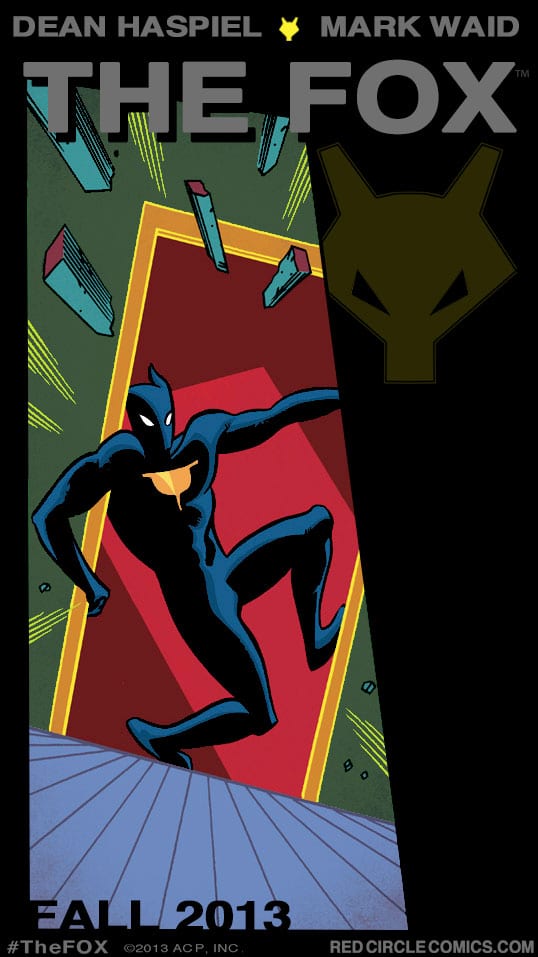

![[Ditko Monsters Gorgo Cover]](http://gallery.mailchimp.com/5792cac24346d164eb0cf6ad2/images/DitkoMonsters_Gorgo.jpg) This January, the world is set to come under vicious attack. As ocean waters tremble and churn, undersea volcanoes violently erupt, and the giant lizard monster Gorgo rises once again to terrorize a woefully unprepared populace!
This January, the world is set to come under vicious attack. As ocean waters tremble and churn, undersea volcanoes violently erupt, and the giant lizard monster Gorgo rises once again to terrorize a woefully unprepared populace!![[The Creativity of Ditko Cover]](http://gallery.mailchimp.com/5792cac24346d164eb0cf6ad2/images/CreativityofSteveDitko.jpg) San Diego, CA (May 31, 2012) – Celebrated, mercurial, enigmatic, and influential are a few words that have been used to describe legendary comics creator Steve Ditko. Co-creating Spider-Man and Doctor Strange with Stan Lee are only a couple of achievements earned by Ditko in his storied career.
San Diego, CA (May 31, 2012) – Celebrated, mercurial, enigmatic, and influential are a few words that have been used to describe legendary comics creator Steve Ditko. Co-creating Spider-Man and Doctor Strange with Stan Lee are only a couple of achievements earned by Ditko in his storied career.



![[Ditko Week logo]](http://gallery.mailchimp.com/5792cac24346d164eb0cf6ad2/images/Ditko_Week_Logo.jpg) San Diego, CA (January 29, 2010) – Now available in stores,
San Diego, CA (January 29, 2010) – Now available in stores, ![[The Art of Ditko cover]](http://gallery.mailchimp.com/5792cac24346d164eb0cf6ad2/images/Ditko_cover.jpg) co-creating of Spider-Man and Dr. Strange came about. More fascinating essays follow by Robinson, who created the Joker. John Romita described what it was like to follow Ditko on Spider-Man and P. Craig Russell gives careful insight into the task of inking his idol. Drawn during his little known “Innovation Period,” the twenty-eight stories exquisitely presented in full color amply show Ditko as a great auteur experimenting with, twisting, and transforming the comics form.
co-creating of Spider-Man and Dr. Strange came about. More fascinating essays follow by Robinson, who created the Joker. John Romita described what it was like to follow Ditko on Spider-Man and P. Craig Russell gives careful insight into the task of inking his idol. Drawn during his little known “Innovation Period,” the twenty-eight stories exquisitely presented in full color amply show Ditko as a great auteur experimenting with, twisting, and transforming the comics form.