Category Archives: Interviews

Alex Schumacher talks the Effects of Pickled Herring
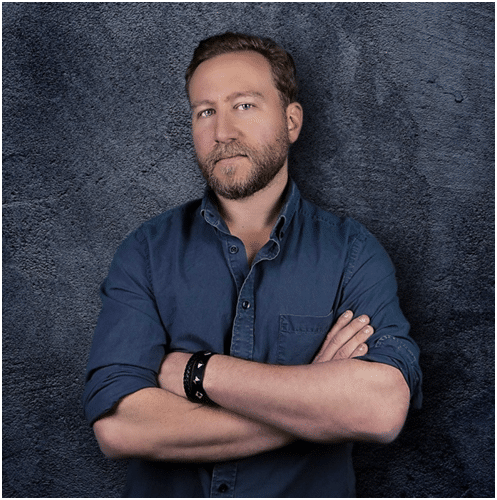
Alex Schumacher

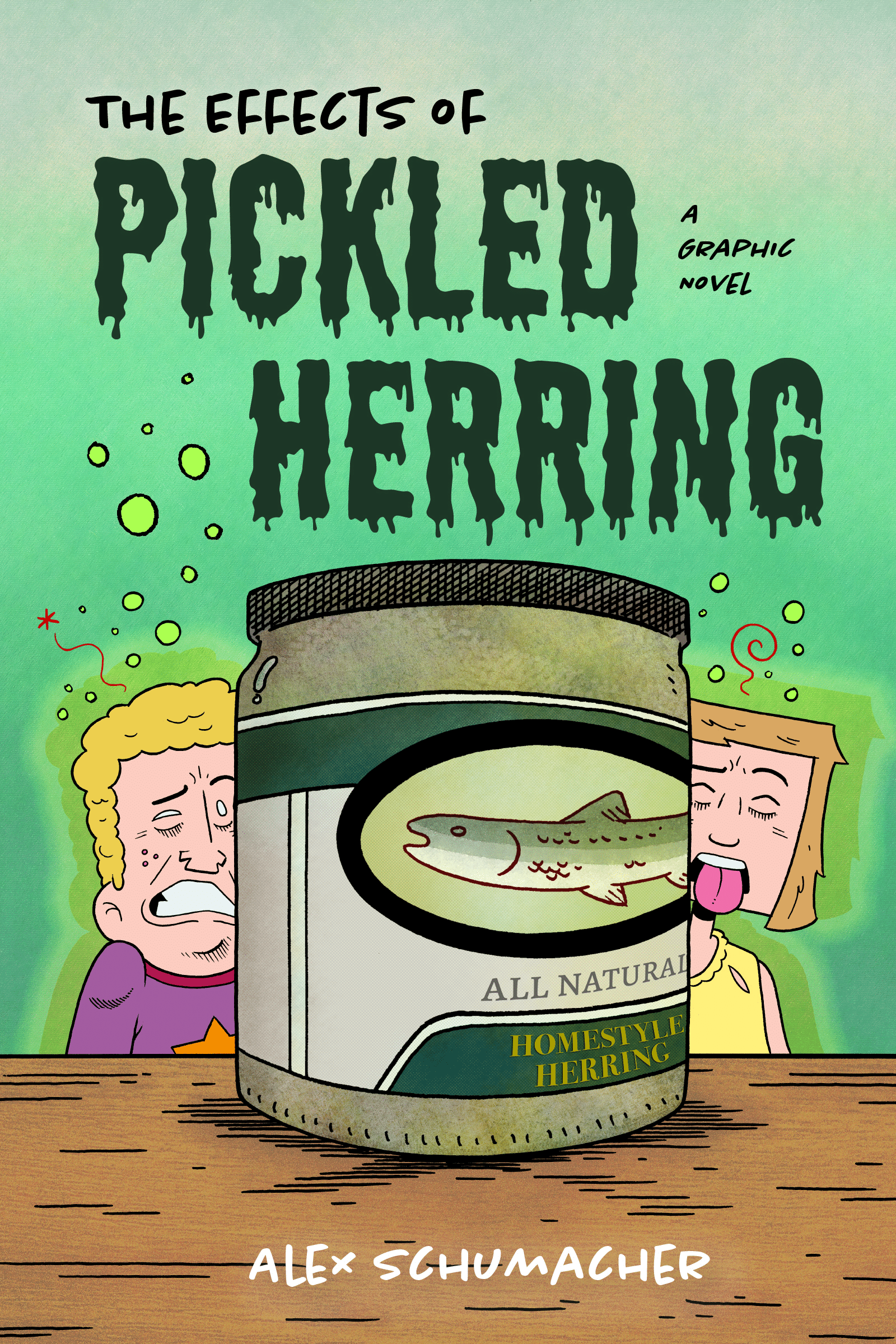
Recently released by Mango Press, Alex Schumacher‘s The Effects of Pickled Herring is a poignant coming-of-age graphic novel about sibling dynamics and the enduring bonds of family.

As he and his sister Alana prepare for their B’nai Mitzvah, twelve-year-old Micah Gadsky and his whole family feel the world shifting beneath their feet when they learn a heartbreaking truth about his grandmother. The stress of the season leads Micah’s introspective nature and Alana’s outgoing disposition to collide, creating division and discord at a time when the family needs each other most. Before Micah can become a man, he must brave the storms of grief, confront the complexities of growing up, and ultimately, learn to lean on love when life trips him up.

We recently got a chance to catch up with the very busy creator Alex Schumacher, the master mind behind the heartfelt The Effects of Pickled Herring.

Graphic Policy: What influence has growing up in the Bay had on your work?

Alex Schumacher: First and foremost, thank you for having me. I was actually brought up just a piece down the road from the Bay Area in a town rich with literary history—Salinas, CA. As you can imagine it wasn’t difficult to find inspiration in a place where the maestro behind The Red Pony, Of Mice and Men, Cannery Row, East of Eden, and many other classics was born. It was in the soil. It was in the air. That was the feeling of living on the same patch of earth that produced one of the great American novelists. His face and words were quite literally everywhere. In murals on sides of buildings, in the names of businesses, and of course we have the library bearing his name. In a locale where the main attraction is the Steinbeck Center—aptly named for a couple of reasons—you can throw a rock and hit something creatively stimulating. From a personal standpoint, I also consider myself incredibly fortunate to have come of age in a culturally diverse area. Until I moved away, I don’t think I fully understood just how much that upbringing genuinely enriched and affected my life.

GP: What were your favorite comics growing up?

AS: The earliest comics I remember being enamored with were the newspaper strips or “the funnies.”. I found them visually striking since there was such a broad range of styles and sensibilities on display. For me, when it comes to being attracted to another artist’s work, I’m always seeking individuality. Having so many singular voices collected in one place was riveting! Everything from the surreal to the simplistic could be found on the same crowded page. The Far Side, Calvin & Hobbes, Zits, The Boondocks, Stone Soup, Sherman’s Lagoon, Bizarro, et al., mesmerized me daily. The colossal Sunday editions in color could keep me occupied for hours. We were easily entertained before the internet I suppose. I’ve regularly heard that my artwork is reminiscent of the style one might see in comic strip, and I don’t think that’s a coincidence. When you find something that speaks to you on a very intuitive level at such an impressionable age it imprints itself on you.

GP: Is there a specific comics creators that influenced you?

AS: When it comes to influential creators in my life, the one that always immediately comes to mind for a shout-out is the late, great Morrie Turner who created Wee Pals and was something of a mentor to me. He was a friend of a friend of the family and invited me to visit him regularly at his home studio in Oakland between 2005 and 2009 during a period when I too lived there. We chatted about the approach and thought process behind producing comics. Mr. Turner shared his expansive collection of original art gifted to him over a lifetime of showing nothing but kindness to others. I pored over those stunning, tangible pieces of comics history and felt connected to something bigger than me in an entirely new way. It was with those stacks of handiwork by larger-than-life cartoonists that I learned an infallible truth about art: flaws are to be embraced, not shunned. Turn a smudge into a texture. For those rare clams you couldn’t finagle into something else there was always white correction paint. But Mr. Turner didn’t simply pass on tricks of the trade. More importantly, he taught me what it meant to be a humble artist. A considerate artist. An artist with flaws that were to be embraced, not shunned. There have been incalculable specific creators who have influenced me along the way since then. None loom quite as large as the inimitable Mr. Turner.

GP: Were there any manga artists/creators, such as Futaro Yamada or CLAMP that you were a fan of?

AS: You know, I’m regrettably a latecomer to anime and manga. It unfortunately wasn’t quite as ubiquitous when I was a kid. A few anime series were suggested to me a few years ago by a close friend who knows my tastes well. Love is War, Mix, and Your Lie in April were among them. I especially fell in love with Your Lie in April’sstorytelling, so I suppose Naoshi Arakawa may have made the biggest impact on me at this larval stage of my manga journey. Either way, studying those titles unlocked a whole other set of tools that made their marks all over the pages of my latest book. Without those series completely obliterating my perceived limits of comics design the entire aesthetic of The Effects of Pickled Herring would have been significantly different and—in my humble opinion—far less dynamic.

GP: Tell me about your love of comics?

AS: That is a well that runs deep. I could tell you about the time I discovered my Aunt Sari’s garbage bag full of silver age comics she had collected in her childhood. I could elaborate on the span of years where comics and I were estranged. Or even tell you about our reconciliation in my young adulthood upon being gifted with the knowledge that Michael Allred’s Madman exists. Full disclosure, the nature of my relationship with comics was on again-off again up until my mid-thirties. I’m passionate about music. I’m passionate about movies. I was WAY too passionate about drinking for a chunk of time. All of which made it easy to neglect one of my earliest entertainment objects of affection. That’s when Alison Bechdel found me and completely reprogrammed the way I thought about comics, bringing us full circle. There’s always something new to extrapolate from comics, be it about yourself, other people, and the world around you. Comics can break your heart, or they can make you whole again. They can connect people from around the world. There’s a breathtaking medley of fresh voices, perspectives, life experiences, etc., dominating the field and that seemingly only continues to expand. It’s an astonishing age for our medium right now and I’m here for it. 

GP: You grew up in a time, much like me, when Saturday morning cartoons, were a thing, what influence do they have on your work, if any?

AS: They had a tremendous impact on me! We were around for the sensational animation renaissance in the late eighties and early nineties which revitalized the creator-owned ethos in a lot of ways. In fact, I was so captivated that there was a time where I contemplated taking a run at the animation industry. Call it capriciousness or unearned confidence, but in early 2014 with no experience to speak of I even jumped at the opportunity to pitch some potential series ideas to the big studios. Nickelodeon. Disney. Cartoon Network. Alas it was not to be. It’s such a vibrant and exhilarating form of storytelling. My earliest memories of learning to draw were trying to replicate Disney VHS (look it up, kids) covers and intensely studying the oversized Walter Foster Animation with Preston Blair instructional book. The vast majority of my knowledge regarding the composition of hands was gleaned from the latter publication.

GP: Are there any influences outside of comics which you draw upon in your art?

AS: Tons! Animation, for starters since we were just discussing it. As part of the “MTV generation” I remember a block of programming called Liquid Television which featured several animated segments including adaptations of Art Spiegelman’s RAW magazine, the iconic Æon Flux, and shorts from one of my personal favorites, Bill Plympton. Music has always been an influential presence in my life, as it is for many creatives. While my tastes can be eclectic from Latin jazz to power pop, there’s a special place in my heart for punk. The kinetic energy captivated me and considering the genre’s Jewish connection with bands like The Ramones, Bad Religion, The Clash, Sleater-Kinney, et al., perhaps gravitating towards punk was operating on pure instinct. As previously mentioned, movies have played a pivotal role in my development as a spinner of yarns. Screenplays and graphic novel manuscripts are not all that dissimilar, so it’s no surprise. There’s much to be learned from film about dialogue, structuring, pacing, tone, visual cues, etc., and it not exactly the worst homework in the world. I’ve been bewitched by the written word since childhood. Both of my grandparents were avid readers and instilled in me a love of prose that exists to this day. My writing has by and large been both galvanized and flummoxed by the finesse of superb novelists. Watercolors and mixed media always blow me away as do feats of engineering—especially bridges! We need to give bridges more love. Anyway, a considerable amount of influence outside of comics.   

GP: What influence do your parents have on your work? What was their reaction, when you told what you wanted to do for a living?

AS: For reference, I was raised by my mother and her sister. They’re my definition of parents when I use that word. One of the beautiful things about languages and definitions is they evolve or go extinct right alongside humanity. Some people would rather certain definitions stay the same since change and differences can be challenging. But things have to shift to continue being relevant and representative of current times. While once thought of in restrictive binary terms, parent no longer solely means mom and dad. I’m proud that “parents” to me means Mom and Aunt Sari. If it wasn’t abundantly clear, my parents have an enormous influence on my work because my upbringing has an enormous influence when I’m developing characters. I think they both recognized from a young age that my central preoccupation was luxuriating in worlds of my own invention, and I would not be swayed. My entire family, Mom and Aunt Sari included, have been nothing but encouraging from the moment I announced my intentions to pursue this debilitating and brutal career path. They provided some much-needed pragmatism and parental wisdom, but not once did they attempt to deter me. 

GP: How did you get started in comics?

AS: The beauty of the format, a kind of whimsical dance between art and text, implanted itself early. I knew I wanted to be part of that dance, but over the years took several interdisciplinary detours. In my mid-ish to late twenties, I believed in my heart of hearts that I would be a syndicated newspaper cartoonist (as hinted at above). I was weaned on a regular diet of the funnies via The Smithsonian Collection of Newspaper Comics. What I didn’t quite realize at the time, since the transition seemingly happened at lightning speed, was the industry was not the viable option it once was. A good friend then invited me to join him in self-publishing a comic book series. Though comic strips are sort of the cousin of the comic book, the process included a steep and humbling learning curve. With that title we tabled at a few conventions at which point I also learned to network. Comic cons are at their core trade shows after all. This was how I effectively secured my initial graphic novel contract in 2013. There’s something so wonderfully intimate about the direct market in the sense that everyone from creators to editors to publishers are so accessible and, in most cases, more than happy to chat with aspiring artists. Of course, gatekeeping and unethical practices still exist, but comics is a unique microcosm in pop art, whose secrets aren’t as closely guarded as they tend to be in some other storytelling communities.

GP: When did you know working on comics would be your career?

AS: I’m not sure I necessarily knew I would ever successfully flip passion to occupation. What was apparent, at least since the art bug bit me as a youngster, was I would be consumed by the chase. In a way you have to give yourself over to it in order to forge any sort of career. It’s quite a daunting prospect when you actually take a step back and consider all of the factors—each improbable in their own right—necessary to catch a break. It is absolutely about hard work. It’s also to a lesser, but not insignificant, degree about luck. When I say that I’m not implying some sort of divine or cosmic intervention. I’m invoking the old adage, “Luck is when preparation meets opportunity.” It’s not a guaranteed payoff even when you put in the time. Even when preparation meets opportunity. Knowing this I persisted. I didn’t want to have any “what ifs” at the end of my time here and knew that fairly early on.

GP: Do you have any favorite comics you are reading right now?

AS: ODESSA by Jonathan Hill, which is technically a return to this beautiful book, but graphic novels are deserving of multiple read throughs. I’ve also recently started Lawrence Lindell’s BLACKWARD about building a place to belong and the power of community. On deck is the weighty tome DUCKS by Kate Beaton and I’m looking forward to diving in!
The Effects of Pickled Herring

GP: Can you tell us what lead you to decide to tell your grandparents’ story, and how different it is from The Effects Of Pickled Herring?

AS: Let me address the second question first. My retelling of my grandparents’ story is essentially a funhouse mirror version with the most notable difference being the premature appearance of grandmother’s cognitive decline. In reality, this affliction didn’t actually materialize until I was a bit older. Now the “why.” For me, my best stories tend to come from my own life, be it experiences I’ve had, or anecdotes others have shared with me. The Effects of Pickled Herring was no different. When all is said and done, this is a story that offers representation for a contingent of young Jews that is not often seen in literature. The perspective from the somewhere-in-between-cultural-and-religious-tween-Jew-Jew deserves to be heard and seen. If stories of my family’s shenanigans can make them (and anyone who’s felt like an outsider) feel less alone all the better. There’s also a longstanding tradition of storytelling being a method of families preserving history and traditions to pass down from generation to generation. I suppose to some degree I’ve come to think of my work under similar terms. More than simply recording a specific time in my formative years for posterity though, it’s just as much a love letter to my grandparents and my community than it is about anything. Those topics aren’t to alienate anyone, mind you. On the contrary, I wrote this book as a way to bring people in and start positive dialogues. We can only start to connect when we lift those shrouds of generalizations and give everyone a peek at what’s actually happening.

GP: How similar is Micah (the protagonist in The Effects Of Pickled Herring) to you?

AS: Micah is fairly similar to me, though not as similar as if I had written a memoir. I enjoy the freedom of detachment offered by veiled non-fiction (or roman à clef as the learned in literature would say). Liberties can be taken, and events or interactions can be exaggerated without offending or inflaming any parties who may have been involved. It’s tough to quantify since the fragmented factoids and supplemental fiction interweave constantly. While writing I hopscotch between real and imaginary so often the borders are completely blurred. In the good way though that further obscures similarities to actual persons (living or deceased), places, buildings, and pickled products.

GP: How similar is your siblings relationship is to Micah and Alana?

AS: In the same vein as Micah’s characterization, I exaggerate and manipulate the non-fiction elements to the point they are utterly unrecognizable as the truth. Many, if not all the major events in the story are informed to varying degrees by real incidents… None of which I would call an accurate depiction. If anything, I try to capture the soul or the vibe of personalities, relationships, events, etc. My sister and I definitely pushed each other’s buttons when we were younger, as most siblings are wont to do, but I also endeavored to capture the close bond that’s always been present. That was probably the element that I most wanted to cut through the noise. Even when we were at each other’s throats so to speak, I’d like to believe there was love behind it. Somewhere deep, deep down in the recesses of our hearts. Somewhere. Maybe. Regardless, I’m happy to say we enjoy a far more peaceful and supportive relationship in adulthood.

GP: What kind of reception have you had with The Effects Of Pickled Herring?

AS: It’s thankfully been overwhelmingly positive, and people seem to be excitedly connecting with the story. I have obvious concerns since we find ourselves in an era where book bans targeting marginalized groups are happening again, but thus far most of the feedback has luckily been the exact opposite. The inclusion of cultural elements was nonnegotiable for me, but I was almost obsessed with ensuring it wasn’t alienating. In this context, it may be best to include an outside opinion. The magnificent Brian Fies, celebrated creator of Mom’s Cancer, A Fire Story, and The Last Mechanical Monster, graciously allowed me to share his thoughts on the matter after reading the book. “For what it’s worth, you never lost me. I thought you were very smart in how you explained the symbolism and significance of the food, prayers, preparation, etc. Even if I never lived it, I understood what a big deal Micah’s bar mitzvah was to him. I appreciate that; it’s a narrow road to walk between condescending and leaving a reader hanging. I thought you balanced it just right.” I’ve been exceedingly grateful for the thus far warm reception.

GP: How does your family feel about it?

AS: Though my grandparents are unfortunately no longer with us to react, I have zero doubt they would have been nothing less than riotously happy. The rest of my family are over the moon. It’s emotional as many details are pulled from one of the more tumultuous times in my family’s life, but they understand and agree that sharing this story is truly about honoring my grandparents and respecting the intelligence—both emotional and mental—of the readers. As my mother was a teacher for 33 years, she categorically approves on both fronts. The audiences of children’s literature want and deserve more complex, or even chaotic narratives to actually reflect some of what they’re experiencing. They’re not almost people. They are people. They live perplexing lives with perplexing issues. The least I can do as an author of books for younger readers is acknowledge that.

GP: What do you want readers to get from The Effects Of Pickled Herring?

AS: The same thing I hope they get from all my books—that they’re loved, even in a world that can often times feel particularly unloving.

Interview: Zack Quaintance finds the life of comics in DEATH OF COMICS BOOKCASE

comics bookcase

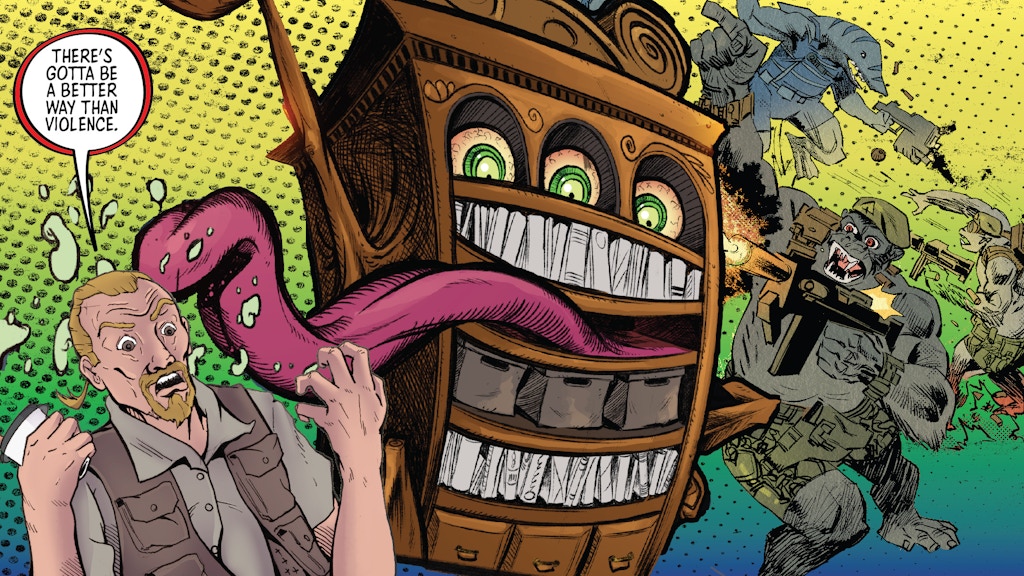
Including the word ‘death’ in the title of a comic book could suggest that a funereal tone will be taking charge of the proceedings. But that’s not the case with Zack Quaintance’s Death of Comics Bookcase, Vol. 1, an anthology comic that takes a magnifying glass to the medium and finds it can celebrate, mourn, and offer necessary warnings on the future of comics by way of werewolf priests, living comics bookcases, and morally haphazard wizards.

The project, which hopes to get funded via Kickstarter, tackles a different genre in each of its stories, from fantasy and horror to superheroes, but they’re all woven into a wrap-around story that centers on the titular Comics Bookcase. The variety on display makes the book feel like a roadmap for all the things comics can do, highlighting the richness of the medium. It’s a book that accounts for a life in comics, which Quaintance has certainly led and is still living (he is currently the Reviews Editor for Comics Beat).

There is one thing that brings all these stories together: Quaintance’s sharp approach to satire. No instance of humor is there for the sake of a punchline. There’s thought put into each joke, of the kind that will inspire staring into distance to reflect upon the meaning behind some of them (like when you’re watching a movie and you realize the sword is actually a phallic symbol, or that the main villain is a stand-in for the author’s mother).

One story stands out for how personal it feels while still managing to be a solid horror story. The Werewolf Priest, illustrated by Anna Readman with colors by Brad Simpson, follows a journalist on the heels of a story about a priest that’s rumored to be a werewolf. It has the satire locked down, but it also succeeds in becoming a gleefully gruesome monster-of-the-week yarn that looks at immigration and the loneliness that comes with being a journalist in the process (pulling from Quaintance’s previous experience in the field). It’s strong enough to be its own comics series and it is a definite highlight.

Quaintance scripts all the stories but is accompanied by a different artist in each one. PJ Holden, Nick Cagnetti, Luke Horsman, Ryan Lee, and Pat Skott all lend their talents here.

I corresponded with Quaintance to get at just how Death of Comics Bookcase came to be, what goes into Kickstarting a book, and why that Werewolf story is so damn good.

RICARDO SERRANO: Anthology comics can be strange creatures as they let you flex different storytelling styles while still feeling part of a unifying vision. You go for a different genre per story here. What did you hope would come through in each segment to keep it all together?

ZACK QUAINTANCE: I didn’t initially plan to connect them at all, outside of the Death of Comics Bookcase framing device story that runs in between each. But in the process of working on them, a shared sensibility started to emerge. I really like comics that take absurd concepts seriously, and that’s absolutely what ended up unifying the book. The high concepts are very pulpy — whether it’s a werewolf priest or a war between sharks and apes — but there’s depth beneath that pulp, too.

SERRANO: One thing that’s present in each story is humor. Each one has its own tone though. What do you find in humor that helps you tell these kinds of stories?

QUAINTANCE: The humor just kind of showed up. At no point did I think to myself, ‘Okay, time to make this funny.’ I spent quite a bit of time thinking about each story before and during scripting. I had the concepts for each early, but it took a long time to figure out how to first introduce readers to each world and then later how to wrap things up in ways that felt satisfying. At a certain point, I think I started trying to entertain myself. The longer I tinkered, the more jokes started to creep in.

SERRANO: One of my favorite stories from the book is the Werewolf story, which actually says a lot about journalism in the process. It feels personal. How did you come about this story?

QUAINTANCE: That story is based on my life. Well, sort of. I’ve never seen a werewolf, but after college, I did get a job at The Monitor in McAllen, Texas, on the U.S.-Mexico Border. My first beat was night cops. It was a really rough time. I was 23 and didn’t know a single person for hundreds of miles. I’d drive around at night from car crashes to murder scenes to incidents with Border Patrol. I had really idealistic notions about reporting, but the paper there was on hard times. Nobody was reading it, nor did anyone respect it as a community institution. It was an intense mix of loneliness, violence, and professional futility. So, the comic has monsters, but for me the real horror is the young journalist reconciling his expectations with the reality of his job. 

SERRANO: This isn’t your first time around Kickstarting a book. How have these experiences differed and what’s surprised you the most on this one?

QUAINTANCE: The last time I did a Kickstarter campaign, it was August 2020. Comics Twitter was alive and well, which made promo easier, or at least more centralized. Now when I have something new to unveil, I have five platforms to put it out on, and each one of those platforms works a little differently in how you have to court engagement. It’s more time consuming. The way I think about it is promo has gone from taking a highway, to taking a muddy road. You can still get where you’re going, but it’s going to take more pushing and patience.

SERRANO: Already thinking of book 2? More Death of Comics Bookcase on the horizon? 

QUAINTANCE: Absolutely! The plan as of now is to do at least three volumes. I’ve already got an idea of what will be in the second book, some of which will look familiar to readers of this volume. In fact, the only way there won’t be more Death of Comics Bookcase is if we don’t fund this one. I should also point out that two of these stories — The Werewolf Priest and Goldmask! — were designed as backdoor pitches. And while it wasn’t initially going to be, Nick Cagnetti and I changed the ending of Responsibili-Teen ever so slightly to make it so that character could also return. That’s a long way of saying, yes, absolutely. And the second volume would obviously be Reign of the Comics Bookcases.

You can find the Kickstarter page for Death of Comics Bookcase, Vol. 1 here.

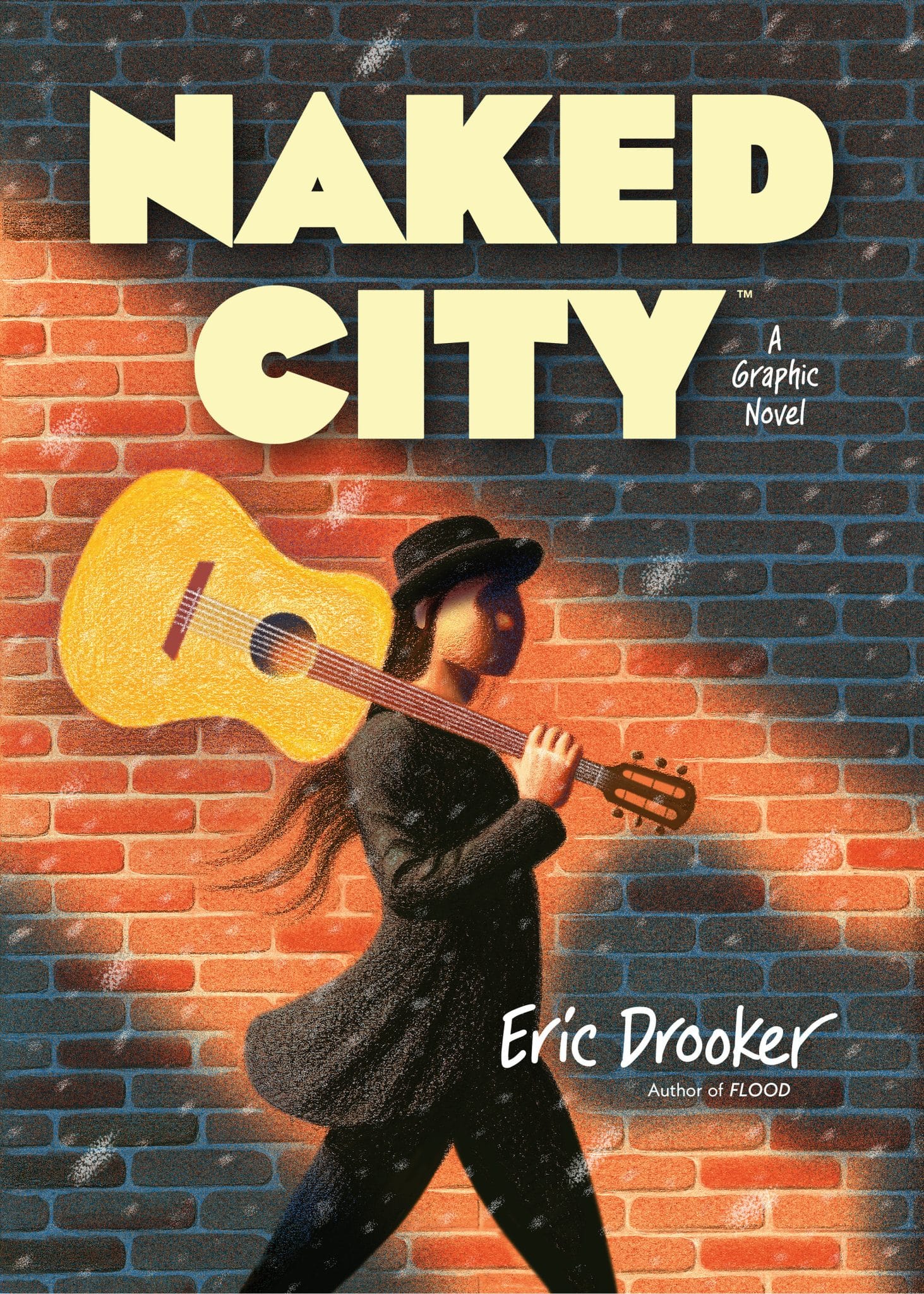
Get a glimpse into what it means to create in the modern era in Eric Drooker’s Naked City: A Graphic Novel

Arriving this fall, Dark Horse Books presents Eric Drooker’s long-awaited third original graphic novel, Naked City: A Graphic NovelNew York Times Editor’s Choice creator Eric Drooker brought comic book fans into an entirely new world with his award-winning Flood and Blood Song, and now expands on these with a new epic meditation on art and life. Blood Song is soon to be a major motion picture, and longtime fans or new readers alike can now explore the story-in-pictures style of Drooker’s expressionist, politically conscious storytelling in a new volume.

In this long-awaited graphic comedy from celebrated New Yorker cover artist, Drooker, three bohemians struggle to answer the question: “Is it possible for an artist to survive in the 21st Century?” A young singer poses for a painter who has shifted from landscapes to nudes, and both of them learn a thing or two about the purpose of art and the meaning of success. The original graphic novel Naked City takes us inside the head of native New York artist, Eric Drooker.

Naked City: A Graphic Novel will arrive in hardcover (6.25″ x 8.75″, 336 pages) on bookstore shelves October 8, 2024 and comic shops October 9, 2024. Pre-order at your local comic shop, bookstore, Amazon, or Barnes and Noble for $29.99.

Naked City: A Graphic Novel

Space Ghost! We chat with David Pepose about the new Space Ghost comic series!

The legendary guardian of the spaceways returns to comics this May, as Dynamite, Warner Bros. Discovery Global Consumer Products, and a heavy-hitting creative team led by David Pepose and Jonathan Lau present a new era for the hero Space Ghost!

Greed and corruption flourish in the darkness between stars. The Galactic Federation’s territories are spread across the cosmos, far and wide in the vastness of space. At the scale of the cosmic landscape, pirates, hijackers and other nefarious actors are able to slip stealthily through the pitch black, ransacking distant colonies with cruel disregard for the innocent scientists that inhabit them. They’ve often been able to get away with impunity. Yet a powerful force is set to put a stop to this, a cosmic vigilante who metes out justice throughout the known galaxy, bringing vengeance to those who prey upon the defenseless.

Evil cannot hide from the gaze of Space Ghost!

We sit down and chat with David Pepose, the writer of the new series! To say we’re excited is an understatement. Don’t miss out on this. Make sure to pre-order it from your local comic shop!

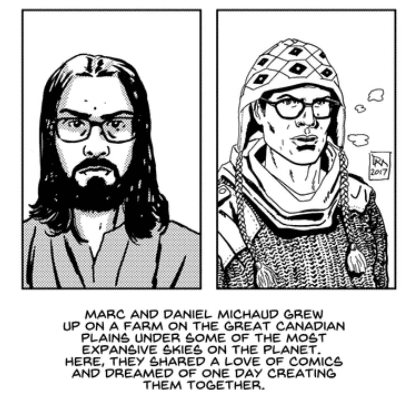
The Michaud Brothers discuss the Cartoonist Cooperative and HΩME Vol. 3

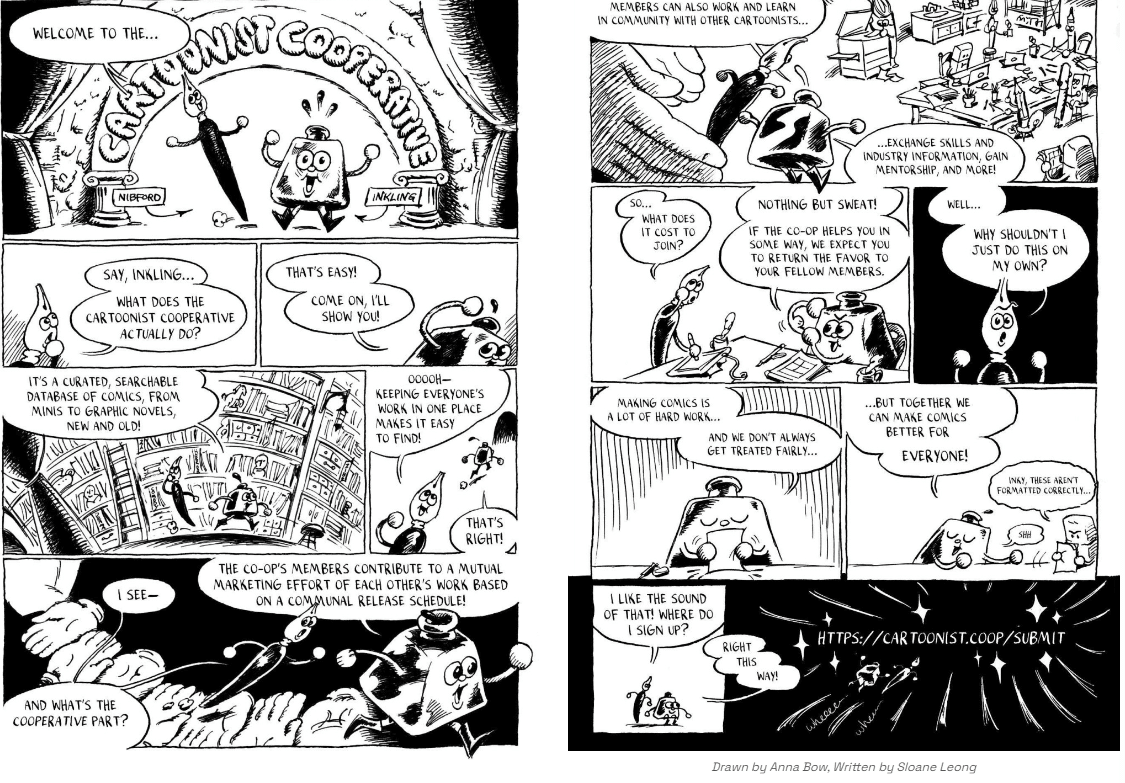
CJ Standal chatted with cartoonists Marc and Daniel Michaud on the recent release of HΩME Vol. 3, the latest and largely stand-alone entry in their HΩME series. They also discussed Marc’s experience being a member of the Cartoonist Cooperative in general, along with his experience having them select HΩME Vol. 3 as one of their campaigns, one of their cartoonists’ releases to support (disclaimer: CJ Standal is also a member of the Cartoonist Cooperative).

15 page preview of HΩME Vol. 3

Graphic Policy: Describe your graphic novel (each of the stories) and why readers should check it out. Also, where can readers get HΩME?

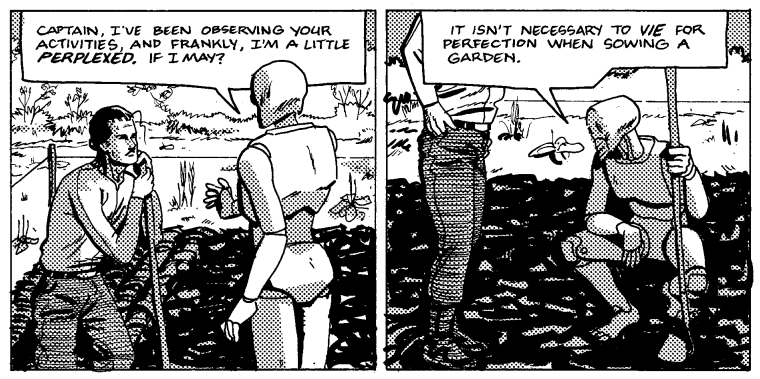
Marc Michaud: HΩME is a soft sci fi series that I do with my brother, Daniel Michaud, where we each write and draw our own stories set in a shared universe: ARC29 and DEMETER. Think Star Trek meets Little House on the Prairie with a touch of David Lynch.

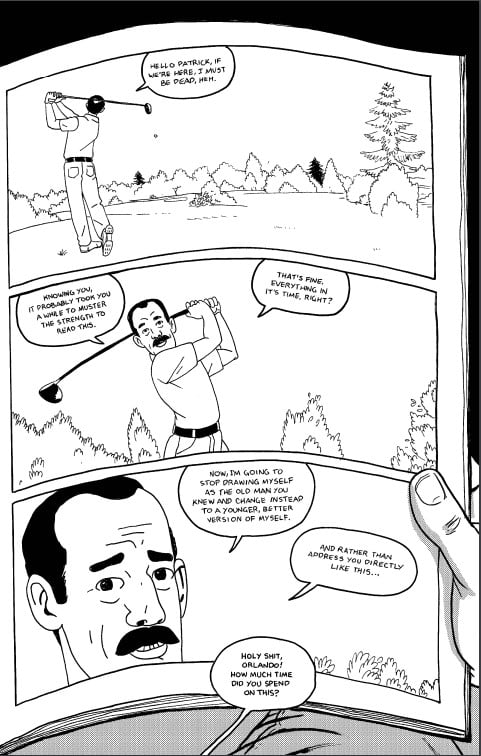
In ARC29, Patrick, the protagonist and captain of the ship, decides to read the journals left for him by his now deceased mentor, setting up a story within a story where Patrick learns more about his friend.

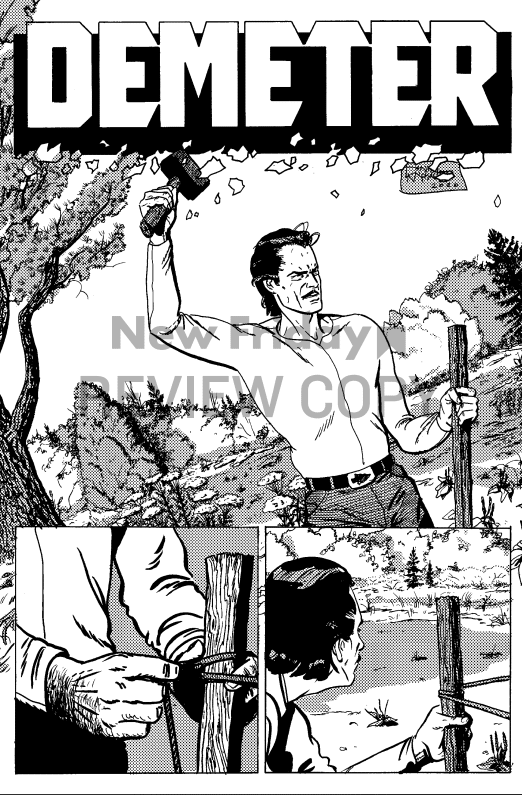
In DEMETER, Captain Thoreau is spiraling as he is confronted with the difficult choices he must make ahead of settling this new, harsh, planet. His delay has Cyril confronting him, asking “Where is the Captain?!”

I think readers should give it a try because it feels like long form serialized comics are getting to be rare in the indie sphere and I’m here for the long haul. 

The books can be ordered at your local comic shop, online or on my website homecomics.ca

GP: Brothers working in a shared title and/or universe isn’t completely unheard of in comics (the Hernandez brothers and brothers Ba and Moon leap right to mind, for instance), but it’s always an exciting situation.

What is it like working with each other in the same universe? 

MM: Generally, it’s a very positive experience. I use Daniel as my sounding-board as well as a critic, helping me get the best possible page or sequence. He is also my first reader, so he tells me what does and doesn’t work. I trust and value his opinion so this is a very important step in my process. 

Daniel Michaud: As stereotypical as it may sound, it just feels totally natural. We’ve been collaborating and sharing discoveries in our artistic practices in some way or another since childhood.

GP: How much of your separate stories are planned ahead of time and how much of the stories evolve based on what you’re seeing the other do?

MM: The stories are separated in continuity by about 400 years or so, meaning the characters don’t affect each other in direct ways. We share locations, ideas and a robot, otherwise the stories mostly stand on their own, all while informing and enriching each other. 

DM: Marc generally keeps his cards close to his chest when it comes to his stories. He’ll send me “roughs” that I dissect and comment on. I, on the other hand, need input as the stories grow. I call him on the phone when needed.

GP: How do you resolve any disputes between you two, whether there is a difference of opinion for content, storytelling style, or publishing/marketing decisions?

MM: Rarely, we’ll argue over a story element but it’s usually resolved quickly. Since we’ve worked hard to keep our stories connected but separate, most of these issues are minor details. Some things have been added or altered in my story to accommodate his and vice versa. We talk nearly daily on the phone, usually touching on the comic in some way before veering into whatever else might be of interest at the time. It can get fiery but our goal is always to make the best comic possible, so we work it out.  In terms of publishing and marketing, I usually take control and make the decisions after consulting with Daniel. 

DM: Working in comics has actually greatly reduced our disputes. Painting murals, on the other hand, things weren’t always so rosy. We’d frequently raise our voices and get in each other’s faces about silly things like value schemes and colour choices. Nowadays I’d say that the disputes are mostly centered around my current productive output.

GP: How much world building did you two do together before you created anything? How much do you have to do, if any, as you’ve created more graphic novels in this shared universe?

MM: Not much. I’m a fly-by-the-seat-of-my-pants writer, for the most part. I planned the first book of ARC29 and left myself many holes that I would have to fill as I went along. 

DM: Hopefully there’ll be much more to come. DEMETER has been much more about the founding rather than the colony itself. I anticipate working closely with Marc when it comes to world building on the planet as it will invariably influence his story.

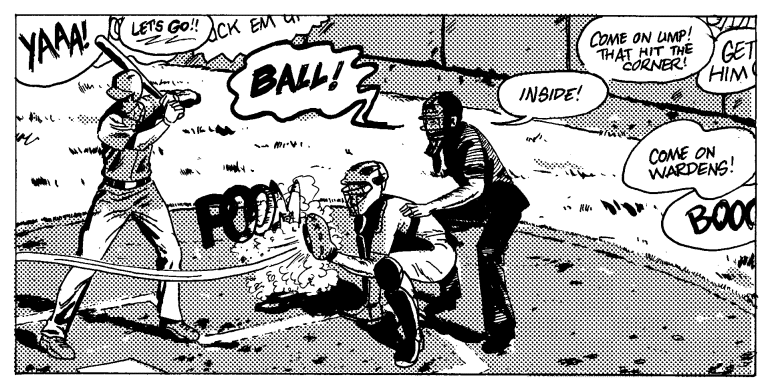
GP: One of the similarities between both of your stories and styles that I noticed was that you both seem to evenly balance futuristic things like spaceships and robots with more contemporary things like baseball and horses. Was that intentional and why so? Or, if not intentional, why do you think that happened?

MM: It was intentional from the start. My core concept, for ARC29, was to develop three storylines that I could jump between as I wished: Patrick’s tale of leaving Demeter and inheriting the ship, Orlando’s journals and last, the colonization of Demeter some 400 years earlier. When I initially explained this concept to Daniel, he immediately saw the scope of the project and offered to take over the telling of the settlement, to which I agreed wholeheartedly. The original idea was to have this settlement on a backwoods planet that would resemble, in large part, the difficult situation facing the pioneers in northern Canada. Daniel had long talked about making a comic that was essentially a soap-opera about pioneers, so we transplanted that idea into a sci-fi colony.

GP: I also noticed that you both like the story within the story approach, not just on the level of you each doing your stories in the same universe but also in both using extended flashbacks. Did you both do that intentionally, and if so, why? If not, why do you think it happened coincidentally?

MM: I think it happened coincidentally. It has to do with the way the stories are structured that flashbacks become necessary to tell the whole thing, especially since our stories happen at separate times. It becomes difficult to have a “now”, if that makes sense? 

DM: I just can’t think of another way to tell a story

GP: You’re a member of the Cartoonist Cooperative, and HΩME is one of their featured campaigns. What has your experience of the CC been generally?

MM: Very positive. The idea that there’s a group of like-minded folks that are helping expose my work to more people is amazing. Given the nature of indie publishing today, where the artist is also the promoter/marketer, this is a wonderful thing to have, especially since I’m not very active on social media and am not yet a well known artist. The sense of community fostered by the cooperative is also invaluable. The solitary nature of cartooning makes it easy to isolate oneself and the coop acts almost like a remote support group. 

DM: Marc is totally satisfied and is genuinely excited when he talks about the CC. I think it’s a noble initiative which aligns with my values. Cartoonists helping cartoonists.

GP: It strikes me that working as a brother team in your shared universe might be good prep and practice for working with the CC. In what ways has working together prepared you to work with the CC and in what ways has working with the CC been different?

MM: With the CC, I’m appreciative of the smallest action; a post or shared post, an email sent or an interview. I would never tell anyone in the coop what to do, the same can’t be said between brothers, haha 

DM: I’m not exactly very active online, but please tell me what I can do to be of service to the CC.

GP: How has your experience with them on the campaign specifically been? In what ways have they helped you and your graphic novel’s launch?

MM: We’re still actively in the campaign, but so far I think it’s helping it get seen, through posts and shares and emails to websites and influencers and such.

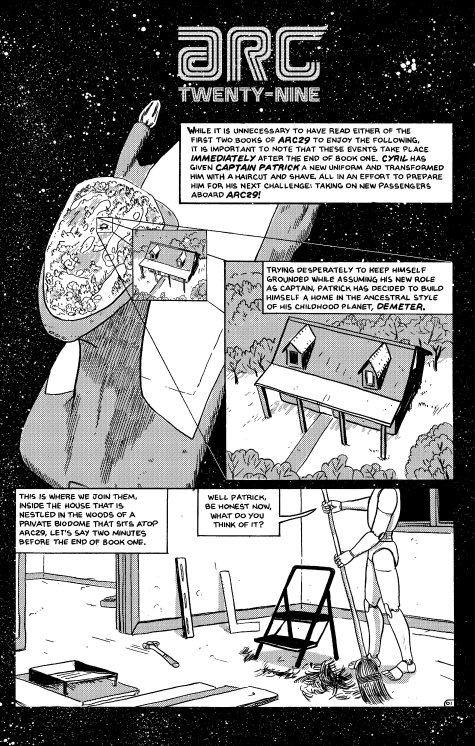
GP: I didn’t read the previous ARC stories but found this easy to understand and pretty much self-contained, which was your intention, clearly stated at the beginning.

GP: The exposition paragraphs at the beginning that places this story in the series’ context is something that is a little more old-fashioned in today’s comics. The rest of Arc, in terms of storytelling, feels much more contemporary (thinking of a lot of the silent pages/filmic storytelling). In light of this, why choose the more traditional, expositional approach at the beginning?

MM: This is the first book that I use this tool since book one starts in situ and book two is a flashback to Patrick’s youth with no direct connection to book one. With book three being a direct follow up to one, chronologically at least, I felt the narration was needed to establish where and when we are, for new readers as well as those who’d read the first two. It never occurred to me that it was old-fashioned but given the retro style we’re working with, it does seem to fit nicely. I think it also speaks to the mish-mash of influences in my work.

GP: Other than what I mentioned above, I do sense a fusion of new and old approaches in content and storytelling. In what ways do you feel like your work is more traditional and in what ways do you think it’s more innovative?

MM: I think my work is traditional in the sense that I’m trying to reach the heights of the classic storytellers working in black and white and tone. My working method is a hybrid, thumbnailing on paper, roughs and pencils are done digitally then printed in non-photo blue and inked/lettered by hand. I think my work is innovative in the focus and structure of my stories, having multiple storylines to jump to. This becomes much more evident in book 4 ;)

GP: How did you accomplish this, making a self contained, yet serial, story? What story or character elements did you leave out from previous volumes and how did you decide what to take out/leave unsaid from previous volumes vs. what connections to make and leave in? 

MM: You’ve touched on what is one of the trickiest parts of writing, as far as I’m concerned. My goal is to write what feels like a complete story every time, so that a new reader can feel like they’ve understood enough but if they’ve read the rest, it will be richer for it; not necessary, but better and certainly bigger. With each successive volume, I’ve tried to increase the scope of ARC29.  I can only hope that I’ve been successful in this task.

GP: How does that approach compare to the way you produced other Arc stories in previous volumes of HΩME?

MM: Since the previous volumes are out of chronological sequence, I felt it was easier to keep them as separate, complete stories. The new challenge, in book three, was to connect it to the previous books and use them as a framing device to tell a new complete story within a story.

GP: In what way do you think Arc compares/contrasts with Demeter? In other words, what does it add to HΩME that Demeter doesn’t, and what do you think Demeter adds that Arc doesn’t?

MM: If nothing else, ARC29 brings volume. For multiple reasons, I’m able to produce more pages faster, so there’s substantially more ARC29. I also think the multiple storyline approach brings some vitality to the project. DEMETER is a much more singularly focused story that is only starting to take shape. I have the advantage of knowing where it’s headed and its epic nature, which is in contrast to ARC29’s smaller scale, personal stories. 

GP: I didn’t read the previous Demeter stories but, like Arc, I found this easy to understand and pretty much self-contained.

DM: Thanks, that means a lot.

GP: AArc had an exposition paragraph at the beginning that placed that story in the series’ context. You didn’t do that here. Why?

DM: Comics are really hard, it’s honestly just something that I forgot to do. When my editor read and commented on the book, he suggested that I help the reader with more “signposts” in the future, which makes total sense. You can expect an exposition paragraph and other various “signposts” starting in book #4!

GP: How did you accomplish making the story self contained, especially without beginning expository captions? What story or character elements did you leave out from previous volumes and how did you decide what to take out/leave unsaid from previous volumes vs. what connections to make and leave in? 

DM: Marc has always spoken about the importance that his books be self contained and it makes sense to me. It’s difficult to judge if I succeeded without having outside readers such as yourself tell me it works. It’s been a very challenging to pull off because I set myself on a very strange path starting in book #1. Marc had already drawn his entire story (twice if I’m not mistaken) before I had the opportunity to devote myself to the project. Knowing I couldn’t draw a 40+ page story within a reasonable amount of time, I decided to create a 15 page preview. Much like a movie trailer with loosely coherent themes and abrupt ellipsis, book #1 anticipated stories I’d tell in the next 4-5 books. As of book four I’ll be out of that hole and on to vastly different comics.

GP: In what way do you think Demeter compares/contrasts with Arc? In other words, what does it add to HΩME that Arc doesn’t, and what do you think Arc adds that Demeter doesn’t?

DM: When we were younger and exploring psychedelics, it struck one day that Marc was always looking up at the sky, pointing out clouds, colours, birds and stars. My attention was always focused on the ground. At the plants and mosses and the little life.

GP: Is there anything else you’d like to mention?

MM: I’d like to thank you for the thoughtful questions and the coop for their help in promoting the book. Look forward to more HΩME comics, book 4 is almost done! 

DM: Thanks for taking the time to read the comic and for all of your effort in contributing positively to the milieu.

Josh Tuininga, talks music, and the story behind We Are Not Strangers

Josh Tuininga

I recently got a chance to catch up with the very busy creator Josh Tuininga, the master mind behind the brilliant We Are Not Strangers.

Graphic Policy: What influence has growing up in the Northwest had on your work?

Josh Tuininga: Well when you grow up in an environment that is wet, cold and dark for the majority of the year, you better well find something fun to do indoors! I think living in the Pacific Northwest has had a very positive impact on my working habits. It’s made me come to really appreciate our long rainy days where I can build a fire, hunker down and just draw and write.

GP: Can you tell me about working with 4Culture?

JT: 4Culture is an Arts & culture organization with funding workshops and public art programs here in Washington State.  I had never applied for a grant before and they made it an amazing experience.  It helped me lay out a plan for my graphic novel project and get initial feedback and encouragement.

GP: Can you tell me about your time at The Medium?

JT: When I graduated from art school, I struggled to make a living selling my artwork and drawing comics. So, I decided to try something else that might help me pay the bills – Graphic Design. I learned as I went and my client base grew quickly so I enlisted my wife to join me and we formed our small little design company, The Medium. Now, we create designs for large corporations, non-profits, local mom & pop shops and everyone in between. This year marks our 20th year as an art + design agency.

GP: Can you tell me about your other career as a musician , especially the music you make with your wife?.

JT: A career? If only! I am a hobby musician. My band, To The River is a collaboration between my wife and I. We have an album on Spotify which we released during the Pandemic. Our music combines elements of analog instrumentation with electronic synths. If you like home grown experimental electronic music with vocals, you should definitely check us out!

GP: Tell me about your love of comics?

JT: I fell in love with comics as a young child, reading newspaper funnies, comic books and creating my own comic strips for my school newspapers. But my dad was a fine artist, and he emphasized the prestige of fine art over cartooning. Determined to be a “real artist,” I attended a fine arts college which was a great experience. I gained a ton of skills and learned about so many disciplines and conceptual ideas. But every once in a while I’d find myself rolling my eyes a little. There was a bit of an elite, pretentious vibe surrounding everything. It was like I was in a secret club for highly educated artsy people.

Slowly but surely, I began to make my way back to comics and I’m so happy I did. Comics are for the masses. Instead of artwork that is closed off in an exclusive art gallery, comics are for everyone. And on the flip side, everyone can make comics. With just a pen and paper, anyone can tap into the same creative potential that produced our most beloved masterpieces.

Why Blue?

GP: What was your inspiration behind Why Blue?

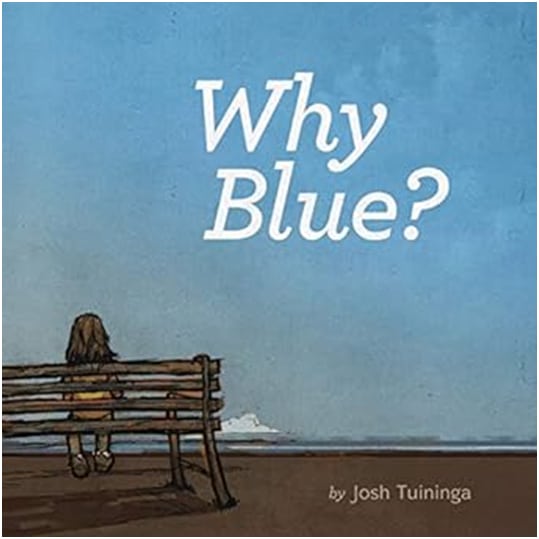
JT: When I had kids, I found myself reading countless children’s books to them at bedtime. Some of the stories I read were amazing. Others weren’t so great. After a while I thought to myself – hey, maybe I should give this a shot! How hard could it be? Turns out it wasn’t so easy. Why Blue? is only about 30 pages and it took me years to finish it!

GP: What do you want readers to get from Why Blue?

JT: Why Blue? tells the story of a little girl who loves asking questions. She asks the classic question “Why is the sky blue?” And she isn’t quite convinced by any of the explanations that she’s getting. In the end she realizes it’s up to her to take all of these answers in, and determine her OWN path.

I wanted to write a book that encourages kids to question the world around us. To be creative, critical and independent thinkers. Which is no easy task raising kids in a world that is constantly telling us how and what to think!

GP: What kind of reception have you had with Why Blue?

JT: Why Blue? was picked up by Xist Publishing in 2012 and it’s still going strong! It’s been translated to Spanish (Por Que Azul?), and I still hear from parents who have discovered it and read it to their kids before bedtime which makes me very, very happy.

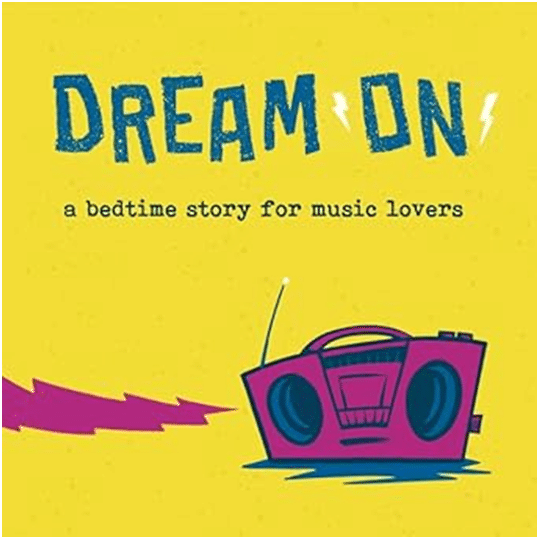
Dream On

GP: What was your inspiration behind Dream On?

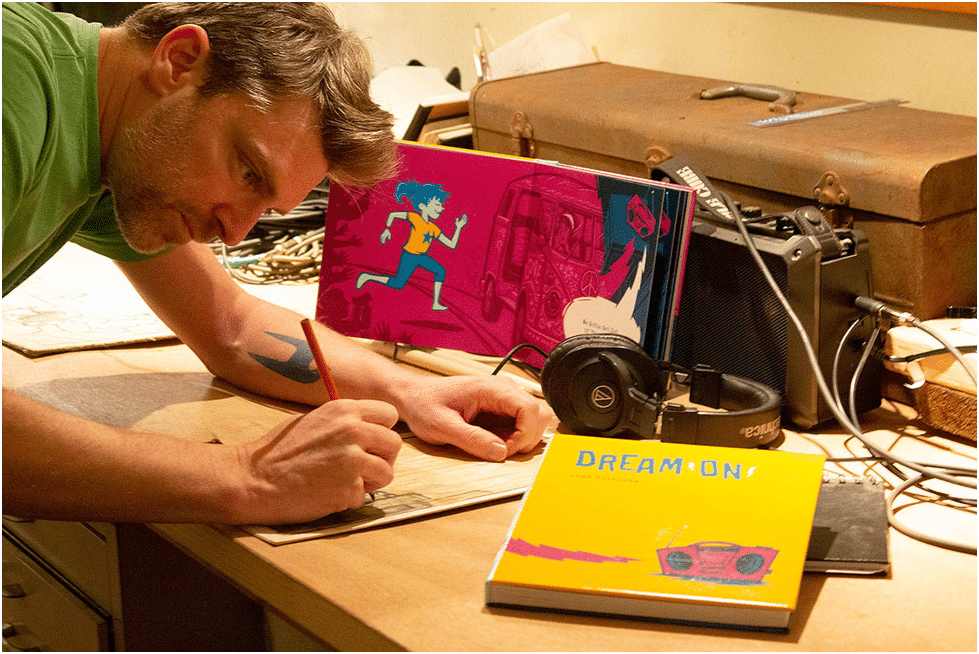
JT: When I was a kid, my house was filled with music. My parents didn’t just play the music they grew up with in the 60’s, they also introduced me to the music their parents grew up with. Listening to music from so many time periods not only brought us closer together but it also gave us a platform to talk about what the musicians were saying. I made Dream On because I like connecting through music and interpreting an artist’s message. Not to mention, it’s pretty freaking cool when your kids ask you to put on a Doors album and you get a break from bubblegum pop.

GP: What kind of reception have you had with Dream On?

JT: Dream On was my first attempt at a crowd funded project. I funded it through Indiegogo and it was an amazing experience to see my work get supported by my community like that. I will always be thankful to all of the backers who turned my idea for a children’s book that is written entirely with song titles, into a reality.

GP: What do you want readers to get from Dream On?

JT: First and foremost, Dream On is a tribute to Classic Rock and R&B music. I made this book because I want kids to grow up with a love for great music from the past. If you want to introduce your kids to the classics, or if you just want a fun anthology for your library, Dream On is the perfect book for you!

We Are Not Strangers

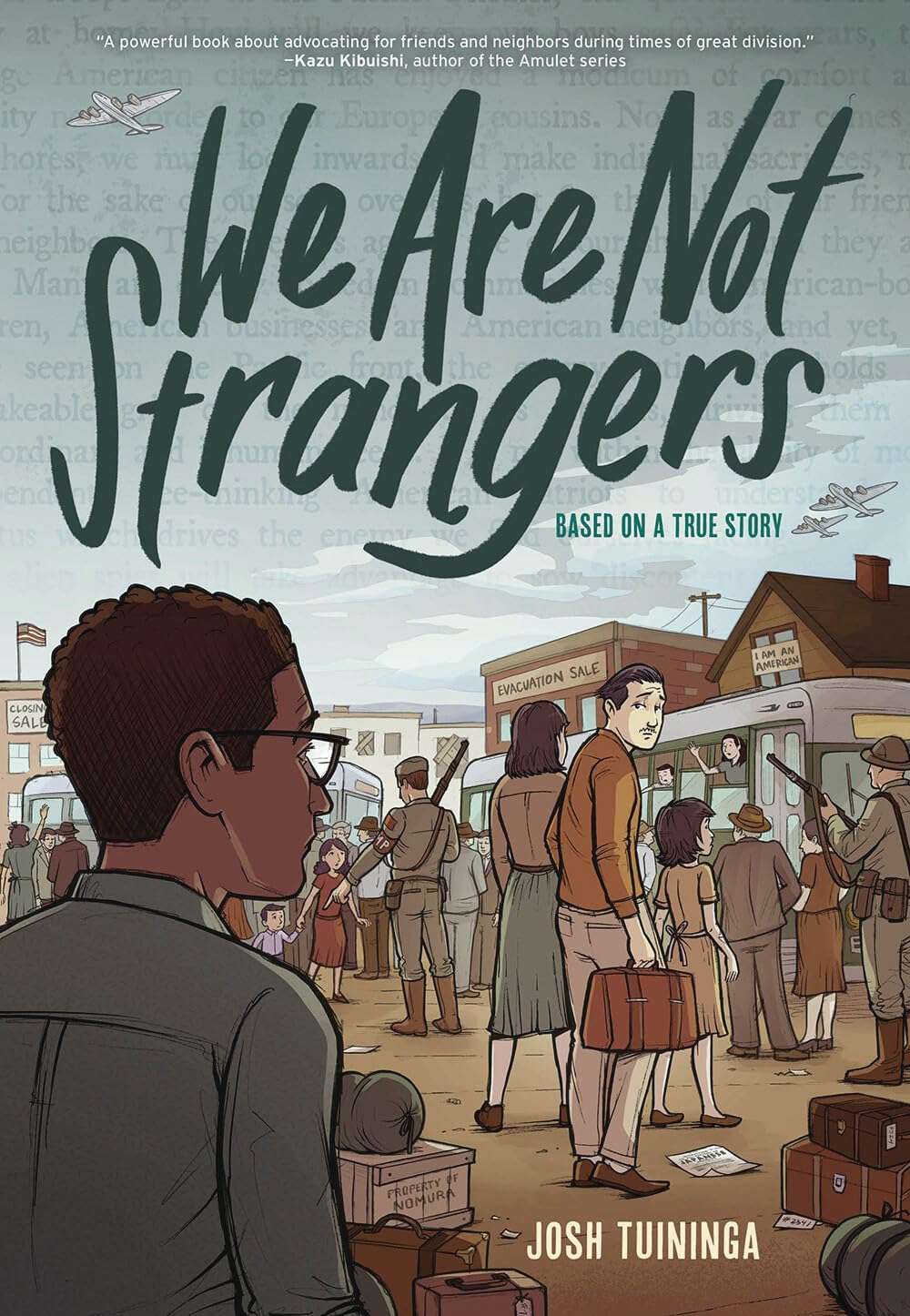
GP: Can you tell us the story about how did you come to find about your grandfather’s story, and how different it is from We Are Not Strangers?

JT: This project started with a story my Uncle told me about attending his Grandfather’s funeral. It was a typical Jewish event. Close family, friends, relatives he hadn’t seen in years. But there were some people he didn’t recognize at all. A handful of Japanese American guests began to arrive and no one knew who they were or why they came. What my Uncle found out is that his Grandfather had helped these families when they were forced out of the neighborhood and incarcerated during World War II.

His story only took a minute to tell but for the next few days I couldn’t stop thinking about it. How does a Jewish immigrant, with family still overseas threatened by the holocaust end up helping out his Japanese-American neighbors here at home? I had a ton of questions. So, I went back to interview my uncle and I started writing and putting some rough sketches together.

But as I started to research the details, the story quickly began to grow. I discovered other stories of people reaching out to help their neighbors during the war. And I started to learn about the environment that can create this type of remarkable relationship. Next thing I knew, I was interviewing Rabbis on the daily, meeting with Japanese woodblock print gallery owners, and sitting down for Poke bowls with local fishing merchants.

I ended up weaving together the oral histories of many people to create this book. We Are Not Strangers is a historical fiction story based on many true stories about allyship and unity amidst the turbulence of wartime.

GP: What do you feel “allies “ can do to help people of color, and even more so, Asian Americans, in a time where demagogues has made it unsavorily acceptable to attack minorities?.

JT: During my research, I kept asking myself – How is possible that people’s friends and neighbors in their own communities can so quickly change into becoming their enemies? From what I’ve learned, this doesn’t just happen out of the blue. We all know that – sensational news sells. The media and our politicians can promote this climate of fear and misinformation. And during times of conflict, the narrative of dehumanizing groups of people and making them seem dangerous can spread very quickly.

These messages can be so powerful that it makes it very hard for people to go against the grain. Which is why it is so rare that we hear stories of people reaching out to help. I find that one of the best ways to help the people in our communities who are being labeled or targeted, is to reach out and just simply ask how they are doing. A small gesture can create a strong connection and pave the way for other opportunities to offer support.

GP: Can you tell us the story of how you brought We Are Not Strangers to Abrams?

JT: Sure! Working with Abrams has been a dream come true. My agent presented this story to the Editors at Abrams and they were immediately interested in collaborating. It has been a wonderful experience from the get-go. My amazing editor, Charlotte Greenbaum, helped push this project further every step of the way. For instance, I had always envisioned this project in black and white, but when Charlotte suggested color and we started working with the amazing colorist Avery Bacon, there was no turning back. I am very thankful for the entire team at Abrams for their support and belief in this important story and I am so happy that its out in the world for other people to discover.

GP: What kind of reception have you had with We Are Not Strangers?

JT: The positive reception to this story has been a very humbling experience. It has been so amazing to see these true stories of allyship from the past connect with people today. The most rewarding part of this entire process has been at events and signings where I get to meet people who have similar family histories or are excited to tell me what they have learned or discovered by reading this book.

We are also seeing a very enthusiastic response from teachers which is very exciting. One of my dreams for this book is for it to be in an educational setting and I’m thrilled to see that it’s already happening. All of my research and notes are included in the back matter of the book and Abrams has released an accompanying educators guide for We Are Not Strangers which teachers are using in their curriculum.

GP: What do you want readers to get from We Are Not Strangers?

JT: Well, there is still a lot of ignorance and violence out there as we unfortunately see in the news all the time. Which affects our communities right in our own neighborhoods. And sometimes it feels like the cycle of conflict will just never end. I know I’m not the only that has felt pretty hopeless, especially over the course of the past few months with so much unrest in the world.

But true stories of real people from different backgrounds working together and helping each other during uncertain times… I think we can all agree that’s something we could use a lot more of these days. Sometimes it seems like we’re almost encouraged to look at each other as strangers. I really hope that the stories that I’ve highlighted in this book can act as reminder that it doesn’t necessarily have to be that way.

The Punisher is back! Writer David Pepose talks the series that’s “The Fugitive” meets “John Wick”

When we last saw the Punisher, Frank Castle was off to a different world after his corruption by the Hand. On to a new adventure. Punisher #1 isn’t that, instead, it takes things back to basics with a new character behind the skull but at its heart the same story of revenge.

Writer David Pepose joins GPTV to discuss the new series that features a new man behind the skull, new mission, and full of punishment.

Get your copy of Punisher #1 now! To find a comic shop near you, visit http://www.comicshoplocator.com or call 1-888-comicbook or digitally and online with the links below.

Zeus Comics
Kindle


This post contains affiliate links, which means that if you click on one of the product links and make a purchase, we’ll receive a percentage of the sale. Graphic Policy does purchase items from this site. Making purchases through these links helps support the site

The Chromatic Fantasy: Trans Love, The Devils, and Mel Brooks with comics artist H.A.

“like a medieval manuscript full of demon sex…’ but also written by an anime Mel Brooks.” – H.A‘s stunning graphic novel is all this and more. H.A joins me to talk about his debut graphic novel, The Chromatic Fantasy available from Silver Sprocket Press

About the book:

Jules is a trans man trapped in his life as a nun. The devil that the convent guards against offers him a deal to escape: an illicit tryst and lifelong possession. Jules takes the deal, and begins his new life as a criminal who’s impervious to harm. He soon meets Casper, another trans man and a poetic thief, and together they steal, lie, and cheat their way through bewildering adventures, and develop feelings for each other along the way. But as Jules and Casper’s relationship deepens, so does the devil’s jealous grasp…

A gorgeously drawn graphic novel reminiscent of stained glass and illuminated manuscripts, telling a story of queer transmasc romance, daring adventure, and (literally) fighting your demons. 

Keep up with HA https://retrospring.net/@dirtcup_art  
Instagram

Exclusive: Justin Madson discusses his prescient series Breathers

Breathers

Even when our own planet can no longer sustain us, humanity clings to life in this thoughtful dystopia where a single breath of “fresh” air can kill. Follow the lives of a small cast of survivors as they struggle to keep going in a world where the air carries a fatal virus. Justin Madson‘s Breathers, recently released by Dark Horse Comics, is eerily familiar and unsettling in the age of COVID… but its creation began in 2006 and was completed in 2011!

We got a chance to talk to Madson about this and more!

Graphic Policy: So, let’s just dive into the meat of it. Breathers was started in 2006 and completed in 2011, well ahead of our current reality of COVID, among other things, reflecting on it all, how does it feel to have a comic that’s rather prescient?

Justin Madson: When I set out to create this story set in a world where humans could no longer safely breathe the air, I thought of it as pure science fiction. I wanted the deadly air to be this element that would tether all the characters together, give them a unifying, shared experience that they all had to live with and endure. Years after completing the story, when inklings of a global pandemic began to creep into our reality and wearing masks started to become a necessary part of our daily lives, it was a very surreal feeling. Things were starting to look very familiar to how I had drawn them in Breathers. Fortunately, things in the real world did not get as bad as they did in Breathers, but, if they had, I imagine the world would look and feel a lot like how they did in Breathers.

GP: The comic is amazingly accurate for how people react to the pandemic within. We have our own “Breathe Free” movement, and in many ways with a similar result as to theirs? What are your thoughts in getting the reactions so right in a lot of ways?

JM: In Breathers, the characters we follow have been living in this world for years, some their entire lives, so wearing a gas mask is just a part of their lives. They have adapted to the world they live, just as the world itself has adapted to surviving with the deadly air outside. Houses and businesses have ventilation systems in place to keep the air clean and breathable. Gas mask salesmen go door to door to sell their latest products. People still go out and get coffee and live normal lives. The only difference is they have to remember to wear their mask when they leave the house or they’ll die.

I just really tried to look at their situation in a very realistic manner, drawing on my characters’ motivations and drives. Of course, there will be those who are skeptical of everything and seek to prove or disprove any and all currently accepted ideologies. It’s just human nature to question everything, right? So, I figured there would have to be some sort of underground movement questioning the validity of this so-called “deadly air.”

GP: It was interesting reading it, the comic with its “Breathe Free” movement feels very rightwing/conspiracy/antivax until the very end. That’s based on what’s happened in reality but obviously none of that was really a thing, beyond the antivax movement, back when this was written. Where did that part of the comic spin out of?

JM: Yeah, clearly I had no idea there would be such a swirl of rightwing/conspiracy theories surrounding a real life pandemic. I was coming at it from more of a sociological point of view. I wondered if people in this world would begin questioning the legitimacy of the virus, given the opportunity. I figured that a good number of people might go along with such a radical idea as I introduced with the “Breathe Free” movement, since they were so desperate to change their bleak outlooks on life.

GP: The thing that’s really intriguing is the comic’s depiction of misinformation, the rise of opportunistic businesses, the lottery at the end, and just a general malaise and draining feeling. It’s so hard to believe this was completed almost a decade before our experiences.

JM: Life is a struggle for these characters, with or without living in a pandemic state of mind. On top of their dealings with deadly air, they have money problems, drug addictions, memories that endlessly haunt them. This is all very real-life stuff. Ultimately, though, despite it all, I wanted there to be a sense of hope and perseverance that comes through. Even with all the crap that these characters have had to deal with, they still come out at the end, having grown a bit and, at the very least, survived another day.

Again, I just really tried to think about this world in a very realistic sense. There’s nothing too fantastical about this dystopian existence. There would be misinformation because there always is. There would be opportunistic businesses because there always is. How could a vaccine get distributed? A lottery makes sense, only further delaying some people from getting it.

GP: The comic’s narrative structure is really interesting. It reminds me a bit of early Tarantino with Reservoir Dogs and Pulp Fiction. Did you have any influences as far as that?

JM: My comics work is very inspired by film and, absolutely, those two by Tarantino are definitely up there. I really liked the idea of working with vignettes, treating them as their own unique story and yet connecting them to create a bigger story. It gave me a chance to live in the moment of each part of the story and let it sort of be what it wanted to be. In addition to that, it was also made working on the story more manageable, where I could work on 8-12 page segments of the story at a time.

GP: What are some of the other influences of the story? There’s an interesting underlying theme about the environment and climate change that’s now overshadowed by recent events.

JM: Yes, when I set out to work on Breathers, I didn’t want anyone to have a car. The idea was that car emissions had only added to the problems with air. If characters want to go anywhere, they have to take a bus. I wanted to convey the idea that this ecosystem is especially fragile, in addition to having this deadly virus in the air. It’s sort of like, if this one threat doesn’t kill everybody, there’s another one waiting just around the corner. Cheery stuff, I know.

GP: With our new reality and what we’ve experienced these past years, are there things you’d change if you did it today with how things have really shaken out?

JM: I really never imagined that living through a global pandemic would be so very political in nature. And I never would have thought that it would create such a divide between people. Now, I know there’s more to it that just that. The groundwork was already there, but still, it would’ve been impossible to see it all playing out like it did. That said, I’m glad I was able to create this story before COVID. It gave me the opportunity to look at the situation from an unbiased perspective, kind of like a documentarian, just reporting on these characters’ live as they happened. I definitely couldn’t write the same story today.

GP: Reflecting back on the series, what really stands out to you and how it’s perceived will have changed
from the original release to now?

JM: I imagine (and hope) that a wider audience may be interested in reading this tale, now that we have all lived through a version of it. When it was first released, it was viewed as more of a high concept story than anything else. It was about these bleak, downtrodden characters living in this bleak, dystopian world that seemed so very different from our own. But now, I imagine, the story and those downtrodden characters in it may just be a bit more relatable.

GP: I know the release of it all has been a rough experience. I don’t want to rehash the specifics, but any
lessons you’d impart of those starting out in comics?

JM: It was definitely a long road to get Breathers to where it is now. I initially self-published the comic in black and white and sold them on my own at cons and online. Some years later, I colored the book and they were rereleased as a series from a small publisher. There were many issues with this publisher, leaving a lot of uncertainty about the future of Breathers. Ultimately, though, Dark Horse agreed to publish the full color trade, which I am beyond happy about. It only took 12 years after I had finished Breathers to get it published! So, to those starting out in comics, I would just say perseverance is the key. You need to just stick with what you’re doing and good things will happen…eventually.

GP: What can we look forward to? Any chance of more Breathers post-COVID experiences?

JM: I have a Breathers sequel that I have been tinkering around with. It’s just in the plotting stage right now, but it takes place 20 years after the events in Breathers and involves some of the characters from the first book and some new characters as well. This time, there is the threat of virus mutation; the Filter K drug has made its resurgence and “Breathe Free” posters are starting to pop up once again.

Erica Henderson and Alex de Campi on Parasocial, their new graphic novel

A fading genre actor and an obsessed fan meet. It’s not Misery at all, it’s Parasocial, the latest graphic novel from the twisted minds of Erica Henderson and Alex de Campi! Parasocial is this creative team’s newest collaboration since their critically acclaimed Dracula, Motherf–r! both published by Image Comics

We talk about:

  • What makes a horror story deeply scary 
  • Who is Luke Indiana and the power of pseudonyms
  • The economics of fandom and genre celebrity
  • 95% of fandom is a wonderful transformative force, it’s the other 5%….
  • The power and perils of fandom and social media
  • “A color scheme for the lies they tell themselves and a color scheme for the lies they tell other people”
  • Dracula
  • Making fan art of your art
  • And the Medici family’s sexy bible fan art

Erica Henderson is a NY Times best selling and Eisner award winning artist and writer. You’ve read Unbeatable Squirrel Girl. Her latest is Danger and Other Unknown Risks. Buy her merch https://ericafails.threadless.com/ 

Alex de Campi is a writer of best selling horror/thrillers. Eisner-nominated for Bad Girls and Twisted Romance. She’s a returning guest on my show– listen to her talk about Dracula MF- https://bit.ly/alexdcVV

« Older Entries Recent Entries »