Category Archives: Interviews

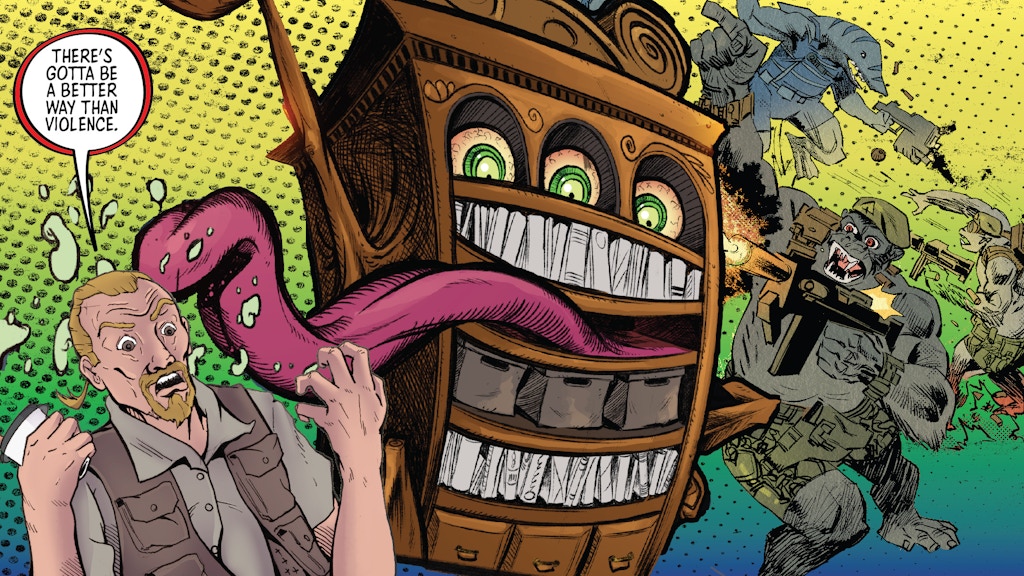
The Ashcan Edition Episode 1: Killing it With Kyle Starks

Welcome to the first episode of The Ashcan Edition where writer Brant Lewis interviews some of the top talent in in the comic book industry. In this episode Brant talks with one of the funniest and most heartfelt creatives currently in the industry, Kyle Starks.

In the interview they discuss what makes henchmen interesting, what happens when horror killers live together in a gated community, and how working at a combination comic book/music/movie/porn store impacted his creative work. You can follow Kyle Starks on social media @thekylestarks and support him on Patreon. You can also follow Brant Lewis on Twitter @Brant__Lewis and on Bluesky @brantlewis.

Music is Win This Battle Win This War by Everet Almond.

“A Chinese James Bond” The Manchurian with writer Pornsak Pichetshote

“less about, China versus America.. what he really believes is the power of community”. Award winning co-creator of The Good Asiansak Pichetshote returns to talk about his visonary new project for Image Comics: a series of five one-shot comic books titled The Horizon Experiment. Each has a unique creative team inventing an original protagonist from a marginalized background set in genres such as horror or espionage, or inspired by icons like Indiana Jones or John Constantine.

Pichetshote’s entry in the series, The Manchurian, is more than a James Bond who “just so happens to be Chinese”- he is a spy whose identity is core to the narrative. There’s also Finders/Keepers from Vita Ayala and Skyler Partridge in which a Boricua archaeologist returns an artifact from a museum to the people from whom it was stolen.

The Manchurian, with artists Terry and Rachel Dodson is out now as is The Sacred Damned and more on the way from creative teams that bridge comics, literature, film and television. 

Here’s my 2021 convo about The Good Asian with sak Pichetshote and Alexandre Tefenkgi.

Skylar Patridge Discusses Spies, Supergirl, and Crowdfunding Comics

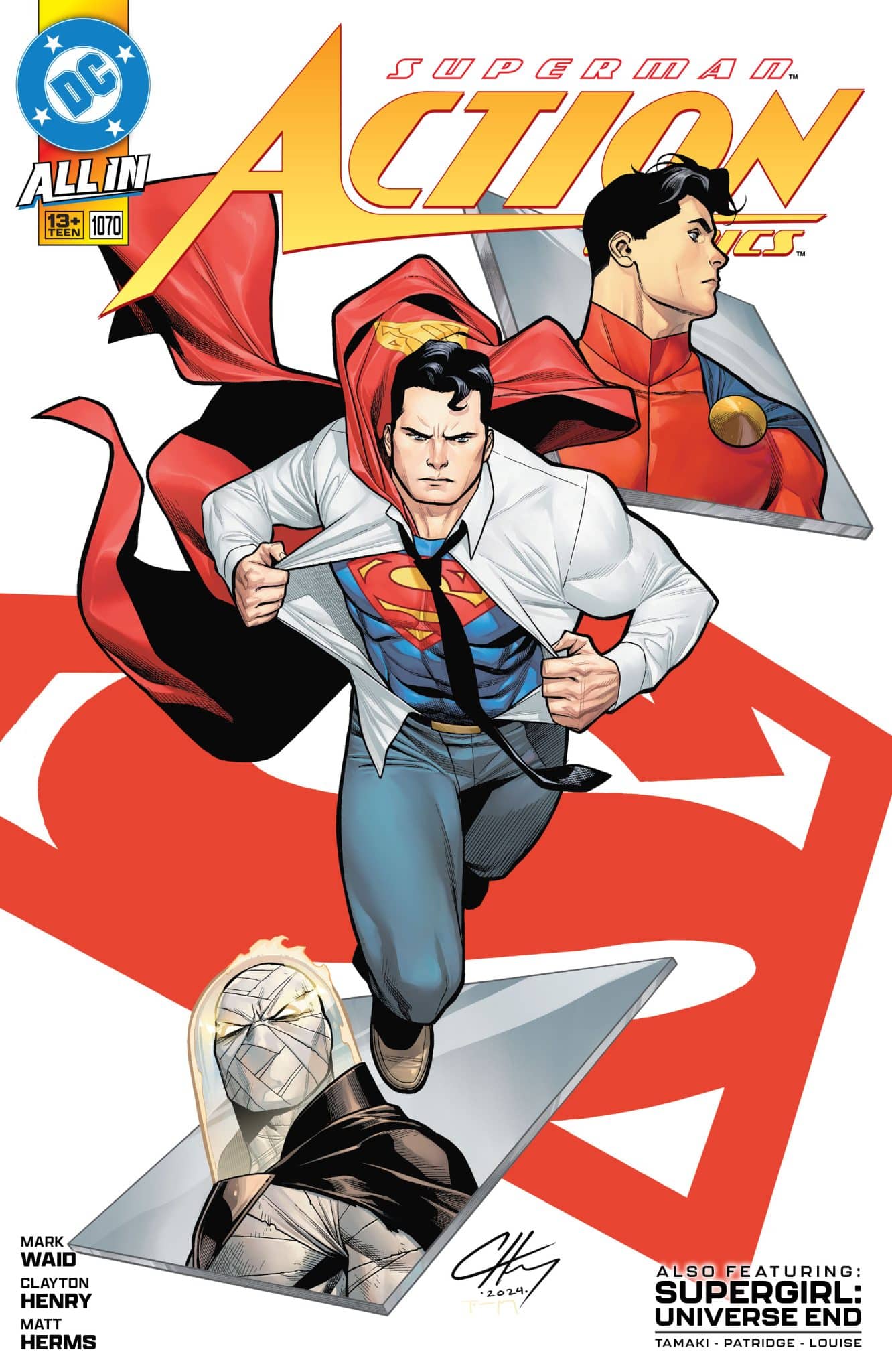
Action Comics #1070

From spies to superheroes, superstar artist Skylar Patridge has done fantastic work on Big Two comics and creator owned work. As a proud supporter of women’s wrongs, Patridge strongly focuses on complex and messy female characters, as seen in her portfolio. Graphic Policy had the opportunity to talk with Patridge, who recently had the successful Kickstarter for Our Sins Are Scarlet, along with the upcoming release of her backups with Mariko Tamaki in Action Comics #1070 starting Wednesday, October 8. 

This interview has been edited for length and clarity.

Graphic Policy: If you were trapped on a deserted island and you could only bring one music album with you, what would it be and why?

Skylar Patridge: That’s a really tough question. I feel like my knee jerk reaction is How Big How Blue How Beautiful from Florence and the Machine. It’s one of my comfort albums. I feel like I kind of always come back to it and I think it’s just a very emotional and powerful album. If I just was grabbing stuff and found myself on a deserted island, I think it’d be that one

GP: What’s your favorite comic book cover that you have drawn?

SP: I think most recently it was probably the Dark Knights of Steel All Winter cover. It felt kind of different from what I had been doing prior to. Very medieval knights. And they gave me a lot of freedom to play around with that composition. 

GP: What’s a comic or a story that you are really proud to have worked on?

SP: I would say Our Sins Are Scarlet is one of my proudest books that I’ve worked on. Actually we’ve been getting messages recently that people are getting those in the mail and they’re saying very nice things. And then I’ve been really, really fortunate to work on DC Pride. One of the first ones that they did was actually my first DC work and they continued to just grow that.  I’ve been very proud to have been a part of that for the last several years.

GP: What is an underrated comic that you feel that people have slept on.

SP: I usually say this one a lot, just because it’s a favorite of mine, would be Lady Killer from Joelle Jones and Jamie S. Rich. It’s so much up my alley as far as tone, art, the overall themes. I love a beautiful woman who likes to stab people as evident from Our Sins Are Scarlet. And I feel like that’s one that never quite got its due and I hope that people discover it.

GP: What do you feel is a story or a project that you’ve worked on that more people need to look into?

SP: I would say Resonant. Not toot my own horn [laughs], that’s also a comic I feel was kind of slept on. I feel like it deserves so much more love and appreciation and whether I worked on it or not, I just think it’s a beautiful story. And I think David Andry is also a slept-on creator as well.

GP: Let’s talk a little bit about your artistic history and how you decided to pursue a career in comics? Was there a moment growing up that really sparked that? Were you a comic fan as a kid?

SP: Yeah, I was definitely a comic book fan. I had an older brother who read a lot of comics, and so that was sort of my gateway into comics reading in addition to the 90s animated shows. Batman the Animated Series and X-Men the Animated Series were definitely foundational for me as a kid and got me wanting to read comics more. And I don’t think I really considered a career in comics until I was well into adulthood. I drew comics a lot as a kid once I was reading them and really liked the storytelling element of it. I drew them a lot and just on the backs of paper and wherever I could scribble stuff down. But it wasn’t necessarily anything I thought I would do. I knew I wanted to do art in some way, but I didn’t really know you could have a career in comics.

So I went to school and I studied studio art at the public university near me. I kind of figured maybe I would illustrate books or that I might do graphic design. And then I graduated and didn’t wanna do that at all. I kind of moved away from the arts for a while and I did some food service and I’ve had a whole stint outside of the arts before I ever came back to it. And so I had wound up getting a gallery job sometime in my twenties and just happened to meet the right people there. We just kind of started talking and that got me back into making artwork. And the first convention that I did where I split a table with somebody and, you know, had a handful of prints and some little things that I’d done. And it was kind of around there where I think it kind of clicked like, maybe I could do this and maybe this was something that I wanted to do. I was fully an adult before it ever became, you know, an idea that it was something I could do.

GP: That’s really fascinating to have that life. That’s also kind of within the industry itself where you have a variety of people, a variety of ages, different parts of life, commit to it somehow.

SP: Yeah. There was recently a Twitter trend that was going around where people were talking about getting into comics later in life. And I think that’s amazing ’cause there really is no right time to start a career in general, but especially a career in the arts. If that’s something that you love and want to do and have the, the means to do it, I think you should. I was in a very fortunate place where I could stop what I was doing and shift gears and it was definitely not an easy thing. Comics is a very challenging industry and it can be very isolating ’cause it’s very freelance oriented, so everybody’s kind of working from everywhere. It’s not always the easiest way to find your way in or stay in. But it’s been a very rewarding career for me both personally and professionally. 

GP: So what were some of the major artistic influences that you felt really impacted you as an artist?

SP: When I was a kid, I grew up with Jim Lee drawing comics. So that was very much an influence. And then as I got a little older,  I usually reference Phil Noto as a big inspiration for me, because he was very much the artist I was looking to for inspiration. I felt like his work was so different from what I associated as comics. Not for better or for worse. It was kind of a revelation to see the way he did it. And it made me kind of want to explore my own art style. As far as, you know, influences now, I think Joelle Jones is a huge, huge influence for me. I think her line work and ink work is so inspirational. Chris Samnee I think is an incredible artist. I hope to see him continue working forever. I think I could sit here for the rest of the night and list off influences and people. I adore so I won’t keep going. 

Our Sins Are Scarlet

GP: So moving on now into Our Sins Are Scarlet that you co-wrote and drew with Jordan Alsaqa. What was the genesis of the project?

SP: We always say that it started with Wonder Woman, which seems very much at odds with the story itself, but back when the first Wonder Woman came out one of the villains within that movie was Dr. Poison. And I thought she was such an underutilized character in that movie. I had done some fanart for her around that time and said, you know, I really wish that they’d done more with this character. And Jordan Alsaqa had actually seen it and he reached out and was like, “Hey, I thought the same thing. I’d love to talk more.” And that was just kind of how the collaboration began. 

And we started talking about how we wanted to create this story that focused on this sort of you didn’t know whether to root for her or root against her character, who was a poisons expert and worked within the government. And it started off very sort of campy and comedic, and then it morphed into something else. We brought in another character that was sort of her foil and that was Harper. And it just sort of built out from there. Then just because the world changed so much from 2016 to 2017 so that started seeping its way into the story that we wanted to tell. And it became a much bigger, more complex story in the end.

GP: So what were some of the influences?  Because obviously when I saw the pitch, saw the art and read it, I very much saw Killing Eve, Atomic Blond, etc.

SP: Yeah, Killing Eve and Velvet from [Ed] Brubaker, that was a big one for us. Spy stuff in general has always been something I wanted to do. I think one of the first things I ever made when I was in high school was a spy story. And this isn’t the same story as that, but it wound up having a lot of parallels. And obviously with Jordan’s voice as well it became better than it ever would’ve become just by myself. Hannibal was also a big influence for us. The sort of mentor mentee and twisted mentor mentee relationship we wanted to have and that we’ll be building forward after issue one and two.

GP: Initially you only focused on Elena and then with the addition of Harper, is that really when the queer element really came to the forefront of the story? Or was that already in the backbones of the narrative?

SP: Well, when we first started building the issue that we have now, it was in the works to begin with. When we first first started talking about it, it was very much just Elena. She was the questionable protagonist. We weren’t really sure what we were gonna do with her yet, but we wanted her to be not necessarily an anti-hero, but just somebody that you’re kind of rooting for even though she’s doing awful things. And at one point we were kind of just like, no we think this would be cool if there was sort of a romance element to it. And that there was a little bit more spice involved because I think spy stories in general are sort of inherently sexy. Just your James Bonds and your Mission Impossibles, they all kind of have that element of thrills and exhilaration. And Harper sort of acts as a disruption to one another’s lives.  Whoever you wind up rooting for, whoever winds up feeling like the person you wanna support, they’re both the obstacle for one another, but at the same time, they’re both drawn to each other and they have to wrestle with that as well.

GP: What was y’all’s decision to fund the project through Kickstarter to get the project moving?

SP: Our hands were a little tied actually because we were at IDW first and IDW had a change a couple years ago, and so we kind of had to think on our feet and figure out what we wanted to do with it. We had some wonderful editors at IDW, Megan Brown, Jake Williams, Riley Farmer, who helped us shape this. And when we wound up parting with IDW, we sent it back out again for pitch, seeing if anybody had any interest in it, and we weren’t able to find another home for it. And so we’ve just had it and we’re gonna try to Kickstart it. We didn’t really want to, just because Kickstarter is a daunting beast. It’s a whole other job. But we wanted to get the story out there and so much work had gone into it and we felt like it deserved to be made. So we bit the bullet and put it on Kickstarter.

GP: So what has been your response to its success? 

SP: We actually doubled our funding request, which was fantastic. That just is gonna roll over and help us make the next issue. I think we were obviously very hopeful that people would be interested in it. We weren’t 100% certain just because it’s kind of a challenging story in that there isn’t really a true protagonist. There isn’t really a true villain. It’s, it’s kind of blurry morals and uncertain characters. But Kickstarter is a good platform for those kinds of stories. So we were hopeful that we’d be able to find people who weren’t necessarily in the comics industry that were interested in hearing what we had to say with this. So it just felt like the right fit for it. And I think we were just kind of stunned with how it wound up turning out. And hopefully people will stick with us as we go forward. We’re gearing up to get ready to do the next issue this year. So hopefully folks are stoked as they’re getting their rewards.

GP: What can people expect in the future of this upcoming series?

SP: A mess [laughs]. Basically this first issue is really sort of setting up these two characters and where they are within the government agency. And we sort of leave you with realizing just how much their orbits are gonna interact with one another. Harper is the straight laced do-gooder and Elena is the chaotic gay. They are so at odds with one another. And so it’s gonna be a lot of headbutting and a lot of chaotic missions and growing attraction, despite how terrible they are for one another. 

GP: With this being one of your first major works as a co-writer, how has that been coming from an artistic background?

SP: It’s been good. I’ve been very fortunate working with Jordan. Jordan has been amazing at sharing the reins. I’ve collaborated a lot before and had input on plot, but this was a little more hands-on. And so I’m grateful to Jordan for giving me that opportunity to have more input in the story and the dialogue and how it develops. 

GP: Love to hear that. And will this be available to the public in the future?

SP: We’re hoping so. We’re still kind of trying to figure out what that will look like. We obviously are going to offer issue one in this first issue within the next Kickstarter as well. And then we’re considering doing pre-order options for the next campaigns where you’ll be able to pre-order, even if you didn’t back the campaign, you’d be able to pre-order after the fact. So we’ll hopefully open that up and it’ll be more accessible to people who maybe missed the campaign. And then obviously if anybody’s interested in it down the road as publishers go, hopefully we’ll be able to find somewhere to get a wider distribution,

GP: So moving on from the world of super spies to superheroes. Let’s talk about Supergirl. Previously you did a one-off special with Mariko Tamaki, and now you’re about to be doing a couple of backups in Action Comics. So what’s your history with the character?

SP: I’ve mentioned this before in other interviews and online and stuff like that, but actually wasn’t a huge Super Fam fan when I was a kid. I was definitely more into X-Men and Batman. And as I got older, I actually started to really appreciate Superman, Supergirl, Wonder Woman, more of the Golden Age DC characters because of the world that we live in [laughs]. I think when I was a kid they felt they were too goody two shoes. They felt too powerful. They seemed boring. And as I got older I was like, no, actually I identify more with those now and exist in the world where the Lex Luthors run the world. And so I think I would say my love for those characters really started more in early adulthood as opposed to childhood. I’ve just kind of always been interested in them and, and they hold a special place in my heart

GP: How do you view her place in the DC universe?

SP: I feel like Supergirl is underappreciated. I think I have always felt that way ever since I started reading more of her books and getting a better sense of the character because before I knew more about her, I always assumed Superman was the bigger, better character. And that’s not to say he’s not wonderful [Laughs].  I don’t want the Superman fans to come after me. But I think she has a really, really compelling story. And I think it kind of gets lost in Superman’s story. I just think she deserves a lot more love than she usually gets.  I appreciate getting the chance to draw her ’cause  I’m hoping that people will see her worth as a character and, and her story.

GP: So how do you view her differently than Superman?

SP: I think she experienced Krypton. Kal didn’t have that experience, he was always born and raised on Earth. And I think Kara knew what she lost. She knew that she lost everything. And I think that doesn’t necessarily make her story better, but I think it makes it more compelling. She was a true refugee. I find that very fascinating. And I think coming from a planet that she saw the effects of political upheaval and climate change basically destroy her world. I think that makes her a very informed character too. I’ve just always kind of found her really compelling in a way that I don’t always quite find with Kal. I still love Superman, but Kara is my number one. 

GP: Well, that’s only fair because there are two different characters with how they approach their Kryptonian heritages. Like you mentioned, Supergirl remembers Krypton and lived on Krypton and unlike Kal, it’s very much a memory of sorts for him.

SP: Right! And I think Supergirl always feels a little more rough around the edges. And I like that element of her as well. She struggles with rage. I think there’s a lot of complexity for her character that is brought about because she remembers what was taken from her. I am always kind of drawn to her because she is flawed despite having that Super mantle that we kind of think of as being perfect and the ideal. But she has her own issues and her own battles, and she’s a flawed individual.

GP: What’s it like working with Mariko? 

SP: Mariko has been super encouraging of what I’ve been doing and very open to my input on design. I got to design a lot of alien creatures in this arc. So she’s out in space and so there’s a lot of extraterrestrial exploration in this arc. I also feel like Mariko gets Kara in a way that’s been really wonderful to work with. I think she’s always been in touch with Kara’s rage issues and Kara’s sense that she’s never good enough. Kara has a lot of imposter syndrome and I think Mariko’s always tuned into that element of her. I feel like Mariko and I are on very similar pages as far as how we approach the character and how we think of the character.

GP: So why should people be excited to read these backups?

SP: Because I actually don’t know what’s gonna happen yet. That’s part of why I want to [laughs]. I want people to be excited about it because I’m still working on them now, so I’m not 100% sure where we’re going yet. And I think this mission that Kara is on and it’s definitely sort of a catalyst sort of moment for Kara. So I hope folks get excited and to see what this next chapter for Kara looks like ’cause I think it’s gonna be a big one.

GP: And this is gonna be a difficult question. What is your favorite Supergirl costume?

SP: I actually really like Supergirl in her super skirt with the high boots. I’ve enjoyed drawing the jacket. I think it’s kind of a cool silhouette for her. But I have always liked the basic Supergirl outfit with her super skirt and her high boots and her cape. 

GP: You have a very strong focus on complex female characters. Previously you did the Artemis Special with Vita Ayala. How was that experience?

SP: It was awesome. Working with Vita is genuinely amazing every time I get to do it. And so we had done a little bit with the Trial of the Amazons and the Bana-Mighdall story that led into Trial of the Amazons, and then it took the Artemis special. So we had a chunk of time where we got to work together and sort of build that one shot up. And I like getting the chance to tell stories about flawed women because I think a lot of times we don’t give women in general and female characters within storytelling the chance to be messy and complicated. And when they are, we generally don’t give them the leeway that we give male characters. And so whenever I get that chance to, to bring in those emotional elements and, and show the conflict within a character and show that that growth or that deterioration of them within the story line, I’m always drawn to the emotional elements of stories and so that whenever I get that chance it’s always great.

GP: An interesting thing that I noticed while recently re-reading it is that in her flashback is the military aspect of her family. And I noticed as well in your work too, there is a lot of focus on characters in a variety of different agencies, military forces, etc. Do you have a personal connection?

SP: I don’t actually. And for the Artemis story, that was actually Vita’s choice to bring in the military background, and it was a little controversial [laughs] for some people. I felt like it was an interesting choice for that character and made sense as to how Artemis wound up in the Bana-Mighdall. And for other work that I’ve done where there’s sort of a service to a larger agency or service to a government entity. You know that’s a big part of Our Sins Are Scarlet. I think a lot of that comes from the sense of disillusionment with the United States as an American and sort of feeling like you want to try to do something you wanna try to serve to, because that’s, that’s the way you’re raised.

It’s kind of instilled in us to wanna serve your country to be patriotic to whatever, and once you get involved in it, once you learn more, once you have more experience with it. And that kind of challenged a lot. I think especially within this country, within the last 10 years, there’s been a big disillusionment for a lot of people and how things work and systems we thought were in place that weren’t or systems that weren’t already corrupted. And we just kind of learned that they were. And so I think work that I’ve done that has, that has sort of featured service in that way has been more of a discussion of maybe my own disillusionment with the systems and the powers that be

GP: So wrapping things up at the moment, outside of the upcoming backups in Action Comics, do you have anything else in the work that you could talk about?

SP: Right now the big stuff is Supergirl and then in November we’re actually getting ready to start on the next issue of Our Sins Are Scarlet. So we’ll be looking to launch that Kickstarter early next year. So that’s the big stuff that’s up for the next several months. And then I might have something, I can’t say too much about it ’cause it hasn’t really been fully talked about yet, but most likely in the spring-ish time, there should be another thing that I’m working on that I think will be very cool. Sort of an apocalyptic horror story. 

GP: That sounds right on my alley. How could people support you and your work?

SP: Just pick up the books if you can. Pre-order things, like that’s a huge help. For me personally, just share, share my work. If you can gimme a little shout out if you can. I have a Ko-Fi as well where you can keep tabs on what I’m up to with. I might be gravitating a little bit more to Ko-Fi  in the future and using that platform a little bit more.

Action Comics #1070 releases this Wednesday, October 9 from DC Comics. You can follow Skylar on social media @skyepatridge. And the Kickstarter for Our Sins Are Scarlet Issue 2 will be starting sometime in the future.

Fell Hound Talkes S.I.R., Commander Rao, Mobile Suit Gundam, and more!

S.I.R. #1

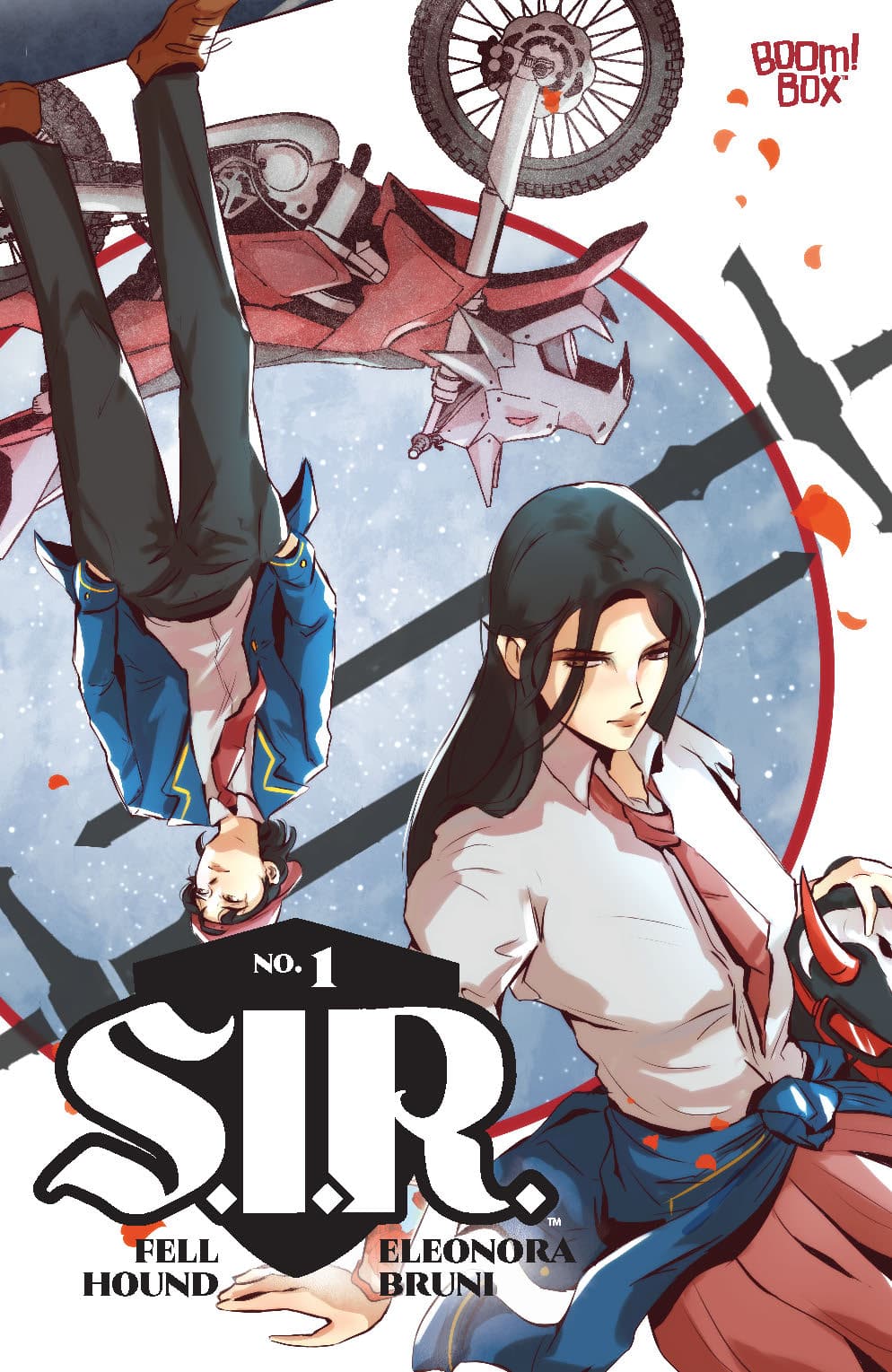
Award winning and Ringo! Award-nominated comic book creator Fell Hound has made waves with her previous Commander Rao universe and is ready to rev the engine of your hearts with her current series S.I.R. Following the break up of young Avery and Nico, the pair have a potential chance to rekindle their love if it can survive the Seismic Iron Clash Roulette. Filled with plenty of action, romance, and school drama, it is a series you do not want to miss. In advance of the second issue releasing on Wednesday September 18, Graphic Policy got the chance to talk with Fell about her work, her thoughts on queer representation, her love of Mobile Suit Gundam, and transitioning to a more extended series with S.I.R.

This interview has been edited for length and clarity.

Graphic Policy:  So starting with a warm up question. If you were trapped on a deserted island and you could only bring one item with you, what would it be and why?

Fell Hound: You know those GPS satellite phones that can connect everywhere, even without a tower, I would bring one of those ’cause even if you gave me a multi tool or food or any survival thing, I’ll not survive. I will die. I need to call for help [Laughs].

GP: What made you decide to pursue a career in comics? Was there a specific moment growing up that crystallized that decision? Were you a fan of comic books and similar media as a kid?

FH: When I was a kid, I read some comic books. I wasn’t a diehard fan or anything, but my dad had these old Asian comics that he grew up reading and then I read them and I thought they were really cute. It wasn’t until the end of high school or the beginning of college I discovered a comic called Batwoman Elegy by Greg Rucka and J.H. Williams and that comic blew my mind away. I’ve never really seen a comic that looked like that before. J.H. Williams just had a way with layouts and handling, and I was like, oh my God. And it’s a queer superhero. I was just so inspired. I couldn’t really draw back then, so I kind of was just like, I wanna do this. I’m in college, I am poor. I can’t afford to pay anybody else, so I just gotta teach myself how to draw, I guess.

GP: So what were some of the major artistic influences that impacted you as a writer and an artist?

FH: So obviously Greg Rucka and J.H. Williams, massive influences. I am a really big fan of Terry Moore. He’s a fantastic cartoonist, like Strangers in Paradise, one of my favorites of all time. Art wise, I really liked Claire Roe before she got really into comics. She used to draw a lot of Dragon Age and Batwoman and Mass Effect fan art which is kind of how I knew her art. And then she moved over to comics and I still really, really love her work. I really like Phil Noto. I read a lot of Kelly Sue’s Captain Marvel run. Marjorie Liu’s X-23, also one of my favorite runs. So their writing has very much inspired me and artistically. I love a lot of fan artists on the internet. I feel like that’s where a lot of my inspiration comes from.

GP: So as a writer and an artist, I imagine that’s a lot of balls to juggle and a lot of responsibilities. Do you have a set work schedule or does it depend on the day?

FH: So when I first started, I didn’t really have a set schedule but it was really weird hours. I was like, all right, from 7:00 PM to 2:00 AM that’s when I will draw. I do shift work on my day job, I just found that my hours were all over the place. My sleep schedule was totally screwed. So I’ve been trying really hard to fix it over the years. So now I do have a set schedule, from 10:00 AM to 6:00 PM, those are my work hours. Then I do my best to put pencils down after 6:00 PM because I found it’s very easy for work to creep into other aspects of your life. I love comics, but I also don’t want it to completely take over my life [Laughs].

GP: I totally get that. Work life balance is very important.  So has it kind of changed throughout the years as you’ve done more work?

FH: I try to not take more work than my work hours can handle. If I think something’s gonna take me after that 6:00 PM mark or that I just won’t be able to do it, then I will just say no. I think there’s also this era of competition where it’s like, oh, I wish I could take on more gigs. Oh, I wish I could do this. Or like, you see somebody else doing all these cool things and you wish you could have what they have. But at the same time, I’m just like, I have a day job, I have other commitments, life, friends, family. And I think over time I’ve learned to realize those things are more important to me than just taking freelance jobs all the time. Because of the day job, I feel thankful that I am still financially stable even if I don’t get a ton of comics work. And I’d rather just have that peace of mind that I’m happy I’m not burnt out and I can continue creating.

GP: So a common theme in your work is queer representation and queer relationships. I think oftentimes whenever we talk about queer representation, we are discussing the idea of authenticity. So what does authentic rep mean to you?

FH: To be completely honest, I am one of those people where I feel we need more queer media in general. I know there’s certain tropes that people might not enjoy reading or some people are like, oh, we need more good representation or whatever that means. For me I’m just like, I think we just need more of it in general. And you can have messy gays, you can have sad gays, you can have even dead gays, but you’ll also have the happy gays, the ones that are autobiographical or like any other type of queer representation. We need people to realize there is an audience who wants more rep. We need people to invest in queer rep. I think to have more authentic representation of the diversity of things and experiences out there, then we need just more of it. 

GP: I fully agree with that because I think whenever we talk about the idea of representation is that you really can’t represent the entire LGBTQ+ community within one character. And that’s why we need more representation to represent those variety of experiences in that regard.

FH: Oh absolutely. I think even we see on TV now you get one season of a show with queer characters and it gets canceled immediately. Like they don’t have time to build, you don’t get their full story arc. And it’s just kind of disheartening now to see, and I just feel like we need some way to be able to invest and nurture and let these stories grow.

GP: Moving on to a different subject, Mobile Suit Gundam. So I think calling you a fan is a massive understatement. What drew you to the franchise at a young age and kept you being a fan of it?

FH: To be honest, I got into it when I was really young, probably younger than I should have been. But basically I think it was late night Saturday or Friday or Sunday, I’d just be watching TV. I was like six years old and Gundam Wing was on. I didn’t understand any of the plot, but I was like, wow, these robots look so cool. And then my dad was also a big giant robot fan, so I think he just got really excited that one of his kids likes giant robots. So he was really nice and kind of spoiled me by buying me a lot of Gundam figures [Laughs].

Unfortunately as I got older, I did fall out of it slightly. But then, Witch from Mercury came back on and it combined basically my favorite thing as a kid with my favorite thing as an adult. I loved Gundam as a kid and then as an adult I loved Revolutionary Girl Utena, and Witch from Mercury was basically Gundam Utena. And it just brought all those Gundam fandom feelings back to me. After Witch from Mercury came out, I have invested, God knows how much money into Mobile Suit model kits [Laughs}.

GP: I think that’s interesting for you as well cause I could definitely see the influences of not only Gundam, but also anime and manga in your work. In comics now, there is that influx of writers and artists being influenced by anime and manga and bringing in those sensibilities to it. And I think that’s just great because for a long time there’s just been that disconnect between manga, anime, and comics as being these separate entities that don’t interact

FH: I definitely think it’s nice that people are trying to learn from each other’s industries in some ways. I definitely think that some parts of the industry have been a little stagnant. So I think having another competitive but similar industry sort of get it into high gear to innovate and expand and actually try to expand the demographic and the audience especially, is a good thing. And for me personally, I’m excited to see it. It’s like comics, manga; it’s all kind of the same thing at the end. It’s comics. 

GP: So if you had to pick one suit to pilot, what would it be and why?

FH: I mean, my personal favorite would either be the Zeta or the Calibarn. Zeta because I love the idea of turning into a plane. I love transforming mobile suits, or the Calibarn so that I can just shoot rainbow lights and save the day. 

GP: What’s been your favorite kit to build?

FH: To be honest, I recently built my first real grade. It’s the real [grade] God Gundam. And I had a lot of fun with it. I know some of the early real grade kits are a little finicky, but the recent ones are really well built. They’re super detailed. They’re like the perfect scale size and I think cost-wise, it’s also a good middle mark for me. 

GP: So an important aspect of Mobile Suit Gundam as a franchise is the concept of a rival and the queer relationship they have with the main character, such as the original one with Amuro and Char. What kind of makes a good rival in your opinion?

FH: I don’t know. I think it’s something that’s very hard to put into words sometimes, but I feel like you need tension and build up. Early Gundam had the benefit of having like 50 episode seasons, which meant they had a long time to build that rivalry. I remember reading about it, but a lot of early female fans of Gundam were shipping Amuro and Char which I think really helped the franchise. I think you gotta have the retention, you gotta have the will they/won’t they. I think if it’s shippable, especially nowadays in fandom, that will go huge. Like if you can take off on an AO3 tag, then you’re solid [Laughs].

GP: So let’s transition to your work now. One of the first comics that you did was Command Rao. So what was your decision about making it accessible and free for readers on your website?

FH: I think the main thing is I wanted people to read them. And I realized at that point that I love these comics and I don’t want to toot my own horn, but I think they’re decent. I want ’em to be read. I took my storefront down at the beginning of the year because store hosting was really expensive. So there wasn’t really a way for people to just buy these comics. And Scout, the former publisher, I don’t know what’s going on with their operations anymore, to be honest. So I felt the easiest way to get people to read it and keep those stories alive and remember it.

Especially now that my new comic S.I.R. is out and I’m getting a couple of new followers, I do want to be able to get the new readers onto maybe reading some of my older work, which I still really like. So I think making it free is just the most accessible way. A lot of people say it’s not a piracy issue, it’s an accessibility issue. And I’m just like, well I am pretty sure my comics are on a pirate site somewhere. But also if you just read it off my site, it’s pretty all the same. 

GP: I mean people should read it and it did get awards and got a lot of positive views. Got nominated for a Ringo! as well which I think is well deserved.

FH: Thank you.

GP: Commander Rao was one of your first major published comics and then you decided to expand the universe in following one-offs. Why did you feel drawn to craft a queer and mature sci-fi war narrative as your debut comic?

FH: To be honest, a lot of things kind of fell into place afterward. Initially I just wanted to make an action comic, like a very basic action comic with just fight scenes because I was new to comics and I wanted to practice drawing fight scenes. The story kind of came together very much at the end. I drew everything and then I literally wrote the script and all the speech bubbles afterward ’cause I’m just like, oh yeah, I need to put some writing in this to give to the letterer. 

To be honest, initially I was a little worried because everybody died and the bury your gays trope was still a thing and I was worried that people wouldn’t like it because I buried the gays. But then I think going back to what you said about authentic rep earlier then it didn’t feel right because I wanted them to be queer. I didn’t wanna just be like, oh, I’m so scared to make my characters queer just because they were also dead. That I take away that rep as well. It felt stupid to me. So I was like, you know what, we’re just gonna commit to it. This is the story I want to tell. These are the characters I want to tell. They are queer. This is an action comic. This is going to be really sad. This is the story that I want to make. 

GP: So what made you want to build upon that world and its story?

FH: And We Love You was supposed to be a completely unrelated story to Commander Rao. Basically And We Love You is based off this comic I made like 10 years ago. Because it was 10 years ago, it looked really bad. But I really thought it had played on the idea of leaving memories. And I thought that was a strong concept that I really wanted to explore when my art was good enough. Then when my art I felt like was at a place where it was decent enough, I was worried I wouldn’t be able to market it because it sounded like a niche concept. And then when Commander Rao came out and people liked it and people wanted more of it, it was honestly a business decision that I was like, I can solve my inability to market a niche concept by hooking the story onto something that people already know and was like kind of successful. Commander Rao and And We Love You were very much like practice comics where I was just learning how to make comics and learning how to market and learning how to do business. And I’m very grateful everything kind of fell into place, but also in retrospect there was a lot of winging. 

GP: What is the biggest lesson that you learned as a creative after completing these Commander Rao stories did challenge your skills as a writer or artist and how did you grow from that?

FH: I think I learned a lot from making Commander Rao and And We Love You. Those were my very first published comics. So everything was a learning curve. Learning how to collaborate with people, learning how to do accounting, learning how to mail hundreds of comic books and make sure they get to people and that they weren’t gonna get bent in the mail. It’s a lot of things that people I think don’t think about when they’re like, I wanna make comics. And we haven’t even gotten to the artistic side where it’s like learning how to write, learning how to draw. For me, every time I finish a project, I take a little bit of a break to do studies and get inspired again. So you really need that time to learn to love what you do again. 

GP: So another interesting thing about Commander Rao was the fact that you also did those little one off short stories where you basically gave them out to different people. What was kind of your thought process about letting other people filling in the gaps?

FH: To be honest, because the campaigns made extra money. There’s so many artists and creatives I love who I think deserve getting paid for their art and their writing and I was just like, well this is a really good excuse now that I have the money to just like pay other creatives to like work in the sandbox just so I could A, give the money and B  it’s always a really cool feeling to have like other people like draw your OCs. Working with Jeremy Simser who did The End of the Line and Michele Abounader and Tench who did Baking with Rao and then Alex Schlitz and Brent Fisher who did Taking Names. Like seeing all of their talents converging and getting their own take on the world. It was so cool as well. So it was a double win for me. I get to give money to people and they give me pretty art [Laughs].

GP: Do you have any plans on coming back to Commander Rao in the future?

FH: Oh, I have so many plans. It’s a little tumultuous right now because I don’t know if I want to keep it forever and self-publish it or if I wanna try it with another publisher and that’s kind of why I keep on having an idea and then canceling it.

GP: I mean now the fact that you’re doing an ongoing series as well, which is a completely different beast I imagine.

FH: Yeah. S.I.R. is five issues, but it’s also longer than anything I’ve ever done before.

GP: To anyone who is unfamiliar with S.I.R., what is your pitch?

FH: So motorcycle jousting is the basic premise, but it is basically a shojo sports drama about these two estranged lovers, Avery and Nico who reunite at this prestigious private college called Bridleham Academy. But in order to save their relationship they have to face the trials and tribulations of the school’s underground motorcycle jousting ring known as the Seismic Iron Clash Roulette. So if you enjoy shojo manga, if you enjoy bloodsport comics, then S.I.R. is the comic for you. Also, if you wanna see what Fight Club would look like reimagined as a nineties shojo anime on motorbikes. Come read S.I.R.

GP: With sad gays.

FH: Yes [Laughs], they gotta go through it before they get the happy ending

GP: I think you made it a major point point with it being sad gays which, understandable. Sadness and tragedy are engaging emotions.

FH: Yeah, I mean, sometimes I get sad and I just need to pour it into art and unfortunately these fictional OCs are right here for me to pour my sads into. But I can say that S.I.R. is a lot less depressing than some of my previous works [Laughs]. 

GP: I think it’s also interesting too with it being a more teenage focused book, it makes sense that’s at BOOM! under their BOOM! Box imprint, which has that history of a more younger focused reading crowd with series like Giant Days and Lumberjanes which is a completely different audience than what you’re used to So what was your decision to go with BOOM!?

FH: So to be honest BOOM! approached me. They invited me to pitch and I pitched them several ideas. And I think S.I.R. was kind of the one that was just like the right place at the right time. They were looking for more BOOM! Box stories ’cause this year is like the 10th anniversary of the line.  

GP: I do think it is also very cool as well with the fact that you are still doing science fiction but in a different aspect, especially with it being inspired by sports manga as well. So what are you tapping from sports anime and manga, whether it be plot or characters to make S.I.R.?

FH: In terms of what I’m drawing from, I really like Birdie Wing, which is that insane golf girls anime. But it was also so much fun and I was like, I wish I could make something half as insane. Also Sk8 the Infinity, which is about skateboarding. I really like that one again, completely insane but also like very, very gay and very fun. A while later my friend introduced me to Yuri on Ice and that was also a beautiful anime. But yeah, I was like, I was really into Gundam and I was really into sports anime and I’m gonna combine the two things into my own comic.

GP: It’s this beautiful alchemy of so many different things. But I think your approach sounds like it was using the sports anime as kind of a Trojan horse. You have the action with the motorcycle jousting, but really a lot of it is that relationship at the center of it that’s kind of the beating heart of the comic of will Avery and Nico make up or will it all fall apart?

FH: Yeah, so for me, I always want to make my books character focused. I feel like the characters are the most important part of the book. You can have a cool world, but if there’s no interesting characters, the cool world kind of falls apart. So I always try to anchor everything I do with character tension, character romance, like something to get you invested and want to know more about the book. So that’s why I really want Avery and Nico to have that sort of central tension, central characterization, you know, the angst, the drama like that is really the anchor of the book All the motorcycle jousting that’s flair. But the anchor is about the romance.

GP: Exactly. So what was your inspiration about doing a come of age romance with motorcycle jousting? Because that’s just something that you don’t instantly just come up with on the spot.

FH: My biggest inspiration was Witch from Mercury, which was again, a coming of age romance school story, but with robots. When I made the pitch for S.I.R., it was right between seasons one and two of Witch from Mercury, and I was having what the kids called “brain rot” over the seasons. I don’t know what to do with this energy of wanting the show to come back. So then I was like, oh well I guess I’ll write a pitch for it and hopefully I can just pour all my brain watt energy into this pitch. 

GP: Hopefully we get nothing like the season one finale happening at the comic.

FH: There will be no tomato sauce. [Laughs] It is YA.

GP: It is, but you’re still approaching it in a very mature way as well. What was that process of doing a comic about these two people who are in their own worlds trying to figure stuff out and whether or not they need to come back together to find their future.

FH: Yeah. especially Avery and Nico, they have a lot of similarities, but they’re also very different in terms of their upbringing. Like Avery who’s obviously very loyal, who centers the relationship above everything else. And then you have Nico whose past is slightly more complicated. She has like other stressors and anxieties and unfortunately things kind of fell apart for her, which led her to becoming sort of a scourge in this seismic era clash roulette motorcycle jousting ring. And it’s sort of how Avery and Nico can reconcile those differences and also how they can face the motorcycle joust together using the strengths that they both have.

GP: As an artist who has done more mature work in the past, was it difficult adapting that emotional maturity with a more YA approach?

FH: I think the theme of loss has always been something sort of  personal to me and that’s something I explore a lot in my work. So even across my older comics, which are obviously a lot more mature and up to now in a YA book, I think that theme does prevail in some ways, but it’s just executed differently. It’s not as in your face the themes of loss, but the undertones are still there. Whether it’s really gritty or just kinda like a soft undertone throughout the book. It is something that I think is still worth exploring and I hope people enjoy it. [Laughs].

GP: Last question about, S.I.R. but an interesting thing I kind of noticed while  reading it was much like your previous work is the weaving of traditional comics dialogue and bubbles and panels with prose. Do you  feel like that’s a way of getting into the head of the character?

FH: So in this particular instance, and the reason why I did some prose in some of my previous words is I think [Laughs] sort of a space issue.  I have 22 pages per issue here. So there is a limit and I feel like some things that are a little harder to explain by just using visuals alone or just having speech bubbles alone and you just kind of have to get creative with how you introduce certain concepts or certain character elements. So that’s kind of where the prose comes in, is just trying to make the world engaging and interesting while being able to conserve space. And I think having text or prose is kind of the easiest way to get things across.

GP: What can people expect in the upcoming second issue?

FH: Yeah [Laughs], so Death, and by that I mean we get introduced to any rider who is particularly skilled with a particular Reaper theme. So we can expect more badass motorcycle jousting, more drama as some of the more mysterious plot details come to unfold.But yeah, death, angst and motorcycles is the theme of issue two, but don’t worry it’s not as depressing as some of my previous comics. [Laughs].

GP: Wrapping things up, do you have anything you wanna plug, anything you wanna promote? 

FH: So right now I’m just focused on finishing S.I.R.. As I said, issue two comes out on September 18th and then we’ve got issue three in October and issue four in November. And I’ll shout out my collaborators on the book. So it’s written and drawn by me, but we have colors by Ele Bruno, it’s lettered by Becca Carey and edited by Elizabeth Brei, published by BOOM! Box.  If you would like to support and buy this book, that would mean a lot to me because a house in Toronto is very expensive and I would like the money to buy one [Laughs].

S.I.R. issue #2 releases this Wednesday, September 18 from BOOM! Studios. To read Commander Rao and the rest of Fell’s work, visit her website. You can also follow Fell on social media @fellhound to keep up with her projects.
Alex Ross and Steve Darnall talk Uncle Sam: Special Election Edition

“Alex Ross’ work is really like outstanding community theater” – Steve Darnall and Alex Ross join me to talk about the rerelease of their groundbreaking policital graphic novel, Uncle Sam as well as Alex’s Fantastic Four: Full Circle

“Timed for this year’s election, UNCLE SAM by Steve Darnall and Alex Ross makes its return after nearly a decade of being out of print. It’s a vibrant, hallucinatory tour of modern America—the story of a star–spangled, ragged vagrant named Sam who is guided by the voices in his head and his own fractured memories. Absorbed by history–traveling visions of America’s dark past, Uncle Sam struggles to remember his true identity and piece together the scattered clues of his own experiences in this deep and thoughtful look at America’s checkered past.”

Alex Ross studied illustration at the American Academy of Art, then honed his craft as a storyboard artist before entering the comics field. His miniseries Marvels opened a wider acceptance for painted comics. In 1996 he produced the equally successful Kingdom Come for DC Comics. Ross is the writer/artist of the award winning Fantastic Four: Full Circle.

Steve Darnall first worked with Alex Ross on the Human Torch story that served as the inspiration for the award-winning 1993 series Marvels. Steve served as a consultant on the movie Being the Ricardos and Ken Burns’s documentary Country Music. He is also the editor of Nostalgia Digest magazine, and the host of two weekly radio shows dedicated to the golden age of radio. Nostalgia Digest

Hazel Newlevant: “Becoming Who We Are” and Protecting Each Other

“I really want to protect my ability to keep making my gay little comics. That’s the important thing to me.”- Cartoonist Hazel Newlevant makes art that shows us how to protect our future and understand our past. Whether its their new anthology Becoming Who We Are: Real Stories About Growing Up Trans or their free zine, What’s Up With Covid and How to Protect Yourself 2024 Edition (featuring advanced safety tips!) their work combines personal narative, diligent research, and charming art. 

Visit https://newlevant.com/ 

Get a copy of the free zine https://newlevant.com/covidzine

My video on how to get your mask to fit you better https://bit.ly/BendNoseWire

Take action against mask bans and more — https://covidadvocacyny.org/ 

SDCC 2024 Exclusive: Legendary director Lloyd Kaufman and AHOY’s Hart Seely talk Toxic Avenger

The Toxic Avenger

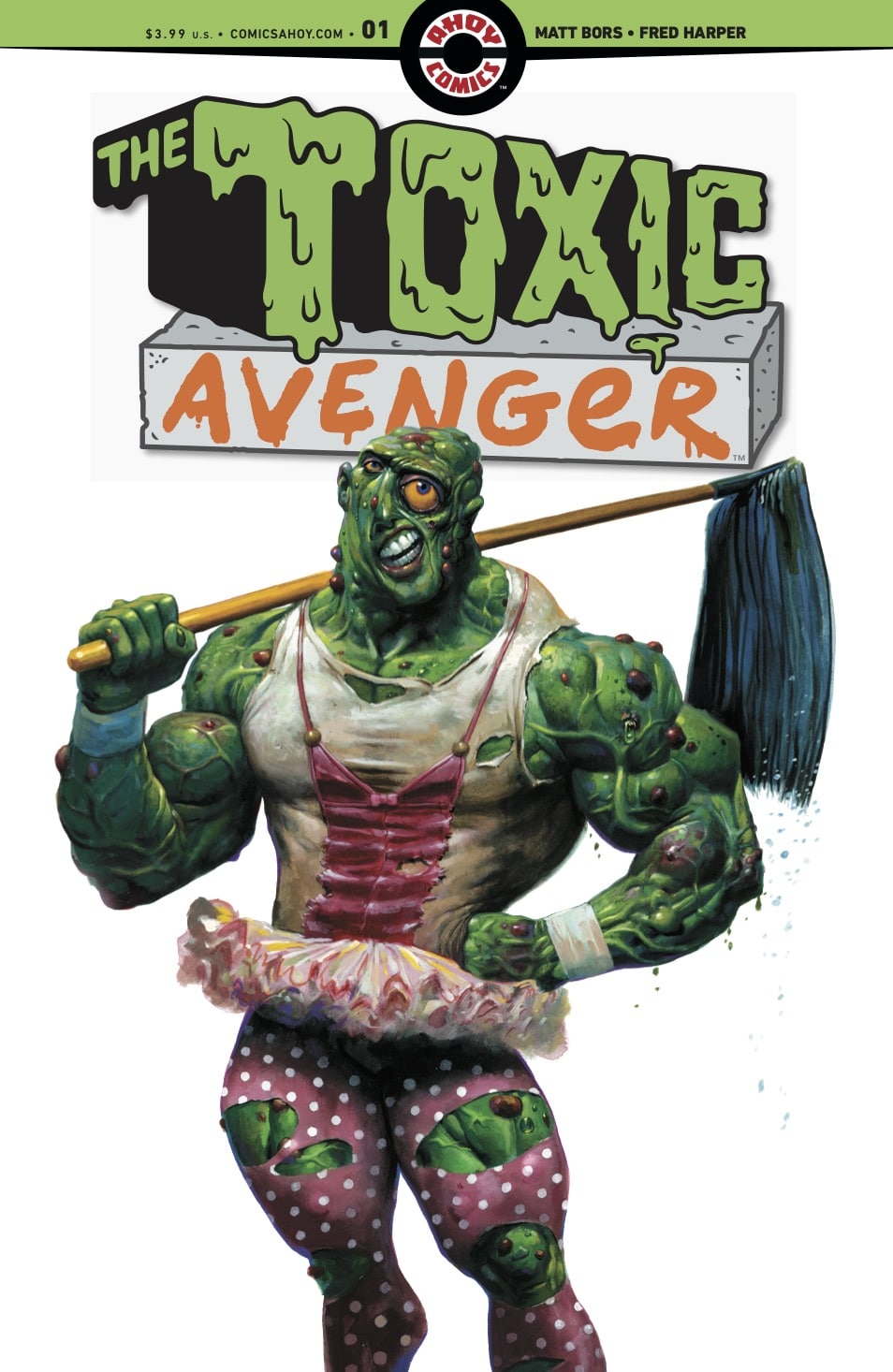
AHOY Comics will be getting toxic at San Diego Comic-Con with a panel featuring author and legendary director Lloyd Kaufman, comic creators Matt BorsMark RussellTyrone FinchMelissa F. OlsonJuan Castro, and writer/AHOY Ops guy Stuart Moore. The panel, which takes place on Friday July 26 from 5–6 pm in Room 28DE, will also feature an ashcan comic giveaway that shows readers a first look at The Toxic Avenger, Pulitzer finalist Matt Bors and artist Fred Harper’s take on the satirical superhero that spawned five films, a cartoon, action figures, a musical, and a Marvel comic book series.

In the lead up to the convention, we have an exclusive interview between director Lloyd Kaufman and AHOY’s Hart Seely discussing the movie industry and The Toxic Avenger!

Lloyd Kaufman is the iconic director, producer, screenwriter, actor and co-founder of Troma Entertainment. With partner Michael Herz, Kaufman has pursued the company’s motto, “Fifty Years of Disrupting Media,” these days through its streaming channel Troma Now. But you may know him best as creator of THE TOXIC AVENGER (1984.) He recently spoke with AHOY…

A: Let’s get to it. What makes a great film? 

LK: A movie is a balancing act between business and art, and the art should always overpower the business. The best movies reflect a filmmaker’s brain, heart and soul, in the same way of a great painting or, for that matter, music, writing or any art form.

A: These days, is the art overcoming the business? Or is the movie industry moving in the other direction?

LK: The industry is certainly going in the other direction, but thanks to our good friend, digital technology, thousands of young people are making their own damn movies. Most are trying to imitate what’s de rigueur in contemporary industry, but there are hundreds making movies they believe in, which reflect their heart, soul, and brain. And they’re making them for under $25,000.

I’m producing a number of those films, and I’ve found that young people are incredibly able to multitask. Many of them write and perform their own music, so their movies are very personal, and not just an imitation of what the majors are doing. It’s a yin and yang thing. The “yin” is that it’s great that more people are making art. But the “yang” is that they can’t make a living off it. To do that is very difficult.

A: So, you’re optimistic for the future?

LK: Talent will always stick, but there are tremendous roadblocks. Even if some young, new talent creates something original, how do they get it to a big enough public? And when I say “original,” I mean entertaining and personal. How do they get it to the public?

Trey Parker and Matt Stone’s first movie, Cannibal the Musical, which Troma helped them finish, was rejected by every movie company, period. They had come to Troma first, because they were fans. We told them we couldn’t give a big advance because we didn’t have the money, but we loved the film. We suggested they go to companies with big money, but none of those companies could see that Cannibal the Musical was brilliant and that Trey Parker and Matt Stone are geniuses.

A: Two hard-to-miss geniuses.

LK: Sure are. And they came back to us. We were their first and last stops on the train. Now, whenever I have meetings with the mainstream – which is not very often – “the suits,” or whatever you want to call them, they’ll say, “Gee, I really loved that film, I wanted to acquire it, but blah, blah, blah,” But they never really got it. They were too frightened about losing their jobs. They didn’t want to take any risk.

A: With Toxic Avenger, you took a risk. When did you know it had paid off? And were you surprised?

LK: Every time Michael Herz and I make a movie, we believe it’s a great film. But in every case, it takes time for the word of mouth to get out. That’s the only weapon we have to counter the $200 million advertising budgets for the big movies.

Terror Firmer is a very personal film I directed. It was made in 1999, and it’s only now selling like crazy in the Blu-ray form. Many of our fans have discovered it recently. The Toxic Avenger caught on earlier, but at first, none of the theaters would play it, because they didn’t understand that it is a satire. It’s not a horror film, it’s not scary. It may be disturbing in parts, but it’s a Cuisinart of gore, and slapstick comedy – and politics, and sex and everything, all mixed together. But it’s basically, satire.

A: So how did you get it out?

LK: Well, finally, one New York City theater agreed to play it. The Bleecker Street Cinema, owned or run by one of (Andy) Warhol’s associates. And when The Toxic Avenger opened, somehow, there was a line around the block, for a midnight show.

A: Was that the first time you had seen such a moment?

LK: We had some great successes. With Squeeze Play (1979), we hit it because multiplex cinemas were coming into vogue, and we’d made a raunchy comedy – well before (the movie) Porky’s. Squeeze Play was about a woman’s softball team, but it basically concerned the Equal Rights Amendment. We had a sneak preview in Norfolk, Virginia, with a movie called The In-Laws, with Peter Falk and Alan Arkin. The audience loved it, and the next Monday, American Multi-Cinema asked us for 100 prints. Of course, we only had one. The movie ran for about seven weeks in that theater. Slowly, but surely, we built up revenue to make more prints.

Then we took The Toxic Avenger to the Cannes Film Festival. It laid an egg, but then the following year, it suddenly it took off. It did well in England, France, Germany, Italy, Australia, pretty much all the free world. We did well in the theaters.

Part of it was also the videocassette boom, with companies eager to fill their shelves. So, we got lucky. Since there had been theatrical successes, we promoted the movie as if it was a theatrical release. We believed in it. It wasn’t just a sausage.

Distributors actually came to the screenings and enjoyed the movie for what it was, rather than trying to cram it into some category. And that was the beginning of people realizing that Troma was something different.

A: Are politics necessary in a movie?

LK: No, but there should be something in there that isn’t just Prosecco, you know? You want to entertain the public, but you also want to give them something to think about. It can be something like Enchantment (1948) with Teresa Wright and David Niven. It’s a romantic movie that deals with real human passion and love, but it’s also a beautiful period piece. You know, even Hitchcock had certain themes. He always made fun of the police. He always put satire in his movies.

A: I should tell you that wife and I saw Toxic Avenger back when we were dating. A great memory.

LK: Movies bring memories in different ways. There’s something about art that plugs right into people.

A: These days, some critics are down on Marvel and DC movies, suggesting the superhero genre has run its course. Do you agree?

LK: I think the big money has been playing it too safe. Directors and writers have been forced by the suits to add various ingredients, like in a recipe. But then I think of Superman being done by James Gunn. He’s going to make a movie that reinvigorates the whole area. He’s the hope. And, of course, he started with us. One of our best movies is his Tromeo and Juliet (1996).

He’s a true artist. He’s good with people and an awfully nice guy. His Superman will be terrific.

A: These big names, who started with Troma, do they stay in touch?

LK: Trey and Matt put me in two of their movies. James Gunn put me in Suicide Squad and Guardians of the Galaxy. If I get the call about Superman, I’ll go.

A: You once said, “Troma may let you down when it comes to a lot of things, but never ever will we fuck you over when it comes to a crushed skull.” Great line. But is that the essence of Troma? How much of it is true?

LK: That’s from a book I wrote a long time ago. We combine a lot of elements, satirical and graphic. And for 20 years now, just about every movie has had a crushed skull. In that regard, we’ve been running ahead of the mainstream. You know, I hear Spielberg has a full head-crushing in Schindler’s List, Part II!

For our half-century anniversary, Michael Herz came up with a slogan that I love: “Fifty Years of Disrupting Media.”

A: So, what disruptions are next?

LK: I’ve been producing movies by young people. Most recently, Kill Dolly Kill (2023) by Heidi Moore – a transvestite comedy musical horror film. Very influenced by Troma. And Liam Regan, a British dude who, a long time ago at age 16, took a bus attend my master class at Oxford. I produced his latest, which is called Eating Miss Campbel (2022). A very Troma movie.

These are movies with budgets mostly under $50,000. Maybe one is $75,000. There’s Curse of the Weredeer (2023), an anti-hunting movie, by Ben Johnson, not to be confused with the British philosopher. He’s from Tennessee. He’s producing a film in pre-production, which I will direct, loosely based on Crime and Punishment. That will be a bit different from what I’ve been doing. But it deals with many issues. People, you know, can’t live today. They can’t pay the rent. Their groceries are exorbitant – all these things closing in on the character of Raskolnikov.

Then there’s The Power of Positive Murder is from a script by Martin Murray, who, oddly enough, was mentored by Steve Martin. He worked for us briefly, and I gave him a shot at writing this. I think it’s great. We’re starting to look for locations and cast. We hope to shoot late July, early August. My wife and I will pay for it. I can’t ask people to invest in it.

A: Why not?

LK: Because it’s impossible to make money – especially on a $400,000 or $500,000 budget, unless you just have incredible luck.

A: What’s the trick to making an inexpensive movie?

LK: Well, it’s young people. Today, they can do everything themselves. A lot of parts – like color correction and mixing sound and shooting – they do it themselves. Ergo, they can make a really good-looking movie, very entertaining, for $50,000.

Many of these are on Troma (streaming video) now. The ones I do cost about $400,000, $500,000. I’m a little bit like Orson Welles in that, when he did movies like Touch of Evil (1958), people basically worked for him for nothing. I’ve been able to get underground stars. I can’t shoot SAG (Screen Actors Guild) actors, so I can’t get big stars, even though many would like to work for us.

I can get underground names, but people aren’t necessarily going to buy tickets, unless a miracle happens. If I direct a movie, I think I can get it in about 200 theaters. But except for New York and LA, they’ll only be up for a weekend or one night. Maybe if it does well, we’ll get two weeks.

A: Does word of mouth still work?

LK: Yes, it still works. But it might take 25 years. Terror Firma turned a profit, but it took about that long to do so. It’s profitable because Blu-rays, and word of mouth are still big enough, and there are enough generations out there who love Troma.

Troma may be the only streaming service that is profitable, right now,  because we own or control most of the films. We don’t have to pay.

A: What’s the trick in balancing humor and horror?

LK: Good question. In our movies, most of the horror is slapstick, cartoon horror. For example, (actor Joseph) Fleishaker, our 400-pound action hero, gets eaten by an escalator. Just the idea of a 400-pound guy falling down the escalator is funny. Then this mysterious woman chops him up with an axe, which just happens to be there – no reason – it’s just hanging on the escalator. So, he gets chopped up and eaten up by the escalator. And believe it or not, it’s funny.

I know, to some people, it’s also disgusting. But right after that, Lemmy (Ian Kilmister) from (the iconic British rock band) Motorhead – of all people – plays a reporter. It’s so random, so full of surprises. By the way, Lemmy’s a sweet guy. He’s like Stan Lee, appearing in about eight or ten of our movies.

A: What do you hope to be remembered for?

LK: Hm-mm. The movies will live on. If nothing else, The Toxic Avenger.

It’s Dick Tracy! With Writer Alex Segura

Award winning mystery writer Alex Segura is co-launching hardboiled 1930’s detective Dick Tracy’s latest incarnation. We discuss Chester Gould’s iconic comic detective from Dick Tracy’s roots in the funny pages, the character’s surprising sci-fi twists to Segura’s new comic book series. We even touch on Warren Beatty’s underrated 1990 movie adaptation that featured Steven Sondheim musical numbers and Madonna! 

How is Dick Tracy like Riverdale? What are our dreams of a James Ellroy-verse? Whether you’re a Dick Tracy newbie, noir nerd or mostly know Segura from his popular runs on Poe Dameron, Spiderverse tales or his newest X-Men comics, don’t miss out! 

The new Dick Tracy comic book series is co-written by Michael Moreci with art by Chantal Aimee Osman and Geraldo Borges, colors by Mark Englehart, lettering by Jim Campbell and published by Madcave Studios.

Keep tabs on https://www.alexsegura.com/

Alex Schumacher talks the Effects of Pickled Herring

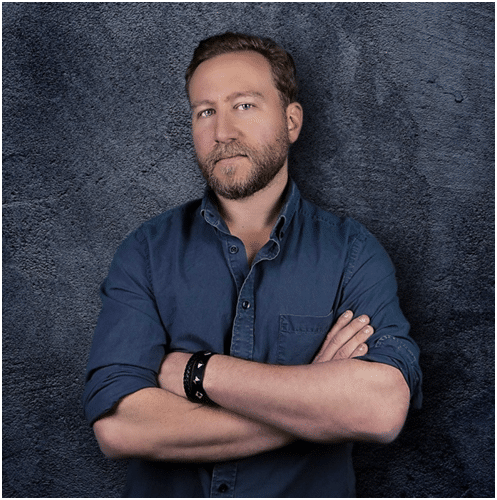
Alex Schumacher

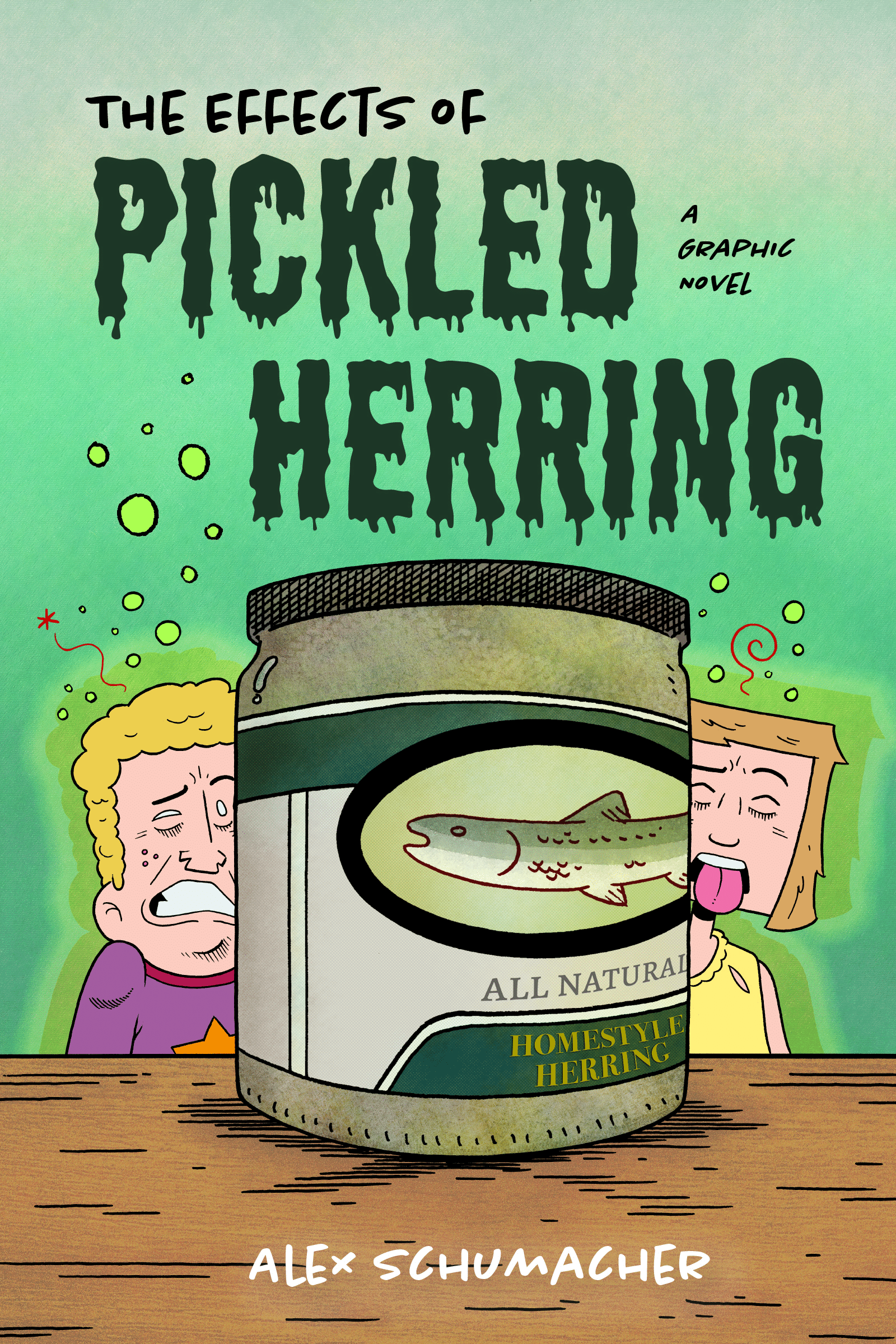
Recently released by Mango Press, Alex Schumacher‘s The Effects of Pickled Herring is a poignant coming-of-age graphic novel about sibling dynamics and the enduring bonds of family.

As he and his sister Alana prepare for their B’nai Mitzvah, twelve-year-old Micah Gadsky and his whole family feel the world shifting beneath their feet when they learn a heartbreaking truth about his grandmother. The stress of the season leads Micah’s introspective nature and Alana’s outgoing disposition to collide, creating division and discord at a time when the family needs each other most. Before Micah can become a man, he must brave the storms of grief, confront the complexities of growing up, and ultimately, learn to lean on love when life trips him up.

We recently got a chance to catch up with the very busy creator Alex Schumacher, the master mind behind the heartfelt The Effects of Pickled Herring.

Graphic Policy: What influence has growing up in the Bay had on your work?

Alex Schumacher: First and foremost, thank you for having me. I was actually brought up just a piece down the road from the Bay Area in a town rich with literary history—Salinas, CA. As you can imagine it wasn’t difficult to find inspiration in a place where the maestro behind The Red Pony, Of Mice and Men, Cannery Row, East of Eden, and many other classics was born. It was in the soil. It was in the air. That was the feeling of living on the same patch of earth that produced one of the great American novelists. His face and words were quite literally everywhere. In murals on sides of buildings, in the names of businesses, and of course we have the library bearing his name. In a locale where the main attraction is the Steinbeck Center—aptly named for a couple of reasons—you can throw a rock and hit something creatively stimulating. From a personal standpoint, I also consider myself incredibly fortunate to have come of age in a culturally diverse area. Until I moved away, I don’t think I fully understood just how much that upbringing genuinely enriched and affected my life.

GP: What were your favorite comics growing up?

AS: The earliest comics I remember being enamored with were the newspaper strips or “the funnies.”. I found them visually striking since there was such a broad range of styles and sensibilities on display. For me, when it comes to being attracted to another artist’s work, I’m always seeking individuality. Having so many singular voices collected in one place was riveting! Everything from the surreal to the simplistic could be found on the same crowded page. The Far Side, Calvin & Hobbes, Zits, The Boondocks, Stone Soup, Sherman’s Lagoon, Bizarro, et al., mesmerized me daily. The colossal Sunday editions in color could keep me occupied for hours. We were easily entertained before the internet I suppose. I’ve regularly heard that my artwork is reminiscent of the style one might see in comic strip, and I don’t think that’s a coincidence. When you find something that speaks to you on a very intuitive level at such an impressionable age it imprints itself on you.

GP: Is there a specific comics creators that influenced you?

AS: When it comes to influential creators in my life, the one that always immediately comes to mind for a shout-out is the late, great Morrie Turner who created Wee Pals and was something of a mentor to me. He was a friend of a friend of the family and invited me to visit him regularly at his home studio in Oakland between 2005 and 2009 during a period when I too lived there. We chatted about the approach and thought process behind producing comics. Mr. Turner shared his expansive collection of original art gifted to him over a lifetime of showing nothing but kindness to others. I pored over those stunning, tangible pieces of comics history and felt connected to something bigger than me in an entirely new way. It was with those stacks of handiwork by larger-than-life cartoonists that I learned an infallible truth about art: flaws are to be embraced, not shunned. Turn a smudge into a texture. For those rare clams you couldn’t finagle into something else there was always white correction paint. But Mr. Turner didn’t simply pass on tricks of the trade. More importantly, he taught me what it meant to be a humble artist. A considerate artist. An artist with flaws that were to be embraced, not shunned. There have been incalculable specific creators who have influenced me along the way since then. None loom quite as large as the inimitable Mr. Turner.

GP: Were there any manga artists/creators, such as Futaro Yamada or CLAMP that you were a fan of?

AS: You know, I’m regrettably a latecomer to anime and manga. It unfortunately wasn’t quite as ubiquitous when I was a kid. A few anime series were suggested to me a few years ago by a close friend who knows my tastes well. Love is War, Mix, and Your Lie in April were among them. I especially fell in love with Your Lie in April’sstorytelling, so I suppose Naoshi Arakawa may have made the biggest impact on me at this larval stage of my manga journey. Either way, studying those titles unlocked a whole other set of tools that made their marks all over the pages of my latest book. Without those series completely obliterating my perceived limits of comics design the entire aesthetic of The Effects of Pickled Herring would have been significantly different and—in my humble opinion—far less dynamic.

GP: Tell me about your love of comics?

AS: That is a well that runs deep. I could tell you about the time I discovered my Aunt Sari’s garbage bag full of silver age comics she had collected in her childhood. I could elaborate on the span of years where comics and I were estranged. Or even tell you about our reconciliation in my young adulthood upon being gifted with the knowledge that Michael Allred’s Madman exists. Full disclosure, the nature of my relationship with comics was on again-off again up until my mid-thirties. I’m passionate about music. I’m passionate about movies. I was WAY too passionate about drinking for a chunk of time. All of which made it easy to neglect one of my earliest entertainment objects of affection. That’s when Alison Bechdel found me and completely reprogrammed the way I thought about comics, bringing us full circle. There’s always something new to extrapolate from comics, be it about yourself, other people, and the world around you. Comics can break your heart, or they can make you whole again. They can connect people from around the world. There’s a breathtaking medley of fresh voices, perspectives, life experiences, etc., dominating the field and that seemingly only continues to expand. It’s an astonishing age for our medium right now and I’m here for it. 

GP: You grew up in a time, much like me, when Saturday morning cartoons, were a thing, what influence do they have on your work, if any?

AS: They had a tremendous impact on me! We were around for the sensational animation renaissance in the late eighties and early nineties which revitalized the creator-owned ethos in a lot of ways. In fact, I was so captivated that there was a time where I contemplated taking a run at the animation industry. Call it capriciousness or unearned confidence, but in early 2014 with no experience to speak of I even jumped at the opportunity to pitch some potential series ideas to the big studios. Nickelodeon. Disney. Cartoon Network. Alas it was not to be. It’s such a vibrant and exhilarating form of storytelling. My earliest memories of learning to draw were trying to replicate Disney VHS (look it up, kids) covers and intensely studying the oversized Walter Foster Animation with Preston Blair instructional book. The vast majority of my knowledge regarding the composition of hands was gleaned from the latter publication.

GP: Are there any influences outside of comics which you draw upon in your art?

AS: Tons! Animation, for starters since we were just discussing it. As part of the “MTV generation” I remember a block of programming called Liquid Television which featured several animated segments including adaptations of Art Spiegelman’s RAW magazine, the iconic Æon Flux, and shorts from one of my personal favorites, Bill Plympton. Music has always been an influential presence in my life, as it is for many creatives. While my tastes can be eclectic from Latin jazz to power pop, there’s a special place in my heart for punk. The kinetic energy captivated me and considering the genre’s Jewish connection with bands like The Ramones, Bad Religion, The Clash, Sleater-Kinney, et al., perhaps gravitating towards punk was operating on pure instinct. As previously mentioned, movies have played a pivotal role in my development as a spinner of yarns. Screenplays and graphic novel manuscripts are not all that dissimilar, so it’s no surprise. There’s much to be learned from film about dialogue, structuring, pacing, tone, visual cues, etc., and it not exactly the worst homework in the world. I’ve been bewitched by the written word since childhood. Both of my grandparents were avid readers and instilled in me a love of prose that exists to this day. My writing has by and large been both galvanized and flummoxed by the finesse of superb novelists. Watercolors and mixed media always blow me away as do feats of engineering—especially bridges! We need to give bridges more love. Anyway, a considerable amount of influence outside of comics.   

GP: What influence do your parents have on your work? What was their reaction, when you told what you wanted to do for a living?

AS: For reference, I was raised by my mother and her sister. They’re my definition of parents when I use that word. One of the beautiful things about languages and definitions is they evolve or go extinct right alongside humanity. Some people would rather certain definitions stay the same since change and differences can be challenging. But things have to shift to continue being relevant and representative of current times. While once thought of in restrictive binary terms, parent no longer solely means mom and dad. I’m proud that “parents” to me means Mom and Aunt Sari. If it wasn’t abundantly clear, my parents have an enormous influence on my work because my upbringing has an enormous influence when I’m developing characters. I think they both recognized from a young age that my central preoccupation was luxuriating in worlds of my own invention, and I would not be swayed. My entire family, Mom and Aunt Sari included, have been nothing but encouraging from the moment I announced my intentions to pursue this debilitating and brutal career path. They provided some much-needed pragmatism and parental wisdom, but not once did they attempt to deter me. 

GP: How did you get started in comics?

AS: The beauty of the format, a kind of whimsical dance between art and text, implanted itself early. I knew I wanted to be part of that dance, but over the years took several interdisciplinary detours. In my mid-ish to late twenties, I believed in my heart of hearts that I would be a syndicated newspaper cartoonist (as hinted at above). I was weaned on a regular diet of the funnies via The Smithsonian Collection of Newspaper Comics. What I didn’t quite realize at the time, since the transition seemingly happened at lightning speed, was the industry was not the viable option it once was. A good friend then invited me to join him in self-publishing a comic book series. Though comic strips are sort of the cousin of the comic book, the process included a steep and humbling learning curve. With that title we tabled at a few conventions at which point I also learned to network. Comic cons are at their core trade shows after all. This was how I effectively secured my initial graphic novel contract in 2013. There’s something so wonderfully intimate about the direct market in the sense that everyone from creators to editors to publishers are so accessible and, in most cases, more than happy to chat with aspiring artists. Of course, gatekeeping and unethical practices still exist, but comics is a unique microcosm in pop art, whose secrets aren’t as closely guarded as they tend to be in some other storytelling communities.

GP: When did you know working on comics would be your career?

AS: I’m not sure I necessarily knew I would ever successfully flip passion to occupation. What was apparent, at least since the art bug bit me as a youngster, was I would be consumed by the chase. In a way you have to give yourself over to it in order to forge any sort of career. It’s quite a daunting prospect when you actually take a step back and consider all of the factors—each improbable in their own right—necessary to catch a break. It is absolutely about hard work. It’s also to a lesser, but not insignificant, degree about luck. When I say that I’m not implying some sort of divine or cosmic intervention. I’m invoking the old adage, “Luck is when preparation meets opportunity.” It’s not a guaranteed payoff even when you put in the time. Even when preparation meets opportunity. Knowing this I persisted. I didn’t want to have any “what ifs” at the end of my time here and knew that fairly early on.

GP: Do you have any favorite comics you are reading right now?

AS: ODESSA by Jonathan Hill, which is technically a return to this beautiful book, but graphic novels are deserving of multiple read throughs. I’ve also recently started Lawrence Lindell’s BLACKWARD about building a place to belong and the power of community. On deck is the weighty tome DUCKS by Kate Beaton and I’m looking forward to diving in!

The Effects of Pickled Herring

GP: Can you tell us what lead you to decide to tell your grandparents’ story, and how different it is from The Effects Of Pickled Herring?

AS: Let me address the second question first. My retelling of my grandparents’ story is essentially a funhouse mirror version with the most notable difference being the premature appearance of grandmother’s cognitive decline. In reality, this affliction didn’t actually materialize until I was a bit older. Now the “why.” For me, my best stories tend to come from my own life, be it experiences I’ve had, or anecdotes others have shared with me. The Effects of Pickled Herring was no different. When all is said and done, this is a story that offers representation for a contingent of young Jews that is not often seen in literature. The perspective from the somewhere-in-between-cultural-and-religious-tween-Jew-Jew deserves to be heard and seen. If stories of my family’s shenanigans can make them (and anyone who’s felt like an outsider) feel less alone all the better. There’s also a longstanding tradition of storytelling being a method of families preserving history and traditions to pass down from generation to generation. I suppose to some degree I’ve come to think of my work under similar terms. More than simply recording a specific time in my formative years for posterity though, it’s just as much a love letter to my grandparents and my community than it is about anything. Those topics aren’t to alienate anyone, mind you. On the contrary, I wrote this book as a way to bring people in and start positive dialogues. We can only start to connect when we lift those shrouds of generalizations and give everyone a peek at what’s actually happening.

GP: How similar is Micah (the protagonist in The Effects Of Pickled Herring) to you?

AS: Micah is fairly similar to me, though not as similar as if I had written a memoir. I enjoy the freedom of detachment offered by veiled non-fiction (or roman à clef as the learned in literature would say). Liberties can be taken, and events or interactions can be exaggerated without offending or inflaming any parties who may have been involved. It’s tough to quantify since the fragmented factoids and supplemental fiction interweave constantly. While writing I hopscotch between real and imaginary so often the borders are completely blurred. In the good way though that further obscures similarities to actual persons (living or deceased), places, buildings, and pickled products.

GP: How similar is your siblings relationship is to Micah and Alana?

AS: In the same vein as Micah’s characterization, I exaggerate and manipulate the non-fiction elements to the point they are utterly unrecognizable as the truth. Many, if not all the major events in the story are informed to varying degrees by real incidents… None of which I would call an accurate depiction. If anything, I try to capture the soul or the vibe of personalities, relationships, events, etc. My sister and I definitely pushed each other’s buttons when we were younger, as most siblings are wont to do, but I also endeavored to capture the close bond that’s always been present. That was probably the element that I most wanted to cut through the noise. Even when we were at each other’s throats so to speak, I’d like to believe there was love behind it. Somewhere deep, deep down in the recesses of our hearts. Somewhere. Maybe. Regardless, I’m happy to say we enjoy a far more peaceful and supportive relationship in adulthood.

GP: What kind of reception have you had with The Effects Of Pickled Herring?

AS: It’s thankfully been overwhelmingly positive, and people seem to be excitedly connecting with the story. I have obvious concerns since we find ourselves in an era where book bans targeting marginalized groups are happening again, but thus far most of the feedback has luckily been the exact opposite. The inclusion of cultural elements was nonnegotiable for me, but I was almost obsessed with ensuring it wasn’t alienating. In this context, it may be best to include an outside opinion. The magnificent Brian Fies, celebrated creator of Mom’s Cancer, A Fire Story, and The Last Mechanical Monster, graciously allowed me to share his thoughts on the matter after reading the book. “For what it’s worth, you never lost me. I thought you were very smart in how you explained the symbolism and significance of the food, prayers, preparation, etc. Even if I never lived it, I understood what a big deal Micah’s bar mitzvah was to him. I appreciate that; it’s a narrow road to walk between condescending and leaving a reader hanging. I thought you balanced it just right.” I’ve been exceedingly grateful for the thus far warm reception.

GP: How does your family feel about it?

AS: Though my grandparents are unfortunately no longer with us to react, I have zero doubt they would have been nothing less than riotously happy. The rest of my family are over the moon. It’s emotional as many details are pulled from one of the more tumultuous times in my family’s life, but they understand and agree that sharing this story is truly about honoring my grandparents and respecting the intelligence—both emotional and mental—of the readers. As my mother was a teacher for 33 years, she categorically approves on both fronts. The audiences of children’s literature want and deserve more complex, or even chaotic narratives to actually reflect some of what they’re experiencing. They’re not almost people. They are people. They live perplexing lives with perplexing issues. The least I can do as an author of books for younger readers is acknowledge that.

GP: What do you want readers to get from The Effects Of Pickled Herring?

AS: The same thing I hope they get from all my books—that they’re loved, even in a world that can often times feel particularly unloving.

Interview: Zack Quaintance finds the life of comics in DEATH OF COMICS BOOKCASE

comics bookcase

Including the word ‘death’ in the title of a comic book could suggest that a funereal tone will be taking charge of the proceedings. But that’s not the case with Zack Quaintance’s Death of Comics Bookcase, Vol. 1, an anthology comic that takes a magnifying glass to the medium and finds it can celebrate, mourn, and offer necessary warnings on the future of comics by way of werewolf priests, living comics bookcases, and morally haphazard wizards.

The project, which hopes to get funded via Kickstarter, tackles a different genre in each of its stories, from fantasy and horror to superheroes, but they’re all woven into a wrap-around story that centers on the titular Comics Bookcase. The variety on display makes the book feel like a roadmap for all the things comics can do, highlighting the richness of the medium. It’s a book that accounts for a life in comics, which Quaintance has certainly led and is still living (he is currently the Reviews Editor for Comics Beat).

There is one thing that brings all these stories together: Quaintance’s sharp approach to satire. No instance of humor is there for the sake of a punchline. There’s thought put into each joke, of the kind that will inspire staring into distance to reflect upon the meaning behind some of them (like when you’re watching a movie and you realize the sword is actually a phallic symbol, or that the main villain is a stand-in for the author’s mother).

One story stands out for how personal it feels while still managing to be a solid horror story. The Werewolf Priest, illustrated by Anna Readman with colors by Brad Simpson, follows a journalist on the heels of a story about a priest that’s rumored to be a werewolf. It has the satire locked down, but it also succeeds in becoming a gleefully gruesome monster-of-the-week yarn that looks at immigration and the loneliness that comes with being a journalist in the process (pulling from Quaintance’s previous experience in the field). It’s strong enough to be its own comics series and it is a definite highlight.

Quaintance scripts all the stories but is accompanied by a different artist in each one. PJ Holden, Nick Cagnetti, Luke Horsman, Ryan Lee, and Pat Skott all lend their talents here.

I corresponded with Quaintance to get at just how Death of Comics Bookcase came to be, what goes into Kickstarting a book, and why that Werewolf story is so damn good.

RICARDO SERRANO: Anthology comics can be strange creatures as they let you flex different storytelling styles while still feeling part of a unifying vision. You go for a different genre per story here. What did you hope would come through in each segment to keep it all together?

ZACK QUAINTANCE: I didn’t initially plan to connect them at all, outside of the Death of Comics Bookcase framing device story that runs in between each. But in the process of working on them, a shared sensibility started to emerge. I really like comics that take absurd concepts seriously, and that’s absolutely what ended up unifying the book. The high concepts are very pulpy — whether it’s a werewolf priest or a war between sharks and apes — but there’s depth beneath that pulp, too.

SERRANO: One thing that’s present in each story is humor. Each one has its own tone though. What do you find in humor that helps you tell these kinds of stories?

QUAINTANCE: The humor just kind of showed up. At no point did I think to myself, ‘Okay, time to make this funny.’ I spent quite a bit of time thinking about each story before and during scripting. I had the concepts for each early, but it took a long time to figure out how to first introduce readers to each world and then later how to wrap things up in ways that felt satisfying. At a certain point, I think I started trying to entertain myself. The longer I tinkered, the more jokes started to creep in.

SERRANO: One of my favorite stories from the book is the Werewolf story, which actually says a lot about journalism in the process. It feels personal. How did you come about this story?

QUAINTANCE: That story is based on my life. Well, sort of. I’ve never seen a werewolf, but after college, I did get a job at The Monitor in McAllen, Texas, on the U.S.-Mexico Border. My first beat was night cops. It was a really rough time. I was 23 and didn’t know a single person for hundreds of miles. I’d drive around at night from car crashes to murder scenes to incidents with Border Patrol. I had really idealistic notions about reporting, but the paper there was on hard times. Nobody was reading it, nor did anyone respect it as a community institution. It was an intense mix of loneliness, violence, and professional futility. So, the comic has monsters, but for me the real horror is the young journalist reconciling his expectations with the reality of his job. 

SERRANO: This isn’t your first time around Kickstarting a book. How have these experiences differed and what’s surprised you the most on this one?

QUAINTANCE: The last time I did a Kickstarter campaign, it was August 2020. Comics Twitter was alive and well, which made promo easier, or at least more centralized. Now when I have something new to unveil, I have five platforms to put it out on, and each one of those platforms works a little differently in how you have to court engagement. It’s more time consuming. The way I think about it is promo has gone from taking a highway, to taking a muddy road. You can still get where you’re going, but it’s going to take more pushing and patience.

SERRANO: Already thinking of book 2? More Death of Comics Bookcase on the horizon? 

QUAINTANCE: Absolutely! The plan as of now is to do at least three volumes. I’ve already got an idea of what will be in the second book, some of which will look familiar to readers of this volume. In fact, the only way there won’t be more Death of Comics Bookcase is if we don’t fund this one. I should also point out that two of these stories — The Werewolf Priest and Goldmask! — were designed as backdoor pitches. And while it wasn’t initially going to be, Nick Cagnetti and I changed the ending of Responsibili-Teen ever so slightly to make it so that character could also return. That’s a long way of saying, yes, absolutely. And the second volume would obviously be Reign of the Comics Bookcases.

You can find the Kickstarter page for Death of Comics Bookcase, Vol. 1 here.

« Older Entries Recent Entries »