Author Archives: Brant Lewis

Absolute Green Lantern #1 Wills Sci-Fi Horror to the Absolute Universe
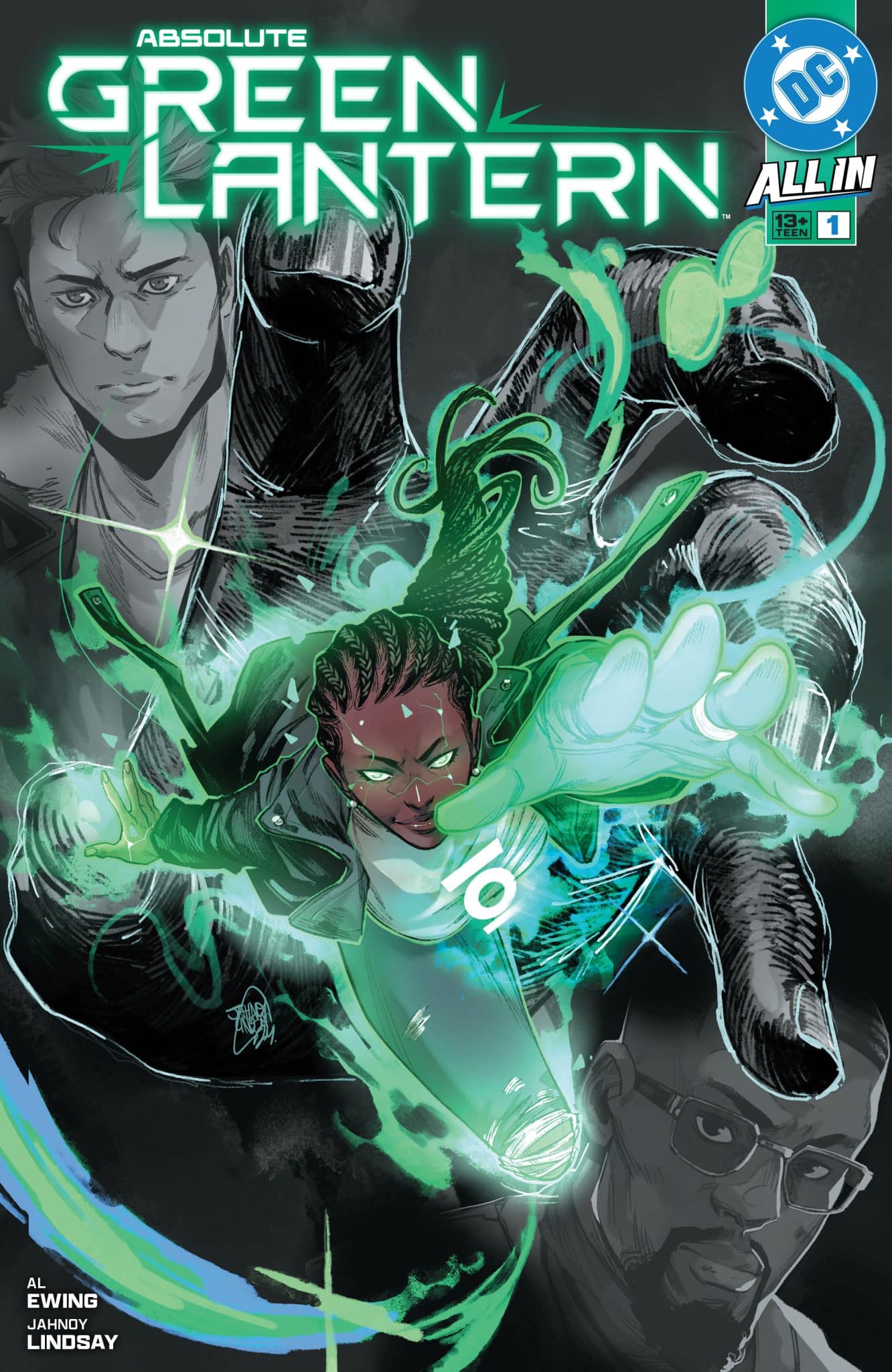
Absolute Green Lantern #1

Without the Corps…without the ring…without the willpower, what’s left is the Absolute Green Lantern! A mysterious alien object lands in a small Nevada town, leaving only three survivors in its wake in Absolute Green Lantern #1. 

You must be without fear.

Presenting the story in a sci-fi horror lens, Al Ewing and Jahnoy Lindsay remove the traditional epic space odyssey scope and ground it in this unknowable terror. A mix of first contact and a religious experience, the appearance of the titular Green Lantern, a celestial symbol, appears in Evergreen and immediately kills a few bikers. Akin to the monolith in 2001 A Space Odyssey, Jo Mullein, Hal Jordan, and John Stewart inspect it in shock and awe. An alien named Abin Sur seemingly chose the trio for something while leaving only one still human. Although we do not get complete answers about what happened or the plan, there are plenty of breadcrumbs to feed your imagination of what might have happened.

You must be without fear.

Opening up on Hal Jordan in the desert, he convenes with a mysterious entity that tells him he “must be without fear.” Represented as a black hole, he haunts Jordan as he treks toward civilization until a cop stops him. Keeping his left hand hidden, the cop orders Hal to show, only for it to cut to a black panel and then reveal the cop missing. The issue being titled “The Black Hand” calls to mind the horrific cosmic energy infecting Hal and the potential of the reimagined Black Lantern Corps. The notion of needing to be without fear means he can control his powers. Much like the Ancient Mariner, his corrupted hand is very much the albatross tried around his neck.

You must be without fear.

Jo, the series’s protagonist, takes a backseat due to the issue’s focus on Hal. As a former cop, she stands in a career limbo as she decides what to do next. With such an extensive focus on Hal, I wish we had more time with Jo. Like the central universe, her life will change because of a chance meeting with a Green Lantern. Similarly, John Stewart still works as an architect. However, Hal now sells collectibles, and Jo is now married to Guy Gardner. Tying the characters into such a personal web provides a standard connection for them without the existence of the Corps.  I also appreciate Ewing for indicting a much deeper shared personal history for the characters, making the divergence of Hal and Jo even more striking. 

You must be without fear.

Lindsay’s artistic talents diverge from those of a typical Green Lantern book as he delves into the traumatic experience of the alien invasion. He sells the contrast of normal everyday life with the horrific shift of an extraterrestrial being impacting said life. As well as serving as the colorist, Lindsay suits the book on the visuals and the emotional nature of the story, too. With letterer Lucas Gattoni, the book charts a new path for the Absolute Universe. 

You must be without fear.

Focusing more on the slow-building tone of dread and the questions that will be explored in the series, Absolute Green Lantern #1 provides a starkly different take on cosmic mythology. Hopefully, Jo’s character gets explored as much as Hal’s in the next issue. Overall, Absolute Green Lantern #1 forces us to look at the dark corners of space with a terrified expression as we await what terror might land on Earth.

Story: Al Ewing Art/Color: Jahnoy Lindsay Letterer: Lucas Gattoni
Story: 8.5 Art: 8.5 Overall: 8.5 Recommendation: Read

DC Comics provided Graphic Policy with a FREE copy for review


Purchase: Zeus ComicsKindle

Absolute Martian Manhunter #1 Pushes the Boundaries of the Human Mind and the Comic Book Medium

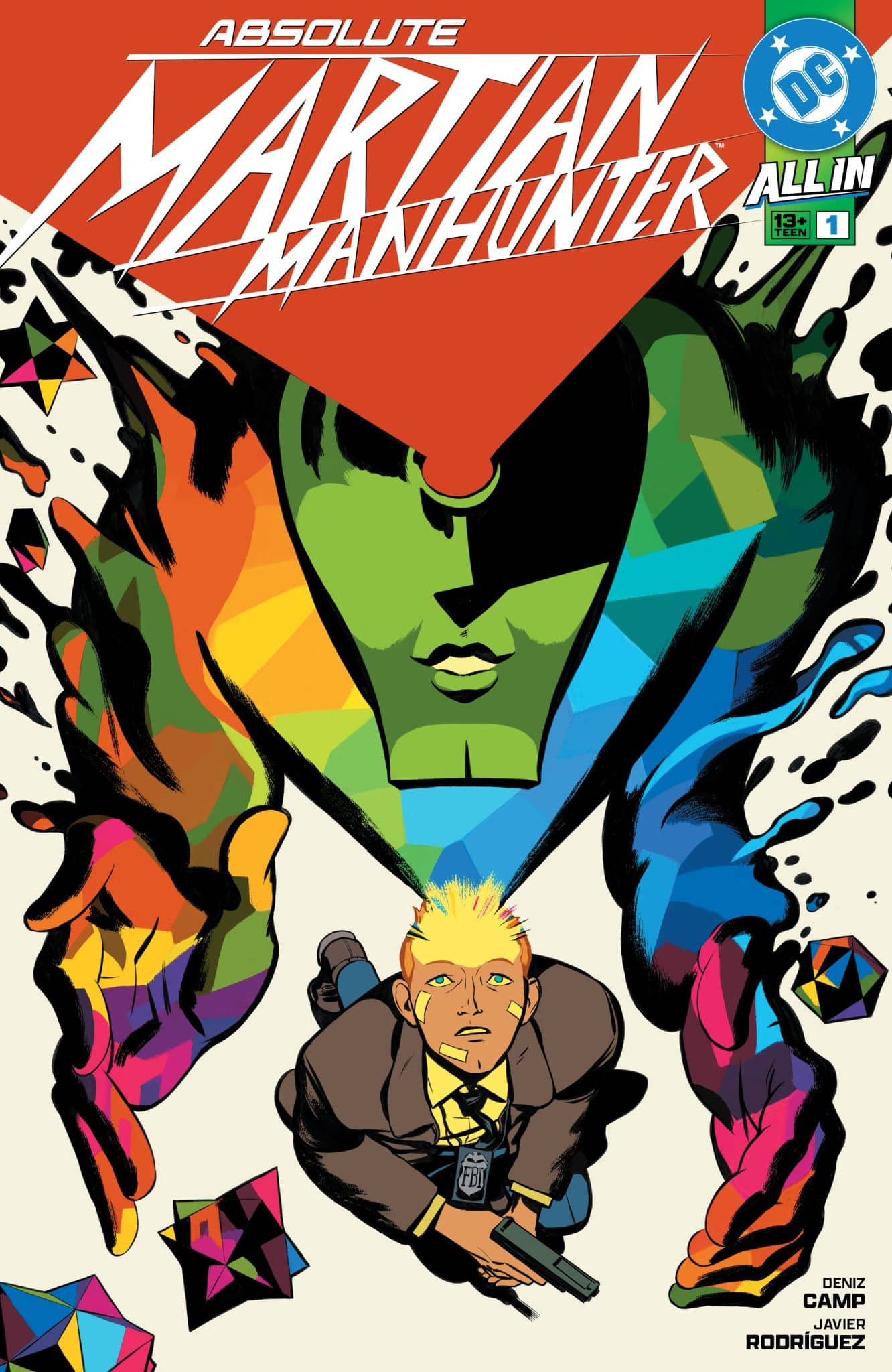
Absolute Martian Manhunter #1

Beyond Mars…beyond physical form…beyond Human Understanding…all that’s left is the ultimate alien: the Absolute Martian Manhunter! Deniz Camp and Javier Rodríguez bring a trippy alien story to the Absolute Universe in Absolute Martian Manhunter #1.

Camp and Rodríguez introduce FBI Agent John Jones, an analytical family man who miraculously survives a bombing without a scratch. Nicknamed “the Martian” due to his cold demeanor, he never believes anything is random and desires to find order. Despite being physically ok from the bombing, an otherworldly entity attached himself to Jones and slowly exposed the agent to his alien viewing, akin to breathing in smoke. Although not a Martian, it takes the name due to the emotional connotations of being different and alien. Like Jones, the Martian feels uncomfortable and has a kindred spirit with the agent. As a result, the story becomes about these two different beings finding common ground and understand each other.

Presenting a much more psychedelic corner of the Absolute universe, the duo channel their love for the 60s and 70s sci-fi comics in the writing and design. Rodríguez’s exquisitely surreal art and panels enhance Camp’s equally dreamlike narrative. It feels like reality is unraveling, forcing Jones to enter dimensions he cannot fully process. If he hopes to find patterns in the chaos of the world, then he will need to fully embrace the unknown waters of the bizarre realities that the Martian inhabits and sees. As Jones sees a much more logical view of the world, the Martian promotes a much messier and more difficult-to-decipher understanding through emotions and memories. The Martian may be how Jones sees the world in a more human light. 

Rodríguez’s designs and colors embrace the entire comic medium to its full extent.  His attention to detail pushes the visuals to the next level. Blurring the lines between the real and the surreal, Rodríguez does some of his best comic work as he pulls out all the stops. With his strong artistic talent, Absolute Martian Manhunter #1 has a distinct emotional visual identity that burrows its way into your brain as it draws you closer. Considering the sheer variety of skills and methods utilized in the issue, it feels like a perfect match with the story and tone of the writing. Hassan Otsmane-Elhaou’s lettering accentuates the writing and art by seamlessly weaving the surreal nature through the typography and layout. And the book’s creative team deserves much praise for the final page that rewards physical issue readers. Without giving much away, it’s an impressive swing that reinforces the issue’s theme.

Camp and Rodríguez’s Absolute Martian Manhunter #1 stands as the perfect alchemy of writer and artist. It pushes what the medium of comics can do both artistically and physically. It promises a mind-bending odyssey as the human mind becomes open to a much different way of viewing life and Earth. Sometimes, it takes an alternate point of view, and sometimes, it can be from an alien consciousness merging with your body and soul.

Story: Deniz Camp Art/Color: Javier Rodríguez
Letterer: Hassan Otsmane-Elhaou
Story: 10 Art: 10 Overall: 10 Recommendation: Read

DC Comics provided Graphic Policy with a FREE copy for review


Purchase: Zeus ComicsKindle

Absolute Flash #1 Rockets Off in an Exhilarating Premiere Issue

Absolute Flash #1

Teenager Wally West moved all over the country with his military father before arriving at a secret research lab headed by scientist Barry Allen. Two days later, Wally wakes up in the desert, chased by a team of costumed individuals hoping to capture him. The day before that, Wally’s life will change forever due to a freak accident that puts him on a new path. Jeff Lemire and Nick Robles reintroduce a Scarlet Speeder with no one else but him running alone in Absolute Flash #1.

With a character such as the Flash based on the notion of legacy, removing that aspect from the mythology in the Absolute universe makes Wally stand out. Having him be a teenager also adds to it. Instead of starting as Kid Flash, Wally’s existing as the only Flash of this universe provides a fascinating angle since he no longer has a mentor figure to guide him and needs to figure it out on his own. I appreciate Lemire and Robles reinforcing Wally’s brash, youthful energy as he struggles to find his place as a person and future hero. He might have the super speed, but he must decide what type of hero he wants to be on the fly.

Lemire and Robles structure the issue in a non-linear timeline to help the reader understand Wally adjusting to his powers. Wally’s consciousness is no longer constrained to a linear viewing of time but instead vibrates between the past and the present due to some mysterious force. On a more technical level, it gives us a glimpse of Wally’s life before the accident and gives enough sprinkles of what to expect in the series’ future. Robles’s art, Adriano Lucas’s colors, and Tom Napolitano’s lettering reinforce the non-stop aspect of Absolute Flash #1 as we race alongside Wally.

The central emotional conflict of Absolute Flash #1 deals with the relationships of Wally, his father Rudy, and Barry. Like the central universe, Barry takes a shine to Wally and wants to take him under his wing, while Rudy would rather have his son do what he says. Wally wants a mentor who understands him and will listen to him like all teenagers do. He resents his father due to moving a lot for his job. Lemire also injects the strained father-son relationship with much-needed humanity to where it does not come across as cartoonish but human. But all this comes crashing down following the explosion, leaving Wally on the run as the Rogues chase him. No matter how hard he tries, Wally cannot escape his relationships with his dad and Barry.

Robles, Lucas, and Napolitano make an artistic meal in Absolute Flash #1. Every visual element feels bold, bright, and energetic, perfect for a speedster book. I love Robles’s attention to wardrobe and styling for Wally by diving into his youthful, rebellious sensibilities. It also contrasts the more Conservative nature of the younger Wally from the central universe. Wally looks and feels like a modern teenager. On a similar note, the redesigns for the Rogues strike a similar balance of differences but hold enough familiarity with their core designs. Robles, Lucas, and Napolitano also nail the chaotic and anxious emotions of Wally and his relation to his powers. Cackling like a lightning bolt, they kick off the series with illustrative precision.

Releasing in the second wave of the Absolute titles, Lemire and Robles truly hit the ground running in Absolute Flash #1. With excellent character writing and phenomenal visuals, Absolute Flash #1 is an exciting, fast-paced introduction to the Absolute Scarlet Speedster. 

Story: Jeff Lemire : Art: Nick Robles
Color: Adriano Lucas Letterer: Tom Napolitano
Story: 9.5 Art: 9.5 Overall: 9.5 Recommendation: Read

DC Comics provided Graphic Policy with a FREE copy for review


Purchase: Zeus Comics – Kindle
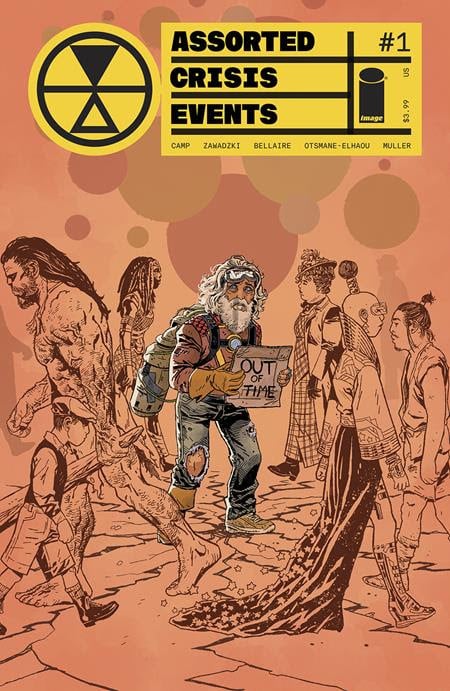
Assorted Crisis Events #1 Offers a Human POV of Time Unraveling

Assorted Crisis Events #1

Time has become unstuck, forcing various timelines to collide with each other. You might run into Nazis on the way to work. You wake up to find apocalyptic raiders and medieval knights battling outside your New York City apartment. Your double from another future reality might show up and kill you and take your place. All you can hope to do is survive and try to live for another second. Deniz Camp and Eric Zawadzki’s Assorted Crisis Events #1 mirrors our reality where you cannot keep track of anything anymore and feel that everything has gone to chaotic hell, and you try to live for one more day despite the overwhelming odds. 

Following Ashley as she heads to her job at a restaurant, Camp and Zawadzki immediately drop us into the world, and we first experience how accustomed she has become to it. Hearing a crying woman begging for help to help her husband frozen in reality, she walks on. She sees a man’s chest burst open and explode due to his guts, but it does not phase her. Even the notion of her parents’ graves switching places with another set never makes her bat an eye. Despite how horrible and horrific all of these events appear to us as readers new to this world, it reinforces how numb Ashley has become to all of it. Seeing subway pirates may have initially freaked her out, but this has become her new reality. This “new normal” is just normal now. Just look at your phone and move on with your life despite the world breaking apart.

Ashley’s story of trying to fix her clock also feels like a grand, tragic, cosmic joke. On a surface level, the need for a clock when time has become uncontrollable and wild is unnecessary. Still, the sentimental aspect of its connection to her family ties her to a specific moment. Acting as an anchor that connects her to the world, she has nothing else to tie her to it. But that emotional aspect holds no value to the horologists she begs to repair it. This simple activity exists as this grand twisting odyssey that constantly shuts her down at every turn. Even trying to escape by jumping through a crater in the earth painfully reveals it as a painting on the road. Left with a destroyed clock and a collapsing world, she ponders if anything is left. “Is this how it really ends?”

Camp and Zawadzki also do an excellent job of portraying a reality that shifts between the real and the unreal. The presence of various film crews utilizing the destruction and crisis events for their work blurs the line between the unreal and the real. More specifically, they commodify this horror to a more consumable and marketable form, i.e., films. Instead of reckoning with the unraveling of time, they would make a quick buck off it. Similar to how Ashley and others ignore death and destruction, these movies provide an outlet and a false comfort to the population. Spend money to forget the world’s troubles for an hour or two. The pair highlights how easy and normalized it becomes to ignore reality’s pain and horror and focus on the more consumable version. Outside of the filmmakers, the cops failing to help the crying woman and even arresting the Broken Man before beating up Ashley reinforces this desire to protect and project a desired reality. Why do you need a few people to alert you to the smoke outside your door when you can keep inside your pretty bubbles? 

Zawadzki’s art and paneling with Jordie Belaire’s colors and Hassan Otsmane-Elhou’s lettering solidify and expertly portray the varied tone and densely written story. Zawadzki’s phenomenal art and panel structure that bleeds outside of it towards the edges of the pages show how barely contained time is. The three portray a reality buckling under the weight of its unruly madness. Making me laugh, cry, and scared at the same time, Zawadzki, Belaire, and Otsmane-Elhou grasp and convey the emotional rollercoaster of this profoundly human narrative. 

Assorted Crisis Events #1 by Camp and Zawadzki is a great first issue that demonstrates how deeply unpredictable and human this anthology series will be. It is an expert reflection of how we attempt to live and deal with our current reality, which threatens to drag us and kill us. The world will not end with a bang but with a cut as we look for the cameras to help us escape from reality.

Story: Deniz Camp: Art: Eric Zawadzki
Color: Jordie Belaire Letterer: Hassan Otsmane-Elhou
Story: 10 Art: 10 Overall: 10 Recommendation: Read

Image Comics provided Graphic Policy with a FREE copy for review


Purchase: Zeus ComicsKindle

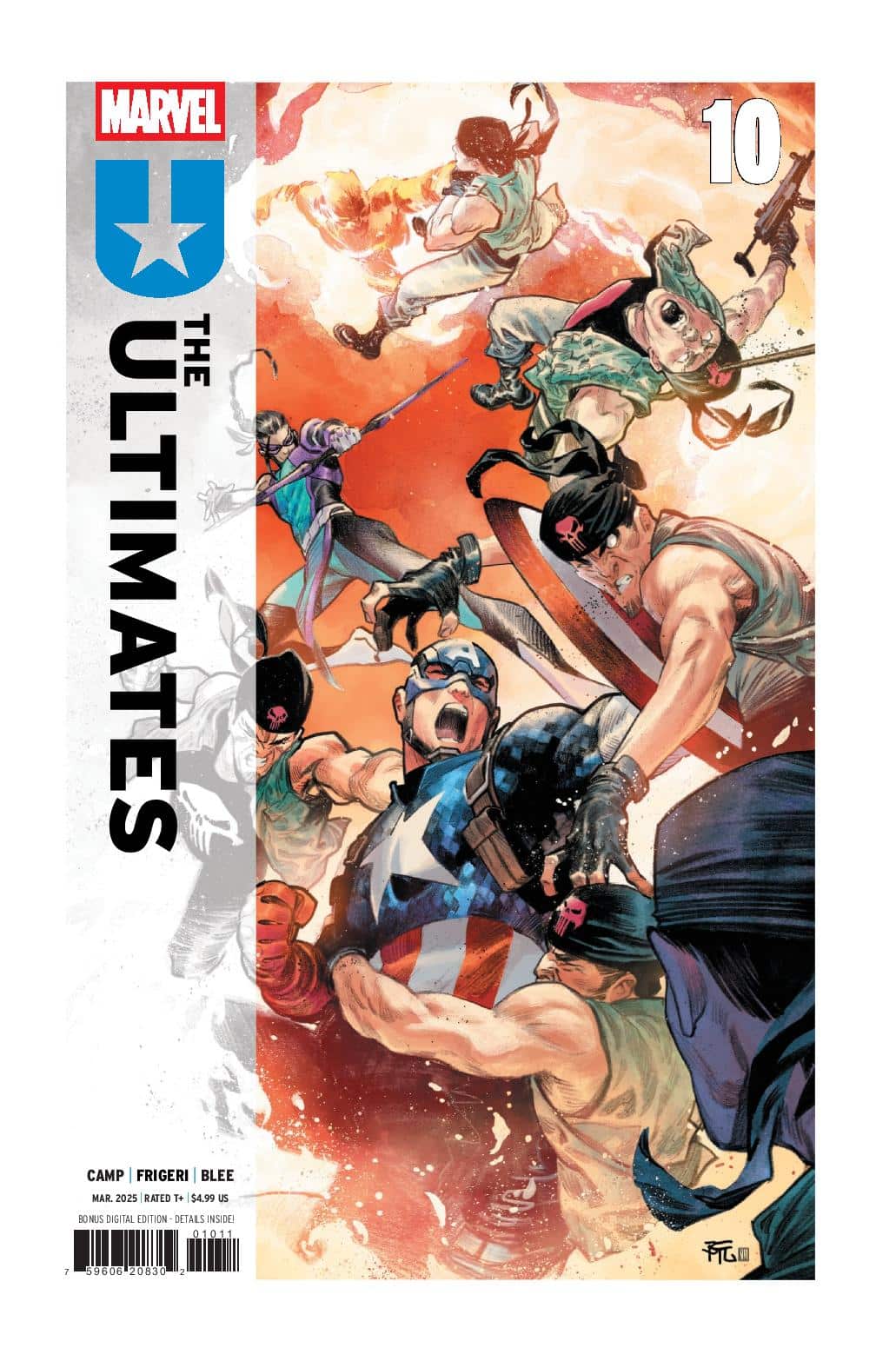
The Ultimates #10 Unveils What Happened to the Invaders

The Ultimates #10

Every so often, I see a vehicle with a Punisher symbol. The white skull logo stares daggers into me whether I’m driving to work or viewing it on someone’s t-shirt or even paracord wristbands. Initially created by Gerry Conway, John Romita Sr., and Ross Andru in the 1970s as a critique of the failure of the justice system, Frank Castle and his iconography have been co-opted by the military, law enforcement, and hate groups as a positive where he is truly the only man willing to cross the line and do what it takes to get the job by whatever means necessary. The original context does not matter to them; they only care about the surface-level aesthetics and views that reinforce their messaging and beliefs. Like in the real world, Deniz Camp and Juan Frigeri examine how symbols transform and mutate in The Ultimates #10.

Previously established in issue 2, Earth 6160 Frank Castle existed in a similar capacity to the central universe as a gun-wielding vigilante evoking 1970s vigilante films like Death Wish, who committed multiple killings across NYC. Years later, after his death, the neo-nazi group called the Red Skulls would capitalize on his methods and iconography to make their movement more “marketable” to outsiders. While the Punisher may have committed mass murder, he “cleaned up the streets” and “got rid of the filth,” making him an appealing figure ripe for the taking. The Red Skulls do not care about whether or not Castle would have killed Nazis; all that matters to them as fascists are the surface-level aesthetics of his actions that they can appropriate and warp, and use to justify their behavior. Strip away the aspects that you do not agree with and craft a new symbol with the beliefs and ideology you want it to enforce. Fascism stands as an incoherent and contradictory reactionary ideology that does not care about having a true solid base below its aesthetics.

Steve Rogers and Jim Hammond, two of the original Invaders from World War II, are symbols from a previous time who wrestle with their place in the modern world. The world they once knew was stripped away and exists as only a memory they hold on to. Especially for Jim, who has to manually sort and delete his old files to record new ones. Even for an advanced machine when he was built, he still has limitations such as limited memory and needs to decide what to keep and remove—Jim’s decision of how we record the past crafts a narrative that dictates what happened. If Steve serves as the symbol of the ideals of a country long gone, then Jim acts as a living recording of a past erased. 

As for the remaining Invaders, they suffered horrific fates and fell out of history. Namor, the once majestic king of Atlantis, hangs as a dead catch of the day to the Red Skulls. Removed of his royalty and splendor, his corpse is a recruitment tool for the Red Skulls. Most shocking lies in the Bucky, who now serves as the group’s Grand Skull. We do not know what happened to him after Steve landed in the ice, let alone how he became the most recent leader of the group. One of Steve’s closest friends becoming the new symbol of the enemy he fought adds a great wrinkle to the conflict, and it will be fascinating to see how it gets resolved.

Opening on Hitler’s satisfying burning death by the Human Torch, Frigeri, colorist Federico Blee, and letterer VC’s Travis Lanham really get to showcase their artistic skills in this issue. Showcasing both blockbuster action and emotionally intimate moments, the artistic team nails the perfect visual vibes. Feeling extremely slick and modern, it has the necessary bombastic energy.

The Ultimates #10 showcases Camp and Frigeri’s talents for crafting a story that not only feels extremely relevant but is willing to dive into present topics and issues impacting our modern world, such as fascism and hate groups. As a result, it never feels dated or out of step but perfectly puts the finger on the pulse of what we are currently living through. Especially for a Big Two comic, this is highly commendable and hopefully widens the eyes of its readers to the roots of the issues surrounding us. 

Story: Deniz Camp: Art: Juan Frigeri
Color: Frederico Blee Letterer: VC’s Travis Lanham
Story: 9.5 Art: 9.5 Overall: 9.5 Recommendation: Read

Marvel provided Graphic Policy with a FREE copy for review


Purchase: Zeus ComicsKindle

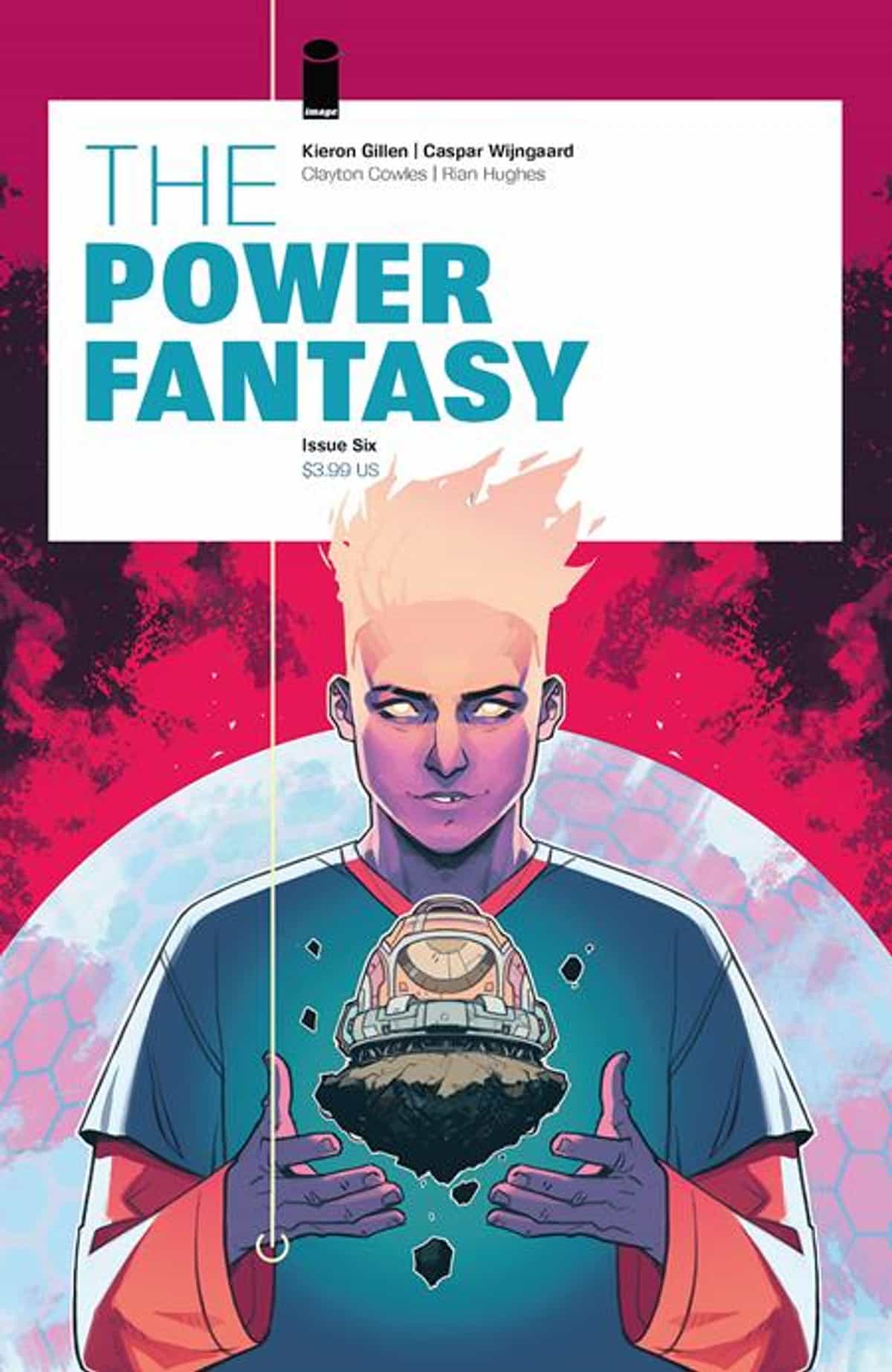
The Power Fantasy #6 Introduces the 21st Century Superpower Boy

“Tried to tell you about no control
But now I really don’t know
And then you told me how bad you had to suffer
Is that really all you have to offer?”- Bad Religion “21st Century (Digital Boy)”

The Power Fantasy #6

The fragile alliances of the Superpowers stand even more on the brink as Heavy’s secret plan unfolds. With the future reveal of Kid Ignition as a secret seventh superpower to the world, the potential doomsday quickly draws closer and threatens the safeguards Lux placed. Mixed with Magus directly arming the United States as the new Secretary of Magic, the remaining Superpowers need to tread lightly before it quickly goes up pear-shaped. If the beginning of the world started in a big bang, then the potential end arrived from another one in Kieron Gillen and Caspar Wijngaard’s The Power Fantasy #6.

Teased as the “teenage Limp Bizkit fan who could destroy the world,” Kid Ignition embodies not only the typical bravado of a seventeen-year-old concerned with sex, horror movies, and skateboarding mixed with the destructive power of an atomic bomb thanks to Gillen’s writing and Wijngaard’s art. The combination of youthful relatability with potentially destroying the world adds to the darker layers of the character. He has some concept of normalcy but cannot be genuinely normal due to his status as a Superpower. He cannot be a regular kid. If the adult Superpowers can barely keep it together, then a teenage version could do it even less successfully. 

We also get three aspects of attempting control and holding power with Heavy, Lux, and Magus. Because of Kid Ignition, Heavy has an ace up his sleeve, and if anyone tried to attack him or Haven, then his son’s threat of retaliation prevented it. Lux, through Tonya, gains information about Heavy’s plans to keep the various alliances in check. Then comes Magus, hoping to transform the military into an extension of his pyramid to gain more power to combat the others. They all believe they know what’s best for the world and want to jockey for control over each other. As they get closer to the brink, all that matters will be who pulls the trigger.

The Power Fantasy #6 also reinforces its meditations on the fears of the future with Heavy and Kid Ignition. Prophesied by an atomic that his son would be a Superpower, Heavy founded Haven to hide his future child and raise him. Stating his desire to raise Kid Ignition to protect him, the line blurs between parental and political due to Heavy viewing him as a chess piece on the board. Especially with not having the choice of being a superpower but existing due to Heavy’s wishes, Kid Ignition is akin to a weapon instead of a person. Even being trapped in the orb on Haven, away from any outside prying eyes, robs him of a potential childhood and only knowledge of the world around the Family. Heavy will do whatever it takes to protect Atomics’ future and use his child to secure it.

Wijngaard’s linework, paneling, and coloring, combined with Clayton Cowles’s lettering, make it another exquisite and striking issue. Wijngaard knows how to build tension through body language, timing, and emotion. Nothing is truly wasted in the art department. The Power Fantasy #6 begins the new arc and accelerates the potential end of the world thanks in part to a hormonally charged teenager.  

Story: Kieron Gillen Art/Colors: Caspar Wijngaard Letterer: Clayton Cowles
Story: 10 Art: 10 Overall: 10 Recommendation: Read

Image Comics provided Graphic Policy with a FREE copy for review


Purchase: Zeus Comics Kindle

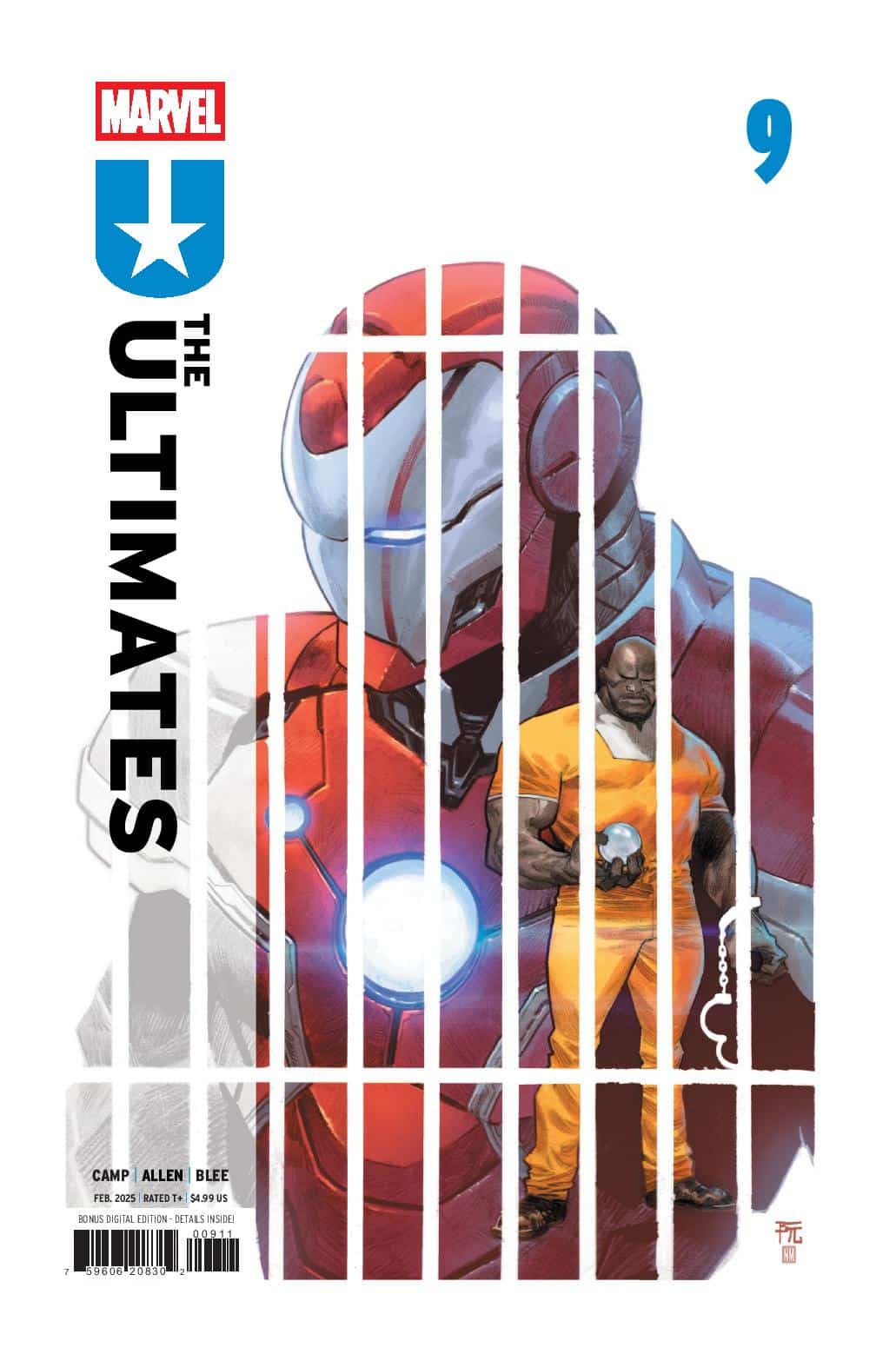
The Ultimates #9 Breaks the System from the Inside

The Ultimates #9

The United States has the highest incarceration rate in the world, with under two million people behind bars. In addition, the notion of prison and prisoners has become demonized to a considerable degree in both the real world and media, like comic books. There exists an aspect of inhumanity if you are sentenced to prison due to not only the baggage of that identity but also losing your autonomy and humanity by becoming a cog in the machine. “Just because you break a law doesn’t make you a criminal. And you don’t have to break a law to be a criminal. A criminal is just something you are.” You are essentially an outsider to a society where you need to work and repent, engage in grueling labor, and work to regain the conditional rights you were given. Deniz Camp and guest artist Chris Allen introduce Ultimate Luke Cage, the man with unbreakable skin and spirit that the system couldn’t break in The Ultimates #9.

Similar to Earth 616, Ultimate Luke Cage, as a teenager, gets sentenced to Seagate Penitentiary for a crime he didn’t commit with no chance of leaving. The prison officer described being sentenced to one year to life as being “progressive” because he could finish his sentence in 12 months compared to the previous mandatory length. Outside of our knowledge of the Maker pulling the strings to prevent Luke from being a hero, it also calls to attention how prisons do better to keep prisoners incarcerated instead of reforming them. Luke becomes a pawn to the system, and that fantasy of having control and being able to escape looms over him like a carrot, not only by the people on the top but also by the intermediaries and guards who help keep everything in line. You have the possibility of a one-year sentence if the deck and system were not stacked against you in every single way.

If the Ultimates focused on more of a physical revolution, then Camp and Allen decide to explore a more philosophical call with Cage. Inspired by the works of George Jackson and Michel Foucault, he knows that even if his body gets broken, it will not be over until his spirit is destroyed. More importantly, recruiting others who the Maker has oppressed through ideology and a shared experience of being imprisoned can cause destruction and damage to the Council on the inside. “If the system cannot be reformed–the system resists reform–but must be transformed in the revolutionary sense.” Cage and Tony Stark approach the issue through different lenses based on their experiences but want the same goal and, ultimately, the same way through collective action on different scales and environments.

Camp and Allen alternate the issue through the past and present timelines to showcase how easy it is to lose time while incarcerated. Still, life in prison is similar and repetitive, no matter which one you are in. A system dictates and controls your life instead of your own autonomy. Even Allen’s repeated nine box panels across the issue reinforce the feeling of being trapped in a repetitive loop you cannot escape. Then comes the catharsis of Cage receiving the Stark box, which destroys the pattern. While physical power with ideological belief can change the system, actual change can occur when others join in. Brilliantly put in the issue “All Power to the People.” Allen’s art with colorist Federico Blee and letterer VC’s Travis Lanham makes the story stand out among the previous fantastic issues. 

Camp and Allen’s The Ultimates #9 delivers another incredible issue that reinforces my love for the series. What Camp and Allen have accomplished is nothing less than powerful. 

Story: Deniz Camp Art: Chris Allen
Colorist: Federico Blee Letterer: VC’s Travis Lanham
Story: 10.0 Art: 10.0 Overall: 10.0 Recommendation: Read

Marvel provided Graphic Policy with a FREE copy for review


Purchase: Zeus ComicsKindle

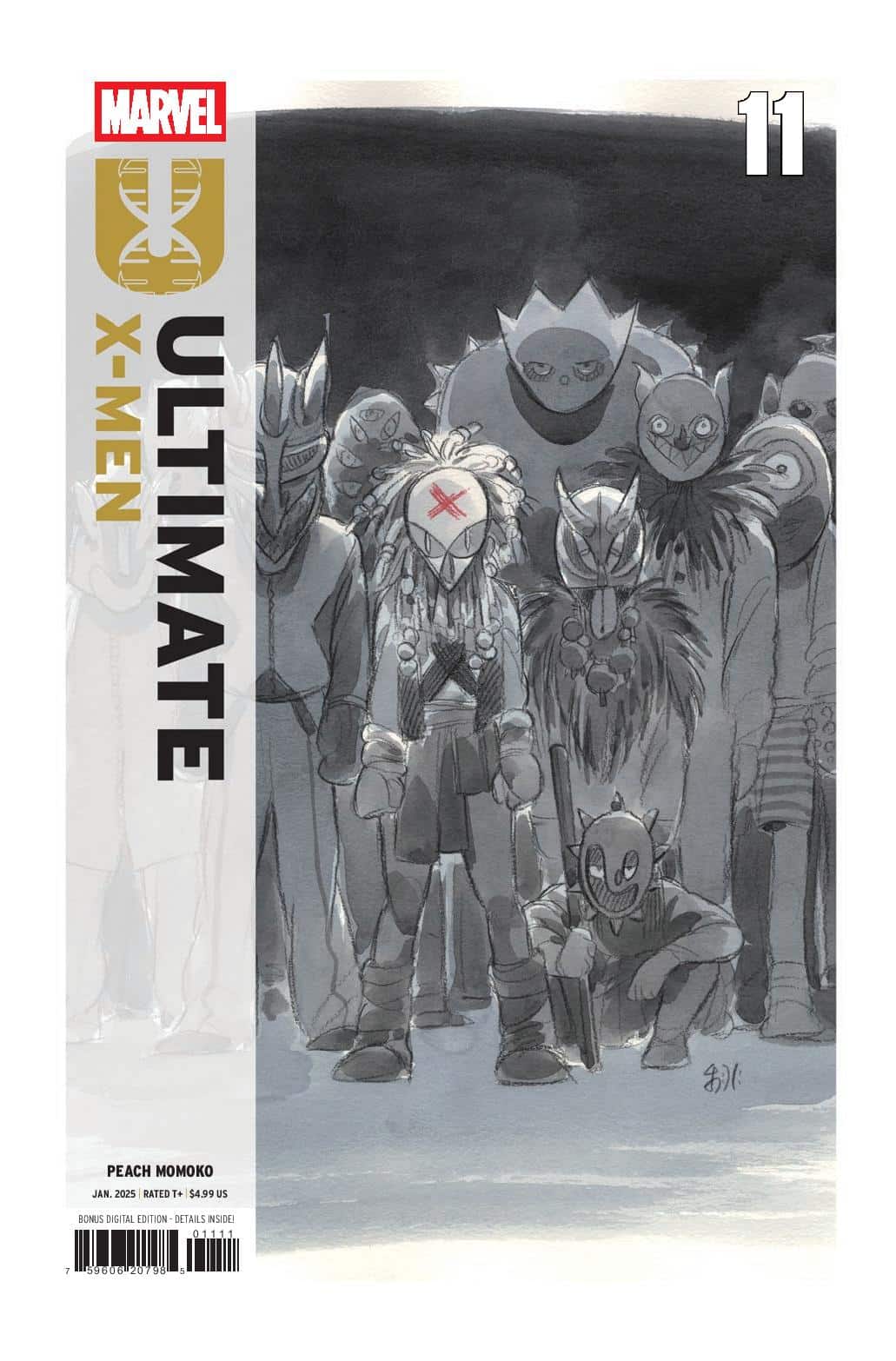
Ultimate X-Men #11 Brings a New Leader to the Forefront

Ultimate X-Men #11

The fate of mutants lies in shambles after humanity raided the Children of the Atom. Some mutants like Armor, Nico, Mori, and Natsu want to hide their powers and let the storm pass over, while others like Mei and Kanon hope to confront the problem head-on. All the while, Viper of the Maker’s councils loses her grip on mutant-kind, and a new leader will step forward to lead the remaining Children of Atom in Ultimate X-Men #11 by Peach Momoko.

Momoko’s focus on the characters’ relationships still stands as one of the best parts of the series. With the titular X-Men at a crossroads regarding how to deal with the Children of the Atom and humanity’s fear of mutants, she draws not only tension but also character growth for characters like Mei, who decides to leave the shadows and become the leader. It raises the debate of whether inaction or action is the better option. Especially with how little the kids can trust adults, they must figure out their best choice. 

I also appreciate Momoko’s slower pace for the series, allowing things to breathe and explore more in-depth. This decision draws us even closer to this part of the Ultimate Universe, where we can solely focus on what is impacting it and it alone. Much like a descending spiral, we fall deeper into the extensive world that Momoko built. Every little bit has been carefully thought out, and I love how the notions of clear binaries are blurred even more. Initially presenting the Children of the Atom as villains, she showcases the true evil in charge and the victims who have been afflicted and brainwashed by the cult. Lastly, the gradual storytelling reflects how the characters are still adjusting to the new world of mutants and finding their place.

Momoko’s art and colors, with VC’s Travis Lanham’s lettering, make each issue an actual visual event to look forward to each month. I am constantly amazed by Momoko’s astounding visual work, where every panel truly comes alive and stands out from the Ultimate Line and most Big Two comics in general. I am also amazed at the consistent quality of her delivery each month. Her writing and art are a true match in heaven that continues to craft a defying take on such a beloved franchise.

Momoko delivers another outstanding issue with Ultimate X-Men #11. As the pieces slide into position, the battle for the future of the young mutants hangs on the horizon. The careful pacing and strong character beats make it one of the best published comics. 

Story:/Art: Peach Momoko
Script Adapter: Zach Davisson Letterer: VC’s Travis Lanham
Story: 9.0 Art: 9.0 Overall: 9.0 Recommendation: Read

Marvel provided Graphic Policy with a FREE copy for review


Purchase: Zeus ComicsKindle

The Ashcan Edition Episode 11: The Best at What He Does with Chris Condon

For episode 11 of The Ashcan Edition, Brant Lewis talks with Green Arrow and Ultimate Wolverine scribe Chris Condon. Join us as we talk about returning Ollie to his roots, Barry Windsor-Smith’s impact on the Winter Solider, and how a New Jersey writer and a British artist decided to do a series about Texas.

You also follow Chris on social media @christophcondon. You can also follow Brant Lewis on Bluesky @brantlewis.

Ultimate Wolverine #1 by Chris Condon and Alessandro Cappucchio is currently out.

Green Arrow #20 by Chris Condon and Mantos will be released on January 22, 2025.

Music is “Win This Battle Win This War” by Everet Almond.

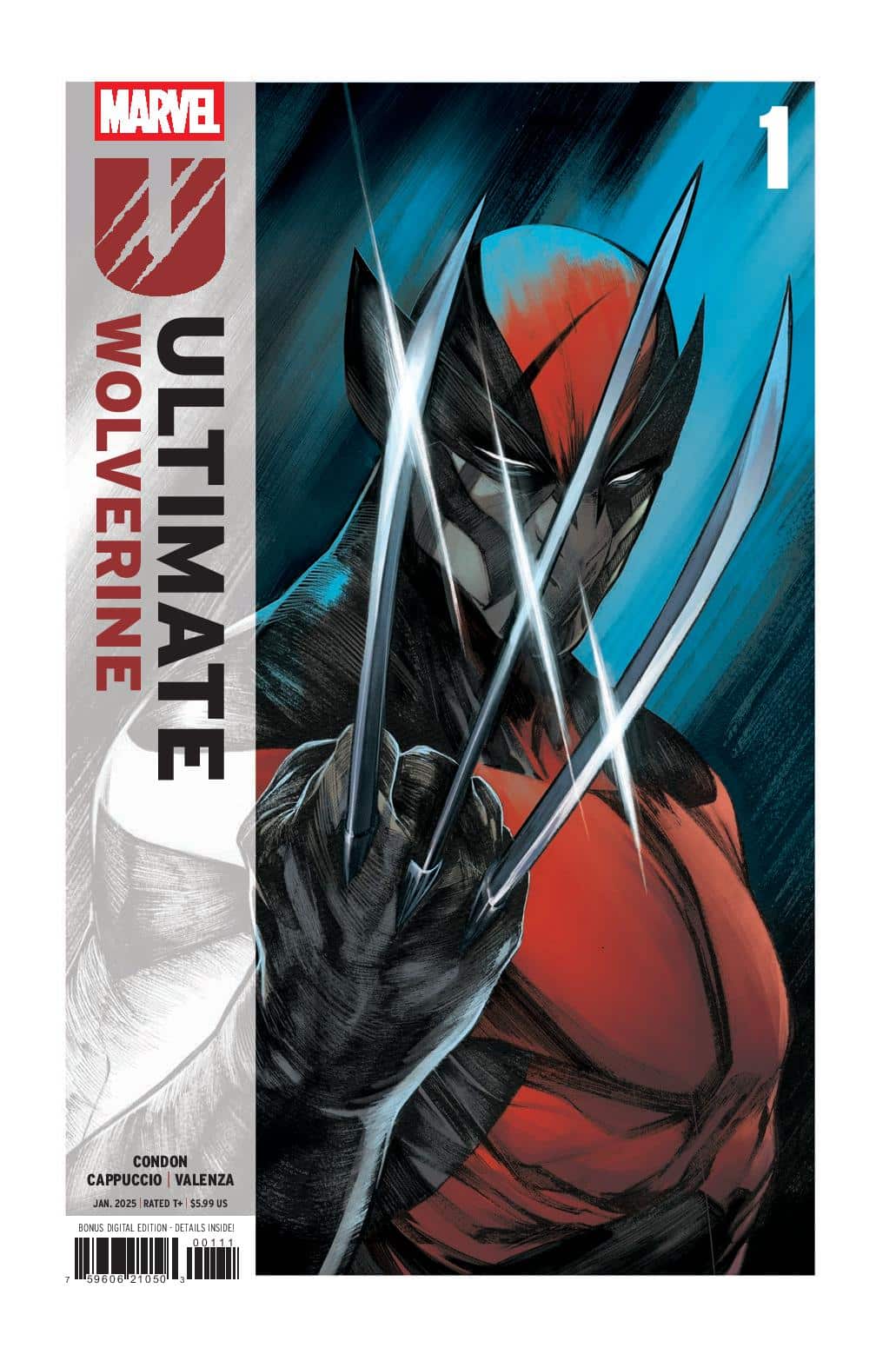
Ultimate Wolverine #1 Snikts Its Claws into Readers

Ultimate Wolverine #1

The Maker reshaped the world of Earth 6160 in his twisted image and enshrined the Maker’s Council to rule it. Colossus, Magik, and Omega Red oversee the Euroasian Republic, one of the two only locations with publicly known mutants where they commit horrific experiments on them. A secretive group called The Opposition formed to take the trio’s rule down and to free mutants. But to hold onto power, the trio utilizes the Winter Soldier, an unflinching and remorseless assassin, to kill the freedom fighters. Chris Condon and Alessandro Cappuccio introduce the mutant of Earth 6160, who is the best at what he does, but what he does isn’t very nice in Ultimate Wolverine #1.

Focusing on the villain’s side of the Ultimate Universe, Condon and Cappuccio plop us into the frosty Euroasian Republic as we get a look into this side of the world and its characters. Diving into the political power plays of Magik, Colossus, Omega Red, and Doctor Prostovich and their war with the rebels of the Opposition, where The Winter Soldier essentially serves as a loyal and brutal killer meant to crush dissent. Calling back to Logan’s origins in Weapon X, his role as the Winter Soldier hones into his animalistic instincts due to acting more like a muzzled attack dog or beast than a human being. Considering his lack of dialogue and essentially relying on his senses further dehumanizes him, where he exists as a weapon to be unleashed. 

The introduction of the Opposition brings a few familiar faces with close ties to Logan, including Nightcrawler and Mystique. Their introduction does not feel like a simple callback but expands the Euroasian republic and the potential cast we might see. It’s also interesting to see Kurt serving as a priest and working with his mother, Mystique, which reflects what we know should have happened for them in the central 616 universe. With Logan not recognizing them or remembering their shared history makes their slaughter even more horrific. Condon has crafted a ghost who stalks the snowy forests.

Cappuccio truly brings his incredible gifts to the art, where he captures the cold spy tone of the story. Due to the non-verbal nature of the Winter Soldier, Cappuccio nails the character’s body language to help the readers know what he is thinking. Paired with Bryan Valenza’s colors and VC’s Cory Petit, the visuals ooze with style and put you in the boots of the bloodied and dark atmosphere of the Euroasian Republic and how unforgiven it can be. It’s only fitting in a world entirely of shadows that the only true light can be derived from the pure, untainted moon or snow. 

With the arrival of year two for the Ultimate Universe, Ultimate Wolverine #1 by Condon and Cappuccio snikts onto the scene and jams its claws into readers. Brutal and bloody, the duo lands an incredible debut that leaves the reader wanting to know more about the Winter Soldier and what else lies in this part of the world.

Story: Chris Condon Art: Alessandro Cappuccio
Color: Bryan Valenza Letterer: VC’s Cory Petit
Story: 9.4 Art: 9.4 Overall: 9.4 Recommendation: Read

Marvel provided Graphic Policy with a FREE copy for review


Purchase: Zeus ComicsKindle

« Older Entries