Category Archives: Gender

Pop Political/Political Pop: The Beetle Vs. the Glass Ceiling (Spoilers)

Welcome to the first Pop Political/Political Pop which will be posted each Friday where I spotlight a “political” moment in comics for the week or a geek moment in politics. It could be an entire comic, a Tweet, release, event or a moment in a comic series, recent or in the past. This week’s first one comes courtesy of The Superior Foes of Spider-Man written by Nick Spencer with art from Rich Ellis.

Warning Spoilers Ahead!

The issue focuses on the new Beetle, who we have learned is the daughter of mob enforcer Tombstone. Janice wants to be a super villain but her dad has other ideas, such as her becoming a lawyer… they can steal way more money and do so legally. But, that doesn’t sit right where she protests that she wants to break the glass ceiling and become the head of a crew and run it the right way.

On being a woman and a career (in crime) she has this to say:

beetle_1Then there’s Janice’s dating life. In an awesome sequence of how she spends her time we get a snapshot of a date and what’s going on through her head.

beetle_2Between the Clinton reference and the X when Republicans are mentioned, I’m guessing Janice might be a Democrat.

Facebook Fandom Spotlight: Comic Fans and Politics

With 2014 being an election year for the Senate, House and more, I thought it might be fun to track how comic fans break down in the political spectrum. Again, I dove into Facebook to figure out how it all shakes out.

For these stats, I used the terms I’d normally use to determine other demographic breakdowns of comic fans. Facebook also provides the ability to break down those stats into convenient groups as far as politics which I have used.

According to Facebook 35.55% or 7.8 million comic fans are “active” politically in the United States. This breaks down further into 4.2 million men (53.85%), 3.4 million women (43.59%) and 200,000 who don’t give their gender. What “active” exactly is, isn’t to clear though.

political active gender 1.1.14Party affiliation is pretty clear as folks can indicate a part or none (which I assume is the non-partisan stat). The non-partisans make up the majority of comic fans with 48.67%, liberals are 27.43% of comic fans and 23.89% of comic fans or conservative.

party affiliation 1.1.14Further breakdown of gender when it comes to party affiliation:

  • Conservative: 55.56% men, 44.44% women
  • Liberal: 51.61% men, 45.16% women
  • Non-Partisan: 56.36% men, 43.64% women

It’ll be interesting over the next year to see how these statistics shift.

Interview: Women of BOOM! – Alethea Kontis (aka The Incredible Whirlwind of Beauty & Dynamite)

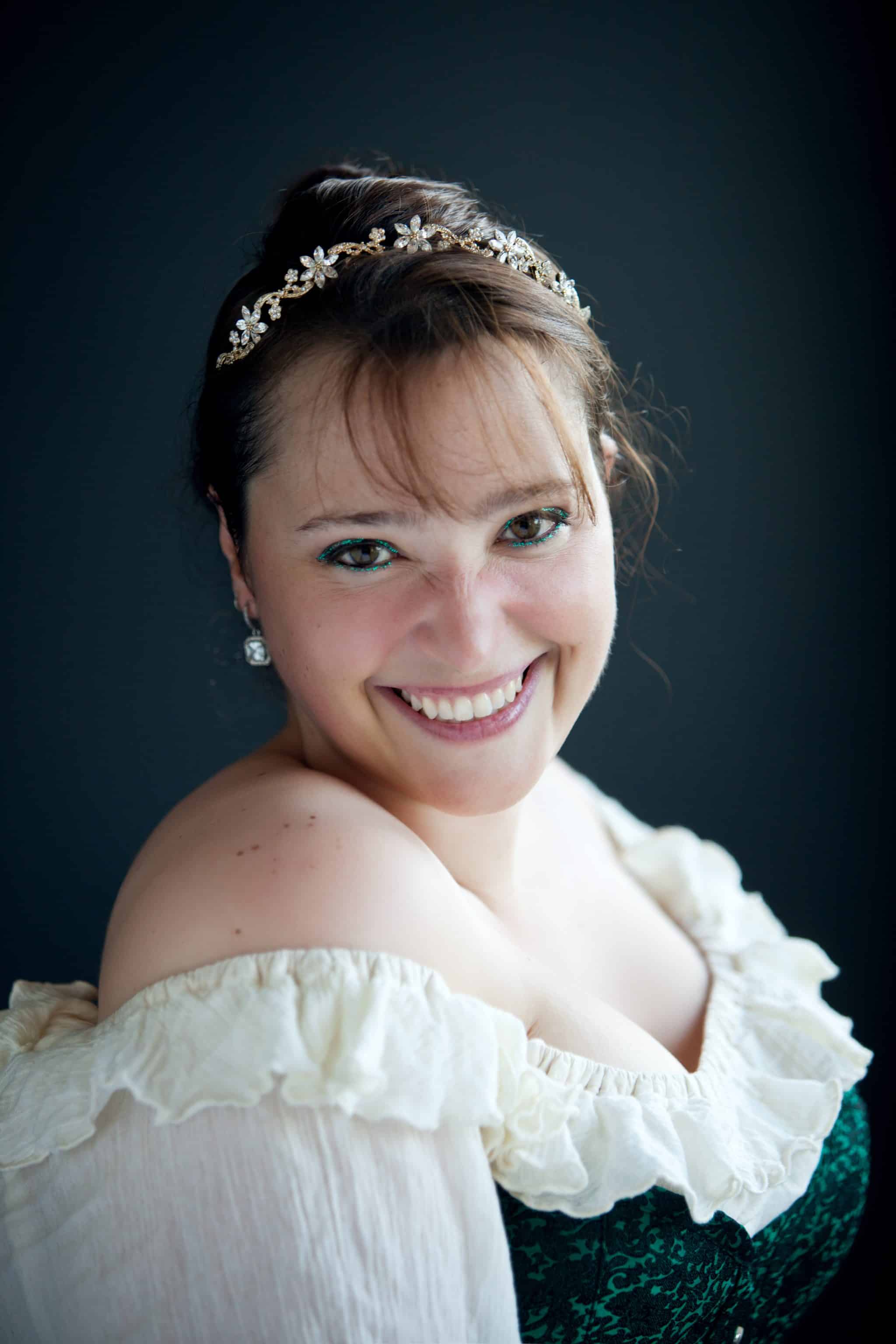
Alethea-027It’s the first Thursday of the new year and we’re kicking it off with the 10th “Women of BOOM!” feature, spotlighting the many kick-ass women that work at BOOM!, Archaia and KaBOOM! We’re focusing on everyone, editors, designers, writers, artists, you name it! We’re making sure to include the hard-working folks whose contributions are often overlooked in the process.

BOOM! (and KaBOOM! and Archaia) has given us unprecedented access and the chance to ask questions to their staff, and creative teams, to find out why the publisher is so successful in hiring women and their experiences in the comic industry as women.

New York Times bestselling author-princess Alethea Kontis has published everything from picture books to paranormal romance. Her recent fairy tale novel, Enchanted, was one of 35 titles selected for World Book Night 2014. BOOM/Archaia combined Alethea’s magically subversive poetry with Janet Lee’s Eisner award-winning art to create the colorful boardbook masterpiece that is The Wonderland Alphabet.

Graphic Policy: How did you get involved in the comic book industry?

Alethea Kontis: By wonderful accident! One of my very best friends is a talented artist, and we have inspired each other for many years. I went on to hit the NY Times list. She went on to win a Eisner for Best New Graphic Album (Return of the Dapper Men). When Archaia asked if they could publish a collaboration we had previously done for a local gallery art show, it was an easy and enthusiastic YES!

GP: Did you read comics growing up? Do you read them now?

AK: Absolutely! My parents thought I was afraid of the dark as a kid, when I was really up late reading Archie comics by the closet light. I collected Scrooge McDuck and Tom & Jerry and Little Lulu and Katy Keene (oh, how romantic and beautiful Katy was!). In middle school, it was all about Elfquest. In high school I had a boyfriend who was also a collector. He got me into Arkham Asylum, The Phoenix Saga, WildC.A.T.S, and John Byrne’s Next Men. In college it was Sandman. Ah…Sandman. To this day, rack comics and graphic novels are like comfort food.

GP: How did you come to work with BOOM!/Archaia?

AK: Remember how I said that best friend won an Eisner? That book, Return of the Dapper Men, was published by Archaia. It was a real honor to be asked to join the team.

GP: How would you describe your job for people?

AK: In most of the publishing world, I’m called an Author or a Writer. I like how Archaia classifies us as “Creators.” So many of us are creative beyond our major talent, and I think the title of “Creator” celebrates that. So I call myself a Creator…even if all I’m creating are messes.

GP: For people who want to pursue a career in what you do, what advice would you give them?

AK: Never stop. Never stop working, never stop believing, just never stop. Do what you have to do to survive, but never stop doing what you love. Procrastination and Apathy are the true villains of the universe.

GP: Did you have a mentor to help you break into the industry? Do you mentor anyone yourself?

AK: My path to publication is such a windy and tricksy one… In a way, I started out in the industry. I worked as a bookseller and a librarian before getting hired on to a major book wholesaler. That’s how I got to know folks in publishing, on the business side of things.

On the author side of things, my greatest teachers/mentors were Orson Scott Card, Andre Norton, and Sherrilyn Kenyon. I would not be the Incredible Whirlwind of Beauty & Dynamite I am today without them.

GP: Do you think women have a more difficult time breaking in and making it in the comic industry, if so why? And if yes, how do you think that can be overcome?

AK: The more I experience the comic industry (through attending conventions, panels, etc) I think it is more difficult for women to break in–largely because of subject matter. We could go on for ages about the boy-centricness of comic book story and images. But that hasn’t stopped women from breaking into the industry, as both writers and artists, nor has it stopped men from creating some really great material that appeals to women (thinking most recently of Brian K. Vaughan’s Saga).

GP: We notice that when it comes to women in the comic industry, BOOM!/Archaia has a lot of diversity present. Why do you think have they succeeded when so many other publishers struggle with this?

AK: It’s all about keeping an open mind and collecting misfits where you find them. It’s not a secret, but it’s something that a lot of the larger, older publishers have a difficult time embracing.

GP: We’ve heard horror stories concerning women in the industry, have you ever seen or been discriminated/harassed and if so, how did you handle it?

AK: I’ve been attending conventions since I was a wee bookseller-fangirl at my first DragonCon in 1996 (my store manager made me go with her). I think because I essentially grew up in a con setting, I subconsciously adapted a lot of the traits people recommend these days for avoiding harassment (surrounding yourself with friends, speaking up, etc.). These days, I mostly just get “You are beautiful will you chat with me?” messages from folks via social networking, and those are avoided by utilizing the handy “Delete” button. But I’m always prepared for harassment, and I keep an eye out for my friends if and when I start to see warning signs of it happening to them.

GP: What advice do you have for women looking to break into the comic book industry?

AK: See answer 5: Never stop. Keep an open mind. Say “yes” to crazy opportunities and be ready to say “no” when it looks like you’re going to be overbooked/overwhelmed. Put yourself out there: You never know where your next opportunity is going to come from.

Related articles

Interview: Women of BOOM! – Adrianne Ambrose

adrianne ambroseWe’re still going strong with our last of the year (but many more to come), the 9th “Women of BOOM!” feature, spotlighting the many kick-ass women that work at BOOM!, Archaia and KaBOOM! We’re focusing on everyone, editors, designers, writers, artists, you name it! We’re making sure to include the hard-working folks whose contributions are often overlooked in the process.

BOOM! (and KaBOOM! and Archaia) has given us unprecedented access and the chance to ask questions to their staff, and creative teams, to find out why the publisher is so successful in hiring women and their experiences in the comic industry as women.

Up this week is Adrianne Ambrose, a writer who has worked on Fraggle Rock Vol. 1 for Archaia as well as numerous young adult novels as well as video games!

Graphic Policy: How did you get involved in the comic book industry?

Adrianne Ambrose: I met the animation director, Paul Bolger, at a party. He was looking for a script to try to sell as a comic. I had a horror script that he liked, so we decided to team up. I am friends with Ted Naifeh, the creator of Courtney Crumrin and a bunch of other great comics. He was very encouraging about our comic and generously introduced us to a lot of publishers. I made some good connections and networked from there.

GP: Did you read comics growing up? Do you read them now?

AA: My mom was not a fan of “wasting money” on comics and didn’t want us reading them. Once, a friend lent my sister and me a pile of Archie, Casper, Richie Rich and a few others. We were allowed to read them for a few days, but then had to give them back so that the comics didn’t “rot our brains”. I found out just recently that, while my mom couldn’t afford to buy any comics when she was a kid, she did read a ton of comics that she borrowed off of friends. And here I thought I had opened up a new world to her by being published in comics.

GP: How did you come to work with BOOM!/Archaia?

AA: Ted Naifeh and I were hanging out at SDCC one year. We stopped to chat with Tim Beedle, who was looking for Fraggle Rock pitches for the Archaia anthology. Ted was too busy at the time, but I came up with a few ideas and two got picked up for the book.

GP: How would you describe your job for people?

AA: I usually say, “I write the dialog for video games, comic books and young adult novels.”

GP: For people who want to pursue a career in what you do, what advice would you give them?

AA: I’d tell them to get their stuff out there. You have to work your way up from no-pay to low-pay to actual-pay. A lot of people talk about doing a project and that’s as far as it gets. If you want it, you have to put in a lot of effort and show your work to a lot of publishers to get anywhere.

GP: Did you have a mentor to help you break into the industry? Do you mentor anyone yourself?

AA: Yes, Ted Naifeh was nothing but wonderful and generous by introducing me to a lot of people in the industry.

In the spirit of pay-it-forward, I have introduced many talented friends to publishers when it felt appropriate. Recently I’ve been invited to be a guest speaker at a community college class that is about the creative narrative in comics.

GP: Do you think women have a more difficult time breaking in and making it in the comic industry, if so why? And if yes, how do you think that can be overcome?

AA: Yes, I do think it’s more challenging. There seems to be a general belief in the United States that women/girls don’t read comics. That’s nonsense. You only have to look at manga and the thriving comic book industry in Europe to know that’s not true. American publishers keep putting out titles that they think are female positive books, but the stories are actually about females who “succeed” by winning the approval of males in some activity that males consider important. Women and girls see the book and think. “Gah! I really don’t care if that girl can compete and be accepted in the boy world,” and they don’t buy it. Then the publisher says, “See! Females don’t read comics.” But the truth of the matter is, most women and girls are just not interested in reading a story, supposedly for us, that is told through the male lens.

I think what really needs to happen is a breakout comic book for females that captures a larger audience than “girls who read comics.” We need something that infects the general population and is commercially successful. That will make the industry wake up and think, “Oh! You want to read comics that you actually like.”

GP: We notice that when it comes to women in the comic industry, BOOM!/Archaia has a lot of diversity present. Why do you think have they succeeded when so many other publishers struggle with this?

AA: I haven’t had the privilege of working with BOOM! yet, but at Archaia, I feel like they are working with me as a person and as a writer, not as a “female” writer. I think that attitude is really obvious in the people Archaia hires and the books they put out.

GP: We’ve heard horror stories concerning women in the industry, have you ever seen or been discriminated/harassed and if so, how did you handle it?

AA: Rather than focus on bad experiences, I’d like to focus on how great it is to be part of Archaia. The first time I did a convention where I was signing at the Archaia booth and met a large portion of the staff, I couldn’t believe how friendly and professional everyone was. It was awesome. There was no weirdness or defensiveness because I’m a female; I was just treated like everyone else. It was great.

GP: What advice do you have for women looking to break into the comic book industry?

AA: You’ve got to knock on a lot of doors. And if you do encounter discrimination or harassment, don’t put up with it. No contract is worth that nonsense. If they treat you like crap because you’re a female, how much support are they going to give your book? But things are getting better all the time, so hopefully you won’t encounter too much ugliness. Do keep in mind that just because someone doesn’t like your work, it isn’t necessarily because you’re a female. If someone says, “It just isn’t for us,” then you have to accept that. When someone says, “Yeah, we don’t like chick stuff,” then count yourself lucky you never have to speak to that person again.

Interview: Women of BOOM! – Janet K. Lee

Janet Lee_2That’s eight weeks and eight “Women of BOOM!” features, spotlighting the many kick-ass women that work at BOOM!, Archaia and KaBOOM! We’re focusing on everyone, editors, designers, writers, artists, you name it! We’re making sure to include the hard-working folks whose contributions are often overlooked in the process.

BOOM! (and KaBOOM! and Archaia) has given us unprecedented access and the chance to ask questions to their staff, and creative teams, to find out why the publisher is so successful in hiring women and their experiences in the comic industry as women.

Up this week is Janet K. Lee, an artist, cover artist, inker, colorist (and all around cool person) who has worked on Return of the Dapper Men, Wonderland Alphabet and Feeding Ground among others publishing by the company.

Graphic Policy: How did you get involved in the comic book industry? 

Janet K. Lee: I worked for several years as a graphic novel buyer for one of the US’s largest book industry wholesalers and met a number of people in the comics industry, including Jim McCann. Eventually I was promoted away from buying graphic novels, and found I had a creative hole in my life.  I started showing my artwork in galleries around the US. Jim McCann saw some of that art, was inspired to write a book called Return of the Dapper Men based on my art, and asked me to illustrate.  At SDCC ’09, Jim pitched the project to Stephen Christy, and voila! I was in!

Sometimes I feel like the “Lana Turner” of comics, but in truth I spent years networking behind the scenes.  That old adage “It takes ten years to become an overnight success” is just about right.

GP: Did you read comics growing up? Do you read them now?  

JKL: I did and I do!

I got into comics when I was five or so.  My best friend’s neighbor was a novelty salesman (you know: wax lips, pencils, cheap plastic yo-yo’s, and all that) who kept us supplied with bound collections of classic strip comics.  I started out reading Heathcliff, Denis the Menace (which I still blame for my poor performance as a babysitter), Garfield, Peanuts, Family Circus, and Bloomsbury. Eventually, I had a boyfriend who introduced me to The X-Men, and then I discovered anime and manga and eventually the amazing indie scene with books like Blankets and BOP and From Hell.

My preference still leans toward graphic novels and limited series over ongoing—I just prefer a story with a clear arc end and didn’t even go through the normal “soap” period for teenage girls. But there are exceptions: Mind the Gap, Chew, Unwritten, Invincible, Saga, Mouse Guard.  My favorite Christmas gift was a fabulous book called The Nao of Brown—stunning watercolors!

GP: How did you come to work with BOOM!/Archaia?     

JKL: Jim McCann and I considered publishers very carefully before pitching Return of the Dapper Men.  Archaia always produces such beautiful books, and we knew we wanted to do something really different with Dapper, so they just made sense.

GP: How would you describe your job for people?   

JKL: My job is to make the story come to life. If I were working on a novel, I would be writing all the narrative prose. If I were working on a movie, I would be casting, location scout, set design, costuming, and acting coach. If I were a musician, I would be the vocalist singing the writer’s hit tune. My job is to take the actions, dialog, and rough (or sometimes detailed) descriptions of the writer and express them visually.  We are a team of collaborators, and if we do our jobs correctly, together we create something more wonderful than any of us could have made alone.

GP: For people who want to pursue a career in what you do, what advice would you give them? 

JKL: Make the best art that you can possibly make. It is your calling card to the industry, so treat every project as if it were your first and last.

Be polite and kind to absolutely everyone you encounter—this is a small, small industry and every single person in it is important. Always thank people who took time to review your work; even if they hated it, they took the time to read. Network, meet, follow-up.

Know when to take advice and when to ignore it.

And MOST IMPORTANTLY: MAKE COMICS! Just do it! Learn by making mistakes. Learn by trying new things. Some of it will work and some won’t but nothing happens until you make the art.

GP: Did you have a mentor to help you break into the industry? Do you mentor anyone yourself?      

JKL: I’ve had incredible help and encouragement along the way. Jim McCann took a raw gallery artist (who thought she knew everything about making comics, and really knew almost nothing) and taught her the ropes. Jonathan Hickman pulled me aside and helped me understand business pitfalls. My editors at Boom!/Archaia, Marvel, and Image have always challenged me to try something new.

I try to pay it back where I can. I pick projects based on how I feel about the story and the way the script is written (probably a holdover from my buying days), so I find myself often working with new recruits. I love talking with people about their art and about the industry. We all succeed or fail together.

GP: Do you think women have a more difficult time breaking in and making it in the comic industry, if so why? And if yes, how do you think that can be overcome?   

JKL: I think most of the time when we ask this question, we are limiting the industry at large to just Marvel and DC- just superhero comics- and yes, there are issues there with diversity among the mainstream comics creators. But we do ourselves a HUGE disservice by defining comics by a single, limited genre, and if we open the discussion to include ALL of comics, ALL around the world, we get an entirely different picture. Female comic creators are EVERYWHERE, and we’re amazing. This week the NYT Bestseller list for Graphic Novels (top 10) includes Fairest, Saga, Drama, Persepolis (which has been there for YEARS), and Primates.  Women helped to make (or solely made) all of those.

Here’s the thing: for a long time, the direct market for comics was almost entirely focused on superheroes, and superheroes were written for men and boys. They were fantasies about heroism and empowerment and taking control in a bad, bad world—things that people in the 20’s, 30’s, 40’s, 50’s, 60’s, even 70’s and 80’s, didn’t realize women wanted too. So the heroes are men (mostly), and the stories center around men (mostly), and the shops where the stories are sold cater to men (mostly), and the children who grew up drawing superheroes and writing stories about superheroes and dreaming about superheroes were male (mostly). And so now (most) of creators who draw and write in a “house style” are male. And the cannon is (mostly) based on stories for men.

That’s why independent comics are so important.  I may not have grown up drawing Superman and writing stories about Spider-Man, but I did grow up making my own comics, my own way. My art is geared toward a different type of story, and these are stories that need to be told in different ways, and be published in different formats, and maybe be sold into different markets.  Right now, right this minute, we are reinvigorating genres of comics that have languished for years. We are letting the world know that comics are a storytelling medium rather than a single genre.  This is the best time to be a woman in comics.

GP: We notice that when it comes to women in the comic industry, BOOM!/Archaia has a lot of diversity present. Why do you think have they succeeded when so many other publishers struggle with this?

JKL: BOOM!/Archaia have a simple formula, I think: they publish interesting, high quality books, and they make sure people hear about them.  They prove my point: female creators are everywhere making comics, and if you open yourself to diverse types of stories, you will find the statistics are much more equal than a single genre of fiction might lead you to believe. Women make comics.Women read comics.

GP: We’ve heard horror stories concerning women in the industry, have you ever seen or been discriminated/harassed and if so, how did you handle it?

JKL: I don’t have any stories to share. Maybe I’m just lucky, I don’t know.

GP: What advice do you have for women looking to break into the comic book industry? 

JKL: Define your goals. Be true to yourself. Value yourself. Make the art you want to make—the path may take a longer, but will be more rewarding in the end. Read, read, read, read. Learn everything you can about the BUSINESS of making comics. And get out there and meet people!

Related articles

Interview: Women of BOOM! – Whitney Leopard

Whitney LeopardWe’re at lucky seven when it comes to our “Women of BOOM!” features, spotlighting the many kick-ass women that work at BOOM!, Archaia and KaBOOM! We’re focusing on everyone, editors, designers, writers, artists, you name it! We’re making sure to include the hard-working folks whose contributions are often overlooked in the process.

BOOM! (and KaBOOM! and Archaia) has given us unprecedented access and the chance to ask questions to their staff, and creative teams, to find out why the publisher is so successful in hiring women and their experiences in the comic industry as women.

Up this week is Whitney Leopard, an assistant editor for the company.

Graphic Policy: How did you get involved in the comic book industry?

Whitney Leopard: I was majoring in Psychology at UNC Charlotte when I realized the error of my ways and transferred colleges. I ended up majoring in Sequential Art at the Savannah College of Art and Design in Savannah, GA. It was there that I realized I wanted to be an editor and it was there that I made a great network of friends that helped me push my way into the industry.

GP: Did you read comics growing up? Do you read them now?

WL: Sort of. I would steal my brother’s X-Men and Spider-Man comics whenever I was stuck at home but I never really got into comics until high school when I started buying manga and discovered indie graphic novels like White Out. I definitely read comics now, between my pull-list at my comic shop and keeping an eye on new graphic novels, I’m pretty sure most of my free time is spent reading comics.

GP: How did you come to work with BOOM!/Archaia?

WL: I actually interned for Archaia last summer! They were my first inside look into the industry from a publisher’s point of view and I just fell in love. I worked a lot of odd jobs afterwards from being an extra on tv shows to freelance editing, the latter of which ended with me learning about BOOM! from an artist that I worked with at the time, sent in my resume and after lots of prayer and luck, I now work for one of the best companies in the industry!

GP: How would you describe your job for people?

WL: I get to work with amazing creators who all want to do comics. I get to work at a place where I can have a Die Hard action figure next to a LSP pop doll, and that’s not weird. My desk is probably the least interesting one in the office. At work I read comics, talk to amazing people about comics, and then I get to make sure more comics happen. I kind of live the dream. The way I describe it to my grandparents? I publish funny books.

GP: For people who want to pursue a career in what you do, what advice would you give them?

WL: Don’t give up! I thought I was going to be a psychologist when I was 18, a designer when I was 20, and then an editor when I was 22. Give yourself time to figure out what you really want to do without being too hard on yourself and then pursue it with passion. If you want to be an editor, figure out ways to get the experience. Put together an anthology, get an internship, go out there and make connections. Connections will always be important.

GP: Did you have a mentor to help you break into the industry? Do you mentor anyone yourself?

WL: Since I went to school for a degree in comics, I had several people to help me but the one who pushed me the hardest was my professor Tom Lyle. He’s the one who asked me if I had ever thought about being an editor, the one that showed me that I didn’t have to be a writer or an artist to be passionate and have a career in comics. He was and still is a great help and a great person to talk to. I’ve had a few people email me to ask questions about becoming an editor and I’m happy to give anyone advice but the fact remains that everyone ends up here in a completely unique way, they’ll just have to find their own path.

GP: Do you think women have a more difficult time breaking in and making it in the comic industry, if so why? And if yes, how do you think that can be overcome?

WL: I’ve heard crazy stories about women being turned away from portfolio reviews because they were “dressed too cute”. I have a friend who was turned down for a job when she met the people in person, a month later at a convention her boyfriend was setting up her table and the same people came up and wanted to hire him based off her art. He impersonated her, got the job and then they didn’t inform the company of the mix up until after she had been paid. That said, I also know a lot of women who are currently in the industry and aren’t going to be leaving anytime soon. Maybe I’m just really lucky to be surrounded by a company that judges people on their talent and personality and not their gender, but I would like to think that it’s being overcome everyday.

GP: We notice that when it comes to women in the comic industry, BOOM!/Archaia has a lot of diversity present. Why do you think have they succeeded when so many other publishers struggle with this?

WL: I think it’s because BOOM! is constantly thinking ahead instead of being stuck in the past. We’re not trying to relive some sort of golden age, we’re trying to create a new one and that means creating a team that will be able to handle whatever the world throws at us. I think BOOM! has a great team. (I might be biased.)

GP: We’ve heard horror stories concerning women in the industry, have you ever seen or been discriminated/harassed and if so, how did you handle it?

WL: My sister was told that she couldn’t pick up the new Static Shock comic because she was neither black nor a dude and therefore she wouldn’t be able to relate to the character. She handled it like a boss and continued buying the series while it was still going. I know there are worse stories out there and I’m thankful that I’ve never had anything like that happen to me, but when I think about it happening to all the amazing women out there who just love comics, it’s depressing. I’m not sure how I would handle in person, but I hope I never have to.

GP: What advice do you have for women looking to break into the comic book industry?

WL: You can do it! It will take a lot of time and patience, but it’s definitely worth it. I hope when you get here that you’re surrounded by amazing and encouraging people and that when you get here, you’re here to stay.

Egypt’s Hijab-clad Superheroine

8451I_qahera1Egypt has its own superhero, and the comic book crime fighting Qahera is a hijab wearing crime fighter taking on prejudice and representing strength.

Created by Deena Mohamed, the character was started as a web comic as a way to respond to frustrations at the time. The web comic has gained a following world-wide, not just in Egpyt. The popularity has grown to the point it’s moved from digital to print.

Qahera is the Arabic word for Egypt’s capital, Cairo and also means the conqueror or the vanquisher. An appropriate name for a character whose donning of a hijab is to fight the stereotype that women who wear the Islamic attire can’t also be strong.

The comic is written in English as Mohamed had a Western audience in mind from the beginning, another reason for the hijab. The character is partially a response to the backlash to Islam and meant to address that. In a recent story, that was the main plot with western women calling the outer-wear a sign of “oppression.”

The character also takes on the increase of sexual harassment and attacks on women in the streets of Egypt. An issue that’s been on the rise in recent years. She’s taken up arms, literally with a sword, to battle the issue.

Lately the web comic has taken on more recent history, paying tribute to the women who took part in the 2011 uprising protests.

A fine example of a comic series documenting recent experienced history through the guise of a superhero.

qahera

Interview: Women of BOOM! – Rebecca Taylor

Rebecca Taylor 2We’re up to a half dozen of our “Women of BOOM!” features, spotlighting the many kick-ass women that work at BOOM!, Archaia and KaBOOM! We’re focusing on everyone, editors, designers, writers, artists, you name it! We’re making sure to include the hard-working folks whose contributions are often overlooked in the process.

BOOM! (and KaBOOM! and Archaia) has given us unprecedented access and the chance to ask questions to their staff, and creative teams, to find out why the publisher is so successful in hiring women and their experiences in the comic industry as women.

Up this week is Rebecca Taylor, an editor for the company.

Graphic Policy: How did you get involved in the comic book industry?

Rebecca Taylor: I studied writing in school, and I always knew that I wanted to work in some form of collaborative storytelling. I interned at a few places in Hollywood before finding Archaia. Once I was there, I performed a sit-in and simply refused to leave. They kindly let me stay, and I’ve been here ever since.

GP: Did you read comics growing up? Do you read them now?

RT: I’m embarrassed to say that I was unaware that they still printed comics until I was about fifteen and my mother—yes, my mother—brought home Hush from the bookstore because she knew I liked Batman. Ever since then, I’ve been reading comics. I definitely still read them now. My iPad storage is 5% photos, 10% music, and 50% comics.

GP: How did you come to work with BOOM!/Archaia?

RT: As I mentioned, I started as an intern at Archaia. They offered me amazing opportunities to grow in editorial, to work on incredible projects and with remarkable creators. Moving with Archaia over to BOOM! just feels like another one of those great opportunities to grow.

GP: How would you describe your job for people?

RT: I always tell people that an editor is an ambassador between a creator’s imagination and a readers’. My job is to figure out exactly what story the creator is trying to tell and make sure that that’s the story the reader ends up reading. I’m the creator’s first reader and their biggest fan. I also moonlight as a part-time drill-sergeant, psychologist, and cheerleader.

GP: For people who want to pursue a career in what you do, what advice would you give them?

RT: Spend time working in collaborative environments. Whether it’s retail, team sports, workshop classes, teaching, or writers’ groups, find a place where you can be a part of a team and use your communication skills. Most of the major publishers have internship programs, so take advantage of those if you’re still in school. If you want to go into editing, the other thing to do is to just consume content. Read, read, read. Read comics. Read novels. Read plays. Watch television. Watch movies. Then read some more.

GP: Did you have a mentor to help you break into the industry? Do you mentor anyone yourself?

RT: Since Archaia has always been such a small team, I think we’ve all taught each other things. I feel like I’ve grown up there in many ways, learning from everyone. I’ve loved being able to run the Archaia Internship Program. I’ve met some incredible young people who are going to make big impacts in this industry. I try and engage their curiosity and encourage their enthusiasm as much as I can, because we need as many smart, passionate, intelligent people coming into the industry and bringing fresh ideas as we can get.

GP: Do you think women have a more difficult time breaking in and making it in the comic industry, if so why? And if yes, how do you think that can be overcome?

RT: For me, I actually think it was an asset. A lot of companies are looking for diversity now on their staffs. I think the bigger challenge is once you get in the door. I’ve always been lucky enough to work in extremely open, accepting, and encouraging companies, but even so, there are still very few women in top positions at comic book publishers. Editors-in-Chief, Publishers, and CEOs are still men pretty much across the board. I hope that’s the next step forward that we can collectively change, and I feel that most people in this industry, both men and women, share that hope.

GP: We notice that when it comes to women in the comic industry, BOOM!/Archaia has a lot of diversity present. Why do you think have they succeeded when so many other publishers struggle with this?

RT: I think for both companies, there’s such an incredible diversity to the kinds of stories that we tell, that it makes sense for everyone from our readers to our staffs would reflect that diversity. We don’t care if your story is for adults or kids, horror or humor, painted or drawn in ballpoint pen—if it’s good, it’s something we want to do. Same goes for the people—doesn’t matter what you look like or where you come from, if you’re good at what you do, you belong here.

GP: We’ve heard horror stories concerning women in the industry, have you ever seen or been discriminated/harassed and if so, how did you handle it?

RT: I think most of the uncomfortable instances I’ve had while in comics are mostly born from guys not thinking things through rather than out of maliciousness. When I point it out to them later, they apologize profusely most of the time. It doesn’t change the fact that it sucks when it happens, but at least I’ve always felt encouraged to speak up when it does. Contrary to some beliefs, 95% of the guys in comics don’t want to make women feel discriminated. They just do it without knowing it sometimes, so pointing it out when it happens is good for everyone.

GP: What advice do you have for women looking to break into the comic book industry?

RT: Don’t be afraid to be you. You have to be willing to stand up for yourself. Just trust your instincts. Don’t be afraid to like the things you like and say so. Have no fear!


Interview: Women of BOOM! – Meg Gandy

Meg GandyIt’s the fifth week of our “Women of BOOM!” feature, spotlighting the many kick-ass women that work at BOOM!, Archaia and KaBOOM! We’re focusing on everyone, editors, designers, writers, artists, you name it! We’re making sure to include the hard-working folks whose contributions are often overlooked in the process.

BOOM! (and KaBOOM! and Archaia) has given us unprecedented access and the chance to ask questions to their staff, and creative teams, to find out why the publisher is so successful in hiring women and their experiences in the comic industry as women.

Up this week is artist Meg Gandy, the artist on Archaia’s Spera Vol. 3 (out now, hint hint)!

Graphic Policy: How did you get involved in the comic book industry?

Meg Gandy: I started a webcomic after college. Not long after that, a small time publisher saw it and offered me a work-for-hire contract, which was simultaneously one of the best and worst things I ever did–worst because it was a truly awful experience. Best because once a few of the local writers heard that I was available to work, I started lining up projects.

GP: Did you read comics growing up? Do you read them now?

MG: I did when I was introduced to a comic worth reading. The Sunday papers with Calvin and Hobbes were good, and Disney Adventures briefly ran Bone. I had a babysitter that had a massive box of older comics, like Casper the Friendly Ghost, Richie Rich, Archie, that sort of thing. But I had never seen a comic shop, and the rare superhero comic that made it my way was invariably ugly and dull (it was the 90s). So I wasn’t a regular fan until high school, when I first encountered manga. I read tons of books now.

GP: How did you come to work with BOOM!/Archaia?

MG: Josh Tierney dropped me an email, so it’s more that I was working with him than Archaia. I had already heard of Spera, and been a fan of both Tierney’s and Archaia for some time, so I was thrilled.

GP: How would you describe your job for people?

MG: Long hours, shit pay, incredibly lonely, often tedious, crazy fulfilling.

GP: For people who want to pursue a career in what you do, what advice would you give them?

MG: Be good at budgeting and expect to be quite poor. Make sure you get some manner of exercise. Take your vitamins. Learn to like backgrounds. Pull out your favorite comics and study why they work so well. And draw, draw, draw. There’s really only one way to get good at making comics, and that’s to make comics. Start a webcomic. And kiss your social life goodbye.

GP: Did you have a mentor to help you break into the industry? Do you mentor anyone yourself?

MG: No, and no. I like the idea though, and I hear Sean Gordon Murphy is looking to do something like that for a few lucky people.

GP: Do you think women have a more difficult time breaking in and making it in the comic industry, if so why? And if yes, how do you think that can be overcome?

MG: Having never worked for the companies people usually mean when they say “the comic industry,” I can’t speak to the issue personally. What I can say is the #1 obstacle to my working for them isn’t even if they want me, which I’m sure they don’t, but that I don’t want them. The books I want to make are not the books they want to sell. The stories I want to read and write are not the stories they want to give anyone. The characters I want to know about are not the ones they want to make. And working for them would mean compromising values I’m not willing to give up. And that’s not even addressing how badly work-for-hire contracts suck. If I’m going to be poor, it’s going to be on my terms, making the kinds of books I want to make.

GP: We notice that when it comes to women in the comic industry, BOOM!/Archaia has a lot of diversity present. Why do you think have they succeeded when so many other publishers struggle with this?

MG: There’s a number of things at play here–for starters, Archaia was originally founded to publish Artesia. This is a company founded only a little more than a decade ago to publish a fantasy book about a female character in reasonable armor, who made the leap from concubine to general, outlives her king and sets out to avenge not her king, but her sister-wives (some of whom assist her from beyond the grave). I found this book by chance in a musty, crowded used book store and through that, discovered Archaia. After Artesia, Archaia published things like Mouseguard, Cursed Pirate Girl, and of course, Spera. Fantasy is a culturally safe genre for women, so there’s already a reason for women to be interested. The overt sexualization used by other publishers to attract readers just isn’t common in Archaia’s line-up. And since the books are creator-owned, women get to keep what they create, rather than just hope to tack onto some other guy’s idea. I can’t speak for other women, but having NOT grown up with mainstream comics, the whole set-up of how they work kind of appalls me. And their PR is awful. The response to serious criticism is never “well if you think we’re racist/sexist, don’t read our books” because I will always respond “okay” and go and spend my money, and take my talent, elsewhere.

GP: We’ve heard horror stories concerning women in the industry, have you ever seen or been discriminated/harassed and if so, how did you handle it?

MG: I’m not well known enough that anyone’s ever felt like I needed to be taken down a peg. I have seen the bullshit flung Kate Beaton’s way. She handles it with great hilarity and grace. I don’t know that I would be so kind about it.

GP: What advice do you have for women looking to break into the comic book industry?

MG: That you don’t really have to anymore. The most useful thing I ever did was start a webcomic. Writers and publishers can see up front what I can do and decide for themselves if they’re interested in working with me. I can self publish using any number of tools available on the web. If you’re willing to do the work, you can be in comics.

Interview: Women of BOOM! – Jasmine Amiri

Jasmine AmiriIt’s the fourth week of our “Women of BOOM!” feature, spotlighting the many kick-ass women that work at BOOM!, Archaia and KaBOOM! We’re focusing on everyone, editors, designers, writers, artists, you name it! We’re making sure to include the hard-working folks whose contributions are often overlooked in the process.

BOOM! (and KaBOOM! and Archaia) has given us unprecedented access and the chance to ask questions to their staff, and creative teams, to find out why the publisher is so successful in hiring women and their experiences in the comic industry as women.

Up this week is Assistant Editor Jasmine Amiri.

Graphic Policy: How did you get involved in the comic book industry?

Jasmine Amiri: It kind of happened organically. I went to school for film and realized half way through that the film industry would have sucked my soul dry. Comics was something that I had always flirted with, but never thought I would pursue, like a pipe dream of sorts. I applied for my college internship at BOOM! not thinking anything would really happen. Well, something happened. I landed the internship and quickly realized that the comics industry was a special place where creativity could thrive and there was no room for jaded, vacant personalities and people were actually happy. I saw myself being happy in comics. It was exactly what I’d been looking for my whole life.


GP: Did you read comics growing up? Do you read them now?

JA: It was a bit harder for me to get ahold of comics growing up since there wasn’t a local comic book store in my home town. I’d have to wait for trades or for a weekend when my parents needed to drive into the city. Once I got to college, there was a comic book store across the street.  I started to get back into reading them and basically went nuts from there. I was reading literally everything I could get my hands on and it’s been history since then.

GP: How did you come to work with BOOM!/Archaia?

JA: I started off as an intern. As my internship was about to end, the folks at BOOM! asked me if I could stay on as a temp to cover for one of the operations staff members who was going on maternity leave for a month.  Towards the end of the temp job, I approached Bryce Carlson about possibilities of getting into editorial. At the time, they had just hired someone and had no available positions, but he knew of other positions in the accounting/operations area. I agreed as long as there was room to eventually move into my dream editorial job. From there, I worked for a year in Operations under Phil Barbaro (who is
the raddest boss ever), and I was actually pretty good at it. After a year, a position opened in editorial and I approached Matt Gagnon about it. He was sort of caught off guard, but the great thing about Matt is that he honestly looks out for his employees and if you approach him about something you’re serious about, he’ll take it seriously as well. A month later, Matt pulled me into his office and offered me a position as an assistant editor. Here’s the catch—the operations team had offered me a management role at the same time as well.  I chose to stick to my guns and start from the bottom in editorial and it’s been a Cinderella dream come true.

GP: For people who want to pursue a career in what you do, what advice would you give them?

JA: Never give up. Never surrender.

GP: Do you think women have a more difficult time breaking in and making it in the comic industry, if so why? And if yes, how do you think that can be overcome?

JA: All of my experiences with breaking in and making it in this industry have been with BOOM! Studios, which is the least sexist environment I’ve ever been in professionally. So, from what I’ve experienced, it’s been about the same to break in as a woman. The only advice I’d give is this: if you feel that your sex is a factor AT ALL in a company’s decision making, you should get the hell out of there. Fast. No one needs that drama and your talent will be better appreciated in an environment where you don’t have to constantly prove that you’re capable because of such a minor factor.

GP: We notice that when it comes to women in the comic industry, BOOM!/Archaia has a lot of diversity present. Why do you think have they succeeded when so many other publishers struggle with this?

JA: I can’t speak for other publishers, but I can speak for what I’ve experienced here at BOOM! The people in decision making positions at this company don’t look at you as a woman or a man. It’s just not a factor. The only thing that matters here is being good at your job. It’s clear in every facet of their management. I can go into Bryce’s office and talk about baseball or punk rock or whatever and he’ll treat me like he would any dude. I mean, Ross and I used to literally check in with each other every day to compare quest notes in Skyrim. I’ve been in work environments where people would be shocked if I name dropped Half Life 2 which is just plain ridiculous. It’s just not a thing in the BOOM! world.

GP: We’ve heard horror stories concerning women in the industry, have you ever seen or been discriminated/harassed and if so, how did you handle it?

JA: Unfortunately, this is something that is a reality. I’ve been at the booth selling comics and people will walk up assuming I don’t know basic comic industry terms like “CGC.” And being hit on is sometimes a problem at cons. It happens. People forget that it’s supposed to be a professional environment and look at it more like a big party. There’s a line between having a good time, and being a super creep. When I politely decline your offer to buy me a drink, please be a gentleman. Do not continue to push the drink on me seven more times.

That being said, I’ve heard of similar things happening to guys at the company and the roles being reversed. So, I’m not entirely sure if it’s a sex issue so much as it’s the environment a convention can create.

GP: What advice do you have for women looking to break into the comic book industry?

JA: The same advice I’d give to anyone looking to break into the industry. Become great at what you do, get out there, and flaunt it. Also, get down with your bad self.

« Older Entries Recent Entries »