Tag Archives: Wizard of Oz

TV Review: Cursed Films kicks off season 2 with the dark myths behind The Wizard of Oz
Cursed Films

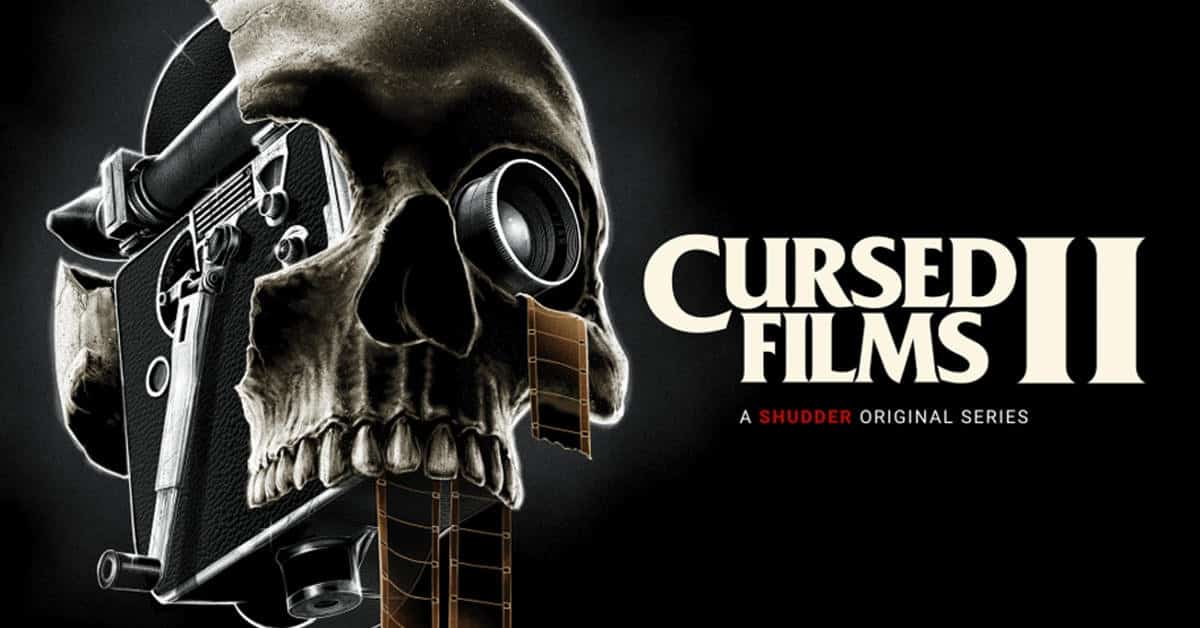
The first season of Shudder’s Cursed Films turned the tables on what its own title seemed to suggest, that it was going to be about the supernatural elements at play in the making of certain horror films. Instead, it went for a more noble goal. It sought to debunk the myths and conspiracy theories that haunt certain movies afflicted by a history of tragedy, irresponsible filmmaking, and superstition. Season two of the docuseries is a continuation of this, and it decided to go for one of Hollywood’s (and cinema’s) most treasured films for its opening episode: The Wizard of Oz.

A cursory online search about the supposedly dark secrets contained within the original cuts of 1939’s The Wizard of Oz (dir. by Victor Fleming) will yield a hefty volume of grim hits that promise to reveal the “truth” behind deep backlot rumors concerning hanging munchkins and abusive Hollywood producers that took turns in abusing the movie’s star, Judy Garland, while on set.

Cursed Films 2 employs the same approach that made season one such a compelling watch. It goes for an aggressive deconstruction of the very idea of what a cursed film is and why reality, and not superstition, offers the best explanations for the mysteries that’ve latched on to it. Taken as a whole, season one ultimately suggests that films become cursed thanks to fans who want to explain production woes and accidents via the same lore that’s in the content of the movies in question.

Weird noises on the set of The Exorcist? It had to be the devil. It’s what the movie is about in the first place. You can’t really blame anything that happened during its production on a vampire, for instance. The movie is not about undead bloodsuckers. It’s about a possessed girl who, in one scene, claims to be the devil. The same goes for the other movies explored in the docuseries.
Cursed Films

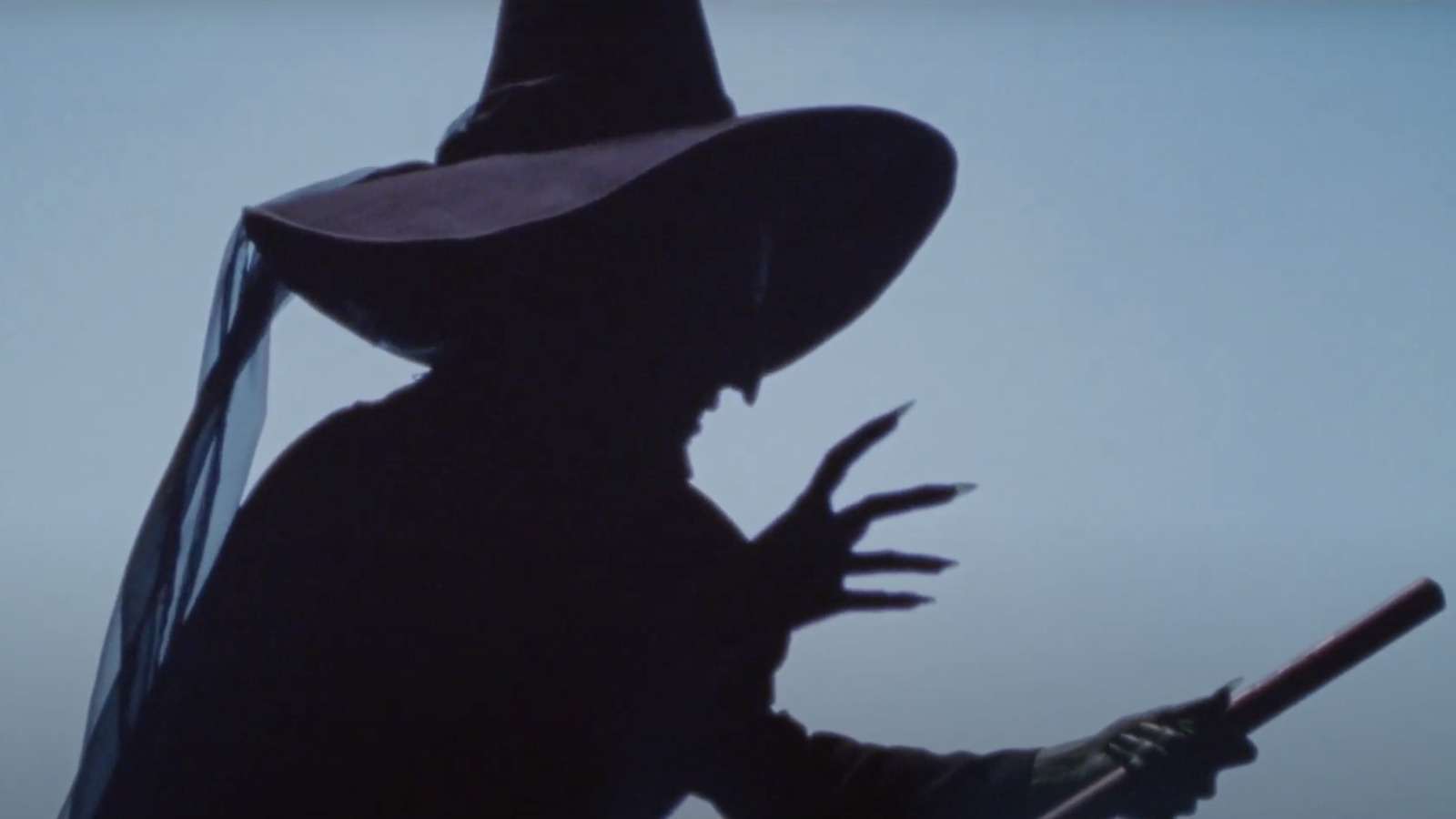
The Wizard of Oz, the show suggests, becomes a cursed film for its position in American film history and how it stands to represent the spirit of Hollywood, a place that is as classy and fantastic as it is ugly and corrupt. Add in the internet’s message board community culture, plus its conspiracy-heavy leanings, and you’ve got a cursed film.

The episode is well-scripted and researched, featuring interviews with surviving family members of the movie’s cast along with other commentators, such as Mythbusters’ own Adam Savage (brought in to discuss the case of the Tin Man’s original aluminum-based makeup and how it nearly killed the first actor that was cast to play him). Surprises are plentiful throughout, especially when it comes to the rumors that swirled around the actors who played the munchkins in the movie. This part of the episode is one of its strongest and is sure to give viewers something to talk about.

Perhaps one of the most effective components of the episode comes in the form of incident reenactments. They possess a haunting quality that strengthens the show’s idea on reality being dark enough on its own without requiring curses to explain away the strange happenings. They’re presented with a grainy filter that heightens the events they recreate while adding context and texture in the process. It’s a very successful approach and I hope the remaining episodes feature them as well.

The decision to open a new season of Cursed Films with a staple of classic American filmmaking is a daring one, and a resounding success at that. It can even be viewed as a statement on the controversial practice of declaring . Cursed Films goes to the land of Oz to say that no myth is safe, that they can be exposed as distorted truths for all to see. The upcoming episodes include Rosemary’s Baby, Stalker, Cannibal Holocaust, and Wes Craven’s The Serpent and The Rainbow (the one I’m looking forward to the most). You should expect them to scare you with what actually happened rather than with demonic forces that hold grudges against troubled Hollywood productions.

LEGO Dimensions Main Game Includes 14 Distinct Levels

Warner Bros. Interactive Entertainment revealed today some of the many different environments that exist throughout the 14 levels of LEGO Dimensions, the upcoming entertainment experience that merges physical LEGO brick building with interactive console gameplay. Players can interact with most of the fan-favorite universes within LEGO Dimensions from the Starter Pack main game, no matter which characters, vehicles and gadgets they choose to play with, and with no additional purchase or expansion pack required.

At the start of the game, the heroes Batman, Gandalf and Wyldstyle begin their journey on the Yellow Brick Road in the colorful world of Oz. Their quest takes them through the city of Ninjago, plus Metropolis, Middle Earth, and Hill Valley, just to name a few. Each level offers players a new mission on their path to save the LEGO Multiverse.

For players who want to further customize their gameplay experience, the characters, vehicles and gadgets from any of the LEGO Dimensions Level Packs, Team Packs and Fun Packs can be brought into any of the different level environments with no restrictions. The LEGO Dimensions Level Packs will provide players with an additional level to play of a given entertainment franchise, in addition to the 14 levels included in the main game.

Launching September 27, 2015, LEGO Dimensions will be available for Xbox One, Xbox 360, PlayStation 4, PlayStation 3, and the Wii U.

Here’s a look at the 14 levels.

Back to the Future

LEGODimensions_BackToTheFuture_1

Doctor Who

LEGODimensions_DrWho_1 LEGODimensions_DrWho_2 LEGODimensions_DrWho_3

Ghostbusters

LEGODimensions_GhostBusters_1 LEGODimensions_GhostBusters_2

Metropolis

LEGODimensions_Metropolis_1

Middle Earth

LEGODimensions_MiddleEarth_1 LEGODimensions_MiddleEarth_2

Ninjago

LEGODimensions_Ninjago_1 LEGODimensions_Ninjago_2

Portal

LEGODimensions_Portal_1

Scooby Doo

LEGODimensions_Scooby_1 LEGODimensions_Scooby_2 LEGODimensions_Scooby_3 LEGODimensions_Scooby_4 LEGODimensions_Scooby_5

Wizard of Oz

LEGODimensions_WizOfOz_1 LEGODimensions_WizOfOz_2

There Are No Strings on Me

no strings 02Somewhat unexpectedly yesterday, Marvel Studios released earlier-than-expected the first live action trailer for what might be the most anticipated comic movie in history – Avengers: The Age of Ultron.  Not to be listed as being light on action, the trailer relied heavily on the battle between Tony Stark in Hulkbuster armour against the Hulk.  Perhaps more interestingly though is that the trailer introduced three new characters, new Avengers Scarlet Witch and Quicksilver, as well as the movie’s antagonist Ultron.  While there is bound to be analysis and over-analysis of the trailer by those that can’t wait until next May, there is very little in terms of plot which can be discerned from the trailer.  It would seem as though after the teaser scene at the end of Captain America: The Winter Soldier, that it is Ultron that rescues the Scarlet Witch and Quicksilver, and the battle between the Hulk and Iron Man which might set up the rumored next Hulk film focused on World War Hulk are both present, but no plot is there, and anything else beyond some speculation would only border on gossip.  What is interesting though is the theme of the trailer, and whether that will be an underlying theme of the movie.

Ultron and the twins

Ultron and the twins

Even dedicated fans of Disney would have been unlikely to recognize the melancholic version of “There Are No Strings on Me” playing in the background of the trailer, and if not for the final words of the villain at the end of the trailer, might have even gone unnoticed.   Robots searching for their humanity is one of the most common themes in regards to stories involving the artificial beings, and forms the basis for many of the most famous characters and stories in science fiction, whether it be Data in Star Trek or the replicants in Blade Runner.  Often times, and especially with well-established characters, there are references made to the artificial men of literature.  For instance, in one episode of Star Trek TNG, Data is compared to the Tin Man, who himself sought his own heart.

In a bit of a twist, Ultron though he is a robot with artificial intelligence has never been very concerned with his humanity, declaring his own sentience to supersede that of humans, despite having been patterned on the  persona of Hank Pym, though presumably someone else in this movie seeing as Pym has not yet shown up in the Marvel Cinematic Universe.   The artificial man in reference in the trailer is Pinocchio, who as far as artificial men go is in a category of his own.  As the story goes, the wooden boy was first sculpted from a piece of magical talking wood, and strove for true humanity, but with a background based on magic, the impulse is still the same, to be truly human or as the song says “there are no strings on me”.  As a choice for the underlying music of the trailer it is therefore a little bit confusing.  Ultron is not the best example of a robot trying to understand humanity, and it is even seen as one of his fatal flaws, as the hero The Vision was able to overcome Ultron in an early appearance because The Vision had a conscience whereas Ultron did not.  Perhaps then, another reading of the music is necessary, not holding true to the story or the genre at all, but rather taken at face value.  Ultron and machines will not be ruled by man and this is all the setup that the new Avengers movie needs.

Review: The Legend of Oz: The Wicked West—Volume 1 TPB

OzAs a boy growing up in an age of Star Wars, Dungeons & Dragons, Pokémon, and all the goodies of a late-20th century childhood, The Wizard of Oz just wasn’t an appealing film. I guess I was much more into little monsters stored in pokéballs or the rebirth of the Star Wars saga in my pre-teens than I was interested in Judy Garland and her ruby slippers. Yet, it would be hard to ignore the cultural impact of both the 1939 film and its children’s book predecessor by L. Frank Baum, who created one of the first truly American fairy tales for kids way back in 1900, and which spawned a Broadway hit musical in 1902 and 13 more books over the course of 20 years. In the U.S., Oz and its organ-deficient inhabitants are hot stuff.

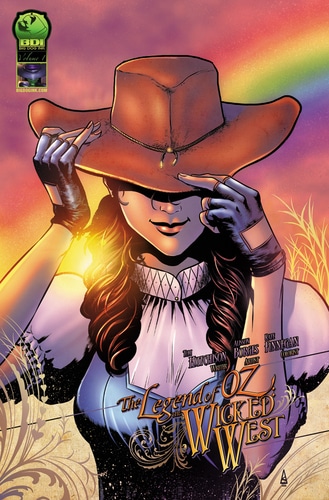
The trade paperback I’m reviewing here is a magnificent, thoughtful Wild West re-envisioning of Baum’s world collecting issues #1 through #6 of Tom Hutchinson et al.’s The Legend of Oz: The Wicked West—Volume 1 published by up-and-coming comic book collaborative Big Dog Ink (ShaharazadCritterPenny for Your Soul, etc.) and available for just $17.99.

This collection features an introduction written by a descendant of L. Frank Baum, in which he writes that The Legend of Oz: The Wicked West is one of the six great comic books in history—he doesn’t say what the other 5 are, but I was intrigued! After reading the intro., I turned the page and quickly began to gobble up this book.

The premise: Our Dorothy goes by Gale, her last name, and is a saucy, sharp-tongued, regular ole Annie Oakley, who’s been stuck in Oz for three years. Hutchinson follows his heart with the narrative, and poses some interesting questions, like why didn’t people steal the golden bricks off the Yellow Brick Road? Well in this Oz, they did, and that’s primarily why Gale hasn’t found her way to the Emerald City yet! Along the way Gale meets with flying gorillas who can transfigure into humans, she gets into bar fights, joins up with a heartless lawman (Tin Man), a straw-stuffed magic puppet who looks like Pocahontas (Scarecrow), and a lion in drag (The Cowardly Lion). Also, Toto’s a horse.

Naturally, there’s a Wicked Witch of the West, who ‘s drawn like one of the creepiest hags I’ve ever seen inhabit the panels of a comic, and she is wont to pontificate on her evil glory, showcasing some of Hutchinson’s best writing in the book. Gale’s ruby slippers are replaced with ruby sidearms, and the two go toe-to-toe in a truly Western shootout. It’s been a while since I read a real page turner, not totally sure of where the writing was going or what shocking artistic reveal would let me further explore the new Oz, but The Legend of Oz: The Wicked West did more than deliver.

As noted, Hutchinson is a talented, at times poetic, writer, and he’s a nice man, too (I had the chance to meet him and purchase this TPB at Emerald City Comicon a few months back). And while Alisson Borges (a man) and Kate Finnegan’s artwork isn’t the most inventive, it certainly brings Oz to life, working wonders with panel layout, green shading, and inventive character design (like I said, that Witch! And the Cowardly Lion is a charmer).

Big Dog Ink probably isn’t in your comic book scope, but they should be, and if you haven’t explored this Western version of Oz yet, I would highly recommend purchasing this TPB or subscribing to the current on-going series, Volume 2. I’ve got a whole stack of Volume 2 issues at home just waiting to be read, and I already know it will be an adventure as a fun as the first.

Story: Tom Hutchinson  Art: Alisson Borges and Kate Finnegan
Story: 9  Art: 7.75  Overall: 9  Recommendation: Buy