Tag Archives: vampires

Review: Out #1

Out #1

Comics are a particularly fertile medium for different interpretations of the vampire mythos. From Vertigo’s Vamps, about a female biker vamp gang that spills the patriarchy’s blood wherever they go, to Image’s Dracula, Motherfucker!, a pulpy reinterpretation of the original vampire’s bloodsucking brides, there’s no shortage of examples about the storytelling possibilities the classic monster can still hold.

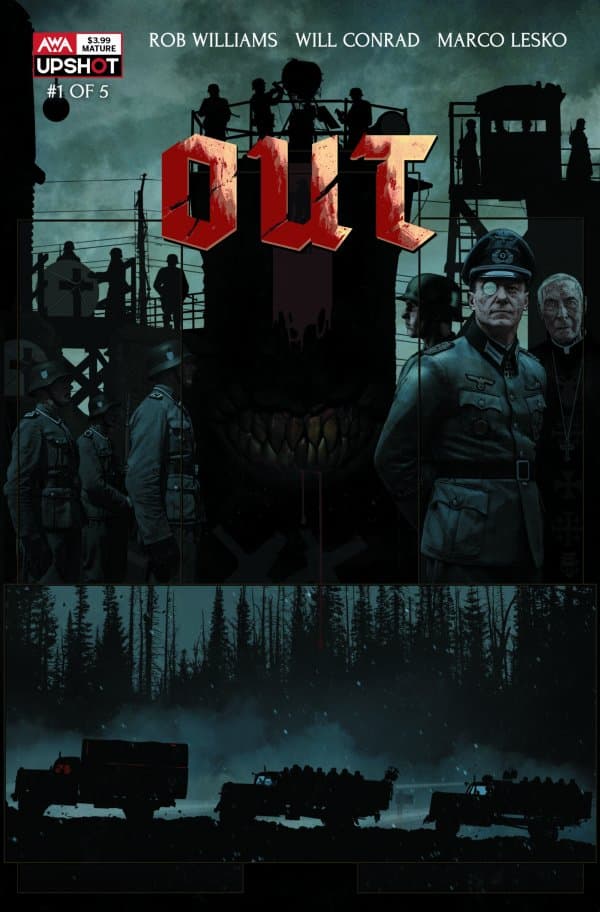
Rob Williams and Will Conrad’s Out, published by AWA Studios, is another great foray into vamp territory, but what makes it stand out is how well it tweaks the monster’s foundational myths to produce a more nuanced but infinitely more terrifying version of it. There’s enough classic horror here to satisfy veteran vampire fans with enough variation to keep those hungry for new blood well fed.

Out is essentially a prisoner of war story (P.O.W. for short) set in the final days of the Second World War, with the Allies quickly gaining on the Nazis in their home turf. Like any good POW story, the comic focuses on a small group of captured Allied soldiers that are being kept in a massive castle located deep in the mountains of Czechoslovakia. Dark priests and strange rituals are taking place inside the castle and they end with prisoners being fed to something that thirsts for blood, something ancient.
Out #1

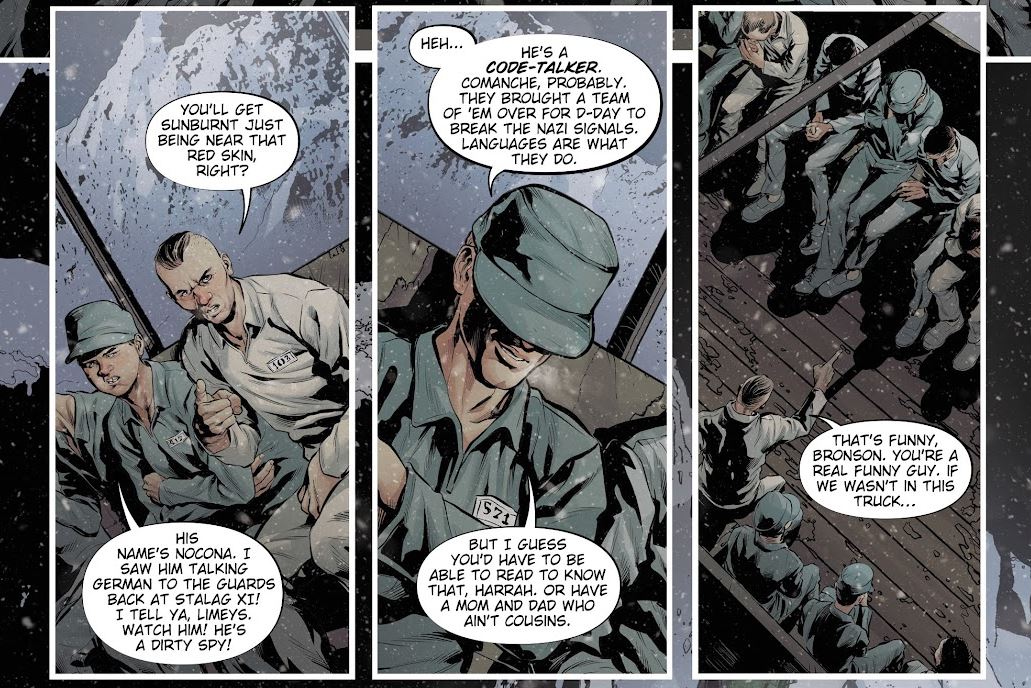
A Native American soldier called Nocona emerges as the main character in all this, a code-talker that speaks several languages and that represents a whole group of First Nations servicemen that the American military enlisted to transmit coded messages during the war (codes the Germans didn’t know how to crack). His knowledge of languages figure greatly into the story and it’s one of the things that help make the vampire a deeper and more frightening character.

Without giving too much away, Nocona’s interactions with the vampire (who’s trapped by the Nazis in an effort to turn a losing war in their favor) are fascinatingly terrifying because of the character’s ability to speak in the same tongue as the creature. This allows Williams and Conrad to flesh out the monster beyond snarls, growls, and hisses.

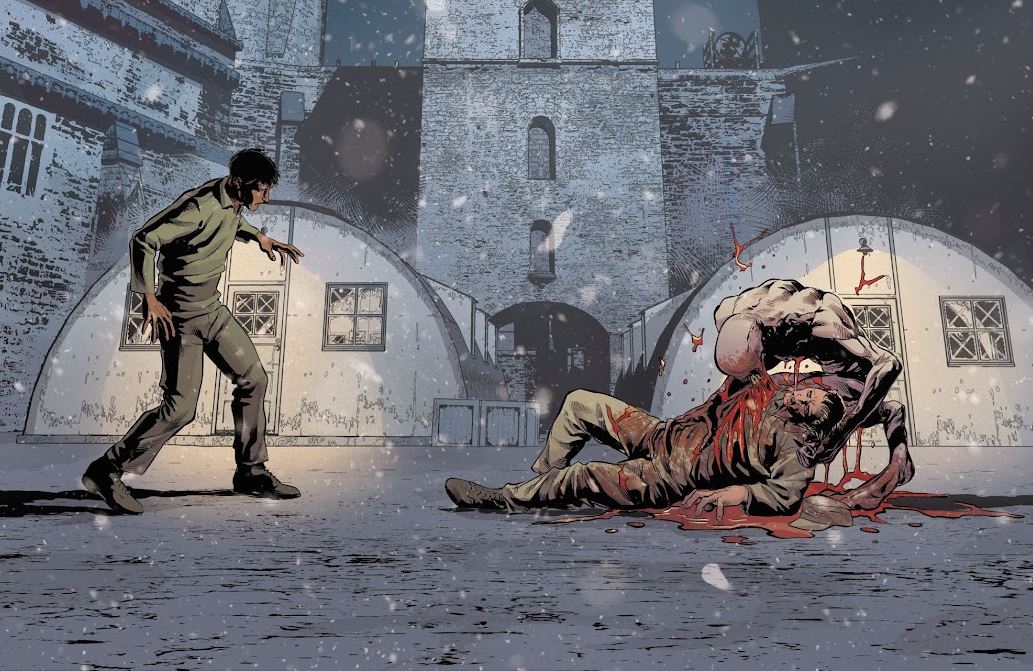
Conrad creates a horrifying vamp here, bat-like in parts and almost alien-like in others, but William’s scripting choice to allow him to attempt communication means there’s more room afforded to its development as a multidimensional character. The comic shines in this regard.

Usually, vampire characters that are in a permanent bat monster mode rarely get the chance to speak or to add nuance to their personality. Williams and Conrad challenge this by doing the opposite, and it works well enough to set their vamp apart from the ones already out there in the field.

Nocona’s presence, though, isn’t just relegated to vampire whisperer. He’s also trying to help other POWs in the castle escape. It’s here that he meets a soldier that represents a level of attraction beyond any call of duty. His and Nocona’s interactions are among Out’s strongest and they help further differentiate this horror tale from the rest, especially in terms of how naturally it unfolds. Nothing is ever forced or propped up for shock value. It’s an organic type of development and it adds layers of emotion that pay off in the end.
Out #1

In a sense, it’s not unfair to describe Out as a cross between Dracula and The Great Escape. The elements of a POW escape yarn are firmly present and a lot of the tension Williams and Conrad produce comes from the same sense of urgency war movies of this iteration are known for. In turn, the horror elements turn the narrative two-tiered, a ‘busting out of captivity’ scenario paired with a creature feature that makes the need for escape all the greater. It’s smart and it makes for compulsive reading.

Out is a great example of how to take tradition and twist it into something that can appeal to more current sensibilities. It’s a classic horror story that reads like a POW war narrative with key adages and permutations that elevate it into more compelling forms of storytelling. Williams and Conrad came up with a clever and violently emotional exploration of war, death, and everything in between. In the process, they might also suggest learning other languages can be the deciding factor in some life and death situations. You never know when you might need to talk down a blood-sucking creature from using your head as a wine glass in its native tongue.

Story: Rob Williams Art: Will Conrad
Color: Marco Lesko Letterer: Sal Cipriano
Story: 9.0 Art: 9.0 Overall: 9.0 Recommendation: Buy and learn an ancient language or two.


Purchase: comiXology/KindleTFAW

Brian Augustyn’s epic vampire comic CRIMSON will make you want to read more comics

Crimson

The passing of any great creator always prompts a revisiting of the works they leave behind. Upon hearing about the unexpected death of author and editor Brian Augustyn (the writer of the classic Gotham by Gaslight) at the age of 67, I was immediately reminded of one of the first series I ever followed as a kid: Crimson.

Crimson is a vampire book steeped in lore and guided by a deep love for the vamp movies and TV series of the late 1980s, The Lost Boys and Near Dark (both released in 1987) chief among them, along with a bit of Buffy: The Vampire Slayer (1997) and Kindred: The Embrace (1996) added for flavoring.

The series follows a newly turned vampire called Alex Elder as he learns to live as a new fanged creature while also struggling with the prospect of being some kind of chosen one. The first three issues run on pure vengeance and denial. Alex wants to find the vampires that killed his friends on the same night they also turned him against his will, but he goes about this resisting his new reality. After that matter is settled, though, the story veers into vampire politicians, a centuries old war between the original vampires and angels, and what it means to be a vampire in New York City.

Crimson ran from 1998 to 2001, with the first seven issues originally published by Image and the remaining 17 by DC/Wildstorm. The story concept was developed by Humberto Ramos, Oscar Pinto, and Francisco Haghenbeck. Ramos served as the series’ artist. Augustyn was brought in to script the story.

The comic is a visual marvel. Ramos illustrates a dangerous and unhinged version of New York governed by a laissez-faire attitude that still manages to capture the brightness of its nightlife and the seediness of its darkest corners. Knowing vampires roam the city at night serves to remind us of the amount of chaos each street can dole out at any given moment, and how deadly walking them at night could be.

Augustyn’s scripts made sure all that chaos had some well-developed characters at the center of it. Alex Elder starts out as an angsty teen that would’ve fit in perfectly in any Nirvana music video, but he’s never allowed to be static. Augustyn keeps his character in a constant state of evolution, forcing him to grow up fast without sacrificing any of the growing pains that come with the process.

Alex’s place in the coming struggle against all vampires moves at a breakneck pace as well. Once the doors to the world of undeath are opened, you’re not so much ushered in as you’re kicked in with the expectation you hit the ground running. This goes for the comic’s grand sense of mythology.

The very first issue of the series starts with an extensive and detailed explanation of the creation of humanity and how vampires came out of it in defiance of that process. It’s quite indulgent and does ask for a bit of patience in getting through the initial lore dump, but the narration is never dull and, once it wraps up, readers are left with a sense of big things to come. From that point on, Augustyn and Ramos flex their storytelling muscles in every way imaginable to produce a world that lives and breathes magic, culture, and violence.

While the story does possess many classic horror elements, the overall narrative finds a larger piece of its identity in the realm of fantasy. Augustyn’s approach to this sprawling world of magic and blood sucking creatures is more interested in how a potential war between different factions of vampire hunters, angelic forces, werewolves, and vamps will come about rather than staying on the more intimate aspects of the characters’ lives one expects from classic horror stories.

Augustyn’s character work shines in this regard, especially with Alex’s core unit: a Mexican Indian vampire called Joe who acts as his street mentor and guide, a vampire hunter called Scarlet, and an ancient vampire (who is also the source of all vampirism) called Ekimus. They each form a vital part of what can essentially be called of fellowship, complete with their own roles to play in the final confrontation.

Joe is a particularly well written character that helps readers understand the world and its rules. In a way, Joe is Sam to Alex’s Frodo, if Sam were wiser and with a more adventurous thirst for life. Their exchanges are a highlight and remain fresh throughout the series.

Having come across Crimson when I was kid, I can’t think of another vampire comic that pulled me into the medium as completely as this one did. Ramos’ art and Augustyn’s words were a perfect storm then and, upon rereading the series for this piece, they’re a perfect storm still.

I’d still recommend Crimson to anyone who asks what makes comics so special. Not many creators get to leave a book behind with such a strong gravitational pull. Brian Augustyn has Crimson, and now is as good a time as ever to give it a read.

Around the Tubes

It’s new comic book day! What are you all getting? What has you excited? Sound off in the comments below. While you think about that, here’s some comic news from around the web.

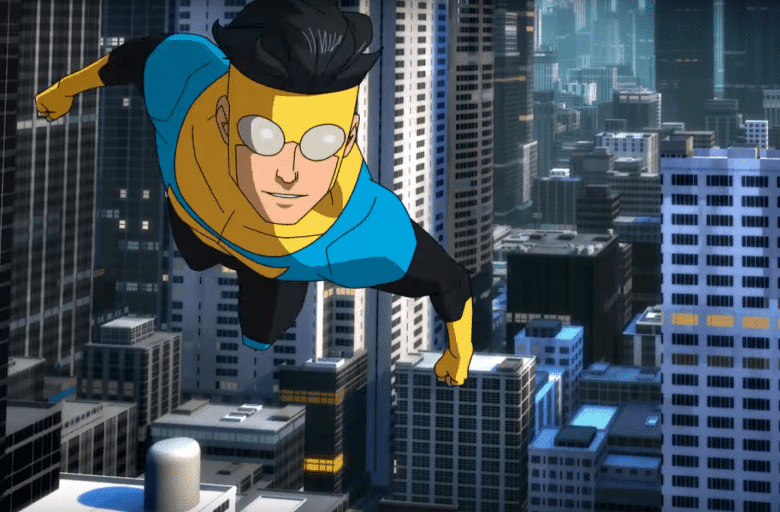
/Film – Invincible Comic Colorist Sues Robert Kirkman, Alleging He Was Conned Out Of His Profits Share – How many lawsuits is this now?

The Diabetes Times – Diabetes consultants launch latest comic to mark 100 years of insulin – Interesting.

Book Riot – A Brief History of Vampires in Comics – If you’ve ever wondered.

Invincible

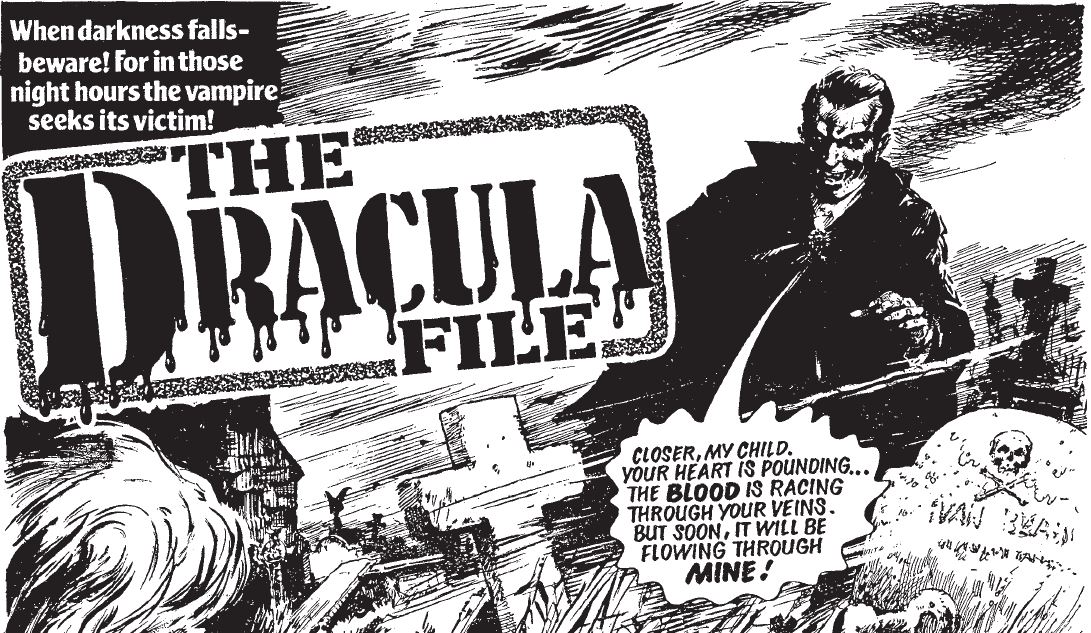
The Dracula File is the Cold War vampire comic we need this Halloween

Horror in the 1980’s had a particularly sinister bite to it, especially if it came from across the pond, from England. While the Cold War was still haunting geopolitics during that decade, the collective imagination was no longer hung up on the 1950’s and 1960’s brand of communist fears and paranoia. In comes a British comics magazine called Scream!, a weekly horror anthology that ran for 15 issues in 1984. With it came one of the most unique vampire tales ever to have graced the comic book page: The Dracula File.

The Dracula File
The Dracula File

Mainly written by Gerry Finley-Day, one of the minds behind Rogue Trooper, and illustrated by Eric Bradbury, The Dracula File took Bram Stoker’s iconic vamp, dropped him right in the middle of 1984, and then had him come out of the Iron Curtain and into Western Europe for his nightly feedings. Perhaps Soviet blood just wasn’t as fulfilling anymore.

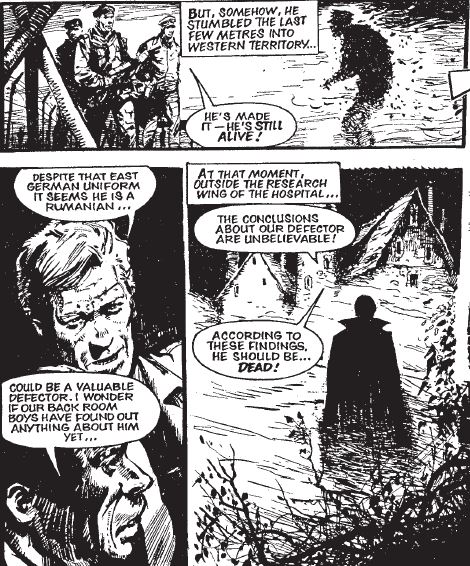
Finley-Day and Bradbury take every opportunity to indulge in the Cold War setting to portray Dracula’s horror as a natural fit within the world of spies, secrets, and the constant threat of nuclear war. In fact, the story’s first entry opens with a scene involving a vampire crossing the ‘death strip’ (the distance that had to be run to reach the West over the Berlin Wall) to escape East Germany.

As was the case for those who actually attempted to escape East Germany, the vampire is met with machine gun fire and all manner of death traps that were supposed to deter people from trying their hand at it. After the vampire makes it to the other side, The Dracula File makes an unexpected shift into a genre not commonly associated with the famed bloodsucker: spy fiction.

The Dracula File
The Dracula File

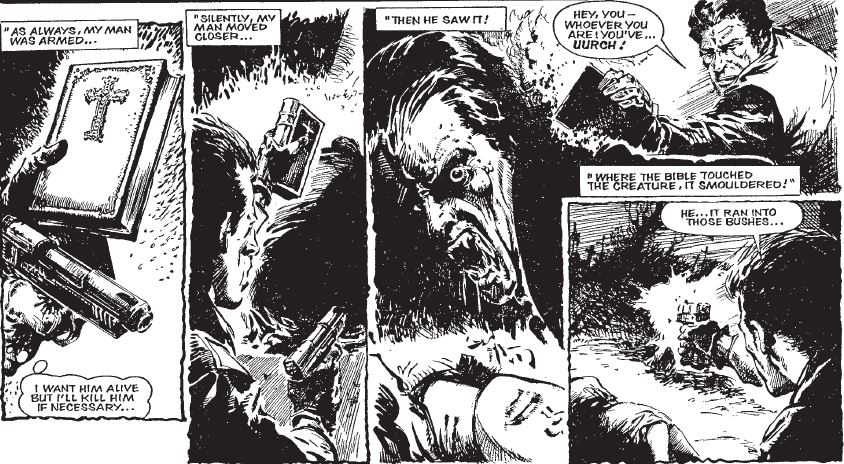
Given the history of British horror, one could be tempted to assume the story would take much of its inspiration from the classic Hammer films. While there is a fair bit of Hammer in it, especially in terms of ambiance and monster designs (there are parts where the vampire shows a passing resemblance to Christopher Lee’s Dracula), The Dracula File owes more to the spy novels of John le Carré, Graham Greene, and John Deighton.

The first parts of the overall story carry the pacing and tone of a spy thriller. Reports of someone who survived the jump to the West are shrouded in secrecy due to the circumstances of the escape while supernatural incidents are studied methodically to account for the unexplained things that accompany the new development. Later, mysterious deaths lead to investigations that keep to dark alleys and backchannels, whispered among a select few. Finley-Day and Bradbury go lengths to present Dracula as a legitimate Cold War threat and a national security problem. And then they have spies and government agents become the natural evolution of the Van Helsing character.

The script and the art never let the spy elements overwhelm the horror in the story. Dracula File never stops being a horror story, but the underlying intrigue that comes with treating vampires as another threat under the umbrella of the Cold War gives it an identity all its own. Heavy mist still hangs over scenes where a vampire attack is imminent and the supernatural permeates throughout the entire story, but the spy thriller elements frame Dracula as a kind of provocateur without any real allegiance to any side other than his own. His cause is one of blood and it poses a threat to the order of things in the world of secrets the Cold War created.

The Dracula File

The Dracula File is a different kind of vampire story, a rare one, in fact. To insert vampires into the spy game and still honor the more classic elements of spy fiction is truly a feat and begs further reading. It’s a great addition to anyone’s Halloween reading list and it’s a refreshing break from tradition.

Review: Vampire: the Masquerade: Winter’s Teeth #1

Vampire: the Masquerade #1

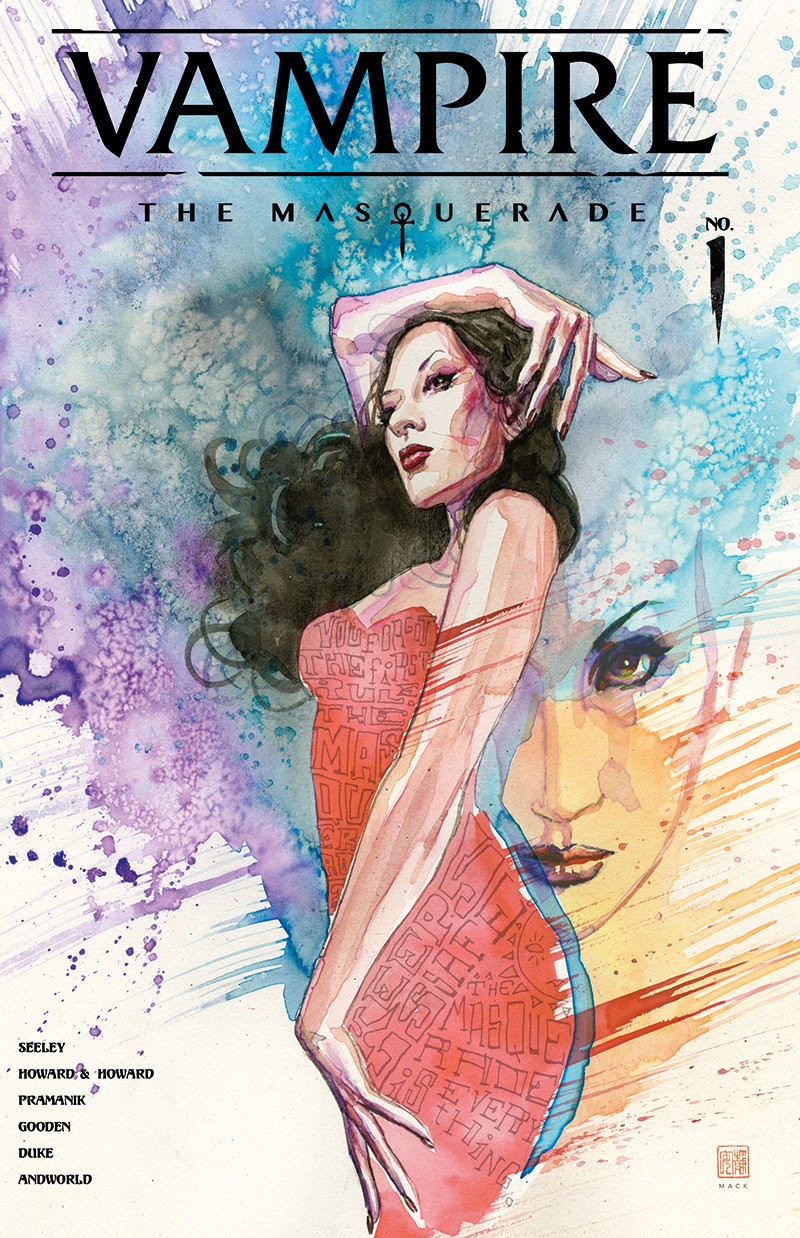
The White Wolf/Onyx Path RPG Vampire: the Masquerade returns to comics courtesy of Vault, and this issue is a wonderful entry point into a complex world of alliances, hierarchies, and yes, bloodthirst. Tim Seeley, Devmalya Pramanik, and Addison Duke handle the lead story of Vampire: the Masquerade #1 focusing on Cecily Bain, who is muscle for a vampire clan in Minneapolis. However, she also has a fiercely independent streak and the tiniest trace of a soft side beneath her murderous, take no shit attitude. On the flip side is Tini Howard, Blake Howard, and Nathan Gooden’s backup story about the anarch, Colleen, who isn’t beholden to the Twin Cities power struggle and just wants to make sure her and her vampire buddies survive to the next day. It was really nice to get two incredibly different perspectives on this rich world, especially as a newcomer to the franchise. (My only real exposure to Vampire the Masquerade was in the Baphomet/Morrigan-centric issue of WicDiv even though the lore has always fascinated, and I picked up some of the RPG sourcebooks via Humble Bundle.)

Seeley and Pramanik set up Cecily as an anti-hero with a heart of gold in Vampire: the Masquerade #1’s opening story. She proves her ruthlessness by killing the clan accountant’s girlfriend (He’s just valuable enough.) in the opening scene, but then she shows tenderness with her sister Karen, who has dementia, and a new vampire, Ali. Pramanik with the help of colorist Addison Duke uses intense shadows to create intimacy in their visuals and hint that Cecily is strongly considering turning Karen into a vampire so she doesn’t have to deal with the pain of completely losing her and also that her youth is restored.

This concern for the weak continues to Ali, who was sired by an anonymous vampire and is clan-less drifter in a highly hierarchical world except this may not be the case thanks to some suspenseful silent sequences from Seeley and Pramanik. Visually, Devmalya Pramanik and Addison Duke lean into an industrial, post-punk vibe that hints at past “glory days” for Cecily and Karen and also hinting that Cecily might have a sense of nostalgia between her tough, get the job done veneer. Her interest in alternative culture and music does dovetail nicely with her refusal to be more of a company woman and just do her job for the Prince instead of getting the vampire clan equivalent of a desk job and lose some of her precious freedom. (And, by extension, a lack of prying eyes on Karen.)

In both stories, Tim Seeley, Tini Howard, and Blake Howard lean on characterization and easy-to-connect-with personal relationships instead of the deep Vampire the Masquerade lore to drive the story. Without the vampirism, Colleen and her band of anarchs (Basically, vampire without a cause.) could be young people with wanderlust that favor the open road instead of stable jobs and lifestyles. The character sheet for Colleen (And Cecily too, while we’re here.) adds real depth to her character and the messed up relationship with her husband/sire Mitch and also acts as a rare peek at the bottom of the author’s theoretical iceberg. The backup is a free spirit to the rigid structures that Cecily encounters in the main story, and Addison Duke uses a lighter palette because as a thin blood, Colleen can actually go out during the day. The Howards and Gooden’s story adds depth and perspective via a momentum-filled On the Road with vampires plotline instead of relying on boring exposition to show what life as another kind of vampire is like.

With two memorable leads and a focus on showing readers what it’s like in the universe instead of exhaustively explaining its rules, Vampire: the Masquerade #1 is an enjoyable read even if you’re not familiar with the RPG. The dual nature of immortality shows up a lot in the comic, but Tim Seeley, Tini Howard, Blake Howard, Devmalya Pramanik, Nathan Gooden, and basically Gothic set-dresser Addison Duke dive into other implications of being a vampire in this world like navigating bureaucracies and complicated interpersonal relationship. Hey, it sounds like the real world, but with hotter outfits, blood, and fangs.

Story: Tim Seeley, Tini Howard, Blake Howard
 Art: Devmalya Pramanik, Nathan Gooden
Colors: Addison Duke Letters: Andworld

Story: 7.9 Art: 8.7 Overall: 8.5 Recommendation: Buy

Vault provided Graphic Policy with a FREE copy for review


Purchase: comiXologyKindleZeus Comics

Review: Killadelphia #4

KILLADELPHIA #4

Rodney Barnes and Jason Shawn Alexander’s Killadelphia has been setting its sights high since the very first issue. It established conflicting racial politics and creates a history that dates back to early independent America. A time when the Founding Fathers still roamed the land. One of them turns out to be a vampire looking to start a revolution of his own in present times. A vampire revolution. Killadelphia #4 is where that revolution starts, where we hear the first shot of the vampire uprising. It’s loud enough to become the new ‘shot heard around the world.’

Father and son James and Jim Sangster along with chief medical examiner Jose Padilla have stumbled across several big pieces of the larger puzzle, namely that President John Adams is patient zero of the vampire virus and that some of Philadelphia’s poorer neighborhoods have become his personal vampiric breeding grounds. Our merry group of novice vampire hunters is worried about the conquest-level amounts of bloodsuckers that are awaiting their orders, but they still don’t know when it’s all going to go down. This fourth issue is when everything starts.

Barnes’ script and Shawn Alexander’s art never waste an opportunity to comment on the fact that most of Adams’ vampire army is composed of black people. This is interesting because Adams is widely regarded as one of the few Founding Father to have not owned slaves. The actual facts behind this are somewhat muddy as the President did hire white and free black servants but also rented out slaves from slave owners, paying a service fee for their employment.

On top of that, Adams tolerated slavery and was very much a man of his time, meaning he might not hold up in a court of public opinion in today’s political climate (or perhaps he would’ve, given the state of things). This might say something about the drive behind his vampire revolution, especially in terms of how traditional or nuanced his perceived villainy will end up being.

It doesn’t seem like Barnes and Shawn Alexander are looking to frame Adams as a mere ‘white bad guy’ type of character for Killadelphia. The next two issues should reveal a lot more about the agendas pushed forward by the second President of the United States. The race dynamic between the white leader and the black vampires speaks volumes, but just exactly what it’s truly meant to represent is still up for debate.

I will say, while I am completely invested in the series and have loved how dense each entry has been, I did feel the revolution started a bit early. I could’ve done with two more issues of world building and perhaps more exploration of the vampires themselves. Issue #4 takes a plunge into big story developments and, while exciting, it does feel a bit rushed.

Shawn Alexander’s art continues to impress. It really digs into the grittiness of the setting, but it also plays with realism in a way that keeps the more fantastical elements of the story grounded. It heightens the horror and continues to produce some nasty-looking vampires.

Luis NCT’s colors, on the other hand, do a fantastic job of helping the art maintain a balance between its fantasy and its realism. They have a way of accentuating the more visceral sequences while also setting the tone for the moments that need an additional dose of darkness to really be effective. Visually, this comic is a well-oiled machine. The script wraps itself around this beautifully.

Killadelphia #4 speeds things up quite a bit—perhaps a bit too quickly—but the quality of the storytelling hasn’t dipped not one bit. There are traces of Richard Matheson’s I Am Legend here, and even a bit of Candyman in terms of ambiance. I’m eager to see what else gets thrown in the ring, because we got a vampire revolution firing up and it looks like it’s about to get real bloody.

Story: Rodney Barnes Art: Jason Shawn Alexander Colors: Luis NCT
Story: 8.0 Art: 10 Overall: 9.0
Recommendation: Buy, and then make sure it’s in your pull list

Image Comics provided Graphic Policy with a FREE copy for review

Review: Vampirella #13

VampiVol2-13-Cov-A-MayhewDynamite has made its name by resurrecting properties in the public domain or forgotten properties that they acquired for an insignificant amount of money, but of all their properties it is Vampirella that has the closest connection to comics.  Originally she was a B-List or lower character from the 1960s, designed to take advantage of the sexual revolution and a focus on both sci-fi and the supernatural.  Although such a combination might have seemed to have a passing interest, she nonetheless managed to hold on to establish herself as a long running character whose publication history is mostly uninterrupted since her first appearances, due in part to her cult status as a sex symbol and one of comics original bad girls.

There is a problem in her presentation though.  When she originally came on the scene it was during the coming of the silver age, already in place for some and still to come for others, but the method of story telling in the silver age was fitting enough for her character.  There was less continuity, if writers wanted to make up a story which made little sense from what came before, they mostly had the freedom to do so.  The modern medium of comics is somewhat different, less escapism and more serious story telling, but the stories have never really caught up to Vampirella.  Although there has been an attempt to fit her into the modern medium, there has never really been the right momentum to get her there.  The most recent series and the most recent story arc is proof of that.  She is leader of the Kabal, but as a plot device it has been pretty weak, as she travels the world on secret missions for a sect of vampires.

Other parts of these 13 issues have looked like they might be going somewhere else, but have also often stalled, and this final issue with this concept also feels rushed and out of place.  It is too bad because the talent has mostly been there to take the stories to another level, just they have not ever really made it.  Vampirella belongs in comics, but it seems as though a proper home cannot be found for her.  Instead she is just shifted around between somewhat generic stories without ever really finding one that can highlight her as a character.  Perhaps with the end of the Kabal concept the character can find a better direction to be taken in, but for the moment, this was another failed experiment for her.

Story: Nancy A Collins Art: Patrick Berkenkotter  
Story: 6.5 Art: 6.5 Overall: 6.5 Recommendation: Pass

Dynamite provided Graphic Policy with a free copy for review.


Review: Van Helsing Vs. Dracula #1

helsing001There is likely no villain as pervasive as Dracula.  He is maybe not the most intimidating of comic book super villains, but as a character borrowed from literature and history, he has shown up at practically every major comic company.  He is a big enough enemy of the X-Men at Marvel, has shown up occasionally at Marvel, and even in the past year has already been featured in his own miniseries, which he shared with the Blood Queen at Dynamite.  With such a wide swath of appearances, it makes sense that he would appear in Zenescope’s Grimm Fairy Tales, a setting which is established on the very concept of ripping off characters from myth, legend, fairy tales, and literature.  As the Grimm Fairy Tales universe expanded it also made sense to expand its list of heroes, most of whom happen to be female.  In this case a female vampire hunter by the name of Liesel Van Helsing, with a fair amount of steampunk, was thrown into the continuity, although the character has never really been able to find a solid home at the company, rather appearing in a sequence of cameos.  Perhaps this is on the verge of changing as she is featured in his first standalone miniseries, and one taking on the darkest creature of the night.

For those that are accustomed to Grimm Fairy Tales, they will find that there is something familiar here, but for those that are not they might be confused at some of the very basic concepts introduced here.  As the main universe of Grimm Fairy Tales tends to be pretty jumbled, often without a lot of direction, it should come as no surprise that a Victorian steampunk vampire hunter is dating Hades, the Greek god of the underworld.  For those that might like to look past this part, it is not really possible, as he is not here as a cameo, but rather as a major part of what is pushing forward the plot.  As it turns out, one of Liesel’s old friends has a bit of a vampire problem, and she is off to investigate it, with the god of the dead in tow.  Little does she know though that Hades and Dracula already have a history (which is a bit of a stretch even by Grimm Fairy Tales’ standards) and this complicates her goal of helping her friend.

It might seem that this issue is overly busy, but it never really is.  The inclusion of Hades is perhaps a poor choice, but it is an editorial choice that was made long ago, and the writer here has to deal with what they have.  Despite this, this is a hard issue to get an impression of for where the miniseries might be heading.  For those that are interested in a bit of supernatural, they will probably find this approachable enough, but there is really not much here to tell whether it will be one of the better Grimm Fairy Tales projects, or something more limited.  As it stands after the first issue it evidently has the potential, only it is unclear what it can make of it.

Story: Pat Shand Art: Michele Bandini 
Story: 7.6 Art: 7.6  Overall: 7.6  Recommendation: Read


Review: Baltimore: The Inquisitor (One-Shot)

Baltimore Inquisitor

The Inquisition of early-modern European historical fame is reborn in vampire-plagued Eastern Europe near the end of the First World War. From Mike Mignola and Christopher Golden, this Baltimore one-shot continues the wild-west-esque adventures of vampire hunter Lord Henry Baltimore across Eastern Europe. Baltimore has been the star of four other one-shots and three mini-series, and he’s a wonderful addition to the Mignolaverse.

The inquisitor really isn’t about Baltimore, though, but instead focuses on the titular character, a Jesuit arm of the reborn Inquisition and a Frenchman, Judge Patrice Duvic. He’s an unblinking force of the Church, determined to smite Hodge for his writings about vampires and to confront—and purge—Lord Baltimore of his evil. In this deranged Inquisitor’s opinion, acquaintanceship with vampires, even as a slayer, is only fit for those ordained by God; the flesh is always tainted, but painful purification saves the soul!

Stenbeck and Stewart provide the classic Mignolaverse milieu for the dark, richly metaphorical dialogue that paints rampant vampirism across the Austro-Hungarian Empire as a parable for the Empire’s economic and civil strife during 1917, just a year before their ultimate defeat and governmental dissolution. Mingola and Golden create the Inquisitor as a vicious, self-righteous, self-flagelleting priest that reminds me of Les Miserables’s irredeemable Javert. Baltimore’s presence book-ends the central story, and a violent confrontation is presaged.

I can hardly imagine a more exciting way to combine World War I, vampires, the Inquisition, and witches than this one-shot, which is well-worth the time. Baltimore really is one of those rare characters whose books you have to wait months for, but which always pay off as a visual and narrative odyssey.

Story: Mike Mignola and Christopher Golden   Art: Ben Stenbeck

Story: 8.75  Art: 8.5  Overall: 8.5  Recommendation: Buy

Dark Horse provided Graphic Policy with a FREE copy for review.

Dark Horse Does Vampires Right!

If you’ve got a taste for bloodsuckers, then look no further! Dark Horse does vampires right and gives readers who crave creatures of the night a crypt full of creepy comics!

Step into the world of Joss Whedon’s Buffy the Vampire Slayer Season 9, as everyone’s favorite Slayer adapts to her new life in San Francisco. Then check out Angel & Faith, where the vampire with a soul and the once-evil Slayer work to atone for past sins.

This preview issue also features Mike Mignola and Christopher Golden’s Baltimore, which follows a vampire hunter living in a world beset by a post–World War I vampire infestation; samples from P. C. and Kristin Cast’s story of a vampyre boarding school in House of Night; and Guillermo del Toro and Chuck Hogan’s The Strain, in which Manhattan suffers from a vampiric plague!

• Issue features selections from Buffy the Vampire Slayer Season 9 #1, Angel & Faith #1, Baltimore: The Curse Bells #1, The Strain #1, and House of Night #1. Plus, the entirety of a short story entitled “Magical Mystery Tour Featuring the Beetles,” a previously unreleased, digital-only retailer exclusive from Buffy the Vampire Slayer Season 9.

« Older Entries