
Uber Volume 1 will simultaneously intrigue and horrify readers
In advance of Kieron Gillen and Caspar Wjingaard’s upcoming comic The Power Fantasy, we’re revisiting some of Gillen’s previous creator-owned work.
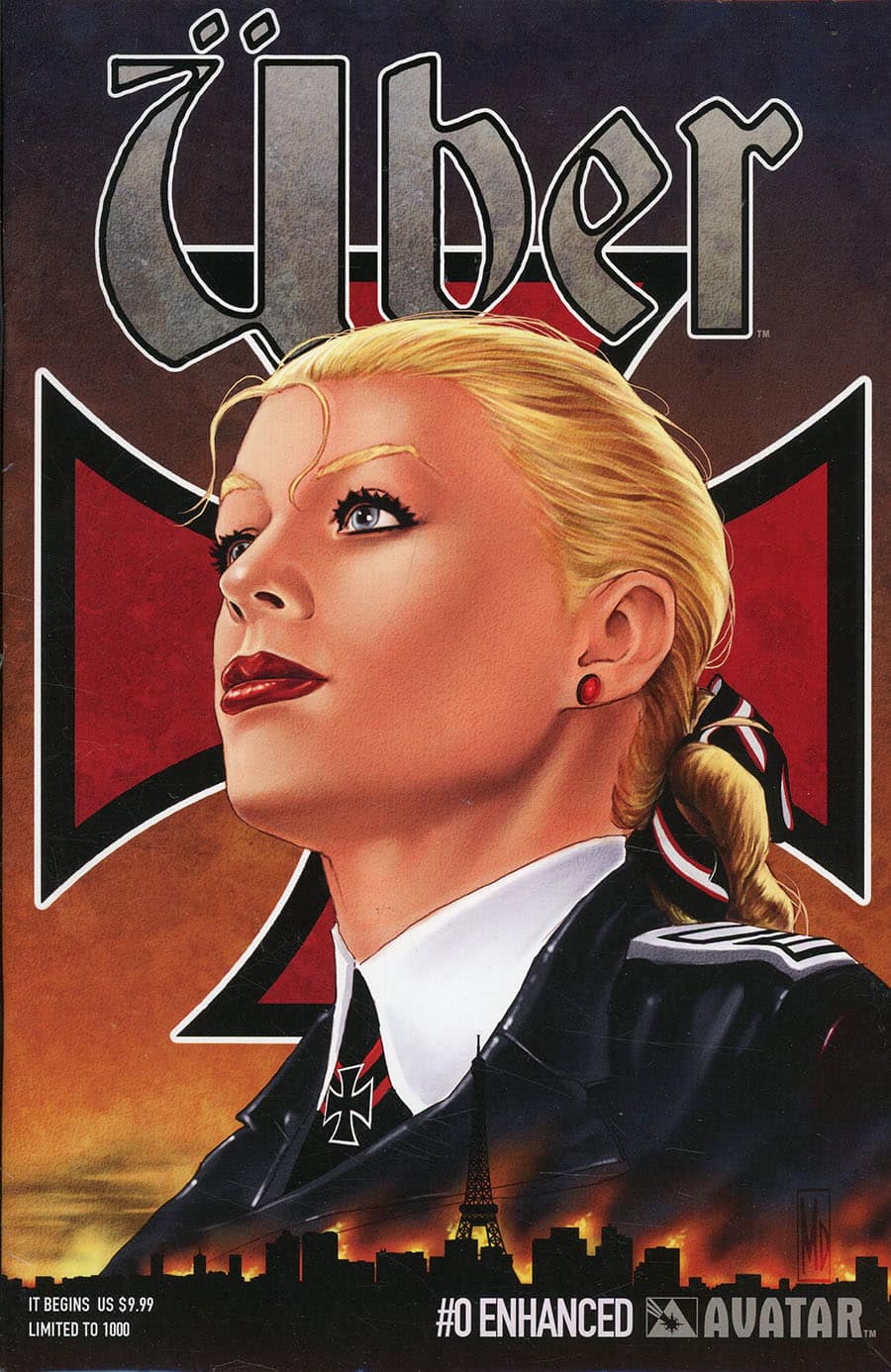
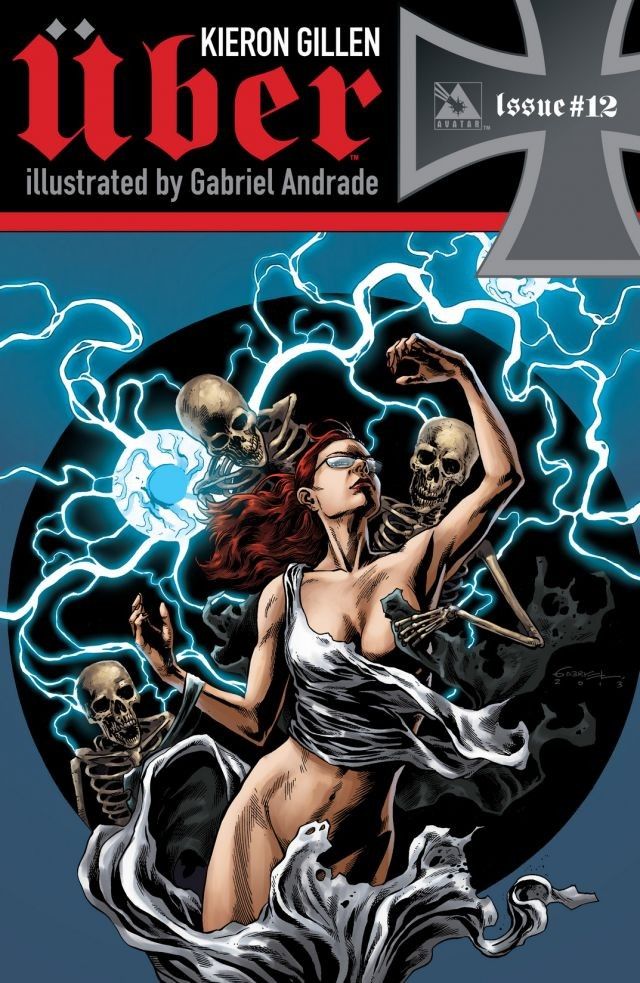
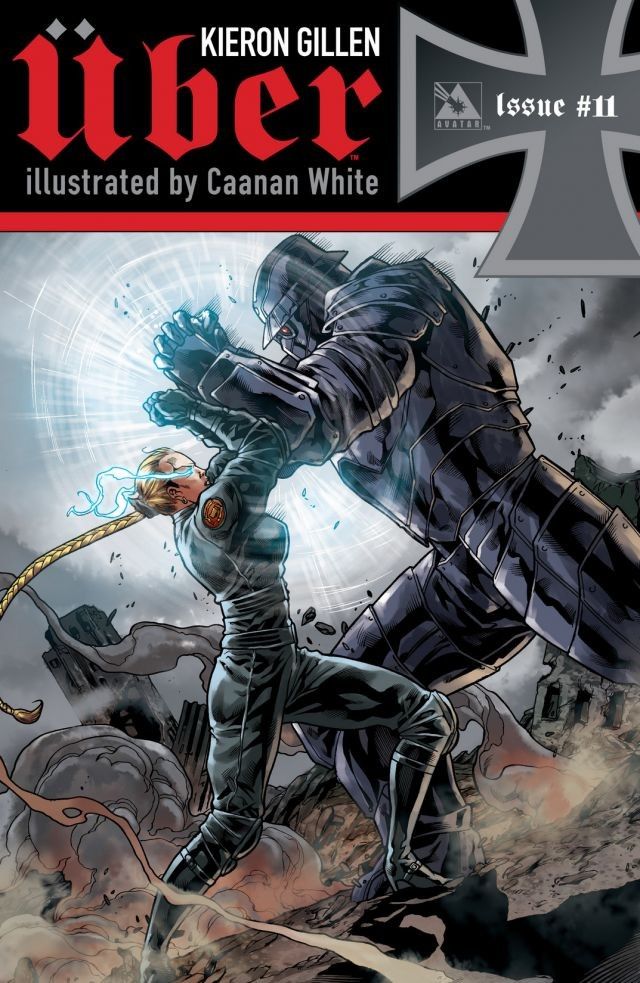
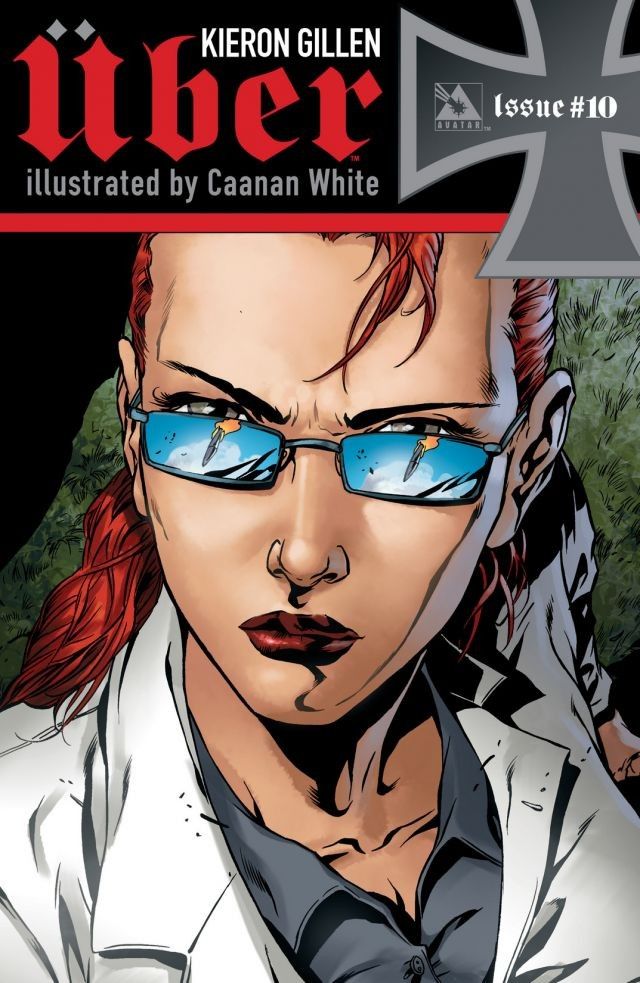
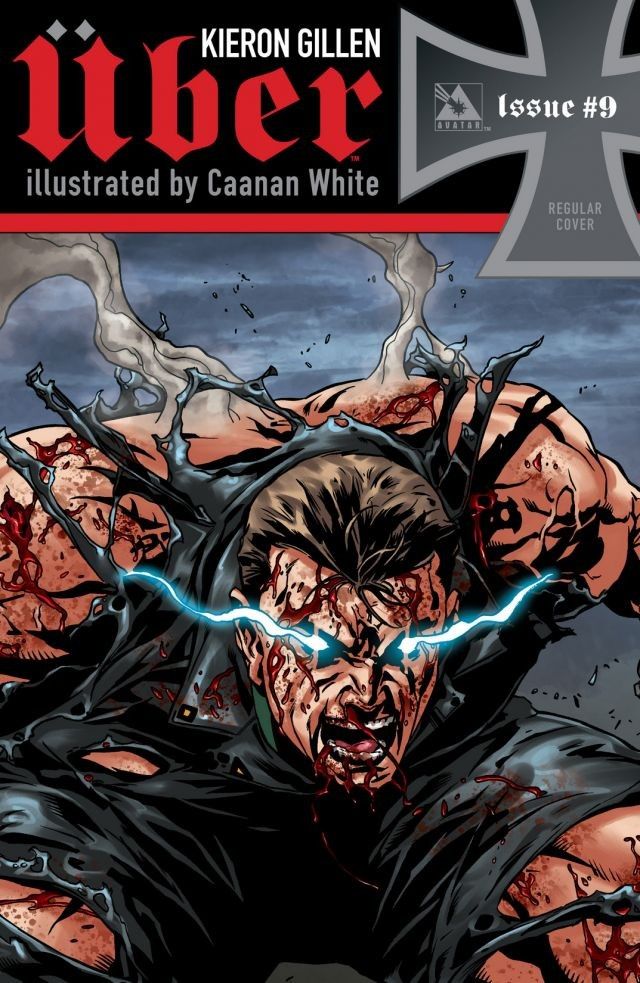
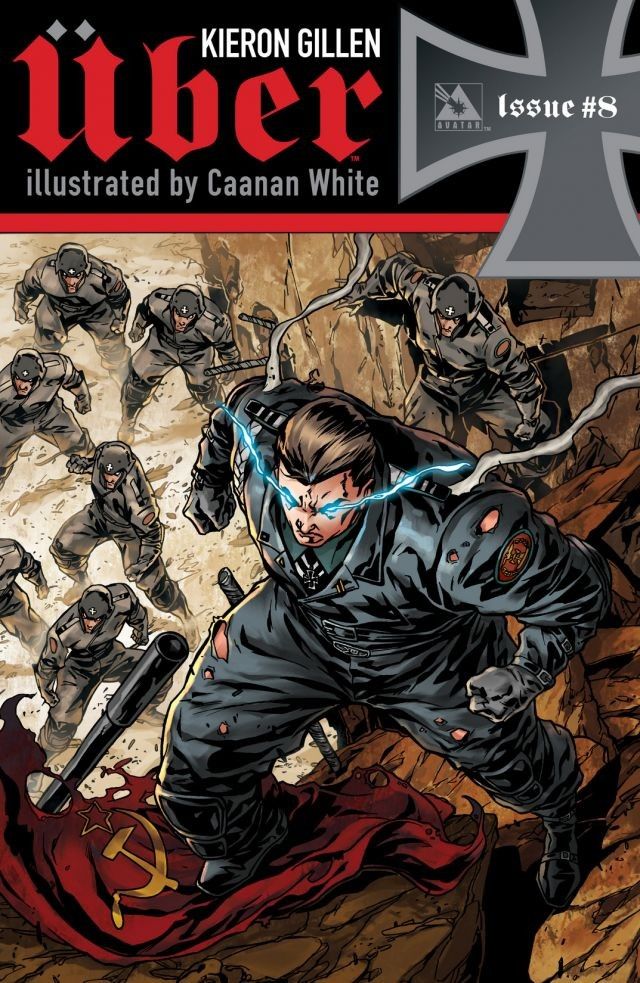
Uber has been on my “to-read” list for the better part of a decade. It’s an alternate history/superhero comic from Kieron Gillen, Canaan White, Keith Williams, and Digikore Studios set in World War II where the Germans are on the edge of surrender (Hitler literally has a gun in his mouth.), but then they have a breakthrough with superhumans, who are of course called “Ubermensch”, drive the Soviet Red Army back, and prolong the war beyond its actual historical end. The first volume introduces this brave new world with a huge ensemble cast, including actual historical figures like Winston Churchill, Heinz Guderian, and of course, Adolf Hitler, and shows the superhuman arms race between Nazi Germany and the Allies, predominantly the United Kingdom. White and Williams’ visuals marry Bryan Hitch’s widescreen visuals (Especially when the superhumans use their abilities.) with the grit, grime, and entrails of Darick Robertson’s work on The Boys. Uber reads like an intelligent, blockbuster war film or miniseries, but the ultraviolence and “equal time” given to both Nazis and Allies means that it would probably not be greenlit so it’s nice to see its creators use the creative freedom provided at a small publisher like Avatar Press to tell a story that is both well-researched (Gillen wrote a 30,000 word series bible.) and visceral.
Although English spy Stephanie is a total badass and provides the few hopeful moments of the series when she steals the Nazi formula for creating superhumans as well as copies of the books with information about enhancing humans, Uber isn’t constrained by a typical hero/villain narrative. But this action is tempered by her torturing and experimenting on participants in the German superhuman programs. Gillen and Canaan White cut between the Allies, Germans, and Soviets and almost journalistically show their motivations, strategies, and moral failings. The Nazis have the most, of course, like when Hitler overrides his generals and tells the superhumans to kill almost one million Soviet prisoners. Moments like this along with Allied characters dropping like flies throughout the volume adds a tone of menace and fear, especially in the climactic battle where the German female superhuman Klaudia aka Sieglinde eviscerates the British superhuman, the American-born O’Connor revealing that this isn’t going to be a Marvel MAX Captain America comic.
The horrific side effects around the testing and creation of superhumans whether Ubermensch or His Majesty’s Humans (HMH) are a heightened version of real life eugenics projects done during World War II and shows that everyone involved has blood on their hands except for the test subjects themselves. Uber really is more of a horror comic than a superhero one. For example, what in most superhero media would be a run-of-the-mill training montage of a superhuman lifting a car ends up having intestines flying everywhere because an HMH recruit pushed his limits a little too early. Also, the combat in Uber is more war movie and less stylized action with Kieron Gillen’s captions setting up strategies and troop deployment while White, Williams, and Digikore’s visuals show the utter destructive capability of the superhumans as well as their weaknesses. In fact, Gillen sets up a pecking order of superhumans with human tanks acting as enhanced foot soldiers while the battleship class ones like the aforementioned Klaudia are the obliterate entire armies/cities power level. This keeps the action from turning into a retread of Miracleman and leaves room for actual military tactics like any time Guderian is involved. However, for all of Heinz Guderian’s contempt for Hitler and skill at setting up tank assaults, he’s still a fascist and never pulls a Claus von Stauffenburg or even Erwin Rommel because he wants an armistice and to simply not lose the war.
Another interesting aspect of Uber Volume 1 is how Kieron Gillen pokes holes into the “great man” theory of history in his portrayal of Winston Churchill. His perspective on the beloved prime minister/imperialist stooge fits somewhere in between those two extremes as Churchill is open to new ideas like the fact that the Germans have superhumans, but also wants the Cliff’s notes of Stephanie’s intel on the Ubermensch and to immediately have her head up the British superhuman project although she’s traumatized from working deep cover with the Germans. Gillen gently roasts his obsession with the perfect turn of phrase in some of his interactions with different generals and officials while also showing his take-charge attitude that was the opposite of Neville Chamberlain’s appeasement approach to Hitler and Nazi Germany. But the most haunting scene is the final page of the comic where he opens a desk with a handgun and bullets showing that, like Hitler, he would rather die than be captured. The gun stays in the drawer showing that he still has some hope for the war although Paris lost major landmarks like the Eiffel Tower and Notre Dame cathedral in the battle at the end of the volume. It sets up a tense race between Germany and the Allies with the Nazis having the better superhumans while the United Kingdom has the chemical compound that creates them as well as skilled codebreakers like Alan Turing to figure out how to use them more effectively in battle.
Beginning with a paradigm-shifting opening issue that showcases the awe-inspiring power of the Nazi superhumans, Uber is a heightened look at the horrors of war and genetic experimentation set during the last “good war”. It’s not thrilling in a traditional sense, but Kieron Gillen, Canaan White, and company give the story solid narrative momentum, especially when the British build their own superhumans to counter the Germans. I’m simultaneously intrigued and horrified by Uber and definitely plan on seeing how it diverges from actual history, especially in the upcoming issues that look at other fronts of World War II.
Story: Kieron Gillen Pencils: Canaan White
Inks: Keith Williams Colors: Digikore Studios Letters: Kurt Hathaway
Story: 8.8 Art: 7.8 Overall: 8.3 Verdict: Buy
 There is nothing like chase movies where the villain is in constant pursuit of the protagonist. One example has entered the zeitgeist by sparking nostalgia and pulling from the best elements of 80s movies, Stranger Things. The show made adults who grew up in the 1980s feel like the decade they grew up in was something to be proud of and be able to enjoy again. I was one of them and saw that usually most movies and tv shows made fun of the time (primarily because of horrible aesthetics).
 How does one carry on when change occurs beyond recognition? Some assume that our future is dictated by our past. We see all that came before and assume that we will repeat the cycle. The reality is, the cycle can be broken, as each individual can change their own destiny.
 Growing up as a fan of Kaiju movies, I always loved the big fights between the creatures. Those movies felt like watching each of the monsters wreak havoc in everything they see, leaving scorched earth wherever they walk. The movies ultimately come down to both of these gigantic monsters battling until one died or was beaten. Often these movies were subtitled or badly dubbed but they were pretty easy to follow. The plot was pretty clear. That flaw didn’t take away from what made them so enjoyable, the fights and how they destroyed everything in their path. It was also interesting to see how the humans react to kaiju that came their way.
 As well known as Captain America is as a comic book character, it’s still interesting to see how people are still discovering the character. H
 The subject of “nuclear proliferation” has been in the news recently as what went on behind the scenes of the recent talks with North Korea is discussed. The very idea that any of us can turn such destructive weapons on each other is still a frightening idea. The proliferation of weapons of mass destruction was the hot button issue in the second Iraq conflict, leading American troops to search for these all over that country and was the impetus for war. The passage of time, almost 80 years has passed since the devastation seen in Hiroshima, has not deterred nations form holding on to these weapons of mass destruction and still threaten to use them.
 As the world operates on the precipice with the constant threat of war, it is hard to imagine that the last time the world went to war was 1942. As the world came to grips with the “Axis of Evil”, and their plans for global domination, it is hard to almost believe that such a collection of evil minds ever existed. In today’s world, the definitions of “evil” and “ally” become faintly resonant, as the lines have slowly become blurred. This is the direct result of denial of facts. The power of undeniable truth has become less effective.
 The term “heat of battle” has been used in every war movie ever made but it has come to be used in other venues. As a football fan plays in various games are described in such terms by various announcers. The truth of the matter is that it describes the primal need of human beings while fighting. As to whether actual thinking goes into each action or pure aggression takes over. It is even more primordial when it comes to a matter of life and death. When a gun is pointed in your direction is usually when one’s true nature takes over.