Category Archives: Classic Comics

Uber Volume 1 will simultaneously intrigue and horrify readers

In advance of Kieron Gillen and Caspar Wjingaard’s upcoming comic The Power Fantasy, we’re revisiting some of Gillen’s previous creator-owned work.
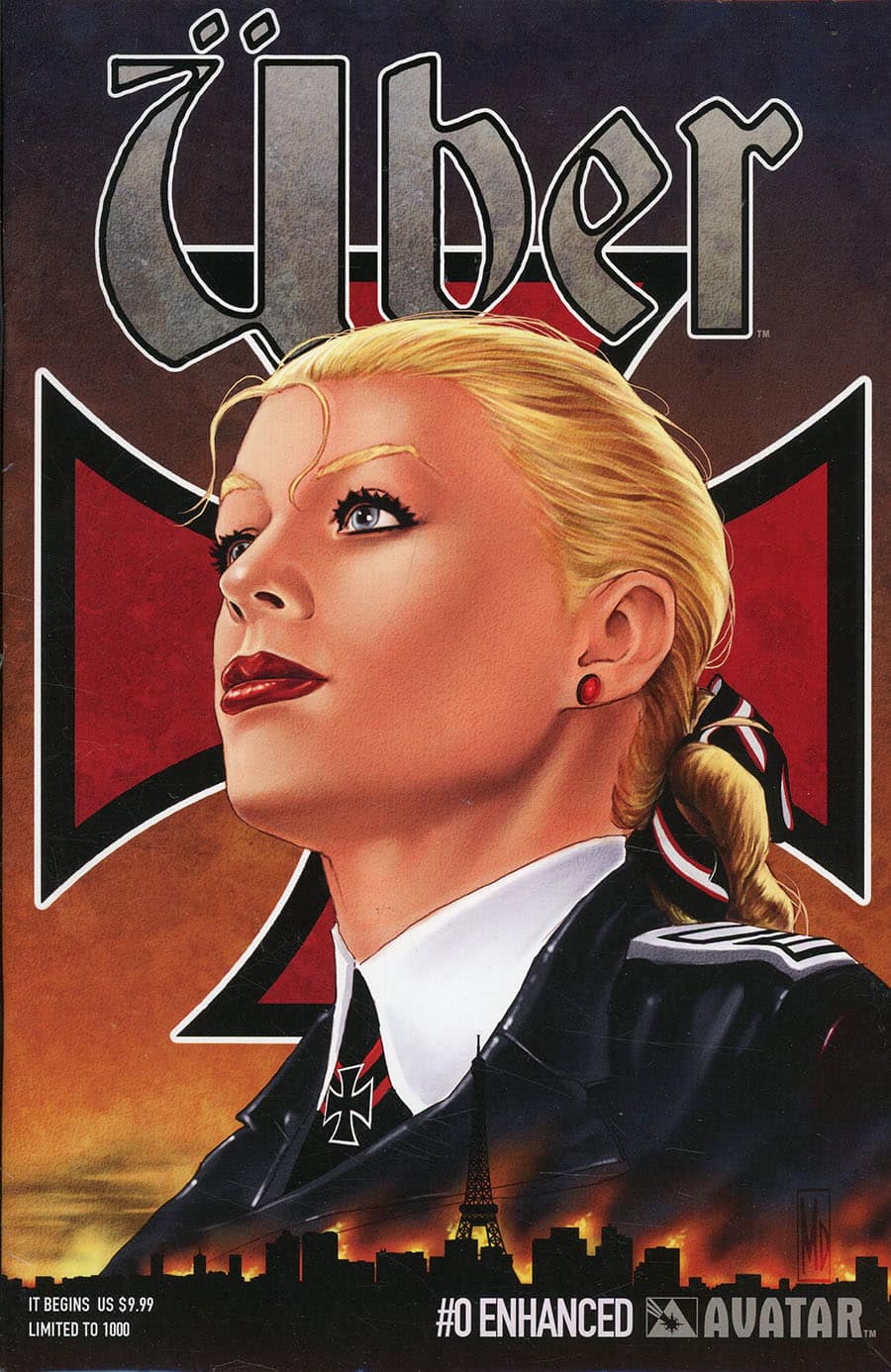
Uber Volume 1

Uber has been on my “to-read” list for the better part of a decade. It’s an alternate history/superhero comic from Kieron Gillen, Canaan White, Keith Williams, and Digikore Studios set in World War II where the Germans are on the edge of surrender (Hitler literally has a gun in his mouth.), but then they have a breakthrough with superhumans, who are of course called “Ubermensch”, drive the Soviet Red Army back, and prolong the war beyond its actual historical end. The first volume introduces this brave new world with a huge ensemble cast, including actual historical figures like Winston Churchill, Heinz Guderian, and of course, Adolf Hitler, and shows the superhuman arms race between Nazi Germany and the Allies, predominantly the United Kingdom. White and Williams’ visuals marry Bryan Hitch’s widescreen visuals (Especially when the superhumans use their abilities.) with the grit, grime, and entrails of Darick Robertson’s work on The Boys. Uber reads like an intelligent, blockbuster war film or miniseries, but the ultraviolence and “equal time” given to both Nazis and Allies means that it would probably not be greenlit so it’s nice to see its creators use the creative freedom provided at a small publisher like Avatar Press to tell a story that is both well-researched (Gillen wrote a 30,000 word series bible.) and visceral.

Although English spy Stephanie is a total badass and provides the few hopeful moments of the series when she steals the Nazi formula for creating superhumans as well as copies of the books with information about enhancing humans, Uber isn’t constrained by a typical hero/villain narrative. But this action is tempered by her torturing and experimenting on participants in the German superhuman programs. Gillen and Canaan White cut between the Allies, Germans, and Soviets and almost journalistically show their motivations, strategies, and moral failings. The Nazis have the most, of course, like when Hitler overrides his generals and tells the superhumans to kill almost one million Soviet prisoners. Moments like this along with Allied characters dropping like flies throughout the volume adds a tone of menace and fear, especially in the climactic battle where the German female superhuman Klaudia aka Sieglinde eviscerates the British superhuman, the American-born O’Connor revealing that this isn’t going to be a Marvel MAX Captain America comic.

The horrific side effects around the testing and creation of superhumans whether Ubermensch or His Majesty’s Humans (HMH) are a heightened version of real life eugenics projects done during World War II and shows that everyone involved has blood on their hands except for the test subjects themselves. Uber really is more of a horror comic than a superhero one. For example, what in most superhero media would be a run-of-the-mill training montage of a superhuman lifting a car ends up having intestines flying everywhere because an HMH recruit pushed his limits a little too early. Also, the combat in Uber is more war movie and less stylized action with Kieron Gillen’s captions setting up strategies and troop deployment while White, Williams, and Digikore’s visuals show the utter destructive capability of the superhumans as well as their weaknesses. In fact, Gillen sets up a pecking order of superhumans with human tanks acting as enhanced foot soldiers while the battleship class ones like the aforementioned Klaudia are the obliterate entire armies/cities power level. This keeps the action from turning into a retread of Miracleman and leaves room for actual military tactics like any time Guderian is involved. However, for all of Heinz Guderian’s contempt for Hitler and skill at setting up tank assaults, he’s still a fascist and never pulls a Claus von Stauffenburg or even Erwin Rommel because he wants an armistice and to simply not lose the war.

Another interesting aspect of Uber Volume 1 is how Kieron Gillen pokes holes into the “great man” theory of history in his portrayal of Winston Churchill. His perspective on the beloved prime minister/imperialist stooge fits somewhere in between those two extremes as Churchill is open to new ideas like the fact that the Germans have superhumans, but also wants the Cliff’s notes of Stephanie’s intel on the Ubermensch and to immediately have her head up the British superhuman project although she’s traumatized from working deep cover with the Germans. Gillen gently roasts his obsession with the perfect turn of phrase in some of his interactions with different generals and officials while also showing his take-charge attitude that was the opposite of Neville Chamberlain’s appeasement approach to Hitler and Nazi Germany. But the most haunting scene is the final page of the comic where he opens a desk with a handgun and bullets showing that, like Hitler, he would rather die than be captured. The gun stays in the drawer showing that he still has some hope for the war although Paris lost major landmarks like the Eiffel Tower and Notre Dame cathedral in the battle at the end of the volume. It sets up a tense race between Germany and the Allies with the Nazis having the better superhumans while the United Kingdom has the chemical compound that creates them as well as skilled codebreakers like Alan Turing to figure out how to use them more effectively in battle.

Beginning with a paradigm-shifting opening issue that showcases the awe-inspiring power of the Nazi superhumans, Uber is a heightened look at the horrors of war and genetic experimentation set during the last “good war”. It’s not thrilling in a traditional sense, but Kieron Gillen, Canaan White, and company give the story solid narrative momentum, especially when the British build their own superhumans to counter the Germans. I’m simultaneously intrigued and horrified by Uber and definitely plan on seeing how it diverges from actual history, especially in the upcoming issues that look at other fronts of World War II.

Story: Kieron Gillen Pencils: Canaan White
Inks: Keith Williams Colors: Digikore Studios Letters: Kurt Hathaway
Story: 8.8 Art: 7.8 Overall: 8.3 Verdict: Buy
The Wicked + the Divine #1 – 10 Years Later

“And every demon wants his pound of flesh.”–Florence + the Machine

“Forgot that inside the icon, there’s still a young girl from Essex.”–Lorde

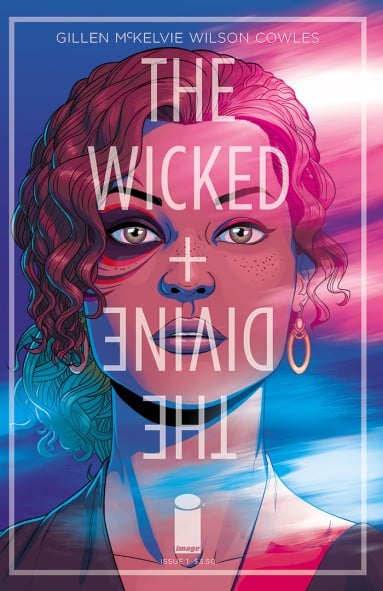
The Wicked + the Divine #1

Until I read Kieron Gillen’s newsletter last week, I couldn’t believe that it had been ten years since The Wicked + the Divine was released and basically changed my life. It, and Gillen and artist Jamie McKelvie’s other collaboration Phonogram, heightened my interest in indie and pop music (Mostly of the British kind because I’m an incorrigible Anglophile.) and transformed me from a Netflix/Marvel comic binging wallflower to a black lipstick wearing, nonbinary Goth degenerate who was closing out bars and dance floors across the South/Midwest/Mid-Atlantic. This might be a bit of an exaggeration because I’m started writing this article at a laidback, very heterosexual brewery while wearing a football top and finished writing it on my bed next to a stack of Amazing Spider-Man comics.

I felt beyond seen in WicDiv‘s cast of characters, especially Laura/Persephone, Inanna, and just a touch of Baphomet. (The whole none more Goth thing.) When the first arcs of the series were released in 2014-2016, I was definitely still a wayward youth working in retail, trying to graduate university (I wrote my undergrad thesis on WicDiv and Paradise Lost when only the single issues were out.), and doing freelance pop culture writing gigs, However, by the time the series wrapped up in 2019, I had found my calling as a librarian and the trade paperback of “Faust Act” was one of the first books I cataloged. Today, I’m legitimately a pop music librarian, and my life has come a little bit full circle so I can write about the series from a new perspective. “Once again we return!”

Because, plot twist, I never actually reviewed The Wicked + the Divine #1. When the book dropped in June 2014, I was busy studying Jane Austen in Bath, England, sinking too many pints while watching Germany dominate in the World Cup (Today, I’m hoping they do the same at the Euros.) , and soliciting old gay men on OK Cupid for help with my paper on British television over the decades. My first review was for WicDiv #2, and it was already my favorite thing helped by my love for Gillen and McKelvie’s Tumblr-era queer pop superhero masterpiece Young Avengers as well as a positive interaction with Kieron Gillen at my first ever comic convention, C2E2 2013. This passion was also fed by the John Milton seminar course I took at university later that year as well as my first read-through of Grant Morrison’s Invisibles because I read somewhere on the Internet that the intro to WicDiv was an homage to The Invisibles #1 sans bald men and John Lennon. With a few gaps, I reviewed the other 50 issues of the series persevering through moves and career changes to actually stay current with the series. But I never wrote about issue one so here are my (Definitely not long awaited) thoughts on The Wicked + the Divine #1 ten years after its release.

Re-reading The Wicked + the Divine #1 in 2024 makes me realize that it was one of the most prescient pieces of pop fiction in the past decade. Influencers, stan culture, aggressive relationships between fans and journalists (E.g. Paste’s review of the latest Taylor Swift album was released sans byline.), it’s all there in this first issue. Hell, even the rise of nostalgia culture is encoded in the character of Luci, who dresses like David Bowie, got her government name from a Beatles song (Eleanor Rigby), and quotes the Fab Four, Rolling Stones, and Philip Larkin like they were born yesterday. She would definitely fit in with the Tik Tok girlies that dress like they’re a character in Almost Famous or standing in for Patricia Morrison from The Sisters of Mercy, circa 1987.

But, with the exception of Cassandra’s utter roasts of the various Pantheon members (“Kids posturing with a Wikipedia summary’s understanding of myth” is an all-time one liner.), Kieron Gillen and Jamie McKelvie treat fandom as a normal part of growing up in WicDiv #1 beginning with our introduction to Laura where she adjusts her look in the mirror trying to look like her new favorite god, Amaterasu. It’s the first in many aesthetic (and later name) changes for Laura and gives off a cosplay vibe, which makes sense because Young Avengers and later WicDiv was famous for its cosplayers thanks to McKelvie’s fashionable, yet functional approach to character design. The Wicked + the Divine is a coming of age comic, and especially this first issue, hones in on Laura trying to figure out who she is through her relationship to the Pantheon between the flashbacks to 1923, court cases, and exploding heads. She wants to be a Pantheon member, but is far from as she stammers her way through the green room and ends up continuing to spend time with Lucifer and Amaterasu because she witnessed a couple murders not because she made some kind of impression on these radiant beings.

The Wicked + the Divine #1

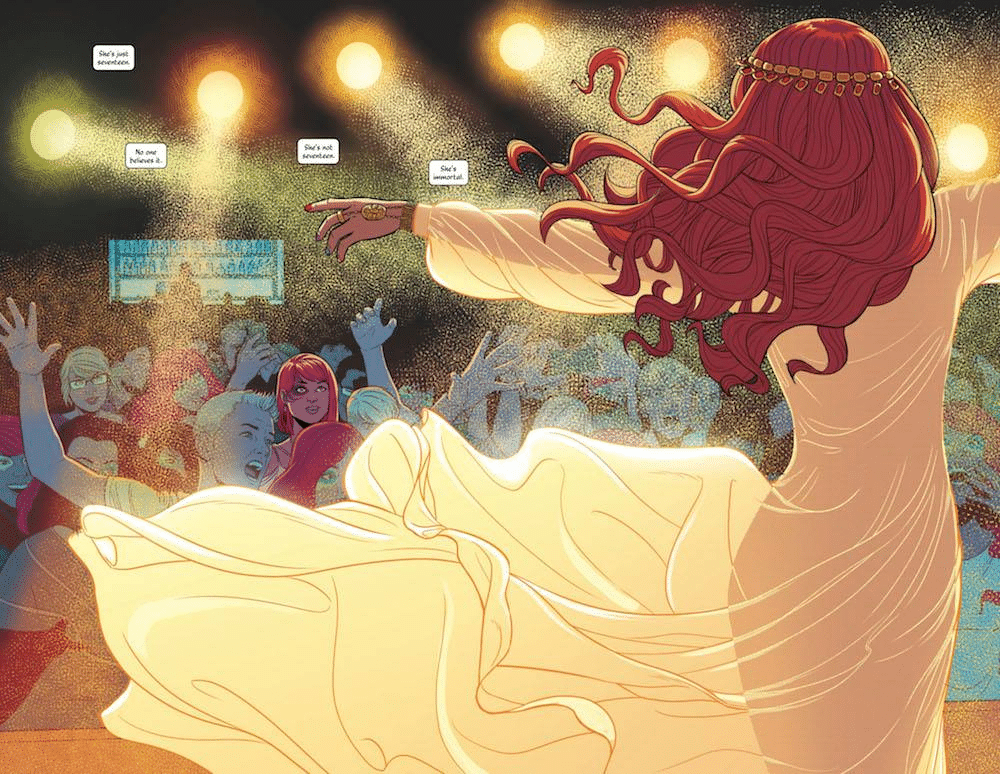
And speaking of radiance, Matthew Wilson’s colors are still as vibrant and awe-inspiring in 2024 as they did in 2014, especially that first splash page of Amaterasu’s gig. Gillen and McKelvie go from the restricted grids of Laura getting ready at her family flat in Brockley before turning the page on a double page spread that nails what it’s like to be wholly enraptured at your favorite artist’s show. The afterglow continues in the following pages as Laura (Through Kieron Gillen’s captions.) processes the performance and tries to connect with Amaterasu before fainting in a white gold flurry. This sequence is a stand-out moment for Wilson in this first issue, but he provides some early bisexual lighting for the Pantheon green room to show that the gender and sexual fluidity of these gods as well as utilizing bright, flat colors accompaniment to Jamie McKelvie’s utter demolition of the human figure when Luci kills the assassins and when the judge mysteriously dies in court.

Moving from the micro to the macro, The Wicked + the Divine follows a pattern that the great comics of the past used, such as The Sandman and Watchmen, which is introduce a rich world with complex characters and universal themes through a simple, accessible plot device. In WicDiv‘s case, it’s the murder mystery. Who killed the judge doesn’t matter in the long run of the series, but it does the job in getting you to pick up WicDiv #2. Gillen and McKelvie introduce the power of the finger click in the opening, absinthe-soaked love child of Sandman and Invisibles flashback and also demonstrate it in present times with inset panels showing Luci kill the fundamentalist Christian gunmen in self-defense. Cassandra’s skepticism aside, the Pantheon members have the ability to kill as well as inspire in an beautiful, abstract way that I’ve witnessed from audience members in the front row at Ethel Cain shows. (I wonder if she’s read WicDiv ; one of her big influences Florence Welch inspired the look for Amaterasu.) The ending of WicDiv #1 and the surprise on Luci’s face creates an air of danger to go with the “necrotically glamorous” (To quote Gerard Way’s blurb on the back of the trade paperback.) tragedy of being a god for two years and then dying, which definitely isn’t a PR line for Amaterasu. I was hooked in 2014 and am still hooked in 2024.

The Wicked + the Divine #1 uses the power of fandom and one’s favorite music and art to explore what it feels like to think that you’re immortal and also about to die, or basically a young adult. Jamie McKelvie and Matthew Wilson’s visuals marry a heightened pop star aesthetic to fundamental, rhythmic storytelling of grids and face and body acting while Kieron Gillen’s caption and dialogues add humor, subtext, and personality to this unforgettable cast of characters. It’s fitting that I’m writing this review while listening to Lorde and Charli XCX’s long-awaited and surprisingly vulnerable collaboration “Girl, so confusing” because I was definitely bumping Pure Heroine, Sucker, and True Romance while writing my first WicDiv reviews in 2014. Sometimes, the things that were great a decade ago are still great plus you have the beauty of hindsight and self-awareness to appreciate them with new eyes and be happy that you’re alive.

Story: Kieron Gillen Art: Jamie McKelvie
Colors: Matthew Wilson Letters: Clayton Cowles
Story: 9.4 Art: 9.8 Overall: 9.6 Recommendation: Buy

Asterix 3-in-1 Vol. 1 collects three classic tales and a perfect way to dive into the world

The story of Asterix starts here. These are the first three adventures of Asterix as he defends his tiny village from the overwhelming forces of the Roman Empire. Join the short, spunky, and super-powerful warrior from Gaul and his faithful friends–including the boar-eating delivery man Obelix and the ecologically-minded canine, Dogmatix–as they battle to protect their village against impossible odds. Asterix Omnibus volume one collects “Asterix the Gaul,” “Asterix and the Golden Sickle,” and “Asterix and the Goths.” Three classic adventures in one great volume.

Story: René Goscinny
Art: Albert Uderzo

Get your copy now! To find a comic shop near you, visit http://www.comicshoplocator.com or call 1-888-comicbook or digitally and online with the links below.

Bookshop
Amazon
Kindle


Papercutz provided Graphic Policy with a FREE copy for review
This post contains affiliate links, which means that if you click on one of the product links and make a purchase, we’ll receive a percentage of the sale. Graphic Policy does purchase items from this site. Making purchases through these links helps support the site