Tag Archives: terror

MOVIE REVIEW: CREEPYPASTA Is Hopefully the First of Many

Creepypasta

Creepypasta is horror for the internet age. It started out as user-generated urban legends, more freely dipped in horror, that were shared online in forums and message boards in a style that catered to plausibility. They lived in the grey areas between ambiguity and anonymity, the two things that best describe digital interactions across the board (which is scary in itself). Classic monsters were replaced with hooded figures with abnormally long limbs or faces with frozen smiles on them, carrying names like Candlejack or Ickbarr Bigelsteine. Haunted houses were cast aside for liminal spaces and interdimensional spots that could feature stairs going to places unseen or strange TV shows with names like Candle Cove.

The ScreamBox exclusive Creepypasta movie manages to capture a lot of this with an anthology format that goes for 5-6-minute-long stories, à la The ABCs of Death, that feel like a greatest hits rundown of what Creepypastas are all about. Among the filmmakers that contribute to the film are Daniel Garcia, Buz Wallick, Berkley Brady, Paul Stamper, Carlos Omar De Leon, Tony Morales, Mikel Cravatta, and Carlos Cobos Aroca.

Like all good horror anthologies, the film features a wraparound story which, in this case, follows a man in a strange house who’s looking for a flash drive that’s housing a sensitive video in it. The place is a mess, with dead bodies strewn about and an analogue TV with an 8-bit video game stuck on its start menu screen to round out the atmosphere (here we get a clever Easter egg in the form of Ben Drowned, a popular Creepypasta by Alexander D. Hall, aka Jadusable). The man moves towards a computer screen that sits on a cryptic chat page that directs him to watch sinister video after sinister video as he searches for the right one. We never know who’s writing on the other end.

The short stories range from shadow people to long-legged boogeymen (like Jumby) that kidnap kids. They serve as introductions to urban legends, brief glimpses into horrors that have the potential to become movies independently. The setup is simple enough. One or two characters come into contact with something that defies explanation, and is also off-center weird, only to be immediately haunted or traumatized by it.

Reality itself gets altered to accommodate the beings in these stories, but never to the point of completely breaking away from it. One thing Creepypastas excel at is in projecting a kind of strangeness that flirts with the possibility of being real. I’d argue that’s what makes them so compelling. They aim to scare in a very intimate way while never fully letting go of the little truths that make the mind wonder.

Not every story hits the mark, though. Those that play around with scary imagery and keep to the margins so that the viewer’s mind fills in the blanks are more successful than those that indulge in special effects and overdramatic performances. There’s a story about blue-eyed people that communicate with another dimension, for instance, that could’ve done with some restraint.

On the other hand, There’s a Black Eyed Kids story that’s quite a highlight. It follow a lonely and sick old woman as she’s visited by one of these kids. The segment keeps to a grey toned and heavily shadowed aesthetic that accentuates the horror whenever we’re shown something terrible, if only for a moment, and it sustains the effect throughout the brief runtime. The closing story, about El Cuco (a variation of El Coco), is another high point, and it might be the best the bunch. It builds up the legend of a dark creature with clever use of suggestion and dread. It carries a sense of dark fantasy that makes it come off almost fairytale-like, but not to the point of shedding its Creepypasta identity. Its closing sequence makes sure the anthology ends on a high note.

Creepypasta has the necessary elements to become a very different and exciting horror anthology. It has a unique identity that already sets it apart from the rest. The micro-short story approach plays to the strengths of the Creepypasta concept and opens doors to future entries. Aiming for a stronger selection of stories and a continuation of high-quality wraparound stories will surely lead to the creation of a loyal fanbase that’ll constantly be itching for more. I wouldn’t be surprised if that fanbase isn’t growing now as we speak.
Review: The Nice House on the Lake #2

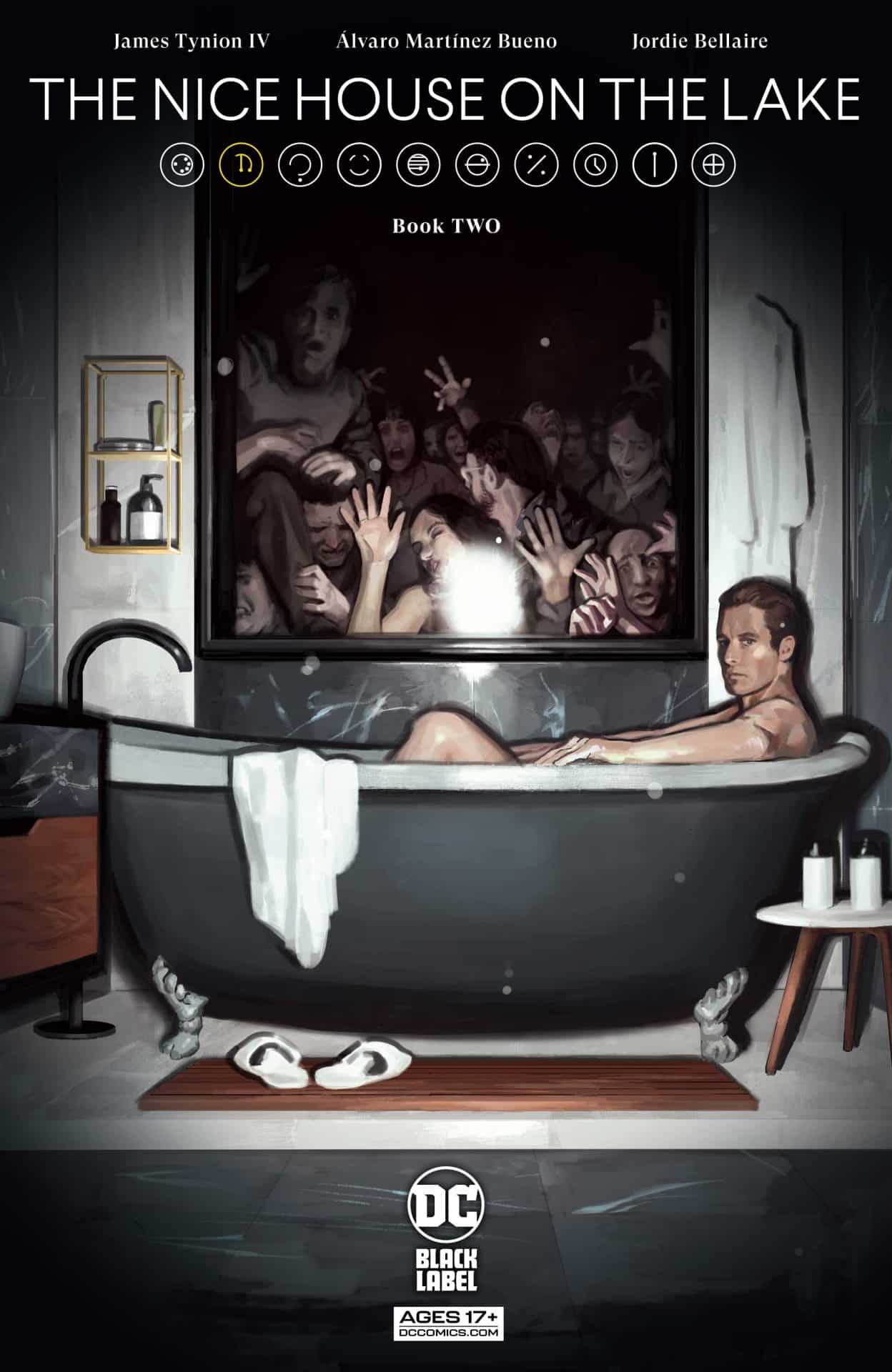
The Nice House on the Lake #2

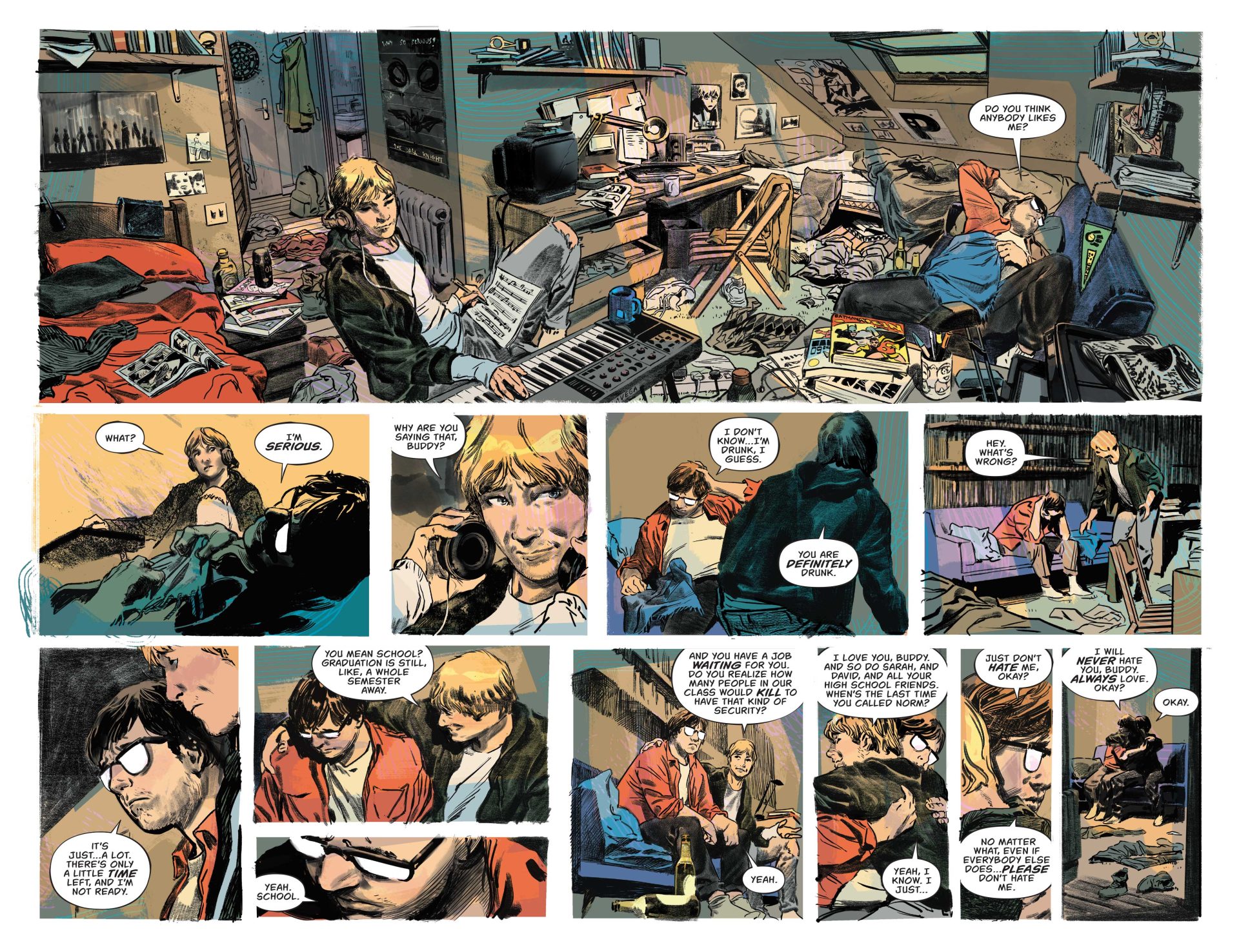
The first issue of James Tynion and Álvaro Martínez Bueno’s The Nice House on the Lake set up an end of the world scenario with a huge cast and a mysterious host at the center of it, all of them weathering the apocalypse inside a well-stocked house. The people who were spared the final moments of human existence are all in shock come issue #2 of the series, and they’re in a mad scramble for answers.

Us readers can only be certain of one thing once the second part of the story has reached its final page: Tynion and Martínez Bueno are still on their way to give us one of the best new comic series of the year.

The Nice House on the Lake #2 puts its cast of characters through the wringer as they try to make some sense of how the world just decided to self-combust and melt almost everyone not on the house with them. Emotions run high and there’s a sense of disconnection among the guests. Reality as they knew it just stopped and anything that comes after the event is now going to be post-apocalyptic. Not an easy realization to come to.

Tynion and Martínez Bueno employ a few different techniques to the storytelling here to shake things up while also building the world their characters inhabit. For instance, the comic contains several pages that unravel as an official log of things said during certain moments immediately after the world seemingly ended. This presents the possibility some kind of secret group or organization is behind it all, perhaps torturing or experimenting with the people at the house for reasons unknown.

This is one of the series’ strong suits, guiding readers to make dark assumptions on what’s actually happening. In a sense, the horror on display in the comic is being driven by elements more commonly found in the Mystery genre. There’s a bit of a “whodunnit” at play here and it helps make the comic an even richer and more complex mystery box in the process.

Martínez Bueno’s art continues to impress in issue #2, presenting everything and everyone in a kind of haze that just deepens the horror being experienced by everyone in the house. It helps that Martínez Bueno also proves to have complete control over the characters’ body language. It’s theatrical, to a point, in terms of making the reader take everything into account to get a better sense of the story.

The Nice House on the Lake #2

The Nice House on the Lake is an intoxicating read, period. It’s hard to stop pouring over each panel, each line of dialogue trying to figure everything out. Issue #2 gives readers enough story to keep them hooked while also teasing so much more horror to come. The monthly wait is starting to get difficult, and I can only see it getting harder to hold out till the next chapter.

Story: James Tynion, Art: Álvaro Martínez Bueno, Colors: Jordie Bellaire Publisher: DC Black Label
Story: 10 Art: 10 Overall: 10 Recommendation: Buy, read, read it again, come up with multiple theories, repeat


Purchase: comiXologyKindleZeus ComicsTFAW

Election Terror: What Happens when the Dead Come Back to Vote in Homecoming

Homecoming
Homecoming

Jane Cleaver: “It’s words. It’s a game. You say whatever it takes to win.”

David Murch: “Well, maybe that’s the problem.”

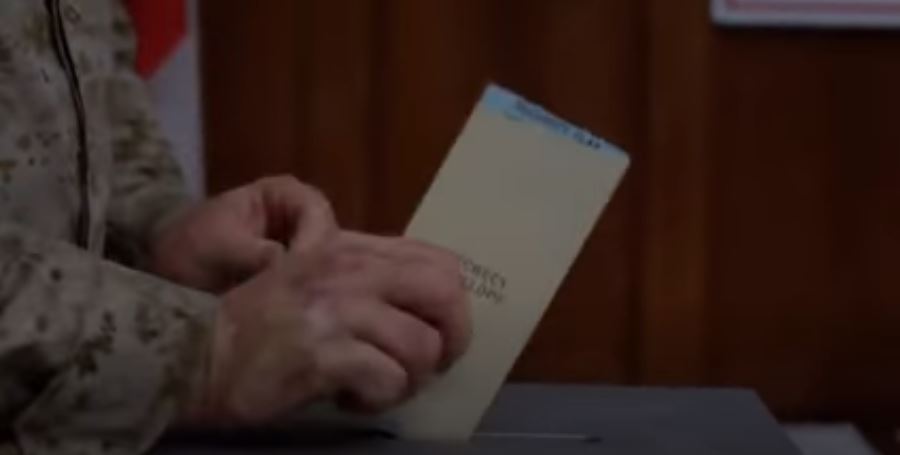
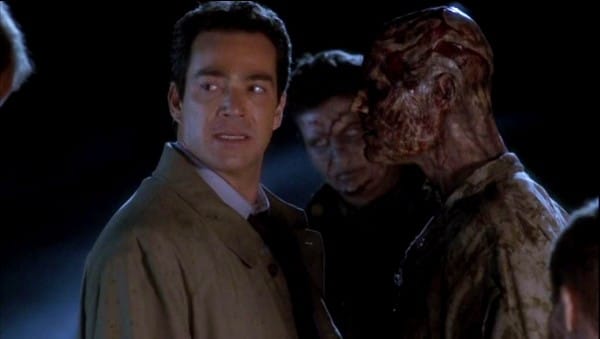
This dialogue exchange happens early in Homecoming (dir. Joe Dante), a strange but unique zombie story from the Masters of Horror anthology series created by director Mick Garris (The Stand). It serves as a preamble for what’ll come soon after the two conversations between the two characters ends, which flips the zombie formula on its head with bravado. An army of undead war veterans rallies from beyond the grave for one final mission: to vote against the president that sent them to war based on a lie. A lie that killed them.

The episode came out in 2006, two years into George W. Bush’s second term as president, at a point where the ‘weapons of mass destruction’ excuse used to justify the War on Terror was wearing off and being heavily portrayed as the lie that got the US stuck in the Middle East (and the reason why dead soldiers come back to vote in Homecoming).

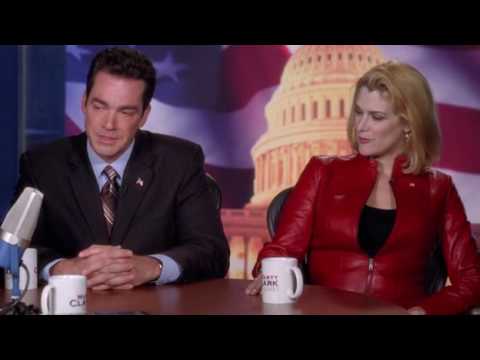
Homecoming follows a White House speech writer called David Murch as he navigates Bush’s reelection with a team of public relations pundits hellbent on winning the election, by any and all means necessary. During a televised panel discussion, Murch is confronted by the mother of a dead soldier who’s protesting the war, which inspires the conflicted speech writer to sincerely wish her son could come back and tell the world why he died for his country. He gets his wish, only it comes with a battalion of undead combatants desperate to fulfill their civic duty.

Watching it now, just as Americans are casting their ballots on the Biden v. Trump election, it’s unsettling how relevant this story still is, if only for its discussion on how politics is ultimately a game of words. As Murch and his team pick up on the fact zombie votes are leaning towards the other side, a mad dash for control of the narrative takes place. What was first scene as an act of patriotism—rising from the grave to vote—becomes an un-American rebellion looking to steal the election from the living.

Homecoming
Homecoming

While Homecoming is firmly rooted in the context of the Bush presidency, it comments enough on the dangers of political storytelling to effectively turn its metaphors on the politics of today. Murch will struggle with his own morality throughout most of the episode, always hesitant as to how and when to use the undead as part of the campaign. Here’s where Jane Cleaver comes into play.

Basically a stand-in for Ann Coulter, Cleaver becomes the right-wing commentator that puts on her radical pro-America persona when in front of a camera only to later admit she’ll say anything to secure her party’s victory. She basically stands as the unethical extreme of public discourse. The game, as Cleaver puts it, is won by the best storyteller. Homecoming does a magnificent job of proving this point through her, with the other PR people acting as her chorus, encouraging her to further spread her warped political views.

There are a lot of parallels between Cleaver’s philosophies and Kellyanne Conway’s media performances (which she had to put on as the former counselor to the President), especially when she was asked to explain or defend Trump’s comments on most about everything. There’s a scene in Homecoming, after the soldiers have revealed who they’re voting for, where Cleaver doubts the legality of undead voting after previously championing it. She supported the undead vote before she knew the problem it posed to her party. Conway’s “alternative facts” statement comes to mind here, which was uttered when asked to comment on the actual number of people that attended Trump’s inauguration. It’s as if you can trace a solid genealogical line, if you will, from Bush era politics to Trump era politics. The side with the best spin on information wins the crowd, and potentially their vote.

Homecoming
Homecoming

It should come as no surprise to Joe Dante fans that this movie is as blatantly political as it is. As Homecoming’s director, Dante pulls out every trick in his book to make each metaphor land. Be it the violent nature of American politics (seen in his werewolf movie The Howling) to a people’s inability to keep chaos at bay by following simple instructions (Gremlins), Dante likes to put his movies’ messages in full view, covered in blood if he has to. Homecoming is no different.

During a televised Presidential rally, Murch and Cleaver ruminate on Bush’s ability to command an audience. Cleaver asks just what it is about the President that makes people adore him. Murch responds, “He’s not stupid. He has a way to make stupid people feel like they’re just as smart as he is.” A bit crude, but it speaks to the power of storytelling. In Bush’s America, militaristic values were the way to win hearts and minds, especially after 9/11. There was an appeal to patriotism that the Bush administration took and turned into a party value. As a result, to criticize the war was to criticize the need to protect America, to badmouth its soldiers. Being anti-war meant being un-American.

Homecoming

In Trump’s America, the idea is to show America as a place that’s been robbed of greatness by liberal policies that see their own country as the problem. The principle is the same. It’s just a matter of taking outdated story elements out and putting new ones in. By then, it’s a race of two stories and it all boils down to the side that tells it better.

Homecoming is a horror story with a call to action. It’s not cynic in its entirety but it’s not entirely hopeful either. It’s about awareness. Stories are never one thing or another in the world of politics. They’re in constant spin and can spiral out at any moment to the benefit of those who can harness their power best. It might take zombie voters to come back and put us all in our place for things to get better. Until then, it’s up to the living to make sure we don’t screw up so bad this time.

Alterna’s Halloween Releases and Introducing #IndieComicThursday

Alterna has three new releases this week on special release dates.

The Dark #2 and Terror #1 are releasing Halloween morning on October 31st, available only on comiXology.

The Creators debuts with issue #1 on the first official #IndieComicThursday – November 3rd.

“Indie Comic Thursday” is an initiative created by Alterna to signify a new release day for their digital comic book titles on comiXology. The initiative was created in an effort to release new indie comic books on a less cluttered day (generally Wednesday is the release day for 90% of publishers, largely known as “New Comic Book Day”).

Check out previews for each below!

The Dark #2

cover

Terror #1

cover

The Creators #1

cover

The Chilling Archives of Horror Comics Halloween Giveaway!

Attention Fright Fans!  You have five places where you could win Yoe Books/IDW‘s complete Chilling Archives of Horror Comics! These spine-tingling collections of banned comics from the 1950s include Dick Briefer’s Frankenstein, Bob Powell’s Terror, Zombies, the brand new, Jack Cole’s Deadly Horror and the soon to be released Haunted Horror hardback! Enter your name each place for five chances to win!

The scary sponsoring blogs and Facebook page are The Horrors of it All, Four Color Shadows, The Fabulous Fifties, Yoe Books Facebook page and the IDW Publishing Facebook page. Go here to each of them to win…

  1. http://thehorrorsofitall.blogspot.com
  2. http://fourcolorshadows.blogspot.com/
  3. http://allthingsger.blogspot.com/
  4. https://www.facebook.com/pages/Yoe-Books/157174217659112
  5. https://www.facebook.com/idwpublishing/

Follow each blog’s individual instruction on how to enter your name in the contest.

Gory details: Contest closes on the stroke of MIDNIGHT October 29th. Winners will be announced on the above URL”s on Halloween so check in each place!  (Only continental U.S. residents eligible, you can enter the contest all five places, but you can only win one set of books. Void where prohibited by law. Judge’s decision final. YO! Are you not feeling lucky because a black cat crossed your path?! You can still have a Happy Halloween: fearlessly order the books for yourself (and everyone on your Halloween gift list) at the Yoe Books site.