Tag Archives: sally field

Review: Winning Time S1E6 “Memento Mori”

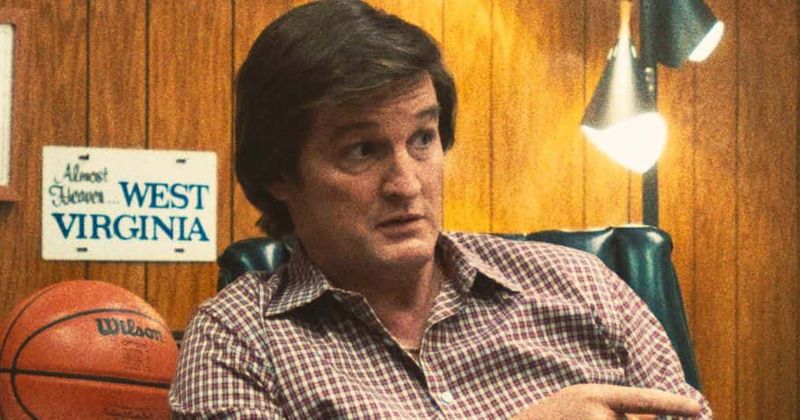
With head coach/Showtime mastermind Jack McKinney (Tracy Letts) in the hospital in a coma, this episode of Winning Time: The Rise of the Lakers Dynasty titled “Memento Mori” deals with the fragility of life and success. The main plots that writers Max Borenstein, Rodney Barnes, and Rebecca Bertuch focus on are Paul Westhead (A frazzled Jason Segel) coming to terms with being the Lakers new head coach with the help of William Shakespeare and Jerry West (Jason Clarke), Magic Johnson (Quincy Isaiah) dealing with fame and everyone literally or metaphorically wanting a piece of him, and finally Jerry Buss (John C. Reilly) using wine, women, (probably) cocaine, and the Jacksons to get Great Western Bank to postpone the payment of the loan he used to purchase the team.

After the heights of last episode, the ensemble cast of Winning Time is in a dark place, especially Westhead, who isn’t just McKinney’s assistant coach, but his best friend with director Tanya Hamilton lingering on a picture of them in better times. There’s a little bit of Segel’s usual roles he takes in his portrayal of Paul Westhead as a flailing Muppet even though he does show a cool-headed intellectual side that kicks in when he quotes Shakespeare in the locker room and goes with his game plan against the Denver Nuggets instead of McKinney’s. (Seen in hallucination sequences) He’s definitely more English professor than NBA head coach. In the space of an episode, Westhead exhibits growth going from barely being able to speak to the players and getting chewed up and spit out by the media to switching up the depth chart and freezing out a player (Spencer Haywood) that McKinney wanted to play a major role on the Lakers. But this is after freaking out in his car and offering the Lakers job to West and travel secretary/color commentator Pat Riley (Adrien Brody). Riley plays a nice cheerleader role to Westhead throughout the episode laying the foundation for his future role…
Memento Mori

On the flip side, “Memento Mori” spends a lot of time with Magic Johnson, and it’s not the most flattering picture as he chases fame and fortune while his coach is in a coma. Hamilton and cinematographer Todd Banhazl make a scene set at a sporting goods conference feel like visual overload using a nine-way split screen set up that’s The Brady Bunch meets Watchmen showing how every shoe company wants Johnson to hawk and wear their product. A Converse exec even uses some uncomfortable farm metaphors, but of course, he signs with them to have the opportunity to stick it to Larry Bird. It also fits the family friendly, “play it safe” image that his agent/current girlfriend’s dad Dr. Thomas Day (Steve Harris) wants for him instead of the gamble (That would have paid off.) of taking stock options and $1 per shoe sold from Nike. In the sales pitch sequence, Olli Haaskivi is a quirky scene stealer channeling the eccentricity and start-up energy of Phil Knight, who wanted to put Johnson’s name on the shoe and made it actually help his speed and performance, but everyone laughs him off in the episode, including the bankers that Buss parades Johnson to.

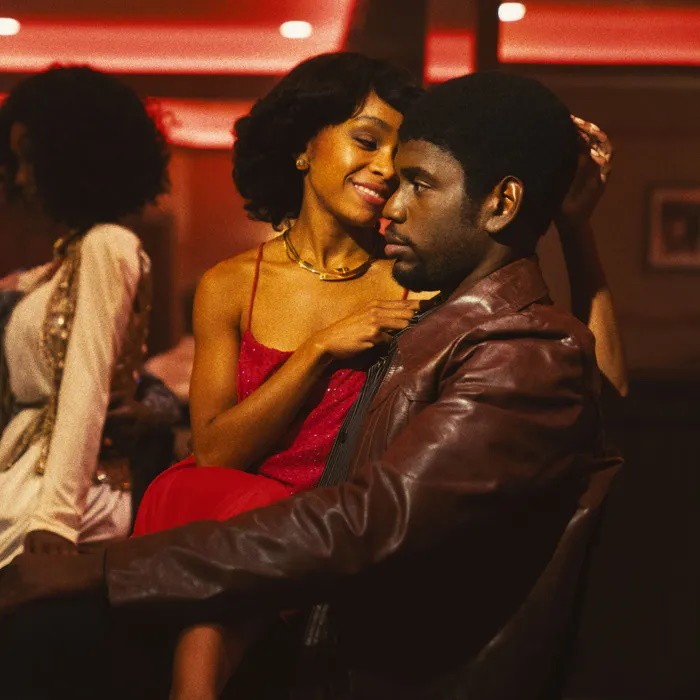
Magic Johnson’s relationship with women has been a recurring theme in Winning Time, and as mentioned in a conversation with Day, it’s his only vice because he steers away from drugs and alcohol. “Memento Mori” features his short-lived girlfriend/agent’s daughter Cindy Day (Rachel Hilson), who he is unsure actually loves him or just wants to be close to a famous person. In a monologue where Isaiah brings out an angry and darker side of Johnson, he talks about how they would be in a relationship while Johnson was calling Cookie Kelly in the other room basically cheating on her. And Cindy is cool with this. She also oversteps her boundaries by bringing flowers to Jack McKinney’s hospital room and getting Magic Johnson to sign autographs for the Great Western bank execs, which makes him uncomfortable because he’s in casual relationship mode and honestly just wants to be with Cookie, who appears in the final scene of the episode, and isn’t into the whole fame aspect.

Throughout the episode, Johnson is told by everyone from shoe execs to Richard Pryor (Mike Epps), who gives him great advice and helps get Spencer Haywood interested in cocaine, that his real first name, Earvin, is a thing of the past. There’s a little bit of sadness in Quincy Isaiah’s eyes every time someone uses the Magic nickname to refer to him personally and not in a marketing context all culminating in Cindy moaning “Magic” when he gives her an orgasm from oral sex and realizes that she cares him about him more as a celebrity than a human being. Although, he puts “Magic” on the prototype shoe, Knight actually does use his real name hinting at how Nike would use an athlete’s name and personality to sell now-iconic shoes a few years down the road. Borenstein, Barnes, and Bertuch show Magic Johnson basically being consumed by the fame aspect of his job as he skips a team hospital visit to sign a shoe deal with Converse and does business transactions and chats with Richard Pryor and cocaine baron Dr. Mike in the tunnel before the game. However, he does manage to find some distance between his personal and work life by using a line Dr. Day said about Magic not bringing good news to have him relay the news about breaking up with his daughter before sending him to Michigan State’s campus to personally invite Cookie to a Lakers vs. Detroit Pistons game.
Memento Mori

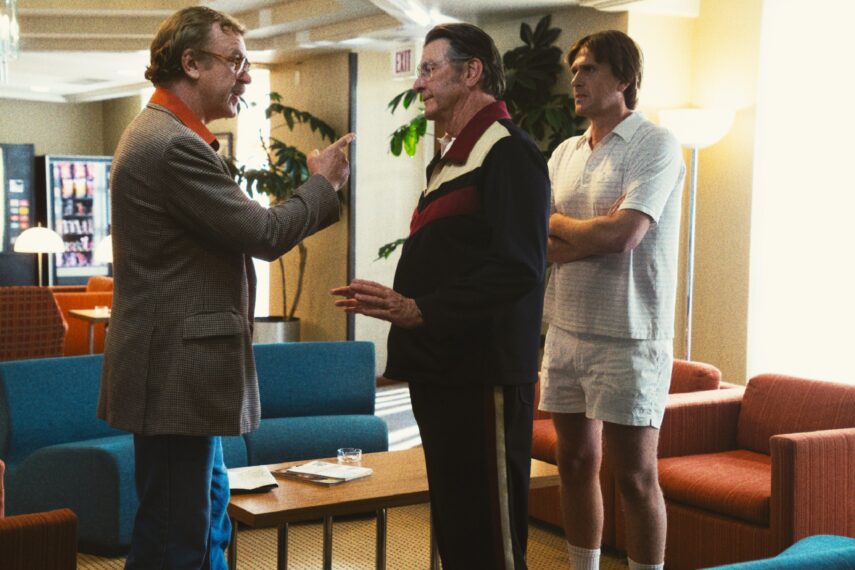
The third main plot of “Memento Mori” shows Jerry Buss and his business partner Frank Mariani (Stephen Adly Guirgis) try to wheel and deal their way out of losing the team by getting Great Western to extend their loan and line of credit by marketing them as “the official bank of the Lakers”. They don’t buy it, but Buss shows them enough of a good time at the Forum Club to extend the loan until June 1980 aka right after the NBA Finals. Unbeknownst to the players, coaches, and other front office folks, the Lakers basically have to win a championship or go broke. John C. Reilly also gets to show a vulnerable side of Jerry Buss when his mother Jessie (Sally Field), who raised him by herself has health issues that hinder her from doing her job as accountant. What begins as him being furious that she used the wrong checking account for vendors and didn’t file the right paperwork to transfer team ownership to his ex-wife ends up with him monologuing on a balcony about how she raised him as a 19 year old single mom in the middle of the Dust Bowl. Jeanie Buss (Hadley Robinson) continues to show her quality by alerting her father to her grandmother’s health issues and also acting as a buffer between Magic Johnson and Cindy and Dr. Day when she can tell that they’re making him uncomfortable before the game.

By contrasting Jack McKinney’s coma and time in the hospital with Magic Johnson chasing fame and Jerry Buss sweet talking Sacramento bankers, Max Borenstein, Rodney Barnes, and Rebecca Bertuch really put life in perspective in a sobering downer of an episode. Jason Segel’s Paul Westhead is the standout performance of “Memento Mori” going from goofiness to anxiety and poignancy with Shakespeare quotes that befuddle his team and sports journalists, but act as kind of coping mechanism for him to deal with a stressful situation. Quincy Isaiah also continues to find the darkness and charisma in the character of Johnson switching between Magic and Earvin by lowering his eyes, dropping his smile, and in some cases, raising his voice.

Overall Verdict: 8.2
TV Review: Winning Time S1E4 “Who the F**k is Jack McKinney?”

Who the F**k is Jack McKinney?

Showtime’s growing pains continue in Winning Time Season 1, Episode 4 “Who the F**k is Jack McKinney?”. Training camp is about to start after last week’s murder of Vic Weiss, Jerry Tarkanian has decided to not take the Lakers job with Weiss’ wife smacking Jerry Buss (John C. Reilly) at his funeral. So, per Jerry West’s (Jason Clarke) recommendation, Buss and the Lakers decide to go with Jack McKinney (Tracy Letts), who might have the stage presence of an accountant, but has ideas that would go on to revolutionize the game of basketball. But, for now, they’re just scrawlings on resort napkins and clipboards, or slides loaded by his assistant coach Paul Westhead (Jason Segel), a floppy-haired former English professor that is really a non-presence in this episode. Like he just mumbles and quotes Shakespeare and immediately fits in with this quite kooky set of characters

Along with the growing pains on the court, there is still the financial issues with team, and Buss’ accountant/mom Jessie Buss (Sally Field) finds a way out by saddling some of the liabilities with his ex-wife JoAnn Mueller (Kate Arrington). From an awkward opening scene where she and their children have lunch at the same Mexican restaurant as Buss and one of his girlfriends (And Jeanie Buss sees him fingering the woman at the table.) to walking in on him and another woman with the liability paper work, Arrington plays the part with scene-stealing contempt shattering the fantasy that Buss wants everyone to see about him. Writers Jim Hecht, Max Borenstein, and Rodney Barnes follow the thread of Jerry Buss’ true desires through the perspective of Jeanie Buss (Hadley Robinson), who gets real depth in this episode walking the line between an intern and boss’ daughter.

From being quiet and meek in the first couple episodes, she speaks up in a meeting and even builds a connection with two of her co-workers over a shared bong. This episode shows how much Jeanie cares about her dad and the Lakers and also how she’s unhappy that he would rather hang out with random women than spend time and communicate with her going all the way back to the opening flashback. However, she does have some real vision in regards to setting apart the Lakers from a college basketball experience, and Claire Rothman (Gaby Hoffmann) packages her ideas in something that will sell to Jerry Buss. But it’s all just theory for now. There are no Laker girls or Jack Nicholson and Dyan Cannon sitting courtside just yet.

Who the F**k is Jack McKinney?

This theme of theory versus practice definitely is the driving engine of Hecht, Borenstein, and Barnes’ training camp A-plot although there’s all kinds of squabbles and subplots going on from Kareem Abdul-Jabbar (Solomon Hughes) hazing Magic Johnson (Quincy Isaiah), Michael Cooper (Delante Desouza) battling to get a guaranteed contract, and Jerry West not wanting to walk away from the team. Director Damian Marcano excels at shooting the basketball action at its best (Johnson, Abdul-Jabbar, and Norm Nixon showing glimpses of real chemistry) and worst (Veteran Ron Boone getting hit by one of Magic Johnson’s no-look passes) while going the montage and voiceover narration route for McKinney’s ideas. With references to Buddhism that reminded me of a future Lakers coach, Tracy Letts nails Jack McKinney’s passion for basketball as well as the heartbreak and compromise he feels when West tells him that he needs to combine his system with some of his old sets. The practices and a verbal sniping show that doing things a new way is painful even as Magic Johnson and Nixon start to buy into system the system while Kareem Abdul-Jabbar simply doesn’t give a fuck. He doesn’t say a lot of words, but Hughes’ physical presence and taciturn looks show that he knows he’s the undisputed leader of the team and won’t be running suicides or “McKinney miles” with the rest of the Lakers.

I do have to applaud Marcano, Jim Hecht, Max Borenstein, and Rodney Barnes for showing viewers the building blocks of Showtime and fast break basketball with montages and film sessions showing how it sharply contrasts with the stagnant half court sets most NBA teams were running at the time. No wonder the league was struggling. There’s also a kind of cheeky animated sequence featuring Magic Johnson that connects his philosophy of basketball to McKinney’s with a focus on making his teammates and basically being good, giving, and game as the basketball court dissolves into Johnson giving oral sex. However, this whole being everyone’s friend is a little bit of facade as Cookie Kelly (Tamera Tomakili) reminds him that Magic Johnson basically stole her from one of his teammates. Their phone conversation doesn’t end well, and Isaiah shows a little bit of the darker, sadder side of Johnson, both on and off the court with Boone fighting him because he’s frustrated at his playing style and also that he has a guaranteed contract even though he hasn’t played a minute of professional basketball.

“Who the F**ck Is Jack McKinney” is set in a bikini-clad women-filled oasis in a harsh desert, and no one shot understands the facade that is Jerry Buss’ life and ownership of the Lakers than him mouthing “Fuck” under the pool when he realizes that the Lakers and Forum have no chance of turning a profit this year so he can pay off his creditors. Being together in an enclosed space (Even though McKinney closes practice to the ownership and front office) brings out temper and negative feelings with the Lakers continuing to have a long way to go both on and off the court. However, it’s not all downbeat as Hecht, Borenstein, and Barnes position Jack McKinney as one of the true, unsung heroes of the game even if the players hate him for now. Plus there’s strong characterization for Jeanie Buss as Winning Time leans into its greatest strength and weakness: it has a huge cast so it’s hard to get to know all the players, but most of them are fascinating and opportunities for strong, nuanced performances.

Overall Verdict: 8.1

TV Review: Winning Time S1E2 “Is That All There Is?”

Is That All There Is?

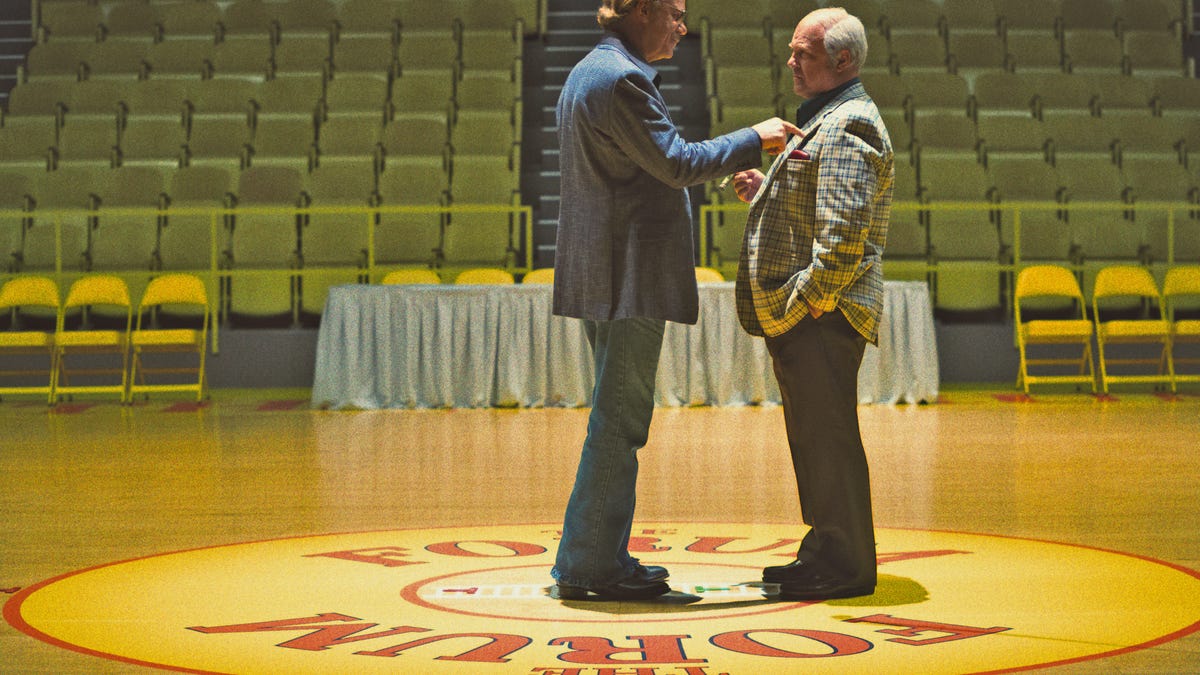
Jerry West’s memoir is titled My Charmed, Tormented Life, and from the outside, it doesn’t make sense that a man who is literally the logo of the NBA, one of its greatest players, and also found success as an executive discovering two of the greatest players of my life time (Kobe Bryant, Stephen Curry) would describe his life that way. But basketball was an escape for him from a tough life in rural West Virginia until it wasn’t. The second episode, “Is That All There Is?“, of Winning Time: The Rise of the Lakers Dynasty delves into West’s (Jason Clarke) love and loathing for the game of basketball, and how it controlled everything in his life, including his mental health and his relationship with his wife Karen (Lola Kirke). Scenes with West bookend the Jonah Hill-directed episode, but writers Rodney Barnes and Max Borenstein continue to dig into Magic Johnson’s (Quincy Isaiah) relationship with his family and on-and-off again girlfriend Cookie Kelly (Tamera Tomakili) as well as the business side of the Lakers with Jerry Buss (John C. Reilly) facing off against Boston Celtics general manager Red Auerbach (Michael Chiklis) and trying to succeed at this business side of things.

The pre-credits sequence of “Is That All There Is” is basically a short film of Jerry West’s life as he bounces the basketball to drown out the sounds of his father abusing his mother as well as the grief over his brother’s death in the Korean War. Hill and editor Hank Corwin dissolve from the snows of West Virginia to confetti in Los Angeles when West won his only championship as a player in 1972. Until Buss tells him that he can play Johnson at power forward, this is the only time he smiles in the episode. The raucous environment of the Forum leads to Jerry West drinking alone at a bar that’s hosting a wake for a guy he doesn’t know, and he ends up having a one night stand with the attendees with confetti still in his air from the championship celebration. (Yes, Jerry West fucks in this episode.)

Basically, like the lyrics of the song and the episode of the title, West is unhappy with his life despite his great successes. He doesn’t like coaching the Lakers as evidenced by his antagonistic encounters with Norm Nixon (DeVaughn Nixon) in flashbacks, and general manager Bill Sharman (Brett Cullen) has a good point when he says that Buss giving him free reign to sign players will also hinder him from making excuses why the Lakers keep losing. In contrast with Jerry Buss and Magic Johnson, he doesn’t seem to be having a good time, has no effect on laconic star player Kareem-Abdul-Jabbar (An imposing Solomon Hughes) even after passionately monologuing about how he’ll get a power forward to help him out in the post so maybe it’s time for him to get off this train.

Is That All There Is?

I love the parallels that Barnes and Borenstein draw between Jerry West and Red Auerbach throughout the episode. Auerbach isn’t in the episode a lot, but Chiklis steals every scene with a puff of smoke beginning with a freeze frame, black and white introduction with future NBA commissioner David Stern calling him the pope. Buss and Auerbach are on two planes of reality with the Celtics GM not falling for the Lakers new owner’s offers of a night out and beautiful women even if they do end up sharing a brief dinner. Red Auerbach brings out a darker, less playful side of Jerry Buss with John C. Reilly taking the sunglasses off and saying that he will eat Auerbach’s heart on the Forum floor. It definitely feels like a kid putting on his father’s clothes, especially with all the behind the scenes financial shenanigans like Buss’ mom/accountant Jessie (Sally Field) saying that the Lakers are a money pit or his business associate Frank Mariani stealing the past ten years of records so no nonsense Claire Rothman (Gaby Hoffmann) can put together a budget for next year. With talks of big concerts at the Forum or the Lakers being one piece away from a championship, there’s a slight bit of hope in the air, but they could also go bankrupt like Rothman’s last job in Philadelphia.

The love triangle between Magic Johnson, Cookie Kelly, and Brian, a devout church goer and shoe store manager seems contrived while setting up Johnson’s reputation as a womanizer and showing that he’s not a nice guy as he utterly humiliates Brian on a Lansing playground. Isaiah continues to be a believable Johnson on and off the court as he dazzles with his passing and moves and charms everyone at the fish fry. Except for his mother, Christine (LisaGay Hamilton), who is not amused by his gift of a hot tub even though Johnson knows she’s wanted it for years by her reactions to the commercial during her soap operas. She smiles and talks about the gift in an animated way when she’s with her friends, but is all business around her son. Her husband Earvin Sr. (Rob Morgan) finds a middle ground when he basically tells her that Magic is grown up and has to find his own way in L.A., and that his free spirit came from her, who used to play point guard and dance before she joined the Seventh Day Adventist Church. By spending an entire episode showing Magic Johnson’s life and relationships in his hometown, Rodney Barnes and Max Borenstein ground him as a character and show that there is an entire town (Ok, maybe not Brian.) rooting for him even as Jerry West plots to minimize role from what Jerry Buss promised.

Jonah Hill cuts down on the sugar rush fourth wall breaking in “Is That All There Is?” and uses more natural storytelling techniques to show the current state of the NBA, the Lakers, and this episode’s key players. Jerry West cowering in a dark room in his underwear or sitting alone at a bar tells more about his mental state than talking to the camera or motormouth voiceovers. This episode also sets up Red Auerbach and the Boston Celtics as the key antagonists in the series with the racial implications of them having a white star player in Larry Bird showing up during the owners meeting. But the real conflict in Winning Time is internal with Jerry West butting heads with Jerry Buss, Bill Sharman, and as implied from his interactions with Nixon and Abdul-Jabbar, the players too so he decides to leave as coach right before the season. Him undercutting Buss’ big speech with a glance and a resignation letter creates a sense of uncertainty for future episodes, and boy, am I looking forward to Adrien Brody’s Pat Riley in upcoming weeks. All in all, Winning Time continues to strike a good balance between individual character arcs and the drama of running an NBA franchise in an era when golf, tennis, and bowling were more popular sports.

Movie Review – The Amazing Spider-Man

I’ll start off by saying, I loved the Raimi’s first Spider-Man. I saw it four times opening weekend, thinking it was the perfect post 9/11 movie, especially that ending with him swinging by the American flag. So, you can imagine that the Marc Webb directed, The Amazing Spider-Man had a difficult task at hand impressing me. While it’s being heaped upon with praise, I shrug my shoulders feeling “been there, done that.”

It’s not to say the movie is bad in any way, it’s a perfect summer popcorn movie.  But there’s not enough different between it and the first entry, so many years ago to make me feel like I’ve seen something exciting or new. If it weren’t for Raimi’s first film, I’d feel different, but the movie seems familiar, a retread, not a re-envisioning.

The movie is absolutely entertaining and real feels like Raimi’s energetic film mixed with some darkness from Nolan’s Batman and Webb’s relationship fun of (500) Days of SummerAndrew Garfield is great as Peter Parker/Spider-Man, mixing smarts and smart-ass quite well. Emma Stone as Gwen Stacy is adorable and you can see why she falls for Peter. Rhys Ifans as Curt Connors/The Lizard is good too as well as a supporting cast that includes Denis Leary (Captain Stacy), Martin Sheen (Uncle Ben) and Sally Field (Aunt May).

I’m still struggling so many days later to figure out exactly what I had an issue with.  The action was ok, the relationship story was great, but the two mashed together had issues. There’s also Peter’s near obsession with finding his Uncle’s killer that seems to be thrown aside by the end of the film.  Also, much of it is predictable. The Lizard goes crazy and talks to himself (ala the Green Goblin in the first film), the people of the city rally around Spidey, etc. It hits the notes you’d expect.

The movie can be summed up, by the post credits teaser scene which is choppy and out of place and 3D that at times shows brilliance in it’s use, but most of the time isn’t used enough.

Overall, a solid popcorn movie, but one that doesn’t stand out from what’s come before.

Direction: I loved Marc Webb’s previous movie (500) Days of Summer. The film was fantastic in the depiction of the relationship between it’s main characters as well as how it jumped around in time. That’s where this movie shines. Peter and Gwen’s relationship and Peter dealing with his family situation, that’s the heart of the film and it’s solid. However, the action scenes while entertaining, and not suffering from the usual shaky cam syndrome, are only good. The super hero aspect falls short for me, winding up being predictable, expected, been there before. Grade: 6.5

Acting: Garfield and Stone and great and they’re surrounded by a solid supporting cast. I don’t have any complaints as Garfield shows off the personal and emotional troubles you’d expect from someone with his family life. He’s a star and it shows. Stone is adorable and smart and you can see why Peter would fall for her. The supporting cast as well hits all the right notes showing of the two main stars’ abilities as they’re matched up to such industry greats. Grade: 8

Plot: This is where I’m mixed. The relationship stuff is great. The super hero stuff, not so much. There’s enough for me to pick on and left me unimpressed. And in the age of Youtube and everyone having a camera phone, how many times can this super hero be unmasked?! I had that reaction in Spider-Man 2 and I have it here. His revealing his identity caused me a lot of issues. I will throw major props showing the beating a super hero such as he would take and how his Aunt would react to that. Grade: 6

Overall: The movie is a solid popcorn summer movie. It’s entertaining, but as I keep saying, it doesn’t stand on it’s own enough. We’ve seen a lot of this before, just with a different tone. And while that first Spidey movie gave me the same wonder I felt seeing Superman flying that first time, that magic is missing here. Overall Grade: 7

C. Thomas Howell in Spidey 4


Bookmark and Share

C. Thomas HowellIt looks like the Spider-Man reboot has added another actor to it’s line up.  C. Thomas Howell, who if you know the 80’s was kind of a big deal back then has joined the cast as “Ray.”  The cast also includes Andrew Garfield, Emma Stone, Rhys Ifans, Martin Sheen, Sally Field, and Irrfan Khan.

Stan Lee also tweeted his cameo is all set.

Martin Sheen to Play Uncle Ben, Sally Field as Aunt May?


Bookmark and Share

Marvel has officially announced that Martin Sheen will play the role of Uncle Ben in the next Spider-Man film from Columbia Pictures and Marvel Studios, set to swing onto the bigscreen in 3D on July 3, 2012.

The famed actor, known for his roles in “Apocalypse Now,” “The American President” and “The Departed” as well as a seven-year turn as President Josiah Bartlet in “The West Wing,” will join Andrew Garfield as Peter Parker/Spider-Man, Emma Stone as Gwen Stacy, and Rhys Ifans as the film’s villain under the direction of Marc Webb.

Heat Vision (and also reported by GeekWeek) is claiming that Sally Field will be taking on the tole of Aunt May.