Anyone can be a phonomancer in Phonogram: The Singles Club #7
In advance of Kieron Gillen and Caspar Wjingaard’s upcoming comic The Power Fantasy, we’re revisiting some of Gillen’s previous creator-owned work. This article was originally published in January 2021 as part of a series of essays about Phonogram: The Singles Club, but has been edited and re-presented here.
“I used to have a special tape. Used to have my track. My one killer track that would get me flying. You got one of those.”- Buddy in Baby Driver [Aka Phonogram with cars]
“You can’t touch music, but music can touch you.”-Mordecai in Regular Show
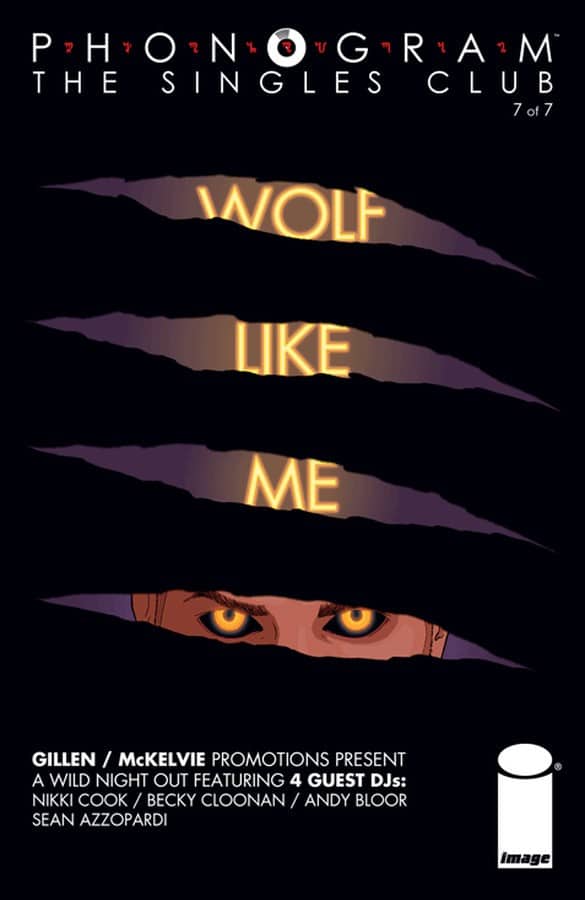
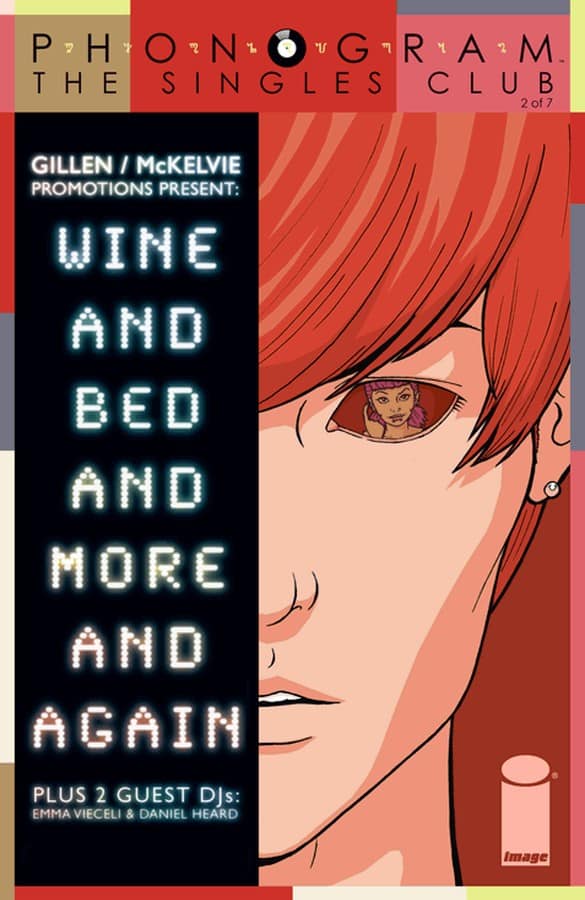
Phonogram: The Singles Club #7 is my go-to single issue for anyone wanting to get into the creative team of Kieron Gillen, Jamie McKelvie, and Matthew Wilson. I’ll also show this book to folks to demonstrate the relationship between sequential art and music and showcase the uniqueness and sheer coolness of comic books as a medium
The premise of The Singles Club #7 is simple, yet brilliant. Up to this point in the series, David Kohl’s hetero-lifemate Kid-with-Knife has been basically Chas from Hellblazer, but he likes Wu-Tang Clan. Sure, he loves music (especially hip hop), but he’s not a phonomancer. However, on the first page of the issue, David Kohl explains what phonomancy is, and Kid realizes that’s something that he and folks do all the time whether you’re walking aimlessly through the city streets, trying to finish a homework assignment, or get that last mile in on the treadmill. Deep down, everyone has that “killer track”, “pump up jam”, or song that gets us moving or feeling inspired and hopeful, and for Kid-with-Knife, that is “Wolf Like Me” by fantastic Brooklyn indie band TV on the Radio. He listens to the song, does parkour in the streets of Bristol, chases away rude men from a couple, ducks in for a kebab and has an amazing indie night with Kohl and Emily Aster. After that, Kid-with-Knife dances some more, forms a connection with, and sleeps with Penny B, who was the POV character in Phonogram: The Singles Club #1. What a night indeed!
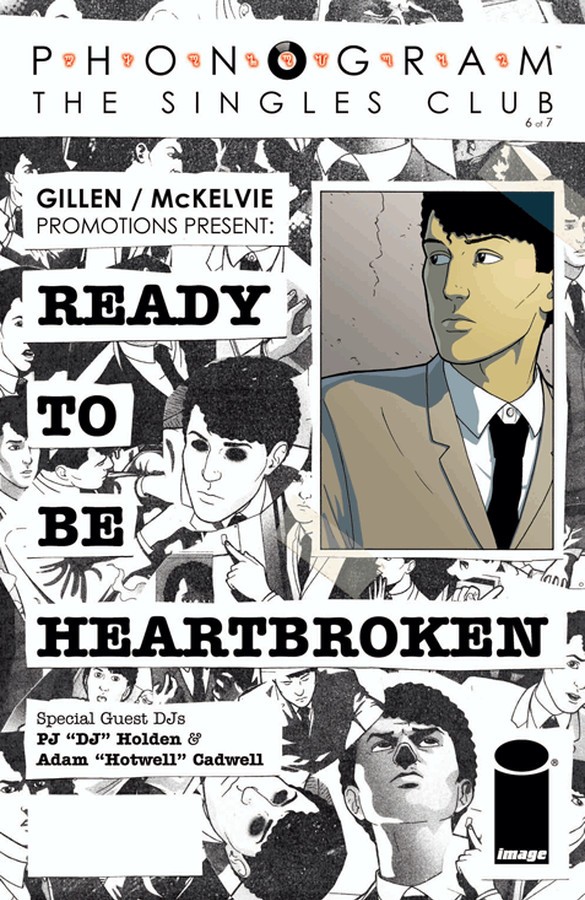
Except for the first and final page of the comic, The Singles Club #7 is completely silent so it’s a showcase for Jamie McKelvie’s skill with motion and body language and Matthew Wilson’s color palette. It’s the antithesis of issue six’s black and white zine-inspired story and acts as the praxis to its theory. The art uses werewolf imagery based on “Wolf Like Me’s” lyrics with Wilson using plenty of dark blues, reds, and giving Kid glowing yellow eyes while McKelvie puts a moon in the background in a couple of key early panels before he and Gillen kick the story into parkour mode.
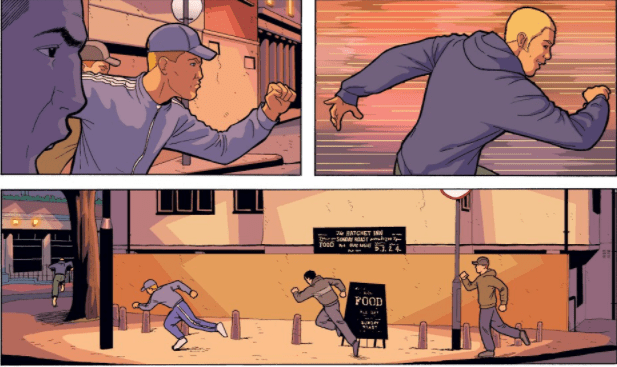
And speaking of parkour, this comic cements McKelvie as a master of showing action in space, especially during the humorous four pages or so where Kid insults a group of tough looking guys and ends up on the run. (He only wanted to get them away from an all-black wearing couple.) He uses The Hatchet Inn (Which is a real place) as a kind of comedic obstacle that Kid and the three guys run around in circles with Kid getting some extra speed lines due to the adrenaline, er, magic of the song. Then, McKelvie goes back to grid mode with the guys looking around a bridge for Kid before breaking it and showing him hanging on one of those height limit signs before making a superhero landing and going into a kebab shop. The power of music plus the heightened nature of McKelvie and Wilson’s storytelling has turned a “running away from a group of guys you probably shouldn’t have pissed off” situation into a chase straight out of one of the better Batman comics. The right track really makes you feel like you’re doing epic things, and that’s the truth. (I totally got pulled over for speeding while listening to Junkie XL’s score for Mad Max: Fury Road.)
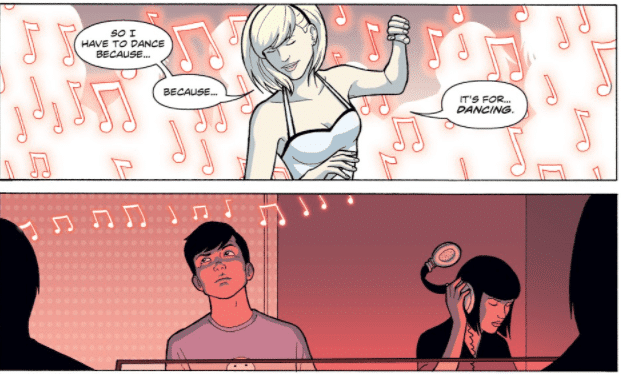
Another amazing part of Phonogram: The Singles Club #7’s narrative is the payoff for the foreshadowing that Kieron Gillen slipped in back in issue three when Kohl told Emily Aster that Kid-with-Knife’s high energy came up from being hopped up on a TV on the Radio song. He and McKelvie conclude the issue by showing the indie club night from his perspective featuring intense grids, speech bubbles with symbols and not words, and one beautiful splash page. Kid is so “in the zone” that his perception has become primal. He has transcended boring, old human speech and becomes the werewolf in the song. (See his face as he digs into that kebab.) There are no conversations in The Singles Club #7: just shots, dancing, and bright lights. The use of symbols instead of text in dialogue bubbles is an ingenious way of showing how difficult it is to have conversations at the crowded bar or dance floor area at a club as Kid starts with retelling his pre-club shenanigans, but ends up just ordering a round of shots and dancing with Kohl and Aster. The comic ends up being a montage of fun moments from the previous six issues : all killer and no filler from Gillen McKelvie Wilson.
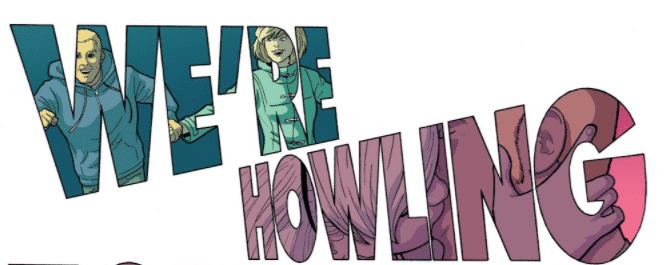
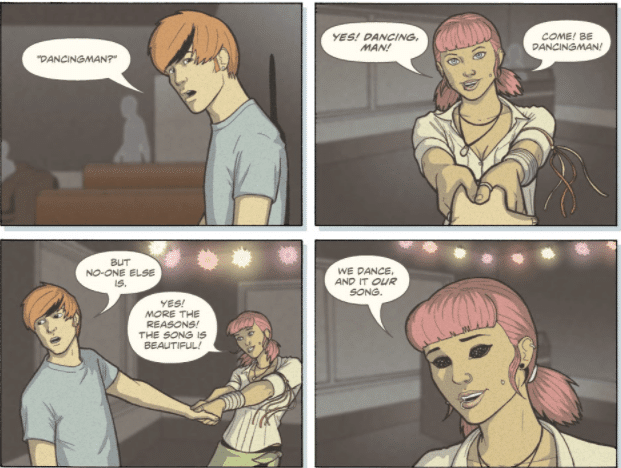
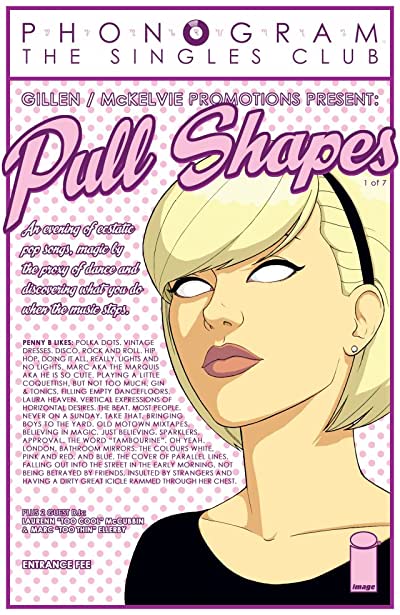
However, the conclusion of The Singles Club #7 and the miniseries as a whole is truly magical as the last bits of “Wolf Like Me” start to fade out, and Kid-with-Knife sees Penny B dancing to “Pull Shapes”. In the first issue, she had ended up dancing on her own and just enjoying her favorite song, but now Kid is in the double-page splash and offers his hand. It’s gorgeous visual choreography from Jamie McKelvie and Matthew Wilson as Penny gets caught up in the music with stars, precise dance moves, and frosted colors. But, then, Kid joins the dance, their energy matches each other in a rhythmic six-panel grid that erupts into them sleeping together. In a clever bit of storytelling, McKelvie syncs the sex scene to the “We’re howling forever” bit at the end of the song and frames it in the letters of the lyrics. It’s passion, chemistry, and great design sense all rolled into one as Kid-with-Knife and Penny B truly become one with this great song.
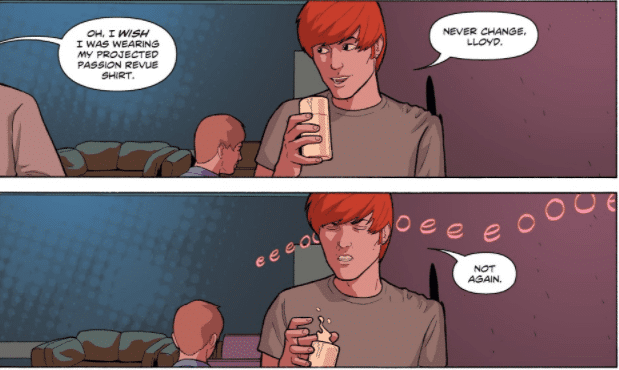
The main bit of symmetry in Phonogram The Singles Club #7 is definitely the return of Penny B to a prominent role and finally finding someone to dance and have a good time with after her tribulations of the first issue. There’s also symmetry in the larger narrative of Phonogram with both The Singles Club and Rue Britannia concluding with a man and woman in bed together. In Rue Britannia, it’s Beth remembering an old Manic Street Preachers song after she was unable to enjoy music for a while whereas in The Singles Club, it’s Kid-with-Knife and Penny B having a moment of clarity after intimately connecting via the feelings that music gives them. As a phonomancer, Penny is slightly analytical about the moment while Kid (With a sheepish grin on his face) is content to say, “I don’t know. You tell me.” Unlike Kohl, Aster, Lloyd or the other phonomancers we run into in the comic, Kid-with-Knife finds a song he likes and literally runs with it for a full issue with no asides about their subtext (Although, “Wolf Like Me” is definitely about sex.), influences, or any anecdotes from his past about why he is super obsessed with a band.
What I love most about Phonogram The Singles Club other than the masterful silent storytelling from Kieron Gillen, Jamie McKelvie, and Matthew Wilson is that it opens the gates of being a phonomancer to everyone. You don’t have to be a hipster or an indie snob, who makes zines and grimoires. You just have to have the capacity to be moved by music, physically like Kid-with-Knife or mentally like basically every other Phonogram character and the author of this article although I love a good boogie. This song can be in any genre: you just have to deeply connect with it. And that’s really what Phonogram The Singles Club is all about. It’s a saga of connecting or disconnecting with other folks in one night’s time with 2000s pop and indie music as a backdrop. (The kids call it “indie sleaze” now.) So, it’s fitting the book ends with two people finding each other via a song. Beautiful stuff, really!