Tag Archives: netflix

Netflix revises its Bid for Warner Bros. Discovery to All Cash

Netflix

Earlier this week, Netflix revised its bid for assets of Warner Bros. Discovery to an all cash offer. Netflix is offering $27.75 per share for “half” of WBD compared to Paramount Skydance‘s offer of $30 per share for all of WBD.

Netflix would purchase WBD’s movie studio and streaming assets while a new entity called Discovery Global would keep the channels.

Netflix had previously offered $23.25 a share in cash plus more in stock for a total of around $27.75 per share.

The next step is for a review by the US Securities and Exchange Commission and then the deal will be put to a vote. Any deal would involve some major hurdles and would need to be approved by the US government, the current administration has close ties to Paramount’s owners and others involved in that bid, as well as European regulators.

Paramount has waged a hostile attempt to take over WBD after their offer was rejected by the board. They have gone to the shareholders to not only reject the Netflix offer but install a board of directors who will accept the Paramount offer.

Paramount’s offer is for $30 a share for all of the company and has stated that the channels have little to no equity value. Warner Bros. Discovery has recently revealed in an SEC Filing that CNN, one of the channels it owns, will collected $1.8 billion in revenue this year and is projected $2.2 billion by 2030. It has said that its overall network business will decline even though CNN will rise. U.S. networks other than CNN will bring in $9.9 billion in revenue in 2026 and projected to bring in $7.7 billion by 2030. “Profit” will fall from $3.8 billion to $1.9 billion from 2026 to 2030.

Paramount’s offer values the channels of WBD at $2.50 a share with 2.48 billion shares coming out to about $6.2 billion, about two to three years of profit based on the recent filing.

Warner Bros. Discovery’s Board Rejects Paramount’s Latest Takeover Offer

Warner Bros.

The Board of Directors for Warner Bros. Discovery has announced that it again has voted unanimously against the offer that Paramount Skydance has made to purchase the company. They stated they don’t believe it’s a “superior proposal” to what Netflix has offered and it “remains inferior” in multiple key areas.

Paramount’s offer continues to provide insufficient value, including terms such as an extraordinary amount of debt financing that create risks to close and lack of protections for our shareholders if a transaction is not completed. Our binding agreement with Netflix will offer superior value at greater levels of certainty, without the significant risks and costs Paramount’s offer would impose on our shareholders.

If on December 4 PSKY did not recognize the weaknesses of its proposal when the Board concluded the process, it has now had several weeks to study the Netflix merger agreement and adjust its offer accordingly. Instead PSKY has, for whatever reason, chosen not to do so.

In late December, Paramount submitted a revised offer to purchase all of Warner Bros. Discovery at $30 per share as well as shifted some deadlines. It also included a full backstop personally guaranteed by David Ellison’s father, Larry Ellison and increased its termination fee.

Previously Netflix “won” a bidding war that included Paramount and Comcast offering $27.75 a share for just Warner Bros. studios, HBO, and HBO Max. The broadcast portion of Warner Bros. Discovery would be spun out into a new company which was already being planned.

The Board shared the below letter to its shareholders.

Dear Fellow Shareholders,

As you know, at the end of last year, your Board of Directors concluded its process to maximize shareholder value by entering into our merger agreement with Netflix. Since then, Paramount Skydance (“PSKY”), a bidder in that process, has commenced a hostile tender offer to acquire WBD, which it recently amended on December 22, 2025.

As described further below, your Board unanimously determined that the PSKY amended offer remains inadequate, particularly given the insufficient value it would provide, the lack of certainty in PSKY’s ability to complete the offer and the risks and costs borne by WBD shareholders should PSKY fail to complete the offer. Accordingly, the Board unanimously recommends that shareholders not tender your shares into the PSKY offer. For a full discussion of the reasons for the Board’s recommendation, we urge you to read the full Schedule 14D-9 filing, including the amendment filed today.

PSKY Offer’s Insufficient Value

PSKY’s offer is inferior given significant costs, risks and uncertainties as compared to the Netflix merger. Under the Netflix merger agreement, WBD shareholders will receive significant value with $23.25 in cash and shares of Netflix common stock representing a target value of $4.50 based on a collar range in the Netflix stock price at the time of closing, which has future value creation potential.

Additionally, WBD shareholders will receive value through their ownership in Discovery Global, which will have considerable scale, a diverse global footprint, and leading sports and news assets, as well as the strategic and financial flexibility to pursue its own growth initiatives and value-creation opportunities.

The Board also considered the costs and loss of value for WBD shareholders associated with accepting the PSKY offer. WBD would be obligated to pay Netflix a $2.8 billion termination fee for abandoning our existing merger agreement; incur a $1.5 billion fee for failing to complete our debt exchange, which we could not execute under the PSKY offer without PSKY’s consent; and incur incremental interest expense of approximately $350 million. The total cost to WBD would be approximately $4.7 billion, or $1.79 per share. These costs would, in effect, lower the net amount of the regulatory termination fee that PSKY would pay to WBD from $5.8 billion to $1.1 billion in the event of a failed transaction with PSKY. In comparison, the Netflix transaction imposes none of these costs on WBD.

Lack of Certainty in PSKY’s Ability to Close the Transaction

The extraordinary amount of debt financing, as well as other terms of the PSKY offer, heighten the risk of failure to close, particularly when compared to the certainty of the Netflix merger. PSKY is a company with a $14 billion market capitalization attempting an acquisition requiring $94.65 billion of debt and equity financing, nearly seven times its total market capitalization. To effect the transaction, it intends to incur an extraordinary amount of incremental debt – more than $50 billion – through arrangements with multiple financing partners.

The transaction PSKY is proposing is in effect a leveraged buyout (“LBO”). In fact, it would be the largest LBO in history with $87 billion of total pro forma gross debt and an estimated gross leverage of approximately 7x 2026E EBITDA before synergies. The WBD Board considered that an LBO structure introduces risks given the acquiror’s reliance on the ability and willingness of its lenders to provide funds at close. Changes in the performance or financial condition of either the target or acquiror, as well as changes in the industry or financing landscapes, could jeopardize these financing arrangements. Many prior large LBOs illustrate that acquirors or their equity and/or debt financing sources can, and do, seek to assert failures of closing conditions in order to terminate a transaction or renegotiate transaction terms. This aggressive transaction structure poses materially more risk for WBD and its shareholders when compared to the conventional structure of the Netflix merger.

The risks inherent in the LBO structure are exacerbated by the amount of debt PSKY must incur, its current financial position and future prospects, as well as the lengthy period to close the transaction – which PSKY itself estimates to be 12-18 months following signing. PSKY already has a “junk” credit rating and it has negative free cash flows with a high degree of dependency on its legacy linear business. Certain fixed obligations that PSKY has incurred or may incur prior to closing, such as the multi-year programming and sports licensing deals, could further strain its financial condition.

Further, the operating restrictions between signing and closing imposed on WBD by the PSKY offer could damage our business, allowing PSKY to abandon the offer. The onerous covenants include, among others, restricting WBD’s ability to modify, renew or terminate affiliation agreements. These restrictions may hamper WBD’s ability to perform and could lead PSKY to assert that WBD has suffered a “material adverse effect,” enabling PSKY and its financing partners to terminate the transaction or renegotiate the terms of the transaction.

In contrast, Netflix is a company with a market capitalization of approximately $400 billion, an investment grade balance sheet, an A/A3 credit rating and estimated free cash flow of more than $12 billion for 2026. The merger agreement with Netflix also provides WBD with more flexibility to operate in a normal course until closing. Given these factors, the Board determined that the Netflix merger remains superior to PSKY’s amended offer.

Consequences for WBD Shareholders Should PSKY Fail to Close the Transaction

If PSKY fails to close its offer, WBD shareholders would incur significant costs and potentially considerable value destruction. In addition to potentially enabling PSKY to abandon or amend its offer, the operating restrictions that PSKY would impose on WBD between signing and closing could impair WBD’s financial condition and ability to maintain its competitive position in the markets in which it operates, and hinder its ability to retain key talent. This includes prohibiting WBD from pursuing the planned separation of Discovery Global and Warner Bros., which was designed to derisk our businesses by allowing each to focus on its own strategic plan. The PSKY offer would also prevent WBD from completing the contemplated debt exchange and refinancing our $15 billion bridge loan without PSKY’s consent, which would limit our financial flexibility. If the PSKY offer fails to close, WBD shareholders would be left with shares in a business that has been restricted from pursuing its key initiatives for up to 18 months.

Further, WBD shareholders would receive insufficient compensation for the damage to our businesses should the PSKY offer not close. The $1.1 billion net amount of the regulatory termination fee that PSKY would pay to WBD represents an unacceptably low 1.4% of the transaction equity value and would not come close to helping WBD address the likely damage to our businesses.

In contrast, should Netflix fail to complete the merger for regulatory reasons, WBD would receive a $5.8 billion termination fee and WBD shareholders would still benefit from the initiatives that the Board and management team are implementing to secure the value of our businesses and ensure their long-term success, including the planned separation of Discovery Global and Warner Bros.

The PSKY Offer Is Not Superior, or Even Comparable, to the Netflix Merger

PSKY has repeatedly failed to submit the best proposal for WBD shareholders despite clear direction from WBD on both the deficiencies and potential solutions. The WBD Board, management team and our advisors have extensively engaged with PSKY and its representatives and provided it with explicit instructions on how to improve each of its offers. Yet PSKY has continued to submit offers that still include many of the deficiencies we previously repeatedly identified to PSKY, none of which are present in the Netflix merger agreement, all while asserting that its offers do not represent its “best and final” proposal.

PSKY’s transaction team, including many of their employees, several law firms, investment and lending banks and consultants, had several months to engage extensively with WBD. They are well aware of the reasons behind the Board’s determination that the Netflix merger agreement is superior to its offer. If on December 4 PSKY did not recognize the weaknesses of its proposal when the Board concluded the process, it has now had several weeks to study the Netflix merger agreement and adjust its offer accordingly. Instead PSKY has, for whatever reason, chosen not to do so.

Your Board negotiated a merger with Netflix that maximizes value while mitigating downside risks, and we unanimously believe the Netflix merger is in your best interest. We are focused on advancing the Netflix merger to deliver its compelling value to you.

Sincerely,
The Warner Bros. Discovery Board of Directors

The basis for the Board’s decision is set forth in Amendment No. 3 to the Solicitation/Recommendation Statement on Schedule 14D-9 (the “Schedule 14D-9”) filed today with the U.S. Securities and Exchange Commission.

Allen & Company, J.P. Morgan and Evercore are serving as financial advisors to Warner Bros. Discovery and Wachtell Lipton, Rosen & Katz and Debevoise & Plimpton LLP are serving as legal counsel.

Paramount revises their offer for Warner Bros. while a major investor says it’s still not good enough

Warner Bros.

The fight over Warner Bros. Discovery is far from over with Paramount of the Ellisons revising their initial offer in hopes of gobbling up the company. An Amended Tender Offer was submitted to Warner Bros. Discovery which the board of directors said it would “carefully review and consider” it.

The revised offer includes a full backstop personally guaranteed by David Ellison’s father, Larry Ellison. Paramount increased its termination fee to $5.8 billion which matches Netflix’s. It also extended the deadline for the tender to later in January. The offer is still purchase Warner Bros.’ shares for $30 per share, all cash.

For months, there were rumors that Paramount and the Ellisons were interested in purchasing Warner Bros. In early December, Netflix “won” the deal offering $27.75 per share for just the Warner Bros. studios, HBO, and HBO Max. The broadcast portion of the company would be spun out into a new company, which was being planned anyways. The Paramount deal would be for the entire company. The Warner Bros. board then voted to rejected Paramount’s offer.

Warner Bros. fifth largest shareholder, Harris Oakmark is on record stating the revised offer is still not good enough. Harris Oakmark owns about 4% of the shares of the company as of September. It was looking for a “greater incentive” from Paramount.

The changes in Paramount’s new offer were necessary, but not sufficient. We see the two deals as a toss-up, and there is a cost to changing paths. If Paramount is serious about winning, they’re going to need to provide a greater incentive.

-Harris Oakmark portfolio manager and Director of U.S. Research Alex Fitch

Warner Bros. investors have until January 27 to accept or reject the tender offer.

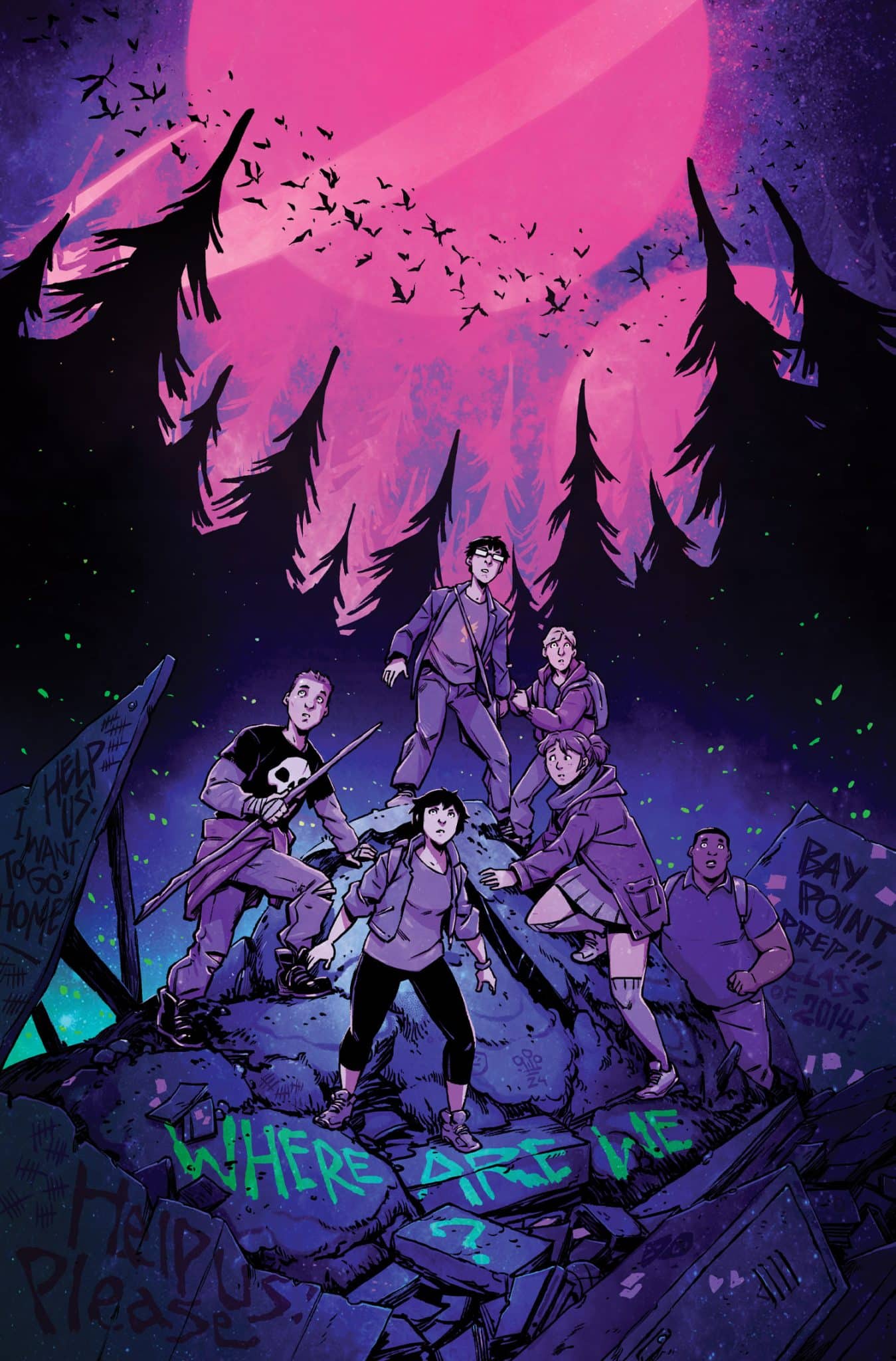
Tiny Onion Kicks Off a Slate of Adult Animation with The Woods and Brings Casey Gonzalez on as Director of Multimedia

The Woods

Led by CEO James Tynion IV, Tiny Onion is kicking off the production house’s robust adult animation slate with an adaptation of Tynion’s The Woods, based on the award-winning comic book series published by BOOM! Studios. The acclaimed sci-fi horror comics were co-created by Tynion and artist Michael Dialynas. To launch the animation slate, Tiny Onion is bringing aboard Casey Gonzalez as Director of Multimedia to oversee development for the company’s animated projects.

GLAAD Media Award-winning comic book series which debuted in 2014, The Woods tells the story of an ordinary high school in suburban Milwaukee, WI, which is suddenly transported into the midst of an alien forest in an uncharted corner of the universe. With no sign of why they were taken there, or what threats lurk in the dark woods surrounding their school, the story follows a group of students determined to figure out how to survive, and more importantly, how to get home. Tiny Onion has optioned the property from BOOM! Studios. The animated series will see Tynion and Dialynas executive producing for Tiny Onion. Stephen Christy and Mette Norkjaer will executive produce the series for BOOM! Studios.

The Woods will be Gonzalez’s first project as Director of Multimedia at Tiny Onion since joining the team in December. Previous to Tiny Onion, she spent a decade working alongside animation industry legend Fred Seibert (Adventure Time, Bee and Puppycat) as his VP of Development at FredFilms, where she developed original cartoons, including the viral short The Summoning, which is being adapted into a three book series for Oni Press. 

Casey Gonzalez

Gonzalez began her career in publishing, editing bestselling graphic novels for First Second and helping launch the acclaimed Science Comics series while shepherding New York Times bestselling titles such as Eisner Award winner Battling Boy, Hugo Award nominated book The Divine, and Green Book Award winner Coral Reefs. She later transitioned into the role of Head Writer and Producer at Frederator, where she launched the popular anime vertical Get in the Robot, and subsequently at Crunchyroll, the world’s largest anime streaming service. At Tiny Onion, Gonzalez looks forward to uniting her love of comics with her experience shaping top tier shows.

The Woods is a part of an expanding adult animation slate that also includes an animated adaptation of Tynion’s Image Comics horror sci-fi series W0RLDTR33 in development at Netflix. Co-created by Fernando Blanco and colored by multi Eisner Award-winning colorist Jordie Belliare, W0RLDTR33 tells the story of a dark evil within the internet that may destroy humanity. Tynion and Blanco will serve as Executive Producers on the series with Ashley Cardiff (Fear The Walking Dead) set as Showrunner and Executive Producer. Sean Buckelew of Green Street Pictures (Common Side Effects, Scavenger’s Reign) will also serve as Executive Producer and the team has just brought on Guillaume Dousse of Æsten studio (Splinter Cell: Deathwatch, Flee) to lead visual development and art direction for the series.

W0RLDTR33

Additionally, Tiny Onion is developing an adult animated comedy series The Tipsy Dragon with production company Irony Point. The series is being developed by Daniel Powell (Ugly Americans). RJ Fried, Mike Leech, and Zach Smilovitz (Our Cartoon President) are attached to write and help produce. An original concept from Tynion, The Tipsy Dragon is set in a tavern in a world where the age of heroes and legends is long past—and its barkeep and patrons couldn’t care less about their supposed role in an ancient battle between good and evil just outside their doorstep. 

Tynion and BOOM! Studios are also teaming up with iconic horror production company Blumhouse for an adult animated television series and a live-action feature film based on Tynion and Werther Dell’Edera’s record breaking, award-winning, and global best-selling series Something is Killing the Children. Set in a world where children can see monsters, but adults cannot, Something is Killing the Children tells the story of Erica Slaughter, a monster hunter from a mysterious organization more concerned with keeping the secret of monsters from the world than saving their victims. The animated series will be adapted and executive produced by Tynion, with Dell’Edera serving as Co-Executive Producer and visual development consultant. Stephen Christy will executive produce the series for BOOM! Studios, with Mette Norkjaer and Adam Yoelin serving as Co-Executive Producer.

Tiny Onion is backed by a seed investment from Lyrical Media, the Los Angeles and New York-based company that develops, produces, and finances unique stories across multi-media formats, including film, television, video games, and graphic novels. It was recently announced that Lyrical Media has launched Lyrical Animation to tap into global demand for adult animation, with an emphasis on animated features. Lyrical Animation is headed by seasoned Animation industry veterans Jacob Robinson, Daniel Dominguez, and Brad Graeber, and has many projects in development including an adaptation of the video game Death Stranding. Tiny Onion will be working closely with Lyrical Animation on its animation slate.

David Zaslav is Poised to Make Bank with Warner Bros.’s Sale

Warner Bros.

There’s a long time to go before things are settled with Warner Bros. Discovery. Netflix has made an offer to purchase the company. Paramount has made a counter offer, which was rejected by the board, leading to talks of a more hostile direction. Then there’s all of the government hurdles that’ll need to be passed for the deal to be approved.

Steering the company through it all, and since 2022, is David Zaslav. Zaslav has drawn ire from numerous corners of the internet for decisions the company has made under his leadership, such as shelving multiple high profile films.

But, under Zaslav, the company has seen its “value” increase. At one point earlier in the year, the company was trading below $10 a share. Netflix has offered $27.75 per share while Paramount has offered $30.

And Zaslav will make bank if a deal goes through. He will received $30 million in “golden parachute” compensation as well as $537 million in equity, for a total of $567 million in transaction-associated pay.

He isn’t the only one who stands to cash in.

Gunnar Wiedenfels, the current CFO and soon-to-be CEO of Discovery Global, will receive $5 million in cash and $138 million in equity. Chief revenue officer Bruce Campbell stands to net $17.6 million in cash and $120 million in equity, streaming chief JB Perrette will get $17.1 million in cash and $150 million in equity, while international chief Gerhard Zeiler will gain $11.3 million in cash and $83.9 million in equity.

A bidding war, a possibility, would increase the stock value and benefit those individuals even more.

It is reported that Paramount offered Zaslav “hundreds of millions of dollars” in their deal where he’d be co-CEO. Zaslav reported the offer to the Warner Bros. Discovery board saying it wasn’t appropriate.

This is all on top of their normal compensation. Zaslav earned $51.9 million last year, Weidenfels earned $17 million, Campbell was $19.7 million, Perrette was $19.7 million, and Zeiler made $14.8 million, according to filings.

Warner Bros. Discovery’s Board Rejects Paramount’s Offer and says it’s “Inferior” to Netflix’s Deal

Warner Bros. Discovery

The board of Warner Bros. Discovery has rejected Paramount Skydance‘s offer of $108 billion to take over the company and instead reiterated its support of Netflix‘s deal.

That doesn’t mean the deal is done. Paramount has said it will make its case to the shareholders offering them $30 a share, higher than Netflix’s and it still could up its offer as well.

Netflix has offered $27.75 a share for Warner Bros. studios, HBO, and HBO Max, just a part of Warner Bros. Discovery. So, while Paramount’s offer might seem higher on paper, it is for the entire company while Netflix’s is just “half” of it. The plan currently is to continue to split Warner Bros. Discovery into two companies with Discovery Global comprising the company’s TV networks which Netflix would not be acquiring.

The Warner Bros. Discovery board stated:

(it) has unanimously determined that the tender offer launched by Paramount Skydance (‘PSKY’) on December 8, 2025, is not in the best interests of WBD and its shareholders and does not meet the criteria of a ‘Superior Proposal’ under the terms of WBD’s merger agreement with Netflix announced on December 5, 2025.

The terms of the Netflix merger are superior. The PSKY offer provides inadequate value and imposes numerous, significant risks and costs on WBD.

Interestingly, the board says that while the Paramount deal has said that it has “full backstop” from the Ellison family, it does not, stating shareholders are being “misled.”

The board also calls into question Paramount’s projections in in “cost synergies.”

The board is recommending shareholders reject Paramount’s offer.

You can read Warner Bros. Discovery’s letter to shareholders below:

Dear Fellow Shareholders,

As your Board of Directors, we are committed to acting in your best interest. In this spirit, in October, we launched a public review of strategic alternatives to maximize shareholder value. This followed three separate proposals from Paramount Skydance (“PSKY”), as well as interest from multiple other parties.

That thorough process, overseen by the Board with the assistance of independent financial and legal advisors, as well as our management team, led to the company entering into a merger agreement with Netflix on December 4, with the substantial benefits to WBD shareholders described below. Having failed to submit the best proposal for you, our shareholders, PSKY launched an offer nearly identical to its most recently rejected proposal.

As a Board, we have now conducted another review and determined that PSKY’s tender offer remains inferior to the Netflix merger. The Board continues to unanimously recommend the Netflix merger, and that you reject the PSKY offer and not tender your shares.

Below, and in more detail in our 14D-9 filing, we highlight the many reasons for the Board’s determination. None of these reasons will be a surprise to PSKY given our clear, and oft- repeated, feedback on their six prior proposals.

The terms of the Netflix merger are superior. The PSKY offer provides inadequate value and imposes numerous, significant risks and costs on WBD.

The value we have secured for shareholders through the Netflix merger is extraordinary by any measure.

Our agreement with Netflix gives WBD shareholders $23.25 in cash, plus $4.50 in shares of Netflix common stock (based on a collar range of $97.91 – $119.67 in the Netflix stock price at the Ume of closing), plus the additional value of the shares of Discovery Global and the opportunity to participate in future potential upside following Discovery Global’s separation from WBD. The entire Board is confident in our recommendation that Netflix represents the best value-creating path for shareholders.

PSKY has consistently misled WBD shareholders that its proposed transaction has a “full backstop” from the Ellison family. It does not, and never has.

PSKY’s most recent proposal includes a $40.65 billion equity commitment, for which there is no Ellison family commitment of any kind. Instead, they propose that you rely on an unknown and opaque revocable trust for the certainty of this crucial deal funding. Despite having been told repeatedly by WBD how important a full and unconditional financing commitment from the Ellison family was – and despite their own ample resources, as well as multiple assurances by PSKY during our strategic review process that such a commitment was forthcoming – the Ellison family has chosen not to backstop the PSKY offer.

And a revocable trust is no replacement for a secured commitment by a controlling stockholder. The assets and liabilities of the trust are not publicly disclosed and are subject to change. As the name indicates, revocable trusts typically have provisions allowing for assets to be moved at any time. And the documents provided by PSKY for this conditional commitment contain gaps, loopholes and limitations that put you, our shareholders, and our company at risk.

Amplifying the concerns about the credibility of the equity commitment being offered by PSKY, the revocable trust and PSKY have agreed that the trust’s liability for damages, even in the case of a willful breach, would be capped at 7% of its commitment ($2.8 billion on a $108.4 billion transaction). Of course, the damage to WBD and its stockholders were the trust or PSKY to breach their obligations to close a transaction would likely be many multiples of this amount.

WBD’s merger agreement with Netflix is a binding agreement with enforceable commitments, with no need for any equity financing and robust debt commitments. The Netflix merger is fully backed by a public company with a market cap in excess of $400 billion with an investment grade balance sheet. The debt financing for the PSKY bid relies on an unsecure revocable trust commitment as well as the credit worthiness of a $15 billion market cap company with a credit rating at or only a notch above “junk” status from the two leading rating agencies. The financial condition and creditworthiness of PSKY, which, if its proposed transaction were to close, would have a high gross leverage ratio of 6.8x 2026E debt to EBITDA with virtually no current free cash flow generation before synergies, raise substantial risks for its acquisition of WBD. Such debt levels reflect a risky capital structure that is vulnerable to even potentially small changes in the PSKY or WBD business between signing and closing.

Additionally, PSKY contemplates $9 billion in synergies from the mergers of Paramount/Skydance and their offer for WBD. These targets are both ambitious from an operational perspective and would make Hollywood weaker, not stronger.

The Board’s review was full, transparent and competitive – establishing a level playing field that fostered a rigorous and fair process.

The Board repeatedly engaged with all parties, including extensive engagement with PSKY and its advisors over the course of nearly three months. We held dozens of calls and meetings with its principals and advisors including four in-person meetings and meals between David Zaslav and David and/or Larry Ellison and provided multiple opportunities for PSKY to offer a proposal that was superior to those of the other bidders, which PSKY never did.

After each bid, we informed PSKY of the material deficiencies and offered potential solutions. Despite this feedback, PSKY has never submitted a proposal that is superior to the Netflix merger agreement.

Despite PSKY’s media statements to the contrary, the Board does not believe there is a material difference in regulatory risk between the PSKY offer and the Netflix merger.

The Board carefully considered the federal, state, and international regulatory risks for both the Netflix merger and the PSKY offer with its regulatory advisors. The Board believes that each transaction is capable of obtaining the necessary U.S. and foreign regulatory approvals and that any difference between the respective regulatory risk levels is not material. The Board also notes that Netflix has agreed to a record-setting regulatory termination cash fee of $5.8 billion, significantly higher than PSKY’s $5 billion break fee.

The PSKY offer is illusory.

The offer can be terminated or amended by PSKY at any time prior to its completion; it is not the same thing as a binding merger agreement. The first paragraph of the offer states it is “subject to the conditions set forth in this offer to purchase (as it may be amended or supplemented from time to time)” and continues on the next page, “we reserve the right to amend the Offer in any respect (including amending the Offer Price)”. In addition, the offer is not capable of being completed by its current expiration date, due to the need for, among other things, global regulatory approvals, which PSKY indicates may take 12-18 months. Nothing in this structure offers WBD shareholders any deal certainty.

The PSKY offer provides an untenable degree of risk and potential downside for WBD shareholders.

There will be additional costs associated with PSKY’s offer that could impact shareholders.

When considering the PSKY offer at this juncture, it is important to note that its acceptance could incur significant additional costs to shareholders – all of which PSKY has ignored in their communications. WBD would have to pay Netflix a $2.8 billion termination fee, which PSKY has not offered to reimburse. In addition, WBD would incur approximately $1.5 billion in financing costs if we do not complete our planned debt exchange as agreed to with certain of our debtholders, which would not be permitted by the PSKY offer. This additional $4.3 billion in potential costs represents approximately $1.66 per share to be borne by WBD shareholders if the offer does not close.

We look forward to moving ahead with our combination with Netflix and delivering the compelling and certain value it will create for shareholders. We urge you to carefully read the 14D-9 filed with the SEC this morning and available on our website, which more fully details the strategic review process and the Board’s reasons for its recommendation to you.

Sincerely,

The Warner Bros. Discovery Board of Directors

Netflix is facing a Class Action Lawsuit Over its Warner Bros. Deal

Netflix

The Netflix purchase of Warner Bros. is far from a done deal with regulatory hurdles needing to be passed, a hostile takeover attempt, and now a consumer lawsuit.

A proposed class action lawsuit was filed on Monday by a subscribe of Warner Bros.’s HBO Max who says the proposed deal threatens to reduce competition. This has been a concern raised by many over the bid which would have the top streaming service purchasing the third largest. The lawsuit states:

Netflix has demonstrated repeated willingness to raise subscription prices even while facing competition from full-scale rivals such as WBD.

US federal antitrust laws allow consumers to sue over mergers and acquisitions.

Netflix said in a statement:

We believe this suit is meritless and is merely an attempt by the plaintiffs’ bar to leverage all the attention on the deal.

Netflix’s proposal to purchase Warner Bros. was announced on Monday followed by a hostile bid by rival Paramount Sundance.

Paramount Skydance Launches a Hostile Bid for Warner Bros. Discovery

Warner Bros.

The move was telegraphed with their press releases when the deal between Netflix and Warner Bros. Discovery was announced, Paramount Skydance has launched a last-ditch effort to win out.

On Friday, a deal was announced where Netflix would purchase the Warner Bros. part of Warner Bros. Discovery for about $82.7 billion. Netflix would purchase the Warner Bros. film and television studios, HBO, and HBO Max. That leaves out Warner Bros. Discovery’s cable television properties which currently would be spun out into their own company.

Paramount is offering $30 a share, about $2.25 more per share than Netflix’s offer. That deal includes financing from Affinity Partners, the investment firm run by Jared Kushner, President Trump’s son-on-law as well as multiple Middle Eastern government-run investment funds, as well as the Ellison family.

Paramount’s argument is that they would be purchasing all of Warner Bros. Discovery, while Netflix would be just purchasing part of it. It also argues the deal is in the “best interest of the creative community, movie theaters, and consumers.” There is concern of Netflix, the top streaming platform purchasing HBO Max, the third largest, and merging the two.

But, if Paramount Skydance succeeding, it would have its own consumer/antitrust issues as they would consolidate television and have a greater market share than Walt Disney Co.

There’s further concerns that the Ellisons have imposed a more conservative bent over their recent purchases including the appointment of conservative management over CBS News.

The x-factor in the deal is how much President Trump’s government weighs in on the deal. There are concerns from the creative community as well as on behalf of consumers that the Netflix purchase would have a negative effect. Add in that Paramount Skydance, and its owners the Ellisons are close with the Trump administration. There is the possibility that “the fix is in” and the government could oppose Netflix’s plan to throw the deal to the Ellisons by default, especially if Trump’s son-in-law is part of it.

Warner Bros. Discovery and Netflix Cut a Deal. The Least Terrible of Options?

Netlfix

In September, rumors swirled that Paramount Skydance and the Ellisons were looking to purchase Warner Bros. Discovery. WBD was in the process of splitting back into two distinct companies. From there, more suitors entered the picture with Netflix and Comcast both stepping in with their own proposals. Netflix has (currently) won the process, announcing in a press release the details of the deal.

Warner Bros. Discovery and Netflix have announced an agreement that would see a deal involving cash and stock, at $27.75 per WBD share ($23.25 in cash and $4.50 in shares of Netflix stock per WBD share). The total deal is about $82.7 billion and expected to close in the third quarter of 2026.

In the announcement, Netflix highlighted franchises and shows such as The Big Bang Theory, The Sopranos, Game of Thrones, The Wizard of Oz, and the DC Universe. It also highlighted Casablanca, Citizen Kane, Harry Potter, and Friends. It was believed Netflix was pursuing the purchase as its future was unclear when it came to franchises it controls. Stranger Things‘ final season recently released, and beyond K-Pop Demon Hunters, big blockbusters are elusive. WBD would give Netflix a deep bench to add to its streaming platform as well as spin out into new films and series.

The deal is far from done as it would need regulatory approval and there’s already alarms being raised with the word “monopoly” being thrown around. It would have Netflix acquiring HBO Max, which is reported as the third largest streaming service, with Netflix being first. In the announcement it mentioned how the new properties would be available to Netflix subscribers playing into rumors that Netflix would fold HBO Max into its streaming service, consolidating that market and leaving fewer choices for consumers.

While it would “save” consumers money in that they wouldn’t need to purchase two streaming services, it would also be a “captured” audience allowing to Netflix to eventually raise their prices claiming the “value” with the added content. Netflix increased the cost to its subscriptions earlier this year after raising prices in 2024 when it eliminated its cheapest ad-free option.

Warner Bros. Discovery’s global networks division, Discovery Global, would still spin out into a new publicly-traded company, so Netflix’s deal isn’t for all of WBD.

While the boards of both Netflix and WBD voted “unanimously” to approve the deal, the Ellisons and Paramount Skydance are not giving up and have been going with a full court press to sour the deal.

Paramount claimed the deal was unfair and tilted towards Netflix:

…sales process has been tainted by management conflicts, including certain members of management’s potential personal interests in post-transaction roles and compensation as a result of the economic incentives embedded in recent amendments to employment arrangements.

The deal is the best of the worst. It consolidates the media landscape further, always a loss for consumers and individuals in the industry who will have fewer choices and options. Mergers tend to lead to mass layoffs to help with savings, decreasing the debt load by decreasing operational costs.

But, there are some bright spots. DC Comics, which would be picked up by Netflix in the deal, is likely safter with Netflix in charge. Netflix has made it clear it’s looking for properties and franchises as its current landscape of original movies and series is unclear. DC Comics, its characters, and newly launched revamped movie universe, provides endless stories and characters to adapt for television and films.

In 2017, Netflix bought Mark Millar‘s Millarworld in hopes of turning it into a franchise machine with films, series, and kids’ shows exclusively on the streaming platform. The result has been a trickle of projects and I think most would agree the deal was a bust for Netflix. While Millarworld comics were originally released by Image, in 2023 they shifted over to Dark Horse where releases have been steady. With the acquisition of DC, it’s not a stretch to see the imprint moving again to that publisher. Netflix and Dark Horse have had a two way partnership. They extended an agreement that granted the streaming service priority rights to intellectual property from Dark Horse. While a few properties were mentioned, little has come of it post the announcement and a few projects were released under a previous agreement. However, Dark Horse has been the publisher of comics based on Stranger Things which streams on Netflix. It’s unknown what the future holds when it comes to that and Netflix owning DC could change things in the far future.

Netflix has also been at arms length when it comes to theaters. It’s unclear how this deal will impact that after the deal closes and obligations wrap up. Netflix has had limited theater engagements and then had those films only be available on their platform. But, they’ve also had a property like K-Pop Demon Hunters blow up on their platform and then release in theaters for limited engagements. Things will shift if this deal closes but it’s unknown exactly how. Theaters will likely be a loser in the deal. Netflix will likely keep what it thinks will be a draw for subscribers but go to theaters for films it’s less sure about and will need theatrical releases to help cover costs.

In a win for consumers, it prevents the Ellisons from bringing their current dark cloud to more media. Under their recent purchase, they have quickly tilted the media to a more conservative bent including appointing controversial individuals to oversee news divisions like CBS. Bari Weiss is now the editor-in-chief of CBS News and her conservative media company The Free Press was purchased by Paramount Skydance in a $150 million deal. There was concern the Ellisons taking over WBD would tilt news channels such as CNN as well as other media channels with Weis overseeing them as well.

Paramount appointed Trump’s former ambassador to Japan and conservative Kenneth Weinstein to oversee CBS News as “an independent, internal advocate for journalistic integrity and transparency, reviewing concerns raised by employees and viewers, addressing questions about news coverage, and upholding the organization’s longstanding commitment to accuracy and accountability.” That appointment was part of the agreement from Trump’s FCC to approve the Skydance and Paramount merger. They also agreed to pay $16 million to Trump’s foundation to settle a lawsuit he brought against the company last year. The company is also under fire for agreeing to provide free airtime to Trump. There’s also the canceling of The Late Show With Stephen Colbert which is believed to have been done to appease the Trump administration.

The Netflix WBD acquisition will need to get approved by the Trump administration. That might be difficult. Netflix gaining HBO Max will raise concerns of consolidation in the streaming market. The Ellisons could also go scorched earth leaning into their contacts in the Trump administration which they are very friendly with and throw a wrench into the process. Still, Netflix has deep pockets and could push back.

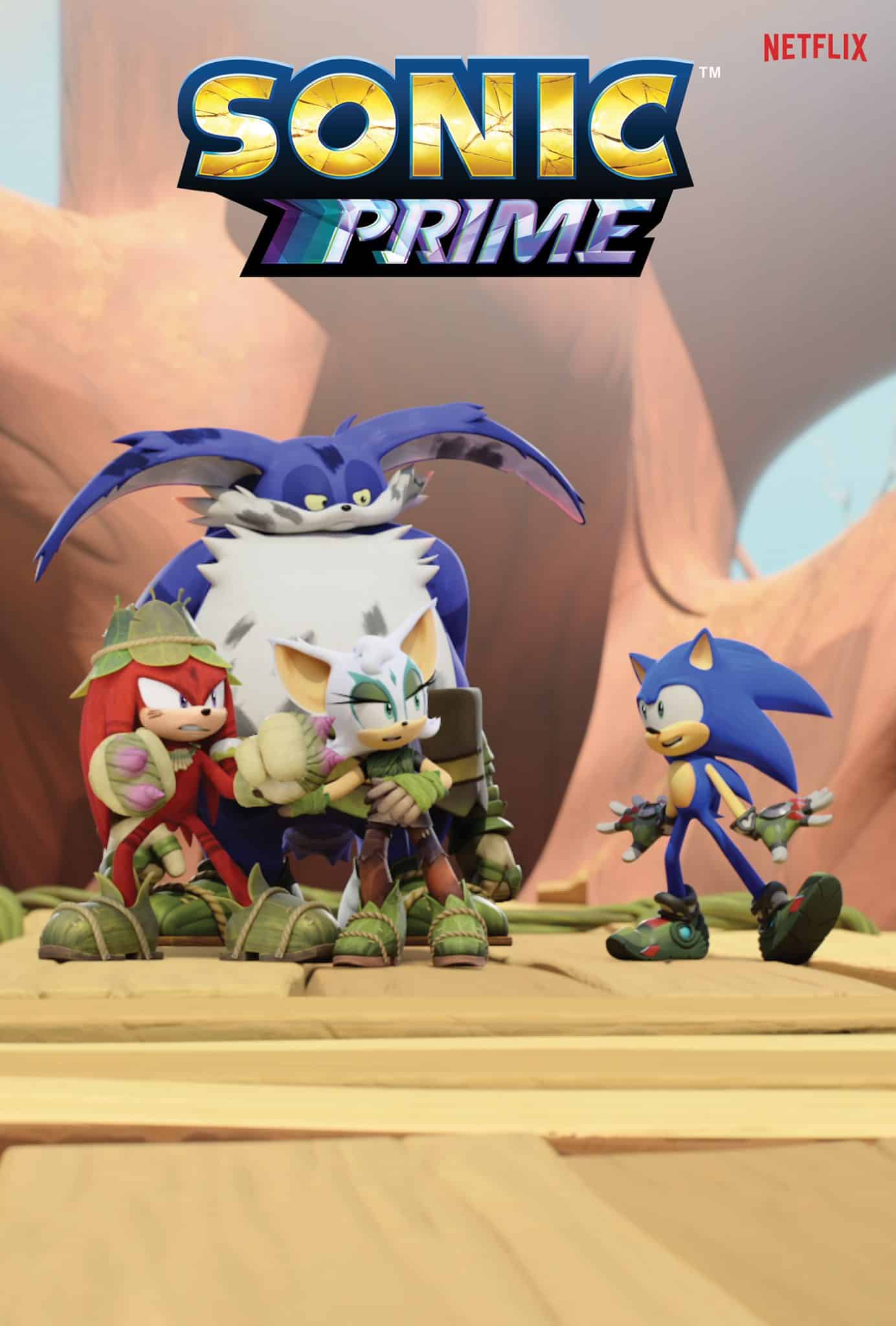
Preview: Sonic the Hedgehog: Sonic Prime, Vol. 2

Sonic the Hedgehog: Sonic Prime, Vol. 2

Adapted by Hayden Robel
December 2, 2025

Relive all the action from the Netflix animated series in this graphic novel adaptation!

To secure the Prism Shard, the rebels battle the Chaos Council, and Sonic makes a startling discovery about the events that shattered his world. Then, in a dimension called the Boscage Maze, Sonic runs into tree-dwelling versions of his friends who warn him of a monster that lives on the jungle floor.

Sonic the Hedgehog: Sonic Prime, Vol. 2
« Older Entries Recent Entries »