
Tag Archives: li’l depressed boy

FlameCon 2018: Writer Sina Grace Talks Iceman, Dad Jokes, and Li’l Depressed Boy
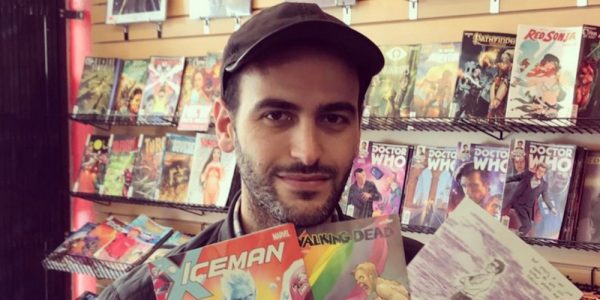
Sina Grace is a veteran L.A. based comic book writer, artist, and former editor whose body of work ranges from graphic memoirs like Not My Bag, Self-Obsessed, and Nothing Lasts Forever to an Iceman ongoing series for Marvel Comics. He has also done the artwork for the cult Image comic The Li’l Depressed Boy, which is written by Shaun Steven Struble. Self-Obsessed was made into a webseries starring Grace as himself and co-starring Buffy the Vampire Slayer‘s Amber Benson and Adam Busch.

At FlameCon, I had the opportunity to catch up with Sina Grace and chat about his upcoming Iceman miniseries and some other projects.

Graphic Policy: You’ve got the new Iceman coming up. What sets apart this miniseries from your initial run on the character?
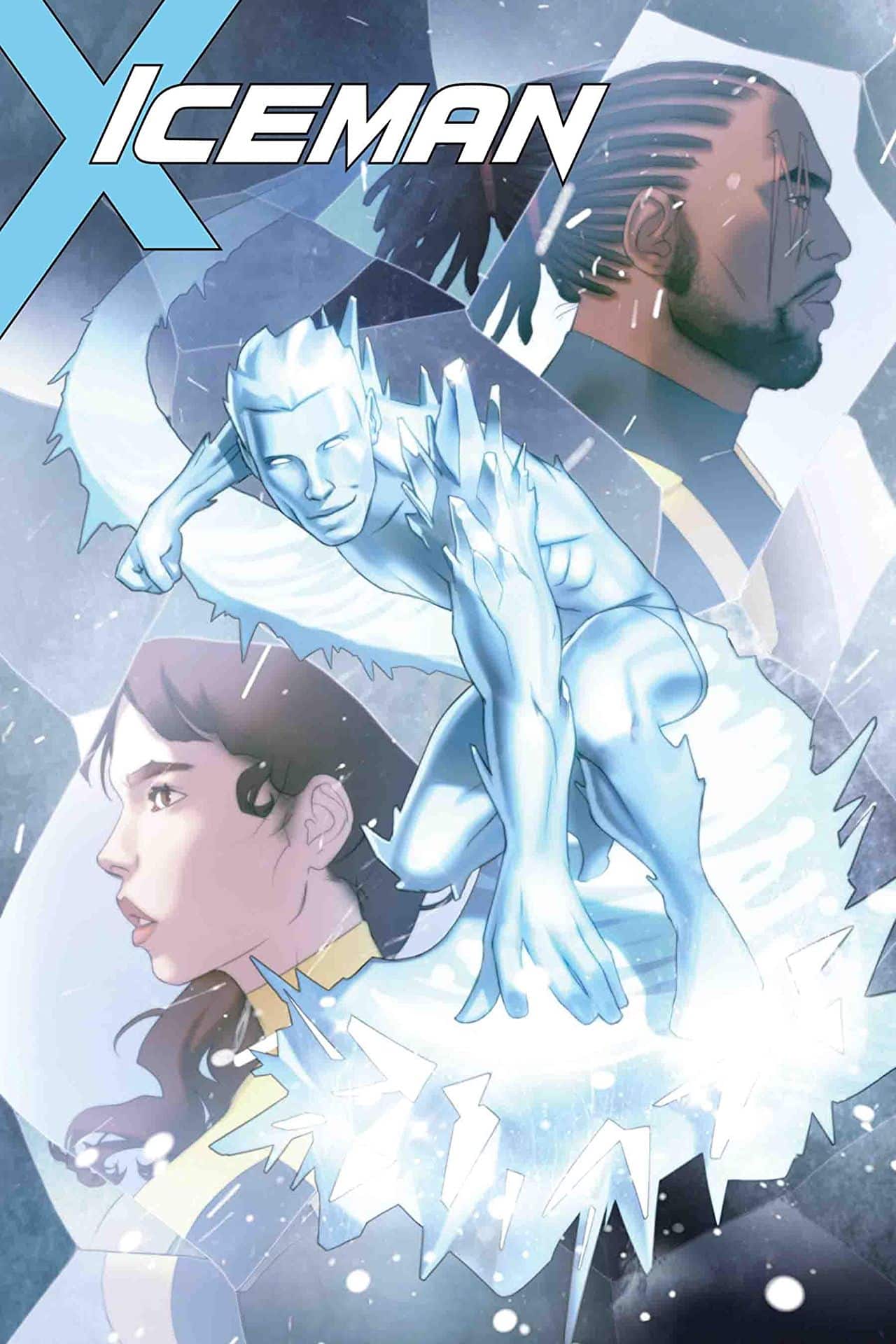
Sina Grace: I’m really excited that I get to come back to the series after a passage of time. So, Bobby’s sort of done with the chapter of growing he went through in those first eleven issues, and in this one, we get to see him a little more settled in his skin. The reader will have so much more fun watching him do what he wants to do now that he’s like, “I am an omega level mutant. I am awesome.” He’s finally settling in.

With that comes a lot more fun and also some new challenges.

GP: What are some of those challenges?

SG: I’ve always thought that if you’re known for being an omega level mutant that means people with good and bad intentions are going to be paying more attention. Their eyes are on you. I’ve made it no secret that Mr. Sinister is the bad guy, and he kind of realizes that there’s something special about Bobby. Because Bobby is realizing there’s something special about Bobby. And you don’t want Mr. Sinister to be obsessed with you, I’ll leave it at that.

Then, similarly, we see Emma Frost come back into the fold, and their relationship is so rife with tension. I think one of the last times they had a very big talk about him, she seemed to be disappointed by his immense potential and how he never lived up to it. This series is really going to focus on him living up to his potential and being around people who can bring more out of him.

GP: I’ve talked to a lot of Iceman fans online, and they’ve wanted him to have more romantic and definitely more sexual relationships. What is Bobby’s dating and romantic life going to be like in the new series?

SG: I’m excited to keep Bobby single for a while. I think it’s going to be really fun to have him be single in the Marvel Universe and sort of show what that whole world looks like. How easy or how hard is it to be a mutant and in the X-Men and looking for romance. Usually, with all these other X-Men, they can date within the pool, but aside from Pyro, who they just wanted it to be what that evening was, there aren’t a lot of suitors out there.

He is dating. We get to see what that looks like for him. It’s adorable, but I’m not ready to have him fall in love just yet.

GP: You’re working with a new artist on the series, Nate Stockman (X-Men Blue). What has collaborating with him been like?

SG: Nate Stockman, and I’ve been so lucky because I’ve been saying this about the other artists, is really collaborative and so open minded in terms of taking notes from a writer who knows how to draw and has drawn comic books. Nate is injecting this level of humor that we didn’t quite hit with the previous artists, and I’m so happy because again and again I will say that this arc is a celebration. We got the book back. Bobby is a happier person. We’re just here to have a blast. It’s like a bonus round.

Nate really brings that energy. He’s just so happy and kind, and that’s all you can ask for in a collaborator. He also has really good insights as a storyteller and has helped me become a better writer in the end too.

GP: I saw Bishop on the cover of Iceman #1. What role is he going to play in the series?
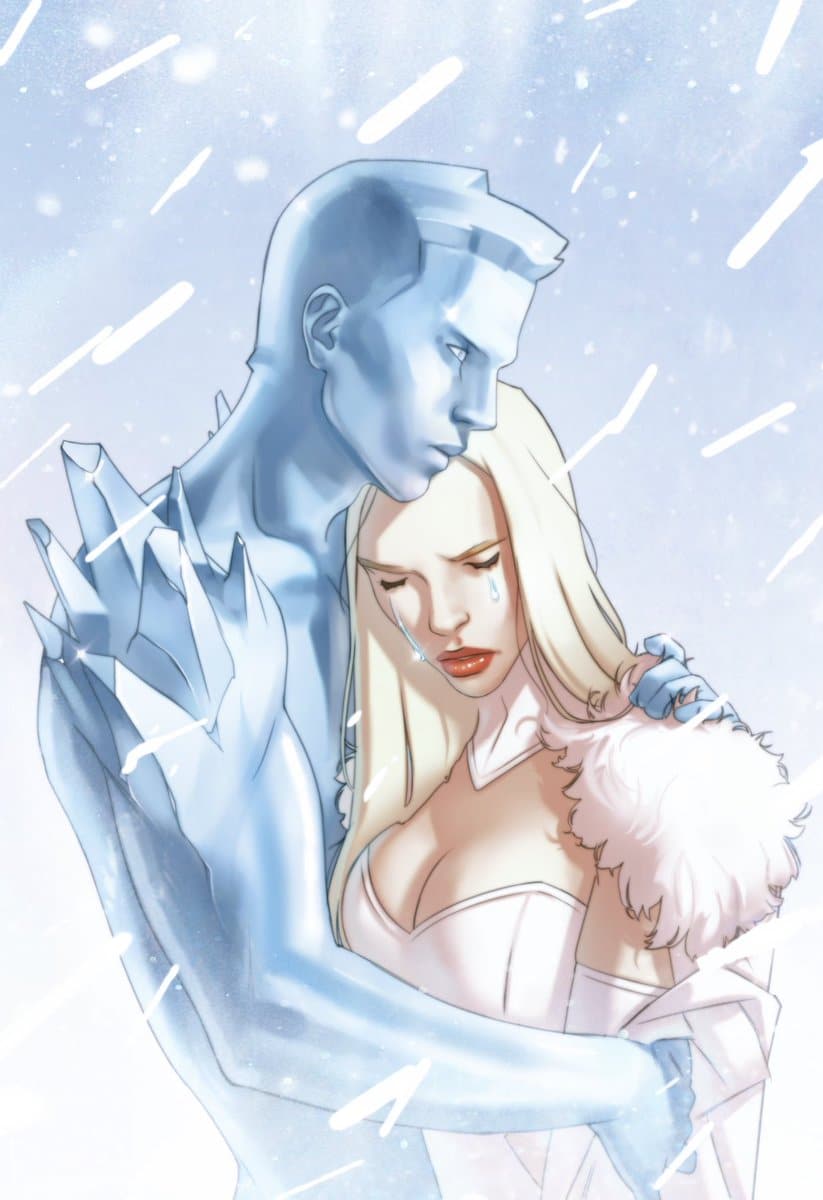
SG: He’s mainly in issue one. He does show up at the end of the arc. I wanted a character where it’s the same thing as Bobby Drake. He’s always kind of around. But he’s always in the periphery. Bishop is like that too. There’s a lesson to be learned in the first adventure with them preventing the Mutant Massacre together that I felt he was able to speak to Bobby in a different way and help him understand things. I’ve always been drawn to the character, and I wanted to spend some time with him and see how his brain works. He’s cool.

GP: Yeah, wielding that big gun in X-Men Legends was when I fell in love with him.

SG: He’s also lived out the thing he needed to do in this timeline, and again, he’s in the periphery and on a similar, but different journey. So, I wanted to have these two personalities next to each other for that adventure.

GP: One thing that stands out about your Iceman is that he makes a ton of dad jokes. Why did you decide to make that a big part of his personality?

SG: It’s one of the consistent things about him. If you go through all these books, he makes really dumb jokes. His humor is a little stale, but I had to lean into as a writer because if you only do one or two, people think you can’t write a good joke. So, I kind of had to write 10 or 15 so readers would understand this is about the character kind of cracking wise.

Also, we talk a lot about how Bobby had been hiding a part of his identity from everyone. He’s filling the air. He’s nervous. These are nervous jokes. We’re going to be massaging that in the story talking about that, and how he changes on a micro-interaction level. Maybe, he’s gonna fill the air a little less with dumb jokes, or maybe his jokes will just be good. We shall see.

GP: Yeah, they’re a big part of his character. So, the X-Men have been used as a metaphor for LGBTQ themes for years. What experiences do you as a gay man bring to these characters that a straight writer couldn’t?

SG: I talk a lot about how the power of diverse storytelling lies in the details and specificity. On the way to the interview, we were talking about how opening up the restrooms at FlameCon and making them gender free opened my eyes to “Now I can’t just pop in and pop out. I have deal with a line.” But, cool, I’m aware of my privilege.

There’s no way you can have insight into a story so it’s not even in your eye line. But we bring the specifics of what the experience feels like. Case in point, in issue six of the first series, he falls head over heels with a guy he meets in L.A., Judah Miller. And he thinks about wanting to move to L.A. Resisters, and people who didn’t the like book as a whole, thought that was dumb, and gay Twitter had my back and was like, “No, girl, listen. This is what happens when you just come out, and you’ve spent your whole life thinking you can’t have something.”

You do latch onto the first person who gives it to you and make very questionable decisions about moving across the country. I almost moved to Seattle for love. So, the thing I bring where I can have a character do something that works for the sake of dramatic storytelling, but is still rooted in a reality. I think if a hetero, cis writer did this, it would come off more problematically.

GP: Speaking of your experience, you’ve written a lot of autobio comics, like Self-Obsessed and Not My Bag. How do you switch gears from writing so personally about yourself to writing about a corporate property?

SG: I think actually switching back and forth makes doing both easier for me. I have a space where I can be myself and talk about myself and reconcile questions about the world that I have that may not be interesting to everyone. I have a space for that with an audience that is willing to watch me go down these paths. And, then, because I have this safety valve, I can really look outside myself when I’m speaking to an audience that is 10,000 to 20,000 readers, and I can think about stuff that a larger group of people would want to have explored.

I like that I have both. What’s awesome is that Marvel readers aren’t like, “Let’s go look at your slice of life tales.” They love action books so it’s very safe space to go down some deep ends.
GP: In those autobio books, you have playlists, and I low key got into Jenny Lewis because of Nothing Lasts Forever. Do you have playlists for Iceman?

SG: I create playlists for any character with a big speaking role in my comics because I find music to be a fascinating look into someone’s psyche. On a very surface level, it’s a good way for me to be like “My brain is different from his brain.” So, Bobby listens to stuff I don’t listen to.

I joke that I don’t much care for The Weeknd, but Bobby likes him. He likes the War on Drugs a lot. I don’t mind them. They’re actually good. But I wouldn’t have pursued them. They’re in his wheelhouse. They’re what he likes. I was dating a guy, and we spent the date joking about what he would listen to versus us. The great debate is if Bobby Drake listens to Coldplay. I don’t have the answer yet.

It’s a good exercise. Like for Daken, I was listening to a lot of dark, nihilistic, and loud music like Health and Nine Inch Nails. Dirty Beaches too. He’s a very swagger-y guy. It’s a cool tip to tell burgeoning writers. This is how you get into a different groove and force yourself into something: a different conversation.

GP: That’s good advice. I have one last question. I’m a big fan of The Li’l Depressed Boy. Any news on that front?

SG: Our only goal with this new series of The Li’l Depressed Boy is to have the entire arc done before we put it on the calendar. I don’t think anyone likes when a book ships late, and the series comes from a personal place for both [me and Shaun Steven Struble]. We’re just letting it take the time it needs. But there are pages drawn. There is a ton of script written out.

Shaun and I are lifelong friends and partners so as long as we’re in love with each other and the book, it’s always going to be on our minds and always going to be made. Having the book come out on time and having it be the best it can be is more important than anything. No rushing for us.

Iceman #1 will available from Comixology and local comic book stores on September 12, 2018

Follow Sina Grace on Twitter.

Diversity in 2014 Comic Books

By Matt Petras

A crowd-funded comic book by the title of Toe Tag Riot featured zombies who attack the likes of the Westboro Baptist Church. Frequent writer for modern Batman comics James Tynion IV wrote a comic with intimate depictions of gay romance. Major publishers DC and Marvel stepped up their game on demographic representation.

The comic book industry in 2014 did not stick to telling stories about carefully chosen, lowest-denominator demographics, but various walks of life.

“Why on Earth wouldn’t we want our work to feel inclusive to more people?” said Toe Tag Riot writer Matt Miner in an email interview. “I mean, don’t we want larger audiences?  Don’t we want as many people reading comics as possible?”

Image from Black Mask

Image from Black Mask

“Toe Tag Riot” is a comic book written by Miner drawn by artist Sean Von Gorman, and now published by Black Mask that sells itself on a diverse cast of characters who attack in action-packed sequences against bigoted antagonists. It was crowd-funded on Kickstarter, raising $510 over its $19,000 goal. Andrew Hurley of the band Fall Out Boy supported this project; because of this, Hurley and the creators of Toe Tag Riot teamed up to give backers who pledged at least $50 a signed variant cover of the first issue with a zombified Hurley on the cover.

“The response to Toe Tag Riot from the LGBT community has been the most incredible and heartwarming,” said Miner.

It’s not just gay characters who make up the cast of Toe Tag Riot, but also people of different walks of life who aren’t always featured in fiction, like people of color and the disabled. “[W]e’ve been thanked by people with disabilities for creating Evie, a visibly disabled woman of color who finds empowerment in her disability,” said Miner.

In another avenue of the comic book industry, Boom! Studios has been publishing a comic book series called The Woods since May 7, 2014; it is a high school drama mixed with light-horror and fantasy. It features a cast of characters of varying ethnicities and sexual orientations. James Tynion IV, known for his work on multiple Batman series for DC Comics, writes this book along with artist Michael Dialynas.

“[The Woods] doesn’t imply stereotypes; it’s just a human story,” said Dialynas in a Skype interview.

In issue #7 of this series, which released in early Nov., the often-hinted upon gay tension between characters Ben and Isaac was finally revealed in a kiss. Ben is a heavy-set black boy who struggles with the common belief that he should play football when he doesn’t want to.

“They’re just two characters in the woods who happen to have a nice moment together,” said Dialynas.

The process Dialynas goes through to craft the characters of The Woods with Tynion is unique. Dialynas asked Tynion for a write-up that supplied him with the media tastes of the characters. When Dialynas was in school, the video game, movie, and music preferences of his classmates tended to say a lot about their character, he explained.

One character, for example, was given a skull on his shirt whenever Dialnyas was told the character likes metal, he further explained.

Telling stories about characters with mental illnesses has also been a part of comic books in 2014. This year saw the return of comic book series Li’l Depressed Boy, relaunched at #1 with the additional subtitle of “Supposed to be There Too.” Li’l Depressed Boy, which began being published by major comics publisher Image Comics in Feb. of 2011, is a comic written by Shaun Steven Struble and drawn by Sine Grace about a character’s struggles with romance and the clinical depression that is intertwined with it.

Image from Image Comics

Image from Image Comics

Struble suffers from clinical depression himself, Struble said in an email interview. The storylines of Li’l Depressed Boy are “thinly-veiled autobiography,” he also said.

The book has a cycle of jumping from different experiences the protagonist as with love interests, along with the symptoms of clinical depression that follow.

“The book is about relationships in general.  One of those is LDB’s relationship with his chemically imballanced brain,” Struble said.

The main character, Li’l Depressed Boy, often referred to as simply LDB by characters in the comic, is a rag doll living amongst regular human beings. Creating a sort of surreal atmosphere, this is never acknowledged in the story.

“I’m lucky that the fact that I write about ragdoll [means] lots of people can see themselves in the main character,” said Struble.

The audience for the book spans greatly across genders, races and locations, according to Struble.

“There are certain aspects of the experience [of depression] that remain the same [despite severity], and we can see each other in ourselves,” said Struble.

Children can also find themselves represented in 2014 comics, both in characters and in demographic targeting. One comic, written by former IGN Comics editor Joey Esposito and Ben Bailey, who still occasionally writes for comic book press/criticism publications, and drawn by Boy Akkerman, is the all-ages Captain Ultimate, published by digital-only Monkeybrain Comics. “All-ages” is a term in the comic book community to refer to books that appeal to every age demographic; the purpose of this term is to rid of any stigma that books that appeal to children are solely for children.

“Kids can tell if they’re being talked down to,” Esposito said in a Skype interview. The only difference between the writing process on an all-ages comic and a more adult focused story for Esposito is checking to be sure there aren’t any bad words in the script, Esposito said with a laugh.

Esposito found himself disappointed in the lack of all-ages comics, which filled him with a passion to do Captain Ultimate, he said. Captain Ultimate is a superhero comic with commentary on the contrast between the morally-wholesome and fun-filled comics of days past and the dark and gritty comics of today.

Esposito has worked on other comic books that aren’t for an “all-ages” audience, such as this year’s Pawn Shop. This comic is about a small store in a big city that unites people of different walks of life, making a statement about the interconnectivity of life. To Esposito, diversity in this cast was essential to getting across the message of the book, he said.

“I started thinking about the kind of people I know,” he said.

The big two in comics, DC and Marvel, have also done things for diversity in the industry this year.

DC Comics put a new creative team on the series Batgirl, featuring a new costume design and a female artist by the name of Babs Tarr. This new direction for the series brought in new gay and female characters.

DC also announced a string of films to release in the coming years, including Justice League films that feature characters like Cyborg, who is black, and Wonder Woman, who is female; both of those characters are also primed to receive films featuring them.

Marvel made mainstream news for shifts in their comic book stories multiple times throughout the year, including their new directions for Captain America and Thor. The person inside the costume for both characters was changed in 2014, Steve Rogers being replaced by black character Sam Wilson (who was previously a superhero named Falcon, a character featured in the 2014 film Captain America: The Winter Soldier) as Captain America, and a new female character taking the title of Thor from the previous hero.

Marvel also started a new series called Ms. Marvel, starring a new character named Kamala Kahn. Kahn is a young, female person of color of the Muslim faith who gains powers and takes the mantle of Ms. Marvel. The book is written by G. Willow Wilson, who is also a Muslim.

Matching DC, Marvel announced movies starring more diverse characters and cast members. Two scheduled films are Black Panther, which stars Chadwick Boseman of 42 fame, and Captain Marvel. Captain Marvel stars a female character that is confirmed to be based off the newest Captain Marvel storylines in the comics, written by Kelly Sue DeConnick.

“A woman creator took a woman character and made fans SO passionate about her that the studio couldn’t help but notice. So wonderful,” said popular feminist comic book critic and former editor for DC Comcis Janelle Asselin.

Despite any kind of progress there are still noteworthy important problems in the industry, according to Asselin.

Among her critiques is a lack of hiring female creators from Marvel and further sexual objectification of women, she said. On Apr. 11, 2014, Asselin penned a guest piece for leading comics site Comic Book Resources harshly critiquing the cover of the first issue of this year’s Teen Titans relaunch, largely for objectifying an underage girl front-and-center.

One big news story in the industry this year was the controversial variant cover for the new Spiderwoman series, featuring the titular character donning an extremely tightly-fitting costume in a sexually suggestive pose with exaggerated body parts.

comicsdiversity manera

Image from Marvel Comics

“[This] cover was a problem, in my opinion, not because it was a sexy cover at all, but because it was an objectifying cover for a book that Marvel had been touting as a book for women and starring a strong female character,” said Asselin.

There were other events this year that casted a negative outlook for diverse representation in comics, including reviews criticizing the new direction of writer Meredith Finch and husband David Finch on art, on the Wonder Woman comic series. Despite being written by female writer Meredith Finch, comic book critics like Jesse Schedeen have criticized the depiction of the protagonist in this new direction. “Diana comes across as weak, whiny, and childish – basically everything she wasn’t under [the previous writer’s] hand,” he said in a review for IGN.

Noting issues with something doesn’t completely demonize it. “Overall, it was a year of positive change,” said Asselin.

Fiction provides creative people with the opportunity to tell stories that represent whatever kinds of people they want to see represented.

“Anything that you want to see that you don’t, make it,” said Esposito.

Review: Li’l Depressed Boy: Supposed to be There Too #1

Li’l Depressed Boy‘s disappearance, led up to by crushing delays, was nothing short of reason to actually get sad. It’s hard to verbalize exactly why Steven Struble and Sina Grace‘s weird book about the romantic escapades of a sack doll is so excellent. The plots are simple, but told incredibly well, with insane control over characterization, atmosphere, and suspense. There’s a wonderful sense of realism with a dash of the surreal, thanks to the protagonist being a sack doll in a world of human beings that never acknowledges he’s any different. The first issue of the relaunch, Li’l Depressed Boy: Supposed to be There Too, is a graceful, warm return to this comic book gem.

ldb1

A summary page at the start catches old readers up and gives new readers enough information to follow the story just fine, although I’d recommend newbies start from the beginning for the full effect. This first issue takes place right after the end of the previous volume, offering a furtherance of the story about LDB and the girlfriend he made at his movie theater gig. Before too long, everything sticks again, including LDB’s cute, sheepish attempts to find happiness and his current girlfriend’s excited, jumbled-up way of speaking. Lots of joy can be found in this issue, but it’s all layered; veteran readers know that any and all positivity gleaned from this series will ultimately lead into big bummers.

The most sophisticated moment I can recall of Li’l Depressed Boy is in this issue, whenever shackled LDB is forced to mull over a newly available, past love interest he was broken up about not being able to pursue previously. This awkward confusion is just one of the moments Sina Grace is able to effortlessly visualize. His art is fantastic, able to show all of the expression necessary to complete every goal of this book. It also strikes a nice balance between serving the story and being generally great to look at on its own, especially the splashes saved mostly for reveals.

I forgot how much the creative team packs into each issue besides the main story. The back end of this comic has a big letters column, an unrelated short story, and lovely bonus art, just like the single issues of the old Li’l Depressed Boy. Life is better now that LDB is back.

Story: Steven Struble Art: Sina Grace
Story: 8.75 Art: 8.75 Overall: 8.75 Recommendation: Buy

To check out Matt’s about.me, click here

Image Comics provided Graphic Policy with a FREE copy for review

Preview – Li’l Depressed Boy #10

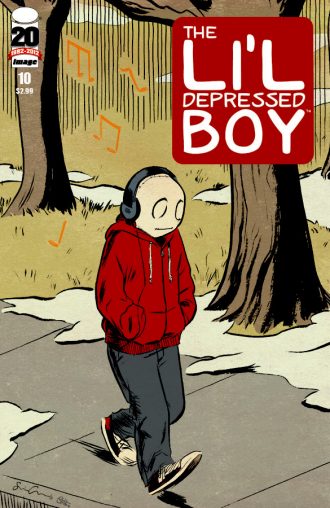
Li’l Depressed Boy #10

Story by: S Steven Struble Art By: Sina Grace
Price: $2.99

“WORRIED SHOES”
The Li’l Depressed Boy’s new job finds him in unfamiliar territory. Fighting his more anti-social nature, LDB struggles to make it through the first day.