Tag Archives: kaiju

Movie Review: Godzilla Minus One turns the iconic kaiju into the God of Monsters

Godzilla Minus One

From the very first trailer on, it was evident Godzilla Minus One was setting its sights on echoing the roaring debut of the nuclear monster back in 1954. Gojira, directed by Ishirō Honda, was a visceral kaiju allegory for the newly minted atom bomb world, a giant creature feature that turned the titular monster into a reminder of the position humanity put itself in by creating weapons of mass destruction. It looked at the state of things at a macro level, from a pretty frightening vantage point. Minus One goes for a more focused approach, putting soldiers and their PTSD at the forefront for a different look at the consequences of human-led devastation and the towering psychological obstacles it creates for those tasked with carrying out militaristic violence.

Godzilla Minus One, directed by Takashi Yamazaki, follows a soldier called Koichi (played by Ryunosuke Kamiki) as he comes home from the war with not just the trauma of his failed mission as a kamikaze pilot but also as a survivor of a battle against a young Godzilla. During that encounter, his inability to act in a key moment of the fight led to the deaths of several soldiers, a decision that’ll haunt him for almost the entirety of the film.

Koichi returns to his hometown only to see it buried under rubble, the victim of allied bombing. As he tries to salvage whatever he can to make his home again, he meets a woman called Noriko (played by Minami Hamabe), a woman in a precarious position that’s trying to survive with a baby in hand. He takes both of them in and time passes. Just as things start getting rebuilt, Godzilla is awakened by atomic bomb tests and Japan is reminded once more that wars never truly end. They just assume a different form.
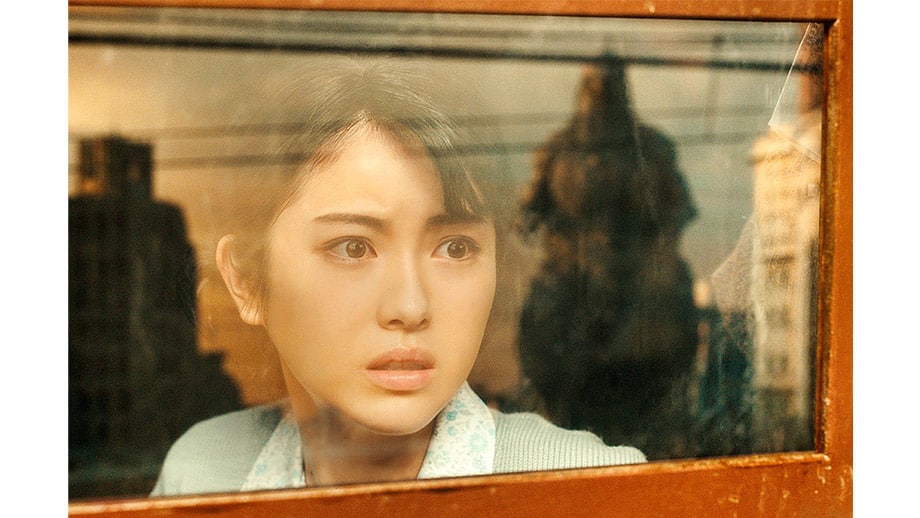
Godzilla Minus One

From the very first Godzilla movie on, audiences have gotten uniquely different iterations of the classic kaiju. He’s gone from King of the Monsters to Japan’s protector to a parody of himself and back again. In Hideaki Anno and Shinji Higushi’s 2016 Shin Godzilla (widely considered as the best Godzilla movie after the 1954 original), for instance, he becomes a force of nature that exposes humanity’s inability to coordinate a unified response to solve a problem. The film mocks the government’s insistence on bureaucracy to problem-solve and how contradictory the efforts end up being. Godzilla represents the consequences of such dysfunction and how destructive it can be.

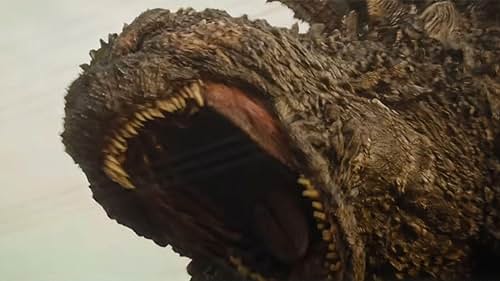
In Minus One, Godzilla is essentially turned into a god. He’s the ultimate expression of cataclysmic consequence. Director Yamazaki frames every scene he’s in with a sense of finality that absolutely terrifies. Godzilla’s arrival means humanity is about to get judged, harshly. It’s an impressive showcase of the giant monster that makes for one of the most tense-inducing portrayals of it in franchise history. It’s all reflected in his powers this time around. Without spoiling anything, just know you’re in for a few surprises that both make this version of the monster unique while updating certain aspects of it to make sure the metaphors on display hit harder.

The severity of Godzilla’s presence, what it implies, does an excellent job of imbuing the Japanese soldier experience with a sense of duty and hope that isn’t always given the attention it deserves in war movies. Koichi’s character, for instance, wears his PTSD on his sleeves, constantly reminding the audience his war is a constant and that it didn’t end with the armistice that brought the conflict itself to a close. Trauma does not sign off on this process and thus owes it no recognition. The film hits you over the head with this idea, but it’s in service of setting up a different outcome for the soldiers driving the story.
Godzilla Minus One

Koichi’s supporting cast does an incredible job of exploring the range of trauma and disillusionment that ailed soldiers in the postwar period. One character of note is Sosaku Tachibana, played by Munetaka Aoki, a soldier that also survived the first Godzilla attack along with Koichi. His trauma manifests as anger, making his own war one of disappointment in his brother in arms. The way the movie tackles the diversity of trauma, though, is by highlighting the things soldiers have in common rather than the things that separate them.

By turning trauma into a unifying force, Minus One opens the doors for hope and healing to come through as real and attainable things. War movies dealing with the similar themes rarely opt for hope. Minus One does and it makes for a welcome deviation from the norm. It actually makes the Godzilla scenes feel scarier as the possibility of surviving the giant monster raises the stakes considerably. The audience is encouraged to cheer for the story’s heroes more so than in other stories that deal in war.

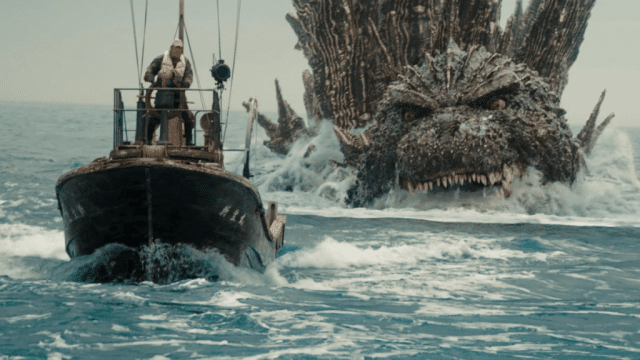
Naoki Satô pulls all this together with one of the best Godzilla scores to date. It’s surprisingly restrained but possessed by an epic sense of dread and momentousness that captures the god-like terror of the iconic creature. There’s one particular sequence that feels ripped straight out of Stephen Spielberg’s Jaws that ramps up the horror of facing a giant monster at sea by relying on doom-charged sounds that slightly quicken whenever Godzilla gets closer to the boat he’s chasing. Not a single musical cue is wasted in this regard, giving individual action sequences their own identities. Even when the requisite theme music from the original Gojira (composed by Akira Ifukube) kicks in during one sequence, it doesn’t overshadow Satô’s score. In fact, I wanted to see how that particular sequence would’ve played out with Satô’s score accompanying it.
Godzilla Minus One

Godzilla Minus One is a triumph. It earns a spot among the greatest Godzilla movies ever made, right next to the original one and Shin Godzilla. It’s integration of multiple war metaphors along with tense kaiju action lets it stand on its own. What makes it soar, though, is how it manages to turn an already iconic monster into an even more impressive and colossal version of itself. The age of the King of Monsters is over. The age of the God of Monsters has begun.
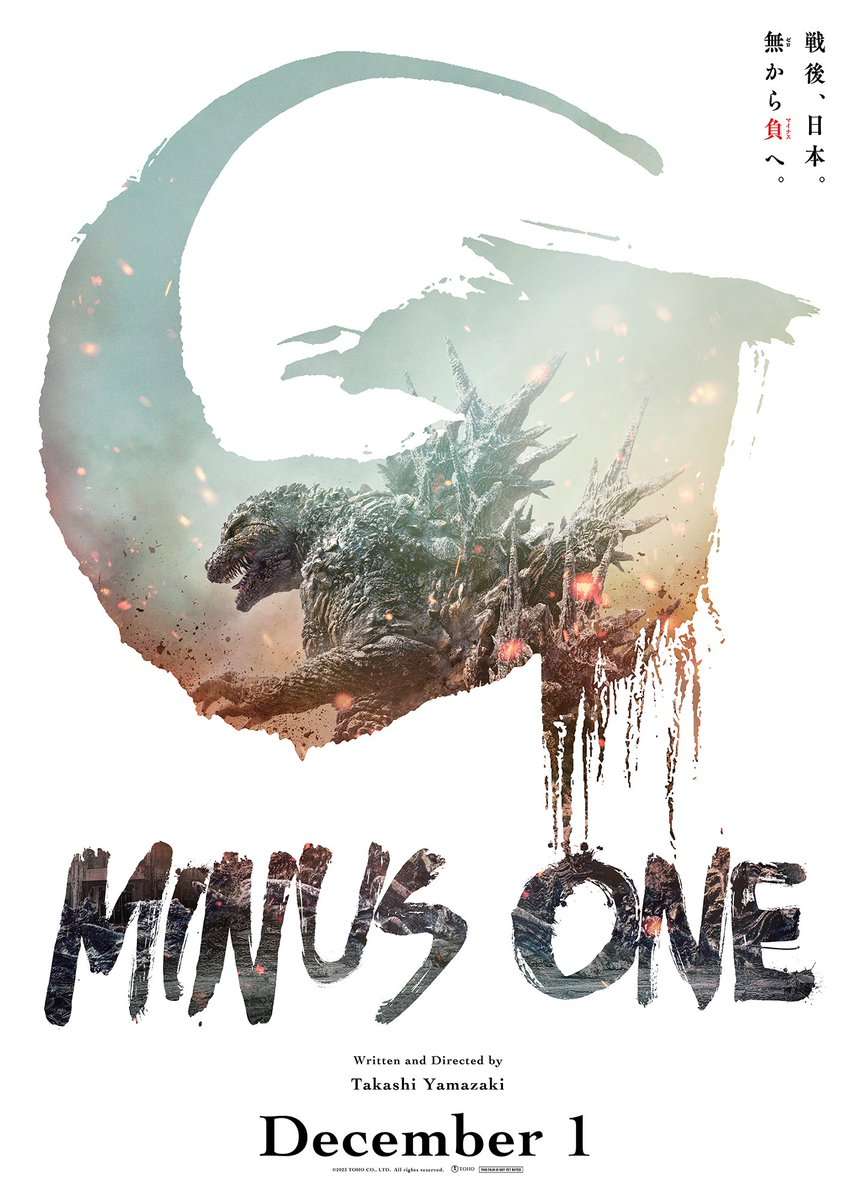
Godzilla returns in Gojira Minus One and he looks postwar angry

GODZILLA MINUS ONE

Godzilla has been on a rampage as of late, from Gareth Edwards‘s 2014 reboot to 2021’s Godzilla vs. Kong. In between those films we got the best Godzilla of the current era with Shin Gojira (2016), directed by Hideaki Anno and Shinji Higuchi, a movie that paved the way for other Shin entries such as Shin Ultraman and Shin Kamen Rider (though supposedly not to be taken as part of a shared universe).

This year, Godzilla rises again with the recently announced Gojira Minus One, a return to the giant monster of the 1954 original that decimates cities with colossal anger while carrying the metaphor of nuclear threat in every roar.

Toho International released a teaser trailer of the new production that confirms as much. From what brief look shows, the story goes back to a post-World War II Japan that’s struggling with the destruction wrought by the allies during the last year of the conflict. Godzilla’s arrival plunges the country into the minus, a cruel position in which devastation takes another pass over an already devastated land.

The bits of Godzilla we get in the final seconds of the teaser show a creature consumed by ruthless aggression, as if intent on passing judgment on the country and how it managed to sink to the place it found itself in after it unconditionally surrendered to the allies.

It’ll be interesting to see what director Takashi Yamazaki (Lupin III: The First) has in store for Godzilla in terms of metaphors. The original movie turned the iconic kaiju into a representation of atomic trauma, spawning from the nuclear bombings of Hiroshima and Nagasaki in 1945 to end the war. The aftermath of the two infamous attacks brought about a period of absolute confusion, especially as the effects of radiation started becoming physically noticeable in those close to the affected areas. Godzilla is an expression of that, a monster that communicates fear a newly minted nuclear world.

With war still a global concern, both in the effects of current conflicts (Ukraine) and the possibility of future world wars, Godzilla is a potent enough symbol to carry messages on its spiky and hulking body. In fact, Godzilla has proven quite adept in embodying different metaphors at different points in time.

The aforementioned Shin Godzilla does an exceptional job at poking fun at the ridiculousness and total dysfunction of bureaucracies in the face of national crises. Anno and Higuchi turn Godzilla into a natural disaster that could have been more quickly and effectively solved had the government not been tangled up by committees with overlapping powers that clash against one another rather than facilitate solutions.

Edwards’s 2014 take turned the kaiju into a warning against the continued use of nuclear power in the present, using imagery and discourse surrounding the radioactive disaster at the Fukushima nuclear plant as a result of the 2011 Tōhoku earthquake and tsunami. The crisis resulted in critical disruptions to the plant’s operations and led to explosions and radiation leaks that led to the evacuation of some 110,000 residents from the areas surrounding Fukushima.

Edwards’s Godzilla spoke to the severity of that kind of catastrophe, and it made sure the message landed with a force, though the movie didn’t exactly live up to expectations given certain creative decisions that didn’t give the titular kaiju more of a chance to shine. If the teaser is any indication, Minus One won’t be having that problem.

Gojira Minus One, the 30th entry in Toho’s giant monster franchise, has a November 3rd, 2023 release date on its sights for Japanese audiences and a December 1st, 2023 date for American audiences. If you want to give the entire franchise a look, Pluto TV is currently streaming a 24/7 Godzilla channel dedicated to the creature’s many encounters with Japan and the other monsters his presence has attracted throughout his storied career. It’s a good time to be a Godzilla fan, and the new film looks to be terrifyingly special.

The Lake teaser trailer signals the return of practical effects for giant movie monster creation

The Lake

There’s no denying that CGI has revolutionized the giant monster movie, and it has some prime examples of the kind of horror it’s capable of producing on the big screen. Cloverfield comes to mind as not only one of the best big monster movies in recent times but also one of the scariest. The monster’s design, the set pieces, and the mystery behind the creature’s presence all converge to produce a very unsettling experience unlike anything seen before in the genre.

And yet, for my money, nothing beats Jurassic Park’s T-Rex animatronic as the most impressive giant movie monster in film history. There’s just something special about knowing the creature that’s trying to eat the movie’s characters is actually there, especially during the first encounter when it slaughters the goat and breaks out of its paddock. That the actors aren’t just reacting to a guy in a green suit holding a dinosaur prop head as a marker for the subsequent CGI work gives the sequence a uniquely horrifying feel that heightens the tension in unprecedented ways (even though CGI was used in some scenes to for the T-Rex).

The new big budget Thai/Chinese production The Lake is aiming for the same thing that made Jurassic Park so impactful, bringing the practical effects monster back into the fold with a giant creature designed by Jordu Schell, the artist behind the Cloverfield Monster, Starship Troopers, The Thing, Men in Black, Planet of the Apes, and Predators.

The film looks to tap more into horror than fantasy for its giant monster story. The teaser trailer keeps things pretty light on details, preferring to offer a generous set of hints as to the threat the human characters will be facing instead of the reasons why there’s a monster attacking people in the first place. It’s highly effective at hyping up the threat, though. The glimpses we get of the monster suggest its design will feature classic giant creature elements along with key tweaks the trailer doesn’t entirely give away.

There are also instances in which the possibility of smaller creatures are hinted at, but not definitively. This is, after all, a teaser and its purpose is to foster an air of mystery that surrounds the creature’s origins. The shots of the monster do look impressive and showcase the prowess of practical effects in storytelling. There’s an overwhelming sense of presence to the creature and it helps make it look supremely dangerous and deadly.

Schell’s monster design, what’s shown of it, is downright disturbing. It compares to his design for Cloverfield by favoring horror over sci-fi on a visual level. Regardless of what its origin ends up being, one thing’s already certain: the creature will leave an impression. The production looks ambitious and the settings varied enough to guarantee the action won’t just focus on big cities or densely populated areas. In this regard, The Lake somewhat reminds of Bong Joon-Ho’s 2006 The Host, another monster movie that aimed for being different within the genre. It explored other environments and spaces to great effect, preferring to keep some distance from the all-too-common skyscraper-dominated areas that populate these type of movies. That’s on top of having a unique creature that still invites close observation to fully appreciate.

the lake

The Lake is slated for an August, 2022 release in Thailand. There’s no information yet on when it’ll reach our shores and whether it’ll go for an initial theatrical run or if it’s headed straight for a Video on Demand release. Whatever the case may be, this new giant creature feature deserves attention for bringing practical effects back to the table and hopefully introducing the form to a new generation of movie-goers.

It’s Hello Kitty Meets Kaiju with the Pop! Sanrio

Funko is mashing up Hello Kitty with Kaiju with these new Pop! Sanrio figures! You can get Space Kaiju, Mecha Kaiju, Sea Kaiju, Sky Kaiju, and Land Kaiju.

Check them out below!


This site contains affiliate links, which means that if you click on one of the product links and make a purchase, we’ll receive a percentage of the sale. Graphic Policy does purchase items from these sites. Making purchases through these links helps support the site.

Movie Review: Pacific Rim: Uprising

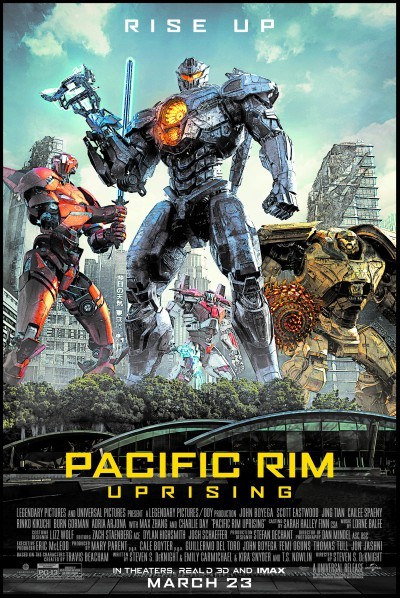
Pacific-Rim-Uprising-posterThe original Pacific Rim felt so much like lightning in a bottle, and its lackluster sequel does nothing to dissuade us of that notion.

On one hand, how hard could it be to deliver on a simple winning formula? Giant robots fighting monsters? And while Pacific Rim: Uprising has plenty of that (and it is, at times, spectacular) it is weighed down by all of its exposition and human characters and some especially clunky performances.

In this sequel, John Boyega stars as Stacker Pentecost’s son Jake. Set ten years after the last film, and with no sign of kaiju invasion in a decade, Jake is far removed from the Jaeger program but is reluctantly recruited back in to help train a new team of pilots. However, they’re on the verge of being replaced by a new generation of remotely piloted Jaeger drones which don’t require drift-compatible two person pilot teams. What could go wrong with semi-autonomous giant robot drones in every major city? And this, of course, ends in the return of the kaiju and an apocalyptic showdown in Tokyo.

The original worked largely because screenwriter Travis Beacham and director Guillermo Del Toro were so in sync creatively. Despite the film being somewhat formulaic, it delivered a fun, exciting take on “robots fighting monsters” by having interesting human characters. For Uprising, writer and director Steven DeKnight, a veteran of Netflix’s Daredevil, the CW’s Smallville, and numerous Joss Whedon Buffyverse projects, just doesn’t seem to quite mesh with the material.

The script, while serviceable, telegraphs its giant robot punches miles away. If you had stopped the film after ten minutes and asked, “How is this going to end?” it’s easy to predict… and so then the film plays out in a paint-by-numbers fashion. And while the original gives us some great scenes outside the jaegers, including one of my favorite fight scenes of the movie (right), Uprising is a snoozefest when it isn’t being cringeworthily bad.

Chief culprit here is Charlie Day, who provided a lot of comic relief and exposition in the original (especially in his Odd Couple science buddy pairing with Burn Gorman) but who is just the absolute worst in this film. It doesn’t help that Scott Eastwood could be replaced by a cord of firewood and would be more interesting to watch. Also gone is any real character building for the supporting cast, who mostly end up unmemorable. Boyega is the only real standout star, but as much as he tries to carry this movie by himself, it’s just not possible, especially when he is saddled with this sometimes inexplicably bad script.

But the fight scenes? Those are pretty fun. Again, it doesn’t have anywhere near the charm and innovative feel of the first one. But, we were never really expecting it would, right? And when it sets us up for the inevitable sequel, we can only hope that someone is willing to lure Del Toro and Beacham back to work their magic.

If you’re a devoted fan of robots and kaiju, they already have your money. You bought your tickets ages ago and no mediocre review is going to keep you from seeing this. But for general audiences? Save your money for Ready Player One, or go see Black Panther again.

2 out of 5 stars

Movie Review: Shin Godzilla

shin-godzilla-11x17-poster_300-dpi_rgbShin Godzilla opens strong and never loses momentum. As the first Japanese Godzilla film after the franchise went on hiatus in 2004, fan expectations were higher than they’d been since Godzilla: Final Wars twelve years prior. Toho made the wise decision to return with as strong an entry as possible, tapping Hideaki Anno of Neon Genesis Evangelion fame to write the franchise reboot. With Shinji Higuchi co-directing, Anno crafted a Godzilla film unlike any other in the franchise. If you are a longtime Godzilla fan, how well you react to changes in the classic Godzilla formula will determine whether this movie works for you or fails. Speaking as a fan for over 20 years, it worked almost flawlessly.

Most of the time, when reviewing a Godzilla film, you can fill a couple paragraphs rehashing details about the franchise. You spend some time waxing poetic about the gravitas and somber tone of the original Gojira , you shift to the later films and work the phrase “b-movie shlock” in somewhere, and you make a condescending remark about rubber suits or cardboard buildings. The review at that point is almost halfway done and you can glide through the rest without a lot of extra work. I’ve seen it argued that the movies themselves occasionally show a similar lack of originality, with writers returning to standbys like Mechagodzilla or Mothra as Godzilla’s foes in the years before the hiatus.

Shin Godzilla is exactly the kind of film the franchise needed: it’s unique and original and takes serious risks with its changes to the classic formula. In this film, Godzilla is more a creature than a character – he is eerily silent through most of the film, attacks reactively when the military strikes him first and displays none of the intelligence and personality that previous incarnations have. This Godzilla is a natural disaster in the purest sense, his motivations unknown and the devastation he causes completely merciless. This shift in focus serves as a way to get to the film’s primary concern: social and political commentary about Japan itself. This is a film where kaiju action is interspersed with board meetings by committees and government officials.shingodzilla_jpn_1998x1080p24_dnxhrlb_1-52-40-18_rgb

While that might sound boring, the film doesn’t drag. The numerous meetings, where characters are introduced with job titles displayed on the screen (a running gag as characters’ titles get longer as they are promoted or other characters are written out of the film), all serve a purpose: showing how in the wake of a disaster nobody could predict or prepare for, the biggest threat to Japan is the inability of its government to act swiftly. In the wake of the Fukushima disaster, Shin Godzilla examines not only how Japan as a nation responds to disaster but how the United States and the UN treat Japan during a crisis. Shin Godzilla doesn’t overdo these ideas, thankfully – there’s no monologue from the Prime Minister about whether he should bow to pressure from the UN. Instead, we watch outsiders in the Japanese government as a group of scientists, assistants, and novice politicians comes together as a special committee that ignores honorific titles and openly shares information with businesses and other countries. It’s this group of people who eschew traditional bureaucracy that make real progress and move the plot forward.

shingodzilla_jpn_1998x1080p24_dnxhrlb_1-48-43-19_rgb

Anno and Higuchi don’t just show their human characters discarding traditions, of course: it can’t be stressed enough how unique this interpretation of Godzilla is. In other movies it’s easy to read motivation and intent into his actions – Godzilla is a character in the films, usually the star. Here, calling him a villain feels misleading since aside from destroying buildings as he walks Godzilla’s attacks are all retaliation toward the Japanese and US military. This incarnation of Godzilla changes form multiple times in the movie, each time displaying new abilities to defend himself. The film uses Godzilla’s screen time to great effect, establishing him as a serious threat early on and upping the stakes every time he’s onscreen. This Godzilla has the most raw destructive power the franchise has ever seen, and when Shin Godzilla shows us what he can really do even his classic atomic breath is taken in a new direction that left my theater awestruck.

shingodzilla_jpn_1998x1080p24_dnxhrlb_2-06-28-08_rgb

Shin Godzilla is in many ways emblematic of the Godzilla franchise as a whole. Switching from humorous political commentary to kaiju destruction and back with ease, the movie is a lens through which Anno and Higuchi examine Japan’s future and past. In the west we tend to view the Godzilla franchise as having somehow fallen from grace – critics breathlessly praise the original Gojira and then talk about how campy and silly later film installments are – but to me the point of Shin Godzilla is that the franchise can’t be boiled down to one single idea. One individual Godzilla movie can’t convey every idea the franchise has had or every message it’s tried to send, and that’s why Shin Godzilla works. Shin Godzilla focuses on one specific idea: new ideas. New ideas are what save Japan from destruction, new ideas are what set this film apart from the rest of the franchise, and new ideas are what Toho Studios needs to make Shin Godzilla the first film in a revitalized and inspired new era of kaiju film. If Toho sticks to the ideas that Shin Godzilla stresses most, this movie is a sign of great things to come.