
Tag Archives: jonah hill

TV Review: Winning Time S1E2 “Is That All There Is?”
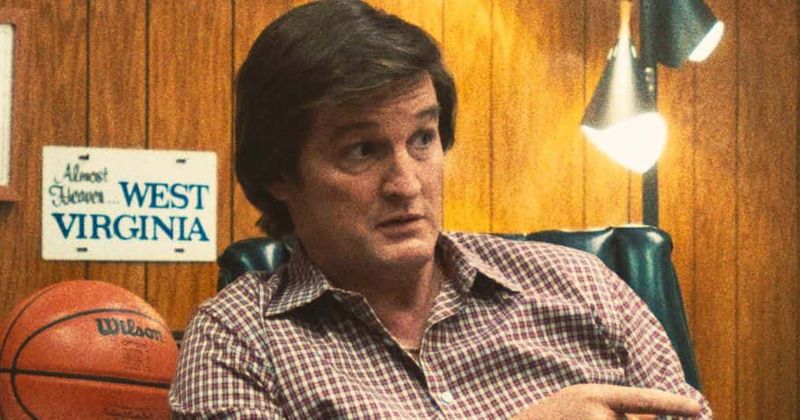
Is That All There Is?

Jerry West’s memoir is titled My Charmed, Tormented Life, and from the outside, it doesn’t make sense that a man who is literally the logo of the NBA, one of its greatest players, and also found success as an executive discovering two of the greatest players of my life time (Kobe Bryant, Stephen Curry) would describe his life that way. But basketball was an escape for him from a tough life in rural West Virginia until it wasn’t. The second episode, “Is That All There Is?“, of Winning Time: The Rise of the Lakers Dynasty delves into West’s (Jason Clarke) love and loathing for the game of basketball, and how it controlled everything in his life, including his mental health and his relationship with his wife Karen (Lola Kirke). Scenes with West bookend the Jonah Hill-directed episode, but writers Rodney Barnes and Max Borenstein continue to dig into Magic Johnson’s (Quincy Isaiah) relationship with his family and on-and-off again girlfriend Cookie Kelly (Tamera Tomakili) as well as the business side of the Lakers with Jerry Buss (John C. Reilly) facing off against Boston Celtics general manager Red Auerbach (Michael Chiklis) and trying to succeed at this business side of things.

The pre-credits sequence of “Is That All There Is” is basically a short film of Jerry West’s life as he bounces the basketball to drown out the sounds of his father abusing his mother as well as the grief over his brother’s death in the Korean War. Hill and editor Hank Corwin dissolve from the snows of West Virginia to confetti in Los Angeles when West won his only championship as a player in 1972. Until Buss tells him that he can play Johnson at power forward, this is the only time he smiles in the episode. The raucous environment of the Forum leads to Jerry West drinking alone at a bar that’s hosting a wake for a guy he doesn’t know, and he ends up having a one night stand with the attendees with confetti still in his air from the championship celebration. (Yes, Jerry West fucks in this episode.)

Basically, like the lyrics of the song and the episode of the title, West is unhappy with his life despite his great successes. He doesn’t like coaching the Lakers as evidenced by his antagonistic encounters with Norm Nixon (DeVaughn Nixon) in flashbacks, and general manager Bill Sharman (Brett Cullen) has a good point when he says that Buss giving him free reign to sign players will also hinder him from making excuses why the Lakers keep losing. In contrast with Jerry Buss and Magic Johnson, he doesn’t seem to be having a good time, has no effect on laconic star player Kareem-Abdul-Jabbar (An imposing Solomon Hughes) even after passionately monologuing about how he’ll get a power forward to help him out in the post so maybe it’s time for him to get off this train.
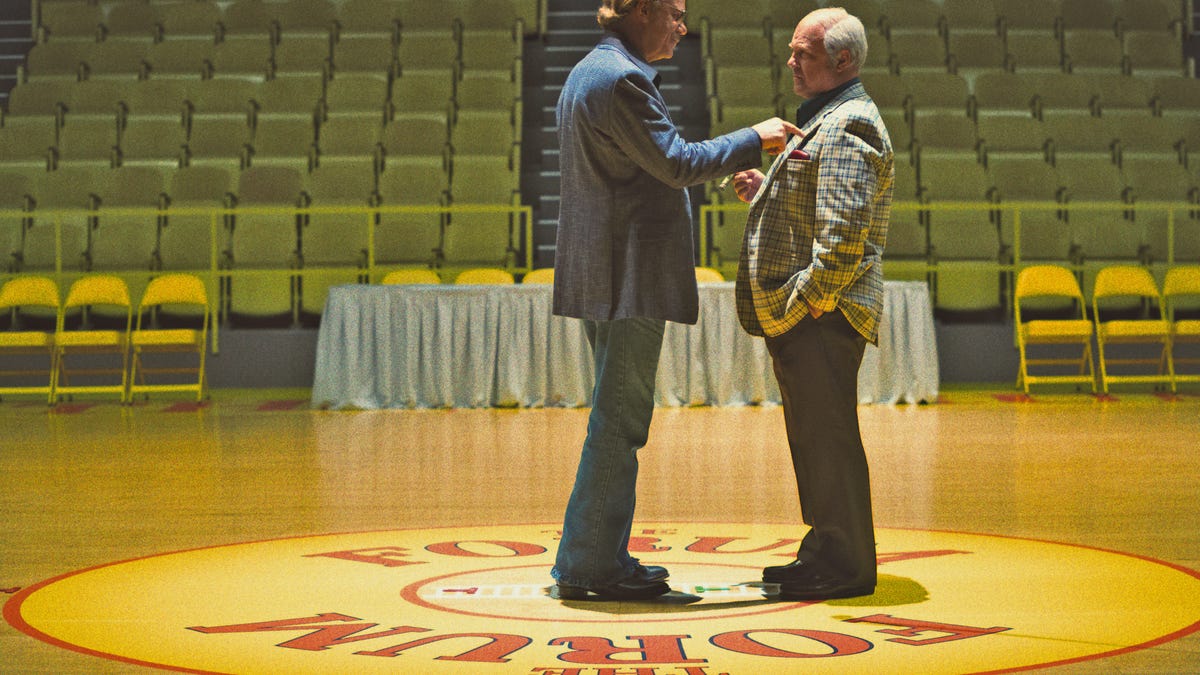
Is That All There Is?

I love the parallels that Barnes and Borenstein draw between Jerry West and Red Auerbach throughout the episode. Auerbach isn’t in the episode a lot, but Chiklis steals every scene with a puff of smoke beginning with a freeze frame, black and white introduction with future NBA commissioner David Stern calling him the pope. Buss and Auerbach are on two planes of reality with the Celtics GM not falling for the Lakers new owner’s offers of a night out and beautiful women even if they do end up sharing a brief dinner. Red Auerbach brings out a darker, less playful side of Jerry Buss with John C. Reilly taking the sunglasses off and saying that he will eat Auerbach’s heart on the Forum floor. It definitely feels like a kid putting on his father’s clothes, especially with all the behind the scenes financial shenanigans like Buss’ mom/accountant Jessie (Sally Field) saying that the Lakers are a money pit or his business associate Frank Mariani stealing the past ten years of records so no nonsense Claire Rothman (Gaby Hoffmann) can put together a budget for next year. With talks of big concerts at the Forum or the Lakers being one piece away from a championship, there’s a slight bit of hope in the air, but they could also go bankrupt like Rothman’s last job in Philadelphia.

The love triangle between Magic Johnson, Cookie Kelly, and Brian, a devout church goer and shoe store manager seems contrived while setting up Johnson’s reputation as a womanizer and showing that he’s not a nice guy as he utterly humiliates Brian on a Lansing playground. Isaiah continues to be a believable Johnson on and off the court as he dazzles with his passing and moves and charms everyone at the fish fry. Except for his mother, Christine (LisaGay Hamilton), who is not amused by his gift of a hot tub even though Johnson knows she’s wanted it for years by her reactions to the commercial during her soap operas. She smiles and talks about the gift in an animated way when she’s with her friends, but is all business around her son. Her husband Earvin Sr. (Rob Morgan) finds a middle ground when he basically tells her that Magic is grown up and has to find his own way in L.A., and that his free spirit came from her, who used to play point guard and dance before she joined the Seventh Day Adventist Church. By spending an entire episode showing Magic Johnson’s life and relationships in his hometown, Rodney Barnes and Max Borenstein ground him as a character and show that there is an entire town (Ok, maybe not Brian.) rooting for him even as Jerry West plots to minimize role from what Jerry Buss promised.

Jonah Hill cuts down on the sugar rush fourth wall breaking in “Is That All There Is?” and uses more natural storytelling techniques to show the current state of the NBA, the Lakers, and this episode’s key players. Jerry West cowering in a dark room in his underwear or sitting alone at a bar tells more about his mental state than talking to the camera or motormouth voiceovers. This episode also sets up Red Auerbach and the Boston Celtics as the key antagonists in the series with the racial implications of them having a white star player in Larry Bird showing up during the owners meeting. But the real conflict in Winning Time is internal with Jerry West butting heads with Jerry Buss, Bill Sharman, and as implied from his interactions with Nixon and Abdul-Jabbar, the players too so he decides to leave as coach right before the season. Him undercutting Buss’ big speech with a glance and a resignation letter creates a sense of uncertainty for future episodes, and boy, am I looking forward to Adrien Brody’s Pat Riley in upcoming weeks. All in all, Winning Time continues to strike a good balance between individual character arcs and the drama of running an NBA franchise in an era when golf, tennis, and bowling were more popular sports.


Around the Tubes

Transformers #13

It was new comic book day yesterday. What’d everyone get? What’d you enjoy? What’d you dislike? Sound off in the comments below! While you think about that, here’s some comic news and reviews from around the web.

CBR – The Batman: Jonah Hill No Longer in Talks to Join Matt Reeves Film – But all those other sites said he was in the movie!?

Reviews

The Beat – Dead Beats
Newsarama –
Tales From the Dark Multiverse: Batman: Knightfall
Comics Bulletin –
Transformers #13

Movie Review: The Lego Movie 2: The Second Part

The Lego Movie 2: The Second Part

Sometimes sequels are lazy cashgrabs, (especially animated sequels– looking at you, Cars movies!) but the followup to the movie everyone thought was going to be terrible but was actually groundbreaking and amazing is almost equally as… um… “awesome.”

I say “almost” because it’s hard to put the toothpaste back in the tube for the original conceit of the movie: that the Lego toys (and our characters) exist in the real world in a suburban basement somewhere in what was an extended metaphor about capitalism, fascism, consumerism, playing with your toys, and having childlike wonder and fun with them.

Having expended that creativity in the twist ending (and further exploring it in both the Lego Batman and Ninjago movies), the only answer in the sequel is to double down on what else worked so well in the first — humor, songs, childlike anarchy and imagination — and move forward. While this isn’t quite the revelation the first one was, it’s still easily the best movie of 2019 (so far).

Our story begins where the last one ended (literally) with the arrival of Duplo aliens from the “Sistar” system. Now 5 years later, the aliens continue to come and destroy anything that our heroes build in the former metropolis of Bricksburg, which is now a Mad Max style apocalyptic wasteland, complete with broken Statue of Liberty!

However, this doesn’t dampen the spirit of Emmett (Chris Pratt) who continues to think everything is awesome. The more cynical realistic Lucy / “Wyldstyle” (Elizabeth Banks) along with Metalbeard (Nick Offermen), Benny (Spaceship! Charlie Day), UniKitty (Allison Brie), and Batman (Will Arnett) rule over the city protecting it from incursion and destruction. But Emmett starts to have dreams of an upcoming “Mom-ageddon” where all the Legos are put into storage forever.

When one day a mysterious spacewoman named General Mayhem (Stephanie Beatriz) shows up to “invite them all to a wedding,” she kidnaps all of our heroes except Emmett and takes them to the Sistar system. Our optimistic construction worker then has to travel into the great beyond up the staircase and to the new galaxy to rescue them.

On his way he encounters Rex Dangervest (also Chris Pratt in a dual role) whose super awesome spaceship is piloted by Raptors. Rex is super hardcore, which gives him not only “master builder” powers but “master destructor” powers. The two new “vest friends” plan to disrupt the wedding ceremony between Queen Whatevra Wa’Nabi (Taraji P. Henson) and Batman as it is the final sign of the Momageddon.

That plot doesn’t really do the film justice however, because there is so much more going on at every level. The film is infused with joyous songs. The infectious conformity anthem of “Everything Is Awesome” is one-upped by a song literally meant to brainwash our heroes by claiming that “this song’s going to get stuck inside your head.” And it really does.

In “Gotham City Guys,” Queen Whatevra seduces Batman in what is perhaps the funniest sequence in the film for comic fans as she plays on Batman’s insecurities and rivalry with a certain Kryptonian. This is also a good time to mention that Jason Momoa and Gal Gadot also both appear as their DCEU characters in some truly excellent cameos. But don’t worry– Green Lantern is still played by Jonah Hill from the first movie! (What, they were going to get Ryan Reynolds?)

Returning musical champs The Lonely Island also make an appearance singing a song about how cool the credits are– which definitely make you want to sit through the credits. And Queen Whatevra channels evil Disney anthems like “Poor Unfortunate Souls,” “Be Prepared,” and “Mother Knows Best” singing a song all about how she’s definitely definitely definitely not evil, she promises.

What really makes this film work are the multiple layers of meaning. And for this discussion I will have to delve into minor plot spoilers, but not ones which adults wouldn’t see coming from a mile away in a kids movie. Of course as adults we recognize that the “Sistar System” is actually ruled by the sister of the young boy we saw in the first film.

What is actually happening in the war between Bricksburg and her system is sibling rivalry played out large. An older brother feels that his little sister is breaking and stealing his toys (which he’s not wrong about by the way). And a little sister just wants to play Legos with her older brother. Taking in stride the meaning of the first film, we see the son becoming his own father: demanding the conformity to his type of play and excluding those who won’t play along.

And we also have the eponymous Mom of the Momageddon (Maya Rudolph) who is doing what moms everywhere do: if you can’t play nicely with each other, then I’m going to have to take away the source of the conflict (the offending toys). Again, these are minor spoilers, but they’re also pretty clear to adults who read between the lines of the early plot and who are aware of the conceit of the first film. Also, let’s take one moment here and point out how amazing Maya Rudolph is. She is the shining star at the center of this film’s universe, bathing everything in a warm glow at the perfect intersection of awesome, funny, and super serious. She’s the perfect mom.

There’s also deeper message here that emphasizes the original (covert) feminism of the first Lego Movie, even directly pointing out that Lucy was the one who did most of the heroic things but Emmett is still seen as the leader and the hero. But this film is implicitly making the case for opening up the toy box for everyone, and not just everyone in general, but specifically for young girls. It should also be noted that the central players of the Sistar galaxy are also voiced by women of color (Haddish, Beatriz) — another implicit demand for playing with everyone.

Gatekeeping is endemic in our fan culture, and nowhere is it more apparent than among self-professed fans who seem most intent on keeping women out of the fandom. The same mentality also infects the toy aisle of your local favorite big box store, which is still one of the most unnecessarily gender-segregated areas left in America.

The idea that Legos and building sets are only for girls, and therefore we have to create special gendered Legos for them is as silly as it is retrogressive. And yet, Lego has done just that, haven’t they?

The strongest message that we got at the end of the film is simply to play with one another, and allow different forms of play and imagination to work together. Spoiler alert: when the brother and sister stop fighting, they create a beautiful new Utopia for the Lego heroes from both universes to live in.

There’s another great moment near the climax of the third act where “Everything is Awesome” is turned on its head and Lucy starts singing how everything’s not awesome, but it can be if we all work together and put aside differences and misunderstandings. Essentially, it’s a message to not go Hard AF at each other, because all that brings is destruction and unhappiness.

There couldn’t be a better lesson for 2019, and this was made all the more poignant when I saw this film at a critics preview screening the same night as the State of the Union speech. Everything’s not awesome, but there’s a way forward if we can hope and dream of a better world and work to bridge misunderstandings in order to confront the real evils that exist out there.

Note that this isn’t some mealy-mouthed centrist plea for bipartisanship or something of that nature. This is more of a plea to an increasingly fractured left and center who can so easily fall into the traps of purity tests or even engaging in ridiculous activities like re-litigating the 2016 primary.

One of the biggest lessons of this Lego movie is the fight about who started the war between Bricksburg and the aliens. “You started it.” “No you started it.” It’s the oldest, childish argument in the world, and it’s time to move past things like that to help make our world a better place.

The film is also incredibly funny, with jokes coming a mile a minute. You will want to re-watch several times, and maybe see it out of the theater because you are laughing so hard you will miss the next joke. There are beautiful and hilarious Easter eggs and callbacks to the previous film, but nothing that presents a barrier to anyone who didn’t see it.

The character designs and animation also continues to be astounding. Freed of just following the instructions from the first film, so many of the designs are just built on anarchy and imagination which makes them incredibly fun and toyetic. I left the theater and immediately went online to look to see if I could buy a UniKitty battle cat. Luckily I can, along with numerous other sets that I would probably have to take a second mortgage out to be able to afford. There’s also an amazing “Battle Ready Batman and MetalBeard” set for those who might gawk at playing with “girls toys.” (Did you not get the memo?)

The film does bog down a little bit in its second act, but it more than makes up for it with an amazing ending. The spirit and morality and hopefulness of this film make it something that will make you happy and want to play with your toys and hug your kids.

Everything’s not awesome, but it can be if we’ll listen to The Lego Movie 2.

4.5 out of 5 stars

Don’t Worry, He Won’t Get Far on Foot Tells the Story of Cartoonist John Callahan

John Callahan (Joaquin Phoenix) has a lust for life, a talent for off-color jokes, and a drinking problem. When an all-night bender ends in a catastrophic car accident, the last thing he intends to do is give up drinking. But when he reluctantly enters treatment —with encouragement from his girlfriend (Rooney Mara) and a charismatic sponsor (Jonah Hill) —Callahan discovers a gift for drawing edgy, irreverent newspaper cartoons that develop an international following and grant him a new lease on life.

Based on a true story, Don’t Worry, He Won’t Get Far on Foot is a poignant, insightful and often funny drama about the healing power of art is adapted from Callahan’s autobiography and directed by two-time Oscar nominee Gus Van Sant. Jack Black, Carrie Brownstein, Beth Ditto, and Kim Gordon also star.