
Thor: Ragnarok is About Colonialism Come Back to Haunt
 *Warning Spoilers Below*
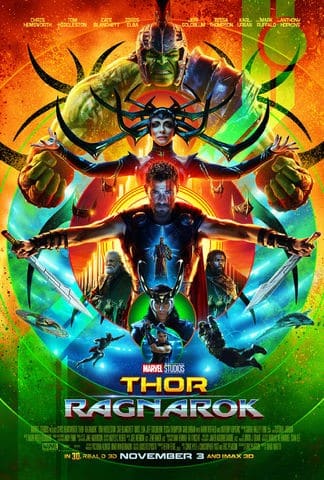
Thor: Ragnarok is exciting the box office with an impressive $121 million domestic debut and over $431 million already. While audiences are praising the humor, visuals, and fun nature of the film, it also has an impressively thought out theme underneath exploring colonialism through it’s two main adversaries.
Director Taika Waititi‘s Te-Whanau-a-Apanui (Maori) descent and the European colonization of his native New Zealand makes you wonder if these themes are on purpose and come from his own personal history.
The film features the return of Hela, Thor and Loki’s half sister and Odin’s daughter. Hela was banished by Odin because she became too out of control and destructive but Hela reveals it might also have been to hide Odin’s crimes as he built Asgard. Also in the film is the Grandmaster, an Elder of the Universe who rules over Sakaar pitting individuals against each other in gladiatorial contests for the people’s entertainment.
The Grandmaster, played by Jeff Goldblum, is the colonial conqueror. It’s clear this character is not from Sakaar based on his appearance and while we don’t know the specifics of his rise it’s obvious that he exploits the masses to live a life of opulence. In return he entertains through battles like the gladiators of old. While in the comics the character has blue skin, here he’s white and while there were other reasons for the change (the director has said he avoided blue to have the character not be prepared to a previous Goldblum role) it’s hard to not see the white conqueror in the character. Garbage falls from the sky to liter the world and beings are captured to do battle for entertainment. The Grandmaster’s exploitation is for his own power and amusement, not benefiting the people or his “nation.”
Thor: How did you end up here?
Korg: Well, I tried to start a revolution, but didn’t print enough pamphlets so hardly anyone turned up. Except for my mum and her boyfriend, who I hate. As punishment, I was forced to be in here and become a gladiator. Bit of a promotional disaster that one, but I’ m actually organizing another revolution. I don’t know if you’d be interested in something like that? Do you reckon you’d be interested?
While the movie doesn’t go deep into the history of the Grandmaster and its people, the kicker at the end of the film makes it obvious this was not one of the people’s choosing. After an uprising breaks out over the planet, we’re returned to the aftermath at the end of the film when the Grandmaster says:
I just, I gotta say. I’m proud of you all. This revolution has been a huge success. Yay us! Pat, pat on the back. Pat on the back. Come on. No? Me, too. ‘Cause I’ve been a big part of it. Can’t have a revolution without somebody to overthrow! So, ah, you’re welcome. And, uh, it’s a tie.
By his words and the reactions of those around him, it removes any doubt that this was a benevolent rule and this quick scene speaks to the relationship between ruler and its people.
Played by Cate Blanchett, Hela is the true villain of the film attacking and then overtaking Asgard as its new ruler. While she stamps out any resistance, it’s what’s revealed that makes it clear the wise Odin (her father and previous ruler) isn’t as benevolent as we have been led to believe the last two films. Asgard is a land of beauty with gold towers and flowing robes. But, how did it gain such extravagance? Hela reveals that Odin waged war against the other realms using Hela as his weapon of choice and then stripping those conquered of their raw materials. The revelation hearkens to the relationship that has plagued our real world for so long and continues to this day in the raw materials used to produce in our consumer drive lives.
We see the past literally being covered up when Hela walks into the Asgard throne room tearing down a mural on a ceiling revealing a far more sinister historical one underneath. At this moment she literally tears down the veiled lies.
Hela: [sees a mural of Odin’s work] Gardens and goblets? Peace offerings? All his deeds of peace… none of what he did to get it!
[tears down the mural to reveal a dark mural underneath]
For hundreds of years nations have waged war against each other conquering others and forcefully taking manual labor, raw materials, and leaving destruction in its wake. Hela reveals this fantasy world featured the same through Odin’s actions. While he might have claimed that Hela was banished due to her thirst for destruction, it was also his attempt to cover up the misdeeds of how he built his kingdom.
Hela’s return is a reminder of the atrocities and crimes committed by Odin’s rule. “Peace” relatively exists but only after his conquest.
Hela’s return is the past come back to haunt the Asgardians and consequence of their past actions. Up to this point the kingdom hasn’t paid for their crimes and Hela is that executioner for the guilty people.
The Asgardians by the end become refugees after their land is destroyed and they must flee for their survival. The former apex nation descends. Their reign has ended as the past has come back for its due. The imperial nation no more they are left to float in space with little direction to go and no “homeland” to call their own. They have paid for the sins of their past leadership refusing to accept their role in its actions and their gains as a people by the blood of others.

