Tag Archives: home

The Michaud Brothers discuss the Cartoonist Cooperative and HΩME Vol. 3

CJ Standal chatted with cartoonists Marc and Daniel Michaud on the recent release of HΩME Vol. 3, the latest and largely stand-alone entry in their HΩME series. They also discussed Marc’s experience being a member of the Cartoonist Cooperative in general, along with his experience having them select HΩME Vol. 3 as one of their campaigns, one of their cartoonists’ releases to support (disclaimer: CJ Standal is also a member of the Cartoonist Cooperative).

15 page preview of HΩME Vol. 3

Graphic Policy: Describe your graphic novel (each of the stories) and why readers should check it out. Also, where can readers get HΩME?

Marc Michaud: HΩME is a soft sci fi series that I do with my brother, Daniel Michaud, where we each write and draw our own stories set in a shared universe: ARC29 and DEMETER. Think Star Trek meets Little House on the Prairie with a touch of David Lynch.

In ARC29, Patrick, the protagonist and captain of the ship, decides to read the journals left for him by his now deceased mentor, setting up a story within a story where Patrick learns more about his friend.

In DEMETER, Captain Thoreau is spiraling as he is confronted with the difficult choices he must make ahead of settling this new, harsh, planet. His delay has Cyril confronting him, asking “Where is the Captain?!”

I think readers should give it a try because it feels like long form serialized comics are getting to be rare in the indie sphere and I’m here for the long haul. 

The books can be ordered at your local comic shop, online or on my website homecomics.ca
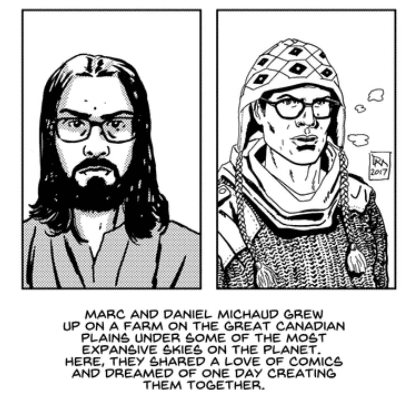
GP: Brothers working in a shared title and/or universe isn’t completely unheard of in comics (the Hernandez brothers and brothers Ba and Moon leap right to mind, for instance), but it’s always an exciting situation.

What is it like working with each other in the same universe? 

MM: Generally, it’s a very positive experience. I use Daniel as my sounding-board as well as a critic, helping me get the best possible page or sequence. He is also my first reader, so he tells me what does and doesn’t work. I trust and value his opinion so this is a very important step in my process. 

Daniel Michaud: As stereotypical as it may sound, it just feels totally natural. We’ve been collaborating and sharing discoveries in our artistic practices in some way or another since childhood.

GP: How much of your separate stories are planned ahead of time and how much of the stories evolve based on what you’re seeing the other do?

MM: The stories are separated in continuity by about 400 years or so, meaning the characters don’t affect each other in direct ways. We share locations, ideas and a robot, otherwise the stories mostly stand on their own, all while informing and enriching each other. 

DM: Marc generally keeps his cards close to his chest when it comes to his stories. He’ll send me “roughs” that I dissect and comment on. I, on the other hand, need input as the stories grow. I call him on the phone when needed.

GP: How do you resolve any disputes between you two, whether there is a difference of opinion for content, storytelling style, or publishing/marketing decisions?

MM: Rarely, we’ll argue over a story element but it’s usually resolved quickly. Since we’ve worked hard to keep our stories connected but separate, most of these issues are minor details. Some things have been added or altered in my story to accommodate his and vice versa. We talk nearly daily on the phone, usually touching on the comic in some way before veering into whatever else might be of interest at the time. It can get fiery but our goal is always to make the best comic possible, so we work it out.  In terms of publishing and marketing, I usually take control and make the decisions after consulting with Daniel. 

DM: Working in comics has actually greatly reduced our disputes. Painting murals, on the other hand, things weren’t always so rosy. We’d frequently raise our voices and get in each other’s faces about silly things like value schemes and colour choices. Nowadays I’d say that the disputes are mostly centered around my current productive output.

GP: How much world building did you two do together before you created anything? How much do you have to do, if any, as you’ve created more graphic novels in this shared universe?

MM: Not much. I’m a fly-by-the-seat-of-my-pants writer, for the most part. I planned the first book of ARC29 and left myself many holes that I would have to fill as I went along. 

DM: Hopefully there’ll be much more to come. DEMETER has been much more about the founding rather than the colony itself. I anticipate working closely with Marc when it comes to world building on the planet as it will invariably influence his story.
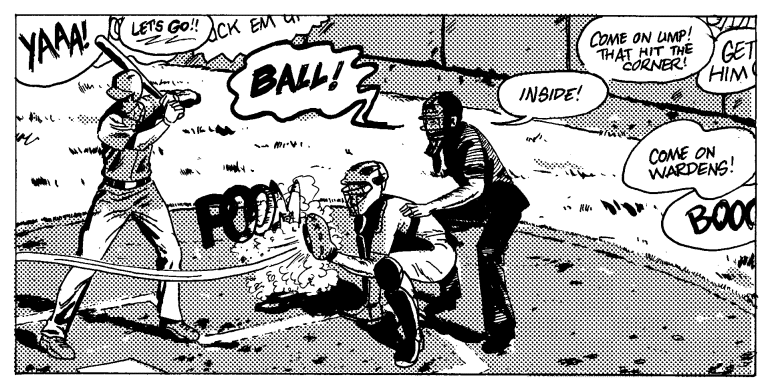
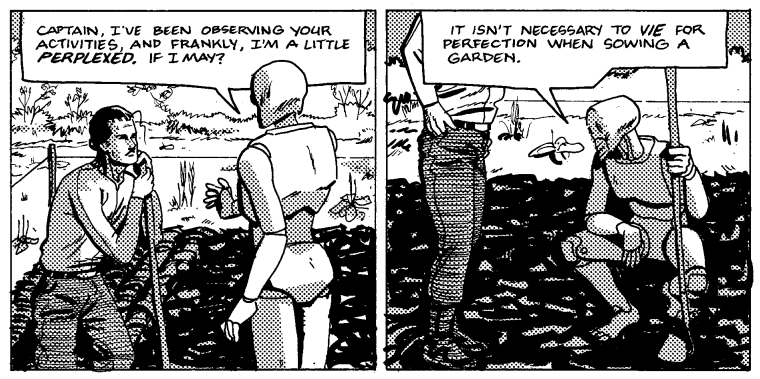
GP: One of the similarities between both of your stories and styles that I noticed was that you both seem to evenly balance futuristic things like spaceships and robots with more contemporary things like baseball and horses. Was that intentional and why so? Or, if not intentional, why do you think that happened?

MM: It was intentional from the start. My core concept, for ARC29, was to develop three storylines that I could jump between as I wished: Patrick’s tale of leaving Demeter and inheriting the ship, Orlando’s journals and last, the colonization of Demeter some 400 years earlier. When I initially explained this concept to Daniel, he immediately saw the scope of the project and offered to take over the telling of the settlement, to which I agreed wholeheartedly. The original idea was to have this settlement on a backwoods planet that would resemble, in large part, the difficult situation facing the pioneers in northern Canada. Daniel had long talked about making a comic that was essentially a soap-opera about pioneers, so we transplanted that idea into a sci-fi colony.

GP: I also noticed that you both like the story within the story approach, not just on the level of you each doing your stories in the same universe but also in both using extended flashbacks. Did you both do that intentionally, and if so, why? If not, why do you think it happened coincidentally?

MM: I think it happened coincidentally. It has to do with the way the stories are structured that flashbacks become necessary to tell the whole thing, especially since our stories happen at separate times. It becomes difficult to have a “now”, if that makes sense? 

DM: I just can’t think of another way to tell a story
GP: You’re a member of the Cartoonist Cooperative, and HΩME is one of their featured campaigns. What has your experience of the CC been generally?

MM: Very positive. The idea that there’s a group of like-minded folks that are helping expose my work to more people is amazing. Given the nature of indie publishing today, where the artist is also the promoter/marketer, this is a wonderful thing to have, especially since I’m not very active on social media and am not yet a well known artist. The sense of community fostered by the cooperative is also invaluable. The solitary nature of cartooning makes it easy to isolate oneself and the coop acts almost like a remote support group. 

DM: Marc is totally satisfied and is genuinely excited when he talks about the CC. I think it’s a noble initiative which aligns with my values. Cartoonists helping cartoonists.

GP: It strikes me that working as a brother team in your shared universe might be good prep and practice for working with the CC. In what ways has working together prepared you to work with the CC and in what ways has working with the CC been different?

MM: With the CC, I’m appreciative of the smallest action; a post or shared post, an email sent or an interview. I would never tell anyone in the coop what to do, the same can’t be said between brothers, haha 

DM: I’m not exactly very active online, but please tell me what I can do to be of service to the CC.
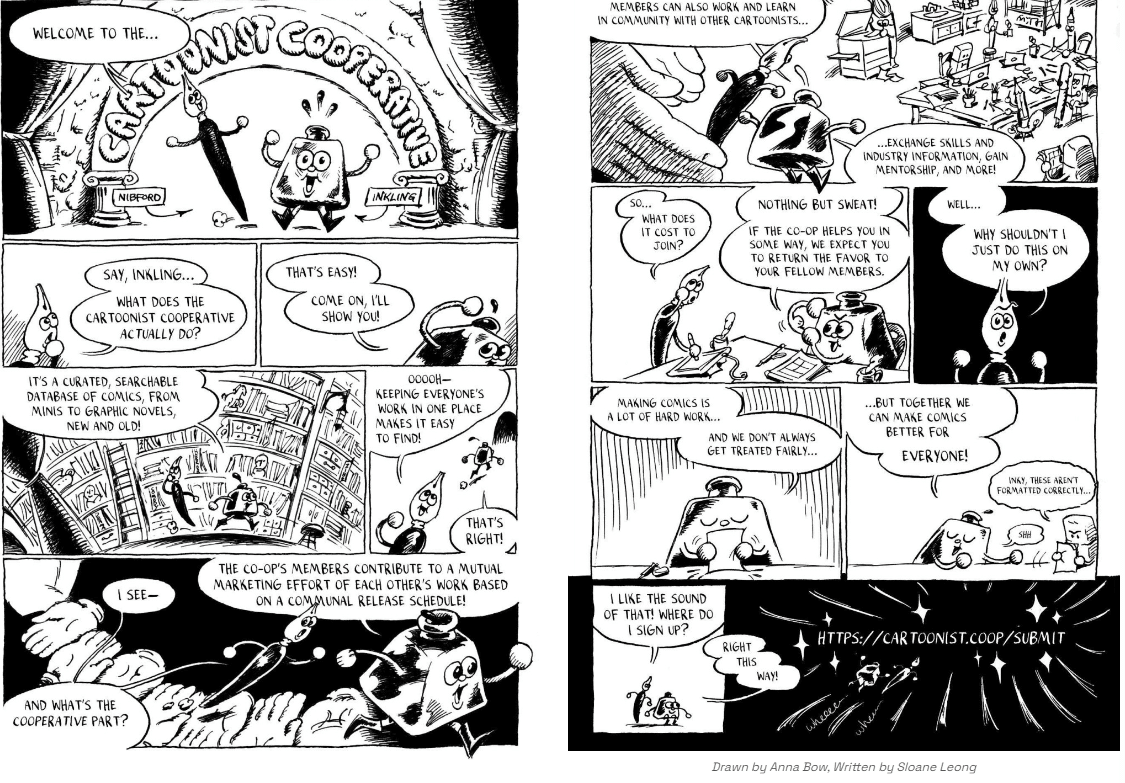
GP: How has your experience with them on the campaign specifically been? In what ways have they helped you and your graphic novel’s launch?

MM: We’re still actively in the campaign, but so far I think it’s helping it get seen, through posts and shares and emails to websites and influencers and such.

GP: I didn’t read the previous ARC stories but found this easy to understand and pretty much self-contained, which was your intention, clearly stated at the beginning.
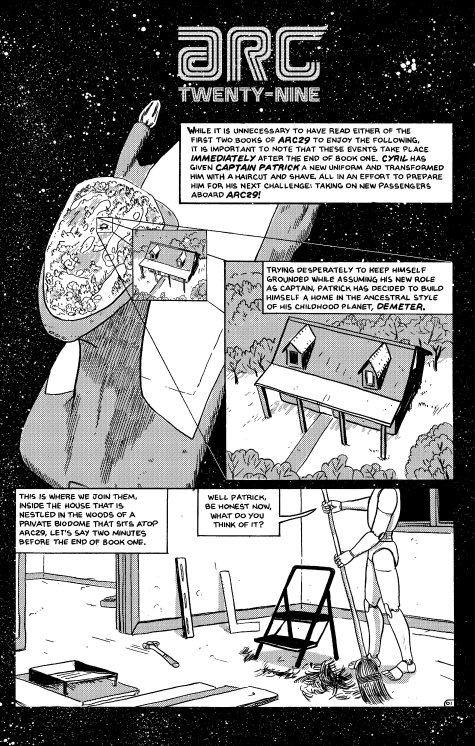
GP: The exposition paragraphs at the beginning that places this story in the series’ context is something that is a little more old-fashioned in today’s comics. The rest of Arc, in terms of storytelling, feels much more contemporary (thinking of a lot of the silent pages/filmic storytelling). In light of this, why choose the more traditional, expositional approach at the beginning?

MM: This is the first book that I use this tool since book one starts in situ and book two is a flashback to Patrick’s youth with no direct connection to book one. With book three being a direct follow up to one, chronologically at least, I felt the narration was needed to establish where and when we are, for new readers as well as those who’d read the first two. It never occurred to me that it was old-fashioned but given the retro style we’re working with, it does seem to fit nicely. I think it also speaks to the mish-mash of influences in my work.

GP: Other than what I mentioned above, I do sense a fusion of new and old approaches in content and storytelling. In what ways do you feel like your work is more traditional and in what ways do you think it’s more innovative?

MM: I think my work is traditional in the sense that I’m trying to reach the heights of the classic storytellers working in black and white and tone. My working method is a hybrid, thumbnailing on paper, roughs and pencils are done digitally then printed in non-photo blue and inked/lettered by hand. I think my work is innovative in the focus and structure of my stories, having multiple storylines to jump to. This becomes much more evident in book 4 ;)

GP: How did you accomplish this, making a self contained, yet serial, story? What story or character elements did you leave out from previous volumes and how did you decide what to take out/leave unsaid from previous volumes vs. what connections to make and leave in? 

MM: You’ve touched on what is one of the trickiest parts of writing, as far as I’m concerned. My goal is to write what feels like a complete story every time, so that a new reader can feel like they’ve understood enough but if they’ve read the rest, it will be richer for it; not necessary, but better and certainly bigger. With each successive volume, I’ve tried to increase the scope of ARC29.  I can only hope that I’ve been successful in this task.

GP: How does that approach compare to the way you produced other Arc stories in previous volumes of HΩME?

MM: Since the previous volumes are out of chronological sequence, I felt it was easier to keep them as separate, complete stories. The new challenge, in book three, was to connect it to the previous books and use them as a framing device to tell a new complete story within a story.
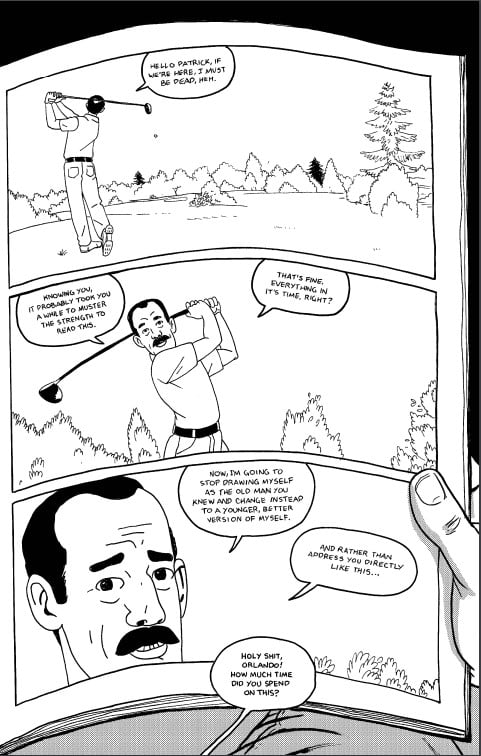
GP: In what way do you think Arc compares/contrasts with Demeter? In other words, what does it add to HΩME that Demeter doesn’t, and what do you think Demeter adds that Arc doesn’t?

MM: If nothing else, ARC29 brings volume. For multiple reasons, I’m able to produce more pages faster, so there’s substantially more ARC29. I also think the multiple storyline approach brings some vitality to the project. DEMETER is a much more singularly focused story that is only starting to take shape. I have the advantage of knowing where it’s headed and its epic nature, which is in contrast to ARC29’s smaller scale, personal stories. 

GP: I didn’t read the previous Demeter stories but, like Arc, I found this easy to understand and pretty much self-contained.

DM: Thanks, that means a lot.
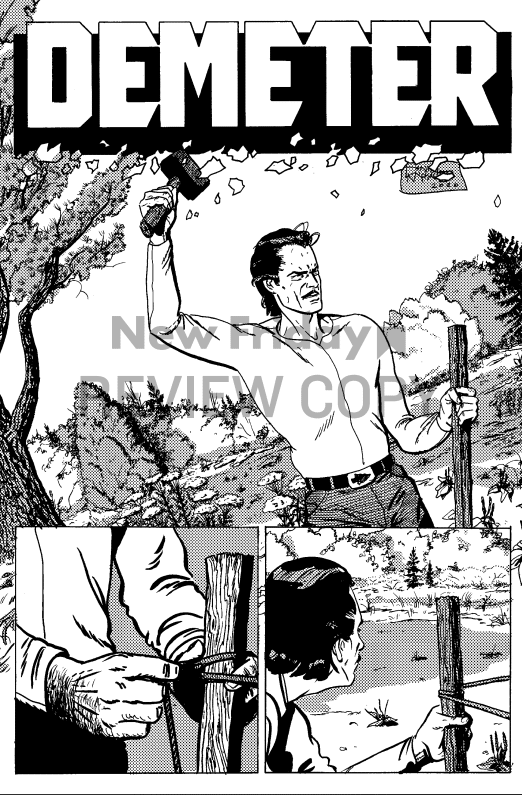
GP: AArc had an exposition paragraph at the beginning that placed that story in the series’ context. You didn’t do that here. Why?

DM: Comics are really hard, it’s honestly just something that I forgot to do. When my editor read and commented on the book, he suggested that I help the reader with more “signposts” in the future, which makes total sense. You can expect an exposition paragraph and other various “signposts” starting in book #4!

GP: How did you accomplish making the story self contained, especially without beginning expository captions? What story or character elements did you leave out from previous volumes and how did you decide what to take out/leave unsaid from previous volumes vs. what connections to make and leave in? 

DM: Marc has always spoken about the importance that his books be self contained and it makes sense to me. It’s difficult to judge if I succeeded without having outside readers such as yourself tell me it works. It’s been a very challenging to pull off because I set myself on a very strange path starting in book #1. Marc had already drawn his entire story (twice if I’m not mistaken) before I had the opportunity to devote myself to the project. Knowing I couldn’t draw a 40+ page story within a reasonable amount of time, I decided to create a 15 page preview. Much like a movie trailer with loosely coherent themes and abrupt ellipsis, book #1 anticipated stories I’d tell in the next 4-5 books. As of book four I’ll be out of that hole and on to vastly different comics.

GP: In what way do you think Demeter compares/contrasts with Arc? In other words, what does it add to HΩME that Arc doesn’t, and what do you think Arc adds that Demeter doesn’t?

DM: When we were younger and exploring psychedelics, it struck one day that Marc was always looking up at the sky, pointing out clouds, colours, birds and stars. My attention was always focused on the ground. At the plants and mosses and the little life.

GP: Is there anything else you’d like to mention?

MM: I’d like to thank you for the thoughtful questions and the coop for their help in promoting the book. Look forward to more HΩME comics, book 4 is almost done! 

DM: Thanks for taking the time to read the comic and for all of your effort in contributing positively to the milieu.
Graphic Policy’s Top Comic Picks this Week!

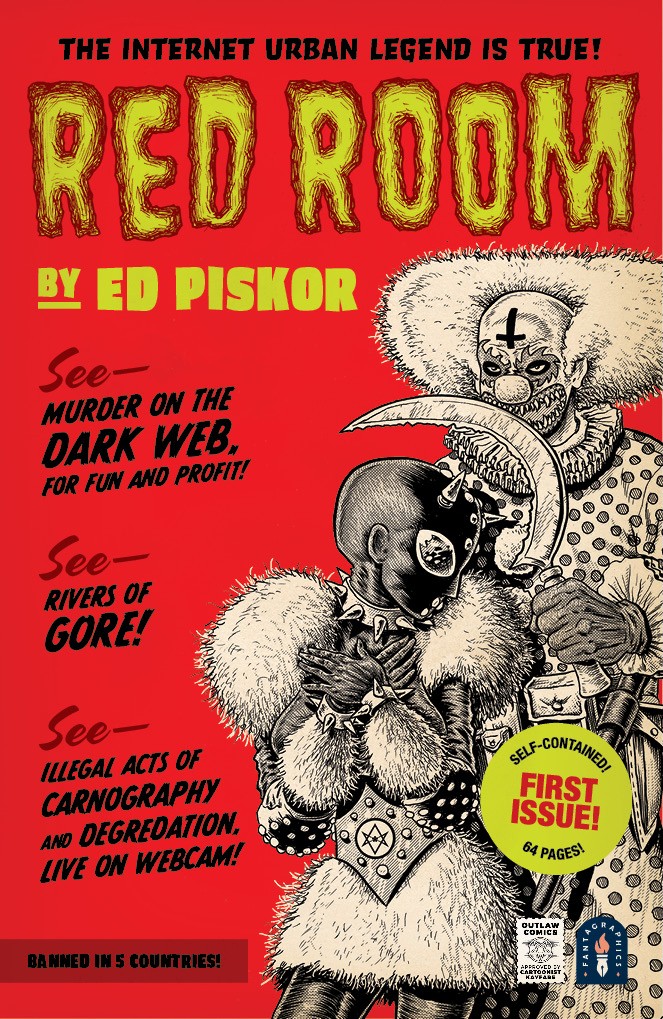
Red Room #1

Wednesdays (and now Tuesdays) are new comic book day! Each week hundreds of comics are released, and that can be pretty daunting to go over and choose what to buy. That’s where we come in

Each week our contributors choose what they can’t wait to read this week or just sounds interesting. In other words, this is what we’re looking forward to and think you should be taking a look at!

Find out what folks think below, and what comics you should be looking out for this week.

Fantastic Four: Life Story #1 (Marvel) – A new take on the Fantastic Four looking at their lives in real time across the years.

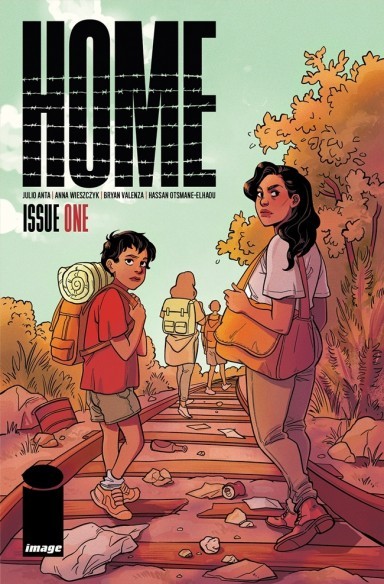
Home #2 (Image Comics) – The series takes a hard look at immigration. The first issue delivered a finale that took the series in a fantastical direction and we’re intrigued as to where it goes from there.

Nottingham #3 (Mad Cave Studios) – A fresh take on the Robin Hood mythology.

Phantom on the Scan #2 (AfterShock) – The first issue had a solid X-Files vibe to it and we want to learn more about these characters, their powers, and why they’re dying.

Rangers of the Divide #1 (Dark Horse) – A new series following a Commander who stumbles upon a team of cadets after the nation’s peace keepers disappear.

Red Room #1 (Fantagraphics) – Ed Piskor’s new monthly comic series kicks off with a double-sized issue. Red Room is cyberpunk, outlaw, splatterpunk, entertainment.

Shang-Chi #1 (Marvel) – The previous miniseries was fantastic and we’re expecting no less when it comes to this new series.

Stray Dogs #4 (Image Comics) – We really don’t know if murders actually took place. But, we’re sucked into this series that’s kept us guessing what’s going on with every issue.

Way of X #2 (Marvel) – Nightcrawler explores the world of Krakoa and that includes the bad that lies underneath. The first issue was a solid exploration of the new world of the X-Men from a different perspective.

We Live Vol. 1 (AfterShock) – If you missed the individual issues, you have no excuse now. This is an emotional journey and one hell of a debut.

White Lily #3 (Red 5 Comics) – Based on real history, the story focuses on a Russian female fighter pilot during World War II, one of the best ever.

Wonder Girl #1 (DC Comics) – The new Wonder Girl starts off here! From what we know from Future State, this is going to be a major character in the DC Universe for years to come!

Review: Home #1

Home #1

I had no idea what Home #1 was about when I opened the review pdf just after midnight on Wednesday. Absolutely none – and while that experience was incredible, it’s going to be hard to talk about the comic without talking about the content of the book, so if you want the same experience then stop reading this review now, because frankly this comic is one that you should read.

Still with me?

Fair enough.

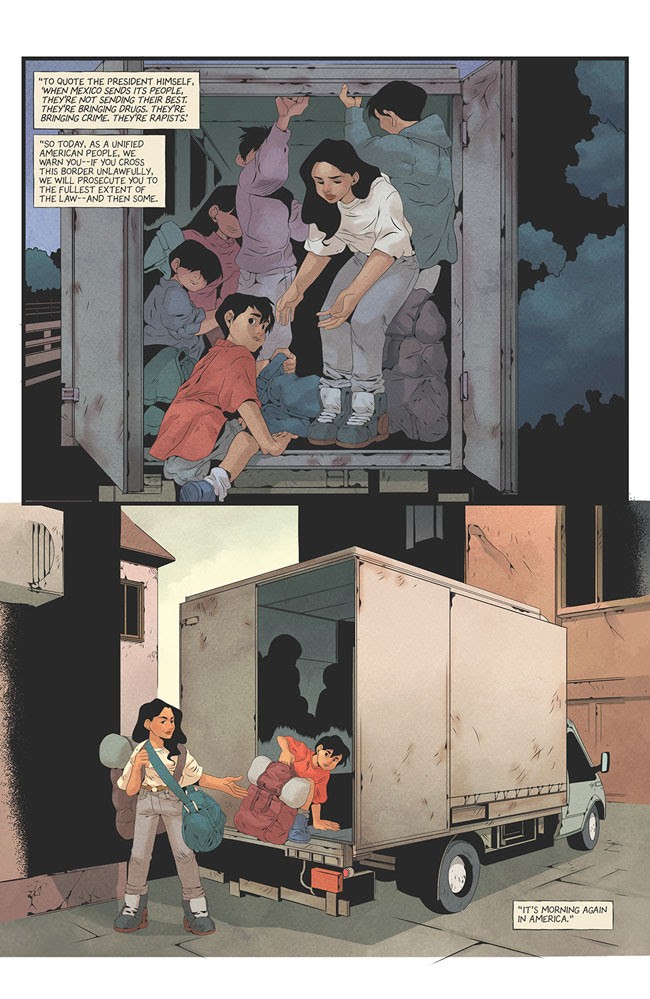
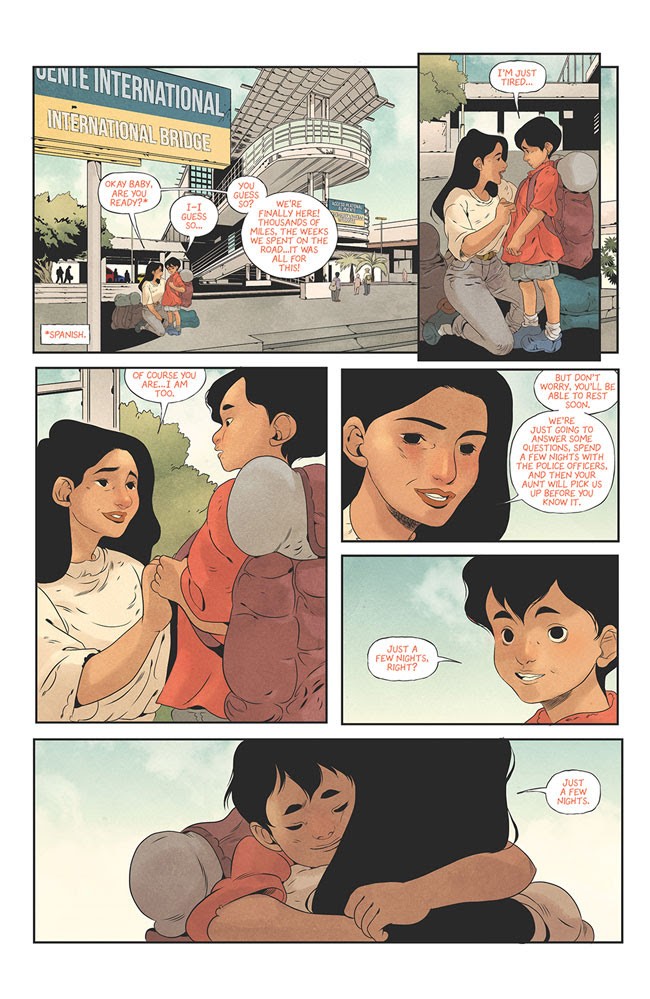
So what’s the comic about? Home #1 is the story of a mother and son who have given up everything to come to the United States, by seeking asylum at the border between the USA and Mexico. Given that this comic is set at some point in the last four years, and given the news that has emerged about the Trump Administration’s policy of separating parents and children, you can probably imagine what happens next. But even knowing that, doesn’t make it any easier to read.

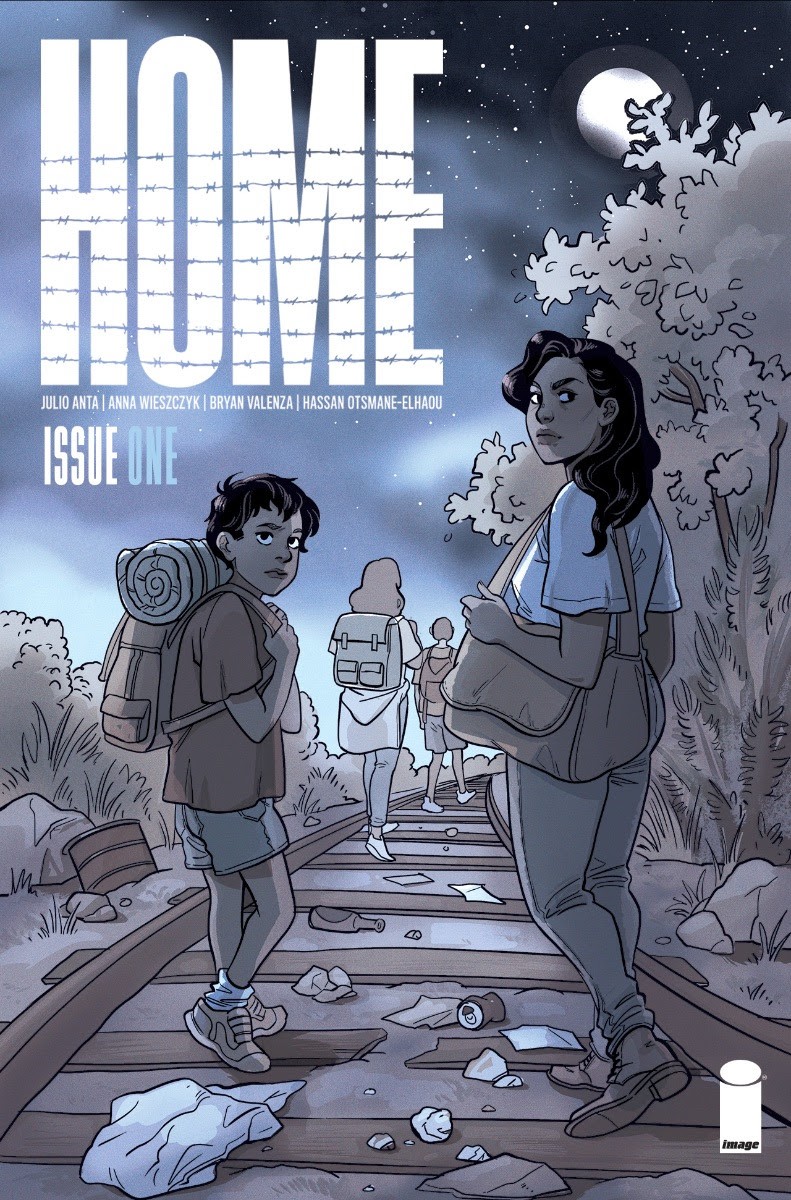
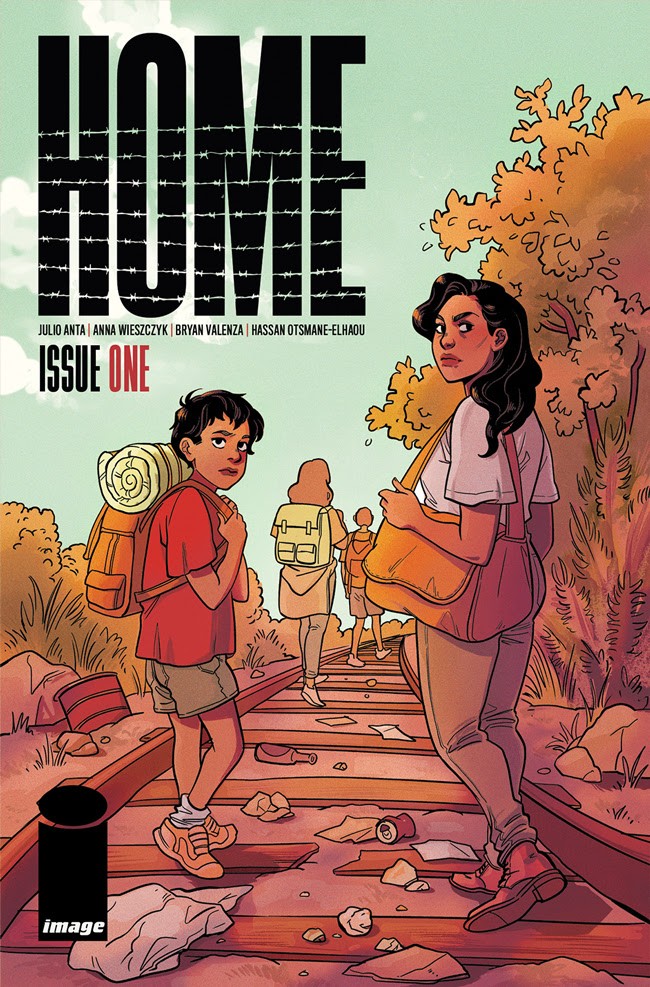
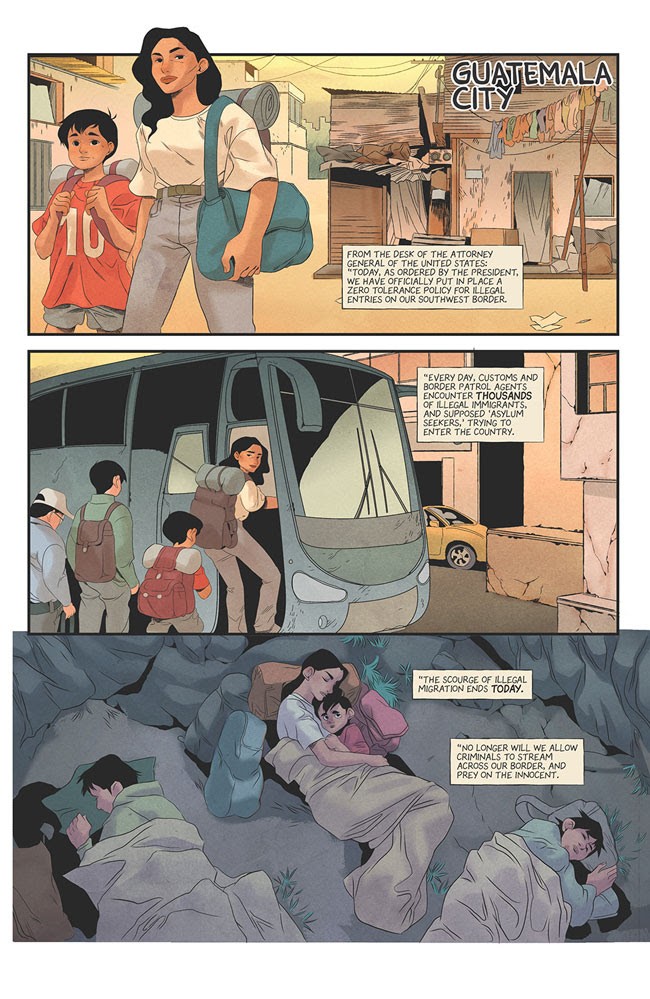
Written by Julio Anta with art by Anna Wieszczyk, colours by Bryan Valenza and lettering by Hassan Otsmane-Elhaou, the comic takes an unfiltered look at what life had been like for asylum seekers during the last four years (am I being too optimistic in thinking that things have changed? I hope not, but I also know that this isn’t an area that I’m an expert in). Anta’s dialogue will tear at your heart, the hope his characters have turning to uncertainty and fear is heartbreaking, and it hits so much harder because of the art work. There’s a distinct shift from warm colours toward cold and clinical greys and blues as Mercedes and Juan Gomez are faced with the reality of their situation.

Home #1 is not easy to read, but I think it’s a story that needs to be read; just because it’s a fictional story, doesn’t make the emotions within the comic any less vivid. The creative team really knows how to punch you in the gut. There’s a slight drop in the art toward the end of the book as things feel a little looser than before, but after reading the book a few times, I’m inclined to think that the looseness is a choice based on the events on the pages themselves.

But there’s still optimism in the story – well, apparently there will quite a lot based on Anta’s afterward, but I don’t know what to think of that at the moment, but there’s definitely signs of a brighter future… maybe. I don’t know. Obviously I believe the writer of the comic, but I’m not seeing anything like that right now.

All I really know about this book is that you need to read this comic.

Story: Julio Anta Artist: Anna Wieszcyk
Colourist: Bryan Valenza Letterer: Hassan Otsmane-Elhaou
Story: 9.0 Art: 8.5 Overall: 8.8 Recommendation: Buy

Image provided a FREE copy for review, but I also purchased the comic


Purchase: comiXology – Amazon – TFAW

Home #1 Has Sold Out and Gone Back to Print

Julio Anta and Anna Wieszczyk’s series Home sold out at the distributor level yesterday immediately, on the day of release. Image Comics has greenlit a reprint of the debut in order to keep up with growing demand for the popular new series.

The new super-powered series Home explores the real-world implications of a migrant who is suddenly imbued with extraordinary powers. Home follows a young boy who is torn away from his mother while seeking asylum at the U.S. border—just as something begins to change in him. He doesn’t know it yet, but it’s the onset of superhuman abilities that will alter the course of his life forever. 

Home #1, second printing (Diamond Code MAR218115) will be available at comic book shops on Wednesday, May 12.

Home #1, second printing

Around the Tubes

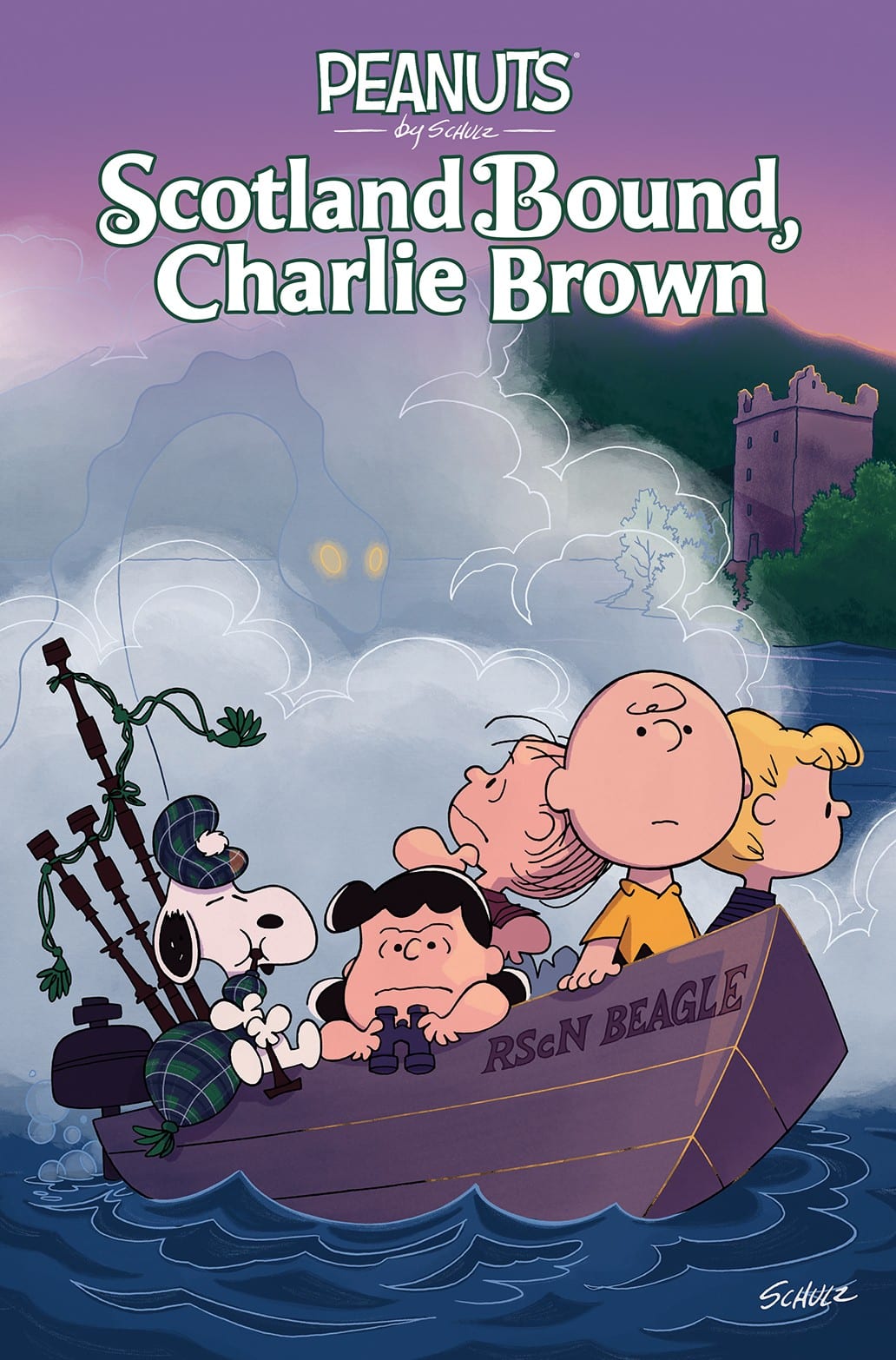
Peanuts: Scotland Bound, Charlie Bound

The weekend is almost here! What geeky things will you all be doing? Sound off in the comments below. While you wait for the weekday to end and the weekend to begin, here’s some comic news and reviews from around the web.

The Beat – A Year of Free Comics: GREAT GATSBY: AMONG THE ASH HEAPS AND MILLIONAIRES – Free comics!

Smash Pages – Nominees announced for the 2021 Doug Wright Awards – Congrats to all of the nominees!

The Beat – Announcing the winners of the 2021 Cartoonist Studio Prize Award – Congrats to all of the winners!

Reviews

CBR – Home #1
CBR – Peanuts: Scotland Bound, Charlie Brown

Around the Tubes

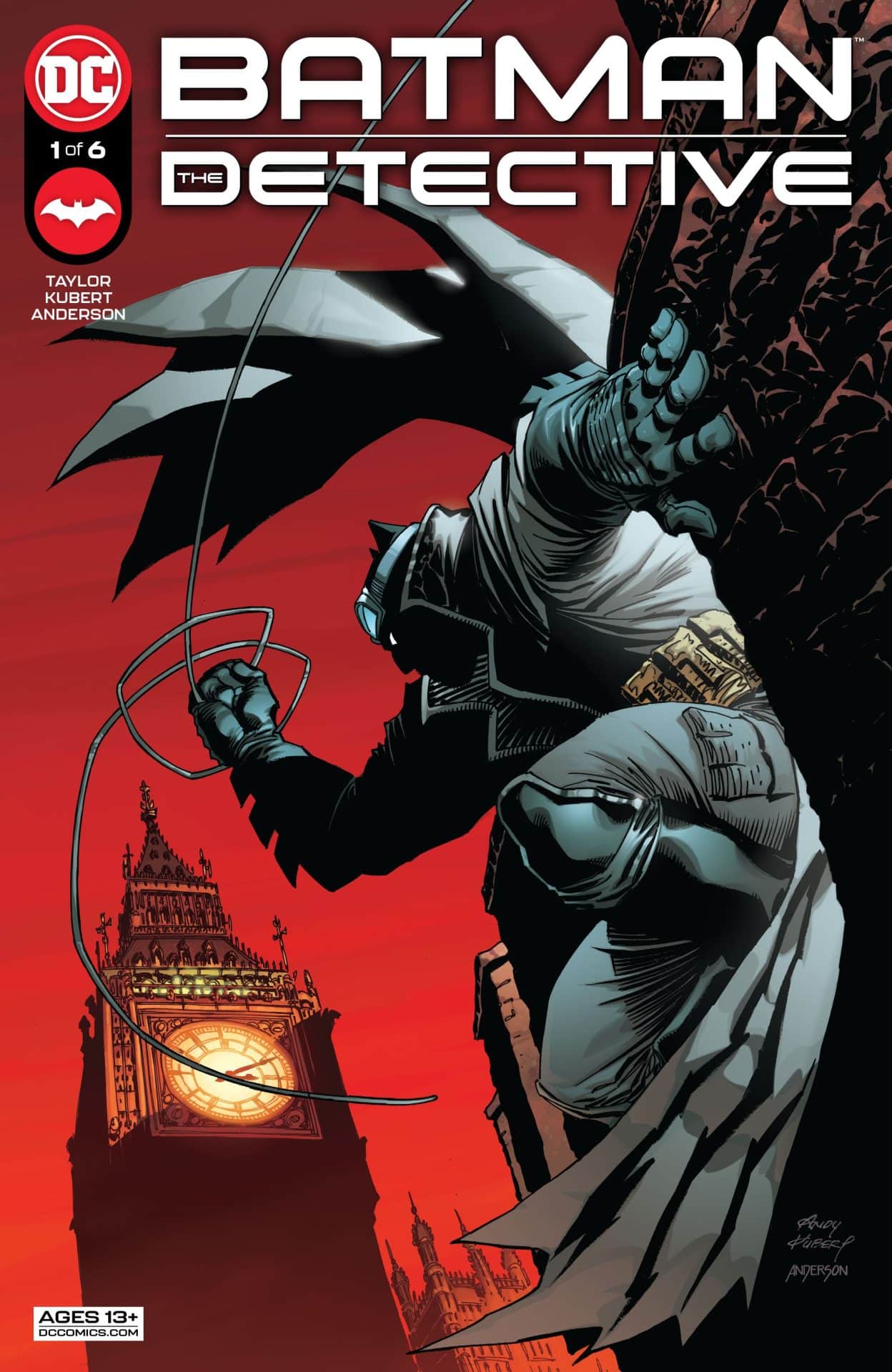
Batman: The Detective #1

It was new comic book day yesterday! What did you all get? What’d you like? What’d you dislike? Sound off in the comments below. While you decide on that, here’s some comic news and reviews from around the web.

The Beat – Ed Brubaker gets more residuals from his WINTER SOLDIER cameo than from creating the character – That’s not acceptable.

Japan Today – There has been a shift in sales from comic magazines to comic books, but there is a further shift toward digital comics at an increasing pace. – Interesting…

Reviews

CBR – Batman: The Detective #1
ICv2 – Beast Complex Vol. 1
ICv2 – Call of the Night Vol. 1
Collected Editions – Harley Quinn and the Birds of Prey: The Hunt for Harley
The Beat – Home #1
Talking Comics – Magic #1

Review: Home #1

Home #1

Fuck our immigration system. Fuck taking kids from their parents. Our system is broken and needs vast reform. This is where I’m coming from going in to reading Home #1, the new comic series published by Image Comics. Home follows a young boy who is torn away from his mother while seeking asylum at the U.S. border. The trauma unleashes something within him, causing him to gain superhuman abilities. Yes, that latter part of the concept might sound familiar but it’s the raw and heartbreaking setting within which it happens that is different, though a reality that’s not new.

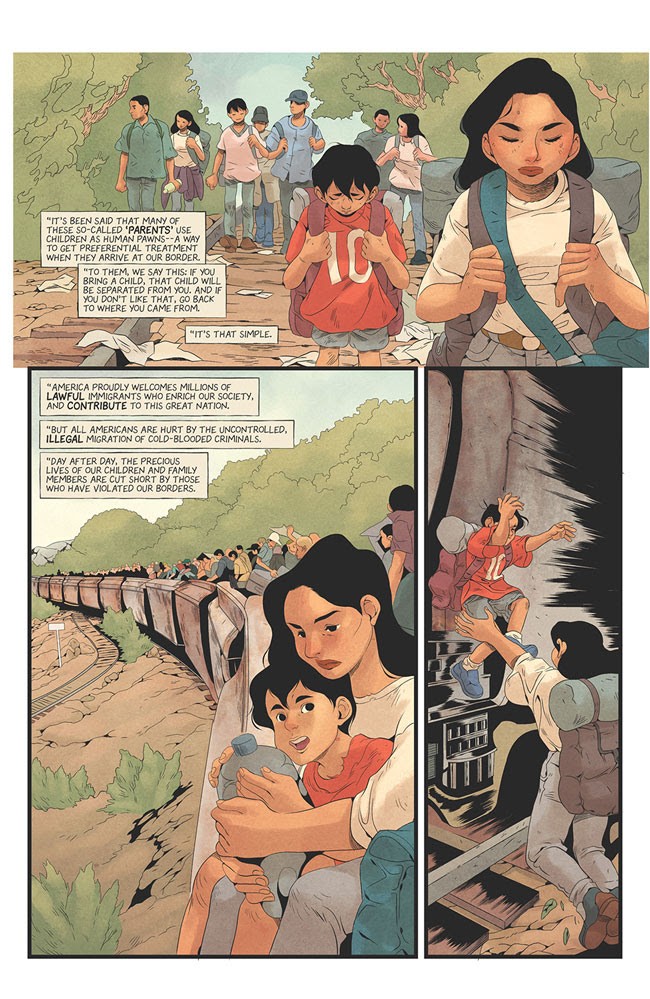
Written by Julio Anta, Home #1 opens with a riff on real words from former Attorney General Jeff Sessions. The address was delivered in 2018. The comic follows a mother and her son as they flee their home of Guatemala in hopes of seeking asylum in the United States. What they don’t know is that policy changed while they were making their journey morphing into the horrible policies under former President Donald Trump. Anta doesn’t name Trump or Sessions but the words used, the hate inflicted, the cages, it’s all clear that the administration is the inspiration for this story.

Anta delivers a heartbreaking story. While we’re given only a bit of the details of why these two, Mercedes and Juan Gomez, are fleeing their country, it’s no less difficult to read. The comic gives an overview of the difficult journey of the two but what’s presented is nowhere near the brutal reality many face. And what’s presented is still difficult to read. We’re also taken through the immigration system with guards and bureaucrats whose racism and hate flows from their mouths at ease. The comic reminds us that due to the election of Trump, far too many in the nation felt it was ok to look at others as less than human. That compassion was something that wasn’t deserved. The hate is present.

Anna Wiesczyk‘s art is really nice to look at. With color by Bryan Valenza and lettering by Hassan Otsmane-Elhaou the art emphasizes the emotion of its two travelers. It’s heart is in the looks of fear, sadness, and anger. There’s a dip towards the end of the comic where it dips into a bit of a cartoon look that reminded me of Don Bluth but the visuals overall will stick with you. The big thing that stands out though is things are a bit too “clean”.

There’s a worn-down grittiness that’s missing in the art style which stood out to me. But, depending on where the series goes, that style might not work. We’ll see. If anything, the “lighter” style of the art doesn’t quite match the tone and subject for me. It’s good though and if anything lightens up what would be a very dark and emotionally straining comic otherwise.

Home #1 isn’t perfect and has some bumps in its narrative but it’s an important read. The end of the comic is a bit rocky and doesn’t match the quality of everything up to that point. Some dialogue feels a bit comical in its delivery, an unfortunate distraction. But, the majority of the comic is heartbreaking. Home is attempting to address a wrong that persists and it’s doing so through the long tradition of using entertainment as its messenger.

Story: Julio Anta Art: Anna Wiesczyk
Color: Bryan Valenza Letterer: Hassan Otsmane-Elhaou
Story: 7.5 Art: 7.0 Overall: 7.45 Recommendation: Read

Image Comics provided Graphic Policy with a FREE copy for review


Purchase: comiXologyAmazonTFAW

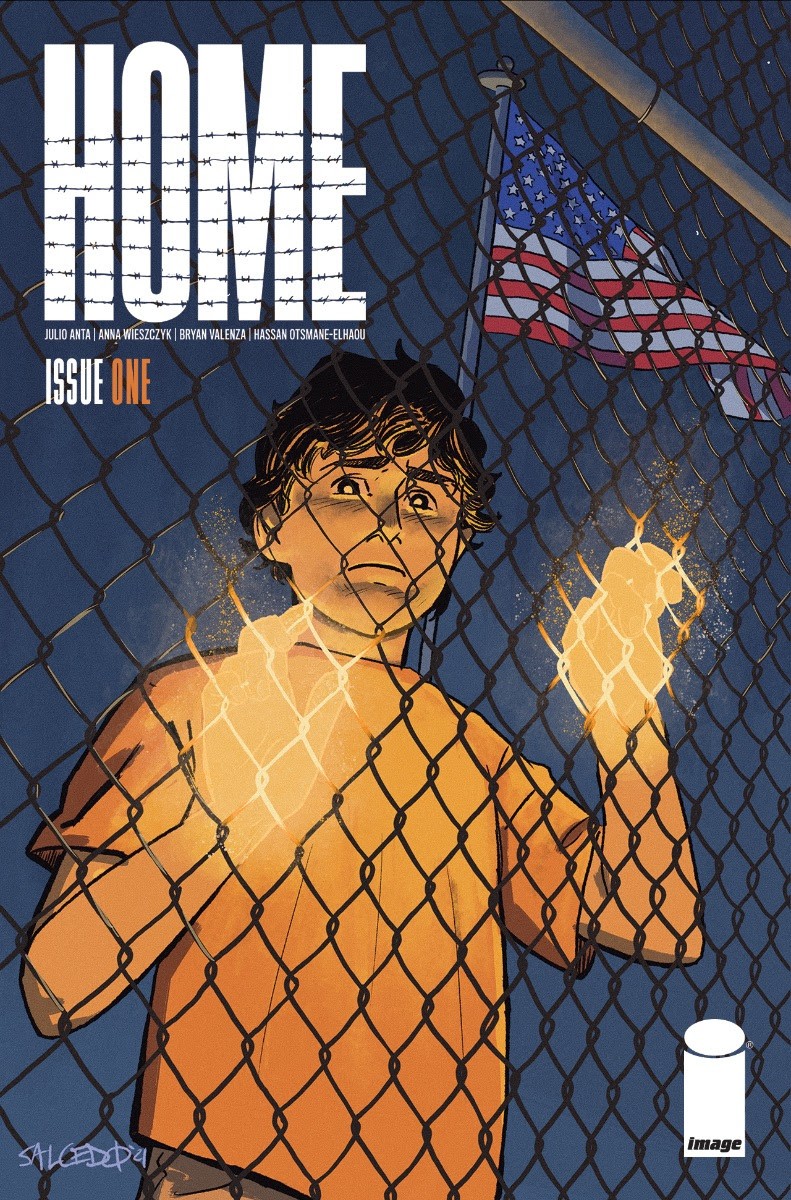
Home Will Feature Variant Covers by Jacoby Salcedo

The upcoming series Home by writer Julio Anta and artist Anna Wieszczyk will boast a special, collectible series of variant covers featuring artwork by the lauded Jacoby Salcedo

Salcedo is a longtime collaborator with Anta. They’ve previously worked together on “The Price of Freedom,” “Between Two Worlds,” and “Balseros,” mini-comics which were published in anthologies like COVID Chronicles and magazines like Panel X Panel. The pair have a forthcoming graphic novel together, Frontera, slated for 2023 with HarperAlley.

There will be a Salcedo variant available for each issue of the five-issue miniseries in stores this April. 

The new series Home explores the real-world implications of a migrant with extraordinary powers, and will launch from Image Comics in April.

Home follows a young boy who is torn away from his mother while seeking asylum at the U.S. border, just as something begins to change in him. He doesn’t know it yet, but it’s the onset of superhuman abilities that will change his life forever. 

Home #1 Cover A by Sterle (Diamond Code FEB210032), Home #1 Cover B by Salcedo (Diamond Code DEC209048) will be available at comic book shops on Wednesday, April 14.

Home #1 Cover B by Jacoby Salcedo

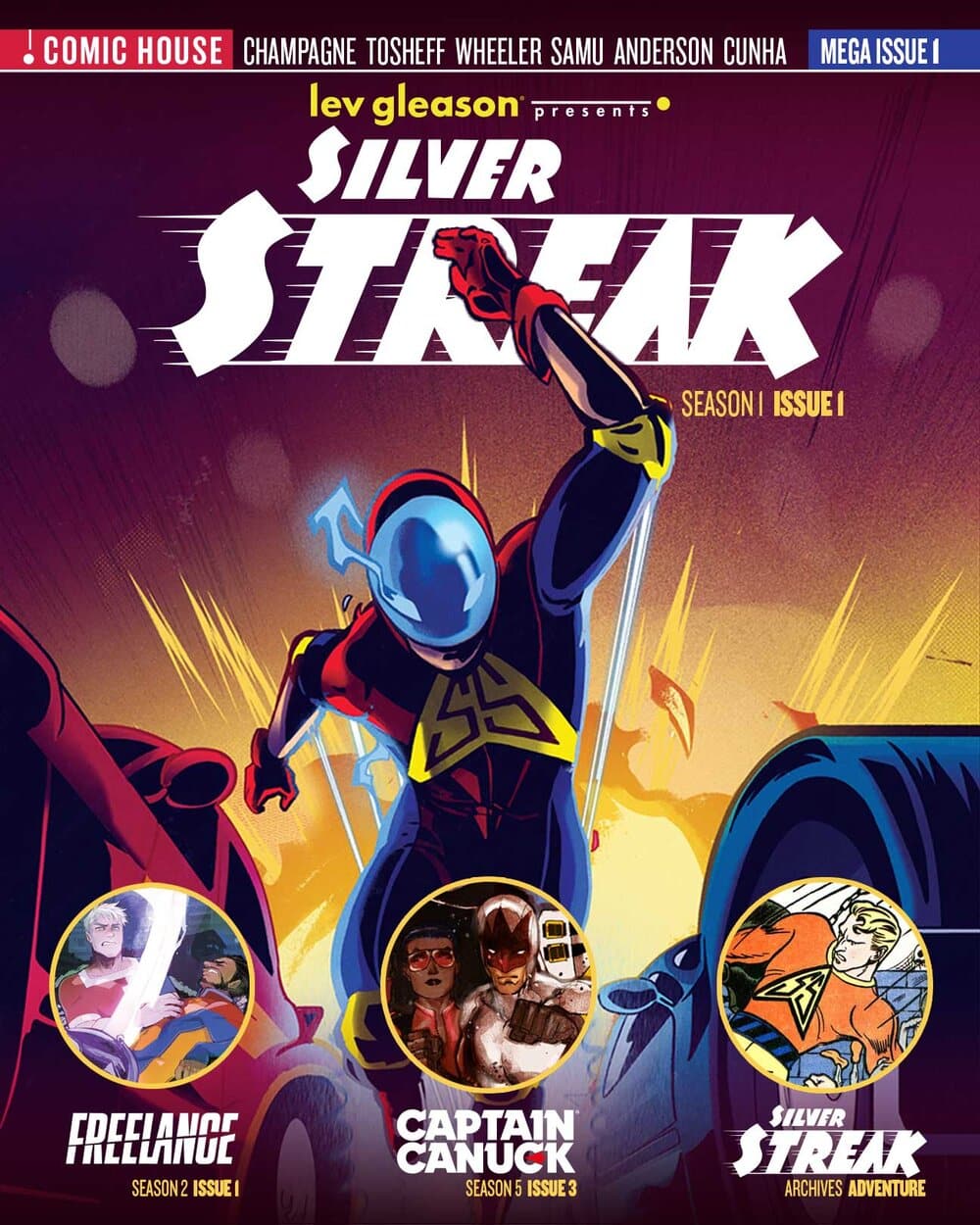
Chapterhouse becomes Comic House under Lev Gleason Publications

Silver Streak Season 1 Issue 1

More than a half-century after Lev Gleason Publications closed its doors, Lev Gleason Incorporated has launched with four new imprints inspired by the legendary publisher: Comic House, Comic House Archives, Lev Gleason Library, and New Friday. Distribution is managed through Diamond Comics, Diamond Books, and Ingram Content Group

The renewed effort began in 2020 with American Daredevil‘s release, the first-ever full-length biography of Lev Gleason published by Chapterhouse Publishing. Brett Dakin, Gleason’s great-nephew, opened up the family archives—and the FBI’s files—to take the reader on a journey through the publisher’s life and career. Released to great acclaim, American Daredevil revealed the truth about Gleason’s rapid rise to the top of comics and unapologetic progressive activism.

In a nod to one of Lev Gleason’s first ventures, Comic House has launched, which will see five years of existing Chapterhouse superhero properties integrated with reboots of beloved Lev Gleason characters like Silver Streak, Crimebuster, and Daredevil. At the center of Comic House will be a monthly 80-page anthology title—Lev Gleason Presents, a home for the entire universe. The first issue of the series will feature Silver Streak Issue One along with continuing Captain Canuck and Freelance stories and be available on comic store shelves worldwide in April 2021.

As well as the ongoing effort of restoring and publishing the complete catalog of Richard Comely‘s Captain Canuck and other universe properties, the new Comic House Archives is dedicated to collecting and restoring for print publication the entirety of the Lev Gleason line of books, beginning with its superhero archives. While this long-term project will take considerable time, they are committed to providing the digitally restored collections available for free on their website.

Inspired by Lev Gleason’s imprint of the same name, the Lev Gleason Library is a new home for works of prose. Death Takes Centre Stage featuring Daredevil by D.K. Latta will launch the imprint in April 2021.

Finally, as an homage to another of Lev Gleason’s early companies, we have launched New Friday, a home for creator-owned books. This independently curated imprint will kick off with the Michaud BrothersHΩME Volume 1, available now; upcoming titles include Minerva’s Map by Stefan Tosheff, Celery Stalks Volume 1 by Pat Rooks, the complete Scratcher by John Ward, and Frogboy by John Burgin.

Julio Anta and Anna Wieszczyk Explore US Immigration Policy and Border Patrol in Home

Debut creators Julio Anta and Anna Wieszczyk weave a deeply grounded and heartfelt story in the forthcoming comic book Home. This five-issue miniseries will explore the real-world implications of a migrant with extraordinary powers, and will launch from Image Comics in April.

Home follows a young boy who is torn away from his mother while seeking asylum at the U.S. border, just as something begins to change in him. He doesn’t know it yet, but it’s the onset of superhuman abilities that will change his life forever. 

Home #1 will be available at comic book shops on Wednesday, April 14.

Home #1
« Older Entries