
Tag Archives: gaming

How do you remake Resident Evil 4 while honoring its legacy?

When news first broke of a potential Resident Evil 4 remake by Capcom it wasn’t uncommon to see articles asking whether the game actually needed to be remade. The original game was released on GameCube in January 2005 to critical acclaim, hailed as the next evolutionary step not just in the field of survival horror but in video games as a whole. Given this, it all begged the question, why update a classic that’s still influencing games as we speak. Furthermore, how do you upgrade or rework something so groundbreaking for a new audience to appreciate without undoing the things that made it special to being with?

Looks like we’ll be having answers to these questions soon as Capcom formally announced the March 24th, 2023 release date for the Resident Evil 4 remake during Sony’s recent State of Play event. It’ll be coming to consoles and PC with all the bells and whistles expected of a next-gen game along with new gameplay mechanics to help it better fit in with today’s gaming sensibilities.

Bits of gameplay were shown in a trailer made for the event, showcasing highly detailed character models and environments not unlike those seen in the Resident Evil 2 and 3 remakes in terms of design and overall polish. What little we see of the Ganado (the now iconic infected Spaniards out for Leon’s head) looks terrifying, and opening village segment seems more claustrophobic and denser. If anything, it’s easier to compare now with Resident Evil: Village, especially in terms of color palette. It all bears a more gothic sense of horror, as was the case in RE8.

It’s not unfair to state that RE4 marked a watershed moment in gaming, of the kind that strikes a dividing line between the ‘pre’ and ‘post’ times of a game’s release. RE4’s over-the-shoulder camera angle, for instance, has basically become the standard for third-person experiences, seen in games such as Gears of War (2006), Dead Space (2008), and 2018’s God of War, extending as far as the most recent Resident Evil remakes (albeit with more modern mechanics featured as part of the update, such as the ability to aim while walking rather than having to stand still to do so as was the case in RE4).

The same goes for targeted limb damage, which wasn’t so much created by RE4 as it was equipped with more layers of gameplay mechanics thanks to the precise aiming controls and the well-rounded the weapon upgrading system. Running foes could be shot in the legs to stop them in their tracks while axe-wielding enemies could get their murder weapons knocked out of their hands by well-placed shots. Dead Space picked up on this with its own limb dismemberment system while The Evil Within series stuck more closely to RE4’s combat stylings (down to the weapon upgrades).
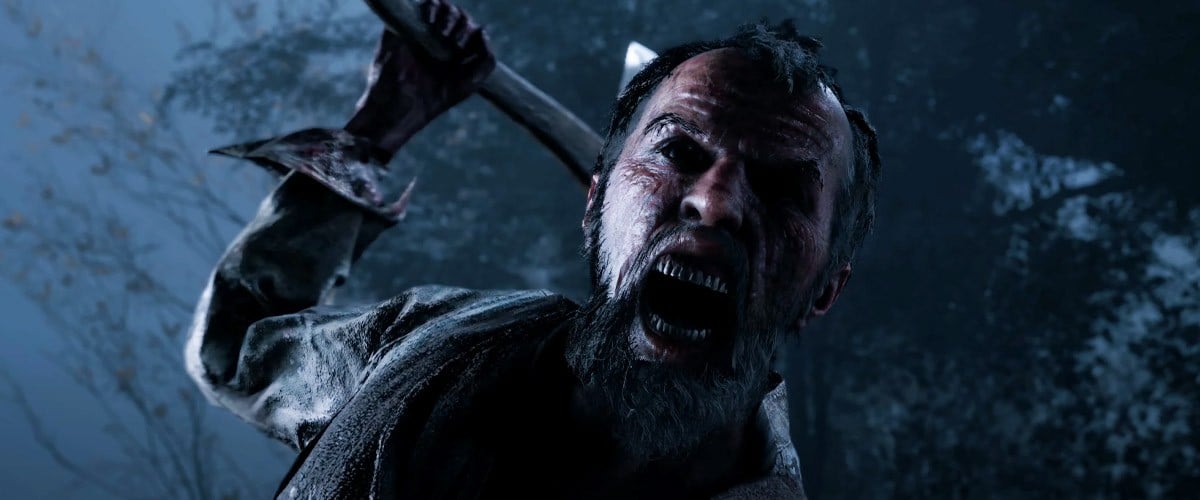
If the trailer for the RE4 remake is any indication, it’s fair to assume the trip to back to Spain will result in a celebration of these contributions to gaming. And yet, it does invite questions as to how much of what made the game so revolutionary will carry over into the final product. This makes the existence of the remake exciting beyond all expectations, especially when one considers what current gamers are used to when engaging with the latest offerings and whether they make RE4 come off as outdated or not.

I for one consider RE4 to have aged quite well. Upon revisiting it, the only thing I find myself taking time adjusting to is having to stop in my tracks to then be able to aim my weapon. It’s nothing that requires much wrangling from my end to get used to again, but it’s a noticeable shift.

It doesn’t compare to the amount of work I have to do to get back into the swing of things with the Playstation 1 line of Resident Evil games, which extends to the GameCube remakes. The tank controls require tapping into muscle memory you were already glad to be rid of (meaning the use of a single d-pad or analog stick to both turn and move backward and forwards as opposed to the first-person controls-inspired scheme that came later).

Resident Evil 4 didn’t do away entirely with the classic survival horror control scheme, but it made it infinitely more flexible when compared to what came before. Remakes post-RE4 would use that game as a map for their comebacks.
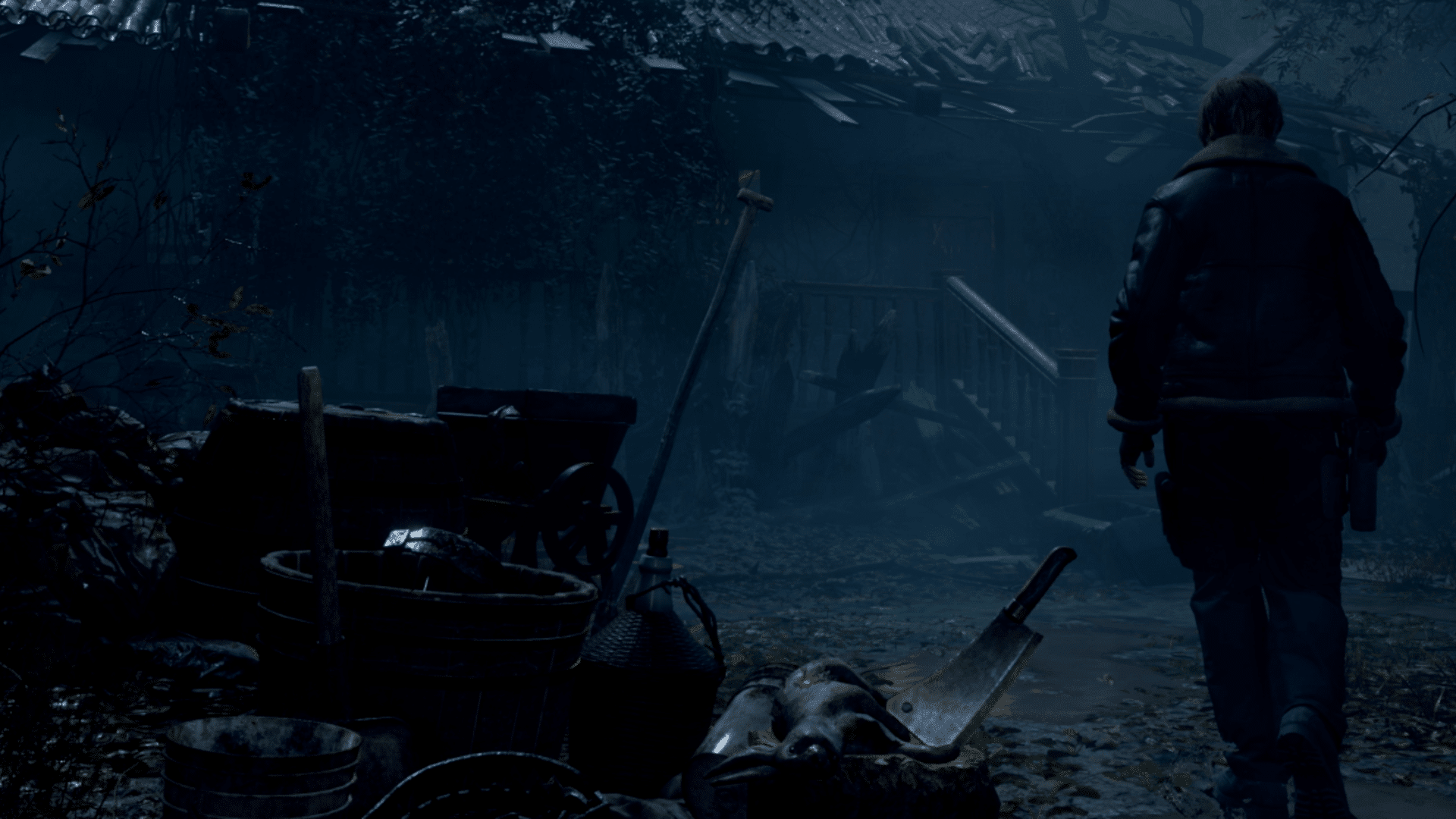
I’m not holding my breath for this, but I do hope there’s a classic mode that keeps the original controls in place for an experience that comes closer to what so many of us experienced when Resident Evil 4 first came out (if only for the sake of recognizing its contributions to gaming). I also hope the context specific actions Leon could pull off if he staggered an enemy crossover as well. I want to be able to roundhouse kick the infected after I’ve shot them enough to make them trip over their feet.

Resident Evil 4 quite simply broadened the scope of an entire industry, opened its eyes to change. It’s curious that the franchise has found so much success in remakes that update their classic entries by not only giving them very generous facelifts but also by changing the gameplay of the originals into something that plays more like Resident Evil 4. That’s how important this game is. It looks to update the past while still offering a viable blueprint for future games. Now it’s a matter of seeing how well the Resident Evil 4 remake captures the original Resident Evil 4.

The Brothers Behind Riverman Media

A large pizza rolls down a snowy hill, smashing evil skeletons as it gets closer and closer to its destination. Wings flap as a flying man straight out of Greek mythology tries his best to traverse as much as he can. The weight of a large silver-mining company on his shoulders, an executive fights werewolves to defend his livelihood.

These are just a few of the games from Riverman Media, a game development company made up of just two people: brothers Jacob and Paul Stevens.

“Until we became adults, we played every game together. Actually, we still do, for the most part!” said Jacob via Skype interview.

Jacob (Left) and Paul (Right) Stevens. Taken from Riverman Studio Website.

Jacob (Left) and Paul (Right) Stevens. Taken from Riverman Media Website.

After Jacob and Paul finished schooling from Northern Arizona University and Arizona University (CORRRECTION: UNIVERSITY OF ARIZONA) respectively, both with degrees in computer science, they got to work on game development full-time. Over the last decade, the duo have been releasing games on mostly iPhones and iPads, with one release on the Wii’s old online store for digital games, “WiiWare,” and some for Windows computers. Jacob does the art and music for the games, while Paul does the programming.

Their first games were first Cash Cow and then Primate Panic, both released for Windows. Cash Cow, a puzzle-game based on familiar mechanics of matching shapes together, is probably their most mass-market game, Jacob explained.

“A lot of people, including our relatives, still play [Cash Cow] all the time,” Jacob said.

The two then developed a game called Madstone for WiiWare, which released in 2008. The game was another shape-matching puzzler, which received some negative reception. IGN critic of the time Mark Bozon gave the game a 4/10, writing “it’s a title that isn’t worth your cash, your Wii storage space, or or [sic] attention.” He criticized the game for overly simplistic gameplay, lack of pointer-controls and widescreen presentation, and a dearth of game mode variety.

“Ultimately I think [the review] drove us to make better and better stuff, even though I don’t quite agree with their review,” Jacob said with a laugh. “I do think that it’s intelligent critiques that push you forward.”

Reception was not entirely negative, however. Nintendo Life critic Spencer McIlvaine gave the game a 7/10, writing “Madstone provides just enough new ideas to make it worth checking out.” The review praised the retro aesthetics and simple-to-play mechanics.

Madstone. Image from Riverman Media Website.

Madstone. Image from Riverman Media Website.

The two were invited to a “Developers Summit” hosted by Nintendo of America in April of 2008, before the release of Madstone. The two said they loved the event, focused on interaction with fellow indie developers as well as guidance given by Nintendo employees. This was one of Paul’s favorite moments of his tenure with Riverman Media, he explained.

“We grew up on Nintendo. It’s what we love,” said Paul.

In 2009, the brothers released a port of Cash Cow for iOS, published by Chillingo, the publisher behind smash-hit Angry Birds. In 2011, IKAROS, a procedurally-generated endless runner, Space Frak, a shoot-em-up, and Deathfall, an arcade-style game, released on iOS, all games made and released quickly as experiments in iOS game development, Jacob explained.

Space Frak was originally released as an ad-supported game, but the team didn’t like that model for game development, leading to that version being replaced with the $2, ad-free version available now. Deathfall, a $3 game, is very similar, in terms of gameplay, to another game released by Riverman Media during that time, called Fat Roll Santa, released for the holidays. Because Deathfall was the more popular game and Fat Roll Santa was so tied to a certain time of year, the two decided to cease support of Fat Roll Santa, which is no longer available to download, according to Paul.

Noticing a trend? Riverman Media is not prone to releasing games with micro-transactions or ads, both models popular to implement into mobile games.

“We don’t really understand ad-supported or freemium games because it’s not what we grew up with,” said Paul via Skype interview.

Jacob said similar things, offering more comments about these practices.

“I really don’t have any principal against in-app purchases, but in practice I think it makes games less fun,” said Jacob.

Games including in-app purchases have been widely criticized by players and pundits alike, one of the loudest critics being former Reviews Editor for Destructoid and The Escapist and current independent games critic Jim Sterling. In a half-star out of five review for The Escapist, Sterling described free-to-play mobile game Dungeon Keeper Mobile, published by Electronic Arts, thusly:

“A cynically motivated skeleton of a non-game, a scam that will take your cash and offer nothing in return. A perversion of a respected series, twisted by some of the most soulless, selfish, and nauseating human beings to ever blight the game industry.”

Sterling recently reviewed Riverman Media’s latest game, The Executive, for his website The Jimquisition, and awarded it a 9.5/10. He praised the game highly as “brilliant,” and pointed to the lack of micro-transactions as its best feature.

“No bullshit premium currencies, no insidious paywalls. It’s sad that such a thing should even be worthy of praise, but that’s the world we live in now,” his review states.

The Executive. Image from Riverman Media.

The Executive. Image from Riverman Media.

The Executive is widely loved by not just iOS-focused websites but also general video game enthusiast sites, in fact. Kotaku writer Mike Fahey wrote that it’s “a brilliant amalgamation of classic concepts that’s dressed to impress – and it certainly does.” App Spy and Touch Arcade both gave the game a 5/5, and Pocket Gamer gave it a 9/10.

The Executive, a $3, soon-to-be $5 (after the launch sale) beat-em-up game with elements of platforming about an executive of a silver-mining company fighting off werewolves, went through a three-year development cycle and was made with a myriad of influences, Paul explained. He recounted a story about driving home from a video store, thinking about the blisteringly fast and action-packed Jackie Chan movies, and how they’ve barely been properly represented in games. Mad Men’s suited characters also found themselves in Paul’s (CORRECTION: JACOB’S) brain when brainstorming for The Executive, which was originally called “Linear Ninja” behind the scenes, he said.

On the subject of the abnormal enemy designs in the game, Jacob told me a funny yet accurate comment he said he has said on multiple occasions.

“I was trying really hard to make a game that wasn’t as strange as Pizza vs. Skeletons, but I guess I failed,” said Jacob with a laugh.

Pizza vs. Skeletons. Image from Riverman Media Website.

Pizza vs. Skeletons. Image from Riverman Media Website.

Pizza vs. Skeletons was their game previous to The Executive, released in 2012 to similar acclaim, brandishing a 90% score on the review aggregate site Metacritic. The game is hard to describe, the best genre descriptor being a platformer, but with lots of other elements. It took 9 months to finish, according to Jacob.

Riverman Media focuses mainly on developing games for iOS devices, finding Apple easy to work with, Jacob explained. He also sees the marketplace as both advantageous and disadvantage for them to release games in.

“The App Store is oddly more competitive and less competitive. It’s more competitive because there are a hundred games being released a day… it’s less competitive because the scopes of those games is usually small compared to a console game,” said Jacob.

The team would like to get more games on home consoles in the future, because of the additions of a controller and a television, Paul explained.

Riverman Media also offers consulting services to other designers, and have helped small, college-enrolled indie game developers as well as big, non-game companies on general design. Fees are sometimes charged for these services, but small, local jobs to little guys tend to be free, Jacob explained.

The two developers have been passionate their whole lives together. Jacob had been doing art and music since a young age, learning through self-teaching and various lessons.

“Video games are really the perfect melding of [technology, art and music] for me,” said Jacob.

Programming is something a lot of people probably see as dull, but it’s far from that for Paul.

“To me, programming is like playing with Lego’s, except rather than a physical creation it’s on the screen,” said Paul. The process of building something others can interact with is still present, he explained.

Their passion doesn’t seem to be dying any time soon, either.

“We both hope to do this as long as we can,” said Paul.

Review: Soccer Physics

I can’t say enough that mobile gaming is so fascinating. Apple’s App Store is filled to the brim with a constantly updated cavalcade of bite-sized, unique video games. Another piece of fun added to the collection is Soccer Physics, a goofy and simple arcade sports game from developer Otto-Ville Ojala. It’s a ton of addictive, hilarious fun that only gets more enjoyable as more players are crowded around whatever mobile device is being used.

image

Soccer Physics functions on a 2D plane, giving players a single button to control the movements of two soccer players. Thirty seconds of playing around with the one button is enough to inform players of how the bizarre controls function. No matter how much one plays, the controls never really make sense, but the magic of Soccer Physics is that this is funny rather than frustrating. The controls are constantly difficult to deal with, but they’re difficult for everyone and consistent, so it’s not problematic. Watching the nonsensically-animated soccer players flail around hopelessly is an infinite pleasure.

Just enough is done to make Soccer Physics constantly fresh and fun. After each goal is laboriously squeezed out, randomized, silly changes are applied to the game. One match, players may find themselves without heads, while another match the heads will be attached but they’ll want to be yanked off in frustration over attempts to get a beach ball into a shrunken goal. The voice-overs after goals had me and my friends cracking up over the ridiculousness, and the game’s cute visual style matches well. It’s a nice touch that the ethnicity of the players is switched up after each goal; the genders don’t switch, which is unfortunate, but one can’t have everything. The game is always able to elicit a laugh and a smile.

image

The game can be played single player against an appropriately intelligent computer, which is a fun time apt for quick, solitaire downtime. However, if two or four players can join together (preferably on a tablet for obvious reasons), the game gets much more entertaining because there are human beings to have a laugh with. There is an optional mode that gives two buttons to each team, each button controlling a respective player, opening the game up to more precise two-player gameplay or chaotic four-player fun. The game is most enjoyable when players have to struggle with just one button for two players, and crowding four people along one side of a horizontal tablet (or, God forbid, a phone) is a chore, so the one-button two-player mode is really where it’s at.

It’s a great game that I always have a great time showing people. It’s the kind of experience that would stay shackled to the niche realm of flash games if not for Apple’s popularization of mobile gaming. Huzzah for that.

This piece was originally posted on “The Gaming Groove.”

To check out Matt’s about.me, click here

Little Details Makes Smash Demo Shine

On September 12th, “select” Club Nintendo Platinum Members got their hands on four codes each for the Super Smash Bros. demo on Nintendo 3DS. Why just select members for an intangible good with infinite quantity? Who knows!? My conspiracy theory of choice is that Nintendo didn’t want an abundance of traffic breaking the eShop, because the mustachioed video game company doesn’t think it can handle the business of its most loyal customers and their buddies at the same time.

image

Let’s not be too negative, though! It’s a Super Smash Bros. demo, and everyone will be able to download it on September 19th. Heck, everyone will be able to buy the full game on October 3rd! I wasn’t able to get codes emailed me, since I was too forgetful and lazy to redeem enough of my codes for Platinum Status last time around, but I was still able to able to snag two codes for me and my friend. We both loved the demo. It’s a nice little tease at what is sure to be a delightful time.

The demo is very bare-bones; players can only battle locally or against CPUs on the standard “Battlefield” stage in a two-minute points-based match, using Mario, Link, Pikachu, Villager and Mega Man. This does, however, allow for hours of solid fun that shows off a lot of new quirks that seasoned Smash Bros. players will salivate over.

There are welcome changes to both Link and Pikachu specifically. Whenever Link goes into a running standard attack, he lunges at his foe, just like in the actual Zelda games. This animation is so much cooler than the bland slash of his sword from past games. Something I’m a huge fan of with Pikachu is the big-time nerfing that has been done to his down special attack. In past Smash games, spamming of Pikachu’s lightning bolt from the sky was a constant annoyance, but now, it is less powerful and lasts for a shorter amount of time. No more will you have to worry about that one annoying friend of yours who only plays as Pikachu in the most irksome way possible. Mario seemed just about the same as he was in Brawl to me, but he still gets to take advantage of a change every character gets: whenever a devastating hit is landed on a foe, there is a flashy visual effect around the character, increasing the satisfaction in a simple way.

image

Capcom’s Mega Man and Animal Crossing’s Villager are both interesting characters that don’t quite feel like any other Smash combatant, especially the former. Mega Man’s standard attack, standard running attack, and side smash attack are all projectiles, which is an odd thing to get used to. Having a projectile-based smash attack offers a big one-up over your opponents, making fully-charged hits much easier to land. Not having a melee attack to use while on the ground, however, is pretty inconvenient. Mega Man is checked and balanced in a neat, fair way, making him a fun and unique character.

I was interested to get past the meme-laden hype and give Villager a shot, and he did not disappoint. I prefer playing as Villager, a more mechanically standard character that is aesthetically strange. Riding atop a rocketing gyroid into rivals is a blast. His down special, which is a four-button process that eventually sends a tree into opponents for huge damage, is a creative mechanic that works best in four-player battles. While not as cool as Mega Man’s, which calls forth every version of the blue bomber for a big cooperative laser blast, Villager’s final smash is a cute callback to the Animal Crossing games, featuring that dastardly Tom Nook building a seemingly explosive-filled house for Villager’s foes.

The new items included in this demo are all fantastic. Some of my favorites are the Ore Club, Bullet Bill, Galaga Boss, and Special Flag. The Ore Club, pulled from Kid Icarus: Uprising, allows for walloping hits that are follows by big tornadoes that push foes off of platforms. Allowing players to rocket off in the direction of their choosing and packing a solid punch is Super Mario Bros.’s Bullet Bill. The Galaga Boss lurks around in the area, scooping players up off the stage if they land in its abduction ray. Pulled from Rally-X, the Special Flag gives a player an extra point (or stock, once those kinds of matches are eventually available to the masses) if they hold in the standard attack button long enough; this is unlike any other item in Smash Bros. thus far.

smash3

The game looks and feels great. The graphics are about on-par with Brawl as is expected. The flat art for all of the characters in the menus are great-looking, taking advantage of a detailed and dynamic style. The 3D looks great, with multiple layers to it and occasional pop-out effects. It doesn’t control as well as it does on a GameCube controller, but it works about as well as it can on this system.

It’s the little things that made me most excited for this game to finally come out. It really says something about the popularity of game whenever slight variations in animation is enough to get fists pumping, and Smash Bros. is one of those games. October 3rd, dudes.

This piece was originally posted on “The Gaming Groove.”

To check out Matt’s about.me, click here

“Smash Bros.” OST Offered to Buyers of Both Versions

If you buy both the Nintendo 3DS and Wii U versions of the new Super Smash Bros. game, Club Nintendo will ship you a free CD of the game’s soundtrack. In other words, if you are a human being who likes to have fun, expect a disc full of quality tunes in your mailbox. Actually, two discs; there are a lot of tunes in “Smash Bros.” games.

image

This is cool, but hopefully it goes smoother than the Ocarina of Time 3D soundtrack CD deal Club Nintendo did back in 2011. Club Nintendo’s servers got wrecked with all of the traffic from excited nerds, making the whole process quite frustrating. Not frustrating enough to stop a certain Matt Petras from getting his gosh-darn disc of tunes, but frustrating nonetheless.

I am so excited for the new Super Smash Bros.! I’ll definitely be getting each versions on their respective release dates, and I suspect my eyes will bleed from all of the fun I’ll be having. I’ll opt for the $100 bundle of the Wii U version that includes a GameCube Controller converter, a special Smash Bros. GameCube Controller, and the game, because I’m no pansy. I also see myself splurging on all of the Amiib figures for the game despite not being much excited for that portion of the game at the moment; the figures just look freaking awesome.

image

Have you guys seen the supposedly leaked character roster for the game? It’s super impressive, but one aspect of it frustrate me. Why is there no Ice Clumbers, a staple for the series, but goofy Dr. Mario and Dark Pit are there? I can go without Wolf and Snake, because they’ve only been in one game so far and the former is just a clone, but no Ice Climbers? There is no way Nintendo wouldn’t sell Ice Climbers as DLC if not on the game from the get-go, but that would be pretty lame. It’s Ice Climbers! They seem to be a popular character choice in tournaments, even!

image

Along with that supposedly leaked roster is a rumor floating around that Snake, Chorus Men (from “Rhythm Heaven” I guess?), Wolf, Ice Climbers and Lucas will come as DLC. I’m cool with all of those but for Ice Climbers.

Why haven’t we heard anything about a campaign for the Wii U version yet? Are they cutting stage customization? It seems like they are! I loved stage customization! My friends and I would make so many stages and trade them around on SD cards. It was wonderful!

Guys! I’m so excited for this game. So, so, so excited for this game. I want it to be perfect, though.

This post originally appeared on The Gaming Groove

To check out Matt’s about.me, click here

Gen Con’s Event Listings are now Live!

For veteran Gen Con fans and new attendees alike, the opening of public event listings is an important milestone in the build-up to The Best Four Days in Gaming. I know I spend hours pouring over what to expect and what games I get to check out (and never the tournaments, I’m just not that good). The Gen Con team have announced that events are live and ready for your perusal by clicking here.

With more than 8,000 events currently for your review, there should be something (or ten somethings) for everyone!

The Gen Con Events team asks us to keep in mind the following important notes:

  1. Event listings are a living document. New events will be added to this list. In addition, events are subject to cancellation, as well as changes in format, price, duration, location, and starting time. Please periodically check on events that interest you to ensure that they have not changed.
  2. You can create a wishlist of events in the system. Wishlists can become important if there are a number of highly demanded events that you wish to attend. You can rate your events by your interest level to help properly ensure you have the best chance to be placed in the events that you like.
  3. Event Registration does not begin until May 19. Until then, the listings only may be used for creating your wishlist and 2013 events planning.
  4. To register for events on the opening day of Event Registration, you must have a valid Gen Con Indy 2013 badge in your account before May 19, 2013.

You can also now get the latest Gen Con 2013 merchandise!

You can place your order now and show up at the big show in full Gen Con regalia!

For the 23rd consecutive Gen Con, OffWorld Designs is proud to bring you great souvenirs for “The Best Four Days in Gaming!” In addition to all the sweet Gen Con gear, OffWorld Designs also produces shirts and other merchandise for fans of gaming, science fiction, comics, anime, and all things geeky.

This year, OffWorld has three Gen Con t-shirts to choose from, drink ware, hoodies, bags, badge wallets, and more!  Some items are very limited editions, so order yours today to avoid missing out.  You’ll save time at the con and make sure that you can get the merchandise in your size!

Click here to get your items today.Wearing your Gen Con shirt to game night is sure to boost your charisma.

gen-con-logo

Gen Con Smashing Numbers

gen-con-logoGen Con Indy, The Best Four Days In Gaming! , has set Pre-Registration records in badge sales, exhibitor booth reservations, Very Important Gamer (VIG) package sell-through, event submissions, and hotel bookings. The convention, celebrating its 46th year, will take place at the Indiana Convention Center in Indianapolis, IN, from August 15-18, 2013.

  • Pre-Registration badge sales for opening week increased 41% percent year-over-year, and have surpassed 2011 badge sales by 74% year-over-year.
  • Exhibit Hall booth space for Gen Con Indy 2013 has sold out, despite a 20,000 square footage increase in space this year.
  • VIG packages, offered at $540, sold out within three minutes of the launch of Badge Pre-Registration at noon (Eastern) on January 27, 2013.
  • Opening day hotel bookings jumped more than 17% from 2012, signaling an increase in those traveling to the show from outside the Indianapolis metropolitan area. Suburban hotel bookings also surged more than 378% year-over-year.
  • Early event submission, which closes on February 8, 2013, has surpassed more than 2,700 separate events. Last year at this time, 1468 events had been submitted.


Badges are available with multiple shipping options at Gen Con’s homepage, www.gencon.com <http://www.gencon.com> .

Gen Con 2012: Magic: The Gathering Championship Events

Gen Con Indy 2012 kicks off today and Magic: The Gathering will be hosting two championship events at the show, delivering high-caliber action featuring many of the top Magic players from around the world.

Thursday, August 16th

100 players from around the world will be competing for the Championship trophy – and an amazing collection of Magic product! – as the first rounds of the Friday Night Magic Championship  take place. Stop by Hall G on Thursday and Friday to check out the action.

Friday, August 17th

The inaugural World Magic Cup kicks off, bringing together the best players from around the world for a unique team event. Teams representing more than 50 countries will face off at this pinnacle of international Magic competition, but only one nation will bring home the title of “World Magic Cup Champion.” World Magic Cup coverage will begin Friday morning with a live video webcast and text coverage running all 3 days.

Fans not able to attend Gen Con can join in on the excitement online and via social media, including:

  • Live chat sessions with players, R&D staff, and coverage reports on CoverItLive (taking place at various times during the show)
  • Video content on YouTube: wizardsmtg channel
  • Joining in on the conversation via Twitter: #mtgwmc

Kickstarter Gives a Middle Finger to Retailers

Kickstarter is the juggernaut crowdfunding site that allows creative types to make a run around and go directly to consumers to make their projects a reality. Increasingly popular, pledge options were being geared towards retailers as well, offering bulk discounts as well as other deals. Well Kickstarter has brought down the banhammer on that, forcing projects, some already running when the policy went into place, to remove that pledge status.

The first project that this seems to be an issue is for Playroom Entertainment’s Killer Bunnies Quest Deluxe, a project that started it’s fundraising effort about a week ago. Shortly after launching its Kickstarter, Playroom removed the retailer reward, saying:

Playroom loves our retailers and we know that the success of Killer Bunnies wouldn’t be possible without them.  Unfortunately, we were forced to remove the Retailer Level by Kickstarter (at approx. 9 a.m. on 7/26) because it violates their newly implemented rule of not allowing “discounted bulk pricing” at a wholesale level for retailers.  We are very upset about this, but we have to play by the rules.  If you are upset too, please take it up directly with Kickstarter.

Talking to ICv2, Playroom president Dan Rowen said:

We got a message in our Kickstarter Message Inbox stating that were reported as having bulk prices… We inquired further because we weren’t sure what ‘bulk’ actually meant. Did that mean that no price breaks were allowed for buying multiple copies?  Almost every Kickstarter has that.  Their response was, ‘You’ll find on our guidelines that we prohibit bulk rewards as well as rewards geared towards retailers in general.’

We didn’t find any mention of rewards geared toward retailers in Kickstarter’s Guidelines (although we may have missed it), but we did find a prohibition of “rewards in bulk quantities.

That makes Kickstarter a direct to consumer funding site, potentially cutting out a large revenue stream for the growing website. They do list “rewards in bulk quantities” as something you can’t do, so maybe that’s it and this isn’t specifically targeted at retailers.

As a whole the entire Kickstarter website is in question with ever more questionable projects being set up. One well known website offered nothing other than removing ads from their site if their goal was reached.  How that qualifies for the below is beyond me.

A project has a clear goal, like making an album, a book, or a work of art. A project will eventually be completed, and something will be produced by it. A project is not open-ended. Starting a business, for example, does not qualify as a project.

Instead, I expect these same offers to be done in other ways, circumventing the platform entirely and thus their losing some potentially sizable income.

As a whole, while I’m still bullish on crowdfunding as a whole, especially in it’s ability to disrupt the status-quo when it comes to creating products, I’m starting to see Kickstarter as another tech bubble waiting for a few high profile disasters before it collapses.

« Older Entries