
Tag Archives: federal trade commission

Genshin Impact Game Developer Will be Banned from Selling Lootboxes to Teens Under 16 without Parental Consent, Pay a $20 Million Fine to Settle FTC Charges

Genshin Impact

The maker of the video game Genshin Impact has agreed to pay $20 million and to block children under 16 from making in-game purchases without parental consent to settle Federal Trade Commission allegations the company violated a children’s privacy law and deceived children and other users about the real costs of in-game transactions and odds of obtaining rare prizes.

A complaint, filed by the Department of Justice upon referral from the Commission, alleged that Singapore-based Cognosphere Pte. Ltd and its California-based subsidiary Cognosphere LLC, which do business in the United States as HoYoverse, actively marketed Genshin Impact to children and collected personal information from them in violation of the Children’s Online Privacy Protection Rule (COPPA). The complaint further charged that HoYoverse deceived players about the odds of winning particular sought-after “five-star” loot box prizes and how much it would cost to open loot boxes to win the prizes. It also alleged that the confusing virtual currency system that players had to navigate to open loot boxes and the marketing and promotion tactics used to entice players to open loot boxes were unfair to children and teenagers.

Popular among children and teens, Genshin Impact is free to download but has generated significant revenue through the sale of in-game virtual currency and other content. Players advance in the game by collecting virtual heroes, forming a team and using heroes’ abilities to complete tasks. Five-star heroes are the most desirable to collect given their powers, and they can only be obtained by opening loot boxes, which players can purchase using virtual currency.

The complaint alleges that Genshin Impact’s purchasing process obscures the reality that consumers commonly must spend large amounts of real money to obtain “five-star prizes,” and that some children have spent hundreds or even thousands of dollars to win them. The complaint alleges that the system is challenging and confusing, particularly for children and teens. Players must exchange real dollars for bundles of virtual currency that then have to be re-exchanged multiple times to open loot boxes, with exchange rates in unusual denominations. This complicated system, according to the complaint, misleads consumers about the amount of money that players spend on loot boxes on an ongoing basis, and the amount of money that players would likely need to spend to obtain certain prizes.

HoYoverse drives consumer demand for Genshin Impact’s loot boxes through several promotional channels inside and outside of the game, which advertise that desirable prizes will be available only on a limited basis, according to the complaint. This includes using virtual in-game “Event Banners” to promote these limited time prizes and social media influencers to glamorize the excitement of opening loot boxes.

Genshin Impact uses anime-style cartoon graphics, bright and colorful animation, and several characters who have the speech or appearance of children to appeal to children. HoYoverse has spent millions of dollars hiring social media influencers—many of whom are popular with children—to promote Genshin Impact to their respective audiences on social media platforms including YouTube, TikTok, and the video game streaming site Twitch. The complaint alleges that the company’s Event Banners and influencer campaigns give players the impression that they will have better odds of obtaining the five-star prize being promoted than they have in reality.

COPPA Violations

In addition to unfairly marketing loot boxes to children, the complaint alleges that HoYoverse failed to comply with the COPPA Rule, which requires online services and websites directed to children under 13 to notify parents about the personal information they collect and to obtain verifiable parental consent before collecting and using any personal information collected from children.

The complaint alleges that Genshin Impact is a child-directed online service that collects personal information from children under 13 and therefore is required by COPPA to notify parents about the information they collect from children and to obtain their consent for the collection of that personal data. The complaint, however, alleges that even though HoYoverse was aware that children under 13 were using its service, it continued to collect personal information from children and use it without obtaining parental consent or complying with other COPPA requirements. HoYoverse shared with third-party analytics firms and advertisers user IDs as well as device-related persistent identifiers to track players’ progress, purchases, settings, and friends lists, according to the complaint.

Under the proposed order, which must be approved by a federal judge before it can go into effect, Cognosphere Pte. Ltd and Cognosphere LLC will be required to a pay a $20 million monetary penalty and make changes to address the allegations outlined in the complaint. The companies will be:

  • Prohibited from allowing children under 16 to purchase loot boxes in their video games without a parent’s affirmative express consent;
  • Prohibited from selling loot boxes using virtual currency without providing an option for consumers to purchase them directly with real money;
  • Prohibited from misrepresenting loot box odds, prices and features;
  • Required to disclose loot box odds and exchange rates for multi-tiered virtual currency;
  • Required to delete any personal information previously collected from children under 13 unless they obtain parental consent to retain such data; and
  • Required to comply with COPPA including its notice and consent requirements.

The Commission vote to refer the complaint and stipulated order to the Department of Justice for filing was 5-0. Commissioners Andrew Ferguson and Melissa Holyoak concurred as to Counts I-II, but dissented as to Counts III-V. The Department of Justice filed the complaint and stipulated order upon referral from the Commission, in the U.S. District Court for the Central District of California.

UPDATE: Cognosphere, the distributor of Genshin Impact has released a statement.

Animation-style games and shows are well-received by global audiences and players across various ages. Genshin Impact is a popular free-to-play, anime-style game designed for older teens and adults. While we believe many of the FTC’s allegations are inaccurate, we agreed to this settlement because we value the trust of our community and share a commitment to transparency for our players. Under the agreement, we will introduce new age-gate and parental consent protections for children and young teens and increase our in-game disclosures around virtual currency and rewards for players in the U.S. in the coming months.
FTC Sends Refund Payments to Consumers Impacted by Epic Games’ Unlawful Billing Practices in Fortnite

FTC logo

The Federal Trade Commission is sending refunds totaling more than $72 million to consumers who were tricked by Epic Games, maker of the popular video game Fortnite, into making unwanted purchases. 

As part of a settlement first announced in December 2022, the FTC obtained an order requiring Epic Games to pay $245 million to resolve allegations that the game maker used design tactics known as dark patterns to trick players into making unwanted purchases, let children rack up unauthorized charges without any parental involvement, and blocked some users who disputed unauthorized charges from accessing their purchased content. The FTC alleged that Fortnite’s counterintuitive, inconsistent, and confusing button configuration led players of all ages to incur unwanted charges based on the press of a single button. For example, players could be charged while attempting to wake the game from sleep mode, while the game was in a loading screen, or by pressing an adjacent button while attempting simply to preview an item.

The FTC is sending its first round of payments in this matter and will distribute additional money at a later date. Today, the FTC is sending 629,344 total payments, about half of which are PayPal payments and the other half are checks.Consumers selected their payment method when they completed their claim form. Recipients should redeem their PayPal payment within 30 days and cash their checks within 90 days, as indicated on the check. The average payment is about $114.

Consumers who have questions about their payment should contact the refund administrator, Rust Consulting, Inc., at 1-833-915-0880 or by email at admin@fortniterefund.com, or visit the FTC website to view frequently asked questions about the refund process. The Commission never requires people to pay money or provide account information to get a refund.

Eligible consumers can still submit a claim online. The claim form is available at www.ftc.gov/fortnite.

Around the Tubes

The weekend is almost here! What geeky things are you all doing? Sound off in the comments below! While you wait for the weekend to begin, here’s some comic news and a review from around the web.

Kotaku – FTC Calls Xbox Game Pass Price Hike ‘Exactly The Sort Of Consumer Harm’ It Tried To Stop – Um, duh?

San Diego Union Tribune – Comic-Con agrees to stay in San Diego through 2026, but warns high hotel rates threaten future years So, yeah, trying to twist arms and not much change.

Review

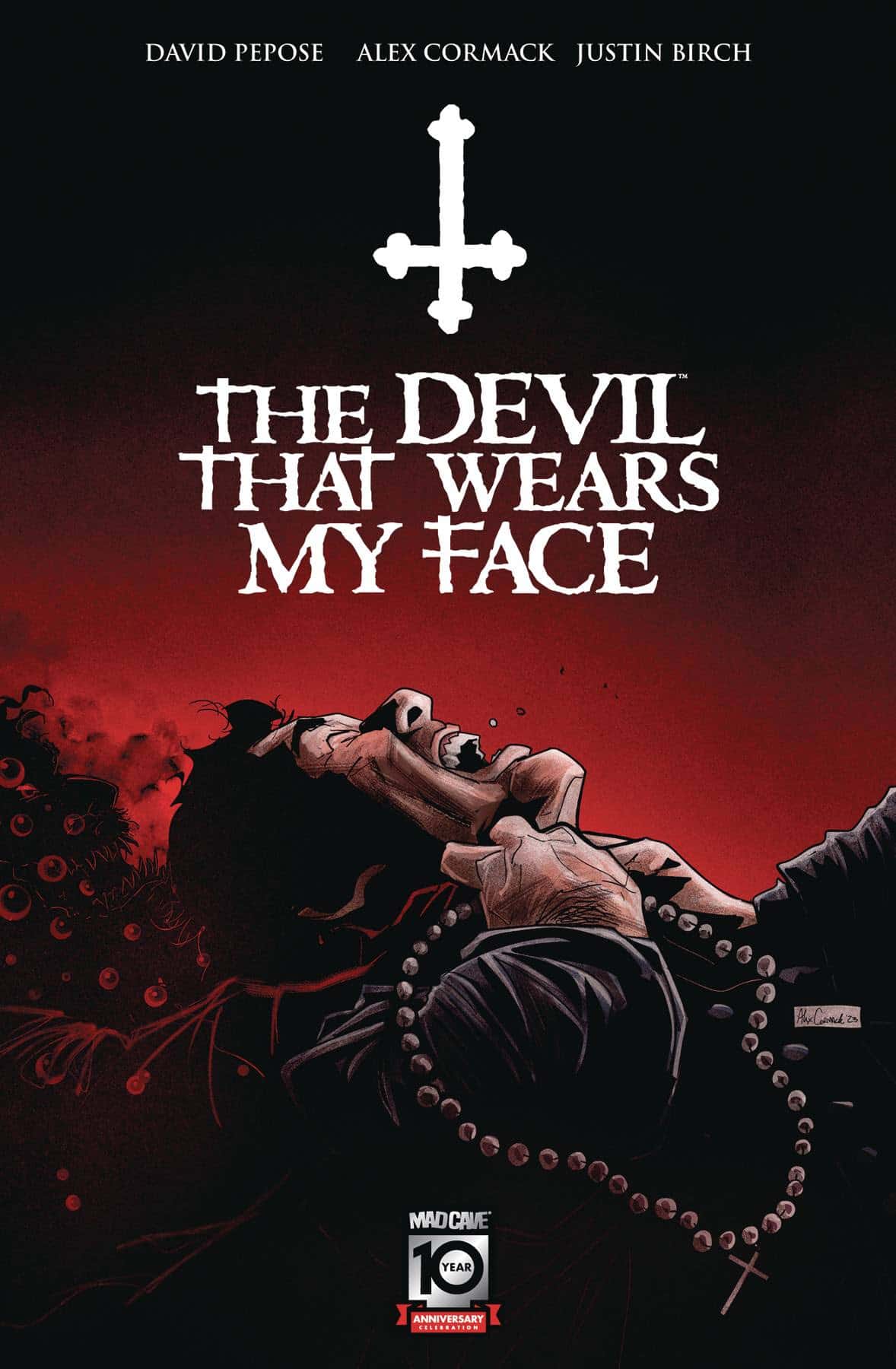
The Beat – The Devil That Wears My Face

The Devil That Wears My Face

FTC Extends the Deadline for Fortnite Players to Request Refunds for Unwanted Items

The Federal Trade Commission has announced that it has extended the deadline for Fortnite gamers and their parents or guardians to submit a claim for compensation from the agency’s 2023 settlement with Epic Games over allegations that the video game maker used dark patterns and other deceptive practices to trick players into making unwanted purchases. The new deadline is February 29, 2024.

Epic has agreed to pay $245 million, which the FTC will use to pay claims, as part of the settlement. In September and October, the FTC notified more than 37 million people by email that they may be eligible for compensation. The original deadline to submit a claim was January 17, 2024.

The online claim form is available at www.ftc.gov/Fortnite. Those submitting a claim do not need to submit receipts or other documentation at this time, and their Fortnite account will not be affected by their claim. Consumers who have questions about the claims process can contact the administrator by phone at 1-833-915-0880 or by email at admin@fortniterefund.com.

Lack of Disclosure Strikes Video Games as Warner Bros. Settles with the FTC

FTC-logoI’ve written pretty extensively about the need for proper disclosure and transparency in the world of geek blogging. Transparency is one of the things this site was founded on and it’s something I take seriously. We probably over disclose in the other end. But, better to be honest and forthcoming than be caught later on. There are pretty clear guidelines the Federal Trade Commission (FTC) has laid out as to what blogs/online personalities need to disclose when receiving goods or payments for endorsements, testimonials, and reviews.

It was announced Monday that the FTC has settled with Warner Bros. Home Entertainment over their promotion for the video game Middle Earth: Shadow of Mordor. hey failed to adequately disclose that the company paid influencers. This added up to thousands of dollars to post positive gameplay videos on YouTube and other social media. The game has a score in the mid 80s on Metacritic. The game was released in 2014 and altogether the promotion was viewed about 5.5 million times.

Shadow_of_Mordor_cover_artWarner Bros. through Plaid Social Labs hired the “online influencers” to create gameplay video and post it on YouTube as well as promote it on Twitter and Facebook. Named in the announcement was YouTube personality PewDiePie. It should be noted that his video currently says “this video was sponsored by Warner Brother” in the info section but was not verbally said in the video I watched. However, that specific set-up is specifically mentioned in the FTC’s release. The disclosure was hard to find, if present at all, for the videos on YouTube, Facebook, or elsewhere. Some reviewers only disclosed they received early access and in at least one instance Warner Bros. approved the video itself.

Warner Bros. paid anywhere from hundreds to tens of thousands of dollars on top of a free advance release copy of the game and told influencers to promote it. They then used those paid promotions to further promote their game without disclosing they were indeed paid promotion.

Warner Bros. is now barred from failing to make sure disclosures in the future and can’t “misrepresent that sponsored content.” They must also educate influencers about sponsorship disclosures, monitor sponsored influencers for compliance, and if need be terminate or withhold payment for non-compliance.

The decision by the FTC is open for public comment for 30 days, through August 10, 2016. At that time the Commission will decide whether to make the proposed consent order final. Those who want to submit comments can do so here.

This is the second time within a year that video games have caught the eye of the FTC. Last year Machinima was busted for similar issues and not disclosing payments to promote the Xbox One.

Around the Tubes

Days are counting down until a new year, but we still have one more new comic book day! We have our picks in a few hours, but are there any you’re excited for?

While you await for that, here’s some news from around the web to keep you entertained.

Around the Tubes

CBLDF – 10 Comics CBLDF Defended in 2015 – Go support them!

Advocate – Steve Orlando Isn’t Waiting for Gay Heroes, He’s Creating Them – And you should read what he’s doing!

GamePolitics – FTC Closes 2015 With No New Secret Shopper Report – Maybe because everyone realized they were doing a good job?


Around the Tubes

CBR – Chew #53

CBR – Daredevil #2

Talking Comics – King Conan: Wolves Beyond the Border #1

Talking Comics – Rocketeer at War #1

BlogCritics – Zombillenium: Control Freaks

Machinima Settles With the FTC for Deceptive Videos

Machinima_LogoWe’ve written in the past how sites, such as ours, should be disclosing payments and products received for free in our coverage (we do). YouTube network Machinima has been busted, and paid a fine, for not disclosing payments received for positive coverage of the Xbox One. Part of their deal with Microsoft was not to talk about fight club disclose the payments.

That’s pretty sketchy.

The Federal Trade Commission has rules about this. We discuss those in the link above. The FTC launched an investigation into the deal and Machinima’s “deceptive advertising.” The FTC announced today that there has been a settlement.

Writes the FTC:

Under the proposed settlement, Machinima is prohibited from similar deceptive conduct in the future, and the company is required to ensure its influencers clearly disclose when they have been compensated in exchange for their endorsements.

More from the FTC release:

Respondent paid influencer Adam Dahlberg $15,000 for the two video reviews that he uploaded to his YouTube channel “SkyVSGaming.” In his videos, Dahlberg speaks favorably of Microsoft, Xbox One, and Ryse. Dahlberg’s videos appear to be independently produced and give the impression that they reflect his personal views. Nowhere in the videos or in the videos’ descriptions did Dahlberg disclose that Respondent paid him to create and upload them. Dahlberg’s first video received more than 360,000 views, and his second video more than 250,000 views.

Respondent paid influencer Tom Cassell $30,000 for the two video reviews that he uploaded to his YouTube channel “TheSyndicateProject.” In his videos, Cassell speaks favorably of Microsoft, Xbox One, and Ryse. Cassell’s videos appear to be independently produced and give the impression that they reflect his personal views. Nowhere in the videos or in the videos’ descriptions did Cassell disclose that Respondent paid him to create and upload them. Cassell’s first video received more than 730,000 views, and his second video more than 300,000 views.

$30,000!? How do we get some of this cash?

Microsoft didn’t directly cut the deals, their ad agency Starcom did. In the marketing campaign the company recruited YouTube personalities to make specific types of videos about the new Xbox system, and all of them were positive.

That phase one.

Phase two had more people involved and paid based on their traffic. 300 videos were made in the end adding up to over 300 million views.

You can get paid for this stuff!? You also just get a slap on the wrist if caught? Machinima could have been on the hook for $16,000 in fines, netting them a nice profit for the scheme. They won’t have to pay anything.

We just get free stuff (and disclose everything). Knowing this, how does this change your opinion of sites such as ours?

(via Kotaku and Wired)

FTC Takes on Crowdfunding Fraud

FTC-logoWith Kickstarter and other crowdfunding platforms unwilling to take responsibility and do something about fraud and failed projects, the Federal Trade Commission has stepped in to do so.

While it’s a slap on the wrist, the FTC has announced through press release that it settled with Erik Chevalier over a failed board game Kickstarter project. Chevalier, as Forking Path Co., had his project The Doom That Came To Atlantic City! successfully funded in June 2012. The fundraising campaign raised $122,874 from 1,246 people, and the project was announced dead by Chevalier 14 months after in an update on the page.

The FTC charged Chevalier with not delivering his promised rewards or refund the backers. Instead, Chevalier spent most of the money on “unrelated personal expenses such as rent, moving himself to Oregon, personal equipment, and licenses for a different project.”

photo-originalAs part of his settlement Chevalier can not make future misrepresentations about any crowdfunding campaigns. He also can not use any of the donor’s personal information in any way and must get rid of it. The final order also imposed a $111,793.71 judgment but that has been suspended due to Chevalier’s inability to pay. He’ll have to pay if it turns out his financial situation isn’t what he claimed. He’ll also have to report any crowdfunding activity he partakes for the next 18 months. So lots of slaps on the wrists and some bad press for Chevalier. Chevalier in the end never admitted or denied the charges. How that amount of fraud doesn’t qualify as grand larceny and involve jail time baffles my mind.
Now, if only the FTC would do something about crowdfunding platforms profiting off of the fraud. The FTC was asking if the platforms have any responsibility, to which the FTC attorneys responded that “crowdfunding platforms have a responsibility to act fairly and non-deceptively.” In other words as long as they say upfront you can get screwed, the platforms can profit off of fraud as long as they want.

While they were promised a lot, backers who pledged to get the game did eventually do so. Cryptozoic Entertainment stepped in to help with the production of the game. Even after the files were lost, they were recreated by Lee Moyer, one of the game’s creators. Cryptozoic tracked down sculpts and molds with help of Z-Man Games founder Zev Shlasinger. They eventually shipped 1200 Kickstarter backers a copy of the completed game. Cryptozoic paid for the production, but the company and creators didn’t receive any revenues from the backers. The backers didn’t get the promised extras like pewter miniatures, art prints, t-shirts and other promised items.

The FTC took on the case as part of their work to protect consumers when it comes to new and emerging financial technology also known as FinTech. The case was filed in the U.S. District Court for the District of Oregon, Portland Division.