If you’ve been a long-time X-Men reader, or you’re a listener of Jay & Miles or Cerebrocast or any number of other LGBT+ X-Men podcasts, you probably know the story about how Chris Claremont wrote Mystique and Destiny as a lesbian couple, but had to use obscure verbiage and subtextual coding to get past Jim Shooter’s blanket ban on LGBT+ characters in the Marvel Universe.
Likewise, you’re probably also familiar with the story that, when Chris Claremont came up with the idea that Raven Darkholme and Kurt Wagner were related (a plot point set up all the way back in Uncanny X-Men #142), he intended that Mystique was Nightcrawler’s father, having used her shapeshifting powers to take on a male body and impregnate (her one true love) Irene. This would have moved far beyond subtext – but it proved to be a bridge too far for Marvel editorial, and Claremont was never able to get it past S&P.
This lacuna in the backstories of Kurt and Raven – who was Kurt’s father? – would remain one of the enduring mysteries of the X-Men mythos…and if there’s one thing that comic writers like, it’s filling in these gaps with a retcon.
Enter the Draco
Before I get into the most infamous story in all of X-Men history, I want to talk about retcons a bit. As I’ve written before:
“As long as there have been comic books, there have been retcons. For all that they have acquired a bad reputation, retcons can be an incredibly useful tool in comics writing and shouldn’t be dismissed out of hand. Done right, retcons can add an enormous amount of depth and breadth to a character, making their worlds far richer than they were before. Instead, I would argue that retcons should be judged on the basis of whether they’re additive (bringing something new to the character by showing us a previously unknown aspect of their lives we never knew existed before) or subtractive (taking away something from the character that had previously been an important part of their identity), and how well those changes suit the character.”
For a good example of an additive retcon, I would point to Chris Claremont re-writing Magneto’s entire personality by revealing that he was a Jewish survivor of the Holocaust. As I have argued at some length, this transformed Magneto from a Doctor Doom knockoff into a complex and sympathetic character who could now work as a villain, anti-villain, anti-hero, or hero depending on the needs of the story.
For a good example of a subtractive retcon, I would point to…the Draco. If you’re not familiar with this story, the TLDR is that it was revealed that Kurt’s father was Azazel – an evil ancient mutant with the same powers and the same appearance (albeit color-shifted) as Kurt, who claims to be the devil and is part of a tribe of demonic-looking mutants who were banished to the Brimstone Dimension, and who fathered Nightcrawler as part of a plot to end this banishment.
I don’t want to belabor Chuck Austen, because I think that Connor Goldsmith is right about his run actually being a camp cult classic in retrospect. However, I think we both agree that the Draco was a misfire, because of how the retcon undermined Kurt’s entire thematic purpose as established in Giant-Size X-Men that Nightcrawler was actually a noble and arguably saintly man who suffered from unjust prejudice due to the random accident that his mutation made him appear to be a demon, and because of how the retcon undermined the centrality of Mystique and Destiny’s relationship.
X-Men Blue Origins
This brings us to the Krakoan era. In HOXPOX and X-Men and Inferno, Jonathan Hickman had made Mystique and Destiny a crucial part of the story in a way that they hadn’t been in decades: they were the great nemeses of Moira X, they were the force that threatened to burn Krakoa to the ground by revealing the devil’s bargain that Xavier had struck with SInister (and Moira), they were the lens through which the potential futures of Krakoa were explored, and they ultimately reshaped the Quiet Council and the Five in incredibly consequential ways.
This throughline was furthered after Hickman’s departure, with Kieron Gillen exploring the backstories of Mystique and Destiny in Immortal X-Men and Sins of Sinister, and both Gillen and Si Spurrier exploring their relationship with Nightcrawler in AXE Judgement Day, Sins of Sinister, Way of X, Legion of X, Nightcrawlers, and Sons of X. One of the threads that wove through the interconnected fabric of these books was an increasing closeness between Kurt and Irene that needed an explanation. Many long-time readers began to anticipate that a retcon about Kurt’s parentage was coming – and then we got X-Men Blue: Origins.
In this one issue, Si Spurrier had the difficult assignment of figuring out a way to “fix” the Draco and restore Claremont’s intended backstory in a way that was surgical and elegant, that served the character arcs of Kurt, Raven, and Irene, and that dealt with complicated issues of trans and nonbinary representation, lesbian representation, disability representation, and the protean nature of the mutant metaphor. Thanks to help from Charlie Jane Anders and Steve Foxe, I think Spurrier succeeded tremendously.
I don’t want to go through the issue beat-by-beat, because you should all read it, but the major retcon is that Mystique turns out to be a near-Omega level shapeshifter, who can rewrite themselves on a molecular level. Raven transformed into a male body and impregnated Irene, using bits of Azazel and many other men’s DNA as her “pigments.” In addition to being a deeply felt desire on both their parts to have a family together, this was part of Irene’s plan to save them both (and the entire world) from Azazel’s schemes, a plan that required them to abandon Kurt as a scapegoat-savior (a la Robert Graves’ King Jesus), and to have Xavier wipe both their memories.
Now, I’m not the right person to write about what this story means on a representational level; I’ll leave it to my LGBT+ colleagues on the Cerebrocast discord and elsewhere to discuss the personal resonances the story had for them.
What I will say, however, is that I thought this issue threaded the needle of all of these competing imperatives very deftly. It “fixed” the Draco without completely negating it, it really deepened and complicated the characters and relationships of both Raven and Irene (by showing that, in a lot of ways, Destiny is the more ruthless and manipulative of the two), and it honored Kurt’s core identity as a man of hope and compassion (even if it did put him in a rather thankless ingénue role for much of the book).
It is the very acme of an additive retcon; nothing was lost, everything was gained.
I still think the baby Nightcrawler is just a bad bit, but then again I don’t really vibe with Spurrier’s comedic stylings.
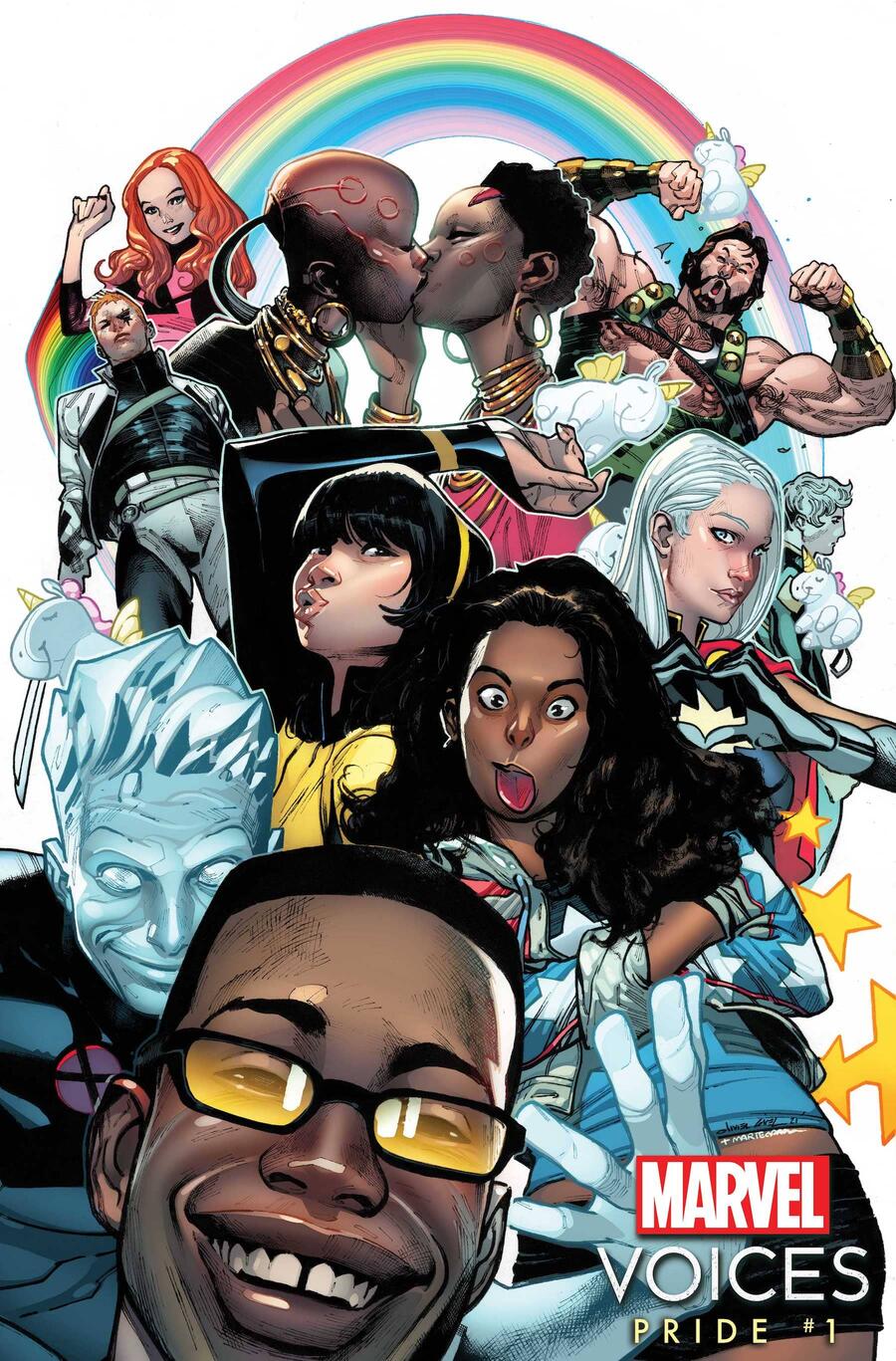
In honor of Pride Month, Marvel Comics dropped a big 84 pages one-shot celebrating both its LGBTQ+ creators and characters. Beginning with a story from Luciano Vecchio that’s not sure if it’s telling the story of queer characters in the Marvel Universe from an in-universe or more of a real-world documentary perspective,Marvel Voices Pride #1 sputters with a story that basically says aliens and shapeshifters brought the idea of being non-binary, genderqueer, or gender nonconforming to this world followed by a text-heavy Allan Heinberg/Jim Cheung Young Avengers reunion. However, it catches its footing with a cute Karolina Dean/Nico Minoru story, and for the most part, it provides a wide spectrum of LGBTQ+ representation with a special focus on the mutant/X-Men side of the Marvel Universe, who have acted as a mostly metaphorical representation to queer fans like myself. However, it’s nice to see characters like Anole, Prodigy, Destiny, Karma, and Jessie Drake get the spotlight along with more prominently featured cis male gay characters like Northstar (His coming out story in Alpha Flight #106 is reprinted at the end) and Iceman. But fans of non-mutant/Runaways/Wiccan and Hulkling characters may be disappointed as characters like Angela, Sera, Hercules, and America Chavez don’t appear except in small cameo roles.
Marvel VoicesPride #1 kicks off with a journey through the LGBTQ+ history of the Marvel Universe from writer/artist Luciano Vecchio. Even though many of his adult characters look like teens, Vecchio has a beautiful art style and color palette. However, my issue with this first story isn’t the form, but the content. As mentioned earlier, this introductory story isn’t sure if it’s being told from the perspective of the real world or Earth-616 even though it’s narrated by Prodigy. It also has a very self-congratulatory, back-patting tone, especially for a company that recently cancelled a book starring many of its queer characters (X-Factor) and mentions characters like Angela and Sera that haven’t been barely heard or seen from since getting their own title in 2015. Even though Vecchio is a queer creator, there’s big “ally” energy in this first story with a heterosexual character, Captain America getting the spotlight, and the implication that non-binary identities came from aliens and shapeshifters. He does successfully lay out what ended up being a thesis for the anthology, which is the connection between mutants and queer identity.
This story is followed by a one page Young Avengers creator reunion as Allan Heinberg, Jim Cheung, and Marcelo Maiolo chronicle Hulking and Wiccan’s wedding vows. Heinberg’s writing is tender, but this feels like more of a prose piece than a comic. Heinberg and Cheung’s inclusion seems like more stunt-casting to get older queer Marvel fans interested in the one-shot rather than being any kind of substantial addition to their work on Young Avengers. However, Marvel Voices: Pride rights the ship (Pun fully intended.) in its next story featuring two members of Marvel’s other prominent 2000s teen superhero team, the Runaways. Mariko Tamaki, Kris Anka, and Tamra Bonvillain turns in three pages of sweet glances, chatter, and a super adorable kiss as Nico Minoru and Karolina Dean think about what they would tell people if they asked how they met. The long line out of the venue reminded me of the pre-pandemic days when I would wait in line for hours to get a good spot to see artists like Carly Rae Jepsen and Robyn with my fellow queer folks, and Bonvillain’s summery color palette matches Anka’s skill with facial expressions. This story is like the cherry on top of the sundae that he helped build when he was the artist on Runaways and finally put Karolina and Nico in a relationship together.
The next story in Marvel Voices Pride is the first one to feature a trans protagonist, Dr. Charlene McGowan from Immortal Hulk. The plot of Lilah Sturges, Derek Charm, and Brittany Peer is about some “hilarious” misunderstandings when Lady Daredevil aka the artist formerly known as Elektra Natchios and some Z-list, rapping supervillains raid McGowan’s lab when they think she’s producing mutant growth hormone when when she’s actually working on a way to get trans women’s bodies to produce progesterone without taking pills. What follows is Trans 101 with a little bit of ass kicking courtesy Charm, who is in his Bronze Age element with the cheesy costumes and dark shadows. However, other than the fact that’s she a scientist who sometimes makes jokes, we don’t learn anything about Dr. McGowan except that she’s surprisingly cool with microaggressions from A-List Marvel heroes. Kudos to Marvel Voices‘ editorial for getting a trans writer in Sturges to pen this story, but the whole thing feels reductive and geared towards fanboys who know every member of Daredevil or Hulk’s rogues gallery and have never interacted with a transgender person.
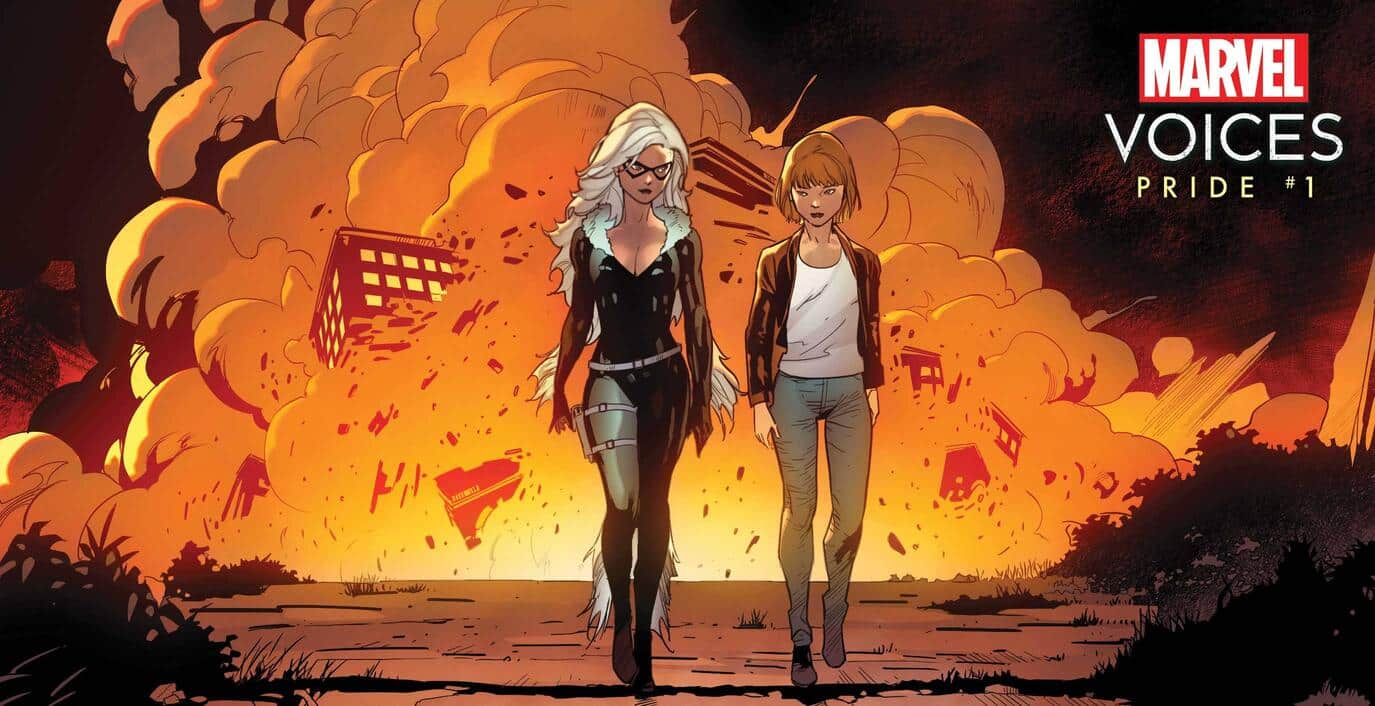
In contrast, Leah Williams, Jan Bazaldua, and Erick Arciniega re-introduce Marvel’s first transgender character, the mutant Jessie Drake in a thrilling manner as she appears in her first comic in 27 years. However, Black Cat is the protagonist of this story and is tracking down Steel Raven, a villain who’s been impersonating her, pulling some sloppy heists, and ruining her reputation. Williams’ quippy writing style works well for the fast-paced short story as Black Cat and Jessie meet, flirt, and figure out their next move in catching Steel Raven. Bazaldua plays with space and transforms what would normally be your run of the mill villain warehouse into something more surreal. She and Williams do succeed in building a connection between Jessie and Black Cat as well as showing off Jesse’s empathy-based abilities, but this is just a teaser for a bigger cat and mouse game. Hopefully, there’s room for more batting of eyes, power showcasing, and insight into the character of Jessie Drake, both in her own series or in Black Cat’s current ongoing, which has been a sneaky good read.
Continuing this positive trend is Crystal Frasier, Jethro Morales, and Rachelle Rosenberg telling a wonderful She-Hulk and Titania. But there’s a twist as Jennifer Walters doesn’t appear, but Jennifer Harris, who was inspired by her to come out as trans and cosplay her at a copyright friendly version of New York Comic Con. As someone who came out as bi around the same time Prodigy did in Young Avengers or when Iceman came out as gay in All-New X-Men, I can definitely connect to the inspirational power of fictional characters like Jennifer did with She-Hulk. She and Titania also have some nice banter, and Frasier and Morales also remind readers that She-Hulk was the original fourth wall breaker with some jokes and exploding layouts.
After the She-Hulk story is probably my favorite story of Marvel Voices Pride #1, which is a Prodigy and Speed one from Kieron Gillen, Jen Hickman, and Brittany Peer as Gillen returns to both the X-Men and Young Avengers franchises. The dialogue between Speed and Prodigy sparkles, and Hickman shows off their chops as a storyteller working in eating pizza, stealing glances at Colossus, and empathizing with Kitty Pryde as Prodigy basically tells his bisexual origin story. His story also acts as a critique of how the mutant books have been good about metaphorical queer representation, but not actual queer representation. This is timely because the book that Prodigy was a main cast member in is getting cancelled. However, this is really a lovely story full of hilarious and insightful writing from Kieron Gillen and pitch-perfect images and comedic timing from Hickman as Speed teases Prodigy for having a crush on Colossus when he ran with the New Mutants. Prodigy is true overthinking, chaos bisexual representation, and I’m personally glad to see him get a spotlight in this story even if it’s only a few pages long.
The anthology takes a break from comics for a bit and features an interview with Christian Cooper, one of the first queer editors at Marvel, and he talks about his experiences at the company and the impact comics have had on his life. After this, there’s a timeline of big LGBTQ+ moments in Marvel Comics. It’s followed up with a cute Anole story from Terry Blas, the wonderful Paulina Ganucheau, and Kendall Goode. Blas connects the idea of Krakoa being a mutant utopia to things like Pride, and the ability to unwind at the Green Lagoon with folks who understand your struggles being the goal of all this hard work and fighting. However, it’s not all big metaphors as he and Ganucheau probe into Anole’s body issues leading to him not wanting to date along with his friendship with Jonas Graymalkin. It all ends on a fabulous final page, and this story is worth checking out for Ganucheau and Goode’s soft, colorful takes on the different mutants.
Sticking with the mutant theme, Anthony Oliveira, Javier Garron, and David Curiel go all in with the mutant as gay metaphor in an Iceman story set during the time period of the original five X-Men. They play on the fact that Magneto was played by a gay man in four of the X-Men films and find a real connection between Bobby and Magneto, who takes a break from the missiles to provide a listening ear to this young man struggling with his identity. Oliveira writes Iceman as having a crush on Angel, and Garron nails the longing glances that he throws at the majestic mutant that turn into words when Magneto sits down to chat with him. They take the subtext (For example, Bobby not being interested in Jean Grey when she joins the team.) of these Silver Age text and transform them into glorious text while also showing off the sweeter side of Magneto, a man who would one day break down when he realized that his crusade almost led to the death of an innocent child, Kitty Pryde.
This story is followed up by one focusing on the relationship between Northstar and his husband, Kyle Jinadu from writer/artist J.J. Kirby. It’s touching to see what Northstar is like away from the cameras and public, and what Kyle loves about them. However, Kirby’s 1990s-style artwork with modern, digital coloring is a mismatch for the story, and I spent most of the time wondering why Northstar looked like a vampire or a block of ice instead of the events of the story. Luckily, the misstep is remedied by a thrilling riff on Sherlock Holmes vs. Professor Moriarty from Tini Howard, Samantha Dodge, and Brittany Peer featuring Mystique and Destiny. The story is adventurous filled with wits matching, chess games, and lover’s embraces and shows how iconic a couple these two are while also showing what a big deal it was for them to be open with their love in a time period where being queer got you thrown in jail. Plus it’s a reminder that queer people have always existed in history. (Or fiction.)
Vita Ayala, Joanna Estep, Brittney Williams, and Brittany Peer continue the theme of both mutants and queer women in a Karma story set during the Hellfire Gala after party where Magik gives her a pep talk to dance (and maybe even smooch) Elle, who as far as I can tell is a new, queer mutant created for this anthology. Karma truly gets the spotlight this story and gets to work out some of her issues with her powers and emotions as she’s afraid that if she asks Elle out that she’ll use her abilities to mess with her free will. However, this doesn’t happen, and we get to see a mutant who has been screwed over so many times be happy for once and get the girl in a beautiful sequence from Ayala, Estep, Williams, and Peer.
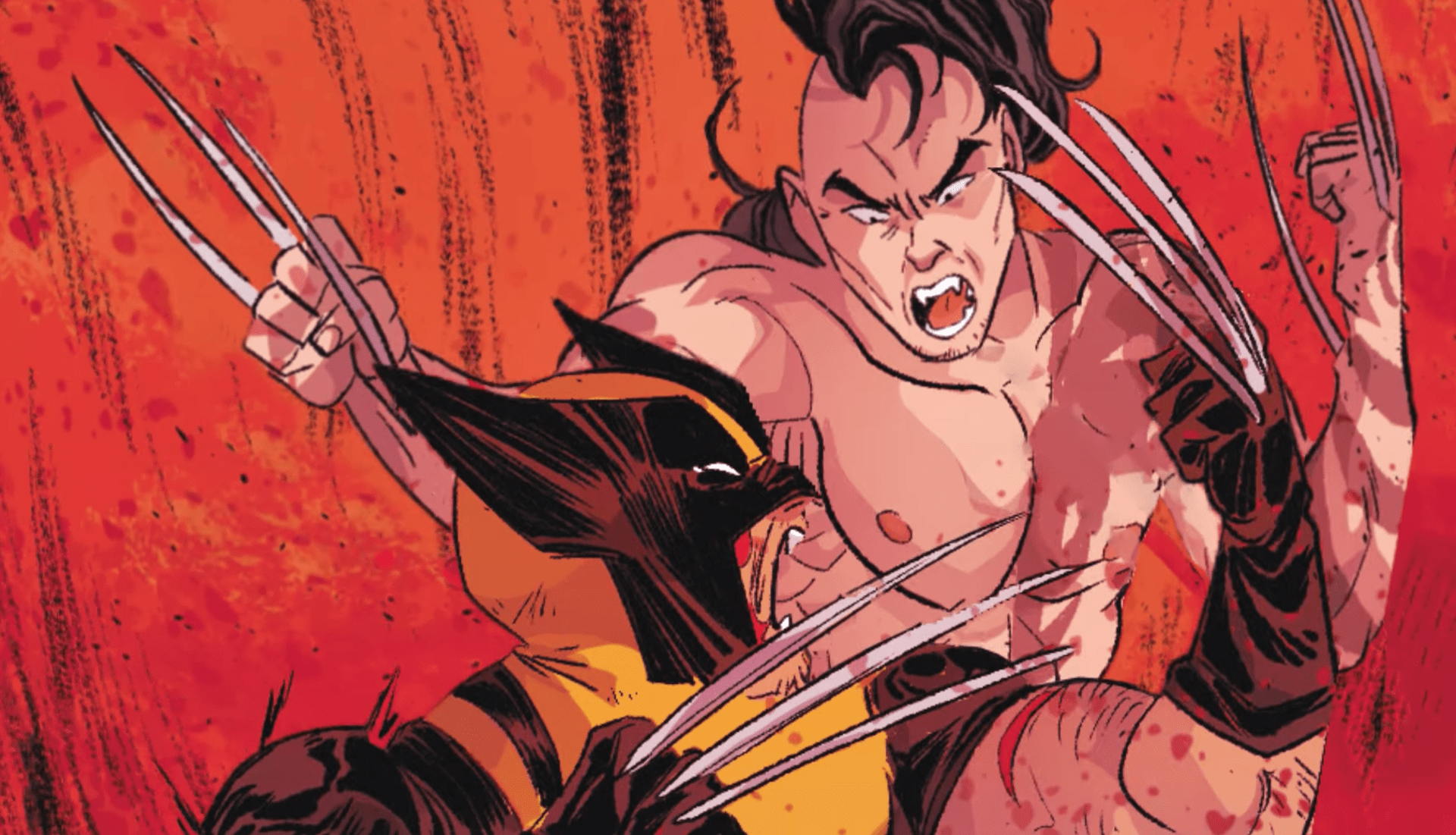
The final story in Marvel Voices Pride #1 again shows that Steve Orlando is perfect for writing violent, queer characters with a sensitive side as he and Claudia Aguirre tell the story of Daken and Somnus, a new character who can make one night seem like a life time together. He used this power on Daken back in the day during a one night stand and then ended up living a long life without him even though he didn’t divulge his oneiromantic mutant abilities to everyone. However, Krakoa and its resurrection protocols are all about second chances, and Daken gives him one in this story. As well as digging deep into Daken’s emotions, Orlando and Aguirre also use this story to remind readers of queer elders, who because of society’s hate, never came out or came out later in life, and this is what makes Somnus’ second chance so special. Also, his abilities are pretty cool and bring a little Vertigo into the X-Books.
Marvel Voices Pride #1 is definitely an up and down ride. Some of the stories mishandle nonbinary and gender nonconforming identities (Also, there are no nonbinary lead characters in this anthology.) or seem to pander heavily to allies while others have issues with their art or storytelling style. (Northstar/Kyle, Wiccan/Hulkling) But, for the most part, it’s nice to see queer creators and queer characters get the spotlight for once instead of being hidden behind things like the mutant metaphor, which is usually Marvel editorial’s approach. Time will tell if we see them beyond this anthology, but most of the creators in Marvel Voices Pride work on books in Marvel’s main line or have had consistent success at other companies or even television in Allan Heinberg’s case so, at least, that’s something they have going for them.
Story: Luciano Vecchio, Allan Heinberg, Mariko Tamaki, Lilah Sturges, Leah Williams, Crystal Frasier, Kieron Gillen, Terry Blas, Anthony Oliveira, J.J. Kirby, Tini Howard, Vita Ayala, Steve Orlando Art: Luciano Vecchio, Jim Cheung, Kris Anka, Derek Charm, Jan Bazaldua, Jethro Morales, Jen Hickman, Paulina Ganucheau, Javier Garron, J.J. Kirby, Samantha Dodge, Joanna Estep with Brittney Williams, Claudia Aguirre, Jacopo Camagni Colors: Marcelo Maiolo, Tamra Bonvillain, Brittany Peer, Erick Arciniega, Rachelle Rosenberg, Kendall Goode, David Curiel Letters: Ariana Maher Story: 8.0 Art: 8.6 Overall: 8.3 Recommendation: Buy
Marvel Comics provided Graphic Policy with a FREE copy for review
Loot Crate DXis the next level of Loot Crate. Similar to the basic Loot Crate each box follows a theme each month but instead has over $100 value in every crate.
This month’s theme was “Guardians” with items from Guardians of the Galaxy, Wonder Woman, Marvel, and Destiny.
We open up to show off the box with some interesting items inside.
This post contains affiliate links, which means that if you click on one of the product links and make a purchase, we’ll receive a percentage of the sale. Graphic Policy does purchase items from this site. Making purchases through these links helps support the site.
Loot Crate‘s May 2017 release has arrived and here’s what you can find inside. The theme for this month is “Guardians” so check out what’s inside including items from Guardians of the Galaxy, Goonies, Star Wars, and Destiny.
There’s a decent amount of items in the box and some cool properties, but how do they stack up?! Find out!
Loot Crate provided a FREE box for review This post contains affiliate links, which means that if you click on one of the product links and make a purchase, we’ll receive a percentage of the sale. Graphic Policy does purchase items from this site. Making purchases through these links helps support the site.
At New York Toy Fair 2017, McFarlane Toys walked us through their booth with products ranging from The Walking Dead, Rick and Morty, Destiny, NFL, One Punch Man, South Park, Steven Universe, Five Nights at Freddy’s, Labyrinth, and more!