Category Archives: Classics Revisited

Uber Volume 1 will simultaneously intrigue and horrify readers

In advance of Kieron Gillen and Caspar Wjingaard’s upcoming comic The Power Fantasy, we’re revisiting some of Gillen’s previous creator-owned work.
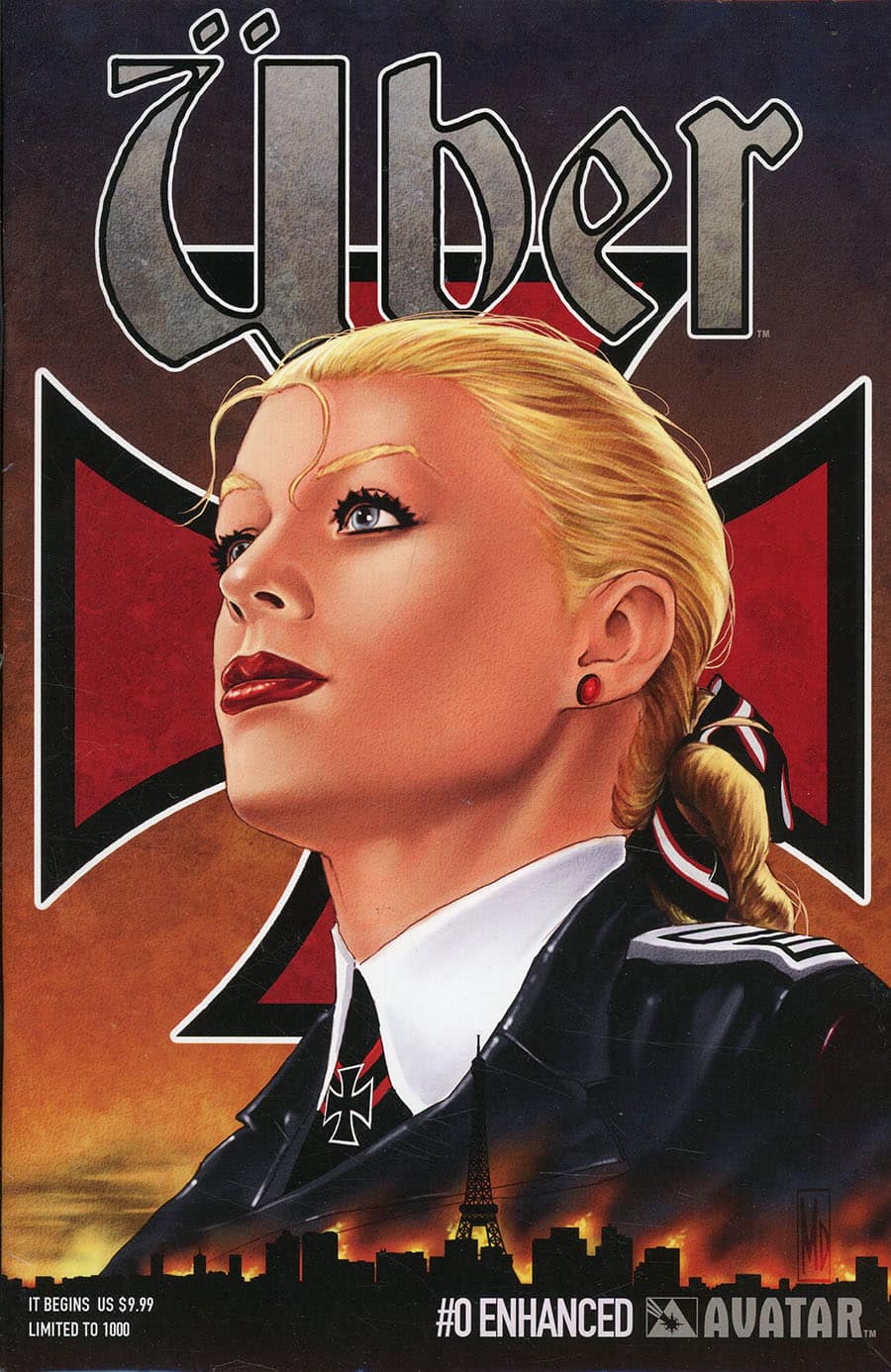
Uber Volume 1

Uber has been on my “to-read” list for the better part of a decade. It’s an alternate history/superhero comic from Kieron Gillen, Canaan White, Keith Williams, and Digikore Studios set in World War II where the Germans are on the edge of surrender (Hitler literally has a gun in his mouth.), but then they have a breakthrough with superhumans, who are of course called “Ubermensch”, drive the Soviet Red Army back, and prolong the war beyond its actual historical end. The first volume introduces this brave new world with a huge ensemble cast, including actual historical figures like Winston Churchill, Heinz Guderian, and of course, Adolf Hitler, and shows the superhuman arms race between Nazi Germany and the Allies, predominantly the United Kingdom. White and Williams’ visuals marry Bryan Hitch’s widescreen visuals (Especially when the superhumans use their abilities.) with the grit, grime, and entrails of Darick Robertson’s work on The Boys. Uber reads like an intelligent, blockbuster war film or miniseries, but the ultraviolence and “equal time” given to both Nazis and Allies means that it would probably not be greenlit so it’s nice to see its creators use the creative freedom provided at a small publisher like Avatar Press to tell a story that is both well-researched (Gillen wrote a 30,000 word series bible.) and visceral.

Although English spy Stephanie is a total badass and provides the few hopeful moments of the series when she steals the Nazi formula for creating superhumans as well as copies of the books with information about enhancing humans, Uber isn’t constrained by a typical hero/villain narrative. But this action is tempered by her torturing and experimenting on participants in the German superhuman programs. Gillen and Canaan White cut between the Allies, Germans, and Soviets and almost journalistically show their motivations, strategies, and moral failings. The Nazis have the most, of course, like when Hitler overrides his generals and tells the superhumans to kill almost one million Soviet prisoners. Moments like this along with Allied characters dropping like flies throughout the volume adds a tone of menace and fear, especially in the climactic battle where the German female superhuman Klaudia aka Sieglinde eviscerates the British superhuman, the American-born O’Connor revealing that this isn’t going to be a Marvel MAX Captain America comic.

The horrific side effects around the testing and creation of superhumans whether Ubermensch or His Majesty’s Humans (HMH) are a heightened version of real life eugenics projects done during World War II and shows that everyone involved has blood on their hands except for the test subjects themselves. Uber really is more of a horror comic than a superhero one. For example, what in most superhero media would be a run-of-the-mill training montage of a superhuman lifting a car ends up having intestines flying everywhere because an HMH recruit pushed his limits a little too early. Also, the combat in Uber is more war movie and less stylized action with Kieron Gillen’s captions setting up strategies and troop deployment while White, Williams, and Digikore’s visuals show the utter destructive capability of the superhumans as well as their weaknesses. In fact, Gillen sets up a pecking order of superhumans with human tanks acting as enhanced foot soldiers while the battleship class ones like the aforementioned Klaudia are the obliterate entire armies/cities power level. This keeps the action from turning into a retread of Miracleman and leaves room for actual military tactics like any time Guderian is involved. However, for all of Heinz Guderian’s contempt for Hitler and skill at setting up tank assaults, he’s still a fascist and never pulls a Claus von Stauffenburg or even Erwin Rommel because he wants an armistice and to simply not lose the war.

Another interesting aspect of Uber Volume 1 is how Kieron Gillen pokes holes into the “great man” theory of history in his portrayal of Winston Churchill. His perspective on the beloved prime minister/imperialist stooge fits somewhere in between those two extremes as Churchill is open to new ideas like the fact that the Germans have superhumans, but also wants the Cliff’s notes of Stephanie’s intel on the Ubermensch and to immediately have her head up the British superhuman project although she’s traumatized from working deep cover with the Germans. Gillen gently roasts his obsession with the perfect turn of phrase in some of his interactions with different generals and officials while also showing his take-charge attitude that was the opposite of Neville Chamberlain’s appeasement approach to Hitler and Nazi Germany. But the most haunting scene is the final page of the comic where he opens a desk with a handgun and bullets showing that, like Hitler, he would rather die than be captured. The gun stays in the drawer showing that he still has some hope for the war although Paris lost major landmarks like the Eiffel Tower and Notre Dame cathedral in the battle at the end of the volume. It sets up a tense race between Germany and the Allies with the Nazis having the better superhumans while the United Kingdom has the chemical compound that creates them as well as skilled codebreakers like Alan Turing to figure out how to use them more effectively in battle.

Beginning with a paradigm-shifting opening issue that showcases the awe-inspiring power of the Nazi superhumans, Uber is a heightened look at the horrors of war and genetic experimentation set during the last “good war”. It’s not thrilling in a traditional sense, but Kieron Gillen, Canaan White, and company give the story solid narrative momentum, especially when the British build their own superhumans to counter the Germans. I’m simultaneously intrigued and horrified by Uber and definitely plan on seeing how it diverges from actual history, especially in the upcoming issues that look at other fronts of World War II.

Story: Kieron Gillen Pencils: Canaan White
Inks: Keith Williams Colors: Digikore Studios Letters: Kurt Hathaway
Story: 8.8 Art: 7.8 Overall: 8.3 Verdict: Buy
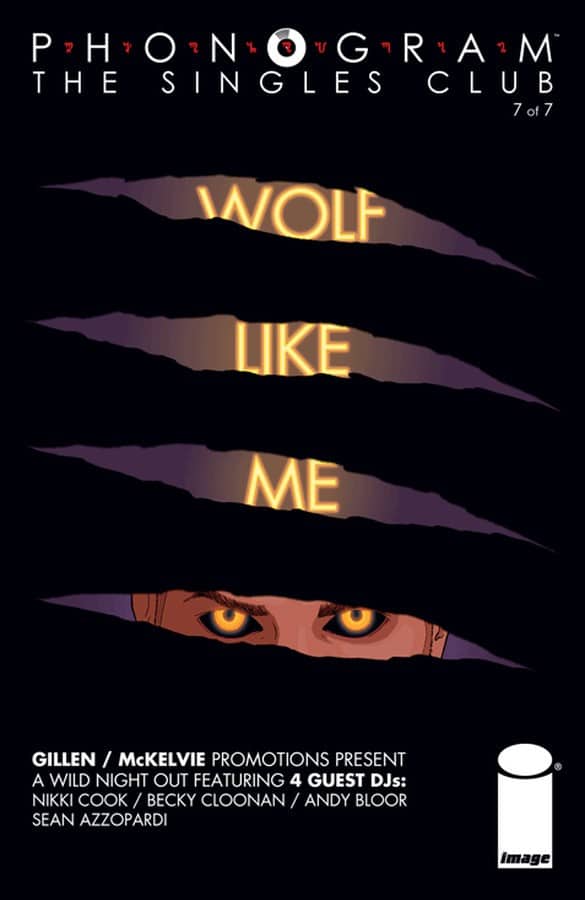
Anyone can be a phonomancer in Phonogram: The Singles Club #7

In advance of Kieron Gillen and Caspar Wjingaard’s upcoming comic The Power Fantasy, we’re revisiting some of Gillen’s previous creator-owned work. This article was originally published in January 2021 as part of a series of essays about Phonogram: The Singles Club, but has been edited and re-presented here.

“I used to have a special tape. Used to have my track. My one killer track that would get me flying. You got one of those.”- Buddy in Baby Driver [Aka Phonogram with cars]

“You can’t touch music, but music can touch you.”-Mordecai in Regular Show

Phonogram: The Singles Club #7

Phonogram: The Singles Club #7 is my go-to single issue for anyone wanting to get into the creative team of Kieron Gillen, Jamie McKelvie, and Matthew Wilson. I’ll also show this book to folks to demonstrate the relationship between sequential art and music and showcase the uniqueness and sheer coolness of comic books as a medium

The premise of The Singles Club #7 is simple, yet brilliant. Up to this point in the series, David Kohl’s hetero-lifemate Kid-with-Knife has been basically Chas from Hellblazer, but he likes Wu-Tang Clan. Sure, he loves music (especially hip hop), but he’s not a phonomancer. However, on the first page of the issue, David Kohl explains what phonomancy is, and Kid realizes that’s something that he and folks do all the time whether you’re walking aimlessly through the city streets, trying to finish a homework assignment, or get that last mile in on the treadmill. Deep down, everyone has that “killer track”, “pump up jam”, or song that gets us moving or feeling inspired and hopeful, and for Kid-with-Knife, that is “Wolf Like Me” by fantastic Brooklyn indie band TV on the Radio. He listens to the song, does parkour in the streets of Bristol, chases away rude men from a couple, ducks in for a kebab and has an amazing indie night with Kohl and Emily Aster. After that, Kid-with-Knife dances some more, forms a connection with, and sleeps with Penny B, who was the POV character in Phonogram: The Singles Club #1. What a night indeed!

Except for the first and final page of the comic, The Singles Club #7 is completely silent so it’s a showcase for Jamie McKelvie’s skill with motion and body language and Matthew Wilson’s color palette. It’s the antithesis of issue six’s black and white zine-inspired story and acts as the praxis to its theory. The art uses werewolf imagery based on “Wolf Like Me’s” lyrics with Wilson using plenty of dark blues, reds, and giving Kid glowing yellow eyes while McKelvie puts a moon in the background in a couple of key early panels before he and Gillen kick the story into parkour mode.

Phonogram: The Singles Club #7

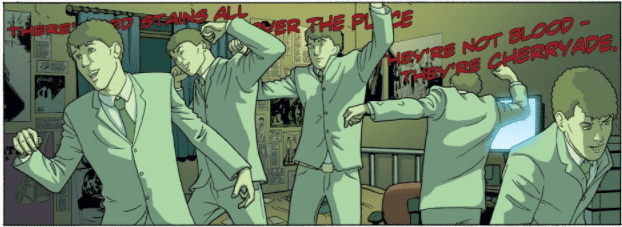
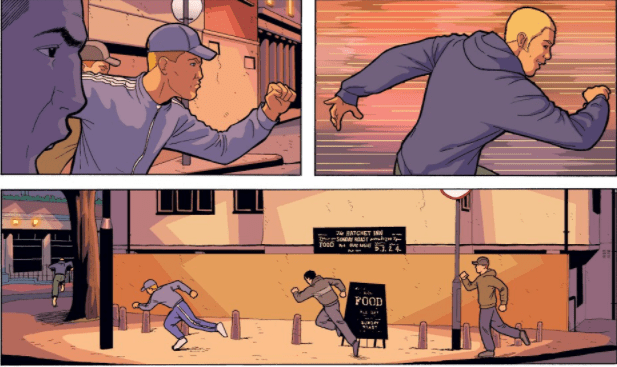
And speaking of parkour, this comic cements McKelvie as a master of showing action in space, especially during the humorous four pages or so where Kid insults a group of tough looking guys and ends up on the run. (He only wanted to get them away from an all-black wearing couple.) He uses The Hatchet Inn (Which is a real place) as a kind of comedic obstacle that Kid and the three guys run around in circles with Kid getting some extra speed lines due to the adrenaline, er, magic of the song. Then, McKelvie goes back to grid mode with the guys looking around a bridge for Kid before breaking it and showing him hanging on one of those height limit signs before making a superhero landing and going into a kebab shop. The power of music plus the heightened nature of McKelvie and Wilson’s storytelling has turned a “running away from a group of guys you probably shouldn’t have pissed off” situation into a chase straight out of one of the better Batman comics. The right track really makes you feel like you’re doing epic things, and that’s the truth. (I totally got pulled over for speeding while listening to Junkie XL’s score for Mad Max: Fury Road.)

Another amazing part of Phonogram: The Singles Club #7’s narrative is the payoff for the foreshadowing that Kieron Gillen slipped in back in issue three when Kohl told Emily Aster that Kid-with-Knife’s high energy came up from being hopped up on a TV on the Radio song. He and McKelvie conclude the issue by showing the indie club night from his perspective featuring intense grids, speech bubbles with symbols and not words, and one beautiful splash page. Kid is so “in the zone” that his perception has become primal. He has transcended boring, old human speech and becomes the werewolf in the song. (See his face as he digs into that kebab.) There are no conversations in The Singles Club #7: just shots, dancing, and bright lights. The use of symbols instead of text in dialogue bubbles is an ingenious way of showing how difficult it is to have conversations at the crowded bar or dance floor area at a club as Kid starts with retelling his pre-club shenanigans, but ends up just ordering a round of shots and dancing with Kohl and Aster. The comic ends up being a montage of fun moments from the previous six issues : all killer and no filler from Gillen McKelvie Wilson.

Phonogram: The Singles Club #7

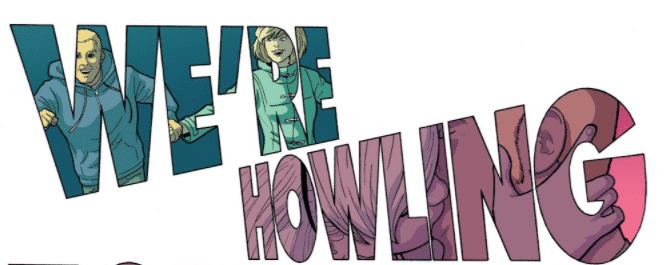
However, the conclusion of The Singles Club #7 and the miniseries as a whole is truly magical as the last bits of “Wolf Like Me” start to fade out, and Kid-with-Knife sees Penny B dancing to “Pull Shapes”. In the first issue, she had ended up dancing on her own and just enjoying her favorite song, but now Kid is in the double-page splash and offers his hand. It’s gorgeous visual choreography from Jamie McKelvie and Matthew Wilson as Penny gets caught up in the music with stars, precise dance moves, and frosted colors. But, then, Kid joins the dance, their energy matches each other in a rhythmic six-panel grid that erupts into them sleeping together. In a clever bit of storytelling, McKelvie syncs the sex scene to the “We’re howling forever” bit at the end of the song and frames it in the letters of the lyrics. It’s passion, chemistry, and great design sense all rolled into one as Kid-with-Knife and Penny B truly become one with this great song.

The main bit of symmetry in Phonogram The Singles Club #7 is definitely the return of Penny B to a prominent role and finally finding someone to dance and have a good time with after her tribulations of the first issue. There’s also symmetry in the larger narrative of Phonogram with both The Singles Club and Rue Britannia concluding with a man and woman in bed together. In Rue Britannia, it’s Beth remembering an old Manic Street Preachers song after she was unable to enjoy music for a while whereas in The Singles Club, it’s Kid-with-Knife and Penny B having a moment of clarity after intimately connecting via the feelings that music gives them. As a phonomancer, Penny is slightly analytical about the moment while Kid (With a sheepish grin on his face) is content to say, “I don’t know. You tell me.” Unlike Kohl, Aster, Lloyd or the other phonomancers we run into in the comic, Kid-with-Knife finds a song he likes and literally runs with it for a full issue with no asides about their subtext (Although, “Wolf Like Me” is definitely about sex.), influences, or any anecdotes from his past about why he is super obsessed with a band.

What I love most about Phonogram The Singles Club other than the masterful silent storytelling from Kieron Gillen, Jamie McKelvie, and Matthew Wilson is that it opens the gates of being a phonomancer to everyone. You don’t have to be a hipster or an indie snob, who makes zines and grimoires. You just have to have the capacity to be moved by music, physically like Kid-with-Knife or mentally like basically every other Phonogram character and the author of this article although I love a good boogie. This song can be in any genre: you just have to deeply connect with it. And that’s really what Phonogram The Singles Club is all about. It’s a saga of connecting or disconnecting with other folks in one night’s time with 2000s pop and indie music as a backdrop. (The kids call it “indie sleaze” now.) So, it’s fitting the book ends with two people finding each other via a song. Beautiful stuff, really!

The Wicked + the Divine #1 – 10 Years Later

“And every demon wants his pound of flesh.”–Florence + the Machine

“Forgot that inside the icon, there’s still a young girl from Essex.”–Lorde

The Wicked + the Divine #1

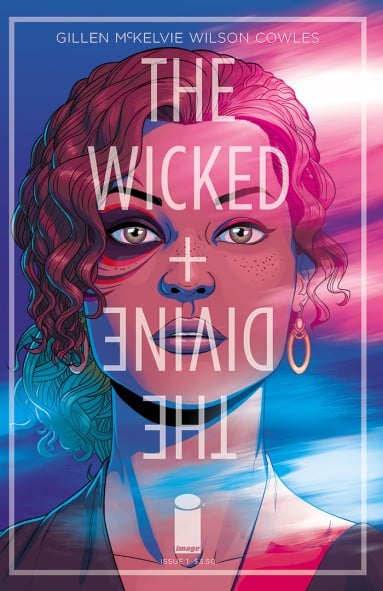
Until I read Kieron Gillen’s newsletter last week, I couldn’t believe that it had been ten years since The Wicked + the Divine was released and basically changed my life. It, and Gillen and artist Jamie McKelvie’s other collaboration Phonogram, heightened my interest in indie and pop music (Mostly of the British kind because I’m an incorrigible Anglophile.) and transformed me from a Netflix/Marvel comic binging wallflower to a black lipstick wearing, nonbinary Goth degenerate who was closing out bars and dance floors across the South/Midwest/Mid-Atlantic. This might be a bit of an exaggeration because I’m started writing this article at a laidback, very heterosexual brewery while wearing a football top and finished writing it on my bed next to a stack of Amazing Spider-Man comics.

I felt beyond seen in WicDiv‘s cast of characters, especially Laura/Persephone, Inanna, and just a touch of Baphomet. (The whole none more Goth thing.) When the first arcs of the series were released in 2014-2016, I was definitely still a wayward youth working in retail, trying to graduate university (I wrote my undergrad thesis on WicDiv and Paradise Lost when only the single issues were out.), and doing freelance pop culture writing gigs, However, by the time the series wrapped up in 2019, I had found my calling as a librarian and the trade paperback of “Faust Act” was one of the first books I cataloged. Today, I’m legitimately a pop music librarian, and my life has come a little bit full circle so I can write about the series from a new perspective. “Once again we return!”

Because, plot twist, I never actually reviewed The Wicked + the Divine #1. When the book dropped in June 2014, I was busy studying Jane Austen in Bath, England, sinking too many pints while watching Germany dominate in the World Cup (Today, I’m hoping they do the same at the Euros.) , and soliciting old gay men on OK Cupid for help with my paper on British television over the decades. My first review was for WicDiv #2, and it was already my favorite thing helped by my love for Gillen and McKelvie’s Tumblr-era queer pop superhero masterpiece Young Avengers as well as a positive interaction with Kieron Gillen at my first ever comic convention, C2E2 2013. This passion was also fed by the John Milton seminar course I took at university later that year as well as my first read-through of Grant Morrison’s Invisibles because I read somewhere on the Internet that the intro to WicDiv was an homage to The Invisibles #1 sans bald men and John Lennon. With a few gaps, I reviewed the other 50 issues of the series persevering through moves and career changes to actually stay current with the series. But I never wrote about issue one so here are my (Definitely not long awaited) thoughts on The Wicked + the Divine #1 ten years after its release.

Re-reading The Wicked + the Divine #1 in 2024 makes me realize that it was one of the most prescient pieces of pop fiction in the past decade. Influencers, stan culture, aggressive relationships between fans and journalists (E.g. Paste’s review of the latest Taylor Swift album was released sans byline.), it’s all there in this first issue. Hell, even the rise of nostalgia culture is encoded in the character of Luci, who dresses like David Bowie, got her government name from a Beatles song (Eleanor Rigby), and quotes the Fab Four, Rolling Stones, and Philip Larkin like they were born yesterday. She would definitely fit in with the Tik Tok girlies that dress like they’re a character in Almost Famous or standing in for Patricia Morrison from The Sisters of Mercy, circa 1987.

But, with the exception of Cassandra’s utter roasts of the various Pantheon members (“Kids posturing with a Wikipedia summary’s understanding of myth” is an all-time one liner.), Kieron Gillen and Jamie McKelvie treat fandom as a normal part of growing up in WicDiv #1 beginning with our introduction to Laura where she adjusts her look in the mirror trying to look like her new favorite god, Amaterasu. It’s the first in many aesthetic (and later name) changes for Laura and gives off a cosplay vibe, which makes sense because Young Avengers and later WicDiv was famous for its cosplayers thanks to McKelvie’s fashionable, yet functional approach to character design. The Wicked + the Divine is a coming of age comic, and especially this first issue, hones in on Laura trying to figure out who she is through her relationship to the Pantheon between the flashbacks to 1923, court cases, and exploding heads. She wants to be a Pantheon member, but is far from as she stammers her way through the green room and ends up continuing to spend time with Lucifer and Amaterasu because she witnessed a couple murders not because she made some kind of impression on these radiant beings.

The Wicked + the Divine #1

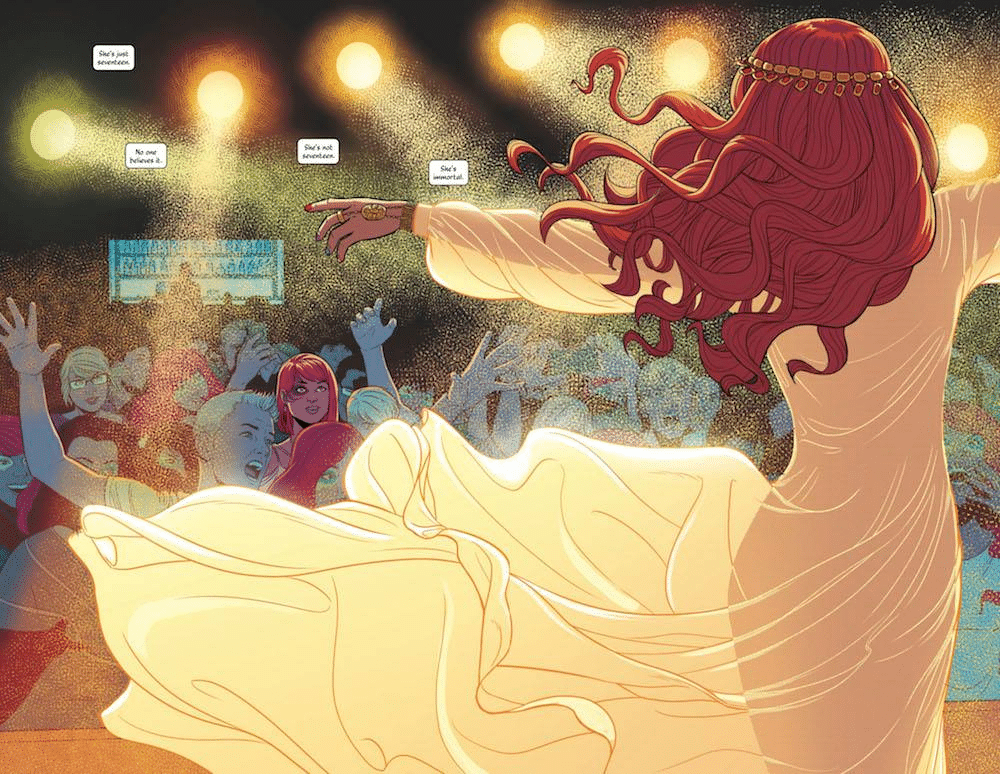
And speaking of radiance, Matthew Wilson’s colors are still as vibrant and awe-inspiring in 2024 as they did in 2014, especially that first splash page of Amaterasu’s gig. Gillen and McKelvie go from the restricted grids of Laura getting ready at her family flat in Brockley before turning the page on a double page spread that nails what it’s like to be wholly enraptured at your favorite artist’s show. The afterglow continues in the following pages as Laura (Through Kieron Gillen’s captions.) processes the performance and tries to connect with Amaterasu before fainting in a white gold flurry. This sequence is a stand-out moment for Wilson in this first issue, but he provides some early bisexual lighting for the Pantheon green room to show that the gender and sexual fluidity of these gods as well as utilizing bright, flat colors accompaniment to Jamie McKelvie’s utter demolition of the human figure when Luci kills the assassins and when the judge mysteriously dies in court.

Moving from the micro to the macro, The Wicked + the Divine follows a pattern that the great comics of the past used, such as The Sandman and Watchmen, which is introduce a rich world with complex characters and universal themes through a simple, accessible plot device. In WicDiv‘s case, it’s the murder mystery. Who killed the judge doesn’t matter in the long run of the series, but it does the job in getting you to pick up WicDiv #2. Gillen and McKelvie introduce the power of the finger click in the opening, absinthe-soaked love child of Sandman and Invisibles flashback and also demonstrate it in present times with inset panels showing Luci kill the fundamentalist Christian gunmen in self-defense. Cassandra’s skepticism aside, the Pantheon members have the ability to kill as well as inspire in an beautiful, abstract way that I’ve witnessed from audience members in the front row at Ethel Cain shows. (I wonder if she’s read WicDiv ; one of her big influences Florence Welch inspired the look for Amaterasu.) The ending of WicDiv #1 and the surprise on Luci’s face creates an air of danger to go with the “necrotically glamorous” (To quote Gerard Way’s blurb on the back of the trade paperback.) tragedy of being a god for two years and then dying, which definitely isn’t a PR line for Amaterasu. I was hooked in 2014 and am still hooked in 2024.

The Wicked + the Divine #1 uses the power of fandom and one’s favorite music and art to explore what it feels like to think that you’re immortal and also about to die, or basically a young adult. Jamie McKelvie and Matthew Wilson’s visuals marry a heightened pop star aesthetic to fundamental, rhythmic storytelling of grids and face and body acting while Kieron Gillen’s caption and dialogues add humor, subtext, and personality to this unforgettable cast of characters. It’s fitting that I’m writing this review while listening to Lorde and Charli XCX’s long-awaited and surprisingly vulnerable collaboration “Girl, so confusing” because I was definitely bumping Pure Heroine, Sucker, and True Romance while writing my first WicDiv reviews in 2014. Sometimes, the things that were great a decade ago are still great plus you have the beauty of hindsight and self-awareness to appreciate them with new eyes and be happy that you’re alive.

Story: Kieron Gillen Art: Jamie McKelvie
Colors: Matthew Wilson Letters: Clayton Cowles
Story: 9.4 Art: 9.8 Overall: 9.6 Recommendation: Buy

Criticism and Fandom Duel it Out in Phonogram: The Singles Club #6

Phonogram: The Singles Club #6

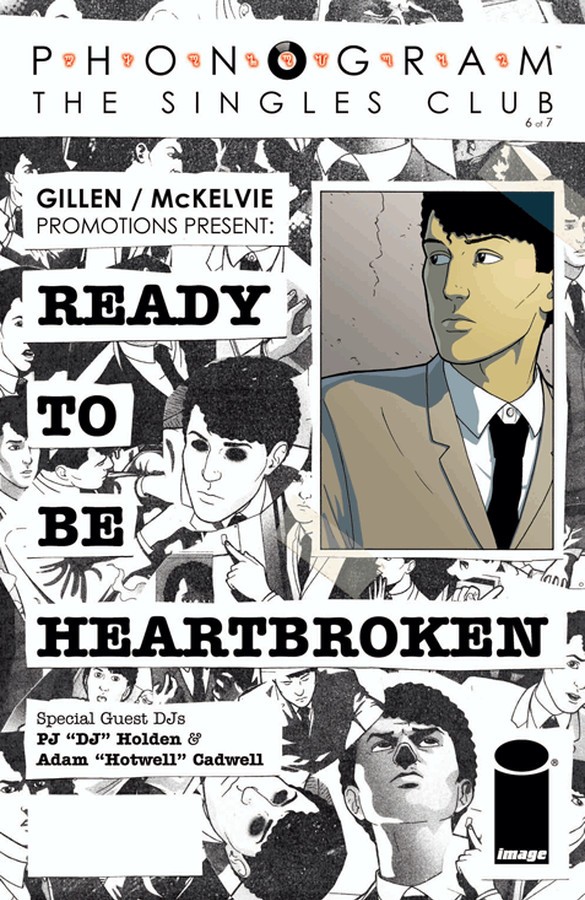
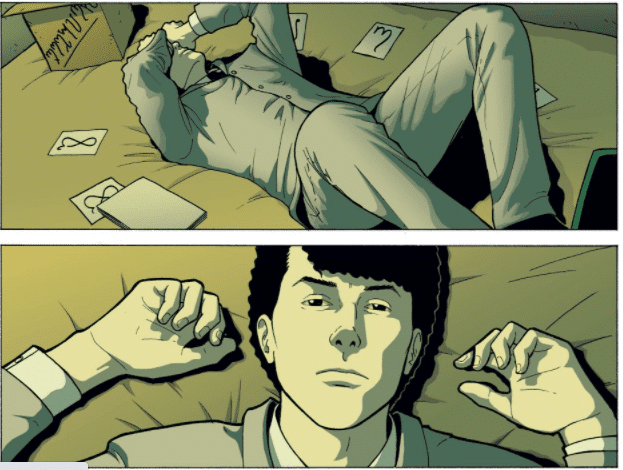
From what we’ve seen in Phonogram: The Singles Club so far, Lloyd is more concerned with telling various phonomancers about his “plan” to show pop music’s dark, hypocritical subtext by combining new public domain melodies with “hyper-lewd post-spank-rock sex lyrics”. He’s more critic than an artist or even fan (Except for the Dexys Midnight Runners.) in those five issues. So it’s fitting that Phonogram: The Singles Club #6, Lloyd’s comic, is in zine form and takes place after the revelries are over in his bedroom where he writes about them in his grimoire, er, zine.

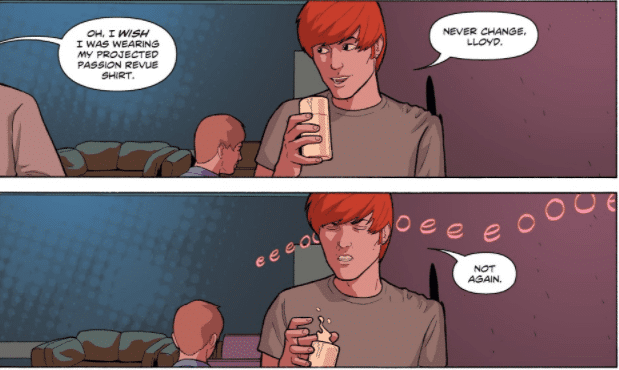
In the past, Kieron Gillen, Jamie McKelvie, and Matthew Wilson show that Lloyd is all about theory, not praxis as evidenced by his awkwardness around dancing and wanting to fanboy over David Kohl instead of having drinking and having a good time at the club. Now we get to see these events from his POV, and it shows that he definitely is all about analysis calling music “sublimated emotion” and his grimoire “sublimated thought”. Lloyd has all these ideas about music, bands, and even people, and he uses writing to basically exorcise them and get them out in the open from his thoughts on David Kohl’s mortality (Their chat was chat was apparently an “interview”) to an essay on why Dexys Midnight Runners means so much to him and finally a poem about Penny on the dance floor.

The Dexys essay really brings out that push and pull between fandom and criticism as Lloyd puts on their single “Plan B” to help him calm down after a very emotional car ride. McKelvie does a fantastic job of showing his pain on the first place as he wrinkles his eyes and puts his fist on the door before throwing a vase of flowers, a classic symbol of love and devotion. However, once Lloyd gets to his room he’s all business, putting on a record, and then pulling out his typewriter and getting to work on his grimoire. I can definitely connect to him finding comfort through putting his thoughts about a certain topic in order, and it’s something I have done myself after a tough breakup or a tough emotional bit. Like, I’m taking a break from that part of my brain and going to use the other one.

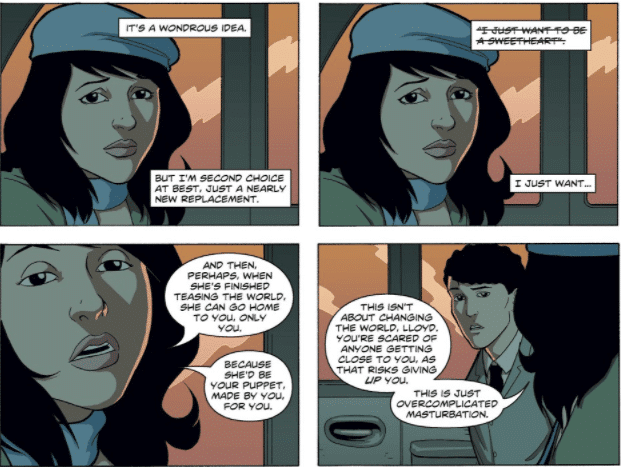
I get that kind of analytical vibe from Lloyd as he basically reports on events of Phonogram: The Singles Club usually mainly prose, but also collage and even a really fun comic to illustrate his “master plan”, which honestly works more effectively than the multiple times he told folks about it. It’s also interesting that the three people in the band look like stick figure versions of him, Penny, and Laura Heaven. And Lloyd totally still wants Penny to be the frontwoman as he does an extra little ritual before writing out her response to his plan as well as the aforementioned poem. Gillen captures Lloyd’s eloquence in describing how Penny dances to “Pull Shapes” with some killer lines like “My mocking words are turned to chalk and dust by her every step…” It’s the perfect verbal companion to the splash page at the end of The Singles Club #1, and it’s nice that Lloyd got to enjoy that moment too. In theory, never in practice although that will change by the end of this issue.

Phonogram: The Singles Club #6

On the other end of the spectrum is Lloyd’s relationship with Laura Heaven. (And, no, we haven’t seen the last of it.) Gillen and McKelvie truly understand the tragedy of a missed emotional and intellectual connection with someone as Lloyd waxes poetic about he and Laura are on on the same page about his plan, but then she leaves the cab, and then he starts ripping up the zine page. They have a kind of chemistry, and it’s all dashed to pieces as Lloyd falls on the band surrounded by sigils with McKelvie giving him an aimless stare. Wilson keeps the color palette a neutral sepia because it’s a little bit of a flashback as Lloyd is thinking back to last night, but mostly, he’s not feeling super magical.

But the magic returns in the final four pages of Phonogram: The Singles Club #6 as Gillen, McKelvie, and Wilson capture the euphoric feeling of listening to a song by a new band for the first time. (A band that you will probably fall in love with.) They kick it off with a tight, six-panel flashback of David Kohl basically nudging Lloyd to expand his horizons beyond Dexys and suggesting Los Campesinos!, who had just started during the events of this story, released two albums before the publication of The Singles Clubs, and are considered indie legends today. Instead of overanalyzing his personality, Kohl and Lloyd have a nice chat about music, and it leads to Lloyd going on MySpace (So much nostalgia!) and streaming “We Throw Parties, You Throw Knives”.

Phonogram: The Singles Club #6

What follows is a love story in motion as Lloyd dances all around his bedroom to the track, only moving to headphones when he gets a noise complaint, and his new grimoire is inspired by them. McKelvie shows the progression of his interest in the artist as he clicks on the song, starts moving his hands around and makes a comment about the lyrics, and then finally goes into full dance mode. In a single panel, Lloyd demonstrates more vigor and physical energy than in the previous five issues, and it’s redemptive for him as he’s genuinely a fan of good indie and pop music and not just a critic stuck in a niche, or worse, a rut. He had a rough night, but now he has some new tunes and a new lease on life and his grimoires/zines. As a comics critic, it’s the equivalent of stepping outside of your usual beat and creators and enjoying some new kind of work.

Phonogram: The Singles Club #6 is all about how a new artist and/or song can be quite refreshing, especially if you’re prone to overanalysis like poor Lloyd. (I was probably a little too hard on him last article.) Kieron Gillen, Jamie McKelvie, and Matthew Wilson also craft a homage to fanzines and the power of putting passion into words and images like Lloyd does in this issue before burning it all down to be consumed by a new song. And the dancing at the end is really a nice transition to the final and arguably best issue of Phonogram The Singles Club even though Lloyd and Kid-with-Knife are polar opposites.

Phonogram: The Singles Club #5 shows the emptiness of referentiality

Phonogram: The Singles Club #5

“The boys wanna be her. The girls wanna be her. I wanna be her.”- “Boys Wanna Be Her” by Peaches

Laura Heaven is terribly pretentious and a terrible person, and after dropping hints about her throughout Phonogram: The Singles Club, Kieron Gillen, Jamie McKelvie, and Matthew Wilson give her center stage in issue five. To quickly sum her up, she is the female equivalent of that Harvard grad student that gets spit roasted by Matt Damon’s character in Good Will Hunting , but with pop music instead of colonial American history. Nearly every line of dialogue or narrative caption for her is a reference to something else whether that’s a lyric by her obsession du jour the 2000s English indie rock band The Long Blondes or a really hacked out quote from Airplane that causes the equally referential Lloyd (Never Logos) to go Arthur fist in the next panel. It’s also why Phonogram: The Singles Club #5 comes across as the wordiest of the series so far even though I haven’t done any actual analysis on it.

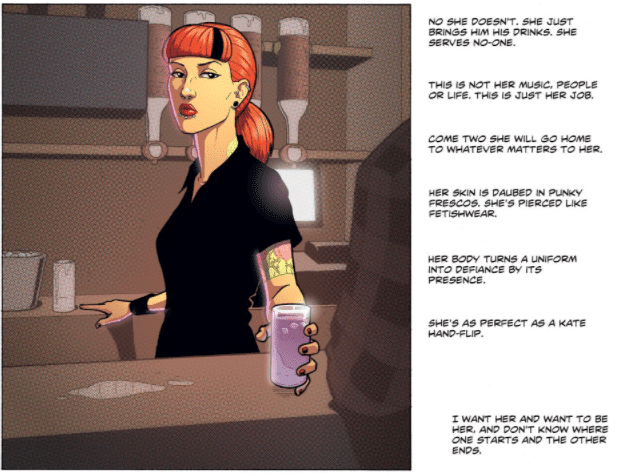
In Phonogram: The Singles Club #5, Laura Heaven has to critique and commentate on everyone and everything, and of course, there’s footnotes. This because it’s her entire personality, and she can’t come up with anything original. You could even call her a parasite, and her interactions with Lloyd along with the black eyes McKelvie draws her with seem to back this up. For example, in previous issues, there’s been zero lingering on the simple act of getting drinks at the bar. It’s just something you do at a club night, everyone has their go-to libation, no harm, no foul. However, Laura creates an entire backstory for the bartender based on one panel of her disdainfully serving Marc a drink. Almost like a screenplay, she talks about how she’s a symbol of overall coolness thanks to her tattoo sleeve and piercing, and how she wants to be and be with her. (Laura gives off total frustrated bisexual vibes, especially around Penny B.)

Phonogram: The Singles Club #5

This methodical, yet erotically charged stream of consciousness is just how Laura views the world, and Jamie McKelvie does an excellent job of matching facial expression to whatever she’s thinking at the time. He and Kieron Gillen create layers of subtext as Laura balances being both critical and jealous. The scene where she smokes a cigarette while dressed in her get-up that’s basically Kate Jackson (The frontwoman of Long Blondes) cosplay while looking dolefully at Penny B and Marc is a textbook example of that. She misreads (He’s still hung up over an ex.) that Marc is interested in Penny not her, and her captions on why she likes the Long Blonde and how Kate Jackson is basically a BDSM switch act as a half-baked distraction from her feelings. McKelvie draws a close-up of Penny’s hand on Marc’s back while she talks about how Long Blondes’ references to other bands and general intertextuality has made her feel and connected her to new/old music when she really wants to connect with another human being and be wanted.

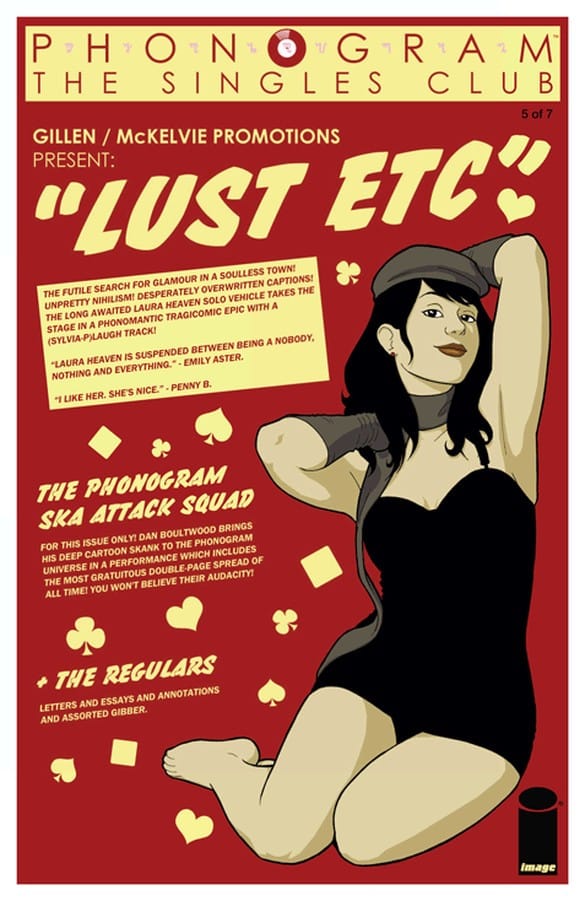
And the emphasis is on “wanted” and desire and not on any kind of healthy, two-way relationship, hence, the issue’s title “Lust Etc.”. (Of course, this is a Long Blondes song title.) She has huge crushes on both Penny B and Marc that are exposed through her angry expression while they chat at the club, and later on when she chats with Emily Aster in the bathroom. What starts as a condescending “bless your heart” kind of moment where Emily teases Laura for her love of Long Blondes and unoriginality turns into the closest Phonogram: The Singles Club #5 gets to heart to heart throughout the entire issue. (I almost jumped in the ocean.) From a quick glance, Emily understands what Laura is trying to be and adjusts her beret while nailing her character in one sentence, “You’re a bad person. That’s not so bad.” There’s also the context of issue three that makes it seem like Emily sees a lot of her previous self (The self-harming, indie girl in the mirror.) in Laura, and that she needs a bit of a nudge to break out of her “chrysalis”.

Phonogram: The Singles Club #5

This not as bad side comes out in the conclusion of the issue when the night ends, and Laura (As one of the “dregs”) shares a taxi with Lloyd, who gets another screenplay-esque play by play just like the bartender. Gillen and McKelvie reveal that Laura’s loathing for Lloyd comes from her seeing a lot of her worst qualities in him. (See The Smiths quote/flirt along when they get in the taxi.) And speaking of The Smiths, Gillen, McKelvie, and Wilson, who brings a dark palette to play, show that having a passion for a certain kind of music isn’t the formula for a meet cute and do a nihilist spin on the mid-2000s indie romantic comedy. McKelvie draws Laura’s body posture as flirtatious, and there’s even an “almost kiss” panel. However, it’s Laura knowing that she won’t be Kate Jackson or the femme fatale in Lloyd’s painfully misogynistic pop project so she decides to verbally castrate him instead and concludes by jumping out of the taxi and butchering one of The Smiths’ best lyrics, “It takes guts to be gentle and kind” while running into the night. The last few pages of Phonogram: The Singles Club #5 truly are an evisceration of the toxicity of the indie scene, and by extension any passionate fandom, as Laura and Lloyd substitute emotional openness with empty referentiality as deep down, they’re the only ones they care about.

Circling back to the beginning of the article, Laura Heaven could be a one-note indie poseur/parody character that other more developed characters make fun of or just to push to the background. However, Kieron Gillen, Jamie McKelvie, and Matthew Wilson treat her with both sympathy and contempt. McKelvie gives her these longing, earnest looks, like the lyrics in The Smiths’ best choruses, and I really empathize with her a lot when she’s watching Penny have a good time on the dance floor or realizing how much cooler Emily Aster is than her.

Despite her pretentiousness (Read: acting like a total asshole.), Laura is a relatable character to me as she uses her interests as a shield in tough, emotionally fraught situations or even to avoid small talk. Also, I could definitely apply the aforementioned captions about why she likes the Long Blondes to the music I discovered or rediscovered while reading Phonogram Rue Britannia and The Singles Club. For example, I didn’t know my Manic Street from my Preachers and had only been to one gay bar in a small college town at the time so Robyn was also a foreign concept to me. I did know Crystal Castles because one day I randomly looked up their music because they had the same name as an arcade game I liked as a kid.

However, Laura also uses her passion and propensity for quoting her favorite songs during untimely moments to mask that she’s a little bit of a terrible person and incapable of having a good time as she snarks and snipes at her so-called “friend” Penny B at the club. And there’s of course the bit with Lloyd at the end. If she continues with her interest in vintage music and fashion and maybe branches out a little bit, Laura Heaven could definitely end up being a “terrible person with great taste in records”, and this is why it’s so awesome that Gillen, McKelvie, and Wilson explore what happened to her, Lloyd, and the rest of the Singles Club crew in the arguably the best issue of Phonogram: The Immaterial Girl.

But, for now, she’s a lonely young woman with “the records and books that [she] own[s” running into the darkness in a sequence that is the antithesis of Penny B dancing in heavenly light to “Pull Shapes” in Phonogram: The Singles Club #1.

Skeletons From My Stack: League of Extraordinary Gentlemen

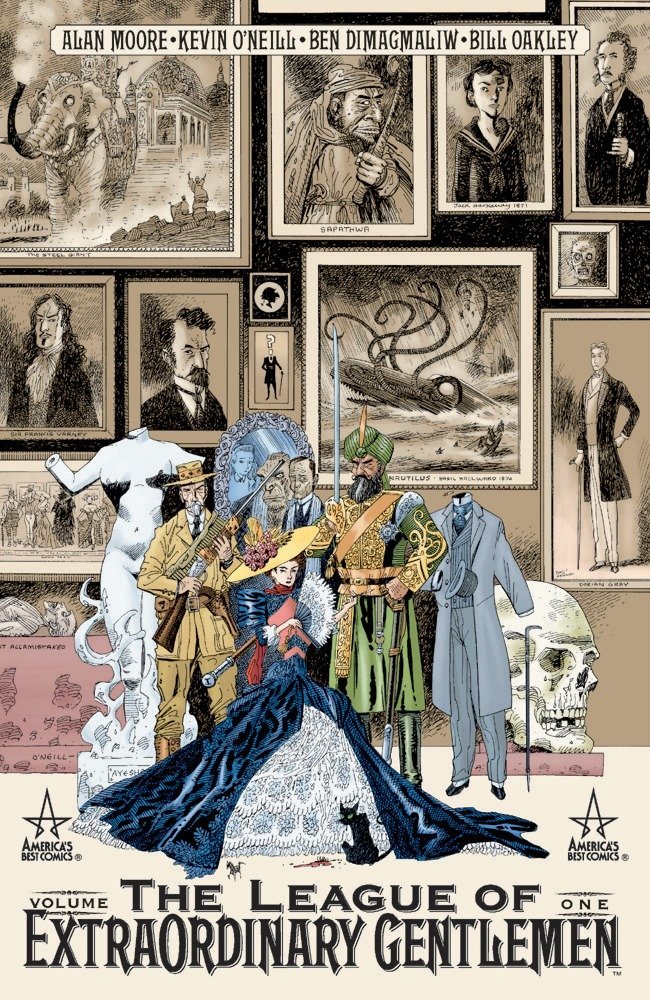
The League of Extraordinary Gentleman

I’ve always been a huge fan of Swamp Thing. After reading the first few volumes of Saga of Swamp Thing, I became a huge fan of Alan Moore. I’ve since read a large chunk of Moore’s bibliography, but there’s one title I’ve shied away from. That title is The League of Extraordinary Gentlemen.

Allow me to explain why. I don’t tend to watch movies that are adapted from specific books I’ve read and enjoyed. Conversely, if I see the movie version of something first, I rarely care to read the book it was based on. That’s what happened with The League of Extraordinary Gentlemen. I saw the film in theaters, not knowing it was based on a comic book. I’ve since seen it again more times than I can count. I’d re-watch it every time it was on cable (which was, and probably still is, often).

So how did the graphic novel wind up on my to-read stack? I won a gift card to a local book store last year. They had a small graphic novel section, mostly Marvel and Superman trade paperbacks. Then I noticed the first volume of The League of Extraordinary and decided I’d at least buy it to add to my graphic novel collection. It’s sat on my stack for eight months. Now I’m dusting it off for this newest installment of Skeletons From My Stack.

The League of Extraordinary Gentlemen is a historical fiction comic series with steampunk elements. Writer Alan Moore fills the story with characters from classic literature. The series opens with Campion Bond, working on behalf of the mysterious Mr. M, tasking Wilhelmina Murray with recruiting a group of eccentrics and outlaws. The group, the eponymous League of Extraordinary Gentleman, is given a mission to retrieve a substance known as Cavorite before it can fall into the hands of England’s enemies. The story itself hasn’t aged well. That’s saying something considering it was originally published in 1999. There were many times where it seemed like Moore chose the most offensive bits of history even though they weren’t essential to the actual plot. It makes for a gritty story that skews closer to offensive than historically accurate.

I was surprised by the appearance of several literary figures not used in the film, including Auguste Dupin, Dick Donovan, and Mycroft Holmes. There’s also a plethora of minor references to many other works of literature, by authors such as H.G. Wells, Jules Verne, Anthony Trollope, H. Rider Haggard, Russell Thorndike, Johnathan Swift, and James Fenimore Cooper. I’m an avid reader, who has perused many of the classics, so I had a great time searching for the literary Easter eggs scattered throughout the issues. The series was also much gorier than I expected, but this just made the action scenes that much more exciting. This collected edition of the first arc also includes a short story written by Moore and featuring Quartermain.

Kevin O’Neill draws the book in a rather abstract style. For a period piece, I thought the colors were a little bright. The colors fit the art style, but didn’t necessarily fit the setting and themes of the story. The Illustrations are impressively detailed, though sometimes almost to too great an extent. This makes it hard to tell what’s going on at certain times while at others the details make for gorgeously rendered scenes. The various city-scapes are especially impressive. I also liked that the line work and hatching gives the images a sense of depth and texture.

Honestly, I think The League of Extraordinary Gentlemen is one of the rare examples of the film being better than the book. I did enjoy the nods to science-fiction within the book’s plot. It fits the narrative better than the standard bombing plot used in the film. I also preferred the comic’s version of Alan Quartermain over Sean Connery’s portrayal in the film adaptation. Yet of the two, the movie was all-around more enjoyable than the first volume of the comic. Having finally read The League of Extraordinary Gentlemen and finding I prefer the film, it turns out this comic probably should have stayed a skeleton on my to-be-read stack.

Story: Alan Moore Art: Kevin O’Neil
Color: Benedict Dimagmaliw Letterer: Mr. William Oakley

Story: 2.5 out of 5 Art: 3 out of 5 Overall: 2.5 out of 5


Purchase: AmazonKindlecomiXology

Phonogram: The Singles Club #3 shows the impossibility of Escaping Past Insecurities

“Oh, make me over! I’m all I want to be. A walking study in demonology.”- “Celebrity Skin” by Hole

Content warning: self-harm mentions

PHONOGRAM: THE SINGLES CLUB #3

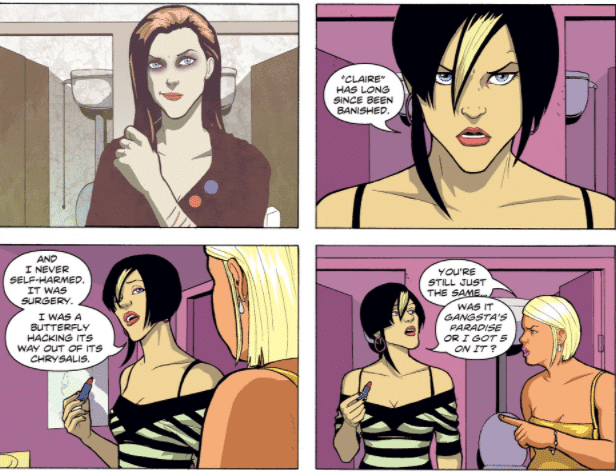
Asymmetrical haircut, perfect quip at the ready, timeless sense of fashion, and an air of superiority. Emily Aster is the epitome of “cool girl”, and she even makes inhaling carcinogens indoors look cool. She rules the roost in Phonogram: The Singles Club #3 where Kieron Gillen, Jamie McKelvie, and Matthew Wilson show an indie night at a club in Bristol from her perspective. The story begins with her admiring her “reflection” in the mirror (We later learn that, like a vampire, she doesn’t have one.) and wraps up with her having mindless casual sex with Kid-with-Knife, who would much rather be dancing to Wu-Tang Clan than Elastica. Along the way, she imposes her ego on every person she comes into contact with at indie night from frenemy David Kohl to the DJs Seth Bingo and Silent Girl plus Laura Heaven in one panel, and most spectacularly, an old friend from high school, who knew her as a self-harming sad girl named Clair, who was more into The Smiths than taking over a dance floor.

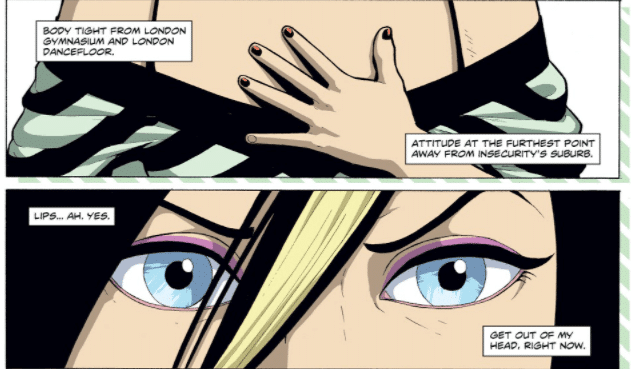
Thematically, Gillen and McKelvie follow a similar throughline in Phonogram: The Singles Club #3 as the previous issue with Emily Aster, like Marc, being haunted by a specter of her past. However, Emily’s specter is herself. It’s not until page ten until we find out that she doesn’t have a reflection, but Gillen and McKelvie hint at the reveal through dialogue and art placement. Emily basically breaks the fourth wall and shows the audience’s perception of herself. She immediately switches to second person in her narrative captions, and McKelvie draws her from different angles and never straight on like looking in a mirror. Gillen’s writing exudes confidence until we get a close-up and a “Get out of my head, right now”, which is a recurring theme as Emily tries to run away from Claire as quickly as possible.

If you have to say you’re not insecure, you probably are. (Sorry, them’s the breaks.)

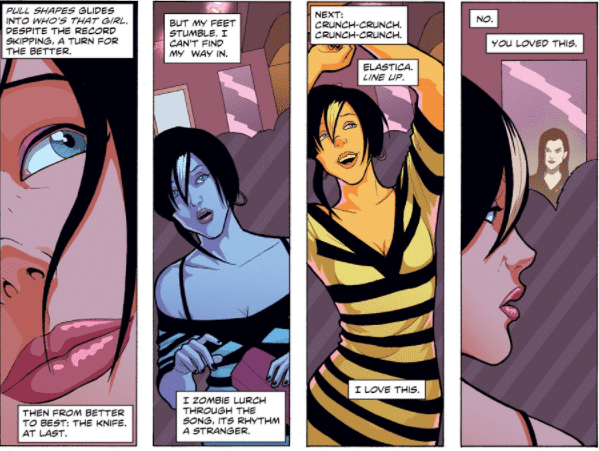
In her mind, Emily has no past just a present and future. This is why she scoffs at the whole concept of “indie night” and being into music from the 1970s, 1980s, and 1990s like David Kohl, and especially, Indie Dave, who really hasn’t moved beyond Joy Division and the Manchester sound of that time and appeared in the previous volume as well as The Singles Club‘s B-sides. Later, in the issue, Emily starts energetically dancing to an Elastica song with Matthew Wilson’s palette capturing the glow of nostalgia. But, in the very next panel, she sees the reflection of Claire, there’s a repetition of “get out of my head”, and she leaves to do the most un-Claire thing possible: have a one night stand with Kid-with-Knife. Even though Emily’s dialogue is full of punch and ego and her posture is self-assured, everything she does is to piss off her past self. She might think that she has put that behind her, but her near-photographic memory of events that happened when she was a teenager shows that it still matters to her.

Phonogram: The Singles Club #3

And speaking of near-photographic memory, Emily’s most devastating and sadistic moment happens in the bathroom just before Penny B enters it to cry about Marc not dancing with her. Even though Emily denies knowing her, she runs into a high school classmate, who knew her as Claire the self-harmer. (In a bit of dark, deadpan humor, Jamie McKelvie draws Claire showing the scars on her arm.) Emily starts serious with metaphors for self-harm helping her transform into the woman she is today before reeling off an eight-panel monologue about the classmate’s car accident that took her brother’s life. McKelvie draws Claire casually re-applying lipstick and even includes a beat panel to show her pursing her lips to see if it looks good. However, Gillen’s dialogue is anything but casual and is utterly cruel as Emily forces this woman from her past to relive the saddest moment of her life in a club bathroom sandwiched between remarks about 1990s hip hop one-hit wonders. She really is a bad person with great taste in records, and this bathroom encounter with Claire/high school acquaintance ends up being the engine of the story that is Phonogram: Immaterial Girl where Emily totally loses control over her current self-identity.

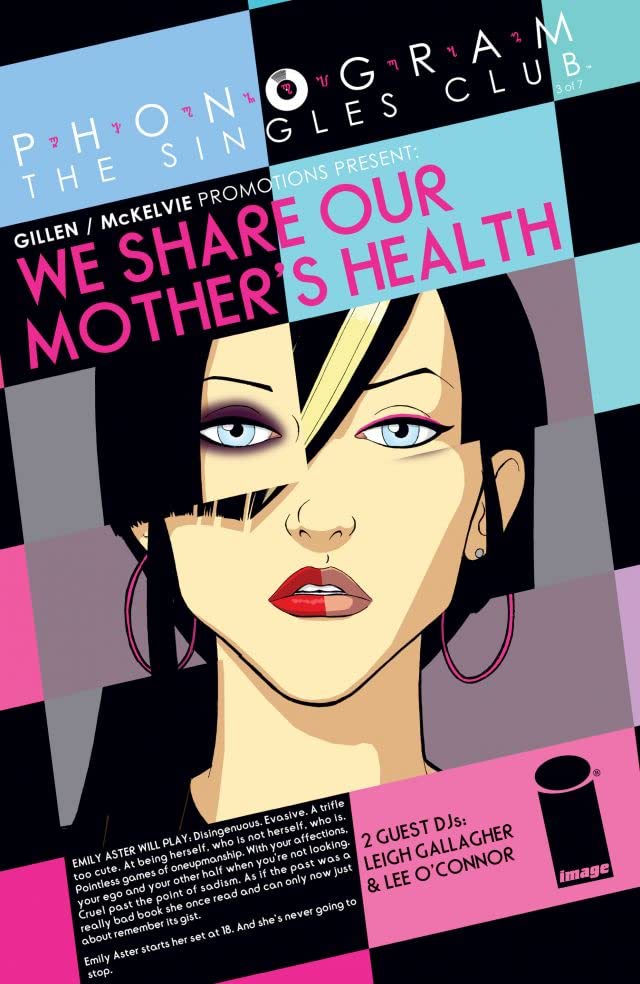
In the end, Emily doesn’t have a good night at the club as her egotism (What she hypocritically accuses Seth Bingo of being.), casual cruelty, and fixation on past insecurities ruin the one song she wanted to dance to (And this issue’s song/cover): “We Share Our Mother’s Health” by The Knife. There is a fluidity to Emily’s movements when she’s having a good time with Kohl and Kid-with-Knife for exactly one panel, but McKelvie draws her a little more rigidly when The Knife track comes on and Wilson uses shadowy colors instead of the intense (or ethereal) ones he uses for most dancing scenes. This is because Emily is “… living proof that sometimes friends are mean” and is too busy being smug and showing how much she has changed since the indie nights of the past to have a good time. Of course, she blames Kohl for the night sucking and turns her back on him, but from her actions throughout the comic, we know it’s her fault.

Phonogram: The Singles Club #3

As someone who has has played around with different identities, personas, and occasionally even looks, (See Emo Nite 2018) I can relate to Emily Aster (Uh oh!) and empathize with her even though she’s really a terrible person and crossed all the lines in her bathroom chat/monologue. I hate talking about and thinking about my past self and live in fear of running into someone I knew from high school now that I’ve moved back to that area thanks to a great career opportunity. So, I understand the deep insecurity that is connected to “coming home” (Even if “home” was never actually home), and by extension, Emily’s perspective in Phonogram: The Singles Club #3. I hate to say it, but I agree with Seth Bingo that she’s “the most evil woman in the world”.

However, he really doesn’t have much of a leg to stand on. Honestly, Kieron Gillen via Emily Aster put it best when he wrote “Everyone I know is a bad person with great taste in records”. This is an apt descriptor for basically the entire cast of Phonogram, who definitely introduced me to some great tunes (I owe my standom of Manic Street Preachers and Robyn to the series.), but is chockfull with some interpersonal toxicity as illustrated in my past, present, and future essays on Phonogram: The Singles Club.

Phonogram: The Singles Club #2 is a Saga of Curse Songs and Sadboys

“Staring at you from across the room/Patagonia shirt and some fucked up shoes/He might try to talk to you about bands…”- “Kill Your Local Indie Softboy” by Izzy Camina

Trigger warning: brief self-harm mention

Phonogram: The Singles Club #2

Reading Phonogram: The Singles Club at the end of 2020 is a nostalgic experience in both a personal and universal way. Universally, it creates nostalgia for the indie and pop music of the mid-2000s as well as indie nights at clubs, bars, and pubs, which have been able to take place safely since the Covid-19 pandemic. Personally, it’s sort of creates nostalgia for the person I was in 2014 when I first read Singles Club fresh off travels in England and ready to fuck up a small liberal arts university’s English department with an undergrad thesis on the still uncollected The Wicked + the Divine, but still so clueless, shy, and guilt/angst-ridden. Nostalgia can be a warm hug or the metaphorical equivalent of returning to an earlier stage of evolution, but it also can be a curse.

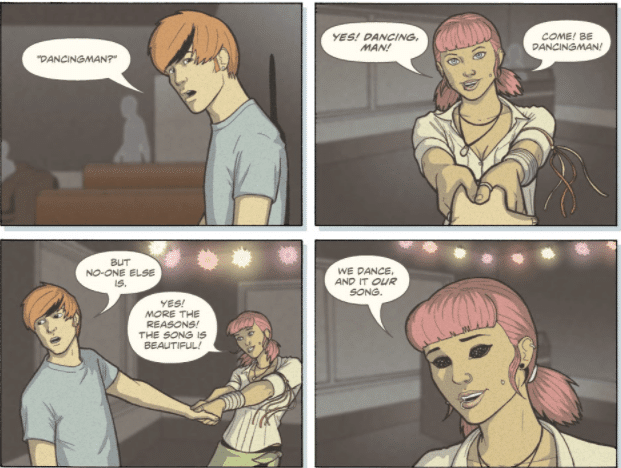
Or in the case of Phonogram: The Singles Club #2 and its POV character, Marc (Or Marquis to some.), a curse song. Basically, the premise of this issue is that Marc doesn’t want to go to the indie night at this Bristol club because it reminds him too much of an expat girl that he had a fling with in the past. And before this fling happened, they danced to “Let’s Make Love and Listen to Death from Above” by Brazilian indie rock band CSS so he can’t listen to that song without physically doubling over in pain and reliving the experience over again in faded tones from artist Jamie McKelvie and colorist Matthew Wilson while writer Kieron Gillen spit roasts him with his dialogue via this free-spirited girl who calls this specimen of the arms slumped, back of the venue, hipster boy set, “dancingman”.

However, before the extended flashback sequence, Gillen and McKelvie put some meat on the bones of the relationship between Marc and Lloyd (But he wishes you’d call him Mr. Logos) and Penny B and Laura Heaven. Lloyd is just as self-absorbed as Penny B was in issue one, but he’s all about theory and not praxis as he monologues to a half-listening Marc about his concept of his 1960s girl group revival band with “hyper-lewd post-spank rock sex lyrics”. Also, apparently, Laura has a thing for Marc too and flirts with him using song lyrics and the classic asking for a lighter move. Like Penny B, she is attracted to the cute indie boy, but also can’t make any kind of connection with him beyond reciting lyrics verbatim and using the stalest of pickup lines. However, McKelvie draws Marc as turned away from Laura as he goes in, gets a couple beers, and heads back to Lloyd. Lloyd does commiserate with him about the last time he was at the club, but for a single panel as he goes back to talking about his band concept and then fanboys over David Kohl, who shows up in the back of, again, a single panel. So, the girl is right when she tells Marc in a flashback that his friends “are nothing but bullshits with bad record collections.”

Phonogram: The Singles Club #2

Most of Phonogram Singles Club #2 happens in Marc’s head as he recreates the moments and conversation he shared with this unnamed expat girl at this club in the past. Matthew Wilson’s colors are toned compared to, say, the previous issue, but Jamie McKelvie’s art is animated is as ever with all kinds of gestures, hand motions, and dance moves before the past and present collide in a nine-panel grid makeout session. Instead of hiding behind phonomancy like Marc’s other friends, this girl lives like an open book and is blunt about her feelings towards Marc and the music that’s playing instead of posturing with arms crossed and commenting on The Long Blondes. She isn’t afraid to touch, tease his “reserved” (or “boring”) British nature, and make masturbation jokes about dancing. The 8 panel grid that McKelvie gives a nice screwball rhythm to their interactions as well as capture the beat of “Let’s Make Love and Listen to Death from Above” and its ode to hedonism, not being a fucking hipster.

Phonogram and its three volumes are filled with characters, who are defined by their taste and relationship to music, for better or worse. Unnamed expat girl isn’t one of these characters, and Kieron Gillen seems to be having a really good time with her dialogue that also doubles as self-reflection for Marc. She understands that each connection that we make, whether for one night or for a lifetime, has good and bad, or “It is just a things” in her words. It’s okay to feel bad, but you also have to move on and not being controlled by past relationships or decisions. (A lesser author would have named the girl “Carpe Diem” or some banal nonsense.) The girl demonstrates this through both her words and actions. For example, instead of standing off to the corner and complaining about the DJ’s taste in music, she decides to make a move on the cute boy she was dancing with earlier and enjoy his presence even if she never sees him again.

Marc doesn’t feel this same way and fixates on their interaction instead, which is why she calls him the “emperor of whine” and calls him an emo boy, a big insult for mid-2000s indie boys although both genre of artists still make sad songs about women. This term didn’t exist in 2009, but Marc is a textbook “sad boy” or maybe “softboy”. (The semantics are tricky so correct me if I’m wrong.) His life is centered around his music taste even though it doesn’t make him happy as evidenced by his terseness in comparison to Lloyd, Laura, and even Penny B’s overflowing of language and geekery. Also, he’s very sensitive and filled with emotions as shown by the vividness of the flashback he has with “Let’s Make and Listen to Death from Above” creating a whole Sherlock Holmes memory palace of feelings for this time in his life. It’s overwhelming for him and also sucks that he’s surrounded by friends who would rather talk about bands than his feelings.

Phonogram: The Singles Club #2

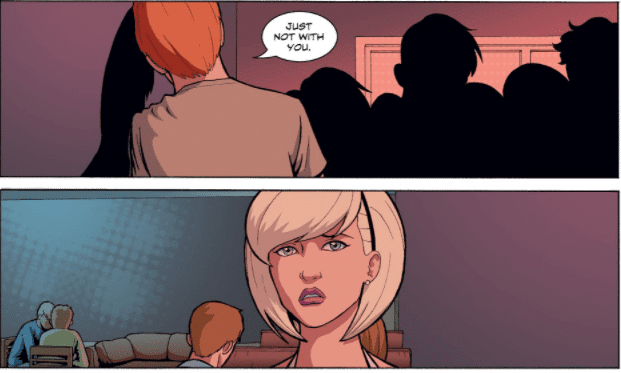
Marc has to break the “curse” of this song himself, but he isn’t willing to even though Penny B is ready to join him on the dance floor. Jamie McKelvie draws the “Just not with you” sequence from issue one from Marc’s POV this time, and with the added context of this issue and the flashback, we understand why he’s doubled over in pain, and there’s a single tear in his eye. Of course, Penny B ignores this. It’s a smart story move from Gillen and McKelvie to have Marc not experience some kind of big epiphany about moving on, but continue to sulk and see a VHS-static image of him and the girl from the past on the dance floor.

Marc is definitely the wallowing type, and hey, I’ve been there, but maybe it’s time to dance yrself clean, buddy. Breakups are really painful and feel like a withdrawal from drugs, but speaking from experience, you eventually get over him. However, I am not a licensed social worker, and my coping mechanism may or may not work for you. For example, my last one involved a manic episode, self-harm relapse, driving to Kentucky to hang out platonically with another ex, and starting a podcast.

Please don’t try that home, and dance to a fun song instead. I definitely recommend the one that Phonogram: The Singles Club #2 is centered around, which as mentioned earlier is “Let’s Make Love and Listen to Death from Above.”

Phonogram: The Singles Club #1 shows the Beauty and Agony of Dancing on Your own

Phonogram The Singles Club

“I just wanna dance all night/And I’m all messed up, I’m so out of line, yeah.”- “Dancing on my Own” by Robyn

If there’s one Kieron Gillen and/or Jamie McKelvie trade paperback volume that I recommend to folks, it’s Phonogram: The Singles Club. Technically, it’s Phonogram’s second volume, but it’s much more accessible than Rue Britannia (Unless you’re a huge Brit Pop fan). Singles Club is structured around a single night (December 23, 2006) at an indie club in Bristol, England told from the perspective of eight different phonomancers in seven comic book issues with seven accompanying songs that you can find on this playlist. (In short, a phonomancer uses music to create magic.) It’s like hipster Rashomon without murder and is a real treat for fans of character-driven writing with McKelvie and colorist Matthew Wilson bringing out unique storytelling tricks and color stories for each POV character.

Full disclosure: I wasn’t reading comic books when Phonogram: Singles Club dropped in 2009-2010 and read both it and Rue Britannia in 2014 during an arc break for The Wicked + the Divine, a comic that I covered at length during its epic 5 year run. However, it’s one of my favorite books by my favorite creative team, and I’m excited to cover it, especially during a time where the closest I can get to indie night at the club is dancing in my living room to a Bluetooth speaker so Singles Club has been a real comfort for me.

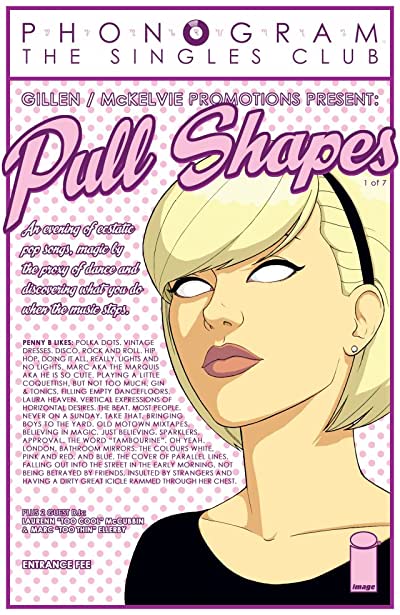
Phonogram: The Singles Club #1 focuses on the phonomancer, Penny B. She’s 19 years old, loves to dance, and has a crush on the emotionally distant Marquis, who looks like if Justin Bieber went indie instead of misappropriating Black culture. The song she really wants to dance to is “Pull Shapes” by The Pipettes, a British all-female indie pop group that had a few hits in the 2000s and were at the height of their fame around the time of this book’s setting. Basically, they’re a 1960s close harmony, girl group transported to 2006 with an all-male pop rock backing band, and “Pull Shapes” is an ode to the dance floor with everything else fading into the background. McKelvie and Wilson nail this feeling with their visuals by dropping out the background art and dropping in flat colors and polka dots (Like the outfits the Pipettes wear) so it’s just Penny and the music.

And when it comes down to it, music and dancing is all that Penny cares about, which is why she ends up dancing on her own in this final pages on the issue. There’s a real dissonance between the dialogue Kieron Gillen writes for her, and the reactions that Jamie McKelvie draws for her “friends” and fellow clubgoers. Supposedly, Laura is Penny’s best friend, but she never really talks to her except when she wants something like a gin and tonic. For example, on the bus ride to the club, Penny speaks directly to the reader/audience while Laura rolls her eyes, looks pensive, and smokes in the background. No wonder Penny has to pay for the drinks. The only time they really make eye contact and get in a conversation is when Laura says that the DJ is playing Blondie. This causes her to flip her drink to Laura as soon as she’s got it and hit the dance floor in an energetic display of McKelvie’s skill with motion and body movement as she breaks one of the rules of the night, which is “No magic”. (You can tell because her eyes go black and polka dot.)

Phonogram: The Singles Club

The throughline of ignoring people for music continues when she tries to chat up Marquis, but Gillen and McKelvie reveal no reason for there to be a connection between them except for his attractiveness. She starts to chat him up and put her hand on his arm, but then immediately she runs to the dance floor while remarking on his cuteness. Then, there’s pages of her arguing and honestly being gate-kept by the DJ (Who we later find out is named Seth Bingo) about the Pipettes. This is a sidebar from her trying to dance with Marquis, and she finally asks him and is completely and utterly rejected. Wilson uses a drab color palette while McKelvie draws Marquis from the back and doesn’t even have him make eye contact with her as he tells her, “Just not with you.” to the dance request. Penny is definitely self-centered and incredibly bad at listening, but you have to really feel for her it in this moment, mostly, because McKelvie gives her the saddest, forlorn puppy dog face ever.

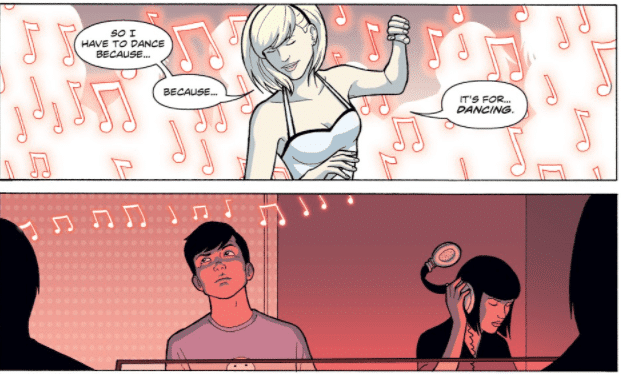
Kieron Gillen, Jamie McKelvie, and Matthew Wilson show Penny B spiraling into even more loneliness as Phonogram: Singles Club #1 progresses. She tries to find Laura in the restroom, but her “best friend” would rather hide behind a door than comfort her. Then, she runs into Marquis’ buddy Lloyd, who doesn’t have the social restraint of the other characters, and puts in words what they’ve all been thinking. Gillen writes cruelty really well, but he and McKelvie give Penny a way out as white musical notes fill the panels, and she realizes that Seth has relented and is playing “Pull Shapes”. It really captures the emotion of music as an escape as she doesn’t want to be in this conversation and just wants to dance to her favorite song.

Phonogram: The Singles Club

So, at the end, we get the two pages that really cemented Kieron Gillen, Jamie McKelvie, and Matthew Wilson as a superstar collaborative team. Gillen writes one hell of a monologue for Penny as she finally realizes that she can just enjoy truly dancing by herself and enjoying her songs for the sake of it instead of running after some boy, trying to salvage a friendship beyond saving, or arguing with some hipster DJ. McKelvie’s storytelling is sharp as he cuts between Penny dancing and the other characters of Singles Club observing her. She’s truly in her own little world for a moment. The background figures disappear and are replaced by pure white sound and musical notes from McKelvie and Wilson, whose colors are truly magical in the sequence. It captures the feeling of truly being enveloped in a song that it defines you for the next three or four minutes or maybe your whole life, and Gillen, McKelvie, and Wilson explore this theme in the final issue of Singles Club. (Come back in six weeks for that.)

Before wrapping up and putting some tunes on the ol’ faithful Bluetooth, I’d like to conclude by commenting on Penny’s last words and the final words of this issue, “I knew you’d understand” as she looks directly at the reader. Even though Penny is immature and quite annoying, anyone who loves music, pop or otherwise, can definitely relate to her need to get to the dance floor. Like this conversation is lovely, but the drop for “Dance Yrself Clean” by LCD Soundsystem is about to happen, and I need to be in the action when it goes off. In some cases, this is definitely impolite or socially unacceptable, but in the words of an artist who I won’t name, “At the end of the day, music is all we got.” Penny should definitely be nicer to her friends though and get to know people she has crushes on.

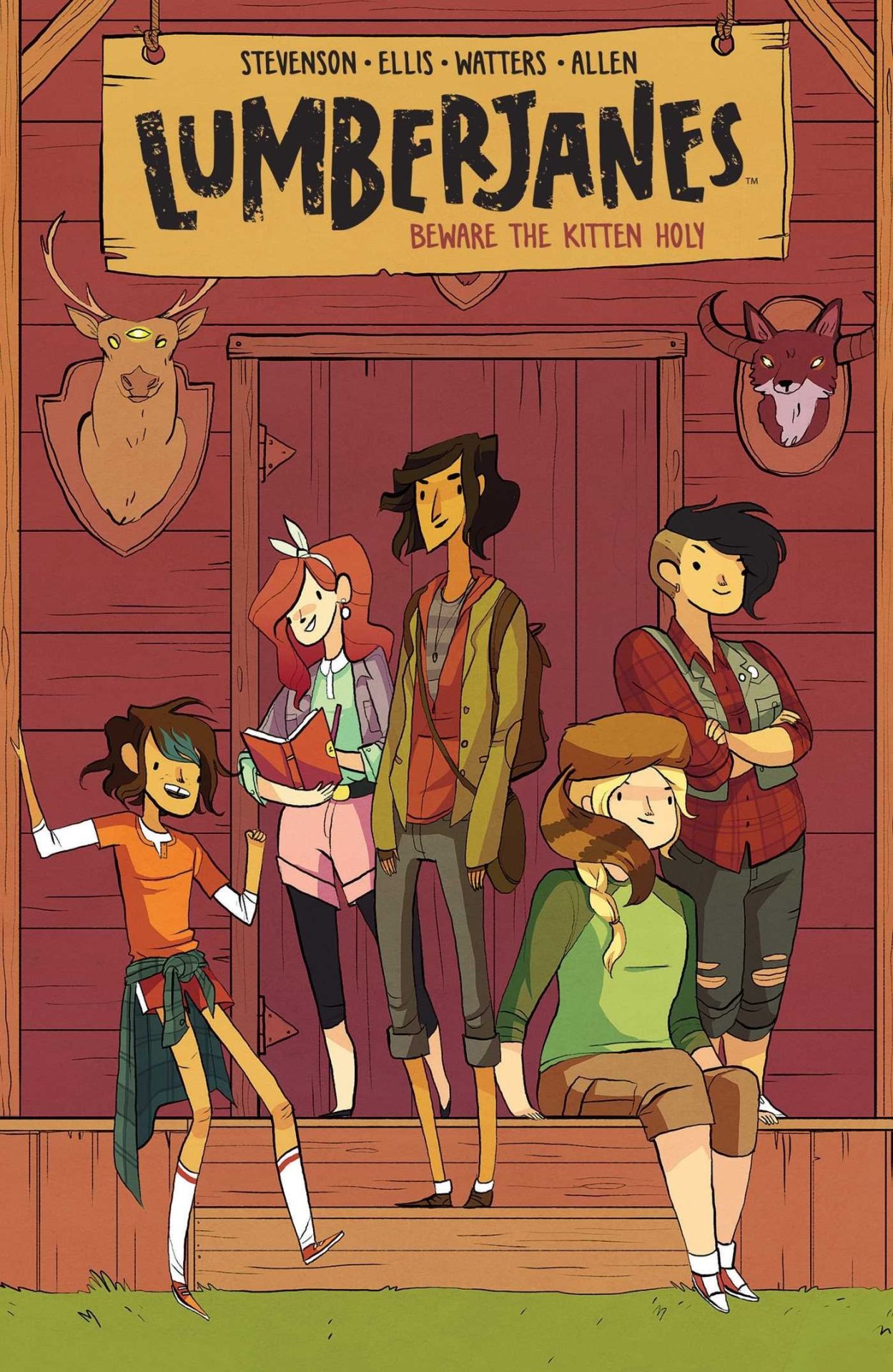
Skeletons From My Stack: Lumberjanes Volume 1: Beware the Kitten Holy

Lumberjanes Volume 1

Like most bibliophiles, I keep a stack of books by my bed that I one day plan to read. Unfortunately, between reading review materials, participating in reading challenges, books I’ve had on hold at the library for ages becoming available, and the lure of new books, that stack never seems to get any smaller. So I’ve decided to make an effort to finally tackle some of the books from my bedside “to-be-read” stack. So sit back and enjoy reading my thoughts on some of the skeletons from my book stack.

Lumberjanes is a series that has intrigued me for a long time. Brandy, the lady who owns my local comic book store, loves the Lumberjanes. It’s her favorite series. She’s got a discerning palate when it comes to comics, so a recommendation from her carries a lot of weight. Over a year ago, someone gave me a box of books. In that box was Lumberjanes Volume 1. I donated most of the rest of the books to charity, but I kept the Lumberjanes trade paperback. It has sat waiting on my stack until the day I got around to finally reading it. That day is today!

Five female best friends at a summer camp in the woods. Sounds like the plot of a slasher movie (or a porno). Sorry to disappoint fans of horror films (or porn enthusiasts) but Lumberjanes is a girl-powered fantasy adventure series. Best friends Jo, April, Mal, Molly, and Ripley are spending the summer at Miss Qiunzella Thiskwin Penniquiqul Thistle Crumpet’s Camp for Hardcore Lady-Types. This is no ordinary summer camp. Mysteries lay nearby, waiting to be uncovered and the surrounding woods are full of fantastic and mythical creatures.

From the dialogue to the sight gags, this is a really funny comic book. The girls’ friendship really shines through. Their relationships are very endearing and stand out from the purposely ridiculous nature of the story. Each chapter is preceded by a section out of the Lumberjanes field manual. These excerpts tie into the events of each chapter and provide cute background info to the story. I really liked all the pop culture references contained within the dialogue. I also enjoyed all the references to famous women from history. Admittedly, I had to Google a few to realize who was being referenced, but that isn’t a bad thing. Any comic that inspires people to learn on their own is doing something right.

Artist Brooke Allen’s style reminded me a little of Captain Underpants. Except, she used darker inks and much fuller levels of detail. The colors are so vivid and bright that there were times where I considered wearing sunglasses to read this book. Even the scenes set at nighttime are given a rich vibrancy by Maarta Laiho’s color choices. I really liked how Allen draws faces. They convey emotion while retaining the elasticity and wackiness of a cartoon character.

Lumberjanes Volume 1 was well worth the wait. I’m glad I chose it as the first book to remove from my stack. This comic is geared toward young people, and the story is very silly. So although it’s suitable for all readers, it may not appeal to those used to more mature titles. The first volume contains a joyful adventure story full of heart and humor. I’m not sure if I’ll read any further into the series, but I do regret waiting so long to check it out. Lumberjanes made for a fun afternoon of reading. Now onto the next title in my stack…

Story: Noelle Stevenson and Grace Ellis Art: Brooke Allen
Color: Maarta Laiho Letterer: Aubrey Aiese
Story: 3.0/5.0 Art: 4.0/5.0 Overall: 3.5/5.0


Purchase: comiXologyAmazonKindleBookshop

« Older Entries