Author Archives: Emily Lewis

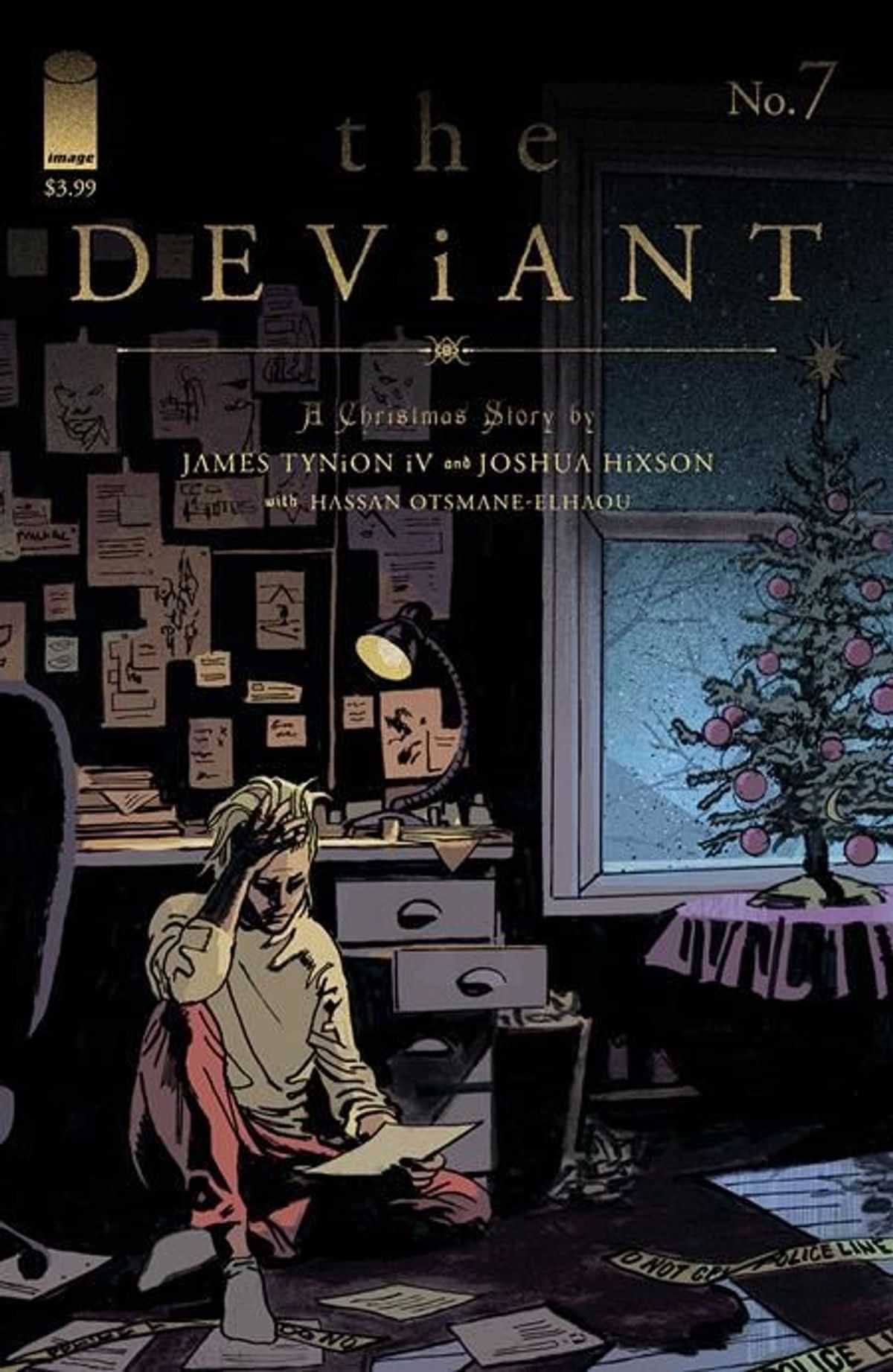
The Deviant #7 Has Derek Shine a Light to Save Michael from the Darkness
The Deviant #7

Locked behind bars and blamed for the recent killings, Michael waits in a jail cell as the public believes him to be the new Deviant Killer. His partner Derek takes it upon himself to solve this decades-long, horrific mystery to free his partner from prison. Derek realizes he can only save Michael and clears his name by meeting the original accused Deviant Killer, Randall Olsen. As Derek works on his investigation, FBI Agent Hall reaches out to a true crime fan who sells replica Deviant Killer masks that match the one found in Michael’s closet. The Deviant #7 by James Tynion IV and Joshua Hixson gives Derek and Michael a potential light of hope out of this extremely dark tunnel.

The issue’s highlight lies in Derek and Randall’s conversations as two generations of the LGBTQ+ community talk to each other. Even before prison, Randall had to build up high walls to survive in society and only made them higher since being framed as the Deviant Killer. Seeing the worst homophobic aspects of society firsthand made him into a bitter ghost of a man that others could project their thoughts onto. Derek does not back down and can break his shell by giving him hope that the future can improve by citing his relationship with Michael. More importantly, it lies in the solidarity of the different generations of the LGBTQ+ community to fight back against oppression. Derek acknowledges the darkness that Randall experienced but does not look away or escape but understands it. Unlike Michael’s preoccupation with his personal history and feelings towards Randall as a monster, Derek sees the man’s flaws first. I applaud Tynion for not pulling any punches in this confrontation and making Randall into a fascinating and complex queer character. Lastly, I do find it interesting how he also highlights the more subtle homophobia that still exists in the modern day with the online trustworthy crime merchant describing Agent Hall as “faggy” after he leaves. As a Black gay FBI agent, he does not experience as much overt and explicit homophobia but more dog whistles, such as in the case of his interactions with Paul. Even if you belong to a high office, you are still defined by your queerness. Despite not explicitly stating his overall emotions towards the case, it becomes hard to ignore how much of his identity as a gay man impacts how he sees the case compared to the other cis het members of law enforcement. 

Conversely, Agent Hall questions a woman who sells serial killer memorabilia and merchandise to true crime fans. During their talk, Tynion demonstrates how people like her do not care about the victims or even any of the people involved but are more invested in the mythology and how to sell it, especially after she decides to market her masks tied to real-life crimes due to the killer using one. Although not all true crime fans lack humanity like her, the presentation of Midwestern Nice, in contrast with her capitalistic nature, underlines the horrific nature of capitalizing off real-world tragedies for profit. Especially now with true crime becoming a hot bed within entertainment, it can become easy to fall into the crafted narratives instead of understanding the real world consequences these events cause. Obsession creates a black vortex that sucks you in and will gradually drain the air from your lungs. 

Hixson’s atmospheric visuals capture the chilly and melancholic nature of the story. I appreciate Hixson’s continuing the slow and deliberately paced narrative in his drawing, colors, and paneling. It all feels well structured, with each moment serving a specific purpose that draws the reader deeper into the story. Hassan Otsmane-Elhaou’s emotive lettering makes the story more thrilling and enthralling.

Tynion and Hixson are crafting a unique tale in The Deviant #7 that touches on themes and ideas extremely close to me and other members of the LGBTQ+ community. I give Tynion a lot of credit for taking these big swings and hitting another home run in this issue. Even when it feels like darkness has fully engulfed your life and you have no hope left, sometimes you need a helping hand to help you swim to the surface and find the light.

Story: James Tynion IV Art/Colors: Joshua Hixson Letterer: Hassan Otsmane-Elhaou
Story: 9.5 Art: 9.5 Overall: 9.5 Recommendation: Read

Image Comics provided Graphic Policy with a FREE copy for review


Purchase: TFAW – Zeus Comics – Kindle
Trapped in the Fan Service Void: A Deadpool and Wolverine Critique

Deadpool and Wolverine

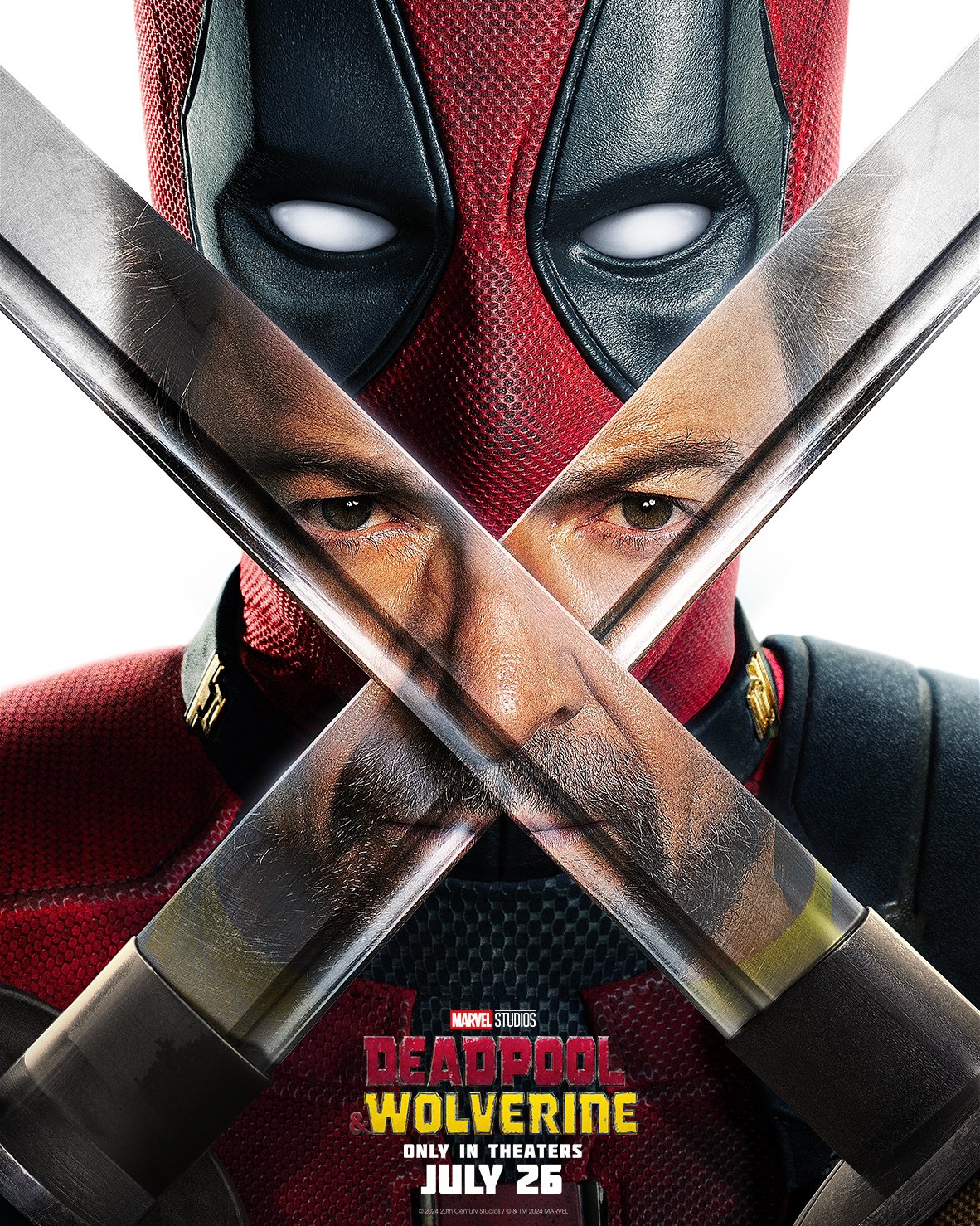
Throughout its marketing, Deadpool and Wolverine billed itself as both a swan song to the 2000s era of comic book films, the Fox X-Men franchise, and taking swings at the more muted reception towards the recent output of MCU films. However, while watching it, it felt more akin to beating an already dead horse with bags of that sweet, sweet Disney money while making jokes about movies that have been mocked to death for multiple years and even decades. I would not consider Deadpool and Wolverine’s massive box office a sign of success but a warning for what’s to come as Disney takes the wrong lessons from it. It might not be the first to have the worst types of fan service, but it proves how much this specific type can draw in audiences, along with its highly shallow critique of recent superhero media—spoilers for the film. 

First off, I am not against fan service. As a comic book fan, I enjoy it when my favorite characters get the spotlight or a creative team references a deep cut I recognize. Having those nuggets pop up as if to thank me for being a fan can feel rewarding. However, the fan service in Deadpool and Wolverine comes across as exhuming the old corpses of these past failed movies and puppeting them to make audiences laugh. I enjoyed seeing Dafne Keen return, but my eyes glazed over Chris Evans showing up as the Human Torch, Wesley Snipes as Blade, or even finally letting Channing Tatum be Gambit. It came across as stunt casting and to inspire reactions on social media where the movie does not dive deeper into being swallowed up by the success of the MCU. Jennifer Garner, as Elektra, got to make a Daredevil/Ben Affleck joke, Deadpool references Snipes’s frustration with Ryan Reynolds on the set of Blade Trinity, and so forth. Instead of making actual jokes, it comes across more as Reynolds and the other writers trying to recapture a feeling of joy by putting these characters on the screen again. 

Although called Deadpool and Wolverine, the X-Men get a backseat compared to the other non-Disney Marvel films, which get much more love and attention. Outside of Aaron Stanford, Dafne Keen, and even Tyler Mane, who get the most screen time as returning X-Men characters, Deadpool’sDeadpool’s cast gets sidelined, and the remaining mutants are played as background details for fans to point out. I am not expecting Olivia Munn to return as Psylocke or Jason Fleming as Azazel. Still, they cared more about stunt casting than integrating the Fox X-Men characters into the narrative. Especially with characters like Negasonic Teenage Warhead, Colossus, Shatterstar, and Vanessa, who have played significant roles in the past, Deadpool movies are essentially shunted off until the film’s end. The final project is a hollow mess that left me hungry for a more substantial narrative. The Fox X-Men and the remaining Fox comic book movies do not get a proper sendoff. 

Then comes Deadpool and Wolverine’s critiques of the recent MCU films and current superhero media. Relying on pot shots, hackneyed jokes, and grating fourth wall breaks, it never crafts a genuine, honest critique. We know about fans complaining that Wolverine never got to wear his actual costume in the original films, how Marvel’s quality is going down, and even that Rob Liefeld can’t draw feet. The issue lies in Deadpool and Wolverine, a commercial project by Disney that allows the viewer to believe that Disney is aware of Deadpool making fun of the company; all the while, they willingly grab your ticket money. Movies, TV shows, and even comics are the sole products of these companies to market to the masses, and they will do whatever it takes to ensure they succeed. And especially framing Deadpool, who is one of the most popular Marvel characters, as an underdog taking the winds from the Marvel sails lose its bite when you also remember that Ryan Reynolds and Shawn Levy, two highly successful people in film and television, doing a project funded by one of the biggest companies in entertainment. Frankly, the more significant issue that Deadpool and Wolverine do not want to acknowledge is how often art gets treated by these giant corporations and how even the creatives do not get recognition and monetary payment for their creations. These huge blockbuster franchises are built upon the work of writers, artists, and creatives who need more money for the incredible art they make. Toting the project as Disney’s first R-rated film for the MCU, it lacks any bite or power but fits within the ultra corporate refined track record image of the past movies. It is another property and IP for the giant corporate monster to ingest, process, and feed to its global audience.

About two weeks ago, Marvel announced the restructuring of the MCU, where the Russo Brothers and Robert Downey Jr. would return as directors for the upcoming films, and he would be Doctor Doom. Aside from my many problems with this news, it calls to mind another critical issue of the current MCU films and even Deadpool and Wolverine. The usage of nostalgia can only last so long before it crumbles and leaves a bitter taste in the audience’s throats. I do not think that audiences are getting tired of superhero films; they are exhausted by these big corporations repacking familiar stories where they play it safe and repeating the cycle. And with the movie making over $852 million, Disney and similar companies will learn the wrong lesson from it. Instead of the success of other movies that took risks, hollow familiarity and safety proved the winner. 

Fox’s comic book movies were not perfect, but they were many people’s introductions to the comics. X-Men: First Class, for all its faults, got me into the mutants and made me the X-Men fan I am today. Deadpool and Wolverine left a bad taste in my mouth as it signals what a corporation would do to attract a fledgling audience by offering shallow fan service. Much like the beginning of the film with Deadpool digging up Logan’s adamantium skeleton, Disney will continue to do the same to keep butts in their seats. Its massive success would count as a joke to the people saying that superhero films are falling out of fashion, but it’s not funny when there are long-term corrosive consequences. The only people laughing are Disney as they take the cheap hits on the way to the bank. Who needs a compelling story, interesting characters, or good basic writing when you can rely on IP to satisfy a viewer? Like the Fox films, we are trapped in a void by Disney and similar corporations who want to play us the safe hits instead of doing anything new and fresh. 

The Power Fantasy #1 is an Exciting Beginning to an Existential Superhero Narrative

The Power Fantasy #1

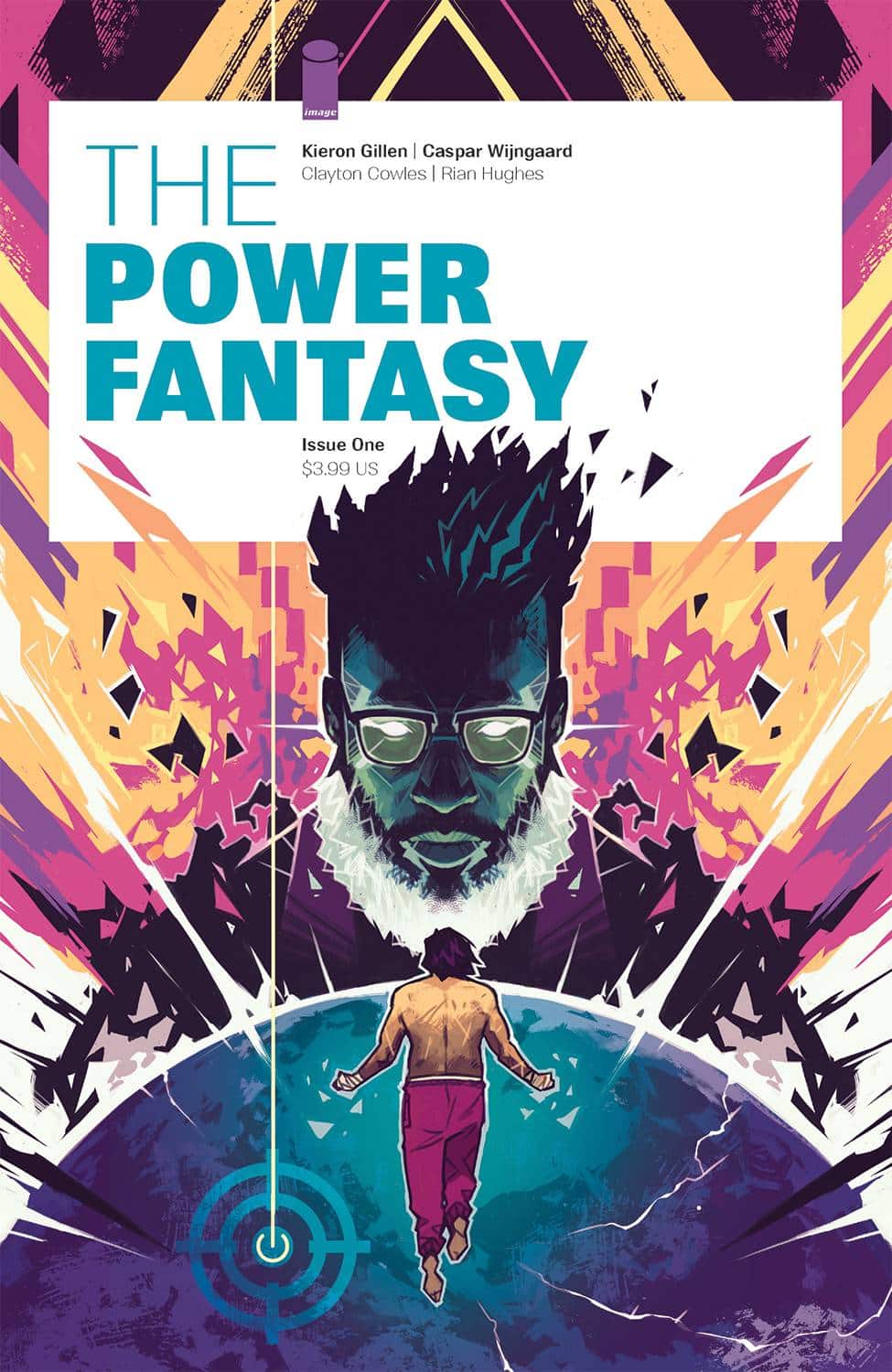
After the atomic bomb dropped in the 1940s, a group of six super-powered beings appeared in the world, where they each possessed the destructive power capacity of the United States nuclear arsenal. If they ever got into conflict, it would mean the end of planet Earth. Since then, the Atomics or the Nuclear Family have built a fragile series of alliances to prevent each other from causing the end of the world. Now, as the clock draws close to the new millennium of the year 2000, Earth’s future continues to stand on these superpowers from never coming into conflict with each other. Kieron Gillen and Caspar Wijngaard take readers to the fragile doomsday clock as the future could disappear within the blink of an eye in The Power Fantasy #1.

With the setting being an alternate history period set in 1999, Gillen and Wijngaard expertly build the world where they give enough context clues for readers to seamlessly understand what has been going on while fleshing it out thoroughly. From slight hints in Gillen’s writing to background dressing and clothing drawn by Wijngaard, they have thought about every detail of how the Atomics’ appearance and presence impacted the world, from major to minor. Even hints of past events serve as vital elements to explaining how much their history diverged from our own and how their existence would influence everything from public opinion to government responses to pop culture. Even though The Power Fantasy #1 may not exist in the same reality as ours, certain aspects of our own can still be found, making their world a skewed version of our own.

And I appreciate Gillen presenting a more mature series where he focuses more on the characters and their relationships instead of solely on the action. With the highly destructive nature of their powers, he emphasizes how important it is for each Atomic to stay out of conflict with each other and the world itself, which could mean the death of everybody. Focusing on Etienne Lux in The Power Fantasy #1, Lux serves as a great lens into the world where Lux essentially has to keep the other five members of the Nuclear Family in balance and work as not only a peacekeeper but a deal maker and even a clean up crew whenever one of them gets into trouble or steps out of line. He concerns himself with the ethical nature of his powers and the actions of the other Atomics, where he is willing to take drastic action if he feels it would be the sole ethical action in the situation. We also learn more about the Atomic family, such as Santa Valentina and Brother Ray “Heavy” Harris, while getting glimpses into the characters of Morishita Masumi, Jacky Magus, and Eliza Hellbound and their relationships with each other. With The Power Fantasy being an ensemble book, I find the entire cast fascinating and easy to invest in. 

Then comes Gillen exploring the existential horrors and fears of nuclear arsenals and how they serve no other purpose except to end all of life. With them coming into conflict, signaling the destruction of the world, all they can do is find a way to co-exist to deter the potential armageddon. Gillen examines how one false move by an Atomic could create a domino effect and destroy the planet. Even to this day, the nuclear shadow of death hangs over us, where all life as we know it will be gone due to the press of a button. And with the series set in the past, specifically in 1999, he draws attention to the fear of Y2K, where the approaching millennium would mess up computer clocks and accidentally launch warheads. Despite us being in 2024, Gillen wants to demonstrate how those weapons still hang over us and threaten us even if we do not think about them as much as we did in the twentieth century.

The art by Wijngaard is a real standout with its vibrant colors and captures a stylized fictional version of the past. And I love his character designs for the six Atomics, where they each have a distinct vibe that says everything about their character just by looking at them. The six Atomics are instantly iconic and feel different from the standard superhero fair while reflecting the various periods of history they exist in. Outside of the fantastic aesthetics, his drawing and paneling make Gillen’s already engaging script into an even more engrossing comic combined with Clayton Cowles’s seamless lettering. 

The Power Fantasy #1 by Gillen and Wijngaard is a perfect debut issue that draws readers into its compelling story and art. While the planet continues to turn, its very existence lies in the hands of six super-powered individuals whose lives impact its livelihood. All it takes is one simple conflict for all of the dominoes to fall down and kill everyone. The clock is counting down faster, and hopefully, the people of Earth and the Atomics make it to the year 2000 unscathed.

Story: Kieron Gillen Art/Colors: Caspar Wijngaard Letterer: Clayton Cowles
Story: 10 Art: 10 Overall: 10 Recommendation: Read

Image Comics provided Graphic Policy with a FREE copy for review


Purchase: TFAW – Zeus Comics – Kindle
The Department of Truth #24 Questions the Manufactured Nature of Belief

The Department of Truth #24

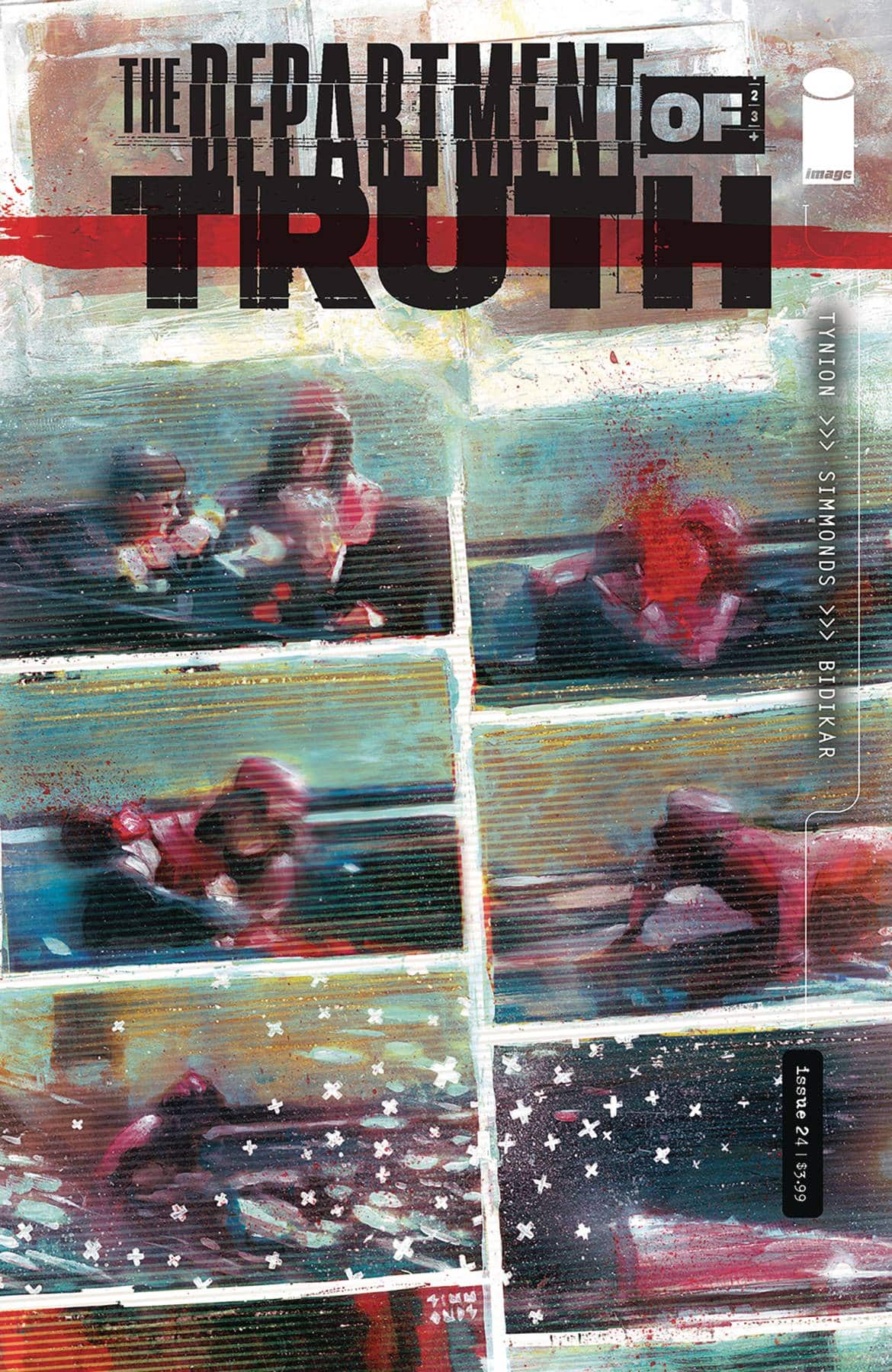
Department of Truth Director Lee Harvey Oswald once traveled to the Soviet Union to join the Department of Lies as a double agent to get more information about them. He did not expect this mission to change his life, the state of America, and the world. The secret history of Oswald before that day in Dallas is revealed as his experiences across the Iron Curtain are exposed. The Department of Truth #24 by James Tynion IV and Martin Simmonds shows what happens to a cracked fantasy and what a man might do to hold it together.

Tynion’s fascination and examination of the mythological American dream and how we view and believe about the country continue to be a strong point of the comic. The issue’s focus on the Cold War and the ideological battle between the United States and the Soviet Union during that era continues to be timely. Tynion understands how the Cold War was not strictly a war of ideals but also one of two different global powers’ differing views on the nature of the world and its future. Yet he highlights how even though the Department of Truth and the Department of Lies hold differing missions, they each share a similar goal of shaping the world in their preferred image. An expertly manufactured image crafted to fit their notion of the truth and how the populations of their respective country should view the world. The Cold War would not be won by firepower, nukes, or raw power but by one country holding a more potent power of belief.

Oswald’s role in the series has taken a greater focus in this arc, where he recounts his time before joining the Department in more detail. Mixing both real history and fiction, Oswald does not exist as either a tragic victim or an opportunistic company man who took that fateful shot at Kennedy in 1963. Considering how much the Kennedy assassination has become a crucial part of the fabric of American mythology, that specific moment in time is a blur for him. Martyrdom creates a robust and infallible power that cannot be challenged, making a more palpable and smooth narrative for people to digest. Instead of contending with the thorniness of humanity, the memory of the ideals of Kennedy allows a person to graft on their ideas and beliefs of his life and what he represented. Humans can be destroyed, but it is much harder to defeat a symbol. The dead do not speak, but those alive talk for them.

Simmond’s hauntingly gorgeous painted art matches the cerebral horror tone of the story. His work exists in its own reality, not our reality. Its expressive and imaginative qualities linger with readers as he shows the malleability of truth and belief. With Aditya Bikar’s artistic and sharp lettering, The Department of Truth Issue #24 exposes the Lynchian nightmare infecting our history and life. 

Further twisting the narrative, Tynion and Simmonds provide another exciting installment of the long-running series and ends on an enthralling note. The fight for the nature of the truth continues to the present, but a significant shift occurred in 1963. As we learn more about Oswald, the truth becomes more challenging to define among the lies and beliefs we have been fed. We get a peek at what lies within the man, but The Department of Truth #24 shows that there is still a lot to learn about the man.

Story: James Tynion IV Art and Color: Martin Simmonds Letterer: Aditya Bikar
Story: 9.2 Art: 9.2 Overall: 9.2 Recommendation: Read

Image Comics provided Graphic Policy with a FREE copy for review


Purchase: Kindle

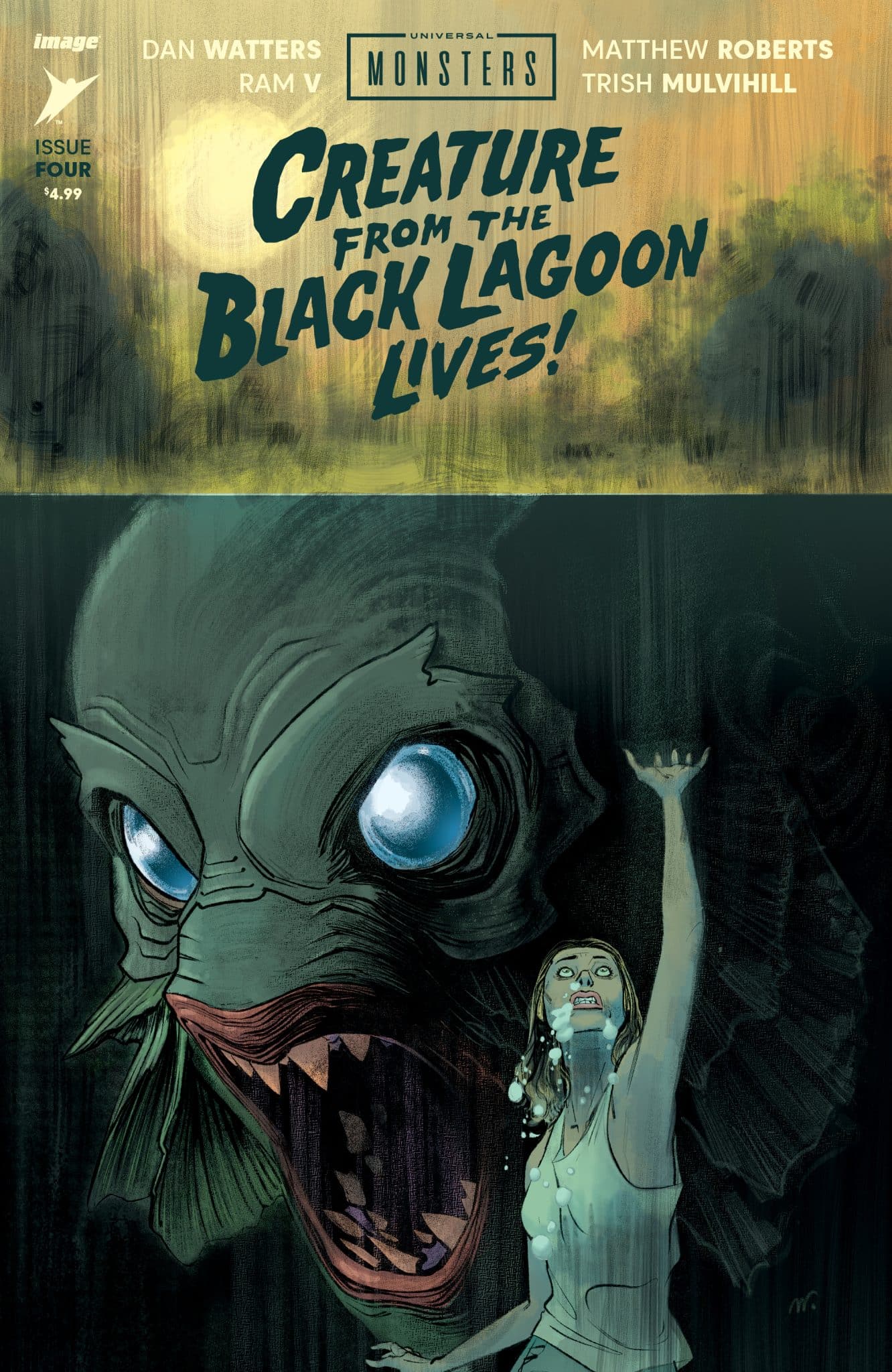
Universal Monsters Creature From The Black Lagoon Lives! #4 Shows the Darkness Submerged in Humanity

UNIVERSAL MONSTERS BLACK LAGOON LIVES! #4

Kidnapped by a mutilated Darwin Collier, Kate Marsden needs to escape from the serial killer before he transforms her into a similar monster. All the while, Professor Thompson hunts after the beast that scarred him years ago. As Collier comes into conflict with the Gill-man, only one monster can win in this conflict. Dan Watters, Ram V, and Matthew Roberts dive into the heart-pounding finale of Universal Monsters Creature from the Black Lagoon Lives! Issue #4, where no one can be genuinely untouched by the darkness of the Black Lagoon. 

Dan and Ram position Collier and the Gill-man as a mirror of how we define monsters. Collier, a human, willingly crafts his body to appear more monstrous through modification, unlike the Creature, who was born “monstrous.” Even before his transformation, Collier’s murderous nature defined his horror, and he felt the need to portray it physically by copying the Gill-man’s appearance. Although he murders several people, it becomes harder to define the titular creature as a monster due to him killing people invading his land. Still, it never sees it as a glamorous and beautiful action. Collier’s mimicking of the Gill-man represents his shallow views of the creature, where he holds no genuine respect for the majesty of the Gill-man but only appreciates his violence. 

Like previous Universal Monsters stories, the two writers showcase the destructive and tragic nature of humans descending to the depths of darkness. Despite surviving her initial experience of the dark waters, Kate does not experience similar luck in the Black Lagoon a second time. She no longer sees the bright sunshine, but her soul can only drown by what she experienced and chose to do. Kate’s ending feels like a real tragedy with plenty of weight and horror as her desire for revenge leads her to the outcome. If the Gill-man serves as a fictional reflection of our fears, then Kate is a more realistic and human version. Monsters do not lurk in our waters or hunt in our caves, but the dark and horrific nature of humanity lurks in our hearts and minds, waiting to surface.

Matthew’s artwork has proven to be an essential and critical part of the series, as he delivers on the dramatic beats of the final issue. With moments of brutal violence, regret, and horror, he conveys all of it masterfully. With a haunting final page, I felt like the Gill-man was looking directly into my soul. Along with colorist Trish Mulvihill and letterer DC Hopkins, the art of the finale hits a high note. 

Dan, Ram, and Matthew have taken readers to the bottomless pits of the water in Universal Monsters Creature from the Black Lagoon Lives! Issue #4. After touching the waters of the Black Lagoon, one can never be the same again. And much like the original film, the story can only end in a tragedy. Diving into the depths can make it easy to get lost in the darkness. The absolute horror is not what we find in the darkness but in how the darkness shapes us and forces us to lose our humanity.

Story: Dan Watters and Ram V Art: Matthew Roberts 
Color: Trish Mulvihill Letterer: DC Hopkins
Story: 9.4 Art: 9.7 Overall: 9.7 Recommendation: Read

Skybound provided Graphic Policy with a FREE copy for review

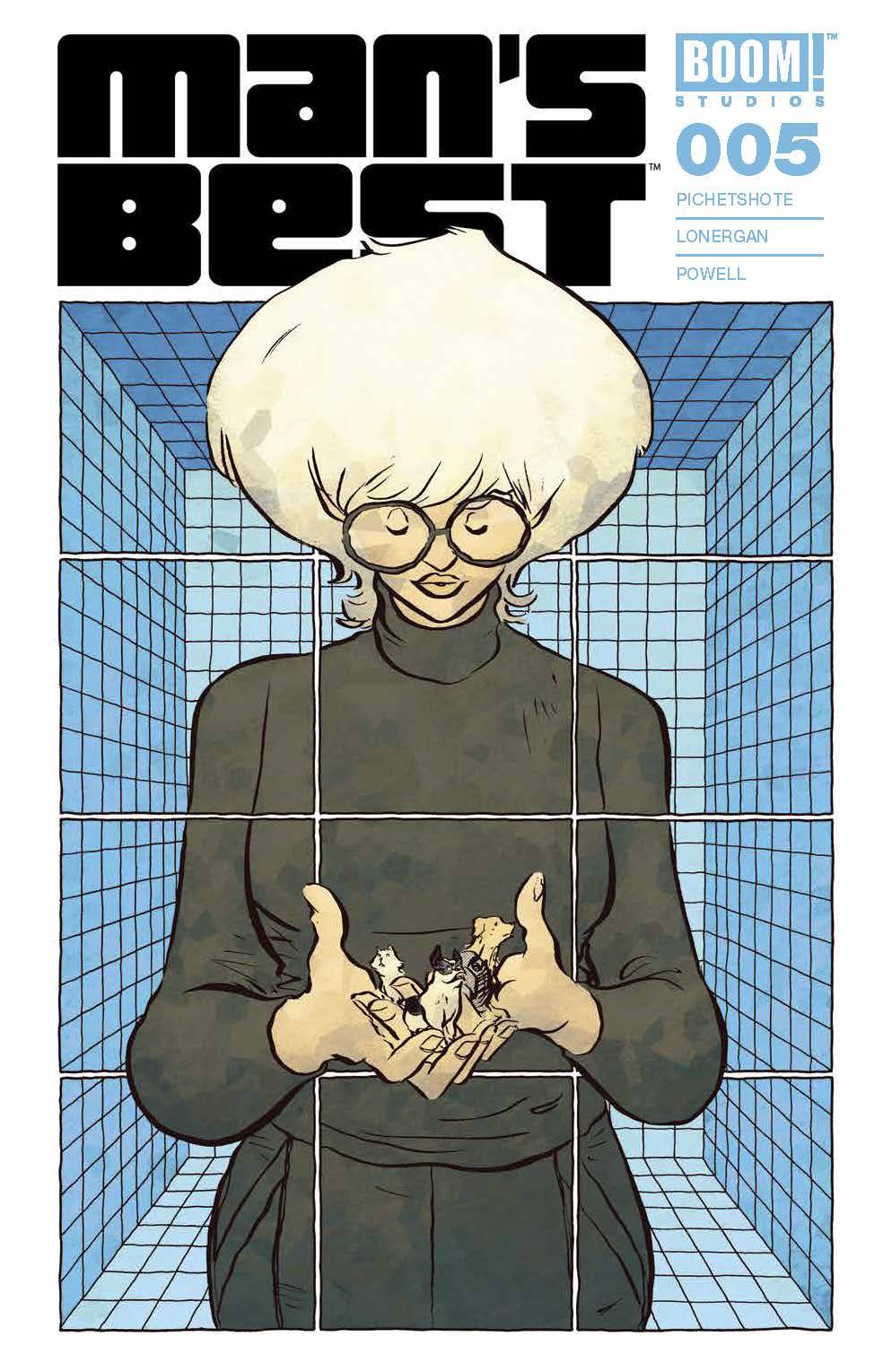
Man’s Best #5 Lands on a Strong Emotional Note

Man's Best #5

Lovey, Athos, and Porthos stumble upon the horrific sight of their beloved owner, Doc, shooting the Captain of their crashed ship. Doc’s actions make the pets question their previous loving relationship with her as more of her plans are revealed. With the fate of humanity resting on Athos, Porthos, and Lovey’s shoulders, they need to decide what the future will be for it. Man’s Best #5 by Pornsak Pichetshote and Jesse Lonergan demonstrates the lengths that pets will unconditionally love their owner before they realize that it may not always go both ways. 

Ending the series on a bittersweet note, Pichetshote provides plenty of solid emotional moments in the issue as the relationship between Doc and the animals becomes fully strained. The pets see a different side to their owner compared to the more loving image they previously knew. The hard-hitting nature of these reveals serves as a testament to Pichetshote’s talented writing and inventing characters. The pets are forced to make a much more mature decision considering the literal and emotional stakes based on what they experienced as a team.   

With the animals serving as lenses through which to view humanity, Pichetshote questions whether humans should continue living based on Doc’s actions to save humans. Pets have been continuously proven to be the best parts of humanity, whereas the latter continue to fail and can never be picked up. Along with Athos being picked to decide on the fate of humanity in the alien world, Pichetshote ponders our human nature and whether we are indeed the best ones to determine our fate. Porthos’s selfless action helps bring Doc back to earth but does not truly repair their relationship. The best qualities of humans cannot be found among ourselves but in our pets, where they can overcome their differences and find common ground to survive. Our future survival depends on not killing one another but finding a way to share and co-exist. Granted that it is more complicated, it still does not take away from the themes and ideas that Pichetshote has been exploring.

Lonergan’s art showcases his sci-fi chops as he further makes the world of Man’s Best #5 even more inhuman, bizarre, and trippy. Yet the human and emotional beats still hit incredibly hard, thanks to his talented work. There were some moments I teared up when Lonergan and Pichetshote have proven to be a fruitful and robust partnership. With Jeff Powell’s lettering, they have made the series a delight to read. 

Pichetshote and Lonergan deliver an emotionally packed finale in Man’s Best #5. Even though they faced many difficult and dangerous trials and tribulations, Athos, Porthos, and Lovey proved their toughness and survival by working together. With humanity entering a bleaker period day by day, all it takes is to look at your pet for guidance on how to proceed. Pets reflect the best and worst qualities where the answers lie with them. And you don’t even need to travel to space to discover it.

Story: Pornsak Pichetshote Art/Colors: Jesse Lonergan Letterer: Jeff Powell
Story: 9.3 Art: 9.3 Overall: 9.3 Recommendation: Read

BOOM! Studios provided Graphic Policy with a FREE copy for review


Purchase: Kindle

The Power Fantasy #1 is an Exciting Beginning to an Existential Superhero Narrative

The Power Fantasy #1

After the atomic bomb dropped in the 1940s, a group of six super-powered beings appeared in the world, where they each possessed the destructive power capacity of the United States nuclear arsenal. If they ever got into conflict, it would mean the end of planet Earth. Since then, the Atomics or the Nuclear Family have built a fragile series of alliances to prevent each other from causing the end of the world. Now, as the clock draws close to the new millennium of the year 2000, Earth’s future continues to stand on these superpowers from never coming into conflict with each other. Kieron Gillen and Caspar Wijngaard take readers to the fragile doomsday clock as the future could disappear within the blink of an eye in The Power Fantasy #1.

With the setting being an alternate history period set in 1999, Gillen and Wijngaard expertly build the world where they give enough context clues for readers to seamlessly understand what has been going on while fleshing it out thoroughly. From slight hints in Gillen’s writing to background dressing and clothing drawn by Wijngaard, they have thought about every detail of how the Atomics’ appearance and presence impacted the world, from major to minor. Even hints of past events serve as vital elements to explaining how much their history diverged from our own and how their existence would influence everything from public opinion to government responses to pop culture. Even though The Power Fantasy #1 may not exist in the same reality as ours, certain aspects of our own can still be found, making their world a skewed version of our own.

And I appreciate Gillen presenting a more mature series where he focuses more on the characters and their relationships instead of solely on the action. With the highly destructive nature of their powers, he emphasizes how important it is for each Atomic to stay out of conflict with each other and the world itself, which could mean the death of everybody. Focusing on Etienne Lux in The Power Fantasy #1, Lux serves as a great lens into the world where Lux essentially has to keep the other five members of the Nuclear Family in balance and work as not only a peacekeeper but a deal maker and even a clean up crew whenever one of them gets into trouble or steps out of line. He concerns himself with the ethical nature of his powers and the actions of the other Atomics, where he is willing to take drastic action if he feels it would be the sole ethical action in the situation. We also learn more about the Atomic family, such as Santa Valentina and Brother Ray “Heavy” Harris, while getting glimpses into the characters of Morishita Masumi, Jacky Magus, and Eliza Hellbound and their relationships with each other. With The Power Fantasy being an ensemble book, I find the entire cast fascinating and easy to invest in. 

Then comes Gillen exploring the existential horrors and fears of nuclear arsenals and how they serve no other purpose except to end all of life. With them coming into conflict, signaling the destruction of the world, all they can do is find a way to co-exist to deter the potential armageddon. Gillen examines how one false move by an Atomic could create a domino effect and destroy the planet. Even to this day, the nuclear shadow of death hangs over us, where all life as we know it will be gone due to the press of a button. And with the series set in the past, specifically in 1999, he draws attention to the fear of Y2K, where the approaching millennium would mess up computer clocks and accidentally launch warheads. Despite us being in 2024, Gillen wants to demonstrate how those weapons still hang over us and threaten us even if we do not think about them as much as we did in the twentieth century.

The art by Wijngaard is a real standout with its vibrant colors and captures a stylized fictional version of the past. And I love his character designs for the six Atomics, where they each have a distinct vibe that says everything about their character just by looking at them. The six Atomics are instantly iconic and feel different from the standard superhero fair while reflecting the various periods of history they exist in. Outside of the fantastic aesthetics, his drawing and paneling make Gillen’s already engaging script into an even more engrossing comic combined with Clayton Cowles’s seamless lettering. 

The Power Fantasy #1 by Gillen and Wijngaard is a perfect debut issue that draws readers into its compelling story and art. While the planet continues to turn, its very existence lies in the hands of six super-powered individuals whose lives impact its livelihood. All it takes is one simple conflict for all of the dominoes to fall down and kill everyone. The clock is counting down faster, and hopefully, the people of Earth and the Atomics make it to the year 2000 unscathed.

Story: Kieron Gillen Art/Colors: Caspar Wijngaard Letterer: Clayton Cowles
Story: 10 Art: 10 Overall: 10 Recommendation: Read

Image Comics provided Graphic Policy with a FREE copy for review


Pre-Order: TFAW

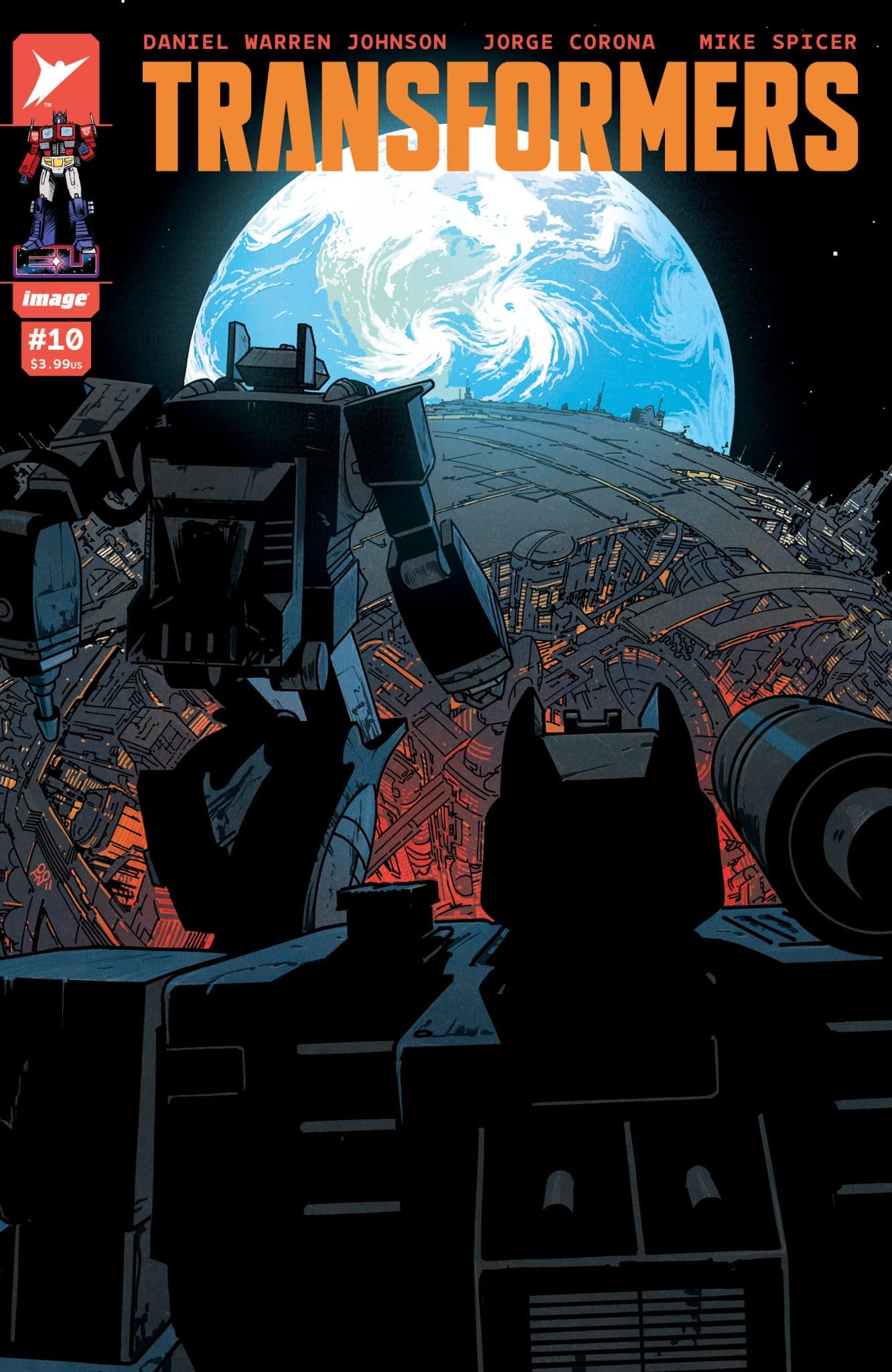
Transformers #10 Leaves a Planet Size Impact on the Energon Universe

Transformers #10

With Shockwave and other Decepticons arriving on Earth after making contact with Cybertron, Optimus Prime and the other Autobots were forced to retreat, leaving Ratchet and Cliffjumper behind. But Elita One and a mysterious other wounded Autobot traveled to Earth through the portal and made contact with Optimus. Simultaneously, pacifist Autobot Beachcomber rescues Spike from Astrotrain and reveals his reasons for not fighting in the war. Daniel Warren Johnson and Jorge Corona showcase Shockwave’s depraved hunger and willingness to do whatever it takes to save Cybertron in Transformers #10, even sacrificing all life on Earth for it.

An important distinction between the Decepticons and the Autobots that Johnson has made clear is their response and viewpoint towards the inhabitants on Earth. With the inclusion of Beachcomber, he serves as another lens through which to view the conflict between the two factions and their impact on Earth. The Autobot choosing to let his fellow Transformers stay in hibernation instead of waking them up due to his fears of them disrupting the planet adds complexity and how, even among the Autobots, they do not all share a common viewpoint. Conversely, Shoc,kwave willingly sacrifices organic life to transform it into energy to bring Cybertron to Earth. He can recognize the fragility but approaches it like a mad scientist who shares more of an interest in the experiment than fully acknowledging the living aspect of his subjects. He can only see the value of what can be harvested and consumed on Earth to bring Cybertron back to its forgotten glory.

In addition, I also appreciate Johnson’s focus on the destructive nature and horrors that have arisen from the war for Cybertron. Beachcomber’s pacifist nature resulted from seeing and experiencing the war firsthand. Or how Soundwave brushes away Thundercracker’s questioning of Shockwave torturing Ratchet and Cliffjumper despite being prisoners of war. Most of all, it lies in the wounded and unrecognizable Autobot who suffered firsthand from Shockwave’s torturous methods. Even though the Transformers are robots, Johnson still demonstrates what war can do to people and how much of a negative impact it entails. 

I cannot give enough praise for Corona’s art, which perfectly fits Johnson’s emotional and action-packed script. With Mike Spicer’s colors and Rus Wooten’s lettering, Transformers #10 remains one of the strongest titles within the Energon Universe. Every visual aspect of it sings and makes it a true delight to read.

Johnson and Corona further complicate the war between Autobots and Decepticons as Cybertron arrives within Earth’s orbit. As Shockwave primes the planet for consumption, Optimus Prime and his fellow Autobots will need a miracle to defeat the Decepticons’ plans. Transformers #10 ends on an explosive note that will significantly impact the future of the Energon universe.

Story: Daniel Warren Johnson Art: Jorge Corona
Color: Mike Spicer Letterer: Rus Wooton
Story: 9.5 Art: 9.5 Overall: 9.5 Recommendation: Read

Skybound provided Graphic Policy with a FREE copy for review


Purchase: TFAW – Zeus Comics – Kindle
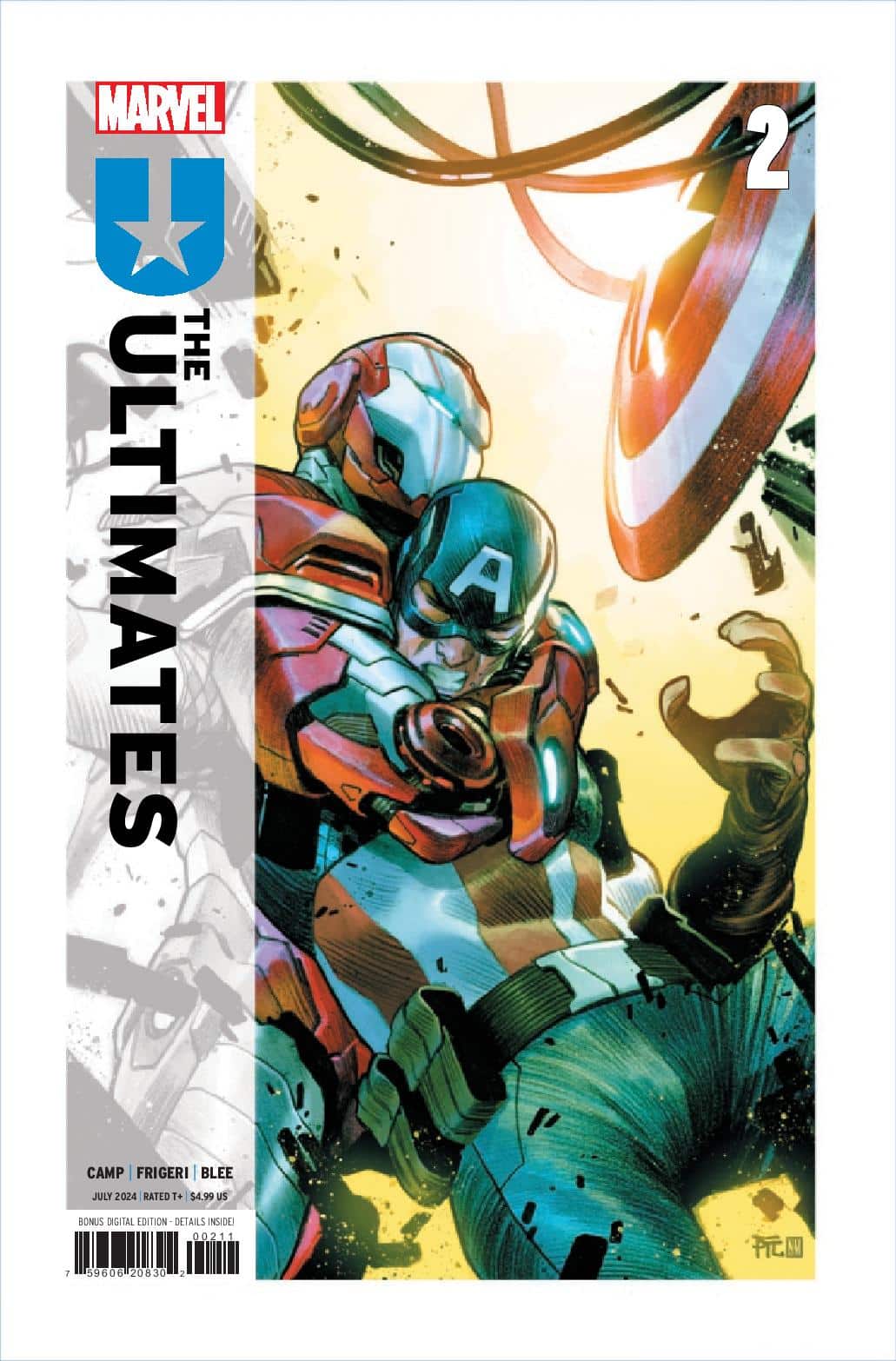
The Ultimates #2 Reveals What Happened to the Former United States of America in the New Ultimate Universe

The Ultimates #2

After recruiting Wasp and Ant-Man to the Ultimates, Captain America decides to travel to the White House with the team to learn more about the Maker and the history of what happened to the United States. As the dark secret truth gets revealed to him, Captain America and the Ultimates will face a different person sitting behind the desk of the Oval House. They are not solely coming to fight against the Maker’s leadership but to rescue a secret hero held hostage underground. Captain America, a man that time forgot, must reckon with the forgotten dream that the Maker erased to keep control in The Ultimates #2 by Deniz Camp and Juan Frigeri.

I applaud Camp for focusing on Steve Rogers to experience the untold history of what happened to the United States on Earth 6160 since it reflects his status as a man out of time and represents the Maker’s interference with the lost history. More important, though, lies in Camp understanding the symbolic nature of Captain America as not a mouthpiece for the government and politicians but inspiring people and fighting for justice, freedom, and the idealized American dream, which works flawlessly in him fighting with the Ultimates rebelling against the tyrannical Maker’s council. Especially with a character like Midas serving as the villain of the issue whose capitalistic greed and hunger represent some of the country’s worst qualities and history, which contrasts with what Captain America stands for. Outside of being a physical threat, he is a solid contrasting ideological foil to Steve and the ideals he fights for. 

Another significant component of The Ultimates #2 peels the curtain back of the history of what happened to the United States and how the North American Union formed. Similar to his previous works, Camp has excellent experience when it comes to crafting an alternate history and genuinely thinking about the implications and ripple effects that the Maker’s interference would have. Illustrated by the talented Frigeri, we watch in silence and horror as we experience what Steve sees and feels in the hologram program. Although it does not reveal everything, Camp and Frigeri give enough context to what has happened previously and to the present. Camp handled the intertwining real-world elements with aspects of the Marvel Universe exceptionally well and provided exciting context. Along with giving the broad strokes of what led to the dissolution of the United States, Camp does sprinkle in some hints to previously unmentioned characters and locations to provide an idea of what happened to them and their place in the universe. 

I am still in love with Frigeri’s art and how he depicts the world of Earth 6160. Everything is gorgeous and wonderful and perfectly complements Camp’s script and voice. Considering he has to craft a new universe, he makes Earth 6160 feel different than 616. With Federico Blee’s colors and VC’s Travis Lanham’s colors, all the artistic and visual elements combine exceptionally well and make another memorable issue. 

As the Ultimates gain another member for their team, the countdown for the Maker’s return creeps up. Camp and Frigeri are doing incredible work that excels beyond a flawless first issue. They prove that nothing is truly off the table in the new Ultimate Universe as they make bold choices in crafting this section of Earth 6160. The Ultimates #2 demonstrates Camp and Frigeri’s firm grasp of such beloved characters and how unafraid they are to take them in thrilling new directions while holding on to their core characteristics.

Story: Deniz Camp: Art: Juan Frigeri
Color: Frederico Blee Letterer: VC’s Travis Lanham
Story: 9.7 Art: 9.7 Overall: 9.7 Recommendation: Read

Marvel provided Graphic Policy with a FREE copy for review


Purchase: TFAW – Zeus Comics – Kindle
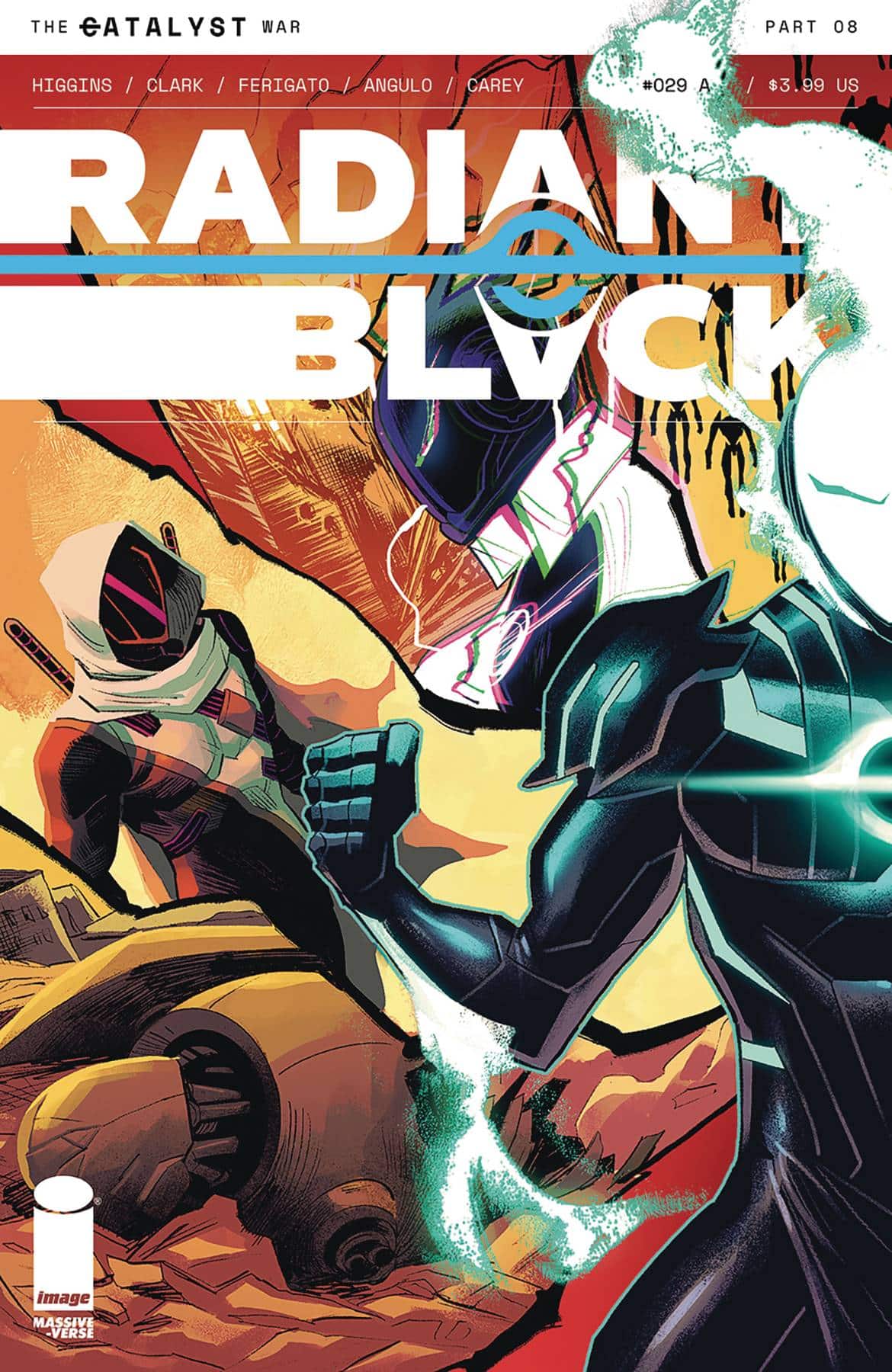
Radiant Black #29/29.5 Forces the Timelines to Converge

Radiant Black #29

As the Catalyst war rages on across two timelines, Marshall and Nathan make their choices as the respective Radiant Black in their timelines to decide who will solely hold onto the mantle. Yet, as the tide drastically turns against Earth, all hope seems lost. With the eventual convergence of the timeline on the horizon, could the potential salvation of the planet be discovered by one of the duo’s desperate actions to save it? Radiant Black #29/29.5 by Kyle Higgins, Joe Clark, and Marcelo Costa forces Marshall and Nathan to reckon with a doomed timeline to attempt to change the future.

Following the dual timeline split in issue 25, all of the build-up across the past issues has led to this issue as the explosive consequences of Marshall’s and Nathan’s decisions come to fruition, specifically with Marshall’s role as Radiant Black, which has led to the worst timeline outcome for him. Over the past couple of issues, we have seen what led Marshall down this path by making a selfish decision in a tough choice. It all feels aligned with his characterization and previous actions, as Higgins and Clark do not paint him as a villain but as someone wholly human and vulnerable who ended up picking the wrong thing. 

I also appreciate how different the timelines are from each other, where releasing two issues does not feel like a cheap gimmick but is an essential part of telling this trial between Marshall and Nathan. Instead of simply copying and pasting events, they are two unique narratives where Nathan and Marshall impact them in distinct ways. And I appreciate how Radiant Black #29/29.5 shifts the story arc from being about them choosing who will be Radiant Black to how they both use the identity to save Earth with Marshall’s present timeline occurring ahead of Nathan’s. As a result, it justifies Marshall’s timeline with existing because it impacts how Nathan, Marshall, and the other Radiants can approach the Catalyst war in his present.

Considering how Costa drew two issues for the July release, I am amazed at how he handled a large monthly comic book workload. His art demonstrates how much of his incredible visuals are a strong selling point for the title as he can switch from the sci-fi action to the more grounded aspects and finally with the weirder cosmic elements. He is impressive, especially in delivering two stories instead of just one issue per month. With colorist Rod Fernandes and letterer Becca Carey, the art team is working as a well-oiled machine to meet the schedules and continue his high artistic standards. 

While Marshall and Nathan’s future may not look bright, they do find a possibility to change it in Radiant Black #29/29.5. As one of the hottest titles currently at Image Comics, Higgins, Clark, and Costa showcase two explosive issues that further the deadly Catalyst war. They are truly two interconnecting stories that you do not want to miss.

Story: Kyle Higgins and Joe Clark Art: Marcelo Costa
Color: Rod Fernandes Letterer: Becca Carey
Story: 8.8 Art: 9.4 Overall: 9.0 Recommendation: Read

Image Comics provided Graphic Policy with a FREE copy for review


Purchase Radiant Black #29: TFAW – Kindle
Purchase Radiant Black #29.5: TFAW – Kindle

« Older Entries Recent Entries »