Author Archives: Emily Lewis

The Ashcan Edition Episode 3: Doing it Ourselves with Avi Ehrlich

On the third episode of The Ashcan Edition, Brant Lewis interviews Avi Ehrlich, the founder and publisher of San Francisco based indie comics publisher Silver Sprocket. Since it’s founding, Silver Sprocket has become more than just a publisher and a store but a community giving artists and creatives the tools and knowledge of making the comics they want to make fully independently. With their recent crowdfunding efforts close to ending, Brant speaks to Avi about their plans and goals for the future of Silver Sprocket and how they don’t want to rely on outside investors to dictate the direction of the company by turning to crowdfunding. Silver Sprocket and Avi are truly punk to their very cores.

You can follow Silver Sprocket on social media @silversprocket. You can also follow Brant Lewis on Twitter @Brant__Lewis and on Bluesky @brantlewis. And you can support Silver Sprocket at their website.

Music is Win This Battle Win This War by Everet Almond.

The Ashcan Edition Episode 2: Cosmic Cartooning with Dan Schkade

In the second episode of The Ashcan Edition, Brant Lewis interviews acclaimed cartoonist Dan Schkade about his recent work on the long running comic strip Flash Gordon, dissects what makes a good superhero for Portland, and why words like prepuscular work so well in a mystery story.

You can follow Dan Schkade on social media @danschkade. You can also follow Brant Lewis on Twitter @Brant__Lewis and on Bluesky @brantlewis.

Music is Win This Battle Win This War by Everet Almond.

The Ashcan Edition Episode 1: Killing it With Kyle Starks

Welcome to the first episode of The Ashcan Edition where writer Brant Lewis interviews some of the top talent in in the comic book industry. In this episode Brant talks with one of the funniest and most heartfelt creatives currently in the industry, Kyle Starks.

In the interview they discuss what makes henchmen interesting, what happens when horror killers live together in a gated community, and how working at a combination comic book/music/movie/porn store impacted his creative work. You can follow Kyle Starks on social media @thekylestarks and support him on Patreon. You can also follow Brant Lewis on Twitter @Brant__Lewis and on Bluesky @brantlewis.

Music is Win This Battle Win This War by Everet Almond.

Skylar Patridge Discusses Spies, Supergirl, and Crowdfunding Comics

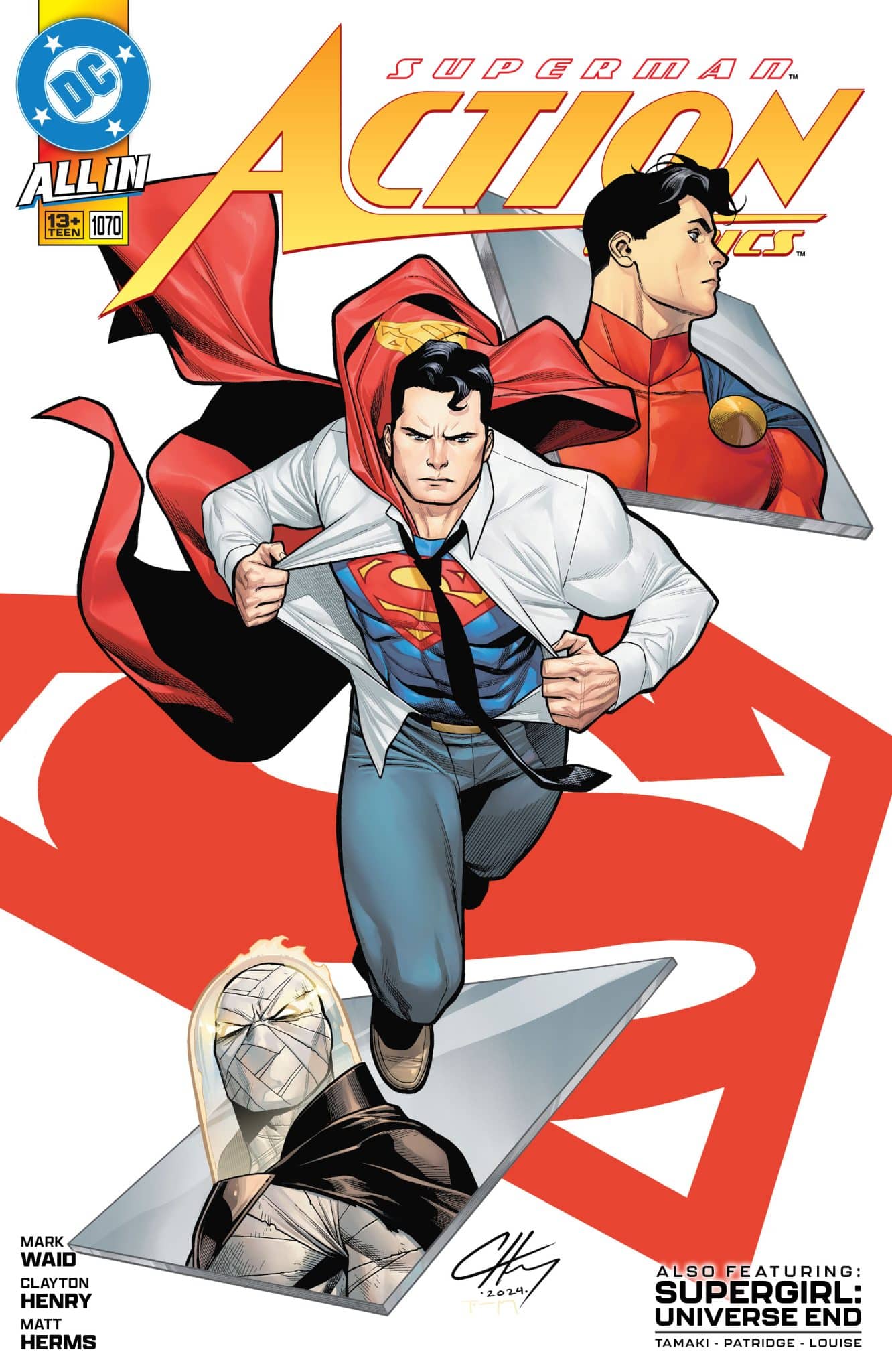
Action Comics #1070

From spies to superheroes, superstar artist Skylar Patridge has done fantastic work on Big Two comics and creator owned work. As a proud supporter of women’s wrongs, Patridge strongly focuses on complex and messy female characters, as seen in her portfolio. Graphic Policy had the opportunity to talk with Patridge, who recently had the successful Kickstarter for Our Sins Are Scarlet, along with the upcoming release of her backups with Mariko Tamaki in Action Comics #1070 starting Wednesday, October 8. 

This interview has been edited for length and clarity.

Graphic Policy: If you were trapped on a deserted island and you could only bring one music album with you, what would it be and why?

Skylar Patridge: That’s a really tough question. I feel like my knee jerk reaction is How Big How Blue How Beautiful from Florence and the Machine. It’s one of my comfort albums. I feel like I kind of always come back to it and I think it’s just a very emotional and powerful album. If I just was grabbing stuff and found myself on a deserted island, I think it’d be that one

GP: What’s your favorite comic book cover that you have drawn?

SP: I think most recently it was probably the Dark Knights of Steel All Winter cover. It felt kind of different from what I had been doing prior to. Very medieval knights. And they gave me a lot of freedom to play around with that composition. 

GP: What’s a comic or a story that you are really proud to have worked on?

SP: I would say Our Sins Are Scarlet is one of my proudest books that I’ve worked on. Actually we’ve been getting messages recently that people are getting those in the mail and they’re saying very nice things. And then I’ve been really, really fortunate to work on DC Pride. One of the first ones that they did was actually my first DC work and they continued to just grow that.  I’ve been very proud to have been a part of that for the last several years.

GP: What is an underrated comic that you feel that people have slept on.

SP: I usually say this one a lot, just because it’s a favorite of mine, would be Lady Killer from Joelle Jones and Jamie S. Rich. It’s so much up my alley as far as tone, art, the overall themes. I love a beautiful woman who likes to stab people as evident from Our Sins Are Scarlet. And I feel like that’s one that never quite got its due and I hope that people discover it.

GP: What do you feel is a story or a project that you’ve worked on that more people need to look into?

SP: I would say Resonant. Not toot my own horn [laughs], that’s also a comic I feel was kind of slept on. I feel like it deserves so much more love and appreciation and whether I worked on it or not, I just think it’s a beautiful story. And I think David Andry is also a slept-on creator as well.

GP: Let’s talk a little bit about your artistic history and how you decided to pursue a career in comics? Was there a moment growing up that really sparked that? Were you a comic fan as a kid?

SP: Yeah, I was definitely a comic book fan. I had an older brother who read a lot of comics, and so that was sort of my gateway into comics reading in addition to the 90s animated shows. Batman the Animated Series and X-Men the Animated Series were definitely foundational for me as a kid and got me wanting to read comics more. And I don’t think I really considered a career in comics until I was well into adulthood. I drew comics a lot as a kid once I was reading them and really liked the storytelling element of it. I drew them a lot and just on the backs of paper and wherever I could scribble stuff down. But it wasn’t necessarily anything I thought I would do. I knew I wanted to do art in some way, but I didn’t really know you could have a career in comics.

So I went to school and I studied studio art at the public university near me. I kind of figured maybe I would illustrate books or that I might do graphic design. And then I graduated and didn’t wanna do that at all. I kind of moved away from the arts for a while and I did some food service and I’ve had a whole stint outside of the arts before I ever came back to it. And so I had wound up getting a gallery job sometime in my twenties and just happened to meet the right people there. We just kind of started talking and that got me back into making artwork. And the first convention that I did where I split a table with somebody and, you know, had a handful of prints and some little things that I’d done. And it was kind of around there where I think it kind of clicked like, maybe I could do this and maybe this was something that I wanted to do. I was fully an adult before it ever became, you know, an idea that it was something I could do.

GP: That’s really fascinating to have that life. That’s also kind of within the industry itself where you have a variety of people, a variety of ages, different parts of life, commit to it somehow.

SP: Yeah. There was recently a Twitter trend that was going around where people were talking about getting into comics later in life. And I think that’s amazing ’cause there really is no right time to start a career in general, but especially a career in the arts. If that’s something that you love and want to do and have the, the means to do it, I think you should. I was in a very fortunate place where I could stop what I was doing and shift gears and it was definitely not an easy thing. Comics is a very challenging industry and it can be very isolating ’cause it’s very freelance oriented, so everybody’s kind of working from everywhere. It’s not always the easiest way to find your way in or stay in. But it’s been a very rewarding career for me both personally and professionally. 

GP: So what were some of the major artistic influences that you felt really impacted you as an artist?

SP: When I was a kid, I grew up with Jim Lee drawing comics. So that was very much an influence. And then as I got a little older,  I usually reference Phil Noto as a big inspiration for me, because he was very much the artist I was looking to for inspiration. I felt like his work was so different from what I associated as comics. Not for better or for worse. It was kind of a revelation to see the way he did it. And it made me kind of want to explore my own art style. As far as, you know, influences now, I think Joelle Jones is a huge, huge influence for me. I think her line work and ink work is so inspirational. Chris Samnee I think is an incredible artist. I hope to see him continue working forever. I think I could sit here for the rest of the night and list off influences and people. I adore so I won’t keep going. 

Our Sins Are Scarlet

GP: So moving on now into Our Sins Are Scarlet that you co-wrote and drew with Jordan Alsaqa. What was the genesis of the project?

SP: We always say that it started with Wonder Woman, which seems very much at odds with the story itself, but back when the first Wonder Woman came out one of the villains within that movie was Dr. Poison. And I thought she was such an underutilized character in that movie. I had done some fanart for her around that time and said, you know, I really wish that they’d done more with this character. And Jordan Alsaqa had actually seen it and he reached out and was like, “Hey, I thought the same thing. I’d love to talk more.” And that was just kind of how the collaboration began. 

And we started talking about how we wanted to create this story that focused on this sort of you didn’t know whether to root for her or root against her character, who was a poisons expert and worked within the government. And it started off very sort of campy and comedic, and then it morphed into something else. We brought in another character that was sort of her foil and that was Harper. And it just sort of built out from there. Then just because the world changed so much from 2016 to 2017 so that started seeping its way into the story that we wanted to tell. And it became a much bigger, more complex story in the end.

GP: So what were some of the influences?  Because obviously when I saw the pitch, saw the art and read it, I very much saw Killing Eve, Atomic Blond, etc.

SP: Yeah, Killing Eve and Velvet from [Ed] Brubaker, that was a big one for us. Spy stuff in general has always been something I wanted to do. I think one of the first things I ever made when I was in high school was a spy story. And this isn’t the same story as that, but it wound up having a lot of parallels. And obviously with Jordan’s voice as well it became better than it ever would’ve become just by myself. Hannibal was also a big influence for us. The sort of mentor mentee and twisted mentor mentee relationship we wanted to have and that we’ll be building forward after issue one and two.

GP: Initially you only focused on Elena and then with the addition of Harper, is that really when the queer element really came to the forefront of the story? Or was that already in the backbones of the narrative?

SP: Well, when we first started building the issue that we have now, it was in the works to begin with. When we first first started talking about it, it was very much just Elena. She was the questionable protagonist. We weren’t really sure what we were gonna do with her yet, but we wanted her to be not necessarily an anti-hero, but just somebody that you’re kind of rooting for even though she’s doing awful things. And at one point we were kind of just like, no we think this would be cool if there was sort of a romance element to it. And that there was a little bit more spice involved because I think spy stories in general are sort of inherently sexy. Just your James Bonds and your Mission Impossibles, they all kind of have that element of thrills and exhilaration. And Harper sort of acts as a disruption to one another’s lives.  Whoever you wind up rooting for, whoever winds up feeling like the person you wanna support, they’re both the obstacle for one another, but at the same time, they’re both drawn to each other and they have to wrestle with that as well.

GP: What was y’all’s decision to fund the project through Kickstarter to get the project moving?

SP: Our hands were a little tied actually because we were at IDW first and IDW had a change a couple years ago, and so we kind of had to think on our feet and figure out what we wanted to do with it. We had some wonderful editors at IDW, Megan Brown, Jake Williams, Riley Farmer, who helped us shape this. And when we wound up parting with IDW, we sent it back out again for pitch, seeing if anybody had any interest in it, and we weren’t able to find another home for it. And so we’ve just had it and we’re gonna try to Kickstart it. We didn’t really want to, just because Kickstarter is a daunting beast. It’s a whole other job. But we wanted to get the story out there and so much work had gone into it and we felt like it deserved to be made. So we bit the bullet and put it on Kickstarter.

GP: So what has been your response to its success? 

SP: We actually doubled our funding request, which was fantastic. That just is gonna roll over and help us make the next issue. I think we were obviously very hopeful that people would be interested in it. We weren’t 100% certain just because it’s kind of a challenging story in that there isn’t really a true protagonist. There isn’t really a true villain. It’s, it’s kind of blurry morals and uncertain characters. But Kickstarter is a good platform for those kinds of stories. So we were hopeful that we’d be able to find people who weren’t necessarily in the comics industry that were interested in hearing what we had to say with this. So it just felt like the right fit for it. And I think we were just kind of stunned with how it wound up turning out. And hopefully people will stick with us as we go forward. We’re gearing up to get ready to do the next issue this year. So hopefully folks are stoked as they’re getting their rewards.

GP: What can people expect in the future of this upcoming series?

SP: A mess [laughs]. Basically this first issue is really sort of setting up these two characters and where they are within the government agency. And we sort of leave you with realizing just how much their orbits are gonna interact with one another. Harper is the straight laced do-gooder and Elena is the chaotic gay. They are so at odds with one another. And so it’s gonna be a lot of headbutting and a lot of chaotic missions and growing attraction, despite how terrible they are for one another. 

GP: With this being one of your first major works as a co-writer, how has that been coming from an artistic background?

SP: It’s been good. I’ve been very fortunate working with Jordan. Jordan has been amazing at sharing the reins. I’ve collaborated a lot before and had input on plot, but this was a little more hands-on. And so I’m grateful to Jordan for giving me that opportunity to have more input in the story and the dialogue and how it develops. 

GP: Love to hear that. And will this be available to the public in the future?

SP: We’re hoping so. We’re still kind of trying to figure out what that will look like. We obviously are going to offer issue one in this first issue within the next Kickstarter as well. And then we’re considering doing pre-order options for the next campaigns where you’ll be able to pre-order, even if you didn’t back the campaign, you’d be able to pre-order after the fact. So we’ll hopefully open that up and it’ll be more accessible to people who maybe missed the campaign. And then obviously if anybody’s interested in it down the road as publishers go, hopefully we’ll be able to find somewhere to get a wider distribution,

GP: So moving on from the world of super spies to superheroes. Let’s talk about Supergirl. Previously you did a one-off special with Mariko Tamaki, and now you’re about to be doing a couple of backups in Action Comics. So what’s your history with the character?

SP: I’ve mentioned this before in other interviews and online and stuff like that, but actually wasn’t a huge Super Fam fan when I was a kid. I was definitely more into X-Men and Batman. And as I got older, I actually started to really appreciate Superman, Supergirl, Wonder Woman, more of the Golden Age DC characters because of the world that we live in [laughs]. I think when I was a kid they felt they were too goody two shoes. They felt too powerful. They seemed boring. And as I got older I was like, no, actually I identify more with those now and exist in the world where the Lex Luthors run the world. And so I think I would say my love for those characters really started more in early adulthood as opposed to childhood. I’ve just kind of always been interested in them and, and they hold a special place in my heart

GP: How do you view her place in the DC universe?

SP: I feel like Supergirl is underappreciated. I think I have always felt that way ever since I started reading more of her books and getting a better sense of the character because before I knew more about her, I always assumed Superman was the bigger, better character. And that’s not to say he’s not wonderful [Laughs].  I don’t want the Superman fans to come after me. But I think she has a really, really compelling story. And I think it kind of gets lost in Superman’s story. I just think she deserves a lot more love than she usually gets.  I appreciate getting the chance to draw her ’cause  I’m hoping that people will see her worth as a character and, and her story.

GP: So how do you view her differently than Superman?

SP: I think she experienced Krypton. Kal didn’t have that experience, he was always born and raised on Earth. And I think Kara knew what she lost. She knew that she lost everything. And I think that doesn’t necessarily make her story better, but I think it makes it more compelling. She was a true refugee. I find that very fascinating. And I think coming from a planet that she saw the effects of political upheaval and climate change basically destroy her world. I think that makes her a very informed character too. I’ve just always kind of found her really compelling in a way that I don’t always quite find with Kal. I still love Superman, but Kara is my number one. 

GP: Well, that’s only fair because there are two different characters with how they approach their Kryptonian heritages. Like you mentioned, Supergirl remembers Krypton and lived on Krypton and unlike Kal, it’s very much a memory of sorts for him.

SP: Right! And I think Supergirl always feels a little more rough around the edges. And I like that element of her as well. She struggles with rage. I think there’s a lot of complexity for her character that is brought about because she remembers what was taken from her. I am always kind of drawn to her because she is flawed despite having that Super mantle that we kind of think of as being perfect and the ideal. But she has her own issues and her own battles, and she’s a flawed individual.

GP: What’s it like working with Mariko? 

SP: Mariko has been super encouraging of what I’ve been doing and very open to my input on design. I got to design a lot of alien creatures in this arc. So she’s out in space and so there’s a lot of extraterrestrial exploration in this arc. I also feel like Mariko gets Kara in a way that’s been really wonderful to work with. I think she’s always been in touch with Kara’s rage issues and Kara’s sense that she’s never good enough. Kara has a lot of imposter syndrome and I think Mariko’s always tuned into that element of her. I feel like Mariko and I are on very similar pages as far as how we approach the character and how we think of the character.

GP: So why should people be excited to read these backups?

SP: Because I actually don’t know what’s gonna happen yet. That’s part of why I want to [laughs]. I want people to be excited about it because I’m still working on them now, so I’m not 100% sure where we’re going yet. And I think this mission that Kara is on and it’s definitely sort of a catalyst sort of moment for Kara. So I hope folks get excited and to see what this next chapter for Kara looks like ’cause I think it’s gonna be a big one.

GP: And this is gonna be a difficult question. What is your favorite Supergirl costume?

SP: I actually really like Supergirl in her super skirt with the high boots. I’ve enjoyed drawing the jacket. I think it’s kind of a cool silhouette for her. But I have always liked the basic Supergirl outfit with her super skirt and her high boots and her cape. 

GP: You have a very strong focus on complex female characters. Previously you did the Artemis Special with Vita Ayala. How was that experience?

SP: It was awesome. Working with Vita is genuinely amazing every time I get to do it. And so we had done a little bit with the Trial of the Amazons and the Bana-Mighdall story that led into Trial of the Amazons, and then it took the Artemis special. So we had a chunk of time where we got to work together and sort of build that one shot up. And I like getting the chance to tell stories about flawed women because I think a lot of times we don’t give women in general and female characters within storytelling the chance to be messy and complicated. And when they are, we generally don’t give them the leeway that we give male characters. And so whenever I get that chance to, to bring in those emotional elements and, and show the conflict within a character and show that that growth or that deterioration of them within the story line, I’m always drawn to the emotional elements of stories and so that whenever I get that chance it’s always great.

GP: An interesting thing that I noticed while recently re-reading it is that in her flashback is the military aspect of her family. And I noticed as well in your work too, there is a lot of focus on characters in a variety of different agencies, military forces, etc. Do you have a personal connection?

SP: I don’t actually. And for the Artemis story, that was actually Vita’s choice to bring in the military background, and it was a little controversial [laughs] for some people. I felt like it was an interesting choice for that character and made sense as to how Artemis wound up in the Bana-Mighdall. And for other work that I’ve done where there’s sort of a service to a larger agency or service to a government entity. You know that’s a big part of Our Sins Are Scarlet. I think a lot of that comes from the sense of disillusionment with the United States as an American and sort of feeling like you want to try to do something you wanna try to serve to, because that’s, that’s the way you’re raised.

It’s kind of instilled in us to wanna serve your country to be patriotic to whatever, and once you get involved in it, once you learn more, once you have more experience with it. And that kind of challenged a lot. I think especially within this country, within the last 10 years, there’s been a big disillusionment for a lot of people and how things work and systems we thought were in place that weren’t or systems that weren’t already corrupted. And we just kind of learned that they were. And so I think work that I’ve done that has, that has sort of featured service in that way has been more of a discussion of maybe my own disillusionment with the systems and the powers that be

GP: So wrapping things up at the moment, outside of the upcoming backups in Action Comics, do you have anything else in the work that you could talk about?

SP: Right now the big stuff is Supergirl and then in November we’re actually getting ready to start on the next issue of Our Sins Are Scarlet. So we’ll be looking to launch that Kickstarter early next year. So that’s the big stuff that’s up for the next several months. And then I might have something, I can’t say too much about it ’cause it hasn’t really been fully talked about yet, but most likely in the spring-ish time, there should be another thing that I’m working on that I think will be very cool. Sort of an apocalyptic horror story. 

GP: That sounds right on my alley. How could people support you and your work?

SP: Just pick up the books if you can. Pre-order things, like that’s a huge help. For me personally, just share, share my work. If you can gimme a little shout out if you can. I have a Ko-Fi as well where you can keep tabs on what I’m up to with. I might be gravitating a little bit more to Ko-Fi  in the future and using that platform a little bit more.

Action Comics #1070 releases this Wednesday, October 9 from DC Comics. You can follow Skylar on social media @skyepatridge. And the Kickstarter for Our Sins Are Scarlet Issue 2 will be starting sometime in the future.

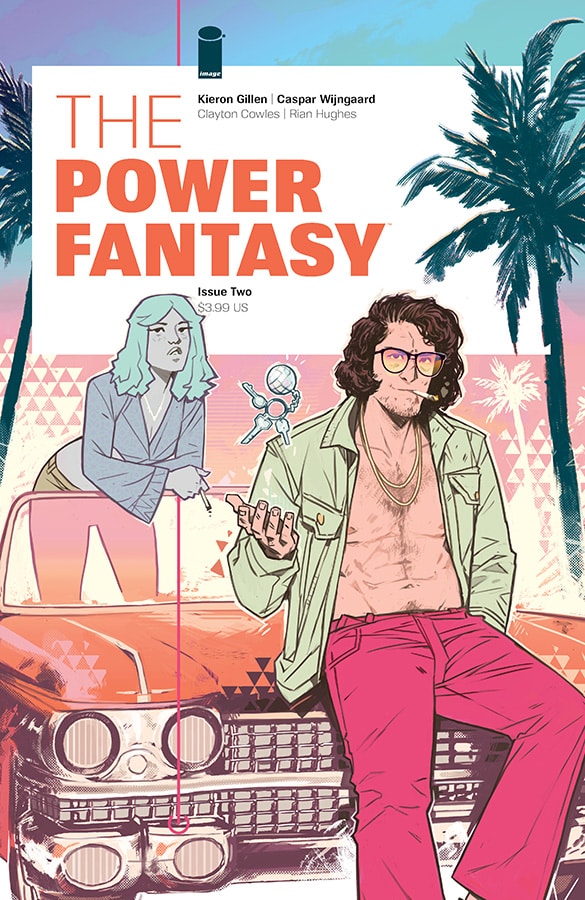
The Power Fantasy #2 Speeds Up the Doomsday Clock

The Power Fantasy #2

“Morality would frown upon / Decency look down upon / The scapegoat fate’s made of me” -Depeche Mode’s “Walking in My Shoes”

Previously, Etienne Lux prevented Brother Ray “Heavy” Harris’s brutal retaliation from destroying the world, and the Earth still spins for now. But like always, Lux chose to be the scalpel to cause the least amount of deaths while threatening to destroy Haven to keep the peace. As supposed normalcy returns and their alliances resume, a potential threat could cause an imbalance to the well-maintained peace and safety of the planet. With the new millennium arriving closer every day, so too does the hand of the doomsday clock reach midnight. Kieron Gillen and Caspar Wijngaard introduce a ticking time bomb that propels the world even more to the brink of death in The Power Fantasy #2.

“You’ll stumble in my footsteps / Keep the same appointments I kept / If you try walking in my shoes”

Picking up in the aftermath of the climactic confrontation in the previous issue, Gillen and Wijngaard let things breathe but never truly absolve the pressure hanging above the characters. No matter how hard they try, the characters cannot stop the doomsday clock and prevent the future from happening. Essentially, they are delaying the inevitable death and destruction that will arise one day from them using their powers against each other. Their relationships and personas exist as a sort of theater to keep the desired peace and to prevent each other and humanity from lighting the metaphorical and literal fuse. Wijngaard’s artistry of body language and facial expressions sells so much of the unspoken drama that weighs upon them. Their conflict cannot be solved by violence or fighting but by constant discussions, agreements, and politicking. 

“I’m not looking for a clearer conscience / Peace of mind after what I’ve been through / And before we talk of any repentance / Try walking in my shoes”

Despite not seeing what fully occurred between 1966 and 1999, Gillen gives glimpses into the Nuclear Family’s previous identities and how they have changed over time. Lux still carries the self-imposed burden of desiring to be the “ethical” figurehead of the six but hides his intentions much close to his chest. Conversely, Heavy continues to uphold his fiery counterculture attitudes but has accepted that he has made mistakes and to learn from them. Neither are paired as complete opposite binaries of each other but exist as complementaries. Eschewing the notion of a simple “hero” or “villain,” Gillen presents us with flawed and human individuals doing their best to hold onto what they have with the power they hold and how they want to influence the world. Yet the difference between them lies in how they accept their guilt and the damage they have done. 

“Now I’m not looking for absolution / Forgiveness for the things I do / But before you come to any conclusions / Try walking in my shoes”

Then comes the reveal of Heavy secretly having a son that would impact and upset the fragile brokered peace that cost decades of conflict and death and blood. Unlike the other Atomics in Haven, the boy exists as a genuine superpower whose life could destroy the world if the other Superpowers found out. Yet his existence could signal a potential necessary change to make the world a better place and lead towards a better future. The older generations tend to fear the younger ones who will inherit the Earth from them and take over. The boy’s life signals a potential future or end for the world the Superpowers aim to protect.

“But I promise now, my judge and jurors / My intentions couldn’t have been purer / My case is easy to see”

Wijngaard’s line art and colors remain unmatched and an essential element of The Power Fantasy #2. With its retro-futuristic aesthetic and designs, it’s a fantastic piece of art from the front and back covers to its impressive interiors. Wijngaard demonstrates why he’s such a real powerhouse and expertly conveys the dramatic and intense nature of the sci-fi story. Letterer Clayton Cowles and designer Rian Hughes make The Power Fantasy #2 a striking and phenomenal comic book. 

“I would tell you about the things they put me through/ The pain I’ve been subjected to / But the Lord himself would blush / The countless feasts laid at my feet / Forbidden fruits for me to eat / But I think your pulse would start to rush”

The world’s end will eventually come despite our best efforts to prevent it. Peace can only last so long until it breaks down, and we are forced to see the full face of death that we hide away from ourselves. Gillen and Wijngaard prove that it does not start with a bang but with a small flame that lights up the powder keg. The doomsday clock has begun to speed up, but the characters do not even realize it. The future will arrive one way or another.

Story: Kieron Gillen Art/Colors: Caspar Wijngaard Letterer: Clayton Cowles
Story: 10 Art: 10 Overall: 10 Recommendation: Read

Image Comics provided Graphic Policy with a FREE copy for review


Purchase: Zeus Comics – Kindle

Fell Hound Talkes S.I.R., Commander Rao, Mobile Suit Gundam, and more!

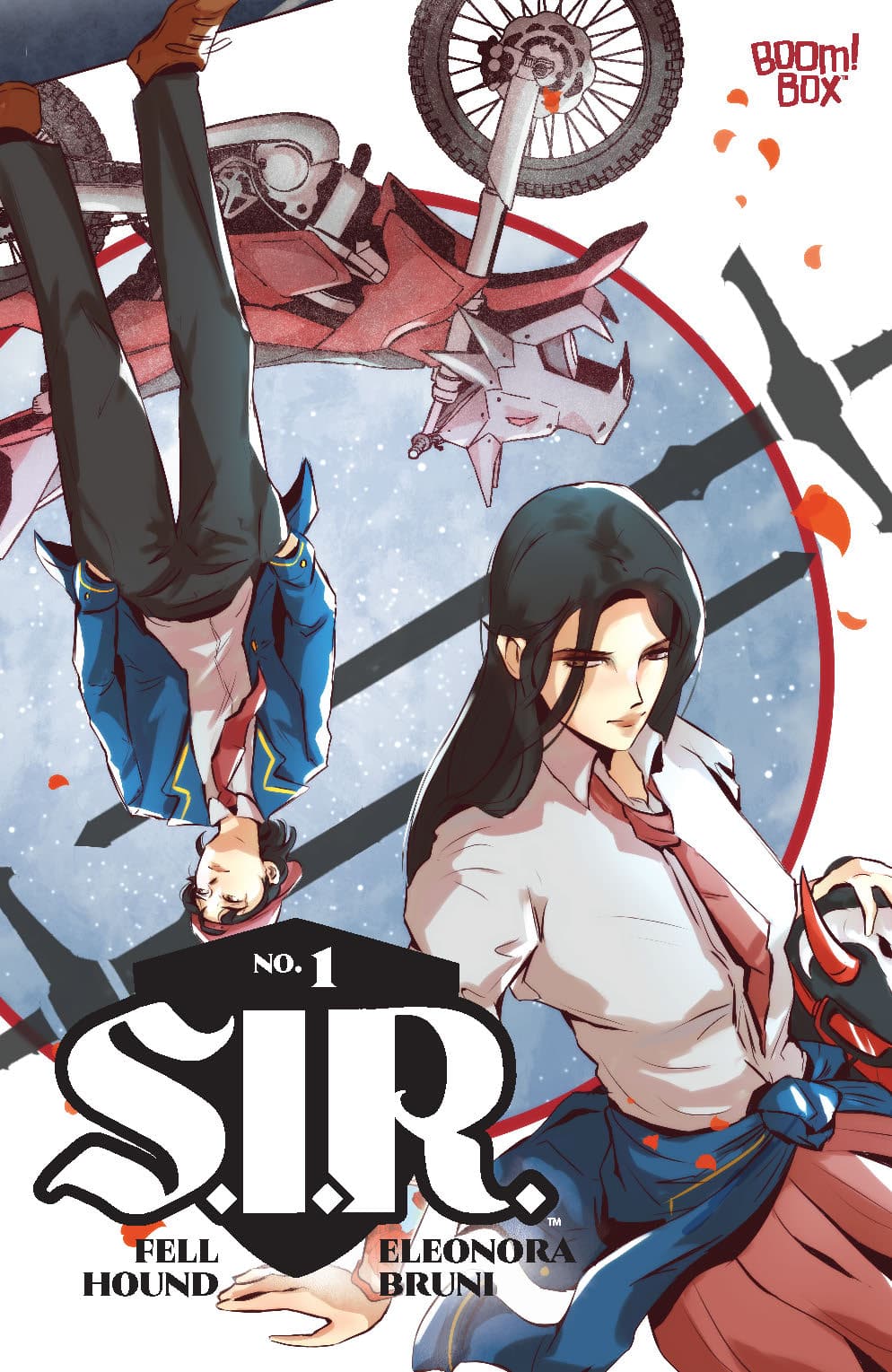
S.I.R. #1

Award winning and Ringo! Award-nominated comic book creator Fell Hound has made waves with her previous Commander Rao universe and is ready to rev the engine of your hearts with her current series S.I.R. Following the break up of young Avery and Nico, the pair have a potential chance to rekindle their love if it can survive the Seismic Iron Clash Roulette. Filled with plenty of action, romance, and school drama, it is a series you do not want to miss. In advance of the second issue releasing on Wednesday September 18, Graphic Policy got the chance to talk with Fell about her work, her thoughts on queer representation, her love of Mobile Suit Gundam, and transitioning to a more extended series with S.I.R.

This interview has been edited for length and clarity.

Graphic Policy:  So starting with a warm up question. If you were trapped on a deserted island and you could only bring one item with you, what would it be and why?

Fell Hound: You know those GPS satellite phones that can connect everywhere, even without a tower, I would bring one of those ’cause even if you gave me a multi tool or food or any survival thing, I’ll not survive. I will die. I need to call for help [Laughs].

GP: What made you decide to pursue a career in comics? Was there a specific moment growing up that crystallized that decision? Were you a fan of comic books and similar media as a kid?

FH: When I was a kid, I read some comic books. I wasn’t a diehard fan or anything, but my dad had these old Asian comics that he grew up reading and then I read them and I thought they were really cute. It wasn’t until the end of high school or the beginning of college I discovered a comic called Batwoman Elegy by Greg Rucka and J.H. Williams and that comic blew my mind away. I’ve never really seen a comic that looked like that before. J.H. Williams just had a way with layouts and handling, and I was like, oh my God. And it’s a queer superhero. I was just so inspired. I couldn’t really draw back then, so I kind of was just like, I wanna do this. I’m in college, I am poor. I can’t afford to pay anybody else, so I just gotta teach myself how to draw, I guess.

GP: So what were some of the major artistic influences that impacted you as a writer and an artist?

FH: So obviously Greg Rucka and J.H. Williams, massive influences. I am a really big fan of Terry Moore. He’s a fantastic cartoonist, like Strangers in Paradise, one of my favorites of all time. Art wise, I really liked Claire Roe before she got really into comics. She used to draw a lot of Dragon Age and Batwoman and Mass Effect fan art which is kind of how I knew her art. And then she moved over to comics and I still really, really love her work. I really like Phil Noto. I read a lot of Kelly Sue’s Captain Marvel run. Marjorie Liu’s X-23, also one of my favorite runs. So their writing has very much inspired me and artistically. I love a lot of fan artists on the internet. I feel like that’s where a lot of my inspiration comes from.

GP: So as a writer and an artist, I imagine that’s a lot of balls to juggle and a lot of responsibilities. Do you have a set work schedule or does it depend on the day?

FH: So when I first started, I didn’t really have a set schedule but it was really weird hours. I was like, all right, from 7:00 PM to 2:00 AM that’s when I will draw. I do shift work on my day job, I just found that my hours were all over the place. My sleep schedule was totally screwed. So I’ve been trying really hard to fix it over the years. So now I do have a set schedule, from 10:00 AM to 6:00 PM, those are my work hours. Then I do my best to put pencils down after 6:00 PM because I found it’s very easy for work to creep into other aspects of your life. I love comics, but I also don’t want it to completely take over my life [Laughs].

GP: I totally get that. Work life balance is very important.  So has it kind of changed throughout the years as you’ve done more work?

FH: I try to not take more work than my work hours can handle. If I think something’s gonna take me after that 6:00 PM mark or that I just won’t be able to do it, then I will just say no. I think there’s also this era of competition where it’s like, oh, I wish I could take on more gigs. Oh, I wish I could do this. Or like, you see somebody else doing all these cool things and you wish you could have what they have. But at the same time, I’m just like, I have a day job, I have other commitments, life, friends, family. And I think over time I’ve learned to realize those things are more important to me than just taking freelance jobs all the time. Because of the day job, I feel thankful that I am still financially stable even if I don’t get a ton of comics work. And I’d rather just have that peace of mind that I’m happy I’m not burnt out and I can continue creating.

GP: So a common theme in your work is queer representation and queer relationships. I think oftentimes whenever we talk about queer representation, we are discussing the idea of authenticity. So what does authentic rep mean to you?

FH: To be completely honest, I am one of those people where I feel we need more queer media in general. I know there’s certain tropes that people might not enjoy reading or some people are like, oh, we need more good representation or whatever that means. For me I’m just like, I think we just need more of it in general. And you can have messy gays, you can have sad gays, you can have even dead gays, but you’ll also have the happy gays, the ones that are autobiographical or like any other type of queer representation. We need people to realize there is an audience who wants more rep. We need people to invest in queer rep. I think to have more authentic representation of the diversity of things and experiences out there, then we need just more of it. 

GP: I fully agree with that because I think whenever we talk about the idea of representation is that you really can’t represent the entire LGBTQ+ community within one character. And that’s why we need more representation to represent those variety of experiences in that regard.

FH: Oh absolutely. I think even we see on TV now you get one season of a show with queer characters and it gets canceled immediately. Like they don’t have time to build, you don’t get their full story arc. And it’s just kind of disheartening now to see, and I just feel like we need some way to be able to invest and nurture and let these stories grow.

GP: Moving on to a different subject, Mobile Suit Gundam. So I think calling you a fan is a massive understatement. What drew you to the franchise at a young age and kept you being a fan of it?

FH: To be honest, I got into it when I was really young, probably younger than I should have been. But basically I think it was late night Saturday or Friday or Sunday, I’d just be watching TV. I was like six years old and Gundam Wing was on. I didn’t understand any of the plot, but I was like, wow, these robots look so cool. And then my dad was also a big giant robot fan, so I think he just got really excited that one of his kids likes giant robots. So he was really nice and kind of spoiled me by buying me a lot of Gundam figures [Laughs].

Unfortunately as I got older, I did fall out of it slightly. But then, Witch from Mercury came back on and it combined basically my favorite thing as a kid with my favorite thing as an adult. I loved Gundam as a kid and then as an adult I loved Revolutionary Girl Utena, and Witch from Mercury was basically Gundam Utena. And it just brought all those Gundam fandom feelings back to me. After Witch from Mercury came out, I have invested, God knows how much money into Mobile Suit model kits [Laughs}.

GP: I think that’s interesting for you as well cause I could definitely see the influences of not only Gundam, but also anime and manga in your work. In comics now, there is that influx of writers and artists being influenced by anime and manga and bringing in those sensibilities to it. And I think that’s just great because for a long time there’s just been that disconnect between manga, anime, and comics as being these separate entities that don’t interact

FH: I definitely think it’s nice that people are trying to learn from each other’s industries in some ways. I definitely think that some parts of the industry have been a little stagnant. So I think having another competitive but similar industry sort of get it into high gear to innovate and expand and actually try to expand the demographic and the audience especially, is a good thing. And for me personally, I’m excited to see it. It’s like comics, manga; it’s all kind of the same thing at the end. It’s comics. 

GP: So if you had to pick one suit to pilot, what would it be and why?

FH: I mean, my personal favorite would either be the Zeta or the Calibarn. Zeta because I love the idea of turning into a plane. I love transforming mobile suits, or the Calibarn so that I can just shoot rainbow lights and save the day. 

GP: What’s been your favorite kit to build?

FH: To be honest, I recently built my first real grade. It’s the real [grade] God Gundam. And I had a lot of fun with it. I know some of the early real grade kits are a little finicky, but the recent ones are really well built. They’re super detailed. They’re like the perfect scale size and I think cost-wise, it’s also a good middle mark for me. 

GP: So an important aspect of Mobile Suit Gundam as a franchise is the concept of a rival and the queer relationship they have with the main character, such as the original one with Amuro and Char. What kind of makes a good rival in your opinion?

FH: I don’t know. I think it’s something that’s very hard to put into words sometimes, but I feel like you need tension and build up. Early Gundam had the benefit of having like 50 episode seasons, which meant they had a long time to build that rivalry. I remember reading about it, but a lot of early female fans of Gundam were shipping Amuro and Char which I think really helped the franchise. I think you gotta have the retention, you gotta have the will they/won’t they. I think if it’s shippable, especially nowadays in fandom, that will go huge. Like if you can take off on an AO3 tag, then you’re solid [Laughs].

GP: So let’s transition to your work now. One of the first comics that you did was Command Rao. So what was your decision about making it accessible and free for readers on your website?

FH: I think the main thing is I wanted people to read them. And I realized at that point that I love these comics and I don’t want to toot my own horn, but I think they’re decent. I want ’em to be read. I took my storefront down at the beginning of the year because store hosting was really expensive. So there wasn’t really a way for people to just buy these comics. And Scout, the former publisher, I don’t know what’s going on with their operations anymore, to be honest. So I felt the easiest way to get people to read it and keep those stories alive and remember it.

Especially now that my new comic S.I.R. is out and I’m getting a couple of new followers, I do want to be able to get the new readers onto maybe reading some of my older work, which I still really like. So I think making it free is just the most accessible way. A lot of people say it’s not a piracy issue, it’s an accessibility issue. And I’m just like, well I am pretty sure my comics are on a pirate site somewhere. But also if you just read it off my site, it’s pretty all the same. 

GP: I mean people should read it and it did get awards and got a lot of positive views. Got nominated for a Ringo! as well which I think is well deserved.

FH: Thank you.

GP: Commander Rao was one of your first major published comics and then you decided to expand the universe in following one-offs. Why did you feel drawn to craft a queer and mature sci-fi war narrative as your debut comic?

FH: To be honest, a lot of things kind of fell into place afterward. Initially I just wanted to make an action comic, like a very basic action comic with just fight scenes because I was new to comics and I wanted to practice drawing fight scenes. The story kind of came together very much at the end. I drew everything and then I literally wrote the script and all the speech bubbles afterward ’cause I’m just like, oh yeah, I need to put some writing in this to give to the letterer. 

To be honest, initially I was a little worried because everybody died and the bury your gays trope was still a thing and I was worried that people wouldn’t like it because I buried the gays. But then I think going back to what you said about authentic rep earlier then it didn’t feel right because I wanted them to be queer. I didn’t wanna just be like, oh, I’m so scared to make my characters queer just because they were also dead. That I take away that rep as well. It felt stupid to me. So I was like, you know what, we’re just gonna commit to it. This is the story I want to tell. These are the characters I want to tell. They are queer. This is an action comic. This is going to be really sad. This is the story that I want to make. 

GP: So what made you want to build upon that world and its story?

FH: And We Love You was supposed to be a completely unrelated story to Commander Rao. Basically And We Love You is based off this comic I made like 10 years ago. Because it was 10 years ago, it looked really bad. But I really thought it had played on the idea of leaving memories. And I thought that was a strong concept that I really wanted to explore when my art was good enough. Then when my art I felt like was at a place where it was decent enough, I was worried I wouldn’t be able to market it because it sounded like a niche concept. And then when Commander Rao came out and people liked it and people wanted more of it, it was honestly a business decision that I was like, I can solve my inability to market a niche concept by hooking the story onto something that people already know and was like kind of successful. Commander Rao and And We Love You were very much like practice comics where I was just learning how to make comics and learning how to market and learning how to do business. And I’m very grateful everything kind of fell into place, but also in retrospect there was a lot of winging. 

GP: What is the biggest lesson that you learned as a creative after completing these Commander Rao stories did challenge your skills as a writer or artist and how did you grow from that?

FH: I think I learned a lot from making Commander Rao and And We Love You. Those were my very first published comics. So everything was a learning curve. Learning how to collaborate with people, learning how to do accounting, learning how to mail hundreds of comic books and make sure they get to people and that they weren’t gonna get bent in the mail. It’s a lot of things that people I think don’t think about when they’re like, I wanna make comics. And we haven’t even gotten to the artistic side where it’s like learning how to write, learning how to draw. For me, every time I finish a project, I take a little bit of a break to do studies and get inspired again. So you really need that time to learn to love what you do again. 

GP: So another interesting thing about Commander Rao was the fact that you also did those little one off short stories where you basically gave them out to different people. What was kind of your thought process about letting other people filling in the gaps?

FH: To be honest, because the campaigns made extra money. There’s so many artists and creatives I love who I think deserve getting paid for their art and their writing and I was just like, well this is a really good excuse now that I have the money to just like pay other creatives to like work in the sandbox just so I could A, give the money and B  it’s always a really cool feeling to have like other people like draw your OCs. Working with Jeremy Simser who did The End of the Line and Michele Abounader and Tench who did Baking with Rao and then Alex Schlitz and Brent Fisher who did Taking Names. Like seeing all of their talents converging and getting their own take on the world. It was so cool as well. So it was a double win for me. I get to give money to people and they give me pretty art [Laughs].

GP: Do you have any plans on coming back to Commander Rao in the future?

FH: Oh, I have so many plans. It’s a little tumultuous right now because I don’t know if I want to keep it forever and self-publish it or if I wanna try it with another publisher and that’s kind of why I keep on having an idea and then canceling it.

GP: I mean now the fact that you’re doing an ongoing series as well, which is a completely different beast I imagine.

FH: Yeah. S.I.R. is five issues, but it’s also longer than anything I’ve ever done before.

GP: To anyone who is unfamiliar with S.I.R., what is your pitch?

FH: So motorcycle jousting is the basic premise, but it is basically a shojo sports drama about these two estranged lovers, Avery and Nico who reunite at this prestigious private college called Bridleham Academy. But in order to save their relationship they have to face the trials and tribulations of the school’s underground motorcycle jousting ring known as the Seismic Iron Clash Roulette. So if you enjoy shojo manga, if you enjoy bloodsport comics, then S.I.R. is the comic for you. Also, if you wanna see what Fight Club would look like reimagined as a nineties shojo anime on motorbikes. Come read S.I.R.

GP: With sad gays.

FH: Yes [Laughs], they gotta go through it before they get the happy ending

GP: I think you made it a major point point with it being sad gays which, understandable. Sadness and tragedy are engaging emotions.

FH: Yeah, I mean, sometimes I get sad and I just need to pour it into art and unfortunately these fictional OCs are right here for me to pour my sads into. But I can say that S.I.R. is a lot less depressing than some of my previous works [Laughs]. 

GP: I think it’s also interesting too with it being a more teenage focused book, it makes sense that’s at BOOM! under their BOOM! Box imprint, which has that history of a more younger focused reading crowd with series like Giant Days and Lumberjanes which is a completely different audience than what you’re used to So what was your decision to go with BOOM!?

FH: So to be honest BOOM! approached me. They invited me to pitch and I pitched them several ideas. And I think S.I.R. was kind of the one that was just like the right place at the right time. They were looking for more BOOM! Box stories ’cause this year is like the 10th anniversary of the line.  

GP: I do think it is also very cool as well with the fact that you are still doing science fiction but in a different aspect, especially with it being inspired by sports manga as well. So what are you tapping from sports anime and manga, whether it be plot or characters to make S.I.R.?

FH: In terms of what I’m drawing from, I really like Birdie Wing, which is that insane golf girls anime. But it was also so much fun and I was like, I wish I could make something half as insane. Also Sk8 the Infinity, which is about skateboarding. I really like that one again, completely insane but also like very, very gay and very fun. A while later my friend introduced me to Yuri on Ice and that was also a beautiful anime. But yeah, I was like, I was really into Gundam and I was really into sports anime and I’m gonna combine the two things into my own comic.

GP: It’s this beautiful alchemy of so many different things. But I think your approach sounds like it was using the sports anime as kind of a Trojan horse. You have the action with the motorcycle jousting, but really a lot of it is that relationship at the center of it that’s kind of the beating heart of the comic of will Avery and Nico make up or will it all fall apart?

FH: Yeah, so for me, I always want to make my books character focused. I feel like the characters are the most important part of the book. You can have a cool world, but if there’s no interesting characters, the cool world kind of falls apart. So I always try to anchor everything I do with character tension, character romance, like something to get you invested and want to know more about the book. So that’s why I really want Avery and Nico to have that sort of central tension, central characterization, you know, the angst, the drama like that is really the anchor of the book All the motorcycle jousting that’s flair. But the anchor is about the romance.

GP: Exactly. So what was your inspiration about doing a come of age romance with motorcycle jousting? Because that’s just something that you don’t instantly just come up with on the spot.

FH: My biggest inspiration was Witch from Mercury, which was again, a coming of age romance school story, but with robots. When I made the pitch for S.I.R., it was right between seasons one and two of Witch from Mercury, and I was having what the kids called “brain rot” over the seasons. I don’t know what to do with this energy of wanting the show to come back. So then I was like, oh well I guess I’ll write a pitch for it and hopefully I can just pour all my brain watt energy into this pitch. 

GP: Hopefully we get nothing like the season one finale happening at the comic.

FH: There will be no tomato sauce. [Laughs] It is YA.

GP: It is, but you’re still approaching it in a very mature way as well. What was that process of doing a comic about these two people who are in their own worlds trying to figure stuff out and whether or not they need to come back together to find their future.

FH: Yeah. especially Avery and Nico, they have a lot of similarities, but they’re also very different in terms of their upbringing. Like Avery who’s obviously very loyal, who centers the relationship above everything else. And then you have Nico whose past is slightly more complicated. She has like other stressors and anxieties and unfortunately things kind of fell apart for her, which led her to becoming sort of a scourge in this seismic era clash roulette motorcycle jousting ring. And it’s sort of how Avery and Nico can reconcile those differences and also how they can face the motorcycle joust together using the strengths that they both have.

GP: As an artist who has done more mature work in the past, was it difficult adapting that emotional maturity with a more YA approach?

FH: I think the theme of loss has always been something sort of  personal to me and that’s something I explore a lot in my work. So even across my older comics, which are obviously a lot more mature and up to now in a YA book, I think that theme does prevail in some ways, but it’s just executed differently. It’s not as in your face the themes of loss, but the undertones are still there. Whether it’s really gritty or just kinda like a soft undertone throughout the book. It is something that I think is still worth exploring and I hope people enjoy it. [Laughs].

GP: Last question about, S.I.R. but an interesting thing I kind of noticed while  reading it was much like your previous work is the weaving of traditional comics dialogue and bubbles and panels with prose. Do you  feel like that’s a way of getting into the head of the character?

FH: So in this particular instance, and the reason why I did some prose in some of my previous words is I think [Laughs] sort of a space issue.  I have 22 pages per issue here. So there is a limit and I feel like some things that are a little harder to explain by just using visuals alone or just having speech bubbles alone and you just kind of have to get creative with how you introduce certain concepts or certain character elements. So that’s kind of where the prose comes in, is just trying to make the world engaging and interesting while being able to conserve space. And I think having text or prose is kind of the easiest way to get things across.

GP: What can people expect in the upcoming second issue?

FH: Yeah [Laughs], so Death, and by that I mean we get introduced to any rider who is particularly skilled with a particular Reaper theme. So we can expect more badass motorcycle jousting, more drama as some of the more mysterious plot details come to unfold.But yeah, death, angst and motorcycles is the theme of issue two, but don’t worry it’s not as depressing as some of my previous comics. [Laughs].

GP: Wrapping things up, do you have anything you wanna plug, anything you wanna promote? 

FH: So right now I’m just focused on finishing S.I.R.. As I said, issue two comes out on September 18th and then we’ve got issue three in October and issue four in November. And I’ll shout out my collaborators on the book. So it’s written and drawn by me, but we have colors by Ele Bruno, it’s lettered by Becca Carey and edited by Elizabeth Brei, published by BOOM! Box.  If you would like to support and buy this book, that would mean a lot to me because a house in Toronto is very expensive and I would like the money to buy one [Laughs].

S.I.R. issue #2 releases this Wednesday, September 18 from BOOM! Studios. To read Commander Rao and the rest of Fell’s work, visit her website. You can also follow Fell on social media @fellhound to keep up with her projects.

The Ultimates #4 Unmasks Doom’s Tragedy

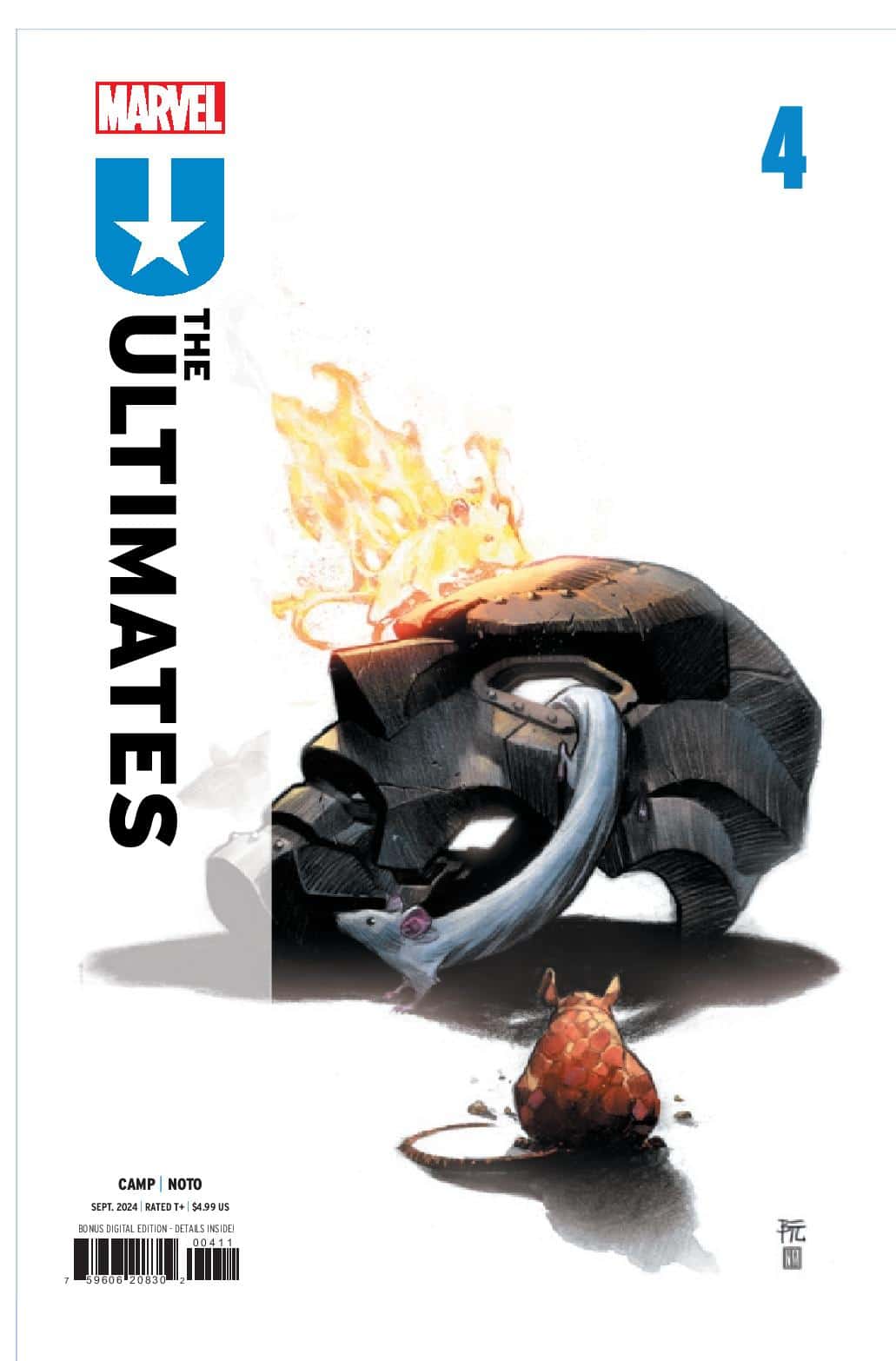
The Ultimates #4

Following their recruitment of She-Hulk, the Ultimates continue to prepare for Maker’s reemergence. All the while, Doom, the Reed Richards of Earth 6160, continues his experiments to bring the heroes back to the universe and reflects on his torture by the Maker. As the only surviving member of the Fantastic Four, the memory of the life he could have had haunts him and drives him toward remaking what he lost. As he mourns his failed future, Doom must choose to save the world or recreate the dreams that weigh on his mind. Deniz Camp and Phil Noto unveil the tragic history of Doom that hides behind the mask he wears in The Ultimates #4. 

While the Maker explains how he can control the fourth dimension, i.e., time, Camp and Noto can do the same with the layout and presentation of the story. Across its 20 pages, the issue sticks to a continuous repeating four-panel layout that initially presents the narrative in the traditional linear structure. But once one begins to reread and dissect its presentation, we step into Doom’s shoes as we go beyond the formal approach of reading an issue and think beyond the standard panel by panel on a page approach. Although we are free to read it one panel on each page at a time and then flip back to the cover to start with the second panel, we are still trapped within those dimensional constraints where the story never truly ends but becomes cyclical. It does not matter how you read it; there can only be one ending, and that ending is Doom.

By revealing Doom’s backstory, Camp showcases the horror and trauma that Doom endured at the hands of the Maker. With the Maker and Doom both variants of Reed Richards, it crafts a horrific reflection of how the Maker sees himself and views a replica of him who does not fit his idea of perfection. The Maker can only see his internal imperfections and believes that Earth 6160 Reed needs to be punished for it. Most horrific of all lies in the Maker manipulating the fabled space flight, which gave the Fantastic Four powers, to kill them off leaving only Reed As Reed and Doom exist as not only foils but with their Earth 616 origins intertwined, Camp dives into new waters with the relationship of the Maker and Doom. With the original Doom created due to an accident, the Maker decided to play God and create a Doom in his image. 

As the guest artist, Noto’s art crafts the tragic atmosphere and tone that reinforces Camp’s script. Along with the repetition of the four panels, his work elevates a strong panel as he demonstrates what a comic can be through its art and layouts—especially with an ambitious narrative like this. Camp and Noto needed to be in perfect sync, which they achieved. Noto’s interiors and colors, with VC’s Travis Lanham’s lettering, show a man whose life was ripped away from him and how he will hang onto the vanishing threads. 

Camp and Noto craft a tragic, melancholy story in The Ultimates #4. Doom can neither hold onto his past nor grab this lost future. And Doom must decide whether he will try to live up to the Reed Richards he was meant to be or be the Doom that the Maker crafted him to be. I am reminded of Number Six in The Prisoner “I am not a number, I am a free man!” as Doom struggles with his internal chains. Even with the Maker locked up, he still feels trapped and forced to embrace the metal mask of Cain on his forehead. His armor essentially making his body a prisoner.

Story: Deniz Camp Art/Color: Phil Noto Letterer: VC’s Travis Lanham
Story: 9.7 Art: 9.7 Overall: 9.7 Recommendation: Read

Marvel provided Graphic Policy with a FREE copy for review


Purchase: Zeus Comics – Kindle

Power Rangers Infinity #1 Expands The Multiverse of Who Can Be a Ranger

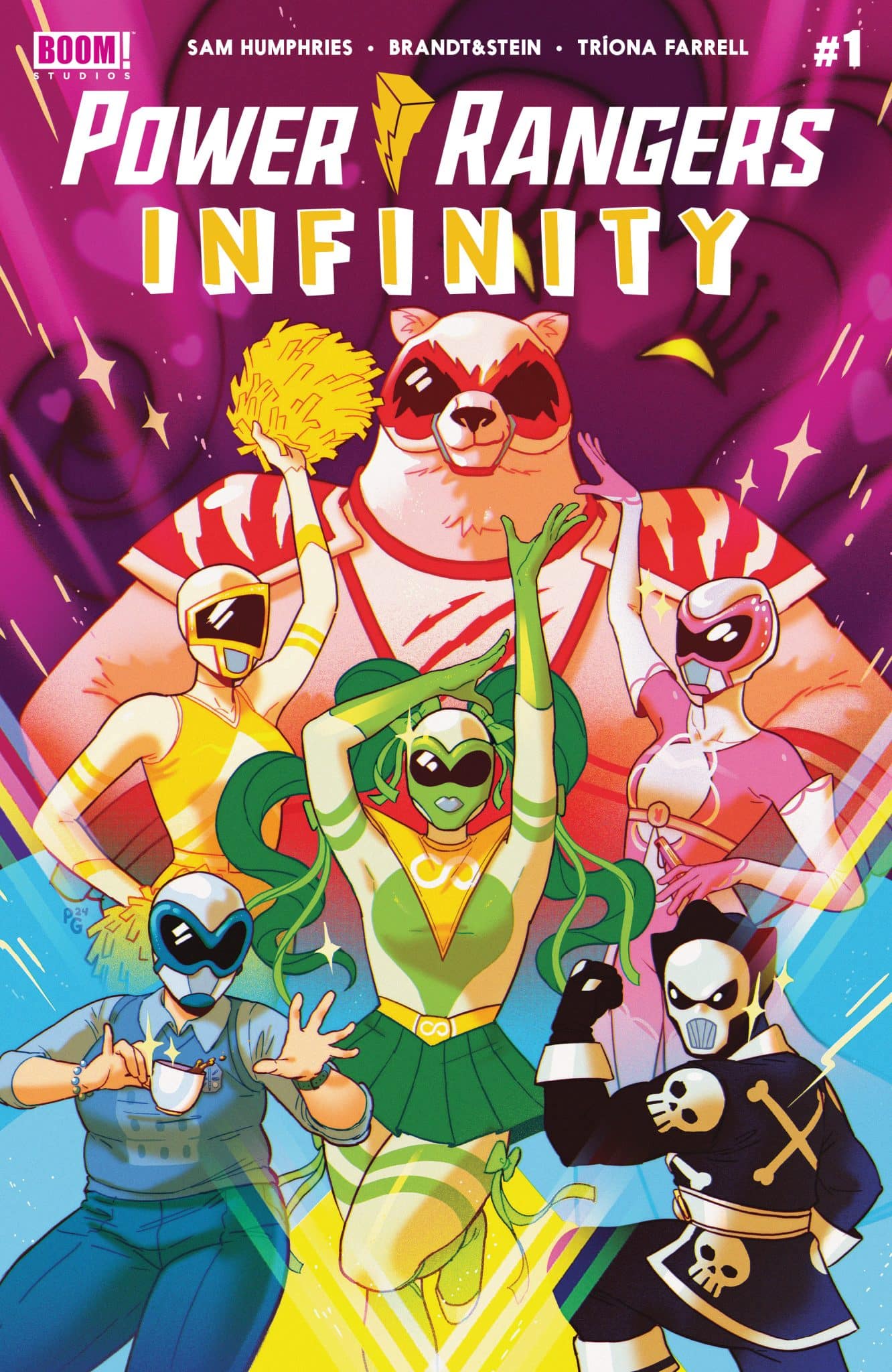
Power Rangers Infinity #1

Power Rangers super fan Lola has dreamt about writing a comic book of her favorite series. While at a convention pitching her comic idea, Poisandra invades the location and causes chaos. A motley ragtag group called the Power Rangers Infinity fights her and takes Lola with them. The fate of the multiverse depends on this group of outcast rangers coming together and preventing Poisandra from destroying the infinite number of power cycles. Sam Humphries and Brandt & Stein offer a fun and goofy love letter to a beloved series in Power Rangers Infinity #1.

With the notion of there being an infinite number of different rangers across the universe, the trio demonstrates their unlimited creativity through characters like Pirate Ranger, Polar Bear Ranger, Pride and Prejudice Ranger, and Peggy Ranger along with the other teams that Poisandra visits and then destroys. They prove how malleable Power Rangers exist as a concept and where it can go in the future. It also made me wonder more about the worlds they came from and what their former team members were like. The newly introduced members of Power Rangers Infinity widen the notion of what a Power Ranger could be and the types of stories that could be told with the series.

The offbeat humor but heartfelt emotions helped set it apart from other stories starring the Power Rangers. Humphries and Brandt & Stein show a genuine love for such an iconic show while still toying with the concepts of the property and exploring differing avenues. Having Lola as the main character not only reflects the fans of the series reading the comic but also helps introduce newcomers to it. Her overall arc is hugely relatable as she needs to overcome her self-doubt and embrace her Ranger identity. I loved Lola; she was a tremendous point-of-view character in the story.

Power Rangers Infinity #1 would only be as successful as it is with Brandt & Stein doing the fabulous art. Their vibrant and expressive style enhances Humphries’s comedic writing, all the while nailing the serious core that lies within the narrative. They also contribute their unique style to the designs, which helps them feel special from the other ones in the franchise. The entire issue is purely magical, with colors by Tríona Farrell and Ed Dukeshire’s lettering. As a celebration of the Power Rangers series, the art makes it feel extraordinary.

With the unique one-off issue of Power Rangers Infinity #1, Humphries and Brandt & Stein craft a fun tale that shows the unlimited possibilities of the universe. I enjoyed it and had a giant smile while reading it. In a multiverse where anyone could become a Power Ranger, they prove that it’s not solely about the costumes but believing in yourself that you are worthy to wear the mask.

Story: Sam Humphries Art: Brandt & Stein
Color: Tríona Farrell Letterer: Ed Dukeshire
Story: 8.7 Art: 9.0 Overall: 8.9 Recommendation: Read

BOOM! Studios provided Graphic Policy with a FREE copy for review


Purchase: TFAW – Zeus Comics – Kindle

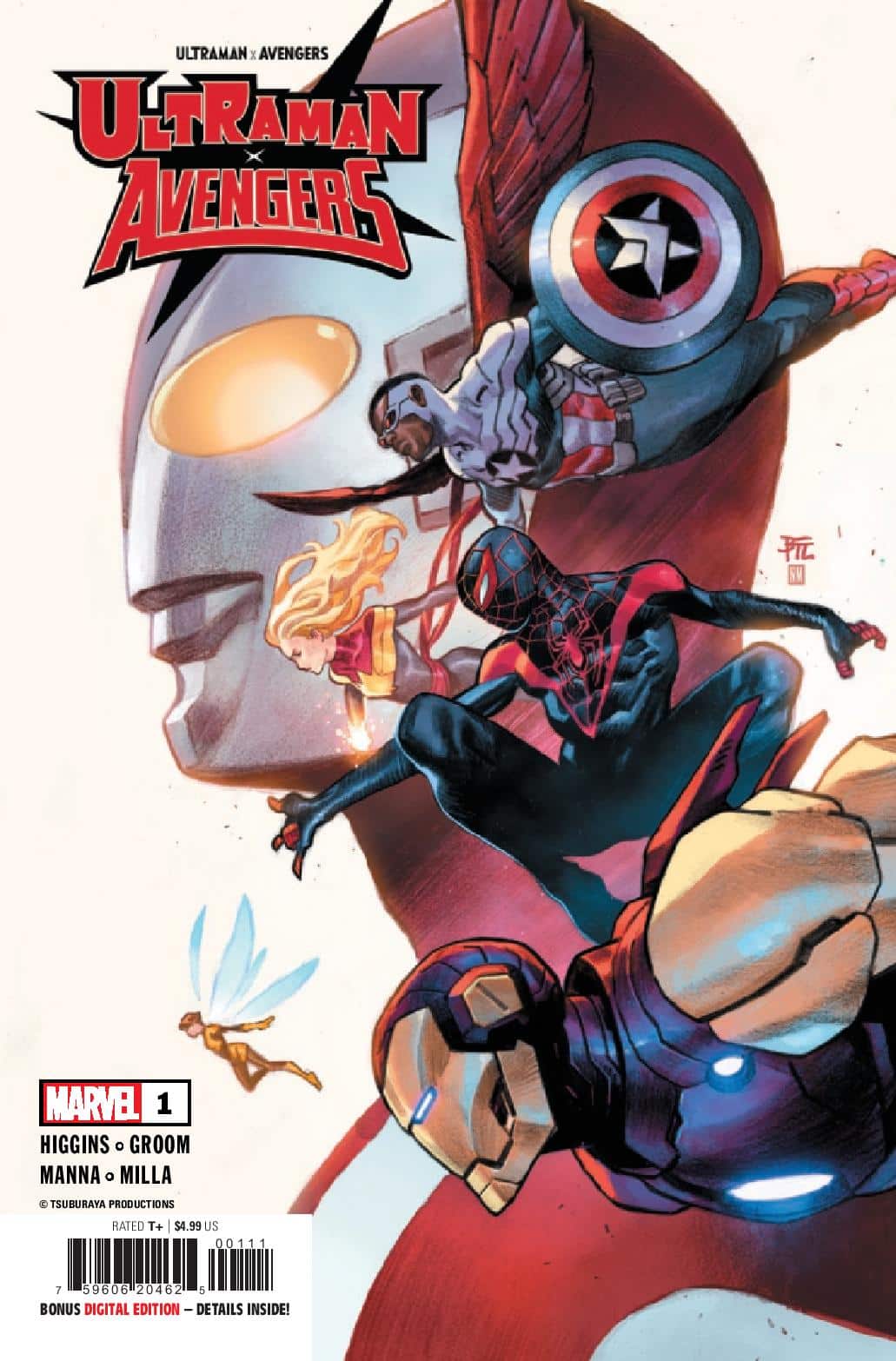
Ultraman X Avengers #1 Begins a Kaiju Sized Crossover

Ultraman X Avengers #1

The worlds of Japan’s greatest hero and Earth’s Mightiest Heroes collide to stop a massive danger threatening their existence. Traveling through an interdimensional portal, Spider-Man lands in a world full of kaiju and protected by Ultraman. But the ferocious kaiju have been acting strangely due to a mysterious being invading their universe. Spider-Man calls upon the Avengers to assist with this threat. In a lifetime crossover, prepare for a thrilling tokusatsu adventure as Kyle Higgins, Mat Groom, and Francesco Mana start Ultraman X Avengers #1.

With the series being a crossover, Higgins and Groom need to get readers up to speed on not only the Avengers but the world of Ultraman, too. The pair do a good job of easing new readers into the basics of Ultraman as a character, his supporting cast, and his world. Considering how the Ultraman franchise has been going on for nearly 60 years, they tap right into the core, which appeals to both new and old fans of the series. Ultraman X Avengers #1 continues Higgins’s and Groom’s previous Ultraman comics at Marvel, and it is nice to see what Shin Hayata and the others have been doing since The Trials of Ultraman. Overall, the first issue does excellent work crafting an engaging take on a beloved character and series that honors the legacy of what came before.

An essential aspect of a crossover is making the characters from their respective worlds feel distinct and fit. Having Spider-Man be the first Marvel hero in Ultraman’s world makes sense not only because of his science fiction background but also because of his youthful nature, which matches Shin’s. They both carry great power and even greater responsibility, so they make a good pair in the beginning. And to up the grand cosmic scale of the threat, Galactus serves as a perfect antagonist due to his looming and threatening presence that will take both the Avengers and Ultraman to defeat. Higgins and Groom blend the worlds of the Avengers and Ultraman smoothly, where it lives up to the monumental nature of the crossover.

Manna, who also drew the past Marvel Ultraman titles, makes a welcome return as he marries the differing artistic natures of the traditional Marvel universe with Ultraman’s. I appreciate his sleek visuals and expressive characters while nailing the glorious nature of Ultraman battling a kaiju. He captures the grand scale of Ultraman while seamlessly combining it with the Avengers’. In addition, Francesco Manna’s bold colors and VC’s Ariana Maher’s excellent lettering make it an engaging beginning.

Ultraman X Avengers #1 by Higgins, Groom, and Mana offers an exciting crossover that lives up to the hype. With two momentous series crashing into each other, the team creates a thrilling story that will require all of the heroes to work together to stop it. Much like Ultraman himself, the beginning is huge, but it will only get bigger and more grandiose as it goes on.

Story: Kyle Higgins and Matt Groom Art: Francesco Mana
Color: Francesco Manna Letterer: VC’s Ariana Maher
Story: 8.8 Art: 9.3 Overall: 9.0 Recommendation: Read

Marvel provided Graphic Policy with a FREE copy for review


Purchase: Kindle

S.I.R. #1 Invites You to Experience Motorcycle Jousting Romance

S.I.R. #1

Avery Sakai and Nico Xing used to be a couple before Nico moved away to attend Bridleham Academy. Hoping to get her girlfriend back, Avery applies to the school and gets in. But while separated, Nico decided to get involved in the Seismic Ironclash Roulette, a motorcycle jousting club. Faced with the possibility of reuniting with her love, Avery must survive the action and chaos-filled arena outside of her new school life. Acclaimed writer and artist Fell Hound crafts a high-octane queer love story filled with plenty of anime action and drama in S.I.R. #1.

In the first issue, Hound introduces us to the thrilling world of Seismic Ironclash Roulette, where the only thing worse than being knocked off could be falling in love again. With its teenage-centered cast, emotions carry as much weight as a joust hit where Avery must juggle her new life while rekindling her love with Nico and becoming a part of the school’s extracurricular activity. More impressively lies in the authenticity of the characters and their relationships and feelings, which makes the embers of the teenage romance feel honest. Wearing her anime and manga influences on her sleeve, the usage of these touchstones sells the heightened emotions and grounds the characters and relationships in the action-packed premise. Like any great action story, you initially come for the excitement, but you stay and become invested in the emotional narrative of the characters. You want to see Avery succeed in the ring as much as she reunites with Nico.

Hound also establishes Avery as an engaging protagonist that readers easily invest in and fall in love with. Although not given her complete backstory, Avery exists at a crossroads in her life where Nico is the only person she has left, and she needs to decide what to do with her future. Nico also has a similar position where she finds her place within Seismic Ironclash Roulette, but it is challenged when Avery appears at the school. The two characters are intertwined not only because of their shared romantic history but also because of where they are in life. Hound draws upon the relatable frustration and uncertainty we experienced as teenagers when we grasped what we could for stability. Although we might not have all done motorcycle jousting, we can remember deciding what to do with our lives and who we might want to spend it with.

Hound’s art with Eleonora Bruni’s colors brings a vibrant tone to the comic that conveys youthful romance and energetic action. Balancing tender emotional moments with adrenaline-filled motorcycle jousting makes the visuals of S.I.R. #1 into a beautiful and unique alchemy. She also crafts the fascinating setting of Bridleham Academy with its mix of medieval history and motorsports culture. Becca Carey’s lettering of the dialogue and prose make it a solid first issue. 

Alternating between engrossing high school romance and non-stop thrills, Hound delivers an exciting first issue in S.I.R. #1. Not only do Avery and Nico need to navigate their possible future relationship, but Avery also needs to learn how to survive in Seismic Ironclash Roulette. I perfectly vibed with the world of Bridleham Academy, and I need to know what will happen next. Indeed, no other book is like it out on the shelves and feels like its own perfect story. I highly recommend picking it up and experiencing the revving engine of romance.

Story and Art Fell Hound Color: Eleonora Bruni Letterer: Becca Carey
Story: 9.7 Art: 9.7 Overall: 9.7 Recommendation: Read

BOOM! Studios provided Graphic Policy with a FREE copy for review


Purchase: Zeus Comics – Kindle

« Older Entries Recent Entries »