In this episode of Comics Deserve Better, Brian, Darci, and Logan discuss cartoonist Kate Leth‘s pattern of racism, transphobia, and fatphobia. Logan shares some of his personal experiences with Leth, and this is very much editorial and not news reporting. Next, they talk about some great indie comics like Undone by Blood, Helena Rose, “Checking Out” from Medium, and the Manga Classics series as well as upcoming titles like Black Mask Studios‘ The Last Song #3 and The Impending Blindness of Billie Scott.
Finally, his week’s “Main Course” is Matt Kindt and Matt Smith‘s fantasy series Folklords, which leads to a hearty debate among the hosts and many Tolkien references. (Episode art by Jeff Smith)
Thanks to their work on titles like Criminal, The Fade Out, Kill or Be Killed, and many others, writer Ed Brubaker and artist Sean Philips’ collaborations have been some of my favorite comics to seek out on the stands. And their new Image Comics graphic novella, Pulp, is no exception. Set in New York in 1939 with occasional flashbacks to the turn of the 20th century, Pulp chronicles the last days of Max Winters, an Old West gun fighter and outlaw turned writer of pulp Westerns for the fictional magazine Six Gun Western. Brubaker and Phillips with amazing spot reds from colorist Jacob Phillips blur fact and fiction and show and steadily build up that Winters’ character, the Red River Kid, is a barely fictionalized version of his younger self.
While Ed Brubaker and Sean Phillips riff on crime fiction tropes in their usual manner and add a dollop of the “one last job” story, I would consider Pulp to be a straight Western even though it’s predominantly set in New York. This mostly comes from the way Max behaves, especially in crime settings. (Car chases are definitely more stressful than horse ones.) However, Brubaker and Phillips aren’t merely content to do their take on this classic American staple of the Western, but instead recontextualize the genre to be about resistance against those who would exploit others (Basically, class warfare.), especially Nazis and fascists.
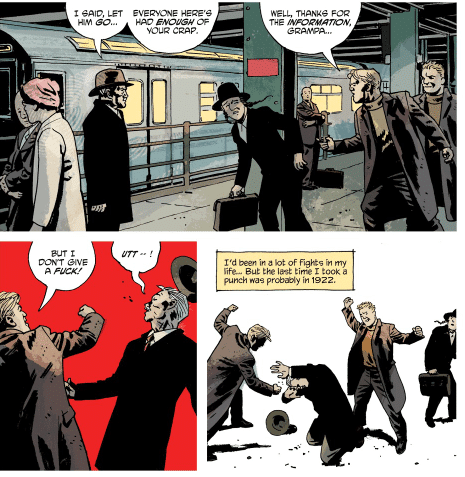
They lay the breadcrumbs for this early on as Max stands up for a young Jewish man at the subway station even though it leads to him getting his ass kicked, having a heart attack, and being robbed of his entire freelance paycheck that he was squirreling away to buy a house in Queens for him and his partner, Rosa. This scene sets up Max as a champion of the marginalized as Phillips and Phillips’ visuals convey the righteous fury in his soul as he stands up for what’s right even if no one helps him out when he takes a beating. The fury extends to the salty frankness of his dialogue as he tells the young anti-Semite, stating “Everyone here’s had enough of your crap”. Max is like if Clint Eastwood in Unforgiven had a social conscience, and this informs all of his actions in the narrative, especially in the second half of the book when he decides to fall in with an old foe. And not just any old enemy: a Pinkerton.
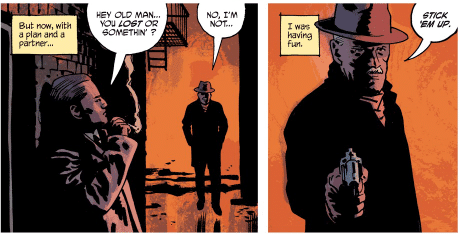
Even though they had semi-heroic beginnings as bodyguards for President Abraham Lincoln during the American Civil War, Pinkertons become synonymous with strike-breaking and cloak and dagger operations to uphold the status quo. Historically, they tracked down the Jesse James Gang and Butch Cassidy and the Sundance Kid so they’re a good fit for baddies in a Western and are still doing private security to this day as part of the firm, Securitas AB. So, basically, Brubaker and Phillips set up the former Pinkerton, Goldman, who catches Max trying to do a robbery in broad daylight as an untrustworthy fellow with a bit of a bitter edge. Sean Phillips never draws Max and Goldman as buddy buddy arranging them in opposition to each other with Goldman as a savvy operator and Max as a cowboy stuck in city alleys instead of the open plains of Wyoming or another Western state.
This visual depiction extends to Ed Brubaker’s plot as what Max thinks is just good old-fashioned stage coach robbery (But with Nazis instead of cattle barons.) turns into something a little more complex as Goldman wants to hit at the names and accounts of Nazis, not just their cash. Of course, Max thinks this is all nonsense, and his captions the 1939 Old West gun fighter version of ACAB. (“Why would I trust a Pinkerton?”) However, Brubaker and Phillips drop in Goldman’s backstory that he had a good job doing accounting work for Henry and was laid off because he was Jewish, which makes him more of a sympathetic figure, and also sets up Max’s final showdown where he takes guns a-blazing vengeance against the fascists and on behalf of his Jewish partner, who was wrongfully murdered, even though he (and we) know that this will end in his demise. But he has that house in Queens for Rosa so he has nothing left to lose.
For better or worse, Max’s actions in both the Western past and New York present of Pulp are consistent. He always fights on behalf of folks that are exploited by those who have the power in society whether that’s settlers and robber barons or Jewish people and Nazis. He even advocates for ownership of his character Red River Kid (Pretty much self-ownership.) and going in a new creative direction with the character instead of retreading the same plots, but as anyone who has read about the history of comics that’s a futile battle. There’s a real Martin Goodman/Stan Lee vibe from Max’s editor Mort and his nephew Sidney, who’s a fan of Max’s Westerns and will do his job for a much cheaper rate. These scenes and Max’s sense of justice lead to more anger and chest pains and is what leads to him to picking up gun again and becoming an outlaw.
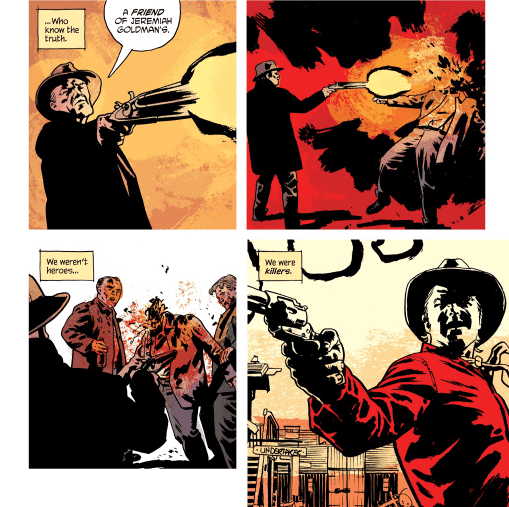
In Pulp, Brubaker and Phillips create a strong through-line between the exploitation of capitalists and fascists whose actions are insulated by people “just following orders”. Max is very aware of the banality of evil, and that’s why his final showdown is at German Bund beer hall and not against a veiled stand-in for Adolf Hitler atop a zeppelin. He has put his affairs in order, has set up his partner Rosa for life, just wants to avenge the death of his unlikely friend, Goldman, and put some goddamn Nazis six feet under. Sean Phillips and Jacob Phillips up the intensity of the visuals in these final pages with plenty of guns, red, and abstraction while Ed Brubaker’s narration sums up what Max thinks of himself before his death, namely, “We weren’t heroes. We were killers.” Even though Max has good values, it was his quick trigger finger that kept him alive in the Old West, and it’s deteriorating heart that gets him in the end in a bar in New York surrounded by swastikas. But, at least, he went down shooting.
Pulp is a fantastic transposition of the Western to the big, modern city as Ed Brubaker and Sean Phillips apply outlaw-turned-pulp-writer code of fighting for the downtrodden to championing Jewish people against fascism even before the United States declared war on Nazi Germany. Max’s actions and ideals strike a chord in 2020 where the President of the United States himself called Nazis and white supremacists “very fine people”, and they run rampant both in the street and online. With his vulnerability, tenacity, soft spot for Rosa, and heart for justice, Max Winters is definitely the character find of 2020, and Ed Brubaker, Sean Phillips, and Jacob Phillips do a wonderful job making a Western story both exciting and socially relevant.
In this episode of Comics Deserve Better, Brian, Darci, and Logan gush over the first arc of Jeff Lemire and Dustin Nguyen‘s 2015 space opera comic, Descender. Stay tuned for chatter about small robots, big robots, and great watercolor art. Other comics mentioned on the show, include Robert Kirkman and Chris Samnee‘s blockbuster Fire Power, self-published darlings Post and Stella vs. the Tinder Box, Tom Taylor and Daniele Di Nicuolo‘s Seven Secrets, Evan Dahm‘s Harrowing of Hell, and more. (Episode art by Dustin Nguyen)
In this week’s Comic Deserve Better, Brian, Darci, and Logan discuss Fábio Moon, Gabriel Bá‘, and Dave Stewart‘s life and death masterpiece, Daytripper, and get emotional and occasionally personal while breaking down the craft of this great title. They also chat about a plethora of recent indie releases ranging from Singaporean newspaper comics about Covid-19 and self-published comics about going to movie theaters (Remember those!) to Vault Comics‘ Finger Guns, Ed Brubaker and Sean Phillips‘ Pulp, and the manga, Yona of the Dawn. There’s something for everyone in this episode! (Episode art by Fábio Moon and Gabriel Bá.)
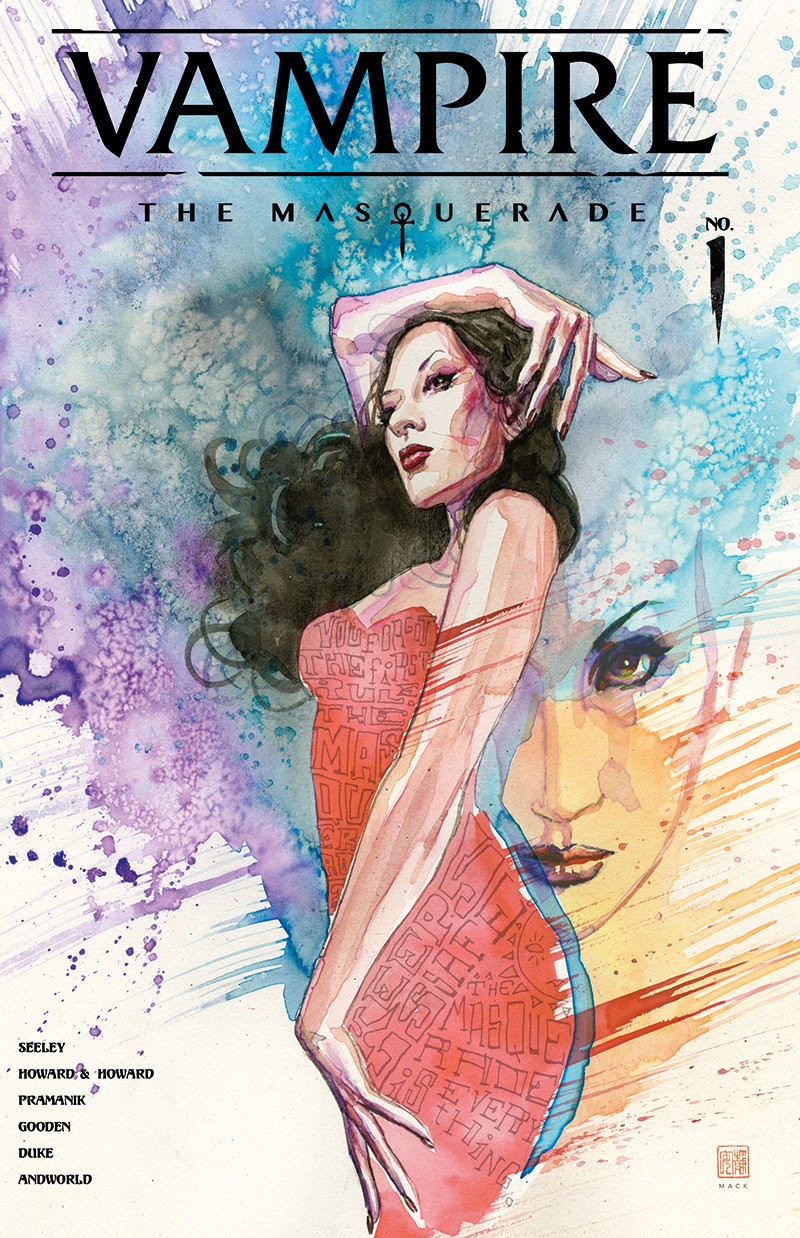
The White Wolf/Onyx Path RPG Vampire: the Masqueradereturns to comics courtesy of Vault, and this issue is a wonderful entry point into a complex world of alliances, hierarchies, and yes, bloodthirst. Tim Seeley, Devmalya Pramanik, and Addison Duke handle the lead story of Vampire: the Masquerade #1 focusing on Cecily Bain, who is muscle for a vampire clan in Minneapolis. However, she also has a fiercely independent streak and the tiniest trace of a soft side beneath her murderous, take no shit attitude. On the flip side is Tini Howard, Blake Howard, and Nathan Gooden’s backup story about the anarch, Colleen, who isn’t beholden to the Twin Cities power struggle and just wants to make sure her and her vampire buddies survive to the next day. It was really nice to get two incredibly different perspectives on this rich world, especially as a newcomer to the franchise. (My only real exposure to Vampire the Masquerade was in the Baphomet/Morrigan-centric issue of WicDiv even though the lore has always fascinated, and I picked up some of the RPG sourcebooks via Humble Bundle.)
Seeley and Pramanik set up Cecily as an anti-hero with a heart of gold in Vampire: the Masquerade #1’s opening story. She proves her ruthlessness by killing the clan accountant’s girlfriend (He’s just valuable enough.) in the opening scene, but then she shows tenderness with her sister Karen, who has dementia, and a new vampire, Ali. Pramanik with the help of colorist Addison Duke uses intense shadows to create intimacy in their visuals and hint that Cecily is strongly considering turning Karen into a vampire so she doesn’t have to deal with the pain of completely losing her and also that her youth is restored.
This concern for the weak continues to Ali, who was sired by an anonymous vampire and is clan-less drifter in a highly hierarchical world except this may not be the case thanks to some suspenseful silent sequences from Seeley and Pramanik. Visually, Devmalya Pramanik and Addison Duke lean into an industrial, post-punk vibe that hints at past “glory days” for Cecily and Karen and also hinting that Cecily might have a sense of nostalgia between her tough, get the job done veneer. Her interest in alternative culture and music does dovetail nicely with her refusal to be more of a company woman and just do her job for the Prince instead of getting the vampire clan equivalent of a desk job and lose some of her precious freedom. (And, by extension, a lack of prying eyes on Karen.)
In both stories, Tim Seeley, Tini Howard, and Blake Howard lean on characterization and easy-to-connect-with personal relationships instead of the deep Vampire the Masquerade lore to drive the story. Without the vampirism, Colleen and her band of anarchs (Basically, vampire without a cause.) could be young people with wanderlust that favor the open road instead of stable jobs and lifestyles. The character sheet for Colleen (And Cecily too, while we’re here.) adds real depth to her character and the messed up relationship with her husband/sire Mitch and also acts as a rare peek at the bottom of the author’s theoretical iceberg. The backup is a free spirit to the rigid structures that Cecily encounters in the main story, and Addison Duke uses a lighter palette because as a thin blood, Colleen can actually go out during the day. The Howards and Gooden’s story adds depth and perspective via a momentum-filled On the Road with vampires plotline instead of relying on boring exposition to show what life as another kind of vampire is like.
With two memorable leads and a focus on showing readers what it’s like in the universe instead of exhaustively explaining its rules, Vampire: the Masquerade #1 is an enjoyable read even if you’re not familiar with the RPG. The dual nature of immortality shows up a lot in the comic, but Tim Seeley, Tini Howard, Blake Howard, Devmalya Pramanik, Nathan Gooden, and basically Gothic set-dresser Addison Duke dive into other implications of being a vampire in this world like navigating bureaucracies and complicated interpersonal relationship. Hey, it sounds like the real world, but with hotter outfits, blood, and fangs.
Story: Tim Seeley, Tini Howard, Blake Howard Art: Devmalya Pramanik, Nathan Gooden Colors: Addison Duke Letters: Andworld Story: 7.9 Art: 8.7 Overall: 8.5 Recommendation: Buy
Vault provided Graphic Policy with a FREE copy for review
In the second episode of Comics Deserve Better, Brian, Darci, and Logan react to the 2020 Eisners and discuss the 2017 Greg Rucka and Leandro Fernandez comic, The Old Guard. Or what Logan likes to call “Blackwater, but queer”.
Other books talked about on the show include the webcomics Fangs by Sarah Andersen, Gunnerkrigg Court by Tom Siddell, and Clover and Nugget by Phil Sheldon as well as Scout Comics‘ Yasmeen #1and Tales from the Pandemic by Mario Candelaria and a bunch of awesome artists.
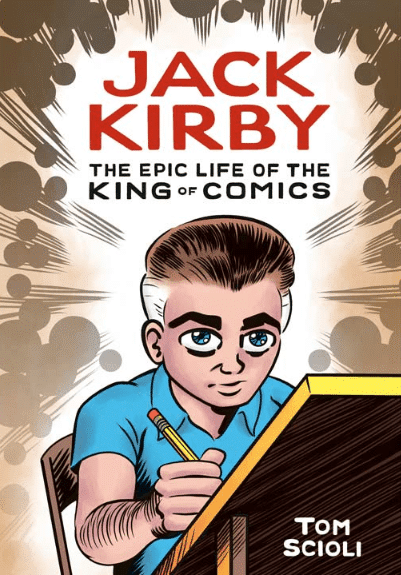
Coming off his work on Fantastic Four Grand Design as judging by his art style and themes in comics like Super Powers, Godland, and American Barbarian, cartoonist Tom Scioli is an excellent choice to write, draw, color, and letter a graphic biography of Jack Kirby, who co-created Captain America, Hulk, the Avengers, the Fantastic Four, New Gods, and characters too numerous to mention. In Jack Kirby: The Epic Life of the King of Comics, Scioli tells the story of Kirby’s life using a first-person narrative device drawing on a backlog of interviews and magazine articles about him while occasionally shifting the narrator to his beloved wife, Roz Kirby, and his collaborator/rival/general pain in the ass, Stan Lee to show their sides of Kirby’s life.
The main takeaway I got from Jack Kirby: The Epic Life of the King of Comics was that his life and vivid imagination were almost always linked, and Scioli shows this by drawing Kirby wide-eyed, almost like Astro Boy compared to his more realistic portrayals of the characters around him. There ends up being a big, emotional payoff to this technique, and it’s interesting to see Scioli’s art style shift with the time that Kirby was living in from the classic adventure and humor strips that took him away from gloomy New York to the power and pain of his war days where he escaped death so many times. This is followed up by the chameleon days of the 1950s where Kirby and Joe Simon tried to keep up with the latest trends in the industry like crime and Westerns and even invented a new one: romance, the 1960s where Kirby turned monsters into superheroes and created pop culture icons, the 1970s where he was freed from dialogue balloon fillers-in and could create a new mythology that was both epic and personal.
Finally, the story concludes in Kirby’s twilight years where he finally got things like health insurance and paid days off to take a trip to Israel with Roz and spend more time with his family while working in animation, getting royalties for his New Gods characters, and getting his greatest paycheck yet when the Image Comics founders inked some of his old, unpublished art to create Phantom Force. After Kirby’s death, Scioli does away with his usual six panel grid and uses smaller screens with photorealistic drawings of everything from Frank Miller eulogizing him to photorealistic style panels of stills from movies from 2000’s X-Men to the upcoming Eternals and New Gods, which draw almost solely from his vision.
But for every great idea or creation, there’s a reversal with Jack Kirby spending as much time in heated arguments in offices and occasionally court rooms as at the drawing board creating stories and worlds. However, Tom Scioli spends plenty of time showing Jack Kirby in the act of penciling or plotting comics drawing on everything from a documentary about Easter Island to the personality differences between conniving Stan Lee and affable Larry Lieber (Who was huge fan of Kirby’s Captain America as a kid) to develop the first bad guys in Journey into Mystery (And later, Thor.) as well as the relationship between Thor, Loki, and Odin. From early pages where Kirby is sprawled out with the full color Sunday comics section on his building’s fire escape, Scioli portrays him as sponge for stories and pop culture of all kinds, especially mythology and speculative fiction.
Instead of being a nerd and hoarding comics or toys in his room, Kirby combined these rich stories with his experiences as a member of a youth gang in New York or as a soldier in World War II to create stories that are both relatable and full of wonder even if a few like Stuntman and True Divorce Stories didn’t get made or got less hype than Captain America or Fantastic Four. Every movie, conversation, or story told to him became fodder for Kirby’s own work, and those around him realize this before him. For example, in the 1970s, DC Comics wanted him to do a horror story in the vein of Swamp Thing, which wasn’t his favorite genre, so after a pep talk from his assistants Mark Evanier and Steve Sherman, he created Etrigan the Demonby riffing off a scene in Prince Valiant where the protagonist disguises himself as one. Scioli’s grid darts from inspiration or conversation to penciled page and then success. (Or sometimes failure) However, that success is undercut by the exploitation that is a running theme throughout the comic, and it’s almost cathartic when the Ruby-Spears animators treat Kirby reverently as he works on the Thundarr the Barbarian cartoon.
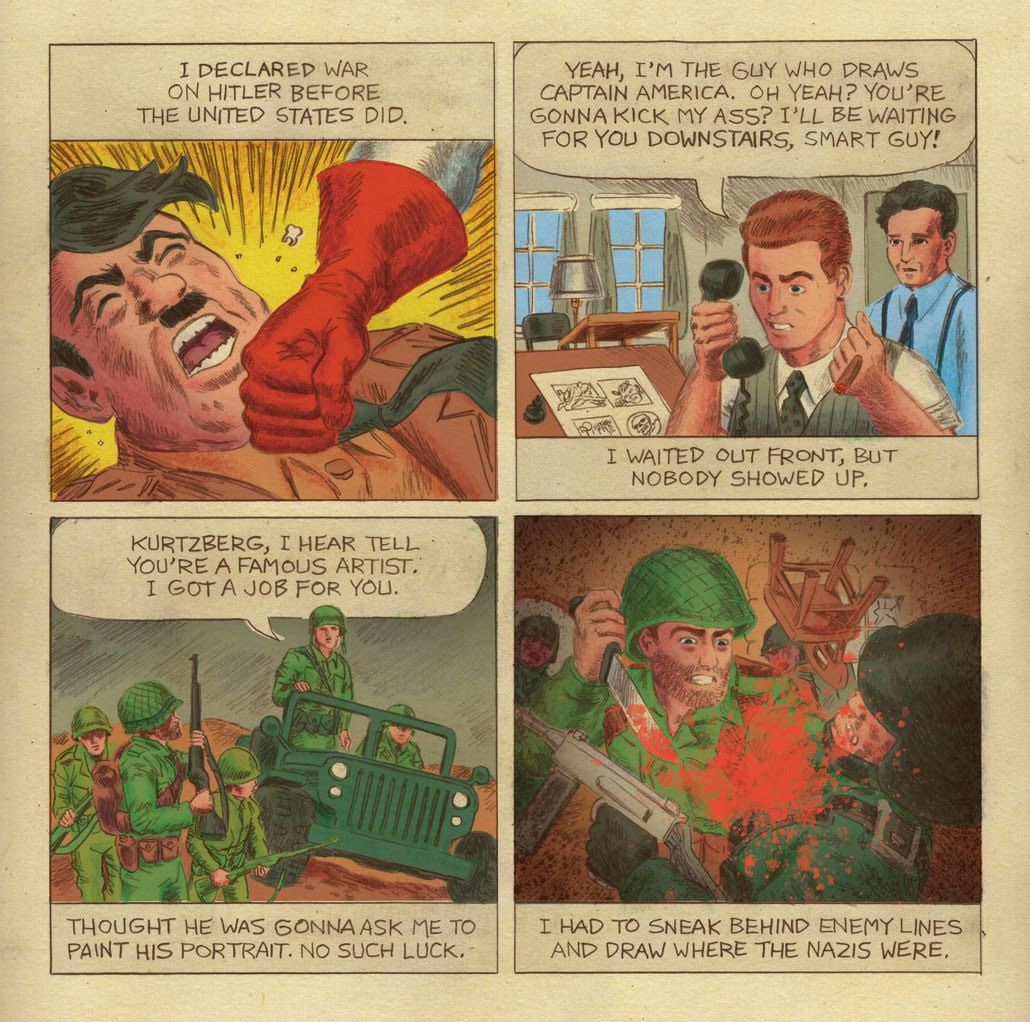
Tom Scioli’s most visually compelling sequences in Jack Kirby are the portrayal of his war days where he acted as a scout going through enemy territory and using his talents that he previously lent to Captain America or Boy Commandos to maps of Nazi positions. There’s the uncertainty of the early days of training in Georgia and hiding out in buildings in France before being immediately drawn into combat during the heady post D-Day battles. Scioli’s bright or neutral palette goes dark or red as he realizes that his unit is basically on a suicide mission, and this tension continues to Kirby’s days as a scout with lots of lots of scarlet when he kills Nazis with a knife taken from an SS officer. It’s not dynamic and powerful like Jack Kirby’s superhero action stories; it’s just war. Kirby was just fighting to stay alive for another day and get home to see his wife, Roz. The most searing scene of all is when Kirby helps liberate a concentration camp, and Scioli draws a survivor like a living skeleton.
Kirby’s resistance towards fascism from basically telling the German American Bund that he would beat their asses if they showed up at Timely’s (Later Marvel) offices before World War II to his actions during the war and finally through some of his comics like Nick Fury and The Losers, which were based on his military service and the Fourth World saga, which was about freedom and resisting tyranny on a larger more epic level that would influence later creators like George Lucas. (Jack and Roz Kirby watching Star Wars and Empire Strikes Back together in theaters is one of the comic’s most smile inducing moments.) These Star Wars sequences are one of many ways that Tom Scioli looks at the bigger picture of the comics industry, pop culture, and current events to add background color and context to Jack Kirby’s life and work. For example, a depiction of JFK’s assassination immediately bleeds into Mr. Fantastic lying as if dead on the ground as part of Kirby’s big Hulk vs Thing epic in Fantastic Four. He immediately turned his emotions about this tragic event into great art.
In a more of an inside baseball way (And honestly, the comics industry of the Golden and Silver Ages is begging to be turned into a Mad Men-esque prestige TV show.), Tom Scioli traces the relationships between Jack Kirby and various comics industry figures over the years. Obviously, Stan Lee takes up most of the space, but there are also some smaller moments like Kirby having a friendly relationship with Bob Kane as yet another freelancer for the Eisner/Iger studio to seeing him as arrogant and obnoxious or the tension between him and his various inkers like Vince Colletta (Who showed his DC pages to Marvel staffers), Mike Royer (Who drew Big Barda like Cher and got chewed out), and Joe Sinnott (Who shows up for one panel with Kirby and a Thing cosplayer). Tom Scioli is interested in both the art and commerce side of making comics, and it shines through the loving touches he gives to both Kirby at his drawing table and Kirby in a shouting match with Stan Lee about credits on their books. His prose is zippy, and Jack Kirby’s dry as a bone humor comes out in his dialogue.
Jack Kirby: The Epic Life of the King of Comics is a carefully crafted, appreciative feast of a biographical comic. Tom Scioli cites his sources in the back but focuses more on trying to get in the mind of Jack Kirby and think about how he would react to everything from his parents’ deaths to another guy trying to date Roz or even Stan Lee trying to slyly steal his Mister Miracle concept art to use in Fantastic Four. With Kirby’s expressive eyes as a kind of spirit guide, the book is a heartbreaking, yet empowering experience, and by the end of the book, I thought that not only would this website not exist without Jack Kirby, that I probably wouldn’t either. And now I’m off to actually finish his Fourth World saga!
Story: Tom ScioliArt: Tom Scioli Story: 9.0 Art: 10.0 Overall: 9.5 Recommendation: Buy
Graphic Policy contributor Logan Dalton, Darci Meadville, and Brian Stafford have teamed up for the new podcast “Comics Deserve Better.”
The podcast focuses on indie comics (non-Big Two), non-licensed comics, and news.
The first episode is available now and discusses the memoir/road trip story American Dream? by Malaysian-American non-binary cartoonist Shing Yin Khor.
You can listen to it on Anchor, Spotify, or right here below!
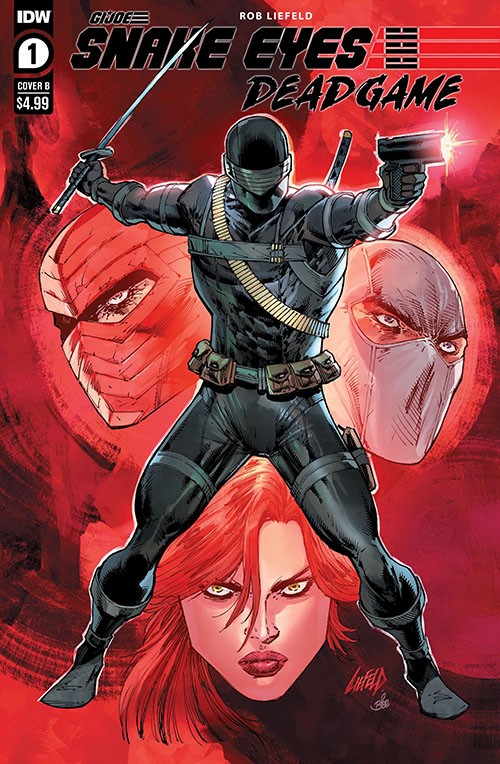
Rob Liefeld shows that he can still draw one hell of an action sequence in Snake Eyes: Deadgame #1, which is non-stop guns, blades, and ninjas with guest appearances from other G.I. Joe characters like Scarlett and Roadblock. I’m not super familiar with the G.I. Joe franchise except for catching the first Channing Tatum movie on cable a while ago. However, that isn’t a problem as Liefeld and scripter Chad Bowers set up all the life vs death, immortal vs mortal, good vs. evil, and best of all, ninja vs ninja context and fixings you need throughout the story. Throw in Adelso Corona’s enhancements to Liefeld’s disciplined linework and bulky, yet restrained figures, and Federico Blee’s spot-on colors, and Snake Eyes is a popcorn action flick in a summer sadly bereft of them because of the Covid-19 pandemic.
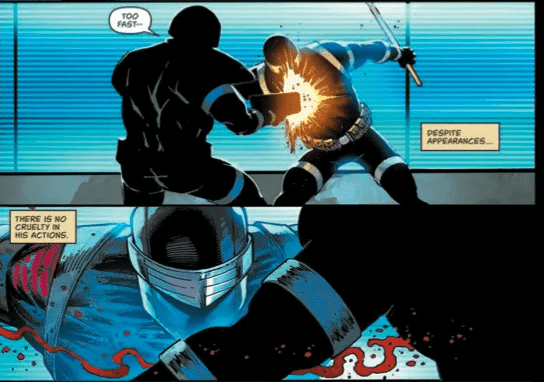
But back to the comic! People shit on Rob Liefeld’s art style (Especially his anatomy) everywhere from Tumblr to fly-by-night YouTube channels, but they forgot that comics aren’t about photorealism or perfectly rendering the human form: they’re about storytelling. And Liefeld is one hell of a storyteller, especially when it comes to dynamic, boisterous action layouts. (See his collaboration with Mike Mignola on X-Force #8.) This is evident from the first page of Snake Eyes where two immortal beings face each other with Blee using a scarlet background to hint at the mayhem to come. Utilizing a single page, Liefeld and Chad Bowers establish the main thrust of the plot and the MacGuffin before getting to the good stuff: Snake Eyes wordlessly infiltrating a secret base. Liefeld uses a variety of types of shots to show him breaking in before unleashing his inner martial arts filmmaker and using tight close-ups as Snake Eyes takes down the baddies using a full page pin-up shot to let the story breathe and give some the old Wizard reading fans something to smile at.
Rob Liefeld doesn’t use double page spreads until later in the story when Snake Eyes fights against the series’ Big Bad. Everything has been a walk in the park up to this point, and the wide screen layouts coupled with Federico Blee’s red and black and Bowers’ taunting dialogue raise the stakes for Snake Eyes. Also, Snake Eyes whips out his dual pistols for the first time giving his enemy a little taste of the 21st century. The variety of combat techniques keeps the fights interesting as Snake Eyes’ opponent shows a little bit of a horror side to go with the bloody katanas, guns a-fucking-kimbo action of the majority of the comic. He’s connected to Snake Eyes’ past, but not in an annoying way, and mostly his purpose is to show that this badass ninja might need a little help from his bros, er, the Joes moving forward.
In a reversal from a lot of comic book reviews, I feel like I’ve focused a lot on the Snake Eyes’ visuals and want to discuss Chad Bowers’ skill at capturing the voice of a character, who doesn’t have vocal cords. Bowers’ captions never overwhelm Liefeld, Corona, and Blee’s art adding just the right amount of flavor and context to Snake Eyes’ actions. In fact, they remind of a less verbose Chris Claremont in the first Wolverine miniseries that with Frank Miller and Joe Rubinstein’s art truly established him as both a force of nature and a noble warrior. Snake Eyes has a mission to fulfill (That might be connected to destiny and all that fun stuff.), and he only commits acts of violence in service of that mission, which is actually a rescue to start out with. The full balaclava and visor get-up that he wears reinforces this efficient, non-sadistic approach as Snake Eyes is a smooth killer and not raging out all over the place. In contrast, Bowers writes quippier dialogue for the other Joe’s more in line with a traditional action movie.
In the final analysis, Snake Eyes: Deadgame #1 is a damn good ninja comic, a showcase for Rob Liefeld’s action storytelling, and in my case, a strong introduction to the G.I. Joe universe. This first issue shows Snake Eyes’ strength as a solo act, and I’m interested to see what Liefeld, Chad Bowers, Adelso Corona, and Federico Blee do with an ensemble cast in subsequent issues.
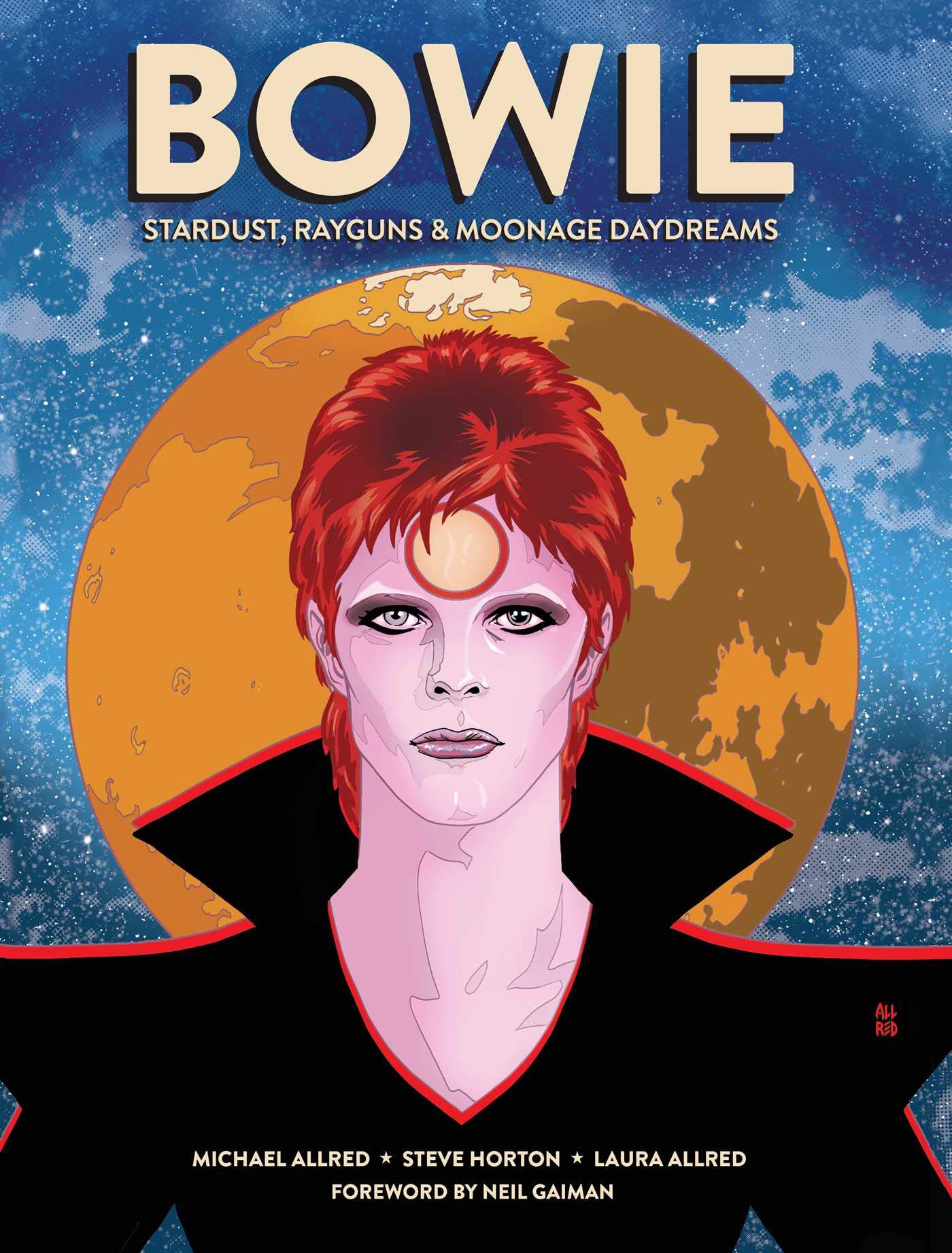
Michael Allred, Steve Horton, and Laura Allred’s graphic biography Bowie: Stardust, Rayguns, & Moonage Daydreamsis a love letter to musical legend and bisexual chameleon, David Bowie. The book mainly focuses on his Ziggy Stardust period with the Allreds beautifully illustrating a montage of live shows as Bowie’s creation and the Spiders from Mars come to vivid life in Europe, North America, and Asia. Horton and Allred use the Spiders’ final gig at London’s Hammersmith Odeon as a framing narrative. Because Bowie had a six-decade recording career, this narrative strategy is effective and also turns the comic into a history of a certain period of pop music when peace beads and flower headdresses were replaced with elaborate makeup, big guitars, and all things glam.
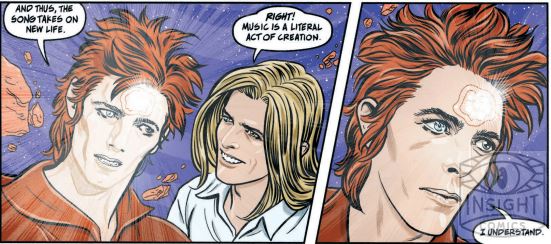
Although the ever-shifting image of David Bowie himself is always at the center of Bowie, Horton and Allred tell their story in what is basically a series of montages. There will be a beautiful dream sequence with a trippy color palette from Laura Allred that visually shows the inspiration of hit songs like “Space Oddity”, “Life on Mars”, or “Rock n Roll Suicide” to name a few, and then we’ll get a list of various celebrities at a Ziggy Stardust show or a check-in on what’s happening with his contemporaries like T. Rex’s Marc Bolan or Lou Reed.
For the most part, Horton uses minimal captions and lets Mike Allred’s art and Laura Allred’s tell the story. But when the comic calls for it, he can inject moments of humor like Bowie’s reaction to his son Zowie (Now director Duncan Jones) destroying his record collection or poignancy when Bowie reflects on his family’s history of mental illness or begins to articulate the idea of Ziggy Stardust and the Spiders from Mars to his band. Horton and Allred draw parallels between both Ziggy and Bowie’s hubris as he turns a blind eye when his corrupt lawyer is paying long term band members three times less than relatively new keyboard player, Mike Garson. Although they’re iconic images, there is an air of ego to Bowie’s famous Aladdin Sane photo shoot with Allred’s use of negative space crowding the Spiders from Mars out of the frame even though guitarist Mick Ronson was a vital part of his music and helped keep him focus when he was too busy flirting with his lover-turned-wife, Angie.
However, what will stay with me most from Bowie are the Allreds’ ability to capture the energy of live music while still doing spot-on likenesses of historical figures performing. When Mick Ronson and Bowie harmonize on “Starman” or (controversially) embrace on a Top of the Pops performance, there is a camaraderie and almost sexual chemistry between the two men that makes the later “breakup” scene emotionally resonant. Although Allred mainly puts Bowie at the center of the frame, he makes sure to cut to the audience and their hands as they are inspired and reaffirmed that it’s okay to be a little strange or non-heterosexual by this benevolent, iconic alien before them. The Allreds add some flourishes like Kirby Krackle every time Bowie does something that is especially extraterrestrial like floating in space in an early film that was a companion to “Space Oddity”.
Underneath the heavily researched and striking fashions and celebrity cameos, Bowie is about creating an identity out of the things one is passionate about. For example, Bowie and his band mates saw A Clockwork Orange when it was first release, and it immediately impacted the costuming, visual design, and even the intro of the Ziggy Stardust live show. Basically, he was a huge nerd for pop and folk music, high fashion, literature, and film, and it shown out in both his art and the way he approached the world. Bowie is filled with moments where Horton and Allred (And by extension, David Bowie) respects their fellow artists like a full page splash homage to Bob Dylan and Elvis, bringing up Lou Reed on stage, running around Detroit with Iggy Pop, and inspiring the young Morrissey and Bruce Springsteen during his concerts. It shows that art can lead to friendship, lifelong influences, and sometimes tragedy like the aforementioned tension between Ziggy Stardust and the Spiders from Mars.
Bowie: Stardust, Rayguns, and Moonage Daydreams is a highly stylized, yet infinitely human look at an important period in David Bowie’s career from Mike Allred, Steve Horton, and Laura Allred. The graphic biography captures the feeling of the music of Ziggy Stardust and Aladdin Sane through dreamlike visuals as well as adding historical context to these songs and albums and personal anecdotes that add both vulnerable and mystique to Bowie’s story. Its epilogue also kind of made me want a sequel featuring the Thin White Duke and some of Bowie’s later personas. This book truly feels like a passion project and transported me to a bittersweet day six years when a closeted, sad teenager listened to the CD of The Rise and Fall of Ziggy Stars and the Spiders from Mars and felt “not alone”. It’s a must read for any Bowie fan, especially those who love his early-1970s work the best.
Story: SteveHorton and Michael Allred Art: Michael AllredColors: Laura Allred Story: 7.5 Art: 9.5 Overall: 8.5 Recommendation: Buy
Insight Comics provided Graphic Policy with a FREE copy for review